H&M sale now at final stage with up to 80% off selected ladies, mens & kids items


H&M sale now at final stage with up to 80% off selected ladies, mens & kids items
SEOUL –
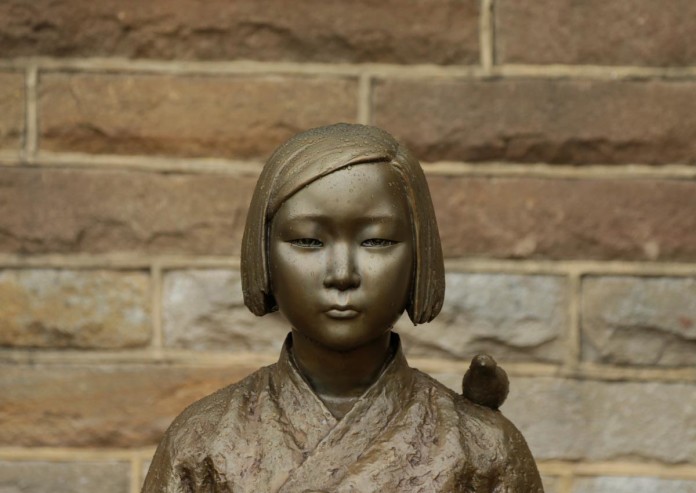
Southern Port of Busan on Friday said it would allow activists to place a statue of a victim of Japanese wartime sex slaves outside the city’s Japanese consulate.
The municipality had previously removed the “comfort women” statue, but changed the track, the Japanese hawk defense minister in Tokyo, a controversial war temple to pray.
Thursday visited the Yasukuni Shrine, where millions of most of the Japanese war died, but also were convicted of war crimes by senior military and political figures swiftly whipping from China and South Korea.
Activists put their statues outside the consulate on Wednesday – marking their opposition to the agreement reached between South Korea and Japan a year ago and finally solving the comfort women issue.
Under the agreement, the two countries described as “final and irreversible,” Japan apologized to the surviving Korean comfort women and billions of yen (12.4 million Singapore dollars).
Critics say the deal did not go far enough for Japan to be responsible for its misuse of war.
The statue – a copy of the road sitting in the embassy from Seoul in Japan – was quickly removed from the authorities’ Busan consulate.
But after Inada’s visit sparked public anger, they said it would return to activists.
“We will not prevent civic groups from building statues there, if they want to do it,” Yonhap news agency quoted Sam Seok, a local officials park.
The statue in Seoul – a young, seated woman with a birdie on her shoulders bronze – has proven to be a very effective and popular symbol.
Japan says it should be removed after the signing of the Comfort Women’s Agreement, but Seoul claims it only agrees to investigate the possibility of moving it.
In the past year, activists have maintained a 24-hour vigil to prevent statues from being taken away.
More than 20 similar monuments have been built around Korea, with more than a dozen in the United States, Canada and elsewhere.

While all ONE Championship athletes go out and give their all inside the cage, there are just a handful who have shown the true championship quality over the past twelve months. These competitors have gone above and beyond their personal limits, delighting fans with spectacular performances.
They have captured the imaginations of fans in their home countries and fans from all over the world. They have motivated, captivated, and inspired.
Here is the Fighter of the Year in ONE Championship in 2016, as well as the runners-up.
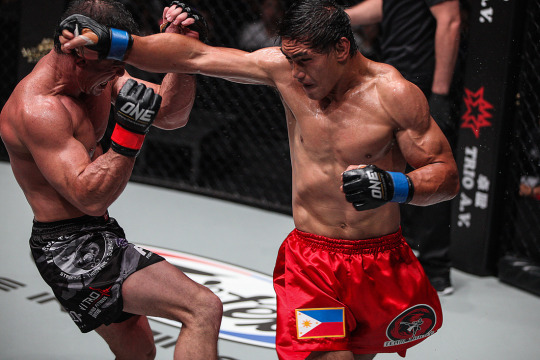
#1 Eduard “Landslide” Folayang
Is there anyone who had a better year in 2016 than Eduard Folayang? The Filipino lightweight veteran has come full circle as a mixed martial artist, completing his journey from standout contender to realizing his dream of becoming an MMA world champion.
The 33-year-old former school teacher appeared thrice inside the ONE Championship cage, beginning with a comprehensive wrestling performance against Japanese star Tetsuya Yamada in January.
It was an impressive victory for Folayang, who showed the world what he had worked on the years prior when he spent time shuffling back between the Philippines and the United States to improve his wrestling game.
Then in August, Folayang overcame the incredibly durable Australian warrior Adrian Pang. Pang stepped into the cage against Folayang and performed as advertised, catching Folayang’s best shots right on the chin, not even flinching the entire way through despite being knocked down repeatedly.
Folayang clobbered Pang with every strike in his arsenal, but it still wasn’t able to deter the forward-moving Australian. That’s more of a testament to Pang’s overall toughness than Folayang’s finishing ability. Regardless, Folayang was able to pull away for the comprehensive unanimous decision victory which was well-earned.
And then it all came to a satisfying conclusion when last November in Singapore, Folayang took the challenge to compete for the ONE Lightweight World Championship held by Japanese MMA legend Shinya “Tobikan Judan” Aoki.
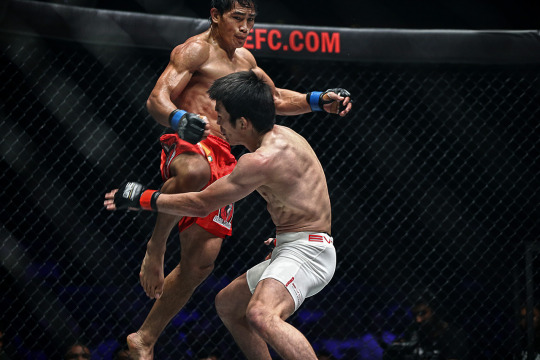
Aoki was never expected to lose, having gone unbeaten for the last four years. The grappling wizard had held the ONE Championship belt since lifting it from former champion Kotetsu Boku in 2013, and his stranglehold on the title was one of the most dominant in the promotion.
So for Folayang to negate Aoki’s grappling prowess and get the TKO victory in spectacular fashion via flying knee and ground strikes was truly magical. It was a special moment for Folayang and Filipino fight fans from all over the world. Every punch Folayang landed on Aoki when they were pressed up against the cage in the final moments of the bout was celebrated with cheers.
Now the new champion, Folayang will look to defend the belt he had worked so hard for in the new year.
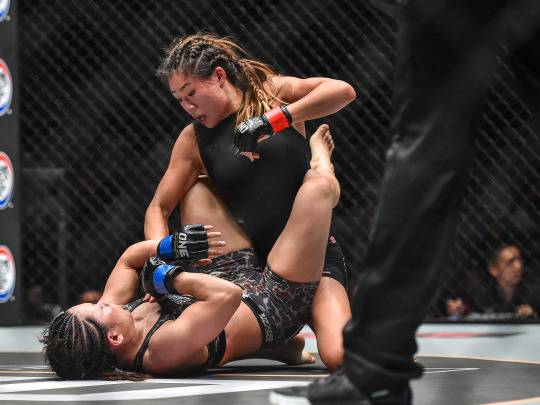
#2 Angela “Unstoppable” Lee
20-year-old Angela Lee fought twice in ONE Championship this year, and they were two of the toughest fights in her young career.
Since making her professional mixed martial arts debut in May of 2015, Lee was thrust into superstardom. Asian fight fans and the media were hooked immediately.
And how could you resist? Lee is strong, beautiful, and immensely charming. Her fighting skills at such a young age have shown incredible potential and her work ethic is as high as any fighter on the roster.
Lee’s first five wins as a professional MMA fighter have all come by submission. That’s a tremendous accomplishment for any fighter, and she topped that with ONE Championship’s first-ever Twister submission to boot. In less than a year’s time, Lee had already become a household name in Singapore.
This past February, Lee took on another big challenge in the form of American Rebecca Heintzman. Although Heintzman’s wrestling ability gave her a tough challenge, Lee’s grappling was on point that night. Lee’s ability to threaten with various submissions in precarious positions was simply too much for Heintzman to overcome. The result was a second round submission via neck crank, Lee’s fifth straight.

Then came May, fighting in front of her adoptive hometown crowd of Singapore, Lee challenged Japanese MMA veteran Mei “V.V” Yamaguchi for the inaugural ONE Women’s Atomweight World Championship.
It was a back-and-forth title fight for the ages, and one that was recently named ONE’s Fight of the Year. The two women went to absolute war, bombarding each other with damaging combinations while engaging in a highly-technical ground battle. It was raw talent versus experience, and in the end, not a single person was left in their seat.
Confetti rained down to the applause of a packed Singapore Indoor Stadium crowd. The sight was truly mesmerizing as Lee was crowned ONE’s first women’s champion.
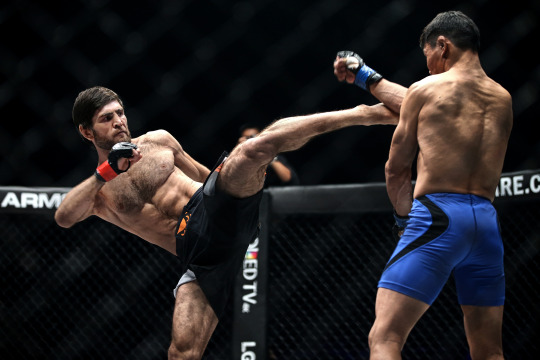
#3 Marat “Cobra” Gafurov
Upon making his ONE Championship promotional debut in 2014, Marat “Cobra” Gafurov showed Asian fight fans exactly what he was capable of in dealing with an extremely tough and dangerous fighter in “Ruthless” Rob Lisita.
Lisita was billed as a quick finisher, and looked to spoil Gafurov’s first foray into the ONE Championship cage. But it was quickly evident that the Russian fighter was on a completely different level, choking out Lisita just a minute into the very first round.
The victory sparked the arrival of a new featherweight contender for the title, held at the time by Mongolian stalwart Narantungalag Jadambaa. Gafurov eventually went on to win the ONE Featherweight World Championship in November of 2015, figuring in an absolute classic against Jadambaa that turned out to be one of the top fights of that year.
In 2016, however, Gafurov would appear in two tough title defenses that earned him a spot on this list.
In May, Gafurov took on Japanese fight veteran Kazunori Yokota. Yokota had over 30 professional fights on his resume with an incredible 13-fight, five-year win streak by the time he challenged Gafurov for the title. In contrast, Gafurov had only been in 13 professional MMA bouts at the time.
Gafurov once again delivered. From the beginning of the match all the way to the end, it was obvious Gafurov had Yokota beaten on nearly every front. Yokota just could not get past Gafurov’s constricting style of grappling.
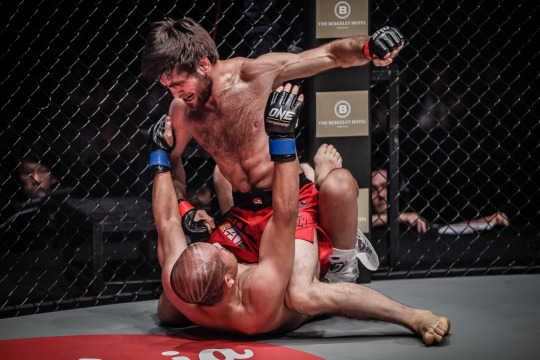
The Russian fighter was too strong and too intelligent for the Japanese veteran. Gafurov needed slightly less than two rounds to dispatch Yokota, and it was on to his next challenge.
Gafurov’s next bout in 2016 would end up being billed as the most epic rematch in ONE Championship history. After a gruelling four rounds in their first encounter, one that saw each fighter pushed to the absolute limit, Gafurov would lock horns once again with Jadambaa.
This time, Jadambaa promised fans that he would have a better gas tank and would have much more energy to deal with Gafurov’s technical mastery. Alas, the defending champion improved so much since their first battle that it wasn’t even close in the rematch.
Gafurov, being completely aware of Jadambaa’s strengths and weaknesses, needed less than one round this time to author his signature finish.
Gafurov currently sits at a perfect 15-0 as a professional. He is on a six-fight winning streak in ONE Championship with all of these wins coming by rear-naked choke, which is surely a world record.
The “Cobra”, as Gafurov is known, is poised to have another amazing year in 2017.
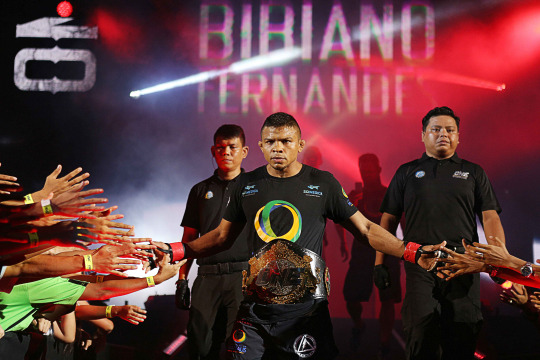
#4 Bibiano “The Flash” Fernandes
At 36 years of age and over 10 years of professional fight experience dating back to his 2004 debut in Brazil, Bibiano “The Flash” Fernandes has come a long way since once living inside the gym and fighting to feed his family.
Since making his ONE Championship promotional debut in 2012, Fernandes has remained unbeaten in nearly six years. The ONE Bantamweight World Champion Fernandes is still the promotion’s most dominant champion, with solid victories over his division’s best competitors.
That is a long time to go without a loss, and some say the Brazilian is due for one. 2016 came with the threat of two extremely talented opponents trying to take his title — the Philippines’ Kevin “The Silencer” Belingon and Australia’s Reece “Lightning” McLaren.
Against Belingon last January, Fernandes was to meet a dangerous knockout artist who had the ability to beat him to the punch in every exchange. Analysts predicted that Belingon would give Fernandes a hard time in closing the gap to land his takedowns. What they didn’t foresee, however, was that Fernandes had made incredible improvements to his stand-up.
Fernandes stood toe-to-toe with Belingon, giving as much as he got until it was time to drag the Filipino warrior into his world. On the ground, it was no contest. Fernandes masterfully executed a deep kimura that left Belingon no choice but to tap.
It was a surprisingly easy victory for Fernandes, who would spend the rest of the year on a break. Then December came along, and Fernandes saw himself returning to Manila, Philippines, where he had competed so many times already. This time, he would take on rising star Reece McLaren.
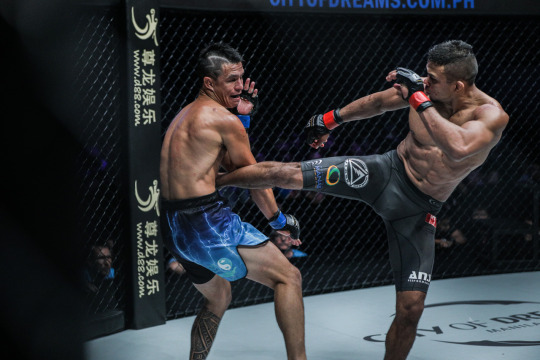
In what was perhaps his toughest fight to date, Fernandes went five full rounds against the young McLaren.
The 25-year-old Aussie gave Fernandes trouble throughout the entire bout, trading shots with the Brazilian warrior every minute of every round. McLaren’s BJJ black belt pedigree also meant that when the fight hit the mat, Fernandes was not simply going to power through him.
In an epic third round, McLaren broke Fernandes’ nose with a blinding punch. The champion, for the first time in a long while, stared adversity right in the face.
There are absolutely no words to describe the sheer tenacity and grit Fernandes had shown throughout five rounds against McLaren. Fernandes had finally been tested and pushed to the limit.
Much credit goes out to McLaren, who has also made his name known as a legitimate bantamweight threat, but the champion prevailed in one of his toughest tests to date.
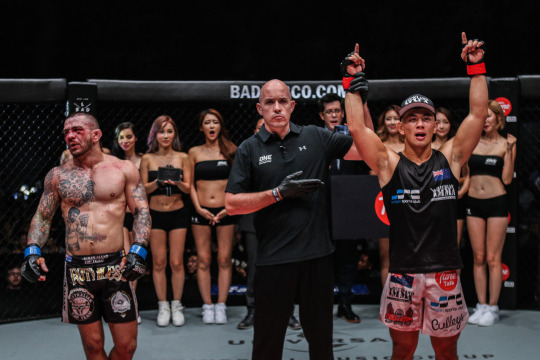
#5 Ev “E.T.” Ting
The only non-champion on this list, Malaysia’s Ev “E.T.” Ting has had an eventful year, emerging victorious over two of the best fighters in his weight class.
The 27-year-old Malaysian-Kiwi sensation from Auckland, New Zealand, has made Kuala Lumpur his fighting home, building a strong case in the past 12 months to be next in line to face either ONE Featherweight World Champion Marat Gafurov, or newly crowned ONE Lightweight World Champion Eduard Folayang.
Last January, Ting took on one of the Philippines’ top fighters in “The Natural” Eric Kelly. Kelly, who was one of the top contenders for the featherweight title, was billed as the favorite in this matchup, having owned a better fight resume. But Ting made sure he wasn’t going to lose on home soil.
Fighting in front of his hometown crowd in Kuala Lumpur, Ting put together a fine performance against Kelly, outlasting the Filipino warrior to win by guillotine choke submission two minutes into the third and final round.
After going two rounds with Kelly in a back-and-forth affair with each fighter having their moments, Ting would put the finishing touches on “The Natural” to the delight of the packed Stadium Negara. Once Ting latched onto the choke, fans knew there was no way he was letting go.
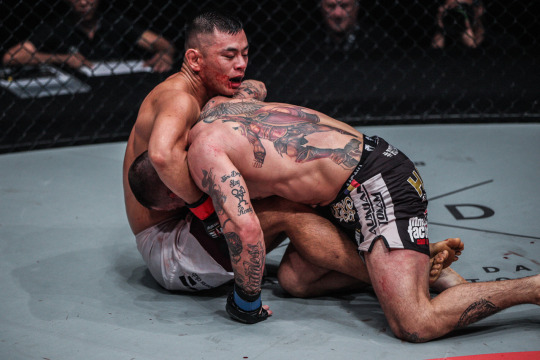
In September, Ting made the decision to try his hand one weight class above where he currently competes. Waiting for him at lightweight was the reinvented Rob “Warrior of God” Lisita, who remained as dangerous as ever.
What transpired next was one of the most exciting bouts of the year. Yet those who expected Lisita to come out swinging like he always does were shocked to learn that Lisita would enter the bout with a more-calculated approach.
Surprisingly, Lisita made use of his wrestling skills to drag Ting down to the mat easily for the first couple of rounds. Ting had to dig deep, and pull out all the stops to claim victory from the tough-as-nails Australian.
In the end, Ting did enough to get his hand raised, and proved that he has the heart of a champion to go along with the skills needed.
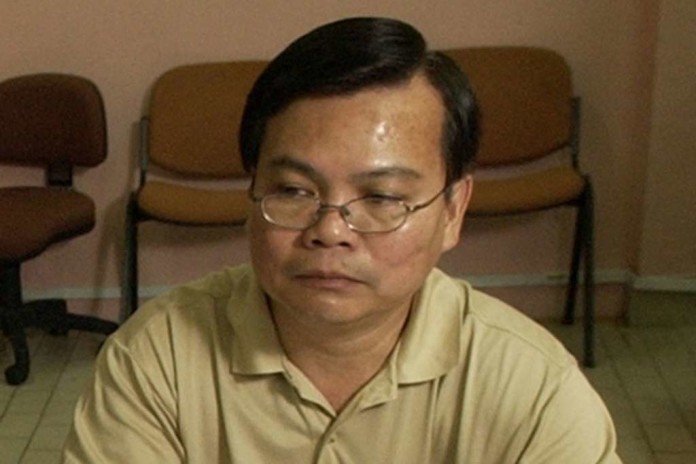
The general manager and secretary of Ang Mo Kio Town Council has been removed from his duties and is under investigation by the Corrupt Practices Investigation Bureau (CPIB).
Mr Victor Wong, who works for CPG Facilities Management, the managing agent of the town council, was asked to go on leave by his company after the town council received a complaint about him in September, town council chairman Ang Hin Kee told The Straits Times yesterday.
He added that the case had been referred to the CPIB and Mr Wong was removed from his positions at the town council last month.
An acting general manager, Mr Lim Kian Chiong, has been appointed to replace him, according to a notice published last month in the Government Gazette.
Mr Lim is also an employee of CPG Facilities Management, which is contracted to manage the estate.
Mr Ang, who is an MP for Ang Mo Kio GRC, said the town council received a complaint in September about Mr Wong concerning “the way he handles contracts and dealings in the town council”.
He added that the complaint “arose out of his dealings which relates to probable behaviour needing investigation done by CPIB”.
“Needless to say, the town council ourselves will render all the assistance needed to ensure zero tolerance for corruption,” said Mr Ang.
“There’s responsibility on the part of our contractors to do the job properly. If they do it inappropriately, then we will take follow-up actions with regard to getting them replaced (and) sending the case for investigation, making sure the necessary steps are taken.”
Mr Ang declined to reveal details about the case, citing ongoing investigations, but said that the town council constantly reminded its staff to declare any interests concerning tenders that the council was awarding.
Staff from the managing agent were also reminded that “if there are declarations to be made, if there are interests to declare, the people involved (must) make those declarations”, he said.
He added that the MPs of the GRC had made it a point to personally check on projects performed by its contractors, “so not 100 per cent is done by the managing agent with no oversight”.
AMK Town Council is responsible for the housing estates in Ang Mo Kio GRC, which is helmed by Prime Minister Lee Hsien Loong.
Mr Ang said that activities on the ground in the town council were unaffected by the development.
“We have made sure that people on the ground – the staff and officers – continue to do their work properly supervised,” he said.
Mr Wong could not be reached for comment yesterday evening.

This article was first published on Dec 30, 2016.
Get a copy of The Straits Times or go to straitstimes.com for more stories.
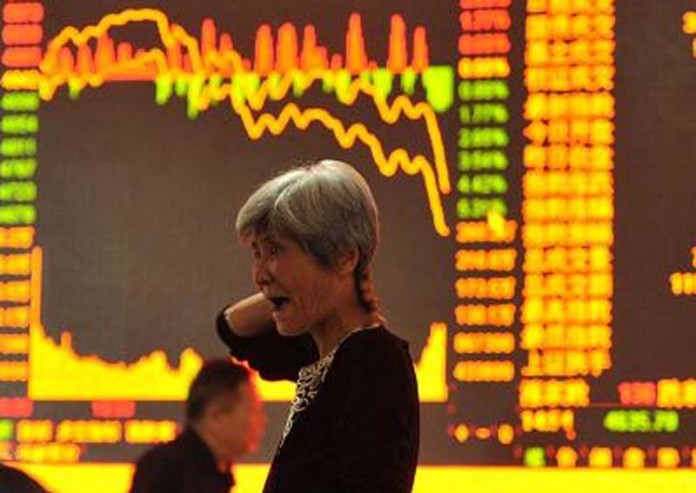
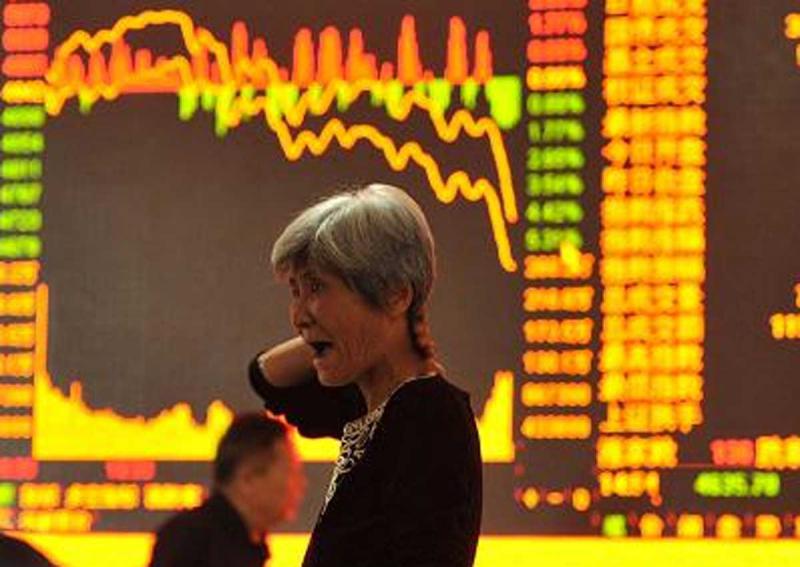
Shanghai – China is the world’s second-largest economy and has one of the fastest growth rates of any G20 nation, but its stock markets have been among the worst performing in the world this year.
Starting with a botched attempt to reduce volatility that instead triggered a spectacular meltdown, Chinese bourses have spent the year struggling against feckless policymakers, massive capital flight and a languishing currency.
The benchmark Shanghai Composite Index (SCI) struggled towards the finish line Thursday down 12.5 per cent for the year, compared to falls of 0.6 per cent by the Hang Seng Index in Hong Kong and 2.2 per cent for Japan’s Nikkei 300. Both markets are trading Friday.
As of Thursday, it had the worst showing among the 40-plus countries tracked by Wall Street Journal’s Market Data Center, behind even debt-ridden Portugal.
It is a significantly worse performance than 2015’s wild ride, when the SCI surged by 60 per cent in the first half before plunging by more than 40 per cent in under three months. Even so, it finished the year with an overall gain of 9.4 per cent.
Then authorities brought in a “circuit breaker” mechanism in January to automatically shut down trading if prices plunged. It went into effect twice in one week, kicking off a self-reinforcing selling panic that spread to global markets, and was scrapped after just four days.
“The Chinese market had a meltdown this year, and so far it has only half recovered from that,” Northeast Securities analyst Shen Zhengyang told AFP, adding the market was still in “slow and gradual restoration”.
The chairman of the China Securities Regulatory Commission was sacked over the debacle.
His replacement, Liu Shiyu, has kept a low profile, hurting market confidence and leaving investors seeking direction, said Oliver Rui, a professor at the China Europe International Business School (CEIBS).
“People don’t understand much about the regulator’s policy direction,” he said, adding that the lack of clarity partly explained the market’s weak performance.
The falling yuan – lowered seven per cent by the central bank over the year in the face of a surging dollar – has also driven investors abroad in search of better performance.
“When the yuan falls, market capital runs off overseas to hedge the risks,” said Dickie Wong, Hong Kong-based research director for Kingston Securities, adding it also made foreign investors “less optimistic about mainland companies”.
Even the year’s few bright spots have failed to live up to expectations.
Earlier this month, China launched a long-delayed programme connecting its second exchange in Shenzhen – which has lost 14.8 per cent so far this year – with the bourse in Hong Kong.
The Hong Kong-Shenzhen Stock Connect builds on a similar scheme with Shanghai and gives foreign investors access to many mainland tech shares.
But it has so far failed to live up to the hype, with Shenzhen’s shares more expensive than those in Hong Kong, making it unattractive to foreign investors, while the entry threshold for mainlanders to buy Hong Kong shares was set as high as half a million yuan ($72,000).
Other anticipated reforms, such as a new system for initial public offerings (IPOs), have all failed to materialise or were quietly shelved after January’s drama.
Currently, the Chinese government – rather than the market – decides which companies offer shares and when, and at what price.
As a result Chinese flotations are always underpriced, which “sends the wrong signals to the market”, according to Oliver Rui of CEIBS.
Authorities should “not intervene too much” but “are always afraid that the market will lose control”, he told AFP.
“But if you do not let go, then you will never know if the market can accept the new system or not. Mistakes are a necessary step.” Unlike most global exchanges where institutions hold sway, China’s stock markets are dominated by small investors, heightening volatility and short-termism.
Government-backed funds injected billions of dollars into China’s markets in 2015 in an effort to stop them bleeding out, and still play a major role, ignoring profit, loss and everything in between, and creating huge price distortions.
“In such an environment, it’s quite difficult for investors to apply whatever money-making strategies that they have learned over the years,” said Citic Securities analyst Zhang Qun.
He called China’s stock market “the least profitable” option in China or abroad.
Even so, brokers are mildly optimistic about next year – but hedge their bets with huge ranges for their 2017 year-end forecasts.
China Merchant Securities projects the SCI at anything from 2,900 – a six per cent decline – to 3,800, which would represent a leap of 23 per cent.
“With the government taking tighter controls over the property market and bonds also falling, not many choices are left,” said Kingston’s Dickie Wong. “Funds must go somewhere and stocks are ultimately one choice.”
Adrian “Papua Badboy” Matheis wants to make his fellow compatriots proud.
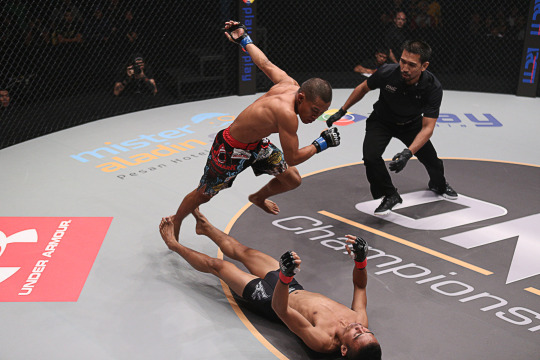
The rising strawweight prospect will have the opportunity to be the hometown hero, when he battles Wushu world champion Rene “The Challenger” Catalan, in the opening bout of ONE: QUEST FOR POWER, live on Saturday Night, 14 January, from the Jakarta Convention Center in Indonesia.
“I hope the crowd will give me the spirit to fight, because I am not fighting just for myself anymore. Now, I am fighting for my country, for my people,” the 23-year-old says. “This will be a war, and I hope I can win this fight with a knockout.”
Matheis, a Yusikaindo fighter who sports a promising 3-1 record, is on a hot streak. He most recently captured the ONE Indonesian Strawweight Tournament Championship last August at ONE: TITLES & TITANS with a quick pair of highlight-reel knockouts.
The Jakarta native is most proud of those two fights because they represent the accomplishment of a dream and promise he made to his mentor the day they met.
“Four years ago, in my very first encounter with my coach Zuli ‘The Shark’ Silawanto, I said to him that I wanted to be a fighter like him,” the young Indonesian recalls. “I told him I wanted to fight in ONE Championship someday.”
With that dream accomplished, Matheis has remained committed to sharpening his tools and honing his talent under Silawanto, and alongside the rest of the martial artists at Tigershark Fighting Academy.
The loyalty and genuine nature of his coaches has kept Papua Badboy on the fast track to stardom. He understands how much those before him have given to help see his dreams become a reality.
“My coaches, Master Syarif and Master Zuli, have dedicated their lives to the gym and to MMA,” Matheis says. “They teach us with their heart. They are not looking for money. They just want to see the students succeed as fighters, in whatever martial arts event they compete in.
“[They] are like fathers to me. Master Syarif and Master Zuli are not only coaches in our gym, but they also do lectures in the university where I study.”
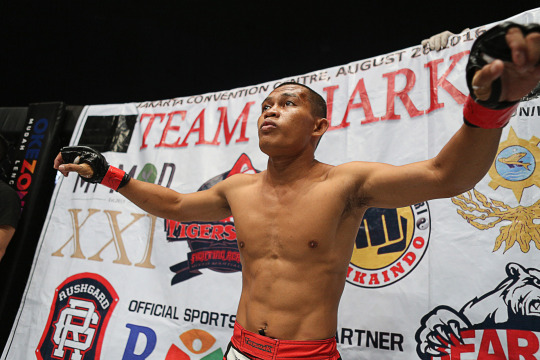
Speaking of family, that has always been crucially important to Matheis. Born to a family of farmers, the Jakarta native had a happy childhood, living in simplicity and spending much of his time outdoors. He also got into occasional fights, and got into a bit of trouble every now and then.
Though Matheis admits to being a wild child, he followed the sport of MMA and in 2012, he set out on his quest to become the best martial artist he can be. But that does not necessarily mean he was using his newfound skills to be a more talented fighter in the streets. As a matter of fact, martial arts kept him disciplined, and it gave him the direction he was lacking in life.
“For me, martial arts is not just about how to learn to punch and kick someone. I feel martial arts is more about how to control yourself, and manage your emotions and mind. It teaches us to be brave in all situations, as well as disciplined and open-minded. All of this I got after I started martial arts training for the first time,” he explains.

“Martial arts has given much to me. [It has made me] healthier, more powerful, calmer, and closer to my God. Martial arts brought me closer to the church and to my religion, and with martial arts, I can give something to my mother and make her proud of me.”
The “Papua Badboy” fully intends to make his mother and the rest of his compatriots proud on 14 January, when he aims to knockout Catalan in spectacular fashion. There will be no stopping the young man until he reaches his ultimate goal of becoming an undisputed world champion.
“This would be a dream come true for me,” Matheis says. “Winning a world championship has been my dream for more than four years now.”

Taoyuan, Taiwan –
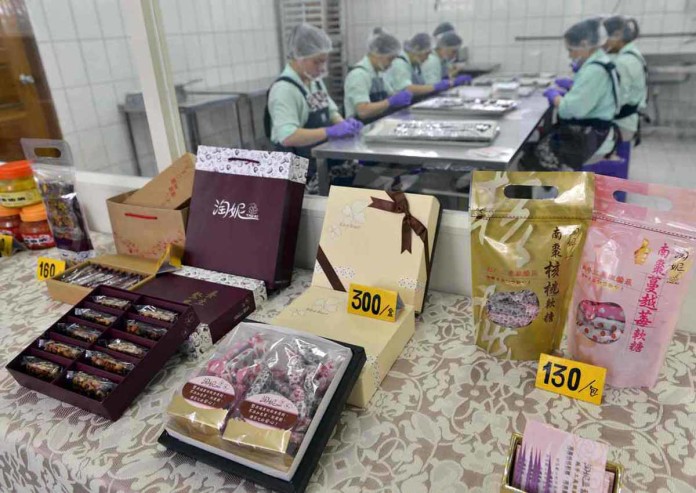
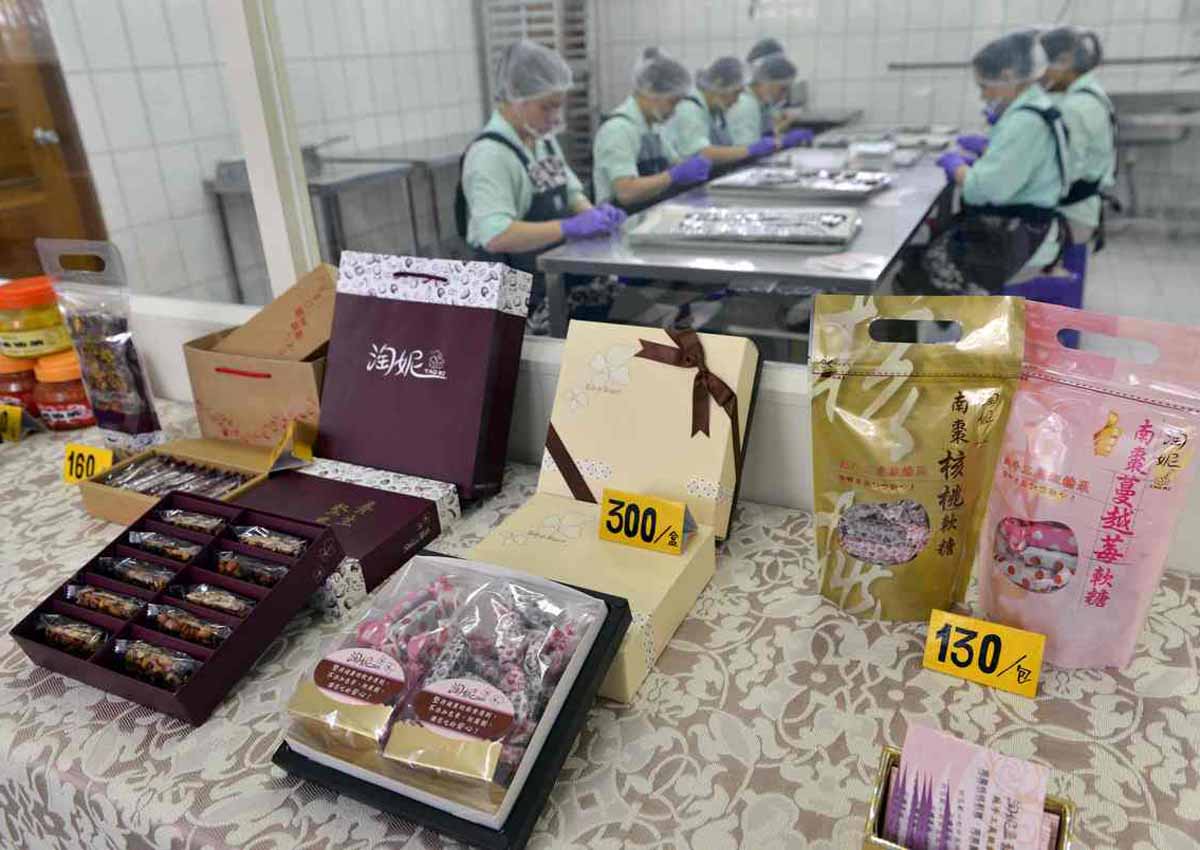
If the door is not locked, the knife is tied to the table and uniformed staff, Taoyuan women’s prison food factory like any commercial kitchen.
Wearing masks and hair prisoners mixed cocoa powder to make chocolate, or chopped cabbage marinated pickles.
They are part of Taiwan’s burgeoning food industry – handmade snacks, behind bars.
Prisoner-made delicacies without additives have earned loyal followers, generating hundreds of millions of dollars annually.
Demand is driven by quality and affordability, and a string of food safety scandals has made Taiwanese consumers particularly wary.
Last year, sales exceeded $ 500 million ($ 15.62 million), with funds used for victim compensation, facility improvements and prisoner wages.
Some of the prisoners, such as the 39-year-old Chen, did not have any cooking experience before joining the production line in the northern island of Taoyuan.
The prison has introduced a wide variety of snacks, from candy to fermented tofu.
“I’m glad to learn some useful skills,” Chen told AFP.
“I do not know how to use the kitchen knife properly, because my mother always cooks for me, I do not need to enter the kitchen.
“I learned how to make food that looks simple but is actually very complex.Prisoners close to release or parole can apply for the program and give priority to it.Permanates who have been judged to be good behavior or have relevant experience may also apply.
Prison foods purchased from Taiwanese prisons include pineapple cakes, peanut brittle and other local delicacies, as well as soy sauce and free-range chicken.
Since 2006, a small program aimed at teaching prisoners practical skills and raising funds for prisons has been introduced into all adult prisons in Taiwan.
More than 50 prisons produce about 300 types of products, which can be purchased by phone, online or by fax, or directly from the prison office.
“We use good ingredients, and we do not use additives or over-processed foods to make a profit,” said Qiu Hongzhi, deputy director of the Correctional Services Department.
“Our food is natural, high quality and cheap,” he added.
This is a warning to the public that a winning sales promotion, large companies were found to be doping their products with banned chemicals or recycling “gutter oil” to reduce costs, resulting in a large number of recalled food in recent years.
Shoppers in the organization of the food center in Taichung City Center to quickly ensure that the food in prison.
“I have often purchased prisoners to do food for more than a year, they are organic, good quality, relatively cheap, I also assembled my friends ordered,” Queen Wang Longfeng, driving nearly two hours from the southern Tainan City to the show, Which lasted four days, attracted tens of thousands of tourists.
Mr. Wang spent over ten thousand yuan on noodles, chicken, soy sauce and snacks.
“I think this program is very meaningful, the prisoners are learning some skills that can help them find a job and adapt to the society,” she told AFP.
The average monthly “labor allowance” for prisoners is about $ 2,000-3,000. According to Chiu, some responsible for the best-selling items, such as the soy sauce in southern Pingtung County, can earn 10 times the average wage during peak holidays.
In addition to producing their own brand of food, some prisons make soap and handicrafts, or order from local factories, manufacturing clothing, paper bags and accessories.
Chen said she hopes to launch its own small food business after the release.
“My mother likes to cook, she cooks well, she said as long as I am not afraid of hard work, she will work with me to start our small food business.
“I wanted to combine my mother’s cooking with what I learned to create better food.
The 116-year-old Michelin guide may seem unlikely to be damaged, but the July edition of the Singapore version really shocked the food and beverages here.
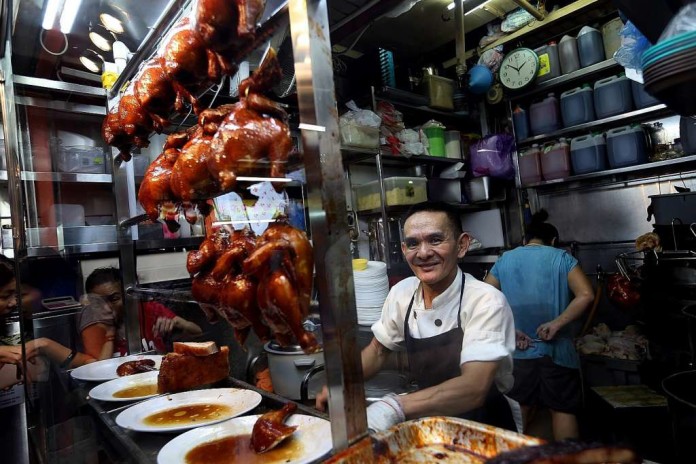
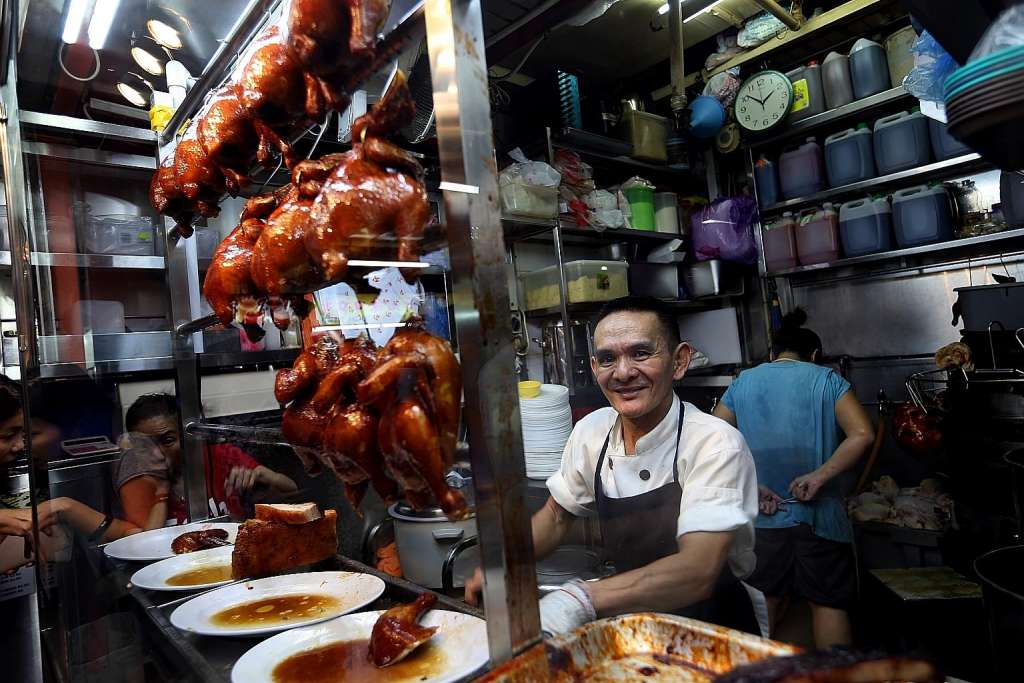
It turned 51-year-old Michelin star Liao Fan Hong Kong soy sauce chicken rice and millet into a compound food center in the showroom into a star that is unlikely to spend the night.
Last month he worked with F & B’s Hersing Culinary to open an air-conditioned restaurant called Hawker Chan in Smith Street.
There are more branches – here and overseas – to come.
He also became an international headline as part of Tiger Beer’s fast food restaurant Tiger Streats in Kuala Lumpur, Sydney, Auckland and New York.
It ended on 18 December.
In Sydney, for example, Mr. Chen worked with Australian chef Guillaume Galliot, a two-star Michelin tasting chamber, and worked in New York with his Michelin-starred restaurant, Christopher Kostow, in Meadowood, Napa Valley, California.
However, another Michelin star hawker stall, Hill Street Tai Hwa Pork Noodle at Crawford Lane, did not jump on the promo, although the queue has been extended for two hours instead of about an hour.
All hawker stalls and “zi” restaurants listed in the “Bib Gourmand” category have also experienced the “Michelin effect” – drowned by long-term guests.
But not everything is fine.
Many hawkers are puzzled, especially those who do not know the tour guides, aware of their “The Straits Times” interview after the achievements.
Diners are equally confused when a menu is posted online – it is a misspelled and inaccurate address. It raises questions about the effort (or lack of) input into planning the Bib Gourmand list, which many believe does not really represent Singapore’s diverse food scene.
However, other diners on the Internet said that their favorite booths were not listed.
The industry is also frustrated, talking about chefs receiving a phone call before the ceremony to tell them the number of stars they have received.
Gourmets would like to know the bounty of Michelin-hosted restaurants and restaurants in Resorts World Sentosa.
Since then, the ripples continue.
A Michelin-starred Peranakan restaurant, Candlenut, moved to Como Dempsey last month, and the new store at Hillview Avenue opened in Bib Gourmand’s zi char restaurant, New Ubin Seafood.
A Michelin-starred French-Japanese restaurant, Beni, played a musical chair with a star-rated sisters restaurant, Hashida Sushi, in an ordinary gallery.
Hashida Sushi re-opened in July, Beni reopened on 19 December.
Two weeks ago, the popular zi char restaurant JB Ah Meng on the Bib Gourmand list closed its alleyways and moved to No. 534 Geylang Road in the new year.
A Michelin-starred Shinji is served by Kanesaka at the upcoming refurbished Raffles Hotel on the last meal of February 4, opening on March 2 at his new home in the Carlton Hotel opposite the street.
Former fat duck chef Ivan Brehm and a Michelin-starred chef, Mark Ebbels, have left the restaurant.
Therefore, the Australian-born Luke Armstrong (Luke Armstrong) as the new chef, Michelin star restaurant overseas, he won his fans to retain the star or get more.
No star restaurants have also improved the space for new menus or renovations.
Earlier this year, the French restaurant Iggy’s at the Hilton Hotel in Singapore and St. Pierre in One Fullerton hired a new Michelin family cook.
Chefs have been at the end of last year when rumors were said that Michelin inspectors were in town.
In the second edition of the guide, the restaurant will retain or get the star pressure will be greater.
Of course, some restaurant owners, such as the American celebrity chef Mario Battari’s Osteria Mozza at Marina Bay Sands, put all that with a bunch of salt.
His restaurants in New York and Los Angeles have Michelin stars, but his Singapore restaurant does not.
During the recent visit to Singapore, the outspoken chef, the tongue firmly said: “If I were on your list, then it is the most important list, if I do not, then no one read.” Michelin guide is very important, but it is also To sell books.
euniceq@sph.com.sg
This article was first published on Dec 30, 2016.
Get a copy of The Straits Times or go to straitstimes.com for more stories.
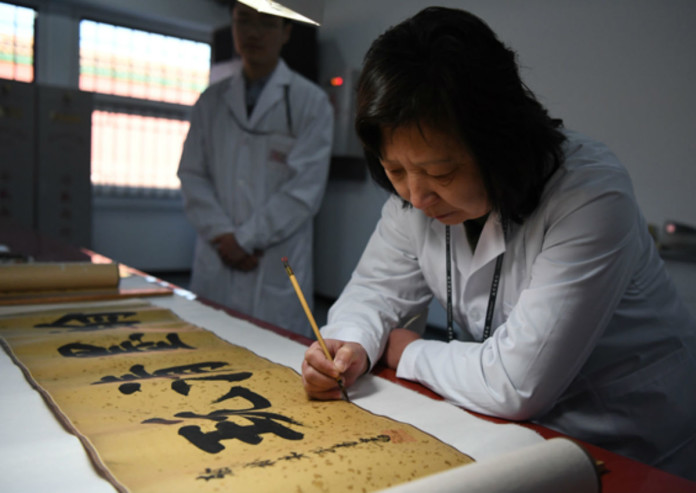
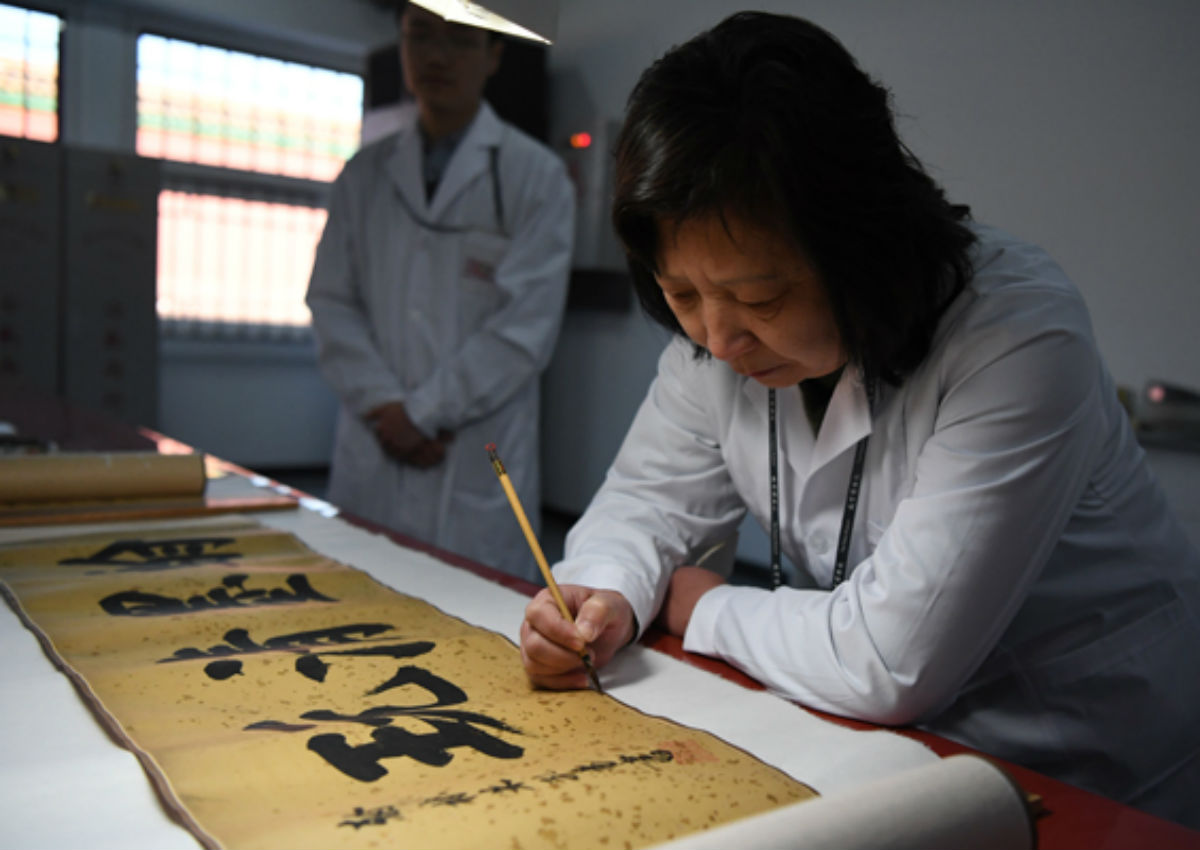
A state-of-the-art conservation centre to “treat” ancient cultural relics in disrepair opened at Beijing’s Palace Museum on Thursday.
The base, informally called the Relic Hospital, covers 13,000 square meters and boasts the nation’s most-advanced restoration workshops, said Shan Jixiang, the museum’s director.
“It is the largest cultural heritage conservation centre in China,” he said.
“I hope it will become a hub for nurturing expertise, not only for China, but also worldwide.”
The facility has a laser technology lab, a joint venture by China and Greece to share conservation experiences, and features a training centre for the International Institute for Conservation of Historic and Artistic Works.
This year saw the release of the highly popular Masters in the Forbidden City, a three-part documentary that followed experts at the museum.
A feature-length version was screened at cinemas this month.
The Palace Museum, also known as the Forbidden City, was home to the royal court between 1420 and 1912.
Today, it houses more than 1.8 million sets of cultural relics.
“Traditional craftsmanship will be combined with modern methods, and the lives of cultural relics will be prolonged by the ‘doctors’,” Shan said, referring to experts at the new centre, who like medical doctors wear white coats.
He added that the base will eventually be opened to tourists, although no time frame has been set.
wangkaihao@chinadaily.com.cn

MADRID – World Player of the Year Cristiano Ronaldo has turned down the chance to leave Real Madrid for an unnamed Chinese club for a transfer fee of 300 million euros (S$458 million), his agent said on Thursday.
Speaking to Sky Italia at the Globe Football Awards in Dubai, Jorge Mendes said the deal would have been worth 100 million euros a year to the Portugal striker.
“From China they’ve offered 300 million euros to Real Madrid and more than 100 million per year to the player,” Mendes was quoted as saying.
“But money is not everything. Real Madrid is his life. Cristiano is happy at Real Madrid and it is impossible to go to China.
“The Chinese market is a new market. They can buy a lot of players but then again it is impossible to go for Ronaldo.”
News of the offer made to European champions Real came on the same day Argentine striker Carlos Tevez joined the Chinese Super League side Shanghai Shenhua from Boca Juniors.
No financial details were disclosed but media reports said Shenhua had paid 84 million euros for former Manchester City and Manchester United forward Tevez.
Last week Brazil midfielder Oscar joined local rivals Shanghai SIPG from Chelsea for a fee that media reports put at 60 million euros.