A Singapore Armed Forces (SAF) regular was sentenced to 15 months jail for having sex with a 13-year-old girl.
The girl’s parents had found Tan Yong Jin, 24, along their daughter in their flat.
They were already dressed when the girl’s parents had found them, reports The Straits Times.
The teenager, who cannot be named, admitted to having taken part in sexual activities with him.
Her mother then alerted the police.
Officers then turned up at the flat to arrest him.
Tan was sentenced yesterday (Jan 11) after pleading guilty to two counts of performing consensual sexual acts with the child, who was a Secondary 2 student at the time.
The two had met on Facebook in 2016, where they became friends.
Deputy Public Prosecutor Amanda Chong said he was aware that she was under 14.
The pair stayed in contact after meeting for lunch later that month and began to exchange sexually charged messages.
On Jan 8 last year at around 11am, the girl asked Tan to meet her at Clementi Mall. Two hours later, they went to a nearby cinema.
After the movie at around 3.30pm. they took a bus to the girl’s home in Jurong to have sex as her parents were out.
DPP Chong said: “They were not in a boyfriend-girlfriend relationship. Upon reaching her residence, the victim made a check to confirm her parents were not at home before leading the accused up to her residence. Inside her residence, she led the accused into her parents’ bedroom.”
The SAF sergeant then had unprotected sexual intercourse with the girl and she also performed oral sex on him.
District Judge Wong Li Tein said that Tan “should have known better”.
For each count of sexually penetrating the minor, Tan could have been jailed for up to 20 years and fined or caned.
SINGAPORE: A campaign to drink more plain water, promoting healthier home cooking and encouraging people to take the stairs more often – there are just some of the recommendations made by Singapore’s very first Citizens’ Jury (CJ) to help the government’s ongoing War on Diabetes.
After seven weeks of work including three full days sessions over weekends, the CJ presented their collated list of suggestions to combat diabetes to Senior Minister of State for Health Amy Khor at the Lifelong Learning Institute on Saturday (Jan 13).
The CJ is a new engagement model which taps on the ideas of citizens to co-create and co-deliver new approaches to significant national issues.
Last October, the Ministry of Health (MOH) and Institute of Policy Studies came together to form the CJ on the War on Diabetes, and a total of 76 volunteers were selected from an open call.
The 76 are a varied group, comprising diabetes patients, doctors, clinicians, caregivers and members of the public, to ensure a diversity of views.
A total of 12 recommendations were compiled and presented to Dr Khor.
Among them is the citizen-led #drinkplainwater campaign, which aims to reduce a person’s intake of liquid calories by making plain water more accessible by having more water coolers installed.
Another idea was to incentivise Singaporeans to take the stairs more often, encouraging them to go beyond clocking 10,000 steps a day by walking on flat ground.
The Citizens’ Jury on War on Diabetes concludes as report presented to Dr Amy Khor. (Photo: Cheryl Goh)
The CJ even ventured into the area of government policies, and suggested that the Medisave claimable limit for the Chronic Disease Management Programme be raised from S$400 to S$750 per year, per account. This is to help diabetes patients cope with the financial costs of managing their disease.
After hearing the recommendations, Dr Khor said she was heartened by the commitment and enthusiasm of the CJ to work with MOH on tackling diabetes.
“Over the past seven weeks, you sought advice from subject matter experts, deliberated and debated ideas to come to a consensus on the recommendations that you want to put forth,” she said.
“I will convey your recommendations to the Ministry of Health unedited and unchanged.”
Dr Khor added MOH will study the recommendations carefully and respond on the outcome within three months.
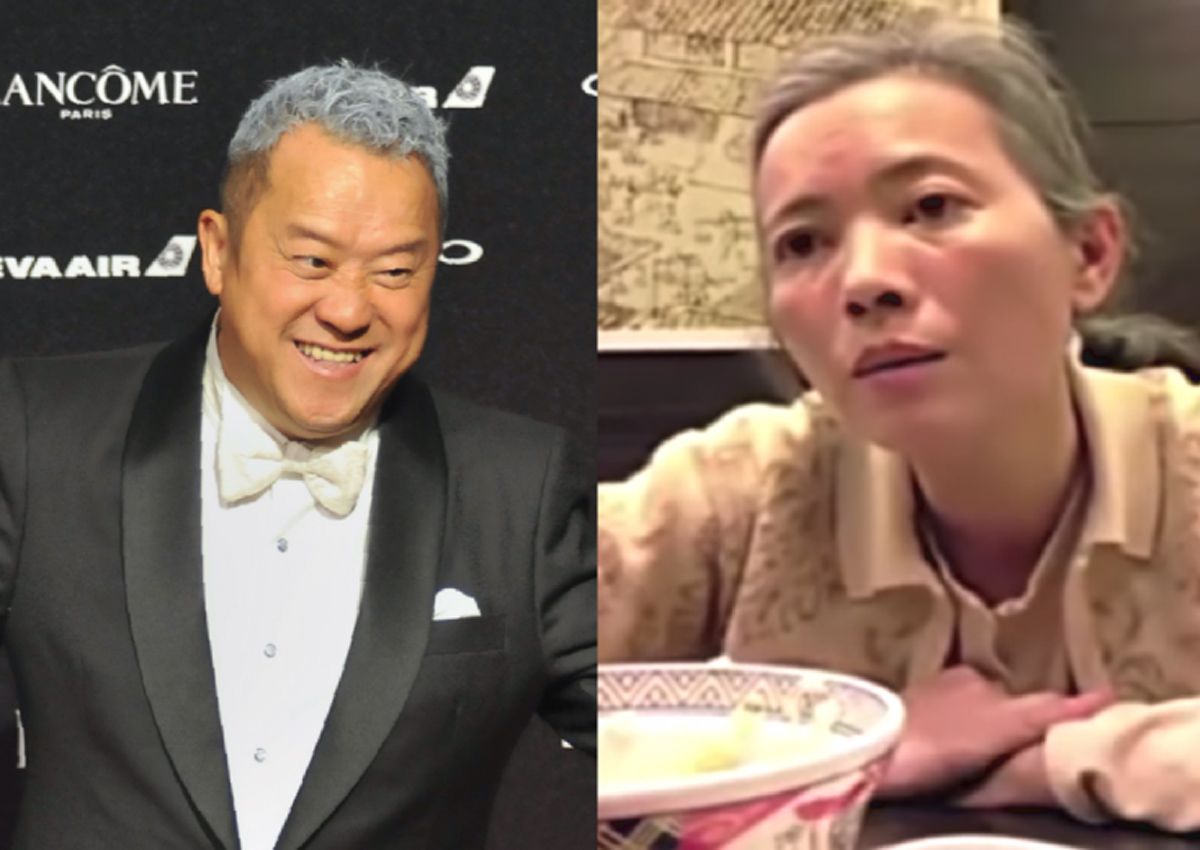
Hong Kong actor Eric Tsang was accused of raping artistes, Sin Chew Daily reported.
Grace Han, the former Asia-Pacific head of Ford Models, wrote on her Weibo account that her student nearly fell into the trap of Tsang and his friends in Hong Kong.
She claimed that Tsang had spiked the beverages of models at a KTV club, but luckily one of her students was alert and escaped unscathed.
Han claimed that Tsang had spiked the beverages of models at a KTV clubPhoto: Weibo/Grace Han
In the follow-up posts, Han stood by her allegation, adding that she would reveal the names of other men present that night.
In a separate incident, Tsang said a video that named him as one of two male stars who raped actress Yammie Lam was fake news.
In a statement issued on Wednesday, he said the clip of an interview with Lam that surfaced on the Chinese Internet site was falsely edited, reported Phoenix TV’s iFeng website.
Tsang, 64, said he had engaged a law firm to take action against the video.
SINGAPORE: Ahead of its annual online shopping extravaganza, popularly known as Singles Day, last November, Chinese tech titan Alibaba unveiled its Ling Shou Tong retail strategy.
Ling Shou Tong’s idea is simple: To connect convenience stores, often mom-and-pop stores, to the e-commerce giant’s network of supply chain, logistics and data analytics – and by doing so, revamp how these shops operate.
As it said on its news portal Alizila: “The programme doesn’t just give a cosmetic update to convenience stores. It’s also an extreme tech makeover, injecting modern analytics to improve, streamline and automate operations that have long relied on elbow grease and intuition.”
In practical terms, this means when shopowners order goods via the Ling Shou Tong app, analytics of their stores would suggest to them the products that are most in demand. They are also able place their orders online, in a centralised manner, without having to negotiate with multiple distributors.
Re-stocking of fast-moving goods can be done from city or regional warehouses. (Video screengrab: Alibaba)
Alibaba said a large number of mom-and-pop stores in China are owned by those over 45, who “log long hours and do everything themselves”, and these are characteristics that could apply to small retailers here in Singapore too.
LING SHOU TONG IN SINGAPORE?
But could Alibaba bring the Ling Shou Tong concept to Singapore?
IDC’s lead analyst for Future of Commerce Lawrence Cheok told Channel NewsAsia in an email that this retail strategy provides similar benefits for consumers and small merchants here, such as greater supply chain efficiencies and, hopefully, competitive prices.
However, he noted that Ling Shou Tong is similar to the tech titan’s other rural commerce initiatives in that it is an effort to more deeply penetrate the local domestic market, given that e-commerce is mostly saturated in the top tier cities. With that in mind, he questioned if bringing this retail concept here is the “lowest lying fruit” for the Singapore market.
Other analysts also downplayed the possibility of Ling Shou Tong being brought here, with Forrester Research’s senior analyst Xiaofeng Wang saying that Singapore is not ready for the retail concept as consumers or small merchants are not prepared for it.
Ms Wang pointed out that mobile payment in China is already so dominant, with the majority of consumers and small merchants, even street stall owners, using this method on a daily basis. So upgrading to Ling Shou Tong and using digital means to order and manage inventory “wouldn’t be that far away” for these mom-and-pop shopowners.
Third-party consultants, called “city partners”, are roped in to help with the tech makeover, and these partners get a commission when merchants order from Ling Shou Tong, Alibaba said. (Video screengrab: Alibaba)
“In Singapore, there’s still a long way to go,” the analyst said in an email. “Majority of consumers and merchants still use cash in hawker centres even after QR code payment is launched.”
Gartner’s research director Adrian Lee also said that while the concept is “innovative”, he does not see it “playing out well” here.
Mr Lee said in his email that Ling Shou Tong needs several conditions to be successfully implemented: A near ubiquitous digital payment channel and point-of-sale management to facilitate seamless checkout, a robust and integrated logistics network and fulfillment partners such as Cainiao and sufficient number of store owners who believe in the value of tapping into the company’s massive inventory to gain cost savings when stocking up.
“For the above reasons, I do not believe that Ling Shou Tong is viable in Singapore.”
NEW RETAIL METHODS “A MATTER OF TIME”
That said, IDC’s Cheok is of the opinion that Alibaba’s New Retail strategy, which Ling Shou Tong is a part of, will spread to the rest of Asia. Chairman Jack Ma had said last October that New Retail will “bring about a restructuring of the global supply chain and change the complexion of globalization from the domain of big businesses to small businesses”.
The imported retail concept would be a variation of the China model “in order to cater to local requirements” and would likely entail partnerships with local players who can provide value, the analyst explained.
“For instance, Alibaba would require local consumer data and insights to provide the same benefits they are providing to the Chinese merchants. In addition, new supplier relationships would be required to cater to local merchandising preferences,” he said.
Should this happen, it will “definitely impact the bottom line for competitors caught unawares”, Gartner’s Lee suggested.
“Amazon will have an advantage in that they’ve launched similar converged retail initiatives and is also sufficiently funded to scale up,” he said. “The capital investment required to carry out Ling Shou Tong will prove an obstacle for local supermarket chains and players like honestbee.”
If you come from an elite school, it’s likely most of your friends, even in adulthood, come from one of those schools too.
If you live in a private estate, you’re not likely to have friends who live in the heartlands, according to a recent Institute of Policy Studies’ (IPS) survey.
The findings of the Study On Social Capital In Singapore have come as no surprise to many Singaporeans. After all, isn’t it instinctive to make friends with the people you are most exposed to or have the most similarities with, even if those similarities are largely based on what some might say are superficial factors such as education and lifestyle?
Such class divisions are now far more pronounced than societal splits based on race or religion.
IPS’ Deputy Director for Research Dr Gillian Koh said there is a need to prevent the issue from becoming a political flashpoint adding that the social class divide could lead to a “winners versus losers” situation affecting political stability.
Most of us would agree with this and there’s evidence of this in several countries across the world.
The possible solutions are varied.
The researchers mentioned programmes such as the Outward Bound Singapore camp for students that encourage mixing with those outside of one’s usual social circle.
The new five-day adventure-based, multi-school camp for all Secondary 3 students is slated to kick off in 2020, and it aims to bring teenagers of different institutions together.
However, how much difference would five days really make?
The Ministry of Culture, Community and Youth says it already has several initiatives to promote social mixing.
These include arts, heritage activities and sports initiatives in the community.
While such initiatives might work to some extent, some experts feel the exposure needs to be more sustained and it needs to start with our children and who they are exposed to in school on a daily basis.
OBS trainees manning the ropes at one of its obstacle courses. (Photo: Noor Farhan)
OUR FLAWED MERITOCRACY
The source of the divide needs to be addressed.
Much of it has to do with excessive emphasis on academic achievements and material wealth.
Our wide income gap exacerbates the scale of the problem and the flaws in our meritocracy have not gone unnoticed.
While anyone regardless of their backgrounds who works hard and does well should be able to go as far as they want to, we are all alarmingly aware of how wealth gives some of us an edge over others, even when it comes to school admissions.
The ability of the wealthy to afford tuition and enrichment classes gives their children an unfair advantage that has been lamented for years.
Several years ago, it was announced that all primary schools would have to set aside at least 40 places for children with no family ties to the school, such as a sibling or parent who is an alumnus.
In order to ensure that top schools don’t stay “closed circles”, Prime Minister Lee Hsien Loong also announced that top secondary schools would have to take in more students from different backgrounds through the Direct School Admissions scheme. The criteria is also broadened to admit good students with other “special qualities” such as resilience, drive, character and leadership.
CHANGE THE SCHOOL ADMISSIONS SYSTEM
Many, however, see these efforts as piecemeal.
Is it possible to be more egalitarian when it comes to admissions and encourage schools in which students of diverse socio-economic backgrounds and academic abilities learn together, hence grow as individuals by learning about each other’s’ lives and challenges?
For this all schools will also need to be equally well-resourced so as not to create a perception of advantage or otherwise.
What criteria would school admissions be based on then?
If we went by proximity to one’s home, the purpose would be defeated as top schools tend to be in wealthier neighbourhoods.
Some have gone as far as to suggest such schools be moved.
Perhaps this is what we need – a more deliberate effort to ensure diversity in schools.
Sociologists have also pointed out that if elite students only mix among themselves, it leads to network-building that propagates advantages even in working life.
Member of Parliament Denise Phua said in a 2016 edition of On the Record: “If we carry on the way we have been all these years, we create a so-called elite class, we create a group of leaders who do not have opportunities to mix with people of different abilities, different social backgrounds. Is this good for our country?”
“I think it’s not a bad idea that students who are academically strong learn how to mix and interact with people who may not be academically strong, but may be strong in other areas. And that’s how good leaders are developed.” (Photo: Xabryna Kek)
THE OFFICIAL NARRATIVE
The narrative from the Government is also key.
Government redistribution efforts have been boosted over the years but many would say they can always go further.
Emeritus Senior Minister Goh Chok Tong once proposed a “compassionate meritocracy”, encouraging those who have excelled in the system to contribute back to society.
Deputy Prime Minister Tharman Shanmugaratnam extolled the virtues of a “meritocracy through life” where “you are assessed on your performance at every stage of your life, regardless of where you came from or where you started.”
More can be done in the civil service to show it is doing this in its own hiring practices.
More is already being done to create multiple pathways of success for students.
PUTTING IT INTO PRACTICE
We, as citizens, must also recognise there is much we can do in our own lives.
People naturally gravitate towards those they share similarities with.
If we looked at the issue more deeply, we would see that similarities extend beyond academic qualifications and housing type.
We are each complex beings and knowing people who are different from us could in fact make us richer. It could help us learn from one another and through helping someone else we could develop and discover strengths we didn’t know we had, and even strengths we didn’t think they had.
It would certainly make us more empathetic human beings.
Koh Seng Choon, founder of social enterprise, Project Dignity, said in a recent On the Record interview: “We are a society driven by the achievement to be number one in everything, but we must remember those who can’t be number one. If you don’t see such people, you will lose empathy.”
At 50, Koh who had spent many years working overseas came back to Singapore, and realised it had changed.
“In other countries, I saw poverty, homeless and disabled people. It was all in the open. When I returned to Singapore, I could not see any of these people, but I knew they were there.”
So he sought them out and today, he trains and employs a mixture of people with disabilities, former inmates, single mothers, battered wives, school dropouts and essentially anyone struggling with societal acceptance to cook and run hawker stalls. He also places such individuals in other establishments looking for workers. He believes in recognising strengths in every individual and empowering them.
Koh Seng Choon, founder of the Dignity Project with one of his trainees. (Photo: Facebook / Dignity Kitchen)
Koh himself came from a humble background, so for him to realise this even after he had achieved academic and financial success was perhaps not a stretch.
But what about those who are born into privileged families?
Yes, it would help if the education system were designed in a way that encouraged diversity and mixing across class divides from the time our children entered the school system.
But we also have a part to play in recognising the benefits of reaching across the divide ourselves.
Class divisions can also result in social and political instability especially if income inequality leads to class consciousness and social stratification.
It is in everyone’s interest to prevent this, whichever social class you belong to.
Being exposed to different ways of thinking and living could make each of us richer in other ways – propel us to be more embracing of new ideas or even become more innovative in terms of solving some of the social problems our nation faces.
This is exactly what an enterprising and externally-oriented Singapore needs.
If we see the merits, we must take steps in our lives to also expose our children to those whose realities are different from ours.
This could be through volunteering or participating in social causes or activities.
We could also make our voices heard more strongly to effect change when it comes to issues such as school admissions and hiring practices that perpetuate the class divide.
It might take deliberate effort at first, but clearly, society would be the better for it.
SINGAPORE: It was a day of anxiety and excitement not just for the students all over Singapore who received their O-Level results on Friday (Jan 12), but also for the teachers who guided them. And it was an extra special day for two special education teachers, who saw all their O-Level students do well enough to further their studies in junior colleges, polytechnics and the Institute of Technical Education.
Fiona Loh and Low Teck Yang teach at Pathlight School, the first special education school in Singapore for students with autism that offers the mainstream curriculum. Of the 66 graduating secondary school students in 2017, 14 sat the O-Level exams, and received their results on Friday.
The two teachers told Channel NewsAsia about the challenges they faced guiding students with autism through the mainstream curriculum, the roller-coaster ride of emotions they endured, and ultimately, the pride and satisfaction at seeing their students move on to the next phase of their lives.
STUDENTS ON PAR, IF NOT BETTER THAN SOME OF MAINSTREAM PEERS: FIONA LOH, MATHS TEACHER
Mathematics teacher Ms Fiona Loh saw her first batch of Pathlight O-Level students graduate on Friday (Jan 12). (Photo: Lianne Chia)
It was the desire to contribute to society and practice some new-found skills that led Fiona, a mathematics teacher with 15 years’ teaching experience, to Pathlight almost a year ago.
“I was in a very good school teaching privileged students who were very smart, and then I joined a private tuition centre, also with very good students,” she said. “But I wanted to do more.”
“I had also taken some courses related to special needs when I was in the mainstream school, so I thought, why not use the skills I learnt and practice them?”
Suddenly faced with teaching students with autism the O-Level mathematics curriculum, Fiona acknowledged that it was “a big jump” for her, and found herself not just teaching, but learning as well.
“At first, I thought I would need to really slow down, and talk very slowly for all my lessons, but the students are very smart,” she said. “They are able to understand what I am teaching, and can grasp very complicated and abstract concepts.
“I would say they are on par, if not better than some of my mainstream students.”
The main challenge, she said, was learning how to work with the students individually, and helping them understand concepts that do not come naturally to them. For example, she explained that a new batch of questions in the O-Level mathematics exam requires students to apply their learning to real life situations, which may be challenging for students with autism.
“They’re very rigid, and open-ended questions could be a bit of a problem for them,” she said. “They can’t accept alternative solutions as well.”
“So we need to find questions they can relate to, so they are interested to learn, and they can understand that there is no fixed solution to solve certain problems.”
She also recalled one student who did not want speak to anyone, and in fact refused to speak to her for months.
“If I tried to get him to answer a question, he would give me a death stare,” she said. “I was quite sad, because it was like talking to myself, and I had to be very patient with him.”
“Slowly, I gave him space, and he would start asking me questions. And then I saw that I was probably the first person he’s talked to in that day.”
That, she said, gave her satisfaction. And it is moments like these, along with the day-to-day instances of seeing a student’s face light up with understanding, which motivate her to give her best to every student.
She is now seeing her first batch of O-Level students graduate. But even as she admitted to being “a bit worried” about the outcome, she was worried not for herself, but her students.
“One or two of them have set very high expectations for themselves, and if they don’t get the results they want, they may feel disappointed,” she said. “But we can’t control the bell curve. What we can control is how we feel, how we react and what we say to the students to encourage them.”
“I’m happy for the students,” she added. “They did well and I hope they can get to a course of their choice.”
“The O-Level exam is a milestone that leads to the beginning of another journey ahead, so my wish for them is to continue to work hard and scale new heights.”
SEEING STUDENTS BLOSSOM GIVES HIM HEART: LOW TECK YANG, GEOGRAPHY TEACHER
Geography teacher Mr Low Teck Yang was not worried at all for this year’s O-Level batch at Pathlight. (Photo: Lianne Chia)
Even as results day approached, there were no jitters for geography teacher Low Teck Yang. With three and a half years’ experience teaching at Pathlight and 20 years’ teaching experience under his belt, he confidently told Channel NewsAsia that he is “not worried at all” for this year’s batch of O-Level students.
“They have consistently been performing well, so I’m not so anxious for them,” he said.
And indeed, his confidence in this year’s students was well-placed, and he is happy they have done well. But there have been times, he said, when he worried about his students.
“There are times with certain batches when you know they may not be able to make the grade, even for those who try very hard,” he explained. “So I would naturally be worried.”
“And I was worried for the first batch of Pathlight students I took for O-Levels,” he added. “I think because I didn’t have that much experience teaching students with autism then.”
“It took some time for me to learn what to expect and how to deal with each of them, because they are all different.”
He added that unlike teaching in mainstream schools, teaching students with autism requires him to pay more attention to the individual needs of the students. “I found there were different methods of approaching students, and everyone requires something different, so that took a while for me to get used to.”
“Some of them find exam stress is also a problem, so I have to counsel them,” he added. “I hear them out, lend them a listening ear and give them a work schedule.
“I realised that the students here work better if we do things like that.”
But beyond seeing his students do well academically, Teck Yang also takes heart when he sees students blossom in other areas, like in co-curricular activities (CCA). He highlighted one particular student who received his results on Friday, a boy who started out quiet and reserved, but over the years became a troop leader in the Scouts, a CCA which Teck Yang also oversees.
“We put him through training, and as he went through all the scout activities, we saw that he was slowly starting to step up, so we appointed him as the patrol leader,” he said. “Then he was able to start working with small groups of students, and start leading them.”
“By the time he graduated, he was able to command a whole troop of scouts,” he said.
“It was really satisfying to see him graduate.”
And in all his years of teaching, he described his experience at Pathlight as the “most heartwarming” one he has had. He was previously in a mainstream school, and moved on to a private tuition centre before coming to Pathlight.
“I felt that I wasn’t having a connection with the students, because in giving tuition, they’re just here to pay money, learn and then go out,” he explained. “I was looking around for a switch and I thought I could try Pathlight, because I’ve not taught students with special needs before.”
“We really get to connect with the students here,” he added. “We also get to know the parents, not just as parents, but as friends as well.
SINGAPORE: For all the fears that parents have about their children spending too much time on the internet on their smartphones, the news this week has highlighted one threat that can be dangerous but is often ignored.
In the early days of web anonymity and the rise of chatrooms, the danger to look out for was your teenager meeting up with a stranger who turned out to be a sexual predator.
More recently, parents worry their kids are giving out too much personal information online at a time when scammers and hackers can take advantage of them to steal their hard-earned pocket money.
But news this week spotlighting on YouTube star Logan Paul suggests the threat is not an obviously sinister figure lurking in the shadows and waiting to strike.
Indeed, it might be more insidious, taking the form of a bright-eyed, good-looking 22-year old adolescent who has amassed an enormous following and equally huge fortune over YouTube for his thoughtless antics.
IN THE NEWS FOR THE WRONG REASONS
With 15 million followers on YouTube, Logan Paul was in the news for the wrong reasons this week.
Paul had posted a video he made showing an actual dead body hanging from a tree during his trip to Japan. The video was seen by six million viewers before it was deleted.
While he quickly apologised, it seems the problem with his actions had not really sunk in when he tried to explain his position.
“One may understand it’s easy to get caught up in the moment without fully weighing the possible ramifications”, Paul said in his apology. “I do this s*** every day. I’ve made a 15-minute TV show EVERY SINGLE DAY for the past 460+ days.”
Bad enough as it is, he really should have stopped right there but added in his reply: “I did it because I thought I could make a positive ripple on the Internet … I intended to raise awareness for suicide and suicide prevention.”
One might be inclined to accept he had well-intended motivations for filming in a forest well known to be a place many go to end their lives.
But it’s hard to believe so when in the video, Paul was seen laughing off the encounter and asking his friends: “What? You never stand next to a dead guy (before)?”
WE SHOULD HAVE HIGER STANDARDS
Some say Paul’s reaction in encountering a dead body was crass but ignorant, and the actions of an immature star who didn’t know the right way to deal with a difficult situation.
After all, he did issue a fuller, unqualified apology subsequently.
That may be so, but for an individual with a huge following of mostly young, impressionable teenagers on YouTube, should we not have higher standards for these social media celebrities who our children watch each day?
And after he has been chastised by many over the Internet, what does he do? Blame it on his video workload and his supposedly good intentions.
Doesn’t that suggest a willfulness in not accepting full responsibility for the consequences of his actions?
A benign view of Paul is surely misguided, when his track record suggest that a more accurate interpretation is a man who has capitalised on his stardom to leverage pointless pranks and acts of shock for greater financial profit and personal gain.
Paul had once faked his own murder standing in front of a full-length window in clear view of young adoring fans – and then posted it online.
This is a person whose videos frequently show him doing something mean-spirited (like throwing a shovel full of snow onto his brother who was still in bed) or even dangerous (like clinging onto the side of a car as it moves at high speed).
And what was the point of him dressing up as Pikachu and throwing a huge pokeball at Japanese pedestrians in Tokyo apart from making a childish statement?
Screen grab of Logan Paul’s video blog on his trip to Japan. Dressed as Pikachu, he hurls a huge pokeball at pedestrians minding their own business.
It seems curious that Paul has attracted millions of young viewers who seem to think his actions are nothing but a bit of harmless fun that they would like to vicariously live through. Where is the fun in tormenting other people or putting yourself in alarming situations no parents would wish their kids try out?
The fact that he has been defended by adoring fans suggest something even more troubling – that they have not only come to see him as an engaging entertainer, but a role model to be admired and perhaps even emulated.
Do young viewers revere how much admiration from fans he has managed to amass, or the amount of money he seems to be making from doing nothing much apart from getting up to no good each day and filming it with his smartphone?
Worse, are kids aspiring to become YouTube stars as a substitute for hard work and a career that contributes to the betterment of society? What does that say about what YouTube stars are doing to our kids?
HOLD MORE TO ACCOUNT
It is worrying that it took YouTube a full 11 days to respond, suggesting that there was even anything debatable about how morally bankrupt Paul’s actions and his sorry-not-sorry apology were.
Even then, they’ve only dealt him a slap on the wrist after cancelling his involvement in a YouTube series but left his account active.
Where it has been widely admitted that YouTube’s business model, driven by clicks, views and comments, has motivated users to post increasingly shocking videos, should YouTube not be held to account?
Paul isn’t the only YouTube star to have done something questionable and gotten away scot-free.
Felix Kjellberg, better known as PewDiePie, has posted videos where he mutters racist slurs and shows anti-Semitic images but all that has earned him are millions more subscribers.
Even more troubling is how many fans Kjellberg has glued to his channel where he’s often seen playing hours of video games and giving his loud, abrasive and sometimes obnoxious reactions – not quite a productive member of society by any stretch of the imagination, yet held up by his fans as being genuine, unfiltered and even charismatic.
PewDiePie’s channels comprise videos of him playing computer games or ranting about other YouTube stars. (Photo: AFP/Ben Stansall)
Another YouTube star put on a pedestal is Zoe Sugg, better known as Zoella, whose most widely viewed videos are of her going through her shopping each day and squealing over why she loves each item, or her demonstrating how to achieve the perfect smoky eye look.
In a world where young girls are trying to find their footing, do we really want our kids to think happiness can come in a shopping bag or through spending hours improving how deep-set our eyes look?
PARENTS MUST BE BLAMED
It seems long exposure to social media celebrities is the one threat parents should be concerned about but often overlook.
Might it be that parents are compensating to some degree in giving their teenagers freedom over whatever they choose to watch and thinking this makes up for the time they don’t spend with them because of a hectic career?
It is quite understandable even that sometimes busy parents want nothing else but to come home and tune out instead of having to attend to familial responsibilities after a hard day’s work.
But this trend is surely shaping our kids and turning them into the kinds of people that worship YouTube stars like Logan Paul.
The trouble is when parents don’t look over what kinds of online entertainment and activity their kids get up to, never mind in the second instance whether they discuss when disturbing images and issues crop up.
Where many parents can be seen leaving YouTube channels to babysit their children over lunch at the food court instead of sparing some quality time to engage them, there is no doubt the root of the problem starts much earlier when our kids are still toddlers.
In this context, it’s hard to blame Paul entirely for his actions, much as they are reprehensible.
Perhaps we should turn the spotlight instead on the parents of all those kids who support him on YouTube for letting them make an idol out of him.
SINGAPORE: Several luggage bags stood – still fully packed – by the side of the bedroom doors. Pink towels and half-wet laundry hung from bamboo poles in an empty living room. A newly-opened pack of cigarettes and an ashtray sat on a coffee table in the kitchen.
There was nothing very out of the ordinary about the sparsely furnished three-room rented flat on the 11th floor of Blk 512 Ang Mo Kio Ave 8.
And yet it was.
The rented flat is suspected to have been used as a makeshift brothel. The kitchen – where the coffee table was – was where customers waited to be served.
The kitchen doubled up as a waiting room for customers. (Photo: Ashraf Zainal)
On Friday (Jan 12), two women, aged 30 and 35, were arrested at the flat during the last raid of an 11-day islandwide anti-vice operation.
In all, 96 women and one man, aged between 23 to 50, were arrested during the police’s most extensive anti-vice operation to date.
Channel NewsAsia understands that all 97 were foreigners and that the group is believed to be an online vice syndicate.
One man, a Chinese national, has been charged for offences under the Women’s Charter. Investigations against the remaining suspects are ongoing.
The women operated out of a rented flat in Ang Mo Kio. (Photo: Dawn Ang)
Back in the Ang Mo Kio flat, the two women, both Chinese nationals, sat quietly on their beds, keeping their heads low and using their hair to cover their faces.
The women were on social visit passes and had made use of their stay in Singapore to commit vice-related offences. Channel NewsAsia understands that the two are sisters.
The pair had advertised their sexual services under the nicknames of Qi Qi and Xia Xia on two websites, Channel NewsAsia understands.
Most of the neighbours Channel NewsAsia spoke to said they did not know the two women, nor had they observed any suspicious activity coming from the unit.
However, 84-year-old Madam Ji, who lives on the same floor, said she had noticed strangers appearing at the corridor in the last six months.
The women were conducting vice activities out of a unit (first on left) in Ang Mo Kio. (Photo: Ashraf Zainal)
The police has advised home owners to ensure that their tenants do not carry out vice activities in their units.
Owners who knowingly rent their premises to any person for vice-related activities may be fined up S$3,000 and/or jailed a maximum of three years.
The 11-day operation was conducted by officers in the Criminal Investigation Department and six Police Land Divisions at more than 40 locations throughout Singapore.
These locations include Ang Mo Kio, Woodlands, Bukit Timah, Sengkang, Tampines and Punggol.
Police seized 15 mobile phones and a camera during the raids in the properties, which include HDB flats as well as private condominiums and hotels.
Police take the two women to a police vehicle. (Photo: Ashraf Zainal)