Home Blog Page 1167

We are at risk of having generations of ‘jobless musicians’: On the Record with Jeremy Monteiro, jazz maestro

0

SINGAPORE: The year was 1972 and 12-year-old Jeremy Monteiro was in the living room of his family home. He was crying.

His concerned mother asked why.

“I said, ‘Mum, I have never heard anything so beautiful in my life.’ I decided then that I wanted to be a professional musician and more skilled towards jazz,” he tells me during our interview.

When I ask him what he was listening to, he pauses. For a moment, I feel he might start crying right there in front of me. But he doesn’t.

Instead he tells me with a faraway look on his face – as if he were again listening to the jazz record that made him decide the course of the rest of his life – Brown Ballad composed by Ray Brown, performed by Quincy Jones, featuring Toots Thielemans on the harmonica.

“Just the way Toots was playing the harmonica. The whole thing was so beautiful, the melodic lines were so impeccable.”

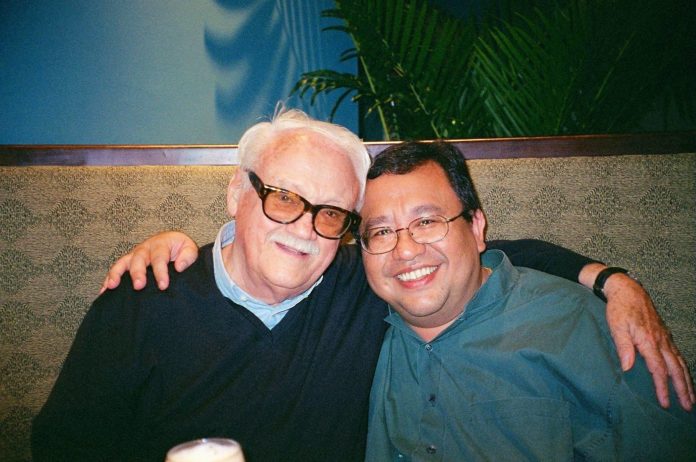
About 30 years later, he would share the stage with Thielemans at the Victoria Concert Hall as part of the Singapore Arts Festival.

Jeremy Monteiro with his idol, Belgian-American jazz musician, Toots Thielemans. They met and performed together in 2002. (Photo: Jeremy Monteiro)

Dubbed Singapore’s King of Swing, Mr Monteiro, a jazz pianist, singer and composer, has won multiple awards including the Cultural Medallion in 2002 and performed with jazz greats such as James Moody, Ernie Watts and Lee Ritenour. He is also known for composing National Day songs such as One People, One Nation, One Singapore.

Today, he performs at festivals and jazz clubs all over the world and produces albums for himself and others. In fact, he will be producing Laura Fygi’s next album.

SERENDIPITY

Mr Monteiro shot to international fame with his 1988 performance at the prestigious Montreux Jazz Festival in Switzerland.

“Although I played for only one night, the coverage in Singapore across many media lasted almost eight months. This allowed me to suddenly come to the forefront of the collective consciousness.”

He was the first Southeast Asian musician to perform with an American band on the main stage of an international jazz festival.

“It was serendipity. It just so happened that the Montreux festival director was having a meal at a cafe where they were playing an album of mine. He heard it and said, ‘We must get this guy’.”

At that point he was a nobody. He was part of a band, Monteiro, Young and Holt. Young and Holt were the original drummer and bass player in the Grammy award-winning Ramsey Lewis Trio from the US.

“They started to come to Singapore in the 80s. When they came over, I started playing with them and I asked them to form a project band with me.”

Monteiro, Young and Holt received a three-minute standing ovation at Montreux.
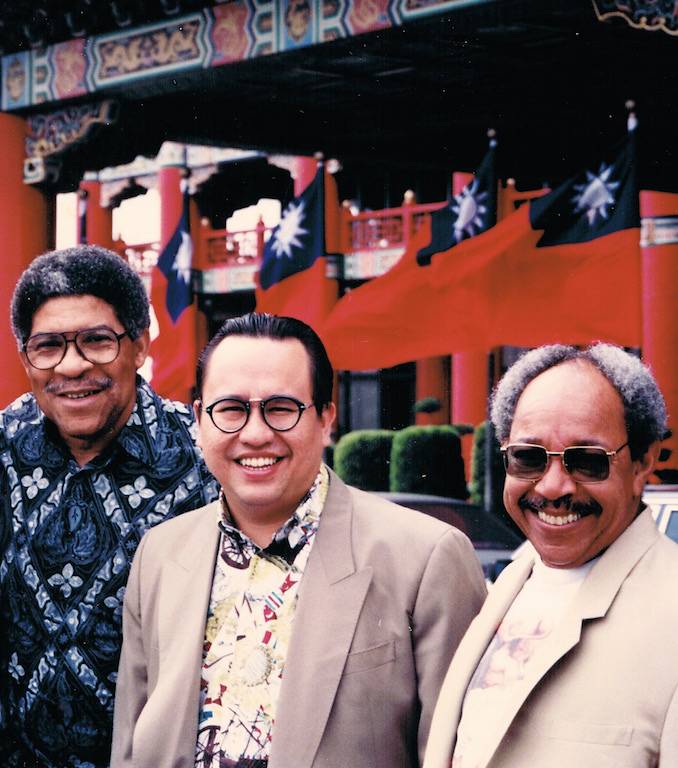
Redd Holt, Jeremy Monteiro & Eldee Young. Redd Holt is still actively at 83 years old in Chicago. (Photo: Jeremy Monteiro)

He hadn’t imagined any of this when at 16 he decided he was done with school.

“I was a decent student until I hit secondary 3. At that point, I started to become very interested in music.”

He had been taking music lessons since he was seven years old and music was an intrinsic part of family life.

His father, a policeman, moonlighted as a jazz guitar player. He would have jam sessions at home and bought jazz records that would fill the house with melodies practically all day.

“I was trained in classical piano, but I loved jazz more because I could extemporise, improvise. It was a wonderful mode of expression for me.

“I can’t really explain it. Playing music centres me. It allows me to to feel a congruency between my mind, body and soul. Instrumental music especially is the language of the heart. It allows me to communicate without saying a word.”

HIS DAD “SABOTAGED” HIM

While his dad was a musician, his son’s ambitions to go into music full-time made him nervous because “it wasn’t an easy life.”

“He started to sabotage me in the best possible way, wanting me to concentrate on my studies. He said he’d send me to the best university if I did well for my O-level and A-level exams. I deliberately didn’t do well at O-levels because I didn’t want to go any further.”

When asked if he felt any fear taking what’s deemed to be a risky path in a Singapore that emphasises academic excellence, he says, “No, I didn’t feel any fear. Maybe it was just youth.”

His fearlessness paid off. He committed himself fully and did just fine, starting as a musician at Chinese nightclubs to pay the bills. 

His mother was pivotal in his entry into jazz clubs in Singapore.

She was a private nurse to an old man who had just had heart surgery at the time.

“He owned a club and when she told him I was a jazz pianist, he gave me a job.”

For many years, Mr Monteiro was a session pianist and performed on more than 300 pop records.

GENERATIONS OF JOBLESS MUSICIANS

While Mr Monteiro still makes “decent money” doing jazz gigs, both overseas and in Singapore at corporate events and clubs, he bemoans the dearth of jazz clubs in Singapore.

Many have closed over the years.

“The Government has done amazing things with education. Having things like School of the Arts, and La-Salle and the Nanyang Academy of Fine Arts. My worry is that a lot of musicians who graduate from these institutions end up having no gigs. They just have nowhere to play. They’re jobless.

“I’m already established so I can get jobs overseas and at functions in Singapore. But all these musicians will be coming out with their degrees or diplomas in music and what they end up doing is going back to teach the next generation of jobless musicians.”

Perhaps there is no demand for jazz musicians, which would explain the club closures.

“Well, people started getting more distracted. There are so many things you can do at home now to entertain yourself.”

But he believes that if live entertainment were to be made available in heartland neighbourhoods, there would be a healthy demand.

“Nowadays, we have new towns that have everything. So of course, people don’t want to leave their neighbourhoods.”

LOOSEN PUBLIC ENTERTAINMENT LICENSE RULES

“If we made live entertainment available at neighbourhood cafes and restaurants, I’m sure people would go. Our public entertainment license restrictions need to be loosened.”

There are obstacles.

“Within neighbourhoods, they worry about noise. There was one case of noise complaints from a particular establishment. They had some problems with licensing after that. But when I went to investigate, you couldn’t hear the music from outside the club. It was because at midnight, for some reason, everybody spilled over to the front of the club, and started making a whole lot of noise. The complaints were because of these people.

“So you should control the crowd that’s making noise. Maybe don’t serve alcohol at these establishments. But don’t control the bands, and the licenses.”

He’s deeply frustrated by this issue which he deems a “failing of our scene.”

“Our public entertainment rules and regulations are actually meant really for a time when there were gangsters in Singapore and girly bars and so on. Today, we have a different scene where there are also things like folk music places or jazz places that we can have. Provisions need to be made for these all over Singapore.”

Jeremy Monteiro performs all over the world, from Bangkok to New York. (Photo: Norhendra Ruslan)

This is especially important because making money out of CD sales is not lucrative anymore, he points out.

He rails against piracy and even music services like Spotify.

“It’s the lesser of two evils, but it’s still institutionalised piracy because the songs are going for a very low fee.”

But some have argued that piracy may not be such a bad thing. It at least increases exposure and that exposure generates more in terms of concert ticket or merchandise sales.

“Generally, people need to understand that to take someone’s music for free is the equivalent of walking into someone’s house and walking out with their things. We feel violated as artistes, musicians or filmmakers when people steal our work like that.”

What’s the solution then?

“The Government is doing things like blocking sites. It’s a bit of a cat-and-mouse game but I think they’re very much on it. They should be even more stringent because entertainment could actually be a huge part of the economy.”

To do his part to support the local jazz scene, he has started the Jazz Association of Singapore.

He’s rallying to bring jazz to the neighbourhoods and launching a scholarship programme for young artistes.

They also have an orchestra mentored by Grammy award-winning musicians and mentors.

THE LAST EMPEROR OF JINGLES

Mr Monteiro’s talent goes beyond jazz.

“In the past, at any one time, there would always be someone who had about 70% of the jingles market. In the early 80s, it was me. It helped me pay for my ‘jazz habit’. I had the means to, if there were a jazz festival somewhere in French Riviera, jump into the plane and go and listen.”

But even though he never saw jingle production as a passion, he put his all into it.

“My mindset was: I will produce the most amazing piece of music ever written in the history of mankind. That’s how I approach everything. Of course, after I walked out of the studio, I would just forget about what I did because that wasn’t really my artistic expression. But thankfully, even throughout my jingle career and my pop session work, I would go to my jazz gigs at night. These made me decent money too.”

His reign in the jingles production market came to an end after 10 years.

“Computer music started coming around and people could actually set up little bedroom studios. Many came from overseas too. That was the end of being able to have dominance.”

Hence he became known as “The Last Emperor of Jingles”.

He stopped altogether in the early 90s to focus fully on his jazz career and continued releasing albums.

In fact, one of his first few, Faces and Places, outsold saxophonist, Kenny G’s album in 1987.

FEELING FEAR

While he didn’t feel any fear as a teenager starting an unconventional career, Mr Monteiro did feel fear as an adult.

Between 1981 and 1991, he opened and closed seven recording studios.

“When I started getting really successful in jingles, I realised I didn’t like paying tens of thousands of dollars to recording studios every month. So I wanted to have my own. I would always find means to open the next one, maybe bigger and with better facilities. But the seventh one was bad. It was more than half a million dollars of investments and then, all of a sudden, my business went away because of the new production houses from overseas that opened here.“

He had about S$800,000 worth of debt and spent 10 years paying it off.

“I feared not being able to provide for my family, but we managed being very, very frugal.”

Today, he owns Showtime Productions, which is a business vehicle for his activities.

It books musicians for corporate functions and conventions and represent artistes.

While the business failures were painful, Monteiro says his childhood experience made it easier for him to accept a frugal lifestyle.

His father opened up a successful business after he retired from the police force.

“He got quite wealthy to a point where I remember we used to have two drivers in the family. One for him and my mum and one for me and my sister, Sheila. We’d go school in a chauffeur-driven car. But then the business took a turn for the worse and all that went away.”

“It was a culture shock. We moved from a big house to a small apartment. From travelling in a chauffeur-driven car to taking bus number 209 from our flat in Taman Jurong to school.”

It wasn’t tough for long though.

“I got over it. I remembered what my uncle said. As long as you have enough to eat, a comfortable bed to sleep in and a piano to practise on, it’s enough.”

“I’ve been made to feel humble many, many times and nowadays I never just judge a book by its cover. Some unassuming fella could jump at the piano and just kick your butt!” says Jeremy Monteiro. (Photo: Jeremy Monteiro)

NO GRAMMY OR OSCAR

The young Monteiro had bold ambitions. He wanted to win a Grammy and an Oscar for scoring a Hollywood film.

But none of this happened.

“I’ve only reached the entry stage of the Grammy Awards which is just below nomination.

“The one time I had a chance to do a score for a Hollywood B-movie, the project didn’t go ahead.”

Indeed, a lot has been said about Monteiro having performed with the greats of the scene, but why hasn’t he managed to become one of them in terms of recognition?

Was he just not good enough?

“At one point there were some people who wanted to try to help me be nominated for a Grammy. When I listened to what the process was all about, how political it was and how much money you needed just to get nominated – you have to have at least S$35,000 dollars to spend on PR agents and to even be heard – I thought to myself, do I really want to spend that kind of money?”

But why not? Isn’t that kind of recognition worth it?

“At that time, I didn’t have the money to even think about doing stuff like that and now, I wouldn’t want to waste my money on that anymore.”

“I don’t really care about being famous anymore. I’m happy with being recognised in this region. Most people start off with just loving the music and then they move on later on become more commercial. I’ve actually gone the other way.”

I ask if he fears that his not caring about being famous would be seen as as excuse for simply not being good enough. 

“But the thing that drives me to write, play and practice is totally different now. It’s no longer those things. Now my impetus is just really to produce the best possible music that I can produce. I’m lucky enough now where there’s a flow, there’s enough of an income that I don’t really worry so much about awards. I just completely feel in love with music again. ”

OUR COLONIAL HANG-UP

However, the lack of recognition of local musicians on home soil bothers him.  

He attributes it to Singaporeans’ “colonial hang-up”.

“Some bands in the past had a good run. But even then, sales were not fantastic, not like those for American artistes.”

This unfortunately extends to all other products as well.

Two years ago, he launched J Monteiro watches in celebration of his 40th anniversary in music.   

“I went in with a very prominent Singaporean watch maker who has got an international brand that’s now global. When we started off, we were struggling but the moment we decided to move our manufacturing from Hong Kong and Singapore to Germany, our sales went up because of the ‘Made in Germany’ mark.”

“You might be able to find quick fame, but if you’re not ready to put in the work for the long-term, you won’t get anywhere,” says Jeremy Monteiro. (Photo: Jeremy Monteiro) 

GOVERNMENT NEEDS TO REACH OUT TO ARTISTS

There are many other positives in Singapore though. He praises the Government’s efforts to support the arts.

“Things like the Arts Creation Grant are unheard of in some countries.”

However, he says the grants application process, while less onerous than before, is still an issue.

“It’s still quite onerous. So sometimes the people who get the grants are not those who necessarily deserve it, but those who are really clever at filling up forms.”

Mr Monteiro feels the authorities could also afford to boost outreach efforts.

“An old artist with a lot of talent who spends a lot of time in his studio may not be aware of your grants. So have an arts officer go and help these artists.”

However, hardship is par for the course, he says.

“In New York, the best actors on Broadway and off Broadway are waiting tables two-thirds of the time to pay their bills. It’s part of journey. When you get better, you’ll make more.”

“Complaining doesn’t do any good. You’ve really got to just get on with it.”

LEARNING LESSONS AND MAKING AN IMPACT

“With social media these days, a lot of people survive on the dopamine rush of ‘likes’. You might be able to find quick fame, but if you’re not ready to put in the work for the long-term, you won’t get anywhere. It’s a lesson many artistes learn.”

He himself has learnt many over the years including humility.

“I’ve learnt to remember that we are masters of our own level. Nothing more, nothing less. There will always be people who are much better than you are.

“I’ve been made to feel humble many, many times and nowadays I never just judge a book by its cover. Some unassuming fella could jump at the piano and just kick your butt!”

While he’s proud of his musical career, he does have some regrets.

One of them is having lost money in his production businesses.

“I would actually be quite rich now if not for the fact that at some point I lost everything, lost all my money, almost lost my home. I think to myself, why did this happen? Why did I have to suffer this?”

He quickly turns this around though.

“Maybe the universe designed this to happen because I’m actually, by nature, quite a lazy person. If I were rich, if I had won the lottery or if I had never lost any money, I’d be sitting on a pile of cash now, but I would not have done all the things that I’ve done and I would not have worked so hard to create music, to reach out to audiences.”

When asked about the proudest moment of his career so far, Mr Monteiro struggles.

“Having done this for over 40 years, I really can’t remember everything. Sometimes the best performances happen in an empty jazz club late at night when there are only six people listening to you. Someone in the audience of six could be tearing because they loved the way you played a ballad.”

No doubt, Jeremy Monteiro wants to continue having this impact on others, similar to the impact his idol, Toots Thielemans had on him more than 40 years ago. 

Source link

Pokemon fun run sees 50% drop in turnout this year

0

SINGAPORE: The second edition of the Pokemon Run Carnival saw 3,000 fans turn up for the event on Saturday (Jan 27), compared with 6,000 runners and spectators last year, mainly due to competition from two other events on the same day.

According to co-organiser Infinitus Productions, the low turnout had to do with a “clash of dates” with the Safari Zoo Run and indie music gig St Jerome’s Laneway Festival.

“I would attribute it to the choices that consumers have for events nowadays so the attendance is quite spread out. Today … there are three events competing for the similar target audience,” said Mr Randy Tan, general manager at Infinitus Productions.

Mr Tan added that the company remains confident in the run and is looking to bring a fresh concept next year, including possibly expanding the carnival area.

“It’s really just a clash of dates today … Runs target the same type of people – families. Competition is strong but that shouldn’t stop us,” Mr Tan said.

“As long as you make the concept fresh and something that people would want to go for then people would still want to attend,” he added.

The Pokemon Run Carnival is a 5km run with Pokemon-themed games, activities and food. (Photo: Christy Yip)

The event, held at the Marina Barrage, sported both a 5km fun run and a Pokemon carnival filled with games, activities and gourmet delights.

The event, held at the Marina Barrage, sported both a 5km fun run and a Pokemon carnival filled with games, activities and gourmet delights. (Photo: Christy Yip)

After a warm-up session guided by Pikachu, aspiring Pokemon Trainers eager to catch ‘em all set off to conquer a slew of brand new challenges along the 5km course.

Fans take a picture with an inflatable Pikachu at the Pokemon Run Carnival on Saturday Jan 27, 2018. (Photo: Christy Yip)

Participants faced unique obstacles in fire, water, electricity and grass element zones across the route that passed through Gardens by the Bay.

There was also a Pikachu parade and a newly choreographed Pikachu dance performance.

Several Pikachu mascots made an appearance at the Pokemon Run Carnival held on Saturday (Jan 27). (Photo: Christy Yip)

“The Pokemon Run Carnival 2018 is a family-themed lifestyle event that brings people together through the joy of the Pokemon universe, encourages newcomers to discover the joy of running, and creates bonding memories between loved ones,” said Mr Jeffrey Foo, director of Infinitus Productions. “We’re proud to have organised the event in Singapore for the second time”.

Source link

Jacky Cheung serves up a spectacular extravaganza that leaves us breathless

0

Is Jacky Cheung superhuman?

His three Malaysian shows at Axiata Arena, Bukit Jalil this weekend are the 132nd, 133rd and 134th shows of his worldwide Jacky Cheung: A Classic Tour, which started last year. But the 56-year-old Cheung did not show any signs of fatigue throughout the show on Friday (Jan 26).

Well, he may not be a superhuman, but he certainly is a super star. Tickets to Cheung’s concerts were the hottest item in KL over the weekend, with tickets going for up to RM11,400 on the secondary market, and he delivered a massive spectacular extravaganza to match the hype.

During the show, Cheung said that the reason he called this “A Classic Tour” is because he wanted to perform the songs in the most classic way possible, harking back to a show he once did in 1987 which had a similar four-sided stage.

Despite having more than 33 years worth of hits under his belt, Cheung still managed to get through most of them during the three-hour-long show, and even included a few new ones as well. When he wasn’t singing, his crowd interaction also had the fans eating out of his hand.

“I don’t get to speak in Cantonese much in shows outside of Hong Kong, So, whenever I come to Malaysia, it feels like I am home!” he said at one point.

The show saw him performing on a spectacular four-sided stage that changed constantly throughout the show, making it a dazzling visual feast for the eyes.

Conceptualised by Cheung, the stage itself was a thing of wonder. Almost the entire stage was made up of movable parts, constantly rising and falling to the whims of each song, changing skins seamlessly from molten lava to flowing waterfalls and crumbling high rise buildings to golden mechanical clocks.

This was a show where every song was a spectacle, where every movement, note, and beam of light were choreographed down to the most minute detail.

Every single song was given its own unique stage and scene. On the rocking Legend Of The Wolf, giant billowing wolves stalked the stage. During Blessing, the stage transformed into a cake-like pedestal complete with dancing kings and queens and giant portraits of drumming soldiers. Magical, twinkling lights swirled around Cheung as he sang Spring Wind Summer Rain.

And best of all, during a massive medley of most of his greatest hits (including Kiss Goodbye, Every Day I Love You More and Amour, among others), the stage rose, fell, and morphed as Cheung moved around it.

At times, it was as if the stage had a will of its own, one that was being manipulated by the God of Song himself.

This was also an immersive concert unlike any other. The entire stadium was treated as part of a stage, and even the audience was not spared. Each fan was given a glowstick that was also synchronised to the music and production, changing colours constantly to match the song, flickering and swaying like a sea of magical stars.

Of course, the most advanced and polished stage production in the world would be meaningless without a star to orbit around. And Cheung was the brightest star in the entire hall.

For all the glitz and glamour surrounding him, Cheung’s voice was still the greatest highlight of the show. Transitioning effortlessly from fast dance songs and forceful rock songs to powerful ballads, his vocal performance was impeccable throughout the show. Even when it was just him and Malaysian guitarist Jamie Wilson on stage, his voice alone was good enough to keep the entire stadium enthralled.

I guess there is a reason he is called the God of Song. It’s hard to think of any other Chinese pop star who can sing like Cheung does, perform like he does, and maintain that level of quality for three hours straight, and do that for three days in a row.

What a show this was. What a spectacle. And what a superstar Jacky Cheung is.

Saturday, January 27, 2018 – 19:55

Others

Source link

Meet Singapore's Parkour Aunties

0

Singapore

Saturday, January 27, 2018 – 19:23

The Straits Times

Others

Source link

8,000 soldiers take part in largest mobilisation exercise since 1985

0

SINGAPORE: About 8,000 soldiers and 700 vehicles took part in a mobilisation and equipping exercise (MOBEX) on Friday and Saturday (Jan 26 – Jan 27), in the largest such exercise since 1985.

The MOBEX is a drill conducted regularly by the Singapore Armed Forces (SAF), and is aimed at validating the operational readiness of units on manning duties, as well as ensuring that SAF’s activation processes are kept warm.

Amid the growing risk of terror in the region, a spectrum of homeland security threats was simulated during MOBEX. 

For example, soldiers were activated to respond to an active shooter scenario at the Singapore Sports Hub, where the soldiers conducted cordon and search operations together with the Singapore Police Force officers and Sports Hub security officers. 

Soldiers from the 3rd Battalion, Singapore Infantry Regiment (3 SIR) and security personnel from Sports Hub at the personnel access control point, apprehending a member of the public who did not comply with the instructions. (Photo: MINDEF)

3 SIR soldiers responding to an unauthorised vehicle attempting to enter the vehicle access control point. (Photo: Mindef)

“This time round we bring the troops out to a very realistic, iconic location here at Sports Hub. I think this will further reinforce their commitment and conviction to make sure Singapore is safe and secure,” said assistant chief of the general staff (operations) Brigadier General (BG) Ng Ying Thong. 

Such exercises also test the coordination between various agencies and business stakeholders in the event of terrorist attacks.

Trooper Corporal (CPL) Gabriel Chua, whose 3 Singapore Infantry Regiment was part of the exercise, called the experience an “important” one for soldiers. 

“It’s quite rare nowadays to see a conventional war. It’s going to be all about terrorists attacking public places – soft targets. So, I think it’s quite important that we are prepared for such an event,” he said.

REDUCED MOBILISATION TIME

The MOBEX exercise was conducted at Mindef’s new enhanced One-Stop Mobilisation and Equipment Centre (MEC) at Selarang Camp.

The MEC mobilises and equips soldiers with the assigned equipment, all under one roof.

Soldiers during MOBEX on Jan 27, 2018. (Photo: Deborah Wong)

The new MEC also has new self-service kiosks, reducing the in-processing time from one minute to about 20 seconds.

NSman Shentil Samugam, who is on his third mobilisation, said that the entire process from signing in to drawing equipment and going through soldier fundamentals took about 1.5 hours.

He added that this process has helped him save about 80 per cent of time from before.

(Additional reporting by Deborah Wong and Ahmad Khan)

Source link

34-year-old man arrested for riding e-scooter into tourist at Chinatown MRT Station

0

Singapore

Saturday, January 27, 2018 – 12:57

The Straits Times

Others

Source link

19 years on, BoA doesn't want to be called 'veteran singer'

0

There are certain images that K-pop legend BoA, who has spent nearly 19 years in entertainment, keeps away from the public. Her seemingly confident and uptight image seems incompatible with letting loose. She was a “steadfast” musician who pioneered through the rugged K-pop world from the age of 13.

And in her upcoming single and first reality show, the veteran singer decided to unveil her true and different selves that weren’t always depicted in the media.

“As I got older, I got comfortable with revealing myself. In the past, I’ve feared a lot of things. I thought people just hated me, maybe because I was criticised a lot since I was young. Even when facing reporters like this, I just came to the conclusion, ‘They will hate me,'” said BoA on how she decided to open herself up through her new projects during a media conference for the new single “Nega Dola” and reality show “Keyword #BoA,” in Seoul on Friday.

“Nega Dola” reflects the singer’s new approach. In the hip-hop-based girl-power dance anthem, BoA becomes an empowered woman who can easily blow off a man obsessing over her. The aggressive song may even include some unpleasant lines for male listeners, the singer joked.

“Some may think it is weird of me to try this kind of music. I’ve been thinking of the kind of girl-power anthem, like my hit ‘Girls on Top,’ that fits my age, 32, and I thought ‘Nega Dola’ was a good fit,” she said.

She also explained the song was a result of her efforts to engage more in the public’s tastes for infectious catchphrases, while she had instead focused on quality in her previous works.

BoA also shared that shooting “Keyword #BoA” was a fresh experience for her. The show takes the form of a “rolecumentary,” to use programme director Kim Dong-wook’s term, as Key of K-pop act SHINee, who considers BoA his “role model,” features as an observer who joins the songstress in sharing her daily life. In the down-to-earth show, BoA jokes, imbibes in a few drinks and talks about her loneliness as a superstar, in a more stripped-down way than ever before.

Director Kim, who accompanied BoA at the press event, said he decided to cast Key, BoA’s longtime fan, in order to show her in a fresher perspective, one that doesn’t come from a programme director or the artist herself.

😘

😘

A post shared by BoA (@boakwon) on

//platform.instagram.com/en_US/embeds.js

After almost 19 years, BoA is a born-to-be musician who appears the happiest onstage. Asked if she plans to nurture the next generation of K-pop stars or junior artists, as she had done as a mentor for the second season of “Produce 101,” the singer answered, “I don’t have any plans to nurture junior artists for now, and I think it’s too early for that.”

“I’m still in my early 30s, and I want to sing and dance on stage when I have energy. My joints are still fine. All of my experiences as a singer will be of good use long into the future, when I get old enough to finally train others,” She said. “Please don’t call me a ‘veteran singer,’ I’m still young.”

Having debuted under S.M. at age 13 with “ID; Peace B” in 2000, BoA continued her winning streak both in Korea and Japan with hits like “No. 1,” “Atlantis Princess,” “My Name” and “Hurricane Venus” and “Only One.” The high-profile singer also appeared in the second season of Mnet’s audition programme “Produce 101” as a mentor from April to June last year.

“Keyword #BoA” aired its first episode Monday via Naver’s V Live and Naver TV. It will air every Sunday on TV channel XtvN from this week. After promoting her new single for the first time on Mnet’s “M!Countdown” on Thursday, BoA will embark on a Japanese tour in March.

Saturday, January 27, 2018 – 12:34

More about

K-pop singer

Others

Source link

Tesla's high-tech Model S bowls over gadget-loving financial advisor

0

Singapore

Saturday, January 27, 2018 – 11:52

The Straits Times

Others

Source link

Steven Spielberg to remake 'West Side Story'

0

It’s one of the most beloved movies in musical cinema and now Steven Spielberg is giving “West Side Story” a makeover – except this time, he is recruiting Latino talent to play the lead roles.

The original film version of Leonard Bernstein’s musical – Shakespeare’s “Romeo and Juliet” reimagined in the world of warring New York gangs – came out in 1961, winning 10 Oscars and captivating a generation on the cusp of huge societal change.

For the remake, Spielberg is teaming up with playwright and screenwriter Tony Kushner, who has previously collaborated with the three-time Oscar-winning billionaire director on “Lincoln” (2012) and “Munich” (2005).

Casting director Cindy Tolan has issued a casting call for actors aged 15-25 to play the lead roles of Tony, Maria, Anita and Bernardo. Candidates “must be able to sing,” with dance experience “a plus,” it said.

The ad also specified that Maria, Anita and Bernardo were Hispanic characters.

In the original movie, the Puerto Rican character Maria was played by actress Natalie Wood, and Bernardo by George Chakiris, the son of Greek immigrants.

Anita was played by Rita Moreno, who is Puerto Rican and won an Oscar for her work.

“West Side Story” would be the first musical for 71-year-old Spielberg. It comes as the genre undergoes something of a renaissance in American cinema.

Last year’s live-action “Beauty and the Beast” and “The Greatest Showman,” and 2016’s “La La Land” have all entered the annals of the top 10 highest box office takings in the history of North American musical cinema.

“West Side Story” pits warring gangs, the Sharks and the Jets, against each other in Manhattan’s Lincoln Square on the Upper West Side.

Today, the neighbourhood is most famous as the site of the Lincoln Center, America’s premier performing arts venue where the Metropolitan Opera House first opened in 1966 and where apartments today can fetch millions of dollars.

Saturday, January 27, 2018 – 11:24

More about

movies

Others

Source link

On The Job as a wet market butcher: A dying trade being killed off by supermarkets?

0

SINGAPORE: Apprehension would best sum up my thoughts prior to trying my hand at being a butcher’s assistant at a wet market in Sengkang.

Aside from the smell of raw meat and blood, I was worried about a butcher’s knife slipping in my wet hands with disastrous consequences. I decided that I would count my experience as positive if I completed my stint with all my fingers intact. 

Standing in front of a wooden chopping block, with a huge, 1.5kg stainless steel meat cleaver in one hand while holding a 30cm-long lump of beef in place with the other, I braced myself for the worst. I had already botched a prior attempt due to my caution and nervousness. It was time to be bold and wield the huge blade with a degree of force and confidence!

It was a simple task in principle: Cut the big lump of meat into several medium–sized portions that customers can use for their daily needs. 

Chopping up beef cubes to size. (Photo: Hanidah Amin)

However, to actually do it with the necessary force was a significant challenge. “This is it, this is it,” I told myself, as I hesitated nervously while trying not to mangle and destroy any more valuable meat.

Mustering as much dexterity and power as possible, I heaved the blade down with more force than my earlier try, as metal and stubborn meat collided with a dull thud on the wooded board.

“Success!” I exclaimed, admiring the clean incision on the meat from the good cut. Upon closer inspection, however, I was also millimetres away from lopping off my left index finger.

Sensing the close shave from just over my shoulder, fellow meat stall assistant Mr Roslan intervened and relieved me of my chopper. He then wielded it with a level of confidence and competence that only a man with three decades of experience could possess, as he expertly diced up the remaining meat slabs into neat pieces in under a minute.

A DYING TRADE?

The inherent risk of handling sharp knives as well as having to be on your feet for a seven-hour stretch are just some of the reasons dissuading people from venturing into the meat business, my boss at the stall told me.

“I would say that cutting raw mutton would be the most difficult as its texture is tough,” said owner Rasheed of Rasheed Meat House at Sengkang New Market. “It requires some skill to it, and for me I took at least five months to learn how to carve away mutton fat.”

Revealing a 2cm-long scar near the tip of his left index finger, the 43-year-old meat merchant explained: “As you can see, there are instances where I accidentally injured my finger on the job. Even though you’re alert, the stress from dealing with many customers in addition to exhaustion from waking up early – all it takes is just one moment to be lulled into carelessness.”

He added that the risks and the endless early mornings mean that not many people want to venture into this trade.

Laying out the beef for display. (Photo: Hanidah Amin)

According to the National Environment Agency (NEA), the number of NEA-licensed market produce hawkers suffered a 12 per cent decline in the past decade. It fell from 6,264 wet market hawkers in 2006 to 5,485 in 2016.

It is a trend that is unlikely to improve in the future, according to Nanyang Technological University (NTU) Assistant Professor Charlene Chen. “Most wet market stalls are family-run businesses. With increasing education among the children of these stallholders, succession has become a problem,” she said. “Furthermore, given the physical labour and odd hours involved, fewer people are willing to work in this line.”

This means that many stallholders end up closing their business for good when they cannot cope with the daily demands, said the Nanyang Business School lecturer.

Having inherited his late-father’s stall in Jurong a number of years back, Rasheed is something of an anomaly. “I was formerly from the aviation industry and back then it didn’t cross my mind to take over my dad’s business. I found his job smelly and not as glamourous as my work back then,” he said. 

“When my father got sick (before his death), I helped out and found that I was quite good at cutting meat.”

Doing reasonably well after taking over the business, he then decided to expand about a year ago by buying another wet market meat stall in Sengkang. “I find that the money is better than my previous job,” said the former air steward.

“For the Sengkang stall especially, being the only halal meat stall at the wet market, I’d say that the customer traffic is not too bad,” he added.

A SLOWING BUSINESS

During my stint as a butcher’s assistant over two weekdays, I estimated there were about a hundred customers each day, most of whom were maids and senior citizens.

I also observed that quite a number of Filipino and Chinese expatriates – who presumably live around Sengkang – patronise the stall for their meat needs. 

Younger Singaporeans were, however, thin on the ground, and this presents another challenge for wet market stallholders. 

“It’s quite uncommon to find young Singaporeans buying meat from wet markets these days,” observed stall assistant Majid Babu, 60, who has been a butcher for over four decades. “It’s usually the elderly plus a good number of Chinese and Filipino foreigners, who are more familiar and used to wet market shopping.”

Having worked at other meat stalls in his career, Mr Majid recalled how things were in the 1970s before supermarkets became so widespread. 

“In those days, and even in the years before that, the wet market business was booming,” he said. “Stall owners ruled the roost – if a customer bargained too low, some sellers would even be fierce enough to toss the goods in their direction and tell them to take it or leave it.

One of the basic skills of the job involves cutting a whole chicken into 14 parts. (Photo: Hanidah Amin)

“Nowadays, there are fewer wet markets in Singapore and even relatively newer ones have closed down. A good example is the market next to Pasir Ris West Plaza, where I used to work. It opened only about 20 years ago, and recently closed down to make way for a bigger supermarket,” he said.

It is the cleanliness and convenience of supermarkets that have spelled the end for a good number of wet market hawkers, according to Nanyang Polytechnic (NYP) School of Business Management deputy manager James Sim. 

“The trend is in favour of supermarket chains.  Singaporeans enjoy being able to purchase everything they need easily in a comfortable environment – air-conditioned and very sanitised,” he said.

“Popular eateries and other retail outlets are also located in malls where the supermarkets are – making it a winning combination, especially during the weekend. As such, this trend is likely to continue,” he added.

CULTURAL SIGNIFICANCE

Still, the social aspect of shopping in a wet market is arguably something that supermarkets struggle to reproduce and remains a key advantage for many customers.

When I mistakenly placed chicken gizzards instead of chicken hearts into a plastic bag for weighing, I was met with chuckles and facepalms from a customer.

“You’ve got to forgive him. It’s his first time at the job,” said stall assistant Mr Roslan as he came to my rescue once again.

“Ah, it’s okay … you’ll be an expert in no time lah, bro. I’m sure of it,” replied the customer, amicably calming my self-doubt as he handed me payment for his rectified order. 

Packing meat pieces to sell to a customer. (Photo: Hanidah Amin)

One-on-one interactions like this are commonplace in wet markets. 

Often filled with the sounds of merchants wooing customers and shoppers haggling for a bargain, these experiences are hard to reproduce among the ordered shelves of supermarkets. “Customers in the neighborhood who regularly patronise certain stalls form lasting relationships with the stall holders, and appreciate the friendly and personalised service,” said Nanyang Business School lecturer Prof Chen.

 She added: “Additionally, wet markets provide a very unique sensory and cultural experience. The sights, sounds, and smells give a sense of nostalgia. You can see different cultures coming together and mingling in these common spaces – an exemplification of our multi-cultural society.”

Playing an important role in the community, wet markets used to be a hive of social activity as new friends were made while families bonded over morning trips to get groceries. “(Wet markets) were a cornerstone of community of life in Singapore – a place where people would spend time together with their friends and loved ones as they did their errands,” said NYP School of Business Management lecturer Mr Sim. “It still plays a huge part for a large section of baby boomers.” 

He added: “The social role played by the wet market will diminish over time as the demographics of Singapore change. The declining population of baby boomers who form a large percentage of wet market customers will possibly reduce the significance of the role that wet market plays socially. 

“Culturally, it is important to acknowledge that wet markets play an important role so that the younger generation can still appreciate its existence.”

WILL WET MARKETS BECOME EXTINCT?

Despite some doubts about the long-term future of wet markets, they still offer advantages over their cleaner, cooler supermarket rivals, especially when it comes to cost.

Having reached inside the refrigerated display to grab two slabs of beef shin, I laid them out on the counter for an elderly Chinese customer who wanted to inspect the quality before buying.

With my limited command of Mandarin, I showed her a S$10 note, together with four S$2 notes to communicate the price. After she had made her choice,  I then packed the beef shin – also known as ‘golden coin muscle’ – into a yellow plastic bag and exchanged it with two S$10 notes she handed over.

“Thank you very much,” I replied in broken Mandarin, as I handed over her change.

A popular meat cut among Chinese and Filipino customers, beef shin can be more costly for customers who do not buy from wet markets. “You can check in supermarkets – you’ll find that they sell (golden coin) muscles for S$24,” said stall owner Rasheed. “Here it’s only S$18, and you can observe many Chinese and Filipino buyers who purchase it to cook stew.

“For wet market stalls, our overhead costs are not as high as that of supermarkets. That is why we can price certain things cheaper,” added Rasheed, whose stall rental in Sengkang is S$10,000 per month.  

“I also only choose the best brands of meat to sell, based on my years of experience. Many customers return because they get the best and tastiest cuts from my shop,” he said.

Despite rising competition from supermarkets, Rasheed believes such dynamics account for the survival of wet markets in Singapore in the modern era. “People will continue to shop at wet markets because it involves a simple transaction that is easy for all ages – you can choose what you want based on quality, you pay in cash immediately, and you’re done,” he said.

Weighing out chicken pieces for sale to a customer. (Photo: Hanidah Amin)

As such, wet markets are here to stay for the moment at least, according to Nanyang Business School’s Prof. Chen. “Many people living in Singapore, including expatriates, still see the benefits of buying their produce and goods from wet markets,” she said. “Items from wet markets are perceived to be cheaper and fresher.

“I foresee that stall numbers will continue to dwindle, but given current efforts to conserve wet markets and their longstanding appeal among many consumers and visitors, I doubt they will disappear completely,” she added.

Armed with improved knife-handling skills and a better insight into the meat business, I could not help but wonder if I would make a good butcher who could somehow arrest the falling numbers.

Thumbing my still-intact index finger, however, I decided to best leave it to the experts.

Source link