Home Blog Page 1166

Commentary: Arts festivals in Singapore a fad?

0

SINGAPORE: Just this week, many readers would have attended the Singapore Art Week.

No doubt a few looked forward to showcases where they can purchase art pieces.

But most went down to soak in the atmosphere, get involved in the activities and check out some street art.

Where a good number of arts festivals have sprung up in Singapore in recent years, cynics are asking whether such events are a fad that will fade from public interest with time.

A few have asked even more pointedly, what’s the point in funding these events?

ART AS CONSUMED EXPERIENCE

Arts festivals are a popular feature in many countries, both in developed economies such as the UK and Denmark and growing cities in Southeast Asia. 

Within Singapore, my opinion is that they will stay, and adapt to changes in supply and demand conditions – they are not just a fad.

Given that personal spending on the arts and culture is discretionary, it’s no surprise rising affluence in Singapore has fuelled increased demand for arts and culture.

Furthermore, greater exposure to a range of arts and cultural services through travel, overseas work or study, as well as advances in technology and extensive use of social media may have also boosted demand. 

Arts festivals, where art is consumed as an experience viewing exhibits and performances, rather than the purchase of physical works, are just as much an acquired taste in which demand accumulates over time.

Indeed, Singapore’s Population Survey on the Arts show that over the last decade, a larger proportion of its population have attended at least one arts event in the last 12 months.  

Banksy’s Rat And Heart stencil work for one’s Instagram pleasure. (Photo: ArtScience Museum)

In 2006, only a third of its population had done so. By 2015, this had risen to eight in 10.

Art has been said to broaden one’s mind and boost our creativity. Other benefits include enhancing one’s quality of life, providing personal enjoyment and promoting community bonding.

While our traditional notion is that art is consumed when works are purchased, research tells us arts festivities are leading to greater access to and increased engagement with the arts – especially when artists shed insight on their works and creative processes.

ART AS EXPORT

Arts festivals also pulls in tourism dollars in enhancing Singapore’s reputation as an arts and cultural hub and peppering the tourism calendar with new diary events.

When early art fairs were small and focused on selling works of art, attendees often include collectors who fly in from all over the world. 

It seems early mover organisers were not jumping onto the bandwagon of art fairs, but instead responding to a market opportunity – especially growing demand for affordable art among yuppies and a higher demand for Southeast Asian art among collectors.

Like many other trade fairs, arts festivals started as a way to make art buying easier by bringing all the galleries under one roof. As a model that both helped and disrupted the business of traditional art galleries, it was, at the same time, a timely response to a demand that private galleries have picked up on.

An interesting development is seeing how original arts festivals have responded to competition to offer value-added services.

For instance, the Affordable Art Fair organisers have put in place “activities aimed at children, a variety of talks open to the public, the emphasis on social value (for instance, raising the plight of cataract suffers in the 2017 November edition), the bringing together of local and international artists, and several types of workshops”.

Such an “art fair for everyone” brand of this event is unique and caters to those who don’t necessarily want to purchase art but appreciate the arts for what they are. 

Offering additional activities related to the main business of selling art may also help to sustain the art fairs in Singapore against the backdrop of increasing competition in the region.

Similar to Art Stage Singapore, since 2016, Indonesia has its own annual Art Stage event purported to be the bridge between the global arts world and Southeast Asia’s largest contemporary arts scene.

Visitors checking out Indonesia artist Eko Nugroho’s newly made mural for Art From The Streets. (Photo: ArtScience Museum)

HOW TO MAKE THEM STAY

In order for arts festivals not to fade away, organisers need to evolve and respond to the changing needs of its resident community, visitors, artists and cultural industries.

The survival of Singapore arts festivals will depend on whether they can sufficiently differentiate themselves from those newcomers in Southeast Asia, to build a distinctive Singaporean brand and stand up against competition from around the region.

Government policies in terms of funding and incentives still have a role to play, and the changing demographics, ethnic composition, preferences of the community and the type of tourists Singapore aims to attract are also crucial factors that will shape the landscape of the arts and cultural scene.

It can be tempting to see arts festivals as a sign of Singapore’s arrival as a cultured society. But competition to reap economic value will remain tough. 

Art festivals add depth to Singapore’s cultural scene, but they also provide opportunities to local and international artists to showcase their talent and work, enable business and skills development for creative enterprises, and contribute to the economy.

The challenge therefore is to sustain their relevance by ensuring balance in catering to both local and international tastes, and being mindful of having too many art events in a small city such as Singapore. 

The latter will lead to commodification and the loss of appeal if cultural events have an overcrowding effect.

Singapore is at the cross roads of taking its place as a culturally vibrant and creative economy. Art festivals can be a catalyst for the economic regeneration of cities such as Singapore.

If managed well, they can also be an effective vehicle for Singapore to progress in its journey towards cultural maturity. 

Renuka Mahadevan is an associate professor at the School of Economics at the University of Queensland. She studies the value of culture and tourism in modern societies.


Source link

‘I am home’: Actress Sheila Sim gets married

0

SINGAPORE: Mediacorp artiste Sheila Sim tied the knot with her fiance on Sunday (Jan 28), her agency said in a statement. 

According to The Celebrity Agency (TCA), Sim’s wedding consisted of a gatecrash, solemnisation, tea ceremony and lunch reception with 22 tables, of which 13 were occupied by family members. 

“All the invited guests are very close friends of the couple, people who have seen them grow up, friends whom they grew up with, friends who witnessed their journey and also some friends who flew in from Taiwan and Hong Kong,” TCA said. 

The venue decor was inspired by Disney Pixar’s UP and featured lots of balloons, the Mediacorp agency added. 

Sim said in the statement: “On this big day, being married to him, all I can feel is ‘I am home’.”

(Photo: The Celebrity Agency)

TCA said that after the wedding, Sim will be going on holiday to Japan, Nozawa. However, as she is currently involved in Channel 8 drama Reach for the Skies, she will not be going for her honeymoon until production ends in September.

Sim started her career as a fashion model and is now a partner of modelling agency Nu Models. The 33-year-old made her television acting debut in the 2013 drama I’m In Charge, and signed on to TCA last year

She told Toggle in an interview last January that she met her then-boyfriend on a dating app in 2016 and he proposed to her on a ski vacation in Japan after they had known each other for about six months. 

The actress also said in the interview that her partner is four years older than her and works in the banking industry. 

Source link

Photos: Chinatown all set for Chinese New Year

0

Singapore

Sunday, January 28, 2018 – 10:44

More about

Chinese New Year CNY 2018

The Straits Times

Others

Source link

Kris Wu becomes first Chinese artist to sing at Super Bowl Live

0

The National Football League recently announced Chinese singer and actor Kris Wu as Super Bowl LII Ambassador for NFL China and confirmed his debut at the 10-day live concerts leading up to the game.

Wu’s performance is slated for 16:00 local time on February 3, 2018, on the Verizon Up Stage in Minneapolis, the NFL announced.

As one of the most influential artists in China, Wu has a large fan base in his home country, with over 27 million followers on China’s Twitter-like Weibo platform and 5.6 million on Instagram.

The singer has topped the music charts in China with his singles “6”, “Juice” and “July”, and has recently become the first and only Chinese artist to hit No. 1 on iTunes with the newly released single “Deserve”.

He expressed his gratitude towards the NFL and Minnesota Super Bowl Host Committee for inviting him to the live festivities, saying that it is a great pleasure to be named “ambassador to one of the world’s most recognizable sports and entertainment events”.

“I look forward to participating in Tencent’s coverage and sharing my gameday experience with fans around the world,” the artist added.

The Super Bowl is the annual championship game of the NFL, a professional American football league, as well as the culmination of a regular season that begins in the last summer of the previous year. It is the most-watched TV show in the US, with 111.3 million people tuned in during last year’s Super Bowl LI.

The show is often compared to the China Central Television Spring Festival Gala, or Chunwan in Chinese, regarding the viewership. The latter is the Chinese state television’s special show produced for the Lunar New Year, held annually on the Eve of the Spring Festival, and is the most-watched TV programme in China. Last year, the show was watched by over 700 million viewers.

Though usually dubbed as the “US Chunwan”, the American football is not a widely-played game in China. As the NFL is eyeing global expansion, the inclusion of international musical talent in the event seems to be their new strategy.

Maureen Bausch, CEO of the Minnesota Super Bowl Host Committee, said that they were thrilled to host Kris Wu, while NFL China Managing Director Richard Young said they considered Kris “an extremely talented individual” who will be “a great representative for NFL’s rapidly growing fan base in China.”

WHAT?!🤔

WHAT?!🤔

A post shared by Galaxy Fan (@kriswu) on

//platform.instagram.com/en_US/embeds.js

Wu frequently appears in the world’s renowned fashion and sports occasions as well. He walked the runway for Burberry at the London Fashion Week in 2016, and has played at the NBA All-Stars in 2016 and 2017.

The Super Bowl Live’s stellar lineup this year also includes Brother Ali, Skylar Grey, X Ambassadors and many others led by Grammy-winning music producers Jimmy Jam and Terry Lewis.

Tencent Sports, one of China’s top digital streaming media lets, will cover and broadcast the Super Bowl LII games, other events, as well as Wu’s performance and gameday experience.

Sunday, January 28, 2018 – 15:00

More about

performance

Others

Source link

Adam makes me feel safe, says Malaysian singer Yuna

0

PUTRAJAYA – When singer-songwriter Yuna first arrived on the set of a commercial after a 16-hour flight from the United States back in 2013, she was ready to call off the shoot.

Then, she met assistant director Adam Sinclair.

“I remember feeling moody and I didn’t want to do the shoot anymore. Then Adam made me feel comfortable and safe.

“He kept checking on me, to make sure I’ve had something to eat,” she said during a press conference here, yesterday.

Yuna, 31, was moved by 33-year-old Adam’s kindness and that’s when she set her heart on him.

Luckily for her, the feeling is mutual.

“I’ve never met a personality or talent that has such a big heart like Yuna.

“She was very caring and attentive towards everyone else on our set that day. She kept saying that she’ll get her scenes done in two takes so everyone doesn’t have to stay long,” Adam said.

At the end of the 14-hour shoot, the pair maintained a close friendship.

Photo: The Star/Asia News Network

They became husband and wife at a private solemnisation ceremony in Bentong, Pahang, on Friday.

“The ceremony was beautiful. It was everything that I’ve imagined. I’ve always wanted a garden-style wedding.

“I remember feeling nervous when we had to delay the ceremony because of the rain. But thankfully, everything went well,” she said.

Yuna who is based in Los Angeles as an artiste signed to David Foster’s Verve Records, is prepared to maintain a long-distance relationship with her husband.

Adam will stay in Malaysia where he will continue to work as a video director.

“I’ve been working in LA for almost eight years now. All this while, I’ve always travelled back and forth between Malaysia and US.

“It’s not going to be easy to deal with the distance but we’re going to be okay,” Yuna said.

Adam said they have always stayed connected via Skype and WhatsApp.

After their wedding reception, Yuna will return to Los Angeles to focus on the release of her upcoming album.

She will then embark on an international tour to promote the album.

Sunday, January 28, 2018 – 11:00

Others

Source link

Baby saved after pregnant mum died in accident: Dad thanks medical team in heart-felt video

0

Singapore

Sunday, January 28, 2018 – 09:28

The Straits Times

Others

Source link

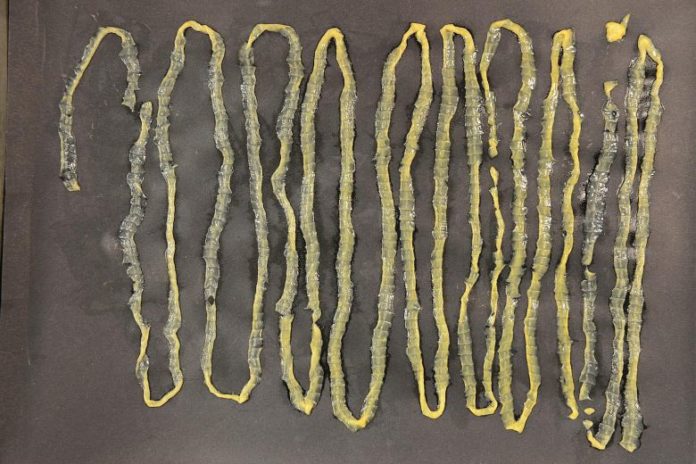
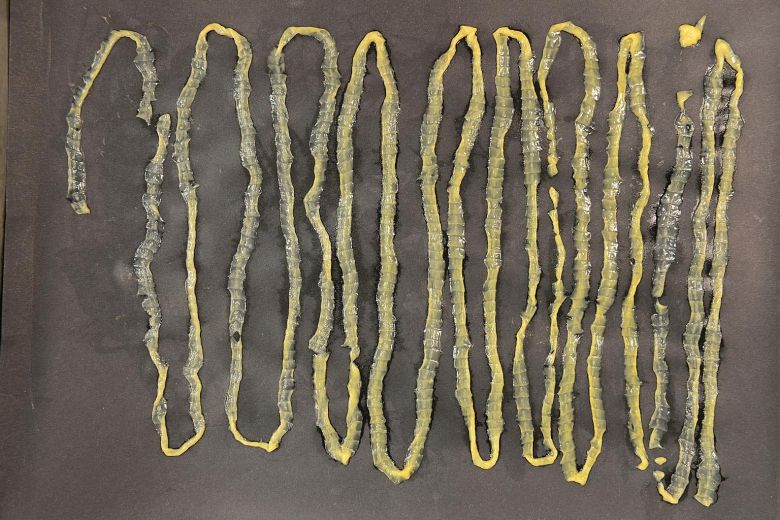
2.8m tapeworm found in Singapore patient who had no symptoms

0

Singapore

Sunday, January 28, 2018 – 09:25

The Straits Times

Others

Source link

Inside the children’s ICU, parents face hard choices, hope and painful goodbyes

0

SINGAPORE: She has been in and out of hospital at least 15 times since she was born. She has been rushed to the intensive care unit (ICU) multiple times over the past two years. She is three years old.

Xie Xinlin was born with spinal muscular atrophy, a rare genetic disease that causes muscles to weaken progressively. It is incurable.

When she falls ill with a simple cough and cold, she finds it very hard to breathe, and her body reacts severely. That is when she goes to the ICU, needing a ventilator to pump air into her lungs.

Each time, she is at risk of never returning home. What do Xinlin and her parents go through in the ICU, behind those closed doors?

For the first time, their story and that of other families can be told by Channel NewsAsia, which gained unprecedented access to Singapore’s largest children’s ICU, at the KK Women’s and Children’s Hospital (KKH).

From long, lonely waits to risky medical procedures, moments of pain, love and heartbreak – the five-part series Inside the Children’s ICU documented the children’s struggle to survive, and the work of the doctors who fought to give them the chance to grow up.

PADDLING FURIOUSLY, WITH NO ROOM FOR ERROR 

For about two months, the cameras captured the team of more than 20 doctors and nurses working together to provide critical care for the children, cope with emergencies, deal with distraught parents, and try to save those on the brink of death. (Watch the first episode here.)

How did they, together with the parents, make tough decisions, including those life-and-death ones?

In the words of senior consultant Mok Yee Hui, who now heads the KKH Children’s ICU, they must remain calm above all else, “even if (their) feet are paddling furiously underwater” in the “high-intensity, dynamic (and) fast-paced environment”.

But that is easier said than done, as there is no room for mistakes.

Children’s ICU senior resident Sudipta Roy Chowdhury.

For Children’s ICU senior resident Sudipta Roy Chowdhury, it did not take long – her first week – to get called into action on a challenging case. The patient was another three-year-old, Mohd Haris Dzulkarnein, whom she had to transfer to KKH.

Haris was fine the day before he went into hospital. Then he had a fever suddenly, and overnight, he was suffocating. 

He was first rushed to Changi General Hospital where his father, coincidentally, was about to undergo a heart procedure. Mr Buang Taib recalled: “I rushed down. I pulled out all my tubes. The doctors said I couldn’t go, but I said, ‘No, my son is in the emergency unit now.’”

But his son needed to be transferred to Singapore’s most advanced children’s ICU, at KKH. The hospital runs a Children Hospital Emergency Transport Service which, when activated, will send an ICU team to other hospitals to pick up children who need critical care.

Dr Chowdhury, a paediatrician-in-training, said of Haris’ case: “We thought initially it could have been due to pneumonia or some form of asthma exacerbation, because he has a history of asthma.”

But then his blood pressure also dropped, “causing his organs to start failing – his liver, his kidneys”. The medical professionals found themselves in a race against time to discover why. At one point, they were concerned his brain might get damaged.

WATCH: What does it take to work in the CICU? (4:59)

LOOKING AFTER THE PARENTS AS WELL

Situations like these are “a different ball game” from Dr Chowdhury’s previous neonatal posting, during which she dealt with premature babies.

The first week of her three-month-long clinical rotation with the Children’s ICU was “very challenging”, she said, adding: “(To) a lot of the patients here, we’re like the gatekeepers sometimes … the last line (of defence) in this hospital.”

This ICU team of doctors and nurses work round the clock to care for up to 16 critically ill children. 

Unlike other nurses who have five patients, the nurses here are in charge of only one or two children each – because of the close supervision and advanced life support needed for their life-threatening conditions. 

And the nurses do not tend only to the children.

Assistant nurse clinician Annabelle Zhang said: “Parents tend to be very stressed out and very anxious. We need to always be with them to provide them with reassurance.”

Within the Children’s ICU, most families are also assigned a social worker immediately to help them cope with the stress of having their child admitted.

Dr Mok said: “We can’t take away the fact that their loved ones are critically ill. But our team does understand that this is very overwhelming.

So we try very hard to support the families and the patients, and try to make it as positive an experience … as possible.

Sometimes that is as much a challenge as the search for answers to the medical problems.

As the team investigated the cause of Haris’ failing health, his father was at the bedside of his unresponsive son, lamenting to himself: “Why not me? Why my son?”

NO EASY DECISIONS

Haris’ case is not the kind usually seen in the ICU. Many of its children are those who return frequently to the hospital – such as Aulia Sofea Arwin, who was back for a medical procedure a month after being discharged.

Now three, she was diagnosed with childhood leukaemia at age two. She returned for an operation to get her central line – a tube inserted into one of her large veins, for medicine to be delivered – replaced.

An infection had contaminated the original line, and after four rounds of chemotherapy in the past year, Aulia’s immune system was vulnerable.

The ICU doctors managed to keep her bloodstream infection at bay with a cocktail of antibiotics. But before her condition could stabilise, a cut in her anus threatened to deal her another blow.

The doctors had to resolve whether to escalate intervention by creating a stoma bag to collect stools from her intestines. But that would require a major surgery – and Aulia’s parents had to decide whether to do nothing, or accept the risks of the procedure in a bid to speed up the healing process.

At one point, mother Shikin Rahman told her only child, who had spent two weeks in the ICU already: “You’ve been fighting all along, right? So you have to fight some more.”

STAYING CALM, WHEN ALL HELL BREAKS LOOSE

The decisions do not get any easier when parents defer to the doctors, for example in the case of nine-year-old Marcus.

One minute he was on a football field, the next he was in an ambulance with intense chest pains and his heart rhythm out of whack. A day after being admitted to the ICU, his blood pressure dropped drastically.

This and his erratic heartbeat were warning signs that he was in danger of multiple organ failure. “His heart function was deteriorating in front of our eyes, to a point that the heart was hardly moving,” said Dr Mok.

Five different machines are (sounding the alarm) … two nurses are calling you, one doctor is saying something … It’s challenging to remain calm and continue to function effectively when all hell breaks loose.

The doctors had to decide quickly whether to put Marcus through a high-risk procedure: Hooking him up to a heart-lung bypass machine.

Before they made the call, they spoke to his mother Sharon.

She said: “The moment (they) … told me his blood pressure has gone down, and he has to be moved to be supported by (the machine), that was already telling me that, oh my God, there’s a high chance I’d lose him.”

But the machine kept Marcus alive, pumping blood around his body. Nobody could tell, however, when or even whether his heart function would return. “There’s nothing I can do other than just pray that he’ll come back,” said his mother.

THE QUESTION OF WHEN TO LET GO

What happens, though, when a parent knows there is no cure for his child?

Mr Xie Ding Shan had brought his daughter Xinlin to the ICU a few times already. Once again, she was put on a ventilator for oxygen and a machine to help her cough out secretions such as mucus blocking her airways.

“The next flu or cough – we don’t know when she’ll get it – and she has to go through this again,” said Mr Xie. “So to me and my wife, it’s painful to see her suffer.”

They were told that Xinlin seemed to be weaker than before. The longer she was on the ventilator, the faster her muscles would deteriorate. But nobody knew if she would survive the “extubation” (being removed from the ventilator). 

Mr Xie said: “In case Xinlin can’t sustain (her breathing) or this extubation isn’t successful, it may be time for us to let her go.”

There was once when a young Dr Mok would have had a strong urge to intervene on her patients’ behalf. But the hardest lesson she has learnt working in the ICU is that technology and science are finite.

“There are more things that we have no treatment for than things that we do have treatments for,” she said.

As I advance in my career, it’s about the realisation of saying when enough is enough – when any further intervention is just going to cause more harm.

Dr Chowdhury has also been learning how to better channel her emotions.

“Death is quite commonplace in our profession. Some people think we get used to it; I don’t think we get used to it. I think we just have to know how to handle it,” she said.

“You wonder if you could have done something more, of course … but I think you’ve got to have closure … You want to make sure you’re still prepared to make sure that the next patient walks away fine from the ICU.”

Senior consultant Mok Yee Hui, who now heads the KKH Children’s ICU

THE EMOTIONAL IMPACT

A different group of professionals found it difficult not to be emotionally affected: The Channel NewsAsia crew.

“I was there when they thought Xinlin was going to die. Yes, I cried while filming. I was wearing a mask, and it was wet due to my tears,” said cameraman Mohamed Haffiz Abdul Aziz.

“The family members requested the medical staff to loosen the tubes attached to her, as they wanted to carry her … They took turns carrying her in their arms, hugging and crying.”

The crew developed an attachment to the children, and some of them also gave the children presents. Mr Mohamed Haffiz, for example, bought Aulia a Minion doll wearing a Captain America outfit because she loved the Minions cartoon creatures.

He said: “Her mum created an Instagram account for her with the frequent hashtag #lilfighter. Captain America is a superhero, and on that doll, there’s a big letter A, which can also (stand for) her name.”

Producer Elrica Tanu found it a “very emotional experience” just being in the same room with the families when “difficult conversations were taking place”, let alone farewells.

BEHIND THE SCENES

The emotional roller-coaster was not the only challenge the crew faced. They also had to take care not to pass on any infections to the children and vice versa.

So, for example, they had to wipe all their equipment with alcohol wipes every time on arrival.

“Everywhere we moved around the wards, we’d always sanitise our hands,” added Mr Mohamed Haffiz “Due to the frequent contact with the hand sanitiser, the colour of my wedding ring kind of faded. But it’s okay. I’m fine with that.”

To Ms Tanu, the most important challenge was getting the patients’ parents and the medical team to talk to the crew on camera “when they obviously have bigger things on their minds”.

“It takes time and a lot of empathy to build trust and be able to obtain the kind of access we eventually had,” she said.

“I learnt a lot about resilience from these families, and I’ve a lot of respect for the dedicated medical professionals who work day and night to save lives.

“It’s hard to see a child suffer. It’s hard to see parents have to say goodbye to their child … Sometimes bad things happen to good people.”

Watch the first episode of the five-part series Inside the Children’s ICU here.

Source link

Commentary: Learning to let go as a parent of a Primary 1 child

0

SINGAPORE: It’s only the third week of school and already I have mixed feelings about my child starting Primary 1.

On the one hand, I feel a sense of pride as I witness my son growing in independence and developing new skills.

On the other, I wish time would slow down so I can linger with my son a little more.

After the first week of school, parents are no longer allowed to walk in with their child. The first morning I had to bid my child farewell at the school gate, I stood watching as his small figure diminished into the distance. 

I realised then that I was also witnessing the emergence of his autonomy.

SOWING THE SEEDS OF INDEPENDENCE

As a family, we have tried to encourage independence in our kids from an early age. We took baby steps like allowing them to self-feed, dress themselves, and do simple chores like setting the table and packing up their toys.

Now, at the age of 6, my son has to make his own decisions in school – from what to eat at recess, to whom to befriend. Though I teach him the importance of eating healthy food, I have zero control over his daily choices. 

I just have to trust him and give him the information he needs to make better decisions.

Over the course of just three weeks, I have seen evidence of his budding independence and responsibility.

He is starting to check his handbook to ensure he has the necessary items for school the next day, and will take the initiative to hand me letters from his teacher. There were also times when he could tell me that he needed me to buy extra files or ask for money for a magazine subscription.

The road ahead of him may be long, but I am heartened to see the first fruits of our labour. Yet I find myself still constantly worrying about him.

What did you do to prepare your kids for school? (Photo: Pixabay/weisanjiang)

FEAR OF BEING LEFT BEHIND

The anxieties that parents face in helping their children adjust to school and gain independence are real, from dealing with bullying issues to their child being called out for not paying attention in class. 

But what we don’t often discuss is how do we learn to let go graciously, in this season of formal education, so that our child can take over?

This is arguably the most difficult thing a parent must do when their child enters school.

Evelyn Tan-Rogers, a mother of two whose second-born started school this year, reflects:

What helps me to let go is knowing that the space is good for us both, to grow. It’s a chance for him to gain independence – we realised in the first week that there were so many things we’d been helping him with, such as putting on his seat belt or dressing him.

At home, we can give our children space to demonstrate that they can tackle their homework with minimal adult intervention. 

A friend of mine actually prompts her child to update her regarding all administrative matters or homework, even though she may already have the information from the teacher. This helps to place the responsibility firmly in the hands of her child.

I have mixed feelings towards class WhatsApp group informally set up among parents. While such chat groups may prove useful at times, I wonder if they take up more of our mental loads that=n we realise. No surprise that my child’s principal explicitly discourages parents from setting up such groups, explaining that it can be a source of anxiety and misinformation. 

Another area is in allowing kids to make mistakes and take action to solve their own problems. 

Just the other day, my child left his wallet at the canteen during recess. I gave him instructions to look at the lost and found cupboard in the canteen, and if it’s not there, to then enquire at the general office. 

Yet, the next day, I gritted my teeth and tried to keep my fingers from dialing the general office’s number to find out if my child’s wallet was there.

Imagine my surprise to hear him reporting that he went to the office and managed to reclaim his wallet, with the money intact. It was a learning moment for the both of us.

A difficult thing parents need to do is to give their kids space to make mistakes and learn on their own. (Photo: Pixabay/ribalouria)

Independence is a skill we all desire for our children and yet we hesitate to see the day when we are totally unneeded or even unwanted. This journey of letting go and handing over the keys to life is bittersweet.

LETTING GO AND RECONNECTING

To help myself in this process, I’ve decided to channel my inner Elsa, the heroine in the Disney movie Frozen.

Instead of worrying about the thousand and one things that may go wrong, and trying to take control of all the elements, I’m choosing to let it go, and trust that I have prepared my child enough.

I’m choosing to see the newfound freedom we have both gained in a new light.

Apart from parent volunteer duties in my son’s school, I have been diligently fixing up more breakfast dates with friends. I’m also devoting more time to growing my career this year.  

At the same time, I look forward to reconnecting with him. I plan special things to do together, whether it’s a romp at the playground or a play date with an old friend, and have dedicated one day of the week to do that.

When I pick him from school, I have to control the string of questions in my head and ask him in small bites. “Who did you eat recess with?” “What did you buy?” “What was your favourite part of your day?”   

Being able to reconnect and spend some time together helps parents like me tune in to my kids’ emotions and mental state. 

A mother of a child with different learning needs once confided: 

Knowing what is happening and being able to help him deal with his difficulty one thing at a time helps me to reduce my own anxiety.

EMPOWERING RATHER THAN PROTECTING

Letting go is a bit like a dance. As our children show a desire to take on more responsibility, we need to step back and let them take the lead. 

By subscribing to the maxim of never doing for a child what he is capable of doing for himself, I believe this will help our children learn confidence, independence and other life skills, which will help them navigate their later years.

Like a butterfly needs to break out of its own cocoon in order to develop strength in its wings to fly, our children are also coming into their own and developing their personhood when they enter school.

We can empower them by being there when they need help or a listening ear, rather than being overly protective or intrusive. We must give them the space to make mistakes, and learn from these.

Though I may still ask the question, “Where did my little boy go?” I am choosing to focus on the answer I know I already have – my child is growing up and learning how to be a responsible young man, and this is definitely something worth being proud of.

June Yong is a mother of three, an educational therapist and owner of Mama Wear Papa Shirt, a blog that discusses parenting and education in Singapore.

Source link

The volunteers at Assisi Hospice: Feeding, sponging and changing diapers is all in a day’s work

0

SINGAPORE: With a friendly smile, 20-year-old Duan Mengnan settles herself at the bedside of the elderly patient at the hospice.

“Uncle, do you want to go down to the garden and look at fish?” she asks. He nods agreeably. Moving quickly and efficiently, she helps a nurse transfer him to a wheelchair, before confidently wheeling him down to the hospice garden and stopping him by the side of the pond to give him a good view of the fish. 

Her duties go even further: She has helped with feeding patients, sponging them and even changing their diapers.

But Ms Duan is not a nurse – she’s a volunteer at Assisi Hospice, which puts its volunteers through a training programme to equip them with nursing skills like feeding, sponging or diaper changing.

Assisi says it is the only one in the hospice sector which requests that its volunteers help in nursing care. And the benefits are clear. Every volunteer who can lend a hand with these basic duties frees up a nurse to carry out more advanced tasks like drawing blood or giving injections.

“Volunteers make the work of the nurses so much easier,” said Juliet Ng, Assisi’s head of communications and community engagement. “There’s already a shortage of nurses in Singapore, so having the extra pair of hands means they can focus on more complex tasks.

“It also helps the nurses to get some rest,” she added. “There was this one evening where we didn’t have a volunteer, and the nurses didn’t have the time to eat their dinner.”  

IMPORTANT SKILLS FOR VOLUNTEERS TO LEARN: TAN CHUAN-JIN

The volunteer programme at Assisi Hospice was in the spotlight on Friday (Jan 26), when they hosted a special volunteer: Speaker of Parliament Tan Chuan-Jin.

Wearing a yellow tee with the words “Team Assisi” emblazoned across the back, Mr Tan wasted no time in getting down to business, as he helped a nurse transfer a patient to a wheelchair, before wheeling him around the ward.

Speaker of Parliament Mr Tan Chuan-Jin helping a nurse at Assisi Hospice with a patient. (Photo: Lianne Chia)

When asked later if he found his experience difficult or challenging, Mr Tan shook his head.

“Not really,” he said. “I’ve done this before in different capacities, but it’s useful to learn, because when our turn comes to help our families and loved ones, we are also equipped to do that.

“I think volunteers are sometimes a bit wary – is this the right way to do it … and that could hold them back,” he added. “But unless you take that step forward, you never know. And there are ways to learn and practice.”

And indeed, from Assisi’s experience, many of the volunteers have already had experience taking care of their aged parents.

“Sometimes, we also have nurses who may be retired, or do volunteer work on the side, which is fantastic for us because they are already fully skilled,” said Ms Ng.

“A lot of volunteers come to us wanting to do something meaningful,” she added. “And this – helping nurses with basic nursing skills – is definitely meaningful.”

The hospice has about 100 active volunteers who come in regularly. But Ms Ng noted that because they have increased their number of beds and are hoping to open up more beds to serve more patients, more helping hands will definitely be welcome.

Mr Tan making pineapple tarts with patients and volunteers at Assisi Hospice. (Photo: Lianne Chia)

“We want all the volunteers who come through to feel that they have done something for someone in a meaningful manner, and know they are making a difference,” she said.

But training them, she added, is of paramount importance to the hospice, so the volunteers know what to expect. Every volunteer at Assisi is required to undergo a full-day training programme covering practical skills like how to handle wheelchairs, oral feeding and hygiene, and other areas like spotting the signs of impending death, and being sensitive to their words when speaking to patients.

When in the wards, volunteers work together with nurses to complete tasks like sponging, changing of diapers, and moving patients between beds and wheelchairs.

“Until you equip the volunteers and they know what to expect, they won’t be able to help the patients,” said Ms Ng. “And we also want them to know that if it does get too much for them, they can always opt out.”

WHY DO THE DIRTY WORK?

Their role at Assisi involves tasks that that some may perceive as dirty work. But Ms Duan, who hopes to pursue a career in the healthcare sector, is unfazed.

“Before starting as a volunteer, I’d never helped clean someone up before,” she said. “But after awhile, I got used to it.”

“Besides, in the healthcare sector, it’s just like that. It’s the human body.”

The same goes for another volunteer, 44-year-old Nicholas Mowe.

“I think it helps that I’ve had kids, and I’ve changed all their diapers,” he said. “So I’ve gone through poop before, and it makes no difference whether it’s the poop of a small fellow or a big fellow.

“Obviously there’s the sanitation aspect to all that, but that’s not what you think about when you serve in this capacity,” he added. 

“My only focus is, I want the patients to be as comfortable as they can, and as comfortable as I can possibly make them. And if that’s making sure they have a clean diaper to wear, their shirt is clean and dry and they’re feeling fresh, then that’s what I’ll do.”

But ultimately, both volunteers stressed there is so much more to their role than simply cleaning up after patients. A large part of their time, they said, goes to befriending the patients, spending time with them and bringing them cheer as they reach the end of their lives.

Mr Mowe, who took a break from his job in finance to volunteer and spend more time with his family, said his most heartwarming moments are when patients chat with him, and tell him they’ve missed him while he’s gone.

“The fact that they look forward to your visits is, to me, a testimony of the value that a volunteer has,” he said. “The nurses here have their schedule and administrative tasks, so there’s not enough people to give the ideal care in an end-of-life facility. So that’s where the volunteers come in to fill these gaps.

“It’s the friendship you want to build to maintain, because their family members may not be able to be there, and you don’t want them to just be staring at the TV or out of the window.”

Ms Duan Mengnan chatting with a patient at Assisi Hospice. (Photo: Lianne Chia)

Ms Duan, who is slated to leave Singapore in February to pursue a degree in physiotherapy in Australia, said she is excited to become trained as a healthcare professional. But she added that leaving the patients and staff she works with at Assisi can be upsetting.

“They’re my friends, and now that I know I won’t be seeing them regularly, I’m very sad,” she said. “That’s why I know that I’ll definitely be coming back during my holidays.”

“I know people may be scared of volunteering in the hospice because they know it’s end of life care, and it may be a sad place,” she added. “But it’s not like that. It’s a happy place, especially in the day care, where we get people doing things like massage and sing-alongs.”

“When I see them all singing together, it’s very heartwarming, and it makes me realise that this is what life is all about.”

Source link