A boy was allegedly beaten on his backside with a wooden ruler by a principal at a childcare centre after opening a toilet door while a girl was inside.
Stomp contributor llva, the boy’s mother, alerted Stomp to the incident on Thursday (Feb 8).
In a phone interview, llva described how she had found red marks on her eight-year-old son’s backside last Saturday (Feb 3) and lodged a police report the following Tuesday (Feb 6).
Ilva’s husband discovered the marks as their son was showering after swimming between 6pm and 7pm.
He told his wife about the marks and llva confronted her son over the marks at about 9pm.
The boy told her that he had been beaten by a teacher at the childcare centre for ‘talking in class’ but did not elaborate.
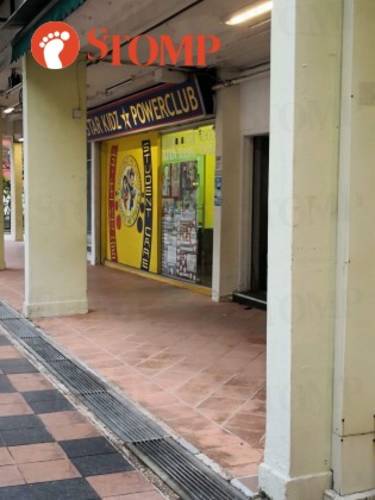
IIva told Stomp that her son goes to Star Kidz Powerclub, a childcare centre at Block 509, Bedok North Avenue 3, from Monday to Friday weekly.
Classes for her son would start at 1.30pm and end at 7pm.
The centre is run by Mr Ryan Choo, an ex-TCS actor, and two female teachers.
Mr Choo also serves as the centre’s principal.
After confronting her son, IIva then sent photos of his backside to Ms Sim, a teacher at the centre, via WhatsApp on Saturday night (Feb 3).
After receiving the photos, the teacher called llva, explaining that her son was punished by Mr Choo after the boy opened the door to a toilet while a girl was inside.
She told llva that she would check on the incident before hanging up.
IIva later received a call from Mr Choo on the same night, explaining that he had punished the child to pacify the girl’s incensed parents.
According to the mother, Mr Choo told her that he was afraid the girl’s parents would take matters into their own hands.
In IIva’s account and the police report provided, llva’s son had been playing hide-and-seek with children at the centre at around 4pm on Wednesday (Jan 31).
During the process, he opened the door to a shared toilet as he thought one of his friends was hiding inside.
Unfortunately, there was a girl inside who was relieving herself.
At the sudden intrusion, the girl cried and asked for her parents.
As punishment for the act, Mr Choo reportedly asked the boy to bend over a table and proceeded to beat him on his backside with a wooden ruler.
The boy subsequently went home but did not tell llva about the incident.
Said llva: “Although he (Mr Choo) told us that it was to pacify the girl’s parents, we never heard from her parents since the incident, nor did they go to the centre.
“My son really just did it with no ill intentions, does it warrant a punishment like this?”
llva later visited the childcare centre on Monday (Feb 5) at around 5.30pm to confront Mr Choo.
He again told her that he had hit the boy backside with a wooden ruler.
He also pointed llva to the girl whom llva’s son had walked in on the day of the incident.
llva lamented: “My son was hit on his backside for seven times! How can he not tell us after doing that?”
In response to a Stomp query, a police spokesman said: “The police confirm that a report was lodged. Investigations are ongoing.”
Stomp had contacted Mr Choo and Star Kidz Powerclub on numerous occasions for a comment.
After receiving IIva’s call on Thursday (Feb 8), Stomp called up the centre and spoke to Mr Choo, who said that he was upset over the incident, and would need to think about what he could share.
Stomp tried calling the centre again later in the day but could not get through.
On Friday (Feb 9), Stomp called the childcare centre again two times in the afternoon and requested to speak to Mr Choo, but could not get to him.
Instead, Ms Sim answered the call and told Stomp that the childcare centre did not have any way to contact Mr Choo.
However, she later said that she could indeed get in touch with Mr Choo, and she would tell him to get back to Stomp.
She added that Mr Choo is a good person, but he had just made a mistake.
She also revealed that he was feeling drowsy as he was on medication, and was thus unable to speak to Stomp.
However, Ms Sim said that she would convey to Mr Choo that Stomp was looking for him.
Mr Choo called Stomp back in the evening and said that he would be willing to give his comments on the incident, and asked the team to wait until his drowsiness wore off the following afternoon.
He also left his personal contact number.
On Saturday afternoon (Feb 10), Stomp called Mr Choo again and asked for his comments on the incident.
However, he told Stomp that he did not wish to make any comments.
SINGAPORE: If you’re planning to cook a full-on traditional reunion dinner to impress, there are probably few folks better to go shopping with in Chinatown than Madam Tang Bee Leng, a walking encyclopaedia of food traditions and their symbolism.
“This is fresh mustard green,” she announced animatedly as she picked up an odd-looking vegetable at one of the stalls at Chinatown Complex market. Round like a cabbage, its leaves were thicker and shaped like crinkle-cut potato chips.
This vegetable is a staple for the Cantonese during Chinese New Year, according to the 67-year-old, who has been cooking since she was seven. Stir-fried with crabs and egg, it is a hot favourite with her family.
“This vegetable is very sweet. During Chinese New Year, everybody must be sweet to one another, and everything must be wholesome like how this vegetable is round-shaped,” she said in her rapid-fire way of speaking.
An elderly man beside us agreed with his thumb up: “It can be very bitter too, but it is very good for the health.”
Mdm Tang was stocking up on the ingredients that typically go into her Chinese New Year feast, and the market was buzzing with the annual pre-festive frenzy of jostling housewives and grannies haggling with harassed-looking stallholders.
A seasoned pro, she expertly navigated the narrow aisles, sniffing out the best produce, bantering with the stallholders in Cantonese – and stopping every so often to dole out tips and hacks on choosing preserved delicacies, which drew a few curious eavesdroppers.
BEWARE MUSHROOMS WITH ‘COSMETIC SURGERY’
Much of it felt familiar yet foreign at the same time to the both of us tagging along – two 20-somethings who had asked the veteran home-cook and food blogger for a crash-course on the traditional ingredients that go into a Chinese New Year meal.
Knowledge that was perhaps common among older Singaporeans like her, but alien to many among our generation.
Beckoning us over to several large bags of dried shiitake mushrooms, Mdm Tang dipped her hand in one, grabbed a handful and proceeded to inspect the caps.
Brushing her thumb against the patterns, she shared: “The hua gu (flower mushroom) has a distinctive flower pattern on its cap; that is why it’s named hua (flower).”
It is the king of all shiitake mushooms, followed by the dong gu (winter mushroom) and the xiang gu (fragrant mushroom). Its cap is rotund and fuller, compared to its lower-grade cousins with thin and flat caps, she explained.
But don’t be fooled, she warned – it is a common practice for “cosmetic surgery” to be done on the lower-grade mushrooms to mimic their more expensive cousin.
Sellers have explained to me that the natural (top grade) ones have distinct lines. But the growers would use a knife to cut patterns into the caps of the lower-grade ones before the drying process.
After such ‘surgery’, they are sometimes mixed with the real hua gu mushrooms to cheat unsuspecting buyers. Top-grade shiitake mushrooms are typically sold for about S$4.50 per 100 grams, while the lower-grade ones are S$1 to S$2 cheaper.
Can you tell the real hua gu (flower mushroom)?
As with most ingredients, you pay for what you get. The hua gu mushrooms are tender and smooth after an hour of braising – but with the cheap ones, “sometimes you bite very long also hard to break with your teeth”, she joked.
‘CANTONESE ARE GREAT COOKS’
She was so engrossed in her show-and-tell that she didn’t notice the irate stallholder next to her.
“Aunty, we are conducting a business here, okay?” he said to her curtly, urging her to pay for her mushrooms and leave.
The amiable Mdm Tang obliged without a fuss and thanked him. She turned to us and said with a smile: “It’s okay, if you want to buy things here, you have to be thick-skinned.”
She puts up with the sometimes gruff service here in this Chinatown market as she reckons it is one of the best places in Singapore to shop for her ingredients, due to the large congregation of Cantonese folks here.
“The Cantonese are great cooks and they buy only the good stuff. Chinatown is the only place where they can buy most of the things they want under the same roof.
“And if you can speak Cantonese, you are in their inner circle.”
WATCH: The quick tour (3:44)
SPEND MORE, GET MORE BLESSINGS
Beyond knowing the lingo, shopping for ingredients during Chinese New Year requires skill and careful observation.
One also has to be prepared to spend more in order to get the best ingredients for tasty dishes. “During Chinese New Year, (people) are willing to spend on reunion dinners such as buying expensive fish,” Mdm Tang said.
“They believe that if they spend more, they will get double the blessings.”
This is the time of year when home-cooks look to buy expensive whole dried scallops, instead of the smaller or broken pieces used for everyday cooking.
For ordinary cooking, we buy the small ones because nobody will see. But for Chinese New Year … it is all about presentation, and everything must be whole.
The big dried scallops can cost as much as S$200 a kilogramme, while the cheaper ones are about S$120.
The importance of presentation, according to Mdm Tang, is most apparent in the traditional pen cai or treasure pots – a one-pot dish filled with luxurious ingredients, where the size of the abalone, mushrooms and black fungus are ideally proportionate to each other.
“We use small black fungus to blend in with the abalone. If you have small abalone, you don’t use big mushrooms – it is disproportionate and very ugly.”.
The smaller version of the black fungus (left) is used in pen cai.
MOSS THAT ISN’T HAIR, AND MEAT THAT ISN’T WAXED
Several other treasures caught her eye. She all but pounced with delight on finding whole preserved jellyfish. More often these days it comes packaged in cut-up strips
Preparing the jellyfish is a tedious process – requiring repeated soaking in water, and sometimes removing sand – but it makes for a great addition to yusheng (raw fish salad) or served as a starter, she said.
A whole jellyfish.
At another stall, she spotted fatt choy, or black/hair moss. Because its Cantonese name sounds like the term ‘be prosperous’, it has long been a must-have new year staple. But it is less popular these days, she said, because of fake fatt choy in the market.
She used to cook the hair moss in soup, and said that one should not add it too early as “it will dissolve very quickly”.
Real hair moss or fatt choy.
Chinatown Complex was not her only stop – Mdm Tang also went recceing for waxed meat among the tented stalls set up along Chinatown’s streets.
“Normally I won’t buy anything until the last two days, when everything is at half price,” the savvy shopper shared. “Then I’ll grab whatever I want, put it all in my freezer, and that will last me the entire year.”
There was waxed meat aplenty on display, ranging from duck to sausages – lap cheong in Cantonese – in red and black bunches.
On the first day of Chinese New Year, the Cantonese serve four kinds of waxed meat – duck leg, liver sausage, pork sausage and pork belly
“We steam them for 25 minutes, cut them into thin slices, and serve to our guests,” Mdm Tang said.
Contrary to popular belief, waxed meats contain no wax – they are instead seasoned and left to dry for months during winter, and it is the oil that makes it look glossy and waxy, she said.
Her tips: Look for the lumpier, home-made lap cheong. And the fattier the sausage, the smoother it is on the palate.
This all is high in cholesterol – waxed duck especially, with the thick layer of fat under the skin. “Of course, all the good things are very unhealthy. But you are not eating it every day, only once a year, so it’s no problem.
“And nobody goes on a diet during Chinese New Year.”
Waxed duck.
HER LEGACY IN A BLOG
Mdm Tang is eager to share her knowledge of culinary heritage and her home-cook’s wisdom distilled over 60 years of experience. Afraid it would die with her, she decided to put some of it down in a blog, with the help of her daughter Melissa Hong.
“I must leave behind a legacy, you know, by penning down whatever recipes are in my head. If I’m gone today, that’s it, my recipes would be gone.”
Theburningkitchen.com is the product of Mdm Tang’s years of experimentation – compiling her tried, tested and perfected recipes and useful tips in the kitchen (and yes, at the market). Said Ms Hong, “Every recipe carries a part of my mum and a part of all the loved ones we have shared these meals with.”
But at the outset, Mdm Tang had a technological bridge to cross. ‘
Melissa Hong and her mum.
“(My mum) grew up with the typewriter, there were no computers. There was once I told her to ‘close the window’ on the computer,” said Ms Hong, 32. The only windows she was familiar with were those around the house. “She was like, what window?”
Mother and daughter now publish two posts a week, and Ms Hong helps her with the photography, videography and editing of visuals. “I’m very proud of my mum now … She can even respond to people on Facebook,” said Ms Hong.
“She can no longer call herself computer illiterate. But that’s after a lot pain. And a lot of tears.”
Click here for Madam Tang’s unique new year recipes. One is a dish that’s vanished in the last 50 years – deep-fried chicken skin pancake. The other is a beloved family recipe, 8-treasure celestial duck.
SINGAPORE: The last time Madam Tang Bee Leng made the dish was more than 20 years ago.
There’s a good reason for that, as well as for the fact that a dish once available in local Chinese restaurants some 50 years ago has since virtually disappeared.
It’s certainly not the taste – deep-fried chicken skin stuffed with minced meat is as sinfully good as it sounds. No, the daunting factor for any homecook or chef is the laborious preparation, one that involves painstakingly removing an entire chicken skin intact, in one piece.
It is a true test of patience as the skin is delicate, some parts more so than others. With knife in one hand, Mdm Tang, 67 – who has been cooking since she was seven – makes small slits in the membrane separating the skin and flesh, then tugs gently at the skin with the other hand.
One wrong cut can ruin everything.
It takes some 20 minutes of meticulous, slow wrestling. With one final victorious slit and separation of skin, “now I strip you naked!”, she crows at the chicken carcass.
The skin will go on to be pinned to a bamboo mat, and a layer of minced chicken spread on top of it, before it’s deep-fried.
The reward for any homecook who attempts it this Chinese New Year, is the surety of impressing their family and guests with what Mdm Tang calls “a forgotten dish”.
“If anyone know where to find this now, please let me know. So I can refresh my memory (of the recipe),” she says somewhat wistfully.
Another of her favourite dishes is Eight-Treasure Celestial Duck – which needs six hours just for steaming alone.
It is a family favourite at every reunion dinner.
Mdm Tang, who posts her recipes on a blog for posterity’s sake, understands that the long preparation time for traditional dishes like these deter people who prefer quick and easy online recipes.
“But I also feel sad, because if we don’t preserve traditional cooking methods, one day when we lose them we’ll regret it,” she says. “There’s a place for tradition and for heritage.”
Here are the recipes for both dishes. Each serves 4-6 people.
MDM TANG’S 8-TREASURE CELESTIAL DUCK
INGREDIENTS
For the duck:
1 duck
1 tbsp light soy sauce
3 tbsp coarse salt for exfoliating the duck skin
For the stuffing:
20g lean pork
30g barley
30g gingko nuts
30g dried chestnuts
30g dried lotus seeds
1 piece dried mandarin peel
3 pieces chinese dried shiitake mushrooms
4 slices ginger
PREPARE THE DUCK
1. Remove the innards and pluck any stray feathers using a kitchen tweezer.
2. Chop off the webbed feet, but leave the neck, head and ‘bishop’s nose’ (tail of the duck) intact.
3. Exfoliate the skin using coarse salt. Rinse with water and pat dry with a paper kitchen towel.
4. Rub the whole duck with light soya sauce and leave it for 10 mins. “The duck will change to a light brown colour.”
5. Heat up the wok. No oil is needed – lightly brown the duck on all sides. “This will render the fat from the duck, all the oil will come out.”
6. Remove the duck. Pour the oil into a bowl.
PREPARE THE STUFFING
7. Boil lotus seeds for 10-15 minutes. Once cooled, remove the skin and split into half to remove the core. Wash and set aside.
8. Remove shells from gingko nut using a hammer. Peel the skin and split the nut into half by driving a toothpick through its core to remove it. Wash, drain and set aside.
9. Soak dried mushrooms until soft. Cut into thin strips.
10. Wash the dried mandarin peel and barley. Set aside.
11. Wash and cut the pork into strips.
MAKE THE STUFFING
12. Add 2 tbsp of duck oil into the wok. When hot, add the pork and stir-fry over medium heat for a few minutes.
13. Add ginger and fry.
While the order of the rest of the treasures does not matter, it’s important the pork and ginger be cooked together first, says Mdm Tang.
14. Add the rest of the stuffing ingredients and fry for another few minutes.
15. Remove, drain, and keep gravy separately.
MAKE THE STUFFED DUCK
16. Fill the belly of the duck with the stuffing.
17. Sew up the duck with butcher’s twine and a thick needle.
18. Place the whole duck in a deep pan. Add half a bowl of water and stuffing gravy.
19. Wrap the tray with aluminum foil to contain the aromas from the duck during steaming.
20. Place in a steamer and steam for 5-6 hours. (Mdm Tang likes to use a charcoal stove as it gives the duck a smoky aroma.)
21. Remove the duck. Remove the twine before serving.
MDM TANG’S DEEP FRIED CHICKEN SKIN WITH MINCED MEAT
Deep-fried chicken skin stuffed with minced meat
INGREDIENTS
For the chicken skin:
1 chicken
2 tbsp light soya sauce
For the minced meat spread:
2 chicken breasts
8-10 medium prawns, cleaned and deshelled
1 tsp sunflower oil
1 tsp oyster sauce
2 ½ tsp corn flour
½ tsp sesame oil
2 stalks scallions, chopped
Ground white pepper and salt to taste
PREPARE THE CHICKEN SKIN
1. Using a sharp knife, make a slit in the skin, between the chicken breasts. Peel apart the skin gently on both sides.
2. Flip the chicken onto its side and work on the thigh. When you reach the end of the drumstick, twirl the skin around your finger and pull hard to get the skin off the bone. Repeat on the other side.
3. Now to the back of the chicken, which will take more time. Make small slits in the membrane (between the skin and meat) along to way to help.
4. The chicken wings are the only parts that cannot be removed. Chop the wings with skin attached off the body.
5. Lastly, pull the skin towards the neck and chop off the carcass. The skin should be in one piece.
6. Use the knife to lightly scrape off excess fats under the skin.
7. Coat the skin with light soya sauce. Leave to dry for at least 2 hours.
“If your chicken skin is very dry, it will be very crispy when you fry it.”
PREPARE THE MINCED MEAT SPREAD
8. Remove the breasts. Mince with a butcher’s knife.
“The chicken cannot be too lumpy but don’t mince it so much such that it becomes powdery.”
9. Put the minced prawn and chicken in a bowl. Add the sunflower oil, oyster sauce, corn flour, sesame oil, scallions, white pepper and salt. Mix well.
10. Take the minced meat in your hand and smack it against the bowl, repeating a few times to help bind the ingredients.
PREPARE DISH FOR DEEP-FRY
11. Using toothpicks, pin the chicken skin to a bamboo mat, wings side down. The mat may be found in hardware stores in Chinatown.
12. Spread the minced meat thinly onto the skin.
FRY THE CHICKEN SKIN
13. Fill wok with oil over medium fire. When the oil is hot enough, slide the bamboo mat into the wok – minced meat facing up first.
14. Deep fry each side till skin is golden brown and minced meat is cooked through.
15. Remove from mat and pat both sides with a kitchen towel to remove excess oil.
16. Cut into square pieces. Serve with chopped scallions while hot and crispy.
Click here for more vanishing home recipes at CNA Insider.
SINGAPORE: When I interviewed Nicholas Aw, then-President of Disabled People’s Association in 2016, it came as a surprise to me that in spite of the fact he was an advocate for a greater acceptance of people with disabilities, he wanted to stay in the shadows.
Mr Aw has Tourette’s Syndrome, a neurological disorder characterised by repetitive, involuntary movements and vocalisations, including eye blinking, head jerking and awkward mouth movements.
He declined to be filmed for our interview.
When I asked him if he was ashamed of his condition, he denied it.
He was concerned about what a visual display of his condition on social media would do to his family and friends.
It’s just that when I watch myself with the condition, I feel pain for my friends who have to watch it. I think about my mother and how she’ll have to watch her son. I feel that people may talk to her and say: ‘Hey, I saw your son and he was doing this.’
Mr Aw’s feelings came from a deep-seated issue and a belief that while Singapore society has changed in many ways, in certain areas, we may not have evolved much.
“When I was younger, my parents used to be embarrassed for me. I just don’t want my son to go to school and then his friends will go: ‘Hey, your papa is like that.’ And then he’ll be bullied, or he’ll come back and cry and say: ‘Hey, papa why you like that?'”
While Mr Aw did well in school, managed to make friends and find employers who were able to look past his condition, he said he was often made fun of by strangers even into adulthood.
I understood where he was coming from, but I also wondered if hiding in the shadows would merely perpetuate others’ ignorance and the stigma surrounding people with disabilities. He said:
To be honest, no matter how much I expose myself on TV or video, I don’t think it’s going to change a lot because most people are very set in their ways about their perceptions. So, unless we get them when they’re very young, to teach them about disabilities and conditions, I’m not confident about doing that.
MORE MEANINGFUL INTERACTIONS
Some might argue what better way to build awareness than through the media, but Mr Aw made sense. There are limits to using such avenues. In fact, a foundation of fear and ignorance may be reinforced or propagated further if such content is not managed meaningfully.
What he suggested instead could lead to a more meaningful understanding of the issues and the people dealing with them.
He has been a long-time advocate of disability awareness education in schools.
Today, we are seeing relatively huge strides in this area.
The school has been making adjustments to its teaching and even canteen operations to cater to six Primary 1 pupils with hearing loss.
Mayflower Primary is the first designated primary school for students with hearing loss. (Photo: Rachelle Lee)
The hearing-impaired students have also been assigned two buddies each from the upper primary level to look after them during recess.
It’s an encouraging start, but for this to work long term and on a wider scale, interactions between students with disabilities and those without, need to be sustained and meaningful.
FAMILIARITY REDUCES FEAR
A 2016 survey commissioned by the Lien Foundation revealed concerning results.
It showed that Singaporeans support the idea of inclusion, but when it came to walking the talk, their responses were dismal.
While most people said they believed that children with and without disabilities can study together, only half of parents polled said they were comfortable with having a special needs child sitting next to their own in class.
Experts point out that the uncertainty surrounding interacting with special needs children could be addressed if the frequency of interactions is increased.
EARLY EXPOSURE
Greater exposure could indeed be the answer.
This has to start from young and not only when these individuals enter the workforce, at which point, acceptance could be even harder for everyone involved.
While several advocates say that from a policy perspective things have been moving rather slowly on this front in Singapore, we must acknowledge recent initiatives.
By 2019, the Compulsory Education Act will be extended to children with moderate to severe special needs.
Stronger support for people with disabilities has been announced in the third Enabling Masterplan and more is also being done to ensure barrier-free accessibility in existing and new buildings.
Of course, advocates would say even more needs to be done.
For instance, better teacher training, a greater effort to attract teachers to the special needs education sector and equipping mainstream schools with educational psychologists and therapists.
Mayflower Primary said some of the children have residual hearing, and although they are unable to hear clearly, they are still able to learn tempo and rhythm as they can feel the beat of the music. (Photo: Rachelle Lee)
Activists like Mr Aw have also called for anti-discrimination legislation to ensure, among other things, that those with disabilities are not unfairly denied employment in cases where their disability does not prevent them from delivering on the job.
There is a school of thought that such initiatives could shape mindsets towards true acceptance and inclusion.
However, they are not silver bullets.
BEYOND WINDOW DRESSING
Ground resistance to such initiatives could result in them amounting to nothing more than window dressing – something that people feel they have to tolerate rather than embrace.
Discussions about integrating students with special needs into mainstream schools often also involve a number of concerned parents who say they worry that teaching and learning would be disrupted or slowed down because of these children.
They worry that their own typically-developing children would lose out as a result.
They need to be given assurances that schools have the means to manage the situation so that every child can learn optimally, but on the other hand, would it be so bad if some things were temporarily compromised in the name of inclusion?
We need to start believing that education isn’t just about scoring As, it’s also about learning about differences, embracing them, empathising with each other, learning from each other and helping not just ourselves, but others achieve their full potential as well. Exposure to societal challenges could also help our children fixate less on their own and spur innovative problem-solving.
While the rest sing along to the songs, the six students with hearing loss sign the lyrics. (Photo: Rachelle Lee)
Surely the experience of getting to know someone who is different could make up for whatever their child may or may not lose out on academically.
Some experts believe these experiences could also strengthen the case for mixed academic ability classrooms.
Importantly, don’t let a person’s disabilities or differences prevent your kids from learning from them.
Exposure and interaction can teach those without disabilities that those with disabilities are able in many ways and we should not define them merely by their disability.
Let’s not complain about the possibility of our children’s academic progress being slowed down. Let’s instead consider how their education is enhanced by such inclusive initiatives.
This could also help us gain some valuable perspective on the unhealthy academic competition that has plagued our society.
No child should be deprived of the opportunity to achieve their potential and if your child can be part of the process of helping not just himself, but others achieve this, it should be seen as a privilege.
Hopefully, this will also mean that those like Mr Aw can soon safely step out of the shadows.
SINGAPORE: The business end of Asia’s biggest airshow might have wound down, but doors at the Changi Exhibition Centre (CEC) are open to the public this weekend (Feb 10 and 11) for excited masses to get on board with all things Singapore Airshow.
Among an amazing array of static aircrafts and weapons on display at the centre’s sprawling grounds, there is the Republic of Singapore Air Force’s (RSAF) 50th anniversary celebrations to lap up, and an exhilarating visual feast of aerobatic flying displays by a star-studded line-up of teams.
With so many things to see and do, you can’t afford to attend the event on autopilot mode. Here’s how to make the most of your day at the Singapore Airshow 2018.
Crowds swarming the static display area at the Singapore Airshow 2018. (Photo: Gaya Chandramohan)
8am
With more than 130,000 visitors expected to turn up over the two days, coupled with heavy traffic and security checks, queues are inevitable. Whether you’re driving in or hopping on the free Airshow Shuttle, getting to the CEC earlier might save you the hassle of waiting in longer queues.
#Protip 1: Go early – doors open at 9.30am – and travel as light as possible for a hassle-free security check. Leave your selfie sticks at home because it belongs on the list of items not allowed into the venue.
The static display area at the Airshow. (Photo: Gaya Chandramohan)
9am
Once the security check is cleared, grab a map of the grounds and make a beeline for the sweeping 100,000 sq metre outdoor display area accommodating some 50 aircrafts from the RSAF, Textron Aviation, US Air Force and other transport giants.
A man looking down the business end of a jet. (Photo: Gaya Chandramohan)
A young boy decked out in a mock RSAF pilot’s uniform climbing up to sit in a F-16’s cockpit. (Photo: Gaya Chandramohan
Gawk at the Wing Loong II, an unmanned aerial vehicle (UAV) from China or marvel at the plush interiors of luxury jets like the Bombardier 6000. Don’t be afraid to take a gander around inside the AH-64D Apache and CH-47 Chinook helicopters – the friendly staff will be more than happy to tell you more about the aircraft and perhaps even take a photo for you.
(Photo: Gaya Chandramohan)
And of course, don’t pass up the opportunity to experience what it’s like to sit in the cockpit of a F-15SG and F-16C/D fighter jet!
#Protip 2: Visit the outdoor exhibit early in the day when the weather is cooler. Spend the warmer part of the day indoors in the air-conditioned exhibition hall.
(Photo: Gaya Chandramohan)
11.30am
After 2 hours on the asphalt amongst the static giants, it’s time to see the actual jets take to the skies with éclat. Head over to the Plaza – the area just outside the Exhibition Hall entrance – for a 45-minute aerial performance over the waters.
(Photo: Gaya Chandramohan)
(Photo: Gaya Chandramohan)
Prepare to be enthralled by the death-defying manoeuvres and rip-roaring displays by teams from the RSAF, Royal Thai Air Force, United States Air Force and Royal Malaysian Air Force. Get your cameras ready!
A man taking a selfie with the Golden Salute manoeuvre as backdrop. (Photo: Gaya Chandramohan)
Keep your eyes peeled for the six never-before-seen aerial stunts the RSAF will perform.
A young girl covering her ears as the deafening roar of the jets continue during the Airshow. (Photo: Gaya Chandramohan)
#Protip 3: Don’t forget your earplugs, sunglasses, sunscreen and a cap.
(Photo: Gaya Chandramohan)
12.30pm
After being dazzled by the spectacular aerial stunts, grab lunch from the F&B outlets at the show site before heading into the cool respite of the indoor exhibition halls.
#Protip 4: Bring sufficient cash as most F&B outlets only accept cash payments. The CEC has no ATMs either. Set meals on sale are around S$12.
(Photo: Gaya Chandramohan)
1.30pm
Head on over to the RSAF pavilion for a blast from the past to learn about how the RSAF has evolved over the past 50 years. And if you have ever wanted to fly an F-16 or a UAV and put your piloting skills to the test, give the simulators a whirl – there are six types to choose from.
(Photo: Gaya Chandramohan)
(Photo: Gaya Chandramohan)
2.30pm
If you hear a distant roar of jet engines, you’re in for another round of the aerial display at the Plaza. What’s another 50 photos added to your camera roll? You know you want to.
#Protip 5: Bring a battery pack for your mobilephone for all that Instagramming you’ll be doing or extra batteries for your camera.
A family all dressed up in costume flight gear. (Photo: Gaya Chandramohan)
3.15pm
If you are still raring to go after almost a full day of excitement, there are still things to do. You could attempt to track down the roving Singapore Airshow mascots – Captain Leo and Captain Leonette – and snap a photo with them, or attend one of the meet-the-pilot sessions for a photo and an autograph.
(Photo: Gaya Chandramohan)
(Photo: Gaya Chandramohan)
#Protip 6: On your way out, you have the option of taking a cab from the CEC, but be prepared to pay a S$12 surcharge on top of your fare. Or, you can hop on the shuttle service to Singapore Expo which is complimentary for Airshow ticket holders. On-call taxis and private hire car services such as Uber and Grab will not be allowed to enter the exhibition centre.
The queue for the Airshow Shuttle to Singapore Expo. (Photo: Gaya Chandramohan)
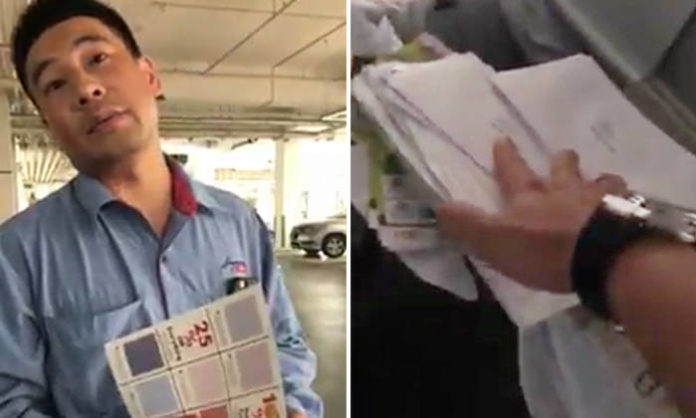
SingPost has confirmed with Stomp that a postman who was caught on video throwing away mail instead of delivering them has been fired.
This comes after videos showing the employee being confronted by a man at Reflections at Keppel Bay on Wednesday (Feb 7) for failing to perform his work duties went viral online.
The videos were posted in several different threads by a Facebook user known as Leena a day later and had garnered over 2,000 shares as of Saturday afternoon (Feb 10).
It is unclear if the videos, which Stomp contributors Edwin and Ah Boy alerted Stomp to, have been deleted but they are no longer publicly accessible.
The confrontation is believed to have occurred after the man discovered that his flyers had gone undelivered. He also apparently found neat stacks of unopened letters in various dustbins at the condominium.
Based on the videos, the man had apparently spent “a few thousand dollars” printing 7,500 flyers at SingPost — only to realise that all 1,200 units in the residential complex did not receive them.
The man can be heard asking the SingPost employee if he had seen the flyers before and where the latter had delivered them to.
The employee insisted that he had delivered them all and said some units did not receive anything as there were not enough flyers left.
The man told the SingPost employee: “Not enough? Do you know how many units here? There are 1,200 units here and not one received the flyer.”
He also asked the employee whether he had thrown the flyers away.
“I’ll give you another chance. I have been observing you every day. Don’t play this game with me. You have played the wrong person. You didn’t think I would be living here, did you?
“There are 1,200 units here and I didn’t see you deliver the flyers to a single one. Have you done your duty? Do you know how much effort I spent making these things? Do you know? You are here to make a living. So am I.”
The man had also apparently found neat stacks of letters left unopened in dustbins at “every block” and believed that they were intentionally thrown away by the postman.
Holding a stack of letters, he told the employee that they would not have looked so neat in the dustbin if they had been thrown away by residents.
The man added: “Someone needs to take responsibility for this” and “I won’t let this matter rest. I am going to find out where my flyers are exactly. To you, it might be just another piece of paper. To me, it’s very important.”
This led the employee to complain about how his superiors treated him unfairly and how he had to work overtime without being compensated.
“I am very tired, do you know?” he lamented.
In response, the man said: “Who is the victim here? You? Or the customer? So people bully you and you bully others?” and “If [your boss] is unfair to you, that’s his fault. Have I been unfair to you?”
At the end of the confrontation, the SingPost employee said he truly thought he had delivered all the flyers and stopped after thinking he was done with every block.
He continued: “I am really sorry towards you. I didn’t know [the flyers were supposed to be delivered here too] and I didn’t ask you. This is an oversight of my duty.
“Anyway, I’m going back home on Friday’s flight and not returning. If not for this incident, I might still come back. It’s that simple.”
In a separate clip, the man can be seen showing a third guy multiple stacks of letters that he found in several bins and asking, “How can it be so nicely stacked together?”
In response to a Stomp query, a SingPost spokesman confirmed the incident and said: “One of our postmen was found to have thrown away returned letters and direct mail at a condo on 7 February 2018.
“His action is a serious failure of duty. We do not condone this and he has since been dismissed.
“SingPost thanks the member of the public for bringing this to our attention, and we would like to apologise to the residents of the estate for the service lapse.
“We have since retrieved the mail and will be processing them.”
Referring to allegations made by the employee in the videos, the spokesman added: “We will be looking into the claim made by the postman on his work environment, but it does not excuse his actions on the job, nor our decision to dismiss him.”
SINGAPORE: It is 7.30pm on a Saturday. The sun sets on a short stretch of road at Tuas South. Slowly, about 20 foreign workers arrive on their shared bicycles. They greet each other with a slight bow, palms pressed together in prayer.
Like clockwork, they begin to lay a blue-white tarpaulin on a patch of grass at a road junction, and over that spread a red-gold carpet. Others drape a scarlet satin over the barbed wire fence and in front of it set up a makeshift cardboard altar with pictures of the Hindu god Krishna.
As the sky completely darkens, a street lamp lights up. The workers huddle around Mr Prem Vikas, 42, a Bangladeshi who works at the nearby Tuas shipyard and leads them in prayer.
He takes a look around, as if waiting for more to join. “Workers come and go. But we never stop praying,” he said. “Good or bad, we continue to seek God here.”
Then, in unison, a faint, collective chant of the Hare Krishna mantra – or Hail Krishna – pipes through a speaker and ripples through the cool night air.
In Tuas South, a group of foreign workers chant the Hare Krishna – or Hail Krishna – mantra. (Photo: Pang Xue Qiang)
A few Chinese workers walking back to their dormitories stop to stare, but pay little attention and continue going about their daily business. The occasional cars that pass by the industrial area slow down at times, their drivers shoot curious glances.
But the group is undisturbed. They sing Bengali hymns and dance in a trance-like manner to fast drum beats and clashing cymbals.
The workers are part of the Hare Krishna movement, an offshoot of Hinduism that worships Krishna over other Hindu deities. The weekly Saturday prayer group at Tuas has been running for the past 10 years, providing them a transient place of worship and spiritual solace in a foreign country.
The Hare Krishna movement has historically struggled to get mainstream and state approval in Singapore, but in recent years, in a bid to gain greater acceptance and dispel myths, it has worked its way around regulations and carved out its own worship spaces.
Started 53 years ago (1965) in the US, the faith’s founding organisation, the International Society for Krishna Consciousness (Iskcon), is banned here. The religion had a contentious background in its early years and was closely linked to drug use in the US, as many of its early recruits were from the hippie communities. In its heyday in the US and other parts of the world, Hare Krishna devotees were out on the streets in full force, chanting. Some were arrested for causing public disorder.
The movement even found its way into popular culture. One celebrity Krishna was George Harrison of The Beatles. The band popularised the Hare Krishna mantra in their songs My Sweet Lord – an ode to Krishna and a worldwide hit – and Living in the Material World.
Controversies around the religion reached our shores too. Foreign Iskcon monks were denied entry into the country in the ’70s and attempts by devotees to officially register Iskcon here had failed.
In Tuas South, a group of foreign workers chant the Hare Krishna – or Hail Krishna – mantra. (Photo: Pang Xue Qiang)
But today, devotees in Singapore, such as the prayer group at Tuas, have found their ways to continue to worship by operating within boundaries.
For one thing, Hare Krishnas here avoid affiliating themselves with Iskcon. Instead, they register their societies under different names. One group is the Sri Krishna Mandir, the most visible Hare Krishna temple in Singapore located at Geylang.
“People thought the religion was something extremist. They thought we were a cult,” said Mr Tattvavit Dasa, 31, a monk at Sri Krishna Mandir. “Youngsters were joining in the thousands in the US in the 1970s. The government here thought that if the youths were mobilised, there would be an uprising, there would be a revolution.”
He added: “Yet, in those days, programmes here were going on, unofficially. There were classes at devotees’ homes. Slowly, the government got a better impression. Now, they allow us to conduct our activities. At its core, the religion teaches us to do good. Eventually, they realised that we are not as bad as they think we are.”
Dr Mathew Mathews, a senior research fellow at the Institute of Policy Studies (IPS), said that back then, Singapore took a cautious approach to unconventional religions.
“In the 70s, there was a lot more careful management of religious groups that might shift the social fabric in Singapore,” said Dr Mathews. “We were in a period of nation building and the state was careful about religious groups who had operations elsewhere that were going against general norms.”
Today, Hare Krishnas in Singapore openly celebrate festivals like the prominent ratha yatra parade. (Photo: Pang Xue Qiang)
According to Mr Rodney Sebastian, a researcher at the department of religion at the University of Florida, who has spent about five years examining the Hare Krishna community in Singapore, it is estimated that there are about 3,000 Hare Krishna devotees here today. A large portion of them are professionals from India and labourers from Bangladesh.
“The religion has undergone various forms of transformations in its struggle for survival and expansion to fit in with Singapore’s sociocultural milieu,” said Mr Sebastian. One way was to work with local Hindu temples and hold programmes there, he added.
An example is the Gita Reading Society – another Hare Krishna group – at the Gauranga Centre in Serangoon, which seeks to integrate into the mainstream.
“There is an association that Hare Krishna is a fanatical movement,” said Mr Siva Kumar, 48, the spokesman for the Gita Reading Society. “But here, we are a group of people who emphasise study of the Bhagavad Gita (holy Hindu text), and how to use the Gita in practical, daily living – such as its principles of non-violence and meditation.”
“The western-based Iskcon has become a creature of its own, which we do not affiliate with,” he added.
Today, Hare Krishnas in Singapore openly celebrate festivals like the prominent ratha yatra parade.
During the annual festival, chariots of Hindu deities Jaganatha, Baladev and Subhadra are pulled along public roads in major cities of the world. In Singapore, while the devotees have yet to succeed in organising the festival on such a large scale, they have progressed from having previously held it in isolated farms and within temple premises to conducting it in sports stadiums.
Today, Hare Krishnas in Singapore openly celebrate festivals like the prominent ratha yatra parade. (Photo: Pang Xue Qiang)
Since 2006, devotees have been conducting the parade at Yio Chu Kang, Toa Payoh and Bedok stadiums. Thousands turn up for the events.
“We want others to have a better understanding of us,” said Mr Dasa. “But even if they don’t, it’s okay. Our lives still go on. To us, all life is suffering. There will always be struggles and challenges.”
Reactions towards the movement are still divided today.
Dr Mathews said: “There were questions about what the Hare Krishnas were doing. The public assemblies, chanting and spiritual high were fringe behaviours, which may raise red flags. But they have learnt to manage themselves within the space, shed some of their past misgivings and co-exist.”
He added: “The state’s stance has always been clear. Any religious groups can operate as long as they do not flout public order.”
As the night wears on back in Tuas, Mr Vikas and his group wrap up their kirtan, or song and dance worship, and begin this week’s sermon. Today, they compare being good citizens to being good sons of God.
“The Bhagavad Gita teaches us not to drink, waste money, harm others, gamble or womanise,” said Mr Vikas. “Every day, we remind ourselves to be humble and help each other. We don’t disturb others, so others let us be.”
SINGAPORE: Chinese New Year is coming, and that means that some of the younger Chinese readers of Channel NewsAsia might be bracing themselves for the inevitable barrage of questions from older relatives regarding when they’re going to get married, have a baby, or have another baby.
If the upcoming year were the Year of the Dragon, rather than the Year of the Dog, these questions may carry an additional tinge of urgency.
As the only mythical animal in the Chinese zodiac, the Dragon commands a special allure of authority, nobility and prosperity. People born under this sign are believed to possess some of these properties.
(Superstition also holds that people born in the year of the Dog are loyal, courageous and loving.)
Research with my colleagues at the National University of Singapore (including visiting professor at the NUS Business School Sumit Agarwal, associate professor of finance Qian Wenlan, and dean’s chair associate professor of real estate Sing Tien Foo) confirms that Chinese Singaporeans prefer having Dragon babies.
On average, the number of Chinese births jumps by 9.3 per cent in the year of the Dragon. On the other hand, no similar behaviour is observed among other races.
SUPERSTITION AND HERD BEHAVIOUR
Why do so many Chinese couples choose to give birth in the year of the Dragon? One straightforward explanation is the influence of superstitious beliefs.
Even couples who do not fully buy into Chinese zodiac mythology may still prefer Dragon babies because it feels auspicious and may somehow bring luck to the child or family.
Non-superstitious people may also be influenced by these beliefs. Fertility decisions can be influenced by peer behaviour and attitudes. Just hearing that their siblings, cousins, friends or neighbours are pregnant or planning to have a baby can inspire couples to do the same.
A mother and her child at the beach. (Photo: Pixabay/tung256)
People may also give credence to collective wisdom, similar to the herd behaviour exhibited by speculators during the dotcom and other financial bubbles. If something was a bad idea, there wouldn’t be so many people doing it, right?
Whatever the causes may be, the Chinese preference for giving birth in the year of the Dragon can have important demographic and macroeconomic consequences.
Previous studies from the US and Europe suggest that baby boomers – people born between the mid-1940s to mid-1960s during an era of high fertility rates – have lower lifetime earnings and may be more prone to criminal behaviour and suicide.
One key explanation for these negative outcomes is that there is more competition for resources, from teachers’ attention to scholarships and jobs. Hence, this is a case where following the herd may not be the wisest course of action.
TRAGEDY OF LARGER COHORTS
Our research finds strong evidence that Chinese men and women born in the year of the Dragon are less likely to be admitted to local universities.
When we delved further into the data, we found that the effects are largely due to lower admission scores, rather than differences in application ratios or university policies.
In fact, we found that the education system anticipates and actively seeks to reduce the impact of large cohorts by increasing school resources and enrolment to ensure that all cohorts have access to good education.
Nevertheless, despite these efforts, we document lower academic preparation among Chinese Dragons prior to university entry.
Consistent with this result, we find that they also have significantly lower earnings by around 6 per cent, are more likely to be self-employed and less likely to be in formal employment.
Thankfully, the effects appear to dissipate among older Dragon cohorts, suggesting that the decline in earnings is due to the inability of the market to absorb a sudden surge in supply of graduates and work seekers when they first enter the labour market.
People cross a street in Singapore’s central business district. (Photo: Sutrisno Foo)
NEGATIVE EXTERNALITIES ON REST OF SOCIETY
One of the most intriguing findings in our research is that the macroeconomic effects are not limited to Chinese Dragons only.
Non-Chinese Singaporeans born in the year of the Dragon also tend to experience a lower probability of admission into local universities and lower earnings, although the effects are weaker than that for the Chinese themselves.
Interestingly, another group affected by the Dragon year phenomenon are Horse babies. The number of babies born in the year of the Horse is not especially large (the year of the Dragon is the only year which exhibits statistically significant increases in birth numbers).
However, due to National Service requirements, Dragon men go to universities or start their jobs with female counterparts who are two years younger – women born in the year of the Horse.
Our analysis shows that, as expected, Chinese women born in the year of the Horse have significant lower earnings than those born in other cohorts. By contrast, men born in the same year are not affected, even though both groups have similar levels of academic preparation prior to university and similar chances of admission to local universities.
The above finding is especially useful because it strongly suggests that at least part of these negative macroeconomic effects must be due to the size of the cohort itself.
If the Dragon phenomenon were due to increases of fertility among lower income Chinese families, then we may suspect that family background is the main explanatory factor behind why Dragon cohorts tend to have lower earnings.
However, the results for Horse babies do not support this hypothesis. If family background is the driving force behind our results, we would expect no effects on earnings since there is no evidence of fertility selection for these cohorts.
The only explanation for the unusually low level of earnings for the women is that they are matched with a large cohort (while the men are matched with a normal-sized cohort of women, born in the year of the Monkey).
People walk under umbrellas in the rain in the financial district in Singapore. (Photo: AFP/Roslan Rahman)
DEVIATING FROM HERD MENTALITY
The evidence suggests that Chinese couples shouldn’t aim to give birth in the year of the Dragon. The broader moral of the lesson, however, points to the power that non-scientific personal beliefs continue to have on our fertility and other behaviours.
Young couples today appear to be less susceptible to superstitious beliefs, with evidence that the Dragon year effect has become less pronounced in more recent cohorts.
However, a growing pool of evidence from other developed countries finds that a large proportion of the population subscribes to fertility myths. In particular, both men and women tend to overestimate the ability of advancements in medical technologies such as in vitro fertilisation to overcome the detrimental effects of age on couples’ ability to have children.
These fertility myths are fed in part by peer behaviour and attitudes, as the average age of childbearing has risen over time.
In addition, the media routinely highlights older female celebrities who achieve motherhood, while less successful cases are ignored. While these stories send a positive and reassuring message, especially to working women, they also contribute to creating a form of collective wisdom that does not align fully with scientific evidence.
As with the Dragon year phenomenon, couples can avoid unintended consequences by deviating from the herd mentality and making informed fertility decisions based on their own preferences and constraints.
Dr Tan Poh Lin is a population researcher at the Lee Kuan Yew School of Public Policy at the National University of Singapore.