Home Blog Page 1139

Kim Cattrall makes it clear to Sarah Jessica Parker: They're not friends

0

Sex and the City fans may be disappointed to know that the gal pals aren’t friends in real life but Kim Cattrall wants to make it crystal clear.

After Sarah Jessica Parker offered her condolences following the death of Kim’s brother, she took to Instagram and posted a photo that said, “I don’t need your love and support at this tragic time @sarahjessicaparker.”

She expounded her point in the caption, “Your continuous reaching out is a painful reminder of how cruel you really were then and now.

Let me make this VERY clear. (If I haven’t already) You are not my family. You are not my friend. So I’m writing to tell you one last time to stop exploiting our tragedy in order to restore your ‘nice girl’ persona.”

Kim also added a link to a New York Post article about the mean girls culture on the set of Sex and the City.

On the death of Kim’s brother, Sarah told Entertainment Tonight“If somebody in your life, whether you’re in touch with them or not, [is] suffering for any reason, it’s involuntary that you want to convey condolences or sadness or just let someone know you’re thinking about them.” 

Kim, of course, disagrees and has squashed rumors of there ever being another Sex and the City movie.

Monday, February 12, 2018 – 10:38

Others

Source link

Up to 8,000 public transport jobs to be created by 2030 under Industry Transformation Map

0

SINGAPORE: To meet Singapore’s expanding transport needs, the Land Transport Authority is looking to create 8,000 new public transport jobs by 2030.

It is also investing S$25 million in funding for mobility-related innovation and technology to further modernise the country’s public land transport, as part of efforts to improve efficiency, reliability and comfort for commuters.

All this will be part of the LTA’s Industry Transformation Map (ITM), which was unveiled on Monday (Feb 12). Its vision is to create an innovative land transport industry enabled by technology and a highly competent workforce by 2030.

TECHNOLOGY READY

As part of the roadmap, LTA will “leverage emerging technologies”, specifically in autonomous vehicle technology. 

Coordinating Minister for Infrastructure and Minister of Transport Khaw Boon Wan said in his address at the unveiling of the ITM: “Autonomous vehicles have the potential to completely change the way we travel.

“Trials first began in 2015, and we have made good progress since,” said Mr Khaw. “The technology is developing rapidly, and we are preparing for a pilot deployment of on-demand AV buses from 2022 for commuters in Punggol, Tengah and the Jurong Innovation District.”

File photo of an open-air driverless shuttle (left) and an autonomous minibus (right). (Photo: Olivia Siong) 

He also highlighted how the adoption of other technologies such as smart sensors and robotic drones will also “increase productivity and improve workers’ lives”, especially in the maintenance line.

“For instance, railway maintenance can be enhanced using condition monitoring instruments. These smart sensors monitor the performance of the rail network, and flag out anomalies so that they can be fixed before a fault can occur,” said Mr Khaw.

“Robotic drones will also take over dangerous or repetitive tasks. For example, rail and road tunnel inspections can be performed with greater ease and accuracy using aerial drones,” he added. “Aerial drones are also deployed at selected Thomson East-Coast Line worksites to help our engineers monitor construction progress and identify defects through aerial footage.”

UPSKILLING OF TRANSPORT WORKERS

LTA is looking at using technology to “hasten the move” towards creating higher value-added transport jobs for more professionals, managers, executives and technicians (PMETs), said Mr Khaw.

“To ensure that our public transport workers keep pace with industry development, we will up-skill workers, and re-skill them. This will be done through our institutes of higher learning, as well as centralised academies such as the Singapore Bus Academy and Singapore Rail Academy,” he explained.

“Over 2,200 participants have benefited from Bus and Rail Academy courses to date. Workforce development programmes will also be mapped to the Public Transport Skills Framework, which has been developed to provide a clear pathway for skills upgrading and mastery.”

The skills framework is expected to be launched in May, Mr Khaw said.

In response to concerns from workers who are worried that such autonomous vehicles might take away their jobs, National Transport Workers’ Union (NTWU) executive secretary Melvin Yong said more will be done to help them re-skill.

“The industry isn’t going to shrink, but rather expand. My message to the workers is, do not worry. We’ll work together so that we can transit smoothly to those new jobs,” said Mr Yong. “A lot of the new jobs would involve new technologies. For example when you introduce autonomous vehicles, there would be new engineering and technical jobs … and these are the areas we would be focusing our (training programs) on.”

He added: “Our challenge would be to encourage our current workers to learn new skills. The message that we’ve been reiterating on the ground is that this need to learn new skills is real, not just in this industry but in many others as well.”

“We’re going to try our best to create training programs that are bite-sized and convenient – it has to be easy for workers to take up these training courses. If (the openness to learn) becomes a culture at the workplace, it will make it easier for them to transit into those new jobs,” said Mr Yong.

TECH-RELATED TRANSPORT JOBS

An example of tech-related hires that the LTA is looking for are data analysts. They will be required to study raw data collected, and use those numbers to solve problems such as those in maintenance and commuter traffic flow.

“Using commuter data, we can for instance, know that during a certain period, there are a lot of people travelling from this particular point to another point,” said Mr Andrew Chow, president of the Software Systems Group at ST Electronics, who are the technology providers for the LTA. “With that information, we can then decide to deploy more buses to that area for that period of time.”

“We can also know about the occupancy of buses and know at which time do I have full occupancy of buses. From the bus occupancy system, we can see which routes are optimum and which aren’t, which are full at certain times and which aren’t,” explained Mr Chow. “That way, we can plan the (deployment) of buses more dynamically and that can be one way we can deploy data analytics.”

He added: “Data analytics talks about data ingression … there’s a lot of data coming in and how do you look for problems you want to solve. From there you have data output, and you’d infer how this data will improve performance of your system.”

“So you’ll need personnel to help you to model data from the big load of raw information you have. The skills required to model data is akin to looking for a needle in a haystack and from there, you’ll need to solve problems using specific data that you sieved out,” he said.

Source link

Muslim singer forced to quit French TV show over terror posts

0

A French Muslim singer who became an overnight star after dazzling judges on a TV talent show quit the contest Friday after coming under fire for past Facebook comments about terror attacks.

Mennel Ibtissem, a 22-year-old student who wears a head wrap, was one of the top contestants on The Voice, where her English and Arabic version of Leonard Cohen’s Hallelujah caused a sensation.

But within days of Saturday’s performance she was under pressure to bow out over old Facebook messages that appeared to question the terrorist nature of attacks that claimed scores of lives in France in 2016.

The posts have been deleted but screen grabs of the remarks have been circulated on far-right websites.

In one post after the July 2016 truck attack in the city of Nice, in which 86 people were killed, she said: “Here we go, it’s become a routine, an attack a week, and, as usual, the ‘terrorist’ takes his ID with him. It’s true that when you’re plotting something nasty you never forget to take your papers with you.”

She was referencing a series of jihadist assaults in France in which police quickly named the killers through documents found on their bodies, including the 2015 Paris attacks that killed 130 people. 

In another post, days after two jihadists slit the throat of a priest in his Normandy church, she wrote: “The real terrorists are our government.”

The singer had apologized over the remarks, saying members of her family had been celebrating Bastille Day in Nice when the driver struck and that she had been “upset” by the failure of the authorities to prevent the attack.

on Facebook

Depuis quelques jours des messages que j’avais postés en 2016 sur mon Facebook privé sont ressortis. Ces messages é…

Posted by Mennel Official on Tuesday, 6 February 2018

‘NEVER MEANT TO HURT’

But the apology failed to quell the controversy.

With private broadcaster TF1 under pressure to pull her out of the competition, including from relatives of the victims of the Nice attack, she quit on Friday. 

“I never meant to hurt anyone and the mere thought that my remarks hurt others hurts me, so I have taken the decision to quit this adventure,” she said in a Facebook video that has been viewed over 860,000 times.

on Facebook

ENGLISH VERSION
I have an important message for you

Posted by Mennel Official on Thursday, 8 February 2018

The production company behind The Voice, ITV Studios France, said that despite her earlier apology the atmosphere on the show had become “too heavy” and hoped her decision to withdraw would “soothe tensions”.

But some of her fans expressed disappointment, amid allegations of anti-Muslim bias.

On Ibtissem’s Facebook page, Jihene Ferchiou wrote: “We must not delude ourselves. Your turban, your religion, your origins were the obstacle.

“Clearly we have reached an unprecedented level of racism in France. It’s a disgrace.”

Monday, February 12, 2018 – 10:21

Others

Source link

How Marawi pushed Asean nations to join forces to tackle terrorism

0


DESPITE parts of Southeast Asia experiencing the scourge of Islamist terrorism for decades, the ten member-states of the Association of Southeast Asian Nations (Asean) have in the past struggled to co-operate to tackle the jihadist threat.

After a spate of attacks in the 2000s carried out by Jemaah Islamiyah in Indonesia and Abu Sayyaf bandits in the southern Philippines, the regional bloc made determined efforts to forge a region-wide response. These well-intentioned moves to implement a multilateral counter-terrorism framework ended up amounting to little more than a set of non-binding protocols and agreements outlining desired outcomes and suggesting best practices for member-states to follow, rather than ushering in a new era of enhanced security cooperation between countries in the region.

Last year’s five-month siege of Marawi by Islamic State-aligned militants however, proved to be a game-changer. The militants’ brazen attempt to take over a mid-sized city of more than 200,000 people and forge a Southeast Asian ISIS province centred on the Philippines’ war-ravaged southern island of Mindanao reignited the lingering threat, finally sparking the region’s authorities into action.

SEE ALSO: Philippines most affected by terrorism in Asia Pacific

Southeast Asia has long been afflicted by the presence of local, regional and transnational terrorist groups. Mindanao has been the site of an intractable armed Islamist insurgency since the early-1970s, which started off as a separatist movement but later spawned radical groups such as Abu Sayyaf and the Bangsamoro Islamic Freedom Fighters (BIFF). Meanwhile Indonesia suffered a string of attacks at the hands of homegrown militant group Jemaah Islamiyah (JI) in the 1990s and 2000s, supported by Al-Qaeda cells operational within the country. The presence of these groups also caused significant alarm in neighbouring Malaysia and Singapore, whilst sparking fears in the wider region.

Terror groups were able to establish a home in the Southeast Asia’s maritime states, taking advantage of porous sea borders and areas of weak state presence to set up training camps and bases from which to plan and launch attacks. This was especially true for remote parts of the Indonesian archipelago and in the lawless chain of Philippine islands which divides the Sulu and Celebes seas. In 2002 more than 200 people were killed in suicide attacks by JI targeting nightclubs on the Indonesian resort island of Bali, before Abu Sayyaf bombed a packed passenger ferry in Manila Bay in 2004, killing 116 civilians.
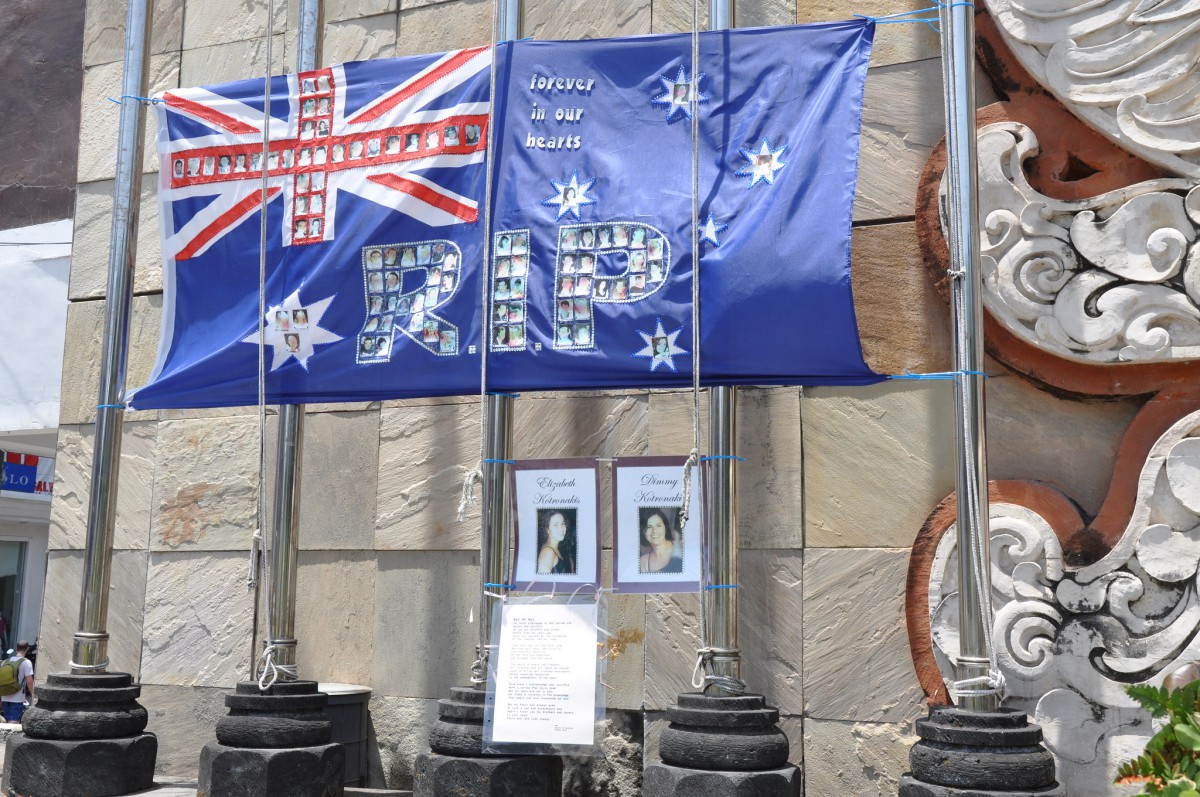
16268009044_0cee140fe9_k

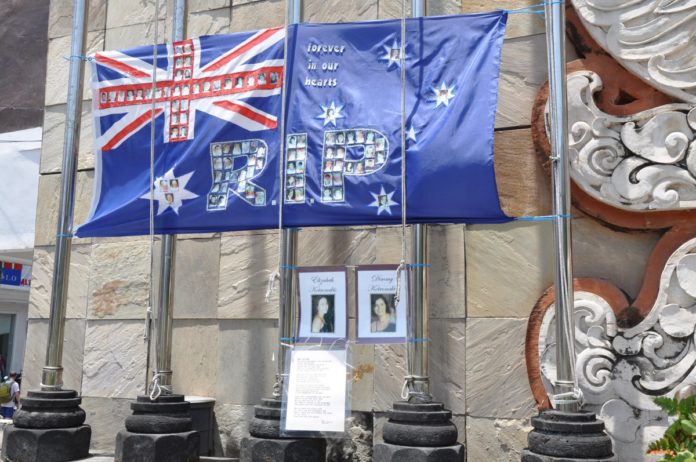
Memorial to the 202 people killed in a nightclub bombing on 12 October 2002 in Bali, Indonesia. Source: Jorge Láscar/Flickr

These high-profile attacks in the post-9/11 era prompted Asean to introduce a raft of measures intended to combat terrorism. The most important of these was the 2007 Asean Convention on Counter-Terrorism (ACCT), designed to ‘‘provide for the framework for regional cooperation to counter, prevent and suppress terrorism in all its forms’’ and ‘‘deepen cooperation among law enforcement agencies’’. However, the convention was not ratified by all ten member-states until 2013, and remained merely a set of guidelines with no enforcement or compliance mechanism. Several other region-wide agreements including the 2009 Asean Comprehensive Plan of Action on Counter-Terrorism (CPACT) have only had a marginal influence.

The impact of these counter-terrorism measures has been limited for several reasons. Asean’s strict adherence to consensus-based decision-making and the principle of non-interference has faced criticism, whilst the bloc’s use of vague language and its lack of enforcement capabilities have prevented the introduction of concrete region-wide measures to tackle terrorism. The grouping has often been described as a forum for discussion rather than a powerful body willing to push its members into taking firm action.

SEE ALSO: Ties between Southeast Asia and Bangladesh’s jihadis growing 

The varied threat level across Asean and the differing military and financial capabilities of its ten member-states has also hindered cooperation. For example, the threat from Islamist terrorism may be high in countries such as the Philippines, Malaysia, Indonesia and Singapore, whilst their armed forces are also relatively well-resourced. In comparison, countries such as Cambodia, Laos and Vietnam face a far lower threat, and may not be prepared or equipped to contribute resources to the fight. The past reluctance of Asean nations to share intelligence or permit foreign troops to operate across national boundaries has also blocked greater co-operation in the field of counter-terrorism.

Historically, Asean’s ten member-states have displayed a preference for strengthening domestic legislation and signing bilateral level agreements to tackle terrorism, seeing the threats as national rather than regional or global in nature, and therefore not requiring a multilateral response.
2017-06-14T104646Z_2116023296_RC1214ADCDA0_RTRMADP_3_PHILIPPINES-MILITANTS

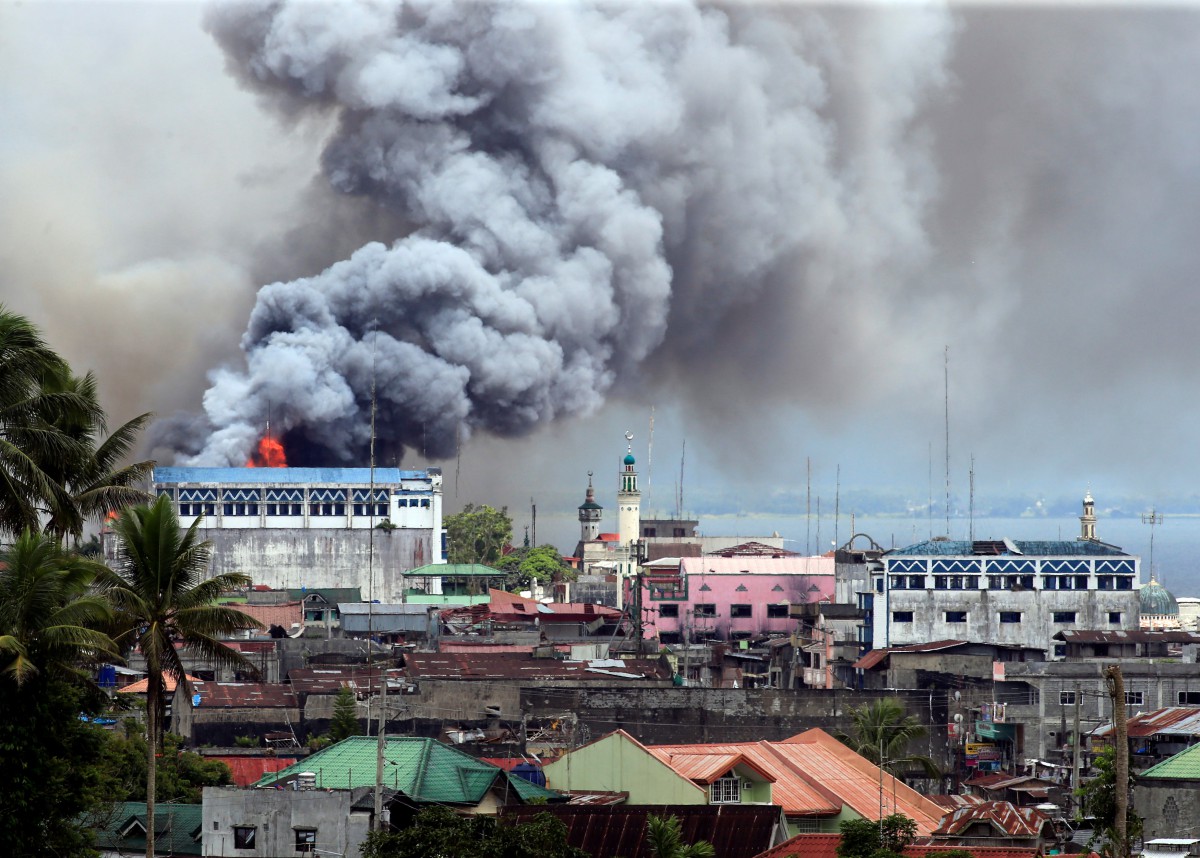
Black smoke comes from a burning building in a commercial area of Osmena street in Marawi city, Philippines June 14, 2017. Source: Reuters

That was until jihadists stormed the southern Philippine city of Marawi in May last year. The threat which had lain dormant beneath the surface since the decline of JI in the late 2000s had suddenly re-emerged in a form that was clearly regional in nature as Islamic State announced their intention to carve out a Southeast Asian caliphate. Leaders quickly realised the need for closer co-operation to prevent the violence spreading, amid fears of further ISIS-inspired attacks and terrorist infiltration across borders.

Even before the Marawi siege ended in October, regional leaders gathered on several occasions to discuss responses to the evolving threat. Indonesian President Joko Widodo described Marawi as a ‘‘wake-up call’’ regarding the threat posed to Southeast Asia, whilst Malaysian Prime Minister Najib Razak reaffirmed his country’s commitment to tackle Islamist terror groups in the region. In September, security officials from all ten Asean states took part in a specially-convened meeting on the ‘Rise of Radicalisation and Violent Extremism’ in the region, whilst terrorism also topped the agenda at November’s 31st Asean Summit hosted by Philippine President Rodrigo Duterte in Manila.

SEE ALSO: How prepared is Singapore amid Southeast Asia’s raised terror threat?

The discussions sparked by the takeover of Marawi first resulted in strengthened bilateral and trilateral measures agreed between the states most affected. In June, Indonesia, Malaysia and the Philippines began conducting naval patrols in the Sulu Sea to restrict the movement of jihadist fighters to-and-from Mindanao. These measures were later bolstered by the addition of co-ordinated air patrols to spot suspicious activity from the skies. Indonesia and the Philippines have also agreed to establish a hotline to alert one another about security threats along their shared maritime frontier.

More recently two multilateral regional counter-terror initiatives have been established, indicating that Asean nations now appear more willing to cooperate on a collective basis than in the past.

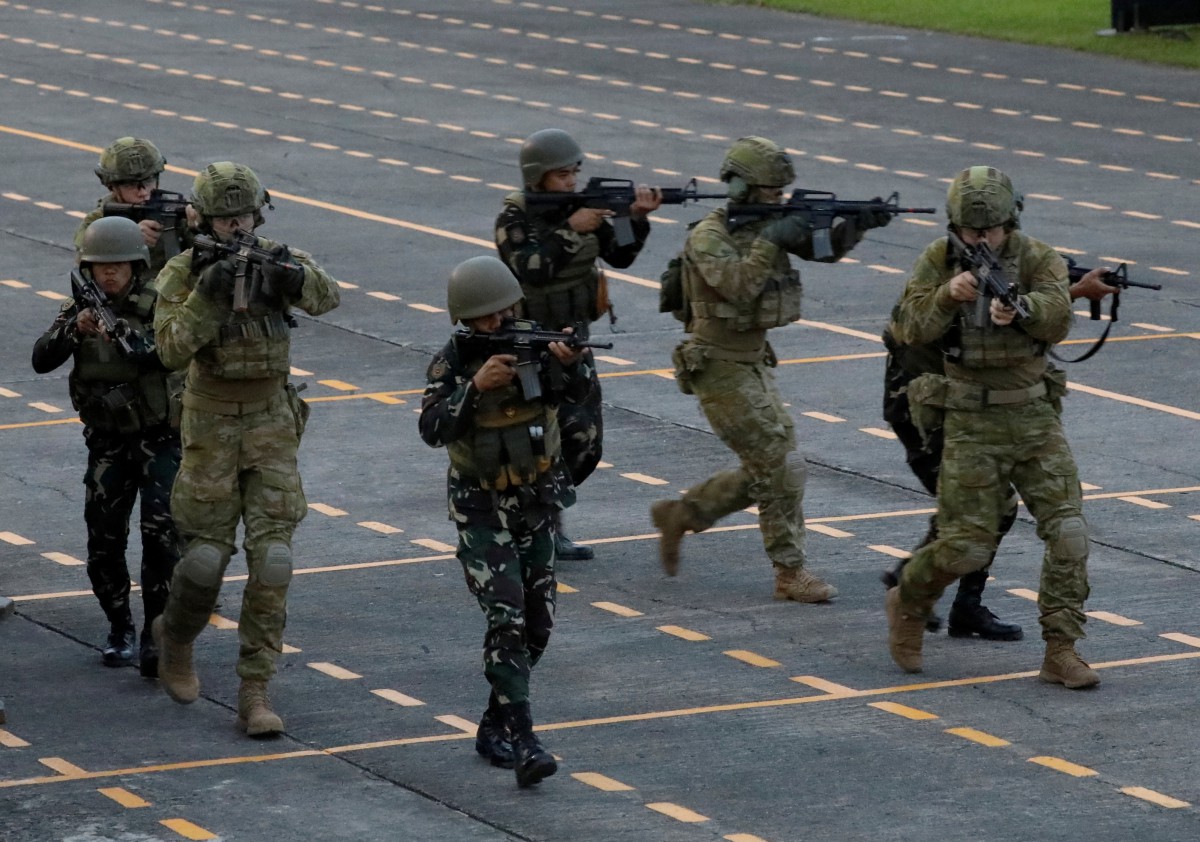
In mid-November, the Southeast Asian Counter-Terrorism Financing Working Group (SACTFWG) was established to crack down on the funding of terrorist groups linked to ISIS. The new regional grouping will include law enforcement agencies from across Southeast Asia, and will be led by the Philippines’ Anti-Money Laundering Council and Australia’s Transaction Reports and Analysis Centre (AUSTRAC).
2017-11-13T123639Z_2138548599_RC1DE17BF460_RTRMADP_3_ASEAN-SUMMIT-AUSTRALIA

Australian and Philippine soldiers demonstrate an anti-terror training drill at Camp Aguinaldo, on the sidelines of the Association of South East Asian Nations Summit, in Quezon City, metro Manila, Philippines, November 13, 2017. Source: Reuters/Dondi Tawatao

Then in a landmark agreement on 25 January six Asean members – Brunei, Indonesia, Malaysia, the Philippines, Singapore and Thailand – signed-up to a new intelligence-sharing pact labelled the ‘Our Eyes’ initiative. The agreement is expected to facilitate the most extensive counter-terrorism cooperation within Asean to date. It will see senior defence officials from the participating nations meet twice a month, and will allow for the development of a new database of suspected militants which can be accessed by law enforcement agencies across the region.

At its launch, Malaysia’s Deputy Defence Minister Mohd Johari Baharum said the initiative would be crucial in enabling a collective response to emerging security threats which are ‘‘complex and trans-boundary in nature’’. It is hoped that the four remaining Asean states will later join the group, as well as external actors with a stake in the region’s stability such as Australia, India, Japan and the US.

SEE ALSO: Philippines: Duterte vows to crush drugs, terrorism in second SONA

The crisis in Marawi certainly got the region’s leaders thinking about how to better pool resources to tackle the growing threat from Islamist terrorism; but it has not yet resulted in an all-encompassing strategy involving all ten of Asean’s member-nations. Such an aim will always be difficult to achieve, due to the huge variation in threat along with the differing capabilities and priorities of Asean states.

However, ad-hoc collaborative responses have emerged involving the countries most concerned, on a scale not witnessed previously in the region. Indonesia, Malaysia and the Philippines have looked to work with other interested parties to find workable and pragmatic multilateral solutions to the most pressing and immediate problems facing the region’s vulnerable maritime states.

With a series of overlapping bilateral, trilateral and multilateral mechanisms now in place, Asean integration in the sphere of counter-terrorism has been significantly upgraded. In the post-Marawi era of elevated risk, a set of guidelines which meant little in practice is rapidly being superseded by a more coordinated regional strategy, aimed at tackling the most critical threat facing Southeast Asia today.


Source link

Third virtual mobile telco Zero1 enters market, offers unlimited mobile data plan

0

Singapore

Monday, February 12, 2018 – 09:59

The Straits Times

Others

Source link

Indonesians are the keenest hagglers in Asia

0


FOR SOME, haggling is an innate art form, but for others, it is a dreaded factor of buying items without a set price.

Of course, there are items that aren’t up for discussion, such as the groceries that line the mainstream supermarket shelves. But other trinkets are worth bargaining for, especially if you’re a foreigner not wanting to be ripped off.

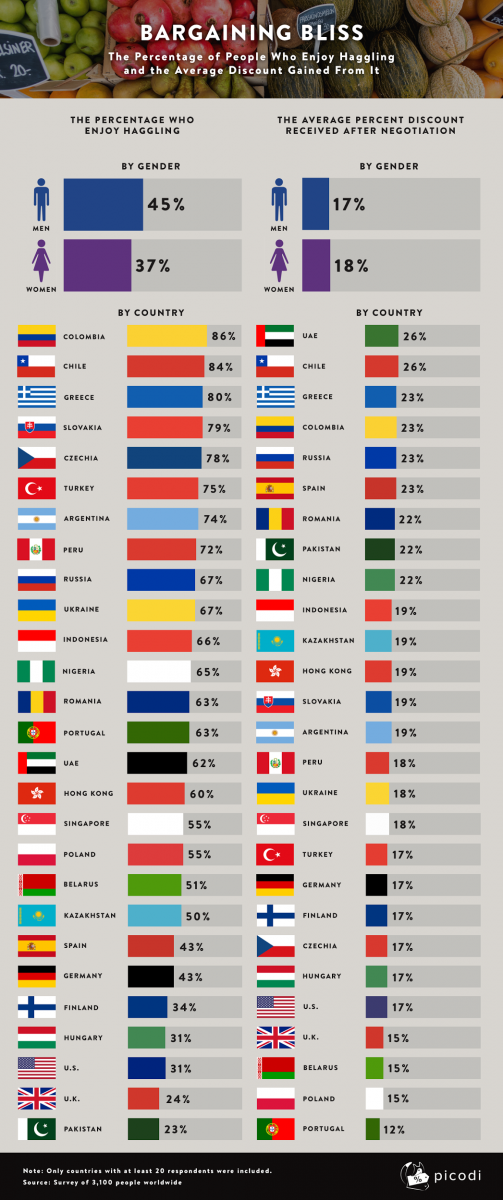
According to a recent study conducted by shopping platform Picodi, Columbians enjoy haggling the most around the globe, with 86 percent claiming to get a buzz out of it.

SEE ALSO: Hong Kong is the safest country to travel in the world

Of the Asian nations polled in the survey, it is the Indonesians who win the haggling game with their keen negotiating skills. Some 66 percent said they enjoyed bartering down the price of their intended item.

Out of 3,100 people surveyed, from 27 countries across the globe, males proved to get the most enjoyment out of haggling, however, it is females who are most successful in bartering as they receive an average of 18 percent off the original asking price.

enjoyment-haggling

Source: Picodi

There are numerous factors involved in setting up and executing a brilliant bargain. The study acknowledges that emotional intelligence, being able to read body language and assess a situation all contribute towards being a successful haggler.

Yet, it found that those from Australia, Canada, United Kingdom and United States preferred to be more direct and negotiate in frank terms. While this can often save time, it can also cause friction and lead to confrontation.

However, some Asian nations believe it has more to do with gender bias than having good negotiating skills.

AP829442625905940

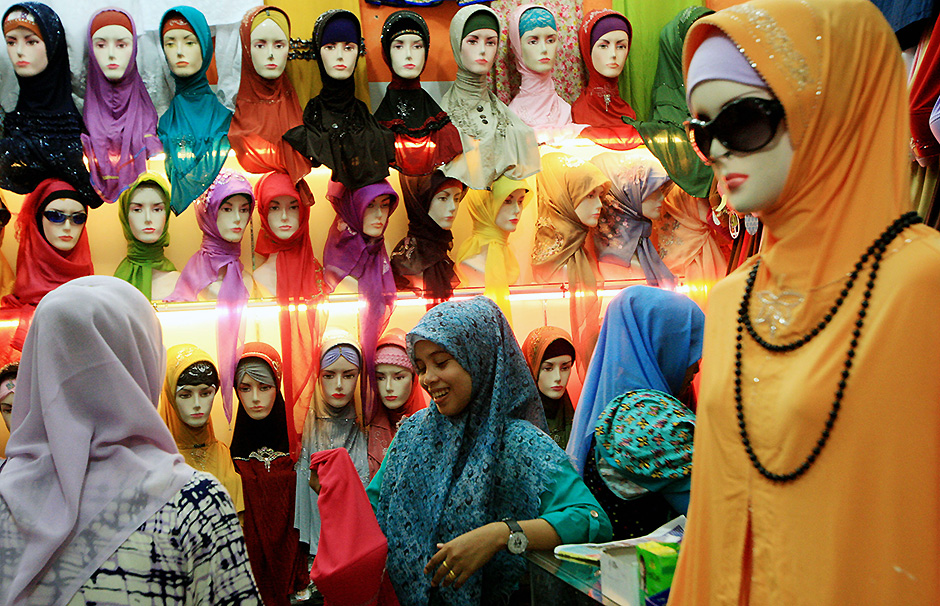
Muslim women browse for headscarves at a market in Banda Aceh, Aceh province, Indonesia, on July 29, 2013. Source: AP/Heri Juanda

Almost 60 percent of Filipinos think it is easier for women to drive a hard bargain based on their gender, and only 17 percent of Indonesians think there is gender equality in haggling.

Taking gender and looks a step further, the study digs deep into how attractiveness influences haggling. Around half of all survey respondents admitted good looks could sometimes have a bearing on how successful a negotiation is.

But there is more to attractiveness than just someone’s exterior. Having an air of charm about you, keeping good hygiene, smiling and being mindful all help to secure that bargain price.

SEE ALSO: On the meter: Where is the cheapest city in Asia to catch a cab?

Country by country, however, it appears those from the Philippines and India are less likely to submit to the power of appearance, whereas in Western cultures the seller can be seduced into offering a low price by a beautiful haggler.

Most interestingly perhaps, is what different nations are most willing to haggle for. Malaysians appear to barter the most with taxi drivers for a lower fare, whereas Australians are all about getting bargain antiques.

pexels-photo-279225

Source: Pixabay

A whopping 74 percent of Filipinos and 65 percent of Indonesians are willing to barter for clothes. But bargain-basement precious jewels take the lead in India as 71 percent said they would haggle down the price when purchasing jewelry.

Each nation has its own cultural faux pas when it comes to haggling, but often enough, the same rules apply in any barter.

Just remember not to be shy and do a little research on your purchase beforehand, unless it’s a tourist souvenir. Also, always be nice and never get personal. Get straight on the charm offensive and if you consider yourself witty by nature, then use it to secure what you want.

A version of this article originally appeared on our sister website Travel Wire Asia

{“total”:41,”error”:””,”stumbleupon”:0,”facebook_total”:36,”pinterest”:0,”google”:0,”linkedin”:0,”buffer”:1,”twitter”:4,”vk”:0}

Source link

Hong Kong dominates Asian university rankings

0


WANT to study in Asia? Hong Kong could be the best place to head to, with three of its universities making it into top 10 on the Times Higher Education (THE) Asian University Rankings 2018.

Singapore still occupies top spot but for the first time, Hong Kong is the most represented territory in the top 10. A total of six of the territory’s universities also made it into the top 60.

The rankings are as follows:

1. National University of Singapore

2. Tsinghua University, China

3. Peking University, China

4. University of Hong Kong

=5.  Hong Kong University of Science and Technology

=5. Nanyang Technological University, Singapore

7. Chinese University of Hong Kong

8. University of Tokyo, Japan

9. Seoul National University, South Korea

10. Korea Advanced Institute of Science and Technology, South Korea

The University of Hong Kong rose from fifth to fourth place and the University of Science and Technology rose from sixth to fifth.

SEE ALSO: Singapore: NTU trumps arch rival NUS again to be Asia’s best university

Second-tier institutions are not growing at the same rate as elite ones

Despite the victory, however, the rankings publisher claimed there is a widening gap between Hong Kong’s elite and second-tier universities. Considering data from all Hong Kong’s institutions, on average, the score for research and international outlook increased.

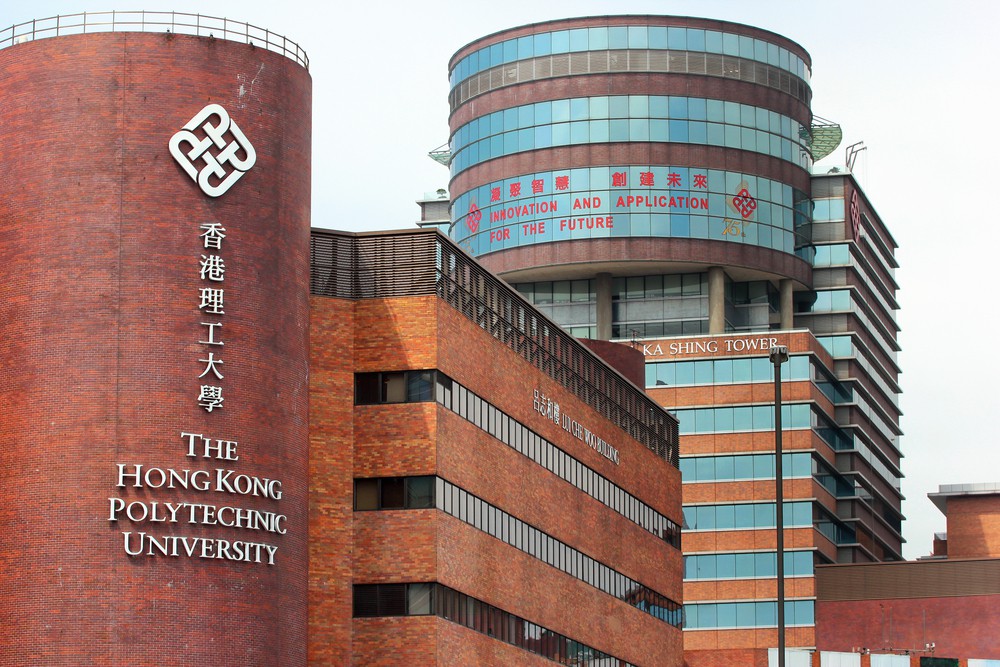
However, three institutions dropped down the rankings. City University and Polytechnic University lost two places each, dropping to 14th and 19th respectively, despite receiving higher overall scores from the previous year.

Baptist University took the biggest hit, dropping six places in the rankings from 49th to 55th.

shutterstock_521995273

Source: Andrii Zhezhera/Shutterstock

SEE ALSO: Hong Kong activist Joshua Wong walks free after prison sentence overturned

Acting Rankings Editor Ellie Bothwell told South China Morning Post the universities only dropped spots because other schools are improving at a much faster rate.

“With a population of just seven million people, it is an extraordinary achievement to boast six institutions within the top 60 in Asia,” THE’s Editorial Director of Global Rankings Phil Baty said.

“However, while Hong Kong is still one of the strongest territories in the table, the gap between its elite and second-tier institutions is widening,” he said. “As higher education competition heats up across the continent, Hong Kong’s lower-ranked universities are at risk of declining further in future years.”

This article originally appeared on our sister website Study International

Source link

Cirque du Soleil – Toruk

0

Cirque du Soleil – Toruk
Thursday, May 24, 2018 at 12:00 AM

Singapore Indoor Stadium

2 Stadium Walk, Singapore, Singapore

Source link

‘I love racing to the line’: Singapore’s Cheyenne Goh all set for Pyeongchang competition

0

PYEONGCHANG: Singaporean speed skater Cheyenne Goh had her first training session on the Olympic ice rink in Pyeongchang on Sunday (Feb 11), a week before she makes her Winter Olympics debut when she competes in the short-track 1,500m race on Feb 17.

For the 18-year-old, competing on the world stage was not something she had imagined when she first picked up speed skating eight years ago.

“I was definitely not even expecting to qualify for the Olympics this year,” she said. “I only began to take the sport seriously when I joined Singapore’s national team two years ago,” said Goh.

She is now getting used to being a trailblazer in Singapore’s ice skating scene.

Last February, she became the first Singaporean female to compete at the Asian Winter Games in Japan. Six months later came her Southeast Asian Games debut in Kuala Lumpur, Malaysia, where she won two silver medals (1,000m individual and 3,000m relay) and a bronze (500m individual).

Then in November 2017, she became the first Singaporean to qualify for the Winter Olympics.

Cheyenne Goh (third from right) and the Team Singapore contingent in Pyeongchang for the 2018 Winter Olympics. (Photo: Singapore National Olympic Council)

START OF BIGGER THINGS TO COME?

Before arriving in Pyeongchang on Thursday, Goh spent a month training in Goyang, a city in the north of South Korea. Her coach is South Korean Chun Lee-kyung, a four-time Olympic champion who now trains Singapore’s national speed skating team.

Chun is optimistic that Goh’s participation in Pyeongchang 2018 will be the start of bigger things to come for Singapore.

“It’s a remarkable achievement that she became the first ever Winter Olympian for Singapore,” Chun said. “This could be a turning point for Cheyenne’s athletic career, and for Singapore’s junior skaters.”

Goh’s journey to Pyeongchang started at the age of four, when she moved with her parents to Leduc, Canada. Like most other girls in her neighbourhood, she played ice hockey at a community club outside of school.

But on ice, she was always a skater more than anything. “I’ve always been stronger as a skater than other things like puck handling or shooting,” she said.

The 2010 Vancouver Winter Olympics changed everything for Goh. She and her family were watching the speed skating competition when her father suggested that she tried the sport.

HOCKEY STICKS SHELVED

Two years later, speed skating became her new passion.

“I really liked the fast pace of it and competing head on with other skaters is fun,” Goh said. “I love racing to the line.”

Singapore‘s flagbearer Cheyenne Goh leads the delegation parade during the opening ceremony of the Pyeongchang 2018 Winter Olympic Games on Feb 9, 2018. (Photo: Martin Bureau) 

It gets serious on Feb 17, when she lines up in a field that includes two-time Olympic champion Zhou Yang of China and world-record holder Choi Min-jeong of South Korea.

Asked if she feels the pressure, Goh said: “It’s alright. You try not to let that pressure get to you.”

Although she now speaks with a Canadian accent, she insists that Singapore remains the biggest part of her identity.

“I’m Singaporean, and it’s a big honour to be at the Games representing my country,” she said.

Source link

Till prison do us part: ICA officers crack one of the largest sham marriage cases  

0

SINGAPORE: A sham marriage syndicate that orchestrated the unions of Singaporean men with Vietnamese nationals pulled out all the stops to hide its illegal activities.

The syndicate flew the men to Vietnam for a wedding photo shoot, got them to officially change their addresses to that of a “marital home” and, in some instances, got the men to receive their brides at the airport.

But its elaborate tactics came to nothing when the Immigration and Checkpoints Authority (ICA) uncovered the six sham marriages it organised. Officers arrested syndicate members between July and December last year.

Revealing details on the case, which was among those that drove up the number of sham marriages in Singapore last year, ICA said that attempts to make the unions look genuine were more elaborate and extensive than the typical case.

The sheer number of people involved in the offences and the effort that went into concealing the marriages set the case apart from others, said Superintendent (Supt) S Maran, ICA’s deputy director of the enforcement division, during a media briefing on Friday (Feb 9).

Fourteen people – seven men and seven women – were involved. Of them, 10, including three of four arrangers, Adrian Kin, Wong Kean Mun and Ho Thi Be Ba, have been convicted.

Court proceedings are ongoing for two more, while one Vietnamese national has been repatriated for unrelated offences, and her fellow countrywoman left Singapore before investigations started. In a typical case, there are two parties, and maybe a marriage agent involved, Supt Maran said.

“They are always coming up with innovative ways and means to show they are genuine, so our work is getting more difficult by the day, to crack such cases, to be able to prove that this is not a genuine marriage,” he added.

Sham marriages, or marriages of convenience, involve using marriage to help foreigners enter Singapore or extend their stay here. The act was criminalised in 2012.

THE TRANSACTIONS: HOW THE SHAM MARRIAGES WORKED

The lead investigators involved in the case, Deputy Superintendent Liew Shi Xiong and Assistant Superintendent Muhammad Izzat Abdul Rahman, said that the grooms, who were in financial difficulties, were offered between S$3,000 and S$5,000 to get married, and between S$100 and S$300 for every successful extension of stay.

The extension was typically for between two weeks and a month. Tourists from Vietnam typically get to stay in Singapore for a month upon entry. 

The women, who were discovered to be involved in vice-related activities, each paid arrangers about S$20,000 to set the arrangements in motion. After getting married, three of the couples stayed  at this same Balestier address, harboured illegally by Ho, one of the arrangers.

Supt S Maran, deputy director of ICA’s enforcement division. (Photo: Jalelah Abu Baker)

“The husbands of these four brides, they changed their address on their NRIC to reflect the same address as their brides so that when the authorities check, they can say ‘I am staying at this place, this is my address’ as some sort of proof,” said ASP Izzat. 

Previously, one sign that roused suspicion that a marriage was a sham was the couples living apart.

The men in the syndicate were either friends or ex-colleagues from an interior design firm, the officers added. They said that typically, family members would not even know that the offender got married.

AN APPEAL THAT SET INVESTIGATIONS IN MOTION

It all started after ICA received an appeal against the repatriation of a Vietnamese national from her Singaporean husband. She had been caught for working without a permit twice, and was therefore being repatriated. That appeal, and the authority’s investigation into it, are what set the wheels in motion. 

Officers found the case suspicious, discovered she was in a marriage of convenience, and delved deeper, eventually catching on to the five other couples who were similarly married.

In the absence of hard evidence like travel documents that can be used in other types of immigration offences, marriage of convenience offences require innovative investigation methods, officers said. They were unable to reveal details of their investigations so as not to tip off other potential offenders.  

“Our officers had to painstakingly go through a tedious interview process, and use other supporting evidence to be able to find that there was a link, to connect the dots,” Supt Maran said.

Source link