Singapore
Saturday, February 10, 2018 – 10:34
Customs officer rejected GST tourist refunds, then pocketed the sum
The Straits Times
Others
SINGAPORE: Life after retirement should be a time of enjoyment and personal fulfillment.
To many people, the completion of a successful career at 62, give or take a few years, means one is free to pursue other passions including volunteering for a worthy cause, spending time with family or taking a long holiday.
But the harsh reality is that in our old age, many of us will experience ill health or even disability. A survey by the National Council of Social Service in 2015 showed that more than 13 per cent of those aged 50 and above reported some form of disability.
Even for the best of us who keep fit and follow a strict diet, the odds don’t look good. One in two healthy Singaporeans at 65 will find themselves with a long-term disability, according to the Ministry of Health.
So the ElderShield Review Committee’s release of its interim recommendations last week to enhance ElderShield, an insurance plan that provides for enrolled Singaporeans who are not able to perform three of six stipulated daily activities, should be a sight for sore Singapore eyes.
The Committee announced bold reforms including making ElderShield compulsory for future cohorts and lowering the age of enrolment to 30 from the current 40, among others.
Yet, online, the announcement drew little substantial responses from netizens. A few netizens chanted “return my CPF”.
News of a likely premium increase sparked off complaints from those enrolled in the scheme that the Government was finding some a way to “eat up the hard-earned money of Singaporeans”.
A heartening development this week was seeing voices in the news come out to discuss what could be improved.
However, the response among younger netizens in their twenties and thirties who may see ElderShield made compulsory for them was surprising muted for the most part.
A few made the comment that it is unbelievable 30-somethings like us will be enrolled in a scheme called ElderShield. “So now 30 means elderly?” asked one reader. Maybe one day we’ll need BabyShield, quipped another.
Yet there was scant discussion about the substance of the review among this group.

An old man walks on an overhead bridge. (File photo: Francine Lim)
AVERSION TO DISCUSSING OLD AGE AND DISABILITY
It seems some of us suffer from an aversion to discussing the harsh realities of an ageing population and the challenges that added longevity, coupled with a greater incidence of heart problems, diabetes and dementia might bring.
Might it be that a hectic career, coupled with a fixation on day-to-day, bread-and-butter issues, like how to pay the bills and whether to get a car, have blinded us to the longer-term issues of ageing and disability we may all face?
Perhaps most of us are busy raising kids and creating babies – and there’s cognitive dissonance with planning for a period of life much to do with the end of your own. Being in the pink of health and the prime of our lives may also be lulling us into complacency.
Besides, for young people coming out to the work force and taking on odd jobs and ad hoc projects in the gig economy, the idea of having enough in your CPF to pay for ElderShield premiums looks like a sick joke, some say.
Yet it is far too easy to shout about costs and “return my CPF” than to engage in a deeper discussion about ageing, disability and isolation.
The simplistic fixation on the ElderShield premiums one might have to pay can be reductive.
It is also worrying that some youths have the misconception that the ElderShield review will place the burden of caring for the aged on the young, even though ElderShield as a concept is about risk-pooling and doing your part to save for your own disability.
It seems ironic for a population so well-versed in planning for the schools our unborn children will attend and the milk they will drink, that we don’t do some planning of our own for our old age and try to have a better understanding of relevant healthcare schemes.
A man holds a walking stick. (Photo: Pixabay/stevepb)
Might it be that living in a country with one of the most technologically advanced and modern healthcare systems in the world has given us a false sense of invincibility?
Do we make the mistaken assumption that any healthcare issue can be medically treated? And anything that can be treated can be fixed?
Even for those of us aware, perhaps we want to delay thinking about the challenges advancing age brings because it’s difficult to confront a future of helplessness, where we lose our ability to function independently and cannot go about life without help from a caregiver.
WE NEED AN HONEST CONVERSATION
We need an honest conversation with ourselves about the care we need for the time when we meet with permanent disability in old age.
The Government can facilitate this but we must own this discussion.
Where some express concerns about broadening the social safety net and the Government taking on the responsibility of pooling resources, we need to play a more constructive, active part in this debate.
This starts with thinking about the model of care we want for ourselves – whether enrolling in an institution, enlisting home nursing services or living in some community-based enabled living village – before considering how to fund these including which parts and how much should be publicly or privately funded.
We also cannot shy away from considering what living while disabled will mean to each of us, but how many of us understand what this translates into?
How many of us have thought about whether our corridors are big enough for wheelchairs to move through comfortably or where in the shower to install handlebars?
And why not, for those of us still single and unlikely to have a life partner to take care of us in our golden years? It might be unpleasant to discuss, but who then will help us get to the toilet?
An electronic patient chart is shown on the wall to a hospital room. (Photo: REUTERS/Mike Blake)
Back to ElderShield, most of us will probably monetise our homes to aid in providing for our retirement and disability in old age, yet even then the current payout of S$400 a month in 30 or 40 years doesn’t sound enough to provide for the caregiving assistance we will need.
So we must take a hard-nosed look at what the future brings for our aged selves and educate ourselves so that we can have a meaningful conversation about the options, costs and trade-offs.
CELEBRATED ANOMALY?
In a world where changes to healthcare financing are not only furiously poured over but strongly debated, including the introduction and abolishment of the Affordable Healthcare Act in the US, or the debates over the state of Britain’s National Health Services, perhaps the fact that the ElderShield interim recommendations were announced without much fanfare among younger Singaporeans is an anomaly to be celebrated.
Cynics say people don’t think their feedback matters, others say it shows high levels of trust on the contrary.
Perhaps it doesn’t help that the scheme is called ElderShield, suggesting to us that the issue is about very old age, whereas disability can arise from an accident or an illness at 50.
Maybe the scheme needs a catchier name and better marketing.
Regardless, Singaporeans must focus our energies on how to improve it.
Lin Suling is executive editor of the Commentary section at Channel NewsAsia Digital News.
SINGAPORE: One question Mr Ong Chee Chiau gets asked a lot is why Terminal 5 will be so big – Changi Airport’s largest terminal by far – as opposed to building three smaller ones gradually.
The latter “seems like a logical thing to do”, said Mr Ong, who is part of the T5 planning team and a senior vice president with Changi Airport Group (CAG).
But that would mean three sets of ticket counters, directing passengers to the correct terminals, and being able to have staff switch terminals quickly or have aircraft change positions as and when needed.
“So from the efficiency of the terminal itself (and) of how we’ll use the airfield, it made sense for us to go to … a mega terminal,” Mr Ong told Channel NewsAsia’s two-part special Looking Ahead, which examines how Singapore’s mega infrastructure projects are positioning the nation for the future.
Yet at the same time, the challenge is to make T5 still feel cozy and like home, without saddling passengers with a half-hour walk to their departure gate. (Watch the episode here)
Just how big will T5 be?
It is being built on one of Singapore’s largest construction sites, if not the largest: At 1,000 hectares, the size of Tampines new town or 2.5 Marina Bays. (The rest of the airport occupies 1,350 ha of land.)
This development site will also include the new third runway and other buildings.
When T5 is completed by 2030, it will increase Changi’s annual capacity by 50 million passengers initially and up to 70 million if needed – which would mean 150 million passengers a year, compared with the current capacity of 82 million.
And that is a hoped-for game changer for Singapore’s competitiveness as an air hub.
“That’s why we’re excited about T5,” said CAG chief executive officer Lee Seow Hiang, who thinks it will even change “the whole of Singapore”.
WATCH: What T5 will bring (2:35)
INCREASED OPPORTUNITIES
Beyond the aviation industry – which directly contributes to 3 per cent of the economy and employs 77,000 people – air travel is vital to areas like tourism, hospitality and retail. The finance and business sectors also depend on Singapore’s air connectivity.
This is the reason the authorities are investing in T5.
Finance Minister Heng Swee Keat said: “That our airport is so well connected … allows Singaporeans to travel all over the world; it allows business leaders (and) professionals to come to Singapore, (also) using Singapore as a base to go out into the region.
Therefore that connectivity brings new business opportunities.
(File photo: Changi Airport Group)
Though the cost of T5 is expected to run into tens of billions – comparable to planned airport expansions in London and Hong Kong – Centre for Aviation chief analyst Brendan Sobie called it a “slam-dunk” investment owing to Asia’s economic and travel growth.
By the mid-2020s, China is set to become the world’s biggest aviation market and India the third largest. By 2035, the number of people flying to, from and within China and India will be 1.3 billion and 442 million respectively.
Closer to home, Indonesia will break into the top 10 and come up to 242 million passengers. Mr Sobie sees a unique selling point for Changi here, for example.
“There are a lot of opportunities to carry Indonesians, not only to Singapore, which is the main destination for Indonesians, but everywhere across the world,” he said.
“(Changi) has connectivity to places like secondary cities in Indonesia, which are maybe not linked to the hubs in the Middle East.”
Related: Why Singapore needs Tuas mega port, to keep ruling the seas
WORKING AT CAPACITY
T5 will also enable carriers, especially Singapore Airlines, which will be an important part of the Republic’s aviation future, to add links and routes to enhance the nation’s connectivity.
As it is, SIA CEO Goh Choon Phong notes the constraint on SIA, which currently operates services to over 60 destinations.
“Right now … during the peak hours, we’re already having difficulty adding more flights,” shared Mr Goh, who is in no doubt about the need for T5.
We’ve ordered some 50 billion dollars’ worth of aircraft coming in, and … in order to expand, the airport has to have the capacity.
Changi is the world’s sixth-busiest airport, handling about 1,000 aircraft movements a day on its two runways and a record 62.2 million passengers last year.
During the daily peak period, it manages about 68 aircraft per hour, said senior air traffic control manager Pauline Yip.
The current two runways will soon reach full capacity, making the need for a third one – which is being built at a cost of just over S$1 billion – “more urgent” than T5, said Changi East Planning project director Leong How Yin.
The new 4km-long airstrip – which is on the same reclaimed land in Changi East that will house T5 – will be ready by the early 2020s, and will need 40km of taxiways to connect it to the existing terminals.
In terms of travel figures, Changi would have been at capacity this year if Terminal 4 had not opened last October, noted Mr Sobie.
While Changi may not necessarily grow as fast as previously because the market is more mature now, he described its annual growth of 6 per cent in the last two years as “very healthy”.
“That kind of growth rate will continue,” he predicted. “Some years might be a little less, some years might be a little more, but on average, maybe in the middle single digits.”
T5 will then be opening at a time when more capacity will again be needed, he said,
Changi’s reputation … (as) one of the best airports in the world would have been at stake if they hadn’t made this investment.
Changi has been awarded the top honour at the Skytrax World Airport Awards for five years in a row now.
Mr Lee Seow Hiang, CEO of Changi Airport Group, receiving the Skytrax World’s Best Airport Award. (Photo: Changi Airport Group)
As traveller numbers go up, however, so too will the competition to attract them – one that Mr Lee described as “intense”. But the planned scale of T5 gives him confidence.
He said: “We have, over the last 30 years – both CAG and all the companies in this ecosystem – built up deep competence and deep competitive strengths. And the opportunity is at our doorstep.”
WHAT T5 WILL FEATURE
When it is completed, all eyes will be on T5 and how it upholds Changi’s reputation.
But it is not just travellers who are fond of the airport; it has a place in the hearts of many Singaporeans as a place to dine, a hangout for families and a space to unwind.
So what does T5 have in store for everyone?
One of Changi’s themes that CAG intends to “play up even more” is the homecoming experience, not only for Singaporeans but also for visitors – “that this could be (their) home and we’d like to make (them) welcome”, said Mr Ong.
Another part of the Changi experience involves going green, and T5 will take a step further in renewable energy – not only using solar panels in the usual sense, but integrating photovoltaic cells into the building facade, for example.
Mr Ong also hopes to push the envelope of rainwater harvesting. “We’re going to allow all the rainwater to drain into a canal, and we’ll capture the water from there, treat it, and push it back into our systems,” he said.
“We can all look forward to a very sustainable T5.”
To make travelling easier, the T5 team will tap technology such as automated check-in kiosks and bag drops, as well as explore new systems to bring luggage “more efficiently and securely” to the aircraft.
The automation will also be aimed at increasing manpower productivity and aiding the ageing workforce.
“It’ll definitely be beyond just the cleaning robots that you see today in T4. It may take the form of exoskeletons … (or) transforming entire processes that people may be used,” Mr Ong said, adding that lessons from T4 will be learnt.
A passenger checks-in his luggage using an automated booth at Terminal 4. (Photo: AFP)
MAKING BIG LOOK SMALL
T5 is also being planned with the airlines in mind. CAG executive vice president (Airport Development) Yam Kum Weng said: “We’ve designed … a single large terminal that will allow airline groups in T5 to consolidate their operations under one roof.
“This will mean that airlines would enjoy economies of scale and, hopefully, also save some cost, as cost is an important consideration in today’s competitive environment.”
Given T5’s size, however, CAG is conscious of the need to prevent long waiting times, long queues and long walks.
“In T4, our biggest problem was: How do you make small look big?” said Mr Ong.
In T5, we’re going to have the exact opposite problem: How do you make big look small and cosy?
He suggested that T5 will have compartmentalised spaces and new types of sky trains to minimise walking distances.
“With that, we hope to be able to make a mega terminal feel like the same cosy terminals that you’re used to in Changi,” he said.
His colleague Mr Leong said tunnels, including for baggage, will also be built to link T5 to the existing terminals. And he promised passengers a seamless experience: “They can connect between the terminals exactly as if they’re in one Changi.”
Mr Ong added: “We’ll be working very hard towards not only trying to replicate the experience that you have today in Changi Airport but, in some cases, make it even better.”
Watch this episode of Looking Ahead here. Catch the second episode, about Jurong Lake District and the integrated waste management facility, on Feb 14 (8pm SG/HK).
SINGAPORE: A van caught fire just before the Outram exit on the Central Expressway (CTE) on Friday (Feb 9) evening.
The Singapore Civil Defence Force said it was alerted to the incident along CTE towards AYE near the Outram Road slip road at about 5.20pm.
The fire has since been put out and no one was taken to the hospital, authorities said.
A video sent by a Channel NewsAsia reader showed flames engulfing a vehicle, while other footage uploaded to social media showed SCDF officers on the scene.
The van caught fire at CTE near Outram exit. (Photos: Facebook/KP Lau)
The van was completely engulfed in flames. (Photos: Facebook/KP Lau)
An electronic signboard warning of fire in the CTE tunnel on Friday (Feb 9).
An electronic signboard at the CTE tunnel entrance near Merchant Road also warned of a fire.
The Land Transport Authority sent out a series of tweets from 5.30pm warning of an accident in the CTE tunnel towards the Ayer Rajah Expressway before the Outram Road exit.
It advised motorists to avoid lanes 2 and 3.
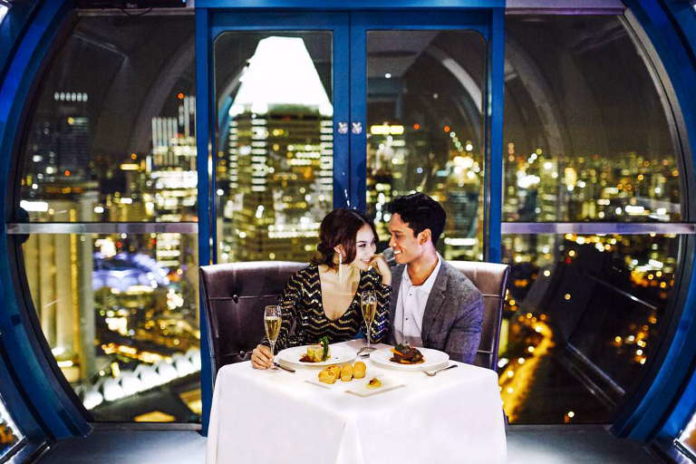
They say that Singaporeans are not very romantic, but the city begs to differ.
Otherwise, why would it have so many interesting places for couples to go and spend time at?
If you’ve not tried the ones on this list, take it as a little inspiration to book something for your bae – it doesn’t have to be on Valentine’s Day – any day can be romantic can’t it?
Singapore Flyer Couples’ Package
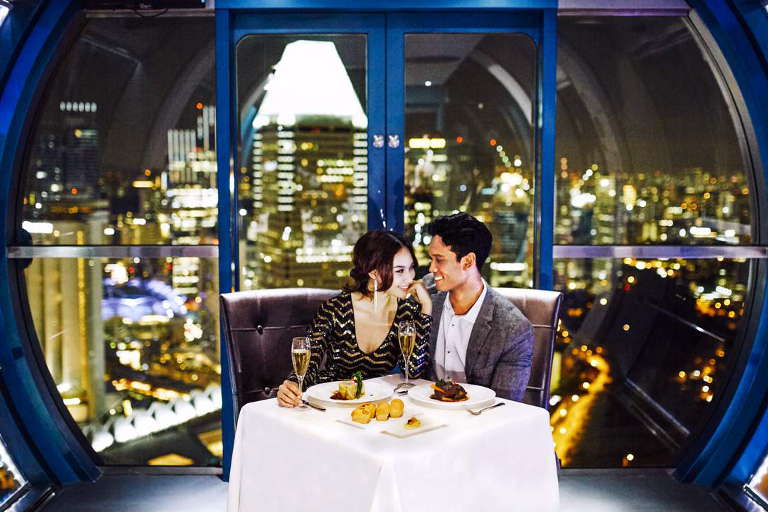
There are a couple things you can do that are romantic at the Singapore Flyer.
One is the Singapore Flyer Sky Dining Flight for two, during which you will share the cabin with other couples and do two rounds (approximately one hour) for a full four-course menu. Y
You can also do the Premium Champagne Flight (which isn’t limited to couples, but is pretty romantic if you happen to score it on a day when no one else has booked it) which includes one rotation, a glass of champagne and chocolate.
Staycation, staycation, staycation

Singaporeans love, love, love their staycations. And there is SO MUCH to choose from, whatever your budget.
Pick something that’s uniquely you, whether you love soaring skyscraper views, or you and your bae are more into design and industrial chic places (case in point: The Warehouse Hotel).
The best part is, you can do this anytime (ie. NOT on Valentine’s Day when prices skyrocket), just pick a good off-peak weekend.
Cycling at East Coast Park
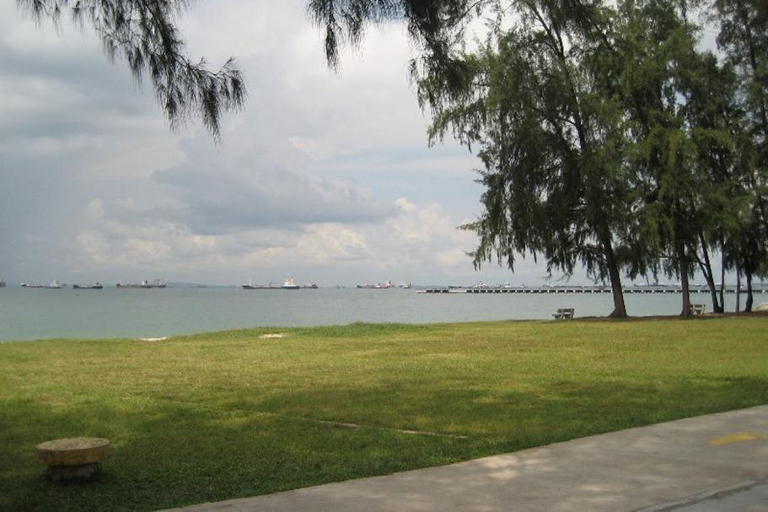
Is it cheesy? Yeah, maybe a little. But there’s nothing wrong with a cheap and cheerful bike ride at East Coast Park.
Go at sunset so that it’s cooler, and take your time to bike the length of it – you can even stop at Lagoon Hawker Centre for a bite to eat or further down where there are more bars and restaurants.
We’re sure you can find some quiet, secluded spots for some alone time too.
Stroll the S.E.A Aquarium

Fish are not just for families OK. It’s quite romantic to be able to stroll or simply stand on the travelator and visit Asia’s largest aquarium.
You can also carve out a space for yourself where you can sit and watch the rays swim in the huge main tank.
Try to pick a day that’s more off-peak so you don’t have to fight with too many other visitors.
Explore the National Gallery
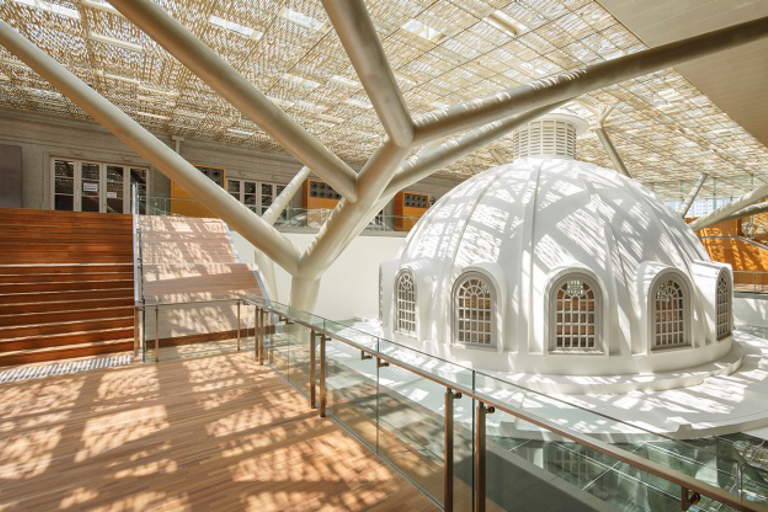
Possibly one of Singapore’s most beautiful, Instagrammable spaces, the National Gallery actually has it all.
Lots of places for romantic strolls, or private conversations, and even some great places to eat, shop and drink.
Make a day of it and get cultured, and once the sun sets head up to Smoke & Mirrors or one of the other restaurants for a nice view.
Dine in high places
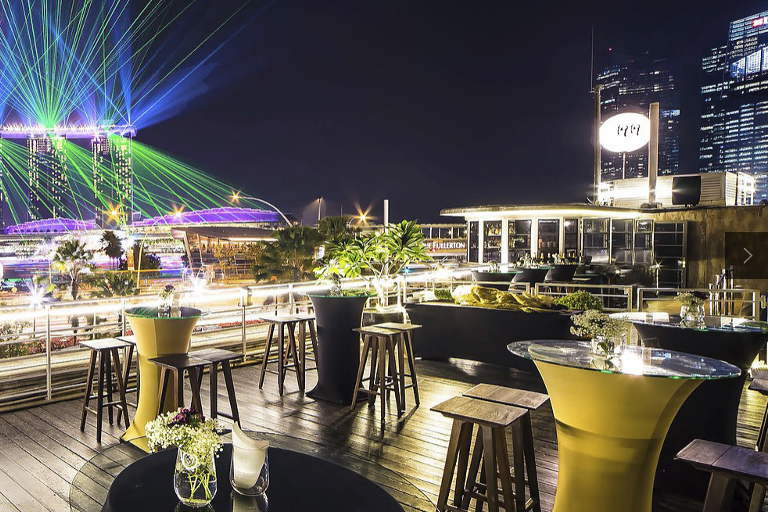
For such a small country, Singapore offers a lot of places for some very special meals.
Besides both the Flyer and the cable car dining, you can also just visit some pretty special restaurants that are equally sky-high, like Stellar at 1-Altitude, Sear at Singapore Land Tower, and of course, all the Marina Bay Sands restaurants on the top floor.
Besides that, there are places like The Lighthouse at the Fullerton Hotel and across from there, the Boathouse, all of which offer some pretty special city views (there’s plenty of places outside the city…we’ll get to that).
Garden dining

While the pods at The Summerhouse out by the Seletar Airbase are a pretty unique place to enjoy a romantic meal, they aren’t the only place for a little garden dining by far.
Don’t miss out on old favourites, the Botanic Gardens and Dempsey Hill for a selection of great restaurants, as well as areas like Rochester Park where restaurants like Una are housed in old black and white bungalows.
Dining on Cloud 9
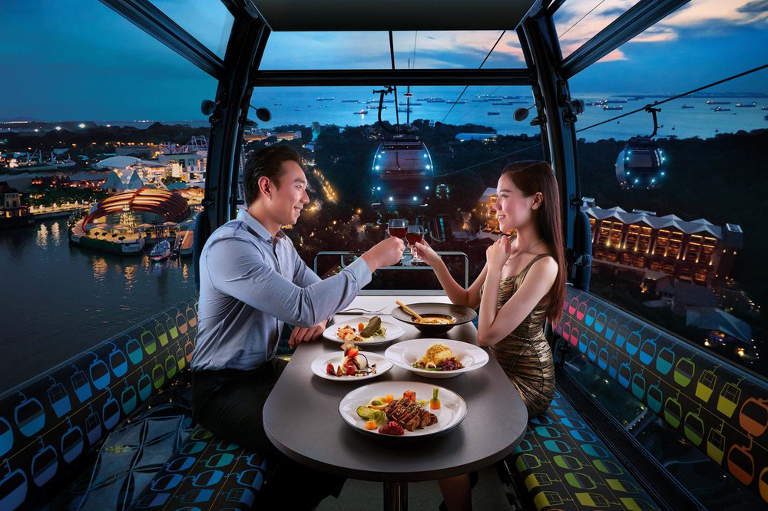
So apparently cable car dining – the only one of its kind in Asia – has actually been available in Singapore since the 90s. But we only recently discovered it and were really pleasantly surprised by the whole experience.
A lot of work goes into making the experience seamless. You do three full rounds from Mount Faber to Sentosa (about one and a half hours) and back during which you get a three-course dinner including a welcome drink and wine. Go around 6.30pm so that you get the full effect of sunset.
This article was first published in CLEO Singapore
Valentine's Day Dating/Relationships

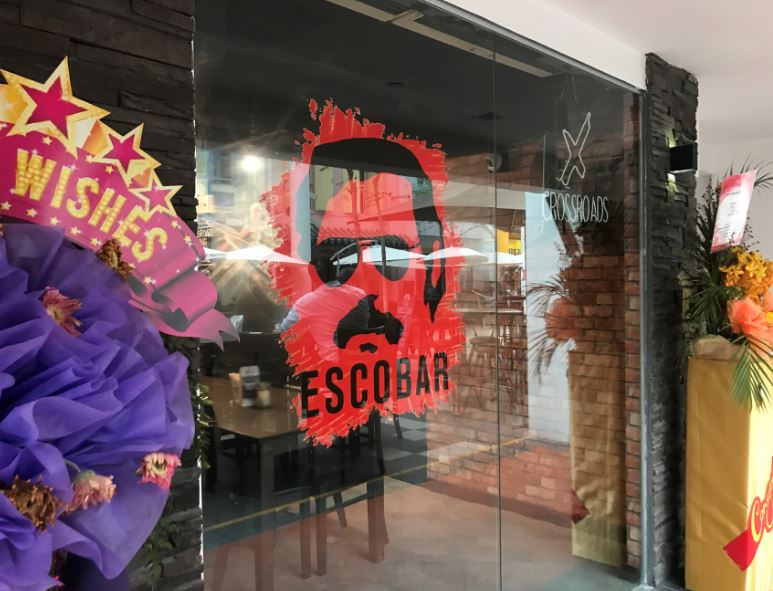
The owner of a Singapore bar named “Escobar” said a picture of the Colombian drug lord may have been a bad choice after angry complaints and a warning from the Central Narcotics Bureau (CNB).
The gastropub in the financial district has drawn the attention of Singapore’s drug enforcement agency as well as a complaint from the Colombian embassy and angry reaction from anonymous callers that included death threats.
The owner, Stan Sri Ganesh, said the name and picture of Pablo Escobar, who was killed in a police operation in 1993, on its sign had seemed perfect for the bar he opened in January.
//afarkas.github.io/lazysizes/lazysizes.min.js
That opinion changed after a visit on Wednesday by the police and the Central Narcotics Bureau agents. “Our intention was never to offend a particular individual or a community,” Ganesh told Reuters. “We also never intended to condone the actions of Pablo Escobar.”
In a joint statement from the CNB and Singapore Police Force (SPF) on Friday (Feb 9), it called the naming of the bar after a drug lord “highly objectionable” and also “irresponsible”.
Said the CNB and SPF: “That Pablo Escobar’s name and image are being used to promote the bar is highly objectionable and runs counter to Singapore’s zero tolerance approach towards drugs and our efforts in preventive drug education. The glamorisation of
a drug kingpin and associated drug use is irresponsible.”
“While we acknowledge that some businesses may adopt certain themes or associations as part of their marketing strategy, this should be done in a manner consistent with Singapore’s policies to keep our country safe and secure.”
It added that the owner of the bar has agreed to “remove all references to drugs and Pablo Escobar”, and that they will be monitoring the situation to ensure that the rectifications are made.
Ganesh said he wasn’t happy to be changing the bar’s logo with the picture of Escobar, which had cost him $20,000 in additional expenses.
Some curious patrons thought nothing of the association with the infamous drug dealer. “I mean if the owner of Escobar actually wanted to open a’drug place’, it would not be right smack in the middle of town,” customer Katie Kang said.
Ganesh said he was baffled by the reaction by the Colombian embassy, which had sent a three-page letter to Singapore’s foreign ministry expressing its “serious concern” that the bar”pays tribute to the worst criminal in the history of Colombia”. Ganesh said he had no plans to change the name of the pub.
“PAP MPs must not do anything that may give rise to any misperception that they can influence or interfere in the judicial process,” says Mr Chan Chun Sing.
File photo of Chan Chun Sing. (Photo: Lam Shushan)
SINGAPORE: People’s Action Party Whip Chan Chun Sing on Friday (Feb 9) reminded party Members of Parliament not to write to the courts on behalf of their constituents.
In an internal memo sent to the media, Mr Chan said the separation of powers between the Executive (the Government), Legislature (Parliament) and Judiciary (the Courts) is a fundamental principle of Singapore’s political system that is enshrined in the constitution.
“The PAP Government has always upheld this separation rigorously, and will continue to do so. PAP MPs must not do anything that may give rise to any misperception that they can influence or interfere in the judicial process,” he said.
Mr Chan, who is also a Minister in the Prime Minister’s Office, issued the memo after a PAP MP, Sengkang West SMC’s Lam Pin Min, wrote a letter to the courts on behalf of one of his constituents Tang Ling Lee.
A High Court judge subsequently said in his decision grounds that it was “somewhat troubling” for an appellant to try and downplay culpability through an MP’s letter.
The Attorney-General’s Chambers told Channel NewsAsia on Wednesday that it received 400 letters by MPs written on behalf of their constituents in 2017.
Mr Chan said that over the years, PAP MPs have, as a norm, refrained from writing to the courts on behalf of their constituents.
When approached by constituents over matters that come before the courts, PAP MPs may write to the Ministry of Law on procedural issues and AGC on prosecutorial issues. “This has been the general practice, and will remain so,” he said.
Mr Chan also said the courts are in the best position to evaluate, holistically and impartially, the evidence presented and the merits of a case.
“The courts have clear and strict procedures to uphold the independence and integrity of the judicial process. The separation of powers has never been in question even when the courts have received a letter from an MP, directly or indirectly,” he said.
The Lunar New Year is right around the corner that is why we decided to round up some of our favourite stars who were born in the year of the dog.
Ranked as the eleventh animal in the Chinese zodiac, dogs have often been called man’s best friend because they are fiercely loyal and honest.
According to traditional Chinese belief, the animal that you are represented by can tell you a lot about your personality. People who are born in the year of the dog (1934, 1946, 1958, 1970, 1982, 1994, and 2006) are responsible, smart, faithful, trustworthy, friendly and wise.
Find out which celebs are born in the year of the dog.
Carrie Wong (1994)
The past four years have been quite a run for the 24-year-old local actress who went from fresh-faced rookie to leading lady. In the last four years, she starred in a total of 19 dramas.
She is currently in the midst of filming a drama “VIC” where she plays a model who swapped bodies with a 50-year-old businesswoman. After which, the statuesque actress plans to jet-off for a much-needed two-month long break when filming for the show wraps February.
Charlene Choi (1982)
It seems like the one-half of Cantopop girl group Twins is off to a good start of the year. The baby-faced Hong Kong actress has been chosen to host the 37th instalment of the prestigious Hong Kong Film Awards alongside actor-songwriter Louis Cheung.
While Charlene has starred in numerous television and movie productions since making her debut in 2000, this is the actress’s first hosting gig. The actress revealed online that she is both nervous and excited about her duty and promises to do her best to work alongside her co-host to entertain the audience.
We’re hoping that 2018 will be a good year for the actress romantically who has been dating her current boyfriend, Anthony Shek, for a year.
In 2017, the latter brought Charlene to India to attend the wedding of a family friend, leading some to speculate that Charlene and her boyfriend might be walking down the aisle soon.
Could Charlene be following in the lead of fellow Twins member Gillian Chung who recently announced her engagement to Taiwanese doctor Michael Lai?
Somaline Ang (1994)
The exotic mixed-blood actress was first thrust into the spotlight after being discovered on the reality talent TV contest, “Hey Gorgeous” that scouts good-looking young people with star quality in campuses across Singapore.
Since her debut in 2014, she has landed roles in television serials like “Against The Tide” and the long-form drama “118”. We bet that you’ll be seeing a lot more of this chiselled young star in the New Year.
Tay Ping Hui (1970)
2017 has been a busy year for the local actor. The veteran actor has been shuttling between Singapore and China, while working on multiple projects simultaneously.
You can look forward to seeing more of the charismatic celeb who will be starring in an upcoming drama “Babies on Board” where he will play former doctor Sun Zhihui who is married to obstetrician Peng Shiyun, played by Jesseca Liu.
Jessica Hsuan (1970)
2018 marks the 25th year since Hong Kong actress Jessica’s Hsuan’s foray into show business.
The Imperial College London alumnus entered the show business in late 1992 and early 1993 and was known as one of the top five “Fa Dans” (actresses with high popularity of broadcasting network TVB) from the mid-1990s to mid-2000s.
In 2017 alone, the “Detective Investigation Files” actress landed the part of female lead in two popular dramas, “Line Walker: The Prelude” and “My Unfair Lady”. She also won the accolade of My Favourite TVB Actress at the TVB Star Awards Malaysia 2017 for her efforts.
Will the year of the dog be good to Jessica romantically? Lamenting her singlehood, Jessica recently revealed to local media that she would love to meet someone new in her life.
Here’s hoping that Jessica will meet the man of her dreams in the auspicious year of the golden dog!
Karen Mok (1970)
Like Jessica Hsuan, Hong Kong singer-actress Karen Mok entered the show business in 1993 with the release of her debut album, “Karen” and her cameo appearance in the movie, “The Tigers – The Legend of Canton”.
The mulit-talented artist has won the Golden Melody Award three times, released over 20 solo albums, acted in over 40 movies, and has over 36 million followers on Chinese microblogging site Weibo. To add another feather to her cap, Karen bagged the Best Asian Artist Mandarin in the 2017 MAMA.
Rain (1982)
2017 must have been a memorable year for the Korean singer who not only walked down the aisle with fellow celebrity, Kim Tae Hee, but also welcomed an adorable baby girl in the midst.
In the same year, apart from releasing his EP album, “My Life”, he was also cast in the movie “Uhm Bok-Dong” that was inspired by a true story that took place during the Japanese colonial rule. We’re sure that the New Year will be even better for the heartthrob.
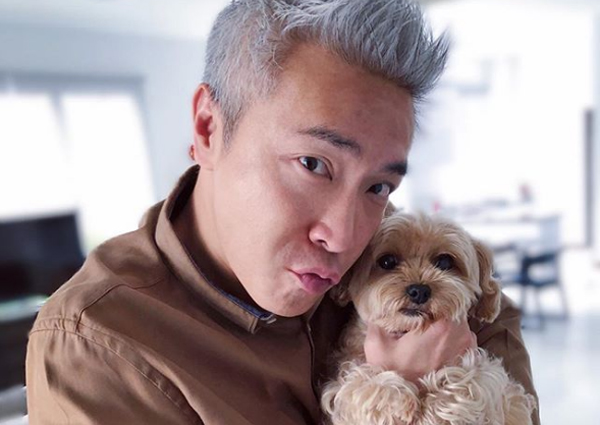
Judging from his accomplishments in the past year, we’re pretty sure the year of the dog will be a good one for Hong Kong actor and film producer Louis Koo.
The tanned actor was elected as the 13th Council President of the Hong Kong Performing Artistes Guild, succeeding former president, Jackie Chan.
The production company, “One Cool Film Production Limited” founded by the multi-hyphenated artist will be releasing a movie, “In Your Dreams”, a love story between a teenager who lives with his drunkard father and a homeroom teacher living with her cheating husband), in the New Year.
Suzy (1994)
K-pop star Suzy catapulted to fame as a member of the now-disbanded Korean girl group Miss A. She embarked as a soloist in 2017 and her debut EP Yes? No? ranked on the World Albums chart at number 15.
Her new EP, “Faces of Love”, was released in January. Should we expect more hits for the pretty singer in the year of the dog? We hope so!
Krystal Jung (1994)
Korean singer-actress Krystal Jung is also a 1994-er who is enjoying her success with the drama series “The Bride of Habaek” and “Prison Playbook”.
Krystal made her debut as a member of South Korean girl group f(x) in 2009. The K-pop star who has been active in China will be appearing in a Chinese television series “Graduation Season” and film “Unexpected Love”.
This article was first published in Her World Online
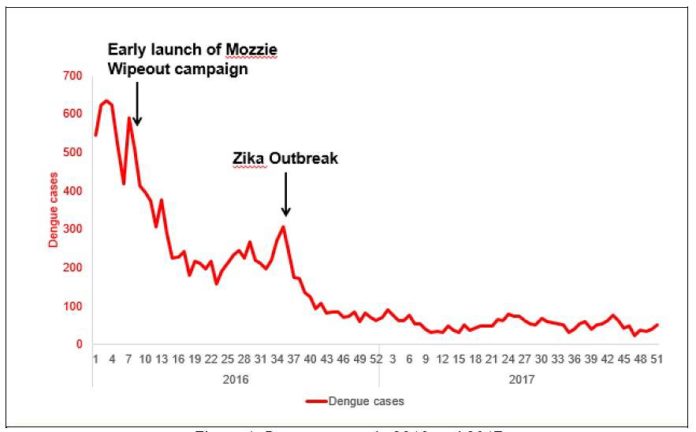
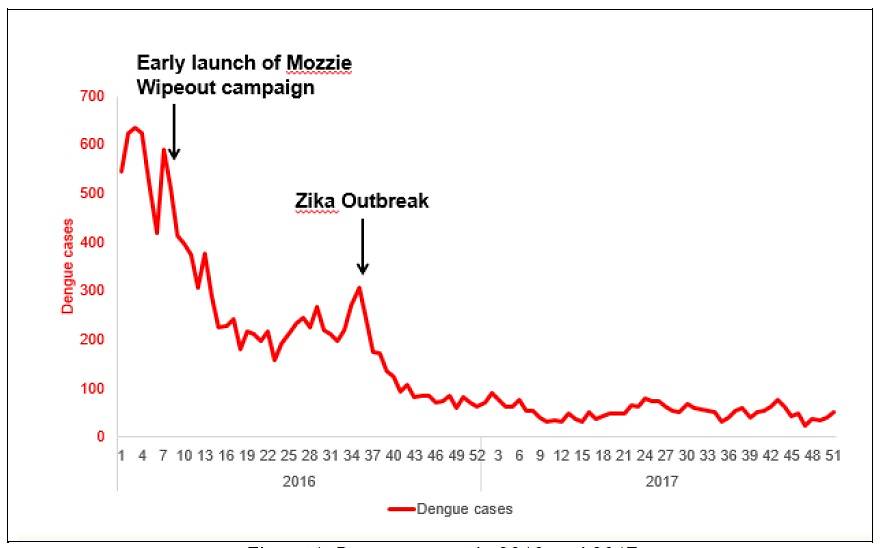
SINGAPORE: The number of dengue cases in 2017 was 2,772, the lowest in the last 16 years, the National Environment Agency (NEA) announced on Friday (Feb 9).
In a media release, NEA said this “relatively low number” is likely to have been facilitated by the immunity of the local population following the high number of dengue cases in the last few years.
“The low base of dengue cases at the beginning of the year due to a concerted effort by all stakeholders in response to the Zika outbreak in the second half of 2016 would also have been a factor,” said NEA.
NEA also identified the removal of Aedes aegypti mosquitoes by NEA’s network of Gravitraps deployed across the island as another contributing factor to the lower number of dengue cases.
NEA has deployed around 50,000 Gravitraps to monitor the Aedes population in Singapore. Apart from providing data to guide NEA’s efforts to focus its inspections on areas with high Aedes mosquito populations, the traps have also served to remove a large number of adult Aedes aegypti mosquitoes in 2017.
“This complemented the efforts of the community, premises owners and other stakeholders in suppressing the mosquito population,” said NEA.
CONTINUED VIGILANCE NEEDED
NEA has urged all members of the public and stakeholders to continue to prevent mosquito breeding in order to suppress the Aedes mosquito population and keep the dengue incidence low. This follows a 37 per cent increase in Aedes aegypti mosquito detection by the Gravitraps in January this year, compared to September 2017.
Dengue cases in 2017 and 2017. (Graphic: National Environment Agency)
NEA said the current low momentum of dengue transmission offers an opportunity to disrupt the spread of the disease more effectively in the community. Community action and sustained vector control efforts are thus needed to prevent further escalation of the Aedes population and a surge in dengue cases. Such efforts will also contribute towards preventing the transmission of Zika and Chikungunya viruses, the media release added.
As the Chinese New Year festive season approaches, NEA reminds stakeholders to exercise more vigilance when spring cleaning, disposing of refuse and decorating with ornamental plants in order to avoid unintentionally creating mosquito breeding habitats. NEA also reminds those travelling overseas during the upcoming holiday period to “mosquito proof” their homes.
The latest updates on the dengue situation can be found on the NEA’s website, the Stop Dengue Now Facebook page or on the myENV app.