Singapore
Thursday, February 15, 2018 – 09:20
Maid jailed for falsely accusing 70-year-old man of rape; they had consensual sex
The Straits Times
Others
JAPAN has knocked Thailand off the top spot as the favourite destination for Asian Chinese New Year (CNY) travellers.
As Chinese New Year (CNY) celebrations begin this week, booking platform Agoda revealed Tokyo as the most travelled to Asian destination by Asian travellers for this year’s festivities, knocking Bangkok down to second place.
Bangkok held the title for two consecutive years as the favoured spot for CNY celebrations but lost its grip this year.
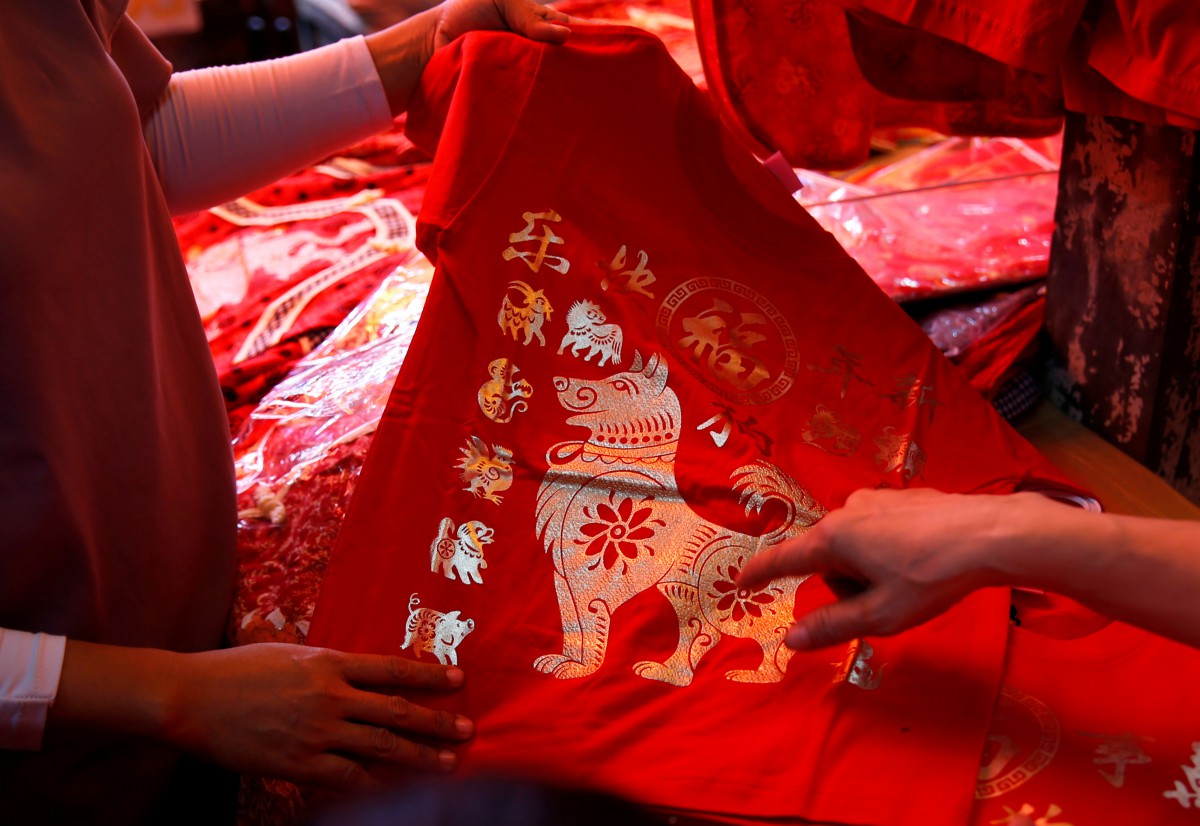
A person holds T-shirt for the upcoming Chinese Lunar New Year of the Dog at Glodok market in Jakarta, Indonesia, on Feb 13, 2018. Source: Reuters/Beawiharta
Agoda’s booking data suggests that many Japanese won’t be celebrating with the rest of the foreign visitors in their capital this year, as 70 percent are taking advantage of this long weekend holiday and are themselves travelling to Bangkok, Seoul, and Pattaya.
SEE ALSO: Tokyo is apparently the world’s safest city, unlike Southeast Asian capitals
Japan has, in fact, claimed three spots on this year’s findings with Osaka taking third place and Kyoto claiming the ninth spot.
The lure of Tokyo’s proximity to nearby Yokohama Chinatown is a key factor in enticing CNY travellers. The district hosts spectacular two-week celebrations including a countdown party, traditional lion dance performances, parades and a Lantern Festival.
#ChineseNewYear #Yokohama #ChinaTown #Dragon in the street pic.twitter.com/MQKokIRIhs
— Japan Best (@JapanBest2017) February 11, 2018
The majority of CNY travellers are hailing from Taiwan and account for 26 percent, closely followed by South Korea and Mainland China which totalled a combined 30 percent of the visitors to Japan this New Year.
Where’s everyone else going?
Hong Kong has nudged its way back to the top spot among Mainland Chinese tourists this year, while Bangkok slipped down to third. Thailand does feature three times on the list, along with other warm beach destinations such as Bali and Boracay Island in the Philippines.
Indonesians seem to be staying put this Chinese New Year and making shorter journeys to their very own beaches. Some 65 percent of locals are booking up beach breaks according to Agoda.

Men perform the lions dance ahead of Chinese Lunar New Year in Phnom Penh, Cambodia, on Feb 12, 2018. Source: Reuters/Samrang Pring
SEE ALSO: Who is allowed to celebrate Chinese New Year?
Malaysians are following this stay-cation trend as well with Malacca and Penang taking top spots. Port Dickson and Johor Bahru also claimed eighth and tenth spots.
When it comes to CNY travel, it seems Singaporeans are eager to leave the concrete jungle. Nearby Batam Island in Indonesia has remained a firm favourite among Singaporeans for three years running.
Where are you heading this weekend to see in the Chinese New Year?
SINGAPORE: In the Hebrew language, Yonah refers to a dove. Drawing on the name and its symbolism, one Singapore start-up aims to bring comfort and healing where it lands.
Yonah wants to achieve this through a cargo drone delivery system it is developing as a sustainable, reliable method of delivering measles vaccines to remote villages in Papua New Guinea. The country occupies the eastern part of the world’s second-largest island of New Guinea, some 160 km north of Australia and is vulnerable to nature’s wrath in the form of volcanoes, earthquakes and tidal waves.
Co-founder Ong Tian Chang, 30, told Channel NewsAsia in a recent interview that the genesis of the company came about even as he was at another start-up, Subnero, working on underwater wireless communications in 2015. Then, he was already interested in cargo drones but he did not know how to get the idea off the ground.
He later got to know of a Christian non-governmental organisation (NGO) called Mission Aviation Fellowship (MAF), and started an email correspondence with them in the hope of finding out more about their projects and how he could participate.
According to the NGO’s website, its pilots use Cessnas and Kodiak aircraft to deliver medicine and doctors, disaster relief, education, evangelists, Bible translators, food supplies, agriculture and clean water projects to “hardest-to-reach locations, where people live isolated from the rest of the world, cut off from the most basic necessities”.
AN UNLIKELY FRIENDSHIP
By the start of 2016, Tian Chang decided to leave Subnero and, during his “hobo” days, heard from MAF that he could come and take a look at their operations in Cairns, Australia, with another person.
Enter Mr Sim Zhi Min, 26, who didn’t know Tian Chang until he caught wind of his planned 18-day trip to Cairns and Papua New Guinea and volunteered to go along.
“We basically had 18 days to strike up a friendship – and good thing we did,” he laughingly recounted.
They eventually made the trip in March that year, and while in Papua New Guinea, visited the Kompiam Rural Hospital. The hospital’s website stated that it, together with 10 other health centres and aid posts, “is situated deep in the remote north of Papua New Guinea’s Enga Province, an area listed as one of the most disadvantaged in PNG”.
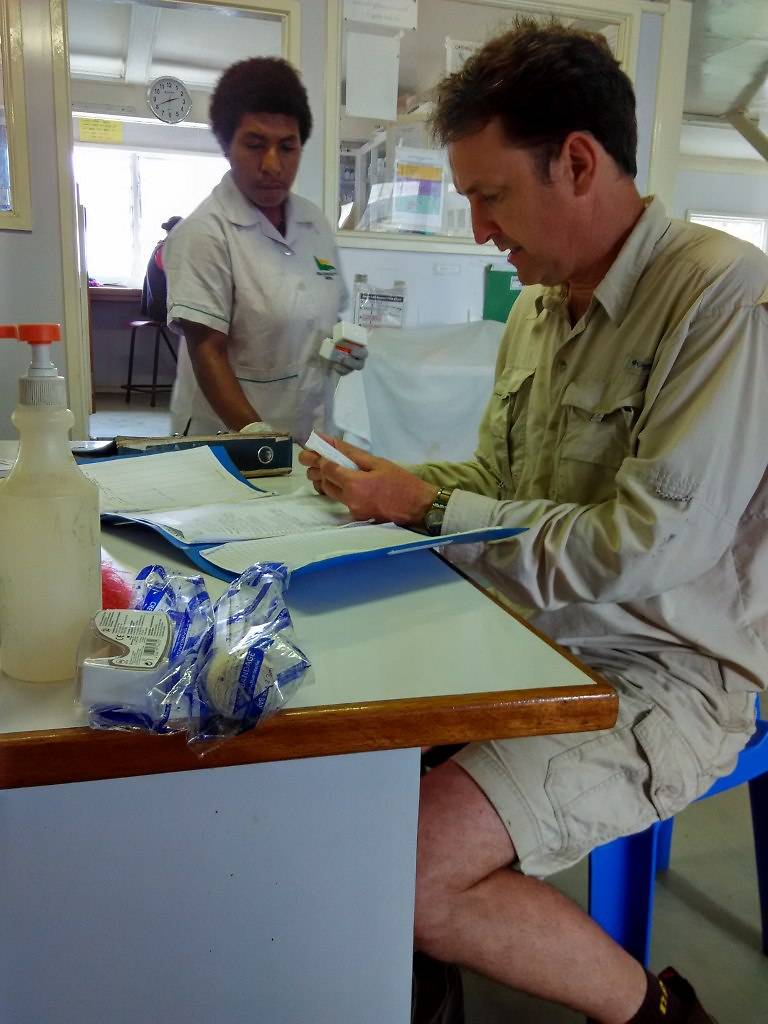
Tian Chang spent four days shadowing one of the doctors, Dr David Mills, to find out more about the hospital’s operations and how he could help them. Zhi Min, meanwhile, visited a separate remote health facility during this time, he added.
Dr David Mills is a respected figure in the community, having lived there with his family for 18 years. Here, he is seen prescribing medication for a young girl with meningitis at Kompiam Rural Hospital. (Photo: Yonah)
TOUGH TERRAIN, SUPPLY CHAIN WOES
Among the things they discovered was that the distance between the different health facilities and the warehouse outposts may appear near on a map, but the physical terrain there made it a nightmare to deliver healthcare supplies.
“I was a Guardsman in National Service (NS), and had experienced Brunei. If you thought Brunei’s topography was dense, Papua New Guinea’s topography is super dense,” Tian Chang described. Zhi Min, a Commando during NS and trained in reconnaissance, concurred.
They also discovered that the quality of logistics afforded to these healthcare facilities was not up to scratch.
Measles vaccines needed to be kept refrigerated at a temperature of between 2 degrees Celsius and 8 degrees Celsius, the co-founders found out, but oftentimes even if there are batches of vaccines that reach the health facilities, they are no longer effective as they were stored in warmer temperatures.
While Kompiam has about six such solar fridges, which helps alleviate some of these conditions, they “sometimes don’t work” or the staff on hand do not know how to maintain the equipment, Tian Chang related.
He added that these devices weigh 100 to 200kg, and are not the most portable of devices. The healthcare network is also reliant on logistics providers like MAF for their deliveries, and these are not fixed, given that the flight schedules are arranged such that every delivery trip will have to be maximised.
In other words, for MAF to deliver a shipment of vaccines or other healthcare supplies, they will need to make sure the return journey is also full through, for example, the pick up of coffee or other commodities, he explained.

One of the Mission Aviation Fellowship planes getting loaded with supplies. (Photo: Yonah)
TAKING FLIGHT SOON?
Faced with these challenges, the two returned to Singapore and founded Yonah in October of 2016. “Yonah exists to help rural hospitals move vaccines using cargo drones to reduce immunisable diseases,” said Tian Chang, spelling out the start-up’s mission statement.
So, how far along is it to achieving its stated goals?
Tian Chang shared that the team – two full-time co-founders and six NUS undergraduates helping out – is currently building out its cargo drone, or quad plane. One of its design features is the ability to take off and land vertically, as well as the ability to move forward and back in space, he said.
This allows Yonah to have two flight profiles: One to fly the package of vaccines, packed in a medical cooler box, and parachute it in to the destination, as well as the ability to land the drone at the drop site for the healthcare workers to conduct the vaccination exercise.
Of the six undergraduates, it enlisted the help of Sriram Sami back in August of 2016 and he is now its avionics lead and part of the core team. “He’s the only guy in the team who is actively developing and testing autopilot software based on the open source Ardupilot project,” Tian Chang pointed out.
He added: “Sriram wanted something more than just doing engineering for engineering’s sake. He wanted to make an impact with the work of his hands as a computer scientist.”
The deadline for the completion of the prototype cargo drone is the second half of this year, the co-founder said, adding that the team hopes to test the device in Papua New Guinea and study its deployment.
A closer look at the cargo drone, or quad plane, currently being developed by Yonah. It will be carrying a payload of 2kg and capable of vertical take-off and landing without ground infrastructure, the start-up says. (Photo: Yonah)
HELPING HANDS
He is also grateful that the start-up is even able to reach this stage of development, thanking the generosity of key sponsors such as the DSO National Laboratories and technology supplier Bosch.
The latter had earlier this month announced it offered financial support, product and technology sponsorship, as well as consulting, training and technical device.
Tian Chang noted that DSO is one of the first and main sponsors of the start-up, and that they were keen to support its endeavour as it saw the project allows undergrads to be exposed to this field of engineering work and, in turn, grow the local talent pool.
It had offered Yonah a “five-figure” sponsorship deal in December 2016, and committed to a second round of sponsorship the same time last year, he said.
“It’s nice to see the support from the defence research community,” the co-founder said, adding the gesture gave him “a lot of hope for the defence of our country” as DSO sees how even small projects like Yonah’s can eventually benefit the overall ecosystem.
These will all be for nought, though, if Yonah is unable to deliver on its mission statement – something that Tian Chang is keenly aware of.
“My baseline (expectation) is to leave a cargo drone delivery system behind for one hospital in Kompiam, to help with the delivery of vaccines,” he shared. “The ideal, though, would be to help more hospitals and increase the distance of our drones so that more people can be reached.
“Ultimately, we hope to implement a sustainable public health system that would go towards reducing the number of outbreaks from immunisable diseases like measles.”
SINGAPORE: Last month, the world’s political and business elites met in the snow-covered Alpine town, Davos, for the World Economic Forum’s annual meeting.
The theme of this year’s programme was Creating a Shared Future in a Fractured World.
If we consider the many social issues facing our societies today – ageing populations, climate change, threats of extremism, income inequality, and so on – the progress of modern society does indeed seem fractured.
But as “shared future” suggests, it will take multiple actors to come together to mend the cracks and grow stronger in the process.
Resilience and innovation are essential qualities that Prime Minister Lee Hsien Loong highlighted when it comes to forging a shared future for ASEAN.
As our nation takes up chairmanship of the regional bloc in 2018, we will need “more hands” behind the “many hands approach” to put these traits to good use.
So who do these hands belong to?
BUSINESSES MUST BEAR SOME OF THE BURDEN
Traditionally, social problems have fallen within the jurisdiction of the Government and the social sector.
Although social enterprises have emerged over the last decade as a force for social good and plugged some gaps, they remain part of a greater business community.
I believe it is time for the private sector – particularly business leaders – to step up, not just to alleviate some of that burden borne by the public sector and social entrepreneurs, but also to play an active role in making their businesses about people.
Larry Fink, Chief Executive Officer of BlackRock, takes part in the Yahoo Finance All Markets Summit in New York, US on Feb 8, 2017. (Photo: REUTERS/Lucas Jackson)
In Larry Fink’s annual letter to the world’s top CEOs, he laid out his view on social impact:
Society is demanding that companies, both public and private, serve a social purpose. To prosper over time, every company must not only deliver financial performance, but also show how it makes a positive contribution to society.
That’s a strongly worded statement coming from the Chairman and CEO of BlackRock, a global investment management corporation with US$6 trillion worth of investments and the largest investor in the world.
SOME COMPANIES HAVE STEPPED UP
Fink’s memo reinforces my belief that well-run companies, with their economies of scale and focus on efficiency, are especially well-positioned to respond to social challenges, and that more should come forward.
Some big corporations have already stepped up.
Coca-Cola started the 5by20 initiative to empower five million female entrepreneurs globally by 2020.
This may appear like an expensive corporate social responsibility exercise, but Coca-Cola is in fact educating and providing livelihood opportunities to female owners of small-scale neighbourhood markets and grocery stores, and by extension, empowering the low-income communities which they belong to.
A man walks by a Coca-Cola sign. (Photo: AFP/Pedro Rey)
Cisco is another organisation that recognises the opportunity to create a “shared future” within emerging economies.
They have done so by cultivating an IT-literate labour force via the Cisco Networking Academy. The company claims that graduates of the Academy in Cambodia have gone on to find employment in the span of three months and made five times the national average within three years.
In Singapore, Olam International, a soft commodities processor and trader, works with Klasik Beans to produce specialty coffee, and at the same time reforests and conserves forests around its bean production facilities.
This has proven to be a win-win strategy. Smallholders gain access to the global market, quality of the forest is preserved, and Olam has become one of the leading players in the specialty coffee industry.
Workers at an Olam farm harvesting tomatoes. (Photo: Olam International)
BUSINESSES CAN CREATE LONG-TERM VALUE
These examples prove how vital a role businesses can play in society.
A company that is very focused on earnings may be able to deliver a good financial performance, but a socially conscious organisation is in the best position to engage meaningfully with its stakeholders – everyone from board members and employees, to consumers and their communities – and create long-term value.
Traditionally, businesses are associated with “making money”, and a “good business” is typically seen as one with wide profit margins.
But profit alone cannot and should not be the primary goal of enterprises.
Chris Houston in his book, For Goodness’ Sake: Satisfy the Hunger for Meaningful Business, says a business should find its identity “in relationship with and in the context of others”.
But change has to come from the top as well.
Recently, the Wall Street Journal reported that Nordea Asset Management, the investment arm of the Nordic region’s largest bank with US$300 billion in investments, demanded for greater transparency among its suppliers and their supply chains.
This followed allegations that certain suppliers were dumping toxic waste into the environment.
It wrote to the 27 drug makers in which Nordea invests in, demanding that they make public the names of their suppliers and shared more information about how they were being monitored.
German chemicals and pharmaceuticals giant Bayer said group net profit stood at 3.9 billion euros (S$6.36 billion) between July and September, more than triple the 1.2 billion euros reported in the same period last year. (Photo: AFP/PATRIK STOLLARZ)
Nordea has invested US$6 billion across Big Pharma companies, and if they continue to apply this pressure on their drug makers, it mitigates the potential negative impact pharmaceutical companies have on the environment.
ANOTHER ISSUE BUSINESSES CAN TACKLE – DIABETES
At the 2017 National Day Rally speech, Prime Minister Lee spoke at length about diabetes being one of three key long-term issues for Singapore – where one in nine Singaporeans are afflicted with this medical condition.
Although individual social enterprises such as Amazin’ Graze promote better eating by producing healthy products, businesses can still do much more, starting from top management.
If the shareholders themselves (including lenders and investors) demanded that businesses controlled the sugar content of their products or risked losing the capital support, we may just begin to see more healthy products on the Singaporean market.
Companies often hide behind their “fiduciary duty” to the shareholders to deliver the highest possible return, but the notion that businesses should go only after monetary gain, at all cost, ought to be challenged.
I see potential for Singapore, as both a financial hub and Chair of ASEAN, to spearhead a movement for more purposeful businesses, backed by responsible investment.
Chris Houston, in the same aforementioned book, highlighted a “fourth voice” that shapes a 21st century business in addition to “the market, regulators and shareholder value” – regular people.
On top of having resilience and innovation, corporations in Singapore will do well to listen to the “fourth voice”, and encourage other businesses to do so as well.
Brené Brown in her book, Daring Greatly, said it best:
Connection is why we’re here. We are hardwired to connect with others, it’s what gives purpose and meaning to our lives.
Let’s make 2018 the year in which businesses participate more fully and wholeheartedly in a shared future.
Jonathan Chang is executive director of the Lien Centre for Social Innovation at the Singapore Management University.
SINGAPORE: In the Hebrew language, Yonah refers to a dove. Drawing on the name and its symbolism, one Singapore start-up aims to bring comfort and healing where it lands.
Yonah wants to achieve this through a cargo drone delivery system it is developing as a sustainable, reliable method of delivering measles vaccines to remote villages in Papua New Guinea. The country occupies the eastern part of the world’s second-largest island of New Guinea, some 160 km north of Australia and is vulnerable to nature’s wrath in the form of volcanoes, earthquakes and tidal waves.
Co-founder Ong Tian Chang, 30, told Channel NewsAsia in a recent interview that the genesis of the company came about even as he was at another start-up, Subnero, working on underwater wireless communications in 2015. Then, he was already interested in cargo drones but he did not know how to get the idea off the ground.
He later got to know of a Christian non-governmental organisation (NGO) called Mission Aviation Fellowship (MAF), and started an email correspondence with them in the hope of finding out more about their projects and how he could participate.
According to the NGO’s website, its pilots use Cessnas and Kodiak aircraft to deliver medicine and doctors, disaster relief, education, evangelists, Bible translators, food supplies, agriculture and clean water projects to “hardest-to-reach locations, where people live isolated from the rest of the world, cut off from the most basic necessities”.
AN UNLIKELY FRIENDSHIP
By the start of 2016, Tian Chang decided to leave Subnero and, during his “hobo” days, heard from MAF that he could come and take a look at their operations in Cairns, Australia, with another person.
Enter Mr Sim Zhi Min, 26, who didn’t know Tian Chang until he caught wind of his planned 18-day trip to Cairns and Papua New Guinea and volunteered to go along.
“We basically had 18 days to strike up a friendship – and good thing we did,” he laughingly recounted.
They eventually made the trip in March that year, and while in Papua New Guinea, visited the Kompiam Rural Hospital. The hospital’s website stated that it, together with 10 other health centres and aid posts, “is situated deep in the remote north of Papua New Guinea’s Enga Province, an area listed as one of the most disadvantaged in PNG”.
Tian Chang spent four days shadowing one of the doctors, Dr David Mills, to find out more about the hospital’s operations and how he could help them. Zhi Min, meanwhile, visited a separate remote health facility during this time, he added.
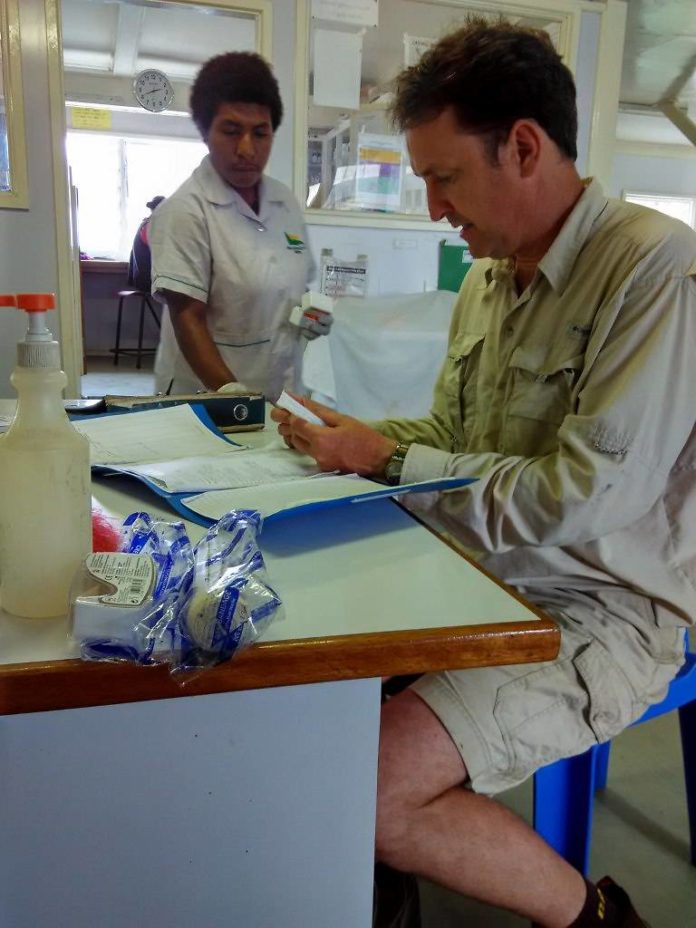
Dr David Mills is a respected figure in the community, having lived there with his family for 18 years. Here, he is seen prescribing medication for a young girl with meningitis at Kompiam Rural Hospital. (Photo: Yonah)
TOUGH TERRAIN, SUPPLY CHAIN WOES
Among the things they discovered was that the distance between the different health facilities and the warehouse outposts may appear near on a map, but the physical terrain there made it a nightmare to deliver healthcare supplies.
“I was a Guardsman in National Service (NS), and had experienced Brunei. If you thought Brunei’s topography was dense, Papua New Guinea’s topography is super dense,” Tian Chang described. Zhi Min, a Commando during NS and trained in reconnaissance, concurred.
They also discovered that the quality of logistics afforded to these healthcare facilities was not up to scratch.
Measles vaccines needed to be kept refrigerated at a temperature of between 2 degrees Celsius and 8 degrees Celsius, the co-founders found out, but oftentimes even if there are batches of vaccines that reach the health facilities, they are no longer effective as they were stored in warmer temperatures.
While Kompiam has about six such solar fridges, which helps alleviate some of these conditions, they “sometimes don’t work” or the staff on hand do not know how to maintain the equipment, Tian Chang related.
He added that these devices weigh 100 to 200kg, and are not the most portable of devices. The healthcare network is also reliant on logistics providers like MAF for their deliveries, and these are not fixed, given that the flight schedules are arranged such that every delivery trip will have to be maximised.
In other words, for MAF to deliver a shipment of vaccines or other healthcare supplies, they will need to make sure the return journey is also full through, for example, the pick up of coffee or other commodities, he explained.
One of the Mission Aviation Fellowship planes getting loaded with supplies. (Photo: Yonah)
TAKING FLIGHT SOON?
Faced with these challenges, the two returned to Singapore and founded Yonah in October of 2016. “Yonah exists to help rural hospitals move vaccines using cargo drones to reduce immunisable diseases,” said Tian Chang, spelling out the start-up’s mission statement.
So, how far along is it to achieving its stated goals?
Tian Chang shared that the team – two full-time co-founders and six NUS undergraduates helping out – is currently building out its cargo drone, or quad plane. One of its design features is the ability to take off and land vertically, as well as the ability to move forward and back in space, he said.
This allows Yonah to have two flight profiles: One to fly the package of vaccines, packed in a medical cooler box, and parachute it in to the destination, as well as the ability to land the drone at the drop site for the healthcare workers to conduct the vaccination exercise.
Of the six undergraduates, it enlisted the help of Sriram Sami back in August of 2016 and he is now its avionics lead and part of the core team. “He’s the only guy in the team who is actively developing and testing autopilot software based on the open source Ardupilot project,” Tian Chang pointed out.
He added: “Sriram wanted something more than just doing engineering for engineering’s sake. He wanted to make an impact with the work of his hands as a computer scientist.”
The deadline for the completion of the prototype cargo drone is the second half of this year, the co-founder said, adding that the team hopes to test the device in Papua New Guinea and study its deployment.
A closer look at the cargo drone, or quad plane, currently being developed by Yonah. It will be carrying a payload of 2kg and capable of vertical take-off and landing without ground infrastructure, the start-up says. (Photo: Yonah)
HELPING HANDS
He is also grateful that the start-up is even able to reach this stage of development, thanking the generosity of key sponsors such as the DSO National Laboratories and technology supplier Bosch.
The latter had earlier this month announced it offered financial support, product and technology sponsorship, as well as consulting, training and technical device.
Tian Chang noted that DSO is one of the first and main sponsors of the start-up, and that they were keen to support its endeavour as it saw the project allows undergrads to be exposed to this field of engineering work and, in turn, grow the local talent pool.
It had offered Yonah a “five-figure” sponsorship deal in December 2016, and committed to a second round of sponsorship the same time last year, he said.
“It’s nice to see the support from the defence research community,” the co-founder said, adding the gesture gave him “a lot of hope for the defence of our country” as DSO sees how even small projects like Yonah’s can eventually benefit the overall ecosystem.
These will all be for nought, though, if Yonah is unable to deliver on its mission statement – something that Tian Chang is keenly aware of.
“My baseline (expectation) is to leave a cargo drone delivery system behind for one hospital in Kompiam, to help with the delivery of vaccines,” he shared. “The ideal, though, would be to help more hospitals and increase the distance of our drones so that more people can be reached.
“Ultimately, we hope to implement a sustainable public health system that would go towards reducing the number of outbreaks from immunisable diseases like measles.”
Efforts enabling Singaporeans to lead active and meaningful lives in their silver years while striving to give the country’s young “the best chances in life” are issues that will guide this year’s Budget.
File photo of Singapore’s Prime Minister Lee Hsien Loong. (Photo: Singapore’s Ministry of Communications and Information)
SINGAPORE: The empowerment of Singaporeans who are in their silver years, and the creation of a brighter future for the young, were issues highlighted by Prime Minister Lee Hsien Loong on Thursday (Feb 15) in this year’s Chinese New Year message.
Mr Lee said in his message that honouring seniors and nurturing the young are not limited to individual families, but are values and attitudes that hold the society together.
“As a people too, we should look after the elderly as we are the beneficiaries of their labours, and care for the young who carry our hopes for the future,” he said.
The prime minister said Singapore’s society is ageing, and the Government is working to enable Singaporeans to lead active and meaningful lives in their silver years, which means creating strong social support and community networks, keeping them socially engaged and building up healthcare systems and services.
For the younger generation, Mr Lee said the Government is striving to give them the best chances in life. He noted that we are fortunate to live in Asia – a “dynamic and fast-growing region” – and as such should prepare ourselves to seize the many economic opportunities around the country.
“We should make full use of new technologies, to progress with our partners and neighbours,” he said.
“We will help our young to uncover their diverse talents, and invest heavily in them through education and training, so that when they grow up they can strike out on their own, build their own families and careers, and fulfil their aspirations and dreams.
Mr Lee said investments will be made to build the city and infrastructure and upgrade the living environment and economy, so that the next generation can continue to create new possibilities, prosper and flourish.
“We should uphold our time-tested Asian values of thrift, self-reliance, and leaving something more for our children, instead of burdening them with their parents’ debts. We must always think beyond the immediate and beyond ourselves, to look and plan over the horizon on behalf of future generations,” he added.
Mr Lee hoped Singaporeans will reflect on these issues in the quieter moments over the festive season, in between celebrating with friends and family – something the Government will also be doing.
He noted that Finance Minister Heng Swee Keat will deliver his Budget speech on Monday, immediately after the holiday weekend and “these issues will guide the thinking behind the Budget”.
He also made a call for Singaporeans to build their shared future together so generations of Singaporeans can look forward to more prosperous and joyous Chinese New Years.
“As we usher in the year of the Dog, let us be dogged in our efforts to create a better Singapore and a brighter future for our children,” the prime minister said in conclusion.
SINGAPORE: A fire broke out in a 15th-storey unit at Waterloo Apartments in the Bugis area on Wednesday (Feb 14) night.
A Channel NewsAsia reader who was in the area said he heard an “explosive sound”. Photos and video show flames and smoke emanating from the window of an apartment as sirens sounded.
The Singapore Civil Defence Force was alerted to the incident at around 9.25pm. (Photo: Jeffery Ho)
Three occupants in the unit at the time of the incident evacuated before the authorities arrived, said the Singapore Civil Defence Force (SCDF).
One of them was taken to the Singapore General Hospital due to smoke inhalation.
According to SCDF, they were alerted to the incident at around 9.25pm.
The fire involved the contents of a bedroom but the cause of the fire is under investigation, said SCDF.
This story came from a reader tip-off. If you would like to send in photos or videos of something newsworthy, WhatsApp our Mediacorp news hotline at +65 8218 8281 or message us on Facebook.
SINGAPORE: The day before he closes his two-Michelin-starred Restaurant Andre for good on Feb 14, chef Andre Chiang had an important visit to make to Berseh Food Centre in Jalan Besar.
It was to meet with a special person – 85-year-old ice-cream hawker Ng Teak Boon – to deliver on a promise the chef had made to him last year.
The pair had their unlikely first meeting in October 2017, after Mr Chiang watched a video produced by CNA Insider. It featured Mr Ng plying his trade outside Sim Lim Tower, as part of a series on elderly poverty in Singapore and the region.
WATCH: Remember his story? (5:55)
Mr Ng’s story touched thousands of viewers, many of whom offered to help in cash or kind, pay his bills and support his ice-cream sales.
The story also inspired Mr Chiang, a Taiwan-born, French-trained chef, to come up with his own upscale version of the classic roadside ice-cream sandwich – and it became part of Restaurant Andre’s degustation menu as a “tribute to (Mr Ng’s) character and craft”.
Mr Chiang decided that for every meal sold with the “Ice-cream Uncle” dessert, he would donate S$5 to Mr Ng.
“In a way, he is part of the creation of this dessert and we want to share (with him) the happiness and the guests’ love for the ice-cream,” said Mr Chiang in an earlier interview with CNA Insider.
“If you’re using someone’s image or song, you pay for it right? So since he’s part of the creation, he deserves to get it,” the chef added.
WATCH: When chef Andre first met Mr Ng (5:23)
What fires Andre Chiang’s culinary genius? Following his decision to close his Michelin 2-star Restaurant Andre, here’s a peek into the mind of an extraordinary chef – and how one special uncle, familiar to CNA Insider’s viewers, inspired him. Watch the Singapore Food Heroes episode here.
And on Tuesday, Mr Chiang made good on that commitment – he presented Mr Ng with a cheque for S$11,370, along with a fruit basket and a note.
Among other things, the chef wrote: “We are saddened that the ‘Ice-cream Uncle’ is gradually disappearing from our streets. We wish to show our support and play a small part in the preservation of this important tradition that has become iconic and essential to the Singapore landscape and culture.”
The card accompanying the dessert served as part of Restaurant Andre’s degustation menu.
“It is our hope that you will be able to continue to spread the joy, and continue this important tradition and culture that is unique to Singapore,” he added.
One of the moments in Mr Ng’s story that had struck Mr Chiang, among other things, was the elderly man’s declaration that he’d like to live up to 106 and man his pushcart until the end.
Indeed, Mr Ng told CNA Insider that he planned to spend this Chinese New Year selling ice-cream.
At the reunion on Tuesday was chicken rice seller Madam Chia, Mr Ng’s friend who has been helping to care for him (he has long been estranged from his own family).
Mdm Chia and Mr Ng sampling the dessert that he inspired, in October.
She said she was glad that chef Chiang made good on his promise, because after the CNA Insider story appeared, other members of the public had also approached them with pledges to raise funds for Mr Ng – but then disappeared after taking pictures with them.
“We’ve also turned down other media requests to be featured,” she said in Mandarin. “I don’t want people to think that we are swindling the public of their money,” she stressed.
WATCH: The time Mr Ng had an accident (4:25)
After closing Restaurant Andre tonight, Mr Chiang will be moving back to Taiwan with his family.
But in a press release to the media, he also said that his team is planning “a new beginning … set to open at the original location of Restaurant Andre” at Bukit Pasoh Road in Tanjong Pagar, “towards the end of 2018”.
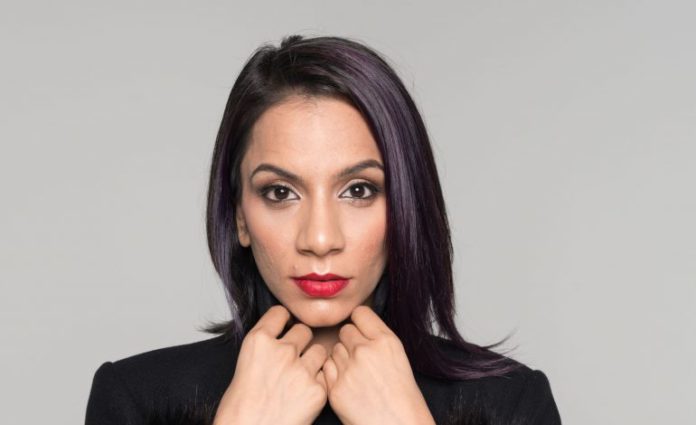
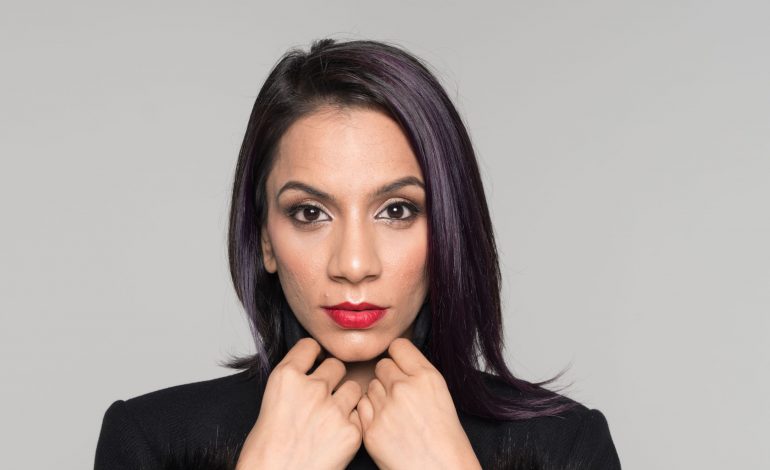
Although I have not met her in person, thanks to YouTube I have no doubt Sharul Channa is a riot. And coming from a conservative family background, she has indeed broken tradition in more ways than one.
Sharul is Singapore’s only full-time female comedienne, and one of the most well-known stand-up comics in the island-state. Born in India, Sharul’s family moved to Singapore when she was just a few months old.
She studied acting at Lasalle College of the Arts, Singapore, earning a Diploma in Theatre Arts before going on to pursue her degree in Bachelor of Arts in Communications from University at Buffalo, New York.
Today, the 31-year-old has made a mark for herself both at home and abroad. In 2015 and 2016, she was the host and main act at the Singapore Comedy Fringe Festival as well as part of the KL International Comedy Festival 2015.
In 2016, she was invited to be the comedian-host of Comedy Zone Asia at the Melbourne International Comedy Festival, Australia’s biggest annual comedy festival. She was then chosen to be the first Singaporean act to tour with the festival for their Western Australia and Asian roadshows.
Sharul was also selected for the Melbourne International Comedy Festival Roadshow in 2017 where she was part of over 25 shows in Queensland and Victoria.
Married to fellow comedian Rishi Budhrani, Sharul has also headlined shows at the Weirdass Pajama Festival – India’s biggest annual comedy festival – in cities like Bangalore, Delhi and Mumbai.
Later this month, Sharul will bring her second stand-up comedy special, Sharul Weds Sharul, to Malaysia for the very first time. Star2 caught up with her via e-mail recently:
Star2: In what year did you have your first stand-up at Home Club (a former nightclub in Singapore)?
Sharul: Wow. My Math is terrible! I started performing seven years back and its 2018 now. Jokes aside, it was back in 2011, when my journey in comedy began.
What kind of desk job did you have before becoming a comedian?
The only desk job I have ever had was making cold calls from (an insurance) office three hours every day to earn extra pocket money during drama school days. It was hardly a desk but then it was hardly a job.
How would you describe your brand of comedy?
It is the woman’s perspective. It is my truth as a human being. It is observational and sometimes super-imaginative. I don’t have a brand as such but some men have said I am loud, noisy and too liberated, and that I speak.
How do your shows for the Malaysian market differ from those for Singapore and Australia? Is it more ‘toned down’ and, if yes, how do you feel about it?
I think Malaysians are one of the best crowds to perform to. They are immediately open to laughter, ready to listen and relaxed, as a bunch. I never tone down my comedy for my Malaysian audience. I have to change references in Australia which I don’t have to do in Malaysia since Singaporean jokes are still relatable to the Malaysian audience.
You’ve said in a previous interview that: “On stage, I am 150% of who I am in real life”. Would you say the stage liberates you?
Yes, absolutely. The stage gives me the opportunity to present my point of view in an over-the-top manner and at times like this, we need to voice out our truths loud and clear for people to listen and understand. Also, the energy I get from the audience members is so amazing that it makes me want to perform better for them.
Has being a comedian changed you in any way?
It has changed me as a person. It has liberated me and encouraged me to always be truthful about myself and give an honest, funny opinion about what is wrong with society. It has released me from the fear of being judged and allowed me to connect with thousands of people through laughter. It has brought me closer to other women and has taught me to always encourage other women to do better.
You’ve mentioned that one reason you wanted to be a comedian was to be a voice for female comedians. What do you think are some of the reasons there aren’t many women in comedy?
The Asian culture doesn’t encourage women to have a voice. We are taught since young to look pretty and behave well – sit with our legs crossed, get educated and learn how to cook and then go over to our husband’s house and then drop everything and have children.
When has the Asian culture ever encouraged women to speak their truth, explore, travel and find our feet and be independent? So, women being encouraged to tell funny things over a mic is an alien concept for Asians. A woman is attractive when she is well-dressed and a personality that can be controlled – that is the concept that has been sold for centuries. A woman with a mic cannot be controlled and no one would want to be with such a woman, right? Well, WRONG!
You say you admire Ellen DeGeneres (American comedian, TV, actress, writer, and producer). Why is that so?
She is a funny stand-up comedian, a humanitarian, runs a hilarious TV show that is also inspirational, and she fought to be honest about her individuality and sexuality.
What’s the best and the not-so-great part about being married to a fellow comedian?
The best part is, we can always share ideas and have each other’s backs. We joke with each other all the time and he is my best friend.
Not-so-great part is, it is very difficult to have serious conversations. We laugh off everything!
What can the audience expect from Sharul Weds Sharul?
The truth about Indian weddings, from couple hashtags, to the extensive wedding buffet, from Aunt Sunita, to walking around the fire seven times for a promise of seven lifetimes. I will be washing dirty linen – in this case, it will be a linen sari – in public.
Expect to be shy, to cry and hopefully laugh at all the things we have been believing in our whole lives without questioning traditions and some religious practices.
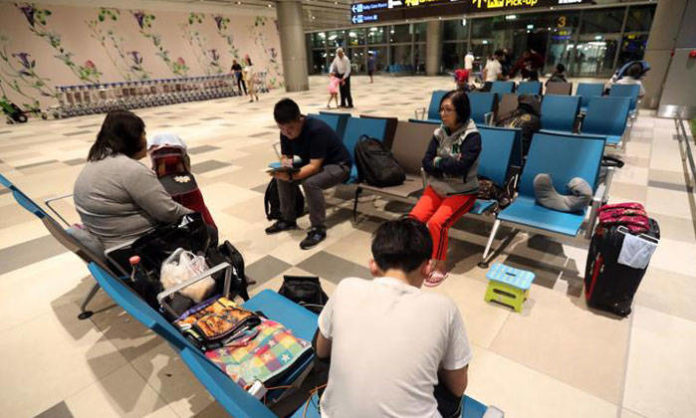
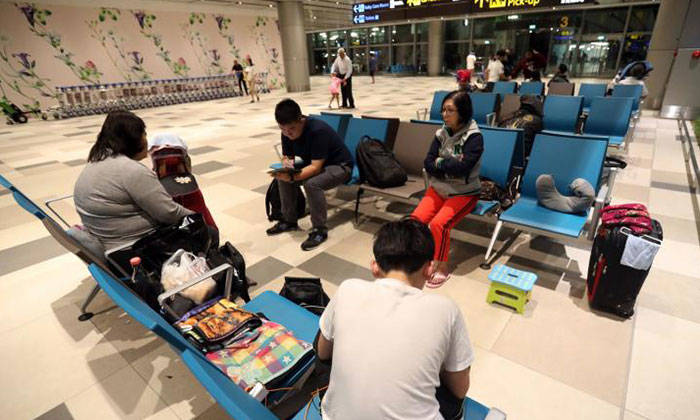
A three-generation family decided to ‘move’ to Changi Airport six days into their stay at a shelter.
The family has stayed at the airport for two months and intends to spend the Lunar New Year there as well, albeit not being able to have a reunion dinner.
Peng Hui Ying 45, told Lianhe Wanbao that since selling her flat off in 2016, she, her 74-year-old mother, and 13-year-old son have been moving between two-room rental flats.
Due to the family owing rent, they were forced to move more than 10 times, reported Lianhe Wanbao.
As her savings have depleted, Ms Peng and her family could no longer afford a rental flat.
In December 2017, the family was arranged to move to a transitional shelter.
However, they were unhappy with the arrangements and just six days after moving in, decided to ‘move’ to Changi Airport instead.
Said Ms Peng: “We usually spend daytime between Terminal 1 and 3. At night, we’ll sleep at the sofa seats in Terminal 4.”
Although there is air conditioning at the airport, Ms Peng said that life has not been a bed of roses.
READ ALSO: S’pore couple camp at Changi Airport for 7 months: There’s free Internet, electricity, water
She said: “We are unable to shower at the airport, and we can only use a wet towel to clean ourselves. We’ll occasionally head to a public swimming complex to bathe.”
Ms Peng also claimed that she was so poor that all she had was $5 cash.
At times, kind passersby would deliver bread to the family but most days, the family would spend around $1.60 on two plates of plain chicken rice that they will share.
The concerned mother confessed that her growing son does not have enough to eat, adding: “We can only afford bread and water to fill his stomach.”
Ms Peng said that her son is currently a Secondary 2 student at Punggol Secondary School, and even if he takes the first train every morning, will only be able to reach the school at about 7.30am.
As such, he is late all the time, but she is unable to do anything about the frustrating situation.
Ms Peng’s mother, Madam Lin Mei Cui cried as she spoke to reporters.
READ ALSO: Woman has lived at Changi Airport for 8 years
She lamented: “We stay at Changi Airport. Every day, people would look at us differently. Chinese New Year is approaching, but we have no home nor do we have money for a reunion dinner. I don’t know how we will be able to spend the Lunar New Year like this.”
In response to media queries, a spokesman for the Ministry of Social and Family Development (MSFD) said that the Punggol Family Service Centre has been alerted to the situation, and Ms Peng was granted ComCare subsidy between January and March 2018.
A worker from Punggol Family Service Centre has also provided additional help to the family and arranged for them to move into the transitional shelter in December 2017.
MSFD also said that it will continue to work with partners to ensure that the family is being provided with the help it needs.
poverty