Home Blog Page 1132

Commentary: In modern Singapore, a ‘lucky’ address a way to display wealth and status

0

SINGAPORE: Many actions we take are powered by superstitious belief – from choosing the day to get married to picking the year to have children.

Yet nowhere do superstitions operate more powerfully than in the property market.

This is no surprise when a home is most people’s single largest financial commitment. According to the Department of Statistics, home loans constitute almost 75 per cent of household debt.

A home is also a place of familial comforts and personal rest – another reason why people invest so much time, effort and money into buying a place.

Some Singaporeans employ superstition as a way to cope with the uncertainties that accompany buying a home – uncertainties that possibly include the quality of the construction and maintenance, the development of the neighbourhood, and the evolution of interest rates and housing prices.

For instance, a common superstitious practice is to buy homes with “lucky” addresses that end with 8 for prosperity and avoid those ending with 4 to avert bad luck.

But where homes are often people’s largest and most visible expenditure, can we really chalk off such behaviour entirely to superstition?

CHINESE BUYERS PAY MORE FOR LUCKIER ADDRESSES

In my book Kiasunomics: Stories of Singaporean Economic Behaviours, my co-authors and I examined the effects of superstitions on purchases in the housing market.

What we found in looking at over 54,000 transactions of new high-rise apartments in Singapore’s real estate market from 1995 to 2012 including sub-sales and resales surprised us greatly.

A view of residential housing in Singapore. (File photo: AFP)

Expectedly, on the surface, Singaporeans seem to prefer addresses with certain numbers consistent with superstition.

Apartments with very “unlucky” addresses are always the cheapest while those with very “lucky” addresses the most expensive. Generally, unlucky addresses have a discount of 1.4 per cent while lucky addresses enjoy a premium of 2 to 3 per cent.

Consistent with this finding, Singaporean Chinese buyers paid higher prices for luckier addresses and lower prices for unlucky addresses but not non-Chinese Singaporean buyers.

Foreign buyers also pay a similar premium or enjoy similar discounts, likely because they’re at an informational disadvantage compared to locals while some may also be of Chinese descent who share similar numerological preferences.

To the extent that people pay less for less preferred addresses, they also ask for lower prices when they subsequently sell their homes. Indeed, we find similar discounts for unlucky addresses in the secondary markets.

Yet a closer look at the patterns that emerged suggests there’s more than meets the eye. 

For one, if people wish to avert bad luck as much as they want to court good fortune, why is it that the discounts for unlucky addresses aren’t as large as the premiums for lucky ones?

Furthermore, if superstition were the reason for such numerological preferences, we should find a similarly high demand for lucky addresses throughout Singapore.

But when we poured over the data, it seems demand for lucky addresses among Chinese buyers was concentrated in non-prime districts.

File photo of HDB flats. (Photo: Hester Tan)

Might it be that buying a lucky address is a way to signal wealth and status?

After all, where you live is a very visible and conspicuous marker of one’s stature – and this might apply more to those buying an apartment in non-prime districts, where having an auspicious address can distinguish them from their neighbours.

Where those buying property in prime areas are less concerned about purchasing a charmed address as a conspicuous display of status because they already stay in a luxury district, it seems superstition is only half of the story when it comes to explaining why some addresses cost more than others.

WHO BUYS CHARMED ADDRESSES?

We also profiled Singaporeans who have a stronger preference for lucky addresses.

No surprises that the odds of a Singaporean Chinese buying an apartment with a very lucky address is 20 per cent higher than a non-Chinese.

Age also plays a part. While older Singaporeans tend to have a preference for lucky addresses because of their superstitious beliefs, it seems younger Singaporeans are also a sizable group. 

Might it be that they need to establish themselves? So their demand to signal how much they have economically progressed is relatively higher than older Singaporeans who have arguably already established themselves.

Braddell View (Photo: HDB)

DOWN ON THEIR LUCK LOOKING FOR A WAY OUT

Yet one group of people more likely to buy lucky addresses stands out among the data, suggesting that superstitions bear out if there is a recency effect.

Our research shows that Singaporeans with a spate of bad luck have a stronger preference for lucky addresses – if having bad luck is characterised by traffic accidents and other traffic offences committed prior to buying an apartment.

Victims of traffic accidents also tend to buy lucky addresses, suggesting that they are relying on superstition to cope with bad luck.

Singaporeans’ penchant for lucky addresses is indeed fascinating.

We often think that superstition drives such preferences but research demonstrates that there is also an element of stature signalling and conspicuous spending driving these actions.

So keep that in mind this Chinese New Year period when you visit relatives and friends and those auspicious addresses draw nods of approval. 

You now know better how much more the place cost and why.

Sing Tien Foo is Associate Professor in Real Estate at the National University of Singapore. He recently co-authored Kiasunomics: Stories of Singaporean Economic Behaviours with Sumit Agarwal and Ang Swee Hoon from the NUS Business School.
Source link

Singapore’s PM Lee honours nation’s elderly in Chinese New Year message

0


SINGAPORE Prime Minister Lee Hsien Loong paid tribute to the country’s elder generation in his Chinese New Year address on Thursday as the city-state marks an inauspicious turning point for its greying population in 2018.

“Our population is aging. We are working to enable Singaporeans to lead active and meaningful lives in their silver years,” Lee said in the Prime Minister’s Office Singapore website.

“This means creating strong social support and community networks, keeping elders socially engaged, and building up healthcare systems and services.”

Lee said honouring the country’s seniors and nurturing the young are not just limited to individual families, they are values and attitudes which hold Singaporean society together.

SEE ALSO: Singapore far from world’s most exciting city 

“As a people too, we should look after the elderly as we are the beneficiaries of their labours, and care for the young who carry our hopes for the future,” he said.

“It is not just younger generations taking care of their elderly parents, but today’s generation looking ahead and providing for our older selves of tomorrow.”

Lee said at the same time, Singapore is striving to give its young generation the best chances in life, adding the country was fortunate to be situated in Asia, a dynamic and fast-growing region. We should prepare ourselves to seize the many economic opportunities around us.

shutterstock_112223885

(File) Singapore Prime Minister Lee Hsien Loong looks on at National Day Parade 2012 in this picture taken in Aug 9, 2012. Source: Shutterstock

“We should make full use of new technologies, to progress with our partners and neighbours.”

In majority-Chinese Singapore, Chinese New Year with reunion dinners and open houses. Many Singaporeans abroad, Lee said, will make an effort to connect with their families back home, and celebrate the festive season.

We stay up through the night to see the year in for our parents’ longevity and give our children red packets for good fortune.

“These customs reflect the enduring hopes of every generation, that our ageing parents live well in their silver years, and our children grow up happy and successful, in a peaceful and prosperous world.”

SEE ALSO: Singaporean children are the most advanced readers on the planet

The prime minister added the government will continue to invest in Singapore’s infrastructure, and upgrade its living environment and economy, so that the next generation can continue to create new possibilities, prosper and flourish.

“We should uphold our time-tested Asian values of thrift, self-reliance, and leaving something more for our children, instead of burdening them with their parents’ debts,” he said.

“We must always think beyond the immediate and beyond ourselves, to look and plan over the horizon on behalf of future generations”

Research by Francis Tan, an economist at United Overseas Bank, found that in 2018, the share of the population that’s 65 years and older will match those younger than 15 for the first time,

In December, Tan said the elderly population starts to crowd out the youth, the “demographic time bomb” may mean changes to taxes, immigration rules, and social services, according to the Straits Times (via Bloomberg)

“Singapore is facing one of the toughest economic and social challenges since its independence in the form of a rapidly ageing workforce and population,” Tan said.

Source link

Increasing trend of younger people seeking help for sex and porn addiction

0

SINGAPORE: Counselling centres said they are seeing an increasing trend of younger clients aged 25 and below, seeking help for sexual and porn addiction.

According to psychologists, one main risk factor that is causing more youths to grapple with sex addiction issues is the easy access and repeated exposure to Internet pornography.

We Care Community Services Centre, started offering its Sex, Porn and Love Addictions therapy in 2015, after they noticed that more people were enquiring about help for sexual addictions.

Executive director of We Care Community Services Centre, Ms Tham Yuen Han, said that when they started out these sessions, those seeking help were above the age of 25.

But as of this year – about 10 out of its 55 clients are below 25 years old.

Ms Tham said that some of their clients struggle with intense and compulsive sexual thoughts and urges while others are hooked on Internet pornography, or suffer a compulsive need to satisfy themselves sexually.

“Most of the time, we have a situation where parents discover a history of porn websites on their phone, or laptop at home and they are referred for help,” she said. 

“Young people grow up with social media and there’s a lot of sexual content on digital media that’s easily available and accessible.”

Ms Tham added: “We have many people who are just accessing porn on their mobile phone and they could be sitting across you at a dinner table or a meeting room, and no one is any wiser that they are actually browsing sexual content at the same time and right there in front of you.

Its recovery programme includes six individual mandatory sessions and two family and group and sessions that are optional.

A screening will be conducted in the initial session to identify the presence of sexual addiction and the presence of other existing mental health conditions.

Subsequently, an assessment is done to understand the severity of the addiction and to tailor make a treatment plan according to the client’s needs.

The Singapore Counselling Centre is also seeing a similar trend.

Five years ago, it saw about three clients a month below 25 years of age seeking help for sex and porn addiction.

But now, it sees about 15 clients a month requiring counselling for these addictions.

GET HELP BEFORE IT LEADS TO SEXUAL OFFENDING: MSF

The Social and Family Development Ministry acknowledged that there are many individuals who are struggling and need help with excessive or compulsive sexual behaviours, and that it is important for those suffering from these issues to seek help as it could have adverse consequences if left untreated.

For example, the time consumed when engaging in such activities, impact the other areas of their life negatively – such as relationships, work or health. In some cases, the preoccupation with sex could result in them committing sexual offences.

Ms Mavis Long, a psychologist with MSF’s Clinical and Forensic Psychology Service, said that there are several risk factors that may lead to sexual offending.

These include a struggle with intimacy issues, a lack of coping skills to manage their sexual urges and negative feelings like loneliness.

Easy access to Internet porn is also a reason why most of the sexual perpetrators they see start experimenting with sex at a younger age, says on pyschologist. (File photo: Jim Wilson/The New York Times)

Easy access to Internet porn is also a reason why most of the sexual perpetrators they see start experimenting with sex at a younger age.

“In this day and age, Internet porn is readily available,” said Ms Long. 

“Many of the clients that we see don’t have to buy hard copy magazines of sexual material or DVDs. They can access porn with mobile phones or iPads. In that way, their parents wouldn’t find out as well.” 

She added: “With that, we’ve found many of the sexual predators start accessing porn at an earlier age, so they start experimenting with sexual acts at an earlier age. 

“Repeated exposure to this material, especially those that are deviant material, involving sexual activity with children or coerced sexual acts such as peeping or touching people without their consent may lead to them to develop deviant or atypical sexual interest.”

THE SEX ADDICT TURNED SEX OFFENDER

Ms Long recounted one example of her client, Darryl (not his real name), who used to be a top performer in primary school.

His parents described him as a good-natured and sensible child who had no behavioural problems in school.

But when he went to secondary school, he was frequently bullied by his classmates, which led him to become withdrawn and he spent most of his time at home surfing the Internet.

At 13, he chanced upon Internet pornography and this became his escape from the unhappiness he faced at school.

By 17, he was satisfying himself several times daily. Darryl added that he frequently fantasised about pornographic scenes he viewed and he found it difficult to concentrate in school which caused his grades to deteriorate.

But shortly after, he found the selection of pornographic videos online boring and took a step further by entering female toilets to peep at strangers on several occasions between 2014 and 2016.

Darryl admitted that he enjoyed the thrill subsequent to each voyeuristic act.

However, in 2016, the law caught up on him.

Ms Long said that Darryl’s situation could have been avoided if he had sought treatment earlier.

“There were a few risk factors that resulted in his sexual offending,” she said. “As he was bullied and teased in school, he isolated himself and withdrew from social contact. 

“He then turned to sexual means of coping, like watching voyeur porn, and became increasingly sexually preoccupied. 

“The lack of parental supervision as well as the thrill of peeping further reinforced his sexual offending behaviour.”

100 SUCH REFERRALS EACH YEAR: MSF

The Social and Family Development Ministry gets about 100 such referrals seeking help from the Clinical and Forensic Psychology Service (CFPS) each year.

CFPS accepts referrals to assess and treat intra-familial and extra-familial perpetrators of sexual crimes.

They are referred by the Probation and Community Rehabilitation Service, Child Protective Service, Adult Protective Service and Youth Residential Service in MSF as well as the Voluntary Children’s Homes from the community.

The majority of the cases involve peeping, exposing and taking up-skirt photos

Of these, about 90 per cent of them are assessed to need some form of treatment, which could range from individual to group therapy sessions aimed at enhancing self-esteem and reducing the risk of re-offending.

It also noted that the sexual perpetrators referred to them in the last three years are getting younger – with about 45 per cent of them aged 16 and below and the youngest aged 12 years old.

For those who underwent the treatment programmes, 80 per cent of them demonstrated a reduction in the risk of sexual re-offending at the end of the treatment.

The recidivism rate is much lower when compared to other jurisdictions. International research shows that around 50 per cent of the untreated sexual offenders reoffend sexually.

LET’S TALK ABOUT SEX

Psychologists said that one way to help prevent youth from sexual offending is for parents to have open conversations with their children.

Ms Long said: “For most of the parents I see, they haven’t had any conversation with their children about sex at all. 

“Some of them said that they think the school will do it; they don’t feel comfortable doing it themselves. So often, its only after they have committed a sexual offence then the parent sees the need to talk to their child about sex and about girls.”

Counsellors also added that the sexuality education programme in schools also play an important role in helping the young develop healthy relationships with the opposite sex.

Source link

‘Parrot Man’ spotted in Geylang Serai soliciting funds for Tan Tock Seng Hospital ‘cancer research’

0

SINGAPORE: Days after Tan Tock Seng Hospital (TTSH) issued a warning on a scam where people have been asked to donate to a “TTSH cancer research fund”, a man was spotted at Geylang Serai market soliciting donations for the cause.

The man, who identified himself as Zeng Guoyuan, was seen approaching diners for donations at the hawker centre at the market at about 10am on Thursday (Feb 15). He wore signs on his front and back that said “Tan Tock Seng Hospital cancer research team”.

People were seen placing coins and notes in a donation tin he was carrying.

When asked for identification, the man, who did not have a nose, produced a photocopy of a medical report for Zeng Guoyuan @ Chan Hock Seng.

Zeng Guoyuan wearing signs with the words “Tan Tock Seng cancer research team” on them. (Photo: Chew Hui Min)

TTSH posted a warning about the scam on Facebook on Monday. “We advise you not to engage such individuals if you encounter them in public and inform the police,” it said.

Channel NewsAsia understands the hospital has filed a police report over the matter and that authorities are investigating. 

Diners at Geylang Serai market were seen popping coins and notes into Zeng Guoyuan’s donation tin. (Photo: Chew Hui Min)

Mr Zeng, a former businessman who lost his nose to cancer, is better known by his nickname “Parrot Man”. He has previously turned up at various election events with a parrot, trying to run as an independent candidate. 

Former businessman and former election hopeful Zeng Guoyuan spotted with his parrot at the Sungei Road market before its closure. (Photo: Gaya Chandramohan)

In recent years, he was seen selling tissue at the Kwan Im Thong Hood Cho temple at Waterloo Street.

Last August, Mr Zeng was reported to have been in a spat with the management of Ngee Ann City after he repeatedly turned up in a wheelchair near the mall, trying to sell tissue paper. The mall management put up signs urging members of the public to not donate money to him, and stating that he is capable of walking and riding a bike.

Source link

Accident victim awakes from coma 1½ months later, relies on artificial skull to stay alive

0

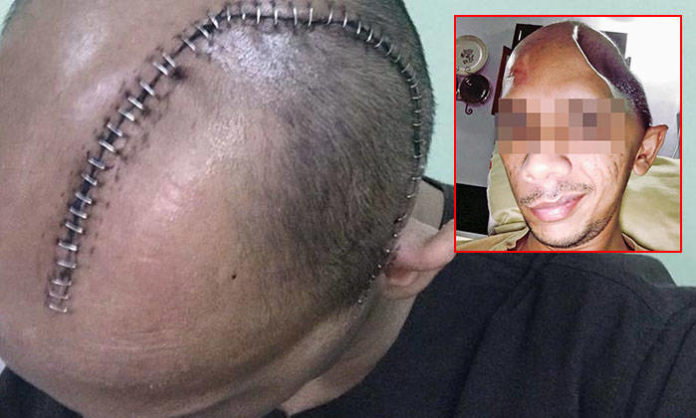
A 33-year-old man miraculously awoke from a coma one and a half months after half his skull caved in during an accident along the Marina Coastal Expressway (MCE) towards East Coast, on May 14, 2016. 

At one point, he lost his sight and 35 per cent of his memory,  now relying on an artificial skull to stay alive. 

Ah Bi, then 31, was on his way home riding a motorcycle when he was hit by a car. 

He lost consciousness following the impact. 

He told Shin Min Daily News that when he awoke from his coma, it had already been one and a half months. 

The tremendous impact form the collision had damaged nearly half his skull.

As such, he suffered brain trauma and slipped into a coma. 

Said Ah Bi:

“When I woke up, I could not remember why I was in a hospital. My mother later told me that I had been in a coma for one and a half months. Over a 100 relatives and friends visited me during that time, and I am very touched.”

Ah Bi said that he had been riding since 2003, and although he had been in two minor accidents since then, the 2016 accident was by far, the most serious of them all. 

He added:

“I do not have any memory of the accident at all.”

Recalling the moment she first came to know about her son’s accident, Ah Bi’s mother said that although her son survived the accident, he had to undergo five operations.

Even so, Ah Bi’s ability to speak has been compromised.

Many skills and knowledge pertaining to work have also been forgotten.

Despite having recuperated for more than a year, Ah Bi still has not fully recovered. 

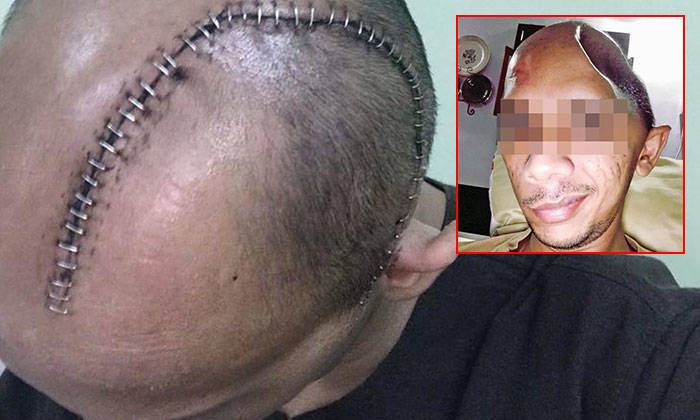
He revealed that the artificial skull is attached using staples, and had to be removed once after the wound became infected. 

Reporters noted that there were more than 50 staples in the photo. 

Despite the lingering repercussions of the accident, Ah Bi said he was grateful.

“The doctors once told me that I could have died while I was in my coma. To have awakened is already a miracle, so I learnt to value my life.

“I won’t be riding a motorcycle again.”

He also encouraged motorists to be more careful when they are on the road, to prevent accidents from happening. 

Singapore

Thursday, February 15, 2018 – 12:27

More about

Accidents – Traffic

Stomp

Others

Source link

Pageant winner stripped of title after nude photos reportedly leaked online, say organisers

0

A winner of a beauty pageant has claimed that the organiser did not hand her the $3,000 prize money she was entitled to. 

In response, the organiser said that her nude photos have been leaked online, and stripped her of the title on grounds of ‘unacceptable behaviour’. 

Melissa Wix, 22, the former winner of Miss Bikinis Asia Singapore 2016, a pageant organised by Lumiere International, told Shin Min Daily News that she was promised a $3,000 cash after winning the contest. 

However, she claimed that the organisers did not uphold their bargain, and she has only received $500 to date. 

Furthermore, she had to fork out money from her own pockets to participate in the pageant. 

She said: “The contract between the company and I ended in April 2017. I have done my part, but the company keeps finding trouble with me.”

“They harassed me on Facebook and through my email, and even stripped me of my title.”

Ms Wix said that she lodged a police report in November 2017 over the alleged harassment, and received a lawyer letter from the company in January 2018. 

She said that the company demanded a public apology or a six digital sum compensation. 

Said Ms Wix: “On Tuesday night (Feb 13), a spokesman for the company called me, and asked me to remove my Facebook posting, or the company will pursue legal actions.

“I did not agree to the company’s demands, and I intend to report the case to the police when I return back to Singapore after Chinese New Year.”

When reporters contacted Lumiere International, a spokesman, Ms Chen Hui Lin, denied the accusations made by Ms Wix and instead accused her of defamation. 

The spokesman explained that of the $3,000 prize that Ms Wix was entitled to, only $1,000 was in cash money. 

The remaining $2,000 was a model contract with the company.

The $1,000 cash money would be given out in two intervals — specifically, after the winner was crowned, and the conclusion of the subsequent pageant in 2017. 

The spokesman said: “After Melissa was crowned the winner, she received $500 cash immediately. The company also informed her of the clauses and conditions, which she agreed to.”

Ms Chen added that the company later found nude photos of Ms Wix circulating online, and considers this to be a serious harm to its reputation. 

As such, it has decided to cancel all existing job opportunities given to Ms Wix, as well as her title. 

She said: “To the company, a pageant winner shouldn’t just be beautiful on the outside but more importantly, have an upright character. Ms Wix is not a good role model, and the company was forced to make a decision. 

“With regard to her defaming the company, we have already reported the case to the police, and we will be pursuing legal action.”

Singapore

Thursday, February 15, 2018 – 12:03

Stomp

Others

Source link

Bedok resident spends $700 decorating HDB home and corridor to welcome Year of the Dog

0

Is this the most elaborate Chinese New Year decoration you’ve seen yet?

One resident in Bedok would like to highlight the spectacular effort her neighbour goes through to decorate her home for the Lunar New Year.

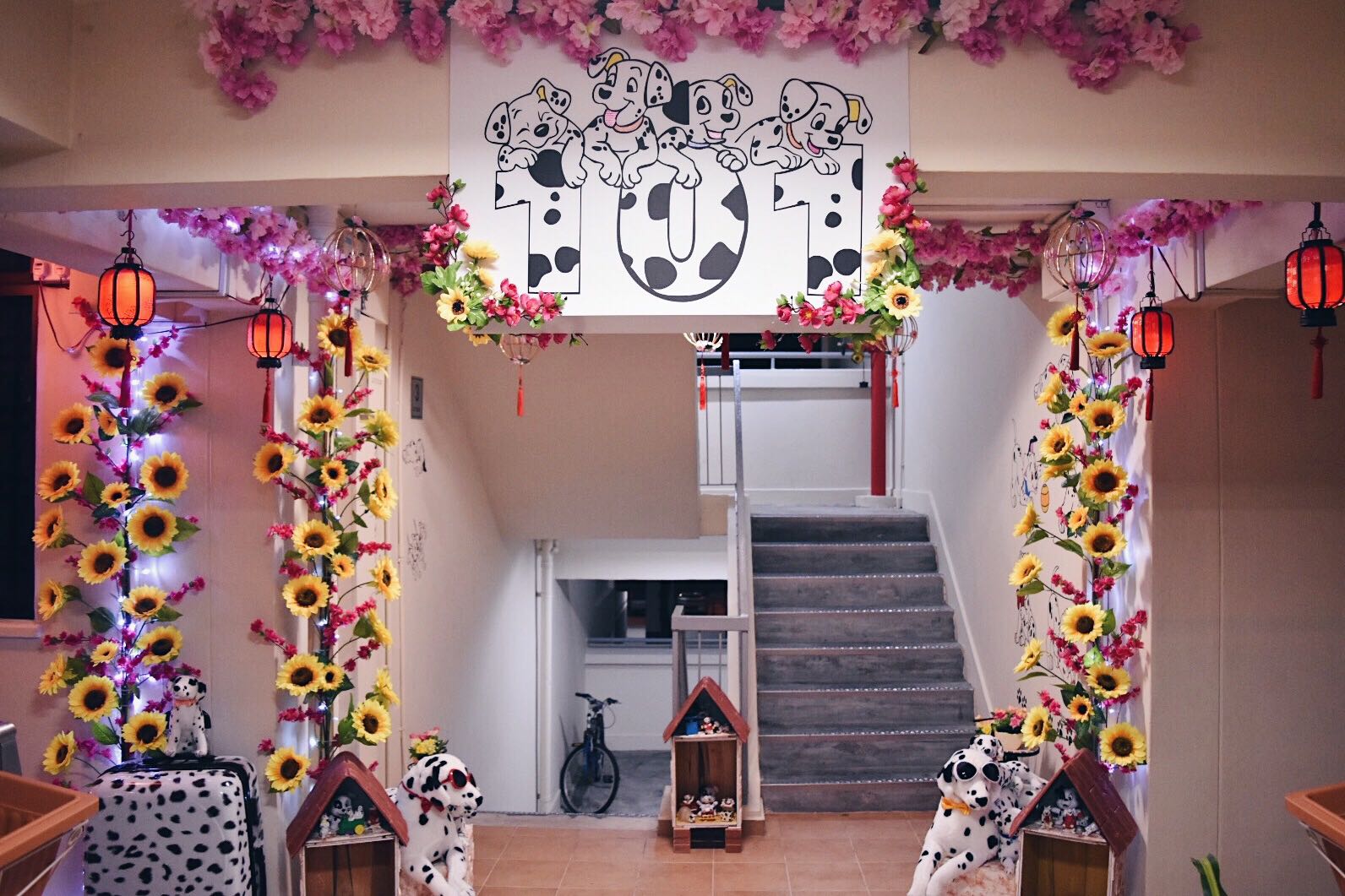
According to AsiaOne reader Nabilah who wrote in with the photos, the homeowner, Linda Cheng, 57, makes it a point to dress up her home and even the common corridor for the festive season every year. And this year, visitors to this unit and neighbouring homes in Bedok Reservoir Road Blk 131 are once again guaranteed a visual feast.

Said Nabilah: “My neighbour has done it again. For Chinese New Year this year, she has decorated our common corridor according to this year’s Dog year.

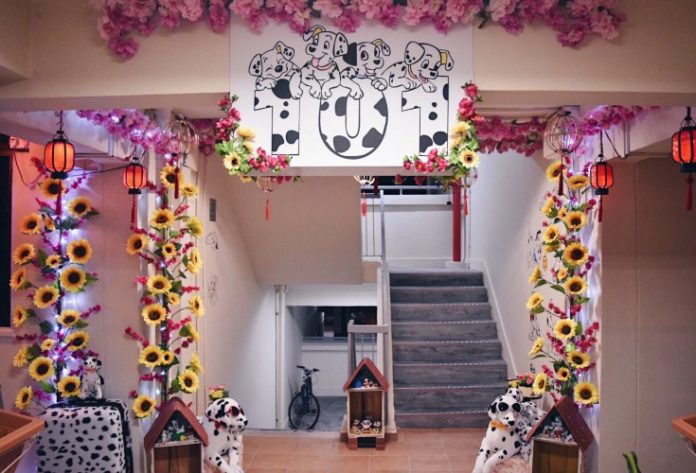
Bedok resident decorates HDB home and corridor in ‘101 Dalmatians’ theme to welcome Year of the Dog

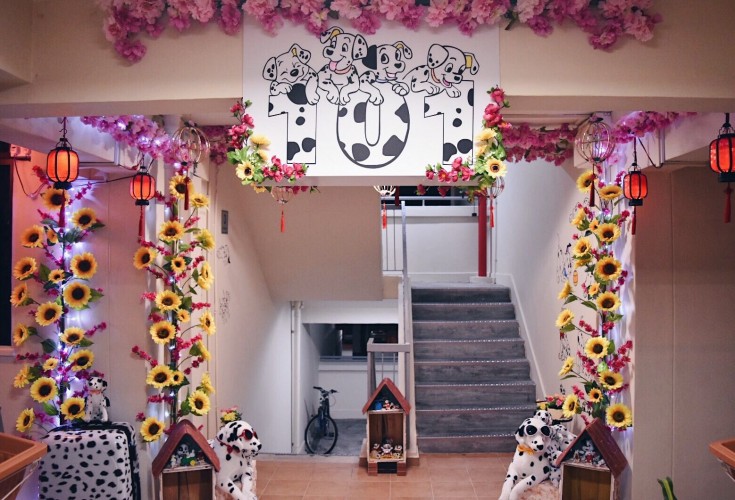
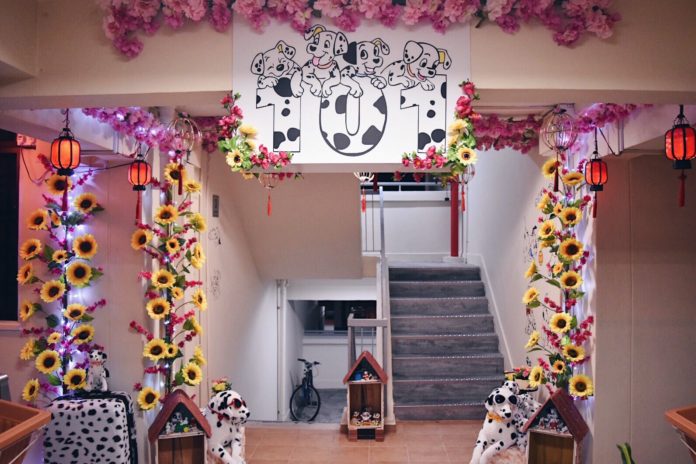
“She pasted Dalmatian stickers on the wall, put up beautiful flower garlands with fairy light decorations, even getting Dalmatian mother and baby plushies to put around.

“She also showcased her Dalmatian dog toys in dog houses, made using the crates which she used for last year’s chicken golden eggs ‘nest’. The corridor is brighter and livelier now.”

Nabilah said her neighbour has spared no effort this year despite having an eye operation recently and having to work shifts.

“She loves to share her works with people around so that they can feel the joy and spirit of the new year!” said Nabilah.

Speaking to AsiaOne, Ms Cheng said she spent “$700 to $800” this year on the decorations, with the conceptualising process beginning two months ago in December.

The beauty advisor, who works at Changi Airport, says she has been inspired to carry on her yearly decorations partly because her late father, who suffered from dementia, loved to to see them. Her dad passed away two years ago.

But her main motivation, she says, is to “share the happiness with everyone”, and she is heartened that her neighbours, many of whom are Malay, can also appreciate her efforts.

She’s also not afraid that people who come by may steal her decorative pieces as well. “If they do, that means they really like it,” said Ms Cheng, laughing. 

candicec@sph.com.sg

Singapore

Thursday, February 15, 2018 – 10:50

More about

Chinese New Year CNY 2018

AsiaOne

Others

Source link

Bedok resident decorates HDB home and corridor in '101 Dalmatians' theme to welcome Year of the Dog

0

Singapore

Thursday, February 15, 2018 – 10:50

AsiaOne

Others

Source link

Want to live longer? Get a furry friend

0

Singapore

Thursday, February 15, 2018 – 10:22

The Straits Times

Others

Source link

Photos: 100,000 flock to River Hongbao 2018 opening

0

Singapore

Thursday, February 15, 2018 – 10:05

More about

Chinese New Year CNY 2018

The Straits Times

Others

Source link