Home Blog Page 1131

Commentary: Private education grads should blame themselves if they can’t get a good job? Nonsense

0

SINGAPORE: Recent comments have implied that Singaporean students graduating from foreign universities through local Private Education Institutions (PEIs) have a harder time gaining full-time jobs than their peers in autonomous universities. 

It has also been reported that these students receive a lower starting pay, take a longer duration to be gainfully employed, and so forth.

It is facetious to assume that the fault lies with the students. 

Calls to upgrade themselves and create a better resume without looking at the wider context in which these reports originated will only serve to fuel the frustrations of our students. 

STUDENTS’ FAULT THEY AREN’T EMPLOYABLE?

In the future, a graduate’s employability will increasingly rely on their ability to pivot, be flexible, and pick up new skills quickly. 

A traditional four-year degree will offer less return on investment compared with customised, regular, on-demand learning, which will allow workers to stay up-to-date with technological changes and new projects. 

Thus, it is important to approach education by considering how curriculum translates to real-world performance, which also means that career and academic services must come hand-in-hand.

To meet the career aspirations of students and the needs of industry, career services departments are the cornerstone in many education institutions. They are tasked with accompanying students through their academic journey and preparing them to contribute to the workforce. 

These departments maintain career portals and regularly host career fairs. Their work provides opportunities for employers to constantly have access a fresh talent pool, while allowing students to seek for internship and employment opportunities.

Without career fairs and internship opportunities, students from PEIs may feel that they are deprived of an opportunity to gain meaningful experiences, and are not adequately prepared to compete on a level-playing field with their counterparts in autonomous universities.

Youths walking after a class has finished. (Photo: TODAY)

It is thus imperative for career services in these schools to convince industry players to participate in career fairs and conduct recruitment sessions for their students. 

But when there are so many students competing for fewer jobs in the market, the pressure on PEIs to find innovative ways to market their students to potential employers is tremendous.

THE ‘BIG BOYS’ AREN’T INTERESTED?

Students will always want the big boys of the industry, such as Apple and Google, to be at career and recruitment fairs. 

Discrimination of students from PEIs are rampant, they claim. 

This is not true – graduates from PSB Academy have gone on to work in prestigious multinational companies without a hitch. 

However, it is not about only having multinational corporations (MNCs) at recruitment fairs, and students should not think that only MNCs have the resources to provide them with a good learning opportunity.

To give students an edge in the job market, PEIs must build long-term relationships with a network of industry partners who can tap on students’ talents and qualifications. 

By engaging with these partners and working out agreements, students can gain networking opportunities and even valuable internship opportunities that will provide them with relevant experience that helps with their job-seeking post-graduation.

As the nature of jobs keep evolving, PEIs should consider include start-ups, small- and medium-sized enterprises and industrial bodies as partners as well. 

PSB Academy has strong ties with industry partners like Bloomberg, StarHub, and NCS Group, and industry accreditation bodies, like the Institute of Public Relations of Singapore and the Institute of Engineering and Technology, to allow students to interact with industry professionals. 

This arms them with industry insights beyond what they learn in the classroom, and allows students to differentiate themselves from their peers.  

Students sitting for an examination. (Photo: AFP/ Mandy Cheng)

NO CHANCE FOR AN OVERSEAS EXPERIENCE?

Despite the clear benefits offered by an overseas experience, many students from PEIs gripe that they do not receive the chance to go overseas for exchange programmes. 

This is especially true for students who belong to a fast-tracked programme in PEIs that lack the right infrastructure and support. 

This is in stark contrast with many autonomous universities which readily offer exchange programmes and overseas exposure. However, this is not a blanket experience for all students in PEIs. It should not, and cannot be. 

In a highly globalised world, many employers are looking for graduates with a global outlook. The QS Global Employer Survey Report 2016 reported that out of 10 employers, 6 will give a candidate extra credit for having an overseas experience. 

Many of these companies require their employees to be able to work with teams from all around the world. 

Due to this, hiring managers from MNCs look out for candidates with cross-cultural communication skills, social intelligence, ability to collaborate and adaptive thinking.

In this regard, it would be good if more young Singaporeans get the experience of living in a different culture and pick up a foreign language. 

PSB Academy, for example, has a transnational campus programme, which allows students to transfer their studies to – and from – the campus of one of the international university partners to complete their programme.

Students need also to remember that having a global outlook goes beyond internships and work experiences in exotic countries – working together with foreign students in a group project can also lend great insight on how people of different nationalities think and work.

People cross a street in Singapore’s central business district. (Photo: Sutrisno Foo)

PRIVATE EDUCATION INSTITUTES AREN’T HELPING?

While PEIs can do their utmost best to help the employability of students by offering a future-ready curriculum, the buck still lies with students themselves. 

Companies that we collaborate with, the likes of GallUp and OCBC Bank, do not have an obligation to provide a job upon the completion of an internship, and neither must they continue collaborating with us indefinitely. As with all partnerships, our students are our best ambassadors. 

These companies have taken a chance on our students and provide the necessary support for our students, and it is natural for them to expect that our students perform on the job.

What PEIs can do is to constantly improve their own service and product delivery. PEIs must provide an environment where students can work creatively and mobilise all available resources to deliver higher education of good quality to students. 

PEIs must manage expectations on both ends by looking out for industrial trends and roadmaps, and providing our students with in-demand skills that the economy requires. 

This can be challenging for PEIs, given that a close partnership with both the public and private sectors is needed to ensure programmes offered closely map to the economy’s needs. 

Nonetheless, this is crucial for our students to be able to contribute to Singapore’s innovation capital almost immediately upon graduation.

While it is true that the onus of excelling in academics and career search lies with the students, we cannot exclude the responsibility that PEIs and industry partners must shoulder to provide our students with a leg-up on the career ladder.

Dr Sam Choon Yin is dean of PSB Academy.
Source link

The family bak kwa business that grew and grew: 6 lessons of Bee Cheng Hiang’s success

0

SINGAPORE: It began as a one-man show, street hawker Teo Swee Ee peddling his barbecued pork slices in Chinatown in 1933. He carried only a bamboo stick with a basket at each end – one containing his product, the other a charcoal grill with which to freshly grill the meat.

Eighty-five years later, appetite for bak kwa has grown and with it, that humble operation. Today, thriving family business Bee Cheng Hiang has more than 370 outlets in 13 territories.

Just as demand these days shoots up at Chinese New Year, group general manager Daniel Wong said that in those early years too, business was brisk for his great-uncle during festive seasons.

“When there were festivals, there’d be a gathering of hawkers. And he’d join (them) and barbecue on the spot for customers. That’s how we started,” he said in an interview with the programme Money Mind, for an episode on family businesses (it airs Feb 17, 10.30pm).

The brand’s founder, Mr Teo Swee Ee (Photo: Bee Cheng Hiang)

Twelve years went by, and Bee Cheng Hiang’s first shop opened in 1945 in Rochor Road. The rest is history.

How did this family businesses survive and go from strength to strength over three generations and an 85-year history? Here are six pointers.

1. LOOK FOR OPPORTUNITY IN PROBLEMS

When the company had a shop in Victoria Street in the early decades, one of its neighbours was a logistics firm whose lorries parked along the road, blocking the shopfront and the Bee Cheng Hiang (or Bee Chun Heng, as it was then known) sign.

“What my great-uncle did was he talked to the owners, saying: ‘How about … I pay you some money to paint your trucks? I’ll beautify your trucks’,” said Mr Wong.

And that was how Bee Cheng Hiang put out its brand name around Singapore – on lorries doing delivery services. “That was probably the advent of advertisement on trucks,” mused Mr Wong.

(Photo: Bee Cheng Hiang)

2. THE YOUNG COUNT, EVEN IF THEY AREN’T TODAY’S DECISION-MAKERS

The company had a bigger problem in 1997-98: The double whammy of the Asian financial crisis and the Nipah virus outbreak.

“First, the economy was bad … Then, people were just afraid to eat pork,” recalled Mr Wong. “That set us thinking … and we started to build up our pool of customers more aggressively.”

Bee Cheng Hiang found that its customer base was getting older, so it reached out to the young.

“For every kid that came into the shop, we made it a point to give (him or her) a sample,” Mr Wong said. “Kids aren’t the decision-makers in purchasing … but we wanted them to enjoy the taste.”

The company also gave out free stickers, expecting the children to paste these on their bags, pencil cases and “all over the place”. 

He called the campaign a success because of what Bee Cheng Hiang’s straw polls showed years later: Children entering their late teens “all knew the brand”.

3. STAY RELEVANT, FIND NEW MARKET SEGMENTS

The company had other campaigns. In the early 2000s, realising that the pace of life was getting faster, it came up with small, vacuum-packed bak kwa for working adults.

“That suited their lifestyle … They could open it up and eat it without the hassle of having to deal with oil,” said Mr Wong. “They could bring it to the office and … not have any pest problem.”

He admitted that regular customers did not even consider this product initially, as they were used to their freshly barbecued fix. Young parents, however, started buying the Mini EZ bak kwa because it was easy to give to their children.

Another group of consumers Bee Cheng Hiang reached out to were those who were health-conscious – by developing the Chiziban, a crispy version of bak kwa that the company’s nutritional tests found to be “high in protein and low in calories”.

The product is made from pork loin, which has a lower calorie count than chicken breast, noted Mr Wong, who added: “This is how we … capture different market segments.”

The company is also embracing new payment technology. “Ten years ago, we were talking about the EZ-link card … Today, we’re talking about Alipay, WeChat Pay,” he said. “We have to go with the needs of customers.”

4. GET INTERNAL FEEDBACK, PUSH OUT ONLY THE GOOD STUFF

Although Bee Cheng Hiang’s research and development team creates new products every year, at most only one in five products makes it to the shelves.

New flavours and variants are sometimes rejected because “the market may not be ready”. There would also be consequences if customers get “tired of bad new products”.

“We’d have this bad after-effect where people say, ‘For every new product you launch, I’m not going to try because it’s not going to make it,’” said Mr Wong. “So we only present the best to customers. In this way, (they) would keep coming back.”

Mr Daniel Wong, group general manager.

While customers are not directly involved in the product development process, the company has a “big selection of colleagues” to tap. “For every product … (we) get internal feedback first,” shared Mr Wong.

“We always want honest feedback … We want to hear the bad news if there is any. We want people to be critical because that’s part of the learning process.”

5. VALUE NON-FAMILY EMPLOYEES

Honesty and hard work are the two criteria Mr Wong listed when it came to finding people to groom in the company. And it does not matter if the person is not a family member, he stressed.

There are now fewer than 10 family members in the company, in senior as well as junior positions. And the general manager of the barbecued pork chain is a non-family employee.

Mr Wong, who joined the company in 1993, said: “From day one, we realised that there are just not enough family members to do everything.”

The family business in the old days (Photo: Bee Cheng Hiang)

One reason non-family employees are an important asset is that they bring a diversity of views and experiences. And their trust must be earned.

Mr Ng Siew Quan, PwC Singapore’s Asia-Pacific Entrepreneurial and Private Clients Leader, said: “Managing this group of people will be crucial (so that) they feel that they’re part of the family business … (and) are in the same direction … pursuing the vision of the family business.”

He added that many family businesses in Singapore and Asia are still young and have not picked up enough lessons to get such business transitions right.

Bee Cheng Hiang, however, has gone from strength to strength because it welcomes and trains all talent, highlighted Mr Wong. “It’s hard to find a suitable person to go into a new market and grow that market, so grooming people is always at the top of our minds.”

WATCH: How it evolved (3:35)

6. WIDEN YOUR HORIZONS

When Mr Wong joined the company, it had about 12 to 15 shops in three territories: Singapore, Malaysia and Hong Kong.

Expansion picked up only from the mid-90s, when Bee Cheng Hiang started working with business consultants on a franchising programme. “At that time, franchising was the ‘in’ thing,” he said. “It was a great way to expand.”

The company relies on a two-pronged approach: It can use the franchise model as long as the territory is suitable; or it can enter the market directly. Having a franchise partner with good local knowledge about a market can lead to faster expansion.

A store in Ho Chi Minh City, Vietnam (Photo: Bee Cheng Hiang)

“We’ve been very successful with the Asian market, and we’re always keeping an eye on the European and American market,” he said.

About 20 years ago, the company used to get only a handful of enquiries from Europe and the United States. It now gets “hundreds” of enquiries but has “yet to find a suitable partner”.

Still, Mr Wong remains hopeful that he can “bring the Singapore taste to a new territory, to a new culture”, as venturing overseas has “definitely” been a key part of Bee Cheng Hiang’s success.

New episodes of Money Mind air every Saturday at 10.30pm.

(Photo: Bee Cheng Hiang)

Source link

The long road to ensuring that Singapore’s waste doesn’t go to waste

0

SINGAPORE: Deep below the surface, deeper than any MRT line, work has begun on a mega project that – within a decade from now – will carry whatever you flush down the toilet if you are in the western half of the island.

The 100km of tunnels and link sewers being built will then take all their contents to Tuas – where every effort will be made to give sewage a new lease of life, including turning it into energy.

This S$6.5-billion second phase of the Deep Tunnel Sewerage System (DTSS) is part of Singapore’s new, holistic approach to ensuring that waste does not go to waste. (It comes after a similar sewerage superhighway to serve the eastern half of Singapore was completed in 2008.)

And with the start of construction last November, the work to reach a turning point in Singapore’s waste management strategy is now in full swing.

The DTSS joins two other projects in the works: The Integrated Waste Management Facility (IWMF) and the Tuas Water Reclamation Plant (TWRP), which for the first time, will see two such facilities co-located on the same site.

Another view of the site in Tuas. (Drone image: PUB)

This trifecta of projects will be wholly completed in 2027. 

But much has already gone on behind the scenes, especially to make the co-located Tuas facility the centrepiece of an innovative and greener waste disposal system.

FOOD FOR THOUGHT

The S$3-billion IWMF, a solid-waste management facility, will sort household recyclables, treat food waste as well as incinerate trash and sludge – a by-product of treating used water – all on a single site.

This will get more bang for the buck and break new ground for Singapore, as the processing of these various waste streams has been done in separate locations until now.

Tests on the technology to be installed in the Tuas plant are now being conducted, such as the mixing of food waste with sludge from used water to increase energy production.

How food waste is turned into energy,

This requires machines called digesters, which process the organic matter in used water sludge and food waste, breaking it down into biogas and carbon dioxide.

The biogas is then used to generate electricity on site, with the excess power sent to the national energy grid.

Sludge collected from sewage treatment has long been processed in this way, for example at the Changi Water Reclamation Plant.

But it was only recently – after years of rising food wastage but a stagnant recycling rate – that food waste has been turned into fuel prior to incineration.

Singapore’s first co-digestion test facility, in Ulu Pandan Water Reclamation Plant, was completed just over a year ago, and is processing a few tonnes of food waste a day. 

“The fat, oil, grease, carbohydrates and proteins that are in the food waste, when combined with the used water sludge, will help to generate more biogas,” explained the PUB plant’s general manager Kelvin Koh.

“(Testing) such a full-scale application will help us to gain operational experience, identify potential gaps as well as … build up to a full-fledged facility, in the future, at Tuas,” he added.

He was speaking on Channel NewsAsia’s two-part special Looking Ahead, which examines how Singapore’s mega infrastructure projects are positioning the nation for the future. (Watch the episode here.)

ENERGY SUSTAINABILITY

With a solid-waste and a used-water facility on the same site, sludge and food waste will be easily available to make biogas. But that will not be the site’s only energy capability.

Like the four existing incineration plants, in the process of incinerating waste, the facility will produce electricity to run its operations, for long-term sustainability. Its incineration capacity will be sufficient to power 300,000 four-room Housing and Development Board flats.

In comparison with that, the 1,600 megawatt hour produced each day by the Tuas South Incineration Plant – which is Singapore’s largest waste-to-energy plant now – is enough to power 125,000 four-room HDB flats, about the area of Ang Mo Kio estate.

The co-location of facilities will ensure energy efficiency too.

“The processing of multiple waste streams at the IWMF and the co-location with the TWRP will enable the two facilities to maximise energy and resource recovery, and optimise land,” said IWMF project director Joseph Boey, from the National Environment Agency.

“The co-location has marked a new chapter. For future projects, we’ll continue to explore such set-ups, look into more synergies and attain even greater environment sustainability.”

WATCH: What happens to our waste (4:27)

SAVING LAND

Planning for the future is not only about energy, but also about land use.

For example, to keep water reclamation compact in Tuas, relevant technology is being monitored at another test facility in the Ulu Pandan Water Reclamation Plant, while helping with Singapore’s long-term water demands.

In conventional water reclamation, dirty water passes through a settling tank followed by a microfiltration system. But that process can be combined using a membrane bioreactor.

“In that sense, we’re able to save space and have a more efficient footprint of our plant,” said PUB senior engineer Anne Marie Ang. She added that the membrane tank has been able to yield water of “clearer quality”.

This puts the Tuas Water Reclamation Plant, a key component of the DTSS, on course to have the largest membrane bioreactor facility in the world.

The space saved with such investments in waste management will also go beyond the walls of the Tuas compound.

Once the second phase of the DTSS is in place – with tunnels built to last 100 years – the water reclamation plants in Ulu Pandan and Jurong will be phased out progressively.

As the tunnel system is being constructed at a gradient, the used water will be carried to the Tuas plant by gravity – without the need for intermediate pumping stations. These, too, will be demolished.

The entire DTSS will halve the area taken up by used-water infrastructure, from 300 hectares in the 1990s to 150 ha in the long term. This land freed up for higher-value development is equivalent to about 214 football fields.

TRAFFIC CONTROL

The roads are another space where efforts in waste management will make more of a difference, with the pneumatic waste conveyance system.

This automated system uses vacuum suction in an underground pipe network to collect household waste from multiple apartment blocks and deposit the waste in a bin centre.

With a central collection site, waste disposal lorries will not have to go from block to block. This will help to reduce traffic in housing areas, among other improvements to liveability, while residents can dispose of their rubbish as usual.

More than 100 private residential developments have become early adopters. And from April, installation of the system will be mandatory for new non-landed private developments with at least 500 homes.

Meanwhile, the HDB is implementing it in new developments where possible, including Tampines North, Punggol, Bidadari and Sengkang. The authority is also studying the pilot test of the system in Yuhua, before deciding on its feasibility for other existing estates.

Ease of transport is already a consideration elsewhere in the waste management loop.

At the Changi Water Reclamation Plant, after energy is extracted from sludge, the remainder is dried to reduce its volume and weight before it is incinerated in the western part of Singapore, and the ash taken to the Pulau Semakau landfill.

“We have about 13 trucks a day come to Changi to remove dewatered and dried sludge to our incineration plants. Without (the sludge dryers), we’d need 30 trucks a day,” said the PUB plant’s general manager Low Pei Chin.’

Dried sludge.

A CALL FOR CHANGE

One problem that is getting bigger, however, is the amount of wastage in Singapore: In 2016 alone, enough rubbish to fill 15,000 Olympic-sized swimming pools. This includes everything from the junk tossed out of homes to construction debris.

“It’s an urgent issue,” said Ministry of the Environment and Water Resources director (Environmental Policy Division) Ng Chun Pin. “So it’s very important for us to push (for) a strong national consciousness among Singaporeans, towards zero waste.”

The overall recycling rate is 61 per cent. This includes industrial and commercial waste. But households are not doing enough.

“The domestic household recycling rate hasn’t improved for many years, hovering at about 21 per cent in the last decade. To put it simply, our recycling habits haven’t kept up with purchasing habits,” said Mr Ng.

“We change our clothes, laptops and mobile phones – and much more frequently, with little or no recycling. We don’t reuse, we don’t repair, and many of these items, unused (and) brand new, end up prematurely in our incinerators.”

Without a change in habits, there will be consequences. At the current rate, a new incineration plant would be needed every seven to 10 years to keep up with the increase in solid waste.

And that is not the investment Mr Ng hopes Singapore will have to make. He said: “We’d rather build HDB flats, hospitals and schools for Singaporeans, not expensive landfills and incinerators.”

Watch this episode of Looking Ahead here.

Source link

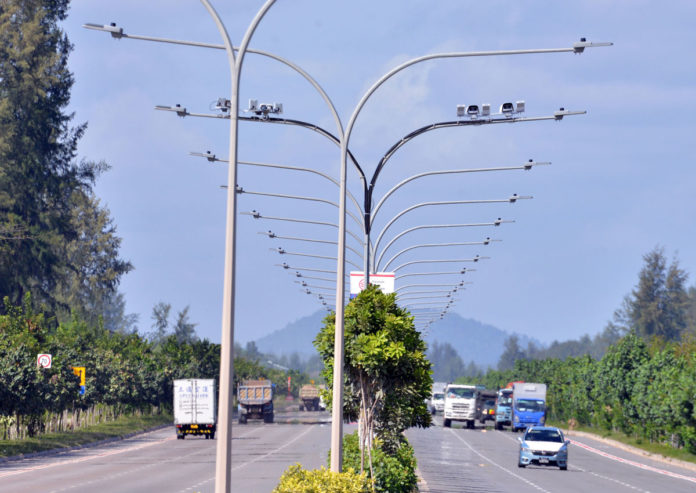
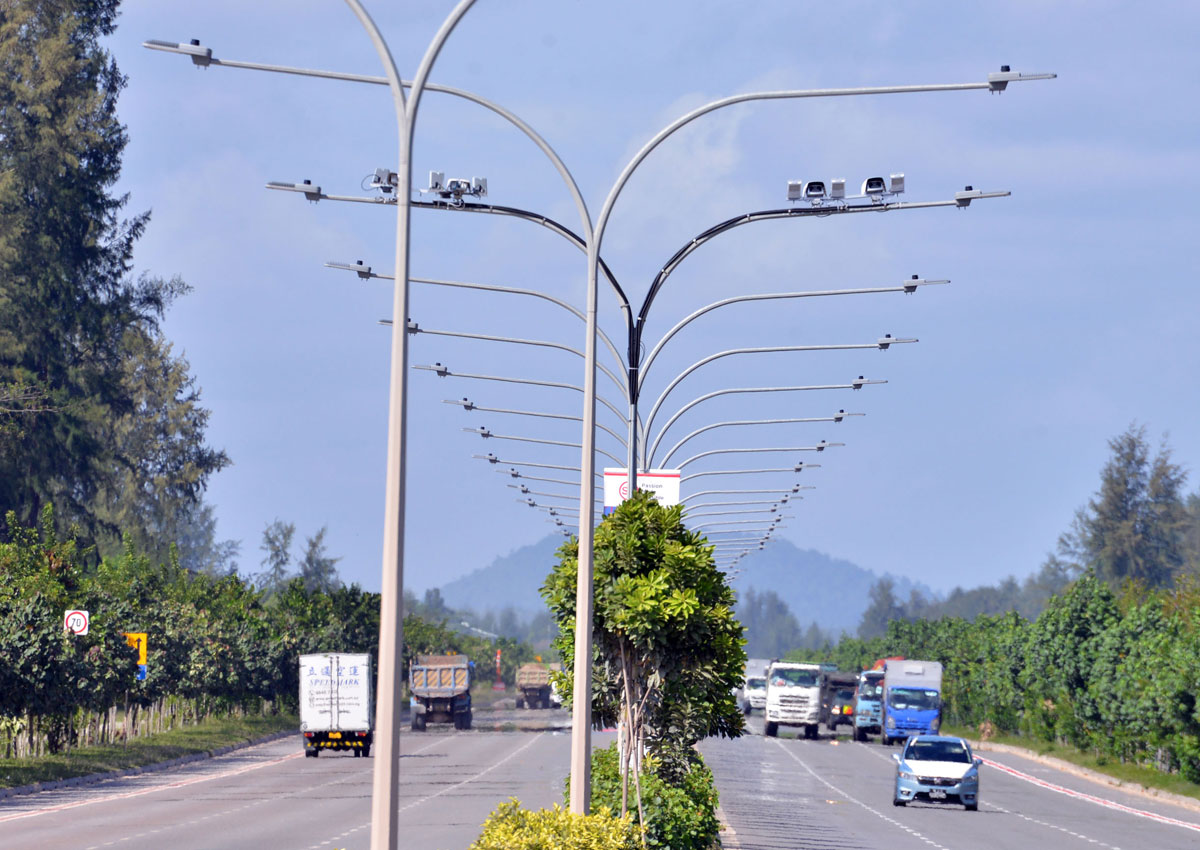
Speed fiends beware – no escape from new cameras

0

Singapore

Friday, February 16, 2018 – 21:27

The Straits Times

Others

Source link

Networks and partnerships can build stronger, reliable media: Chee Hong Tat

0

SINGAPORE: Media organisations could look into building stronger networks and partnerships to remain relevant, said Senior Minister of State for Communications and Information Chee Hong Tat on Friday (Feb 16).

Speaking on the sidelines of a Chinese New Year visit to Mediacorp to thank staff who were working during the festive holiday, Mr Chee highlighted the importance of mainstream media today, amid growing “concerns over fake news, false information”.

“This trusted source of information is a very important part of guiding policy discussions and letting our people know about what’s happening around the world and in Singapore,” he said.

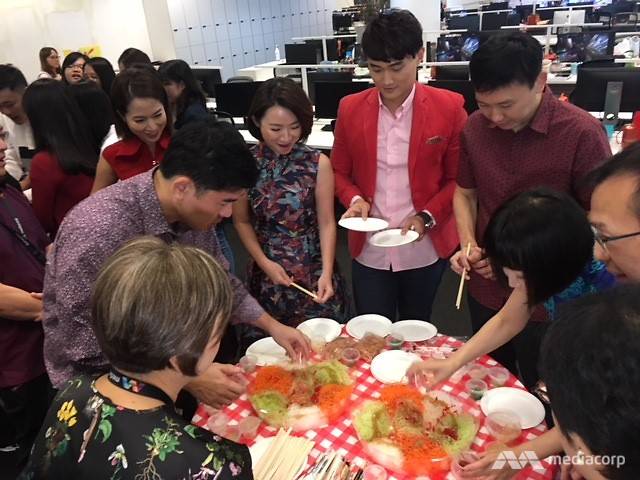
Chee Hong Tat joined newsroom employees in a traditional prosperity toss, known as “yusheng” during his Chinese New Year visit to Mediacorp. (Photo: Junn Loh)

In addition to investments in quality content and tapping on online platforms, media companies could look at growing deeper capabilities and talents to remain competitive, Mr Chee pointed out.

Another key strategy could be in the area of partnerships, he added. 

“That whole idea of collaboration is something we want to try to encourage as well. Collaboration not just within the company, but across different media companies. So, including between Mediacorp and SPH. Certain areas I think we need to see scope for cooperation,” Mr Chee said.

Mr Chee said there is also potential in working alongside non-media companies in the technology and lifestyle sectors. 

“I think there’s a lot of scope for us to see how we can bring some of these partnerships together, to strengthen our value proposition and allow media companies to do well,” he said.

As part of his visit, Mr Chee joined newsroom employees in the traditional prosperity toss known as “yusheng”.  

Source link

Jennifer Aniston, Justin Theroux announce separation

0

LOS ANGELES – Former Friends star Jennifer Aniston and her husband Justin Theroux said on Thursday (Feb 15) that they are separating after less than three years of marriage.

Aniston, 49, and The Leftovers actor Theroux, 46, married in August 2015.

“We have decided to announce our separation,” the couple said in a joint statement. “This decision was mutual and lovingly made at the end of last year.” The statement gave no reason for the split and the couple said they would have preferred to keep their separation private but were speaking out in a bid to reduce media speculation.

“We are two best friends who have decided to part ways as a couple, but look forward to continuing our cherished friendship. Normally we would do this privately, but given that the gossip industry cannot resist an opportunity to speculate and invent, we wanted to convey the truth directly,” the statement said.

Aniston, whose first marriage to Brad Pitt ended in divorce 10 years ago, is one of America’s most popular celebrities and her private life is closely followed by celebrity media.

Aniston and Theroux married in a secret ceremony at their Los Angeles home in August 2015 that took many of the couple’s guests, as well as the media, by surprise. They began dating in 2011.

Aniston has forged a lucrative film career in romantic comedies such as Horrible Bosses, Marley & Me and Just Go With It, since the hit TV comedy Friends ended in 2004, having made her a global star.

Friday, February 16, 2018 – 15:53

Others

Source link

PM Lee shares wish for broader economic growth, urges support for transport workers

0

SINGAPORE: Making a wish on the first day of Chinese New Year, Prime Minister Lee Hsien Loong said he hopes this year will be a good year in terms of economic growth, adding that he hopes to see growth expanding to more sectors as its now still concentrated in areas such as the manufacturing industry.

“This year, I hope we will have a good year in terms of growth. I hope we will be covering more of the economy and I hope it will not just be expansion because other economies who are booming but continuing upgrading – improving our productivity, improving our companies, improving the skills of our workers,” said Mr Lee on Friday (Feb 16).

Mr Lee also said productivity numbers last year were “very good” and hopes this will be sustained.

“Last year, the productivity numbers were very good. We had a 3.5 per cent in terms of the traditional ways of measuring it, which is per worker. But if you look at it per hour work – in fact it was better – it was 4.6 per cent. I would say that the credit is not just to last year’s performance but should be spread out over several years, because the previous years’ numbers didn’t show up,” added Mr Lee.

“But we were doing work and last year the results showed up. So I hope we will be able to sustain that and we will be able to continue to improve people’s lives, and at the same time improve the amenities and services in Singapore.”

The Prime Minister was speaking to reporters after visits to SMRT and SBS train depots as a show of appreciation to workers working during this festive season.

PM Lee Hsien Loong and key union leaders with SMRT staff on the first day of Chinese New Year. (Photo: Kamini Devadass)

Acknowledging that train operations in the last year “have been in the spotlight”, Mr Lee said workers have been working very hard and “making quiet progress with their management, with LTA, with MOT.” He also said he keeps track of the train situation.

“I look at the data every month, to make sure the trends are in the right direction – and you can see that there is progress – steadily, gradually, we are getting the reliability up, the faults down, the MKBF (Mean Kilometre Between Failure) improving.”

SUPPORT FOR WORKERS

Mr Lee also called on Singaporeans to support the transport team and workers so that Singapore can continue to maintain a “first-class operation.”

The visits to the train depots were led by the National Trades Union Congress (NTUC). Mr Lee and Mrs Lee were accompanied by NTUC President Mary Liew, NTUC Secretary-General Chan Chun Sing, Second Minister for Transport Ng Chee Meng, NTUC Central Committee members and National Transport Workers’ Union (NTWU) Exco members.

At SBS Transit’s Gali Batu MRT Depot, Mr Lee met with workers who perform maintenance and inspections tasks on trains. Mr Lee also visited the Operations Control Centre where he observed how the Downtown Line train network operations are managed. At a visit to SMRT’s Tuas Depot, Mr Lee also met with workers who work on specific train components.

The workers at both depots are represented by the National Transport Workers’ Union. Red packets and mandarin oranges were given as gifts to the workers by Mr Lee. There were also traditional lo hei sessions with the workers, union leaders and management partners.

And on the budget, Mr Lee also said details of the budget speech is being fine-tuned, but the “main shape has been finalised.”

“I think you know roughly what the finance minister is planning. He’s given some ideas … to deal with immediate problems, at the same time to plan for the longer-term future. Longer term future in terms of investments, longer term future in terms of sustainability – fiscal sustainability and environmental sustainability,” said Mr Lee.

Separately, Mr Chan and key union leaders from the National Transport Workers’ Union brought festive cheer to over 400 bus workers at SMRT’s bus depot at Ang Mo Kio, SBS Transit’s bus depot at Ang Mo Kio and Tower Transit’s bus interchange at Bukit Batok. 

Source link

PM Lee wishes for broader economic growth, urges support for transport workers

0

SINGAPORE: Making a wish on the first day of Chinese New Year, Prime Minister Lee Hsien Loong said he hopes this year will be a good year in terms of economic growth, adding that he hopes to see growth expanding to more sectors as its now still concentrated in areas such as the manufacturing industry.

“This year, I hope we will have a good year in terms of growth. I hope we will be covering more of the economy and I hope it will not just be expansion because other economies who are booming but continuing upgrading – improving our productivity, improving our companies, improving the skills of our workers,” said Mr Lee on Friday (Feb 16).

Mr Lee also said productivity numbers last year were “very good” and hopes this will be sustained.

“Last year, the productivity numbers were very good. We had a 3.5 per cent in terms of the traditional ways of measuring it, which is per worker. But if you look at it per hour work – in fact it was better – it was 4.6 per cent. I would say that the credit is not just to last year’s performance but should be spread out over several years, because the previous years’ numbers didn’t show up,” added Mr Lee.

“But we were doing work and last year the results showed up. So I hope we will be able to sustain that and we will be able to continue to improve people’s lives, and at the same time improve the amenities and services in Singapore.”

The Prime Minister was speaking to reporters after visits to SMRT and SBS train depots as a show of appreciation to workers working during this festive season.

PM Lee Hsien Loong and key union leaders with SMRT staff on the first day of Chinese New Year. (Photo: Kamini Devadass)

Acknowledging that train operations in the last year “have been in the spotlight”, Mr Lee said workers have been working very hard and “making quiet progress with their management, with LTA, with MOT.” He also said he keeps track of the train situation.

“I look at the data every month, to make sure the trends are in the right direction – and you can see that there is progress – steadily, gradually, we are getting the reliability up, the faults down, the MKBF (Mean Kilometre Between Failure) improving.”

SUPPORT FOR WORKERS

Mr Lee also called on Singaporeans to support the transport team and workers so that Singapore can continue to maintain a “first-class operation.”

The visits to the train depots were led by the National Trades Union Congress (NTUC). Mr Lee and Mrs Lee were accompanied by NTUC President Mary Liew, NTUC Secretary-General Chan Chun Sing, Second Minister for Transport Ng Chee Meng, NTUC Central Committee members and National Transport Workers’ Union (NTWU) Exco members.

At SBS Transit’s Gali Batu MRT Depot, Mr Lee met with workers who perform maintenance and inspections tasks on trains. Mr Lee also visited the Operations Control Centre where he observed how the Downtown Line train network operations are managed. At a visit to SMRT’s Tuas Depot, Mr Lee also met with workers who work on specific train components.

The workers at both depots are represented by the National Transport Workers’ Union. Red packets and mandarin oranges were given as gifts to the workers by Mr Lee. There were also traditional lo hei sessions with the workers, union leaders and management partners.

And on the budget, Mr Lee also said details of the budget speech is being fine-tuned, but the “main shape has been finalised.”

“I think you know roughly what the finance minister is planning. He’s given some ideas … to deal with immediate problems, at the same time to plan for the longer-term future. Longer term future in terms of investments, longer term future in terms of sustainability – fiscal sustainability and environmental sustainability,” said Mr Lee.

Separately, Mr Chan and key union leaders from the National Transport Workers’ Union brought festive cheer to over 400 bus workers at SMRT’s bus depot at Ang Mo Kio, SBS Transit’s bus depot at Ang Mo Kio and Tower Transit’s bus interchange at Bukit Batok. 

Source link

China orphan who broke our viewers’ hearts finds a home, 4,500km away in Singapore

0

BEIJING, China: All the boy with no ears wanted was a family of his own. Airplanes were his favourite thing in all the world to draw – “my mum and dad will come and take me away on a plane,” he’d say, having watched yearningly as all the other children he’d grown up with left with new mummies and daddies.

But, as each year went by and he grew older, and it was always some other orphan’s turn to leave the foster care home but never his own, Wu Keyuan’s chances of being adopted grew dimmer.

Then, on July 30 last year – his eighth birthday – a couple from Singapore showed up at Alenah’s Home in Beijing.

They were there for one very specific child.

Mr Yap Vong Hin, 60, and Dr Lim Poh Lian, 52, hadn’t been looking to adopt again. Already with three children in their late teens – one of whom was adopted from China 16 years ago – they were looking forward to becoming empty-nesters.

But one day in March 2017, they heard about an episode on Chinese orphans on Channel NewsAsia’s investigative program Get Real, and tuned in. The documentary explored the harsh realities for children born with disabilities, who often ended up abandoned by parents who cannot afford to keep them – China has little social security for the disabled. (Watch the episode here.)

In particular, one sparkly little boy with a band around his missing ears – he’d been born without them – tugged at their hearts. Thousands who watched his story on CNA Insider also fell in love instantly.

Given up when he was just a few days old, Keyuan was seven at the time of filming and already considered too old by a number of prospective parents, who preferred a child that was younger and female. In China, children become ineligible for adoption once they turn 14.

It was Keyuan’s poignant quote that did it for the Yaps. “I must be patient,” he said, the optimism shining in his eyes. “We can’t rush it. If we all rush for it, we’ll end up fighting!”

Said Dr Lim: “At the end of the documentary, I was in tears.

I remember thinking: What if everyone thought that someone was going to do something, and nobody did anything, and he just ended up waiting and waiting – and nobody came?

“The human heart can only take so much grief… so we thought – we can’t do everything but we can do this one thing.”

So the couple, who are Singapore permanent residents and United States citizens, flew up to Beijing to meet Keyuan and got the process going. And on Jan 29, 2018, he was officially adopted into the Yap family – with whom he is spending his very first Chinese New Year in Singapore, in a real home to call his own.

For Get Real executive producer Sharon Hun, the aim of the series has always been to create awareness – but making this direct impact on lives was “beyond our wildest hopes”, she said.

“I just assumed that people would be more interested in volunteering or donating money,” said producer/director of the episode, Ms Hoe Yeen Nie. “But for someone to come and say ‘we are going to share their lives with this boy’, it really is a wonderful surprise.”

‘WHEN ARE YOU COMING TO GET ME?’

Two days before his new parents arrived in Beijing to pick him up, CNA Insider met up with Keyuan and his caregivers at Alenah’s Home.

Packing hadn’t taken long: His belongings – a few pieces of clothes, photo albums of his friends at the orphanage, and gifts like a teddy bear from his parents over the months – fit into a tiny bag.

He’d clearly been anticipating the day he would leave with his new mum and dad. Over the months, they’d kept in touch via Skype weekly – though their limited Mandarin kept conversation limited to the simplest topics.

“Are you getting on the plane tomorrow?” he asked in one final conversation. “What time are you coming to get me?”

They’d also been writing him regularly, and he kept their stack of letters neatly stashed in a box. “Read me this,” he would ask one of his caregivers, Ms Zhang Jing, every time he received a new one, and she’d oblige.

“Dear Keyuan,” one letter from his mum read. “Waiting must be so hard. It’s hard for us too, but we both have something beautiful to look forward to, don’t we?”

His drawings, too, have been of more than just airplanes – they show him with his family against the Singapore skyline.

On the last Sunday, his friends at the home gathered around him, and Keyuan held up an album of his adoptive family’s photos. It was meant to be the customary show-and-tell every time a child is about to leave – he or she shares about their new family.

But the usually bubbly Keyuan went quiet. Perhaps he felt bashful; or perhaps, he just knew too well what it was like to be on the other side, the child listening and wishing it was his turn.

One staff member said: “Keyuan is a very thoughtful child, he won’t say anything upseting. I know he wants to express (his happiness), but he can’t put it into words.”

THROUGH MANY LOVING HANDS

It has been a long journey for the boy who was born in Wuwei, a small city in the west of China. Nothing is known about his birth parents – at just a few days old, he was found at the gate of an orphanage.

But though he was orphaned, his early years were not without love. A Muslim couple in the same city soon agreed to foster him, after unexpectedly falling for him just as the Yaps did.

Mr Ding Yun Zhi, 64, had not planned on taking in Keyuan – but something struck him when he saw the little boy for the first time. “I wanted him to feel that he was loved, that he had a family, that he was not abandoned,” he said.

They raised him with all the care they would give their own son, and he even started calling them mummy and daddy.

Keyuan’s new parents meet his former foster parents, the Dings, in Wuwei.

At the age of four, however, Keyuan was still not able to speak well because of his hearing impairment. So the couple decided to send him to an orphanage in Shanghai that could better help him. 

The centre’s director in turn sought the help of Alenah’s Home in Beijing, which specialised in foster centre for children with special needs. Money was raised, Keyuan had a hearing aid implanted – and he was finally able to learn to speak properly. 

In the two and a half years he was at Alenah’s Home, he made huge progress and touched staff with his big heart. “He’s very smart. He’s like a big brother,” said Ms Zhang Jing. “He’ll help you, he’ll care for you”. 

Keyuan and Ms Yao Chen Xia, the general manager of Alenah’s Home.

“When I told him that we found him a home, he was so happy,” she added.

He kept on asking me if it was true. I’ve never seen him smile so happily before. It’s like a miracle for us.

For his new parents, it seems as if his adoption has been the result of the efforts of many, all aligning to help him find a home. “We really feel that Keyuan is a gift who has come to us through many loving hands,” said Dr Lim, a senior consultant with a hospital in Singapore.

His former foster dad Mr Ding put it this way: “As human beings, we share the same emotions. For the sake of bringing up these kids, we do what we can… maybe it’s fate.”

THOSE LEFT BEHIND

When Dr Lim and Mr Yap arrived at Alenah’s Home on a wintry Monday to bring him home, Keyuan – now Lucas Yap Keyuan – ran into his father’s arms, unleashing months of anticipation and joy.

For once, he did not have to be the mature older brother reassuring the younger children – he was just a child himself, happy to be in his parents’ embrace.

At Alenah’s Home, Keyuan jumps into Mr Yap Vong Hin’s arms, as Dr Lim Poh Lian looks on. 

For the many times he was left behind to wait, though, he must know the thought running through the other children’s heads: When will it be my turn?

“The children would say ‘Keyuan, can we leave with you? Can you ask your dad to take us along too’?” said Ms Zhang Jing.

Ms Yao Chen Xia, the general manager of Alenah’s Home, said: “When a child leaves, the hardest part for other children is having more hope that they, too, will have their turn. We can’t promise them anything, all we can do is try our best to find them homes.”

Every year in China, 900,000 children are born with disabilities. The number of those with birth defects has jumped 70 per cent in the last 20 years. With the lack of social support, many are landing up in orphanages to be cared for.

As a result, centres that were once filled with healthy baby girls (given up by their parents because of China’s one-child policy), are these days full of unwanted children with disabilities.

An orphan at Alenah’s home in China.

“Especially for those with more needs, the rate of adoption is lower. We have a girl with a serious brain condition, and she’s been here five to six years,” said Ms Yao.

With the adoption age limit at 14, some never get adopted at all – and end up living at or working for the orphanages that accommodate older children with disabilities. (See related story: Orphan’s poignant photos capture life in shelter for unwanted disabled kids)

FROM STRANGERS TO FAMILY

For the lucky ones like Keyuan who do eventually leave with a new family, adapting to the outside world – often, a strange new country and language as well – and getting to know the strangers who are your parents, can be tough to handle.

Keyuan and his parents were in no rush to go home. Dr Lim and Mr Yap had three weeks planned in China, to get the essential paperwork done before they could fly him back to Singapore. This included going back to his birth province to complete the adoption, getting him a passport, and putting him through a medical test for the necessary travel visas.

Keyuan’s first plane ride.

“The adoption process (in China) is way more difficult now as compared to 15 years ago,” observed Dr Lim. “Background checks are very comprehensive and onerous.”

Among other things, during the months before the adoption was approved, the Yaps had to undergo a home study to ensure theirs was a suitable home, and take an online course about handling an adopted child.

While in China, the couple also wanted to visit their son’s former foster family and the orphanage where he was found. “There’s someone you love and there’s a huge chunk of their life that you have very little information on. We were hoping to just have a picture in our mind of where he spent the early parts of his life,” said Dr Lim.

It was also a crucial time of getting to know each other – and things seemed off to a blissful start.

Wherever they went, be it for lunch, on the plane ride (Keyuan’s first), or the first few days’ sightseeing around China, the eight-year-old held on tightly to both his parents’ hands.

And even though couldn’t speak the same language, most of the time, words weren’t needed. The way they looked into each other’s eyes said enough. “Somehow, love just lets you make sense of everything,” said Dr Lim.    

But shortly after they arrived in his birth province on Day 2, the mood shifted. At lunch, Keyuan suddenly went quiet and put his head down on the table.

“I thought he was just tired, but then I saw a tear roll down his face. I realised that he was just really sad. I think all the excitement seemed overwhelming,” said Dr Lim.

It’s a little bit like being kidnapped by aliens. All of a sudden you’re with people who smell different, who eat different food, who don’t understand what you’re saying, and it can be incredibly frustrating and frightening.

Added Mr Yap, a retired architect and stay-at-home dad: “He was probably also grieving the loss that he was feeling from losing everybody whom he loved and everything he has known up to this point.”

But there was something in the way the boy kept his face in a pool of his tears, almost ashamed to lift his head lest anyone saw him. An adoption agent said this is common with adopted kids – one child had said, “If I cry, will my parents love me?”

“They try so hard to be lovable,” said Dr Lim. But “part of being in a family is knowing that people will love you no matter how you feel.”

ADOPTION IS A LOT LIKE MARRIAGE

It was early morning on Feb 10 when Keyuan and his parents touched down in Singapore. At the arrival terminal, the couple’s friends and family were waiting with colourful garlands and welcome-home banners.

“You’re finally home, Lucas Yap Keyuan,” read one.

Without prompting, Keyuan walked up to his new siblings and gently called out, “Brother, sister” – as if eager to start his new life with this family. The three teenagers, who had initially been stumped by their parents’ decision to adopt again, welcomed their new brother.

The Yaps plan to celebrate Chinese New Year quietly with a few close friends before they take on the next challenge of settling him in. This will include getting new hearing aids surgically implanted – the one he’s been using for the past few years sits only on one side of his head, gives constant feedback and, his parents suspect, is still not allowing him to hear very clearly.

This last fact, in turn, has hampered his ability to process language and so he is “a little bit behind educationally”.

“But he looks like he’s pretty normally intelligent. He has a great attitude and a great personality. A lot of kids, when they have the right situation and opportunities, they catch up tremendously,” said Dr Lim, who plans to home-school him perhaps “for a year or two” until his English is to par and he can attend school.

In the longer term, they will look into whether to reconstruct his external ears and ear canal, which would require several surgeries. “We will probably wait until he is a little older. We’re taking it step by step.”

For all the extra responsibilities and complex challenges that come with being a parent again, for the Yaps it comes down to this one simple principle: Love is commitment.

“We knew that taking on a child with special needs who’s an eight-year-old would be a major change in our lives,” said Dr Lim. 

But adoption is a lot like marriage. You make a commitment to someone who is not your flesh and blood, and at the end of the day, that’s what makes a family – it’s the commitment.

“If you’re really in love with that person, you take them as they are and you deal with all the implications.”

Watch out for more from CNA Insider on Keyuan and his new family.

Source link

Of coolies and fire dragons: Unearthing Kallang’s hidden gem

0

SINGAPORE: Somewhere in Kallang there lurks a forgotten dragon.

Hanging from the rafters of the Sar Kong Heritage Hall at Sims Drive, its ferocious gaze greets the occasional visitor who ventures into its lair. It rarely goes out but when it does, it’s a sight to behold.

Once every three years, this smouldering dragon makes its way around the housing and industrial estate before being engulfed in flames in a fiery climax.

A TEMPLE BUILT BRICK BY BRICK

Made of straw and covered in joss sticks, this Fire Dragon is the only one of its kind in Singapore. But even its fascinating history is perhaps eclipsed by the very temple that houses it.

The Mun San Fook Tuck Chee is one of Singapore’s most unique temples, having been founded by coolies in the Kallang area in 1901. (Photo: Mun San Fook Tuck Chee)

While the former has been an overlooked fixture in the area since the 1980s, the Mun San Fook Tuck Chee temple’s roots stretch back more than 150 years, its story tied to the very history of Kallang.

“The area was one of our earliest industrial estates. Because of the Kallang River, you had all these sand and soil, which were suitable for industries like brickmaking. So in the past, there were many brick kilns around,” said heritage enthusiast Ang Yik Han.

Mr Ang, who is an engineer by profession, stumbled upon the temple’s history a decade ago and subsequently co-wrote a couple of books about it.

A straw Fire Dragon currently displayed at the temple’s Sar Kong Heritage Hall. (Photo: Mayo Martin)

According to him, many of the coolies who worked in the brick kilns and other small workshops in the area were mostly Cantonese migrants, who eventually decided they needed their own place of worship.

The first temple was a simple one that was set up nearby in the 1860s, before being relocated to its current site in 1902. As a nod to the industries in the Kallang area, the temple’s Cantonese name Mun San was derived from “bangsal”, the Malay word for workshop or shed.

That wasn’t the only link to the area’s working class identity. Around 6,000 bricks were donated by the workers and owners of two brick kiln operators, which were used in the construction – and are still part of the temple.

Inside the Mun San Fook Tuck Chee. (Photo: Mun San Fook Tuck Chee Facebook page)

This was a very unusual scenario, Mr Ang pointed out. “In the city areas, you get very nice, beautiful temples established by the clans and rich businessmen. But here, people didn’t have a lot of money so you get these simple temples.”

FROM COOLIE QUARTERS TO A KAMPONG

Despite its simplicity, Mun San Fook Tuck Chee became the focal point of what would eventually grow from a handful of coolie quarters and workshops into a full-fledged village by the 1920s.

It was called Kampong Sar Kong, which means “sand dune”, alluding once more to the area’s industry.

A photo depicting a lion dance performance in front of the temple in the 1960s, where some of Kampong Sar Kong’s old attap houses can be seen. (Photo: Mun San Fook Tuck Chee)

For the next few decades, the community grew in roughly around the same area surrounded by the Sims Drive loop. It was flanked by other Cantonese, Hokkien, and Malay villages. Around it were soy sauce and sago factories, and fish and prawn ponds that were formed from all the digging.

It was a quintessential pre-Independence kampong but it was by no means a wealthy one. Nevertheless, the temple’s committee members who served as the elders made sure it was organised and self-sustaining.

“Nowadays you have the Government looking after every aspect of life but back then, the temple took care of education, they had a sports association, they trained village youngsters in martial arts and even had a volunteer firefighting squad,” said Mr Ang.

A model of the old Kampong Sar Kong during the 1950s, with the temple at the centre, surrounded by houses, ponds, a sago factory. The two old angsana trees were already present and there was a firefighters’ watchtower in the temple grounds. (Photo: Mayo Martin)

At its peak in the 1950s and 1960s, population estimates ranged from a few hundred to a thousand, who lived in mostly wooden and atap houses.

LIFE IN KAMPONG SAR KONG

One of those who remembers growing up in the village is Chin Fook Siang. The 76-year-old retiree, who is the current chairperson of the temple committee, lived right next door to the temple.

“There was a stage in front for Chinese opera,” he recalled, adding that there was a close connection between the communities in his village and in Chinatown, who would often travel to Kampong Sar Kong to watch shows.

Mr Chin Fook Siang, chairperson of the Mun San Fook Tuck Chee, putting joss sticks on the fire dragon. (Photo: Mun San Fook Tuck Chee)

In fact, whenever there were new migrants from China, some would inevitably come knocking at the temple for food and shelter.

“Some of them would have nowhere to stay so they come here. And inside the temple, they used to have this very big wok where they would cook rice and different kinds of food to feed all these people,” said Mr Chin.

While it may all seem idyllic, there were also records of the presence of opium dens and some gangster activities. So much so that a vigilante corps was formed to keep the peace – and even the gangs followed an unwritten rule that if they were to fight, they’d have to do it at the back of the temple.

A photo of students, villagers and alumni of the Mong Yang Chinese School in the 1960s. The establishment of the school during the 1930s had meant the village transformation into a proper community. Today, the space is where the temple’s lion dance troupe is based. (Photo: Mun San Fook Tuck Chee)

And during the race riots in the `60s, Kampong Sar Kong and its neighbouring Malay villages agreed to stay out of each other’s territories to avoid trouble – even as they would protect from outside troublemakers those who would go astray.

THE RISE OF THE FIRE DRAGON

By the time Singapore gained independence, transformation was already afoot. Reclamation project to fill up the area’s swamps began in 1963. It was time for Kallang’s reinvention as an industrial area – this time under the new government’s national development plans.

Kampong Sar Kong was spared up until 1979, when its residents were finally made to move to housing estates in Aljunied, Koon Seng Road and Kallang Airport.

The temple’s straw Fire Dragon at the 2012 Chingay Parade (top left) and near the temple on the eve of the Earth Deity’s feast day in 2016. (Photos: Ang Yik Han, Mun Sun Fook Tuck Chee)

But as the people moved out, the temple brought in its current famous resident. By the early 1980s, the Fire Dragon was making its rounds in the area.

The unique tradition – of using straw to create the dragon and sticking lit joss sticks all over it – had been appropriated from Chinese harvest traditions.

“Over here, we don’t have farming so the converted it to be used during the Earth Deity’s birthday,” said Ang.

The deity, known as Da Bo Gong, was the temple’s main deity and associated with the area’s literal earthy roots. Once every three years, on the second day of the second lunar month, temple devotees would assemble the dragon using straw imported from China. 

With hundreds of lit joss sticks stuck all over it, the dragon would be hoisted by around 60 people in a fiery procession around Sims Drive before ending back at the temple where it would burn away.

In recent years, it would also make the occasional cameo at the Chingay Parade – the latest, unburnt one, from 2016, hangs on the rafters of the temple’s Sar Kong Heritage Hall.

Straw from China is shipped in to create the Fire Dragon under the supervision of Fong Keng Yuan (top right). More than 60 men are needed to carry the 60m-long dragon during the procession, during which around 3,000 joss sticks smoulder as they’re stuck unto the dragon. (Photos: Jimm Wong, Mun San Fook Tuck Chee)

The Fire Dragon’s next appearance will be in 2019 – if it happens at all.

“The dragon is tied to the history of the temple, so if it moves elsewhere or disappears completely, there’s no impetus to do the dragon because it’s not commercial,” said Mr Ang.

LIVING ON BORROWED TIME

Since 1979, the Mun San Fook Tuck Chee has sat on Government land. From 2009, it has been under the Housing and Development Board’s Temporary Occupation Licence, which is renewed yearly. Nearby housing blocks have already been emptied as part of the board’s En Bloc Redevelopment Scheme.

The temple committee says renewal is due on June 30 but they have yet to receive a letter for this year.

Gesturing to the area around Sims Drive, Mr Chin said: “All these used to belong to the temple so people here were renting. All were given to the Government except for the plot here.”

To the left is the temple’s main deity, the earth deity Da Bo Gong (Tai Pak Kung in Cantonese). The wooden statue and stone tablet are said to date back to the beginnings of the temple. To the right is the more recent section on the Bodhisattva Guanyin. It was previously an open space. (Photo: Mayo Martin)

There have been little victories – the National Heritage Board had awarded it a grant, which resulted in a heritage gallery that talks about the temple, former kampong and the Fire Dragon.

Sporadic tours are also being held on an ad hoc basis for people who enquire on the temple’s website.

But a campaign to include it in Singapore’s list of national sites and monuments was unsuccessful. Mr Ang reckons this was due, in part, to the substantial changes made to the building during its most recent renovation in 1985.

Some houses in the kampong were turned into opium dens and gangster activities weren’t uncommon. But there was also an unspoken rule that fights were to be done at the back of the temple. (Photo: Mayo Martin)

He added that this exclusion seems a pity. After all, Mun San Fook Tuck Chee is one of only two original temples in the Kallang area that stretches back to the 19th century. The other one is the Sri Manmatha Karuneshvarar Temple on Kallang Road, which also has blue collar roots – it was set up to serve devotees at the Kallang Gasworks.

A HIDDEN GEM

But Ang concedes that what makes the temple unique has also been the reason it is not getting much buzz or support.

Some examples of the Twelve Nannies, which were unique because they are depicted wearing the ordinary clothes during the late Qing period. (Photo: Ang Yik Han)

​​​​​​​

“It also doesn’t really go into the main narrative of Singapore history. When you look at history, you talk about important people and institutions, but nobody remembers the names of all these coolies – they were people of no consequence,” he said.

“But collectively, they were involved in history in some way and I feel this temple is representative of their contributions. It’s important in a different kind of way – to remind ourselves of our roots. In the 19th century, you had all these self-organised industrial activity and people who get together to do their own thing but works out well for the economy. It’s a hidden gem.”

In front of the Mun San Fook Tuck Chee today. (Photo: Mayo Martin)

For one of the temple’s longtime devotees, Mr Chin, this hidden gem worthy of some buffing up.

“If the Government allows this place to be preserved, we can do things to better preserve it. But it’s a year on year thing, you cannot do anything. I used used to play here when I was growing up. I’m 76 years old now, but I hope this place will still be around long after I’m gone.”

Source link