Home Blog Page 1134

Commentary: Singapore must do more to end slavery of the poor

0

SINGAPORE: Being poor can be punishing on many counts.

In one of my parliamentary speeches, I called upon us to guard against the “slavery of the poor”.

It is a plight that happens when vulnerable, low-wage workers are taken advantage of by unscrupulous employers, who exploit this group’s ignorance of their employment rights.

Trapped by the need to make a living for themselves and their families, these workers are prone to be shackled in servitude to the masters who control them, all because of the very limited jobs they can undertake given their age and skills.

When the circumstances of being poor force you to “work until you die”, that means you have become beholden to those circumstances – a form of slavery in itself.

BOLD STEPS TO HELP LOW-WAGE WORKERS

In recent years, the National Trades Union Congress (NTUC) and the Government, with the support of our tripartite stakeholders, have taken bold steps to help these voiceless workers. 

We have had specific interventions to better support and protect these workers’ wages and their employment rights.

The Progressive Wage Model has improved the wages and skills of thousands of cleaners, security officers and landscape workers. In fact, from 2012 to 2017, wages of those at the 20th percentile have shown the largest increase; this has hopefully eased the ever-increasing cost of living for these workers.

Recently, the tripartite committees have made recommendations to have a built-in wage increase for workers in the cleaning and security sectors to ensure their real wages are not eroded by inflation.

A cleaner pushes his trolley in a shopping centre in Singapore. (File photo: AFP/Roslan RAHMAN)

Other schemes implemented over the years, such as the Workfare Income Supplement (WIS), have also gone a long way in making life easier for low-wage workers.

They have a better chance of bringing home more dough. They also have a brighter hope for the future through new skills that they can acquire at heavily subsidised rates.

The road to improving the lives of low-wage workers cannot just end here. We must do more to ensure retirement adequacy for our vulnerable low-wage workers.

In my engagement with union leaders, there are three areas we believe can help us achieve this.

1. NO REDUCTION IN EMPLOYERS’ CPF CONTRIBUTION FOR WORKERS UP TO 65

Without a doubt, the Government has put in place many policies to help low-wage workers achieve retirement adequacy. 

In response to my Parliamentary Question on this issue, Second Minister for Manpower Josephine Teo shared that in 2016, 42 per cent of active Central Provident Fund (CPF) members at age 55 do not meet the Basic Retirement Sum (BRS). Of these, 55 per cent were WIS recipients.

Isn’t it a cause for concern to have 42 per cent of active CPF members unable to meet the BRS for their requirement adequacy?

Mrs Teo suggested that workers who do not have the BRS at age 55 can continue to work over the next 10 years to make up for this shortfall in their BRS through CPF contributions and WIS top-ups.

Central Provident Fund Building. (File photo: Calvin Oh)

No doubt, other than WIS, the Government has introduced other measures to help low-wage workers achieve retirement adequacy. 

These include higher interest rates of up to 6 per cent on the first S$30,000 of CPF balances for members aged 55 and above; liberalising the CPF transfer rules to enable members to top up their spouses’ or parents’ CPF; and starting the Silver Support Scheme to supplement the retirement incomes of the bottom 20 per cent of the elderly who earned lower wages through life.

The fact remains, however, that despite working up to the age of 55, there is still a sizeable number of workers who are unable to meet the BRS; and many of them are low-wage workers.

Perhaps, it is about time our tripartite partners set up a committee to review the employer’s CPF contributions for older workers. Currently, the employer’s CPF contribution rate decreases progressively after the worker reaches 55 years of age.

The different CPF contributions rates tagged to different age bands were introduced in 1988 with good intentions to ensure our companies can remain competitive. However, the assumptions to rationalise why older workers should have reduced employer’s CPF contribution rates may no longer be valid.

Many workers, regardless of their age, are already being paid based on the job value as we have moved away from a seniority-based wage structure. 

Moreover, given longer life expectancy, workers need to build on their retirement savings. There are also many who still need to service their mortgage loans.

Hence, it may not be a bad idea to explore the possibility of working towards having one universal rate for employers’ CPF contribution until workers reach the age of 65. 

This would help workers build their retirement savings, and would be especially beneficial for low-wage workers.

An old man walks on an overhead bridge. (File photo: Francine Lim)

2. MAKE ANNUAL WAGE SUPPLEMENT FOR LOW-WAGE WORKERS MANDATORY

Many of us assume that all workers get the 13th month bonus or Annual Wage Supplement (AWS) at the end of the year. But the sad reality is that the very group that needs it most is not receiving it.

Many companies are denying workers their AWS as a means of cutting cost to remain competitive, and this is rampant in companies providing outsourced services such as cleaning, security and landscape.

The annual two weeks’ mandatory bonus payable to all cleaners from 2020, which was mooted by the Tripartite Cluster for cleaners, is a good first step but there are many low-wage workers who just feel helpless as they see other workers, who are more qualified and better in terms of education, getting their 13th month bonus.

Efforts to introduce similar mandatory annual bonuses in the security industry met with resistance from many security agencies, who prefer to be given the discretion to do so. 

I have on several occasions, in Parliament, made calls for AWS to be made mandatory, especially for low-wage workers, but the response so far has been at best lukewarm.

As a society, we must demand for the right treatment of our low-wage workers as the balance of power is not in favour of this group of people. Denying low-wage workers the 13th month bonus is a manifestation of the prevalent exploitation of this vulnerable lot by their employers.

Mandating AWS will benefit mostly the low-wage workers. It will boost their salaries by about 8.3 per cent and this can help narrow the income gap. 

As many other workers are already receiving AWS, it may not be a painful exercise for most employers after all.

MP and NTUC Assistant Secretary General Zainal Sapari.

3. HELP LOW WAGE WORKERS WITH MEDICAL COSTS

Finally, all of us fall sick every now and then. The current provision of the Employment Act requires employers to pay for the medical consultation fees when a worker sees a doctor for outpatient treatment.

There is no requirement for employers to provide employees with additional mandatory medical benefits such as full or partial reimbursement of medication costs (for non-chronic illnesses).

Thankfully, according to the Ministry of Manpower, a clear majority (86 per cent) of employers do offer outpatient benefits on a voluntary basis.

However, anecdotally, many low-wage workers in the outsourced industries only get the very basic statutory benefits under the Employment Act.

Indeed, it can be a triple whammy for most low-wage workers – low wages with very little annual increment, just the basic medical benefits, and no 13th month bonus – isn’t that a tad too much for the helpless lot to bear?

Even though there is the Community Health Assist Scheme (CHAS) to allow eligible lower-income Singaporeans to access subsidised outpatient medical and dental care at private general practitioners and dental clinics, the fact remains that employers can treat their workers better.

Perhaps, we can consider amending Part IV of the Employment Act to include better medical coverage for workers, by making employers pay for outpatient treatment at polyclinics.

They say poverty is not by choice, but a reflection of society. I fully agree.

It is our responsibility to work together to become a better society – one that is inclusive, and one that ensures there is no slavery of the poor.

Zainal Sapari is NTUC Assistant Secretary-General. This commentary first appeared in LabourBeat. Read the original commentary here.

Source link

G-Dragon to enlist on Feb 27

0

K-pop star G-Dragon will begin his mandatory military service on Feb. 27, YG Entertainment announced Wednesday.

The entertainment company added that it would not hold an event on the day he enters basic training camp.

G-Dragon will become the second of the five-member Big Bang to begin his military service. The first was T.O.P, who is currently serving as a public service worker after being dishonorably discharged from the police due to marijuana charges.

Following G-Dragon, the next Big Bang bandmate in line is Taeyang, who married Korean actress Min Hyo-rin earlier this month.

“G-Dragon and Taeyang are currently waiting on the draft notices for their active-duty military service,” YG Entertainment had said on Feb. 6.

Daesung also previously said on a TV show in November last year that he was eyeing to start his military service in 2018.

As the bandmates serve in the military, Big Bang will go on a long-term hiatus. Military service is compulsory for all able-bodied men in South Korea, as a means to effectively counter North Korean aggression.

Big Bang’s youngest member Seungri is currently the only one who has not publicly rolled out plans for his service.

Wednesday, February 14, 2018 – 14:18

More about

G-Dragon

Others

Source link

Asian students are among the most resilient in the world

0


A REPORT released in January by the Organisation for Economic Co-operation and Development (OECD) revealed that some Asian students are among the most academically resilient in the world, showing that difficult life circumstances are not holding them back in school.

Six out of the top 10 regions for academic resilience are located in Asia, with Hong Kong, Macao (China) and Singapore making up the top three, according to the study.

The OECD defines academic resilience as “the ability of 15-year-old students from disadvantaged backgrounds to perform at a certain level in the Programme for International Student Assessment (PISA) in reading, mathematics and science that enables them to play an active role in their communities and prepares them to make the most of lifelong-learning opportunities.”

SEE ALSO: Asean and EU launch major scholarship program for Southeast Asian students

According to the study, 53 percent of students in Hong Kong show academic resilience followed by 52 percent in Macao and 46 percent in Singapore.

At the other end of the spectrum, in Algeria, the Dominican Republic, Kosovo, Peru and Tunisian, less than 1 percent of disadvantaged students are considered resilient.

Academic resilience allows children from poor backgrounds to break out of the poverty cycle and receive the same opportunities available to wealthier children.

The OECD found that a mix of students from different social backgrounds studying together and a positive learning environment are important for fostering academic resilience.

shutterstock_452999242

Some 46 percent of Singaporean students were shown to be resilient. Source: Shutterstock

A positive school environment can be achieved by having low teacher fluctuation rates, so children can build up trust and understanding with their educators. “Teachers [in Asia] teach only 11 to 16 hours a week, so about half of what German teachers have to put in,” OECD education director Andreas Schleicher told DW .

“They can use the rest of the time to compare notes with other teachers, work with students outside the classroom or support parents. They make so much room to counteract social disadvantages in Asia and it’s really working,” he said.

Having motivational principals with progressive outlooks is also important, according to the OECD.

SEE ALSO: Long denied education, Rohingya children start school in exile

“Teachers need to focus even more on individualised teaching, on working with different students’ strengths and weaknesses,”  Schleicher said. “Another challenge is convincing the best teachers and best principals to come work at the most difficult schools.”

Resilience is often considered the most difficult characteristic to build in children, according to Schleicher, but Germany showed that this is possible through their 7 percent increase in academic resilience between 2006 and 2015.

“Resilience is often accepted as something that’s just hard to change. But Germany has shown that you can really get things moving in just a few years,” said Sherleicher.

{“total”:2,”error”:””,”stumbleupon”:0,”pinterest”:0,”facebook_total”:0,”linkedin”:0,”buffer”:1,”twitter”:1,”google”:0,”vk”:0}

Source link

HaiDiLao sends staff for retraining after Clarke Quay outlet suspended over ‘unclean’ food

0

SINGAPORE: Popular hotpot restaurant chain HaiDiLao said on Wednesday (Feb 14) it has sent its staff for retraining after its Clarke Quay outlet was suspended for two weeks over hygiene lapses.

The National Environment Agency suspended the outlet at 3D River Valley Road from last Saturday (Feb 10) until Feb 23. The suspension notice said that HaiDiLao staff at Clarke Quay had handled food with bare hands and sold food which was unclean. 

HaiDiLao was also fined S$800 for the offences. 

Responding to queries from Channel NewsAsia, HaiDiLao said it has retrained its staff in food preparation procedures. It has also introduced a new food safety management system to prevent similar lapses from happening again, the chain said.

“The company also sought assistance from the National Environment Agency for comments and guidance to improve our food safety management system,” said HaiDiLao. 

“HaiDiLao promises that food safety and food quality remains a priority in all the stores globally.”

The company’s global headquarters will also make “stringent checks” on its Singapore branches, it added.

HaiDiLao also said it hired two local food safety inspection agencies last year as independent third parties to inspect its operations at various branches. The agencies conduct random checks on kitchen equipment, food preparation methods and hygiene standards, it said. 

RENOVATION WORKS AT OUTLET WERE PLANNED: HAIDILAO 

In response to questions about the Clarke Quay outlet’s 50-day closure for renovation – which began last Saturday, the same day as the NEA suspension notice – the company said the renovation works were planned before the suspension.

Renovation works are expected to be completed by late March, and the outlet is expected to reopen in early April, HaiDiLao said. 

Staff from the branch who handled food will continue to get paid while they attend the Basic Food Hygiene Course again as required by NEA. HaiDiLao will arrange for the staff to work in another branch of their choice once they pass the course. 

HaiDiLao’s outlet in Clarke Quay. (Photo: Facebook/HaiDiLao Singapore)

About 50 customers who had made reservations at the Clarke Quay outlet for the Chinese New Year period will get a discount on their next visit, HaiDiLao said. 

These customers can choose to dine at another of the chain’s outlets and they will receive a 30 per cent discount. They will also be served by the outlets’ managers, it added. 

“We apologise for any inconvenience caused to our customers,” HaiDiLao said. 

Source link

Next batch of 3Gen flats to be offered in Yishun in May: HDB

0

SINGAPORE: The next batch of 3Gen flats will be offered in Yishun as part of the Build-to-Order (BTO) sales exercise this May, said the Housing and Development Board (HDB) on Wednesday (Feb 14)

Multi-generational families comprising at least a married or courting couple and the parents of either spouse can apply for these 3Gen flats.

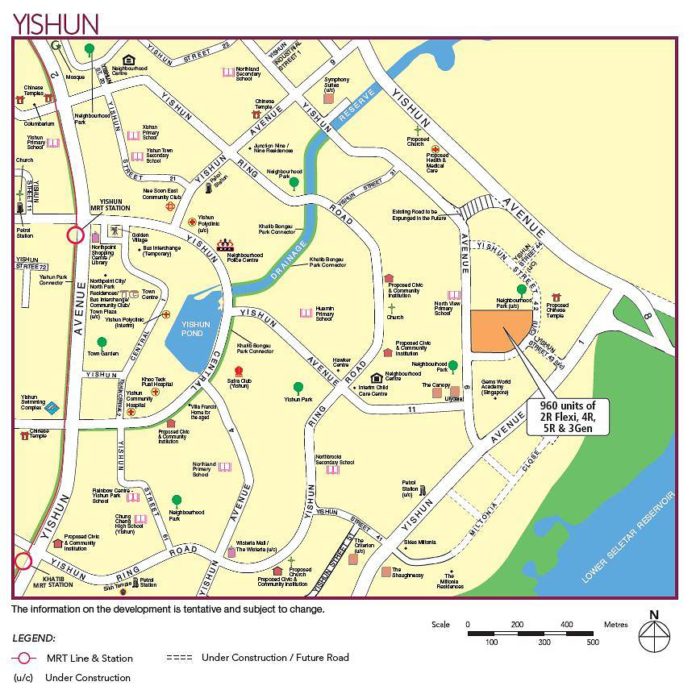
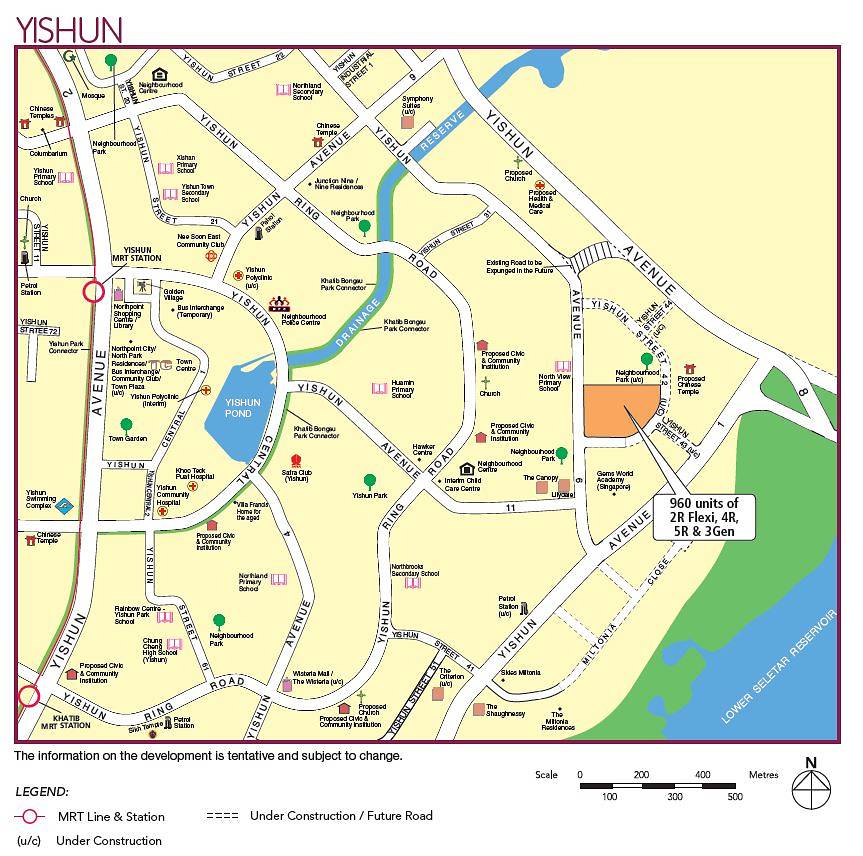
The next 3Gen flats will be offered in Yishun along Yishun Avenue 6 and Yishun Street 43, which is under construction. (Photo: HDB)

HDB said that the 3Gen flats launched between 2013 and 2016 had been well-received, with about eight in 10 units booked at launch.

Among the flats booked, 44 per cent were booked by first-time applicants while the remaining 56 per cent were booked by second-timers.

Since its launch in 2013, HDB has offered close to 1,500 3Gen flats across 24 projects including flats at Saraca Breeze @ Yishun, Punggol BayView, Tampines GreenRidge and Tampines GreenVerge.

The 3Gen flats in these four projects saw 100 per cent take-up, HDB said.

These flats with a floor area of about 115 sq m are designed with four bedrooms and three bathrooms, two of which are ensuite for added privacy.

Owners have to stay for a Minimum Occupation Period of five years, before the flat can be resold in the open market to other eligible multiple-generation families.

Source link

Hiroki Takagi, animation director of 'Bleach', dies from possible flu complications

0

Hiroki Takagi, animation director of the beloved and wildly popular Japanese anime series “Bleach,” passed away on Feb 2 from possible flu complications.

Masami Yuuki, co-creator of anime series “Patlabor,” revealed on Twitter last Thursday, Feb. 8, that Takagi lost consciousness while taking a bath, according to Anime News Network.

While the official cause of death has not been determined, it was reported that Takagi had been diagnosed with influenza.

Takagi’s sudden death leaves his fans in mourning as well as a huge void in the production of the projects he has yet to finish. These include two of the seven “Uchū Senkan Yamato 2202” sequel films. Only five were released before Takagi’s death.

Apart from “Bleach,” which aired its first season in 2004, Takagi is also known as the key animator of “Akira,” “Neon Genesis Evangelion” and “Here Is Greenwood,” among others, as well as the animation director of “Patlabor.” Takagi also drew character designs for “Dominion Tank Police” and “Majokko Club Yoningumi – A Kuukan Kara no Alien X.”

While Takagi’s untimely death may have been a shock to his production team, assistant director of “Yamato 2022” Makoto Kobayashi posted on Twitter that the anime will be considered Takagi’s posthumous work.

Artist and character designer Nobuteru Yuki, on the other hand, attended Takagi’s funeral and said that everyone in the production will carry on.


Wednesday, February 14, 2018 – 11:51

Others

Source link

Gardens by the Bay lights up Chinese New Year with ultraviolet performances

0

SINGAPORE: Gardens by the Bay is all set to bask in the glow of its Chinese New Year celebration which will run over the next two weekends in February. 

The celebration, themed Spring Surprise, will include performances from the Ultraviolet (UV) Northen Lions and Lotus Dragons. 

The UV Northern Lions. (Photo: Gardens by the Bay)

​​​​​​​

Called Rise of the Guardians, 13 dancers from Tian Eng Dragon and Lion Dance Centre will perform the traditional lion and dragon dance in UV light. 

Lotus Dancers during a rehearsal of the Rise of the Guardians. (Photo: Gardens by the Bay)

The performers spent two weeks rehearsing to ensure that the UV effects are brought out through specially tailored choreography. 

The UV Lotus Dragon. (Photo: Gardens by the Bay)

The first performance will be on Feb 17 at 8pm. Visitors can also catch them on Feb 18, 24 and 25 at the same time. All the performances will be at the Supertree Grove. 

The drummers performing at the Rise of the Guardians. (Photo: Gardens by the Bay)

It will be the first time UV Northern Lions are performing in Singapore. 

The UV Northern Lions. (Photo: Gardens by the Bay)

Apart from Rise of the Guardians, there will also be a variety of cultural performances, a movie screening by the lawn and several dog-themed activities as Gardens by the Bay celebrates the Year of the Dog. 

Visitors can also enjoy the Gardens’ first floral display of the year, Dahlia Dreams, in Flower Dome from Feb 16 to Mar 4. 

Source link

Man gets 28 years' jail, 24 strokes of cane for raping stepdaughter from when she was 8

0

Singapore

Wednesday, February 14, 2018 – 09:46

The Straits Times

Others

Source link

Commentary: Time to review Government assistance to SMEs

0

SINGAPORE: There are two main schools of thought on the role of the Government in supporting our small- and medium-sized enterprises (SMEs).

Some believe that the Government has done too much for our SMEs, has cultivated a sense of entitlement and dependency, and should take a step back and allow competition to separate the wheat from the chaff.

Others believe that the Government needs to continue to assist SMEs, but should review its current schemes and incentives.

Given Singapore’s state-guided form of capitalism since independence, the Government is a significant player in the economy; whatever it chooses to do or not to do will have a large impact on our SMEs.  

SMEs, in turn, provide employment for about 70 per cent of our local work force.

Therefore, the question is not whether Government should help our SMEs, but how it can do so in a way that supports a thriving local private sector that is ready for the disruptions wrought by the accelerating pace of technological advances.

LOW HANGING FRUIT

First, in implementing its various schemes, the Government should refine its categorisation of SMEs based on annual revenue or sectors. 

This will allow for more targeted policy measures and closer analysis of the impact of respective policies on businesses with different needs and capabilities.

Currently, there is a wide spectrum of companies banded together under the term SME – companies with either under S$100 million in annual revenue, or fewer than 200 staff.

Some Trade Associations and Chambers like the Singapore Chinese Chambers of Commerce and Industry (SCCCI), on the other hand, categorise their SME members as micro, small, medium and large.

A general view of the Raffles Place financial district in Singapore. (File photo: AFP/Roslan Rahman)

Second, this would then allow the Government to review its some 200 schemes and programmes for different groups of SMEs. After all, the Government has shown a capability and willingness to operate in this manner, adopting distinctive foreign manpower regulations in the construction sector. 

Other sectors could also benefit from a closer tailoring of regulations and schemes, such as food and beverage (F&B) and hospitality – sectors that are crucial to support the tourism industry, one of the pillars of the economy.

FIND BALANCE BETWEEN PREVENTING ABUSE AND ENSURING EASE OF APPLICATION

Third, the Government has to find a balance between preventing abuses of its schemes and ensuring ease of application for SMEs. 

Currently, the process of application and compliance measures required to submit an application is beyond the scope of what most SMEs, especially micro SMEs, can manage.

One SCCCI survey found that larger SMEs benefited most from Government schemes and programmes.

Requirements have become more stringent, especially after abuses of the Productivity and Innovation Credit (PIC) Scheme were reported. 

Yet surveys of SMEs by the Association of Small and Medium Enterprises (ASME) and the SCCCI found that the PIC had the highest take-up rate: 90 per cent for ASME and 84 per cent for SCCCI.  

It seems the PIC, while easy to apply for, was generally ineffective in increasing the innovative capacity of companies despite its high take-up rate, and perversely created a sense of entitlement and dependence among SMEs on easy handouts from the Government.

The Government’s recent implementation of the Go Digital scheme offers an interesting model. 

The scheme provides SMEs with some 60 subsidised prequalified software solutions managed by the Info-communications Media Development Authority (IMDA) so that they can build stronger digital capabilities to seize opportunities for growth in the digital economy. 

To reduce bureaucratic hurdles, the Government automatically pays for 70 per cent of the cost of these prequalified solutions and the SMEs the remaining 30 per cent.

Chief executive of IMDA Tan Kiat How speaking at the event. (Photo: Calvin Hui) 

REVIEW SCHEMES WITH EYE ON TAKE-UP RATES

Fourth, the Government should review its schemes with an eye on those with uneven or low take-up rates. 

The same SCCCI survey showed the popularity of human capital training subsidies among its members. After the PIC, schemes, such as the Enterprise Training Support and WorkPro, have the next highest take-up rate of 46.9 per cent among its members. 

The other popular SME scheme with SCCCI members is the Innovation and Capability Voucher (ICV) administered by SPRING. ASME members found the ICV to be useful with an application rate of 27 per cent.

While policies that are critical to SMEs like training for labour have a relatively high take-up rate, schemes such as the Micro-loan Scheme by SPRING seem to have a low take-up rate of 4.7 per cent while the Internationalisation Finance Scheme by IE Singapore only has a 2 per cent take-up rate by SCCCI members. 

Other schemes in the area of internationalisation also have very low take-up rates.

Notably, given that financing and cash flow are critical issues for SMEs, the low take-up rate for financial schemes suggests that either the process of application is too onerous for most, or the sums involved are too small for SMEs to consider applying.

In fact, while the Government’s manifold schemes and programmes reflect its willingness to provide incentives and assistance for SMEs, many schemes and incentives end up being poorly utilised.

At the same time, according to the SCCCI survey, for Government schemes in general, the manufacturing sector has the highest take-up rate at 86.9 per cent, compared to the service sector at 64.1 per cent. 

This suggests that SMEs in the service sector have not been as active in applying for Government schemes to transform and upgrade themselves. 

Alternatively, the Government schemes available to the service sector may not be as useful or specific compared to those in the manufacturing sector. 

It is important to understand the reasons behind this difference, since both sectors are critical to the local economy.

BETTER TO HAVE FEWER, MORE TARGETED SCHEMES

The SME landscape is complex and diverse. Schemes to help SMEs need to be targeted and tailored for specific sectors. 

It may be better to have fewer schemes and programmes that focus on the critical needs of SMEs such as human capital, finance and digitisation rather than an array of schemes that are unutilised or under-utilised.

While a scheme’s take-up rate alone is not a good measure of whether it has achieved its objectives, the above results suggest a need to review the objectives, design, and implementation of the Government’s key schemes. 

The goal must be to encourage SMEs to develop their capabilities, and reduce their dependence on Government support over time.

Dr Faizal Yahya is a senior research fellow at the Institute of Policy Studies.

Source link

Plans revised to minimise impact to Ellison Building during construction of North-South Corridor: LTA, URA

0

SINGAPORE: A bigger portion of the historic Ellison Building in Selegie will be retained during the construction of the North-South Corridor, said the Land Transport Authority (LTA) and the Urban Redevelopment Authority (URA) in a joint news release on Tuesday (Feb 13). 

In an earlier plan, the corner unit of the conserved structure was to be torn down to facilitate works, then rebuilt. But the revised plan will seek to preserve as much of the unit as possible.

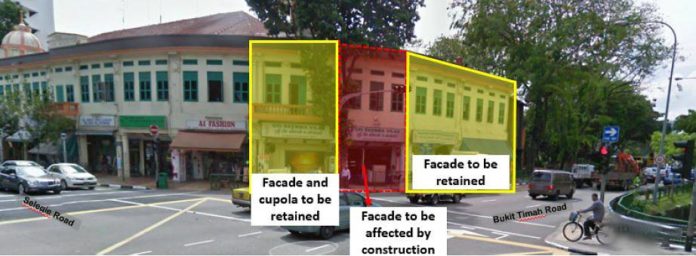
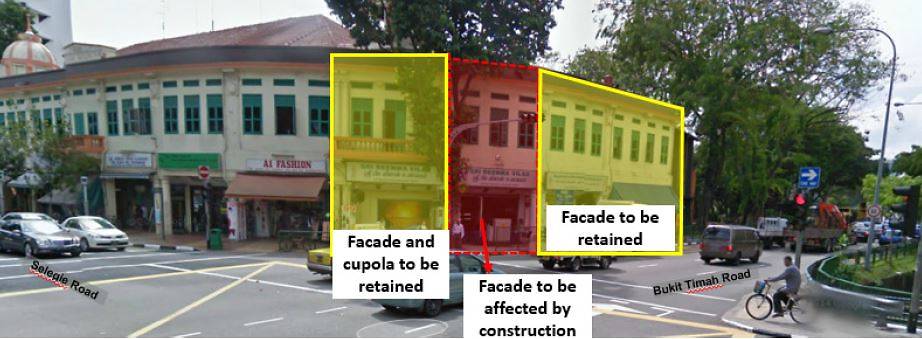
The bay with the cupola – a significant rooftop architectural feature – and three-quarters of the corner unit’s facade panels will be retained, said the agencies. 

Only the panel that directly intersects with the North-South Corridor tunnel will be removed during construction. “This is necessary for the safe access of machinery,” said the joint release.

A diagram of the affected corner unit in Ellison Building. (Photo: LTA, URA)

After tunnelling works are completed, the affected unit will be reconstructed. 

“Other historic elements that are moveable, such as the original timber window frames and the metal building nameplate, will be temporarily removed and stored carefully for reinstatement in the future,” said LTA and URA.

They added that details of this new plan will be included in construction tender for this section of the North-South Corridor, a major expressway that will connect towns in the northern region to the city. 

An artist’s impression of the North-South Corridor along Ang Mo Kio Avenue 6. (Image: Land Transport Authority)

The revised plan came about after close consultation with heritage groups which had expressed concern over the impact on the building, which stands at the junction of Selegie Road and Bukit Timah Road. 

Despite extensive engineering studies, authorities said the unit will still be affected. 

“The engineering team had to take into account the existing Downtown Line and North-East Line MRT tunnels and stations, the heavily built-up corridor lined with residential and commercial buildings, as well as the Rochor Canal,” said the joint release.

They added that because the revised plan requires “significantly more complex” engineering works, measures will be put in place to ensure safety during the construction process and that the structural integrity of the North-South Corridor is not compromised.

The contract for construction of this section is expected to be awarded by the third quarter of this year.

Source link