It’s almost deja vu. First, the Nasi Lemak burger from McDonald’s Singapore was sold out in less than two weeks. Now, another crowd favourite – the chocolate pie – faces the same fate.
In less than two weeks since it was introduced, the long-awaited chocolate pie is now out of stock islandwide. McDonald’s announced the news by posting a comment on their Facebook page:
The fast-food chain added that it will be offering their apple pie and red bean pie at only $1 each for a limited time period.
McDonald’s explained in another comment: “As it (chocolate pie) is a promotional item, it won’t be coming back anytime soon.”
Everyone’s going ga-ga over McDonald’s latest dessert in Korea – Rich Chocolate Pie
The dessert, which contains molten lava chocolate, was introduced along with other seasonal offerings like the Fish & Fries on March 1, 2018 and sold for $1.40 each.
There have been mixed reviews for the chocolate pie, which was a hit when it was launched in Japan, Korea and Thailand. While the version here is not entirely the same since the ingredients are halal, one colleague who’d tried the one in Korea said the taste is comparable. The filling is molten but doesn’t achieve a lava-like flow, even though we heated it up in the microwave.
We had a taste of @mcdsg ‘s brand new Fish & Fries and Sweet Chili Fish Burger and liked the fish fillets’ flavourful and crispy batter. The item that’s got us hooked, however, is the Chocolate Pie. The chocolate filling is not too sweet and goes well with the savoury crust. Don’t forget to enjoy the pie while it’s warm and gooey inside. The new offerings will be available at all McDonald’s outlets from March 1. . . . . #whatiatetoday #sgfoodies #sgfoodporn #mcdonalds #mcdsg #fishnfries #sweetchilifishburger #chocolatepie #dessert #fishfillet #mcdonaldschocolatepie #sgeats
A post shared by AsiaOne (@sphasiaone) on
So will McDonald’s reintroduce it again or make it permanent, just like what they did for the popular Nasi Lemak burger?
For now, fans (and those who’ve yet to try the viral chocolate pie) will have to make do with the $1 apple or red bean pies. Or, get your choco pie fix overseas.
THIS weekend, Asean leaders will be in Sydney to attend the first Asean-Australia Special Summit. Proposed by Prime Minister Malcolm Turnbull at the first Asean-Australia Biennial Summit in Laos in 2016, the event will include a leaders’ summit and retreat, a business summit, and a counter-terrorism conference.
In recent years, the Asean-Australia relationship has reached several milestones. These include the Asean-Australia-New Zealand Free Trade Agreement in 2010, the establishment of an Australian Mission to Asean in Jakarta in 2013, and an agreement to upgrade the relationship to a strategic partnership in 2014.
Australian leaders have been eager to emphasise Asean’s importance. In his keynote speech at the Shangri-La Dialogue in 2017, Turnbull stressed:
We support a strong, united Asean that continues to convene and strengthen organisations such as the East Asia Summit … We support an Asean that remains committed to liberal economic values.
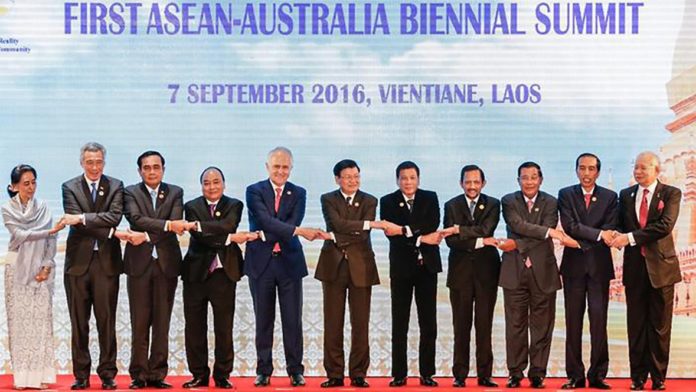
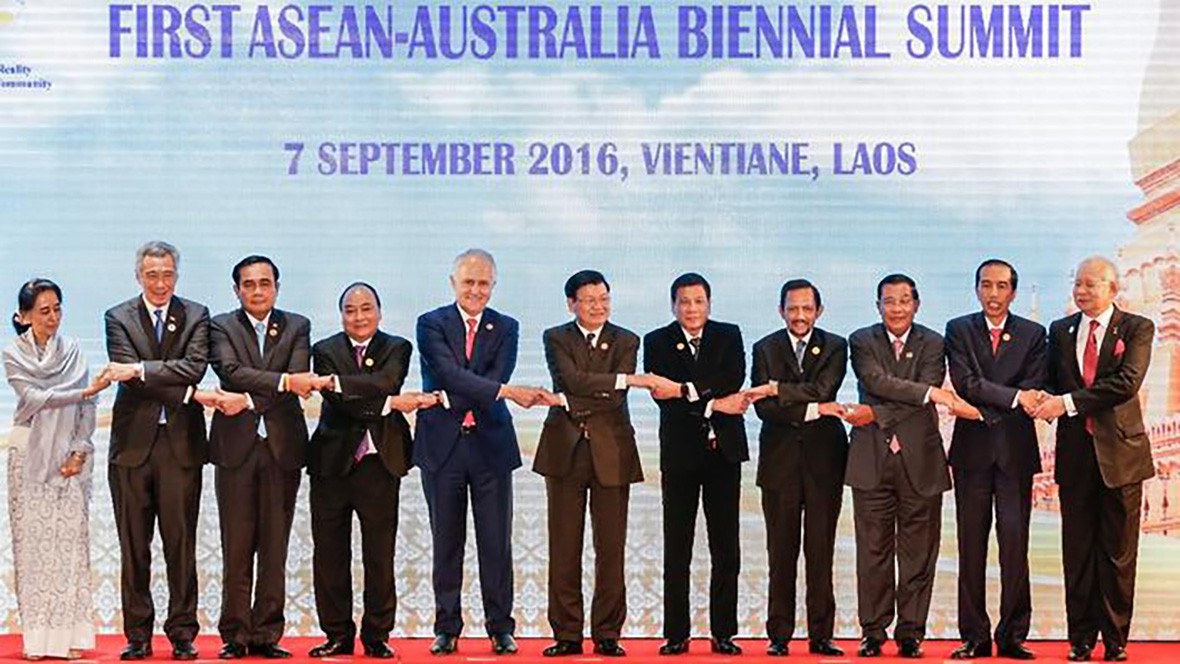
Asean leaders pose with Australian Prime Minister Malcolm Turnbull at the First Asean-Australia Biennial Summit in Vientiane, Laos on September 7, 2016. Source: Australian Department of Prime Minister and Cabinet
The point was reinforced by Foreign Minister Julie Bishop at an event in Bangkok celebrating Asean’s 50th anniversary:
… the central and essential role of Asean is recognised and respected by the great powers of the world. In a period of opportunity and challenge, we will need to strengthen that role and standing of Asean’s so as to advance peace, freedom and prosperity in the region and beyond.
The summit may build on the momentum of recent years. But there are still some hurdles to be overcome for the Asean-Australia relationship to reach its full potential.
Potential for a stronger relationship
The Asean-Australia relationship is longstanding, but has at times lacked substantive action to reinforce mutual commitments.
Australia’s challenge is to prove its utility to Asean, and vice versa. Therefore, each needs to be clear on how it views the other, and how the relationship can be of mutual benefit.
Australia became Asean’s first dialogue partner in 1974, but took until 2013 to establish a mission and appoint an ambassador to the association. Beyond official ties, Australia has not founded its own Asean Studies Centre, which many of Asean’s partners have done.
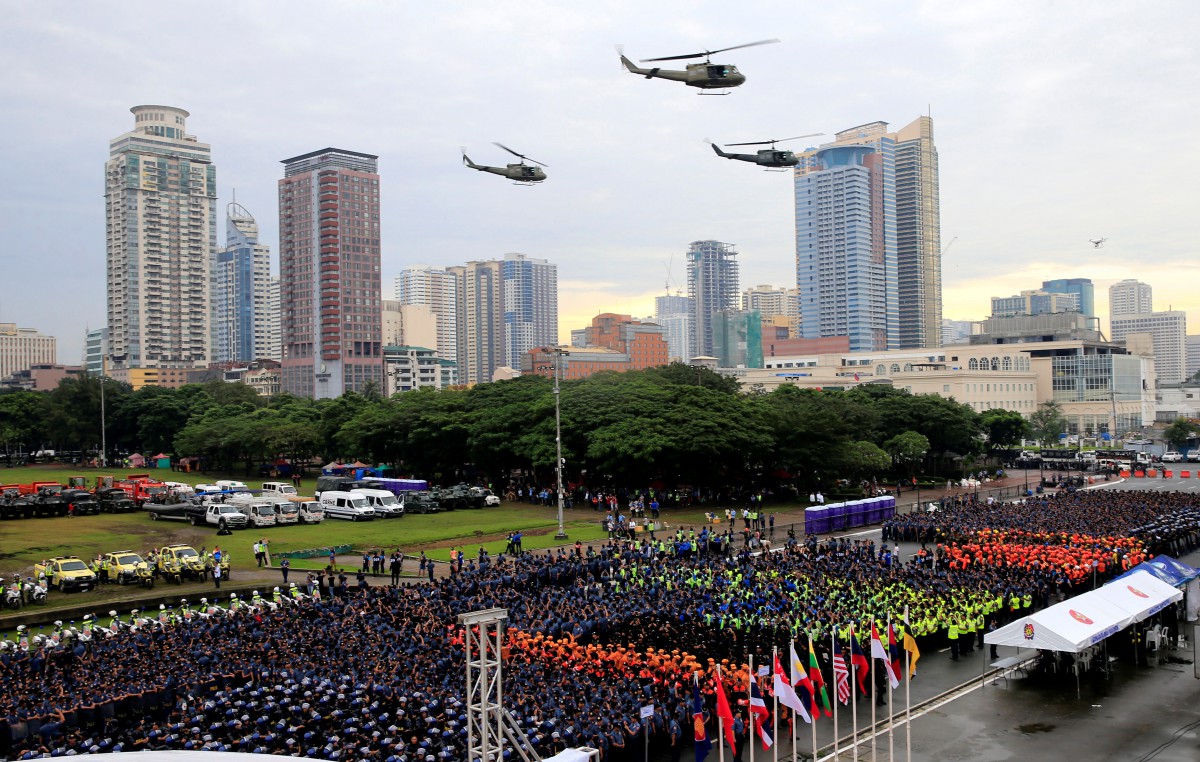
Military helicopters flies over of the Philippine National Police (PNP) and soldiers as they prepare for deployment for security during the send-off ceremony for the 31st Association of Southeast Asian Nations (ASEAN) Summit this month at Rizal park in metro Manila, Philippines, November 5, 2017. Source: Reuters/Romeo Ranoco
Australia’s alliance with the US and historical ties to the UK have at times called into question its role within Asia. Meanwhile, Asean has been criticised by some observers as having little consequence to security and diplomacy, and is frequently assessed as underperforming or unable to meet the challenges it faces in its region.
Currently, there is much talk of shared values and a common commitment to a rules-based order. Yet not all of Asean’s and Australia’s priorities align.
Despite these issues, Australia and Asean have successfully maintained a constructive partnership. Initiatives such as this weekend’s summit could further alleviate any doubt or misunderstanding.
Balancing act
The 2017 Foreign Policy White Paper framed Australia’s priorities in terms of the Indo-Pacific. Australia is not alone here. The Trump administration’s National Security Strategy emphasised the region, and Indonesian President Joko Widodo spoke recently of his desire for a “stable, peaceful and prosperous” Indo-Pacific.
Overlapping but also contested ideas of the Indo-Pacific will need close consultation between Australia, Asean and other partners. Handled correctly, this could bolster Australian ties with Asean, but it also comes with risks.
There is also the question of how Australia’s conception of the Indo-Pacific and commitment to Asean will contribute to – or undermine – security efforts, especially in relation to China’s growing assertiveness in the region and renewed momentum of the idea of the “Quad”. Likewise, the Trump administration’s impact on America’s global role requires careful navigation by Australia and Asean.
The foreign policy white paper also emphasised Southeast Asia more than Asean and Australia’s commitment to working with democracies in the region. Both aspects will need careful balancing so that Australia remains steadfast to its interests and values, but does not sideline Asean in the process.
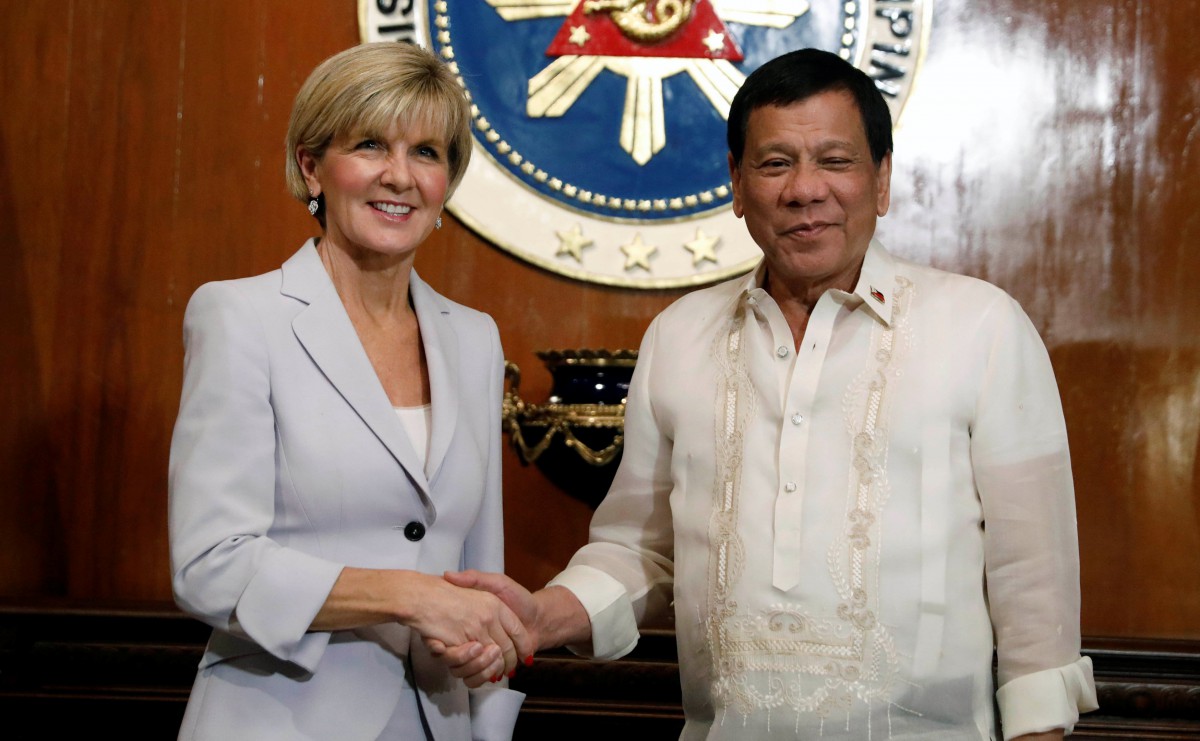
Philippines President Rodrigo Duterte and Australian Foreign Minister Julie Bishop shake hands during a meeting at the presidential palace on the sidelines of Asean Regional Forum in Manila, Philippines, on Aug 7, 2017. Source: Reuters/Erik De Castro
Refreshed debates and opportunities
Most importantly, there is a need to move beyond binary debates about Asean’s effectiveness, which have tended to dominate discussions. Despite Asean’s shortcomings, challenges and moments of disunity, it cannot be dismissed or ignored.
As a grouping, Asean is Australia’s third-largest trading partner, and its members constitute Australia’s closest neighbours. Without Asean-led forums such as the East Asia Summit, the Asean Regional Forum, and the Asean Defence Ministers’ Meeting-Plus, there would be far fewer opportunities for Australia to engage with its partners in the region and beyond.
Rather than seeing Australia’s mix of history and geography as a source of contention, Asean members can enrich the Asean-Australia partnership by drawing on the unique strengths that come from being located in Asia but having ties to Europe.
Relations between the European Union and Australia have intensified in recent years, and the EU and Australia are committed to working together in the Asia-Pacific. This is demonstrated by initiatives such as the Asean Regional Forum workshop in 2017 on the prevention of violent extremism, which was co-hosted by the EU, Australia and the Philippines.
The Australian government should reflect on how Asean expertise can advance its aims, and where Australian support for Asean is most valuable. It has been emphasised that Australia needs to listen to Asean thinking to increase its influence and learn about Asean’s strategies. Asean’s leaders, then, must be ready to share their expectations with Australia. The special summit may just be the place.
By Laura Allison-Reumann, Research Associate, Nanyang Technological University; Visiting Fellow, Universitas Indonesia. Originally published on The Conversation.
SINGAPORE: Before this year’s Budget debates, the Ministry of Trade and Industry (MTI) published the Economic Survey of Singapore. It included a feature article on the return to education for graduates of private education institutions (PEI).
The study had aimed to offer new insights on the monetary returns to PEI and autonomous university (AU) degrees.
Among other metrics, it reported that AU graduates enjoyed an average of 28 per cent premium in starting wages compared to graduates of degree programmes from foreign universities that were taught offshore via PEIs.
These results mirrored the findings of the Graduate Employment Survey reported by the Committee for Private Education and SkillsFuture Singapore three months prior, which showed the median gross monthly salary of the graduates from PEIs in full-time permanent employment was S$2,550, compared to that of fresh AU graduates at S$3,325.
When queried about the GES, SkillsFuture Singapore qualified it was “not intended as a comparison of the quality or value of the respective institutions, and should not be interpreted as such” given the small sample size for some of its data points.
For instance, 18 of the schools polled had fewer than 10 respondents, while 23 had fewer than 20.
Both studies did not identify the main reasons for this difference in starting salaries between AU and PEI degree holders.
Yet the MTI study suggested the wage gap could stem from “differences in … employers’ perceptions of the degrees”.
While it is not uncommon knowledge that graduates from AUs are better paid, it is unfortunate that such surveys exacerbate an unhealthy fixation on starting salaries as the benchmark of returns from quality higher education.
In fact, such myopia misses the mark in our larger debate, where we should be setting our sights on how Singapore’s diverse ecosystem of higher education institutions can collectively raise the overall calibre of Singapore’s human capital to enable Singaporeans to better compete globally.
PSB Academy Graduation Ceremony 2018. (Photo: PSB Academy/Facebook)
HIGHER EDUCATION BENEFITS INDIVIDUALS, THE ECONOMY AND SOCIETY
Granted there are some students who value higher education because of the benefits it brings in the form of a higher salary, improved career prospects, or a higher chance of securing a desirable job. Where higher education is seen as an enabler to better economic outcomes, it might be fair to keep starting salaries as one factor of consideration.
But the same argument could be made with those who are encouraged to embrace lifelong learning through SkillsFuture courses.
Yet a society steeped in a culture of learning will enable its citizens to benefit more widely from the opportunity to lead a more fulfilled life – through knowledge acquisition, critical thinking, learning to deconstruct entrenched and possibly outdated worldviews, holistic learning that integrates theory with practice or developing higher-order skills to be better prepared to face the challenges of the 21st century.
In The Lessons of History, Pulitzer Prize winners Ariel and Will Durant assert that “a society in which all potential abilities are allowed to develop, function and thrive will have a survival advantage in the competition of groups”.
To that end, by defining the returns of higher education in mere earnings, we are simply caricaturising the benefit that a better educated population brings instead of appreciating the impact that it has in unleashing potentialities for the collective well-being of society.
Singapore’s transformation into a manpower-lean economy means we will have to rely less on talent from abroad while doubling-down on cultivating more talent from within. In that regard, everyone should be encouraged to both pursue a degree, and be competent to learn throughout life.
Where the benefits of lifelong learning have been so often touted in this country, it would be a mistake to believe that the accumulation of knowledge and vocabulary through higher education is not necessary and that lifelong learning arises naturally.
Cognisant of the relevance of higher education in the cultivation of home grown talent, the Ministry of Education has announced plans to evolve our publicly-funded institutes of higher learning (IHL) to be more closely aligned to Singapore’s efforts to champion this spirit of lifelong learning.
Acting Minister for Education (Higher Education and Skills) Ong Ye Kung speaking to participants at a lifelong learning event where he unveiled details of the SkillsFuture Credit system. (Photo: Leong Wai Kit)
If we consider AUs, almost all of them aim for prestige which comes from academic research. A good university is associated with measures used in the league tables.
Climbing the university rankings may be a laudable goal. But we should also open our eyes to other purposes of higher education.
Some universities focus on applied research that is specifically relevant to the nation – to raise the standard of living of farmers, for example – rather than paying particular focus on theoretical research which has a higher tendency for acceptance in top-tier journals.
While our AUs do well in this regard, it is important to recognise that if the role of higher education is to train a future workforce, then PEIs which focus more on teaching rather than research can also provide students with strong academic and non-academic support that prepares them for industry.
Generally speaking, PEIs facilitate student admission into diploma and degree courses that are based on interests and aptitudes, and not just on academic results. In that sense, they broaden access to higher education by believing your professional development and preparation for a career should also be enriched by one’s working experience and life experience.
It was heartening to hear Minister for Education (Higher Education and Skills) Ong Ye Kung make a similar point in last week’s Committee for Supply debates.
“40 years ago, schools suffered from high dropout rates. The uniform curriculum also did not cater for students’ varied pace of learning,” he pointed out, adding:
The then-Minister for Education, Dr Goh Keng Swee, said that the starting point should be to identify the ‘causes of things’, before putting in place solutions to fix them. His solution then was to allow students to study at differentiated paces that suited them. School dropout rates fell dramatically.
Education Minister in charge of Higher Education and Skills Ong Ye Kung speaking during his ministry’s Committee of Supply debate on Mar 5, 2018.
At PEIs, more students even those relatively less academically inclined can enrol into a variety of diploma or degree courses as they are presented with these “differentiated paces”. And if more students are likely to enrol into courses that interest them, they may have a higher chance of going on to achieve success in studies, careers and life.
For example, graduates from PSB Academy have earned first class degrees and gone on to work in prestigious Singaporean and multinational companies.
Ms Adora Sarah Chou is one of these graduates from PSB’s university partner, the University of Wollongong Australia. In recounting her story, Adora shared how she was “always deemed a failure – an N-level student, poor grades and a 32-pointer for O-levels”.
But through hard work and determination, Adora spent seven years pursuing her studies and is today doing well as a group marketing manager for a prominent pizza chain – a path that may not have been opened to her had she not had a chance to hone her skills in an institute of higher education.
Many others have seized the opportunity of a second chance at a quality higher education and these stories need to be told – stories of personal growth and advancement of students who have their lives transformed by PEIs.
The important point is this – we must do more to do away with judging higher education institutions through a single scale, for good reasons. A higher education – whether through an AU or a PEI – is not an automatic ticket to a high paying job.
Aside from perpetuating this fallacy, unintended signals of bias against PEI graduates can add to the worrying cracks in Singapore’s social divide.
People walk out for their lunch break at the Raffles Place financial district in Singapore. (File photo: AFP/Roslan Rahman)
BRIDGE, NOT EXACERBATE SINGAPORE’S SOCIAL DIVIDE
An Institute of Policy Studies (IPS) survey on social capital last year reported that despite our aspiration to be a meritocratic society with high social mobility, Singapore may in fact be more divided by class.
This is a divide that may stem from the fact that as open economies, cities like Singapore cannot totally iron out the inequalities of rewards that globalisation accords in a meritocratic way.
Yet as a truly globally-oriented economy, Singapore should not fixate on education’s role in the mere allocation of jobs but instead take on a broader worldview of enabling all potential abilities to develop, function and thrive in our bid to raise our collective human capital and competitiveness as a global node in Asia.
Moreover, when we make a distinction between AU and PEI degree holders through surveys that further entrench prevailing biases, we unknowingly contribute to Singapore’s class divide in two ways.
First, through encouraging social exclusion where graduates from publicly funded education institutions might see themselves as socially more superior than others.
Second, in a scenario where such bias becomes deeply entrenched, Singaporeans might not feel motivated to upgrade themselves through formal education when they neither qualify for a place in a publicly-funded tertiary institution, nor can afford to study overseas.
This might result in a society divided by social classes, where the wealthy can well-afford to skirt the stigma of being a PEI graduate, and pursue his or her diploma or degree from overseas – as some already are doing so.
Since 2009, the Committee for Private Education has done a remarkable job in raising the standard of private education in Singapore. There are PEIs of good standing in the market that offer students with many paths to good higher education when they miss out on the opportunity to acquire higher education qualification early in their life, or when other options simply aren’t available.
But it would be unfortunate if in the pursuit of education and lifelong learning, the debate remains fixated on choosing among an AU, PEI or vocational SkillsFuture programme.
We should be a society that affords Singaporeans more choices in educational options, that encourages all Singaporeans to pursue a quality higher education, and that embraces a culture of lifelong learning where Singaporeans strive to make an impact for themselves and their communities, regardless of which stage in their career they might be.
Dr Sam Choon-Yin and Marcus Loh are dean and vice-president of PSB Academy respectively.
A woman in her 40s was diagnosed with impaired glucose tolerance, or poor blood sugar control, after taking a health product that she obtained from a relative in Malaysia.
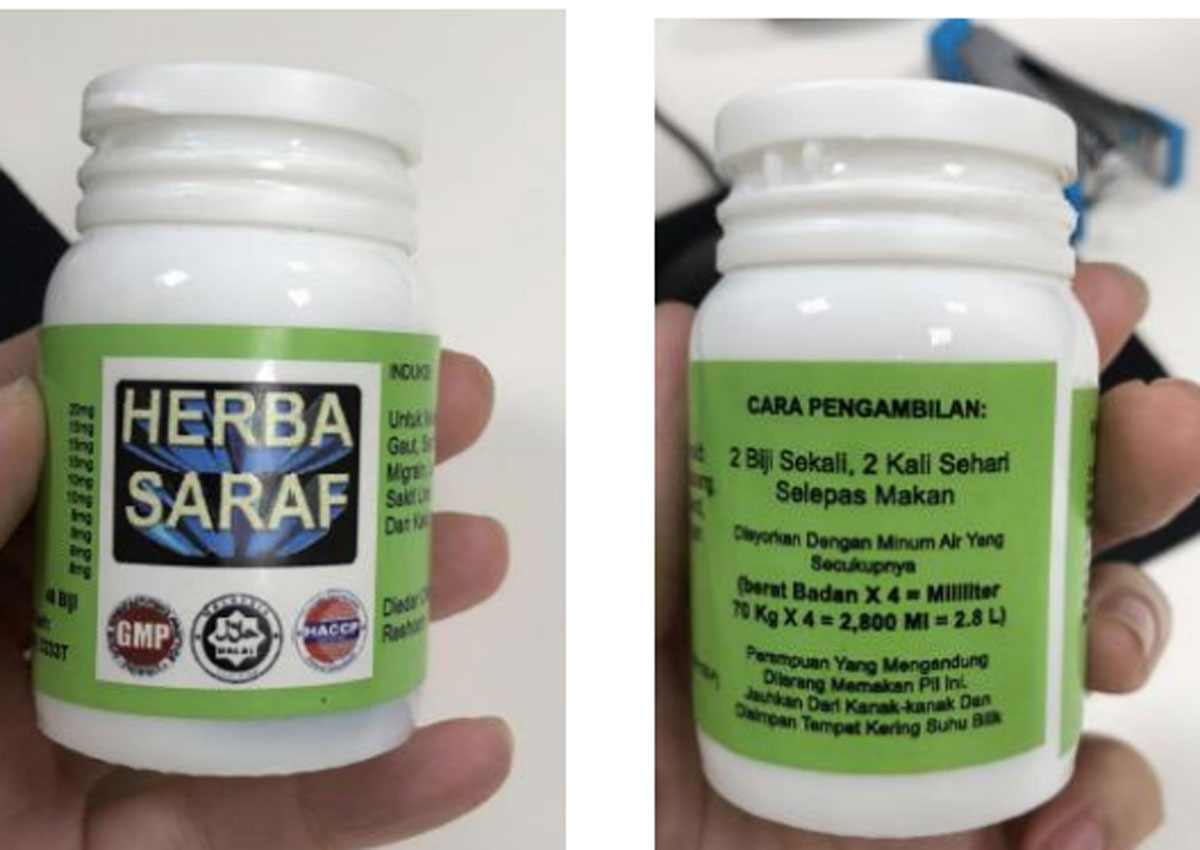
The item, Herba Saraf, which was bought online, was labelled to contain herbal ingredients for the relief of pain, such as joint pain and migraine.
The Health Sciences Authority (HSA) said in a statement on Tuesday that the woman had taken it for one month for her knee pain. She stopped taking the product immediately after suspecting that her impaired glucose tolerance was caused by Herba Saraf.
Impaired glucose tolerance is a condition that may increase one’s risk of diabetes and heart disease.
HSA said the product was tested and found to contain dexamethasone, a potent steroid that is a prescription-only medicine that should only be used under medical supervision.
HSA said the product was tested and found to contain dexamethasone, a potent steroid that is a prescription-only medicine that should only be used under medical supervision.Photo: Health Sciences Authority
The authority added that inappropriate and prolonged use of steroids can result in Cushing’s syndrome, increased blood glucose levels leading to diabetes, high blood pressure, cataracts, muscular and bone disorders, and an increased risk of infections.
Herba Saraf is just one of three products that HSA tested and found potent undeclared ingredients.
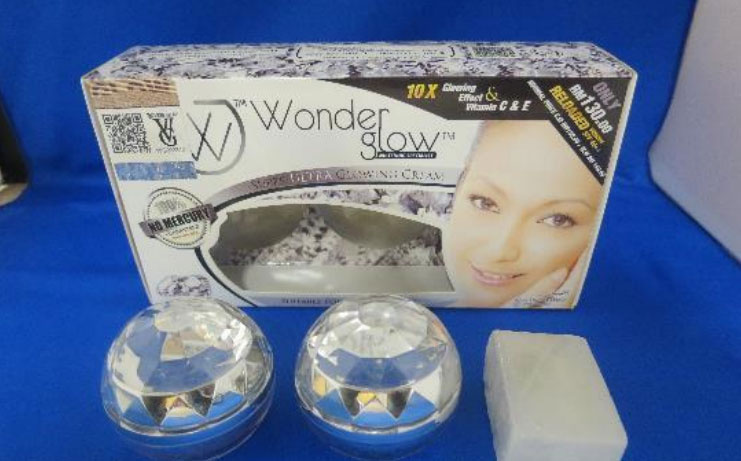
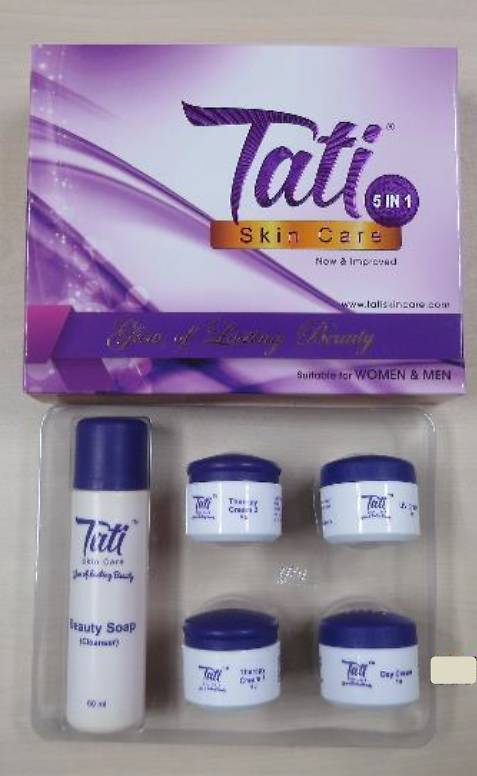
HSA also found high levels of mercury in two other cosmetic sets from Malaysia: ‘Wonderglow’ and ‘Tati Skin Care 5 in 1’.
Wonderglow cosmetic set from Malaysia.Photo: Health Sciences Authority
Both items are being sold online. A woman was detained at the Causeway on Dec 2 last year while attempting to bring the cosmetic sets into Singapore.
‘Wonderglow’ was marketed as an anti-wrinkle and anti-ageing product, with claims to brighten the skin in “as early as three days”. It was also falsely labelled as “100 per cent No Mercury Guaranteed”.
However, HSA found that the night cream in the Wonderglow set contained very high levels of mercury, exceeding permissible limits by 7,000 times.
‘Wonderglow’ was marketed as an anti-wrinkle and anti-ageing product, with claims to brighten the skin in “as early as three days”.Photo: Health Sciences AuthorityHSA found that the night cream in the Wonderglow set contained very high levels of mercury, exceeding permissible limits by 7,000 times.Photo: Health Sciences Authority
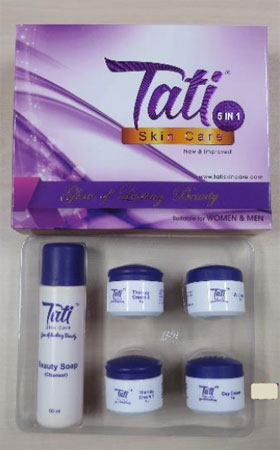
HSA had alerted the public to stop buying and using the ‘Tati Skin Care 5 in 1’ in June last year, but the product has resurfaced online again.
Tests showed that the ‘Therapy Cream 1’ in the set contained mercury exceeding the permissible limits by close to 50,000 times.
HSA had alerted the public to stop buying and using the ‘Tati Skin Care 5 in 1’ in June last year, but the product has resurfaced online again.Photo: Health Sciences Authority
‘Therapy Cream 2’ in the set was tested to contain hydroquinone and tretinoin. Both are potent western ingredients that should only be used under medical supervision.
HSA said long-term exposure to cosmetic products with high levels of mercury can cause serious health consequences, including damage to the kidneys, and digestive and nervous systems. Inappropriate use of hydroquinone and tretinoin could cause adverse skin reactions such as redness, burning and peeling of the skin.
HSA advises consumers to stop using all three products and to see a doctor as soon as possible if you have taken Herba Saraf.
Consumers should also be cautious when purchasing health products online or from unfamiliar sources, even if they are recommended by friends or relatives, advised HSA.
HSA also issued a warning to sellers and suppliers of the illegal health products.
Anyone who supplies illegal health products is liable to prosecution and if convicted, may be imprisoned for up to three years and fined up to $100,000.
SINGAPORE: The Health Sciences Authority (HSA) warned consumers on Tuesday (Mar 13) not to buy or use two cosmetic sets after beauty products in them were found to contain mercury and other undeclared, prohibited ingredients.
HSA said in its news release that the products from the Tati Skin Care 5-in-1 cosmetic set contained mercury exceeding permissible limits by 50,000 times, as well as hydroquinone and tretinoin.
The authority also found that some Wonderglow products contain an amount of mercury that exceeds permissible limits by 7,000 times.
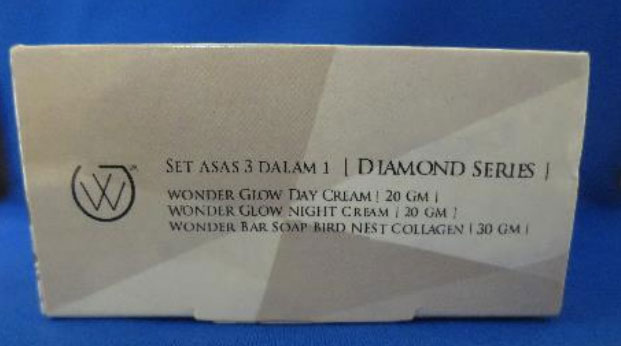
The Tati Skin Care 5-in-1 cosmetic set consists of a day cream, night cream, treatment cream, sunblock and cleanser, while the Wonderglow Whitening Specialist Super Ultra Glowing Cream cosmetic set comprises a day cream, night cream and soap bar.
Long-term exposure to cosmetic products with high levels of mercury can cause serious health consequences, including damage to the kidneys, and digestive and nervous systems.
HSA added that inappropriate use of hydroquinone, a skin whitening agent, and tretinoin could cause redness, burning and peeling of the skin.
CONSUMERS URGED TO BE CAUTIOUS
HSA said a woman in her 20s was detained at the Causeway for bringing in both cosmetic sets from Malaysia into Singapore, intending to sell them online. The products were seized and sent for testing.
The authority also found other sellers hawking the product online.
The Wonderglow set is marketed as an anti-wrinkle and anti-ageing product. It also claims to brighten the skin in “as early as three days” and is falsely labelled as “100 per cent no mercury guaranteed”, said HSA.
HSA said recent tests showed that Therapy Cream 1 in the set contained mercury exceeding the permissible limits by close to 50,000 times. Therapy Cream 2 in the set was tested to contain hydroquinone and tretinoin.
“Both are potent western ingredients that should only be used under medical supervision,” said HSA.
The Tati Skin Care 5 in 1 cosmetic set consists of a day cream, night cream, treatment cream, sunblock and cleanser. (Photo: HSA)
Sellers and suppliers have been warned to “immediately” stop selling both cosmetic sets. Those who continue to do so face up to three years in prison and/or a fine of up to S$100,000.
The authority also urged consumers to seek medical attention if they experience any adverse effects from using the products.
Members of the public who have any information on the sale and supply of these illegal products may contact HSA’s Enforcement Branch.
SINGAPORE is one of the only countries in the world to effectively control drugs because its draconian laws provide a deterrent, the country’s ambassador to the United States has claimed.
In an opinion piece published by the Washington Post on Sunday, Ashok Kumar Mirpuri wrote that while Singapore “does not take joy in the death penalty”, its citizens “understand the need for it and strongly support it”.
Mirpuri was responding to a previous article published by the Post, reporting US President Donald Trump’s claim that killing drug dealers could help to address the country’s opioid crisis.
“Some countries have a very tough penalty, the ultimate penalty, and they have much less of a drug problem than we do,” Trump was quoted as saying. “If you shoot one person, you get life in prison. These people kill 1,000, 2,000 people, and nothing happens to them.”
Mirpuri argued that Singapore’s low rate of drug use – at 30 people per 100,000 according to government statistics – was the result of its implementation of “stiff penalties” for selling and consuming drugs.
The most recent United Nations estimates are that Singapore’s rate of drug abuse is indeed lower than neighbouring Malaysia, Indonesia and Thailand.
Singapore imposes the death penalty for murder or drug trafficking, however as of 2012 judges have discretion to issue a life sentence rather than capital punishment. According to Amnesty International, 10 people have been executed by Singapore in the past three years.
A further 17 people have been sentenced to death.
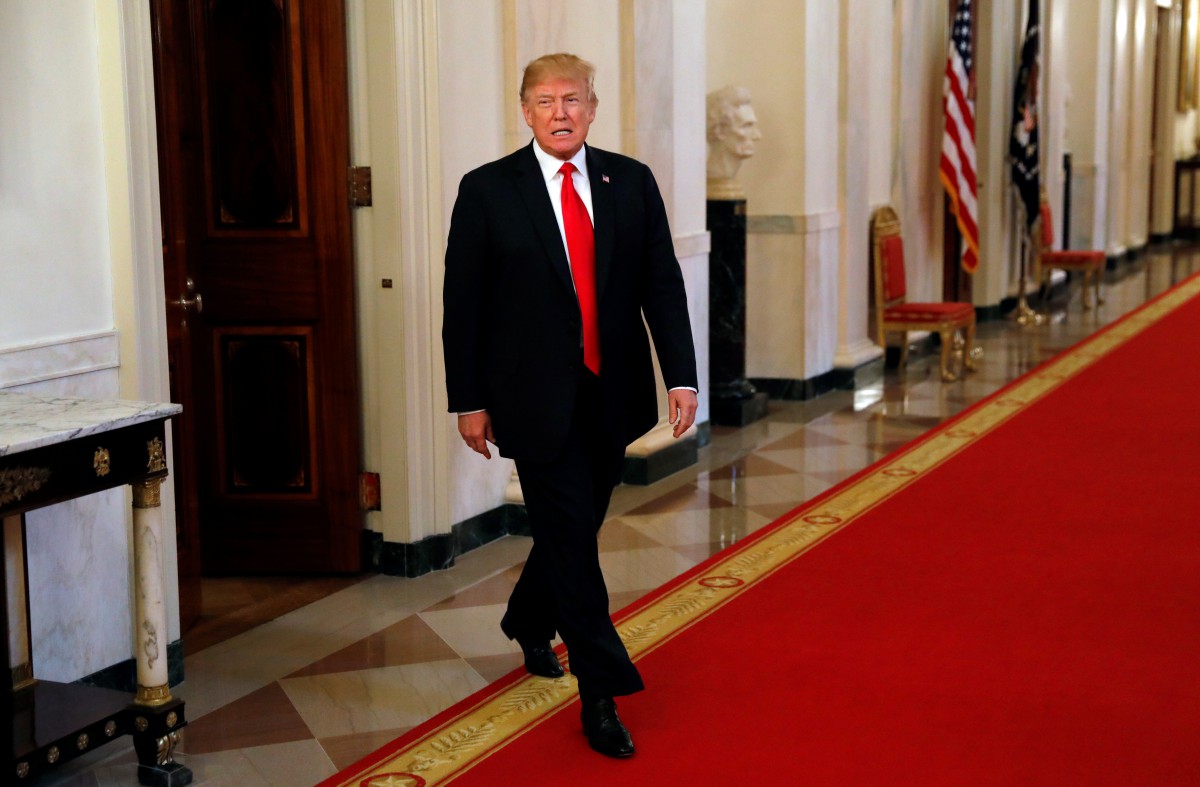
U.S. President Donald Trump enters the East Room to speak at an opioid summit being held at the White House in Washington, US, March 1, 2018. Source: Reuters/Kevin Lamarque
“When expressing sympathy for drug traffickers, let us remember the immense harm drugs cause abusers and their families, especially children,” wrote Mirpuri on Sunday. The Post reported that Trump has “privately expressed interest” in Singapore’s policy of executing drug dealers.
Rights groups and public health experts have expressed concern about the US President’s support for a punitive approach to drugs policy. Kasia Malinowska, Director for the Global Drug Policy Program at Open Society Foundations recently told Asian Correspondent in an interview that: “In this context to hear the President of the United States to throw these words out there is just terribly irresponsible.”
“I think it’s an awful message for everyone else who is looking to Trump with administration or looking for justification in their own jurisdiction,” she said.
Most countries in Southeast Asia implement the death penalty for drug crimes except Cambodia and the Philippines which are abolitionist in terms of the law.
Since mid-2016, however, Philippines President Rodrigo Duterte has overseen a bloody drugs war in which police and paid killers have shot thousands of people. Human Rights Watch has said more than 12,000 people have been killed in extrajudicial circumstances.
Trump has previously congratulated his Philippine counterpart on his “unbelievable job” in the controversial war on drugs.
SINGAPORE: A lensless camera that is capable of capturing sharp, coloured images could soon become a reality, with a new imaging technology developed by scientists from Nanyang Technological University (NTU).
It does away with the need for a lens and colour filters that are used in conventional cameras, and which are usually bulky and expensive due to the precision manufacturing required.
Instead, researchers have found a way to use a piece of ground glass and a monochrome sensor, then “reverse engineer” the light that is scattered by the surface of the glass using an algorithm to reconstruct the original image that was projected onto it, said NTU in a news release on Tuesday (Mar 13).
“By removing the need for a lens and colour filters and replacing them with ground glass, this innovation could potentially be applied to compact cameras and smart phones to make them slimmer,” NTU added.
The new technique is also cost-effective as it only requires a black and white camera coupled with a simple piece of ground glass, said assistant professor Steve Cuong Dang from the NTU School of Electrical and Electronic Engineering who led the research.
USING THE TECHNOLOGY FOR FOOD SAFETY TESTING
While researchers acknowledged that they still have years to go if they want to get images as sharp as those captured by commercial cameras, there are other potential uses in the more immediate future, such as food safety testing.
“For instance, it could be used for food safety, where one can take a photo of fruits or meat in particular spectra to look for spots that are associated with chemicals or bacterial activity leading to spoilage,” said Dr Sujit Kumar Sahoo, another member of the team.
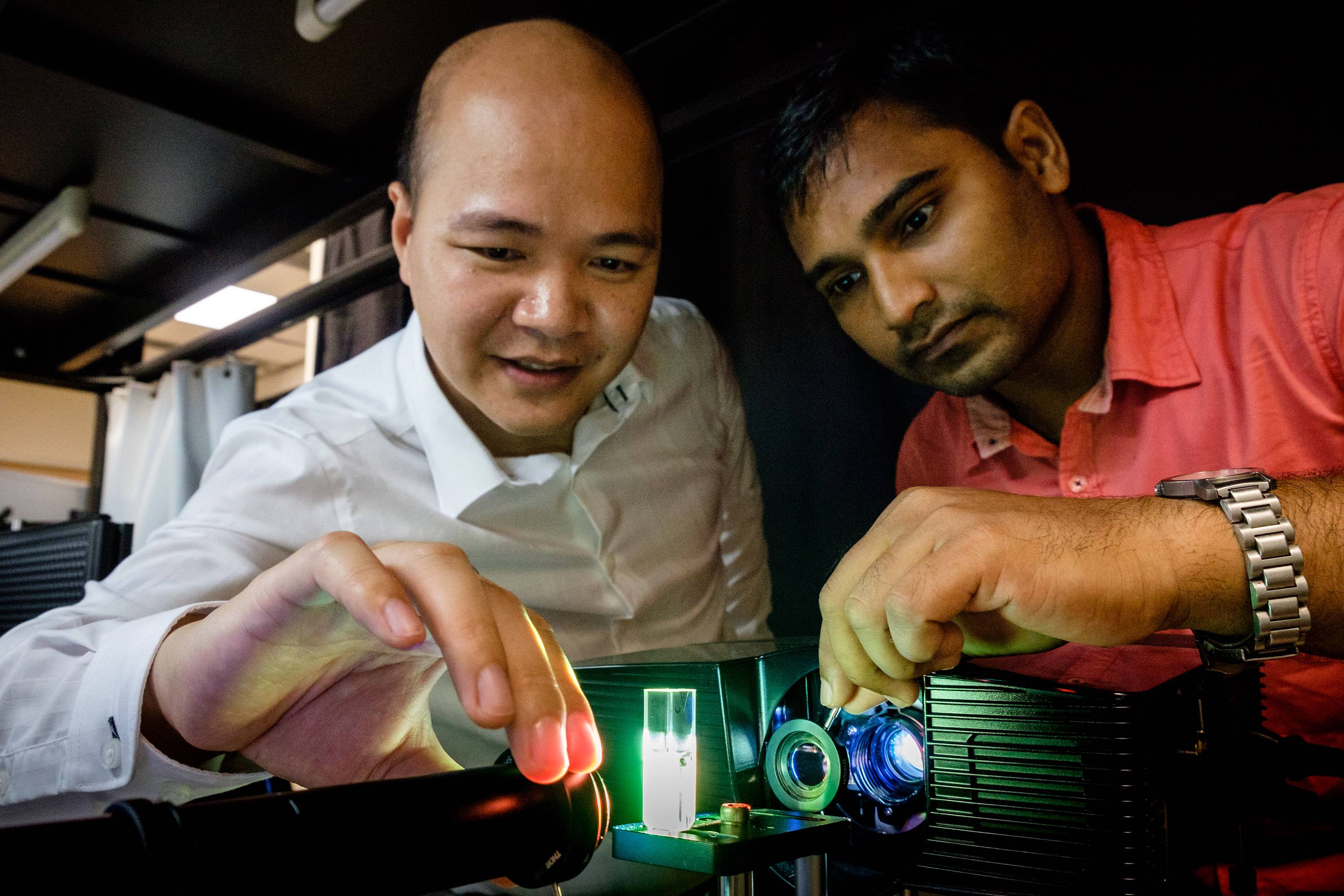
Assistant professor Steve Cuong Dang (left) with Dr Sujit Kumar Sahoo doing an experiment with the ground glass camera. (Photo: NTU)
Current technology can achieve this using a spectrometer, an apparatus that can split light into separate colours, but it is rarely used because it is expensive.
The cost of spectrometer can range between S$3,000 and more than S$40,000, said assistant professor Cuong Dang, adding that random samples from a batch of food products can be tested in a lab instead as a more cost-effective practice.
The researchers filed a patent for the new technology in July last year under NTU’s innovation and enterprise arm, NTUitive, and will be engaging industry partners to see how they can adapt their technology for real-world applications.
They added that they have received early interest from pharmaceutical companies which are already using similar technology for quality control, but are looking to lower such costs.
Music’s first couple Beyonce and Jay-Z on Monday announced a new joint tour in what will likely mark some of the year’s most lucrative concerts.
The rapper and diva, who in June gave birth to twins, will open the stadium tour on June 6 in the Welsh city of Cardiff.
The 36-date show will travel across Europe, including a Bastille Day show at the Stade de France in Paris, before a North American leg that closes on October 2 in Vancouver.
Beyonce announced the tour in a series of posts to her 112 million Instagram followers, including a black-and-white photo in which the couple poses sensually astride a motorcycle, an Old West-style bull’s skull on the front.
Beyonce is set to return to the stage in April to headline Coachella, the biggest-name US music festival, in her first performance since giving birth to the couple’s second and third children.
For Jay-Z, the tour follows solo concerts to promote “4:44”, his introspective last album in which he notably apologises to Beyonce for infidelity.
SINGAPORE: Singapore was ranked the top performer in a global smart city ranking by Juniper Research.
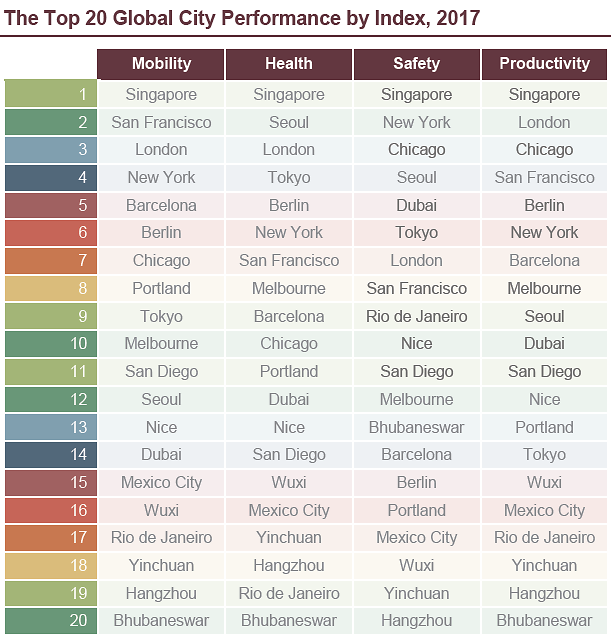
The Global Smart City Performance Index 2017 released on Monday (Mar 12) modelled scenarios across four areas – mobility, health, safety and productivity – to examine the benefits of smart city initiatives for residents in 20 cities. Specifically, it aimed to measure how technology saved time for people and improved their quality of life.
Singapore topped the index in all four areas, ahead of other major cities like San Francisco, Seoul, London and New York in the study sponsored by tech firm Intel. It was conducted from July to September last year.
The report noted that in the area of mobility, Singapore has applied “smart, connected traffic solutions” together with a very strong policy curtailing car ownership in an effort to reduce the number of vehicles on its roads.
It also highlighted Singapore’s focus on addressing healthcare service provision for elderly citizens through a range of technologies, including digital service platforms as well as remote monitoring devices. In the area of safety, the report noted that Singapore has started trials using smart video surveillance to detect criminal activity.
In addition, Singapore is a leader in allowing citizens to access digital services and city information with its “large open data stores” and “strategies to encourage private innovation” through specialised test-bed environments, the report stated.
“Analysts tend to focus on the technical underpinnings of building a data-centric world,” said Mr Windsor Holden, head of forecasting and consultancy at Juniper Research. “We can’t overlook the importance of the real human benefits that smart cities have. Connected communities, municipal services and processes have a powerful impact on a citizen’s quality of life.”
According to Intel, “smart cities” employ Internet of Things technologies such as connected sensors, meters and lights to collect and analyse data to improve public infrastructure and services.
The study noted that Singapore’s “Smart Nation” initiative and its position as a city-state makes the country unique in its ability to execute its smart city vision.
“Singapore was lauded for its rapid transformation since independence into the world’s leading smart city and was held up as an example which other cities can learn from,” Intel said in a media release on Tuesday.
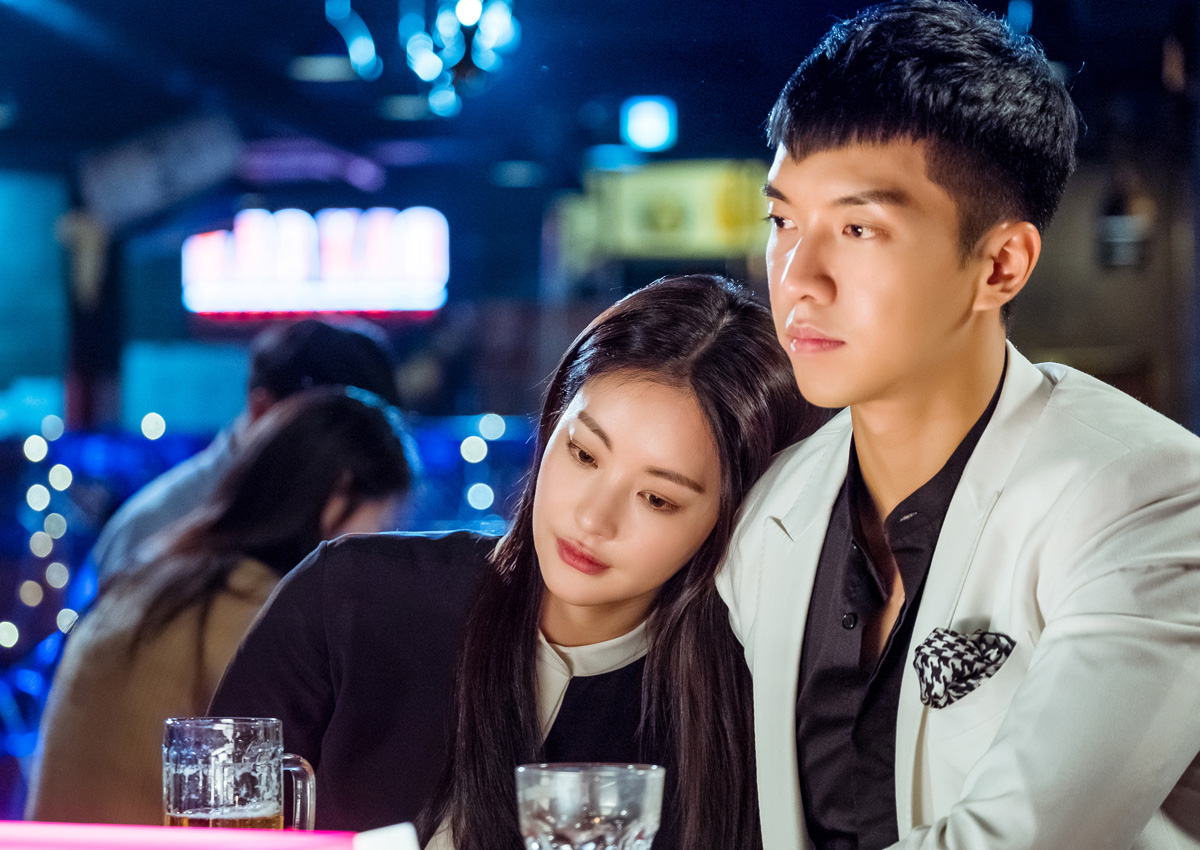
He sings, he acts, he… cooks? Lee Seung-Gi, the multi-talented lead actor of Netflix drama “A Korean Odyssey”, is a rising star.
We had the privilege to witness his vocal talent in person when he performed two songs (“Return” and “Unfinished Story”) at home appliance brand Cuckoo’s 40th anniversary celebration in Seoul last Wednesday (7th March).
The charming and polite 31-year-old is the brand’s new global ambassador, which may perhaps see him visiting countries like Malaysia and Singapore in the near future.
In fact, he’s keen to visit his overseas fans, saying that he’ll definitely drop by if invited.
Here’s a clip of Lee Seung-Gi performing during Cuckoo’s 40th Anniversary Gala event:
Check out five fun facts we learnt about Lee Seung-Gi at the press conference:
1. Rice is “essential” to him
Just like any true blue Korean, Seung-Gi is a big fan of the Asian staple.
When asked which of Cuckoo’s appliances is his favourite – there’s the rice cooker, water purifier and air purifier – he immediately pointed to the rice cooker, saying “I like rice very much, it’s essential to me.”
2. He cooks… for a special someone.
When asked if he likes to cook, he immediately replied in English instead of Korean, saying “Of course.”
But when pressed further about who’s the lucky person who gets to try his dishes, the actor remained tight-lipped.
Somebody shouted out, “Yeoja chingu?”, meaning “girlfriend” in Korean, and Seung-Gi blushed and smiled, repeating “chingu?” before saying “It’s a secret”. Make of that what you will!
The actor’s tall and slender build can be attributed partly to genes, partly to his commitment to staying healthy. He revealed, “I do exercise a lot and I don’t normally overeat.”
Add that to the fact that he’s just completed two years of mandatory national service last October, no wonder he looks so strong and healthy.
4. He can’t stop talking about his military life.
It seems that the past two years in NS have left an indelible mark on him.
On the March 4 episode of SBS’s “Master in the House”, Seung-Gi would not stop talking about his past two years in the military, much to the amusement of his fellow cast-mates.
“I’m very surprised that people [all over the world] know that I keep talking about my military life,” he shares with us. He reveals that one of the most memorable moments was when he had to walk 40 km carrying a 30 kg bag.
5. His most unforgettable scene to film in “A Korean Odyssey” was the kissing scene.
He prefaced his answer by saying, “I’m surprised that people all over the world have been watching my drama”.
But it was what he said next that earned lots of oohs and aahs from the crowd: “If I have to select one scene that was the most unforgettable, it’ll maybe be the kiss scene [with actress Oh Yeon Soo],” he says.
You can catch Lee Seung-Gi in his newest movie “The Princess and The Matchmaker” and television show “All The Butlers”.