Singapore
Saturday, March 17, 2018 – 09:24
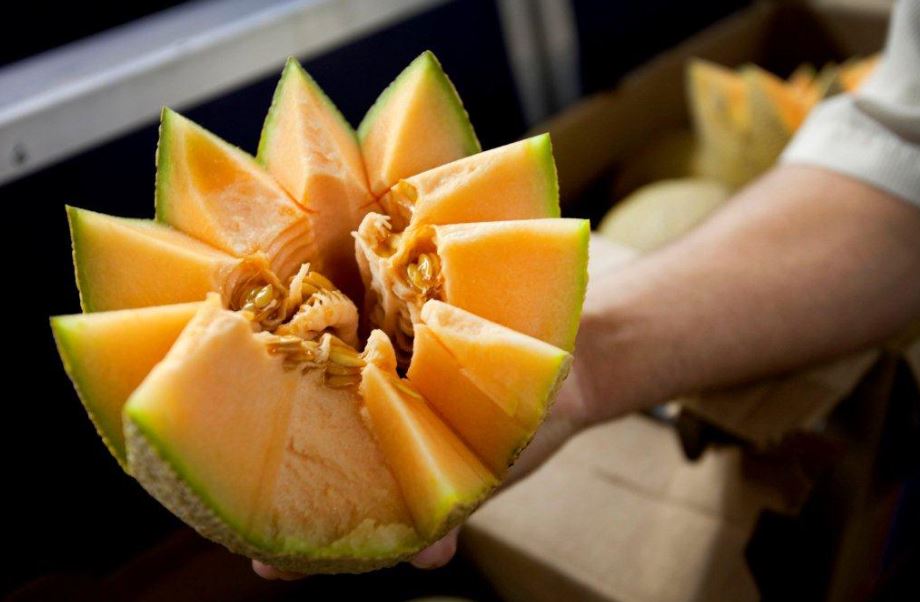
Rock melons released for sale after clearing tests
The Straits Times
Others
SINGAPORE: An all-in-one app that acts as a mobile passport, e-wallet to store tax refund tickets and platform to submit claims is what Singaporean Tan Tie Wee envisions as the “ideal” tax refund experience for all holidaymakers.
And the first step he took towards this “wild vision” was to quit his job three years ago and start Tourego – the homegrown tax refund start-up operating alongside much bigger players, such as Global Blue, Premier Tax Free and Global Tax Free, in Singapore.
“The current system still remains quite paper-based,” said the tax practitioner-turned-entrepreneur, citing how visitors to Singapore still refer to paper receipts when keeping track of their Goods and Services Tax (GST) refund claims.
Launched just three months ago, the Tourego app wants to do away with this pain point for travellers.
Simply by allowing retailers to scan the QR codes generated via the app in their smartphones, tourists will receive digital tax refund tickets. These e-receipts will be stored in the app and users can scan them at the tax refund kiosks upon reaching Changi Airport.
“They will not have to worry about losing receipts anymore,” said Mr Tan.
Apart from travellers, Tourego said it is also lending a helping hand to local retailers.
At the moment, retail staff have to note down personal details of tourists when they issue tax refund tickets. With the app, this manual process is replaced with a quick scan of QR codes.
This saves time and manpower, according to Senior Minister of State for Trade and Industry Sim Ann.
Mentioning Tourego in her speech during the recent Committee of Supply debates, Ms Sim said such productive technologies allow staff to spend less time on routine or tedious tasks, and more time to provide better customer service.
Since its roll-out, the mobile app has gotten 150 retailers on board, including department store Robinsons, fashion labels Zara and Banana Republic, as well as local brands such as 1872 Clipper Tea Co and RISIS. However, it declined to reveal user numbers.

Mr Tan Tie Wee was a senior manager with PwC’s indirect tax practice in China before starting Tourego. (Photo: Tang See Kit)
On what inspired him, Mr Tan, 40, said he came up with the idea of Tourego after hearing complaints from his colleagues in China about the hassle of filing for tax refunds overseas.
“Some said it was language difficulties. Some said they were pressed for time because they were in a tour group. So I suggested an app that could help them with the claims and they said if there was one, they would definitely use it,” said Mr Tan, who spent two years in China as PwC’s senior manager for indirect tax practice. “That’s how it got me started.”
His time in China also got him “quite immersed and amazed” by the country’s prevalent use of mobile payment apps and QR codes. Eventually in 2015, Mr Tan left the corporate world and dived into entrepreneurship.
The process of starting up the business, however, took longer than he thought. For one, the start-up needed to go through stringent checks before being given its license by the Inland Revenue Authority of Singapore (IRAS) last November.
An IRAS spokesperson said all central refund agencies that participate in the Electronic Tourist Refund Scheme (eTRS) have to meet necessary requirements to ensure that the GST refunds are properly administered, and that their systems are robust. These include a technical certification process and IT audit.
But the start-up also managed to tap on Government schemes for support. For instance, the Ministry of Trade and Industry’s Pro-Enterprise Panel facilitated cooperation with Government agencies to ensure Tourego’s solution complemented existing systems, said Ms Sim in her speech in Parliament.
The Singapore Tourism Board (STB) also featured Tourego on its VisitSingapore website and inbound trade newsletter, as well as displayed the start-up’s brochures at the Singapore Visitor Centre.
STB said it will ramp up support by featuring the app on its post-arrival guide and destination guide for travel agents later this year.
On why it is doing so, the spokesperson told Channel NewsAsia that STB has always been on the lookout for innovative ideas to enhance visitors’ shopping experience in Singapore.
“With electronic payment platforms growing increasingly popular in Singapore, STB is pleased to support Tourego’s mobile application as it allows visitors to claim tax refunds in a more seamless and hassle-free manner in Singapore.”
To be sure, the eTRS system in place right now already seeks to make Singapore’s tourist tax refund system less reliant on paperwork. Since its roll-out in 2011, tourists no longer have to fill in different GST refund forms and queue at different counters to get the claims done.
Now, visitors can choose to swipe their chosen credit card at the self-help kiosks to retrieve records of their purchases. Alternatively, they can scan the eTRS tickets individually before indicating their preference for the tax refund method.
Electronic tax refund tickets will be generated and stored in the app. (Photo: Tang See Kit)
Other technology players also seem to have set their sights on this space. China’s Alipay, for one, partnered Global Tax Free last year to allow Chinese tourists to make claims and have their tax refunds deposited directly into their Alipay accounts. This instant tax refund service through the Chinese mobile and online payment platform, was made available in Singapore earlier this year.
As such, Tourego is working to roll out its other features that would eliminate the need for its users to present their passports at the point of purchase and allow them to skip the queue at the airport.
“We want everything to be done on the mobile phone,” said Mr Tan.
“For registration, all you have to do is to scan your passport using our app. At the retail store, flash your QR code and a digital receipt will be generated automatically.
“Joining the queue at the airport is probably the most painful part of the refund process and we think this can be changed. My full solution will be to move the declaration process on to the app so that there will no need to stand in line at the various counters or in Singapore’s context, queue to scan your passport at a kiosk,” he added.
The start-up founder is also aiming to expand beyond Singapore though the navigation of various tax systems could be a hurdle.
“We have global ambitions to be a homogeneous global tax refund solution,” Mr Tan told Channel NewsAsia. “It may be challenging but we will take one step at a time and first, we will show that it’s going to work here in Singapore.”
SINGAPORE: A lunchtime visit to any hawker centre makes it apparent – people here love plastic straws. On tables are straws in cups with lids, poked into plastic film-sealed cups, and even in mineral water bottles.
In fact, if you are having a cold drink in a coffee shop, cafe or food court while reading this, you are probably sipping it through a straw. It is hard to imagine Singapore without single-use straws, since they are so entrenched in the city’s dining scene, but that is what some authorities around the world are moving towards.
Internationally, anti-plastic straw sentiment has been picking up, with Scotland planning to ban them by end-2019, and lawmakers in some American states passing orders that limit or prohibit restaurants from using them.
Nearer to Singapore, Taiwan, which can be considered the world’s bubble tea capital, will be banning single-use plastics, including straws, by 2030.
Environmental experts said that straws are a good starting point in encouraging the reduction of plastic use, but some businesses who spoke to Channel NewsAsia felt otherwise.
File photo of a person having a drink with a straw at a restaurant in Singapore.
STRAWS USED FOR STIRRING, TO PREVENT SPILLAGE: BUSINESS OWNERS
In fact, Wiltian Ang, owner of The Matcha Project, believes that people are more likely to get comfortable cutting back on other plastics first.
“Once consumers are fully comfortable with bringing their own cups and bags, they might just be keen to bring their own straws or not using straws at all,” he said.
To encourage them, he gives a S$0.50 discountfor those who bring their own reusable cups. He said that it would be difficult to stop providing straws freely at his shop, given that his cafe only sells take-away drinks.
When people drink on the go, a straw is best to avoid spillage, he said. He added that the straw doubles up as a stirrer.
“Imagine buying an iced takeaway beverage without a straw. With the ice melting, the drink will be diluted and sediment will settle,” he said.
Mr Ang, who sold 700 iced drinks in January, adding that the low price of straws also decreases the incentive to minimise their use.
Barista Chris Chew echoed Mr Ang’s sentiments. She said that because The Hangar Coffee Express, where she works, does not provide a stirrer, those who add sugar syrup to their drinks use the straw as one.
“If we don’t provide it, and let people request for it, I wouldn’t have time because I’m here alone, I wouldn’t be able to entertain the requests,” she said.
She said that there are customers – about one in every 100 – who bring their own metal straws.
Another drinks seller, who did not want to be named, said that he seals his drinks with plastic film, and that means customers would definitely need a straw to pierce through it. He added that those who get drinks to takeaway prefer their cups sealed, to prevent spillage.
TAKING STRAWS “UNTHINKINGLY”
Patrons Channel NewsAsia spoke to said that they take straws “unthinkingly” and that it was convenient to use straws.
Student Manushri Rajesvaran, 17, said: “I use the straws because they give them. If they didn’t, I probably wouldn’t.” She added however that having a lid, which has a hole for a straw is also a good thing for her because she would spill the drink otherwise.
File photo of plastic cups with straws.
Another patron, who wanted to be known as Ms Foo, felt the same way.
“I don’t think when the stall owner gives it to me, but if he doesn’t, I wouldn’t fight for it,” said the 35-year-old public servant.
Another customer, Ms Lucy Wynn, 42, who works in the corporate finance industry, said that she usually uses straws to keep her lipstick intact and to avoid getting a “milk moustache” when she has iced coffee.
She added that she feels safer using a straw with canned drinks, as she fears the cans would get dirty at some point during the transportation process. The straw users said they knew the environmental harm the small cylindrical plastics could do.
STRAWS DAMAGING TO ANIMALS AND ENVIRONMENT: EXPERTS
Environmental experts Channel NewsAsia spoke to said that straws are damaging both to animals that end up eating them, to people, and to the environment.
They are often eaten by seabirds and sea turtles, causing starvation and death. In the ocean, plastic straws break down gradually into microplastics, which are eaten by fish and shellfish, said head of “eateries outreach” at non-profit group Plastic-Lite Singapore, Mr Pek Shibao.
“When these fish are caught and eaten by humans, these microplastics wind up entering our bodies as well, which may cause serious negative health effects,” he said.
He added that straws are often not disposed of properly in Singapore.
“As they are small and light, they often get blown into our drains and onto our beaches or into the sea,” he said. Even when they are properly disposed of and incinerated, the burning of plastic generates toxic gases and creates poisonous ash which must be sent to the landfill, he added.
Singapore has only one landfill, which at current rates will be full by 2030, he said.
President of Jane Goodall Institute (Singapore) Tay Kae Fong said that the key problem is pollution from the sheer volume of single-use plastic straw waste generated.
“People may think it’s a small straw, but these seemingly harmless straws add up very very quickly,” he said. Plastic straws are made from petroleum and the petrol industry is inherently damaging to the environment.
Plastic-Lite Singapore’s talk at Regent Secondary School. The school is one of the participants in “No-Straw Tuesdays”, an initiative which means straws will not be provided in school canteens on Tuesdays. (Photo: Plastic-Lite Singapore)
The institute aims to empower people to make a difference for all living things.
EDUCATION NEEDED TO CHANGE MINDSETS
Mr Pek, who defined straw usage in Singapore as “excessive”, said that one of Plastic-Lite’s successful initiatives is getting schools to sign up to stop using plastic straws every Tuesday.
“We visit schools to conduct talks about the impact of disposable plastics, so that students become more environmentally aware from a young age,” he said.
At roadshows, the organisation also gets people to calculate how much plastic waste they generate every year using its plastic footprint calculator.
Mr Tay said that it has “become clear” that the convenience that these straws bring are not worth the harm they do to animals, people, and the environment. To patrons’ worries about hygiene drinking from the mouth of a cup or can, he said it is not established that these are dirty or not washed properly.
“I don’t think it’s a situation that justifies a switch to single-use plastics as the solution. Isn’t it better for us to look into better washing of reusable cups instead?” he asked.
The experts said that businesses could spur change by not offering straws as a default with drinks. One such business that is doing so is Common Man Coffee Roasters.
CAFE COMPANY SAVES BY MAKING SWITCH
Since the beginning of this year, the company, which has two outlets, has been providing stainless steel straws.
“This was a move we made to try and reduce our environmental footprint, and was an easy yet effective swap for us to make,” said its brand manager Sarah Rouse.
Prior to the switch the firm, which just opened its second outlet last year, would go through a box of 10,000 plastic straws every two months. Now, the same box lasts more than six months, she said.
Common Man Coffee Roasters provides reusable metal straws for dine-in customers. (Photo: Common Man Coffee Roasters)
All guests who dine in are provided with a metal straw, while takeaway drinks come with plastic ones upon request. Ms Rouse estimated that about half of to-go drinkers take a plastic straw.
“I think it does take some adjusting to, drinking your iced beverage without one,” she said.
Common Man is doing its part by replacing paper napkins with a more sustainable bamboo alternative to reduce paper waste, and encouraging cutting down of use of plastic, with a discount for people who bring reusable takeaway cups, she said.
“The hospitality industry can help in spearheading this as we are positioned well to educate the market and advocate for better choices, a positive move for an industry previously linked to excessive wastage and throw-away consumption,” she added.
TAIPEI: It is twice as reliable as Singapore’s MRT system. Its job retention rate is twice as high as SMRT’s. And it notifies commuters of delays twice as fast as required in Singapore.
These are some of the Taipei Metro’s achievements. And Singapore has sought its help to review operations here in improving the MRT system.
But the Taipei Metro, which opened in 1996, was not always a success story. In 2003, six delays of over an hour had a major impact on commuters and affected its image.
“The public was very angry,” said Taipei Rapid Transit Corporation president B C Yen.
So how did it transform into a metro now hailed as one of the world’s most dependable? By building the right systems and job culture, as Talking Point discovered when it went to Taipei. (Watch the episode here.)
SOPs AND EXPERIENCE
Mr Yen was there in 2003 when the metro’s road to recovery began.
One of the first things the task force he was a part of did to improve reliability was to set up weekly technical meetings that would look at how and why each problem occurred, and how it would be fixed.
These could all be written into standard operating procedures. And there is now a database of more than 7,000 SOP documents that are reviewed annually.
When a fault develops, the staff can follow the SOPs to keep disruptions to a minimum. Mr Yen said: “The majority of problems we encounter (now), we’ve seen before and can fix very quickly.”
It helps that most of the metro’s 5,700 employees have been with the company for 10 years or more. In contrast, the majority of SMRT’s 9,500-plus staff have served five years or less.
Knowing that workers on the ground can make or break a system, the Taipei Metro also holds special training sessions every year.
For the maintenance team who work overnight to keep the tracks safe, this lasts for a week.
“We review incidents over the past year, such as track faults that were overlooked. During this training, we re-emphasise key concepts and improve their techniques,” said their leader, section chief Chiu Chih-Hsiung.
His team have only three hours to do their trackwork. The supervisors must also be aware of the workers’ physical and mental states, such as whether they have issues at home.
“We try our best to help and allow them to return to form or do even better,” he said, adding that most of the team have worked together for over 10 years, “so they have great rapport and mutual understanding”.
(Read related article: Discipline, experience the secret to Taipei Metro’s success)
STRONG SAFETY CULTURE
Still, it takes more than SOPs and experience. In Singapore, investigations into the tunnel flooding at Bishan MRT Station in October found that maintenance workers had falsified inspection records.
And this week, a former SMRT engineer who had worked for the company since 1999, and was in charge of two employees killed on the job in 2016, was jailed for neglecting safety guidelines.
At the Taipei Metro, the safety culture is strong, while some jobs are also categorised as safety-critical items – whereby a secondary inspector is brought in to do another round of inspections to ensure that the task is actually completed.
To prepare workers for every contingency, there are frequent simulation drills: Small drills twice a month, and large drills once or twice a month.
“Comparatively, the frequency of Taipei Metro drills is quite high. This approach, over time, yields big results,” said operation control centre director Hsu Tai-Ming.
We can resolve breakdowns very quickly, minimise delays, and achieve an on-time performance rate approaching 100 per cent.
In 2009, however, the metro faced a challenge when work to extend a line coincided with a signal system upgrade. Chaos ensued.
Mr Yen explained: “The control systems were different. At first, the communications and electrical systems weren’t integrated well. There were frequent breakdowns, similar to SMRT’s … signalling system problems.”
WATCH: 6 key lessons (4:00)
To appease the public, the Taipei Metro gave fare discounts and put extra staff on standby to take over the automated trains.
“After a year, the system stabilised and has now become a very stable system,” noted Mr Yen.
More than two million passenger trips a day are now made on its five lines – comprising 117 stations – with fewer than 30 delays exceeding five minutes a year.
It has achieved train journeys averaging one million kilometres between delays (exceeding five minutes), while Singapore crossed the 400,000-km mark only last year, excluding delays caused by the signalling tests.
HIGH LEVELS OF TRUST AND PRIDE
Achieving best-in-class reliability has created a virtuous circle of employee and citizen pride in the Taipei Metro. Mr Yen calls it a “metro way of life”.
When you say you work at the Taipei Metro, the public would reply, ‘You all do a really good job.’ The worker would feel a sense of accomplishment, and morale would improve.
That is the reason someone like Ms Yu Tan-Ning left her engineering job and took a pay cut to become a driver-cum-conductor – controlling the train departure at each station, monitoring train systems and being a first responder when incidents occur.
“My two kids … love taking the metro and always try to see what the driver’s doing. So I said, ‘What do you think if Mum applies to be a driver?’ They were really happy and supportive,” said Ms Yu.
Barely 1 in 20 of those who take the metro’s annual entrance test pass.
She had to undergo 400 hours of “devilishly hard” training. “The failure rate was about one-third to half,” she noted.
Moreover, only 5 per cent of the 3,000 people who show up for the metro’s annual entrance test pass it in the first place, she added.
The Taipei Metro also upholds high standards when there are delays. Commuters are notified after five minutes, if not sooner, whereas rail operators in Singapore must inform commuters of delays exceeding 10 minutes.
Mr Hsu said: “Five minutes is a standard, but if I already know a situation would cause longer delays, I’d start notifying passengers after three minutes.
“Assuming we provide information and alternative routes appropriately, I’m confident passenger complaints would be kept to a minimum.”
Commuter trust is concomitantly high. Taipei resident Wan Qi-Wei, who co-founded a Facebook group of Taipei Metro fans, said: “We won’t make a point of checking for delays before we head out. We’re very confident in the system.”
His Facebook group now has over 1,500 members, who often take photos of the problems with the metro, and the improvements, to share online. These posts help to alert metro officials to potential problems before they escalate. Said Mr Wan:
(The metro) is a part of our lives, so we care about it. At the same time, we hope it can help the city to develop.
That sentiment is shared by the 300-plus people who have been inspired to join the Taipei Metro Volunteer Brigade, to help commuters with directions and other issues.
They must pass an interview, and even a three-month internship.
A WINNING COMBINATION
The Taipei Metro is nationalised and is majority-owned by the Taipei City government. In effect, this means the metro boss is Mayor Ko Wen-je – who is also one of Taipei’s most recognisable commuters, as he takes the train to work.
He told Talking Point that ticket fares have not changed in the past 20-something years.
Advertising and shop rentals can help to cover the metro system’s costs, although it had been losing an average of US$20 million (S$26 million) annually in recent years until it turned a pre-tax profit of US$50 million in 2016.
But Dr Ko said: “If profit is the only criterion … then very quickly, the public transport will break down.”
Summing up his encounters with people ranging from the commuter the conductor, Talking Point host Daniel Martin found that they identified with the Taipei Metro.
“The system of SOPs they have in place means that workers have a sense of ownership and responsibility … (for) the role they play,” said Mr Martin.
“They were happy to be working here in many cases, appreciative of the job, (and) looked up to this as a true profession. And because of that, it gave them the sense of wanting to do their absolute best.
“It’s clearly a deep-seated culture that seems to work very well for them.”
And having done it themselves, they told him they are confident that Singapore, too, can solve its MRT woes.
Watch the programme Talking Point here. New episodes every Thursday at 9.30pm on Mediacorp Channel 5.

SINGAPORE – Singaporean engineer Andy Goh has stopped saying hello to some neighbours in his condominium.
The mood in the 596-apartment Cashew Heights complex is “tense and stressed” after an initiative late last year to offer it for collective sale to a property developer, said Goh, 49.
A firm opponent of the deal, worth at least $1.88 billion, he feels outnumbered by owners who want to cash out. Recalling a meeting in his condominium last month, Goh, who worries the sale price won’t allow him to buy a new home of comparable size, said his dissenting voice was drowned out by the other owners.
Singapore has seen a frenzy of so-called en-bloc deals over the last two years in the redevelopment market, a phenomenon that has made some Singaporeans millionaires, inspired hit television shows and turned neighbours into enemies.
David Wong, a member of Cashew Heights’ pro-en bloc committee, said owners can sell their apartments for at least double the price in a collective sale compared with individually.
“I think the financial reason surpasses the sentimental reasons,” he said, adding that those who did not want to sell have a vote. Under Singapore law, 80 per cent of the owners in an older development need to approve the sale before tender.
The drama of Singapore’s property market has been captured in two television shows called “En Bloc.” In one episode, an anti-en-bloc owner’s property is vandalized, while a letter spreads rumours of bad feng shui in another episode.
More than a combined $8 billion worth of such deals were signed in 2017 – the highest in a decade amid a nascent recovery in the housing market.
Redevelopment is seen as key to optimizing land use in the city-state, home to 5.6 million people in about 700 square kilometers.
EN-BLOC FATIGUE
But the pace of redevelopment sales has started to show signs of slowing, with recent government measures helping dampen the euphoria, including an increase in stamp duty for home purchases of more than $1 million.
Traffic impact studies are now required to ensure redevelopment will not trigger congestion. The development levy for enhancing sites or building bigger projects on them was raised by an average of 22.8 per cent – the biggest increase in a decade.
“I think if you look, definitely the window is closing a bit,” said Desmond Sim, research head for Singapore and Southeast Asia at real estate services firm CBRE.
He said recent collective sales had gone through at the minimum asking prices, developers sated after last year’s buying spree and sellers’ expectations sky-high.
“The exuberance of putting in high premiums has gone,” he said.
The average premium above asking price has fallen to 2.9 per cent this year from 10 per cent in 2017, according to an analysis using data through late February by real estate services firm Cushman and Wakefield.
Aggressive land bids prompted the central bank in November to warn of “excessive exuberance” in the property market, urging developers to factor in new projects slated to open.
Derek Tan and Rachel Tan, equity research analysts at Singapore’s largest lender, DBS, said last month there appeared to be “a bit of fatigue” in the en bloc market, citing recent deals’ relatively low pricing.
“The fact that most of the sites have also been awarded at reserve price levels, rather than a premium, may indicate that developers are turning more choosy in adding to their land bank and becoming more cautious in their pricing strategy,” they wrote.
$3.2 MILLION AND DOWNSIZING
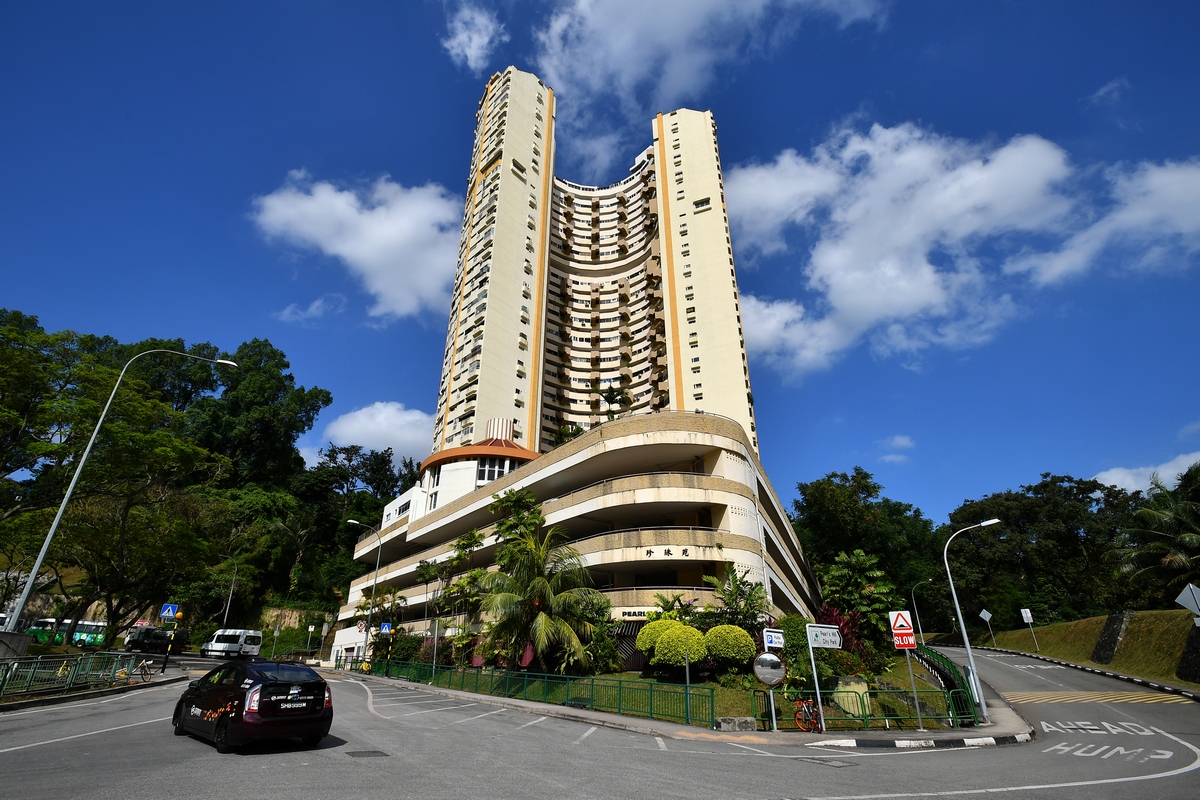
Those transactions included the $728 million sale of the Pearl Bank Apartments, the tallest residential structure when it was completed in 1976, to CapitaLand through private negotiations after an unsuccessful public tender.
“The asking price from the owners in all these recent en blocs is getting higher and higher. There must be a tipping point,” said Ronald Tay, chief executive at CapitaLand Singapore.
//afarkas.github.io/lazysizes/lazysizes.min.js
Developers may also be opting more for the government land sales (GLS) programme rather than en-bloc deals, which can take more than a year to close.
“I would say that we definitely have a slight preference at this stage toward GLS because the turnaround is faster,” said Sherman Kwek, chief executive officer at City Developments, although he did not rule out more en bloc deals.
Cushman estimates that Singapore developers have about S$18.9 billion available for more near-term land acquisitions.
Analysts say developers have been building smaller apartments to keep prices palatable to buyers, even as land costs rise. Consultancy JLL estimates the median size of apartments sold directly by developers fell to 69 square meters in 2016 from 111 square meters in 2009.
Goh will receive $3.2 million for his three-bedroom apartment, where he lives with his wife and four children, if the sale of his development, built in the early ’90s, goes ahead.
He has been trying band together with other owners who oppose the sale, and laments that no new condominium estates will match the space or open layout that he likes about his neighborhood.
“Even if it is ‘en bloced’ at $3.2 million, I couldn’t get a unit that is equivalent in size,” he said.
Private property En Bloc Sales
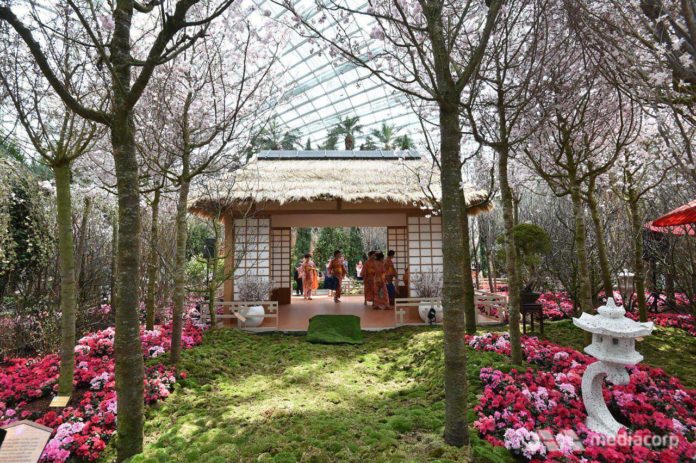
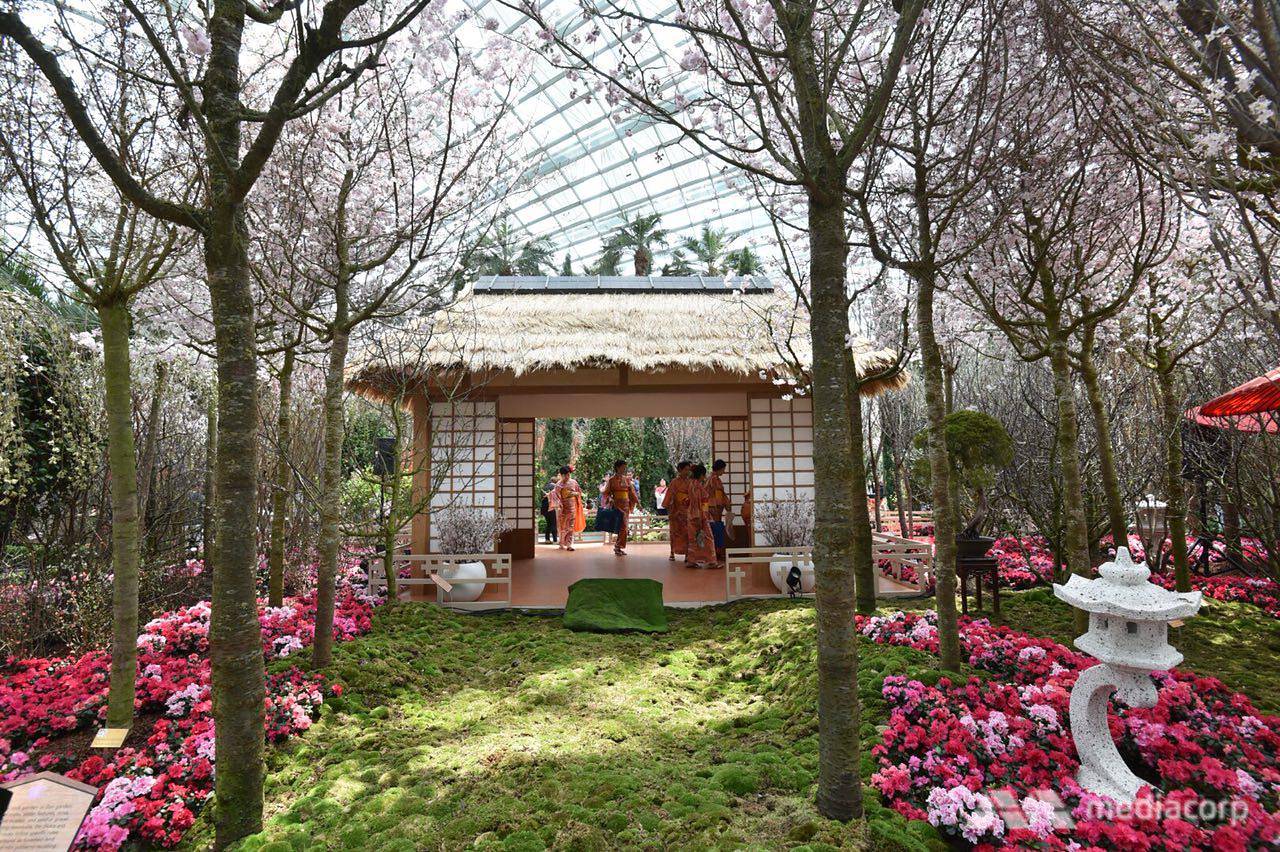
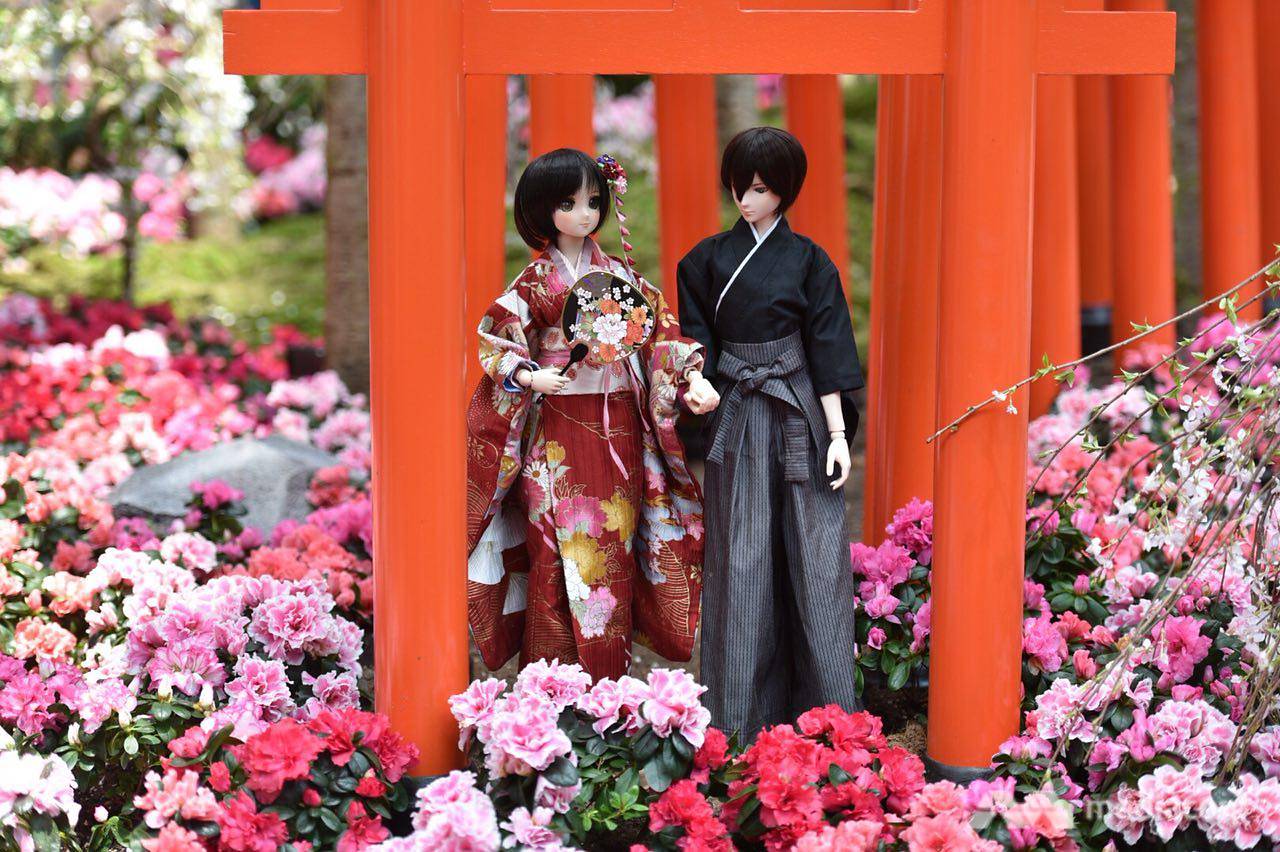
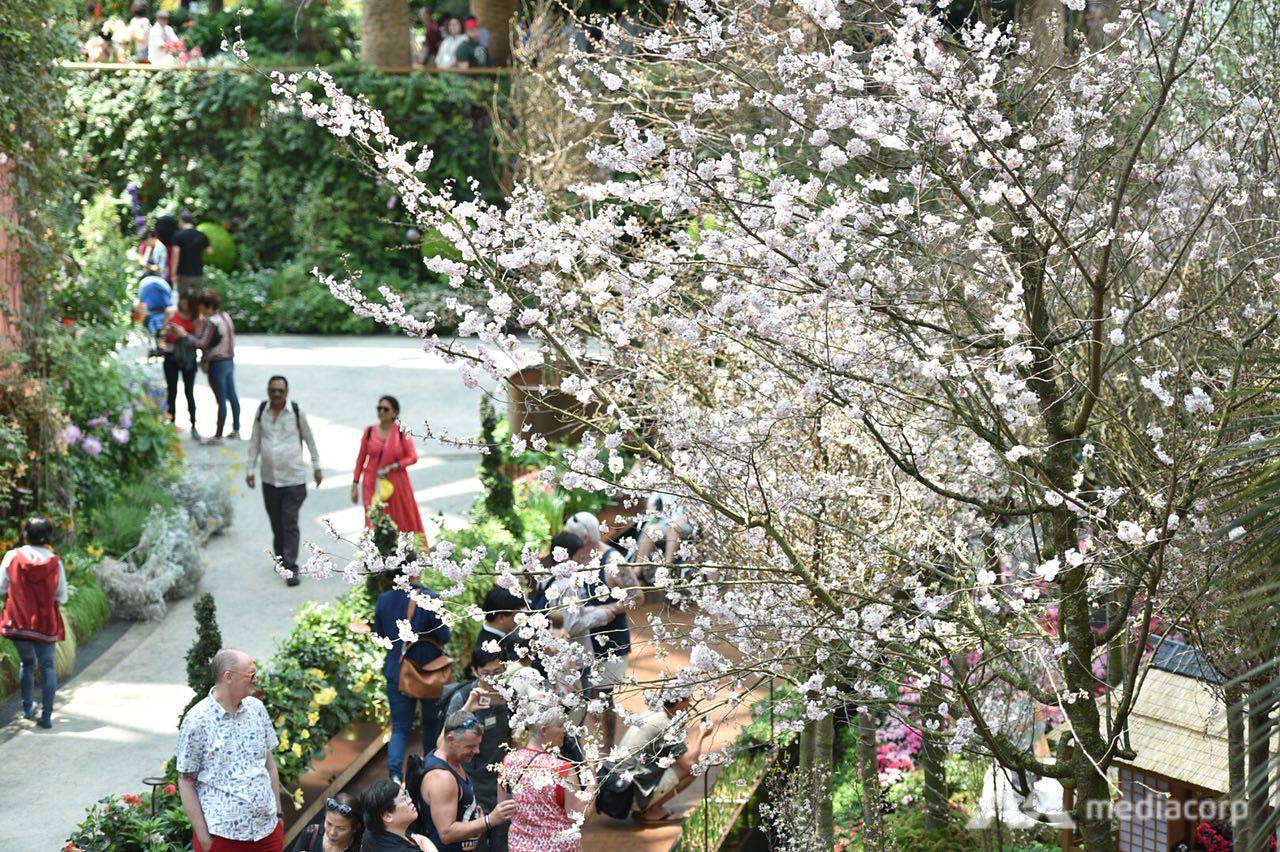
SINGAPORE: Visitors flocking to take in the annual cherry blossom display at Gardens by the Bay will have something else to look forward to. For the first time, Japanese dolls will be planted among the flowers, to evoke the feel of a “magical sakura forest”, said Gardens by the Bay’s senior assistant director of flower field design, Marziah Haji Omar.
“We have this big teahouse as the centre of the display – as if it’s a sakura forest – which will host tea ceremonies,” she told Channel NewsAsia ahead of the cherry blossom display’s debut on Friday (Mar 16). “Then there is also a smaller teahouse with dolls, which will fit the theme of ‘Imagination’.”
The teahouse where tea ceremonies will be held. (Photo: Jeremy Long)
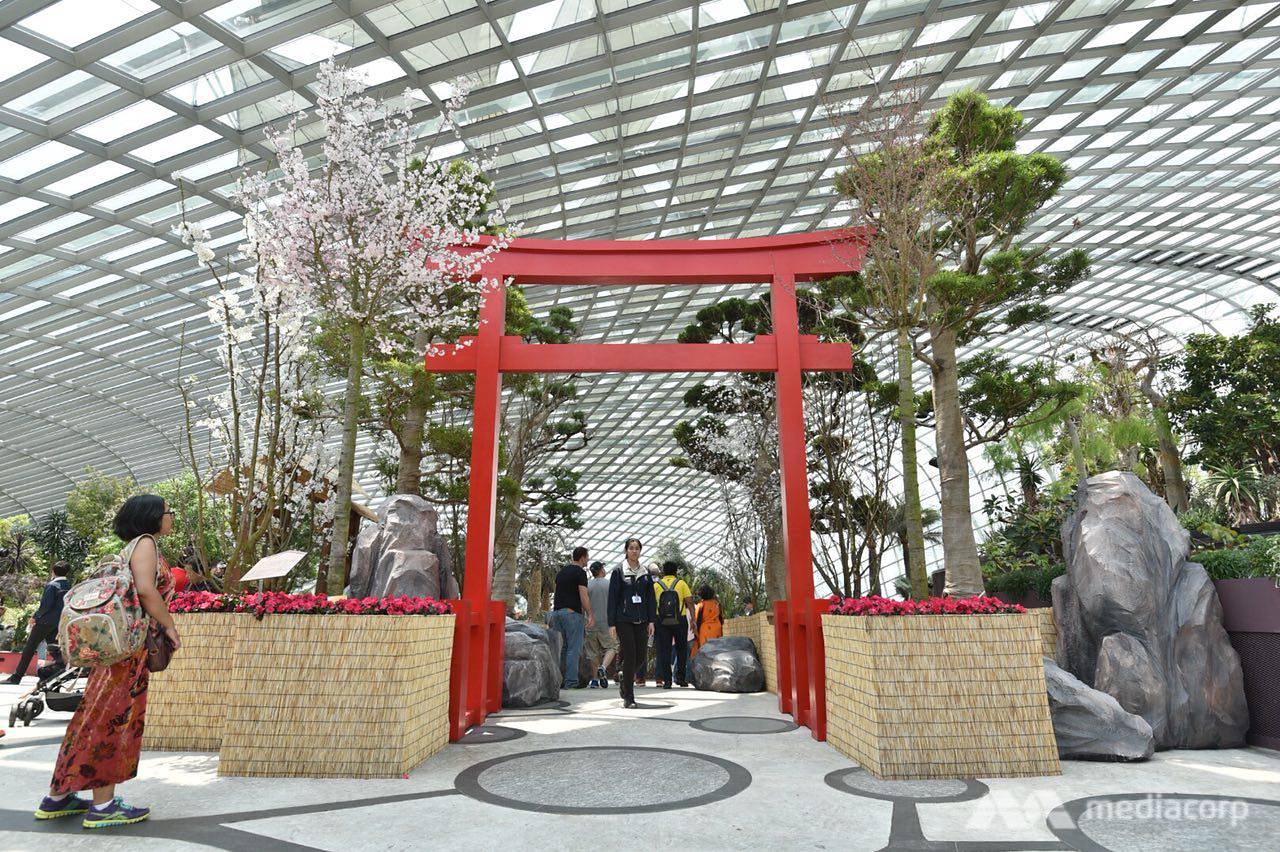
There are Instagram opportunities aplenty. Visitors entering the Flower Dome will be greeted by a large Tori gate framed by large trees from Japan.
Visitors entering the Flower Dome will be greeted by this Tori gate. (Photo: Jeremy Long)
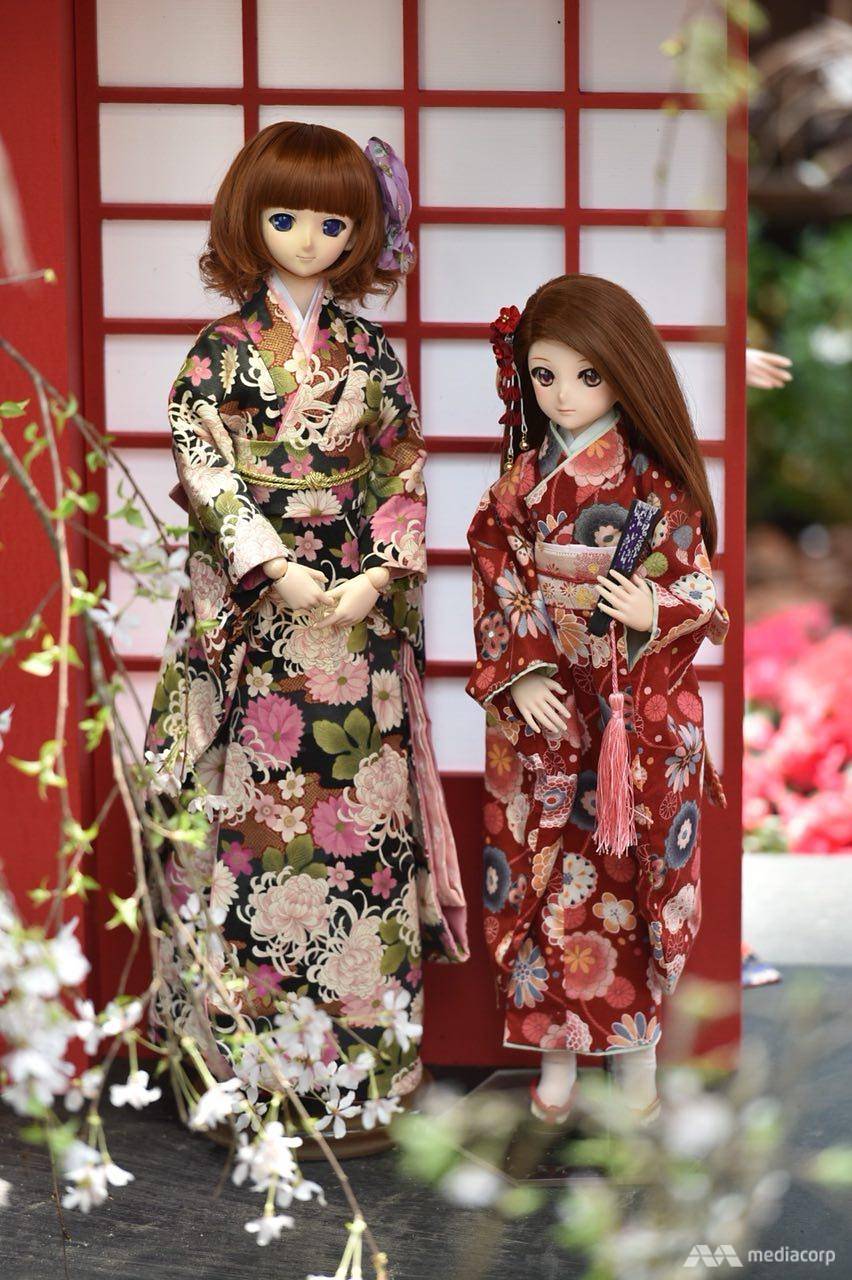
As they venture down from the second floor, visitors can admire smaller cherry blossoms and head into a Kyoto-style setting with ball-jointed dolls while soaking in the view.
(Photo: Jeremy Long)
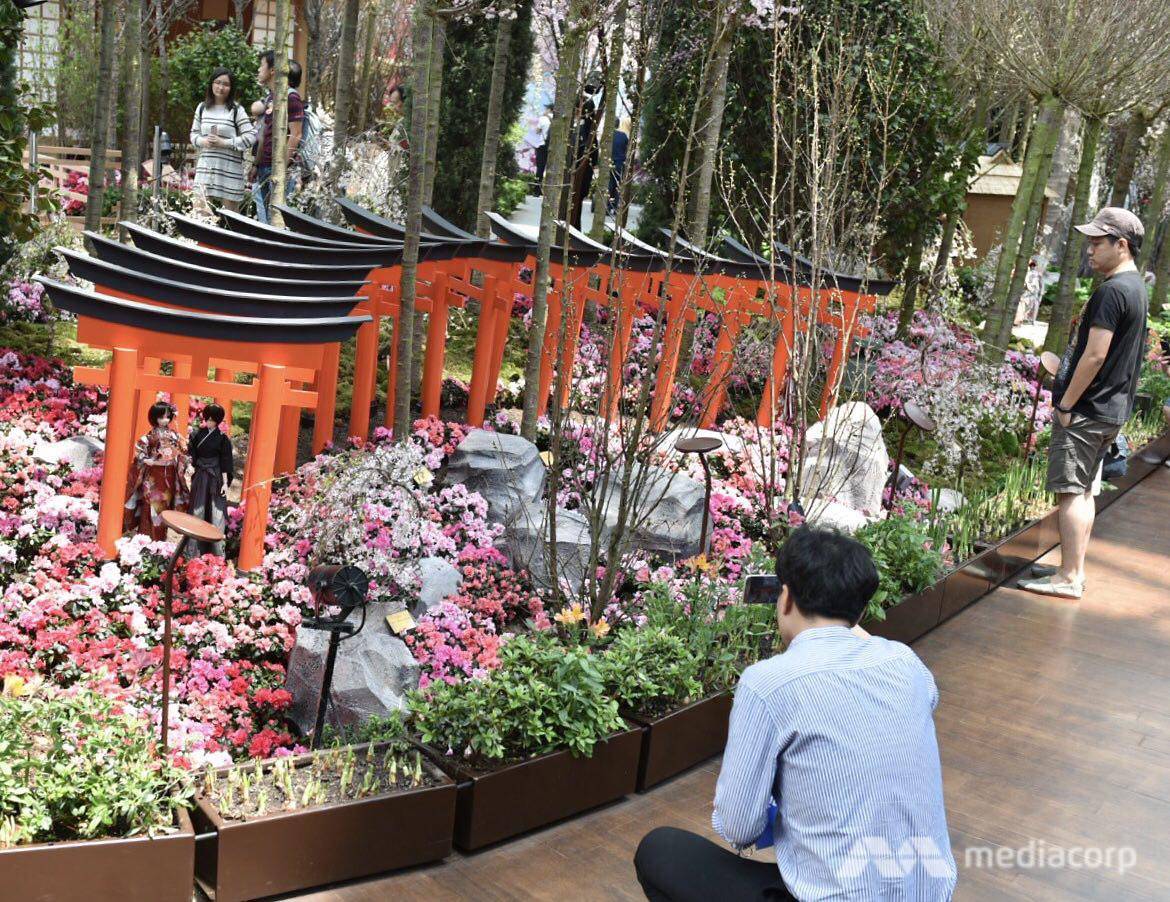
Organisers have recreated the signature gates that lead to the landmark Fushimi Inari shrine in Kyoto. The gates are seen as a path between the human and divine worlds and make for a fun photo op with the dolls.
This display was modelled after the signature gates that lead to Kyoto’s Fushimi Inari shrine. (Photo: Jeremy Long)
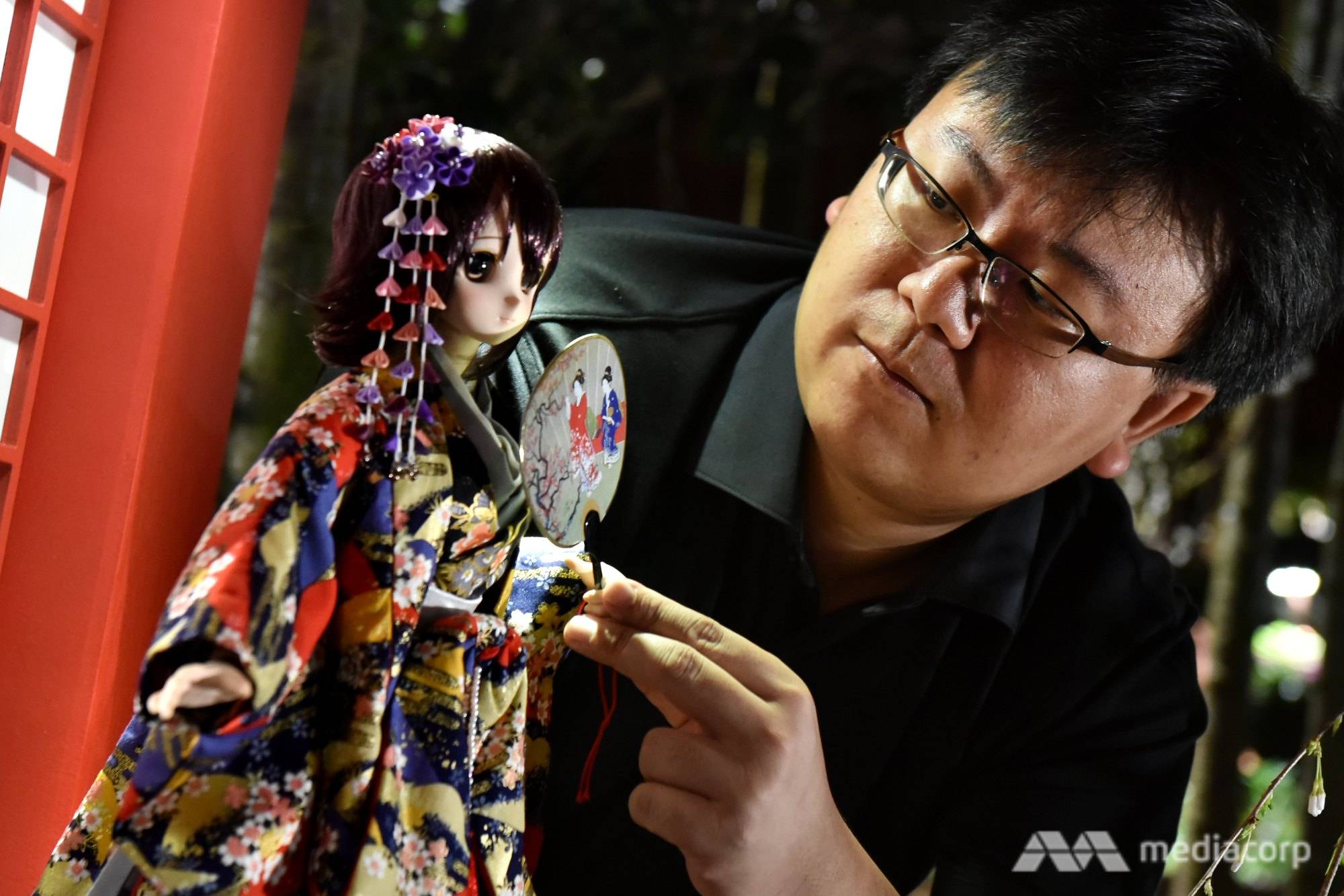
Avid doll collector Ethan Ng was the brains behind the doll display. The 35-year-old tutor said he first started collecting ball-jointed dolls in 2009 and now has about 50 such dolls of different sizes.
Doll collector Ethan Ng now owns about 50 ball-jointed dolls of different sizes. (Photo: Jeremy Long)
Six of the 10 dolls on show belong to Mr Ng. The other four belong to his friends, who also helped him with the set-up.
Ethan Ng sets up a ball-jointed doll for the Sakura Matsuri display at Gardens by the Bay’s Flower Dome. (Photo: Jeremy Long)
Each doll is about 60cm tall and Mr Ng added that the props have been scaled to fit their height.
He told Channel NewsAsia each doll on display is about S$1,000. His dearest dolly? It set him back S$1,200.
“The dolls being displayed here are all dressed in traditional Japanese clothes to fit the overall theme. They are the newest and the most presentable that we have. They have glass eyes which make them look more realistic and less cartoonish,” he said.
“Other dolls sometimes have eyes painted on.”
It was pure happenstance that led him to create this year’s doll display. At last year’s cherry blossom exhibition, one of the Gardens by the Bay directors spotted Mr Ng and his friends posing their dolls among the flowers for photos.
A ball jointed doll on display at 2017’s cherry blossom display at Gardens by the Bay’s Flower Dome. (Photo: T.Z.W.)
“He invited us to take part this year and of course we agreed,” said Mr Ng. “For us doll collectors, it’s a great pleasure and honour to be here.
“It’s an opportunity to showcase these dolls to the public, dressed in their finest, so that hopefully many people will like the dolls, like what they see.”
SPECIAL SAKURA TO LOOK OUT FOR
Gardens by the Bay also enlisted the help of Japanese sakura consultant Satoshi Kokubun from Grefica. He oversaw the placement of 23 species of cherry blossoms that will progressively bloom at the Flower Dome over the period from Mar 16 to Apr 8.
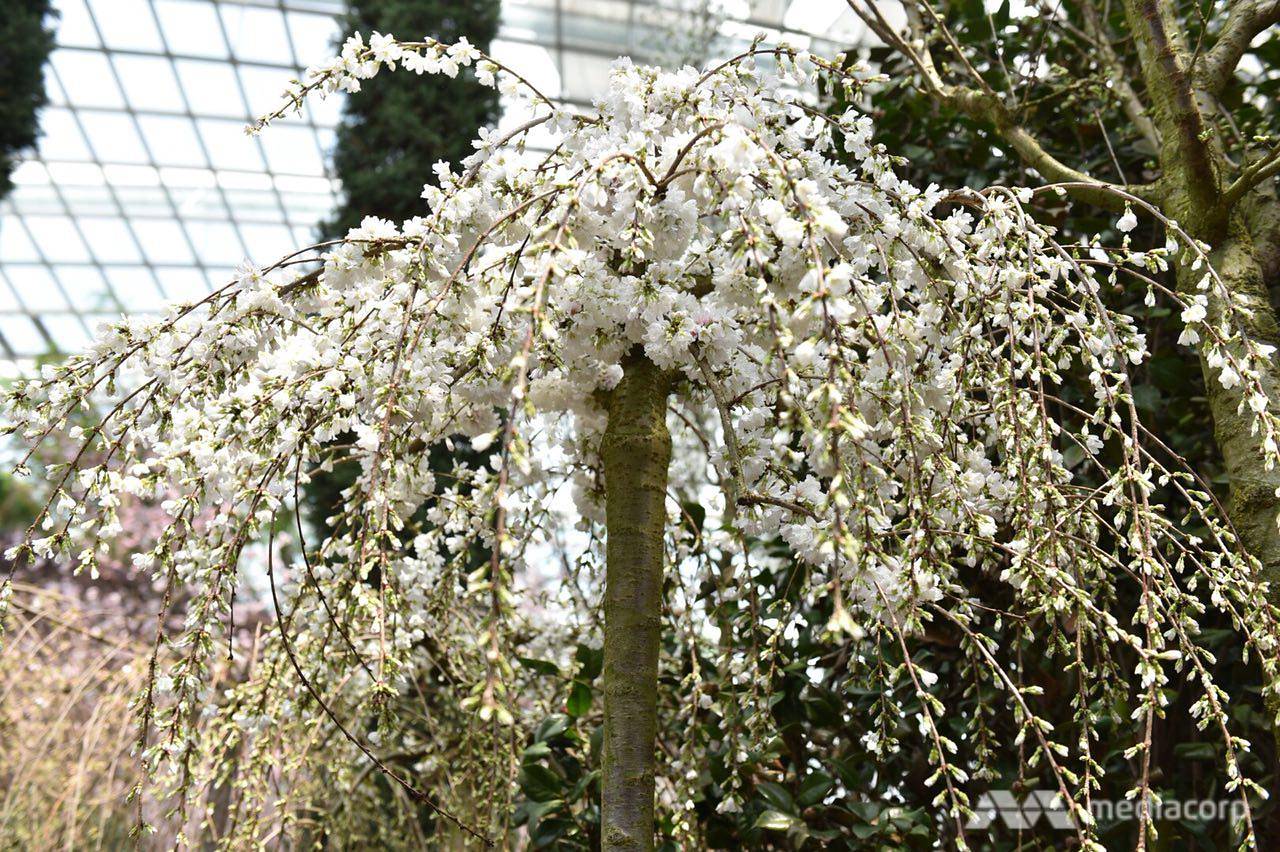
Some blooms to look out for include the Prunus “Snow Fountain” and the Fuji Shidare, he said.
The Snow Fountain is from Kyoto and its weeping-like structure and pure white flowers give the impression of snow falling.
Headed to Sakura Matsuri? Look out for the Snow Fountain. (Photo: Jeremy Long)
The Fuji Shidare meantime, is unique because of its slanted growth and is admired in Japan by those who see beauty in its asymmetry. The tree needs to be pruned yearly, compared to normal sakura trees which need little maintenance.
Did you know: The Fuji Shidare needs to be pruned yearly, unlike normal sakura trees. (Photo: Elizabeth Khor)
The Somei Yoshino is the most well-known cherry blossom, which can be seen in Washington and several parts of Tokyo. Somei Yoshino cherry blossoms only bloom for a week in early April, and were brought over to Singapore for this event.
The Somei Yoshino is the most well-known cherry blossom. (Photo: Jeremy Long)
Mr Satoshi said that he hopes visitors to this year’s display can enjoy the transient beauty of the sakura.
“I want Singaporeans and visitors to enjoy that feeling. I want them to remember their good memories created at the event with the sakura – with their family, friends and partners,” he told Channel NewsAsia.
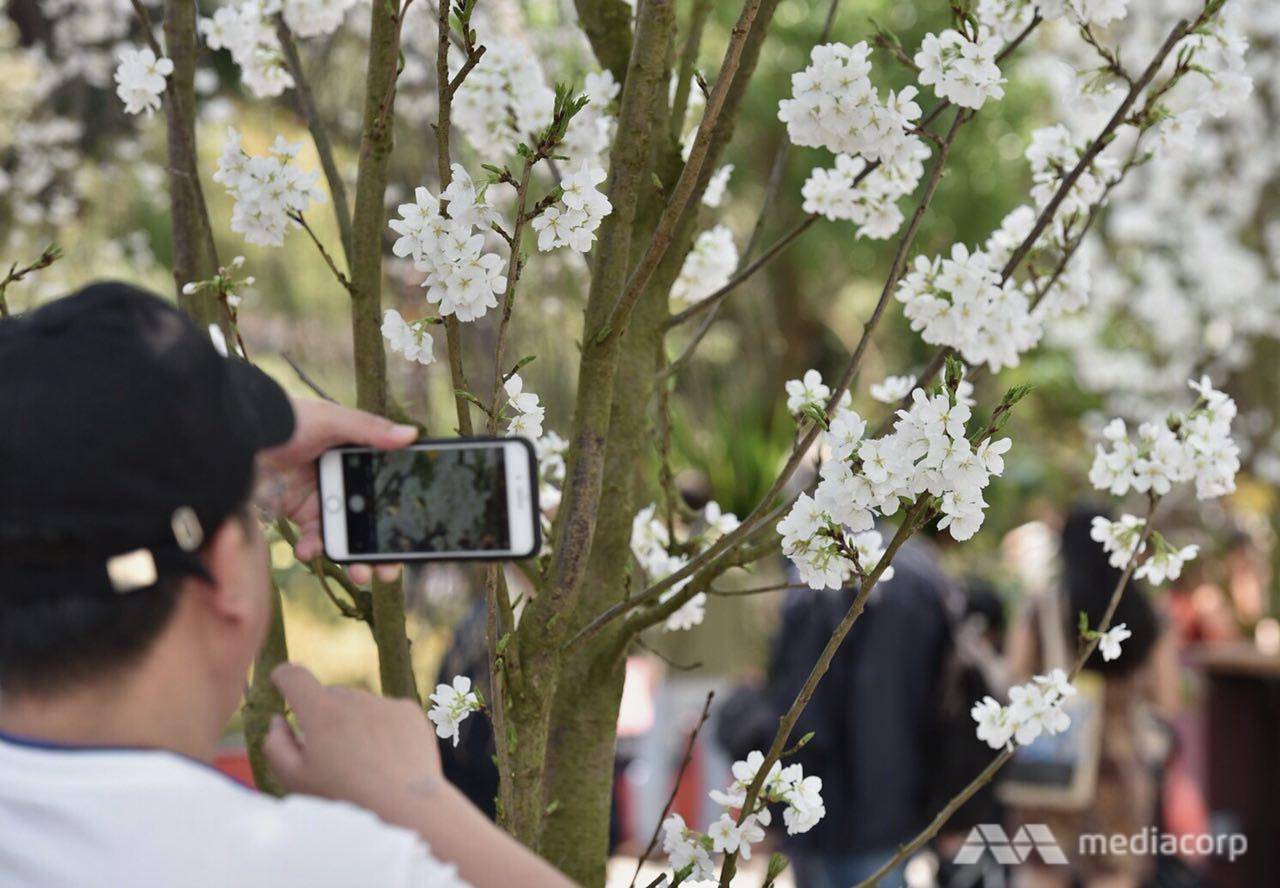
Visitors taking in Gardens by the Bay’s sakura display. (Photo: Jeremy Long)
He added that even though there are about 500 types of cherry blossoms in Japan, it is hard to come by so many species on display at once.
Temperatures within the dome have been kept to around 19°C to prolong the life of the blossoms, offering a picturesque way to beat the heat.
With the event running until Apr 8, organisers said the staggered blooming of the sakura will mean visitors have different photos ops each time they swing by.
The Flower Dome is open from 9am to 9pm. Admission charges apply.

Forbes released its 2018 list of billionaires last week, and while there haven’t been major shifts from the list that we compiled last year, the entrance of Razer founder and CEO Min-Liang Tan into the club was something that caught the attention of many.
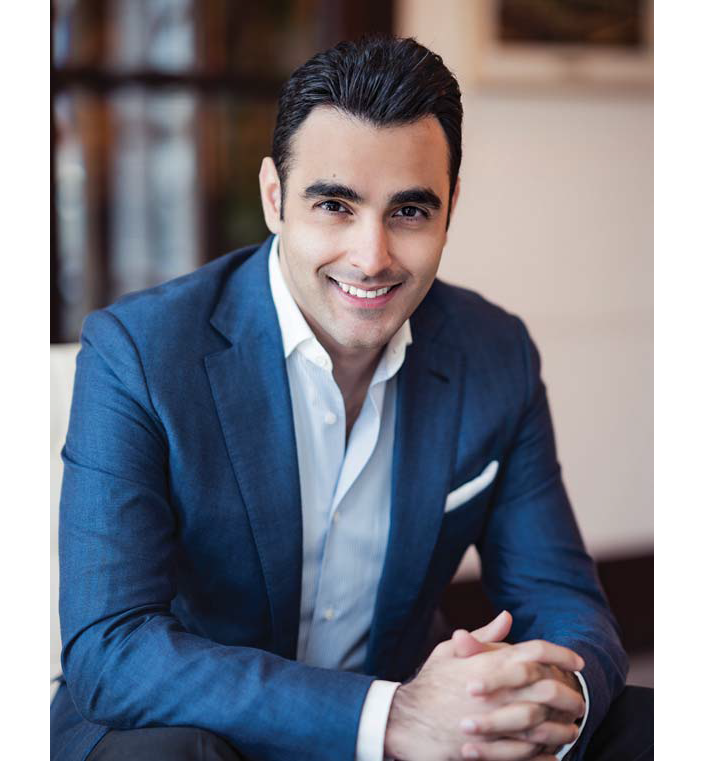
With a net worth of US$1.1 billion (S$1.44 billion), Min-Liang Tan isn’t just the second youngest on the list at 40 (Kishin RK is 35) – he’s also the only one proudly helming the tech/gaming flag.
Globally, however, tech moguls lead the pack, with Amazon’s Jeff Bezos (US$112 billion) and Microsoft’s Bill Gates (US$90 billion) taking the top 2 spots.
Perhaps soon our list will reflect the same trends, and Min-Liang Tan might just become the pioneer of tech billionaires in Singapore.
Regardless, we found a few trends among those in the list, so let’s take a look at some of them.
1. Many Found Their Fortune In Real Estate
Out of the 28 individuals on the list (the Kwee family consists of 4 brothers), those who made their fortune in real estate were the most common.
More specifically, there were 13 of these individuals on the list.
Brothers Philip and Robert Ng topped the Singapore list at a net worth of US$10.8 billion, and are currently heading Far East Organization and Sino Group respectively.

Sino Group is one of the leading property companies in Hong Kong, while Far East Organization is one of the largest private property developers in Singapore with over 770 Far East developments to date, including 53,000 (or one in six) private homes in Singapore.
The Kwee family (US$5.6 billion), at 4th place, owns Pontiac Land which is known for the management of hotels like the Ritz-Carlton Millenia, The Capella, Regent Hotel, and also high-rise offices like Millenia Tower and Centennial Tower.
Going further down the list, Chua Thian Poh (US$1.4 billion) is the founder of luxury property developer Ho Bee Land, known for building high-end condominiums in Sentosa.
He is also a well-known philanthropist and notably donated over US$10 million toward college-level education since 2008.
Another industry that stood out was hotels, with 4 in the list having made their fortunes there.
Power couple Ong Beng Seng and Christina Ong (US$2.1 billion) are both established hoteliers, heading Hotel Properties Limited (HPL) and the COMO Group respectively. Christina Ong is even nicknamed the ‘Queen of Bond Street’ because of the properties she owns on Bond Street in London.
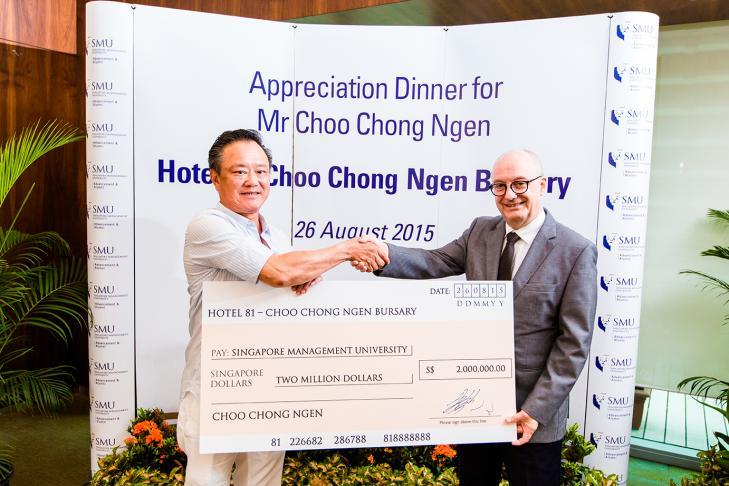
Choo Chong Ngen, founder of budget hotel chain Hotel 81, actually made his fortune in textiles first before going into the hotel business.
He has since expanded into the mid-tier market with 5 new hotel brands, and is said to own more than 6,500 rooms in Singapore.
Choo Chong Ngen is also known for his philanthropic efforts in the education sector, most recently donating S$2.5 million to 5 polytechnics to set up a bursary for financially needy students.
2. The Average Age Is Around 66
According to a CNBC report in 2016, the average age of the world’s billionaires is 63.2 for males, and 62.2 for females.
Doing a quick calculation for the Singapore list, the average age comes up around 66 years – not too far from the global average.
Kishin RK, one half of the father-son duo behind Royal Holdings and founder of RB Capital, is the youngest at 35; while Chang Yun Chung of shipping empire Pacific International Lines is the oldest at 99.
Almost a third of the list are currently in their 60s.
In an article on Business Insider which talks about the age that current billionaires hit their first billion, Facebook co-founder Mark Zuckerberg topped the list, joining the billionaire club at a tender age of 23 in 2008.
Snapchat co-founder Evan Spiegel followed suit in 2015, at 25.
Google co-founder Larry Page made his first billion at 30, and the OG of tech moguls, Microsoft’s Bill Gates, hit the goldmine at 31.
Amazon founder Jeff Bezos also joined the club in his 30s, at 35.
See any similarities? Yup, they all found their fortunes in tech.
Even on the Singapore list, second youngest Min-Liang Tan (40) struck gold with gaming peripherals, and a very successful IPO in November last year.
So if you want a higher chance at hitting your first billion early…you know what to do.
3. Many Self-Made ‘Founder’ Billionaires On The List
We also found that more than half of those on the list are self-made billionaires – that is, having made their fortunes from businesses they built from scratch.
One of these individuals is founder of OSIM, Ron Sim (US$1.2 billion), who sold noodles and waited on tables for a living to help support his family as a young boy.
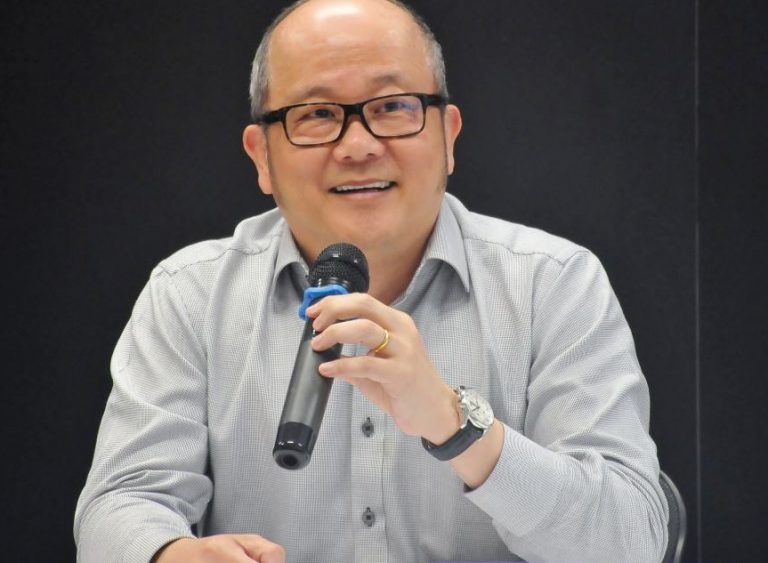
However, it was in the midst of working odd jobs that he realised that he had a flair for sales. Thus, in 1980, he started R. Sim Trading Pte Ltd which sold household goods.
However, the business couldn’t survive the 1985 recession and had to close down.
Not wanting to give up, he noticed the emerging attention on healthcare, and opened Health Check & Care in 1989. In 1994, the company was renamed OSIM.
Currently, OSIM has a presence in 21 countries, 98 cities, and has 414 outlets worldwide.
Of course, this is not to say that those on the list who inherited their businesses were just lucky.
For example, Kwek Leng Beng (US$2.9 billion) joined his father’s company, Hong Leong Group, in the 1960s albeit being trained as a lawyer.
Since taking over, he played a vital role in helming the business, and the group now has more than 300 companies under its umbrella, including 12 listed ones.
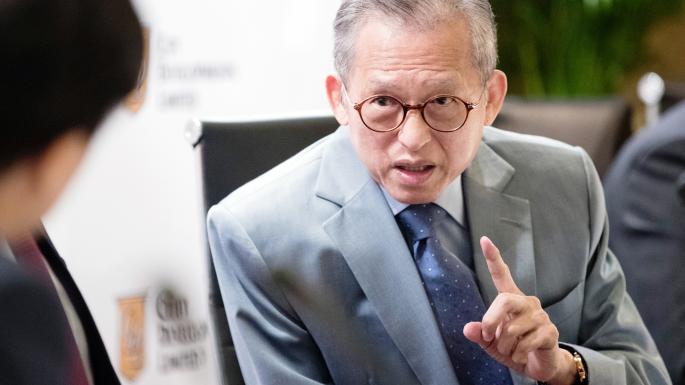
He’s also the chairman at City Developments Limited (CDL), Singapore’s second-largest property developer with a global presence in 26 countries.
CDL is currently one of the world’s largest hotel groups, has developed over 40,000 homes in Singapore.
Chairman emeritus of United Overseas Bank (UOB) Wee Cho Yaw (US$6.6 billion) also took over the company his father co-founded, after spending years learning about the business from the older Wee.
Under his leadership, he steered UOB to foreign exchange and international trade financing, and grew the bank’s assets nearly nine-fold. He was also incremental in the bank’s expansion of its network and services.
UOB currently has 68 branches in Singapore and more than 500 offices in 19 countries and territories in Asia Pacific, Western Europe and North America.
4. Out Of The 28, Only 1 Is A Woman
In Singapore, the list only mentioned 1 female billionaire – ‘Queen of Bond Street’ Christina Ong.
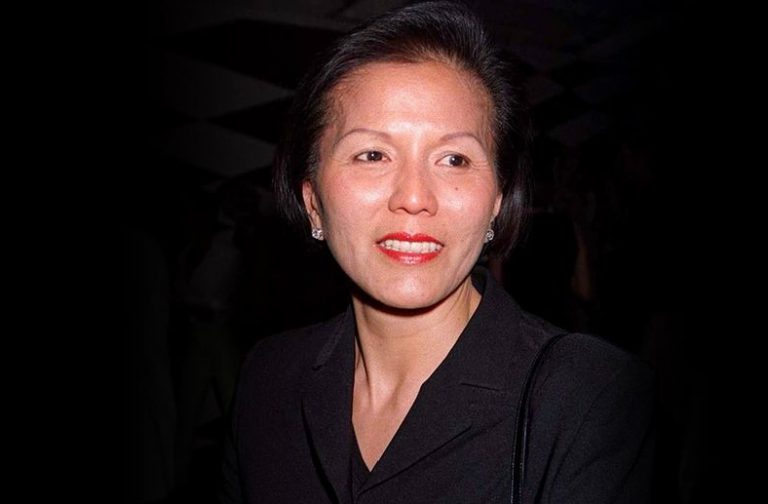
Globally, 2,208 billionaires were recorded, and the number of female billionaires stood at 256. That’s around 11.6%.
On a positive note, however, the figure was up from 227 in March 2017 and 187 in June 2015 – hopefully, the increasing trend would continue, and the same would happen in Singapore too!
Who Do You Think Will Make The List Next Year?
Now that you know about some traits that Singapore’s billionaires share, do you think there’ll be any interesting newcomers next year?
Billionaires/Millionaires
SINGAPORE: Mediacorp has apologised after a trailer for a travel programme showed the Taiwan flag superimposed on a map of China.
“This was a mistake that occurred during the production of graphics used in the trailer,” said the broadcaster in a statement on Thursday (Mar 16).
“We realised the oversight the next day and pulled the trailer immediately. A revised trailer is currently showing on air.”
The trailer with the mistake was seen on the Facebook page of Chan Brothers Travel, an official partner of the show My Star Guide on Mediacorp’s Channel 8.
It featured actress Felicia Chin calling for participants to join her on a trip to Taiwan’s Taitung and Yilan in May, and be part of the show’s production. It would be the 13th season of the programme.
Screengrab of Mediacorp actress Felicia Chin in the revised trailer.
Chan Brothers Travel has since replaced the trailer on its Facebook and YouTube pages.
Said Mediacorp: “We have sincerely apologised to the Embassy of the People’s Republic of China and the Taipei Representative Office in Singapore.”
SINGAPORE: Seoul, the capital city of South Korea, has won the Lee Kuan Yew World City Prize for its contributions to creating an “inclusive, creative and sustainable city with a high quality of life”, its organisers said on Friday (Mar 16).
The biennial international award, jointly organised by Singapore’s Urban Redevelopment Authority (URA) and Centre for Liveable Cities (CLC), aims to honour cities that create liveable, vibrant and sustainable urban communities.
According to the organisers, Seoul was chosen for its model strategies, including its “bold leadership with innovative solutions”, communication with citizens and stakeholders, its shift away from car-oriented transportation to people-centric spaces as well as its creative rejuvenation of heritage buildings.
Overview of Seoul, including Seoullo 7017 – a lushly planted elevated walkway with activities along the way. (Photo: Seoul Metropolitan Government)
“With a leadership that dares to take bold decisions and a government that devised innovative problem-solving methods, the city has successfully turned itself around from a highly bureaucratic top-down city with rising tensions between the government and its people, into the inclusive, socially stable and highly innovative city of today,” the jury citation stated.
The nominating committee picked Seoul out of 28 other contenders, and the decision was approved by a six-member council.
The prize council included individuals such as Mr J Y Pillay, chairman of the Council of Presidential Advisers, Mr Flemming Borreskov, the president of the International Federation for Housing and Planning in Denmark, as well as Dr Qiu Baoxing, counsellor of the State Council in China.
Four cities – Germany’s Hamburg, Russia’s Kazan, Indonesia’s Surabaya and Japan’s Tokyo – received special mention for their best practices in city management.
Seoul will receive an award certificate, a gold medallion and a S$300,000 cash prize at the Lee Kuan Yew Prize Award Ceremony on Jul 9 during the World Cities Summit.

A 22-year-old man was arrested following a brawl involving several people at an eatery in Geylang.
Facebook user Banny Fei posted videos of the incident on his page on Thursday (March 15), saying that the incident happened at a frog porridge stall at Lorong 19 Geylang.
Banny shared the moment the fight broke out in a private video.
A commotion starts inside the eatery but moves out onto the road where a group of men start attacking a man wearing a white shirt.
He is knocked to the ground and then stomped on and kicked by some guys.
One man wearing a red and yellow singlet then knocks the man to the ground and stomps on him while another man comes and kicks him.
The man wearing the singlet then hits one of the women who comes to the side of the fallen man and then shoves another woman who is wearing black to the ground.
The scuffle continues and a passer-by is seen coming to the aid of the man lying on the ground.
He too gets attacked by a man wearing black who seems unhappy that he is helping the injured man.
Banny added two more videos that can be watched below.
In response to a Stomp media query, a police spokesman said that they were alerted to a case of public nuisance at Lorong 19 Geylang.
“A 22-year-old man was arrested for uttering threatening words and the use of criminal force against public servants,” he said.
Police investigations are ongoing.