Home Blog Page 1085

More support for Allied Educators to meet growing number of special needs students

0

SINGAPORE: Growing up, Ryan Tan never thought he amounted to much.

He flunked almost every test paper in primary school and used to lash out at classmates in frustration.

“I thought I was just not good at passing and that made me very angry. I felt like no one could understand my problems. That made me get into a lot of trouble and I was often sent to the principal’s office for hurting my friends,” he recalled.

But all it took was keen observation from a teacher to turn things around.

“His primary school teacher saw that Ryan was smart, but he simply refused to do his work as he kept saying he couldn’t understand the concepts. So we decided to seek professional help,” said Ms Agnes Poh, Ryan’s mother, who later learned that he had dyslexia.

Today the St Andrew’s Secondary School student may still have difficulties learning, but his grades have improved tremendously.

Fortunately for him, he has the support of his school’s Allied Educator (Learning and Behavioral Support) Kelvin Lim.

“When he first came into secondary school, he did have some behavioral issues. Sometimes he’s impulsive, may do things without thinking too much about it.  At other times he gets himself into trouble,” Mr Lim said.

“What we did was to try to help him to understand that his behaviour has consequences, and how he should try to regulate himself through breathing. This slows him down and helps him process what he should do next,” he added.

MOE Ryan Tan

Ryan Tan and his mother, Agnes Poh. (Photo: Deborah Wong)

Mr Lim is among 500 other AEDs who provide structured support to special educational needs students (SEN) in mainstream schools.

His work is very demanding but the education ministry is taking steps to attract and retain people by keeping salaries competitive, and skills relevant, through regular training and peer consultations.

“AEDs who demonstrate good performance and potential can look forward to taking on higher appointments, such as Lead AED, Master AED and Chief AED to lead the fraternity at cluster, zonal and national levels. MOE will also continue to review the remuneration packages of AEDs (LBS) to ensure that they remain market competitive,” said Ms Damodaran Meena, MOE’s deputy director of psychological services.

In addition to their pre-service training in Diploma in Special Education, beginning AEDs attend a one-year mentoring course for structured professional support to develop their competence and confidence in their roles. Meanwhile, experienced AEDs receive in-service training to better support a wide range of SEN

MOE added that regular engagement sessions are also conducted for AEDs to raise concerns and clarify issues with colleagues from MOE’s Psychological Services Branch. 

For Mr Lim, this includes attending a course at the Autism Resource Centre and keeping abreast of research developments.

“Most importantly, it’s trying to understand the reason for a child’s behaviour. This boils down to some of the framework in education psychology,” he said.

The measures to boost support AEDs come as more children with SEN enrol in mainstream schools.

Figures have risen from 13,000 in 2013 to 20,000 this year, and accounts for about 4.5 per cent of the total student population.

MOE said this is due to greater access to diagnosis by professionals, including in the early years, with services available at the Department of Child Development in government hospitals.

According to one AED at Boon Lay Garden Primary School who has been in service for seven years, perception of the profession has certainly evolved.

MOE Ashveen Kaur

Ashveen Kaur Randhawa, AED at Boon Lay Garden Primary School. (Photo: Deborah Wong)

“We are seeing a lot of changes. When I first started, teachers did not know what my role was. When I explained to them that I worked with students with special needs, they would ask me questions like: ‘Oh you mean this student is not supposed to be here? So will he be transferring to another school?’” Ashveen Kaur Randhawa told Channel NewsAsia.

“Now I have teachers coming up to me and telling me: ‘You know, Ashveen, I have this student with dyslexia in my class, but he has a lot of potential. Can you share with me strategies that I can put in place to maximise learning in class?’” she continued.

But creating a conducive environment for these children goes beyond a school setting as AEDs have to work closely with parents, guardians and teachers to keep them updated on the students’ progress.

“One needs a lot of patience and assistance, especially in a mainstream school where these students are often compared to their typical peers. It gets really challenging. A lot of planning and thought goes into working with these students. I think most importantly it requires collaboration among the different partners. It is really not a one-man-show,” she explained, adding that she sees about 70 students, 30 of whom are on a regular basis.

In Ryan’s case, Mr Lim, his family and mathematics tutor have been patiently helping him, and his grades have since improved from four marks out of 30 to 14.5 in recent tests.

“Because of his learning difficulties, Ryan hasn’t always been willing to do much homework. With Kelvin stepping in to help him, offering him study skills strategies, I saw a change. Ryan was more willing to do his homework. I also see efforts in him managing his emotions at home,” Ms Poh said.

But she says to support AEDs in helping these children, parents need to alter expectations and should not compare them with their peers.

“The very first thing Ryan shared with me when he first learned he was dyslexic was: ‘Oh mom I’m so happy to know that I’m not stupid.’ That struck me and I imagine that other children with learning difficulties might also think that way because they are not performing academically,” she reflected.

For Ms Poh, getting her son diagnosed was one step closer to helping him achieve his full potential, because as she stressed throughout the interview, children with SEN simply learn differently.
Source link

Tree collapses on car in Jurong West, trapping driver

0

SINGAPORE: A man in his 50s was trapped in his car after a tree collapsed on his vehicle during heavy rain on Saturday (Mar 17).

The Singapore Civil Defence Force (SCDF) said they were alerted to the incident at Block 515 Jurong West Street 52 at about 5.30pm.

SCDF added that the man was trapped in the driver’s seat and had to be extricated with a power saw. The man was then assessed by paramedics, but declined to be taken to the hospital.

Several members of the public reported heavy rain and strong winds in the area during the late afternoon and evening.

Facebook user Murni Sab Adi, who lives at Block 514 Jurong West Street 52, told Channel NewsAsia that the weather in the area was “extremely stormy” and that his neighbour’s flower pots broke due to the strong wind and rain.

He added that a number of small trees in front of his house “broke” as well. 

Facebook user Ben Ong uploaded a video showing strong winds and two uprooted trees at Jurong West Street 52.

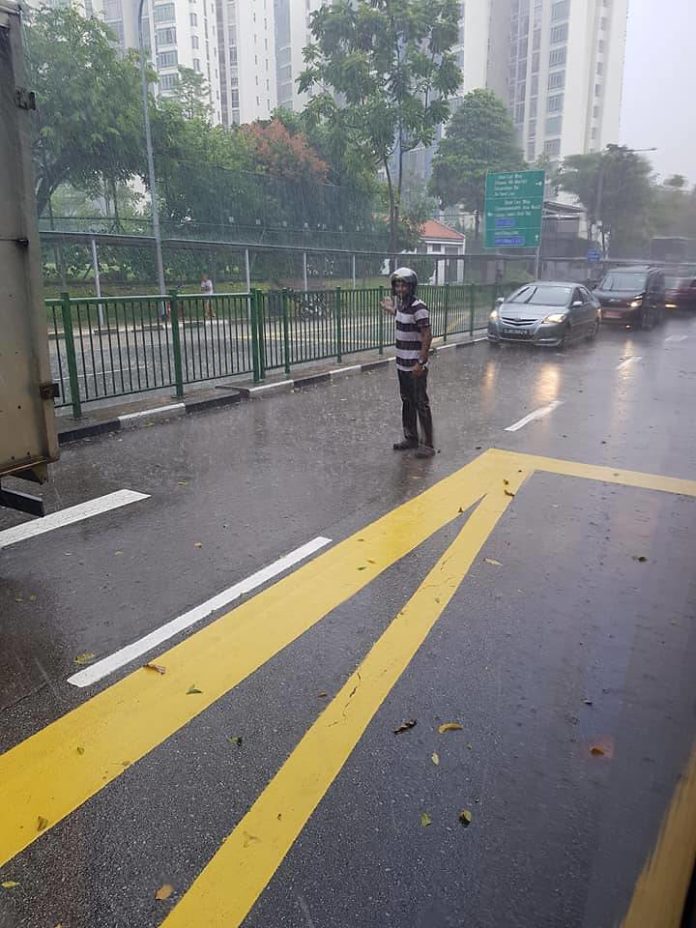
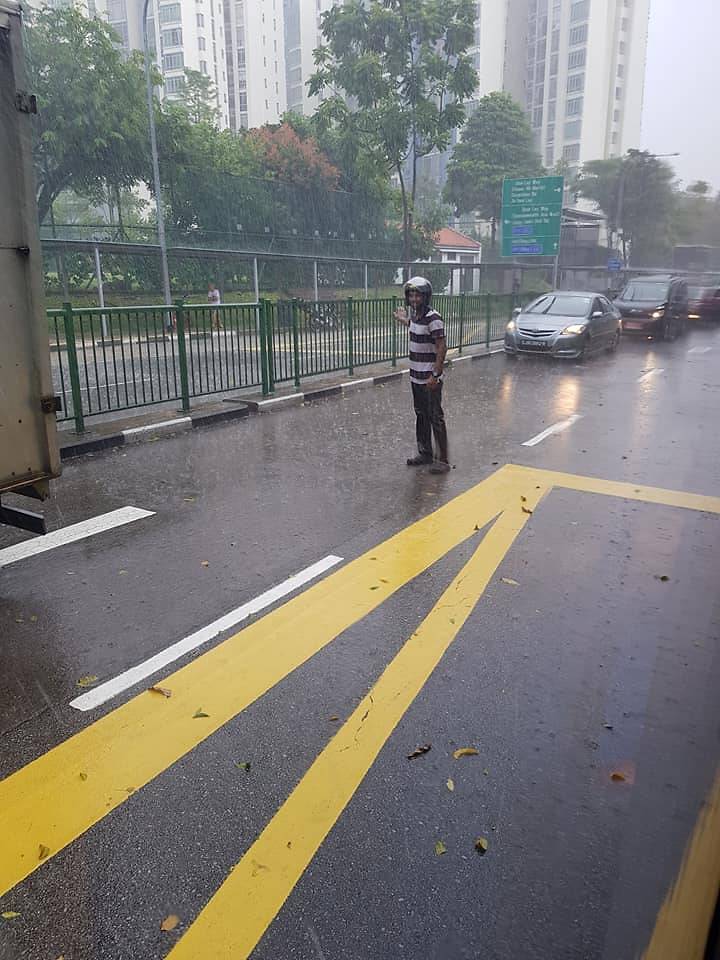
Separately, Facebook user Janet Chong posted a photo of a member of the public directing traffic at Jurong West Street 51.

Ms Chong wrote that a tree had collapsed in front of a bus and praised the man who “braved the rain [and] directed the traffic”.

Jurong West bus 1

Facebook user Janet Chong praised the man for braving the rain to direct traffic. (Photo: Facebook/Janet Chong)

Source link

'Lord of Butt': China's weird names for Western celebs

0

When it comes to Chinese names for Western celebrities, “Sweet Tea” is definitely hot, “Fruit Sister” is off the menu, and an ample posterior can have you anointed “Lord of Butt”.

Chinese is expressed using idiomatic characters rather than an alphabet, making it difficult to use the language to transliterate foreign names, and opening the door for a range of creative and often bizarre appellations for well-known stars.

The recent Academy Awards minted a new star in China, Timothee Chalamet, a best actor nominee for — ironically — “Call Me By Your Name”.

He is known as “Tian Cha” or “Sweet Tea”, a play on the first syllables in his names and a nod to his heartthrob looks.

He is now among the hottest celebrities on China’s Twitter-like Weibo platform, the subject of posts like: “Come and drink this cup of sweet tea, until the summer.”

Things are not so sweet these days, however, for “Shui Guo Jie” or “Fruit Sister”, also known as Katy Perry, so-dubbed because of the fruit-coloured costumes she is known to perform in.

US media reported that the singer was dropped as a headliner for Victoria’s Secret fashion show in November last year after she was denied a visa, possibly because she had previously draped herself in the flag of China’s diplomatic rival Taiwan.

In China’s hyperactive cybersphere, some names get propagated to the point where some people might find them obscure, as in the case of actress Jennifer Lawrence, or “Da Biaojie” (“Big Cousin”).

But most seem to be more logical.

British actor Tom Hardy is known as “Tang Lao Shi”. “Lao Shi” means “always wet”, apparently because of his typically slicked-back hair.

Another hair-inspired name belongs to Benedict Cumberbatch, who sports a curly top in the “Sherlock Holmes” series and has been dubbed “Juan Fu” (“Curly blessing”).

China’s passion for flavourful food has led to “Xiao Tian Tian” (“Little Sweetie”) for Britney Spears, and “Ma La Ji” (“Little Spicy Chicken”) for sex-symbol singer Nicki Minaj.

Last but not least, there’s Jennifer Lopez, whose well-known posterior has earned her the designation “Luo Ba”, or “Lord of Butt”.

Saturday, March 17, 2018 – 19:00

More about

celebrities

Others

Source link

Commentary: Making Applied Learning the DNA of education

0

SINGAPORE: Imagine this scenario – a teacher gives the following math problem sum to his students: “There are 15 crows on a tree. One is shot. How many are left?”

Student A responds that the answer is 14. Student B responds zero. Who is correct?

In a traditional system, Student A would have gotten the full mark and Student B zero. But Student B’s reasoning that in a real-life situation, all the (remaining) crows would have flown away right after and that there would be zero remaining on the tree, is not wrong.

Call it being street-smart versus exam-smart. Does our current education system encourage and accept such lateral thinking?

TOO DISTANT OR COMPLEX

We know that being exam smart is not the same as being able to apply what we have learnt to real life. And so, we often see that many who have succeeded in school may not necessarily succeed in life – not just in the monetary sense. Life is a lot more complex than what we learn in textbooks.

In that case, do we need schools? Yes, because we still need to gain fundamental knowledge and skills. Then the question is, is it possible to teach the real-world in the classroom?

On the flipside, topics in textbooks can also be complex or distant to the point where one does not understand the use of learning these topics. 

Take for example factorisation, thermodynamics or plant cell-reproduction taught in primary and secondary schools. While these topics are routine, how many of us have applied knowledge in these topics to real-life situations? 

Mayflower 1

Mayflower Primary has been making adjustments to its operations to cater for six Primary 1 pupils with hearing loss who joined the school this year. (Photo: Rachelle Lee)

Many of us learn for exam’s sake and perhaps even get an A, but forget whatever we have learnt subsequently. It is almost like the knowledge has evaporated away. Why is this so? What has gone missing in our education system?

One likely reason is we have not put to use what we have learnt. In fact, we may have not actually learnt. What we may have done is to “pick up” information and be able to regurgitate but we have not really internalised and figured how to use the information – that is convert it to “knowledge”.

And we may not know how to apply it outside of the classroom. So how can learning be long-lasting?

DEEP LEARNING

Educational psychologists suggest that “deep learning” could be the answer. Deep learning is characterised by not only knowing facts, but being able to identify related facts, to connect and draw relationships, and to derive abstraction and apply what is being learnt to new situations.

In this approach, students learn not just the facts, but develop problem-solving and critical-thinking skills that can be applied to real-life situations. Deep learning could make learning fun, engaging and meaningful as students can relate to what they learn.

Not convinced that being able to apply what we are learning is important for deep learning? Ask yourself what were the effective learning moments in your life. Take a paper, jot down these points and note the commonalities.

It could be any or all of these – when what you have learnt made sense to you (and sometimes it is the experience of failure), when you figured something new, when you were actually physically doing something and not just reading or listening to fill up with new information, when you connected what you learnt that to other aspects of your life, or when you could see the benefit from the knowledge you have gained.

So, what type of learning experience would you think is good for students – rote learning or deep learning? This is what the Applied Learning Programme announced by the Ministry of Education two weeks ago seems to address. 

According to the Education Ministry, it seeks to encourages learning that:

  1. Emphasises the relevance of what is being learnt to current needs and future trends of industries;
  2. Provides hands-on or experiential learning for students to enact authentic scenarios;
  3. Equips students with the skills to engage in the practical application of knowledge; and
  4. Could involve partnering the industry, community, institutions of higher learning, and/or professional training bodies.

The Applied Learning Programme is not new. It is already adopted in all secondary schools, and has been implemented in some primary schools since 2013. What is new is the announcement that it will be rolled out to all primary schools by 2023. 

primary student

Is PSLE still a relevant checkpoint? (Photo: TODAY)

READ: A commentary on whether true change in our education system is elusive.

OTHER ASPECTS TO STRENGTHEN

The move by our Ministry of Education is in the right direction and is laudable. However, there are some aspects we could look into further.

First, there is no common curriculum or concerted organisation of how ALP is implemented across schools. Each school works on niche areas. A general trend is toward the science, technology and maths subjects with a minority focusing on humanities, arts and social sciences, and others like business entrepreneurship.  

The question is – is it possible to have a more holistic approach to ALP in primary and secondary level at a national-level?

While all schools offer ALP, not all students may be involved in ALP because it is not compulsory. How can we expand this to all students? 

Second, the ALP may be implemented as an additional programme to a school’s base curriculum and co-curricular activities – which may mean additional time at school will be asked of students. 

But is it possible to integrate ALP as part of the curricular subjects rather than have ALP as an additional programme? 

Consider this from a student’s point of view. What does it say if ALP is a separate programme instead of being integrated with core curricula when we extol the benefits of applied learning?

Traditionally, we have always used project work in schools which are supposed to be hands-on and relevant to real-world situations. But consider that many of such projects are worked on by students independently over holiday periods – without much support or discussion with teachers. The resulting learning may not be deep if it is not well-facilitated and supported. 

At the same time, the role of an educator in this new model of applied learning is more a facilitator than a teacher. How are we supporting the teachers?

An assessment of applied learning would also be very different from traditional subjects. Assessments need not just be for grading – but for learning, to help determine what students have learnt and not, and support accordingly. 

Going back to the earlier math problem on crows, one could consider it from a purely mathematical problem perspective or from a dynamic environment modelling perspective. Both the answers are correct. So, how can we move beyond examining content knowledge and correct answers to include process skills such as reasoning? 

The current decision of having ALP as a non-examinable subject for primary schools attempts to overcome the challenges in assessing ALP – but herein it misses its mark. What gets measured is what drives student learning. So shouldn’t we assess ALP in schools? 

Overall, I feel that the ALP has a great potential in molding a generation of more resilient, innovative, pro-active and flexible learners prepared for the VUCA world – it could do even better with some additional refinements.

Dr Nachamma Sockalingam is the founding assistant director of Learning Sciences Lab at SUTD, which provides educational development and support programmes for faculty and learners at SUTD. Nachamma holds a PhD in educational psychology.

Source link

NParks launches new online portal with 500,000 trees mapped

0

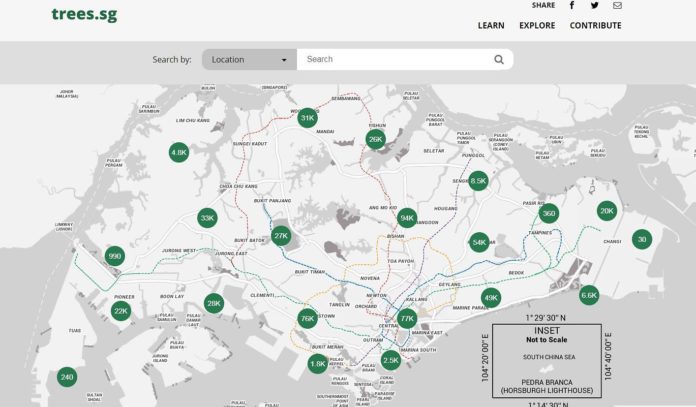
SINGAPORE: Singaporeans will soon be able to find out more about trees in their neighbourhood with a newly launched online portal, Trees.sg. The National Parks Board (NParks) has plotted more than 500,000 urban trees on an interactive map, making it one of the most extensive tree map in Asia.

The new portal was announced on Saturday (March 17) as part of a slew of initiatives to celebrate Singapore’s forests, raise awareness and involve the community in caring for trees.

Visitors to the portal can learn more about the different species of trees found in Singapore and how they are cared for, as well as indicate if a tree is flowering and upload photos of them.

Map screenshot trees

A screenshot of “Explore the map” section on trees.sg.

NParks manages about two million trees planted along Singapore’s roadsides, parks and state land. 

NParks group director of streetscapes, Oh Cheow Sheng said: “We will progressively plot in most of these trees, but recognise that in forested areas it is not possible to plot in every single tree … where the trees are in forested areas, these are sometimes not very accessible because they are densely located and hard to map.”

He added that NParks is planning to work together with other agencies that manage trees, like town councils, to plot these trees.

RECREATING SINGAPORE’S FIRST BOTANIC GARDEN

Singapore’s First Botanic Garden was set up by Sir Stamford Raffles at Fort Canning. Restoration plans for the garden, including enhancement plans for Fort Canning Park and its surroundings, were announced in February.

On Saturday, Minister for Social and Family Development and Second Minister for National Development Desmond Lee planted a tree with members of the community to make the start of the heritage restoration works for the First Botanic Garden.

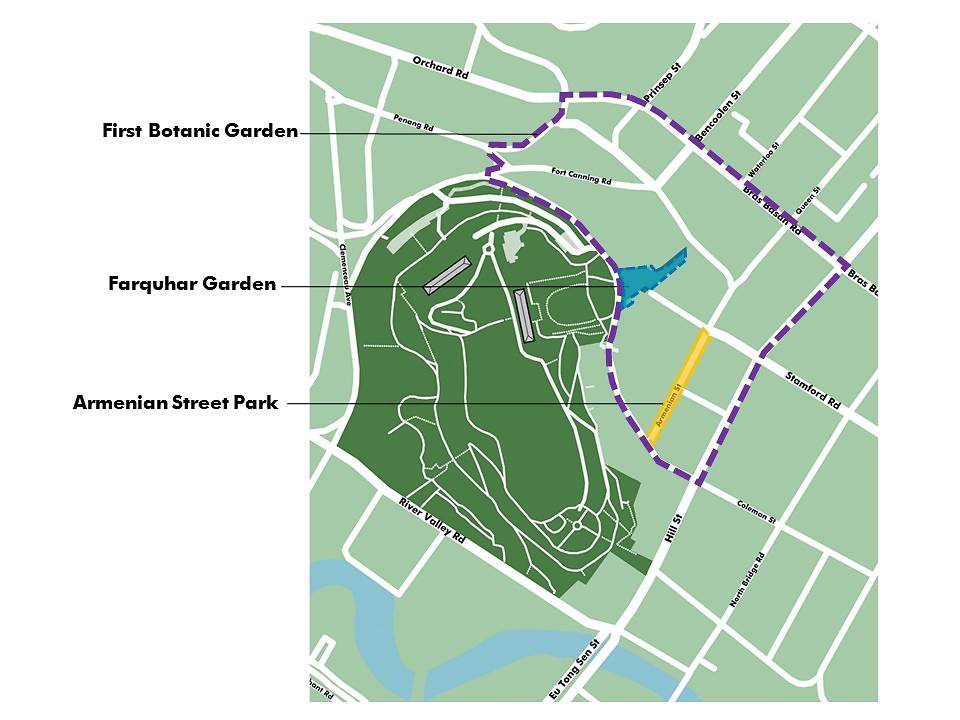
When completed, the restored garden will extend from Fort Canning Park and onto the streetscapes bounded by Hill Street, Victoria Street, Bras Basah Road, Handy Road and Canning Rise.

Trees.sg NParks Desmond Lee

(From left) Minister for Social and Family Development and Second Minister for National Development Desmond Lee, Professor Leo Tan, Chairman of the Garden City Fund, and NParks CEO Mr Kenneth Er planted nutmeg trees to mark the start of heritage landscape restoration works for the First Botanic Garden at Fort Canning Park. (Photo: NParks)

NParks said that the planting within the restored First Botanic Garden includes economic spices, ornamental plants, medicinal plants and native plants.

These plantings will be curated into a trail for visitors to learn more about the history of Fort Canning Park.

The agency is also working with developments within the boundaries of the gardens, like Singapore Management University and Park Mall, to incorporate the planting palette within their compounds as well.

First Botanic Garden

The First Botanic Garden will extend from Fort Canning Park onto streetscapes of roads in the vicinity and will become the world’s first Botanic Garden on urban streets. Farquhar Garden and Armenian Street Park will be nodes within the First Botanic Garden. (Image: NParks)

Other new initiatives to encourage the public to learn more about Singapore’s urban forests include a new community led group Friends of TreesSg, and a new heritage tree trail in Chinatown.

“I am proud to say Singapore is one of the top on the list of cities with the highest tree density … we will continue to support our collective push for greenery,” said Mr Lee.

Source link

300 families at Bukit Batok first to receive smart shower devices

0

SINGAPORE: About 300 families at West Rock@Bukit Batok will move into new homes that come fitted with a smart shower device later this year.

In a news release on Saturday (Mar 17), national water agency PUB said these units are the first batch of homes that the agency has outfitted with the smart shower devices.

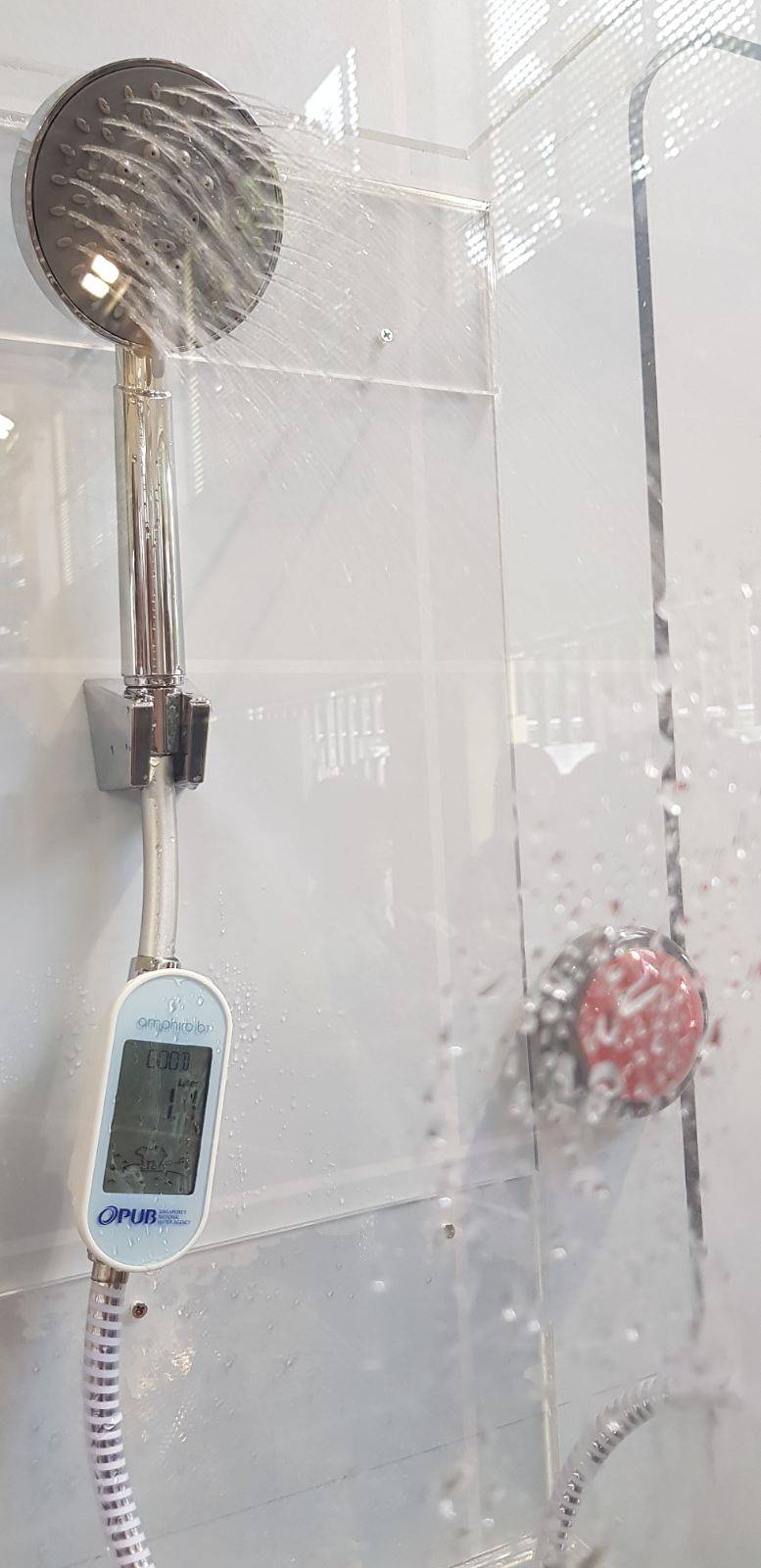
These gadgets will provide residents with real-time information on water usage during showers via a numerical display, and residents can also set water conservation goals and monitor their water usage history via a mobile application.

Later this year, PUB said it will also deploy a different device for other Built-to-Order (BTO) projects. Instead of a numerical display, the device will display colour codes on the showerhead to indicate varying consumption levels.

Following West Rock@Bukit Batok, smart shower devices will be installed progressively in new developments such as Meadow Spring, Toa Payoh Apex and Buangkok Park Vista. Families who have opted for sanitary fittings under the Housing & Development Board’s (HDB) Optional Component Scheme will receive the device.

PUB smart shower 4

The My Nice Home Roadshow organised by HDB at Hong Kah North Community Club, Mar 17 2018. (Photo: Deborah Wong)

The latest PUB study on water consumption in 2016/2017 showed that showering constitutes the highest water usage in a household. As part of its water conservation efforts, PUB will install smart shower devices in about 10,000 new BTO homes by end 2019.

PUB Director of Water Supply Network, Ridzuan Ismail said that there is “potential to achieve water savings” if “behavioural changes can be motivated by providing real-time information”.

“We want to study the results of using such devices, and see if it can be adopted on a larger scale in future. This would also encourage suppliers to improve the features of existing devices in the market, and leverage economies of scale to provide customers with more options for such devices in future,” he added.

PUB launched the Smart Shower Programme following encouraging results from a trial conducted in 2015 with 500 households. 

Results showed that households could save about five litres of water per person per day during showers, when provided with real-time water usage information coupled with optimal goal setting. PUB said this can potentially help households save around 2 per cent of their monthly water usage.

Channel NewsAsia understands that the ideal usage level for each individual is 15 litres, and that the device allows users to set and keep to their usage goals.

PUB smart shower 3

A smart shower device on display at the My Nice Home Roadshow organised by HDB, Mar 17, 2018. (Photo: Deborah Wong)

A new resident of West Rock@Bukit Batok, Caroline Huang said: “As we move into our new home, we are keen to try out the device to see if it can help us monitor our water use during showers and save water. Water is a precious resource, and we hope to do our part in using water wisely.”

Mrs Huang and her husband spend up to S$40 monthly on water bills. With two toddlers in tow, the young couple hope to save around S$10 with a new smart shower device.

PUB said the entire smart shower demonstration project, from device deployment to data analysis, is expected to take at least three years. The agency encouraged members of the public who are interested to use these devices to purchase them online.

Source link

Commentary: On Broadcom and tariffs, Trump takes aim on trade – and Singapore?

0

SINGAPORE: Donald Trump has just entered the second year of his presidency, and it is already clear that in the year to come he will present even more of a challenge to the rules-based international trading order than in his first year.

This year began with a series of Trump trade bangs.

In January, the Trump administration declared tariffs against washing machines and also solar panels – from which Singapore was not excluded.  In the past two weeks, the president invoked a little-used national security exception to justify 25 per cent tariffs on steel and 10 per cent on aluminum imports. 

And just last week, he used his review authority under the Committee on Foreign Investment in the United States (CFIUS) to personally and publicly block Singapore-incorporated Broadcom from buying Qualcomm – again on the grounds of national security. 

Singaporeans may have reason to ask: “Why is this happening?  And what will come next?”

UPENDING THE POST-WAR INTERNATIONAL CONSENSUS

Let me offer two lessons from Washington. The first is that Mr. Trump is deadly serious about upending the post-war international consensus in favour of free trade and will not be “normalised.”

The second is that rules themselves are anathema to him and get in his way.    

So Trump’s goal is to replace the rules-based free trade framework with a Trump-based America First framework. Singapore cannot be complacent.

Donald Trump's announcement last week that he will put tariffs on imports of steel and

Donald Trump’s announcement last week that he will put tariffs on imports of steel and aluminium sent global markets into a tailspin, though there are hopes the final measures will not be enough to spark a trade war. (Photo: AFP/Mandel NGAN)

First, Trump of course has made no secret of his anti-trade views. These views were central to his campaign, and as president his rhetoric has if anything escalated. 

NAFTA is “the worst trade deal in the history of the world,” right up there with TPP “which is another disaster done and pushed by special interests who want to rape our country.”  Germany’s trade policy is “bad, very bad,” and so is South Korea’s and of course so is China’s

What is remarkable is how long and how consistently Donald Trump has held his anti-trade views. In 1987, he spent almost US$100,000 to run full-page ads in the New York Times, Washington Post, and Boston Globe attacking America’s closest allies and the many ways they took advantage of the US, including “vast deficits” and “huge deficits.”

Even then, his anti-globalisation ideas were very detailed, and would fit comfortably into a Trump speech today.  

Indeed, trade – along with Trump’s other signature issue, immigration – stand out as remarkably stable strands in his worldview. They are two steel rods in the shifting sands of his words and policies, visible through the decades and connecting strongly to Trump’s base.

A GLOBAL COMPETITION FOR ADVANTAGE

President Trump’s long-held trade and immigration views are part and parcel of his signature America First policy. Just what he means by that phrase was coolly, even chillingly, described by National Security Advisor H R McMaster and (now former) National Economic Advisor Gary D Cohn in a May 30, 2017 Wall Street Journal op-ed. It is worth re-reading today.

The op-ed is startling in its clarity of purpose and its dramatic shift from the consensus of the (recent) past. President Trump, McMaster and Cohn asserted, brings “a clear-eyed outlook that the world is not a ‘global community’ but an arena where nations … compete for advantage.”

This, then, is the Trump Doctrine, and it’s straight from the Hunger Games:  The world is an arena of actors competing for advantage, to which America will bring all of its strength –  military, political, economic – for American advantage. 

Sino-US trade relations have come into even sharper focus under President Donald Trump, who

Sino-US trade relations have come into even sharper focus under President Donald Trump, who frequently calls out China over its trade policies. (Photo: AFP/MANDEL NGAN)

For allies in the Asia-Pacific who have long relied on the United States to enhance regional security and to promote regional prosperity – a new day has dawned.

If the world is an arena, then the man in the arena for the United States is … Trump.  And he wants maximum flexibility to act. 

As he pushes for America First, he will also seek to dismantle the rules-based trading order in favour of one where he is able to act without restraint and with maximum discretion.

TARIFFS SHOW HIS PREFERRED APPROACH

The past week has given us two perfect examples of his preferred approach. The steel and aluminum tariffs are being imposed based on vaguely-worded notions of “national security.” In the signing ceremony for the new tariffs, Trump noted that he will “(show) great flexibility and cooperation toward those that really are friends of ours, both on a trade basis and a military basis.”

He immediately exempted Mexico and Canada (temporarily, and based on good behavior in the NAFTA talks). He also signalled he would exempt Australia because they are “good friends,” and was working with Prime Minister Turnbull on an undefined “security agreement” so that “we don’t have to impose … tariffs on our ally, the great nation of Australia.”

The president indicated US trade representative Robert Lighthizer would decide on exemptions – but so far no guidelines have been issued or process outlined beyond what he said during the signing ceremony – that “we’re going to see who’s treating us fairly, who’s not treating us fairly. Part of that’s going to be military. Who’s paying the bills, who’s not paying the bills.”

Since then, the president has been flooded with personal entreaties (and phone calls) from the leaders of Great Britain, France, China, Canada, Argentina and Japan. (The Australians apparently enlisted golfing star and Trump friend Greg Norman, and astonishingly it worked).

US President Donald Trump, seen at a rally Saturday in Moon Township, Pennsylvania, threatened to

US President Donald Trump, seen at a rally Saturday in Moon Township, Pennsylvania, threatened to tax German cars if the EU fails to lower trade barriers. (Photo: AFP/Nicholas Kamm)

This is just the way the president wants it. He has created a new negotiating objective – tariff exemption – and invited the leaders of the world to call him to ask for favour. Which he will grant, or not, based on his personal relationships. 

(Note that neither Angela Merkel of Germany nor Peña Nieto of Mexico, with whom Trump have testy relations, have spoken to the president – doubtless they recognise they need others to make their arguments for them.)

BLOCKING QUALCOMM’S ACQUISITION

Recent days saw a second unprecedented presidential intervention in international economic relations – the White House statement blocking the US$117 billion Broadcom-Qualcomm acquisition because “it could impair the national security of the United States”.  

Never before has a president intervened in a CFIUS review in this manner. The administrative review was in its early stages, and typically problematic transactions are allowed to die quietly in the dark. 

Instead, the president chose to prove that he is the man in the arena.

What reasons underlay the blocking of the transaction? We don’t know; and Singaporeans know best of all that Broadcom may have been Singapore-licensed but was headquartered in and operated from California. This was a merger of two global companies based in the US, not a foreign takeover.

What precedent does this action set?  Truly, we don’t know – and that’s just how Trump likes it. 

Where does all this leave Singapore?  Singapore has long embraced – indeed built its entire economy around – a rules-based international order. In fundamental ways, Mr Trump’s approach to trade, and to international rules, is a direct challenge to Singapore’s future.

FILE PHOTO - sign to the campus offices of chip maker Broadcom Ltd is shown in Irvine, California

FILE PHOTO – sign to the campus offices of chip maker Broadcom Ltd is shown in Irvine, California, U.S., November 6, 2017. REUTERS/Mike Blake

Like Australia, Singapore is surely a “great friend” of the United States. In the weeks to come, it will be up to Singapore to prove that (as if it needs to).  

And yet as it does so, Singapore must anticipate new conditions from a White House that (remember) will seek “to use the diplomatic, economic and military resources of the US to enhance American security, promote American prosperity, and extend American influence around the world.”

America First.  Singapore – where?

Nelson W Cunningham is president and co-founder of McLarty Associates, a strategic advisory firm based in Washington DC with an office in Singapore. He has also served in the White House as Special Advisor to President Bill Clinton on Western Hemisphere affairs and as General Counsel at the White House Office of Administration. He is also a member of the Governing Board of Yale-NUS College in Singapore, which bears no responsibility for the views expressed here.

Source link

Facebook post offering free supermarket vouchers is fake, NTUC FairPrice says

0

SINGAPORE: A Facebook post purportedly from NTUC FairPrice offering customers gift vouchers of up to S$100 is a scam, the supermarket chain said on Saturday (Mar 17).

FairPrice has filed a report with Singapore’s cybersecurity authority SingCert and asked Facebook to take the page down, a spokesperson said.

“There have been incidences of Facebook pages impersonating our official NTUC FairPrice Facebook page. These pages claim to reward customers with FairPrice Gift Vouchers as part of various promotions,” he said.

fairprice scam

Screenshot of the Facebook post offering free FairPrice vouchers.

The supermarket chain advised customers to only trust information shared by its official Facebook page or on its website.

“Should shoppers be in doubt about any promotions or news they receive regarding FairPrice, they can contact our customer service hotline a call at 6552 2722 during office hours, or email general.feedback@fairprice.com.sg or send a private message to us through our official Facebook page,” it added.

The scam is the latest to involve the chain, which has posted advisories in the past on fake surveys and emails promising rewards such as supermarket vouchers.

Source link

PM Lee meets Singaporeans in Sydney

0

SYDNEY: Prime Minister Lee Hsien Loong met Singaporeans in Sydney on Saturday (Mar 17), during an official visit to attend the third Singapore Australia Leaders’ Retreat and the ASEAN Australia Special Summit.

He was accompanied by Mrs Lee, Foreign Affairs Minister Vivian Balakrishnan and High Commissioner to Australia Kwok Fook Seng.

Addressing the crowd of around 300 Singaporean professionals and their families at the Shangri-La hotel in Sydney, Mr Lee said each time he visits cities where many Singaporeans are in, he would try to gather with the community.

PM Lee meets Singaporeans in Sydney

Prime Minister Lee Hsien Loong met the Singaporean community in Sydney during an official visit to attend the third Singapore Australia Leaders’ Retreat and the ASEAN Australia Special Summit. (Photo: Elizabeth Neo)

He added Australia is a particularly warm place to do so because of the many Singaporeans living there. “I think every year 300,000 Singaporeans come to Australia. One million Australians visit Singapore. It is a very intense engagement and connection,” he said.

“There’s a lot of things we’re doing together, Singapore and Australia. We cooperate economically, we do a lot of business. Australian companies are in Singapore, Singapore companies are here. We have people exchanges, we have cultural exchanges, we have defence cooperation,” he added. 

Former businessman Fong Chong Yeong has been in Sydney for 15 years but says Singapore is still home. The 51-year-old came to Sydney in 2003 for a work trip while he was managing director of OSIM International. He left the company in 2012 but remained in Sydney and joined another company.

“I always joke and tell my friends that we never migrated here. I came here because of a job and then somehow I got stuck here and I just lived here for the last 15 years. Singapore is still our home … Our families are back in Singapore so we do go back every year and keep in touch with what’s going on in Singapore.”

PM meets Singaporeans in Sydney

Former businessman Fong Chong Yeong with his wife Dorine and daughter Tiffany. (Photo: Elizabeth Neo)

Mr Fong, who was part of the Singapore Youth Orchestra between 1980 and 1990, also returned in 2015 to perform for the nation’s SG50 celebrations.

He said he would consider returning to Singapore one day with the skills and experience he has picked up abroad.

“If you ask about intending to go back to Singapore … it’s always a thought lingering there. Let’s say there’s an opportunity, something arises I’ll definitely consider. In any case I grew up in Singapore, I’m used to the environment there.”

Source link

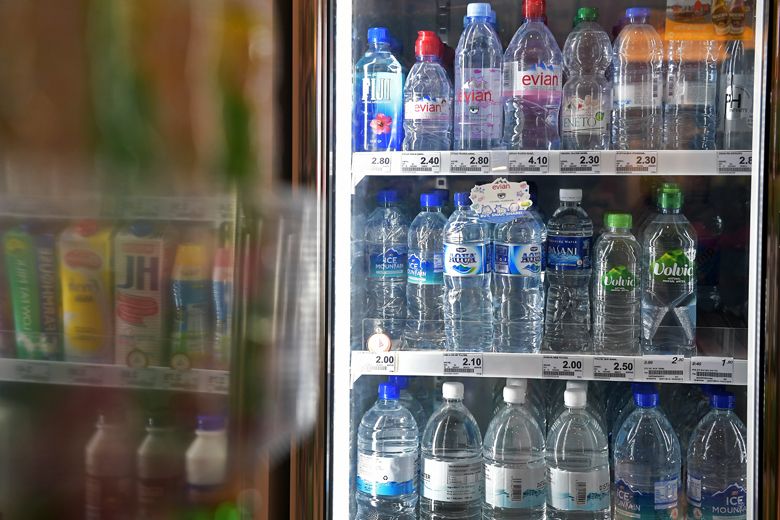
Bottled water used in Singapore meets safety standards: AVA

0

Singapore

Saturday, March 17, 2018 – 09:53

The Straits Times

Others

Source link