SINGAPORE: As the first school term of 2018 draws to a close, students heave a sigh of relief as the one-week school holiday gives many a temporary respite before the next term starts.
In recent years, there have been reports on youths in Singapore facing increased stress and anxiety in their lives. This is a concern we must actively tackle.
It starts with recognising a systemic source of apprehension. The period of school transitions, when a young person progresses from pre-school to primary school, secondary school to post-secondary education institutes can be particularly challenging.
There is no “standard” experience – some youths seem excited about starting a new chapter in their schooling life, while others are anxious and take a longer time to adjust.
A VERY DIFFERENT ENVIRONMENT FOR PRIMARY 1 KIDS
For the average seven-year-old, starting primary school can be intimidating. Moving to a class size of about 30 to 40 students, with a highly-structured environment and stricter school rules, and going from being the oldest to the youngest in the school can be initially overwhelming.
So it is not unusual for Primary 1 students to seem unsure and nervous about their school experience at first.
Common worries include whether the teacher will be strict, if they will have new friends to play and eat with during recess, worries of being bullied, and the stress of coping with homework.
Fortunately, schools have taken steps to ease their transition. For instance, schools often conduct orientation sessions prior to the start of school and during the first week for parents and Primary 1 students. These allow students and their parents to get accustomed to the primary school experience.
Some also have a buddy system pairing every Primary 1 student with an upper primary student who serves as a mentor to aid in easing the transitional period for the younger student.
A primary school student showing a younger student how to wash his hands. (File photo: MOE)
Some students may take a little longer than others to settle in. Being aware of a child’s temperament and personality may help to ease the transition.
Children who are slow to warm up or those with difficult temperaments may benefit from additional preparation and support, such as having some predictability in a routine at home and in school, informing them of what to expect at school, or in adults creating a quiet environment for them to calm down when they get upset.
Giving more time for shy children to feel comfortable may help. Adult figures can gently encourage exploration of new situations and foster independence at a gradual pace.
Parents and teachers can also help them identify, acknowledge calmly, and label their feelings, by describing what they seem to feel (e.g. “You felt scared about going to school”).
By doing so, children learn how to recognise their feelings, aiding in their emotional development.
Teaching basic daily living skills such as practical money skills, organisational skills (e.g. packing their own school bag, listing homework tasks), and social skills (e.g. being polite, taking turns, what construes appropriate and inappropriate things to say) may also be useful for this age group.
Students from Fern Green Primary attending a lesson on their first day of school. (Photo: Matin Akmal Mohammad Kamal)
NEW CHALLENGES FOR SECONDARY SCHOOL STUDENTS
Moving to secondary school poses unique challenges. Some students (and their parents) may experience disappointment in not being posted to their top choice of school – remaining a positive outlook will be vital.
One other key challenge in the transition stems from this – Secondary 1 students are faced with almost double the number of subjects and longer school hours. They also have to learn how to juggle schoolwork, CCA, socialising with peers and carving out their own interests, which can be pretty stressful.
To compound these challenges, adolescence is associated with independence, identity development, a testing of limits, growing importance placed on peer relationships, and an awakening sexuality.
Being accepted and the need for freedom are important aspects of an adolescent’s development.
Parents can help by keeping communication lines open and by taking time to listen to their teenager’s views. They should also take an active interest in their child’s interests and activities without being nosy. Spending one-on-one quality time can help to build trust and foster a stronger parent-child relationship.
For some adolescents, social media can be an intricate web to navigate, including dealing with cyberbullying and adult content.
File photo of students receiving their O-Level results.
Parents will do well to pay attention to their teenagers’ internet access, usage and social media habits, and discuss what makes for healthy and safe internet use. Parents can also see how best to set limits while giving space for them to exercise freedom and independence.
Family support and guidance is especially crucial during this time in helping them navigate their adolescent years.
MANY POST-SECONDARY PATHWAYS CAN BE CONFUSING
The transition to post-secondary education pathways – whether ITE, junior college, centralised institute or polytechnic – is a complex transition because of the number of education pathways available. Choosing a route for their academic journey necessitates dealing with family expectations or peer pressure.
A constructive way for parents to deal with this stressful situation is to focus discussions on the teen’s strengths and interests in assisting the suitability of study options.
Where post-secondary education expects students to be self-directed in their learning and independent in managing their schedules, some students may also struggle to adapt.
Outside of the classroom, the growing importance of platonic and romantic relationships, part-time work and other interests poses new challenges. This also a period where youths may begin experimenting with smoking, alcohol or have their first sexual encounter.
For those with work placements, grappling with new realities of the working world can be an added eye-opening experience.
Nanyang Technological University engineering students engaged in team-based learning. (Photo: NTU)
It is important for parents to address all these issues openly and provide youths with information to allow them to make informed life choices and understand the effects of their actions. Life lessons are usually gained through experiences.
While some may be more independent or have better crystalised their sense of identity and life direction, others may still be on the journey to figure out their purpose.
In providing a guiding hand, parents will have to continue maintaining the balance between discipline and love, boundaries and freedom, expecting responsibility and knowing when to let go.
PARENTING IS HARD WORK!
Perhaps the biggest lesson to take away is periods of transitions tend to be nerve-wrecking for parents too. In the hope of ensuring their children are prepared, many become over-involved.
A rising trend, this style of helicopter parenting is counter-intuitive to fostering a child’s independence.
For instance, some parents constantly contact teachers to check on minute details about their child, pack the school bag of their 12-year-old, make decisions for their teenager, or are quick to jump in to resolve every problem their child experiences.
It is perfectly acceptable for a child to experience disappointment and failure. Rather than solve problems for them, parents should provide guidance they can use to navigate setbacks.
Parents should be aware of their own anxiety and expectations, their experiences of being parented, and pressure from other parents that may influence their parenting styles or bring up feelings of inadequacy.
Every child is unique and experiences the world differently. There is no one-size-fits-all approach to parenting.
While school transitions can be anxiety provoking, being mindful of the issues our youths face at different junctures of life may help ease them through these transition periods.
Moderating parental expectations and focusing on a child’s strengths, both academic and non-academic related, are also essential.
Vidhya Renjan is a clinical psychologist at the Institute of Mental Health.
READ: Channel NewsAsia’s commentary series with IMH on mental health which includes:
There will be two clean energy subscription plans offered by both companies: Green Life and Green Save.
From left: StarHub’s Vice-President, Corporate Finance, Karie Kow and Chief Marketing Officer Howie Lau with Sunseap Group’s Chief Executive Officer Frank Phuan and Vice-President, Energy, Laurence Kwan. (Photo: StarHub)
(Updated: )
Bookmark
SINGAPORE: Local telco StarHub on Monday (Mar 19) announced its intention to go beyond its traditional business of offering mobile, pay TV and broadband services to venture into the electricity sector.
In a press release, the telco said it is joining forces with local solar energy provider Sunseap to sell electricity at the soft launch of the Open Electricity Market in Jurong next month.
There will be two clean energy subscription plans offered by both companies: Green Life and Green Save.
Green Life is a 100 per cent clean energy plan targeting environmentally conscious customers. This means they will receive electricity fully produced by Sunseap’s solar systems and this will be charged at the usual regulated electricity tariff, the press release explained.
The current electricity tariff is 21.56 cents per kilowatt hours (kWh), according to the Energy Market Authority’s (EMA) website. The tariff for the next quarter has not been announced yet.
As for Green Save, customers will receive 5 per cent clean energy and get a 20 per cent discount off the regulated tariff, the companies said.
Mr Howie Lau, chief marketing officer at StarHub, said in the press release: “Working together with Sunseap, we are excited to offer households a compelling way to live a lower carbon footprint lifestyle using the sun’s energy.
“Leveraging each other’s expertise, we will bundle essential services from mobile, pay TV, broadband and electricity in attractive packages for customers, who are becoming more environmentally aware.”
StarHub is unable to provide more pricing details currently, when asked if existing subscribers to its mobile, pay TV or broadband services will have additional incentives to switch from Singapore Power and take up either of the two plans.
The telco did say that 5 per cent of its profits out of this business in the first three years will be channelled into its StarHub Clean Energy Fund, which will be used to “drive environmental conservation initiatives, including clean energy and efficiencies”.
It was not able to disclose more specifics on how the fund will be used.
The EMA announced last October that households and businesses in Jurong will be able to buy their electricity from a retailer during the soft launch of the Open Electricity Market from next month, or continue with SP Group.
The option to shop around for electricity suppliers will be extended to the rest of Singapore in the second half of 2018.
EMA said on its website that there will be 14 retailers participating in the soft launch, including Sembcorp Power.
SINGAPORE: Young people are ambitious, enthusiastic and thirsty to show how they can make a difference as active citizens.
A National Youth Council survey released last year showed almost seven in ten youths were involved in community groups such as those for the arts, sports or social welfare.
Where they are generally seen as revisionist, with high expectations of their peers, of authorities and their educational experiences despite their inexperience, growing up in a world vastly different from their parents, young people are full of ideas about how things can be done differently.
This is not a new phenomenon. Like those who came before, many youths in Singapore sometimes feel like society doesn’t take them seriously enough even though they want to make their voices heard.
An age-old question for most advanced, developed countries, perhaps the challenge is not just how society can better listen and meaningfully engage their youths but how to harness their energies and enthusiasm to productive ends. After all, it is this generation that will eventually lead society and shape Singapore’s future.
I sometimes wish that our national leaders could proactively engage with youths like myself. It might be daunting for our views and expectations may never fully match those of our parents, though they will probably evolve with age and more life experience.
As a young person, it was thus encouraging to read about the new initiatives that the Ministry for Culture, Community and Youth will be rolling out to better engage youths on key policy issues.
For me and my peers, the highlight of the initiatives is the Youth Conversations.
WHAT DIFFERENCE?
At first glance, these conversations seem like a repetition of previous exercises. So it was heartening to hear Minister for Culture, Community and Youth Grace Fu outline last week how they would be different. She said:
We will be sharing more policy thoughts and considerations with our youths. We will listen more to understand our youth’s views, concerns and aspirations. We will provide more support for our youths in generating and implementing their ideas.
Some wonder whether this will be enough. After all, if these engagement sessions are voluntary, won’t there be some self-selection for those who sign? What about those who have doubts about the effectiveness of such face-to-face engagements or those who remain detached and disinterested in public policy?
If we think that youth engagement is an enabler to building a stronger and more active citizenry, and we are serious about leveraging their insights as important stakeholders to Singapore’s future, then shouldn’t we be more aggressive?
National University of Singapore graduates at a commencement ceremony. (Photo: Lionel Lin)
And if we want to reach the disinterested or the shy, and involve them in building Singapore’s future, then a possible solution is to make some of these engagement sessions compulsory, to be held in junior colleges and Institutes of Higher Learning. Sessions of an hour-long nature should take place over a sustained pace throughout the year.
Educators should also be present and join in the discussions, acting as familiar facilitators for a more conducive environment.
In the style of a Citizens’ Jury, all engagements could be conducted in a series, where recommendations to tackle some of Singapore’s pressing challenges could be discussed.
To foster camaraderie and build comfort, the same group of students could meet with the same Member of Parliament and educators for three weeks in a row, with feedback from the past session brought up and examined further in depth, to germinate and concretise ideas.
Finally, to incentivise further voluntary engagement, all participants should receive regular group updates via email of whether and how their suggestions are being considered, so that they can see how their opinions are factored into policy.
Where some might say national resources need to be committed to this cause, I would argue that such efforts are critical as Singapore strives to build a thinking society.
It may be that a mindset shift is needed – for such engagements not to be seen as a communications exercise, but one that has productive outcomes and engagement value.
In my opinion, the success of any youth engagements efforts by the Government will be maximised if society begins to take the viewpoints of its young people more seriously and see that such activities builds our confidence about the future.
ENGAGEMENT IS A TWO-WAY STREET
Ultimately, the Government can do all it can to engage us. But for such efforts to be successful, we youths too must exercise responsibility and consideration.
We must realise if we want to be taken more seriously, we must earn that right.
This is not engagement for engagement’s sake. So we must be selective about the issues we want to discuss.
We can still give our opinions on all aspects of national life, but there are areas in which we have fresh, lived experiences where we can value-add. We should drill deeper in these specific areas, using our youth to our advantage.
Students sitting around campus. (File photo)
Second, we are often told to be aware of the larger context against which we base our new ideas. This is fair criticism.
We need to enhance the depth of our ideas – going beyond pitching new ideas to showing how exactly they differ from past policies and being more up-front about the trade-offs we are making.
This means that we need to more broadly inform ourselves and make the effort to get acquainted with the specifics of past policies and debates.
Thus, we must keep up to date with the news and be savvy with the Hansard available on parliament.gov.sg. Immersing ourselves in new experiences such as volunteering will also give us perspective on issues.
In doing so, perhaps we could then better understand why the status quo is the way it is as a starting point to find new ways to improve upon it and build common ground, which will give us a better chance of success with our ideas.
EVERYONE HAS A ROLE TO PLAY
A cliché that bears repeating, it is true that, in further engaging the next generation, everyone has a role to play.
The Government has begun this process, but they must be able to reach those who most need to be engaged. Society too needs to have a mindset shift in not being too quick to dismiss the views of Singapore’s youths.
Young people themselves should earn their right to be listened to. If the next generation can be more effectively engaged, we will be in a much stronger stead to shape our collective future.
Ng Chia Wee will begin his undergraduate education at the National University of Singapore’s Faculty of Arts and Social Sciences this August and has signed up to be a REACH Youth Ambassador.
SINGAPORE – With sales stagnating and high rent and manpower costs eating away at his profits, Azan Tengku, the director of Singaporean gift company Kalms, decided to close down his stores and move all his products into vending machines.
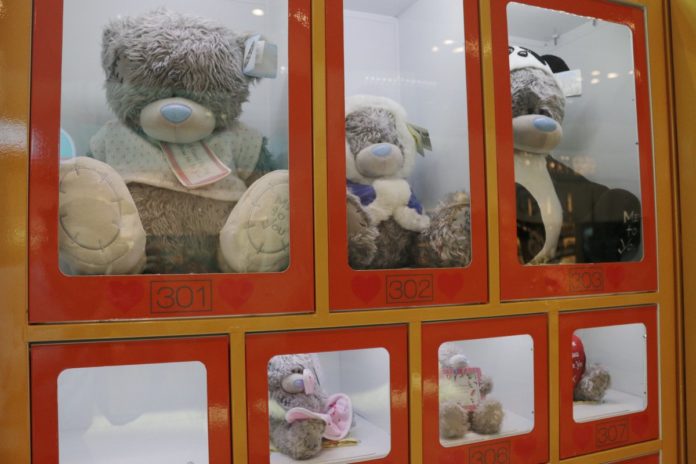
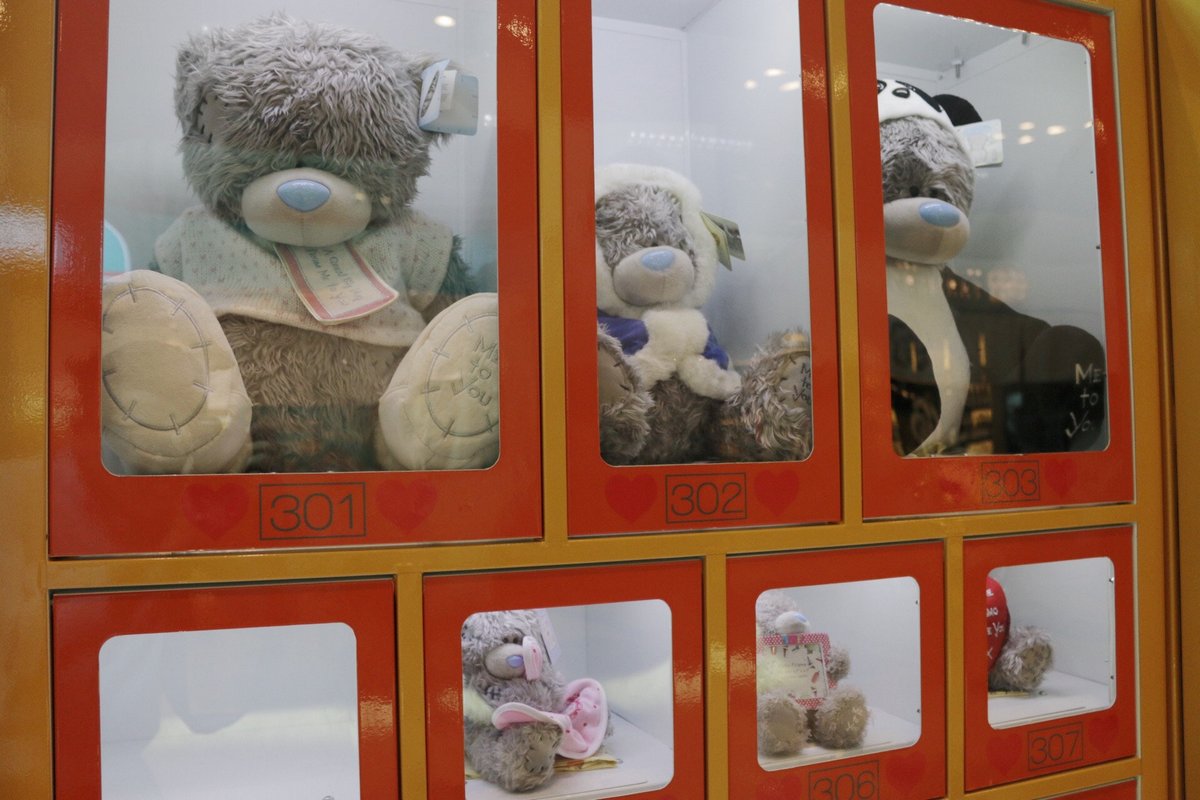
Kalms, which has rolled out 50 machines island-wide that sell mostly teddy bears and jewelry, is one of a growing number of companies in the city-state adopting vending machines in a move encouraged by a government push for automation and tighter restrictions on low-skilled foreign workers.
The city-state is seeing some of the fastest growth rates in vending machines sales worldwide, even as there are signs of saturation in major markets like Japan, which at 5.5 million has the world’s highest number of vending machines per capita.
“Rent is high in Singapore and good retail employees are hard to find,” said Tengku.
“Singapore and Japan face the same challenges when it comes to employment and how both countries are densely populated and have space limitations.”
Photo: Reuters
Since the launch of its first vending machine in late 2016, Kalms says it has recorded month-on-month growth of 15 per cent for 16 consecutive months.
The firm is now partnering with other companies to sell food, clothing and electronic products on its machines, which it says will allow it to roll out hundreds more across the island-state in the coming year.
Businesses that manufacture vending machines in Singapore, like Le Tach, are also profiting from the trend.
Le Tach’s co-founder Steve Chia said the company has grown from manufacturing 50 vending machines in 2011 to over 1,000 to date, adding that the types of vending machines have also expanded from dispensing drinks and snacks to selling daily essentials and accessories.
GROWING FAST
Singapore recorded $67.2 million in vending machine sales in 2017, data from research firm Euromonitor International showed, a 3 per cent increase from the previous year, and sales are expected to exceed $72 million by 2020.
While the island-state of around 5.6 million people only just sneaks into the top 30 countries in terms of vending machine sales, it is one of the fastest growing markets behind Russia (12.3 per cent), China (11.5 per cent), Thailand (8.5 per cent) and the United Arab Emirates (3.3 per cent).
Meanwhile Euromonitor’s data, collected through interviews with trade bodies and firms, shows major markets like Japan are in decline because of increased competition and price-sensitive customers.
Where to find quirky vending machine malls in Singapore
//afarkas.github.io/lazysizes/lazysizes.min.js
In Singapore, the government has been encouraging firms across industries to adopt more manpower-lean formats, alongside moves to ease their reliance on low-skilled foreign workers and ensure more access to jobs for locals.
As well as a multi-million dollar National Robotics Programme, one such initiative has been targeted at trying to promote technology in the food service industry through grants and consultancy services.
With the help of this scheme, food caterer JR Group has grown from one vending machine to over 100 in the last decade, and now has unmanned 24-hour cafes selling hot local dishes as well as Western, Indian, Korean and Japanese cuisine all out of machines.
“We wanted to find solutions and new ways to help us efficiently push out our products, and at the same time, pass these savings down to our consumers,” JR Group CEO Jocelyn Chng said.
Other unusual items that can be found on sale in Singapore vending machines are insect repellent, fresh flowers, health supplements and ceramic bowls and vases.
The trend toward robot sales may have its limits though.
Some of Kalms’ competitors in the gift and souvenir industry say the model only really works for emergency purchases and do not cater to casual shoppers or the millions of tourists who flock to Singapore every year.
Susan Tay, director at educational toy firm The Better Toy Store, said her products require more explanation to customers and human interaction that is lost in the world of robot sales.
“Automated machines may be a boon for retailers who just want sales, but may be a bane for responsible retailers who need to match the product to (consumer) needs,” said Tay.
SINGAPORE: For families with school-going children, time is a shrinking resource in Singapore.
Since my eldest daughter began Primary 3, and my second-born started Primary 1 this year, our time together as a family has been stretched thin – slowly but surely.
Outdoor play is now a rarity on weekdays. The siblings don’t get to play with one another as often as they wish. Even the time spent on bedtime rituals – such as reading a bedtime story, saying our prayers and hugging goodnight, is cut short.
In the recent Committee of Supply debates, Minister for Education (Schools) Ng Chee Meng spoke about the importance of giving children applied learning experiences to nurture innovation and a joy of learning.
Applied learning focuses on experiences that go beyond the classroom (and grades), so that children dabble in solving real-world problems. It also cultivates skills and interests in areas which are deemed relevant to supporting industries and developing 21st century competencies.
All secondary schools and more than 80 primary schools now offer an Applied Learning Programme (ALP). The ministry plans for all primary schools to establish an ALP by 2023.
By next year, more than 50 schools will offer Applied Subjects at O-Level, and 30 schools will offer MOE-ITE Applied Subjects at Normal (Technical)-level. These subjects, which are examinable at the O- and N-Level, include electronics, exercise and sports science, drama and mobile robotics.
I am excited that schools are moving towards this direction of applied learning. But the struggle for families remains real: How do we give our kids the time and space to experiment and tinker, or “apply their learning”, in view of the heavy workload and extracurricular commitments many of them have?
As the movie title goes, Something’s Gotta Give, so what needs to give in order to make room for children to play and hone their interests?
A man and a child on a beach in Singapore. (Photo: Gaya Chandramohan)
THE COST OF EDUCATION
Compared to her peers, my daughter’s schedule is relatively “light”. We have consciously avoided filling it to the brim. Currently, she stays back in school on one day for co-curricular activities (CCA), and has Chinese tuition and violin class once a week.
But her homework load has increased significantly this year.
Because she is one of the last few to get dropped off by the school bus, she gets home at around 2.30pm and eats a late lunch. She starts working on her homework at around 4pm; this may take her anywhere between one to two hours to complete, depending on the amount of work and its complexity.
This brings us to dinnertime, which takes about an hour. Then she gets a brief 30 to 45 minutes of play and relaxation, which includes packing her bags for the next day and culminates in a bath at 7.45pm. Finally, it’s bedtime at 8.30pm; realistically this means she nods off at about 8.45pm or 9pm, giving her about nine hours of sleep.
This non-stop action repeats on the next day.
While I’m glad that she still gets small pockets of time to do the things that she enjoys – such as tinkering with her Lego, reading and doodling – there are some things we seem to have lost while navigating this jungle of formal education.
She no longer seems interested (nor has the luxury) to head to the playground for a quick romp, declaring to me and her brothers that she has “five more pages of homework to finish”.
Once she had trouble solving a math problem, and I was coaching her through it. I showed her how to draw the model for the problem, and tried to break down the problem into smaller steps.
She eventually got there, but the process was filled with some tension and tears.
These signs tell me that she’s feeling a heightened level of stress over her schoolwork. They also make me wonder: In the name of owning a rigorous education system that is the envy of the world, and in the name of helping our children reach their fullest potential, what costs are we paying as a society?
A primary school student washing her hands during recess time. (File photo: MOE)
PRIORITISING CHILDREN’S WELL-BEING
We’ve all heard of the rhetoric to move beyond grades, and focus on the process and joy of learning. Yet I know of kids who spend long hours navigating homework (both from school and from tuition classes) and sacrificing hours of sleep as a result. I’ve also heard of children who are scheduled for tuition or enrichment classes daily.
How can we talk about a joy of learning if we do not even have sufficient rest, or time to imagine and play?
Research has shown that kids with overly tight schedules are significantly less likely to score well on tests that require creative thinking. Other studies have linked time spent on less structured activities (such as social activities, play, and outings to the museum or zoo) with an increase in self-directed executive functioning, which refers to the ability to regulate thought and action towards a goal.
Executive functions are seen as critical predictors of success across a range of outcomes, including achievement in school and beyond. By over-emphasising studies and reducing time for play, are we placing the cart before the horse?
More importantly, what sort of values are we inculcating when we perpetuate a lifestyle that puts grades and achievement over our mental well-being?
A boy plays with his toys. (Photo: Pixabay)
IS NO TUITION THE ANSWER?
A friend of mine who is a part-time tuition teacher believes that her sons manage their schoolwork well because she applied a no-tuition policy right from the beginning. She says:
My kids know that they have to pay attention in class and do their work diligently, as there is no backup.
She makes it a point to keep weekends a work-free zone; her kids engage in free play right after school on Friday until Sunday after lunch. (They are discouraged from mentioning schoolwork.) As for expectations, she sets grade targets for each child based on their strengths and weaknesses. For example, her eldest son is strong in Math and Science, so the bar for these subjects is set higher.
If her children struggle over certain concepts, she would also spend time with them to iron out problem areas. As a tuition teacher, she sees the value of having one-on-one time to work on such weak areas.
You might say that she is a teacher and therefore equipped to teach and coach her kids, but what about the rest of us?
As parents we have the power to make choices for and with our children. If they are grappling with a specific subject or topic, by all means get the help you need, be it through asking the teacher, friends or hiring a tutor. If you do hire help, make sure that you set specific goals for both tutor and child, so they know the tuition is set for a specific goal and time period.
RECLAIMING TIME FOR PLAY
Reclaiming time for play and tinkering sounds idealistic in today’s rush for excellence and achievement, but the benefits abound if we make the effort to recalibrate our priorities.
Play is essential to development because it contributes to a child’s well-being; it also offers us a window to connect with our children and understand them.
Play is like the raw form of applied learning – it is when children can enter their most playful moments that they are able to let their imaginations run wild and create with glee.
Mr Ng said that all ALP subjects aim to “encourage exploration, ideation and creativity”. If we truly want to achieve these targets, there are some tweaks that need to be made by schools and parents.
For one, schools should look into reducing homework loads such that each child has some free time in the afternoons to relax and play. They should also consider replacing some of the traditional assessment methods with more collaborative or experimental forms of learning such as project work or group presentations.
Holistic education calls for holistic forms of assessment.
If the assessment scale can be shifted so that student achievement in applied learning subjects is deemed as important as achievement in languages, math and science, perhaps then a true diversity in the “many pathways” mantra can be reached, and students who are less academically inclined can have an equal opportunity to shine.
As for parents, let’s first give our children the joy of living by restoring balance in their lives. When children have sufficient time to play and de-stress, imagine and experiment, they will naturally be motivated to grow and learn, and have the tenacity to forge their own paths forward.
June Yong is a mother of three, an educational therapist and owner of Mama Wear Papa Shirt, a blog that discusses parenting and education in Singapore.
SINGAPORE: Marina Mahathir was a critic of the government even when her father, Dr Mahathir Mohamad, was Prime Minister of Malaysia between 1981 and 2003.
In fact, some wondered if she did it on purpose just so that she wouldn’t have to live in his shadow forever.
She rejects that.
“I am not conniving like that. I just say what I believe is the truth and what makes me comfortable, which never depends on whims, fancies or gossip.”
She points out that on some issues, she and her father have actually always been aligned.
“My own voice developed through my AIDS advocacy work and I am forever grateful to it. And my dad, being a doctor, understood it better than most. He was the first PM who met and talked with a HIV-positive person, without at first knowing she was, and the first person who officially talked about ‘compulsory licensing’ for anti-retroviral drugs.”
Today, as he has been drawn back into politics because of his vocal opposition to current Prime Minister Najib Razak, their views seem more aligned than ever in suggesting that Malaysia needs change.
At the age of 92, he has been named the prime ministerial candidate for the Malaysian opposition Pakatan Harapan coalition in the next election.
While in Singapore for a recent global leadership conference organised by YPO, the world’s premier peer network of chief executives, Ms Marina took time out to discuss not just herself but her father.
She might have disagreed with him, but they always came across as close.
“My father and I never really had a problem and we never let our differences affect our relationship.”
Today, she admires and respects him for wanting to return to the political fray.
“He’s helped built Malaysia and he’s seeing it destroyed. He feels he just can’t sit by and do nothing. On the other hand of course, he is 92. We were so happy and relieved when he stepped down in 2003 because we finally got our dad back and he’s got 18 grandchildren to play with. On the one hand, we understand why he wants to do it. On the other, we spend a lot more time worrying about his health.
“Although for a 92-year-old he’s in quite amazing health compared to so many others; he’s prone to colds, which is understandable if you’re meeting hundreds of people all the time and shaking hands all the time.”
He recently spent a few days in hospital due to a chest infection.
Ms Marina is often seen on the campaign trail with him these days, although she herself is not running for political office.
In the early days, this was never the case as she was busy carving out her own identity.
Marina Mahathir started off as a journalist and has published several compilations of her columns over the years. (Photo: Facebook / Marina Mahathir)
“WE ARE CONSTANTLY IN A STATE OF ANXIETY”
She is what one would call a “loving critic”, who surfaces what she sees as the government’s neglect of the rights of marginalised groups because she loves her country.
Her career in HIV/AIDS advocacy saw her serve as President of the Malaysian AIDS Council from 1993 to 2005 and as chairperson of the Malaysian AIDS Foundation. Over the years, she’s spoken up about other issues, including race-based politics, minority rights, freedom of speech and women’s rights.
For her it’s about a “real belief and commitment to equality.”
These days she’s very much involved in the Muslim women’s rights organisation, Sisters in Islam, campaigning on issues such as polygamy, child marriage and violence against women.
It’s challenging to say the least, as conservative groups often take issue with them.
“Because we are challenging authority, we are challenging the traditional interpretations of the Quran, which seems to put women down and they don’t like that.
“We’ve had our books banned. We’ve had people trying to ban the organisation. There’s currently a fatwa against us. It’s a fatwa by Selangor state that basically declares liberalism and pluralism as deviant thinking.”
She is visibly exasperated.
“We have all these fatwas all over the place. But what’s unusual is that this fatwa actually mentions Sisters in Islam. Once fatwas are gazetted and become law, it would empower the state religious department to do many things to us.”
This would include seizing their publications and closing their offices.
“So we put a judicial review on it and we’re still fighting it.”
They have been in and out of court for the last three years.
“We are constantly in a state of anxiety,” she adds. But there have been many victories as well.
When their book, “Muslim Women and Challenges of Islamic Fundamentalism” was banned by the Ministry of Home Affairs, they sued the minister and won.
“The judiciary has been quite good in many cases so we’re getting very familiar with the courts.”
She claims in other areas things are “getting worse”.
“The Islamic Development Department has a RM1 billion budget. They have to spend it. So they spend it on all sorts of ridiculous things – more raids, seminars against the LGBT community, campaigns against liberals and pluralists and whatever, all these nonsensical things.”
She feels the money could be better spent on curbing corruption or poverty.
She believes the issue of religion has been instrumentalised to some extent and is a red herring to detract from the real issues.
“It’s so annoying and yet so distracting because it saps energy from the things that we really need to fight for.”
HAS ACTIVISM FAILED?
Does she ever want to just throw in the towel?
“No, there have been many successes in the Muslim world and so we know that change is possible, Turkey changed their constitution to consider men and women as equal in the marriage. Tunisia banned polygamy in 1957.There are changes happening all over the Muslim world driven by women, and when you read all this, you know that things are possible. Saudi Arabia lifted the ban on driving. How does that not give you hope?”
So while she describes success in other Muslim countries, why are similar things not happening in Malaysia?
“A lack of political will. Simply that. We have a very male-centric government. There are only three women in a very expanded cabinet and so women’s issues just don’t come up. They have declared this year Women Empowerment Year, which is incredibly ironic,” she says laughingly, clearly amused.
“Because it is very clearly, very blatantly a vote-getting tactic. It actually means nothing. Malaysia was just reviewed by the Convention on the Elimination of All Forms of Discrimination against Women (CEDAW) committee and we were dismal. They could not answer so many basic questions. They were asked what they are doing about child marriage and they couldn’t give a direct answer. It is pitiful. We ratified CEDAW in 1995 and we’re still at the same stage we were then.”
Might this indicate a failure on the part of civil society activists like herself?
“We try. We have tried. We have been advocating on so many issues. We’ve written innumerable memorandums, we’ve had marches, we’ve had all sorts of things but they don’t respond.”
The inability to persuade would indicate her activism has failed, wouldn’t it, I ask.
“No, I don’t think we have failed exactly because they do react but they don’t necessarily take action. I think ultimately it comes to parliament. When you only have 10 per cent women in parliament, it’s very hard to push for a women’s rights bill to come up.”
Why has she then never considered joining politics herself?
She repeats what she has said in previous interviews – that she finds party politics “toxic” and has issues following party rules.
“I like being in civil society where I can hold everyone accountable regardless of which side of the divide they are.”
ABOUT DR MAHATHIR
Marina Mahathir says today she is finally “in sync” with her dad on “many things” including the urgent need to fight corruption. (Photo: Facebook / Marina Mahathir)
This is where her father comes up again. Why couldn’t he have done more for women when he was in office?
She claims that relatively, women saw greater advancement in politics during his tenure as prime minister.
“He certainly promoted a lot of women. He had a lot of women ministers in a smaller cabinet and doing what are considered traditionally unfeminine jobs like international trade and industry. But I guess the reality in forming a cabinet is you have to take into account all sorts of interests. All that made it difficult to put more women in.”
It’s clear we need to talk about her father, even though for many years, she was concerned about living in his shadow.
She says she is happy to see that Pakatan Harapan’s manifesto includes women’s rights.
However, while he was Prime Minister, some of her father’s actions ran counter to what rights activists advocated.
For instance, he was known to have deployed the Internal Security Act.
She disagreed with some of these actions, sometimes openly.
“But the point is that I was never told to stop talking. I know people went to my dad and said ‘Why is Marina saying all these things?’ and he just shrugged.”
In spite of her sometimes open opposition to his actions, in some quarters she is often seen as a “surrogate” for her father, she says.
“The name does open doors and give me a platform. But (among his detractors), people get at me just because of my name which I think is unjust but what can I do? That’s annoying. People start attacking you without knowing anything. Don’t even know you and make assumptions about you.”
While she opposed some of his government’s policies at times, she concedes they weren’t all bad.
“I’ve never, never directly criticised him as a person. I’ve always criticised the government as a whole. I also know that he also did a lot of good things. My father presided over many years of prosperity as well. So you kind of have to plus minus and weigh it all and make the best use of what’s good and work on the ‘not good’ things.”
She says today she is finally “in sync” with her dad on “many things” including the urgent need to fight corruption.
However, while her father recently apologised for some of his actions, notably the treatment of his then-deputy, Anwar Ibrahim, one wonders how she reconciles her feelings about his past actions with her support for him today.
First, we talk about what she thinks about his recent move to join forces with Mr Anwar.
“Both of them are trying to be expedient for a good thing, which is to clean up this country and to get rid of corrupt people. That’s a good thing and you need alliances to do that. Nobody can do it on their own. The criticism before was that the opposition was fractured. Well now, it’s a lot less so.”
Looking back, how does she feel about her father’s past dealings with Mr Anwar?
“It’s a difficult balance because on the one hand, my parents taught me to think and to have my own mind and they also instilled certain values in us, a real strict adherence to the truth, social justice and things like that.”
But some have suggested his actions did not seem to support social justice.
“I don’t think he was anti-social justice or anything like that.”
Why then does she think he did the things he did?
“I think he based it all on the facts that were presented to him and he was advised to do this and to do that and that’s what he went with. I can’t really speak more than that for him.
“I think he had his reasons and he may well have been wrong. I think now he’s also saying that he was wrong. He’s also seeing the cumulative effects of it which is, I think at his age and having been through all that, quite something.”
She claims “he’s open to learning things”.
“For instance, he used to be very anti-demonstrations and then he decided to go and see for himself, the Bersih 4 rally and found that it was nothing like what he thought and that’s why he’s there at the Bersih 5 rally. It is possible to have hundreds of thousands of people assemble peacefully for a cause. So he’s changing his mind on a lot of things and I think that’s great.”
“EMPATHISED A LOT” WITH ANWAR’S FAMILY
However, one incident in her own childhood in 1969 brought up an almost visceral empathy for Mr Anwar’s family when he was jailed in 1998.
“I remember very, very clearly there was the announcement on TV that my father was expelled from UMNO. I was 11 and I didn’t understand what expelled meant. I thought it meant he was going to jail. I was very upset. I was really shaken. It was why I empathised a lot with Anwar’s daughters when that happened to him in 1998. I knew what it felt like at 11 years old to have this thing you don’t understand happen.
“My daughter went to school with one of Anwar’s daughters. They’re the same age and she talked about how his daughter came to school right after it happened and sat at the back of the room and just cried the whole day. It’s all these human things.”
In spite of how she felt, she didn’t reach out to Mr Anwar’s family.
“I think you need to understand the circumstances then to understand that you don’t reach out without it being misunderstood or more likely rebuffed. So no, I didn’t because one does not, no matter what one feels personally about the human side of things.”
Marina Mahathir with her parents. She describes them as a “very close-knit family” even though their views on issues might differ. (Photo: Facebook / Marina Mahathir)
THE POLITICS OF RACE
Race-based politics is another issue that bothers her. Her father too was said to have practised it, but she finds it “baffling”.
“I don’t understand it. You want everyone to vote for you but at the same time you’re trying to divide people and therefore you’re dividing voters up. I don’t understand why they are alienating one whole lot of voters whom they actually need. They’re not just dividing people by race, but also by age. There isn’t much encouragement for young people to register to vote even though they are the largest block of unregistered voters. The politicians are also trying to divide people by sexuality, quite forgetting for instance that LGBT persons also vote.
“There are cross-cutting issues to focus on instead. The economy and corruption are cross-cutting issues. Climate change is also a cross-cutting issue. If you’re flooded out, you’re flooded out. That’s it. The flood doesn’t care what race you are.”
She has faith that Malaysians can rise above politics though.
“There are still a lot of sensible heads around particularly among young people who are trying to push back against this type of thing. For instance race – I think over Chinese New Year, some mosques actually had Chinese New Year celebrations. It’s a strong gesture and a symbol of what Malaysia is.”
She claims her father today has a “broad overview” of things because of his “long experience.” While he was accused of practising race-based politics in the past, she says growing up, she never felt as if race or religion should divide people.
Her parents enrolled her in a convent school and she was one of the few Malay girls there.
“At that time, a lot of Malay parents were worried about sending their girls to be educated by nuns, as if nuns spend the time proselytizing. They didn’t, not much at all. Of course there was a cross there, there was pictures of Jesus all over the place but it didn’t really bother us and the education was good.”
However, the affirmative action policies that preceded Dr Mahathir and that he continued to oversee, affected people’s perceptions of her. The fact that she was the prime minister’s daughter sometimes exacerbated matters.
“I went to a boarding school in Malaysia, which was specifically for Malay girls but it was still merit-based. You had to take quite a tough exam to get in. I went in late because I had to have an operation before that and when I got there, I realised people already knew who my father was and the assumption was that I was there because of his name and not because I deserved it.
“I actually had someone say to me when we were waiting for our O-level exam results, ‘Oh Marina, I really worry for you.’ They thought I was bound to fail because I wasn’t smart enough to be there actually.”
This has made her empathise with a lot of “the really smart young Malays who get places in schools but are thought to only be there because of their race”.
So does she think Malaysia is ready to do away with affirmative action policies?
For that to happen, she says there needs to be a better education system that can ensure social mobility for every citizen. That’s something the government needs to work on urgently according to her.
Another issue she considers urgent is freedom of the press.
“Nobody wants to read any of the mainstream press anymore and these companies are suffering financially. If I were the CFO of these media companies, I would say, ‘For God’s sake, just open it up so that I can make money’. Then people would stop relying entirely on social media and all this stuff that goes around. You just don’t know whether it’s true. I spend so much time dispelling hoaxes and untruths. Who has the time to do that?”
WHAT IF HER FATHER SUCCEEDS?
I wonder if she would change her mind about joining politics if her father succeeds in the upcoming election.
“I have been part of the advocacy for women’s issues for a long time.. I think without the work that civil society does, we wouldn’t have our Domestic Violence Act or changes to maternity leave or the 30 per cent quota for board positions. So I don’t think we need to be in politics necessarily because even if you are in government, you still need to rely on civil society to tell you what the issues are. In a truly democratic society, it would be a mutually respectful partnership between government and civil society that would bring about change.
“We will hold whichever government accountable.”
She would however consider taking on a smaller role achieving more immediate and tangible changes.
“I wish they would bring back local elections. If there were elections for mayor of KL or something, I might be interested. I feel like I can ‘touch’ it more. It’s a smaller role and in a way, less abstract because what’s so difficult about cleaning up the streets? It can be challenging but you can kind of see it, right? Or, trying to solve traffic problems or feeding the homeless. We have currently a City Hall that says you shouldn’t feed the homeless because it will just make more people homeless. It will incentivise them. What sort of thinking is that?”
Her own father never encouraged her or her siblings to join politics.
“I think he was afraid that with the name, we would get a leg-up immediately. It wouldn’t be fair.”
She however regrets never following him on the campaign trail when he was prime minister.
“I wrote a column then and I wanted to have a neutral stand on things, to hold everyone accountable so I didn’t want to be seen taking sides. But I think it would have been a good experience. If I ever write a book, what am I going to say about his life in politics at that time? I never went on the campaign trail.”
She’s clearly trying to make up for it today.
However, in spite of the fact that her larger-than-life father is back in the spotlight, Ms Marina is confident she’s built her own identity. It’s something her dad is realising too, she says.
“Sometimes, we’re at the same event and I get a bigger applause. Then my dad kind of looks like at me like ‘Who are you?’ I’ve put in the slog and the ground work to be my own person and to have my own substance.”
SINGAPORE: When he was younger, Benjamin Lim would collect and study public bus brochures. He watched the buses ply their routes, tracked their makes and models, and even noted their frequency.
He was such a bus enthusiast that he turned his hobby into a career -becoming the youngest bus captain, at the age of 22, to join the ranks at Tampines bus interchange, and one of the youngest in the trade.
Today, after about a year and a half, he is under no illusion that being a bus driver is a smooth ride.
“People think it’s very easy,” said the 23-year-old who grapples with everything from traffic to customer service. “They think we only need to fetch passengers from A to B … (But) every day is a challenge.”
Inspecting his bus before work starts, at 5am.
He is profiled in the documentary Don’t Make Us Invisible, about those labouring in professions that are crucial to Singapore but thankless at times. (Watch the series here.)
HUNG OUT AT BUS INTERCHANGES
Mr Lim developed his passion for buses when he was 16.
Instead of hanging out in shopping centres or cinemas, the teenager would be at the interchange, checking out the buses and hopping on and off them to suss out different routes around the island.
There is a forum dedicated to bus fans like him, which he used to frequent. Its members study service frequencies and passenger loads, and even discuss how they would deploy the buses if they were in charge.
After completing his studies at the Institute of Technical Education and National Service, he signed up as a bus driver at a road show. But his parents were lukewarm about his career choice.
“They thought I needed to think carefully. It’s quite a tough job,” he said. “But I insisted.”
Buses at the busiest part of the day, during the shift-change at Tampines interchange.
Indeed, he was overwhelmed at first by the various courses at the training school. “(It was) quite tough. After the practicals, because I had no experience in driving buses, I did quite badly,” he said. “But I tried to improve.”
And as his parents had warned, the job was demanding: A bus captain typically makes about five trips during an eight-hour shift. And the responsibilities are not limited to driving.
“We need to check the bus for defects, and we need to report any we find,” he said. This includes checking equipment like the wipers and signal lights, and whether there is sufficient engine oil, before departing the interchange.
DEDICATION AND A HUNGER TO LEARN
The rookie bus captain swears by a simple motto: Keep his passengers happy.
That means always endeavouring to stop the bus at just the right distance from the kerb for alighting passengers. And always looking for ways to improve. For instance, “some people say our braking is no good … we want to make it very smooth, (so that) everybody is safe”.
And he especially takes pride in knowing more routes than other bus captains at his level of experience – while they are assigned an average of seven routes, he can drive for 13 service numbers.
The dedicated rookie does this by associating various landmarks and committing them to memory, and bones up on bus service brochures.
When I have a day off, I study other bus routes and go for a ride. It takes me about a day to learn a new service route.
Some elements of the job are not within his control, however. Such as road works and peak-hour traffic jams, which annoy his passengers and stress him out at times.
WATCH: What this dedicated rookie encounters on the job (3:20)
MAKING SURE BUSES LEAVE ON TIME
Mr Lim currently alternates between driving and, for three days a week, taking charge of the passenger service office, which is the busiest part of the interchange.
There, he must respond to passengers’ queries while ensuring that the buses run like clockwork. As this takes a different skill set – such as good communication and quick thinking – not everyone is appointed to this central office.
“The passenger service office also has its pressures,” he noted. (Ironically, route knowledge is more crucial here than on the road, as commuters could ask about any of the 21 services that SBS Transit runs from this interchange.)
A woman enquires about her lost comb, at the passenger service office.
The busiest time is between 1pm and 3pm, when Mr Lim has to facilitate the handover of duties from the 240 drivers who started work in the morning, to the afternoon shift taking over.
This shift-change must be a virtually invisible process so that no bus service is affected. But on one occasion during filming of the series, one bus captain did not report to work – which meant the bus she was supposed to drive to Tampines Interchange didn’t arrive.
Mr Lim scrambled over a nerve-wracking half hour to find another driver to collect the bus and replace the absentee.
On another occasion, a bus captain complained that he was unable to move off from the interchange as scheduled – for the resident mechanic was on a lunch break.
It took a tense exchange with the senior bus captain to resolve the matter. It is not easy for a young bus captain like Mr Lim to deal with the more experienced ones but, he said: “We share the knowledge of the work, so if there’s any problem, we’d just work it out.”
“Normally, we’re quite close,” he added.
On a break with fellow drivers, most of whom are older than him.
INFECTING OTHERS WITH HIS PASSION
Dealing with passengers can be more challenging. Every day, Mr Lim entertains at least 30 requests about missing items. The team try their best to locate these – no matter how small the item (like an old lady’s missing comb), or how long it takes.
One prickly elderly man insisted that Mr Lim find his spectacles – even though it had been an SMRT bus he’d left them in.
Disgruntled with Mr Lim’s inability to help, the man left in a huff. But Mr Lim knew it would not be the last he saw of this passenger, who had come looking for the spectacles three days in a row.
“That’s the sad thing about lost-and-found – when we cannot find the items,” said Mr Lim, who takes even this aspect of his job to heart.
Locating a student’s lost schoolbag brings satisfaction.
The young man has given thought to his career. He wants to be a senior bus captain and then a trainer so that he can impart more skills to others.
I want to attract younger Singaporeans to join our industry. I want to pass on my passion to them.
One of the highlights of his job – one that keeps him going – is the acknowledgement he receives from passengers, especially his regulars. It is testament to the fact that he is not simply a faceless, blue-collar worker to them.
“What’s interesting is just that everybody is quite friendly. I smile at them, they smile (back). That’s what I like,” he said.