Home Blog Page 1079

Commentary: We expect good service, but are we good customers?

0

SINGAPORE: We often complain about bad customer service, but it’s time to take a cold hard look at whether we’re even deserving of good customer service.

A viral video showing a customer shouting at staff at a McDonald’s outlet in Hougang Mall drew the ire of many Singaporeans last week.

Almost everyone was united in condemning the man’s actions and in commending the patience of the counter staff.

Netizens described his behaviour as deplorable.

Even apologies did not placate him.

At one point he said, “I want to see what action you all do to her” indicating he wished retribution upon the staff for the perceived service lapse.

In response to media queries, a McDonald’s spokesperson said: “While our employees strive to do their best every day to serve our customers with care, we also hope that any unintended misunderstandings can be resolved amicably.”

“We believe that under any circumstance, our employees – just like any human being – should be treated with respect, and do not deserve to be shouted at in the manner as portrayed in the video.”

This response in itself is commendable.

The establishment is standing up for its employee and rightfully saying that the days of “the customer is always right” are over.

Over the years, we have seen several examples of abuse of those in the service industry.

A video of a customer verbally abusing a taxi driver went viral in 2015. He called the driver names like “blind bat” and complained rudely about a myriad things including the speed at which the cabby was driving.

taxi driver (1)

A taxi driver.

Because of several instances of bad behaviour, even hospitals today have had to put up signs warning patients and their families not to verbally or physically abuse their staff.

Granted, the cases that make headlines tend to be extreme – where customers seemed to overreact to minor misunderstandings and could not be placated in spite of the staff’s efforts.

However, in day-to-day interactions, many other customers are rude in subtler ways.

Words such as “please” and “thank you” seem to elude us, even if the service provider is providing tip-top service.

Getting acknowledgement or a smile from customers can be likened to pulling teeth, according to some in the industry.

NO EXCUSE FOR ABUSE

Often customers say they are brusque and impatient only because service staff aren’t up to the mark.

It’s common to encounter service staff who can’t communicate clearly, lack product knowledge or manners, and it can be frustrating to be on the receiving end of bad service.

But even if we receive service that we consider wanting, let’s remember that there are better ways of expressing our dissatisfaction. There’s no point being rude, losing our temper and resorting to verbal or physical abuse, especially if the person across from us is trying to remedy the situation.

Most businesses have feedback channels. Why not use them?

Companies that recognise the importance of superior customer service to their bottomline will take steps to address problems.

It also wouldn’t hurt to use these feedback channels to convey praise of outstanding service staff when we encounter them. Let’s not be quick to complain and slow to compliment.

Giving online feedback without fear of the consequences

A man giving feedback on his smartphone. (Photo: AFP/FAYEZ NURELDINE)

POOR SALARIES, A LACK OF PRIDE AND BAD CUSTOMERS

In the recent McDonald’s case, the service staff seemed beyond reproach. They managed to maintain their patience even in the face of an ugly tirade.

In other cases, those of us who use unsatisfactory service as an excuse to be bad customers in the first place also need to recognise the various reasons for a disappointing service culture.

Many have cited the generally low salaries in the industry and the possibility that many don’t take pride in their jobs.

These are certainly issues that must be addressed. 

A bad service experience can hurt a business, so business owners need to realise that investing in their staff – not just in terms of training, but remuneration – is crucial.

Some have said customers must understand that in order to get good service, we need to be willing to pay more for products and services in general so that money can be channelled to salaries within the industry. This may very well be true in some instances which is why we too need to manage our expectations.

In some situations, we merely expect a transactional relationship with service staff and in others where we pay premium prices, we are right to expect more, but even then if our expectations aren’t met, there’s no sense in resorting to verbal or physical abuse.

Let’s recognise that service staff too could be having a bad day and that they are human, hence will sometimes make mistakes. Often, it’s not the frontline staff’s fault. It could be an issue related to the establishment’s policies, in which case taking your frustrations out on frontline staff would be futile.

Generations of individuals who see service as servitude have also propagated a lack of pride in such jobs.

Key to tackling this is customers’ attitudes towards service staff.

How can we expect good service in an environment where many customers themselves show no respect for those who provide that service.

Do we also unconsciously lack respect for service staff because we consider their jobs less important by virtue of the fact that these jobs can be low-paying?

Cleaner

A cleaner pushes his trolley in a shopping centre in Singapore. (File photo: AFP/Roslan RAHMAN)

Yet, when we get bad service, we take it seriously and it could ruin our day. Doesn’t this indicate that the jobs those in customer service do are in fact, vital and deserve our utmost respect?

In spite of all this negativity, many service staff continue to provide great service even to grumpy and ungrateful customers.

Shouldn’t this be enough for us to check our own behaviour as customers, even if we’re having a bad day?

It can be challenging. I myself have been short with service staff because I’ve had a bad day at work. Awareness is the first step. The next step is to modify that behaviour.

It’s not rocket science.

Good customers can motivate staff to go the extra mile, which could attract more to the industry.

SOCIAL PRESSURE AS A MORAL TOOL

Another facet of this issue is what actions are taken by those who witness bad customer behaviour.

Some netizens reacting to the viral video of a customer verbally abusing McDonald’s staff recently pointed out that no one in the vicinity came forward to intervene.

In the face of bad customer behaviour, social pressure can be a great moral tool to get the abuser to stop.

We could do more by calling out such behaviour immediately to arrest it instead of merely filming it to post for online vigilantes to comment on.

A woman uses a computer keyboard in this photo illustration taken in Sydney

Ms Ng accepted a seemingly innocuous Facebook friend request before she found herself part of an elaborate online love scam. (REUTERS/Tim Wimborne)

When extreme cases of bad customer behaviour go viral, it’s crucial to use these as teaching moments for ourselves and our children, but let’s go a step further to encourage action. 

Fear is understandable. What if the abuser turns on you instead? We have seen several cases of this too.

But if enough of us do calmly and collectively all at the same time, the bullying is likely to stop.

It’s time to push past our apprehensions and stand up collectively in the face of such incidents.

HOLDING A MIRROR UP TO SOCIETY

Fair salaries and customer service training are key to improving service culture, but equally vital is customer behaviour.

We have several measures of customer service in Singapore. Perhaps it’s time to have more indices to measure customers’ behaviour and attitudes towards service staff.

Hearing from service staff and their challenges with customers could be one way of holding a mirror up to society.

Most of all, each of us needs to consciously act on what we see in order to create a positive service culture, one that is a virtuous circle of mutual respect regardless of whether you are service professional or a customer. 

Bharati Jagdish is the host of Channel NewsAsia Digital News’ hard-hitting On The Record, a weekly interview with thought leaders across Singapore, and The Pulse, Channel NewsAsia’s weekly podcast that discusses the hottest issues of the week.

Source link

7 men arrested, contraband cigarettes seized in raid at Bukit Panjang

0

SINGAPORE: Seven men suspected of peddling duty-unpaid cigarettes were arrested in a multi-agency operation, the police said in a news release on Thursday (Mar 22). 

The men were arrested in the vicinity of Zhenghua flyover in Bukit Panjang on Tuesday. The men are suspected of various immigration offences as well. 

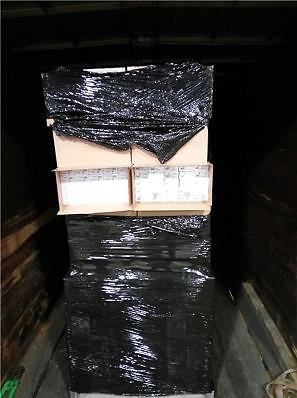
A total of 81 packets of contraband cigarettes were seized. 

Seven men arrested Mar 22 (2)

81 packets of duty-unpaid cigarettes were seized during the operation. (Photo: SPF)

The operation involved officers from the Singapore Police Force, Immigration and Checkpoints Authority, and Singapore Customs. 

Investigations against the seven men are ongoing, said police. 

Source link

The Script "Freedom Child Tour" Live in Singapore

0

The Script “Freedom Child Tour” Live in Singapore
from Tuesday, December 4, 2018 at 8:00 PM to Tuesday, December 4, 2018 at 11:00 PM

Singapore Indoor Stadium

2 Stadium Walk, Singapore, Singapore

Source link

Mastermind of illegal cigarettes syndicate fined S$30 million, jailed

0

SINGAPORE: The leader of a contraband cigarettes syndicate was sentenced on Thursday (Mar 22) to five years and three months’ jail, and fined S$30 million for smuggling duty-unpaid cigarettes into Singapore.

Singapore Customs and the Corrupt Practices Investigation Bureau (CPIB) said in a joint media release that the man, 50-year-old Mok Chee Kin, was also given another five months’ jail term for bribing a Certis Cisco officer.

The sentence is the highest handed down by the State Courts for such offences. The previous record was a three years and six months’ jail, and a S$14 million fine given to another offender in 2014.

As Mok did not pay the court fine, he will serve a default sentence of another 30 months’ jail, bringing the total imprisonment term to eight years and two months, the authorities said.

Mok, who is stateless, was nabbed in 2016 after an operation by Singapore Customs at Jurong Port that began on Mar 30. 

Jurong port ciggies

To avoid checks when Devinderan drove the truck carrying duty-unpaid cigarettes out of the Jurong Port, Mok agreed to pay a Certis CISCO senior protection officer, through Rajeswaran, for not conducting checks on the truck that Devinderan was driving. (Photo: Singapore Customs, CPIB) 

Customs officers were looking out for a white truck which they suspected was being used to smuggle contraband cigarettes out of the port.

Upon spotting the truck at a car park, the officers moved in and uncovered 10,500 cartons of cigarettes in the vehicle.

The total duty and GST evaded amounted to about S$898,600 and S$87,230 respectively, the authorities said.

Investigations revealed that Mok had placed an order for the cigarettes to be shipped from Batam, Indonesia, to Jurong Port.

Mok instructed Lee Helmi Iskandar Rosli, a 31-year-old Singaporean, to receive the shipment at the port.

Another Singaporean, 36-year-old truck driver Devinderan Arajinan, was tasked to collect the cigarettes at the port and deliver them to other parts of Singapore.

Lee and Devinderan were both arrested during the raid. 

Mok and another man, 27-year-old Malaysian Rajeswaran Sandra, were nabbed a few days later. The latter’s role in the syndicate was to give bribes to a Certis Cisco senior protection officer to ensure that Devinderan would not be stopped for checks when he makes his exit out of Jurong Port.

Rajeswaran did this on two previous occasions, paying the officer a total of S$4,500.

Stateless man jurong port ciggs

Investigations revealed that Mok instructed Devinderan to collect the duty-unpaid cigarettes at the Jurong Port and deliver them to other parts of Singapore. (Photo: Singapore Customs, CPIB) 

Lee, Devinderan and Rajeswaran were sentenced to 36 months’ jail each by the State Courts between November 2016 and February 2017 for their various roles in the smuggling offences.

Lee also received a fine of S$5,000, while Devinderan and Rajeswaran were given an additional three months’ jail each for their corruption offences.

Mok had a previous conviction for the same offence; he was sentenced to seven months’ imprisonment in 2011.  

As a repeat offender, Mok was liable to an enhanced punishment under the Customs Act, the media release said, which includes a mandatory jail term of up to six years, as well as a heavier fine of no less than 30 times the duty or Goods and Services Tax (GST) evaded.

Source link

Airbnb to offer qigong, chap chye cooking ‘experiences’ with Singapore elderly

0

SINGAPORE: Forget integrated resorts and theme parks – want a more unique and insider look at Singapore? Try your hand at the traditional Chinese exercise of qigong or learn how to cook a Hainanese vegetable dish called chap chye, all within the tiny but bustling central neighbourhood of Geylang Bahru.

Local non-profit charity TOUCH Community Services and home-booking giant Airbnb on Thursday (Mar 22) launched the latter’s first series of Social Impact Experiences in Singapore.

“Experiences” is Airbnb’s tours and activities business and sees hosts curate an insider’s view of their city with tourists and fellow locals both. The Social Impact arm brings non-profit organisations onboard to offer the same, while receiving 100 per cent of proceeds.

Singapore makes its debut in this category with senior citizens and long-time Geylang Bahru residents James Tan, 77, Catherine Loh, 70, and Maria Yee, 61, separately sharing their passions and hobbies at a price of S$50 per guest.

“Experiences give guests unprecedented access into communities, often where travellers don’t normally go,” said Sriram Vaidhya, Airbnb’s Head of Trips for Southeast Asia and India.

“With TOUCH Community Services, it’s a great way to showcase the incredible wealth and knowledge collected by the seniors. They’re the real stars here.”

Ms Yong Yin Hoong, assistant manager at Geylang Bahru’s TOUCH Seniors Activity Centre, said there were other interested elderly but the selected trio stood out because they spoke English, presented themselves well, and were most comfortable sharing.

All three are beneficiaries of TOUCH who also volunteer with the organisation. They spent up to half a year being prepared by Airbnb staff and running a few trials. Their Experiences – qigong with Mr Tan, chap chye with Mdm Loh and gardening with Ms Yee – will kick off in late April on a once-a-month basis, entertaining about four guests for up to two hours each time.

touch airbnb 3

(Clockwise from top left) Ms Maria Yee, Mr James Tan and Mdm Catherine Loh (Photo: Airbnb)

“Most importantly, they must enjoy what they’re doing,” said Ms Yong. “We don’t want to give them a list of things to do. When they’re happy, they will want to do more, meet more people, make more friends and maybe show other elderly they can do it too.” 

“GIVING BACK”

Ms Yong confirmed that all fees paid by guests will go directly into supporting the work of TOUCH and paying for the operational costs of the Experiences – such as cooking ingredients for Mdm Loh.

touch airbnb 1

Mdm Catherine Loh explaining to Airbnb exec Sriram Vaidhya and other guests how she picks her vegetables at the Geylang Bahru wet market.

Said Mr Vaidhya: “We provide assistance in helping hosts list their Experience. It’s up to the Experience host to decide what price they want to set at – though we provide guidance about what price points work well and how to optimise that to attract the most number of guests.

“We have a responsibility to give back and be extremely aware of causes important to a particular community. And senior care is important to Singapore society,” he added.

When Airbnb launched its first Experiences in Singapore last year, there were media reports suggesting both guides and users could be in breach of the Singapore Tourism Board (STB) Act.

By law, only licensed tourist guides can provide paid guiding services to tourists. These services include “providing any direction, information, description or explanation … in or to a place or point of interest in Singapore”.

Channel NewsAsia has reached out to STB for comment. When asked, Mr Vaidhya pointed to a “vetting protocol” for Airbnb Experiences which encourages guests to follow guidelines for “quality and safety”.

He also said Airbnb’s Experiences and Homes divisions are run separately in Singapore. The latter has occupied the spotlight of late, with two men prosecuted for unauthorised short-term letting of apartments.

Singapore has a minimum rental period of three months for private housing and six months for public. The Government has said it would consult the public in March or April on how best to regulate this market.

Source link

Why Singapore’s claim that the death penalty works for drug offences is fake news

0


SPEAKING before the country’s parliament, Singapore’s minister for home affairs, K Shanmugam, extolled the country’s success in fighting drugs. He attributed these results to Singapore’s harsh drug laws, which include the use of capital punishment.

It may seem surprising to the uninitiated that Singapore has the death penalty for drug crimes. But, as the minister said: “Our penalties are severe because we want to deter such offences”.

Singapore is one of a tiny number of countries classified by Harm Reduction International (HRI) as “high application” states in the use of capital punishment for drugs. This means that death sentences and executions are a regular part of the criminal justice system. Indeed, there have been two executions for drug offences just this month, killings which were condemned by UN human rights officials.

SEE ALSO: Singapore claims it is winning the drugs war because of death penalty

The idea that harsh drug laws such as the death penalty are effective is one actively promoted by Singapore. And it is a belief now allegedly being adopted by US president Donald Trump. Given Trump’s notorious concern with what he considers “fake news”, it is somewhat surprising he has embraced one of the more dubious claims in global drug control – the myth that Singapore’s harsh penalties have nearly eliminated drug use and drug crime.

The Singapore myth

Singapore consistently claims that it has one of the lowest rates of drug use in the world. Yet the government does not publish reliable data on drug use, making this statement impossible to independently verify.

As far back as 2008, the reference group to the United Nations on HIV and injecting drug use found Singapore to be one of the only countries in Asia without reliable data on rates of drug injecting. More recently in 2016, HRI published its global state of harm reduction, which similarly found almost no reliable data on levels of drug use in Singapore.

Instead, the government typically cites information from the world drug report, published annually by the UN Office on Drugs and Crime (UNODC). However, rather than being independently produced, this report reflects data provided by governments.

2018-02-27T034931Z_725391942_RC1F16625C20_RTRMADP_3_SINGAPORE-POLITICS-1

Singapore Prime Minister Lee Hsien Loong attends a meeting with Chinese Premier Li Keqiang (not pictured) at The Great Hall of the People in Beijing, China September 19, 2017. Source: Reuters/Lintao Zhang

SEE ALSO: Malaysia to remove mandatory death penalty for drugs

This practice – which I have long referred to as data laundering – puts a UN seal of legitimacy on Singaporean government data that is at best unverified, and at worst politically expedient. UNODC admits that the vast disparity in data quality and collection methods between countries “affect the reliability, quality and comparability” of the data in the report, making comparisons between countries of little value.

Even the Singaporean minister’s recent speech did not offer any figures on drug-related crime, sticking instead to a few emotive stories about the “dangers of drugs”. The government’s failure to provide transparent data creates huge doubts about any claims of effectiveness, and raises the question of whether their statements represent anything more than political “spin” to justify controversial drug policies.

Missing data

The only data Singapore does publish on drug use are figures on what it terms “drug abusers” – people who come into contact with the health or criminal justice system for drug treatment. Given that UNODC estimates the number of people who require treatment globally is only 10% of all people who use drugs, we can see how these government figures (even if accurate) are a dramatic under-representation of levels of drug use in a country.

What about Singapore’s success in reducing drug-related crime? As with data on drug use, published figures on drug-related crime are neither robust nor transparent, again making such claims impossible to independently verify. The annual statistical crime brief published by the Singapore police force does not provide any data on drug-related offences. Nor does the annual report of Singapore’s central narcotics bureau – an odd omission given the bureau’s practice of regularly reporting major trafficking arrests on its website.

49b2

An anti-drugs warning at a public housing estate in Singapore. Source: WordPress

SEE ALSO: Singapore brushes aside calls for clemency, executes Malaysian drug trafficker

This lack of data certainly does not reflect a lack of crime. The government admits 80 percent of people in prison are drug offenders. This, coupled with the fact that Singapore has the seventh highest rate of incarceration per capita in Asia, does not mesh easily with the government’s claims of low levels of drug-related crime either.

Interestingly, what the narcotics bureau’s 2016 report does show is that seizures of both methamphetamine and cannabis increased by approximately 20 percent over the previous year, while heroin seizures remain basically level. Hardly indicators of a shrinking drug market.

Clearly the statistics used to promote the Singapore myth either do not exist, or fall apart under scrutiny. As a result, any attempt to use the Singapore model as evidence of the effectiveness of the death penalty for drug offences is ludicrous. Given the unprecedented overdose crisis in the US, Americans deserve an evidence-based response. Pursuing myth-based drug policies will only make the problem worse.

By , Senior Research Associate at the Global Drug Policy Observatory, Swansea University. Originally published on The Conversation.

{“total”:0,”error”:””,”stumbleupon”:0,”linkedin”:0,”facebook_total”:0,”pinterest”:0,”google”:0,”buffer”:0,”twitter”:0,”vk”:0}

Source link

East-West Line stations to continue to have shorter hours over weekends in April: SMRT

0

SINGAPORE: All 35 MRT stations along the East-West Line (EWL) will continue to open later and close earlier for all weekends in April as testing and maintenance works on the rail line continue, train operator SMRT said on Thursday (Mar 22). 

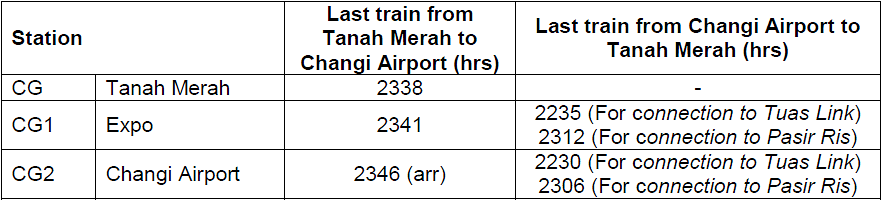
The train services along the line – from Tuas Link to Pasir Ris, and from Tanah Merah to Changi Airport – have been ending earlier and starting later on weekends since March. They will continue to close earlier at about 11pm every Friday and Saturday and open later at about 8am every Saturday and Sunday in April, SMRT said. 

First train timings East-West Line April 2018

Last train timings East-West Line April 2018

The extended engineering hours allow more time to run the line fully on the new Communications-Based Train Control signalling system and to test the system’s integration with the North-South Line (NSL), according to SMRT. 

“Up to 100 trains have been deployed on both the EWL and NSL on selected nights to stress-test the system. This progressive approach prepares the system for eventual tests during EWL passenger service hours in the coming months,” the train operator added. 

The additional engineering hours have allowed SMRT to step up maintenance and inspection of the rail network, and enabled it to accelerate improvement works, such as the replacement of track circuits, rail grinding and track tamping, it said. 

SMRT has also replaced the existing concrete track bed near Raffles Place MRT station earlier this year, and similar works are being carried out along the stretch between Outram Park and Tiong Bahru MRT stations, it added. 

To facilitate these works and as a safety precaution, trains will travel at a slightly lower speed along the affected stretch during the morning peak period, according to SMRT.

SHUTTLE, EXPRESS BUSES TO CONTINUE SERVICES

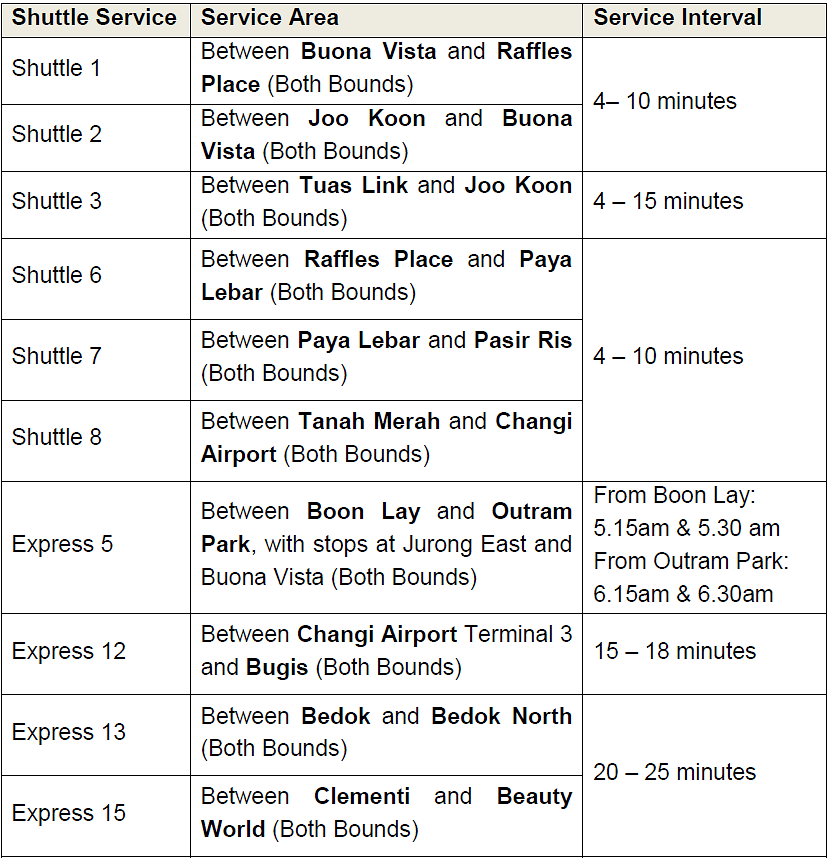
During the shorter operating hours, six shuttle bus services and four express bus services will continue to run as alternative travel options for commuters along the EWL, SMRT said. 

Shuttle and express bus services SMRT April 2018

“Commuters are reminded to cater for additional travel time when using the shuttle bus services, while those travelling longer distances may wish to plan their journeys using other operational MRT lines, or seek alternative travel options, for a faster journey,” the train operator said in the news release. 

Updates on affected train services and alternative transport arrangements will be available on SMRT’s website, as well as through SMRT’s Facebook, Twitter feed and the SMRTConnect app, it added. 

Source link

Malaysia and Singapore’s fake news law proposals spark concern

0


OPPOSITION members and tech giants have expressed concern over Malaysia and Singapore’s plans to introduce new laws to counter fake news, fearing that the legislation of both countries was a veiled crackdown on dissent.

On Wednesday, the Malaysian cabinet approved a controversial Bill to counter fake news which will be tabled in parliament next week.

According to Channel News Asia, Minister in the Prime Minister’s Office Azalina Othman said the Bill sends the message that the government will not compromise when it comes to matters concerning public order and national security.

“This Bill was drafted for the benefit of the general public to protect the people from fake news and becoming victims of fake news,” she said. “However, the Bill does not restrict the right to freedom of expression of the people as provided under the federal constitution in any way.”

SEE ALSO: Hun Sen praises Trump’s Fake News Awards  

2017-12-22T134813Z_1956793249_RC1775EFBF10_RTRMADP_3_USA-TRUMP-ISRAEL-MALAYSIA

Malaysian Prime Minister Najib Razak at a protest against the US declaration of Jerusalem as the capital of Israel. Source: Reuters/Lai Seng Sin

Prime Minister Najib Razak, whose administration was riddled with graft allegations, including the controversial 1Malaysia Development Berhad scandal, had earlier claimed to be a victim of online slander and “fake news.” Najib’s remarks came ahead of the looming general elections due before August this year.

The Star newspaper quoted Deputy Communications and Multimedia Minister Datuk Jailani Johari as saying any information related 1MDB that has not been verified by the Government is considered “fake news.”

“The Government views that other than the information that has been verified by the Government, all other information is deemed as fake news,” Jailani said in parliament on Wednesday.

Opposition MP, Raja Kamarul Bahrin Shah questioned whether the proposed fake news law was meant to silence critics of 1MDB, the multi-billion dollar sovereign wealth fund being investigated by prosecutors in six countries, including the US Department of Justice.

He said Jailani statement seemed to indicate this, making it seem that only 1MDB investigation findings of Malaysia’s Public Accounts Committee (PAC) would be considered verified information, according to Free Malaysia Today.

“This means what is not included in the PAC report would be accepted as fake news. This is the new law they are going to table next week,” he said.

“Currently there is a blanket embargo for MPs to stop them from speaking or asking questions about 1MDB. Now, with the new law, we can be arrested for speaking about 1MDB. This is a ridiculous situation that we are in.”

Singapore’s vulnerability

On Thursday, global tech giants including Facebook and Twitter expressed concern about a possible Singapore plan to bring in a new law to tackle the threat of fake news, saying sufficient rules are already in place.

Officials of Facebook, Twitter and Google, attended a parliamentary hearing on how to counter the threat that Singapore said it was particularly vulnerable to due to its size, its role as a global financial hub and its ethnic and religious mix.

They were among 79 people asked to speak in parliament over the eight days set for the hearing. The wealthy city-state is among the countries looking to introduce legislation, so far unspecified, to rein in fake news, a trend that has stirred concern that such laws could be used to exert government control over the media.

shutterstock_112223885

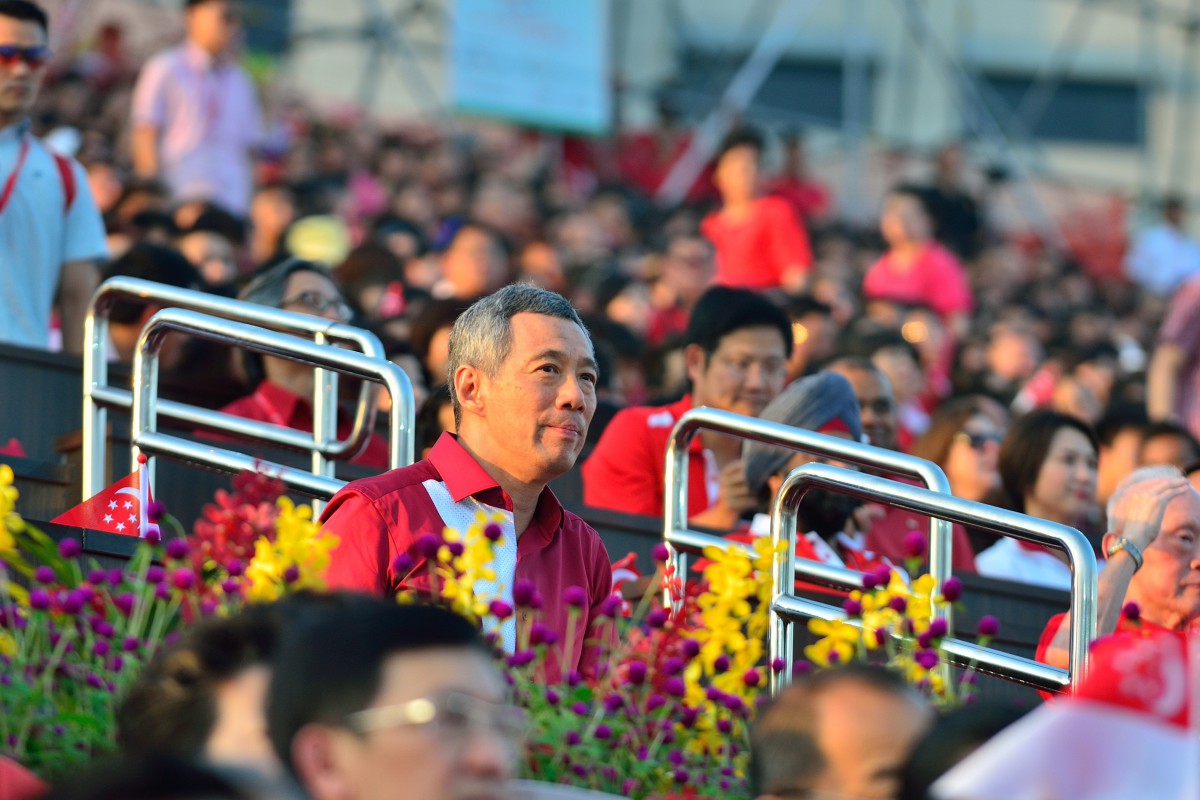
(File) Singapore Prime Minister Lee Hsien Loong looks on at National Day Parade 2012 in this picture taken in Aug 9, 2012. Source: Shutterstock

“We do not believe that legislation is the best approach to addressing the issue,” Alvin Tan, Facebook’s head of public policy for Southeast Asia, said in a written submission.

“Singapore already has a variety of existing laws and regulations which address hate speech, defamation and the spreading of false news.”

Singapore ranks 151 among 180 countries rated in the World Press Freedom Index of Reporters Without Borders, a non-government group that promotes freedom of information.

SEE ALSO: Malaysian minister claims Economist, WSJ, Guardian published ‘fake news’ on 1MDB 

Lawmakers in the United States and Europe have called for probes into how Facebook allowed Cambridge Analytica to access data on 50 million users and use it to help the election campaign of U.S. President Donald Trump.

Microblogging site Twitter also shared concerns about Singapore’s plans.

“No single company, governmental or non-governmental actor, should be the arbiter of truth,” Kathleen Reen, Twitter’s director of Public Policy for Asia Pacific, said.

A parliamentary panel set up to consider possible measures, including legislation, drew 164 written responses from the public, a record for reactions to such a committee on any issue.

Many of the examples of fake news, cited in a Singapore government paper on deliberate online falsehoods published in January, came from abroad.

Additional reporting by Reuters

{“total”:27,”error”:””,”stumbleupon”:0,”linkedin”:0,”pinterest”:0,”google”:0,”facebook_total”:22,”buffer”:1,”twitter”:4,”vk”:0}

Source link

NEA urges those burning incense paper during Qing Ming to be considerate

0

SINGAPORE: The National Environment Agency (NEA) reminded those who will be burning incense papers during the Qing Ming Festival to do so in a considerate manner in a public advisory issued on Wednesday (Mar 21).

Qing Ming, or Tomb Sweeping Day, is a traditional Chinese festival where people tend the graves of their departed loved ones. They often burn joss paper and paper models of houses, cars, appliances and other goods as offerings.

“Members of the public are advised to use burners and containers when burning joss paper to help keep the environment clean, minimise fly ash, and reduce fire hazards, and to burn joss paper in small quantities to minimise smoke,” NEA said in the advisory. 

For residents in housing estates, town councils will be providing bins and containers for their use. Burners have also been made available at the Choa Chu Kang Cemetery and government columbaria at Mandai, Yishun, Mount Vernon and Choa Chu Kang during this period,” it added. 

NEA also reminded members of the public not to leave any food offerings and litter behind, saying that this could attract rats or result in mosquitoes breeding.

JAMS EXPECTED AT CEMETERIES

The agency said that as with previous years, large crowds are expected at the Choa Chu Kang Cemetery and government columbaria at Mandai, Yishun, Mount Vernon and Choa Chu Kang on Qing Ming, which falls on Apr 5, the Good Friday holiday on Mar 30 and Sundays within the festival period – from Mar 25 to Apr 15.

To minimise traffic congestion, it advised visitors to take public transport. Drivers should follow the directional signs and instructions given by the Traffic Police and traffic wardens, it added. 

NEA officers will also be stationed from 6am to 6pm to provide assistance and directions, the authority said. 

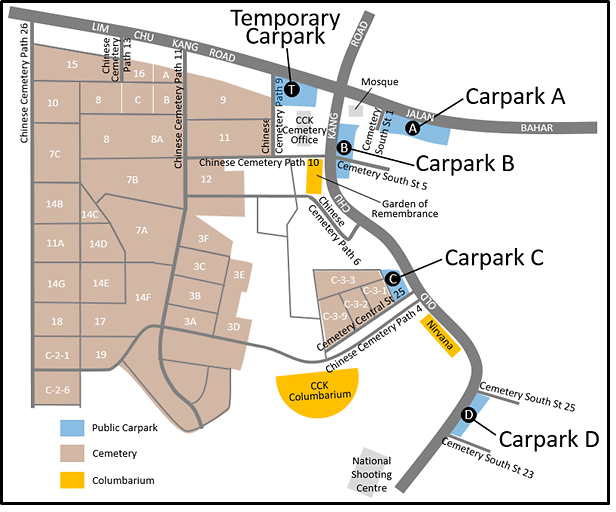
It highlighted car parks along Old Choa Chu Kang Road and said that temporary car park lots are available at Path 9 Chinese Cemetery during the Qing Ming period. Drivers can also park along the left-hand side of the cemetery paths, NEA said.

Vehicles exceeding 2,500kg unladen weight are not allowed into the Choa Chu Kang Cemetery Complex during the peak periods.

Choa Chu Kang cemetery map

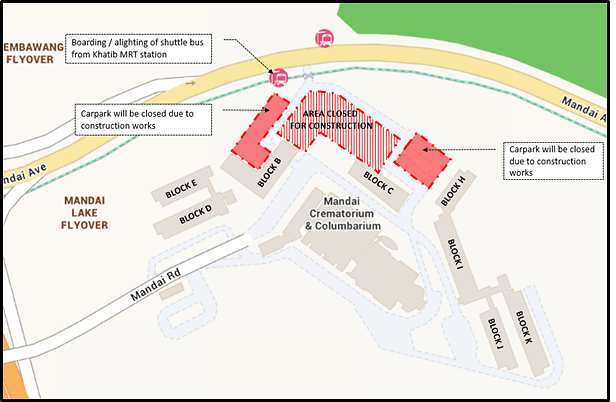
At Mandai Columbarium’s Blocks B and C, there will be a temporary closure of some roads and open-air car parks due to ongoing construction works for the development of a new crematorium complex, the authority also said. 

To complement existing public bus services, a shuttle bus service will be provided at a fee of S$1.40 per trip between Khatib MRT Station and Mandai Columbarium at 30-min intervals from 7am to 5pm on Mar 23 to 25 and Mar 30 to 31, as well as Apr 1, Apr 7 to 8 and Apr 14 to 15. 

Mandai cemetery map

Drivers to Mandai Columbarium are encouraged to park their vehicles near Khatib MRT station and use the shuttle bus service. 

The basement car park at the crematorium will only be open to visitors attending cremation services, NEA said.

Real-time images of the traffic conditions outside Mandai Crematorium and Columbarium complex from Mar 23 to Apr 15 can be found at http://nealive.tcubeapps.com/.

THIRD-PARTY GRAVE MAINTENANCE SERVICES NOT REGULATED BY NEA

In the advisory, NEA also asked family members to exercise discretion when engaging grave maintenance services offered by individuals or commercial entities at Choa Chu Kang Cemetery.

The authority clarified that its maintenance works at the cemetery involves regular grass-cutting in the common areas, and do not cover the maintenance of carpet grass and flowering plants on the graves or of the monuments and tombstones.

“Members of the public may be approached by freelance gardeners or tombstone contractors offering gardening or tombstone maintenance services at the Choa Chu Kang Cemetery for a fee. These services are not regulated by NEA. 

“Next-of-kin who have not made prior private arrangements for such services are advised not to pay anyone who claims to have maintained the graves of their loved ones,” it said in the advisory.

Members of the public who encounter freelance gardeners and contractors engaging in any illegal activity such as touting, extortion, harassment and cheating may lodge a police report at the nearest Neighbourhood Police Centre or police post, NEA said. They can also contact the cemetery office at 6793 7428 during office hours or call 1800-CALL NEA (1800-2255 632).

Source link

300 companies to get free evaluation ahead of move to Industry 4.0

0

SINGAPORE: A total of 300 Singapore-based companies across all industries can get a free evaluation of their readiness to move into Industry 4.0, as part of the Government’s efforts to drive the adoption of advanced manufacturing and help manufacturers build smart factories of the future. 

Senior Minister of State for Ministry of Trade and Industry Koh Poh Koon announced on Thursday (22 Mar) that the Singapore Economic Development Board (EDB) will be funding the evaluation. He was speaking at the IoT Asia 2018 conference where over 6,000 industry participants were present.

Called the Singapore Smart Industry Readiness Index, the tool will allow companies across industries to evaluate the current state of their facilities, identify the gaps and opportunities present, as well as better understand Industry 4.0 concepts and the rise of new manufacturing technologies.

These will provide the companies with information on the steps needed to progress and also aid them in designing a comprehensive transformation roadmap. 

Asked how much the assessments cost, EDB said it was unable to disclose the amount due to confidentiality agreements.

‘ONE OF THE LAST PIECES OF THE ENTIRE ECOSYSTEM OF CHANGE’

The index was first launched in November last year by EDB in partnership with TÜV SÜD, a global testing, inspection, certification and training company. 

It will assess companies’ processes and the technologies they employ, as well as their organisation structure, among other things.

Dr Koh said: “Enabling our industries and supporting our companies and workers in their efforts to adopt Industry 4.0 solutions will be a key priority for Singapore. This will help to keep Singapore as a globally competitive Advanced Manufacturing hub to attract strategic investments and anchor our position in the global value chains.”

He described the index as “one of the last pieces of the entire ecosystem of change” that will help companies figure out where their gaps and needs are.

“It is the piece that helps companies to first make that diagnosis,” Dr Koh said. “A good analogy would be that if you don’t know what is wrong with you, you can’t begin to go about to do the treatment.”

An automated production line at Thong Siek factory

One of the automated production lines at Thong Siek’s plant. (Photo: Brandon Tanoto)

APPLICATIONS WILL BE CHOSEN BASED ON CERTAIN CRITERIA

Manufacturer Thong Siek, which is the distributor and retailer of seafood products such as the popular DoDo brand of fishballs, had undergone the assessment and told Channel NewsAsia that it has helped them to better visualise their plans in adopting new Industry 4.0 manufacturing technologies.

Ms Lim Xiao Fei, the company’s deputy chief operating officer, said: “It’s easier for us to put together a more comprehensive plan in terms of digitalisation of our production floor and automation projects. So it will be easier to come up with a proposal to talk to SPRING Singapore and other agencies for support in terms of funding.”

Companies can register their interest for the funded assessments at EDB’s website. The agency said that applications will be chosen based on certain criteria. 

Dr Koh said that the government will work closely with Trade Associations & Chambers to drive the use of the index, as well as to deepen engagements with companies and extend the necessary support and guidance to help businesses transform.

“Because them being the industry experts in the cutting edge and leading front of change would know what’s over the horizon and what the needs of their member companies are,” he said. 

“So by working with them, we can better decipher where the trends are heading, plus they can become the critical aggregator of their needs and the first mover of change to get companies to come aboard this journey.”

Source link