SINGAPORE: Singapore is doing well and the Government is fulfilling the tasks it set out to accomplish, but “do not assume that Singapore will always continue to be successful”. This is why its leaders must not take the “wrong approach” in making incremental, instead of bold, changes, said President Halimah Yacob on Monday (May 7).
In her speech to open the second session of the 13th Parliament, Mdm Halimah noted that the fourth generation leadership team is taking shape and the new leaders are conscious that Singapore is at an advanced stage of development.
“We may feel that we have more to lose now. We may be tempted not to go for bold changes, but instead be content to tweak things at the margins,” the president said. “That would be the wrong approach.
“Singapore has a lot going for it. It is a vibrant global node in the heart of a thriving Asia; a multi-cultural society with people from diverse backgrounds living harmoniously side by side. We need to keep alive the spirit of our pioneers and be constantly driven to do better, with each generation surpassing the previous,” she added.
She highlighted significant developments in the country’s external and domestic environments that must be understood and dealt with.
President Halimah Yacob giving her speech at the opening of the second session of the 13th Parliament on Monday (May 7). (Photo: Jeremy Long)
GLOBAL AND REGIONAL TENSIONS
The first: Strategic changes. The centre of gravity of the world economy is shifting to Asia as a result of China rising and India taking off. The Association of South East Asian Nations (ASEAN) is also generating renewed interest among international investors and these trends bode well for Singapore, she said.
But much depends on the relationship between the United States and China, which “underpins regional and global peace and prosperity” – a relationship Mdm Halimah described as “dynamic”.
Regional tensions, such as the developments in the Korean Peninsula and terrorism, continue to be an important area of focus, the president said.
Closer to home, ties with the country’s immediate neighbours also need attention.
Mdm Halimah said: “Relations with our immediate neighbours – Malaysia and Indonesia – are stable and multi-faceted. Our histories and heritages are intertwined. We have grown our partnerships in recent years, and will continue to strengthen them.
“We must tend these bilateral relationships carefully, especially during election seasons, and avoid becoming embroiled in their domestic politics.”
President Halimah Yacob speaking at the second session of the 13th Parliament on Monday (May 7). (Photo: Jeremy Long)
TEXTURE OF SINGAPORE SOCIETY “CHANGING”
Domestically, the president said the texture of Singapore’s society is changing as the population ages, which will place heavier demands on the country’s healthcare and social security systems.
“We have seen income inequality and social stratification break the social compact in many countries. If the same happens to us, our politics will turn vicious, our society will fracture and our nation will wither,” Mdm Halimah said.
“We must tackle inequality, particularly the increasingly dissimilar starting points of children from different family backgrounds, before the problem becomes entrenched in our society.”
She also pointed to religious polarisation, xenophobia and extreme nationalism as “divisive forces” that have grown stronger in many parts of the world, and the online space used to spread falsehoods and misinformation.
Singapore, she said, must not allow itself to succumb to these forces.
“All these developments that I have outlined can affect us in unexpected ways. We need to watch them closely, tackle them resolutely, and make progress together,” the president said.
“We already have policies and programmes to respond to these shifts. These tasks will occupy us beyond this term of Government.”
SINGAPORE: The Government will focus its energies on securing Singapore’s place in a changing world, making the country world class, creating a workforce that is equipped in an age of technological disruption, tackling social inequality vigorously and nurturing a strong sense of nationhood.
In her speech, she said to secure the country’s place in today’s world, the Government is “prepared to stand and fight for our nation, defend our vital interests and work with others in win-win partnerships”.
For instance, the Singapore Armed Forces and Home Team are building up their capabilities, including against unconventional threats like terrorism and cyberattacks. “Beyond equipment and capabilities, our strength ultimately lies in our people’s resolve to defend this country and be masters of our destiny,” she said.
Mdm Halimah also noted how it seeks to “be friends with as many countries as possible”, in particular working for good relations with both the United States and China.
This year’s Association of Southeast Asian Nations (ASEAN) chair also said it will strive for an “open and inclusive regional order, with all the major powers engaged”. It will work with regional partners to strengthen the body’s centrality and unity – and “will sustain our efforts for the long term”, she said.
The second priority for the Government is to meet Singaporeans’ desire to live in a world-class city and an endearing home that is clean, green and efficient, as well as fun and connected, Mdm Halimah said.
To do so, it is prepared to think long term in its planning for the city and the infrastructure to build for future generations, she added.
Investments in infrastructure, for example, mean the building of Changi Airport Terminal 5 and a new Tuas Port, as well as the Kuala Lumpur-Singapore High Speed Rail project and the Johor Bahru-Singapore Rapid Transit System link.
The Government is also renewing the heartlands and investing heavily in new MRT infrastructure, she pointed out, adding that the country’s urban landscape will be much transformed in the coming decades when Paya Lebar Air Base moves to Changi and the city ports move to Tuas.
CHANGING HOW SINGAPOREANS ARE EDUCATED
The president also said the Government is looking at making sure Singapore remains a “nation of opportunities” for its people to “pursue dreams, chart fulfilling careers and lead meaningful lives”.
This means continuing to renew the economy to keep it productive, enterprising and innovative. “Our investment in research and development is bearing fruit, and will enable us to exploit deep technology and digitalisation; create a Smart Nation; and conceive, test-bed and scale up new products and services.”
She also said the new business centres, such as Jurong Lake District, Punggol Digital District and Woodlands North Coast, will each have its own character and industry niche.
The Government will invest heavily in Singaporeans, she said, recognising that in an age of technological disruption, citizens must be flexible, eager to learn, and adventurous to venture beyond our shores.
She said: “We are changing the way we educate and prepare Singaporeans for life, putting less emphasis on academic grades, and more on skills and the ability to adapt to a dynamic external environment.”
SkillsFuture will anchor this national culture of lifelong learning for mastering skills, while Adapt and Grow will match workers to jobs, and help Singaporeans stay employable as industries and jobs change, she added.
President Halimah Yacob spoke at the opening of the second session of the 13th Parliament on Monday (May 7). (Photo: Jeremy Long)
“WE MUST TACKLE INEQUALITY VIGOROUSLY”
The issue of inequality will also be tackled during this term of parliament, the president said.
“Singaporeans want to live in a fair and just society, one based on meritocracy, but at the same time strives to leave no one behind. Thus we are each prepared to do our best, but also to walk alongside fellow citizens who need help to keep up,” Mdm Halimah said.
“In Singapore, people must always be able to get ahead through effort and excellence. We must open up more progression pathways, and celebrate a broader range of successes. We are committed to give every child a good start in life, no matter what their family circumstances may be. We will continue to raise the quality of pre-schools and do more for children at risk.
“We must tackle inequality vigorously. We need to provide the right additional support to those needing it – in housing, education, skills training, and employment – so that meritocracy works well. Only then can everyone do well through hard work, talent and skills, regardless of their backgrounds.”
The plight of the growing population of elderly was also highlighted.
She said the Government will continue to help older workers stay employed, earn fair wages and save more, so that they can age with dignity and purpose. It will also enhance elderly friendly infrastructure, including new housing options and healthcare and fitness facilities, and keep healthcare affordable through “well-designed healthcare subsidies”, among others, she added.
It also pledged to do its part to meet the needs of different segments of Singaporeans, providing more support to young families and make the country a great place to have children, as well as enable people with disabilities to lead “full and active lives”.
“Most importantly, we need to build a strong culture where the better-off devote time, talent and resources to help the less fortunate. Only when everybody lends a helping hand can we truly become a compassionate and caring society,” Mdm Halimah said.
The president also said, above all, Singaporeans want to feel a strong sense of nationhood.
She said today, Singapore’s diverse cultures and traditions are interwoven – something the country had not expected on Aug 8, 1965, the eve of its independence.
She also noted that the Singapore Bicentennial, which will take place next year and marks 200 years since Sir Stamford Raffles landed here, will be an occasion for Singaporeans to trace their roots and draw inspiration for the journey ahead.
“We have succeeded in nurturing a distinct Singapore identity, a sense of common destiny transcending our individual racial and religious identities,” Mdm Halimah said. “This is still a work in progress, but we have come far.”
SINGAPORE: A search is ongoing for a 56-year-old Singaporean man who disappeared midway through a cycling event in Ipoh on Sunday (May 6) afternoon.
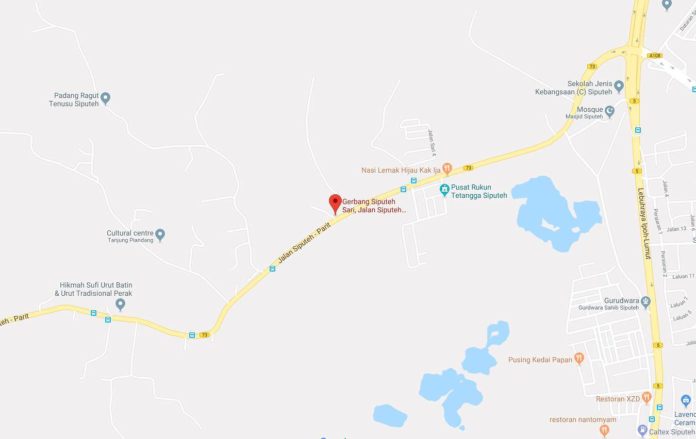
According to an appeal posted on the Facebook page of the Perak Century Ride 2018, Abdul Samat Ismail, is reported to have gone missing during the last leg of the 160km event.
Organisers said Mr Abdul – who had been part of a 20-strong team from Singapore – had complained of leg cramps and decided to take a break at Water Station 4 at about 1.45pm on Sunday. The station, about 24km from the finish line, is located along Siputeh and RTC Gopeng.
A 40-strong team began their search for Mr Abdul on Sunday night, combing the area on their motorcycles, said one of the event’s organisers, Mr Zairul. The police are also trying to locate Mr Abdul.
Mr Alvin Low, a cyclist in the Singapore contingent, told Channel NewsAsia that Mr Abdul was “not contactable” after disappearing at the final water station during the race. Mr Abdul was last seen by his roommate at the location, Mr Low added.
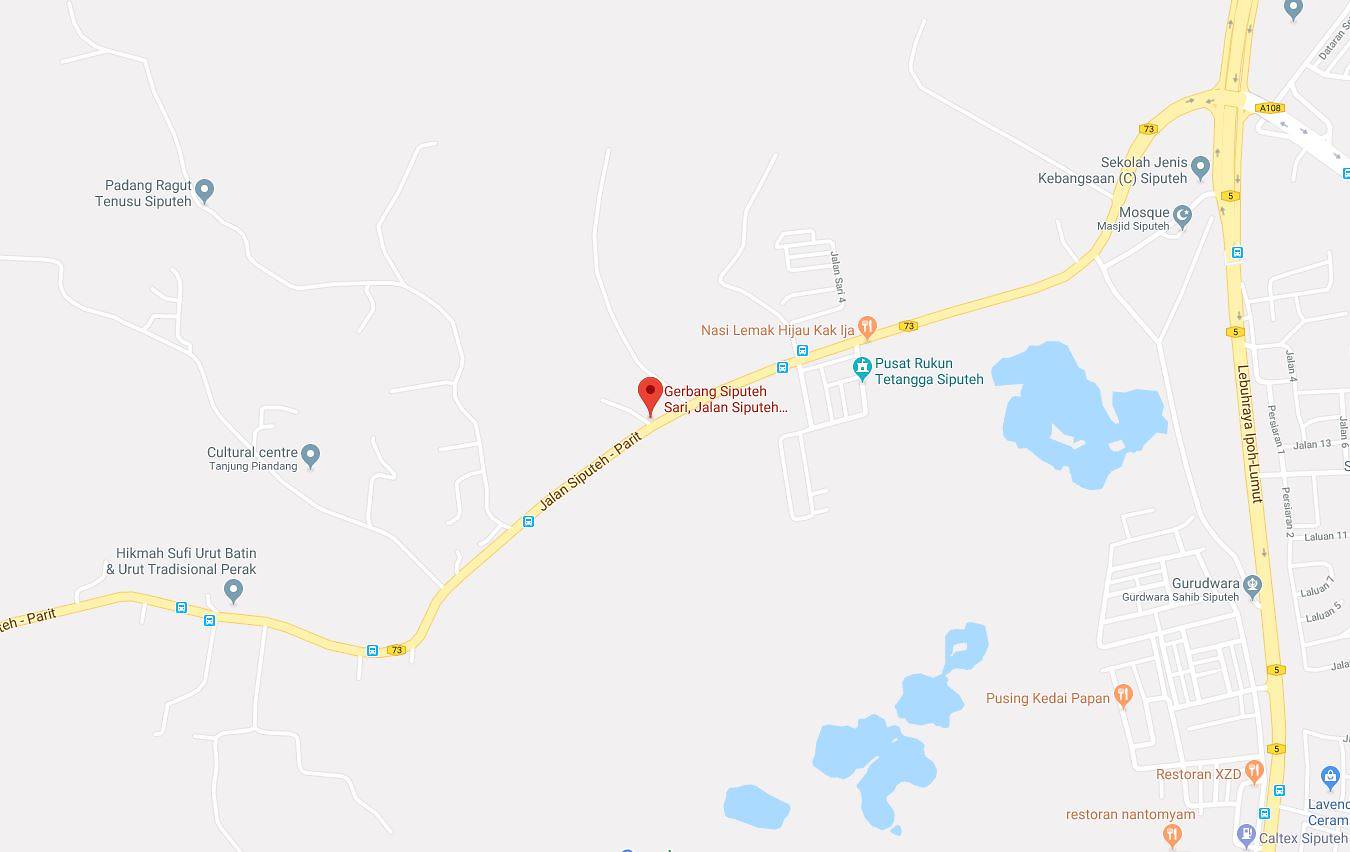
Mr Abdul’s last known location, according to fellow cyclist Mr Alvin Low. (Map: Google Maps)
After Mr Abdul reportedly stopped to take a break at the water station, the rest of team decided to carry on with the race without him, Mr Zairul said.
When Mr Abdul failed to show up at the finish line by 3pm, his team mates called him on his mobile, but were unable to get hold of him.
“His phone was ringing but there was no answer and he had no data,” Mr Low added, adding that the team were supposed to begin making their way back to Singapore at 3.30pm.
Mr Abdul’s daughter, Ms Nurul Nadiah Abdul Samat, said that her family learned of his disappearance at 7pm on Sunday.
The last contact she had with her father was on Saturday evening, when he sent her a group picture of the race participants.
She added that it was “unbelievable” to learn about her father’s disappearance.
“It doesn’t make sense. There are road marshalls, people taking videos and handing participants water at the rest point. If my dad needed help, there were people around,” she said.
“This is still a shock to us.”
Mr Low added that he has been working with the police since the end of the race at 3pm on Sunday to trace Mr Abdul’s whereabouts.
“I’m here to provide assistance and info,” added Mr Low, adding that the race organisers are also still searching for Mr Abdul and that the High Commission of the Republic of Singapore in Kuala Lumpur and the Ministry of Foreign Affairs (MFA) have been informed.
Channel NewsAsia has reached out to MFA for more information.
SINGAPORE: The Agri-Food & Veterinary Authority (AVA) on Monday (May 7) said that the importer of Singlong Peanut Butter (Crunchy) has recalled a batch of the product after a metal screw was found in one of the bottles.
AVA said it worked with the importer to investigate after it received feedback on the foreign object.
The investigation found that the metal screw could have been introduced during the manufacturing process.
“As a precautionary measure, the importer had voluntarily recalled the specific batch,” AVA said. “The recall has since been completed.”
A tub of Singlong Peanut Butter. (Photo: AVA)
The affected batch of 340g bottles has a use-by date of Jan 25, 2019, AVA said. The product’s country of origin is China.
Consumers who have purchased the affected product are advised not to consume it.
Consumers may contact Sing Long Foodstuff Trading at 6284 5254 or email nya01@singlong.com to refund or exchange.
AVA’s food alert comes after Facebook user Sharon Foo posted in March pictures showing what appears to be a metal screw she found in a bottle of Singlong peanut butter.
The authority confirmed with Channel NewsAsia that the bottle of peanut butter mentioned in her Facebook post is the same as that mentioned in the food alert released on Monday.
SINGAPORE: Giving an update on the merger deal between Grab and Uber, the ride-hailing company’s Singapore head Lim Kell Jay said talks with the Competition and Consumer Commission of Singapore (CCCS) are “going well”.
But he said when the deal will be given the regulatory green light depends on the competition watchdog.
Mr Lim, during a briefing to reveal new services on Monday (May 7), gave a progress report on the deal, saying the regulator allowing the Uber app to be retired today is a “good sign” and he is “fairly confident” it will make the right decision to allow for innovation and competition to flourish in the country.
He also mentioned that “almost all active Uber drivers” in Singapore have been brought on to its platform, while the US company’s staff in the region is being approached by Grab to discuss their joining them.
Grab Singapore head Lim Kell Jay.
“We are doing it as quickly as we can,” Mr Lim said, but added he “does not know” how many will be added to Grab once the Uber employees’ gardening leave ends.
“We are prepared to accept all,” he reiterated, with a company spokesperson adding that this sentiment is for all eight countries Grab is operating in.
NEW SERVICES FOR THOSE WITH MOBILITY NEEDS, YOUNG CHILDREN
The briefing was held so Grab could announce three new services it will roll out from Monday.
One of these is GrabAssist, a service catering to commuters with mobility needs, Mr Lim shared. These vehicles will accommodate foldable wheelchairs, walkers and collapsible scooters, and they will be driven by around 1,000 private-hire car and taxi drivers who have been trained by the Agency for Integrated Care (AIC) to provide assistance to these passengers, he added.
The service is designed for one passenger with mobility needs, the Singapore head clarified in the question-and-answer session.
The GrabAssist service caters to commuters with mobility needs. The vehicles will accommodate foldable wheelchairs, walkers and collapsible scooters, and they will be driven by around 1,000 private-hire car and taxi drivers who have been trained by the Agency for Integrated Care (AIC). (Photo: GrabSG)
The training includes theoretical and practical training in areas such as safety in transferring passengers in and out of cars, dementia awareness and hygiene and emergency preparedness, the press release issued on Monday said.
The fare for GrabAssist is priced “marginally higher than JustGrab” – it is “pegged at GrabFamily pricing”, Mr Lim elaborated – with a lower commission rate of 10 per cent, the company said. This is to reimburse drivers for their time spent on training and supporting passengers, it added.
Uber had previously offered a similar service with UberAssist, which is a vehicle option that “offers additional assistance to members of the senior and physically disabled community”, its website stated.
Another service to be launched is GrabFamily (Ages 1-3), which is an extension of its family-friendly service GrabFamily (Ages 4-7) that saw its fleet equipped with the mifold Grab-and-Go booster seat.
Cars in this fleet will come equipped with an IMMI Go car seat, and the drivers will have been fully trained on the proper installation and use of the seat, the company said, adding it will be priced similar to Uber Car Seat. A S$10 surcharge is added to uberX pricing for such trips, the website showed.
“We are aiming for end June to launch the service,” Mr Lim said, and reiterated its aim to equip all of its fleet with the mifold child booster seat, which was announced last March.
PREMIUM ECONOMY, CAR VERSION
The third service is pitched as a “premium economy” offering called GrabCar Plus, which will be rolled out by the end of May.
The service will offer newer cars that are slightly more spacious and generally less than three years old, the company said, with basic in-car amenities such as mobile phone chargers, air freshener and tissue boxes.
It will be priced between JustGrab and GrabCar premium services, the company said, with Mr Lim adding that this is “20 to 25 per cent more than JustGrab’s base fare” as well as other dynamic pricing mechanisms that might kick in.
Drivers eligible to offer this service are those highly rated with “more than 98 per cent positive feedback”. Asked how this is different from the five-star rating system currently in place, Mr Lim said the feedback is taken off commuters’ comments and not the ratings given.
“A driver can have five stars, but may have had bad passenger feedback,” the executive explained.
Mr Lim also pointed to the recent enhancement of its iOS app, as well as the “significant improvement” on its GrabRewards platform and user interface as other examples of how the company is continually improving its products and services.
He also noted that GrabFood is currently in its beta test phase, with “some” Grab users invited to test the service, which is currently confined to the Central Business District.
“We hear the needs of our community and continue to evolve to serve them better. The new services will make shared transport more accessible for different segments of community,” he said.
SINGAPORE: In late 2017, when Singapore’s passport became the most powerful in the world, my Singaporean students were understandably proud of how their tiny nation now offered more visa-free access to its citizens than even Western countries like the United States.
At roughly the same time, Singapore was named the top “expat destination” for the third straight year, based on the HSBC Expat Explorer Survey.
But how would Singapore rate if there were a similar ranking system for how different countries treat foreign domestic workers (FDWs), who are arguably just as important as highly skilled expatriates to the smooth running of the Singapore economy?
It would most likely only receive a middling score.
SINGAPORE VERSUS THE WORLD
It is true that compared to countries in the Middle East, Singapore has a much better track record when it comes to the treatment of FDWs, for instance.
Their average wage rates in Singapore are higher. They enjoy significant freedom of movement and freedom of religion if they are able to secure a regular day-off
The Singapore penal code recognises the vulnerable position in which domestic workers are placed and therefore increases the level of punishment meted out to employers for offences such as abuse, wrongful confinement and sexual assault.
Singapore is also one of the few countries that provides a mandatory “settling-in programme” to all domestic workers soon after their arrival in the country.
In contrast, most countries in the Middle East offer, on average, much lower monthly wages and employers impose strict rules that curtail the free movement of women workers outside their employer’s home.
Last year, the International Labour Organisation reported that many of the problems domestic workers face in Arab states stem from “low-compliance with existing laws and weak enforcement mechanisms to address poor compliance”.
Domestic workers in Singapore (File photo: TODAY)
Meanwhile, countries like Canada cover FDWs under their labour laws.
In Ontario, for instance, these workers are eligible for minimum hourly wage rates (that are much more generous than Singapore’s), overtime pay, paid sick leave, weekly days-off and paid public holidays off. They are also required to be either given a private room or paid extra so they can “live out”.
In Chile, FDWs who successfully complete a two-year contract can apply for permanent resident status.
But some might argue that it is not fair to compare Singapore, a city-state, with such large countries, and that Singapore’s small size means that it cannot afford to be as generous as others when it comes to the treatment of FDWs.
So how does Singapore compare with another small territory like Hong Kong?
Unfortunately, Singapore does not fare too well when set against Hong Kong.
Neither destination offers permanent residence to FDWs, but the Chinese territory does guarantee all migrant domestic workers a minimum allowable wage of HK$4,410 a month. This translates to S$740 a month, much higher than the monthly wages of S $570, S$550, and S$450 in Singapore for Filipino, Indonesian and Myanmarese domestic workers respectively that are suggested by their embassies.
Like Singapore, Hong Kong also guarantees migrant domestic workers a weekly day-off, but adds that this must be a continuous 24-hour period of rest. All 12 statutory holidays must be given as paid days off to workers.
Workers are also entitled to a long-service payment after five years of employment with the same employer. And finally, female FDWs in Hong Kong are also entitled to maternity leave and are protected from being fired simply for becoming pregnant.
In Hong Kong, migrant domestic workers are even covered under its Employment Ordinance that lays out protections for all native-born workers. If Hong Kong can manage to extend these protections for the more than 300,000 FDWs employed there, should Singapore follow suit?
Filipina domestic helpers sharing a meal in Hong Kong. (Photo: AFP/Ted Aljibe)
SINGAPORE AS A STEPPING STONE
Why should it matter where Singapore stands in relation to other destinations when it comes to the treatment of FDWs? Bharati Jagdish, the host of Channel NewsAsia’s On The Record, wrote recently that “we pride ourselves on being a First World nation, so shouldn’t we endeavour to apply First World standards of fairness to our treatment of all workers including guest workers here?”
This is a persuasive normative argument for better treatment of the temporary migrant workers who enable expats and residents to enjoy such a great quality of life here. But there are also competitive reasons why Singapore should treat low-wage FDWs better.
If Singapore gains a reputation as only a mid-ranked destination for FDWs, then the best qualified and talented of these migrants will choose not to seek employment in Singapore.
Others may opt to work in Singapore for only a couple of years, using it as a stepping stone to secure a job in a more attractive overseas destination that provides them with higher wages and greater benefits.
My research on the migration patterns of Filipino and Indonesian domestic workers highlights how Malaysia and the UAE are common prior destinations for “stepwise migrants” who come to Singapore because they are attracted by its relatively higher wages and better working conditions.
But when I ask them about their future plans, many of them talk about wanting to move on to places like Hong Kong where the wages are even higher and more protections exist for migrants.
In Hong Kong, more than 50 per cent of the 250 Indonesian and Filipino domestic workers my students and I surveyed had worked in at least one other overseas market before their arrival in Hong Kong. Singapore was their most common prior destination.
Filipino domestic workers take part in a practice session inside a kindergarten school’s classroom in Hong Kong. (Photo: AFP/DALE DE LA REY)
A ‘CARE DRAIN’
The competition between countries for these experienced migrants is heating up even further.
In 2015, the Chinese government introduced a pilot visa programme for FDWs to be employed by expatriates in Shanghai, with double the wages they can earn in Hong Kong.
In 2017, Japan also launched a pilot programme to bring in FDWs on agency-sponsored contracts with wage rates equal to those earned by local Japanese cleaners.
If Singapore does not position itself as a top destination for such migrants, the best of these workers will continue seeking out destinations where they can enjoy better working conditions and protections.
A “care drain” – as opposed to a brain drain – will begin to develop, strains on households with young and old family members will emerge, and wasted time and energy will be regularly spent training new workers to keep up with the high turnover.
Some might argue that local domestic workers are currently not covered under the Employment Act either and so benefits should not be extended to foreigners before locals.
But that is the opposite of what I am proposing here. Paid domestic work is real work and all domestic workers – whether local or migrant – should be able to avail themselves of the protections enshrined in the Employment Act.
However, we should also recognise that the vast majority of domestic workers in the country are temporary migrants, not locals, and that they may need additional protections because of this vulnerable status.
The Singapore Government already recognises the importance of attracting and retaining “foreign talent”, which is the primary reason it invests so heavily in its reputation as a top expat destination.
But the same thinking should apply to lower-status categories of migrant workers, including FDWs, who also contribute to the expansion of the Singapore economy, the growth of the native-born population, and the smooth functioning of Singapore society.
The protection and retention of these FDWs should become the next area where Singapore strives to rank number one. Here’s to the day when Singapore is named the best “foreign domestic worker destination” in the world.
Anju Mary Paul is an associate professor of sociology and public policy at Yale-NUS College in Singapore. Her research specialises in labour migration patterns in Asia and cross-country policy comparisons.
SINGAPORE: Glen Goei’s dedication to the arts is indisputable. Since graduating from university in the UK, the 56-year-old director’s repertoire has grown to include theatre, musicals, large-scale performances and even films such as Forever Fever which he both wrote and directed, and The Blue Mansion.
As we begin our interview, the breadth of his artistic versatility comes to the fore as he tells me he will be playing a serial-killer in a film called Demons by “young, wonderful and talented” filmmaker, Daniel Hui.
He says this with a laugh.
It’s clear the role is incongruous with his affable disposition.
“I think that’s what the director was interested in – the fact that I don’t look like a serial killer. Most of them don’t look like it.”
The film is due to do its rounds at film festivals in Europe this summer.
However he says acting is “the least of my priorities” partly because he likes “to be in control of the full product” as a director.
This is apparent as there was an almost 30-year hiatus between his very first acting role and his second which was in Wild Rice’s production, Mama White Snake last year.
It was his acting chops in M. Butterfly as Song Liling, a beguiling Chinese opera singer opposite Anthony Hopkins in London’s West End that started his career as a professional artist in 1989.
For that role, he was nominated for the Laurence Olivier Award for Best Newcomer.
Today, he is Co-Artistic Director of one of Singapore’s leading professional theatre companies, Wild Rice.
Their Singapore Theatre Festival which will run from Jul 5 to 22 will have eight brand new plays that examine hot button local issues such as fake news, racism and the loss of heritage.
Mr Goei is directing one of the plays called Supervision, the story of a wheelchair-bound retiree and an Indonesian domestic worker who is employed to take care of him. The elderly gentleman’s daughter installs cameras in the home to surveil the domestic worker.
It’s a commentary on surveillance culture in society, both in public and private spaces.
Supervision is written by playwright, Thomas Lim and directed by Glen Goei. (Photo: Singapore Theatre Festival)
“One of the aims of the Theatre Festival is also to introduce new work and new writers. The encouragement is necessary,” he says.
Getting people to choose a career in the arts is still tough.
Many years ago, he himself had to contend with opposition from his parents who had sent him to London to study Economics.
“But a month after going to university, I decided to switch to History and my father was very upset. He flew from Singapore to London, sat me down and said, ‘No you’re not doing this.’ Asian people are very practical and pragmatic.”
But he stuck to his guns and went on to earn a Postgraduate Diploma in Drama.
“Even after school and all my successes, I think he was hoping that it was just a phase I was going through. He wanted me to join the family’s real estate business. Eventually, he surrendered. But he was clear that I shouldn’t expect a lot of financial support and I was on my own.
“If this is your choice, then you have to live with it and it’s great. I’m glad that’s the way he brought me up.”
Even though he admits there’s not much money in the arts he continued because he “realised that art, theatre is my life”.
It came from a desire to tell stories and to present various “points of view” that he feels are less represented in mainstream media.
NO MONEY, NO FUTURE
“When I became a professional actor, I think the only other professional actor at that time was Lim Kay Tong. But now, there are a lot of professional actors. About 40 or 50. But still, not even the hundreds.
“Now that Singapore is the most expensive country in the world, it’s even harder to choose the arts.”
There’s no money in it and therefore, people think there’s no future.”
Does he really blame people for thinking that way though?
“Not really, because it’s expensive to live here, and it’s getting increasingly difficult, but what do you mean by money? How much money do you need to survive? If you want to earn five figures then of course it’s very, very difficult. If you’re comparing yourself with your friends who are bankers, lawyers and engineers or doctors, you’ll never earn the same money as they do. But if your priorities are different, so is that definition of money and how much money you need to survive as a human being.”
He says he admires those who are “courageous and brave enough to take that leap of faith”.
“But artists are very creative people. They are survivors. They will find ways of eking out a living. A lot of my friends teach drama in schools or they will direct youth festival plays. They find interesting ways which still keep them creative and manage to earn a decent wage.”
He himself is able to survive on his decent wage from Wild Rice, but in the early years he admits that he was in a better position than many others.
“I was lucky because parents are our best sponsors, our best patrons. They may not have given me cash, but at least I did not have to work to support them, and I always had a place to stay if I needed it.”
I point out that so many who might be talented or inclined towards an arts career may not enjoy the same privilege.
“The National Arts Council gives grants. There are foundations in Singapore which also give grants to students who want to study the arts. Of course, more can be done.
“From our own perspective, we try to incubate writers and we try to identify artists who are budding and who have the talent. We give them opportunities whether as interns or associate artists. So, we do whatever we can in the theatre company when we identify people whom we feel have the talent and who need to be nurtured and given that extra push and support.”
Glen Goei with Anthony Hopkins in M. Butterfly in 1989 in London’s West End. (Photo: Wild Rice)
FIGHTING RACIAL STEREOTYPES
One could say when he was starting out himself, it seemed as if he was destined for greatness.
His role in M. Butterfly was his first acting job straight out of school.
“I was just 26. Anthony Hopkins was a famous stage actor but he wasn’t the star he is today. At that time, he hadn’t done all these Hollywood films or won Oscars. I knew him only because I was involved in theatre. I was starstruck, but I think I was more terrified of the role. I just had to focus on getting my lines right and just doing the role. There was so much pressure.
“I had no time to think about him,” he says with a dismissive wave.
You would think starring in M. Butterfly would make him a much sought-after stage actor for many years thereafter, but what he tells me next transports us from a world where he had his name in lights next to Anthony Hopkins, to a world where harsh realities ruthlessly doused the dreams of Asian actors.
“Immediately after M. Butterfly, if I’d wanted to continue being an actor, I would have had to start from scratch. If I was lucky, I would have been able to get a part as a spear carrier at the Royal Shakespeare Company.
“If I was lucky,” he adds for emphasis.
“I was the toast of the town in London at that time. But my fellow actors who were much older than me had told me the realities. They were not used to casting minorities. They were not used to colour blind casting.”
He claims the only reason he was considered for M. Butterfly was because the role required an Asian actor.
“In drama school, I don’t think the teachers thought very much of my talent or maybe they thought I’m just a yellow-skinned actor and I’m not going to get any work anyway. I’m probably only going to be playing gangsters and pimps and drug addicts.”
But it was during his graduation shows that he was spotted by an agent who asked him to audition for M. Butterfly.
“I did three graduation shows and I had very, very small roles, but I guess my yellow skin helped me stand out for this role.”
Soon after M. Butterfly, he set up his own theatre company, Mu-Lan Arts.
“Thankfully, I was already a director. I had been directing since the age of 11 in school, so directing came naturally to me.”
But another reason for setting it up was to create roles for Asian actors including himself.
“I was sick and tired of being stereotyped, so I did a practical thing by setting up my own theatre company. Do plays that reflect your own world view – whether it’s cosmopolitan, whether it’s a multiracial cast.”
However, soon Mu-Lan Arts ran into difficulties. The audience numbers were not increasing and the company’s finances were dwindling.
“You need to have the support of the community. I was doing plays but my own community wasn’t coming to see the plays.”
The apathy had its roots in history he says.
“Historically, a lot of Chinese came to Britain only in the 60s and 70s. A lot of them came from the working class and they all went into the stereotypical industries which were Chinese takeaways and laundry shops. The children of that generation would take over their family businesses or go into traditional subjects in university like economics, law, engineering or medicine. They were practical people. The arts were a very low priority for them.”
All this has changed over the years in the UK he says, but it also meant that fewer Asian talents have emerged and minority actors still have it tough.
“Black actors have been fighting for it for so many generations and it’s beginning to bear fruit. If you just go to the theatre in London, you see black actors all the time now. Now you see a lot of Asian actors, Pakistani Indian actors. There’s also a Singaporean actress, Anjana, who’s constantly on stage in London now. But they’ve been fighting for it. They have been very vocal about it for generations. The struggle has to continue.”
I remark that even in Singapore, minority actors have brought up a lack of colour blind casting as an issue.
In fact, this year’s Singapore Theatre Festival addresses the issue in two separate one-woman shows.
Ruth Tang’s Building A Character features young Indian actor Rebekah Sangeetha Dorai and the challenges she faces, from casting preferences to comments like: “You’re pretty for an Indian.”
The other one-woman show, An Actress Prepares is written by playwright, Alfian Saat and looks at the life of popular theatre actor Siti Khalijah Zainal and her own challenges, including being told she was “too Malay” to land roles.
He agrees it’s a problem.
“It’s complex. It’s ignorance, the lack of writing and experience. Non-minorities can write for minorities but they don’t have the lived experience or any knowledge or understanding of those races. It’s complex.
“I think it begins with you creating your own work. Start showing by example, continue to hone your craft and prove to them that you’re as good, if not better.”
Glen Goei with Founding Artistic Director of Wild Rice, Ivan Heng. (Photo: Wild Rice)
CHINESE PEOPLE CAN SPEAK ENGLISH?
He encourages writers to do this today and says his own first feature film, Forever Fever released in 1998, came out of his personal desire to prove this.
“I said there aren’t movies which reflect my world view, but I decided to stop complaining and wrote my own.”
He came back to Singapore to make the musical comedy and had to mortgage his apartment in London to finance it. It was picked up by Harvey Weinstein of Miramax and was the first local film to enjoy an international release.
“I’d never had any sexual encounters with him,” he says alluding to the numerous sexual abuse allegations that have arisen against Weinstein since last year.
Getting Forever Fever noticed was “sheer luck”.
“I had done my post-production in Sydney. The owner of the post-production house had seen it and he had a friend who was working for a sales agent, a distribution company who had sold Strictly Ballroom to Harvey Weinstein.”
One thing led to another and soon the success of Forever Fever was indisputable.
However, in its North American release, Forever Fever was dubbed by American actors because of concerns that the audience would not understand the Singaporean actors.
Since we’re on the subject of film, we discuss the recent furore over the upcoming film Crazy Rich Asians which has been criticised by many who saw the movie trailer as being unrepresentative of Singapore.
“I tend to agree with it. It may be representing 0.01% of Singapore but 0.01% of Singapore is not Singapore. But it’s so hard to start this debate because it is a fictionalised comedy and it’s entertainment. I don’t think it’s trying to be anything else. It’s just a romp. Maybe we shouldn’t expect so much from it in terms of representing us.
“I’m fine with Henry Golding playing the lead even though he’s not a Singaporean. He looks more Asian than he does Caucasian, so I’m fine with it. In fact, I hate talking about racial things. It’s so complicated. In Singapore now we are seeing more and more people of mixed heritage so we really should embrace it.”
As we go back to discussing his own film-making experience, I point out that while Forever Fever was a success, the same can’t be said about his next feature film, The Blue Mansion released in 2009.
It is a quirky murder mystery about an Asian tycoon who dies suddenly under mysterious circumstances.
I ask him why he thinks it didn’t do as well as Forever Fever.
“It’s so many factors. The market in Singapore is really small, so I’ve always felt that if you want to make it, your film has to have legs.”
But the international market was not ready for it.
“Initially, they were all excited about it but then they asked me what language it was in. I said English and their interest disappeared in an instant because they are not used to Chinese people speaking English. Chinese people, to them, don’t speak English. It’s a stereotype which has been perpetuated over the years.”
He approached sales agents from Europe and the US.
“They’re so ignorant basically. They couldn’t imagine Singaporeans speaking good English.”
I ask him if he would have considered making the film in Mandarin.
“I wasn’t going to make the film in Mandarin because that’s not the world I grew up in. That’s not the world I live in.”
In fact, Mr Goei took Malay in school.
His next film which is currently in production, “Pontianak” is in Malay and is a homage to the golden age of film-making in Singapore. He is hoping it will gain traction in Malaysia too.
“I grew up with Pontianak films produced by Cathay-Keris and Shaw in the 1950s.”
When he first started sourcing for funding for it, he was rejected by a local production company. It had reservations because the film would be in Malay and wouldn’t feature any Chinese actors.
But he didn’t cave as he is intent on being true to original spirit of the films and that period in Singapore’s history.
He feels film should be seen “as a cultural product” and not merely an “economic commodity”.
The Info-communications Media Development Authority (IMDA) came in to give him a grant for Pontianak.
However, he maintains what he has said in previous interviews – that the authorities prefer to fund films with commercial merit to films that are untried.
“If you gave them an arthouse film with no beginning, middle and end, it’s very hard for them to assess it. Pontianak is a genre film, a horror film, so perhaps it’s easier.”
Getting private investors, he says, is just as challenging, if not more.
“It’s a whole ecosystem. There aren’t enough people watching films and even less so now with Netflix, streaming and all that. There isn’t a big enough market in Singapore. But we need to be more experimental. Even Anthony Chen who made Ilo Ilo had problems raising money and a lot of it was borrowed from his school. He had to take a risk and he’s made a huge success of himself.
“We need more people like him who have got that gumption, that single-mindedness.”
Glen Goei in Wild Rice’s production, Mama White Snake in 2017. (Photo: Wild Rice)
TAXPAYERS SHOULD BE ABLE TO SEE DIFFERENT TYPES OF THEATRE
He points out that funding is starting to become more of a problem in the theatre scene too.
We talk about state funding first.
“Wild Rice in particular has had its funding cut more times than other theatre companies and for more particular reasons. According to what I read in the press or what they say, it’s because we’ve been critical of the Government.”
I ask him which of their works he thinks have led to this.
“Perhaps Cook a Pot of Curry which was about the Population White Paper. Maybe they took offense to that or Cooling-off Day which was about politics and the general election. But all this was verbatim theatre based on interviews we did with the man-on-the-street.”
He, like many other artists, feels that the Government should not withhold funding merely because the work is perceived to be undermining its agenda.
“The National Arts Council is funded by taxpayers’ money. We, as a taxpaying audience should be able to see different types of theatre. Why are you limiting what I see?”
I point out that even private funding may come with strings attached.
He claims they don’t demand anything.
But wouldn’t they pull their funding if the work said something disparaging about their organisation?
“Yes, but that’s different. Corporations are corporations. They are capitalist organisations. They are there to make money for their shareholders. That’s all. The shareholders in the country are every single taxpaying Singaporean and so our choices shouldn’t be restricted.”
Lately, funding from the private sector has become an issue too. Wild Rice has been fortunate to have many “enlightened and supportive organisations and individuals” contribute to it, but he claims the numbers are dwindling.
CORPORATIONS ARE TOO FOCUSSED ON ROI
“In other countries like America and in Europe, there are such things as philanthropists, sponsors, patrons. This has been a tradition throughout the centuries in those countries. Unfortunately in Singapore we are not there yet. Corporations always talk about KPIs and Return on Investments. They are always looking at things from a monetary or value point or a digit.”
I remark that one can’t blame them for thinking that way.
“No, you can,” he says decisively.
“I think corporations should be responsible for the societies and the communities that they are making money out of. In an ideal capitalist society, everyone still has a responsibility to the community.”
I point out that regardless, considering the situation perhaps those in the arts need to work harder to make a case for organisations to contribute.
“It’s intangible. When you are supporting a writer and commissioning him, that work, that piece that he’s going to write is going to remain forever, way after the organisations come and go, or way after we come and go right? It’s in perpetuity.”
But is that good enough? He has often said that art can be an agent of change. Has it been so in the Singapore context?
“I see it in how we have become more socially-conscious. You’re seeing more social enterprises, more NGOs, more millennials leading these efforts, people being interested in heritage, in animal welfare, in ecology. I can’t really tell you but there’s some magic going on there. I can’t tell you in scientific terms.
“I’d like to see more emerging voices, more people with differing opinions, more divergent views and more spaces for that to happen. Let a hundred flowers bloom. In a mature, democratic country like Singapore, I wish there were a greater variety of voices to make us richer and there needs to be encouragement not just in the media but in the arts as well.”
“The censors are doing their job but very often, they are not exposed to theatre or to the arts,” says Glen Goei. (Photo: Wild Rice)
WE ARE NOT CATTLE ANYMORE
This naturally takes us to a discussion on censorship.
“Every play we do, the IMDA has to read our scripts. They may suggest that you cut out certain words or certain phrases or certain scenes.”
His view is that dialogue helps resolve such issues.
“We don’t believe in fighting. Everyone is doing their job. The censors are doing their job but very often, they are not exposed to theatre or to the arts. So, when they read a script, they may just read it at face value and not see the nuances to a word. I think as long as we engage in a dialogue with them and we explain to them why certain words need to be like this or certain phrases need to be like this, then I think they are very understanding.”
He claims that Wild Rice has never had to make any cuts although what rating a performance is given is sometimes an issue.
“Censorship is a problem insofar as it can be time consuming. It can also be restrictive to the artist because a lot of them might self-censor to avoid having to deal with the authorities.”
He feels censorship whether in the arts or in the media is not warranted.
“Singapore has reached a level of sophistication where people generally know what they want to receive and what they don’t want to receive. We are a First World country. We like to boast that we are first in this and first in that. So why aren’t we proud of our level of sophistication and why don’t we trust that our fellow Singaporeans can discern for themselves? We are not cattle anymore, you know.”
He claims the audience for the arts is not just becoming more sophisticated, but growing.
Initiatives such as Wild Rice’s youth access programme are helping. For instance, those between 16 and 25 can get free tickets to all shows in the upcoming Theatre Festival line-up. There are 500 up for grabs.
“It’s about widening the impact.”
He admits more needs to be done in this regard and the impact his work has today takes precedence over any legacy he might leave.
“I don’t really want to be remembered for anything. In theatre, the work I do is so fleeting and so intangible. We spend months creating a piece of work and in three weeks it’s over. So as far as I’m concerned, whatever I do, I hope it resonates and connects with my audience, that it remains in the minds and the subconscious of the people who came to see the play. That’s all that matters to me.”
SINGAPORE: Parents and children all over Singapore are stressing out over the mid-year examinations.
The mid- and final-year assessments never fail to work parents into a flurry, often more so than the children taking the papers themselves.
As parents, it’s easy to take over the steering wheel, especially if we get the sense that our kids are not coping well.
We gear up into manic planning mode, from getting tuition teachers to extend lessons during the pre-exam period, to daily nagging.
But what happens to the child in this scenario is not only are they on the receiving end of stress or parental wrath, they also learn a certain passivity. They know that they can afford to sit back because mum or dad will dive in and take charge of things.
This generation is perhaps one of the most assisted, most convenienced generations yet. With tuition centres that promise to deliver aces in every subject, to parents who structure their kids’ daily activities down to a tee, and even Google who answers all of our questions.
But anxious parents must surely take a step back so that our young can take a step forward, and take greater responsibility over their studies.
HOW THE CHILDHOOD EXPERIENCE HAS CHANGED
When I was young, both of my parents were busy working. I was often left to my own devices.
After school, I would tackle my work alone, and spend the rest of the time watching TV or playing with my neighbours. If I had questions, I had to ask my parents, friends or teachers for help.
Today, households are more affluent, and a large proportion of our children’s studies are outsourced to the “professionals”. Tuition is often seen as a necessary evil; without it, parents worry that their kids will fall behind.
File photo of students at a primary school. (Photo: Mediacorp)
Tuition is not inherently bad. But if done excessively, a child may start developing a reliance on tutors, and harbour doubts over how much they can handle on their own.
At some point, they may stop trying to solve their problems altogether, choosing to wait passively for an adult to provide all the answers.
What does this mean for a child’s budding identity, individuality and confidence?
DEVELOPING A CHILD’S MOTIVATION
Authors of the book The Self-Driven Child, William Stixrud and Ned Johnson, advocate giving children more control over their lives. This not only teaches them independence, but also helps to buffer against stress, they argued.
They wrote: “When you are given room to make your own decisions, it allows you to feel in charge in other contexts. The brain is learning to make hard choices and protecting itself from the stress of feeling helpless. It is also benefitting from the internal motivation that comes from autonomy.”
As a parent, I’ve learnt the hard way that there are some things that we cannot force them to do. One example is doing their work. We may scold, nag, or threaten to strip away their screen privileges, but such fear-driven tactics only work to a certain extent, and their efficacy reduces with age dramatically.
(I may be able to scare them into doing their chores at the age of seven, but good luck if you’re thinking of pulling that on your 14-year-old.)
Nor can I compel my children to be motivated. Two years ago, I tried to entice my son to learn the piano. While he did persevere for a couple of months, we both gave up eventually. Getting him to practise was too painful a task.
You cannot force a child to want something he does not want.
Nor can you force a child to not want something he really does want.
A primary school student reading in the school hall. (File photo: MOE)
My eldest loves art. When we found that our neighbour was conducting art lessons in her home, we pounced on it.
Because the format was free-and-easy, I gave her full control; I told her that if she had too much homework on the day, she was free to choose not to go. Until today, she has not missed a session, and it’s something she looks forward to every week.
LET THEM FIGURE THINGS OUT
Parents need to accept that we don’t always know what is best. In spite of our best intentions and undying love for our young, we cannot control every single learning outcome.
Does that mean we should stop trying to help? Maybe not, but there is a fine line between helping and taking over.
As any psychologist or counsellor would say, they can only provide sound advice and counsel, but the final decision lies in the client’s hands.
If our children come to us with a problem, we should suppress the urge to solve it on their behalf, unless it is too big for them to handle. Doing so would rob them of the practice they need to hone problem-solving and decision-making skills.
As the adage goes:
Good decisions come from experience, and experience comes from bad decisions.
Childhood and the early teenage years are actually the safest years for children to learn through mistakes and bad choices.
File picture of secondary school students in Singapore. (Photo: TODAY)
When I was 12, my parents gave me leeway to decide which secondary school to choose. I chose a reputable school that one of my cousins went to, but I quickly realised afterwards that I did not collate sufficient information to help me make the best decision. (It was a Chinese school and quite a culture shock for me during the initial period.)
Because I had made the decision myself, I had no one to blame and I forced myself to roll with it.
Although my first brush with freedom didn’t pan out the way I expected, I appreciated the level of trust and autonomy my parents gave me. Instead of dictating to me which school to go for or course to take, they simply blew wind in my sails and supported me as I figured out my own direction.
ROOM TO MAKE MISTAKES
For the upcoming exams, there are a few things that parents can do to let children practise responsibility.
Kathy Seal, co-author of Motivated Minds: Raising Children to Love Learning, advises parents not to hover over children as they work, but to just be nearby to offer help when needed. This conveys a sense of confidence in their ability to work independently.
Work out a realistic revision schedule with your child. Set some guidelines, for example, how many hours to set aside for each subject, but allow the child to fill in the details and decide what to cover.
They should learn to discern what they need most.
Set goals together, ensuring that they are measurable and attainable. Refrain from focusing solely on grades, as research shows students who focus more on the learning process tend to be more motivated and committed to their goals.
A boy playing with his toys. (Photo: Pixabay/ribalouria)
For example, one science-related goal may be to accurately list the characteristics of 20 animals and 10 insects by the mid-year mark.
Give them room to learn from their mistakes.
Mother of three, Pauline Foo, believes self-learning is a key skill to cultivate in youngsters. While she may help her sons set the ground rules of revision, and mark their assessment books, she gives them room to figure out their mistakes on their own first, and only steps in when necessary.
By involving children as active participants in their learning, and giving them a measured level of autonomy as they mature, we communicate to them that their feelings and opinions matter, and that ultimately, they have ownership over their own choices, including how well they do in their exams.
June Yong is a mother of three, an educational therapist and owner of Mama Wear Papa Shirt, a blog that discusses parenting and education in Singapore.
SINGAPORE: Just six months into his cabin crew training in Dubai, Mr Hazmi Zin received an urgent call from his mother – return home and save the family’s nasi Padang restaurant.
His father was having trouble running Rumah Makan Minang, and the Sars outbreak in 2003 had affected their business badly.
As the eldest of five siblings, Mr Hazmi could not say no, even though his dream was to “see the world”.
Today, after turning around their restaurant, he finds himself squaring off against younger brother Ariff, who joined the family business two years ago after graduating from the Culinary Institute of America.
Mr Hazmi stepped into the business when it was facing problems.
“We had a lot of problems with each other, arguing about things,” said Mr Hazmi, 36. “He’s book-smart and I’m street-smart … I’m very aggressive. Whenever I want to do things, I want to make it happen.”
Mr Ariff did not take well to his brother’s bossy and blunt personality. “I respect him as a leader in the company … but we must follow (only) his plan and he won’t listen to us,” said the 29-year-old.
“The results are good, but the thing is, we feel that we also have a say in the business.”
The siblings are part of a generation of young successors in local F&B businesses, such as Samy’s Curry and kueh business HarriAnns, who are striving to overcome the challenges taking over their family business, as the programme On The Red Dot discovers. (Watch the series here.)
Mr Ariff Zin
KAMPUNG BEGINNINGS
While Rumah Makan Minang is a second-generation business, its heritage goes back another generation some 80 years ago – when the siblings’ grandfather Haji Marlian, an immigrant from Sumatra, started serving nasi Padang dishes using recipes from the Sumatran Minangkabau people.
It started out as a wooden food stall in a kampung along Kandahar Street, said his daughter Zulbaidah Marlian, 59.
“We had a lot of orders, and we sold about 30 to 60 packets of rice a day. From there, people knew us as Sabar Menanti (wait patiently) Nasi Padang,” recalled Mdm Zulbaidah, who learned how to cook from her parents.
Their business expanded and moved in the 1970s to a coffee shop. After their father died, the children set up their own brands, with Mdm Zulbaidah opening Rumah Makan Minang in the 1980s on the same street as before.
It is now famous and well-loved for its dishes, such as beef rendang and fish with green belado.
The restaurant’s famous beef rendang.
Owing to family dynamics, however, the restaurant’s second generation of leaders are struggling to agree on how to grow the business. In particular, Mr Hazmi and Mr Ariff have a volatile and sometimes combative working relationship.
HEADSTRONG SIBLINGS
Mr Hazmi, who is used to doing things his way, has an impressive track record to show for it.
He not only transformed the once loss-making restaurant into a profitable one, but also set up its catering arm to expand the business and increased its staff strength from eight to 30 today.
A good track record to his name.
“Makan Minang means a lot to me because when I first stepped into the company, there were a lot of problems,” he said. “As time went by, the problems were settled bit by bit.”
When Mr Ariff joined the business, however, he found his elder brother a difficult person to talk to because Mr Hazmi was set in his ways and always busy.
Conversely, Mr Hazmi found his brother, who was put in charge of the kitchen, too stubborn and strong-willed. He said:
I can’t just tell him to do something; he needs proof. I need to show him that it can work, then he’d be convinced,
“But there are certain things (for which) you can’t take shortcuts.”
Mr Ariff was put in charge of the kitchen.
Mr Hazmi felt the pressure, however, after three of his four siblings had joined the family business by last year.
He realised he needed to increase revenue, and one of the first things they did was to open a branch in Tampines. The move had everyone’s support.
STICKY ABOUT RICE
However, another idea – about offering red and brown rice on the menu to target health-conscious consumers – did not sit so well with the family.
Mr Ariff was concerned about the taste and higher price that customers would have to pay for the healthier option. And he thought it was not authentic.
“I tried (red and brown rice) before, and I don’t think it’s nice. In Malay culture, we don’t eat this kind of rice,” he argued. “Red rice isn’t suitable for our dishes.”
Determined to win round his brother and the rest of his family, Mr Hazmi invited them to his home for a taste test with some of their nasi Padang dishes. “Things are changing these days,” he said.
If you guys want to be the market leader for nasi Padang, let’s be the first to step out.
Rumah Makan Minang. (Photo: Facebook)
Still, his mother felt that their sambal belado tasted different with brown rice.
“I prefer white rice, as it’s our traditional Asian food,” commented Mdm Zulbaidah, who also baulked at the estimated S$2 price tag on a plate of red or brown rice, double the price of white rice.
Nonetheless, the family decided to go along with the suggestion, provided Mr Hazmi got customer feedback about the heathier alternative. To his delight, most of the customers did not notice any significant difference in taste.
One even said: “I can now eat without guilt. I know that too much white rice is bad for me because I’m very worried about getting diabetes.”
CLASHING OVER RENDANG
Another suggestion again tested Mr Hazmi’s relationship with his brother, this time on how to create awareness about their business.
Mr Hazmi was hoping to get their beef rendang onto Shangri-La Hotel Singapore’s menu, to take Rumah Makan Minang one step closer to becoming an international brand.
He said: “Branding, to me, is very important because apart from good food, good location and good service … if your brand is reputable and known, people will come back.”
But he faced opposition from his brother, who was concerned about revealing their family recipe to the hotel’s chefs. Mr Ariff said: “I’d say let’s make it authentic, let’s keep it to ourselves because this is a family dish.”
His brother assured him that it would not happen: “They have professional chefs around the world, why would they need our (recipe)?”
The siblings and their parents.
Their different opinions reflect their different focuses: For Mr Ariff, it is the food quality, instead of just growth. And he feels that while his brother may possess the experience, he has the knowledge gained from school.
“I told my mum I’m not happy working with him. And he’d complain to my younger brother Nazri, ‘I don’t like him, so you talk to him.’ So it kind of made me feel that I wasn’t appreciated,” he said.
Mr Hazmi, on the other hand, felt that it was a challenge communicating with his brother, whose expectations he thought were too high after Mr Ariff wanted to apply the same standards he had learnt in America to their restaurant.
“He has some working experience in New York, but the Westerners work differently from us. For example, our working pace is different – we work faster,” said Mr Hazmi.
BEING LESS STERN
Despite clashing in recent weeks, the brothers united for the presentation to the Shangri-La Hotel chefs, who were impressed with the food and voted to include it in their heritage menu.
And the experience became one that improved the siblings’ relationship, drawing them closer.
“Maybe it’s also because he just got married. He has mellowed down and won’t argue so much. He has recognised my hard work, especially during the Shangri-La episode,” said Mr Hazmi, who notices his brother approaching him for advice now.
He’s even telling me not to work so hard and to spend time with my family.
He conceded that working with his younger brother has its benefits, as Mr Ariff challenges his thinking, and that New York experience has come in useful too.
He has also decided to be less stern with his siblings going forward, knowing that they must work together or else “nothing will work”.
“We have to be professional. I have to listen to them … to their ideas because I was once like that. When I came to the company, my dad didn’t want to listen,” he said.
Meanwhile, his younger brother has learnt to trust him more. Said Mr Ariff: “He’s my brother, so whatever it is, we’ll push each other to make the business better.”
Mr Ariff and younger brother Nazri.
There had been times Mr Ariff thought of quitting; the hours were long, and he felt that he could possibly get paid better elsewhere. But then he would talk to Mr Hazmi first.
“He’d say, ‘Then, how about me? I’ve had (close to) 15 years in the company. I felt like quitting too, but did I quit?’” recounted Mr Ariff, who does hope to help grow the business in future.
More importantly, it is family first for him, which is what has kept him going. “As long as my family communicate and work together, I’m very happy,” he said. “No matter what, you can’t lose touch with your family.”
Watch On The Red Dot here for its Step Up To The Plate series on local F&B businesses.
The 2018 edition of the Energy-Saving Challenge was launched on Saturday to encourage households to save energy.
Minister for the Environment and Water Resources Masagos Zulkifli and Mayor of North West District Teo Ho Pin, launch the energy-saving challenge at Northpoint City on May 5, 2018. (Photo: Tan Si Hui)
(Updated: )
Bookmark
SINGAPORE: Four in five Singapore households are motivated to save energy if they can save money, according to a 2017 National Environment Agency (NEA) study released on Saturday (May 5).
But households may not practise energy-saving actions if they are perceived to be inconvenient.
These findings were released in conjunction with the launch of the second edition of the Energy-Saving Challenge, which aims to encourage energy-saving practices.
This year’s challenge was launched by Minister for the Environment and Water Resources Masagos Zulkifli, and Mayor of North West District Teo Ho Pin, at Northpoint City.
According to the survey, which metered the electricity consumption of 550 households for a week in 2017, households consumed a total of about 7,295 Gwh, which is up by about 17 per cent from 2007 levels. This is equivalent to each household in Singapore spending an average of about S$1,000 per year on electricity consumption.
NEA found that air-conditioners (24 per cent), refrigerators (17 per cent) and water heaters (11 per cent) accounted for most of the electricity consumption in a typical home. Others included lamps, fans and television sets.
Minister for the Environment and Water Resources Masagos Zulkifli launches the energy-saving challenge on May 5, 2018. (Photo: Tan Si Hui)
The survey also revealed that more households in 2017 compared to 2012 were practising actions such as choosing energy-efficient appliances and setting their air-conditioners to 25 degrees Celsius or higher.
However, fewer households switched off appliances after use or opted to use a fan instead of the air-conditioner.
“This is why we designated 2018 as the Year of Climate Action – to raise the level of national consciousness on the need to take climate action for a sustainable Singapore,” said Mr Masagos.
“This year’s Energy-Saving Challenge will continue to encourage households to practise simple energy saving habits, and at the same time, emphasise how these positive actions will reduce our carbon footprint.”
The 2018 edition of the Energy-Saving Challenge encourages the practice of three simple energy-saving tips: switching off appliances after use, setting the temperature of air-conditioners at 25 degrees Celsius or higher and choosing energy-efficient appliances that have more ticks.
Under the Challenge, participating households must reduce their electricity use by 1 per cent or more during the Challenge period from May to August to stand a chance to win one of 700 prizes worth more than S$60,000.
Registration for the Challenge is now open and interested households can sign up at www.cgs.sg.