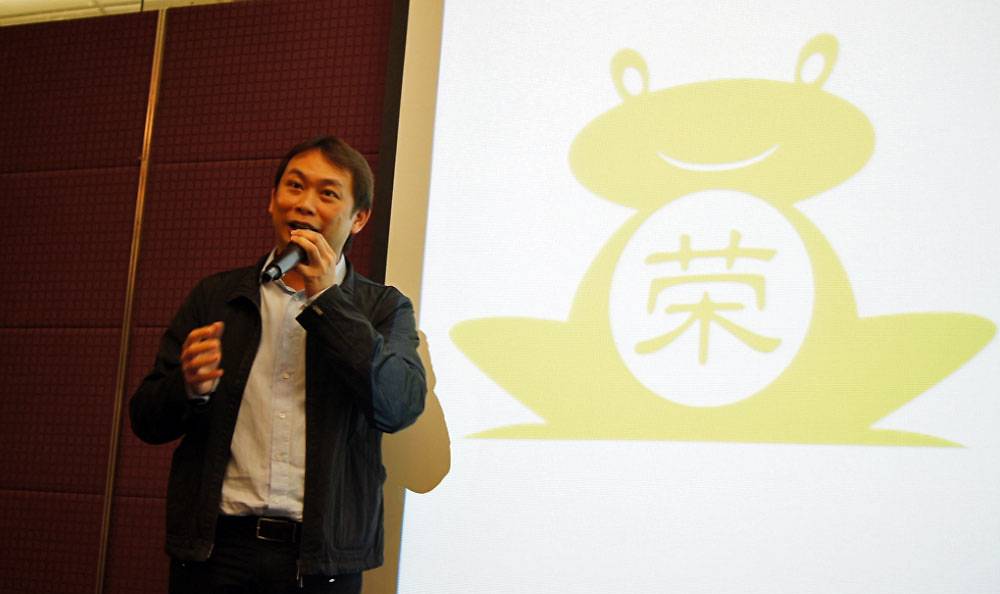
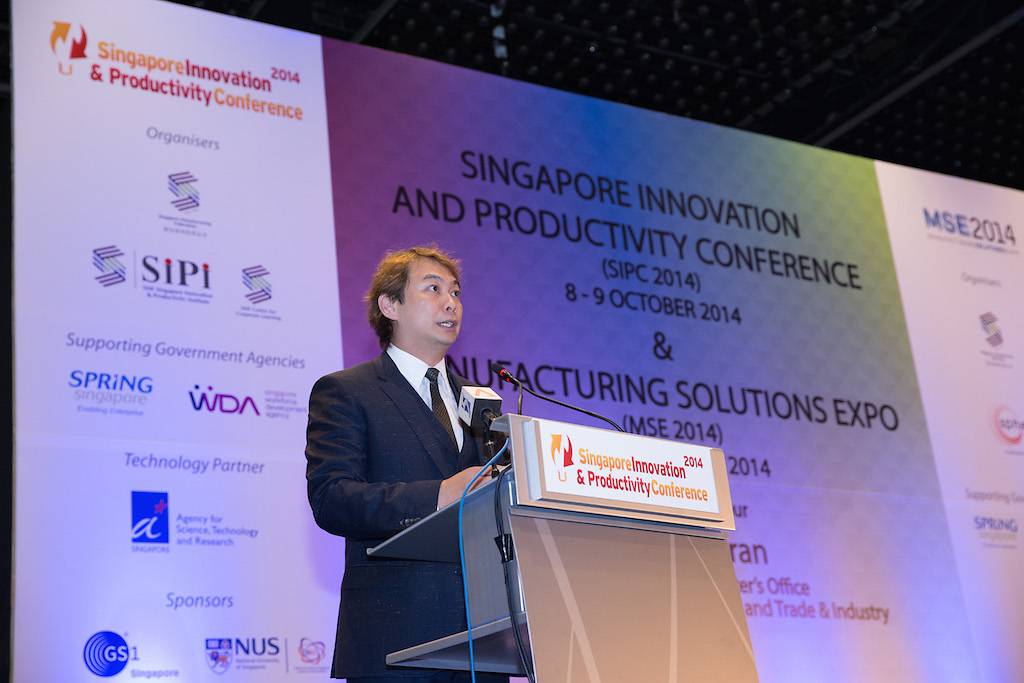
WITH the fate of a June 12 summit in Singapore between US President Donald Trump and North Korea’s leader Kim Jong Un still uncertain, a Kim lookalike shocked many pedestrians in the Southeast Asian city-state.
Many pursued asked for photos with Howard X, a Chinese-Australian Kim impersonator, as he walked near Singapore’s photogenic Marina Bay Sands hotel on Sunday. He said he was in Singapore to wish success for the summit between Trump and Kim to negotiate an end to Pyongyang’s nuclear programme.
Trump signalled that preparations for a June 12 summit with Kim were going ahead, despite having called it off last week, and a White House team was scheduled to depart for Singapore this weekend to prepare for the possible summit.
“I think the two leaders will sit down and they’re going to have a great time, because really they have the same personality,” said Howard on Sunday. “They are going to be best friends right after this meeting.”
The impersonator said Kim’s rise as the third leader of North Korea in 2011 has proved lucrative for him, jump starting a new career in films, commercials and private functions, most often in his home town of Hong Kong.
“I said that guy looks a lot like me, and I thought, wow, I need to do something with this and make some money,” he added.
Impersonators pretending to be U.S. President Donald Trump and North Korean leader Kim Jong Un pose at the main stadium of the Pyeongchang Winter Olympic Games in Pyeongchang, South Korea February 25, 2018. Source: Yonhap via Reuters
“It looked like the real Kim Jong Un, but later I realised it’s not the real one,” said Sagar Admuthe who was visiting from Mumbai, India, after several selfies with the doppleganger against a backdrop of the city’s bay. “When you see him, it’s very difficult to make out.”
Howard X also made an appearance as Kim at the Winter Olympics in Gangneung in South Korea in February, bewildering North Korean cheerleaders who initially thought their leader had walked into a hockey stadium.
“This is my normal body,” he said, when asked if he had to put on weight to impersonate the North’s leader. “But he’s fatter, and I can’t catch up … it’ll damage my health.”
Howard X, who is a musician by training and said he still produces Brazilian music sung in Chinese, said his partner known as Dennis Alan impersonates Trump. Although he could not join him this week, both will return before the summit.
“Hey Donald, I’m already in Singapore, waiting for you to turn up,” he said.
SINGAPORE: For years, policymakers in Singapore have been focusing on ways to narrow the income gap, as countries around the world seek to mitigate the side effects of globalisation.
Social inequality has become a buzz phrase among national discussions, and the issue remains a work in progress.
Of late, however, a new phrase has entered the government’s lexicon: Social stratification.
It refers to an institutionalised system of social inequality — a dire situation that Prime Minister Lee Hsien Loong warned about in February, but one which is starting to take root and risks becoming entrenched, as several Cabinet Ministers and other Members of Parliament (MPs) highlighted during the five-day debate on the President’s Address earlier this month.
“The issues of mitigating income inequality, ensuring social mobility and enhancing social integration are critical,” PM Lee had said in a written parliamentary reply. “If we fail – if widening income inequalities result in a rigid and stratified social system, with each class ignoring the others or pursuing its interests at the expense of others – our politics will turn vicious, our society will fracture and our nation will wither.”
And among the various aspects of social stratification, it is the “perceptible reduction” — in Education Minister Ong Ye Kung’s words — in social mixing in recent years that has gotten some worried.
National University of Singapore (NUS) sociologist Tan Ern Ser said: “The lack of social mixing may translate into a lack of empathy for and understanding of those who hail from disadvantaged families … leading to a reluctance to support policies aimed at improving the lots of the lower classes, and contributing towards their welfare.”
This lack of mutual understanding could also lead to the “emergence of distrust between classes, even class tension”, said Dr Tan, who co-authored the Institute of Policy Studies’ (IPS) Study On Social Capital with IPS deputy director for research Gillian Koh and NUS sociologist Vincent Chua.
For generations, social mixing has been a hallmark of Singapore society, thanks to the housing, education and National Service policies which encourage mixing across groups of different race, income and family backgrounds.
People walk out for their lunch break at the Raffles Place financial district in Singapore. (File photo: AFP/Roslan Rahman)
But at least two of these three policy levers, which have carefully nurtured and reinforced the culture, are not working as well as before — or as they should be.
The IPS study, which was supported by the Ministry of Culture, Community and Youth, found that while there is social mixing between classes, “there seems to be a gap along two dimensions of social stratification, that of housing and education,” Dr Tan noted.
Among other findings, the study — which was published last December — showed that on average, Singaporeans who live in public housing have fewer than one friend living in private housing. People who study in elite schools also tend to be less close to those in non-elite schools, and vice versa.
Make no mistake about it, the issue is receiving attention at the highest level: In a bid to “deliberately plan for a more equal and inclusive society”, the Housing and Development Board (HDB) has launched three Build-to-Order projects — in Woodlands, Bukit Batok and Sengkang — with rental and sold flats within the same block.
The authorities will also continually renew buildings and infrastructure to avoid ending up in a situation “where certain parts of Singapore are left to degrade and we end up with deteriorated neighbourhoods or towns, inhabited largely by lower-income or elderly residents”, National Development Minister Lawrence Wong said in Parliament during the debate on the President’s Address.
Meanwhile, PM Lee told the House last week that the Ministry of Education (MOE) will work with Raffles Institution (RI) and other popular schools so that they never become “self-perpetuating, closed circles”.
The Government has also stressed, on several occasions, the need to level the playing field from preschool in order to tackle inequality. To that end, it is doubling its annual spending on the preschool sector to S$1.7 billion in 2022.
Prime Minister Lee Hsien Loong speaking in Parliament on May 16, 2018.
HOUSING: RISK OF ENCLAVES
Moving into the Ang Mo Kio neighbourhood a decade ago after her divorce, Ms Fadillah Abdul Rahman, 45, was taken aback by the lifestyles of the “underdogs in Singapore’s society”, and was fearful her children might wind up with bad company.
She lives with two sons and a daughter in a two-room rental flat in Ang Mo Kio Avenue 6. Her eldest daughter has moved out after getting married.
True to her fears, her son, now 20, was admitted to a boys’ home for several months for disciplinary issues.
Still, the single mother wants to give her children the freedom to hang out with kids in the community. She also gives them free rein to manage their studies. Her daughter, 10, attends Ang Mo Kio Primary school, which is about a 20-minute walk or 15-minute bus ride away.
Her eldest son, Mohd Zuhairi Zakariya, 21, works as a technician at a company providing wire bonding services in Yishun. From Mondays to Thursdays, he takes night classes at the Institute of Technical Education College Central and is working towards a Higher Nitec degree in mechanical engineering.
Ms Fadillah said her daughter often plays at home or the playground in their neighbourhood. Once in a while, she would bring her to playgrounds further away, including those located near condominiums and private estates. But on such occasions, she noticed that there were hardly any children there from families living in the private homes. These children would probably play in the playgrounds located in their condominiums or be cooped up at home, she reckoned.
Within the Ang Mo Kio/Yio Chu Kang precinct, a private housing estate at Lentor Street is situated just 2.5km away from the block of rental flats where Ms Fadillah and her children are staying.
File photo of Bishan-Ang Mo Kio Park. (Photo: TODAY/Christopher Toh)
Homemaker Jacqueline Aw, 39, her husband and two daughters — aged 2 and 6 — are among the families living in the Lentor Street estate.
Her elder daughter is enrolled in a NAFA Arts Preschool, the first arts-theme preschool in Singapore. The child also attends various enrichment classes in abacus, gymnastics, athletics, piano, dancing, as well as English and the Chinese language.
Her girls do not play in the neighbourhood park, but instead enjoy going to the indoor playground at SAFRA in Toa Payoh and Punggol.
Ms Aw, who grew up in a rental flat and knows of friends and family who have lived or are living in such units, said she is happy to visit them if they invite her family. Nevertheless, the former flight stewardess noted that her family does not know anyone living at the rental flats at Ang Mo Kio Avenue 6.
Acknowledging her children’s privileged background, she added that she tries to inculcate the right values in them, such as being grateful for what life has given them.
However, some families in Ang Mo Kio whom TODAY interviewed said they would steer clear of the rental flats. One resident, who only gave her name as Madam Tan, said she and her twins, both 7 years old, will avoid going near the rental flats as the people there may be “less educated”, and the environment looks a bit “scary”. Madam Tan works in a bank and her family lives in a five-room flat in Yio Chu Kang.
The situation and prevailing sentiments among residents in Ang Mo Kio are mirrored across the island in various housing estates.
Rental flat residents, for example, said they have few opportunities to interact with Singaporeans from different family backgrounds because their day-to-day activities are often confined within their neighbourhoods.
The IPS study found that even though the vast majority of Singaporeans reside in public housing, private-home dwellers had more ties with others who live in private homes than with those who lived in public flats.
In 1989, the Government implemented the Ethnic Integration Policy to prevent racial enclaves, by ensuring that each HDB block and estate broadly reflect the Republic’s racial proportion.
While the measure has largely met its aim, enclaves are now potentially forming along socioeconomic lines, experts said.
Prior to the Government’s recent announcement, there were no HDB blocks designed to house both rental and sold units.
Flats under the public rental scheme are heavily subsidised to cater to needy households, whose total household income falls below S$1,500 per month and have no other housing options.
A view of an HDB block of flats in Singapore. (Photo: TODAY/file photo)
According to the latest General Household Survey in 2015, 1- and 2-room flats are congregated in the Bukit Merah, Kallang and Ang Mo Kio planning areas, while a larger proportion of private houses are found in Bukit Timah, Bedok and Hougang.
Figures from the Department of Statistics also show that while the proportion of Singaporeans living in condominiums has surged from 6.5 per cent to 15.6 per cent from 2000 to last year, the proportion living in 1- and 2-roomers has inched up from 5 to 5.8 per cent over the same period.
Noting the aspirations of homeowners who desire more privacy for example, Singapore Management University sociologist Paulin Straughan said the growing proportion of gated communities could result in “unintended consequences”, such as fewer chances for social mixing to take place.
LIMITS OF ‘FORCED MIXING’
With a general decline of neighbourliness, more resources should be dedicated to organising community-based events such as block and street parties, in order “to bring people out of their sanctuary and mix in common spaces”, Prof Straughan suggested.
Such community activities go some way in bridging social divides between the rich and the poor, residents and MPs said.
Over in the Jalan Kukoh neighbourhood in Bukit Merah, for instance, ground-up initiatives such as ReadAble and Catch Plus (Children and Teen Community Hub Plus) — which are targeted at students from low-income families — are often run by volunteers from more privileged backgrounds.
Ms Lyn Razali, who lives in a two-room unit along Jalan Minyak, said Catch Plus has helped her two daughters and herself widen their social networks. The after-school care programme is targeted at students aged seven to 16 from low-income families in the neighbourhood. It focuses on the academic and socio-emotional aspects of their development.
“Through these activities, we have befriended Singaporeans who live in condominiums, and they invite us over to their homes. But ultimately, we are brought together through the community (regardless of) financial status,” said Ms Razali, 38, whose husband works as a driver.
The Catch Plus programme was the brainchild of Jalan Besar GRC MP Lily Neo, who looks after some lower income households in the Jalan Kukoh area.
Dr Neo noted that “forced mixing” is helpful only if the individuals themselves continue to foster their relationships beyond instituted activities. She added:
I feel some people may be more comfortable and at ease sticking with their own groups… We can try out different programmes, but when I leave it to them, would they hang out together? They may or they may not.
Some Singaporeans had mixed views on the extent to which social mixing and integration could be instituted.
Public relations consultant Oo Gin Lee, 49, reiterated that it is “only natural” for people to interact with others with whom they share similar preferences and lifestyles — and these would likely still boil down to their spending powers, added Mr Oo, whose family lives in a condominium in Bukit Timah.
Ms Lim Shaw Hui, 45, believes that schools are society’s best shot at promoting social mixing from young. The mother of two sons aged 7 and 9 said she made a deliberate decision to enrol her children in a neighbourhood primary school. She added:
It is too simplistic to think that hawker centres and playgrounds are sufficient to encourage mixing.
The mosaic dove playground at Dakota Crescent. (Photo: Xabryna Kek)
SCHOOLS: THE GREAT SOCIAL LEVELLER BEING THREATENED?
While Singapore’s schools are seen as the most effective social levellers, there is growing concern that so-called elite primary and secondary schools coveted for their academic rigour could be disproportionately attracting students from affluent families.
There is a need to relook some of the admission policies, some parents and experts said.
Mr Oo pointed out that affiliation schemes which prioritise certain students for admission because their parents are alumni, or because they themselves graduated from primary schools within the same family of schools, widen the divide between institutions.
Children whose families are living within a 1 to 2km radius are also given priority under existing policies. With some primary schools such as Henry Park Primary School, Singapore Chinese Girls’ School and Methodist Girls’ School located in or near a private estate, these schools tend to be “homogenised”, said Prof Straughan.
Such a policy has also created an unintended vicious circle: The high demand for places at prestigious schools drive up prices of nearby homes, with well to do families snapping up these flats.
Speaking in Parliament last week, PM Lee cited his recent conversation with Mr Ong, where he was told that RI — which has a strong tradition of accepting students from diverse backgrounds, so long as they make the cut — has become “less diverse” over the years.
To address this, the new RI principal, Mr Frederick Yeo, has been speaking to parents of potential students in primary schools across Singapore, to encourage them to apply to RI.
To the principal’s surprise, some of the parents told him they did not want to send their child there, because they feared he would not be able to fit in with other more well-off students, PM Lee said. But PM Lee stressed that the parents’ fear was unfounded — in reality, RI students still come from varied backgrounds, with 53 per cent of its students living in public housing, and all the students “get along confidently and comfortably”.
In response to queries, MOE cited co-curricular activities (CCAs), inter-school camps and national school games as examples of opportunities that “provide common spaces for students from diverse backgrounds to forge friendships”.
Eight in 10 schools today have a “relatively balanced mix” of students, with at least 5 per cent of students from both the top and bottom socio-economic quintiles.
“MOE is committed to an inclusive education system which ensures that all students regardless of their background and abilities are given opportunities and support to realise their potential,” said a ministry spokesperson.
Several popular schools, including RI, Hwa Chong Institution and Methodist Girls’ School, also cited inter-school projects as platforms for students to interact with peers from various backgrounds.
File photo of Hwa Chong Institution. (Photo: Ruyi Wong)
However, most of these initiatives involve only a small group of students from each school.
Parents who have kids in both an elite school and a neighbourhood school said they have observed a stark difference in their children’s social networks.
Mr Oo’s eldest daughter goes to a popular girls’ school in Bukit Timah, while her sister studies at a less well-known school in Telok Blangah. “Their friends are so different. My second goes to an average school, and you can see that there is greater diversity,” he said. “When you look at (my eldest’s peers), they are all rich. In the morning, the roads to her school are often congested because a larger majority of the parents drive their kids to this school.”
At the same time, examples abound of children from less affluent families who were able to get into the elite schools — but the feeling among observers is that the odds could be increasingly stacked against those from less privileged backgrounds, and the onus is on school leaders to ensure the pathways remain open to all.
A parent, Ms Anne Soh, felt that students’ socioeconomic backgrounds have a definite bearing on how well they do in schools. For example, those who are better off are exposed to enrichment classes from a young age, she noted.
Both Ms Soh, 47, and her husband work in a church, earning a total of about S$4,000 each month. They live in a four-room flat at Ghim Moh with two sons and a daughter.
Their eldest son, who is now 19, graduated from one of the top secondary schools and junior colleges here. Declining to be named, the son, who is a full-time national serviceman, said his friends from school came from “fairly similar” socioeconomic backgrounds, in contrast to his peers in the military. He said:
In our society, it’s hard to ensure mixing in schools when everything is based on academics … Because the richer you are, the more you can afford stuff like tuition.
Ms Soh noted that at her second son’s school, quite a number of students also come from well-to-do families.
However, school leaders have placed a strong focus on taking in students with special needs and learning abilities, she said. They have instilled a culture of service to the community, and students are encouraged to share the values with their family members, she added. For example, the students organise annual community service trips which their fathers are also invited to participate in.
Ms Lim suggested that schools conduct CCAs in clusters, based on their geographical locations, so that students with common interests can come together, despite their different backgrounds.
Pasir Ris-Punggol GRC MP Zainal Sapari mooted the idea of “community schools”, which do away with cut-off points and affiliation priorities for admission. These schools could offer both primary and secondary education, he suggested. He said:
We need to let our children interact with people not only from different backgrounds, but of various academic aptitudes. Instead, now, we are encouraging social stratification at a young age by streaming them, labelling some as ‘gifted’.
Fern Green Primary students in their first day of school. (Photo: Matin Akmal Mohammad Kamal)
IT ALL STARTS AT HOME
On her decision to enrol both her sons in a neighbourhood school, Ms Lim said she and her husband “wanted them in an environment where they would get to mix around and widen their social circles”.
“We also did not want to put them in an ‘elite’ school because of the academic pressure,” said Ms Lim, a part-time assistant director at Beyond Social Services.
Having come from a privileged background herself, Ms Lim said this was why she wanted to ensure her children are exposed to people from all walks of life.
Since young, her children would accompany their parents at fundraising events. They also visit and support a family living in a rental flat within their estate in Pasir Ris, said Ms Lim. These monthly visits over the last two years have helped her children forge a strong friendship with the other family’s son, she added.
Associate Professor Chua pointed out that volunteerism is “an effective means to narrowing the inequality gap”. “Networks are conduits for the flow of resources. Mentoring relationships (for instance, free tuition) are one example, they facilitate the sharing of resources, possibilities and synergies,” he added.
Some Singaporeans from lower-income households reiterated that there are sufficient opportunities for people like them to rise from the lower rungs of society, as well as mix with people from different socioeconomic groups. It is up to the individual, they said.
Mr Mohd Zuhairi said: “We are what we are … It is about how you want to change your life. You got to be hardworking and have a positive mindset. There are opportunities, but you must know what you want your life to be.”
Dr Tan stressed that family upbringing is critical: In a situation where a child is raised in a family which has “socialised him or her to have low aspirations, to not take education seriously, to feel incapable of doing better and to see himself as a victim of circumstances”, the child is less likely to break out of his class background.
A family walking in Singapore. (Photo: Gaya Chandramohan)
.
A SOCIETAL EFFORT
In his parliamentary speech, Mr Ong described tackling inequality as an “unfinished business”.
He noted that Singapore, like other nations, had wrestled with the problem of inequality in its early days. But its journey from Third World to First had created new forms of inequalities, said Mr Ong, who also cautioned that social stratification could “poison” the society over time.
Overall, experts say the situation in Singapore is far from dire, but there are signs of social stratification taking root — and these need to be nipped in the bud.
While Singaporeans have enjoyed “a fairly upward mobility” in the past, Prof Straughan cautioned against a growing discontent and unhappiness among the younger generation who may feel that it is “almost impossible for them to reach for the stars”.
Agreeing, Dr Tan said that if the “class boundaries are not permeable” and the chances of moving up are slim, the lower classes may feel “a sense of hopelessness, discontentment, and envy”.
Given the absence of longitudinal data on the topic, “it is hard to say whether things are getting worse”, said Dr Tan.
Nevertheless, the critical question is whether inequalities are “systematically entrenched”, Prof Straughan reiterated.
Addressing the issue publicly, several national leaders have noted that social stratification is a risk for developed societies. PM Lee, for example, pointed out that “any society which has been stable for a long time tends to stratify”, citing the entrenched notions of class and caste in the United Kingdom and India.
Assoc Prof Chua noted that “an all-out meritocracy in the latter stages will produce the kinds of divides we are seeing”.
To bridge these gaps, government policies are one thing. But the public at large has a role to play as well, in terms of attitudes and mindsets.
Ultimately, “friendships are a combination of context and choice”, Assoc Prof Chua said. “The important thing would be to complement one’s social circles with bridges to others. The best networks are those that are rich in variety,” he added.
SINGAPORE: While most people take quick snaps with their smartphones on holiday, and maybe zhoosh it up with careful cropping and filters for the ‘Gram, Teresa Lim takes her time, hours even, capturing scenes from her vacations.
Armed with needle and thread, she has enshrined her impressions of everything from the Eiffel Tower in Paris, to the haphazard buildings of Vietnam’s Ho Chi Minh City and the farmland at her grandparents’ home in Germany, in intricately embroidered pieces.
All together, the 27-year-old has more than 40 of these charming travel “snaps” in her ever-growing Sew Wanderlust series.
Sew Wanderlust collection by Teeteeheehee (Photo: Christy Yip)
Three years after her works caught the attention of international media, Ms Lim, known by the moniker Teeteeheehee, has scored an impressive list of clients as an embroidery artist. It includes the likes of Gucci, Uniqlo, Melissa Shoes, Singapore Airlines, Changi Airport and even Netflix.
SEW FAR, SEW GOOD
Speaking to Channel NewsAsia in her workshop in her family HDB maisonette, Ms Lim shared that being an embroidery artist was never the plan for her. The Fashion Design and Textiles graduate from LASALLE College of the Arts said unlike most of her peers, she did not dive into a job search immediately after graduation. Instead, she gave herself a year to focus solely on embroidery, a medium she had picked up in school.
“I think that was very important because when you don’t put pressure on yourself. That’s where you grow and understand yourself more.
“I wasn’t very sure what I wanted to do, but I was always very sure what I did not want to do,” she said, referring to a corporate job, which she thought was humdrum.
As expected, her choice to pursue art as a career was met with scepticism from her parents. While she received well-meaning advice that she might not go far and that she should stick to a more secure job, she was not deterred.
“I cannot imagine myself going through life like that. I would rather suffer doing something I like than being safe and not enjoying what I do,” Ms Lim said.
And suffer she did. She recalled being financially strapped in her first year, while she was jobless and without a steady income. She did not want to rely on her parents either, in a bid to prove them wrong.
When she realised she was down to her last fifty dollars, she decided to start giving lessons on playing the violin, a skill that her mother — a piano teacher — had inspired her to pick up from young.
Ms Lim indicated she’s embraced the harsh realities of being an artist in Singapore.
“Ultimately, art in Singapore is not mainstream. There is no fixed income. We don’t know when we will get a big project and then nothing for three months,” she said.
“Realistically speaking, when you worry too much about whether you can feed yourself, that can drown out the passion. Once you have that sorted out, you can have the space and mental capacity to create.”
Today, she brings home a comfortable income through commissioned works for brands looking for artwork for their campaigns or individuals looking for customised portraits.
A basic embroidered portrait is priced at S$250, while more elaborate pieces can cost up to S$550.
“When you do something you like, it can only take you to good places. People can see it reflected in your work and naturally people are drawn to it,” Ms Lim said.
Commissioned portraits done by Teresa Lim. (Photo: Christy Yip)
Today, Lim describes her work as “telling stories” or “capturing moments through thread”. “I like to encourage discussion, but I’m not very good with words, so I let my work speak for itself,” she added.
Her first personal project, the Sad Girls Club, was a series of embroidered illustrations depicting the sadness she felt when she went through a breakup.
She published her work periodically on Instagram and built up a following, with some people reaching out to tell her that they could relate to her work. From there, Ms Lim’s passion for storytelling emerged.
A piece from The Twelve Rooms, which was inspired by a follower’s story about growing up with divorced parents. (Photo: Christy Yip)
She moved on to address bigger issues in her next series, The Twelve Rooms, after overhearing a group of schoolgirls comparing their bodies to that of perfectly sculpted models on magazine covers.
It struck a chord with Lim who remembered feeling that way when she was younger. She also took inspiration from personal stories of some of her followers.
Said Ms Lim of the project: “I started this series as a kind of conversation with my younger self. When you’re young, you think nobody understands you so you don’t share much and in the whole process you feel very alone.
“What I hope to do is encourage discussion. There is power in knowing that someone who has been through all that is looking back and saying ‘It’s okay to feel this way’.”
An art piece incorporating plastics by Teresa Lim. (Photo: Christy Yip)
This year, she is busy with a personal project tackling the issue of excessive plastic use. Inspiration for it came when she realised she could never escape the use of plastics in her daily life, even when she tried to avoid it.
She now collects what she terms ‘accidental plastics’ – bits and bobs of plastic items she uses without consciously asking for them. She hopes to incorporate all these plastics into an embroidered piece that depicts the ocean by the end of the year.
Asked what the way forward for her is, Ms Lim said: “I always get that question, but I don’t even know what I’m going to do tomorrow.
“I will always be embroidering, just that the subject matter or the stories that I tell will evolve. Every year, I am excited to see what I will discover the next year.”
SINGAPORE: Construction for the Kuala Lumpur-Singapore high-speed rail (HSR) line was due to start this year, but the project is set to be derailed, after Malaysia announced on Monday (May 28) that it would be scrapping it.
Here’s what you need to know:
HOW DID THE PROJECT COME ABOUT?
Once hailed as a “game-changer” by then-Malaysian Prime Minister Najib Razak, the proposed 350km-long HSR line aimed to reduce travel time between Singapore and Kuala Lumpur to around 90 minutes by train, from the current 11 hours on existing train services.
It was first unveiled in February 2013 by Prime Minister Lee Hsien Loong and Mr Najib at a leaders’ retreat. The two countries signed a legally binding bilateral agreement on the project in 2016, paving the way for its implementation.
Construction on the project – which has been estimated to cost around RM50 billion (S$16.8 billion) to RM60 billion by Malaysia’s then-second finance minister – was due to start this year, with the line expected to begin operations in 2026.
WHAT DID IT ENTAIL?
Running for 350km, the planned HSR line had eight stops: Singapore, Iskandar Puteri, Batu Pahat, Muar, Melaka, Seremban, Sepang-Putrajaya and Kuala Lumpur. Terminus stations were planned for Kuala Lumpur’s Bandar Malaysia and Singapore’s Jurong East.
The line would host an express service from Kuala Lumpur to Singapore, a domestic service from Kuala Lumpur to Iskandar Puteri and a shuttle service from Iskander Puteri to Jurong East.
In addition, co-located Singapore and Malaysia Customs, Immigration and Quarantine facilities were planned at Bandar Malaysia, Iskander Puteri and Jurong East – meaning that a traveller at the Jurong East terminus could for example clear Singapore immigration and then Malaysian immigration a few steps later, before boarding the train and getting off in Kuala Lumpur.
In Singapore, Raffles Country Club and Jurong Country Club had been acquired by the authorities for the project, with the latter meant to house the HSR terminus.
WHAT WERE THE EXPECTED BENEFITS?
Apart from slashing travel time between Singapore and Kuala Lumpur, the rail link is expected to contribute RM21 billion (S$6.7 billion) in gross domestic product to Malaysia and Singapore, as well as create 111,000 jobs by 2060.
Separately, an environmental impact assessment report in 2017 said that the long-term benefits for commuter safety and carbon emissions provided a “strong justification” for the project.
KEEN INTERNATIONAL INTEREST
Under the project, both governments each took responsibility for developing, constructing and maintaining the civil infrastructure and stations within their own countries.
Last year, Singapore’s Land Transport Authority (LTA) announced the formation of a wholly owned subsidiary – SG HSR – to implement the project and build, own, fund and maintain the civil infrastructure in Singapore.
It would then work with its Malaysian counterpart, MyHSR, to jointly appoint an assets company and an international operator for the project through an open international tender.
The project had attracted keen interest globally, with Japan’s ambassador to Malaysia saying earlier this year that the country could offer a “truly holistic” package towards the project.
In addition to bidders from Malaysia and Singapore, others who have expressed an interest include firms from China, Japan, South Korea and Europe.
WHY IS MALAYSIA PULLING OUT?
Dr Mahathir on Monday told reporters that the project was “not beneficial” to Malaysia, saying that the country would “make no money at all” from the arrangement.
In a separate interview with the Financial Times, he said the project would cost Malaysia RM110 billion (US$28 billion) but would not earn the country “a single cent”.
WHAT’S NEXT?
When he was asked by Channel NewsAsia if his decision had been communicated to Singapore, Dr Mahathir said: “I don’t know”.
Channel NewsAsia has reached out to Singapore’s Ministry of Transport for comments.
Separately, Malaysia and Singapore also have an agreement for a Johor Bahru-Singapore Rapid Transit System Link which Prime Minister Lee has said will go on regardless of “whoever is the government” on either side. About S$3 billion had been set aside for the RTS Link and the HSR project in the Ministry of Transport’s FY18 budget, Finance Minister Heng Swee Keat said in his Budget speech earlier this year.
SINGAPORE: Ride-hailing company Grab on Monday (May 28) officially announced it is offering GrabFood in Singapore, and the food delivery service will be available in five other Southeast Asian markets “within this quarter”.
It also said it has outlasted competitors before when asked to comment on Indonesian rival Go-Jek’s impending expansion to Singapore and other regional markets.
For the Singapore launch of the GrabFood app, the company said it has signed up thousands of merchants to be on its service platform, including A Poke Theory, Hock Lam Beef Noodles, Ji De Chi, McDonald’s, Wing Zone and Yum Cha restaurant.
Asked to elaborate on the number of merchants and delivery people available, Mr James Ong, head of GrabFood Singapore, said during the media briefing there must be a balance between both. Too few delivery people, and consumers will get their food late, while too many will mean there will not be enough jobs to go around, he explained.
“As we grow demand, we will grow supply,” Mr Ong added.
He also mentioned that there will be no minimum order requirement for consumers – a feature similar to the now-defunct Uber Eats. This is a “strong lever” to shape consumer behaviour but as the service evolves, it could be offered to certain segments of the customer base while others would get other targeted promotions, he explained.
GrabFood will also be linked to its GrabRewards loyalty platform, with Grab saying it will offer five GrabRewards points for every dollar spent on a GrabFood order.
Other regional markets to have GrabFood include Indonesia, Thailand, Vietnam, Malaysia and the Philippines, the company added in its press release.
INSURANCE FOR DELIVERY STAFF
Besides consumers, the company also said it will insure all on-the-job delivery staff at no additional cost to “protect them in the event of an unfortunate accident”.
Those delivering for GrabFood will also not need to pre-book their delivery slots, and all earnings for the day can be cashed out on the same day, the company added.
The GrabFood app is available now in beta, which Mr Ong explained is to let users know the company will be making many changes to the app to improve the service based on the feedback it receives.
It supersedes the Uber Eats app, which was officially shut off at 11.59pm on Sunday, according to Grab Singapore head Lim Kell Jay during the same briefing. Most of the GrabFood staff came from Uber Eats, Mr Ong added, but he declined to reveal the exact numbers.
Mr Lim, when asked how the company will be affected by Go-Jek’s impending arrival in the market, said “competition is always there” and it had faced competitors in the past but still came out on top.
“We are very focused on what our customers want … and we think it’s the only sustainable way to remain relevant in the market,” he explained.
Go-Jek announced last week it will enter the ride-hailing business in Singapore, Vietnam, Thailand and the Philippines in the next few months, investing US$500 million in its international push. CEO Nadiem Makarim said then that people in Vietnam, Thailand, Singapore and the Philippines “don’t feel that they’re getting enough (choice) when it comes to ride hailing”.
SINGAPORE: The school holidays are back and this can only mean one thing for parents: For the next few weeks, keeping the young ones busy and occupied is entirely in your hands.
Luckily, Singapore usually comes alive with family-friendly events during this time. From the museums’ respective “children’s season” to festivals, there are enough to choose from. Here are some options on what to do and where to bring them.
1. HAVE FUN AT THE PLAYGROUND
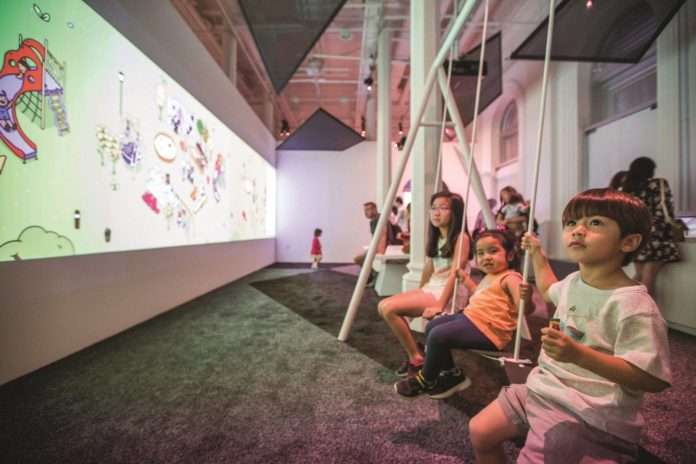
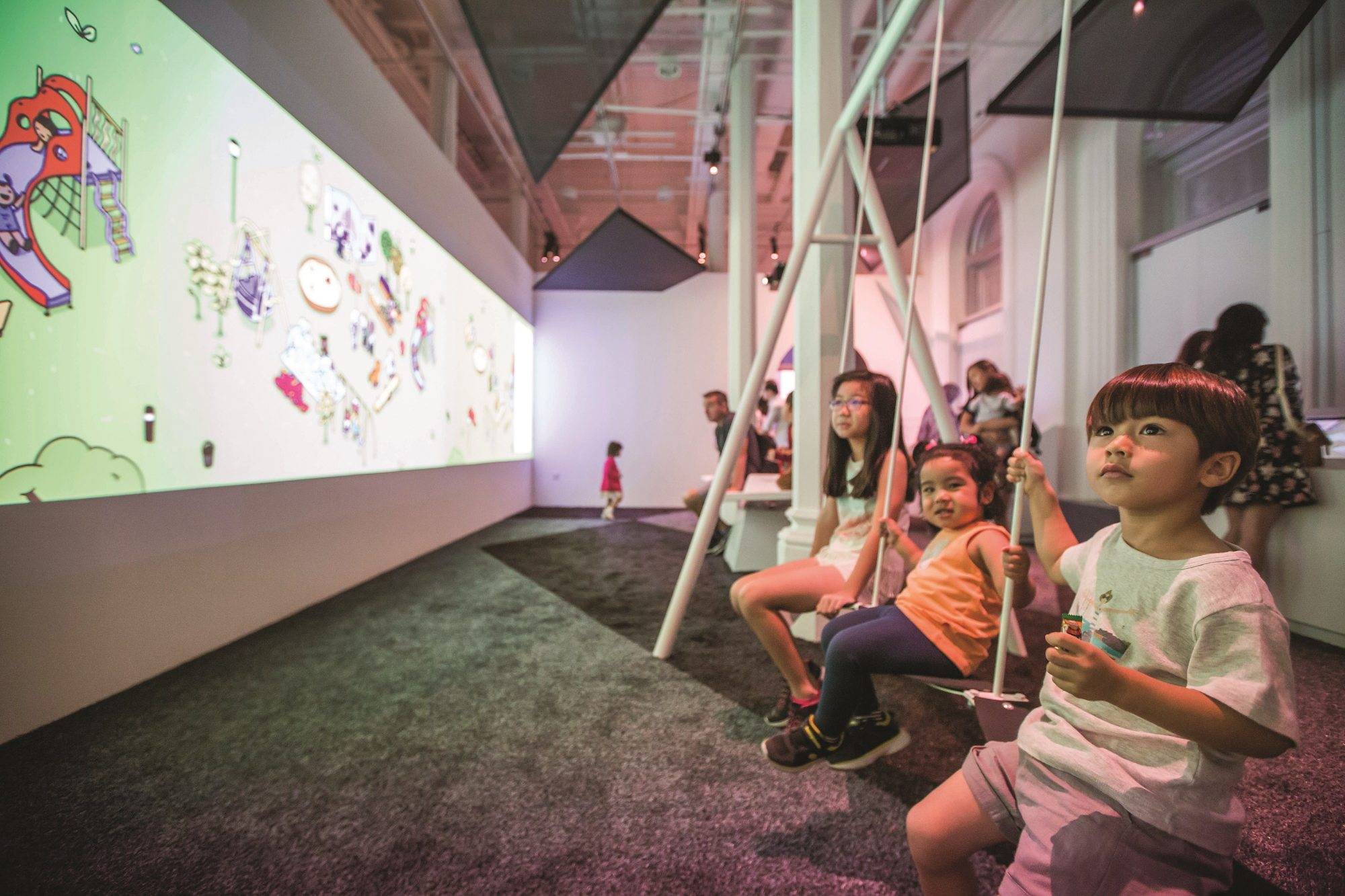
The National Museum of Singapore’s current exhibition looks at the history of Singapore’s playgrounds – and it’s a pretty interactive one that’s perfect for your kids. There’s even an art installation at the museum’s rotunda made especially for toddlers, and the museum’s popular inflatable playgrounds inspired by the old mosaic ones are also back at the front lawn.
The National Museum of Singapore has a playground-themed exhibition and other related activities. (Photo: National Museum of Singapore)
Once you’re there, you might also want to pick up a playground-related activity book or watch a selection of animated short films by the Robot Playground Media.
Other events include: Sensory Saturdays, where parents and kids can bond at play stations that feature water, sand, water-beads and paint at the banyan tree area; Tots’ Thursdays, where you can bring your toddlers to a dance performance by the Kueh Tutus at the permanent Story Of The Forest installation; and a storytelling session about Singapore’s iconic dragon playground by Esther Eio.
If your child loves colouring, there’s also the World Kids Colouring Day competition on Jun 2.
Events run until Jun 24 at the National Museum of Singapore.
Just a short walk from the National Museum, you’ve got Singapore Art Museum’s annual family-friendly contemporary art exhibit Imaginarium. This year’s theme is Into The Space Of Time and there are immersive and interactive artworks created by 10 artists and groups from around the world.
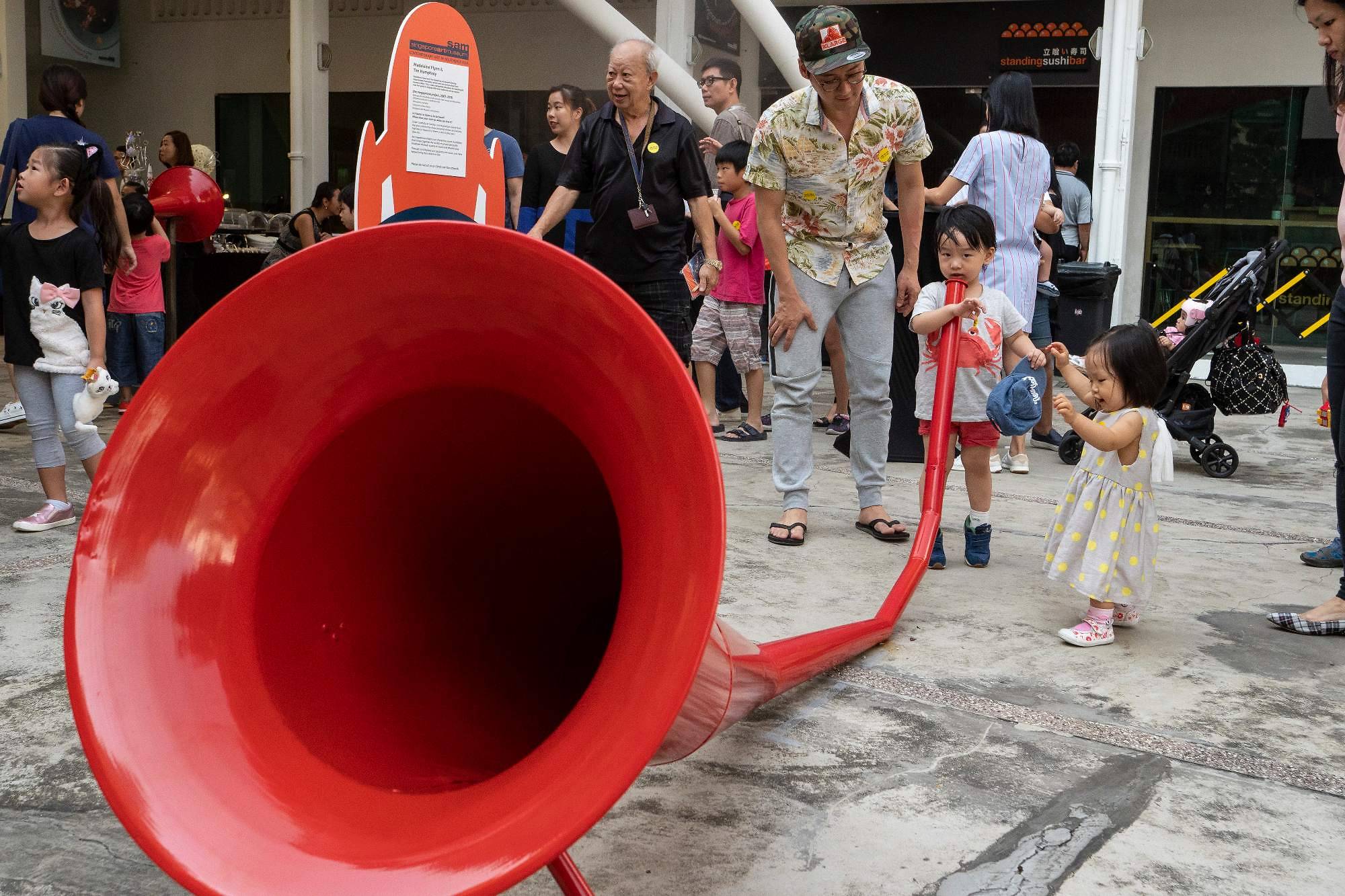
These megaphone installations by Australian artist duo Madeleine Flynn and Tim Humphrey are part of Singapore Art Museum’s ongoing Imaginarium exhibition. (Photo: Singapore Art Museum)
Among these are some quirky-looking megaphones created by Australian duo Madeleine Flynn and Tim Humphrey; Singaporean artist Matthew Sia’s hypnotic, motion-activated grassy plain made of fibre optic lights; and Indonesian artist Boedi Widjaja’s peep-holes and old school motion picture devices. Don’t forget to also check out the schedules for art workshops and daily film screenings.
Theatre company ACT 3 International is currently presenting ACT3i Festival For Children, an entire festival dedicated to babies and toddlers, at the Asian Civilisations Museum.
Leaf by Tam Tam Theatre at ACT3i Festival For Children. (Photo: Tam Tam Theatre)
Remaining shows include Paperbelle from Scotland’s Frozen Charlotte, where the protagonist (who only loves black and white) begins exploring the world of colour; Leaf from England’s Tam Tam Theatre, which follows the story of a very special leaf – and a show where your little ones can also play among the leaves at the end; a puppet show that tells kids it’s okay to be afraid, called Crikecrak by Italy’s La Baracca – Testoni Ragazzi; and Colourful Games by Lithuania’s Dansema Dance Theatre, where the audience can explore the show with help from a dancer.
The festival runs until Jun 3 at the Asian Civilisations Museum.
If you’re an Eastie and you’re not really up for going to the city, you can always drop by The Artground, a new-ish hidden gem of a place for kids at Goodman Arts Centre in Mountbatten. It’s currently holding its inaugural 100 And 100 More Festival, a biennial art event for young audiences that includes performances, exhibitions and workshops for those ages 0 to 12.
Indonesian group Paper Moon Puppet Theatre will present Puno at The Artground’s inaugural 100 And 100 More Festival. (Photo: Paper Moon Puppet Theatre)
Among these are: Especially On Birthdays, a visual-theatre show about the ups and down of being a twin, by Australia’s The PaperBoats and The Artground; Puno (Letters To The Sky) by the always-wonderful Papermoon Puppet Theatre from Indonesia, which is about a little girl coping with the departure of her father; and Snigel & Friends by Scotland’s Caroline Bowditch, which is about an inquisitive snail and his insect friends.
Visual art exhibitions include the interactive play area Rolling @ TAG, which has slopes and tunnels for your kid to go wild in, and a cardboard art exhibit by local group SuperHero Me.
The festival runs until Jun 3 at Goodman Arts Centre, 90 Goodman Road.
What better way to introduce your kid to the wonders of Enid Blyton than by bringing them to a place where the popular children’s book author’s world comes to life?
Gardens By The Bay’s children’s festival will recreate Enid Blyton’s The Magic Faraway Tree. (Photo: Gardens By The Bay)
The Blyton’s classic The Magic Faraway Tree will be recreated at the Supertree Grove as part of Children’s Festival @ Gardens By The Bay. The first large-scale Blyton-themed event in Asia will comprise lands from the series – Land of Enchantments, Land of Tea Parties, Land of Toys, and Land of Nursery Rhymes – where you and your kids can get busy with games, storytelling sessions, magic shows and even an original musical production.
Cartoon Network’s Animate Your Life festival at Gardens By The Bay. (Photo: The Rainmaker Marketing Group)
Just next door, your family can drop by Cartoon Network’s Animate Your Life festival, where aside from carnival games, there are fun zones dedicated to the different shows.
Everyone can bounce around at The Powerpuff Girls zone’s four trampolines; explore the inflatable maze at the Adventure Time area (there’s also a giant bubble machine); slide down into a giant ball pit at the We Bare Bears zone; and tackle Ben 10’s obstacle courses.
Until Jun 10 at the Bayfront Plaza, Gardens by the Bay.
It’s simple: Drop by Changi Airport, where you’ll bump into Elmo, Cookie Monster, Bert and Ernie, and the rest of the gang, who are back for the second instalment of the Changi Loves Kids campaign.
The gang’s back at Changi Airport. (Photo: Changi Airport)
Highlights include: Sesame Street ‘S Is For Sharing’, a live show featuring some of Sesame Street’s beloved characters, meet-and-greet sessions, and the popular inflatable playground.
There will also be Cookie Monster and Elmo giant gachapon vending machines, a custom-made bobsleigh adventure track, and a Discover Europe exhibition gallery made entirely of cardboard (which is done in conjunction with Scoot’s upcoming Singapore-to-Berlin flights on Jun 20.
The Esplanade’s annual Flipside children’s festival has always pulled out a few quirky surprises through the years.
This year, you’ve got quite a few puppets. String Symphony by Australia’s Spare Parts Puppet Theatre is a free outdoor event, where you and 11 other audience members can play puppeteer to a giant illuminated puppet made from rope.
String Symphony by Australia’s Spare Parts Puppet Theatre at Esplanade’s Flipside festival. (Photo: Esplanade)
A ticketed show titled Dans l’Atelier & Chantier Frigolite by Belgium’s Tof Theatre also features a puppet that slowly comes to life – and there’s also a workshop where you and the kids can try making a Styrofoam one. And then, there’s Urashima Taro by Rouge28 Theatre from the UK, which is a contemporary take on an ancient Japanese myth using what else but puppets.
Elsewhere, check out Sensing The Dark, a sensory experience in the dark using music and other soundscapes, which is directed by homegrown composer Julian Wong.
If your child is between seven and 12, why not spend a night with him or her at the museum – specifically the Singapore Philatelic Museum? Activities include an adventure race, craft activities and stamp puzzles – plus, when was the last time you’ve slept inside a museum gallery?
Don’t forget to bring your own sleeping bag, toiletries, pyjamas and a jacket (it’s air-conditioned). You’ll stay from 6pm to 9am the next morning. If camping isn’t your thing, you can wait for The Little Prince Exhibition, which opens on Jun 8.
May 31 at the Singapore Philatelic Museum. Priced at S$100 per person and includes dinner, supper and breakfast.
Inclusive arts group Superhero Me will be holding workshops on creating “superhero costumes” at the ArtScience Museum. (Photo: Superhero Me)
ArtScience Museum’s next exhibition will be all about Marvel’s superheroes. And you can get in on the action during Superhero Me Sundays, a collaboration with local inclusive group Superhero Me.
For the different sessions, your children can create their own “superhero armour” and resilience bracelets – plus, your children can interact with others from less privileged backgrounds and special needs communities.
And since you’re already at the museum, don’t forget to check out all the other family-friendly exhibitions.
June 10, 17 and 24, 2.30pm to 5.30pm, ArtScience Museum.
It’s time to leave the iPad at home. In line with the Singapore Sports Museum’s ongoing temporary exhibition Games Of Yesteryear, it will be holding storytelling sessions. At the same time, there will be other activities where kids can play congkak, capteh and tapak kuda.
Jun 2 and 9, 11.30am and 12.30pm, at Singapore Sports Museum, 6 Stadium Walk.
12. DREAM BIG WITH ART
Next week, the National Gallery Singapore is launching its inaugural Children’s Festival: Small Big Dreamers.
The big draw are five interactive installations collectively called A Waking Dream: Sun-Boy and Yellow Man, which are inspired by the works of one of Singapore’s top artists Lee Wen. Elsewhere are other interactive installations by artists such as Mark Justiniani of the Philippines and Japan’s teamLab. There will also be various family-friendly programmes, art workshops and film screenings.
SINGAPORE: In public policy, there is no such thing as a free lunch. Due to limited time and resources, choosing to do something means choosing not to do another.
In his speech to Parliament last week, Minister for Education Ong Ye Kung gave his thoughts on various policy suggestions such as the abolition of streaming and the PSLE. The underlying theme was clear: All policy decisions involve trade-offs.
Most Singaporeans seem to understand intuitively that there is no such thing as a free lunch in policymaking. At the same time, the way many of us talk about changing the education system seems to suggest that we have unconsciously “exempted” the education system from the idea that there is no free lunch.
Mr Ong had remarked that the “voice of the people” offers a diversity of views, conflicting and complex. If I may add to his words, even a single individual can unconsciously hold conflicting views.
For example, many of us would like examinations which access students’ depth of understanding rather than ability to memorise. At the same time, we lament about “strange” questions in national examinations and express our frustration at how it seems to be getting harder to do well in exams.
There is no such thing as a free lunch: Top-level learning outcomes are often related to “difficult” tasks such as analysis and evaluation and the integration of different concepts. Difficult questions are in fact accessing students on genuine depth of understanding. Are we willing to forgo that?
The point is, if we want a policy change, we must be able to name and justify what we are trading off.
Education Minister Ong Ye Kung speaking in Parliament on May 15, 2018.
DEEPENING OUR DISCUSSION
An inadequate understanding of tradeoffs in the education system is hampering our education discourse.
Every policy decision has consequences and every argument proposing major changes can be responded to by simply highlighting the negative consequences. Often, this is where the discourse ends.
It need not be so. If they are serious about their proposals, those who seek major policy changes should respond to critics by substantiating why a certain consequence is justified. This would then prompt those who oppose said changes to review and clarify why it is not justified.
This may then lead to a deeper discussion, where we move from merely describing the benefits and costs to resolving why certain trade-offs are worth incurring, and coming to a common consensus on the way forward.
As much as policy changes are about what we want (benefits), they are also about what we are willing to forego (costs) and most importantly, why are we are willing to forgo them.
For any meaningful discourse and constructive policy review to take place, proposers of policy change cannot merely focus on the benefits. They need to consider the consequences arising from the changes they seek and why they are willing to incur them.
FOUR CONSTRAINTS
In my observations of education policy discourse, it seems the following consequences are often raised in response to new ideas. In other words, the consequences act as fundamental “constraints” on the system, against which any new suggestions should not erode. Think of them as reflecting key pillars of the solid foundation of our system.
In general, every new suggestion should not:
Compromise education standards;
Hamper students’ preparation for the future economy;
Unduly increase levels of stress and competition; or
Unnecessarily disrupt the system
These constraints are present in most education issues. Just look at the suggestion to abolish PSLE.
In his speech last week, Mr Ong remarked that many parents support the PSLE system “because the PSLE experience teaches their children to work hard, and to demonstrate what they have learned throughout their primary school years”.
Students at St Hilda’s Primary School during the release of the PSLE results in 2013. (File photo: Ernest Chua/TODAY)
This argument implicitly invokes the second constraint, since students may be less prepared for the future if a key learning checkpoint is removed and they do not work as hard.
Earlier this year, during the Ministry of Education’s Committee of Supply debate, then- Minister for Education (Schools) Ng Chee Meng remarked that “removing the PSLE and having a through train will only transfer the stress on parents and students elsewhere, such as at the P1 registration”.
He also emphasised that “it will make the O-Level and N-Level exams most stressful – a single exam in the whole career of a child’s life.”
This argument invokes the third constraint, since it implies that there will be more stress overall without the PSLE.
If those who want to abolish PSLE still wish to push for it, they must be able to explain why the benefits of doing so outweighs the cost of eroding a key system constraint i.e. why a system which may less actively prepare students for the future or one with more sources of stress is justified.
If they now feel the true cost of their proposal is too high a price to pay, then they should consider more suitable, alternative proposals.
This is what quality policy discourse should look like – one based on well-thought through ideas, the consideration of trade-offs and a judgment call on what one is willing to forgo.
A conversation centred on trade-offs can advance our education policy discourse. It can be propelled forward even further if we look deeper into why different people prefer certain trade-offs over others.
A student from CHIJ St Theresa’s Convent receiving her O-Level results. (Photo: MOE)
Before diving into policy discourse, consider this: If policies are means to ends, then disagreements over education policies (means) can reflect disagreements over the aims of education (ends).
In education, there can only be one primary aim. Secondary aims must take on a lower priority. Trade-offs must again be made.
Thus, before detailed policy discussions, we should all ask ourselves: What is the primary aim of education? To equip the next generation with skills for the future economy? To reduce inequality? To cultivate values and unity?
Our answers will show us why we are willing to make the trade-offs we make.
If there are vastly differing opinions within the population on the aims of education, then we may also need to have a more fundamental debate on what the primary aim of education in Singapore should be, to get everyone on the same page. Otherwise, our discourse will also still remain hampered.
A BETTER DISCOURSE?
Last week, Finance Minister Heng Swee Keat announced in Parliament that the 4G leaders will hold a series of discussions to engage Singaporeans on their views.
I expect education to feature heavily in these discussions. The success of these discussions can be maximised if all participants are aware of the trade-offs they are willing to make and are explicit about what they feel the primary aim of education is and why other aims are of a lower priority.
In other words, understanding that the education system is not a free lunch.
Ng Chia Wee will begin his undergraduate education at the National University of Singapore’s Faculty of Arts and Social Sciences this August.
SINGAPORE: In many ways, it would seem that Douglas Foo, founder and executive chairman of Sakae Holdings is going through tough times.
The 49-year-old owner of Sakae Sushi, one of Singapore’s leading conveyor belt sushi chains, had to close more than 10 of his 46 local outlets last year.
He was also embroiled in a 6-year legal battle against a former Sakae director who he accused of breaching his fiduciary duties.
It all started when his friend, Mr Andy Ong invited him to join his property development investment project.
Sakae became a minority shareholder in the joint venture real estate investment firm.
As Mr Foo sits before me, he looks every bit the well put-together and distinguished businessman but as he talks about the case, it becomes clear that beneath it all, he is still distressed by it.
After all, Mr Ong was a close friend whom he had known since his National Service days.
He tells me he still feels “a lot of pain” when he thinks about what happened.
“I kept asking myself: What exactly went wrong? Why would anybody do that? And the final conclusion I have is: He was looking for a lot more even though he was making a good amount. It was just not enough for him.”
He is cautious about revealing too many details because while a judgment was passed in his favour last year, it has yet to be enforced and that could take “a long time”.
The legal battle cost about S$10 million and according to Mr Foo, had an impact on Sakae’s operations as staff had to spend time tracing documents to facilitate it.
I ask him what he has learnt from the episode.
“I have not become cynical because of it. I will not, because of one incident, lock everybody out. Maybe just be more cautious.”
However, it wasn’t just this that led to the business’s challenges.
Douglas Foo is still intent on making Sakae a global brand. (Photo: Sakae Holdings)
IS IT WORTH DOING BUSINESS IN SINGAPORE TODAY?
“The high cost structure in Singapore has actually evolved quite rapidly over the last couple of years. If you look at the malls today, retail has been impacted. So what happens when retail gets impacted? They all start to get replaced by F&B. The supply is increasing, but what’s happened to demand in the last few years? It’s been very stable. The market is extremely saturated. We’ve not seen growth as compared to the last decade and it tells you exactly what the macroeconomic conditions are and how the cost structure is going to be challenged.”
Clearly, rents are an issue, but when I ask him if he thinks the Government should intervene as some other businessmen have suggested, he says he feels otherwise.
“I think these are driven by free market forces – demand and supply. Where do you intervene? How do you intervene? At what stage do you intervene? What is a fair intervention approach? Those are very, very challenging, difficult questions to answer.
“High rents might be unfair from the perspective of the retailers. But what about the developers? How do you manage that fairness for them? So the best thing to do is to leave it to market forces. The landlords have to do their part to look at whether the rates are reasonable. If it’s not reasonable, market forces will correct that.”
It is natural that he would be able to see it from multiple perspectives considering that one of his strategies is to acquire real estate so that he is not constantly at the mercy of landlords.
“The likes of Starbucks and McDonald’s actually have a real estate strategy as well. So we, likewise, try to own about 20 to 30 per cent of the units that we operate.”
However, he says he has noticed more and more people going into business, but not having thought it through enough to sustain it, which is partly why the market is saturated today.
But there is really no way to control this, he concedes.
“There’s never an ideal situation in business. If you never try, you never know. So I think if you are going to start to tell people not to go into this area because it is challenging, it won’t work because there will still be people who want to try it out. Some succeed. Some don’t. That’s part and parcel of life.”
While Sakae Sushi outlets in Singapore are dwindling, they are growing across the rest of Southeast Asia.
It has 40 in Malaysia and three in Myanmar. It also has 80 associate restaurants in which it holds stakes in the region.
Its brands include Sakae Teppanyaki, Sakae Delivery and Hei Sushi.
“We want to be a global brand, so we should focus on markets that are ready for our product.That has always been my dream – to have a global brand from Singapore.”
I wonder if he feels it might be a better bet to leave Singapore altogether.
He confesses that he has been discussing this possibility with his colleagues more often recently.
“But my colleagues are very passionate that we are born here, so we should continue to have a presence here.”
He clearly feels differently.
“I’ve considered leaving. I think there are many markets in the world that are much more easier to operate in and are much more rewarding. Some are really at the beginning phase of having Japanese food. It’s not so common in the market and so it is very easy. We also have good partners that we have been working with for many years now.”
But he is careful not to dictate decisions and for now will stay here “while it makes some business sense”. Also, he notes that Singapore has its advantages in terms of a regulatory framework that is clear and business-friendly compared to many other countries.
I raise the possibility that business could also be waning because the quality of the food they serve may not measure up.
“We have actually been serving a lot of the top hotels and a lot of other enterprises for many, many years now. If they are able to use it in their own establishments, it tells you where we are in terms of the quality of the food,” he says decisively.
Some critics have said that the reason Sakae is not doing as well as it used to in Singapore is simply because it has not adapted to changing tastes and preferences.
When I put this to him, he says he hasn’t been directly involved in running the outlets, but believes his colleagues have been doing what’s right for the business.
THE NEXT BIG THING
Indeed, it seems his attentions are elsewhere as he tells me about how Sakae Holdings is diversifying its revenue streams so that he can fulfil his dream of having 30,000 F&B outlets worldwide. It’s a figure modelled on other global F&B brands’ success.
I ask him why he is so intent on doing this.
“It’s not about money. I don’t need a lot to live my life. But I want my life to be fulfilling, to know that I can leave this world with a smile and knowing that I’ve tried my best in this endeavour to realise a grand dream of bringing something meaningful to the world – affordable and high quality food.”
He has also been increasingly focussed on ensuring they use sustainable seafood sources.
“It’s important to use the world’s resources responsibly,” he says.
He claims he sees entrepreneurship as a responsibility, not just to customers, but also to the people who work for him.
“People should feel that working for you is fulfilling to them in terms of not just their financial needs, but personal growth and achievement.”
Sakae has a 40,000 square-foot facility that provides human capital training and development for staff and a leadership centre as well.
But I remark that considering the recent closures, he is clearly far from achieving his dream of a global F&B brand.
He concedes that starting from a very small market base has made it harder.
For now, he is banking on discovering the next big thing in order to be able to finance the expansion of the Sakae brand.
There is Sakae Corporate Advisory which provides strategic investor relations services to fast-growing companies in emerging markets.
Sakae Fintech made the news recently with Southeast Asia’s first F&B digital token, Bitecoin, which aims to provide reliable and secure peer-to-peer transactions between consumers and merchants.
It has partnered e-payment solutions provider Mobile Credit Payment to take this to the next level.
The aim is to have a transparent and secure system of record-keeping across the complex F&B value chain that involves suppliers, logistic providers and retail outlets.
“Merchants are also using many digital-service systems. That means having separate equipment to cater to various payment methods. Bitecoin is a unified system that can make all this much more efficient,” he says enthusiastically.
Businesses and consumers will be able to leverage Bitecoin’s ability to amass consumer data when it is paired with a digital wallet. This can help them create targeted marketing tools and help consumers receive personalised promotions that recognize their loyalty and preferences.
“This might have a chance of being the next unicorn and when that happens, we will have a lot of financial resources to actually build on the brick-and-mortar business and food delivery business as well. We believe that still has the potential to grow in the region but restaurant returns are quite fixed, so we are using the digital space to get the financial returns to deploy more mergers and acquisitions to build our dream of having a global brand.”
They are also developing Sakae Cybersecurity which is aimed at helping small and medium enterprises go digital safely.
When I bring up the losses of recent years, he explains that his shareholders have been reassured by their recent efforts.
“Because of all the closures we’ve had to write off quite a few losses. When you close, the leases don’t necessarily end and sometimes you even need to negotiate. So this is just a transition phase. We’ve explained this to our shareholders and they have to be in it for the longer term.”
He claims they have a group of “good supporters” among their shareholders in spite of the company’s challenges.
Douglas Foo is also President of the Singapore Manufacturing Federation. (Photo: Singapore Manufacturing Federation)
A LEARNING JOURNEY
But Mr Foo is no stranger to challenges.
In fact, his first Sakae Sushi outlet was opened in Raffles Place in 1997, during the Asian financial crisis.
“I thought about postponing my plans when the crisis hit, but then I thought when really is a good time. It will never be perfect. You just prepare yourself and flow together with the tide because at the end of the day, you can plan all you want but things could still go wrong.”
In the beginning, his plan was to open just six outlets. Today, they have surpassed that number.
It didn’t always work out so well.
They opened an outlet in New York City in 2008 on the ground floor of the Chrysler Building.
But the global financial crisis struck shortly after and they closed it in 2009.
It’s something he accepts as being part of the journey.
“You can’t win every single time,” he says.
Mr Foo claims that as he was growing up, he never thought of becoming an entrepreneur.
He grew up, like many Singaporeans at the time, thinking that he would work for a multinational corporation in Singapore and his family encouraged it as well.
His father, an immigrant from China was a mechanical and electrical consultant and taught him the value of money and discipline.
He tells me about an incident when he was 10 years old.
He had a fever and called his father, hoping he would come and pick him up.
Instead, his dad reprimanded him for wasting 10 cents making the phone call and told him to make his own way home.
His monthly allowance was a modest S$50 a month and to supplement it, he would tutor students on weekends.
Before his NS enlistment, when he had a few months to kill, he tried out various jobs.
He took turbine readings for engineers at the Seraya Power Plant. Then he would go and do relief teaching.
He also worked as a baker.
“I was hoping to learn some baking skills. At least I could then keep my stomach filled if I ever needed it. Instead I realised I didn’t love to bake, but I did ‘bake some love’ there,” he says with a laugh.
He had no concrete plans to make a career out of any of those jobs.
“I took whatever came along. It was not like a strategic. It was more like a learning journey.”
His initial plan was to study engineering in university.
“In schools then, all my friends were training to be engineers, technicians, lawyers, accountants to support the MNCs in Singapore. My dad was an engineer, so naturally I applied to be one too and got a place in a local university. But while I was serving National Service in the air force, I was studying about engineering missile systems, defence and electronics. It was fun but I wondered if it was something that I wanted to do for the rest of my life. I thought about it and I realised that I liked numbers, so why not do something in business and management instead.”
He didn’t qualify to get into a business administration course in a local university so, helped by his parents, he went to Australia attain his degree. To help finance his education, he sold shoes at a local market there.
BREAKING HIS PIGGY BANK
Upon graduation, he wanted to get a job as an investment banker, but as luck would have it, the sector was not hiring at the time. It was the mid-90s and the economy was starting to suffer.
“It was the lead-up to the ’97 crisis. What to do? I grabbed the first job that came along. It was a marketing executive position in a Japanese company. I made a lot of Japanese business contacts and from there I started to manufacture clothing in India to be sold in Japan.”
He “broke his piggy bank” to set up a factory in India. It took about S$100,000.
The business did well, but as Chinese manufacturers rose, he started to look for alternative paths.
“I was at a big risk of being taken out of the whole equation. So I went back to the drawing board and looked at what to do next. I thought: Everybody needs food. No matter how digitally-connected and virtual things become, you can’t eat virtual food, right?”
That and the unavailability of affordable Japanese cuisine in Singapore at the time, led to the genesis of Sakae Sushi.
He studied the conveyor-belt restaurants in Japan and Hong Kong and replicated them here.
The key to keeping costs low while ensuring quality food, he says, is the technology.
“The conveyor belt concept helped us cut down on manpower costs. We didn’t need so many servers to take the food to customers. So that helped keep prices low for customers.”
They also provide hot water taps for customer to make their own tea as well as interactive menus for placing orders. It also has portable conveyor belts for catered dining and use robotics to make sushi.
It’s clear that he is a true believer in power of technology and innovation.
“We have to use technology to build efficiencies and savings so that we can continue to bring good quality food at reasonable prices to the masses. I knew that I would have to compromise in the beginning by investing a lot in technology for the long term.”
Douglas Foo sees entrepreneurship as a responsibility to better the lives of those who work for him as well. (Photo: Singapore Manufacturing Federation)
A “STUDENT” WITH AN OPEN MIND
Today, he is also President of the Singapore Manufacturing Federation and hopes to harness technology to create efficiencies for businesses in this sector as well.
“Singapore is a small market, so if you are just doing this market alone, the large infrastructure really doesn’t make sense. Today, manufacturing is no longer just about building a facility. You need to harness facilities. By 2020 we want to provide manufacturing as a service. So all the facilities with excess capacities will be uploaded into the cloud and any startups, or for that matter anybody who requires manufacturing for specific area, parts, could utilize those facilities. It’s about optimizing the world’s resources.”
The keys to doing well in the business world today are “thinking big” and “keeping a very, very open mind”.
He believes the Government’s assistance schemes for businesses are adequate, but “if your mind is not even open, whatever that is being done is going to seem insufficient”.
Ultimately, he considers himself a “student”.
It’s a mindset that has helped him take risks and overcome challenges to find success.
“Life is finite. I feel very blessed to be born in this country. After having seen a lot of people around the world, I realise that I could have been, by a stroke of luck, born somewhere else and I wouldn’t have had the opportunities that I have today to do all the things that I’m doing today. I really just want to live a full life and learn as much as I can.”
BATAM, Indonesia: The sex worker’s iPhone wallpaper is a wefie with her mother, both clad in hijabs and grinning from ear to ear. “I do feel sinful,” says the 19-year-old who calls herself Honey.
Her otherwise nonchalant, world-weary bearing softens for a moment. “But I’ve already gone through with it. What can I do?” she whispers.
Honey was 17 when she first prostituted herself – older than most of her contemporaries, who were starting out at what she said was typically the age of 15. Their instructions were to add five to six years to this number when asked by customers, but even with the truth accidentally revealed, none batted an eyelid at the prospect of having sex with a teenager.
“They all like young girls,” said Honey. “Sometimes, they ask if I’m younger – if I can be younger.”
Her tale is emblematic of an island-wide issue on Indonesia’s Batam, according to authorities and non-governmental organisations (NGOs) who spoke to Channel NewsAsia.
In 2017, Yayasan Embun Pelangi (YEP), a humanitarian agency assisting underage victims of sexual exploitation, handled 28 such instances, of which 14 involved prostitution. Separately, the Rumah Faye agency, which aims to tackle underage sexual abuse, received 21 children last year, of which five were forced into prostitution and the rest sexually exploited.
These reported cases aside, there is no recent, reliable measure of the total number of underage individuals being sexually exploited, though in 2016 the Commission for the Protection of Indonesian Children said there were 1,000 child sex workers in Batam.
A year later, the End Child Prostitution and Trafficking (ECPAT) global network commented that the number of underage prostitution cases on the little holiday island “continues to grow”, with victims serving up to eight customers in a night.
Drefani, the chief of Batam city police’s women and child protection unit, still recalls the youngest victim rescued by her team last year: A four-year-old girl trafficked and sexually exploited.
Was she prostituted, too? The question was asked with some hesitance, but Drefani’s response instantaneous. “Just not yet,” she said with a straight face.
“CLOSE ONE, THREE POP UP”
Sex work, in general, remains illegal in Indonesia, where there is no official age of consent but men can marry at 19 and women, 16.
Rumah Faye estimates there are some 300 brothels littered throughout Batam, with most masquerading as karaokes or massage parlours. These are technically allowed to operate as business or entertainment outlets, but will be served a letter of notice should any “illegal activity” be detected by police. Any more than three letters and the outlet must shut down, Drefani explained.
YEP’s Irwan Setiawan, however, said these brothels simply reopen elsewhere under different monikers.
“Close down one, three more will pop up,” added Husaini Tarmizi of the Yayasan Mitra Kesehatan dan Kemanusiaan (YMKK) agency. “At first the police will conduct checks, but once they start taking money from the brothel every month, the checks stop.”
This YMKK shelter in Batam has an in-house clinic and facilities built with children in mind (Photo: Justin Ong)
Youngsters rescued from these brothels are typically rehabilitated at a shelter first – for no more than two weeks, as mandated by the Indonesian government – before being sent home. For at least six months after, organisations like Rumah Faye will attempt to keep monitoring their progress via phone calls.
“Their situation makes them not trust other people, so it takes a while,” said Rumah Faye’s Dewi Astuti, recalling how her toughest nut to crack was a 13-year-old girl, whose pimp had also made her addicted to drugs to tighten his grip on her.
The government-funded YEP has also attempted to reach out and educate rural communities where most of these children are trafficked from.
But all the NGOs acknowledged their work has already been largely undermined by the current trend of online prostitution.
“You won’t find child sex workers at brothels anymore. They’re sent straight to hotels, and it’s harder to track down,” said Dewi.
Acknowledging that YEP has yet to help any victims of the online trade, Irwan observed: “Hotels in Batam generally close an eye to odd sightings like a grown-up customer bringing a child up to the room, or a lone child being sent to the hotel by pimps. You can do all that and the reception won’t say anything.”
“So now, we’re trying to work with hotels, to get them to tell their staff what to do.”
Drefani said her team of nine were also working with colleagues in the cyber department, while attempting some policing of their own on popular social media channels like Facebook and WeChat.
“There’s a limit to what we can do, beyond prevention and helping victims,” said Irwan. “It’s the demand side that needs to be worked on.”
SINGAPOREANS “GETTING AWAY WITH IT”
Huddled in the Nagoya city centre’s morass of dingy strips and alleyways, a crassly multi-fluorescent shopfront stands open for business deep into the night.
The nondescript exterior gives little away, but local drivers in the know can quite easily take tourists round to such places (Photo: Justin Ong)
It is tagged as a massage destination on Google Maps, but lying in wait inside is a pushy mamasan – called a “mami” in Batam – with her offering of sex workers seated behind a glass panel.
Seconds after the mami brags about having “many, many” Singaporean customers, a pair of them, looking to be in their twenties, breeze through the door with a local driver in tow. They high-five the middle-aged mami like regulars, and survey their prospects for the night’s entertainment – but not before making sure to ask for the youngest available girl.
“This one,” the mami gestures to an impossibly petite, elfin specimen. “We usually say she’s 18 years old. One point five (million rupiah) for all night.”
“Don’t have younger?” one of the Singaporeans asks, as he sizes her up intently.
In the mirror, customers can be seen negotiating with the mamasan while in front of them, the brothel’s workers sit inside what’s commonly known as a “fish-tank” (Photo: Justin Ong)
Scenarios like these are the reason why YEP and Rumah Faye have been calling for Singaporean NGOs and even Government bodies to work together on stemming the flow of sex tourists carried to Batam by the short, 40-minute ferry ride.
There are also no recent, detailed figures for Singaporeans or tourists seeking underage sex in Batam. Last year, ECPAT reported anecdotally that consumers of trafficked children were locals from Batam as well as foreigners from Malaysia and Singapore.
“Many middle-aged Singaporean men, above 40 years old, who are called ‘apek-apek’, visited Batam for sex with children between the ages of 13 and 17 years. They were usually facilitated by brokers who were taxi drivers to access these child prostitutes,” the global organisation stated. “It is hard to eliminate child prostitution in the island due to high demand.”
All the NGOs interviewed said most of the child victims they helped in the last few years had named their exploiters or customers as mainly hailing from Singapore, and Honey claimed she had entertained more Singaporean customers compared to any other nationalities.
Channel NewsAsia also obtained police and NGO reports of Singaporeans who had recently engaged in various forms of underage sexual exploitation.
Mohammad Asri Sapuan was one such case. According to court documents, the 46-year-old sodomised and forced a 12-year-old boy, referred to as 078, to perform oral sex on him several times. Asri also sent the Batam native to the hotel rooms of visiting Singaporean friends, for IDR 300,000 (S$28) each time.
He was eventually arrested in late 2017 and in March sentenced to 13 years’ jail and an IDR 100 million (over S$9,000) fine for sexual assault. His victims – 078 and two others – were counselled, sheltered and nursed back to health by YEP.
Rumah Faye’s shelter, located next to a hospital on the outskirts of the city centre, is one of the largest of its kind in Batam (Photo: Justin Ong)
In late 2016, the agency also tended to the alleged victims of another Singaporean man. The 56-year-old ran a centre – now shuttered – which purported to send domestic workers to Singapore, but really served as a front for him to sexually exploit girls in their pre-teens.
“If they did something wrong, they would be asked to circle him and show their genitals while dancing,” said Irwan. “Some of them were also told they would be sent to Singapore faster if they let him have sex with them.”
The man was arrested but escaped due to what Irwan described as a loophole which sets perpetrators free during a particular stage in the police’s investigative process. He could even have cleared immigration to Singapore if he wanted to, and today his whereabouts remain unknown – though provincial police have since closed the case and sent the victims home.
“Actually a lot of Singaporean men do such activities, but they get away with it – because it’s Batam,” claimed Husaini from YMKK.
“LURED BY EMPTY PROMISES”
Underpinning the demand and supply factors behind underage sex in Batam are the economic reasons for individuals to be trafficked or even willingly head to the island, said the NGOs.
As ECPAT wrote in its 2017 report: “Most of the child victims were from outside Batam. They were usually lured with empty promises of jobs as shopkeepers or restaurant waitresses with a salary of IDR 3,500,000 per month, which is regional minimum wage.
“Since regional minimum wage in Batam is higher than that of in other areas in Indonesia, traffickers often use this to lure their potential victims.”
Dewi also recounted how Rumah Faye’s last batch of pre-teen victims had been encouraged to come to Batam by a 17-year-old former victim herself. The latter, in turn, had been browbeaten by a pimp who threatened to withhold her pay if she did not do as told.
“It’s really hard for them to get away,” said Dewi. “They come here by plane ticket, which the pimp pays for. Then they also must pay to stay at the brothel. The pimp will always say they owe him money, and he will charge everything at twice the normal price – while taking a cut of their pay.
“If they do something ‘wrong’ like argue with the pimp, their pay will be cut too. End of the day, it’s as good as not getting any money.”
In YEP’s most recent case, a 13-year-old sex worker who charged each of her customers IDR 300,000 rupiah had to give 200,000 to her mami each time. Part of the remaining IDR 100,000 was used to pay off a “room fee”, which resulted in the girl taking home less than IDR 50,000 (less than S$5) each time.
Honey looking at a picture of her and her mother. She never knew her father, and says that if the rest of her family discovered what she really does for a living, they would “be very sad” (Photo: Justin Ong)
In Honey’s case, she works every night of the week on a three-month contract, and is largely dependent on tips to pay off an IDR 1.5 million (S$142) debt – part of which was slapped on her just for arriving late for her flight to Batam out of Bogor city, where she previously worked.
If she cannot settle the debt before her contract runs out, she will not be allowed to go home to Jakarta and her mother and five brothers, who till this day believe she works in a cafe in Batam.
“I’m just going through with it to earn money, so I can send it back to my family and support them,” said Honey, who never finished primary school. “If possible, I don’t want to carry on as a sex worker, but since I don’t have the qualifications, this is the best I can do now.
“Even if I can get out from this life, and do something else, if that doesn’t work out, will I have to return to sex work? I’m not sure … I just hope I can meet a guy who likes me and takes me away.”
The city-state has one of the highest income disparity levels among developed economies, though not among other global cities, before taxes and government transfers.
In the long run, this rift will undermine our social fabric and erode public confidence in our institutions.
To the credit of our policymakers and social service sectors, they have put in place policies and programmes to tackle the imbalance of opportunities and enhance upward mobility for the disadvantaged.
Provisions of financial assistance in local schools, special housing grants for low-income families, medical subsidies for the vulnerable, and community care funds for the disabled are just some items on a long list of policies aimed at narrowing the gulf.
Inequality can also affect social cohesion among Singaporeans from different backgrounds. Recognising this, the Government has supported the nurturing of shared experiences between communities to promote social bonding and empathy in spite of the socioeconomic plurality.
Collective memories such as the National Day parades, and Chingay celebrations, and shared spaces like community clubs, schools and recreational parks serve to bridge social divides.
This is, however, an uphill task. Singaporeans are not immune to the visceral desire to be close to people of the “same kind”, be it based on ethnicity or class. This easily translates into a tendency to reside in locations that resonate with their own socio-economic standing.
Eventually, an enclave neighbourhood is formed, built either on the back of economic status or ethnicity.
Collective memories such as the national day parades serve to bridge social divides. (Photo: Lianne Chia)
GEOGRAPHY IS FATE?
Inequality has a geographic dimension – even for a small and densely populated place like Singapore. Ignore geography and we miss important drivers of inequality and lose opportunities to mitigate them.
A concentration or segregation of people based on socio-economic standing has a profound impact on the well-being of individuals.
There are broadly two categories of geographic inequalities: Disparity between and within neighbourhoods.
DISPARITY ACROSS NEIGHBOURHOODS
In the United States, the economic status of a neighbourhood or state has a great impact across a sweeping range of well-being indicators.
Research has found that people who live in disadvantaged neighbourhoods in their childhood tend to have prolonged periods of poor health in adulthood and are associated with a reduced likelihood of graduating from high school.
Singapore, unlike the US, is both a country and a global city. The dividends from economic development in cities tend to be more evenly distributed than nations with a larger land mass.
Singapore is the latest economy in the region to show an improvement as global demand improves (Photo: AFP/Toh Ting Wei)
Nevertheless, here, the distribution of economic and social outcomes are also skewed in favour of certain neighbourhoods.
According to the 2015 Singapore General Household Survey, more than four in ten households (44.4 per cent) in Bukit Timah earn at least S$20,000 a month, the highest income bracket in the statistical classification. This proportion is eight times as many compared to households in Woodlands (5.4 per cent) or Yishun (also 5.4 per cent).
What is perhaps more surprising is that one in five households in Bukit Merah live in a rented flat, while this figure is less than one in 25 in Sengkang or Sembawang.
Neighbourhoods also differ in terms of important non-economic indicators, such as the number of vulnerable households. Yishun has two times the proportion of people (4.8 per cent) who are divorced or separated compared to residents in Bukit Panjang (2.42 per cent).
Worryingly, in recent times, there has been a distinct clustering of brand name schools. These include the Rafflesian schools in Bishan, the Anglo-Chinese Schools in Dover Road, and schools of the Hwa Chong family in Bukit Timah.
It is no coincidence that resale prices of houses near elite educational schools are higher than the average. Qualified and deserving students living in less well-off estates may have to travel a longer distance to these schools, and may therefore miss out on the opportunity to attend better institutions.
Harvard University Professor Robert Putnam found that diversity of demographics such as income, race, or religion are often linked to greater distrust in neighbourhoods.
There is less incentive among people living in the community to interact with one another if they do not share similar physical or social attributes.
Even in a low crime society like Singapore, there are subtle differences in the quality of life across neighbourhoods.
In a study published by the Institute of Policy Studies in December 2017, residential estates with a more diverse range of dwelling types – which include Marine Parade and Bukit Merah – are correlated with more petty crime.
An area with a high index for dwelling type diversity would have a wider mix of high-end private housing, as well as HDB flats of various room sizes including low-end housing. Such neighbourhoods reported more transgressions than places that are either equally rich or poor.
This appears to support Putnam’s findings that the effects of income inequality, if unmitigated, could lead to low social capital and more anti-social behaviour like crime.
File picture of armed policemen in Singapore. (Photo: AFP/Roslan Rahman)
How do we mitigate the challenges linked to economic disparities between and within neighbourhoods?
Across neighbourhoods, there are policies to ensure that there is a healthy mix of residents from diverse background, like the co-location of rental and the bigger HDB units. There is also considerable attention to provide a wide range of quality amenities in various corners of the island.
We should explore and pioneer new initiatives in this area.
First, popular institutions such as good schools could be made geographically dispersed to enable bright students from relatively vulnerable neighbourhoods to have convenient access to these institutions.
Second, we need to do more to identify and provide more “class-less” touch points that can foster shared experiences. Hawker centres and recreational parks are some examples of these places. These locations provide a service that is desired by both the wealthy and needy, is non-exclusive, and all patrons or visitors are treated alike.
File photo of a hawker centre.
Within neighbourhoods, the permeability of social classes needs be enhanced. Creating opportunities for interaction alone is a necessary but not a sufficient condition to nurture understanding and empathy between the social classes. Putnam has found that having diverse people residing in the vicinity do not necessarily lead to more meaningful contact or shared experiences.
Contact must be meaningful, not superficial, and contrived. More research is needed to identify the type of facilities and the conditions of use that residents feel comfortable interacting with others from a different background.
For instance, residents from both lower and upper class households can be brought together to tackle common problems that affect everyone living in the same neighbourhood, such as preventing mosquito infestation, traffic congestion, or errant use of personal mobility devices.
Not every neighbourhood will be the same, but every neighbourhood can be a good neighbourhood by forging a shared eco-system that bring people together regardless of race, religion or class.
Dr Leong Chan-Hoong is the head of Social Lab, a survey research unit in the Institute of Policy Studies, National University of Singapore. He is presently the lead researcher for a national survey on how environmental features influence attitudes to immigrants and social trust.