Singapore is “happy to agree” with Malaysia’s request to discontinue the cases it filed in 2017 with the International Court of Justice.
Pedra Branca. (Photo: Calvin Seah)
(Updated: )
Bookmark
SINGAPORE: The International Court of Justice (ICJ) has informed Singapore that Malaysia will discontinue proceedings in two cases relating to sovereignty over Pedra Branca, said Singapore’s Ministry of Foreign Affairs (MFA) in a press statement on Wednesday (May 30).
This comes shortly after Malaysian Prime Minister Mahathir Mohamad told a media conference that his government would “reconsider” the previous administration’s challenge to the ICJ judgment, which awarded sovereignty of Pedra Branca to Singapore.
Malaysia had informed the ICJ on Monday that it would discontinue the proceedings, said MFA, adding that Singapore then told the ICJ on Tuesday that it agreed with Malaysia’s request.
“Prior to that, the Malaysian Solicitor General had written to inform Singapore’s Attorney-General of Malaysia’s intention to discontinue the proceedings, and Singapore’s Attorney-General had replied conveying Singapore’s agreement,” MFA added.
In response to Malaysia’s decision to discontinue its challenges, Singapore’s Minister for Foreign Affairs Dr Vivian Balakrishnan said “we are happy to agree”.
“We were confident of our case, and the correctness of the original ICJ decision,” said Dr Balakrishnan.
“When Malaysia requested to discontinue the cases, without them being argued, we were happy to agree. Both Malaysia and Singapore had gone through the due legal process and put this matter to rest.
“I would like to thank our legal team, led by Professor S Jayakumar, for their meticulous and comprehensive preparations. The team had put forward clear and compelling arguments against the submissions advanced by Malaysia.”
A rocky outpost located 44km off Singapore’s east coast, the dispute over the ownership of Pedra Branca, referred to by Malaysia as Batu Puteh, dates back to 1979 when Malaysia published a map indicating that the island was within the country’s territorial waters.
The matter was brought to the ICJ in 2003, and on May 23, 2008, it ruled that Singapore had sovereignty over Pedra Branca, while Middle Rocks was awarded to Malaysia and South Ledge belonged to the state in whose territorial waters it is located.
Malaysia filed two applications after the ruling – one on Feb 2, 2017, to revise the ICJ’s 2008 judgment after it found three documents discovered in the National Archives of the United Kingdom. The second application on Jun 30, 2017, sought an interpretation of the same ICJ judgment.
Public hearings for the two cases had been scheduled for next month at the Peace Palace in The Hague, Netherlands.
IF completed, the Kuala Lumpur–Singapore High-Speed Rail (HSR) line project due to be operational by 2026 would have cut land travel time between the two cities from four hours to a mere 90 minutes.
But now it seems that the prospect could remain a pipe dream after Malaysian Prime Minister Dr Mahathir Mohamad stated his plans to scrap US$17 billion project.
The government, which recently delivered a shock victory in the May 9 elections, is taking austerity measures to address the nation’s debt, which reportedly ballooned to over RM 1 trillion (US$250 billion) while under the previous administration led by ousted Prime Minister Najib Razak.
On Wednesday, Dr. Mahathir Mohamad told a press conference that members of his new Cabinet have agreed to axe the project “subject to discussions” with the Singaporean government as it “carries high financial implications”.
“The most important thing for us now is to reduce the amount of borrowings by the government. We have borrowed too much money.
“So we cannot (be able) to pay so much money if we continue with the project.”
Mahathir said the HSR was not the only muilti-billion dollar project that would likely be cancelled.
“If this country is to avoid bangkrupcy, we must learn how to manage our big debts. So one of the ways is to do away with projects that are not beneficial to the country.”
On the possibility of the Singapore government raising issues about the planned cancellation, Dr. Mahathir said his administration will “listen to them”.
“They are our good partners.”
‘Malaysia can’t afford it’
Political economist, Hoo Ke Ping, told Free Malaysia Today that Malaysia should not undertake the project if it faces difficulty repaying the debts incurred.
Ping said the project was not scrutined transparently before Najib’s administration went ahead to approve it, adding Dr Mahathir’s call was the “right thing” as the mounting debts of the country could become “time bombs”.
“If Malaysia can’t pay, then it shouldn’t carry on with this project,” he said.
Ping said the project was too costly even though there would be expected to ferry a high number of tourists and commuters.
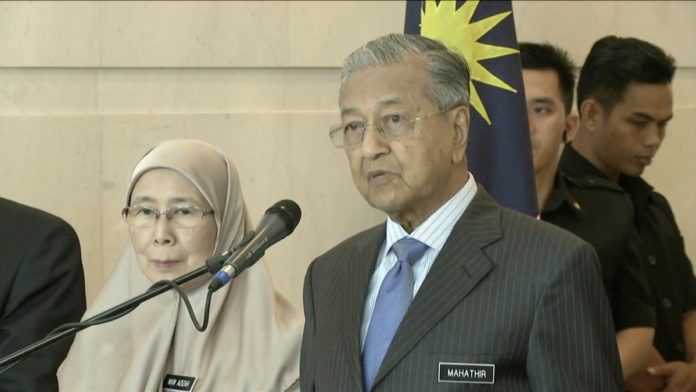
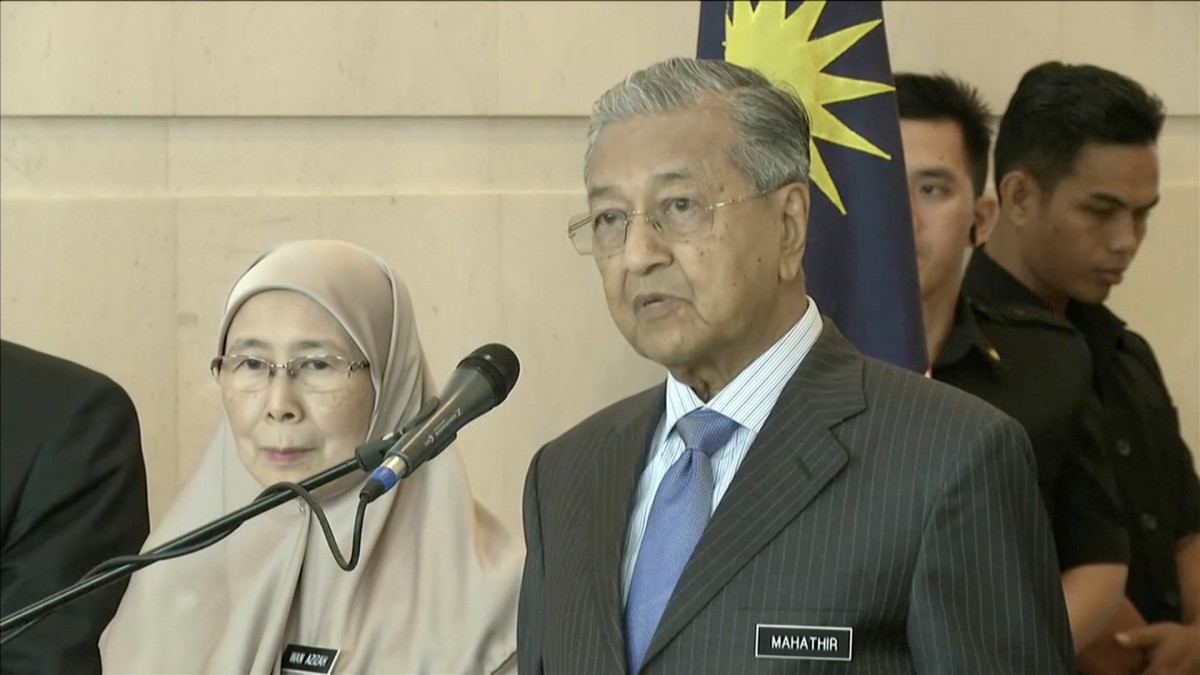
Malaysia’s Prime Minister Mahathir Mohamad speaks beside Deputy Prime Minister Wan Azizah Wan Ismail during a news conference after a weekly cabinet meeting in Putrajaya, Malaysia in a still image taken from a Reuters TV footage on May 30, 2018. Source: Reuters
“If it is cheap, then it is okay but we are talking about RM100 billion. The amount is too high.”
Another economist, Yeah Kim Leng of Sunway University, said the project could be revived when the country was in a better financial position.
He said it was more important for the government to reduce the nation’s current debts than to proceed with the project.
“After knowing the full extent of the government’s total debts, it is prudent to call off the HSR and other mega projects,” he said.
Will it ruin ties? Maybe not.
Some Singaporean netizens have expressed disappointment by Malaysia’s plans to axe the deal but they also appear to be empathetic to the reasons.
Jotting down his comments on the Facebook site of a news outlet, Richard Koh said there was a need to slow down some developments when Malaysia’s finance and economy is “in trouble”.
However, Koh still hopes the HSR would link Kuala Lumpur and the republic and be extended to Malaysia’s northern city of Penang.
“Once you are well to do, it is good to have the HSR all the way to Penang and beyond…..,” Koh said, as quoted by the Bernama.
Robert Lim suggested the project be fully privatised and be developed by a consortium comprising Malaysian companies instead of canceling the HSR project.
“Revise HSR from Penang to Singapore to eventually replace the aging KTM (Keretapi Tanah Melayu),” he wrote.
Dr Mahathir, who was sworn in as Malaysia seventh Prime Minister just over two weeks ago, said Malaysia would have to pay RM500 million (US$125 mil) in penalties to Singapore over the cancellation of the project.
However, to ensure that ties remained strong between the two nations, some Singaporeans came up with the noble suggestions that their government waive the compensation.
“I believe that this is one great opportunity for Singapore to build stronger ties with Malaysia. That is, for Singapore to forgo the legal or whatever fees involved in the cancellation of the HSR project,” Wah Ng said.
“Malaysia and Singapore are like siblings and Malaysia is truly going through a financial tsunami.
“Although the forfeited amount, for breaking the project agreement with Singapore, is not small to give up, it will speak volumes about Singapore.
“..I believe by doing so the ruling party would gain a better standing not only among Singaporeans and the people in ASEAN.”
KUALA LUMPUR: Malaysia will “reconsider” its challenge to the International Court of Justice’s (ICJ) judgment on Pedra Branca, said Prime Minister Mahathir Mohamad on Wednesday (May 30).
Speaking at a media conference after the Cabinet’s weekly meeting, Dr Mahathir also said that the government was thinking of expanding Middle Rocks and developing it “into a small island”.
“They (the ICJ) awarded Middle Rocks to us and on Middle Rocks we have already built structures,” he said. “It is our intention to enlarge middle rocks so that we can form a small island for us.”
Dr Mahathir added that no final decision has been made yet and the government was still mulling over the issues.
A rocky outpost located 44km off Singapore’s east coast, the dispute over the ownership of Pedra Branca, referred to by Malaysia as Batu Puteh, dates back to 1979 when Malaysia published a map indicating that the island was within the country’s territorial waters.
Singapore protested and the matter was brought to the ICJ in 2003.
On May 23, 2008, the ICJ ruled that Singapore had sovereignty over Pedra Branca, while Middle Rocks was awarded to Malaysia and South Ledge belonged to the state in whose territorial waters it is located.
Malaysia filed an application on Feb 2, 2017, to revise the ICJ’s 2008 judgment. Its case was hinged on three documents discovered in the National Archives of the United Kingdom that demonstrated officials at the highest levels “did not consider Singapore had sovereignty over Pedra Branca” during the 1950s to 1960s.
Singapore in May filed its written observations to the revision application, in what it described as a “comprehensive rebuttal”.
Malaysia’s second application on Jun 30, 2017, sought an interpretation of the same ICJ judgment. It requested the ICJ to declare the waters surrounding Pedra Branca to be Malaysia’s and in turn, the sovereignty of South Ledge belongs to Malaysia – a move that Singapore’s Ministry of Foreign Affairs described as “puzzling”, “unnecessary and without merit”.
Public hearings for the two cases have been scheduled for next month at the Peace Palace in The Hague, Netherlands. Four days have been scheduled for the hearing of each case, starting from Jun 11 for the first and Jun 18 for the second.
The legal team that Singapore has assembled for this includes Attorney-General Lucien Wong, Professor S Jayakumar, Professor Tommy Koh and former Chief Justice Chan Sek Keong.
BUDDHISTS across Southeast Asia celebrated the Buddha’s Birthday also known as Vesak on Tuesday.
Every year in May Buddhists commemorate the birth, enlightenment and passing of the Gautama Buddha, and is marked as a public holiday across many countries in the region.
It is typically celebrated with praying at temples, the lighting of lanterns, giving food to the needy and providing offerings of incense and joss sticks.
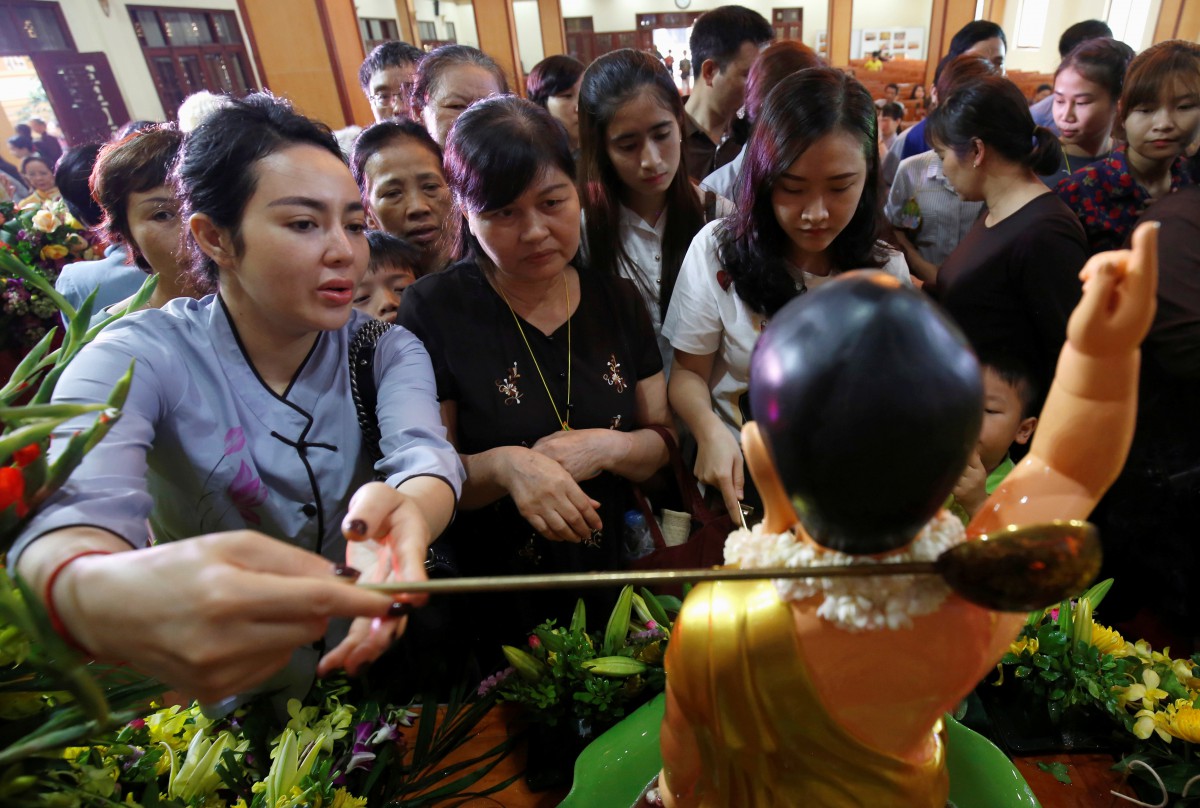
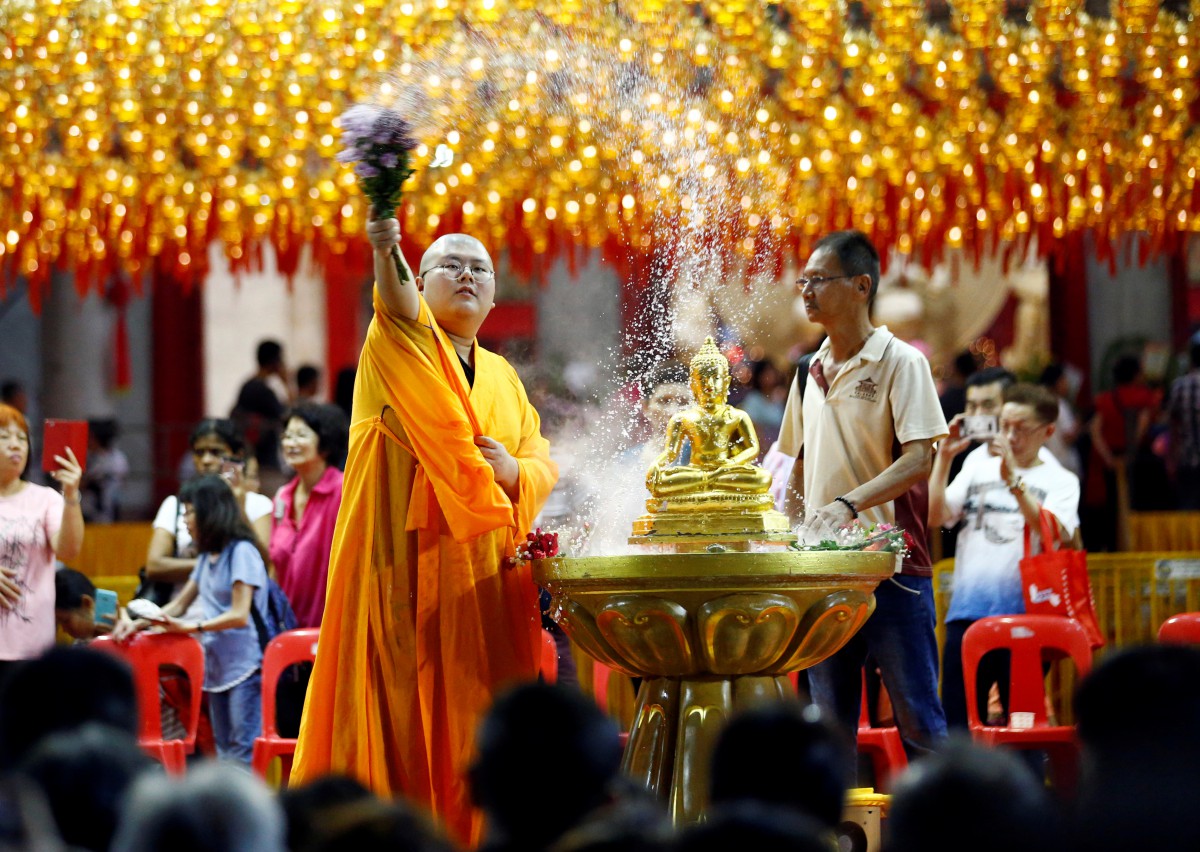
Vietnamese Buddhists pour scented water as they bath a statue of the child Buddha during Vesak Day celebrations which commemorates the Buddha’s birth, enlightenment and his entry into Nirvana at Quan Su pagoda, in Hanoi, Vietnam May 29, 2018. Source: Reuters/ Kham
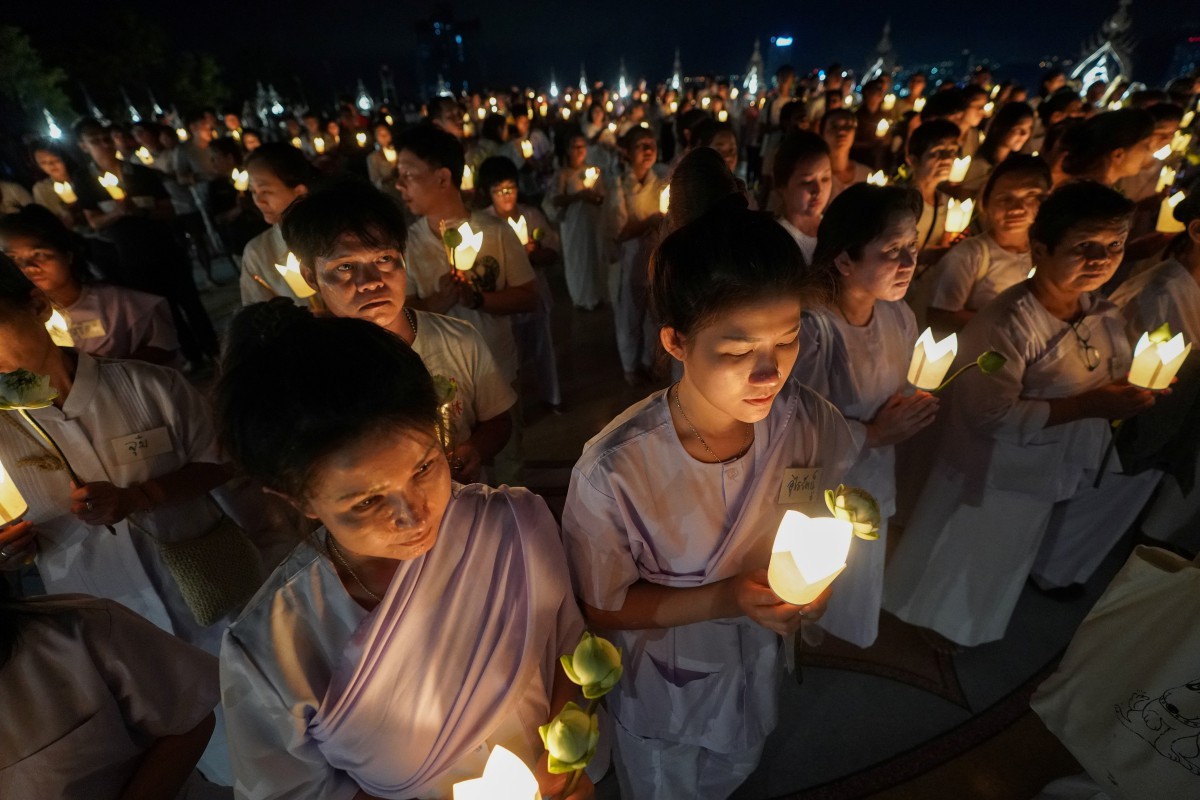
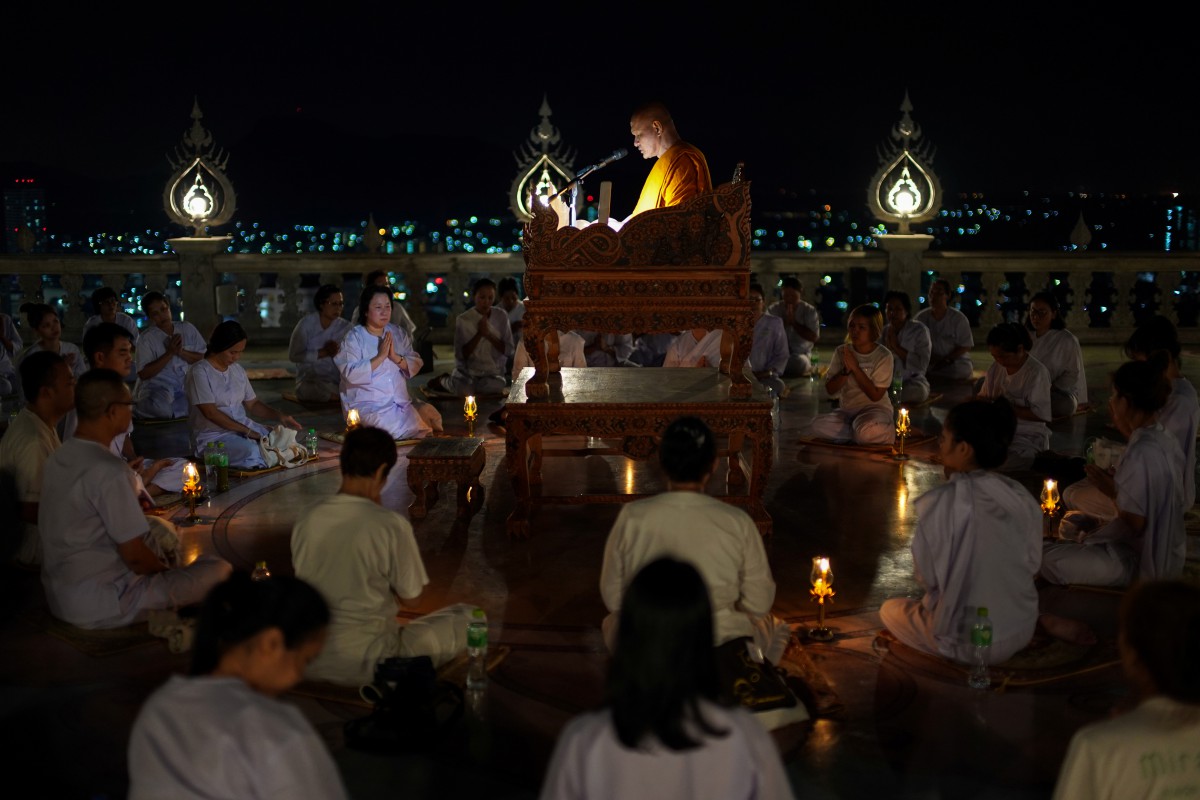
Buddhists carry candles as they pray during the Vesak Day, an annual celebration of Buddha’s birth, enlightenment and death, at a temple in Chonburi province, Thailand, May 29, 2018. Source: Reuters/Athit Perawongmetha
In Buddhist-majority Thailand, Prime Minister Prayut Chan-o-cha urged Buddhists to continue observing Buddhism’s five moral precepts and attend a wien thien ceremony to mark the day, reported the Bangkok Post.
Buddhists pray during the Vesak Day, an annual celebration of Buddha’s birth, enlightenment and death, at a temple in Chonburi province, Thailand, May 29, 2018. Source: Reuters /Athit Perawongmetha
“Many devotees will head over to Buddhist temples to take part in prayers and rituals, such as bathing the Buddha with scented water, which Buddhists believe will purify the mind and body, and lead to a blissful and enlightened life,” said Singapore’s Prime Minister Lee Hsien Loong in a statement posted to Facebook.
A monk blesses the crowd ahead of Vesak Day at Kong Meng San Phor Kark See Monastery in Singapore May 28, 2018. Source: Reuters/Edgar Su
“Wishing all Buddhists a peaceful and blessed Vesak Day.”
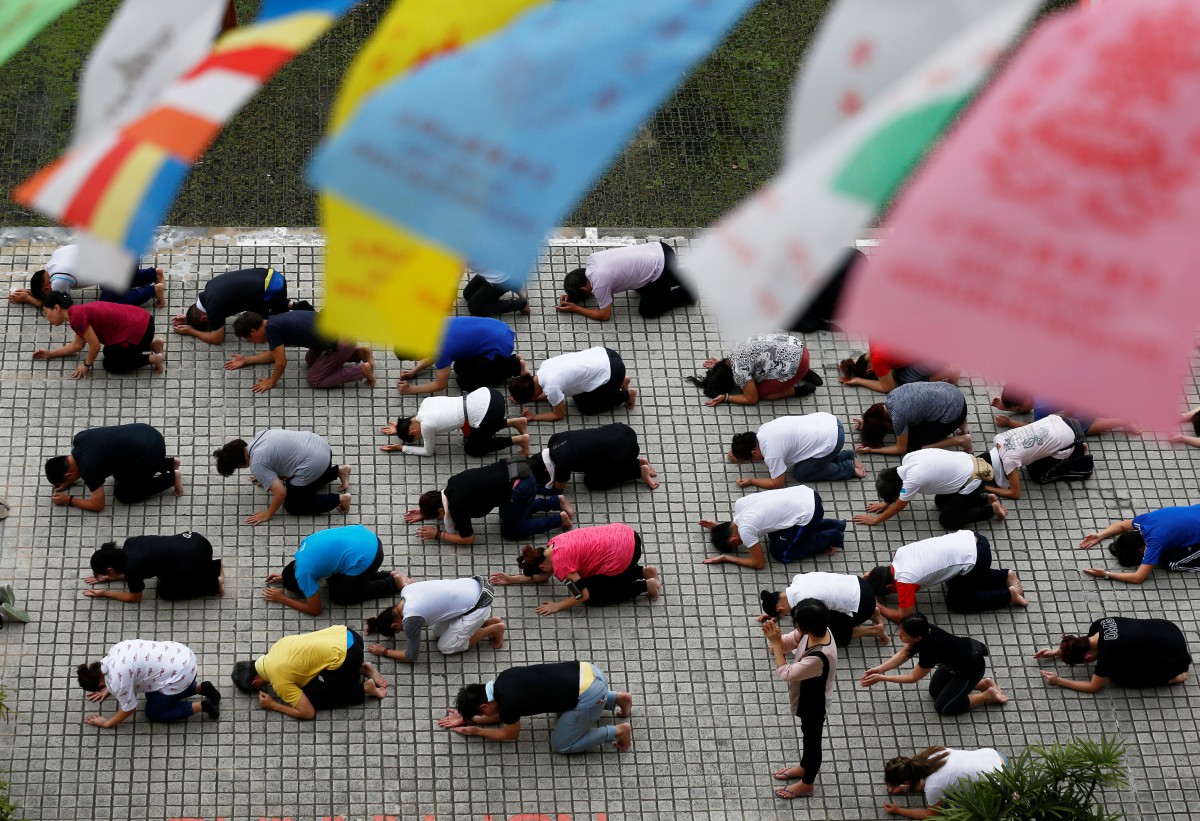
Devotees perform the “Three Step One Bow” ritual ahead of Vesak Day at Kong Meng San Phor Kark See Monastery in Singapore May 28, 2018. Source: Reuters/ Edgar Su
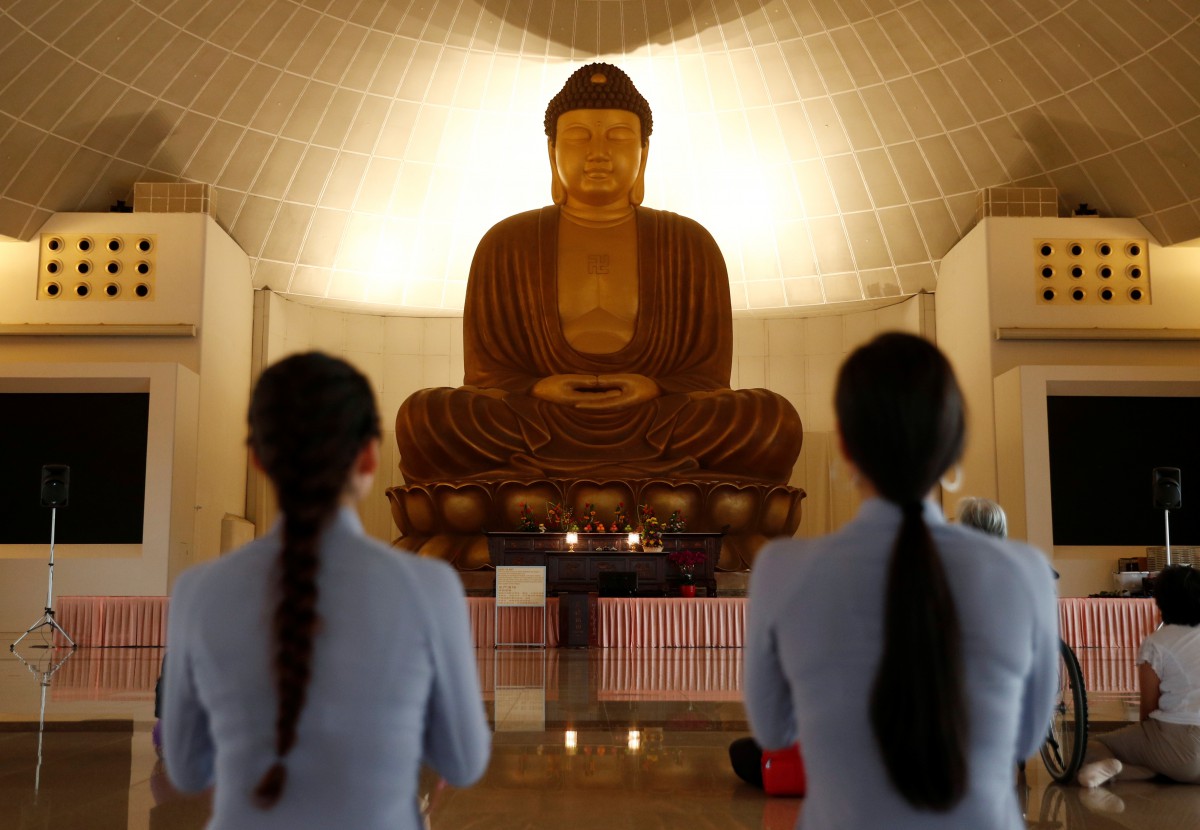
Devotees pray ahead of Vesak Day at Kong Meng San Phor Kark See Monastery in Singapore May 28, 2018. Source: Reuters/Edgar Su
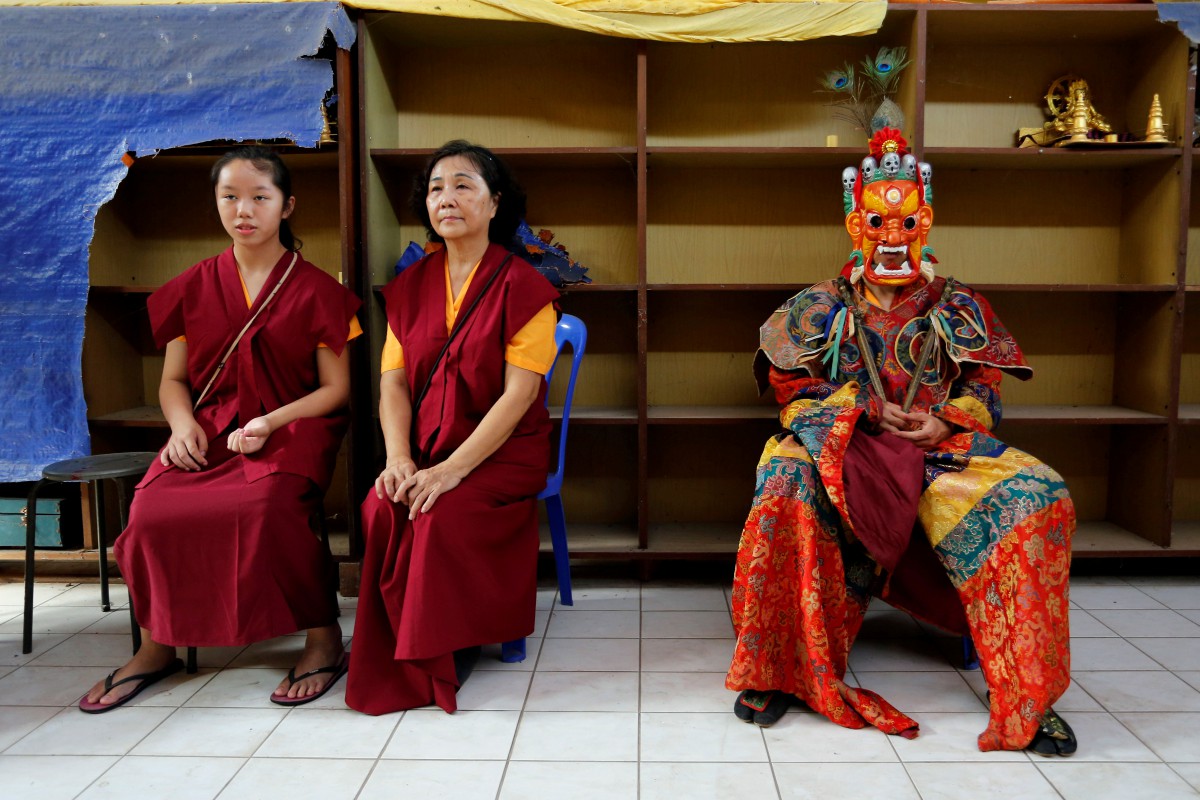
A Tibetan Buddhist monk wearing traditional costume waits to perform ritual dance on Vesak Day at the Enlightened Heart Tibetan Buddhist temple in Ipoh, Malaysia May 29, 2018. Source: Reuters /Lai Seng Sin
In his Vesak Day address, Malaysia’s newly elected Prime Minister Mahathir Mohamad promised to ensure the rights and freedoms of all the country’s citizens regardless of religion or ethnicity.
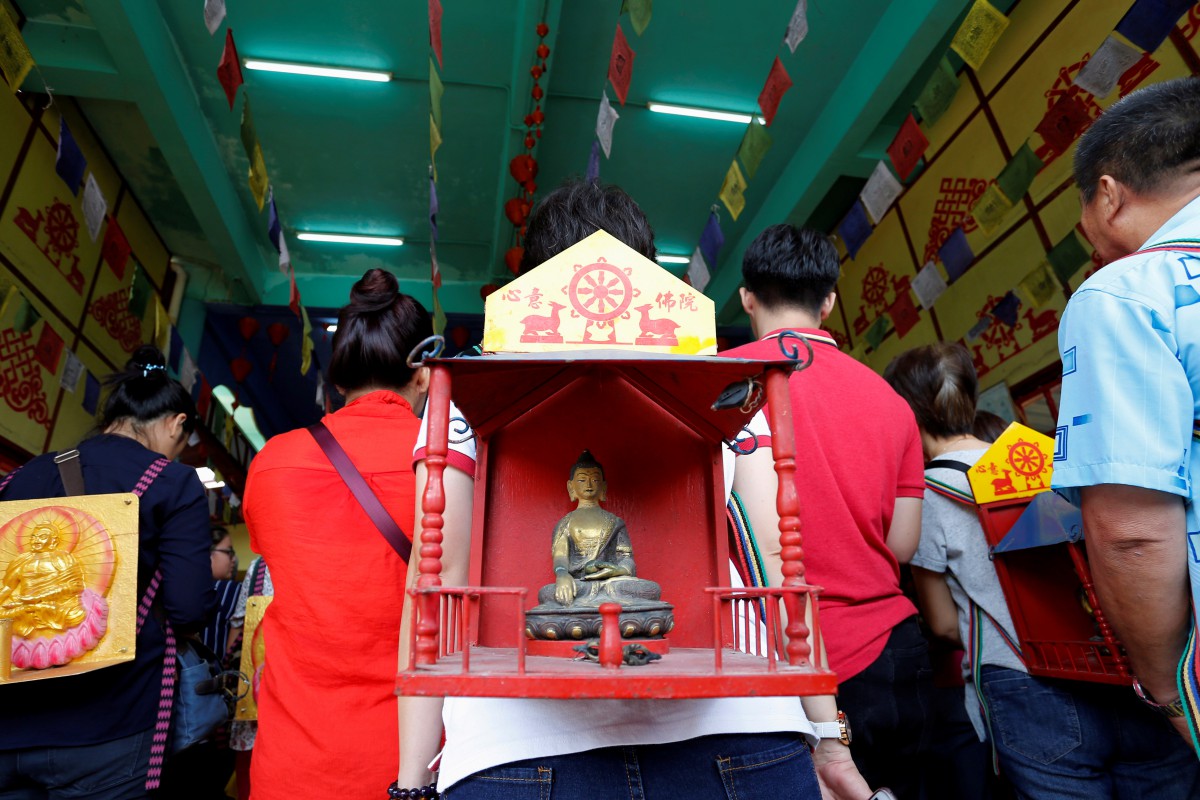
A Buddhist devotee carries a Buddha statue on her back on Vesak Day at the Enlightened Heart Tibetan Buddhist temple in Ipoh, Malaysia May 29, 2018. Source: Reuters/Lai Seng Sin
“The Malaysian society of different races, languages, religions and cultures are used to celebrating religious festivals together. This is one of Malaysia’s many specialties,” he said as quoted by Channel News Asia.
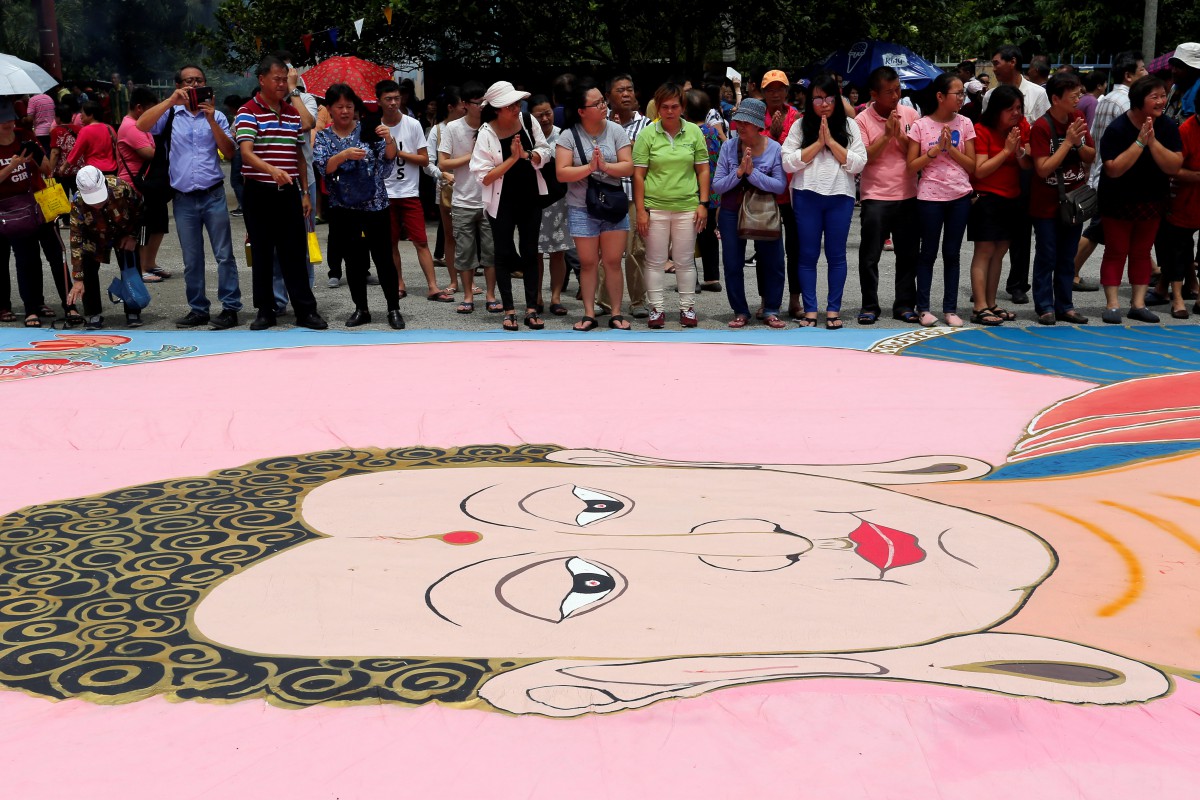
Buddhist devotees display a giant thangka, a sacred painting on cloth, on Vesak Day at the Enlightened Heart Tibetan Buddhist temple in Ipoh, Malaysia May 29, 2018. Source: Reuters/Lai Seng Sin
“It is also a manifestation of the freedom of religion practised in Malaysia and this freedom is not limited to religion, but also freedom of language, customs and cultures.”
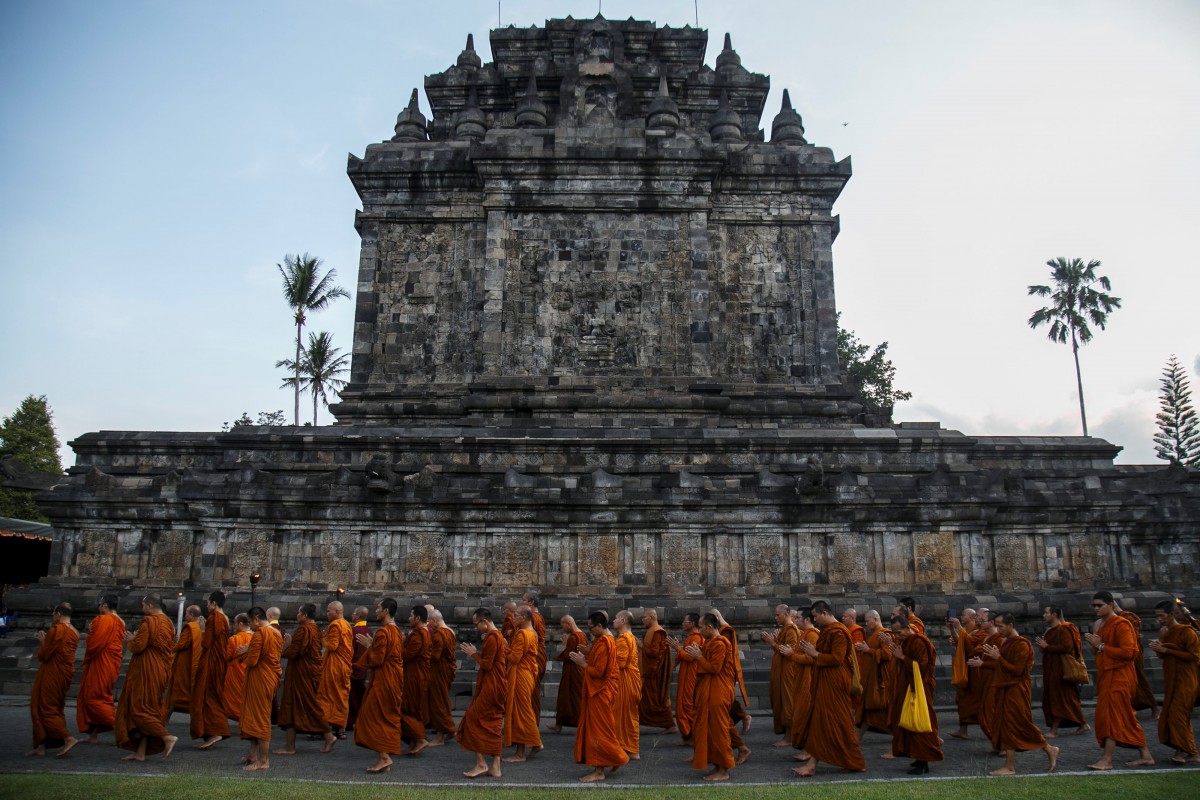
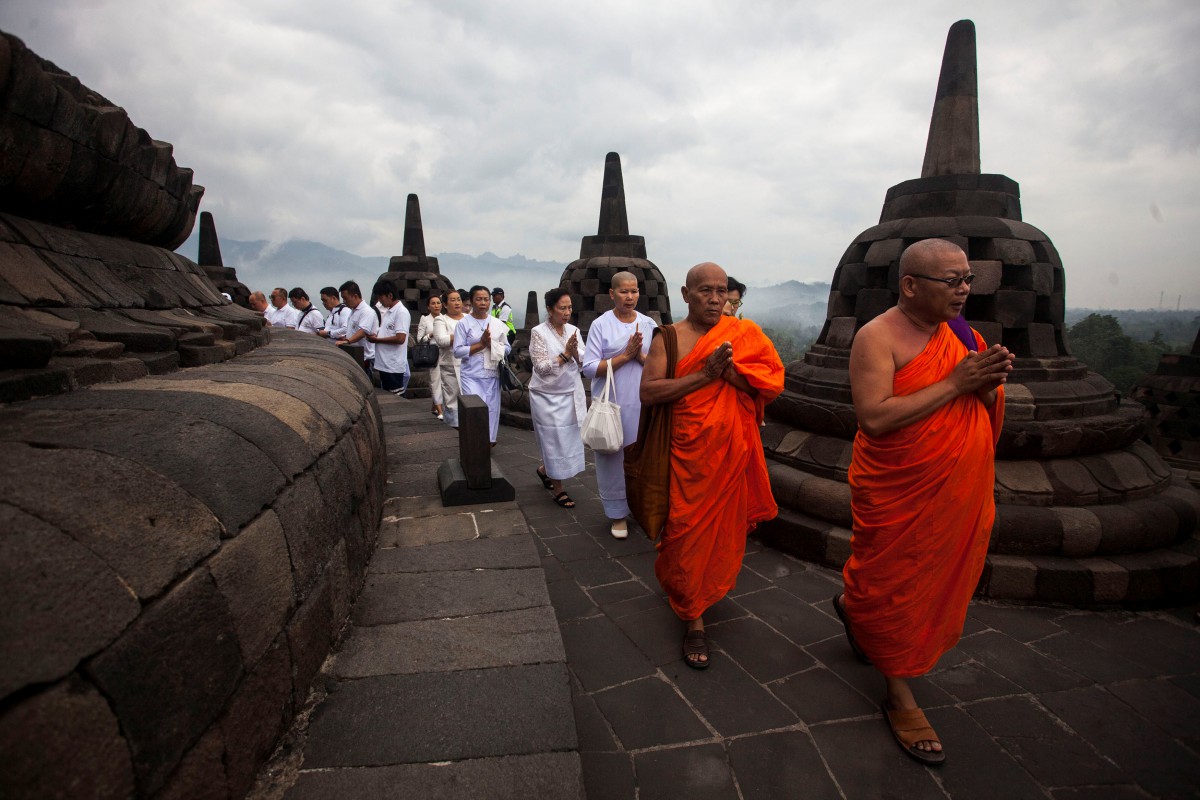
At Borobudur in central Java, Indonesia – the world’s largest Buddhist temple – thousands of Buddhist monks descended to circuit the temple in a ritual called Pradaksina.
Buddhist monks walk around Mendut temple during the practice of Pradakshina ahead of Vesak Day in Magelang, Central Java, Indonesia, May 27, 2018. Source: Antara Foto/Hendra Nurdiyansyah/ via Reuters
In a Vesak message posted to Twitter, President Joko “Jokowi” Widodo urged citizens to “purify and cleanse your hearts for peace and happiness together”.
Buddhist monks and nuns lead a procession at Borobudur Temple on Vesak Day in Magelang, Central Java, Indonesia May 29, 2018. Source: Antara Foto/Andreas Fitri Atmoko/ via Reuters
Jakarta’s Muslim governor Anies Baswedan paid a visit to a large Buddhist temple in the west of the city to mark Vesak.
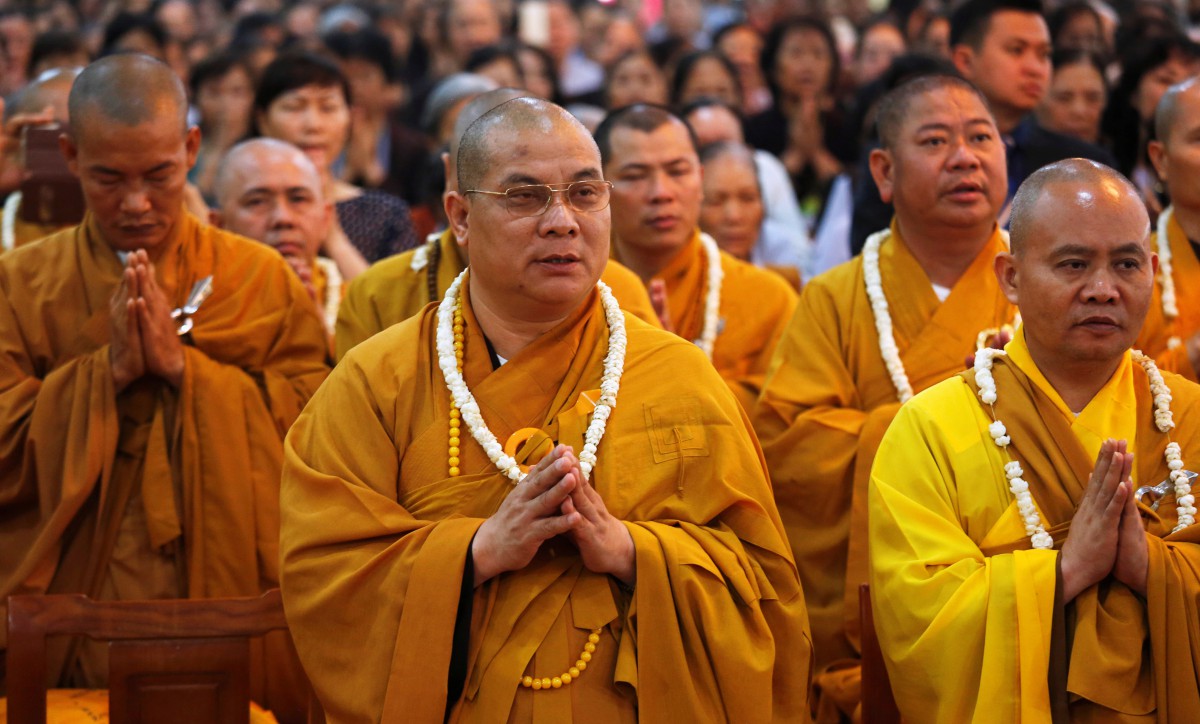
Buddhist monks attend the annual Vesak Day celebrations which commemorates the Buddha’s birth, enlightenment and his entry into Nirvana at Quan Su pagoda, in Hanoi, Vietnam May 29, 2018. Source: Reuters/ Kham
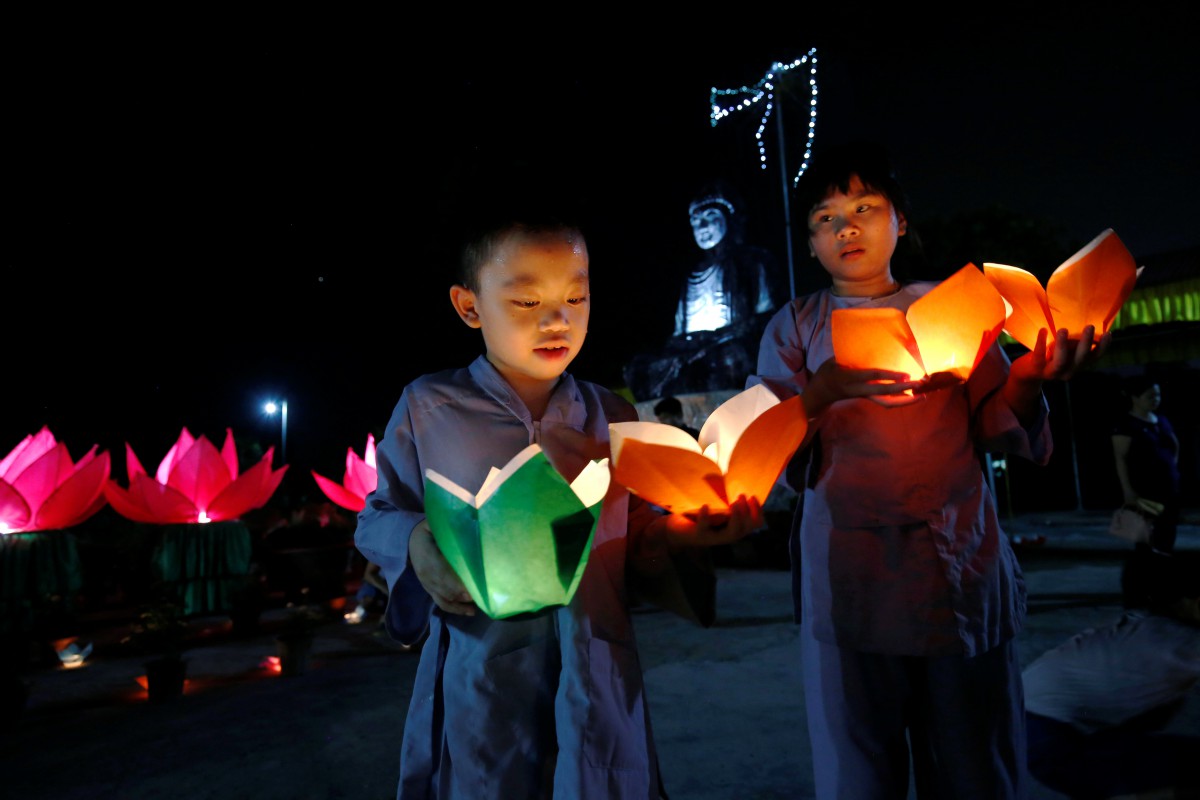
Children light candles during the Vesak Day celebrations at Duoc Thuong pagoda in Hanoi, Vietnam May 29, 2018. Source: Reuters/ Kham
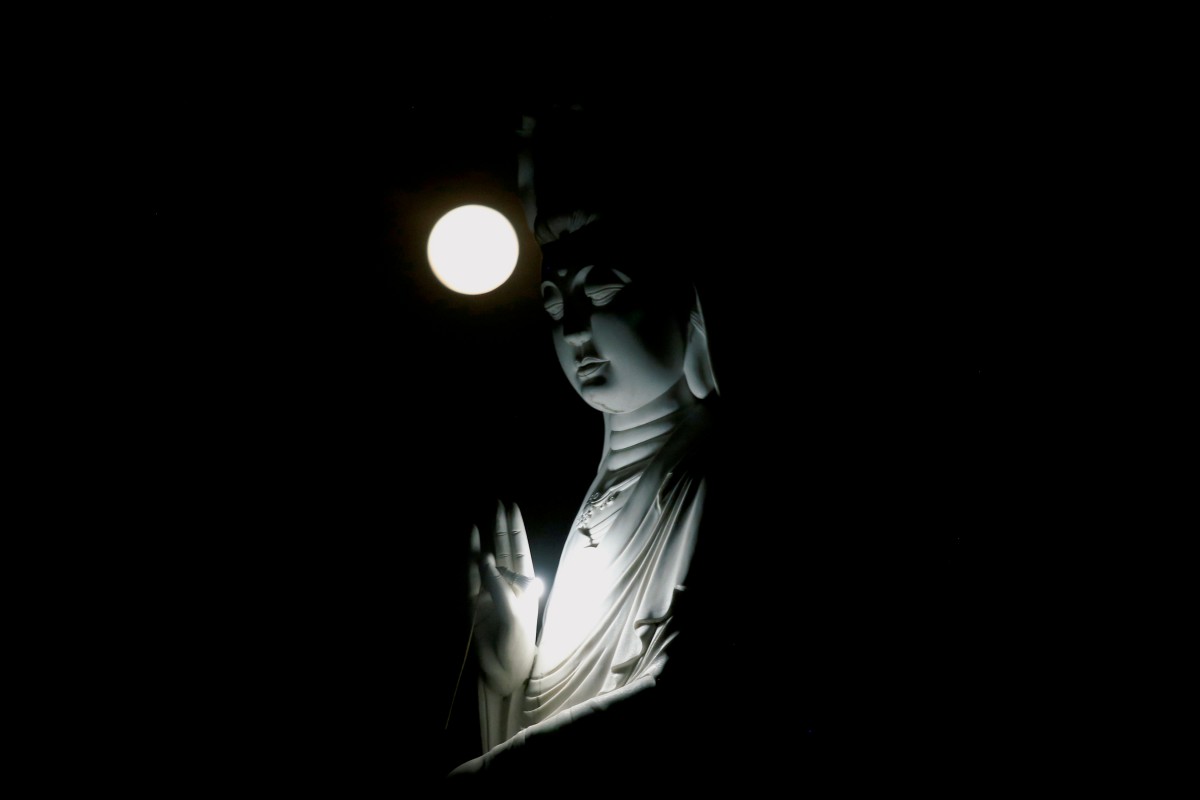
The full moon is seen behind a Buddha statue at Duoc Thuong pagoda in Hanoi, Vietnam May 29, 2018. Source: Reuters/ Kham
The near 19-hour flight will fly between Singapore and New York’s Newark Liberty International Airport.
The Airbus A350-900ULR that will operate the Singapore-Newark route. (Photo: Singapore Airlines)
(Updated: )
Bookmark
SINGAPORE: Singapore Airlines (SIA) will launch the world’s longest commercial flights on Oct 11 between Singapore and New York, the airline said in a news release on Wednesday (May 30).
The Singapore-Newark flights will cover about 16,700km and travelling time will be up to 18 hours and 45 minutes.
The flights to Newark Liberty International Airport on the new Airbus A350-900ULR will first operate three times a week from Changi Airport on Monday, Thursday and Saturday. Daily operations will then commence from Oct 18 when an additional aircraft comes into service.
The aircraft will have two cabin classes – Business and Premium Economy. Tickets will be made available for sale progressively across various booking channels starting from Thursday, said SIA.
“We are pleased to be leading the way with these new non-stop flights using the latest-technology, ultralong-range Airbus A350-900ULR,” said SIA CEO Goh Choon Phong.
The new Airbus range features higher ceilings, larger windows and better air quality, said SIA.
SIA is the world’s first customer for the new A350-900ULR and expects the first aircraft to be delivered in September. Seven more such aircraft are due for delivery by the end of the year.
Changi Airport Group (CAG) has welcomed this announcement as well on Wednesday, adding that the new service is Southeast Asia’s only non-stop connection to the North American east coast.
“With the advent of ultra long range aircraft, non-stop long haul routes are now more efficient and viable,” said CAG’s managing director, air hub development, Mr Lim Ching Kiat.
“I’m confident it will be well-received by Changi Airport’s passengers, especially time-pressed business travellers.
“With strong traffic growth between the North America and Southeast Asia regions, there are growth opportunities to be tapped,” he added.
Singapore Airlines currently serves New York’s John F Kennedy International Airport via Frankfurt.
With the new Singapore-Newark service, there will be 72 weekly passenger services between Changi Airport and the United States, said CAG.
CAG added that there were 692,800 passenger movements recorded on direct flights between Singapore and the United States last year.
There are also plans for non-stop Singapore-Los Angeles flights with the A350-900ULR that will be announced later, added SIA.
SINGAPORE: In the frenzied, rollercoaster world of cryptocurrencies, a new term has been grabbing investors’ attention: Initial Coin Offerings or ICOs.
Last year, according to Forbes magazine, ICOs raised almost US$5 billion – a huge leap from just US$101 million in 2016. In 2018, some analysts expect upwards of US$18 billion to be ploughed into ICOs, with Singapore fast becoming a leading Asian ICO market.
To the uninitiated, ICOs might sound like IPOs (Initial Public Offerings) – but they are vastly different. Despite the massive funds being channelled and the feverish interest surrounding them, most retail investors have little understanding of this innovative fundraising method.
The ICO process typically begins with issuers publishing a white paper describing the product or service they promise to build. Investors then buy coins or tokens which promise access to this product or service.
Unlike IPOs, ICOs take place at a very early point in the life cycle of the company. While the vast majority of IPOs are issued by well-established, profitable corporations (notable exceptions being during the Internet bubble of the late 1990s), ICO projects are in the development phase and have not made any profit.
Moreover, ICO white papers generally do not reveal company financials and tend to be inconsistent and unreliable. IPO prospectuses on the other hand contain carefully audited financial statements and follow well-established regulatory procedure.
As a consequence, the due diligence process with ICOs is simpler and shorter, without the armies of bankers, lawyers, and auditors typical of IPOs.
This, however, is a double-edged sword as ICOs also have less transparency, less regulation, and offer essentially nothing in the way of protection for investors.
While shares in IPOs represent equity in the firm and votes to shareholders, ICOs generally represent tokens sold at a discount and are an asset rather than a security. ICO entrepreneurs maintain full control over the venture.
Furthermore, while IPOs involve listing on an exchange – meaning companies need to satisfy various requirements including issuing audited quarterly financial statements and other disclosure – ICO listing requirements are almost non-existent.
A CopyCash Facebook post promoting initial coin offerings.
There are several other differences, but in short ICOs are much riskier than IPOs. That does not mean however that they should be dismissed outright.
Misleading names notwithstanding, it could be argued that ICOs are a useful substitute for Venture Capital (VC) funding due to similarities in the stage of company’s life cycle and risk profiles.
This brings with it a different set of implications.
The key function of the VC industry is funding start-ups, the overwhelming majority of which fail. It is a high-risk business, yet those few that do succeed often do so spectacularly and more than compensate for the many failures – think of Facebook, Google or Amazon.
Famously, SoftBank’s US$20 million VC investment in a start-up named Alibaba in 2000 grew to roughly US$58 billion at its IPO fourteen years later – a mind-boggling 300,000 per cent return.
So why should these spectacular returns be reserved only for rich VC companies? Shouldn’t a regular guy get a shot? The answer is more complex than it seems.
First, ICOs generally do not have a working product, making them even riskier than a regular start-up. VCs typically demand a “proof of concept” and a knowledgeable, experienced management team.
Second, VCs often get a seat on the board in return for their investment, allowing them to advise as well as monitor the company. They also provide much-needed connections to ambitious and energetic – but often inexperienced – entrepreneurs.
ICO companies however do not entitle investors to any input in governance, even though they provide cheaper and quicker funds compared to VC investors.
SoftBank Group Corp Chairman and CEO Masayoshi Son speaks during the Wall Street Journal CEO Conference in Tokyo, Japan on May 15, 2018. (Photo: REUTERS/Toru Hanai)
Finally, unlike illiquid VC investment, ICO tokens are typically liquid, which provides an easy exit strategy for ICO investors. However, this liquidity can also lead to short-termism as investors may pressure firms to focus on short-term results at the cost of more significant long-term benefits.
ATTRACTED BILLIONS IN FUNDING
ICO disadvantages notwithstanding, fueled by rapid advances in technology and headlines about exceptional returns, hundreds of promising crypto-related products have attracted billions of dollars via ICO funding.
As a case in point, Ethereum’s ICO raised around US$20 million in 2014 and has since evolved into the platform of choice for other ICOs. Meanwhile its market capitalisation has reached US$60 billion. More recently, a WhatsApp–like chat platform, Telegram, raised a record US$2.2 billion via ICO.
However, as billions of dollars have poured in ICOs and scores of novice investors entered the ICO arena, so too have fraudsters, scammers and charlatans eager to exploit naïve investors.
Perhaps the ultimate example of investors gullibility is PonziCoin, which was launched as “the world’s first transparent, decentralised Ponzi scheme built on the blockchain.” Yet even this obvious parody attracted inexperienced investors.
According to a recent survey, regulators most commonly identified ICOs and cryptocurrencies as high risk. Furthermore, while millennials were deemed most likely to use fintech products they were also most at risk of fraud from fintech products.
Since millennials have the highest cryptocurrency ownership rate among different age groups, they seem most likely at risk from cryptocurrencies as well.
The Telegram logo is seen on a screen of a smartphone in this picture illustration taken April 13, 2018. (Photo: REUTERS/Ilya Naymushin)
DRIVING INNOVATION
A recent academic study from NUS Business School found that several common factors lead to more innovations in companies, the most important of which is access to capital.
Since many ICO ventures are not able to raise funding from traditional sources, better-funded start-ups will likely lead to more innovations with potential benefits to economy and society compared to ICO ventures.
While ICOs differ dramatically from IPOs or VC investments, there is an emerging role they play in helping fund projects that would not have received financial support from traditional sources.
In turn, there is a case for expecting that the access to capital they offer will likely lead to more innovations benefitting economy and society.
Indeed, as more funds pour in crypto-related products and blockchain technology’s acceptance continues to spread, we can expect to see the proliferation of innovative blockchain applications.
However, recent reports found that almost half of ICO projects have already failed, while cryptocurrencies recently plummeted, thus, renewing concerns about overvaluation. Additionally, regulators have ramped up warnings about suspicious ICO projects, while some ICOs have become targets of class action lawsuits.
New cryptocurrencies are whizzing past bitcoin with breathtaking profitability. (Photo: AFP/PIERRE TEYSSOT)
Indeed, the Monetary Authority of Singapore recently directed an ICO issuer to cease offering digital tokens and warned eight exchanges in Singapore to stop trading in digital tokens that resemble securities.
These negative developments may potentially cool off exuberant investors and deflate the hype over ICO and, most likely, increase due diligence of ICO backed projects.
As competition heats up and investors become more selective, we will witness a further evolution of the process, which will likely include standardisation of carefully vetted and better organised white papers including more comprehensive risk disclaimers.
Retail investors however should still be aware that despite the headlines and the hype, investing in ICOs at present is opaque, high risk, and offers little to nothing in the way of protection.
Emir Hrnjic is a Visiting Senior Research Fellow at the Centre for Asset Management & Research Investment (CAMRI) at National University of Singapore (NUS) Business School. The opinions expressed are those of the writer and do not represent the views and opinions of NUS.
CANCELLING the summit with North Korea is the right decision considering the lack of preparations on the US side coupled with unrealistic expectations about Pyongyang denuclearising.
President Trump’s subsequent statements that the summit may go on after all have inculcated even more instability into a potential summit.
The key question is whether Trump’s decision to abandon the summit is a realisation that the US is unprepared, or whether the cancellation is a tactic in a long strategy to engage Pyongyang.
Other explanations are also plausible. It could be that the Trump administration is coming to the view that North Korea is not interested in denuclearisation, or that North Korea’s idea of denuclearisation substantially deviates from the US’ understanding.
Trump’s sudden cancellation and subsequent comment that a summit may be be possible could even be posturing to maximise his negotiating position ahead of the planned Singapore summit. Then there are the questions about China’s role in shaping Kim’s views about the summit
Whether the summit proceeds or not, the region’s leaders and governments have much to gain or lose. Subsequently, they are positioning themselves to maximise their national interests as Washington-Pyongyang relations become increasingly unstable and unpredictable.
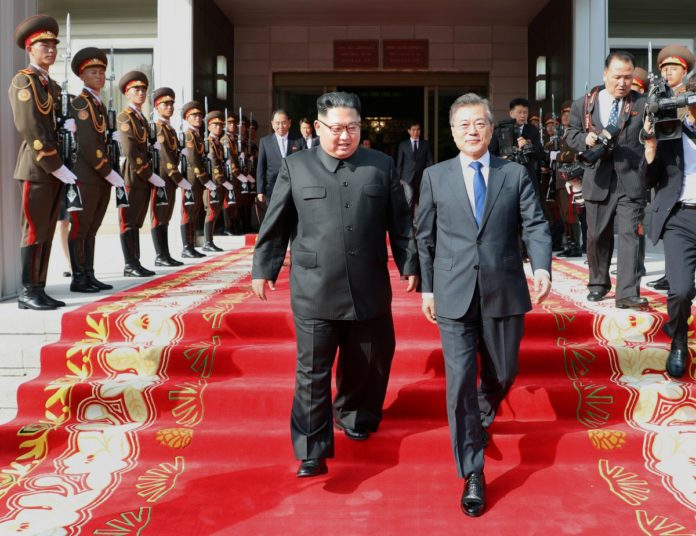
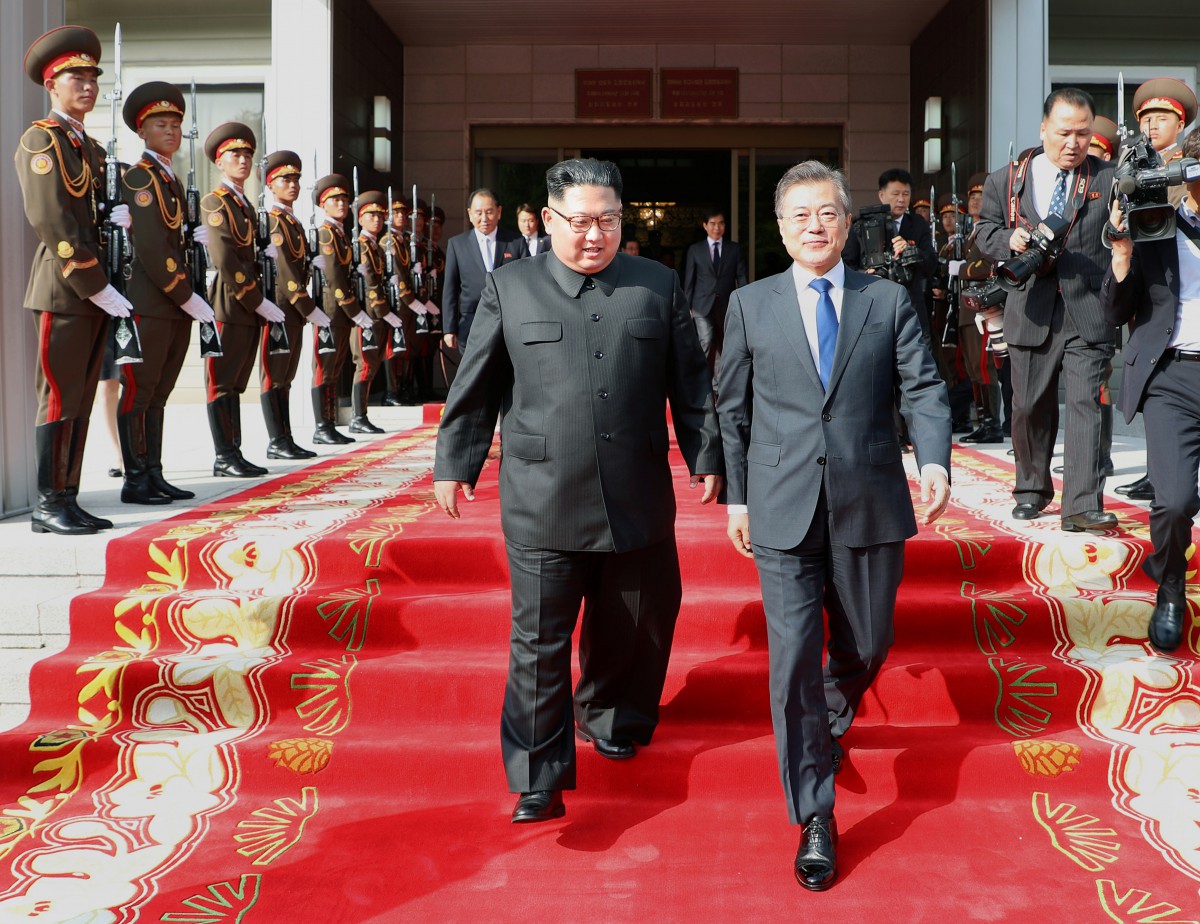
South Korean President Moon Jae-in and North Korean leader Kim Jong Un leave after their summit at the truce village of Panmunjom, North Korea, in this handout picture provided by the Presidential Blue House on May 26, 2018. Picture taken on May 26, 2018. Source: The Presidential Blue House /Handout via Reuters
South Korea’s President Moon Jae-in has spent a lot of political capital on the promotion of a Trump-Kim summit. The urgency to ensure that it goes ahead can be seen in the secret meeting between Kim and Moon in the wake of the cancellation letter.
Trump’s decision will compel Moon to deepen his role as communicator between the US and North Korea. Moon has the unenviable job of conveying to two highly sceptical leaders that both sides are sincere about denuclearisation and eventually signing a peace treaty. He also has to convince Kim that this process will include a guarantee of regime security.
This challenge may push Moon to pursue a thawing in peninsular relations on a bilateral basis through the Blueprint for Inter-Korean Economic Cooperation which proposes three beltways to promote economic development linking South Korea, North Korea and China.
Beijing would be amenable to this approach as it would increase regional stability by making it much more difficult for the US to conduct a military strike on a North Korean regime going through a process of trilateral cooperation. It would also pull the Koreas into Beijing’s political and economic orbit.
Japan’s Prime Minister Shinzo Abe, for his part, will be relieved that Trump is not moving forward with the summit. For Tokyo, North Korea is an existential threat and the lack of preparation by the US suggests the summit would not have included Japan’s national interests. These include denuclearisation but also the dismantling of short- and mid-range missile systems, submarine launch systems and biological and chemical weapons.
Evidence and experience lead Tokyo to believe that denuclearisation and demilitarisation are not part of Pyongyang’s long-term objective. Rather, their assessment is that post-Olympic North Korean diplomacy is an effort to drive a wedge between the US and South Korea to substantially diminish the possibility of a US military strike. Simultaneously, they believe that Pyongyang aims to extort economic aid to achieve the second pillar of Pyongyang’s byungjin ideology, economic growth.
China will take the cancellation as an opportunity to further deepen its relationship with Pyongyang through an informal relaxation of sanctions and pursuing China-centered diplomatic solutions to the nuclear problem.
Beijing views bilateral negotiations between the US and North Korea as highly problematic and will make strenuous efforts to entice Pyongyang through economic assistance and voicing alternative deescalating strategies such as the Double Freeze proposal. Leaders in Zhongnanhai will strongly promote a four-party approach to denuclearisation including both Koreas, China and the US – an approach unlikely to go down well with Japan or Russia.
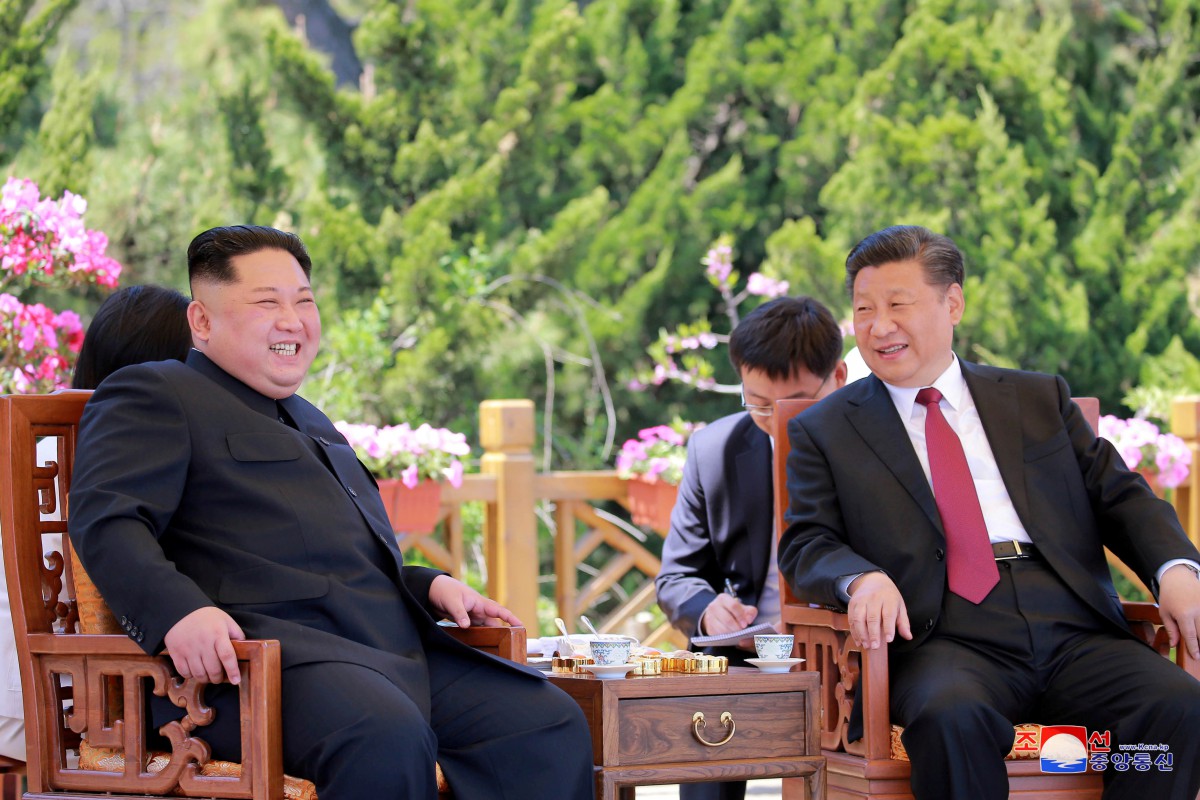
North Korean leader Kim Jong Un meets with China’s President Xi Jinping, in Dalian, China in this undated photo released on May 9, 2018 by North Korea’s Korean Central News Agency (KCNA). Source: KCNA/ via Reuters
Lastly, the cancellation is a boon for Pyongyang. It conveys the image that it is not the North which is the obstacle to diplomacy. Rather the US under Trump is the primary problem preventing the establishment of a long-term durable peace on the peninsula.
Pyongyang will try to use this to relax sanctions and promote diplomacy to extract economic aid from stakeholders in return for a gradual denuclearisation or long-term hiatus in nuclear and missile testing. This will be on North Korean terms.
If, after all, the summit does take place, Kim and Trump will need to agree upon a broad framework that they can take back to their domestic and international supporters. Kim will stress regime security, economic aid, a peace treaty and non-aggression pact. He will also need to ensure China’s interests are properly represented in any discussion and eventual long-term agreement.
For Trump, domestic supporters will expect an end to North Korea’s nuclear missiles. At the same time, the US’ partners such as Japan will press the US leader for a cautious, incremental approach to denuclearisation that includes chemical and biological weapons, short and mid-range missile and submarine launch systems.
With so much to balance, a potential meeting is only the start of a generational project that will outlast Trump’s tenure as President and will be challenged by volatile political cycles in the US.
This reality casts serious doubt on the probability of denuclearisation and puts the Kim regime in a strong position in any long-term negotiation process.
SINGAPORE: Drivers on Grab’s carpooling service, GrabHitch, will have to pay a 10 per cent “platform fee” from Friday (Jun 1).
In an email to drivers on the platform on Tuesday, Grab said: “We are now ready for our next wave of development, one that has to be sustainable at its core.
“Your contribution helps us to fund our operating expenses and invest in various initiatives and product enhancements with a sole objective – to channel value back to you in greater fold.”
This value, according to an FAQ on Grab’s website, will come in the form of better matches, reducing last minute cancellations and no-shows from riders, among others.
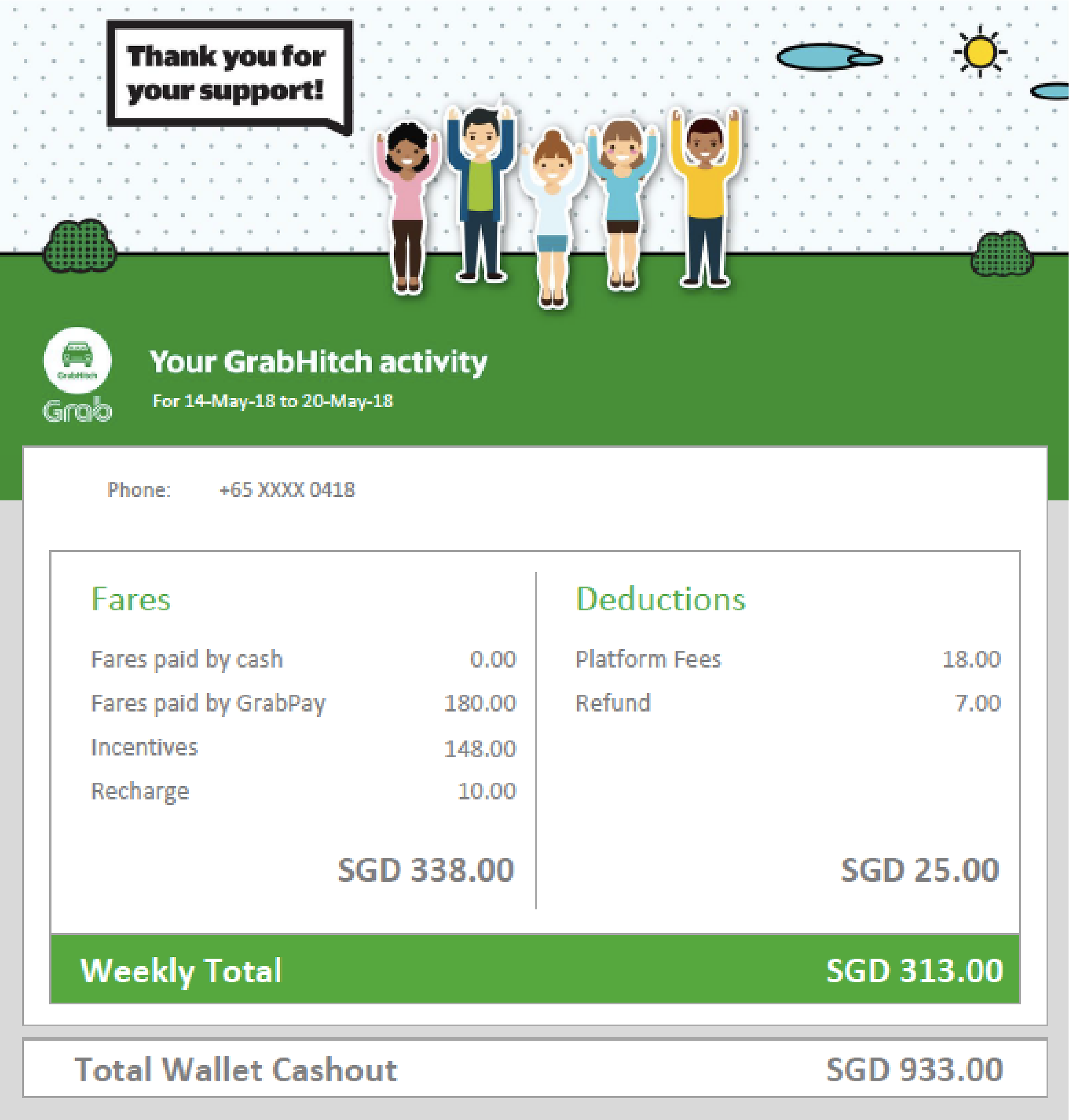
The fee will be deducted from Grab’s “driver wallet”, its payment system for drivers, one to two working days after completed carpooling rides, Grab said.
Incentives and bonuses will not be subject to the fee, the company also explained on its website.
Drivers who have negative balances in their driver wallets will be given limited access to booking requests, and will have to bring their balance back to a positive value by completing rides in order to regain full access, it said.
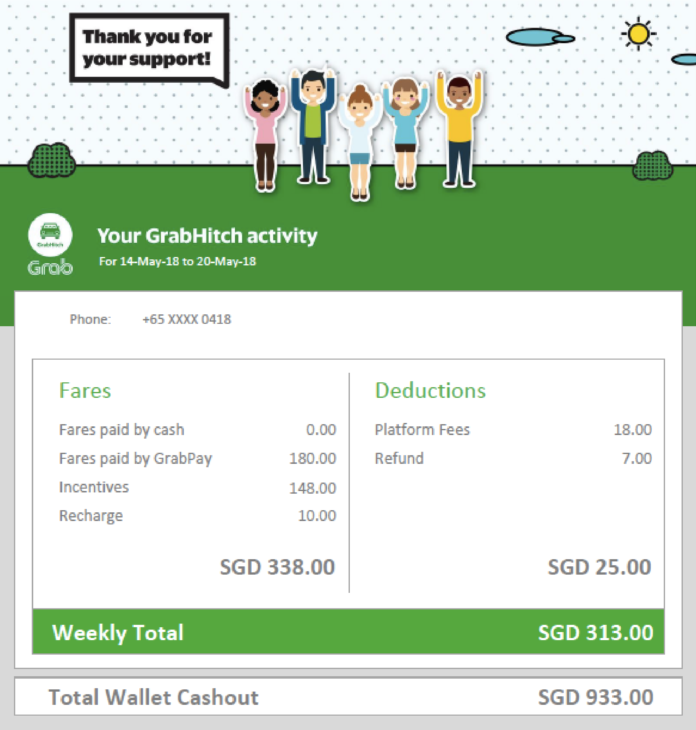
Another change is that GrabHitch drivers will receive an online statement every Thursday, reflecting their activity and earnings from Monday to Sunday the week before, Grab said.
(Image: Grab’s website)
Launched in November 2015, GrabHitch is a “non-commercial social carpooling service” that matches private drivers with others travelling along the same route. Unlike GrabCar and GrabTaxi drivers, who pay up to 20 per cent in commission, GrabHitch drivers currently earn the full fare for rides.
A top aide to North Korean leader Kim Jong Un arrived in Singapore on Monday night, Japanese public broadcaster NHK said Tuesday, the latest indication that the on-again-off-again summit with US President Donald Trump is going ahead.
US President Donald Trump (right) and Kimg Jong Un. (Photos: AFP/Mandel NGAN)
(Updated: )
Bookmark
TOKYO: A top aide to North Korean leader Kim Jong Un arrived in Singapore on Monday night (May 28), Japanese public broadcaster NHK said Tuesday, the latest indication that the on-again-off-again summit with US President Donald Trump is going ahead.
Kim Chang Son, Kim’s de facto chief of staff, flew to Singapore via Beijing on Monday night, the report said.
At the same time, a team of US government officials, including the White House deputy chief of staff for operations Joe Hagin, left US Yokota Air Base in Japan for Singapore on Monday, NHK said.
The White House said a “pre-advance” team was travelling to Singapore to meet with North Koreans.
The reports indicate that planning for the historic summit, initially scheduled for Jun 12, is moving ahead after Trump called it off last week. A day later, Trump said he had reconsidered, and officials from both countries were meeting to work out details.
When Kim Chang Son was asked by a reporter at the Beijing airport if he was flying to Singapore for talks with the United States, he said he was “going there to play”, according to footage from Nippon Television Network.
In a flurry of diplomacy over the weekend, Kim Jong Un and South Korean President Moon Jae-in held a surprise meeting on Saturday at the border village of Panmunjom, during which they agreed the North Korea-US summit must be held.
And on Sunday, the US State Department said American and North Korean officials had met at Panmunjom. Sung Kim, the former US ambassador to South Korea and current ambassador to the Philippines, led that American delegation, an American official told Reuters.
Moon said Monday there could be more impromptu talks between the two Koreas in the lead-up to the summit.
In Kim and Moon’s first, upbeat meeting on Apr 27, they agreed to seek the “complete denuclearisation” of the Korean peninsula – but didn’t define what that meant, or how that would proceed.
Since then, North Korea has rejected US demands for it to unilaterally abandon its nuclear weapons programme that experts say could threaten the United States.
Analysts believe Washington is trying to determine whether North Korea is willing to agree on sufficient steps towards denuclearisation to allow a summit to take place.
North Korea defends its nuclear and missile programmes as a deterrent against perceived aggression by the United States, which keeps 28,500 troops in South Korea, a legacy of the 1950-53 Korean War, which ended in a truce, not a peace treaty.
It has long said it is open to eventually giving up its nuclear arsenal if the United States withdraws its troops from South Korea and ends its “nuclear umbrella” alliance with Seoul.
SINGAPORE: A construction company was fined S$352,500 last Thursday (May 24) for housing its foreign workers in overcrowded, filthy and unsafe conditions, the Ministry of Manpower (MOM) said on Tuesday.
Keong Hong Construction has also been barred from employing foreign workers, according to a press release by the Manpower Ministry.
The company was the operator of a construction site temporary quarters at Sembawang Crescent, which had an approved occupancy of 182 foreign workers.
MOM officers, however, found 207 foreign workers living there during an inspection on Mar 8 last year.
Aside from its own workers, Keong Hong was also found guilty of abetting 17 other employers to house their foreign workers in the same quarters, the Manpower Ministry said.
The living space was cramped, with areas for sleeping simultaneously used for drying of laundry and improper storage of food, MOM said.
The foreign workers stayed in 31 makeshift rooms which were “untidy and filthy” with poor ventilation and inadequate lighting which were exacerbated by the overcrowded conditions, according to the ministry.
The rooms were also constructed from zinc sheets and plywood, which did not meet fire safety regulations, it said, adding that bulk and discarded items in the sleeping areas posed a fire hazard to workers.
Bulk and discarded items were found in the sleeping areas, posing a fire hazard to the workers. (Photo: MOM)
In addition, the quarters had inadequate and poorly maintained toilet facilities, and there was just one communal bath for more than 200 workers to share in a makeshift bathroom.
“The living conditions compromised the safety and well-being of the workers,” MOM said in the press release.
This common bath in a makeshift bathroom was shared by more than 200 workers. (Photo: MOM)
The ministry said that after the inspection, the dormitory operator was ordered to rectify the poor living conditions and comply with the occupancy limit, with the excess foreign workers relocated to other approved accommodations.
In total, Keong Hong pleaded guilty to 47 of 207 charges under the Employment of Foreign Manpower Act, with the remaining 160 charges taken into consideration for sentencing.
Ms Jeanette Har, MOM’s Director of Well-Being Department, said that while the ministry has seen an improvement in the foreign worker housing landscape, some employers and operators continue to have little regard for workers’ safety and well-being.
“MOM will take stern action against those who fall short of their legal responsibilities towards their foreign workers,” she stated.
Foreign workers who have issues with their housing conditions should first bring the matter to the attention of their employers, MOM said.
If their employers fail to make improvements to the living conditions, they can seek advice from the Migrant Workers’ Centre by calling +65 6536 2692 or report the matter to MOM at +65 6438 5122.
Members of the public can also report cases confidentially to MOM by calling +65 6438 5122 or emailing mom_fmmd@mom.gov.sg.