Home Blog Page 1032

10 Instagram-worthy HDB blocks in Singapore

SINGAPORE: Hoardings are creeping up on the iconic rainbow-coloured Rochor Centre in the downtown Bugis area – meaning demolition of the landmark is imminent. The 40-year-old estate – now emptied of residents – once attracted Instagrammers from far and wide.

But shutterbugs and architecture buffs still have plenty of other fun HDB haunts to take in – some Tudor-inspired, some with Mondrian-style accents and others with more than a splash of pop art front and centre.

Over 80 per cent of Singapore’s resident population lives in public housing apartments and these distinctive blocks not only stand out among soulless prefab HDB neighbourhoods, they also confer bragging rights on residents.

We scoured the island for 10 HDB blocks that are anything but flat:

1. Terraced rice fields in Punggol  
Distinctive HDBs (21)

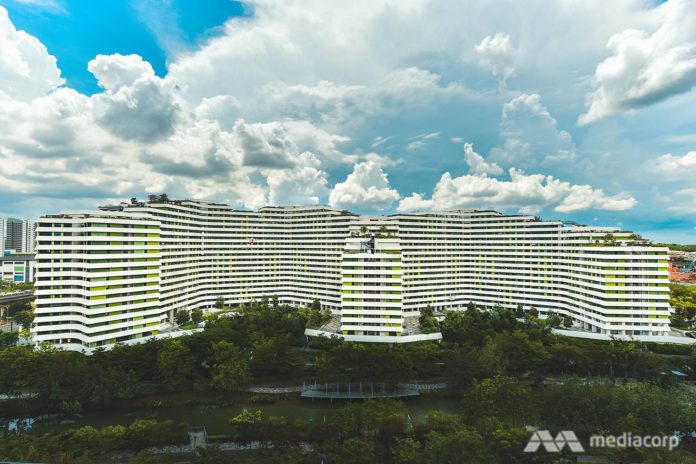
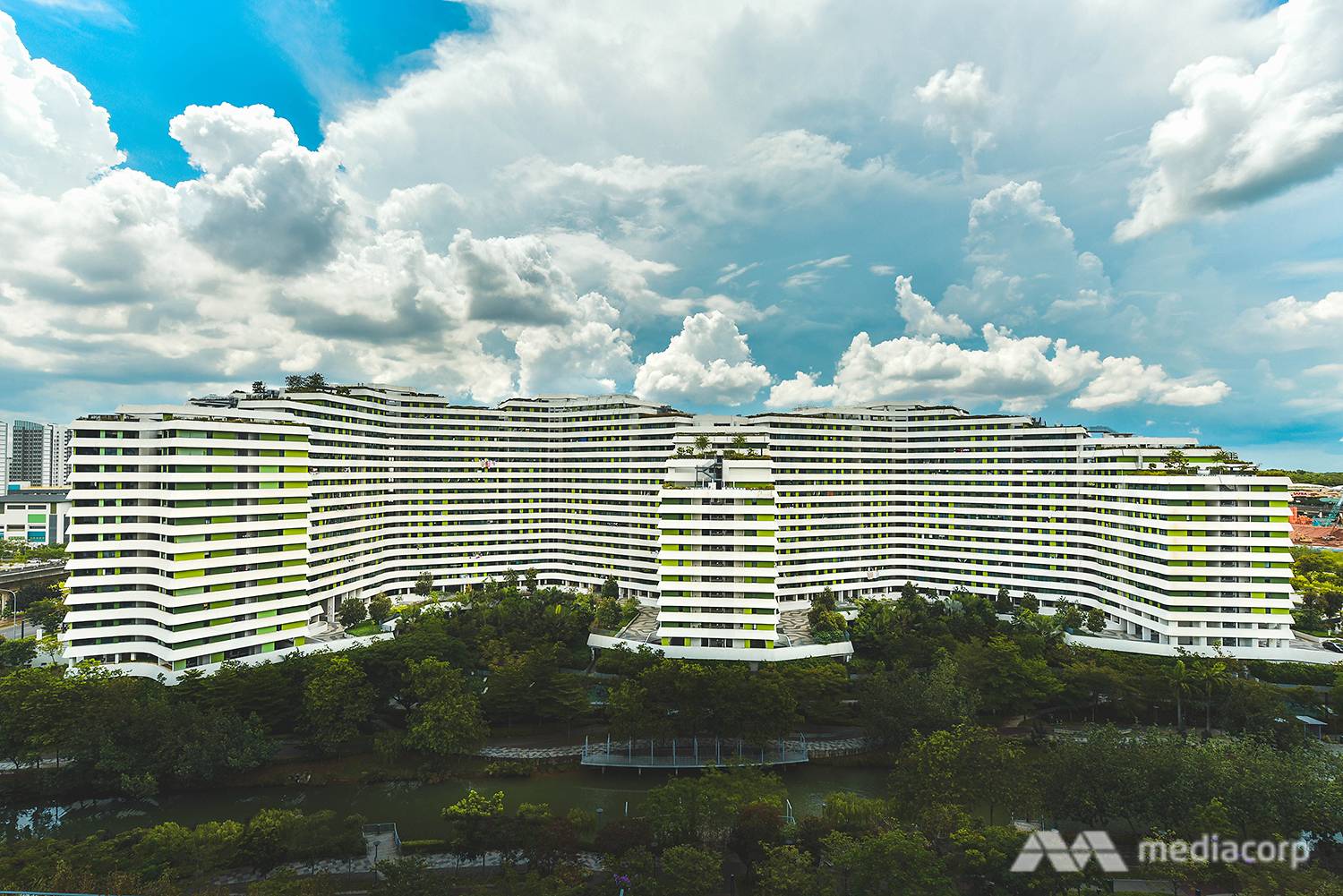
The Waterway Terraces at Punggol were inspired by the terraced rice fields of Asia. (Photo: Gaya Chandramohan)

Distinctive HDBs (22)

The facades of the Waterway Terraces I and II were designed to minimise heat. (Photo: Gaya Chandramohan)

The design of Waterway Terraces I and II at Punggol is characterised by its homage to the cascading terraced rice fields of Asia. The undulating ridges of each level not only provide shade from the elements, they also give the illusion of spaces flowing into each other. Arranged hexagonally, the linked blocks have endless corridors that eventually step down to the waterfront view. 

Fun fact: In 2016, photos and an article claiming there was a “roof collapse” at the Waterway Terraces went viral on social media. It appeared that the author of the article mistook the angled structures atop the buildings as evidence of damage. The Housing and Development Board quickly clarified it was an online hoax but police and the Singapore were spotted on site investigating the claim.

2. Slanted roofs in Potong Pasir  

Distinctive HDBs (5)

The ski-sloped roofs of Potong Pasir are a unique feature of the town. (Photo: Gaya Chandramohan)

Distinctive HDBs (6)

Potong Pasir, meaning “cut sand” in Malay, used to be a sand quarry back in the day. (Photo: Gaya Chandramohan)

The sloping architecture of several blocks at Potong Pasir Avenue 2 is a trademark feature of the 29-year-old town. The slanted roofs – visible from nearby expressways – were part of a move by HDB in the early days of its town planning to give neighbourhoods a distinct look.

3. Clover-shaped block in Ang Mo Kio  

Distinctive HDBs (18)

Block 259 is the only circular HDB block in Singapore. (Photo: Gaya Chandramohan)

Distinctive HDBs (19)

This unique block was also constructed using solid instead of the usual hollow bricks. (Photo: Gaya Chandramohan)

Distinctive HDBs (20)

The four towers house 96 five-room flats, with four units per floor. (Photo: Gaya Chandramohan)

Many think Block 259 at Ang Mo Kio Avenue 2 is a funky private apartment block, but it was actually an architectural experiment by HDB in 1981. Housing authorities had planned to build unique blocks in seven estates to foster a sense of identity and this was one of them.

Made out of four combined rotundas, it is Singapore’s only block of circular flats. The round design of the flats meant the bedrooms faced either north or south, while the living rooms and kitchens faced east or west, allowing the flats to stay cool throughout the day. The housing block has since been renamed The Clover @ Kebun Bahru.

4. Tudor-inspired blocks in Tampines   

Distinctive HDBs (8)

The high-contrast white and black blocks used to be a shade of brick red. (Photo: Gaya Chandramohan)

Distinctive HDBs (9)

Tampines’ Tudor blocks in the morning light. (Photo: Gaya Chandramohan)

The black-and-white colour scheme of a group of blocks at Tampines Avenue 9 is a recent addition to the town’s landscape. Formerly a traditional brick red, a vote by residents resulted in their residences’ new monochromatic veneer. The elegance of the Tudor-inspired blocks stands in stark contrast to the other more conventionally coloured blocks in the area.

5. Endless corridors in Whampoa  

Distinctive HDBs (3)

The total length of 34 Whampoa West’s corridor is about three football fields. (Photo: Gaya Chandramohan)

Distinctive HDBs (4)

The longest curved HDB block in Singapore. (Photo: Gaya Chandramohan)

Block 34 sits majestically on Whampoa West, a commanding presence in the Kallang district with its continuous 320-metre long corridor. It’s lengthy common corridors run along all 12 floors of the block, but what’s unique about the block’s design is its curved structure.

6. Analogue art in Tampines  

Distinctive HDBs (23)

Although 15 blocks at Tampines Street 41 have the TV test screen emblazoned on their walls, some of the paintings vary. (Photo: Gaya Chandramohan)

Distinctive HDBs (24)

The bold colours of the mural was decided on by residents. (Photo: Gaya Chandramohan)

You can almost hear the colour bar test tone looking at this facade at Tampines Street 41. The instantly recognisable analogue TV test screen spans six storeys and lends 14 other blocks in the neighbourhood a retro, mod vibe. A regular feature on Member of Parliament (MP) for Tampines GRC Baey Yam Keng’s Instagram account (11 posts and counting), the colour scheme was decided by a residents vote. 

7. Pinnacle at Duxton  

Distinctive HDBs (11)

The many towers of the Pinnacle are linked by sky bridges on the 26th and 50th floor. (Photo: Gaya Chandramohan)

Distinctive HDBs (12)

The Pinnacle is the world’s tallest residential building. (Photo: Gaya Chandramohan)

The Pinnacle@Duxton is no stranger to success, given its status as a multi-award winning public housing marvel. Birthed from an effort to completely utilise an oddly shaped plot of land at Cantonment Road, the structure became the country’s first 50-storey public housing venture, and holds the accolade of being the first in the world to incorporate two sky bridges to connect seven towers.

 The lower skybridge boasts a jogging track, senior citizen fitness corner, outdoor gym, playground, community plaza, RC centre and two view decks on its 500-metre expanse.

8. Mondrian-inspired in Teck Whye  

Distinctive HDBs (16)

Teck Whye Avenue decked out in red, blue and yellow. (Photo: Gaya Chandramohan)

Distinctive HDBs (17)

The blocks’ new coat of paint is part of decoration works done every seven years. (Photo: Gaya Chandramohan)

Distinctive HDBs (15)

Teck Whye’s new paint job has brought a pop of colour to the neighbourhood. (Photo: Gaya Chandramohan)

Call it the primary attraction of Teck Whye Avenue. Blocks there recently ditched their graduated yellow to orange colour scheme and teal accents for a look with more artistic appeal. The new paint job appears to be inspired by the iconic work of artist Piet Mondrian and gives the area more than a pop of colour.

9. Rainbow-bright in Hougang  

Distinctive HDBs (27)

Block 316 on Hougang Avenue 7 might be the only HDB block in Singapore with a rainbow. (Photo: Gaya Chandramohan)

Distinctive HDBs (28)

A previous design of this block included a cloud and sun rays accompanying the rainbow. (Photo: Gaya Chandramohan)

No need to wait for sunshine after the rain to see this – a cheery block bordering Hougang Avenue 7 stands out with a massive rainbow adorning its exterior. Block 316 is possibly the only remaining HDB block with all the colours of the rainbow splashed across – given that the Eunos Rainbow blocks at Bedok Reservoir road have since been painted over.

10. Rainbow Rochor 

Distinctive HDBs (2)

The bold colours of the 40-year-old estate have been a favourite amongst Instagrammers. (Photo: Gaya Chandramohan)

Distinctive HDBs (1)

Hoardings seen on the yellow blocks of Rochor Centre in May 2018. (Photo: Gaya Chandramohan)

Did you know the famous rainbow-coloured blocks of Rochor were initially white when they were first built in 1977, and only painted bold colours in 1994? Although the buildings are on the chopping block for the upcoming North-South Expressway, demolition is a slow process and you can still catch a glimpse of it from a high vantage point at Tekka Centre’s HDB flats.


Source link

Flash flood near Orchard Road, cars partially submerged

SINGAPORE: A flash flood occurred at Kramat Lane, near Orchard Road and Somerset Road, on Saturday (May 26), said national water agency PUB on Twitter.

Pictures circulating online showed vehicles with their wheels submerged in murky waters along Kramat Lane.

kramat flood 2

A flash flood occurred at Kramat Lane on Saturday (May 26) afternoon, PUB said. (Photo: Facebook/SG Road Vigilante)

PUB announced on Twitter at 3.45pm that the flash flood had affected both lanes on Kramat Lane, and advised people to avoid the area.

In an update at about 4pm, PUB said that the flood had subsided and that traffic was “passable”.

PUB had also announced earlier on Saturday that heavy rain was to be expected between 3.25pm and 4pm over the southern and western parts of Singapore. 

Source link

Young entrepreneurs rally to beat soaring Geylang bazaar costs

SINGAPORE: If you visit Tanjong Katong Complex this weekend for some pre-Hari Raya shopping, you could pop by 21 Sliders for their buttermilk fried chicken sandwich The Wrangler, or Hyde and Co for their crispy chicken rendang (yes, that exists now – thanks, MasterChef) – and you might win yourself a trip to South Korea.

The stalls are part of the TKC Collective, one of several business alliances forged for Ramadan to make the most of the Geylang Serai bazaar as stall rentals hit a record high.

“The tender value had been as low as S$300,000 for the past 10 to 15 years, but this year, it nearly topped S$3 million for the whole bazaar,” Mr Mohamed Mustaffa Shah, owner of bazaar operator En Niche Events, told BERITAMediacorp. 

Food vendors appeared to be hit the most, with stalls located outside the Muslim Converts’ Association costing about S$17,000 and those at the new Wisma Geylang priced above S$20,000, excluding utilities. 

TKC Collective Geylang bazaar

Mr Elijah Matthew and Ms Thaneswari Asathamby run Fed by the Ravens, a taco stall that is part of the TKC Collective. (Photos: Gaya Chandramohan)

The eight businesses in the collective – which also include BrewUp, Fed by the Ravens, Island Hydeaway, Katoshka, The MNC Co and Rainbow Works – first met at the recent Prudential Marina Bay Carnival and GastroBeats events before teaming up for the bazaar, where they have their stalls in a row on the mallfront.

21 Sliders’ managing director Rajidi Sharnan said they picked Tanjong Katong Complex because it offered some of the cheapest rents – about S$9,000 for a 3 ft by 3 ft stall. 

“After that, it was about promoting the location and pulling in the crowds together, and that was how TKC Collective was formed,” said Mr Rajidi. 

TKC Collective Geylang Ramadan bazaar

21 Sliders’ managing director Rajidi Sharnan (far left) with other owners of the young businesses that form the TKC Collective. (Photo: Gaya Chandramohan)

Customers receive a loyalty card that gets them discounts at participating stalls. Each time they purchase from a stall, the card gets a stamp, and a fully stamped card enters them into a draw to win a trip for two.

“Collaborating this way builds customer engagement,” said Mr Rajidi. “There are also many business advantages – we share suppliers and influence with one another, and there’s also a lot of cross-promotion.”

Across the road at City Plaza, the vendor list reads like a who’s who of the local arts and entertainment scene.

Fatimah Mohsin Propupstore Geylang bazaar CelebRaya

Stylist to the stars Fatimah Mohsin poses with some of the items on sale at Propupstore. (Photo: Gaya Chandramohan)

Wedding gallery owner and stylist to the stars Fatimah Mohsin works directly with the management of the nondescript mall along Geylang Road for her CelebRaya event, now in its second consecutive year.

Booths range from S$3,000 to S$4,500, and are more spacious and “exclusive” than at the main bazaar, said Ms Fatimah.

“Businesses don’t usually go for City Plaza, but I like it because it’s spacious and people can be comfortable,” said Ms Fatimah, who on top of being the organiser also has a space for her home decor business, Propupstore. “We don’t charge a lot, but the booths are nicely done, with lining, bistro lights and solid partitioning.

Fatimah Mohsin Propupstore Geylang bazaar CelebRaya

Ms Fatimah Mohsin and her team in front of their Propupstore booth at City Plaza. (Photo: Gaya Chandramohan)

“It wasn’t easy at first to get the brands I knew to come on board – I even lost my voice in the process! But eventually they did and many came back to do it again this year.”

Ms Fatimah said she believes in the pull factor of the space, which also has parking facilities, as well as that of her partner vendors including local personalities like Adlina Anis, Nick Mikhail Razak, Norfasarie Mohd Yahya and Shahril Ishak. 

“People won’t want to travel all the way here just to see one shop. And while the vendors are what you would call ‘celeb brands’, they’re not one-hit wonders. They’re in it for the long haul,” said Ms Fatimah, who met many of them over the course of her work.

Adlina Anis Geylang bazaar Ramadan

Ms Adlina Anis runs a successful eponymous fashion line, which includes hijabs and festive modestwear. (Photo: Instagram/Adlina Anis)

Ms Adlina, who runs a successful eponymous hijab label, sees the value of collaborating with like-minded businesses, having participated in the Geylang bazaar before. To her, it is like rekindling the old kampung spirit of “gotong-royong” – on a business level. 

“I’ve been doing this since 2012 and there was no such thing as a collective then,” she said. “I’m glad there’s progression. More and more brands are now able to take advantage of the season to test the market and do a bit of brand strategy without forking out too much money.”

Peer support is at the core of Dahlia Mohd’s business as co-founder of En Pointe, a multi-label boutique known for housing regional designers like Alia Bastamam, Nurita Harith, Syomirizwa Gupta.

Tumeet by Norfasarie City Plaza Geylang bazaar

Ms Norfasarie Mohd Yahya is one of the vendors collaborating with Ms Fatimah Mohsin for CelebRaya at City Plaza. (Photo: Gaya Chandramohan)

At CelebRaya, En Pointe is also showcasing local independent labels “who simply cannot afford the time or money for a standalone store throughout the Ramadan weeks”, she said.

Among them are Wardrobe, WearMeSG and Yasmeen Cole.

“We’ve been a successful platform for Malaysian, Indonesian and Bruneian brands so far, so why not do a localised version?” she added.

BRANCHING OUT 

Enterprising sisters Shereen and Toni Anwar have a total of seven stalls at the main bazaar food tents. Said Ms Shereen, stalls for WORD. and new brand Suap outside Wisma Geylang set them back more than S$20,000 each – about double of last year’s rent.

“It’s not that I’m not willing to pay the S$20,000, because the crowd is there. You can make money – it’s just a matter of how much,” she told Channel NewsAsia.

Shereen Anwar Toni Anwar WORD cafe

WORD. cafe founders Shereen (left) and Toni Anwar have seven stalls at the Geylang Serai Ramadan bazaar this year, despite record-high rents. (Photo: Jeremy Long)

“We usually focus on Geylang, but because the rent is so high this year, we’re having to spread ourselves thin. We also have stalls in the Tampines and Woodlands bazaars so we can try and cover the Geylang cost.

“We did well last year, but we knew we couldn’t expect the same this year so we had to have a Plan B. Because let’s face it – if you don’t have snaking queues, S$20,000 is too much. There’s also manpower cost and supplies to think about. Food is a lot of money,” she added.

There are at least three major Ramadan bazaars in the heartlands this year, including Bazaar Raya One World in Tampines and Bazaar Raya Utara in Woodlands.  

Independent events are also gaining ground. 

Huda Ali LalooLalang Ramadan

Ms Huda Ali in a photo with her family at last year’s LalooLalang Ramadan bazaar. (Photos: LalooLalang)

Farah Diana Events Management is gearing up for its festive bazaar Jalan-Jalan Makan-Makan, touted as the first of its kind at Marina Bay Sands. Running for three days from Jun 1, it will feature appearances by Malaysian artists like singer Dayang Nurfaizah and TV host Nabil Ahmad. 

It’s a concept similar to CelebFest, an annual star-studded event organised by Rose Valley, which drew massive crowds at Suntec City earlier this month. 

LalooLalang, helmed by Singapore actress and host Huda Ali, will also return for the fourth time this Ramadan.

Ms Huda said about 100 vendors are participating in this year’s edition – “slightly more than last year”. The business owners range from 19 to 35 years old and nearly half are returning participants. Stalls start at S$450. 

Nora Zee Boo:Eh

Ms Noraziana pours a drink for a customer at the Boo:Eh stall. (Photo: Noraziana Mohamed)

“As organisers, we make sure their basic welfare is met. We respond as quickly as possible to enquiries and work hard to draw the spending crowd,” said Ms Huda, who describes the recent influx of festive events as “healthy”. 

“Halal butterbeer” brand Boo:Eh will be set up at five Ramadan events this year, including LalooLalang and the bazaar in Tampines. 

“Many businesses such as ours are active at pop-up events because we don’t have a brick-and-mortar store. They are also easier to prepare for than the Geylang bazaar because they last only a couple of days,” said one of its founders, Noraziana Mohamed. 

“These events are also the most exciting ones during the festive period because they are often themed or bring in overseas celebrities. There are always huge crowds because of their novelty,” she added. 

Source link

No plain Jane: Singapore club that’s all about Austen

SINGAPORE: It all started in an apartment in Novena in 2011, when a small group of women gathered to discuss the finer points and literary richness of Jane Austen’s works.

 But the group – called the Jane Austen Circle Singapore (JACS) – is no mere book club. The local chapter of the society which has arms in the USA, UK, Italy, Pakistan and Australia, has morphed into an elaborate hobby, complete with costuming and celebrations.

 Seven years since its inception, the “Janeites” as they call themselves, have a number of gatherings under their belt, where members come adorned in gowns of the 19th century Regency period and hold dances and dramatic readings. Every detail about the bygone era is adhered to, from food to etiquette.

Jane Austen Circle Singapore 2

A live performance of a Jane Austen drama (Photo: Christy Yip) 

Founding members of JACS include Margy Supramaniam, an English teacher, Nicole Kang, a dance instructor, and Chris Kelley, a gemologist. They pour considerable amounts of time and energy into hosting these elaborate Austen events twice a year since it moved to The Arts House in 2014.

 “We’re all working and too busy to put in the time we’ve put in, but we do it because we love it,” said Ms Supramaniam who is the co-president of JACS.

 To reproduce the style of Regency period in an inexpensive way, Ms Kang hand-makes what she can, from hanging artwork to table ornaments.

 Members of the society also say they aim to keep the group’s setting intimate, despite its growing popularity. The intention is to imitate Jane Austen’s sense and sensibilities, as she often read her novels at home to her family and close friends.

Jane Austen Circle Singapore 3

Members of the Jane Austen Circle Singapore in costume (Photo: Christy Yip)

 “I do everything myself to keep the costs very low. We continue to be a non-profit, because we want to keep the setting intimate and inclusive, just as how Austen would like it to be,” said Ms Kang.

She added that the society donates its proceeds from ticket sales to charity organisations, which includes the Mission to Seafarers, VIVA Foundation for Children with Cancer, to name a few. Austen, a daughter of a reverend, was known to have a heart for the poor, Ms Kang said.

“I’ve been attending the society’s events for five years, and I keep coming back every year. Everybody kind of knows everyone,” said Ms Guo Shu Hui, a senior executive who attended a recent Regency dance. She grew to love Austen through movie adaptations.

Ms Ng Pei Wen and Ms Elaine Mok, both students in local universities, have been members of JACS since taking up Literature in junior college. “We get to experience what we’ve read from Jane Austen in JACS.We get to see the stories unfold before our eyes,” said Ms Ng, who turned up at the dance in a Mr Darcy-style coat.

“Stepping into a Jane Austen Circle event is like stepping into another time in history – a fantasy of sorts; a really nice escape from reality,” said Ms Mok.  

“We all love escapism. I love escaping into that world of dance and costumes and being someone else for a few hours,” said Ms Supramaniam.

She has amassed a treasure trove of Regency costumes. These include dresses and hats from local thrift stores that have been “upcycled” with lace, pleats, ribbons, frills and other embellishments.

Even a dead parrot she found by the roadside ended up as decoration for her fancy dress. “This sounds rather morbid but I didn’t want this beautiful green parrot to die in vain, so I used the green feathers on Lady Catherine’s bonnet,” said Ms Supramaniam.

PRIDE AND PREJUDICE IN SINGAPORE?  

Although Jane Austen’s novels were written more than two hundred years ago in England, the fans in Singapore say the themes resonate to this day.

“Actually the culture of Jane Austen is part of the culture of Singapore,” said Ms Supramaniam. “Money is very important in Jane Austen’s novels. Everybody wanted to marry Mr Darcy who (was making) £10,000 a year. It is still important who you marry; it’s important how you bear yourself and it’s important how you behave.”

Echoing the sentiment, Ms Guo said: “Women here in Singapore face a lot of societal pressure to marry men of equal education, preferably earning a higher salary. A lot of parents still prefer their daughters to ‘marry up’. It hasn’t changed much since Austen’s society.”

Ms Kang pointed to the comic exaggerations in the novel that could be seen as criticism of social class and standing.

“We want people to note that Austen’s works are not elitist nor exclusive,” she said. “What she writes about is very relevant. While Austen’s characters may still seem like caricatures, these people do exist in real life as well. The idea is not removed from (us),” she said.

She added that JACS will continue to help people have a grand old time while bringing Austen’s works and world to a wider audience.

Quoting Jane Austen, Ms Kang said: “My idea of good company… is the company of clever, well-informed people, who have a great deal of conversation. That is what I call good company.”

Source link

Video: Chris Hemsworth, Sebastian Stan and Joseph Schooling dish out fashion advice – for superheroes and mortals

A Norse god, a Hydra assassin and an Olympic gold medallist walk into a store

Chris Hemsworth Sebastian Stan Joseph Schooling Hugo Boss Singapore

Sebastian Stan, Joseph Schooling and Chris Hemsworth suit up in Singapore for BOSS. (Photo: Jeremy Long)

Follow our new CNA LIFESTYLE page on Facebook for more trending stories and videos

SINGAPORE: Fans of Chris Hemsworth and Sebastian Stan might be more used to seeing them clothed in capes and metal, but it turns out they don’t look so bad in suits, either.

The Avengers: Infinity War stars walked the Hugo Boss red carpet at Marina Bay Sands Expo and Convention Centre on May 25, joining local BOSS ambassador Joseph Schooling at the event held to unveil the fashion label’s new BOSS store concept.

Hemsworth might have great fashion sense, but what about his character, Thor? “He’s beyond fashion forward. He’s remarkably, fashionably sensitive,” the 34-year-old quipped.

What fashion advice would he give the red-caped Norse god he plays? “A little pocket square in his big intergalactic armour – that’d be cool. Maybe a little bow tie or something,” he mused.

Stan, 35, who plays the Winter Soldier, also declared himself a fan of pocket squares. “I would add a pocket square to anything,” he said. But his character’s outfit definitely doesn’t need improving on. “I’m always a fan of leather, so I don’t have a problem with that.”

As for Olympic gold medallist Schooling, he had ditched his signature Speedo for a tailored suit. The 22-year-old is becoming almost as well-versed in fashion as he is in swimming. “I’ve got a weird body – my shoulders are (much) broader than my hips – so tailoring is very important,” he said. “When you look good, you feel good.”

Source link

Want lovelier fins? Pet fish get cosmetic fixes, as owners angle for perfection

SINGAPORE: Gripping the limp arowana firmly in one hand, Mr Jaime Lim made an incision in the sclera, or the white part of the eye, with a pair of manicure scissors. He then pressed against the eyeball until globs of pink and white appeared from the slit.

And in quick, deft strokes, he confidently trimmed off the fatty tissue. The globe of the eye was then realigned and the same procedure was done to the other eye.

In a short span of 20 minutes, he had given the unconscious longyu or Dragon Fish (what the Chinese call arowana) an eye lift and three other cosmetic procedures – enlarging its fin and tail with a syringe needle, as well as removing its blemished scales with a pair of forceps. All this done inside a plastic blue tub along an HDB corridor.

(ry) Jamie operating on fish along HDB corridor

Mr Jaime Lim performing cosmetic procedures on an arowana.

“It’s not hard to learn to do an operation on the fish. And we get to gain more knowledge to bring happiness to the hobbyists,” said the 35-year-old owner of Paradise Arowana in Lim Chu Kang.

Mr Lim is among a handful of ornamental fish traders here who perform cosmetic and medical procedures on fish, usually on the more expensive Asian arowana and Japanese koi.

Such practices are commonly known to fish hobbyists, but remain relatively unheard of outside the circle. These beauty measures have raised a few ethical and legal concerns, with some believing that the job should be left to licensed professionals such as vets.

Indeed some koi breeders CNA Insider spoke to admitted to providing such services, but declined to elaborate, partly out of concern over reactions.

‘LIKE CARRYING A NEWBORN’

Hobbyist Desmond Yee, whose S$1,000 super red arowana was just operated on by Mr Lim, was visibly excited by the prospect of having the “perfect” fish. The procedures, he said, were necessary as his arowana “still got a few parts to touch up”.

(ry) arowana Desmond admiring fish 1

Mr Desmond Yee and his prized Asian arowana.

His chief concern was that his arowana might overdose on the anaesthesia and not wake up, something he said had happened to other hobbyists.

“I was a little worried but I trust him,” he added, beaming after the anaesthesia had worn off and the groggy fish was back to its usual self.

I can see a lot of difference, now there’s no more popping up of the eye. It’s like carrying a newborn baby.

It was when more fish hobbyists like Mr Yee started to request for cosmetic procedures, that Mr Lim decided to head to Indonesia to learn from an arowana expert four years ago.

“In the old days, the older people just wanted to rear the fish to be nice,” he said. “Now people are on a different level – they want their fish to be perfect and defects-free.”

(ry) arowana Spreading of tail after procedure

The training in Indonesia took about two hours and when Mr Lim returned, he started performing such procedures for his clients, often making house calls. In the past four years, he has had no fewer than 200 “fish patients”.

“This is a job that brings joy to the hobbyists. We feel happy when we see the fish look nicer and healthier when they recover,” said Mr Lim, who typically charges about S$120 for a house visit.

WATCH: An arowana getting ‘beautified’ (4:32)

‘BETTER THAN A DOCTOR’?

Problems commonly associated with arowanas include the ‘drop eye syndrome’ where one or both of its eyeballs are continuously tilting downwards.

There are a few suspected causes for this: High-fat diet given to the fish, genetics, or environmental factors. In the tank, uneaten food often sinks to the bottom and over time, the arowana might develop a habit of constantly looking down.

While Mr Lim performs these procedures once or twice a week, arowana trader Eugene Ng said he sometimes handles a few cases a week.

In the local arowana circles, Mr Ng is better known as Dr Ark, after a pet store that he runs. A banner over his shopfront states ‘Fish Clinic’. Mr Ng claims to have pioneered the practice in Singapore 18 years ago, when he was asked to help beautify an arowana for a competition.

(ry) Eugene side profile

Mr Eugene Ng, also known as Dr Ark to his customers.

He picked up his skills by reading up on such procedures, practising on fish and exchanging pointers with other arowana traders.

“I’m not a doctor but people named me Dr Ark because they think I do better than a doctor,” he quipped.

He also thinks that giving the fish a better appearance is “a good deed”. “The owner will be more affectionate to them,” he said. 

Like any lady who does plastic surgery, it’s to gain more love from their loved ones.

(ry) arowana Scale being extracted

Picking out blemished scales

Other than cosmetic procedures, hobbyists also turn to Mr Ng for medical procedures when their fish develop swim bladder problems or when they are injured.

Arowanas affected by the former are unable to maintain buoyancy and tend to float nose down, tail up, upside down – or they sink.

“My main concern is to rescue and save the fish,” said Mr Ng. “In fact, I don’t charge a single cent if I can’t save the fish.”

DO FISH FEEL PAIN?

However, without the necessary skills and knowledge to assess the condition of these fish, these traders are at risk of causing them more harm, said Dr Frederic Chua of Allpets and Aqualife Clinic.

(ry) Dr Chua

Dr Frederic Chua of Allpets & Aqualife is a veterinarian with more than 30 years of experience.

For example, while Mr Lim and Mr Ng say that they use anaesthesia to immobilise the fish, Dr Chua said that it is unknown if the solution they use has an analgesic effect, which is to prevent pain.

“How do they know that when the fish is knocked out, they do not feel pain?” asked Dr Chua.

Both Mr Lim and Mr Ng cite online literature that suggests that fish do not feel pain.

“To a lot of them (people) this is cruelty to the fish. But I hope to explain that fish brains are so small that they don’t react to pain,” explained Mr Ng. “During the operation we use medication to put the fish to sleep.”

(ry) Jaime channelling air into fish to wake it up

Channeling air bubbles into the fish to wake it up after a procedure

However, Dr Chua holds the view that fish do respond to pain.

“Fish have pain receptors on their skin and certain parts of their body. And there are nerves that send these pain messages to the brain. But these network of nerves are not as complicated or complex as you find in warm blooded animals,” he said.

We have the impression that fish don’t perceive pain the way warm-blooded animals, do but we cannot say fish suffer no pain at all.

“If they feel pain, they will respond by struggling, trying to swim away. Sometimes they quiver or tremble,” he added.

THE QUESTION OF ETHICS

Dr Zeehan Jaafar, a lecturer with the biological science department at the National University of Singapore, said that scientific literature corroborates the theory that fish do feel pain.

She believes the procedures undertaken by these fish traders have not undergone scientific scrutiny in terms of efficacy and impact to the fish.

(ry) fish tail post operation

“Individuals performing these surgeries may be experts by trade, but they are not held to standards that one might expect from professional veterinarians,” she said, adding that the possible risks include infection, scarring and possibly death.

The Society for the Prevention of Cruelty to Animals (SPCA), when contacted, said that having experience with animals does not necessarily mean one has adequate medical knowledge to carry out  work of a veterinary nature,

“Cosmetic surgery … is unnecessary and is a form of animal exploitation,” said its executive director Dr Jaipal Singh Gill. “Surgery for medical purposes, for example to treat diseases, should be carried out by a licensed veterinarian.”

He cited section 53(1) of the Animals and Birds Act where it is an offence to “treat, vaccinate, or inoculate any animal or bird” unless one is licensed to do so. Fish fall under the definition of animals in the Act.

(ry) Fish post cosmetic surgery

In Dr Chua’s view, “if one were to do an invasive procedure for the sake of just beautifying the animal without improving its quality of life, then it becomes an ethical issue.”

He himself has performed fewer than 10 cosmetic procedures on fish since 1995, mostly on koi and luohan (flowerhorn fish), and one arowana with fin overgrowth. He turned down some requests because of possible “post-operative complications that would result in unnecessary distress and suffering for the fish”.

“Ethically, if one regards fish as living animals which potentially suffer pain and distress, then… we shouldn’t be letting inexperienced hands handle such situations,” he said.

‘WE ARE HELPING THE FISH’

But to Mr Ng, people like him are helping the fish and their owners.

“When the pet fish develops a defect, the owner will tend to neglect the fish and maybe not like the fish that much,” he said. 

“So I’m just doing a good deed by correcting the appearance, to make it look nicer, so it gains more affection from the owner.”

WATCH: Eugene Ng on why it’s good for the fish (Dur 1:00)

The Agri-food and Veterinary Authority of Singapore, when contacted, said that it has received one feedback on cosmetic procedure on fish, and that it is investigating.

“We will not hesitate to take enforcement action if there is any animal welfare issue,” said the agency.

Under section 42(1)(d) Animals and Birds Act, anyone found guilty of wantonly or unreasonably causing any unnecessary pain or suffering to any animal can be fined up to S$15,000 and/or jailed for up to 18 months.

(ry) arowana Fish_s fin being separated

Dr Chua acknowledged that even with regulations in place, enforcement would be difficult. 

“Maybe we should start by educating people about the necessity of doing these procedures,” he said. “There’s no point regulating something when you don’t have the ability to police.

“(But) when we educate people on the merits or the disadvantages of doing certain things, then the demand for unnecessary cosmetic procedures would not be there anymore.”

Source link

Commentary: Is academic competition really necessary to be the best than we can be?

SINGAPORE: As the Ministry of Education’s efforts to dial back the overemphasis on exam results are being applauded by some, there are others who feel it is a mistake.

Last week, Education Minister Ong Ye Kung again outlined moves such as changing the Primary School Leaving Examination (PSLE) scoring system.

From 2021, the PSLE T-score system will be replaced with wider “achievement levels” – a change which he called a “big step” in reducing academic stress and helping students enjoy learning more.

Some question if these aims will be achieved, citing the possibility of parents and students still feeling the pressure to achieve every last point in order to attain higher achievement levels.

Let’s face it, the system will ultimately be what the people in it make of it.

Of course there are others who feel that bolder changes need to be made to the extent that standardised exams such as the PSLE should be scrapped altogether.

But speaking more broadly about the education system, Mr Ong also said that while the Government needs to listen to the voices of all segments of society, there is no a singular message from the people.

READ: A commentary from a mother of three on combating the culture of comparison with the release of PSLE results.

READ: The struggle parents face in picking a “good school” for their child, a commentary.

Ong Ye Kung in parliament

Education Minister Ong Ye Kung speaking in Parliament on May 15, 2018. 

Instead, there is a “a diversity of views, conflicting and complex, even as they remain compelling”.

For example, he said a call for the PSLE to be scrapped ignores parents who in fact support the system.

“Because the PSLE experience teaches their children to work hard, and to demonstrate what they have learned throughout primary school years,” Mr Ong explained. 

Many parents are also not overly stressed by it, because they don’t see PSLE as an exercise to chase for high marks, but rather as an objective and transparent way to decide which secondary schools their children will go to.

READ: A commentary on retaining the PSLE.

THE BELL CURVE MATTERS?

Based on my conversations with parents, Mr Ong is not wrong. In fact, some have even told me that they prefer the current PSLE T-score system. 

Some proclaim that such a system which measures children’s’ abilities relative to their peers is vital training for the real world. 

One pointed out that even at work, many of us are assessed on a bell curve, so why shouldn’t children be exposed to competing on this scale from young. 

Advocates of this approach say it instils a competitive spirit that motivates their children to excel and outdo their peers.

Perhaps they have a point. If exams are done away with, would students be at risk of losing out on developing discipline, drive and a sense of competitiveness that they would ultimately need to succeed even in the working world?

Singapore as a nation, strives for excellence in international league tables on several fronts and when, for example, our airport receives a top award for being the best in the world, we collectively rejoice.

Singapore Changi Airport voted World's Best Airport

Mr Lee Seow Hiang, CEO of Changi Airport Group, receiving the Skytrax World’s Best Airport Award. (Photo: Changi Airport Group)

Having such measures of excellence can have a motivating effect and helps ignite a competitive spirit that is essential to our survival.

DOES FIXATING ON THE COMPETITION HURT OR HELP?

However, proponents of scrapping the PSLE often cite the young age of the children subjected to the high-stakes exam and the judgement that comes along with it as justifications to eliminate it.

Should students so young be made to deal with the overwhelming stress of having to ace such standardised tests?

Do students inadvertently end up spending more time preparing for the exam rather than developing a love for learning?

If the measure of person’s capabilities is assessed on his or her ability to ace exams, what does this do to those who aren’t good at exams?

Are exams even the best way to determine a person’s strengths and capabilities as a human being?

Do we, as a society, really want to continue supporting moves that label and effectively write off children at such a young age without nurturing their other strengths and capabilities?

These are all valid questions.

If the goal is to motivate individuals to work hard and do their best, whether in exams or in their chosen sport or profession as an adult, perhaps a distinction needs to be made between unhealthy competitiveness and motivation.

SEAB 2

File photo of a student taking the 2017 A-Level Chemistry paper. (Photo: Ruyi Wong)

We shouldn’t assume that competitiveness leads to motivation when clearly, it can often create negative stress and peer pressure that could in fact, dampen motivation.

In fact, several studies show that if competition in schools is inappropriately exercised, it even causes anxiety among those who excel in spite of it.

American author Alfie Kohn who has written numerous books on education and testing has been warning against excessive competition since the 1980s.

In The Case Against Competition, he claims that competition in fact undermines self-esteem and motivation and children do not learn better when “education is transformed into a competitive struggle”.

He cites research showing that competition makes kids anxious and interferes with concentration, and that those who lose will naturally suffer self-doubt.

But even winning may not build character as feelings of self-worth become “dependent on external sources of evaluation as a result of competition”, and a child’s value in such situations is usually defined by the number of people they’ve beaten.

Those of us who believe that without competition, we will become ill-disciplined and unsuccessful perhaps should think twice.

According to Kohn and some other researchers there is evidence that productivity in the workplace and even in the classroom suffers as a result of competition.

Kohn cites studies by David Johnson, a professor of social psychology at the University of Minnesota, and his colleagues who reviewed work on this subject from 1924 to 1980. The majority of the studies found that kids in fact learn better when they work cooperatively as opposed to competitively.

primary school students

File photo of students at a primary school. (Photo: Mediacorp)

Competition, in fact, prevents kids from sharing their talents and resources.

Trying to beat others distracts them as it forces them to concentrate on the reward and become less interested in the learning.

Kohn claims that “there’s no problem with comparing their achievements to an objective standard (how fast they ran, how many questions they got right) or to how they did yesterday or last year. But if we value our children’s intellectual development, we need to realise that turning learning into a race simply doesn’t work”.

Granted, Kohn’s views are considered controversial and I’m sure if one looked, there will be other studies that counter his views.

Perhaps the best way to gauge the impact of competition is by observing your child.

Is he or she thriving or declining in a competitive academic environment?

READ: Are we missing the point of education? A commentary.

READ: The education system is changing but is true change still elusive? A commentary.

OTHER METHODS OF MOTIVATING EXCELLENCE

A common thread in research about motivation is that competition doesn’t have to be the sole method of motivating someone to do his best.

Psychologists say encouraging your children to do their best, having fun and learning a skill can be a powerful motivator.

Certainly exams aren’t the only way to do this.

Perhaps instead of advocating that our children be subjected to rigorous standardised testing or bell curve assessments that some of us are subjected to in the working world, we should instead advocate for change away from such assessments in work settings as well.

In my recent On the Record interview with Chairman of Changi Airport Group, Liew Mun Leong, he revealed that his approach to making Changi Airport the best airport in the world was built on, in fact, not focussing on the competition.

“I told my staff that being the best airport in the world is not to be your target. Don’t use that as a goal and your KPI. Don’t chase the top airport award because if you do that, it will distract you.”

Your target is to build an air hub, your target is to make your passengers happy. Being the best is just the result of your efforts and your motivations. If you make beating others your target, then you will be too obsessed with it and then you may forget other things.

In this case, it seems success was a by-product of doing your best to be the best than you can be, rather comparing yourself to others and trying to outdo them.

Can’t this approach be applied to the way we view education and how our children’s strengths and weaknesses are evaluated?

There are already some promising changes occurring in the education system.

Among them, a greater focus on applied learning, multiple pathways to help kids discover their passions, strengths and competencies, and a programme rather than class-based approach that ensures more porosity between classes and streams.

teck ghee primary school

File photo of Teck Ghee Primary School students. (Photo: Teck Ghee Primary School)

Some educators have suggested a greater focus on multiple evaluation methods which include a students’ participation in class discussions and projects.

Whether PSLE will eventually be done away with is clearly a discussion that will continue.

But one thing that can be done almost immediately is modifying the mindsets about academic competition both within the classroom and at home.

The key is to ensure that kids are not judged mostly on their ability to ace exams and that those who excel in this regard are not automatically judged as being superior to those who don’t.

It is also important for us to realise there are other ways to encourage individuals to discover their strengths and excel while building character. Unhealthy, debilitating academic competition is not the only way.

Our education system has to reward more than just examination prowess and more importantly, we, as individuals, need to learn to do the same or risk losing valuable human talent.

Bharati Jagdish is the host of Channel NewsAsia Digital News’ hard-hitting On The Record, a weekly interview with thought leaders across Singapore, and The Pulse, Channel NewsAsia’s weekly podcast that discusses the hottest issues of the week.

Source link

EU-Singapore FTA on track to come into force by 2019: Iswaran

SINGAPORE: The European Union-Singapore Free Trade Agreement (EUSFTA) is on track to come into force by 2019, said Minister-in-charge of Trade Relations S Iswaran in a wrap-up interview with reporters in Paris, France, on Thursday (May 24).

The minister was in the city on a four-day visit to deepen innovation and research ties as part of the France-Singapore Year of Innovation 2018.

The EU is Singapore’s biggest investor and third largest trading partner. In 2017, bilateral trade grew to US$98.4 billion, making up slightly more than 10 per cent of Singapore’s total trade. Conversely, Singapore is EU’s largest trading partner in the ASEAN region.

Negotiations for the agreement were concluded in October 2014, and Mr Iswaran said progress is underway in the EU to ratify it, and there is a desire to see it concluded early.

“Just this week, the Council of Ministers met and they’ve put out a record of the meeting which shows that the Council has agreed that the work on EUSFTA should be intensified in order for it to be ratified by 2019,” said Mr Iswaran.

“Beyond the economic argument, the broader strategic point is we think the EUSFTA is important because by ratifying it, it’s another signal to the world that like-minded countries are building closer economic ties, especially in the backdrop of the anti-globalisation rhetoric that we hear,” he added.

BUILDING STRONGER INNOVATION LINKS WITH FRANCE

During his trip, Mr Iswaran also attended innovation conference Viva Technology, where he met French President Emmanuel Macron and reaffirmed bilateral ties. The minister said there is significant scope for cooperation between both countries.

“France is eager for its innovation and start-up ecosystem to be connected with the world. In particular, they have high regard for Singapore’s innovation and startup ecosystem,” said Mr Iswaran. 

“In fact, President Macron mentioned this in his keynote address this morning – Singapore being one of the places in the world where there is a thriving innovation ecosystem which France is keen to work with.”

Iswaran and Macron

Minister for Communications and Information and Minister-in-charge of Trade Relations S Iswaran reaffirmed strong bilateral ties with French President Emmanuel Macron. (Photo: MTI)

Singapore and France have a rich history of R&D cooperation in various fields like biomedical sciences, aerospace and consumer care business. 

For example, Singapore’s Agency for Science, Technology and Research (A*STAR) has research collaborations with the French National Centre for Scientific Research (CNRS)and several French universities in the areas of smart cities and digital health. 

Companies like L’Oreal, Servier and Airbus have also forged multiple industry collaborations with several A*STAR research institutes.

At the Vivatech event, Mr Iswaran also took part in a dialogue with his counterpart, French Minister for Higher Education, Research and Innovation Frederique Vidal, where they encouraged businesses to leverage support infrastructures in both countries to expand into Asia and Europe.

Mr Iswaran also delivered a keynote address at a session to promote Singapore’s role as a deep tech hub in Asia.

4G LEADERSHIP

In the wrap-up interview, Mr Iswaran also responded to questions about the direction of Singapore’s fourth-generation leadership, following the Cabinet reshuffle just last month and given recent developments in the region.

Citing initiatives like the Future Economy Council and SkillsFuture, Mr Iswaran said there’s a need to do more cross-ministry work as issues that Singapore faces become more complex.

“We are in a more complex environment, where it is not easy to categorise particular issues to particular ministers. Those days are fast disappearing … I think this is where there are opportunities for more interactions and joint assessments. I think relying on each other’s judgment to form a holistic assessment is going to be part of evolution,” said Mr Iswaran.

Source link

Body of 6-year-old boy who died in Choa Chu Kang bus accident sent home to India

SINGAPORE: The body of the six-year-old boy who died in a bus accident at Choa Chu Kang was repatriated back to India on Friday (May 25). 

According to an undertaker from Hindu Casket Services, the boy’s body was scheduled to be taken home on an evening flight, while his parents had returned to India earlier in the afternoon.

At about 12.30pm on Friday, family and friends of the boy, known as Ashwin, arrived at the Health Sciences Authority mortuary to identify and collect the body. 

They declined to speak to the media, saying the family had asked for privacy.

Channel NewsAsia understands that Ashwin and his mother were in the country to visit his father, who is a permanent resident working in Singapore. 

An Indian national, Ashwin was supposed to return to Chennai in a few days’ time when his school holidays ended. 

Ashwin died on Thursday after he was pinned under a bus along Choa Chu Kang Avenue 5.

When Channel NewsAsia visited the family’s Choa Chu Kang flat on Friday afternoon, no one was at home.

Shoes CCK boy accident

A pair of children’s shoes can be seen on a shoe cabinet outside the family’s home. (Photo: Kamini Devadass) 

According to the police, Ashwin sustained serious injuries and died in National University Hospital.

MP for the area Zaqy Mohamad said that he was not aware of any fatal road accidents at the site there before this incident. 

He added that he had previously received feedback from motorists and pedestrians on that particular stretch of road, and that modifications had been done to improve traffic conditions.

“We’ve had some feedback, both from motorists and residents, because residents want to cross but some of them mentioned that motorists are being inconsiderate. But, at the same time, some motorists said that residents are jaywalking. 

“To be fair, there is also a traffic light that is about 30m away, so to that end, we’ve highlighted to LTA (Land Transport Authority) to review the situation and they are studying (it),” said Mr Zaqy.

Mr Zaqy added that after the accident, he has asked the LTA to expedite studies or measures to make the place safer.

The 57-year-old bus driver involved in the accident is currently assisting with investigations. No arrests have been made so far.

Source link

Lorry catches fire near Tuas Checkpoint; causes heavy traffic, lane closures

SINGAPORE: A lorry caught fire near Tuas Checkpoint on Friday afternoon (May 25), causing heavy traffic and lane closures, said the Immigration and Checkpoints Authority (ICA). 

In a Facebook post at 5pm, ICA said that the incident along Jalan Ahmad Ibrahim Road was causing heavy departure traffic at Tuas Checkpoint. 

The fire was extinguished by the Singapore Civil Defence Force at about 3.50pm, it added.

SCDF told Channel NewsAsia that it responded to the incident at the location at 3.25pm.

The fire was extinguished by SCDF using two water jets.

There were no reported injuries, and the cause of the fire is under investigation, SCDF added.

Lorry catches fire near Tuas Checkpoint

SCDF at the scene after a lorry caught fire near Tuas Checkpoint on Friday (May 25). (Photo: Facebook/Chris Lee)

The incident caused two out of three lanes for departing buses and lorries leading to Tuas Checkpoint to be closed, ICA said, as it advised commuters to expect traffic build up and delays. 

In an update at 6pm, ICA said that two lanes were still closed and that traffic remained heavy.

Meanwhile, commuters affected by the delays posted photos of the badly burnt lorry, as well as the traffic build-up.

One Facebook user named Kelvin Tan commented on the ICA update, saying that he had been “stuck” 1.7km away from the Checkpoint for at least an hour. 

In another update at 7pm, ICA said that traffic towards the Checkpoint continued to be heavy.

However, only one lane remained closed “due to debris from the earlier fire incident”, it said. 

At around 8pm, ICA said that “all lanes for departing buses and lorries leading to Tuas checkpoint” were open, adding that traffic, however, remained heavy. 

Source link