Home Blog Page 1014

Less than a year in, SAF soldier performance centre already reducing injury rates

0

SINGAPORE: A new Singapore Armed Forces (SAF) soldier performance centre has shown tangible results in reducing injury rates, the Ministry of Defence (MINDEF) said on Tuesday (Jun 19).

The Centre of Excellence for Soldier Performance (CESP), launched last December, uses science to boost soldiers’ performance and help them realise their full combat potential.

“In the seven units where pre-habilitation in the form of Vocation Fitness Training (VFT) and Rehabilitation at Unit (Rehab@Unit) were implemented, preliminary data show an approximate reduction of 30 per cent in soldier musculoskeletal injury rates,” MINDEF said.

The seven units refer to the five infantry and two Guards units, while the VFT and Rehab@Unit are two components of the CESP.

Chief of Defence Force Major-General (MG) Melvyn Ong said the CESP is in line with his vision of a “dynamic” SAF. MG Ong, who took the helm barely three months ago, was speaking in one of his first media interviews ahead of SAF Day on Jul 1.

“In terms of dynamic, because of the technologies that are coming online, we need to always be able to adapt,” he said. “CESP is meant to allow us to put the science into training, so that when we actually put you out there, we don’t just throw you in the deep end, but we prepare you for what you need to do for your task.”

VOCATION FITNESS TRAINING

One way the CESP prepares soldiers for specific tasks is through VFT, a new four-week training phase introduced after Basic Military Training to strengthen soldiers in vocation-specific combat fitness.

The VFT comprises four aspects: physical training like weightlifting, functional training like high-intensity intervals, combat training like casualty drags, and active recovery like aquatics.

For infantry soldiers who are required to walk long distances, their VFT involves drills that strengthen the lower back. For artillery soldiers that need to load heavy rounds, their VFT focuses on the upper body.

The CESP has implemented VFT for all Army combat units, and will complete implementation in combat support units, like the combat engineer and artillery units, by the end of this year.

cesp trainer training unit trainers for Vocation Fitness Training

A CESP combat fitness trainer teaching unit commanders the correct bench press techniques. (Photo: Aqil Haziq Mahmud)

All said, the VFT has shown results. According to qualitative data, soldiers who have taken part are showing 30 per cent more muscles in the right places, while deadlift capacity has also increased by 20 per cent.

Full-time national serviceman Private (PTE) Kugan Senivasan, a trooper with the 4th Singapore Infantry Regiment, said the VFT helps “a lot in our infantry life”.

“VFT makes sure we actually use what we will be using for outfield,” the 18-year-old said after completing his virgin VFT circuit, which involved the lifting of field packs. “A lot of the exercises are catered to it.”

soldiers taking part in Vocation Fitness Training 2

Infantry soldiers taking part in weightlifting exercises as part of their vocation fitness training. (Photo: Aqil Haziq Mahmud)

While PTE Kugan admitted he found the VFT challenging as it was the “most rigorous” form of training he’s had so far, he said its progressive and repetitive nature means it will eventually have “no kick”.

The VFT is also combined with dedicated recovery periods for soldiers so they perform their best during peak phases of unit training.

“The Vocation Fitness Training aims to better prepare our soldiers for subsequent combat training,” CESP head Senior Lieutenant Colonel (SLTC) Yee Kok Meng said. “Knowing the statistics, which is mostly back, knee and ankle injuries, we want to prepare them to minimise injury further on in their training system.”

According to MINDEF, studies show the three injuries form approximately 70 per cent of all musculoskeletal injuries sustained in SAF soldiers.

REHABILITATION AT UNIT

Rehab@Unit has also changed how soldiers recover from musculoskeletal injuries.

Unit commanders are taught how to recognise early signs of an injury, while the unit medical officer has “better access” to an SAF physiotherapist who can quickly assess the severity of an injury and initiate treatment.

“In addition, the SAF physiotherapist makes a monthly routine visit to the units,” MINDEF said. “This reduces waiting time for clinic referrals and injury diagnosis.”

soldiers undergoing rehab

A commander helping a soldier increase his range of movement to rehabilitate his knee injury as part of the Rehab@Unit initiative. (Photo: MINDEF)

The CESP has also provided rehab skills training for unit commanders, who can now support injured soldiers during rehabilitation.

“The current soldier-centric approach ensures the most efficient recovery for soldiers and is better able to prevent injury escalation and allow soldiers to return to training with reduced downtime, as compared to our past model of de-centralised care at diverse hospital rehabilitation clinics,” MINDEF explained.

soldiers undergoing rehab 2

A commander helping to ensure an injured soldier maintains proper form during his shoulder rehabilitation exercise. (Photo: MINDEF)

Using real-life case studies to highlight the impact of Rehab@Unit, SLTC Yee said an infantry soldier who sustained a nerve injury that affected his shoulder muscles had his rehab time halved to three months.

This is because the soldier regularly participated in rehab sessions and learnt injury prevention techniques to avoid recurrence, SLTC Yee added. Previously, he could have been temporarily downgraded for six to 12 months.

WEARABLE TECHNOLOGY

Beyond managing injuries better, the CESP is also trying to improve soldier performance through the use of wearable technology.

The technology can monitor parameters like pulse rates, skin temperatures and sleep activity, information which could be harnessed to develop progressive training programmes for individual soldiers.

To that end, the CESP will monitor and consolidate individual parameters over time to provide a better indication of the physiological strain a soldier undergoes during training. With this information, the CESP can track training intensities and volume to reduce the risk of injury from over-training.

As for training safety, the information can also provide lead indicators for health hazards like fatigue and elevated body temperatures, allowing the SAF to intervene early and manage injury risks proactively.

“CESP is also exploring the feasibility of developing real-time monitoring systems, which applies data analytics to provide real-time alerts that will help commanders detect soldiers in distress and initiate an appropriate response,” MINDEF said.

While SLTC Yee acknowledged that real-time monitoring is not possible yet, he said it will become a reality as more data is gathered to determine safety benchmarks.

“When soldiers get injured, we can look back at the data and figure out where the training wasn’t so good,” he added. “So with all this data, we can better fine-tune our training systems in a customised and safe manner.”

Starting about two months from now, 150 cadets from the Officer Cadet School will be the first to embark on a six-month trial of a wearable technology prototype, which is likely to be worn on the arm.

“SAF will then evaluate the extent and modality of implementation in its subsequent phase,” MINDEF said.

HYBRID UNIFORM

Still on the theme of improving soldier performance, the SAF also unveiled a new hybrid uniform that offers better comfort and heat dissipation. It is made up of the usual Number 4 uniform pixelated fabric and a high-performance fabric, which comprises a combination of flame resistant synthetic materials and aramid.

The uniform was conceptualised in 2011 for the Army and has undergone “extensive” trials, with input from agencies like the Defence Science Technology Agency and ST Logistics.

saf hybrid uniform

Chief of Defence Force MG Melvyn Ong (front row, second from left) joining 4 SIR soldiers in wearing the hybrid uniform and doing circuits during their vocation fitness training. (Photo: Aqil Haziq Mahmud)

The high-performance fabric has a porous construction that allows for better air circulation, meaning it is 1.4 times more permeable than the Number 4 uniform. It also absorbs perspiration quickly and is 1.6 times more effective in drying.

The hybrid uniform is designed to be worn under the integrated load bearing vest during combat exercises and outfield activities. Soldiers will still be required to wear the Number 4 uniform for other routine activities.

saf hybrid uniform 2

Still wearing the hybrid uniform, the 4 SIR soldiers continue with jumping jacks during their vocation fitness training. (Photo: Aqil Haziq Mahmud)

The new uniform began rolling out in January to soldiers from the Army combat units, chosen for their physically-demanding missions, with equipping to be completed by the end of this year. Each soldier will receive two pieces of the uniform.

PTE Kugan said he feels a “genuine difference” wearing the hybrid uniform during strenuous training. “When you’re doing exercises, the Number 4 uniform drags on your body a lot, whereas this is rather smooth and comfortable.”

Source link

Death of NSF Dave Lee: Room for improvement in heat injury prevention and response, external panel finds

0

SINGAPORE: An external panel, convened in May after the death of full-time national serviceman Dave Lee, has said that improvements could be made to how the Singapore Armed Forces (SAF) prevents and responds to heat injuries, Chief of Defence Force Major-General (MG) Melvyn Ong revealed on Tuesday (Jun 19).

Corporal First Class (CFC) Lee, a Guardsman, died on Apr 30 nearly two weeks after “displaying signs of heat injury” following a fast march at Bedok Camp, the Ministry of Defence (MINDEF) said.

MINDEF convened the five-member panel on heat injury management, comprising experts from the Singapore General Hospital, Changi General Hospital, Khoo Teck Puat Hospital and DSO National Laboratories, to independently review existing strategies for heat injury prevention and management in the SAF.

“This panel has been going through the processes, measures and policies for heat injury management in the SAF,” MG Ong said in an interview ahead of SAF Day on Jul 1. “Two of the areas that they have suggested improvements are in the areas of prevention and response to heat injuries.”

However, MG Ong said he was unable to disclose further details as the panel is “not ready yet”, adding that it will take a “few more months”. “We will wait for the findings and then we will share,” he added. “We’re working as quickly and as thoroughly as we can so we’ll get it out as soon as we can.”

major-general melvyn ong

Chief of Defence Force Major-General Melvyn Ong addressing reporters on Jun 19 ahead of SAF day. (Photo: Aqil Haziq Mahmud)

MINDEF said the panel has visited Bedok Camp to review the implementation of heat injury policies on the ground. The visit included a brief by Headquarters Guards and a demonstration of how heatstroke cases are treated at the medical centre.

“The panel has provided feedback that the SAF’s heat injury policies and measures are essentially sound and aligned with prevalent industry and foreign military practices,” MINDEF said.

“TEKAN” CULTURE

At the same time, MG Ong said separate investigations into the incident are still ongoing. Besides the external review panel, a Committee of Inquiry is also investigating the circumstances leading to the death of CFC Lee.

“Those who have been shown to have done something wrong over the course of the incident will be held accountable,” he said. “This, I guarantee you.”

MG Ong’s pledge came as CFC Lee’s mother, in her son’s eulogy, called for an immediate halt to “tekan” or punishment sessions in the SAF.

When asked about public comments regarding a “tekan” culture in the Guards formation, MG Ong said “there is a certain purpose to every training that we do”.

“If there is no purpose, and the training is levied on the soldiers without reason, and there is an abuse of the way training is conducted in the process, we will hold them accountable,” added MG Ong, who is also a former chief Guards officer.

MG Ong did not say whether commanders have been directed to stop “tekan” sessions, instead reiterating that the training purpose needs to be in line with what he called the unit’s mission essentials.

“What the Army did in the aftermath of this incident was to emphasise that training needs to be accompanied with instructions, ample safety coverage and all the administrative practices and procedures that come along with it,” he added.

When asked if “tekan” sessions could be conducted with the right purpose and safety coverage, MG Ong said “it’s important to realise that we need tough training”. “But the training must … relate to their task and be accompanied by the right reasons.”

To that end, MG Ong said commanders from the top down have emphasised the need to ensure all training and practices are correctly implemented.

“We have to look within ourselves, examine our safety processes and training programmes to make sure they’re all doing the right thing,” he added. “We’re reasonably confident that commanders are aware of their responsibilities and continue to train to one’s requirement.”

Still, MG Ong said commanders were “affected and pained” by CFC Lee’s death. “The loss of every soldier hits to the heart, hits to the core of all that we are,” he stated. “We want all soldiers to go back to their families and when they don’t, we are deeply saddened.”

Source link

Army of fake reviewers being built to dupe buyers, drive online sales

0

SINGAPORE: As an online reviewer, Lynn is trusted to test and review products, such as those on Chinese shopping website Taobao.

And she gets paid a few hundred dollars for each positive review she posts, never mind that she does not try out some of the items but makes up her evaluations instead – with companies in on the flat-out fakery.

She is part of an army of fake reviewers secretly hired by recruiting companies that manage the online reputations of businesses. “They send me the link to the product, then they’d ask me to give a good review,” she disclosed.

Lynn (not her real name), who is in her 30s, writes about three to four reviews a month, and knows some full-time fake reviewers who earn about S$1,600 a month.

TP fake reviews 1

And this industry is booming. One recruiting company disclosed to the programme Talking Point that it has some 80,000 people from the region, including Singapore, on its payroll. (Watch the episode here.)

The prevalence of fake reviewers has risen in tandem with the boom in online shopping.

A 2016 report by Google and Temasek Holdings had projected that Singapore’s e-commerce market will grow more than five times to US$5.4 billion (S$7.3 billion) within a decade. And buyers are taking the fake bait.

UNDERGROUND ACTIVITY

A 2016 survey by business consultancy PwC showed that social media is exerting a stronger influence, on average, on online shopping behaviour in Singapore.

Some 57 per cent of respondents here used social media to read reviews, compared with 45 per cent globally.

And data analytics lecturer Koh Noi Sian from Nanyang Polytechnic, who has done research into user-generated online content, said positive reviews have been found to increase sales by 9 per cent.

“Family members and friends have the most impact on their (consumers’) purchase decisions … followed by online reviews,” she said.

This is why some retailers engage online reputation companies to churn out reviews for their products and services. “It’s actually an underground activity, and then these reputation companies would also hire individuals secretly,” said Dr Koh.

In this activity called brushing – placing fake reviews – these individuals use fake accounts built on the real identities of people located overseas.

“Then they’d post positive reviews to help boost the review ratings of these products,” said Dr Koh, adding that fake reviews can contribute up to six billion yuan (S$1.26 billion) in sales, according to one study.

TP fake reviews 6

Can you tell the fake from the real? (Answer: B is the real deal)

Amazon claims that fake reviews make up fewer than 10 per cent of its reviews, but the distribution of positive reviews is about 80 per cent or more, noted Dr Koh, who called this “very skewed” and “very unusual”.

One recruiting company looking for writers to review products on Taobao told Talking Point that it was helping businesses to boost their sales through fake orders and positive reviews.

The recruiter, which was not named, explained why businesses resort to this practice.

“When customers shop online, they’d only browse the top few sellers listed on the search. With brushing, we’re able to boost our rankings so that we’re visible when customers do a search for products,” said the recruiter.

When asked if this was cheating, the recruiter said it was a “marketing strategy”.

TP fake reviews 2

HOW TO TELL FAKE FROM REAL

With fake reviews being churned out easily and on a large scale, how can one tell a bogus review from a legitimate one?

Mr Simon Yap, the web development director of Oasis Web Asia, a web development company, said some websites such as reviewmeta.com can help to analyse the online reviews in that regard.

What consumers can do is to copy the URL of the reviewed product and paste it on the website, which would run a report on the review.

“There’d be some percentage of suspicious reviews that would be removed by the analyser,” explained Mr Yap.

“Suspicious reviewers are normally reviewers who’ve created accounts just to review the particular product or brand … or there are a lot of repeated words to promote the product, which (the analysis) picked out as suspicious.”

TP fake reviews 8

Such website analysers are not 100 per cent accurate, however, and do not work on all platforms, such as TripAdvisor, one of the largest travel sites in the world, with more than 630 million reviews.

TripAdvisor spokesperson Amolakh Calais said it does “red-flag any property that partakes in malicious activity”. And since 2015, it has shut out about 60 companies that had taken part in working with fake reviews.

Every review on TripAdvisor goes through a very vigorous vetting process. We have a set of tracing tools that map the how, the where, the what and the when of every single review.

“We have a very robust system which identifies certain trends in reviews,” he added.

TP fake reviews 7

So how else can consumers sieve out the fake reviews, without resorting to website analysers?

“Consumers can look for more balanced reviews with pros and cons on the products,” said Dr Koh. “They can also go into other websites, search for the same products and read the reviews too, and have a more balanced view.”

Watch this episode of Talking Point here. New episodes every Thursday at 9.30pm on Mediacorp Channel 5.

Source link

‘Just like us’: Singaporeans open hearts and homes to migrant workers

0

SINGAPORE: Would you invite a few migrant workers over for dinner?

It was a simple question, posed with a CNA Insider video about the life of a Muslim Bangladeshi worker during Ramadan, and it drew an instant and overwhelming response from dozens of viewers: Yes, we would.

Over the past two weekends, eight of these families did just that, opening up their hearts and homes to the men who build Singapore’s roads and high-rises. The hosts ranged from Singaporeans of Bangladeshi descent, to non-Muslims who catered specially for their guests’ halal diet.

And the experience turned out to be more than either hosts or guests had imagined – and the start of hopefully lasting friendships for some.

“When we saw the video feature by CNA insider, it really struck a chord with us,” said Tayef Quader, 30. “We have never had the opportunity to show them our appreciation and host them at our own home, so we jumped at it. Sharing our meal during this holy month is an even greater blessing.”

home visits FarhanaTayef2

A home-cooked meal by Farhana Hossain.

At an iftar meal facilitated by CNA Insider on the last Sunday before Hari Raya Puasa, his wife Farhana Hossain cooked dishes like chicken biryani and beef tripe curry – a Bengali delicacy which their guests, Md Al Mamun, 26, and Md Shahabuddin, 30, appreciated.

The Singaporean couple, who work at a local university and are of Bangladeshi extract, exchanged numbers with the men and said they would “love” to host them again in future.

home visits FarhanaTayef3

(Photo: Tayef Quader)

Over at the home of Mohammad Hamim and Fatimah Sawifi that same night, 32-year-old Shariful Islam was feeling emotional. The father of one was reminded of his daughter – an eight-year-old also named Fatimah – many times that night.

“I’m missing my mother, my wife, and my daughter Fatimah, I so miss, so miss,” he told CNA Insider, eyes welling up.

Together breaking fast, together praying, I feel my family here today. Today, I’m happy.  Thank you for this today.

Host Mr Hamim, 48, had only ever exchanged cursory greetings with migrant workers at the mosque before this. “Deep down inside we’ve always wanted to know more about them,” he said.

And learn more they did, chatting easily with their guests about family, religion, their experiences working abroad. “I was pleasantly surprised. We were able to connect at various levels,” said Mdm Fatimah.

It was so very enlightening, we were wondering what held us back (from talking to them) in the past – they are just like us, they have families, they have somewhat the same interests.

The couple, both teachers, gave the workers Hari Raya gifts, packed enough food for them for the rest of the week, and drove them back to their dormitory in Mandai.

home visits HanimFatimah2

At the home of Mohammad Hamim and Fatimah Sawifi.

(Read: ‘My heart cries’: Muslim migrant workers ache for family this Ramadan)

(Read: ‘We need to take the first step’: Giving migrant workers a taste of home away from home)

UNDERSTANDING AND ADMIRATION

At this past Hari Raya weekend, CNA Insider collaborated with the volunteer-run Interfaith Youth Circle (IYC) and SDI Academy – a social enterprise that teaches English to migrant workers – to link host families up with more guests.

Among the Singaporean hosts was Marlene Chua, 28, a civil servant. She and her sister prepared rice and finger food, and got “a few types of curry” from an Indian-Muslim stall for a “simple and cosy” lunch.

They meant it as a gesture of appreciation for the workers and a step “towards understanding them better”; and ended up making new friends and learning more about Singapore from them. Such as how many durian trees there were at Mandai – “they volunteered to pick some for us”, Ms Chua laughed.

home visits Marlene 2

A guest introduces Ms Chua and friends to the sport of kabbadi with a video. (Photo: Marlene Chua)

Nicholas Yeo, 31, was another non-Muslim who made sure his guests were catered for, getting a Muslim friend to whip up a home-cooked spread.

“My wife, friends and I just set out to treat them like we would anyone else, and it was a great chance to get to know them better,” he said.

They learnt more about the struggles that migrant workers face in Singapore – but also found admiration for the volunteer work the men did, and “their dedication to improve themselves in spite of the limited free time they have”.

By having a safe and comfortable space, it really allowed us to speak with them as equals.

“And we were able to relate with one another over many common experiences, despite being so seemingly different,” added Mr Yeo.

To facilitate the home visits at short notice, CNA Insider tied up with SDI Academy and the IYC, which was organising its fourth Singaporean Muslims for Eid initiative. The latter aims to involve different groups – like migrant workers and non-Muslims – in the Eid celebrations.

IYC co-founder Ms Noor Mastura said she hoped that people’s negative stereotypes of each other would be “shattered through their interactions over food and culture”. She also hoped participants would “become ambassadors to their own communities of what they learnt”.

(Read: NTU freshman wants to graduate 10,000 migrant workers from his school by next year)

home visits Farah Anwar 2

Host Farah Anwar (extreme right) with husband and guests. (Photo: Farah Anwar)

WOULD DO THIS AGAIN

Indeed, although one or two had initial nerves, the host families strongly urged more Singaporeans to reach out and invite migrant workers to a meal.

It would “give them the chance to feel part of a family… something many of us would want if we were in the same situation”, Mr Yeo said, adding that he would be glad to do this “on an annual or even more regular basis”.

Mr Liton, 40, might agree. The Bangladeshi, who was hosted by a couple to iftar, said: “We never felt like we were different here. We’re Muslim, they’re Muslim, we break fast together.”

The difficulty, Mr Hamim said, is: “I think Singaporeans are very open, but we don’t know how to go about reaching out. It’s very difficult to just go up to them and say ‘hello, what’s going on’.”

For now, CNA Insider is planning over the next few weeks to facilitate several more outstanding requests to host migrant workers of any nationality. Those interested can contact the team via Facebook.

But as some viewers have pointed out on Facebook, one can also do one’s bit where one can. Lynette Enoch posted: “I treat my Bangladeshi friends here to a meal now and then, or drinks due to the weather.”

Noraini Khodri-Siebley wrote that during Ramadan, she cooked an extra portion every weekend “for the Bangladeshi boy who cleans my block. He’s just like my son. Maybe he’s not comfortable sitting with my family… at least he would take his Iftar which we prepared.”

Read & watch CNA Insider’s Ramadan Diaries series:

‘My heart cries’: Muslim migrant workers ache for family this Ramadan

‘We need to take the first step’: Giving migrant workers a taste of home away from home

‘It’s a blessing’: Why a millennial ‘towkay’ fasted with his Muslim migrant workers

home visits HanimFatimah

A homecooked iftar meal. (Photo: Fatimah Sawifi)

Source link

Premanadi

0

Premanadi
from Saturday, August 11, 2018 at 7:30 PM to Saturday, August 11, 2018 at 10:00 PM

Drama Centre Theatre

National Library, Singapore, Singapore

Source link

Endangered SEA Aquarium turtles Hawke and Louie released into the wild

0

SINGAPORE: Two rescued sea turtles swam to freedom on Tuesday (Jun 19) after more than two years of rehabilitation.

Hawke, a critically endangered male hawksbill turtle, and Louie, an endangered green sea turtle, were released by the SEA Aquarium into the waters around Singapore in the hope that they breed and increase the population in the wild.

Hawke was released at about 10.50am in the waters of Sisters’ Island Marine Park while Louie was released about an hour later in the waters of Pulau Semakau, SEA Aquarium and Resorts World Sentosa said in a press release.

“Both started swimming immediately in the water and disappeared from sight within seconds,” said the two organisations. “Following the release, Louie was later spotted swimming near the same boat with its head out of the water, as though it was bidding farewell to its caretakers.”

The turtles were tagged and microchipped so they could be identified should they return to Singapore’s shores, they said, adding that the two release points were chosen in consultation with the National Parks Board.

Turtles 1 Aquarists preparing Hawke the hawksbill turtle for release_mod

Aquarists preparing Hawke the hawksbill turtle for release. (Photo: Resorts World Sentosa)

Turtles 4 Louie the green sea turtle swimming moments after release_mod

Louie the green sea turtle swam immediately after its release. (Photo: Resorts World Sentosa)

“It is an emotional moment for our team today to see Hawke and Louie return to the ocean, but our end goal has always been to nurse these turtles back to health and release them back into their natural environment,” said Mr Kenneth Kwang Keng Hei, aquarist at SEA Aquarium.

“Our team has spent more than two exciting years caring for them like our babies and it is an aquarist’s dream to see our animals grow healthy after rehabilitation and return to the wild so they can contribute to the overall marine ecosystem.”

Both turtles had made their “official debut” during World Turtle Day last year and were the first sea turtles to join SEA Aquarium’s marine life collection, according to the aquarium and Resorts World Sentosa.

Louie was only one week old when it was handed over to the aquarium on Sep 28, 2015. The turtle had been found by a member of the public in a drain, and weighed only 20g when it first arrived at the aquarium.

It has since grown to about 61cm in length and weighs 21.5kg.

Turtles 3 X-ray scan of Louie the green sea turtle when it first arrived at the aquarium_mod

X-ray scan of Louie the green sea turtle when it first arrived at the aquarium. (Photo: Resorts World Sentosa)

Turtles 7 - S.E.A. Aquarium - Louie the rescued green sea turtle in 2015 (1)_mod

Louie the rescued green sea turtle photographed in 2015. (Photo: Resorts World Sentosa)

Hawke arrived at the aquarium on Mar 24, 2016 after being found in the sea by a member of the public.

Believed to have been abandoned by its owner, who had kept it illegally as a pet, the turtle weighed 800g when it first arrived but has since grown to 59cm in length and weighs 23kg.

In addition, it has a slightly pyramided carapace – a shell deformity likely attributed to poor nutrition and care during its early years, according to the aquarium and Resorts World Sentosa.

Turtles 5 S.E.A. Aquarium - Hawke the rescued hawksbill turtle with a pyramided carapace_mod

Hawke the rescued hawksbill turtle with a pyramided carapace. (Photo: Resorts World Sentosa)

To prepare the turtles for their release, Hawke and Louie were gradually moved from back-of-house areas to larger habitats at the aquarium to “encourage exploration” and interaction with other “compatible marine life”, said the aquarium and Resorts World Sentosa.

Turtles 6  Louie the rescued green sea turtle undergoing operant conditioning (1)_mod

Aquarists at SEA Aquarium carry out “positive reinforcement operant conditioning” with Louie the green sea turtle. (Photo: Resorts World Sentosa)

In addition, the aquarists fed the turtles a diet similar to that found in the wild including items such as sea jellies, squids and prawns.

Before their release, the aquarium’s animal health team conducted a “thorough veterinary examination” which indicated both were healthy and suitable for release.

According to the aquarium and Resorts World Sentosa, there are seven different species of sea turtles: Green, hawksbill, Kemp’s ridley, olive ridley, leatherback, loggerhead and flatback.

Of these, six are considered threatened according to the International Union for Conservation of Nature Red List of Threatened Species. Flatbacks are not listed as threatened due to insufficient data.

Worldwide, sea turtles face many threats (primarily from humans), including injuries from boat propellers, entanglement in fishing nets, plastic pollution and poaching for eggs, meat, skin and shells.

Source link

These mesmerising ‘wind walkers’ are camping out at ArtScience Museum

0

Thirteen of Dutch artist Theo Janson’s famous Strandbeests creations will be on exhibit beginning Jun 23.

Theo Jansen with Plaudens Vela 2 ©️ Media Force_mod

Theo Jansen with the Strandbeest named Plaudens Vela 2. (Photo: Media Force)

SINGAPORE: If you were walking around Marina Bay Sands or Orchard Road last week, you might have come across a strange-looking wooden contraption wandering around like a creature from a steampunk sci-fi movie.

And if it looks vaguely familiar, it’s probably because you’ve seen videos on social media of its bigger cousins roaming the beaches. Check out the video below.

They’re called Strandbeests and they’re the creations of Dutch artist Theo Janson, who will be presenting some of these at the ArtScience Museum beginning Saturday (Jun 23).

The exhibition, titled Wind Walkers: Theo Jansen’s Strandbeests, will comprise 13 large-scale of these Strandbeests, or “beach animals” in Dutch.

It’s the artist’s first show in the region, and a major retrospective of his life work, having spent 28 years developing these wind-powered machines, which he has described as a “new species on Earth”.

Among the highlights is Animaris Siamesis, the largest “beest” in the show, which measures 10 metres long and weights over 240kg.

Animaris Apodiacula Media Force

Theo Jansen’s Strandbeest called Animaris Apodiacula. (Photo: Media Force)

Trained as a physicist before becoming an artist, Jansen has exhibited in various galleries and museums around the world, and has even starred in an episode of The Simpsons.

The moving sculptures were originally envisioned as wind-powered creations that roamed beaches to form natural barriers against the threat of flooding due to rising sea levels.

Animaris Ordis at ArtScience Museum_mod

The Strandbeest called Animaris Ordis. (Photo: ArtScience Museum)

“There are few people working in any field today who embody the intersection of art and science as beautifully as Jansen. For nearly 30 years, he has combined his understanding of science, with his artistic skill to engineer mechanical animals that appear startlingly alive,” said Honor Harger, the museum’s executive director.

Animaris Ordis outside ArtScience Museum_mod

Theo Jansen’s Animaris Ordis Strandbeest. (Photo: ArtScience Museum)

Wind Walkers: Theo Jansen’s Strandbeests runs from Jun 23 to Sep 30. For more information, visit ArtScience Museum’s website here.

Source link

Milo launches new variant with no added table sugar after conversation with President Halimah Yacob

0

SINGAPORE: Beverage brand Milo on Tuesday (Jun 19) launched a variant of the drink with no added table sugar, in a move welcomed by the Health Promotion Board (HPB).

The Gao Kosong version only contains sugar that is naturally present in milk and malt – the two key ingredients in Milo.

Speaking at the pop-up Milo Gao Kosong Pit Stop at Plaza Singapura, where President Halimah Yacob was also in attendance, Nestle Singapore managing director Rajiv Deraniyagala said that the drink is the result of a challenge posed by the President.

“It was about eight, nine months ago when we had this conversation with President Halimah Yacob on what we can do to reduce the sugar in Milo,” Mr Deraniyagala said. “We were introducing our new Milo Gao Siew Dai to her at the time and she challenged us and asked the question: Is it possible to have a Milo with no added sugar?

Milo launched the Gao Siew Dai version last July, which has 50 per cent less table sugar and 30 per cent more protein than the original formula.

“Today, inspired by President Halimah Yacob, after many months of research here in Singapore, we are extremely excited to unveil the first Milo without added (table) sugar.” Mr Deraniyagala said.

Halimah Yacob Milo Gao Kosong launch

President Halimah Yacob at the Milo Gao Kosong launch (Photo: Matthew Mohan)

“It’s very important that industry partners work with the Government (and) the Health Promotion Board, because you need all these partners to come together,” he added. “For Nestle, it’s part of our global agenda that we reduce the sugar in not just Milo but other beverages that we offer.”

The new drink is endorsed by the HPB under its Healthier Choice Symbol programme. 

This comes as the Government body wages a war against diabetes, with a goal set by the HPB earlier this year to reduce sugar in Singaporeans’ diet by 25 per cent by 2020. 

“We are pleased to see the launch of Milo Gao Kosong. Milo has been a strong industry supporter in our initiatives to reduce the consumption of sugar sweetened beverages. We are very happy to see the brand take one step further to once again reaffirm its commitment to producing healthier beverage options for Singaporeans,” said Ms Audrey Tong, director of HPB’s corporate & industry partnerships division, in a statement.

“We look forward to more industry partners coming on board to join us on this journey to encourage consumers to reduce their sugar levels in beverages.”

Source link

New food hygiene recognition scheme to replace existing grading system

0

The new scheme, which will be implemented from late 2020, will take the operators’ track records into consideration.  

NEA food grading system

The existing food hygiene grading system for licensed food retail establishments will be replaced from late 2020. (Photo: Aqil Haziq Mahmud) 

SINGAPORE: From late 2020, the existing food hygiene grading system for food retail establishments in Singapore will be replaced with a new scheme, the National Environment Agency (NEA) announced on Tuesday (Jun 19). 

Under the new Food Hygiene Recognition Scheme, food establishments with at least two years of “strong track record” in hygiene will be awarded Bronze, Silver or Gold based on a set of criteria, NEA said in a media release. 

Those without “major hygiene lapses” under NEA’s demerit point system for two or more years will receive a Bronze award. Lapses include failing to keep the premises clean or pests found in the premises. 

Those without any such lapses for at least five years will receive a Silver award, and those who maintain their record for at least 10 years will get a Gold award. 

EXISTING GRADING SYSTEM HAS BECOME “LESS USEFUL”: NEA  

All NEA-licensed food retail establishments in Singapore are required to meet the necessary hygiene requirements to operate. This includes having the necessary infrastructure and trained expertise to ensure safe preparation, handling and sale of food. 

Over and above these licensing requirements, they are currently graded A, B, C or D annually based on a snapshot assessment of the premises’ hygiene standards. 

It explained that the existing grading system, which was first introduced in 1997, has “helped to raise the hygiene standards” of food retail establishments in Singapore. 

For example, about 99 per cent of licensees were graded A or B as of Dec 31 last year, compared to 77 per cent in 2006. 

However, as almost all licensees were given an A or B grade, the grading system has become “less useful” in helping consumers to distinguish good performers, said NEA. 

“Consumers may not know which operators have been more consistent in upholding hygiene standards as track record is not factored into the grading system,” it added.  

Operators, regardless of their grades, would still end up with serious lapses, and could even be linked to food poisoning outbreaks. 

Replacing the current grading system with the new scheme, said NEA, will encourage operators to practise good hygiene at all times, and be consistent with their efforts. 

The scheme will be implemented in late 2020 to give all existing food shops a two-year window to achieve at least a Bronze award when the new scheme kicks in. 

Awards may be subsequently downgraded if an establishment commits any serious hygiene infringements or has been implicated in a food poisoning incident.

New licensees will display a label indicating “Working towards excellent hygiene track record” which is valid for up to two years before NEA assesses their eligibility for a Bronze award. 

Source link

Camel nuts manufacturer hopes to crack open efficiency gains with IT makeover

0

SINGAPORE: “Not all things good and expensive are the best for smaller businesses,” said Ms Poh Shih Yin, director at Seng Hua Hng Foodstuff, as she related the pitfalls in the company’s digitisation journey.

The local small- and medium-sized enterprise (SME), which manufactures the well-known Camel brand of nuts, has been in business for more than four decades. 

An enterprise resource planning (ERP) system by Oracle  – a “big and bulky system” which it implemented about 20 years ago – proved to be ill-suited for a business of its size, Ms Poh shared during an interview with Channel NewsAsia on Monday (Jun 18).

ERP systems typically integrate the management of a company’s key business processes.

“We had to change our processes to work around the system,” she pointed out, adding it was ultimately more of a costly hindrance than of help.

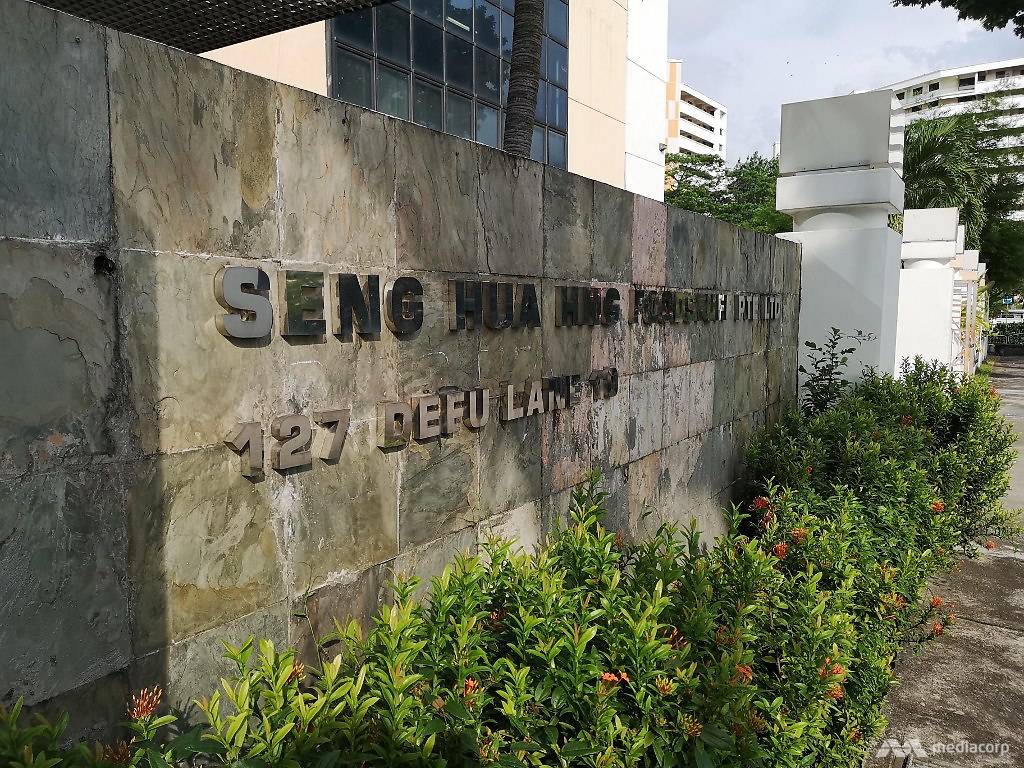
Front of Seng Hua Hng Foodstuff building

Seng Hua Hng Foodstuff has been in operation for more than four decades in Singapore, but it is currently opening up a new factory in Xiamen, China. 

Another IT project saw the SME engage a local vendor, Mevo, in 2008 to deploy a mobile sales management device allowing its representatives to more easily keep track of their customers’ inventory and key in their orders.

However, Ms Poh shared that it was a “single-use device” limited in functionality. For instance, the original version was not wireless and all the data in the device could only be synced with the system when it was docked.

The current version it is using has more functions with barcode scanning for inventory tracking and wireless capabilities – but on 3G mobile network and reliant on a SIM card which can be “quite costly”, she noted.

These are just some of the challenges of navigating the current IT procurement landscape for local SMEs, which typically aren’t at the forefront of technology adoption.

“There are lots of things we have to do,” in terms of digitising the traditional food manufacturing business, Ms Poh acknowledged.

And there is no lack of desire to transform its operations either.

The director shared that in the current tight labour market, digitisation actually helps ease its dependence on manpower. Seng Hua Hng currently has 170 employees, with about 40 in warehousing and sales. The SME makes about S$60 million annually.

“It is difficult to find entry-level, rank-and-file staff these days … and many of our current employees are double-hatting,” Ms Poh shared.

This difficulty was attributed to tougher rules on bringing in foreign labour, as well as the job environment which she admitted “was not exactly cushy” given that it can get hot and oily when roasting the nuts, for instance.

Technology can thus play a part in easing the SME’s dependence on labour by automating many of its current processes and cutting down the paper trail, such as having an integrated sales inventory management system.

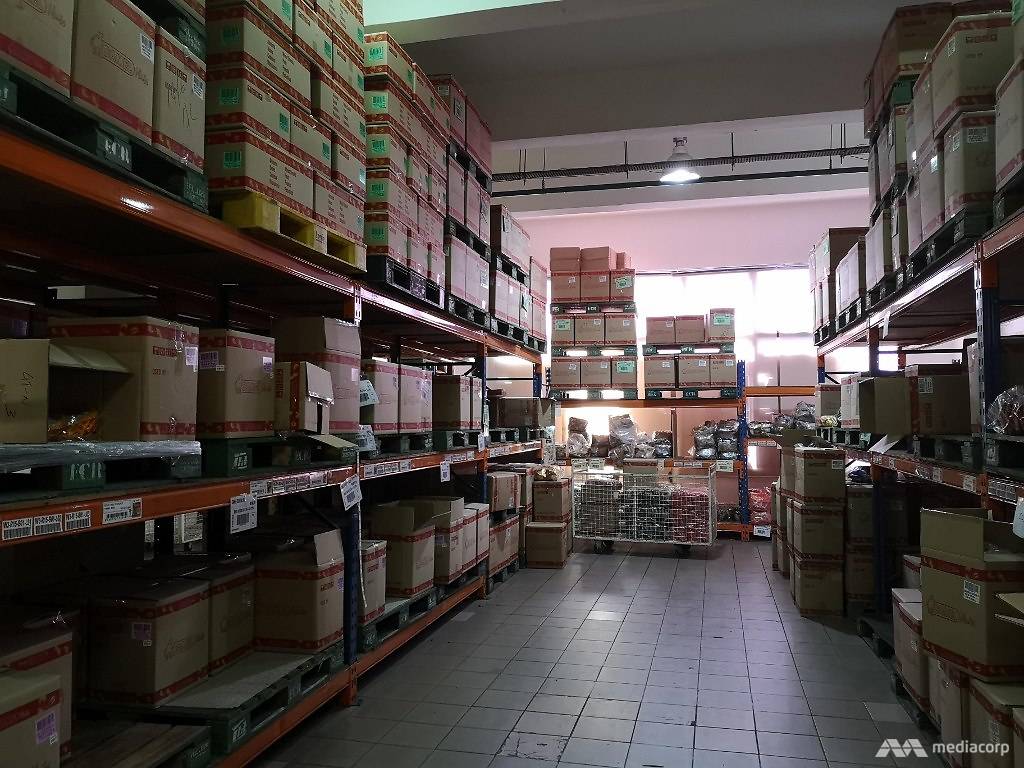
To have this in place, though, its warehouse will need adequate wireless coverage which is currently lacking. Its current routers were not able to provide adequate coverage for the 5,000-8,000 sq ft space, which has several hard-to-reach areas when Channel NewsAsia visited the space.

Warehouse of Camel nuts manufacturer

The warehouse is located on the second floor of Seng Hua Hng Foodstuff’s office at Defu Lane, and has several hard-to-reach areas for wireless coverage.

When it sought out a vendor to rectify this situation recently, it was quoted S$100,000 which was too pricey. “We can’t be spending S$100,000 to S$200,000 on just one area,” Ms Poh said candidly.

It was a good thing then that the food manufacturer won an IT makeover contest conducted by enterprise tech giant Cisco in April this year.

With the win, Seng Hua Hng will be receiving about S$40,000 of Cisco products and services, which include wireless routers and virtual meeting room tool Webex Board.

The latter has proven useful as the SME is currently setting up a factory in Xiamen, China, and the project manager can cut down on the number of times he had to fly to China, which was “almost every month”, the director shared.

“Digital transformation is our key focus in the next two years to bring the next phase of our growth strategy to life,” said Mr Colin Chin, group finance manager of the SME, in a blog post by Cisco announcing the competition winner.

Ms Poh also credited the Singapore Government for starting to address a key SME pain point: Finding out which specific operation within the business needs to be digitised, and how.

She noted that in a company’s digitisation journey, there are many buzzwords like cloud computing and big data to make sense of. “How much of these are suited for our use?” the director asked rhetorically.

Last November, the Singapore Economic Development Board partnered TUV SUD to launch the Singapore Smart Industry Readiness Index, which allows companies to evaluate the current state of their facilities, understand Industry 4.0 concepts and design a transformation roadmap.

Senior Minister of State for Ministry of Trade and Industry Koh Poh Koon then announced in March this year that 300 Singapore-based companies can get a free evaluation of their readiness to move into Industry 4.0.

Source link