According to a new Hotels.com survey, close to 90 per cent choose their holiday destination based on what they want to eat, with Tokyo topping the list of favourite places.
Tokyo tops the list of favourite destinations among Singaporean millennials out for food experiences. (Photo: Pixabay/Moritzklassen)
SINGAPORE: What do Singaporean millennials do when they’re travelling overseas? Apparently, they just eat, eat, eat – and take a lot of food photos.
According to a new survey by Hotels.com, 87 per cent of Singaporean millennials admitted that food is the biggest deciding factor when deciding where to go – and 78 per cent said they spend most of their time munching their way around a place rather than visiting tourist landmarks (60 per cent) or shopping (40 per cent).
The global Tasty Travels survey, which was conducted by One Poll in March, included 9,000 respondents across 29 countries, including 300 Singaporeans, aged between 18 and 35 years old.
Topping the list of favourite destinations among Singaporean millennials was Tokyo, followed by Seoul, Paris, London, New York, Taipei and Bangkok.
Meanwhile, Paris topped the overall global list. It was followed by Tokyo, Rome, London, New York, Barcelona and Madrid.
A third of Singaporean respondents surveyed said they preferred taking Instagram-worthy photos of their meals over photos with friends or selfies during holidays. (Photo: Unsplash/Eaters Collective)
But despite many of these places having quite a number of Michelin-starred restaurants, Singaporean millennials are actually looking at the other end of the spectrum when they eat – only 12 per cent prefer to check out fine-dining options and instead go for local street food (36 per cent).
On average, they also take around 157 photos during a weeklong holiday – a fifth of which are of food or F&B establishments. A third of the Singaporean respondents also admitted they preferred taking Instagram-worthy photos of their meals over photos with friends or selfies.
In fact, food figures so much that it’s what millennials remember most on their travels. A whopping 90 per cent said local food experiences are what stands out during holidays. Tourist attractions and shopping? Not so much, at 43 per cent and 19 per cent, respectively.
“Experiences are the new wealth and food provides one of life’s most pleasurable experiences, where there’s always something new to try when you travel. So, it’s understandable that younger generations of travellers are defining their holiday by what they can eat, how they eat it, and how good the ‘Grams’ will be while they’re away,” said Jessica Chuang, Hotels.com’s regional marketing director of greater China, Southeast Asia and India.
SINGAPORE: A pregnant wild boar was killed in an accident involving three cars on the Bukit Timah Expressway towards Woodlands on Thursday evening (Jun 21).
The accident, which took place near the Mandai Road exit, left the boar’s insides exposed and its litter of unborn piglets on the road.
Channel NewsAsia understands that the three cars were travelling on the right-most lane when the wild boar crossed the expressway from left to right. Two of the cars ran over the wild boar, while the third car collided into the second car.
The police said they were alerted to the accident at 7.40pm and that investigations are ongoing.
Photos circulating on social media show a dead wild boar with its unborn piglets lying nearby after an accident on the Bukit Timah Expressway on Jun 21, 2018.
The incident comes after a wild sambar deer was euthanised after it suffered severe injuries in an accident along the same expressway last Sunday. Three vehicles were involved in the accident and a taxi driver was injured.
There were several other accidents involving wild boars on Singapore’s roads last year.
In September, five people were injured in two separate accidents on Lentor Avenue and on the Ayer Rajah Expressway involving wild boars. In November, a wild boar was shot by police for endangering public safety at the Punggol West Flyover. A month after that incident, a wild boar caused an accident between two vehicles along the Pan Island Expressway.
The Ministry of National Development said in a written reply to a parliamentary question by MP Sun Xueling in November last year that it is working with stakeholders to “manage the wild boar issues” in Singapore.
The Government also said it will step up public education efforts on what to do if members of the public encounter animals such as wild boars.
SINGAPORE: Robotics and Artificial intelligence (AI) are here to stay.
AI applications are not just helping businesses become more efficient, they are more frequently visible in our everyday lives.
Consider virtual assistants such as Nanyang Technological University’s humanoid robot receptionist Nadine, and robotic instructors, known as RoboCoaches, that lead fitness classes for the elderly, demonstrate exercises, and offer encouragement here in Singapore. Not to mention the increasingly prevalent role of Alexa, Siri and Cortana in our lives.
As for businesses, AI is on the uptake, with research showing that 73 per cent of Singaporean organisations plan to make investments in AI over the next year.
NEW DEVELOPMENTS, HOT TOPIC
With AI occupying such a prominent place in Singapore’s business and social aspects of life, the recent announcement by Minster for Communications and Information S Iswaran on the appointment of a new council to advise the Singapore Government on the ethical use of AI and data is timely.
Not only is the council tasked with driving awareness of the benefits and challenges of AI, it will develop ethics standards and issue advisory guidelines and codes of practice for voluntary adoption by businesses.
Ethics and technology are an increasingly hot topic. Earlier this month, Stanford University, located in Silicon Valley, said it would introduce ethics into its technology and research programmes.
Meanwhile, MIT, recently appointed what it calls a “humanist chaplain” to help entrepreneurial students think through the ethical ramifications of their studies and work.
UNCHARTERED GROUND
It is good to see more people contemplating a host of issues, such as: Who is responsible for information and how is it managed? Are we prepared for the displacement of some old jobs and the creation of new jobs that require additional training?
How can technology and long-standing public institutions come together to make our new technology-driven world a place where we can enjoy all the benefits that AI provides, but within appropriate ethical boundaries? Who is responsible for the outcome of decisions made by AI?
More so than any other technology we’ve seen, AI is raising questions about “the unchartered”, or the unknown. Citizens and businesses are looking for answers to help navigate the new machine driven economy.
Sundar Pichai, chief executive officer of Google, said the US tech giant would avoid any artificial intelligence applications for weapons as he unveiled a set of principles for the technologies. (Photo: AFP/Elijah Nouvelage)
This is where this initiative by the Singapore Government will play an important role in shaping the way AI is applied in the future, its impact on Singaporean citizens, and how both citizens and businesses approach it.
REDUNDANCY FEARS REMAIN, SO ENGAGEMENT NEEDED
One of the biggest fears of moving towards an AI-dominated world is the fear of redundancy – that our skills won’t be relevant anymore and we risk being displaced by something faster, more efficient, and smarter than us.
This applies to businesses as well and the risk of an industry or service becoming less relevant.
The truth is technology innovation does lead to disruption and oftentimes displacement. However, the solution isn’t to stop evolving and innovating.
Rather, businesses, workers as well as the Government need to anticipate disruption and proactively build strategies to develop the skills and jobs that will be needed in the future.
This is why we all need to be engaged in this discussion to ensure that as a society we’re moving towards embracing AI in an ethical manner, finding a place for everyone and making sure that that we focus on the right things to propel us forward as a society.
The Google Home Mini responds to voice commands using artificial intelligence.
There’s a transformation at play – a shift beyond digital into an era where tech is built into every single interaction.
It’s important that executives understand the IT trends that are rapidly reshaping not just daily life but society as a whole, and that businesses – in every industry – reimagine what is possible.
This is where ethics come into play – providing guidelines and boundaries for the ways that industries will have to change in terms of accountability and responsibility for the decisions that machines make on our behalf.
While we can’t expect all the questions surrounding AI to be answered by the council itself, this new council is a step forward in bringing some clarity to at least the unanswered questions surrounding ethics and the ethical boundaries of how AI is likely to shape businesses going forward.
World’s top Go player Lee Sedol puts the first stone against Google’s artificial intelligence program AlphaGo in this handout picture provided by Google and released by Yonhap on March 12, 2016. REUTERS/Google/Yonhap
AN INGREDIENT IN A TRANSFORMING CITY
AI can be used as a transformational business tool and a very useful consumer service. It is changing how companies operate and people live.
But executives shouldn’t just look at it as a means to grow their businesses and people shouldn’t just think of it as a nifty extra.
We should look at AI as a tool that enhances human capabilities – making people better and happier at their jobs, prompting customers to be more satisfied with services and confident in a company’s brand.
It should be an ingredient in creating a city that transforms the way of life of its citizens, boosting quality of life. Used ethically, we can all look forward to a new and exciting future with opportunities far beyond our imagination.
Gianfranco Casati is Group Chief Executive Growth Markets at Accenture. Teo Lay Lin is country managing director at Accenture Singapore.
SINGAPORE: Growing up, 14-year-old Nur Eynarah used to watch as her brother come home from football practice and matches covered in mud.
“They played on a normal field, and if it was raining, he used to come back very dirty and muddy,” said the Secondary 2 student at Woodlands Secondary School. “The normal fields are very muddy, and if it’s raining…I don’t like getting dirty.”
Despite her interest in sports, Eynarah was reluctant to join her school’s girls’ football team because of that. But she had a change of heart when she found out that the field she would play on was made of synthetic turf – which meant she would be less likely to return home from games or practice dirty and covered in mud.
Woodlands Secondary is one of 142 schools in Singapore to have benefitted from the Education Ministry’s Synthetic Turf Programme. The programme, which has been implemented since 2006, hopes to give schools more flexibility to schedule PE lessons, field sports and games without having to worry about over-use affecting the condition of the field.
And cleaner students are indeed another benefit, according to Woodlands Secondary’s head of PE Mohamed Razif.
“We use the field not just for football training, but for PE lessons as well, and students would have to return to class right after that,” he said. “So when we only had the natural field, the students would get muddy on rainy days, which was quite a big disadvantage.”
SYNTHETIC FIELDS MORE COST-EFFECTIVE IN THE LONG RUN: MOE
But cleanliness aside, MOE said these fields are more cost-effective in the long run compared to natural turf. The ministry told Channel NewsAsia that each synthetic turf field costs an estimated S$200,000 to S$500,000 to install, depending on size.
It is also cheaper to maintain – costing about S$3,000 per year. At Meridian Junior College (MJC), maintenance takes place about four times a year. It involves topping up the rubber infill granules, and brushing the artificial grass with a tractor – a process which takes about three to four hours, according to MJC’s head of PE and CCA Seah Joo Yee.
In contrast, the process of maintaining a natural field could take much longer, according to Woodlands Secondary’s Mr Razif.
“When we had our normal field, we would have to request that the maintenance be done during the holidays, because it could take about a month or so,” he said. “They would have to put in more soil, and wait for the grass to grow, and even then, it doesn’t always turn out that well because of the rain.”
MOE said synthetic turf fields allow “schools with heavy field usage and niche field sports to schedule more outdoor field activities and develop competitive field sports.”
The Synthetic Turf Programme is being rolled out to schools in phases, and schools can opt in based on their usage needs. According to Budget 2018’s revenue and expenditure estimates, the total project cost of the Synthetic Turf Programme is about S$83.5 million, of which slightly over S$42 million has been spent so far.
Schools which already have a synthetic field include Dunman High School, Bukit Panjang Government High School and Riverside Secondary School. An additional 10 schools will be getting a synthetic turf by 2019, said MOE.
The synthetic field at Woodlands Secondary School was officially opened in 2012. (Photo: Lianne Chia)
BENEFITS OUTWEIGH THE DRAWBACKS, SAY SCHOOLS
Apart from maintenance, schools with such fields also highlighted another benefit: That the conditions of the synthetic field remains the same regardless of what the weather conditions are.
“It wasn’t as conducive to play on natural grass, because some areas were balding from repetitive use, and after it rains, the grass comes out when you kick it,” said MJC’s Ms Seah. “(The synthetic grass) is softer, and there’s less impact on the students’ knees and ankles when they run.”
Students at Meridian Junior College training on their synthetic turf field. (Photo: MJC)
For serious football players like JC2 student and captain of MJC’s football team Nathanael Chin, the synthetic field also makes his gameplay more consistent.
“When I play on a natural field, the ground condition can vary according to the weather,” he explained. “When it gets hot, the conditions are very hard and bumpy, and when it rains, it gets soft and muddy.”
“All this will affect the way I pass the ball, run or move in the field.”
Both teachers admitted there are drawbacks. For example, field events such as discus and javelin could no longer be done on the field, for fear of spoiling it. But this, said MJC’s Ms Seah, is “not much of a concern”, as the focus in the PE syllabus for schools has shifted away from such events.
The rubber infill from the field also, according to Woodlands Secondary’s Mr Razif, “follows the students everywhere” after they use the field. “We always tell them to clear the black granules from their shoes before going for class,” he said.
Nonetheless, both teachers stressed that the benefits far outweigh any drawbacks.
Furthermore, Nathanael noted that it is becoming increasingly uncommon to find fields with natural turf.
“I used to play outside leisurely, and I’d have to travel around different fields to use their facilities,” he said. “Most of them are synthetic fields, whether it’s located in a school or in a stadium.”
“Having the field here in the school also helps our students when they go out and play,” added Ms Seah.
“It’s easier for them to adapt, and in fact, there is no transition for them at all.”
NANYANG Technological University (NTU) in Singapore held onto first place in this year’s QS top 50 Under 50 Rankings, a renowned listing of universities that were established less than 50 years ago.
NTU scored a total of 91.3/100 across a range of criteria, including research impact and staff to student ratio.
Hong Kong University of Science and Technology – aged 27-years-old – and Korea Advanced Institute of Science & Technology (KAIST) – aged 47-years-old – also managed to hold their places from last year’s rankings in second and third, respectively.
The Hong Kong University of Science and Technology
Hong Kong
3
Korea Advanced Institute of Science & Technology
South Korea
4
Université PSL
France
5
City University of Hong Kong
Hong Kong
6
Pohang University of Science And Technology (POSTECH)
South Korea
7
The Hong Kong Polytechnic University
Hong Kong
8
CentraleSupélec
France
9
Aalto University
Finland
10
University of Technology Sydney
Australia
11
Scuola Superiore Sant’Anna Pisa di Studi Universitari e di Perfezionamento
Italy
12
Universiti Kebangsaan Malaysia
Malaysia
13
Universiti Putra Malaysia
Malaysia
14
Universiti Sains Malaysia
Malaysia
15
Maastricht University
Netherlands
16
University of Wollongong
Australia
17
University of Antwerp
Belgium
18
Universiti Teknologi Malaysia
Malaysia
19
Queensland University of Technology
Australia
20
Curtin University
Australia
21
RMIT University
Australia
22
Universidad Carlos III de Madrid
Spain
23
National Taiwan University of Science and Technology
Taiwan
24
University of Tsukuba
Japan
25
University of South Australia
Australia
26
Universitat Politècnica de Catalunya
Spain
27
Hong Kong Baptist University
Hong Kong
28
National Yang-Ming University
Taiwan
29
Universitat Pompeu Fabra
Spain
30
Linköping University
Sweden
31
Deakin University
Australia
32
Gwangju Institute of Science and Technology
South Korea
33
Khalifa University
United Arab Emirates
34
Universiti Brunei Darussalam
Brunei
35
Griffith University
Australia
36
Qatar University
Qatar
37
Aalborg University
Denmark
38
National Research University Higher School of Economics
Russia
39
United Arab Emirates University
United Arab Emirates
40
Oxford Brookes University
UK
41
Tampere University of Technology
Finland
42
Universidad Austral
Argentina
43
James Cook University
Australia
44
American University of Sharjah
United Arab Emirates
45
Swinburne University of Technology
Australia
46
L.N. Gumilyov Eurasian National University
Kazakhstan
47
Pakistan Institute of Engineering and Applied Sciences
Pakistan
48
National Sun Yat-sen University
Taiwan
49
Universidade Nova de Lisboa
Portugal
50
Ben Gurion University of The Negev
Israel
All of the top three universities can be found in Asia, while 16 of the top 50 Under 50 are also located on the continent. From this, it’s expected the trend towards studying in the economic powerhouse of Asia will continue, and Asian students will be much more likely to study closer to home.
Australia was the most represented country in the rankings, with 11 universities earning a place on the league table.
The US, UK and Canada are somewhat absent in the rankings. The UK features one institution Oxford Brookes University, located in the same town as its superior Oxford University – while the US and Canada have no universities in the Top 50 Under 50 2019.
This could see Australia reclaim its place as third most popular study abroad destination, a title that was stolen by Canada this year.
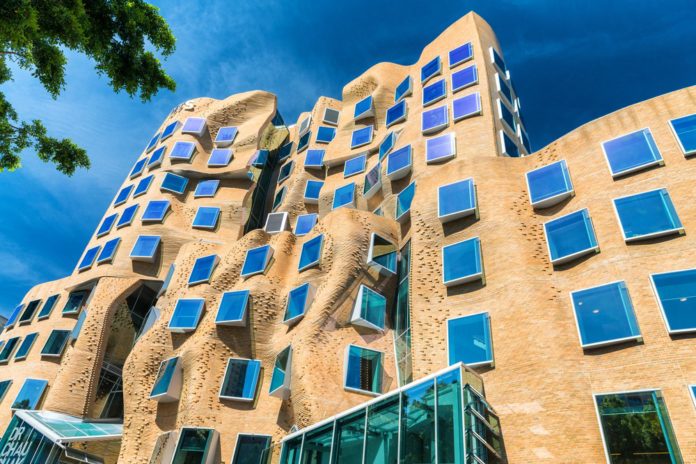
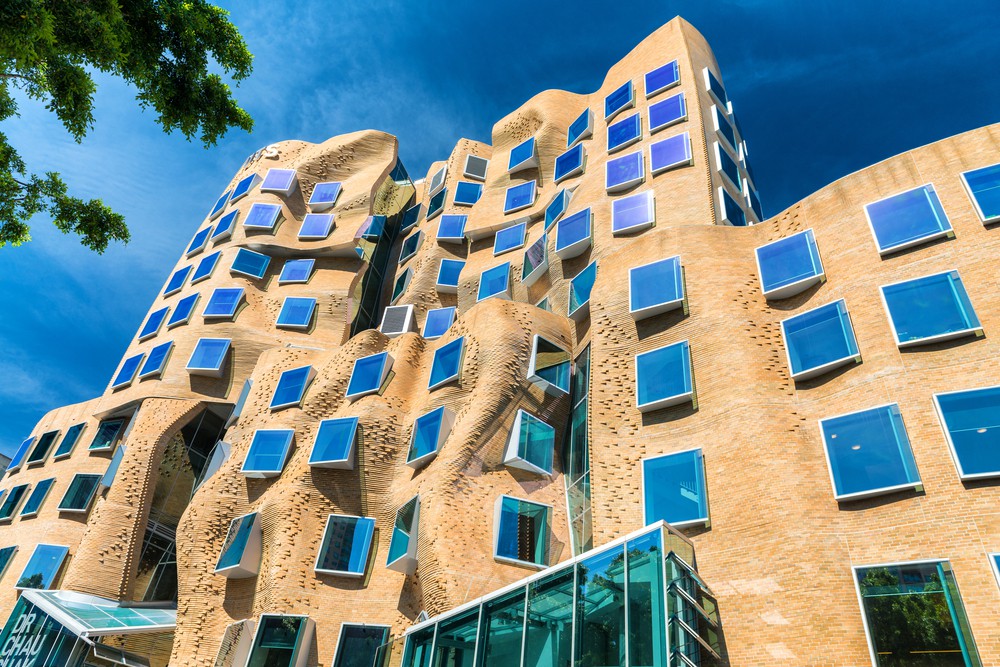
The University of Technology Sydney was the highest ranked out of 11 Australian institutions on the QS list. Source: Pisaphotography/ Shutterstock
Saying that, the QS Top 50 Under 50 tell a very different story to the Times Higher Education Young University Rankings released earlier this month. In these rankings, the UK was the most represented nation, followed by Australia. This indicates that it’s still too early draw certain predictions about what the rankings will mean for international students.
Dr Richard Holmes, Editor of University Ranking Watch told Study International: “New universities, especially in Asia and especially with strengths in technology, such as KAIST and Nanyang have been outscoring their older competitors in some of the significant rankings.”
“Some new universities … seem to have more freedom to introduce innovative curricula, recruit international staff and leadership, avoid political interference and social restrictions in a way that established universities are unable to,” he added.
“But it seems that they need substantial support from state and/or private enterprise to really get off the ground.”
A version of this article originally appeared on our sister site Study International.
SINGAPORE: The deafening silence at Changi Prison on Thursday afternoon (Jun 21) was suddenly broken by a loud voice over the public address system.
“All inmates, sit up straight. Look into the camera,” ordered a Singapore Prison Service officer, who works at Institution A4, the women’s prison.
“All inmates, at ease,” she added, barely a minute later.
The prison was testing what is known as an automated muster checking system, one of three new technological initiatives SPS is trialling as it moves towards automating work processes in prison – or what it calls a “prison without guards” concept.
Currently, muster checks are done manually by prison officers on the ground to account for inmates. The process has to be repeated a few times daily.
File photo of a women’s dayroom in Changi Prison. (Photo: Amir Yusof)
SPS is trialling facial recognition technology to replace these manual checks. Cameras located in the cells would capture the facial images of inmates and verify them with the records in the database, SPS said.
“Only discrepancies will be highlighted to prison officers for further verification, cutting down the time spent on manual checks,” SPS added.
Superintendent Chan Kai Yuen, who is the senior assistant director at SPS’ transformation and technology division, told the media that the automated muster checks would make the process quicker.
He explained that manual checks would typically take 20-30 minutes, but facial recognition allows the process to be completed in 10 minutes.
Besides that, SPS is also trialling a human detection system known as Avatar. The system uses prototype video analytics to detect and alert prison officers to abnormal activities, such as fights, in cells.
“Making use of video analytics, this surveillance system can detect acts of aggression using an algorithm that captures high intensity, erratic motions and various interaction points between two persons,” the agency said.
If a fight breaks out in a cell, officers in the control centre will be alerted. (Photo: Amir Yusof)
Avatar is currently being experimented in a cell in a men’s cluster at Changi Prison. According to Mr Chan, the test has so far been “very promising”.
“It has detected actual fights that occur in the cell. We are testing it in one cell now … when the technology is ready, we will introduce this to all cells,” said Mr Chan.
He added that SPS is still ironing out “false alarms” that could be triggered when inmates are exercising, for instance.
SPS is also trialling self-service vending machines that dispense items as varied as snacks and soaps.
This process is done by matching an inmate’s identity – via wrist tags embedded with electronic chips – with his weekly spending allowance.
An inmate can buy snacks, greeting cards and soap from this vending machine. (Photo: Amir Yusof)
The cost of the items bought is automatically deducted from the inmate’s allowance.
“This removes the need for officers to manually collate the inmate’s purchase orders, update their allowance account and distribute the canteen items,” SPS said.
Commenting on all the three technologies that are being trialled, Mr Chan said it allows officers to spend less effort on routine, more labour-intensive activities and free up their time to focus on “higher order work” such as rehabilitation.
“We can sit down and talk, interact and understand the inmate better … and help in charting a relevant rehabilitation programme,” he said.
Demonstration of how an inmate would use her wrist tag to access e-mails. (Photo: Amir Yusof)
On top of the three systems being trialled, SPS has piloted an automated security equipment cabinet that allows officers to draw and return equipment safely, and a digital rehabilitation records management system that tracks inmates’ movements. Inmates are also able to access e-books and e-learning through shared tablets.
The automated security equipment cabinet for officers to draw and return their handcuffs, batons and other equipment. (Photo: Amir Yusof)
Nanyang Polytechnic’s egg shell yoghurt drink and bite-sized frozen yoghurt with Asian flavours beat international entries at the World Dairy Innovation Awards.
The Fleuryo High Calcium Yoghurt Drink. (Photo: Nanyang Polytechnic)
SINGAPORE: It is not a concoction from the fictional world of Willy Wonka but an actual beverage by Nanyang Polytechnic (NYP) students, which even made it to the finals of the 12th World Dairy Innovation Awards on Jun 20.
The Fleuryo High Calcium Yoghurt Drink was a finalist in the Best Dairy Drink and Best Dairy Product from Asia categories. The unusual drink is the brainchild of students Ong Han Xuan, Chong Ke Ann, Tang Hwee Peng, and Nur Syafiqah Bte Zakaria from NYP’s Food Science and Nutrition department.
Part of the team behind the eggshell yoghurt drink, Fleuryo High Calcium Yoghurt Drink: (from left) Ong Han Xuan, Nur Syafiqah Bte Zakaria, and Tang Hwee Peng. (Photo: Nanyang Polytechnic)
Made with ingredients such as heat-treated egg shells, yoghurt, earl grey tea and chia seeds, a serving of Fleuryo is said to meet the recommended daily intake of calcium for adults aged 19 to 50 years old, according to the press release from NYP.
So what does it taste like? Imagine a flavour profile similar to Thai milk tea, with and chewy bits of chia seeds for texture – something the team wanted to replicate to appeal to the bubble tea-loving crowd.
Egg shells were used because they are some of the most calcium-rich ingredients in the world. Instead of sugar, the students used monk fruit extract, which is 300 times sweeter than sugar and has no calories.
It is supposed to offer a convenient drink that is low in fat, high in protein, and has live yoghurt cultures, omega-3 fatty acids, antioxidants, and calcium, according to the NYP press release.
BEATING CP-MEIJI AND GENERAL MILLS
Along with the Fleuryo High Calcium Yoghurt Drink, the Aloha Bliss Frozen Yoghurt was the only other student submission to qualify for the finals – and went even further. It even beat other international entries, such as those from CP-Meiji and General Mills to win Best Dairy Snack.
The team that invented the winning Aloha Bliss Frozen Yoghurt: (Front row, from left) Regine Lee, Tricia Kuai, Chang Wee Ling, and Liu Teng Hui; together with Phoebe Ng Zi Yin (at the back). (Photo: Nanyang Polytechnic)
The NYP student team, comprising Regine Lee, Liu Teng Hui, Tricia Kuai, Chang Wee Ling from the Food Science & Nutrition department, and Phoebe Ng Zi Yin from the Visual Communication department, created Aloha Bliss Frozen Yoghurt’s three bite-sized treats with familiar Asian tastes and textures, such as chrysanthemum, wolfberries, yam, coconut and chia seeds.
The two creations took the Diploma in Food Science & Nutrition students four months to research and develop. Both dairy inventions are not available commercially yet.
SINGAPORE: For its 25th anniversary, the annual Singapore Food Festival (SFF) be dishing out up to 20 events, including a showcase on regional Indian dishes, a spotlight on Eurasian food heritage, some beer yoga, and even a dinner-theatre piece.
This year’s edition, which runs from Jul 13 to 29, also includes the festival’s signature event STREAT, which features, among others, a pop-up restaurant helmed by collaborating chefs Emmanuel Stroobant from Saint Pierre and Haikal Johari from Alma by Juan Amador, both one Michelin-starred restaurants.
Chefs Haikal Johari from Alma by Juan Amador and Emmanuel Stroobant from Saint Pierre will be collaborating for a pop-up restaurant at the Singapore Food Festival’s signature event STREAT. (Photo: Jeremy Long)
In their first ever partnership, the chefs will be whipping up dishes such as tomato confit, warm Canadian scallop with a laksa-inspired sauce, wild sea shrimps, and a spin on Peranakan favourite buah keluak.
A dedicated bar will also be set up for the first time at STREAT. It will be run by Manhattan, which was recently awarded Asia’s Best Bar for 2018. Beers launched exclusively in conjunction with SFF will also be retailed by Singaporean craft brewery Trouble Brewing.
Also serving some delightful dishes: Hawkers and chefs from Sinar Pagi Nasi Padang, Xiao Ya Tou, CreatureS, Gayatri Restaurant, Fishball Story and Morsels.
“Over the years, the SFF has cemented its place as the marquee event on our local food calendar. This event is a celebration of our multi-cultural heritage as it is the only event in Singapore dedicated to showcasing local fare,” said Ranita Sundramoorthy, director of retail and dining for Singapore Tourism Board, which organised the event.
FOOD FOR AS LITTLE AS 50 CENTS
Other noteworthy SFF events and activities include sandwich experts Park Bench Deli’s collaborations with popular hawker stall Roast Paradise (Jul 15) and Indonesian restaurant Minang (Jul 29). Expect some east-meets-west innovations such as roast char siew banh mi and beef rendang burger.
Festival favourite The 50 Cent Fest! will be held at Smith Street from Jul 28 to 29. Chinatown Food Street will be transformed into 1930s colonial Singapore, with street hawkers and nostalgic street entertainment acts such as taxi girl performances and traditional opera.
From as little as 50 cents, fest-goers can savour authentic old-school dishes such as kerabu bee hoon (tossed rice vermicelli), fish moilee (lightly spiced creamy fish curry) and kopi gu you (a butter caramelised black coffee believed to be a popular scratchy throat remedy with opium smokers).
Kopi Gu Yu, or coffee with butter, at the 50 Cents Fest at the Singapore Food Festival 2018. (Photo: Genevieve Loh)
For those with a sweet tooth, homegrown heritage desserts company Rainbow Lapis is collaborating with a Singapore kelong, a local candy factory and a farm. Participants can learn how to make kueh using edible leaves and flowers (Jul 21 with Citizen Farm), sugars (Jul 27 with Cheng Sugar Candy Factory) and seafood (Jul 28 with Ah Hua Kelong).
INDIAN, EURASIAN AND… BEER YOGA
An SFF first will be the Great Indian Food Affair (GIFA), which will showcase regional Indian dishes. Its anchor event, CHAAT festival, will run from Jul 28 to 29 at Sayali in Little India. The two day fiesta will feature Indian street food classics such pau bhaji, sev puri, bhel and pau wada.
Also look out for Makan Cosmopolitan, a dinner-theatre production by Ape Studios, which also includes a menu by Chef Roy from Escobar.
Singapore Food Festival 2018 will run from Jul 13 to 29. (Photo: Jeremy Long)
Eurasian heritage cuisine will be in the spotlight, with special activities at the Eurasian Association and Quentin’s Eurasian Restaurant. Chef Quentin Pereira will be demonstrating how to cook his signature corned beef cutlets dish. Special bento boxes featuring Eurasian dishes such as curry debal and prawn bostador will also be available.
For a quirkier foodie experience, there is Beer Yoga & Citylights, where one can enjoy an hour of yoga as well as a bottle of limited-edition SFF-branded beer from Singaporean craft brewery Trouble Brewing.
The Singapore Food Festival 2018 runs from Jul 13 to 29. For more information, visit the website here.
SINGAPORE: I recently had a conversation with a relative who started work after completing her Higher NITEC Certificate and for many years worked in the F&B industry.
She now works as a restaurant manager, earns about S$2,300 a month and has been in this job for almost eight years now.
She shared with me that she has often been recalled back during public holidays, and have had to stay back after work to look into receiving supplies to the restaurant and when repairs to the air-conditioning had to be carried out.
I casually asked if she was paid overtime and she answered in the negative. She shared that as recent as 2014, her boss amended her employment contract when they promoted her to a restaurant manager and included terms (such as the power to hire and fire, supervisory and managerial responsibilities) which suggested that she was a PME (Professional, Manager and Executive).
As such, they said she was outside the scope of Part IV of the Employment Act which excludes coverage of managers and executives. This meant that she was not entitled to overtime payments for her work in excess of the normal working hours.
Is this really a case of a proper classification of a PME? By and large, her job is no different from any of the sales and F&B staff serving customers, save for the responsibilities to ensure the till is correct and the supplies and shop are in order.
She may not have a senior management decision-making role at the restaurant as the onus still resides with the restaurant owner.
TIP OF THE ICEBERG
This is an example of a “disguised PME” scenario in that the worker is a de facto PME. While it is a personal anecdotal example, I am afraid this may just be the tip of the iceberg.
Considering we have more than 770,000 individuals in our resident workforce who are PMEs and 1,220,000 who are PMETs (Professionals, Managers, Executives and Technicians) based on Ministry of Manpower (MOM) figures as at 2017, it is estimated that there are more than 30,000 who are classified as PMEs earning less than S$2,500 per month.
We have also seen PMEs in similar situations coming to NTUC for workplace advisory. Although we have not monitored actual numbers, the most recent case was in May this year, involving a union member who works as a site engineer in an IT firm.
He earns S$2,000 a month and has been asked to work overtime based on operational needs but was not paid overtime pay in accordance to Part IV of the Employment Act. Instead, his contract stipulates an allowance for work after office hours.
We are still in the midst of assisting him in his claim against his employer and we hope to help him get the compensation he deserves.
MP for West Coast GRC Patrick Tay, who is also NTUC Assistant Secretary-General, in Parliament.
WHO IS AN ‘EXECUTIVE’?
A fortnight ago, a High Court case reported saw Justice George Wei noting in the deliberation that “executive position” was not defined in the Employment Act. Black’s Law Dictionary defined “executive” as a “corporate officer at the upper levels of management”.
The judge also examined statements made by MOM in Parliament during the recent amendments to the Employment Act to extend coverage to junior managers and executives. In arriving at his decision for this case, he took into account Parliament’s view that managers and executives were persons who were in a better bargaining position, whereas Part IV was meant to protect the more vulnerable employees who were engaged in manual labour or paid lower wages.
Justice Wei pointed out the fact that a worker is in a supervisory role does not in itself make him an executive. Such a worker may even be a “workman”. Much would depend on the nature and level of the supervisory powers he is given, alongside other circumstances.
In this case, the claimant was in charge of a team and made decisions daily, including conducting toolbox meetings and confirming whether safety requirements were met before work could begin. But the tasks he undertook did not go beyond regular on-site routine administrative work.
Even though he had influence over his team members’ appraisals and could provide feedback on their performance, the judge found he did not have direct authority to hire, fire, promote, transfer, reward or discipline them.
The judge made it clear that an employee is not a manager or executive merely because he can give feedback and thereby “influence” his superior’s assessment of a team member.
In view of all these factors, it was decided that the claimant was not employed in an executive position, was covered under Part IV of the Employment Act and was therefore entitled to overtime payments.
A food court employee in Singapore. (Photo: Gaya Chandramohan)
IMPACT ON UNIONS AND PME REPRESENTATION
Although this recent case touched on who is an executive, it also positively impacts how our unions are better able to represent PMEs. The Industrial Relations Act was amended in April 2015 to give all unions the ability to collectively bargain and represent PMEs across all companies.
We have made good progress in extending the scope of representation of PMEs across our unionised companies. However, this recent case is a stark reminder to all employers and human resource leaders to use the terms managers and executives with care and due diligence.
Some have been known to wrongly classify their workers to avoid them being represented by unions on the basis that they are in a conflicted position given their managerial and executive powers.
More importantly, all workers in any company or business must be aware that they can become union members. All workers can be represented (whether collectively or individually) by unions, save for senior management and selected conflicted roles.
REMEDIES, RECOMMENDATIONS
The proportion of PMEs have increased and will continue to increase. The proportion of the workforce with specialised qualifications has also increased over time.
Qualifications do not guarantee bargaining power as many low-earning employees with specialised qualifications are not deployed to jobs with managerial duties or decision-making powers.
I urge all workers whose employers classify them as PMEs, especially those whose monthly salary is lower and below $2,500, to re-examine their employment contract, job role, scope and powers as they may fall within Part IV of the Employment Act and be entitled to overtime payments.
Union members can approach their unions, and all workers can seek assistance from the Tripartite Alliance for Dispute Management (TADM) or MOM.
Tripartite partners can help to better articulate the case law position of who is a PME. Existing web content on MOM’s website on who is a manager and executive may also need to be revised to remove mention of professionals with tertiary education and specialised knowledge as well as provide clear examples of actual managers and executives who earn less than S$2,500 in basic salary.
Assessments must be based on the job scope instead of the job title. For manager and executive jobs, they should be in substantive positions of authority, including possessing an authority to hire and fire, being in charge of business units and functions, or directly managing and running the business.
Another way around this would be for Part IV of the Employment Act to cover all who earn S$2,500 and below, regardless of whether they are a rank-and-file office worker or a PME. This was something we floated with our tripartite partners in the latest review of the Employment Act.
With the exponential growth in PME numbers, I look forward to the day when we will eventually remove this dichotomy between the rank-and-file and PME workers. In the meantime, I hope for greater awareness among workers and employers so that workers are treated fairly, and the wrongful classification of workers as managers and executives is eradicated.
Patrick Tay is NTUC Assistant Secretary-General. This commentary first appeared in LabourBeat. Read it here.
SEVERAL economies in the Asia Pacific are some of the freest on the planet according to an influential ranking.
The 2018 Index of Economic Freedom released by Washington, D.C.-based conservative policy thinktank The Heritage Foundation, found that numerous countries in the region ranked the best in terms of rule of law, government size, regulatory efficiency and open markets.
Financial capital Hong Kong was recognised as the most economically free place in the world, followed by its regional rival Singapore and New Zealand.
“An exceptionally competitive financial and business hub, Hong Kong remains one of the world’s most resilient economies,” said Heritage.
“A high-quality legal framework provides effective protection of property rights and strongly supports the rule of law. There is little tolerance for corruption, and a high degree of transparency enhances government integrity.”
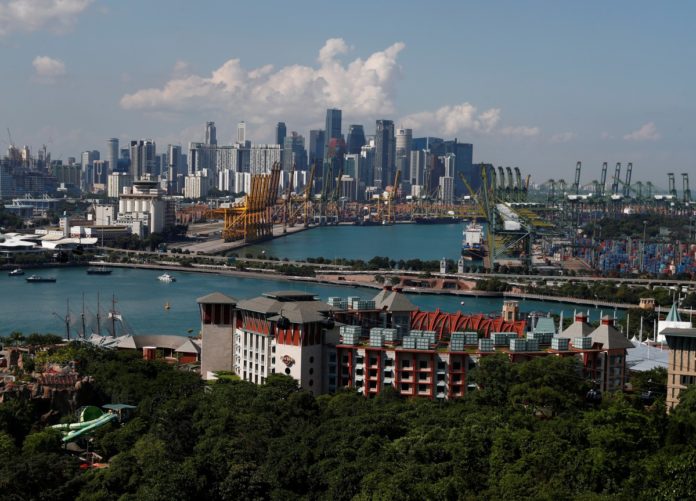
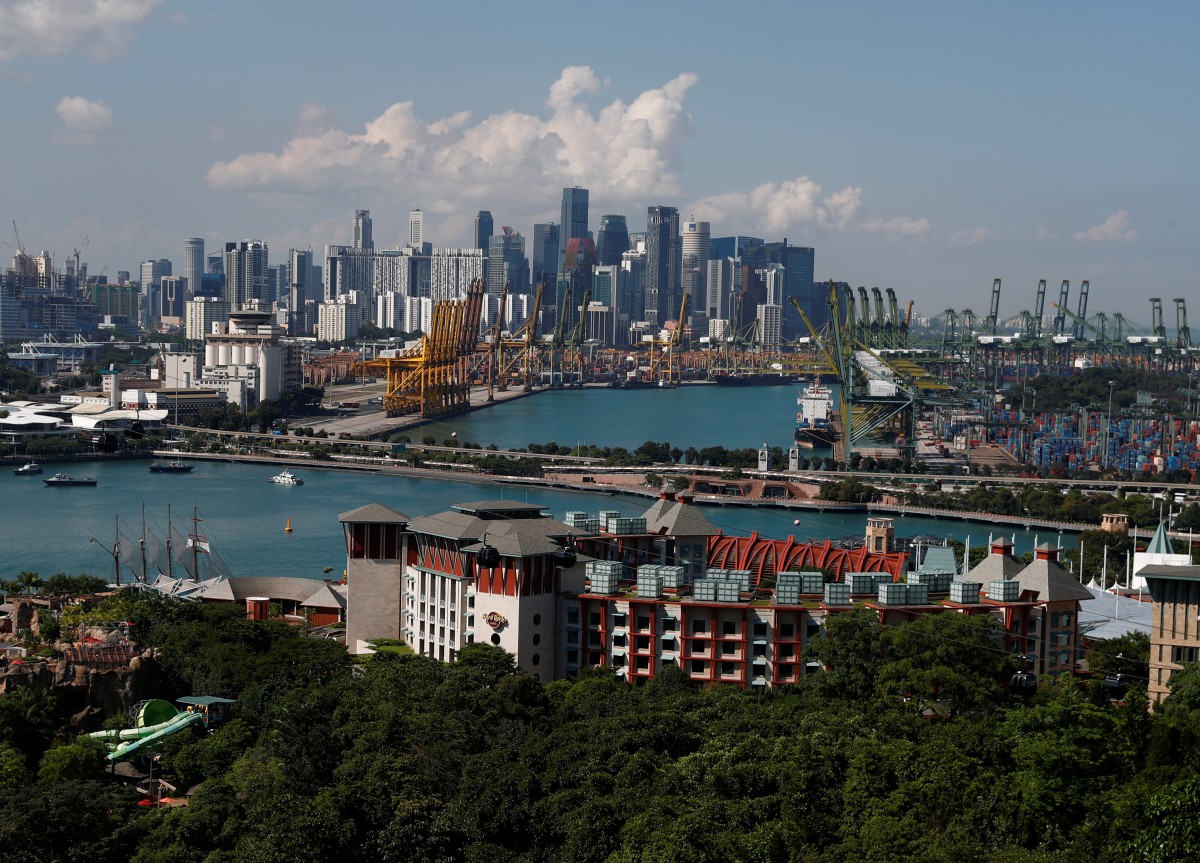
A view of Sentosa island and the skyline of the central business district in Singapore June 4, 2018. Source: Reuters/Edgar Su
As for Singapore, Heritage wrote that its “highly developed free-market economy owes its success in large measure to its remarkably open and corruption-free business environment, prudent monetary and fiscal policies, and a transparent legal framework.”
“Well-secured property rights promote entrepreneurship and productivity growth effectively,” it added.
In New Zealand, bipartisan policies fostering economic resilience and growth accounted for its economic freedom, after “far-reaching deregulation and privatisation since the 1980s have largely liberated the economy.”
Australia was ranked fifth below Switzerland, while so-called “land of the free” the United States came in way down the list at number 18 below Canada, Estonia and Ireland.
“With almost all industries open to foreign competition and a skilled workforce readily available, Australia continues to be an attractive and dynamic destination for investment,” said Heritage.
In Asia, Taiwan (13), Malaysia (22), South Korea (27) and Japan (30) were all towards the higher end of the index, al being ranked in the “mostly free” category.
North Korea, meanwhile, had the dubious honour of being the most “repressed” economy on the planet at 180. Other developing nations in the region considered “mostly unfree” were Cambodia (101), China (110), India (130) and Vietnam (141).
In terms of China, Heritage wrote that “leadership appears to be stepping back from liberalisation, increasing the likelihood of less openness to imports and investment, new bureaucratic hurdles, potentially weaker rule of law, and strengthened resistance from vested interests in the state sector that already impede more dynamic economic development.”