IS Malaysian food the same as Singaporean food? Which country does it better? Who really owns chicken rice?
It’s an age-old food fight between the neighbouring countries that will never truly end. Malaysia and Singapore often get compared because of their proximity to each other and similar demographics. In fact until its independence in 1965, Singapore was a part of Malaysia.
Although the assumption is the two countries are quite literally joined at the hip, the differences between their cost of living, the standard of living, palates, and cultures are what set them apart.
Often, Malaysians and Singaporeans debate over the quality of their food and for years, the nations have been staking claim over some identical dishes and what they think is rightfully theirs.
Case in point: The well-loved Hainanese chicken rice. Said to be one of the world’s 50 most delicious foods (according to CNN GO), the dish has been caught in this tug of war for decades, with Singapore calling it their national dish.
‘Char koay teow’ is a popular noodle dish in Penang, Malaysia. It’s usually stir-fried over very high heat with light and dark soy sauce, chili, a small quantity of ‘belacan’ (shrimp paste), whole prawns, deshelled blood cockles, bean sprouts, chopped Chinese chives, and egg. Source: Shutterstock
“(They say) chicken rice is theirs (and) if we’re not careful, ‘char koay teow‘ will become theirs (one day too),” Business Insider quoted Malaysian Finance Minister Lim Guan Eng as saying.
Those who don’t know any better may think that Malaysian food and Singaporean food are one and the same. As they always say, “If you’ve seen one, you’ve seen them all.”
But here are some popular Malaysian and Singaporean dishes that are actually different.
Wantan mee
Source: Shutterstock
Wantan mee (wonton noodles) is a Cantonese noodle dish which is popular in Guangzhou, Hong Kong, Malaysia, Singapore, and Thailand.
Malaysia: The noodles are either served in a hot broth, garnished with leafy vegetables, and wonton dumpling, or relatively dry, dressed with oyster sauce, and garnished with chopped spring onions, with wontons and soup in a separate bowl.
Singapore: The dish includes noodles, leafy vegetables, barbecued pork, and bite-sized wonton. However, the Singapore version uses less soya cause and is often served with chili ketchup.
Bak kut teh
Source: Shutterstock
Bak kut teh (Hokkien words which mean “meat bone tea”) is a pork rib dish cooked in broth popularly served in Malaysia and Singapore, and also in neighboring areas like Riau Islands and Southern Thailand.
Malaysia: Usually cooked in a claypot, bak kut teh contains a variety of herbs, pork meat and ribs, and soy sauce creating a more fragrant, textured and darker soup.
Singapore: Ordinarily, bak kut teh restaurants serve the Teochew style of clear soup bak kut teh, which is light in color but uses more pepper and garlic in the soup.
Hokkien mee is a dish in Malaysian and Singaporean cuisine that has its origins in the cuisine of China’s Fujian province.
Malaysia: Cooked over a raging charcoal fire, it’s a dish of thick yellow noodles braised in thick dark soy sauce with pork, squid, fish cake and cabbage as the main ingredients and cubes of lard.
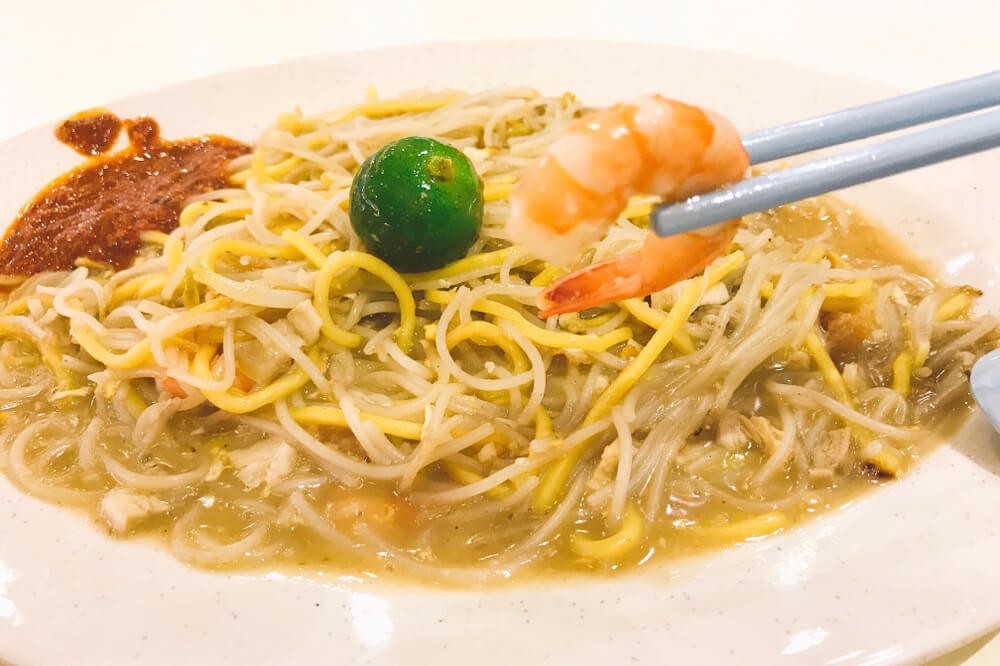
Singapore: It’s a stir-fried dish of egg noodles and rice noodles in fragrant stock (made from stewing prawn heads, meat, clams, and dried fish). It also has a lighter colour than the Malaysian version and is usually served with lime and sambal (hot sauce) for that extra zing.
Laksa
Source: Ronnie Chua / Shutterstock
Laksa is a spicy dish popular in the Peranakan cuisine, consists of noodles chicken, prawn or fish, served in soup. It’s found in Malaysia, Singapore, Indonesia, and southern Thailand.
Malaysia: There are various types of laksa across the country, even some state-specific recipes such as Asam laksa (Penang), Sarawak laksa (Sarawak), Laksa Kelantan (Kelantan), Laksa Johor (Johor), curry laksa, Nyonya laksa (Malacca), and laksam (Kelantan and Terengganu), just to name a few.
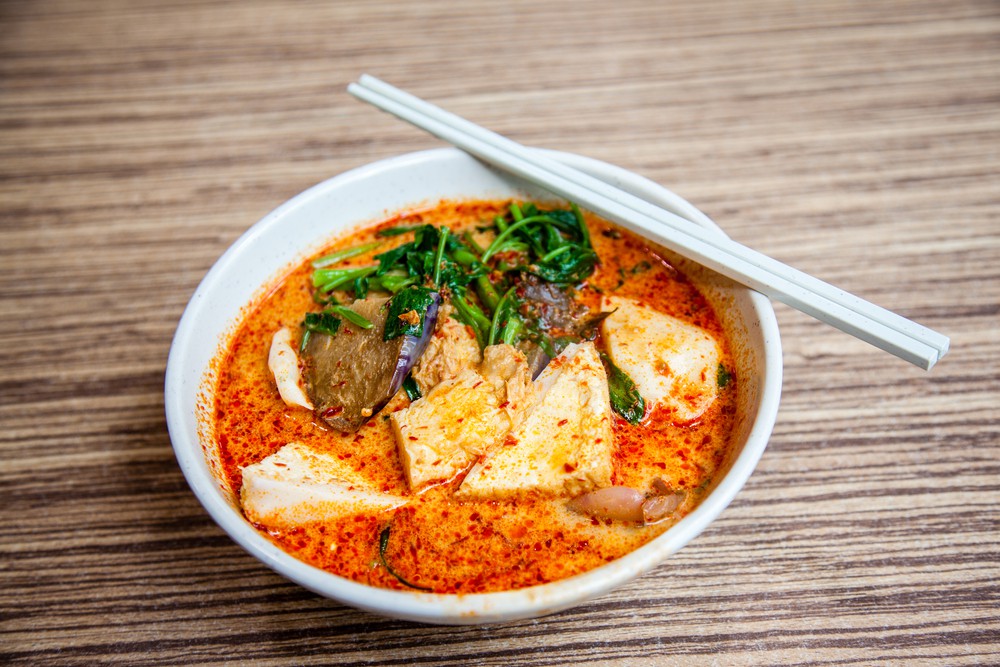
Singapore: The country’s variant of curry laksa is better known as its local “Katong” version. It’s a spicy soup stock the color of a flaming sunset, flavored with coconut milk and dried shrimp, and topped with ingredients like cockles, prawns, and fishcakes.
The countries aren’t always at loggerheads though. As much as food is one of the reasons why Malaysians and Singaporeans can’t see eye-to-eye, food is also a big uniting factor.
For example, Singapore and Malaysia banded together with Indonesia in a furor over MasterChef UK judge Gregg Wallace’s crispy chicken rendang comment.
A version of this article originally appeared on our sister website Travel Wire Asia.
SINGAPORE: Many people would have been advised by their IT departments, service providers or the Government to “use a strong password”, “protect your passwords” and “update your software regularly”, but have no idea why these are necessary cybersecurity measures.
It may be that “why” is usually not explained and if it was, explanations may have been very technical.
Such advice is also often ignored as these actions seem time-consuming yet ineffective.
But basic cybersecurity need not be rocket science. How you secure your smartphone or computer should be no different from how you secure your physical house.
You protect your assets in your home by preventing unsolicited and unauthorised access to your house. Similarly, protecting the personal information on your smartphone or computer requires restricting access to the data on it.
So why do many neglect to do so?
The main difference is that a house is visible whereas the digital world is not. Human nature makes us more protective of things we can see, so more effort is naturally exercised when it comes to the protection of our physical assets compared to our digital ones.
Where many have picked up bad cybersecurity habits, such lax, sloppy actions would not be conceivable in the context of securing our physical homes. There are four statements in particular that seem ridiculous in the latter context, and yet are surprisingly common sins in the realm of cybersecurity.
1.I AM USING A 3-DIGIT NUMERIC PADLOCK FOR MY FRONT DOOR
Imagine a door locked by a 3-digit numeric padlock. How secure can it be given that there are only 1,000 possible combinations between 000 and 999 inclusively?
If it takes a thief one second to try one combination, it will take 1,000 seconds or less than 17 minutes to open the lock.
A three-digit numeric lock on a briefcase. (Photo: Pixabay)
In the digital world, the computational capabilities brought about by the advancement of computers and cloud computing mean that thousands or even millions of combinations can be attempted every second.
It is thus important to ensure that your password is of a sufficient length so that it will be more difficult for a hacker to succeed using similar “brute-force” attacks by running through all the possible permutations of your password.
2. THE COMBINATION FOR MY HOUSE DOOR IS 1234567890
Even if the password is of a sufficient length, the use of smart computer algorithms as well as artificial intelligence can also shorten the time for a hacker to crack a password.
These algorithms utilise dictionaries of commonly-used words, certain patterns of characters or numbers, or even personal data mined from the internet to make intelligent guesses of your passwords.
Simple but long passwords such as “MyNameIsStevenWong” take less than three days for a computer to crack, according to an online password analyser developed by a non-profit online community of cybersecurity experts.
There are many ways to create a secure and complex password.
One simple method is to use a phrase that you can remember and construct the password using the first character of every word while keeping any number or special character in the phrase.
To illustrate this, using the phrase “My name is Steven Wong and creating complex password can be simple in 2018!”, the password “MniSWaccpcbsi2018!” can be generated.
The word ‘password’ is pictured on a computer screen in this picture illustration taken in Berlin May 21, 2013. (Photo: REUTERS/Pawel Kopczynski/Files)
3. I HAVE PLACED THE KEY UNDER THE FLOOR MAT
Imagine you have installed the strongest lock to protect your house but have the habit of leaving the key under the floor mat of your front door for convenience sake. This will effectively render the lock useless and make your otherwise secured house vulnerable to theft.
Likewise, you may have created a very strong password but chose to write it on a piece of post-it and stick it onto your computer monitor or the back of your keyboard. How secure is that?
A common excuse is that there are too many passwords to remember and some company policies are for passwords to be changed every few months. Writing it down seems to be the easiest way to “store” passwords but this is also the easiest way for someone else to obtain your passwords.
It might be better to use a password manager to securely store all your passwords.
A password manager is like a secured key cabinet used to store the different keys in a building. You then need to ensure that the lock to the cabinet is strong.
Likewise, the login for your password manager needs to be secured by a strong password.
4. THERE IS A LARGE HOLE IN THE WALL AND I AM NOT FIXING IT.
If there is a large hole in the wall that enables an intruder to enter your house and bypass all the doors and locks, most people will immediately patch the wall up. However, when there are similar vulnerabilities in their smartphone apps or computer software, these don’t seem to be given as much urgency or priority.
This was evident in major cybersecurity incidents such as the WannaCry ransomware outbreak last year where over 200,000 computers around the world were compromised, resulting in billions of dollars in economic loss.
A demo of the Black Computer L100 being infected by the WannaCry ransomware. (Photo: Kevin Kwang)
Unlike the patching of walls in your homes which can be expensive and may take a few days, the patching of bugs in your software and other fixes that may come with it is mostly free and takes at most a few minutes.
Most modern software also have automatic patching in-built so there is no good reason why your software should not be patched with the most recent update.
EASY TO IMPLEMENT
Basic cybersecurity is definitely not rocket science.
Unlike securing a house, the methods discussed are mostly free and easy to implement.
Given that 81 per cent of data breaches are caused by weak or stolen passwords according to the Verizon Data Breach Investigations Report in 2017, adhering to such simple cybersecurity practices will definitely go a long way towards better securing your assets in a digital world.
Dr Steven Wong Kai Juan is president of the Association of Information Security Professionals and programme director for the information security degree programme at the Singapore Institute of Technology.
SINGAPORE: The Great Singapore Sale (GSS) marks its Silver Jubilee this year, but one can hardly tell while taking a walk along Orchard Road — Singapore’s prime shopping belt — or visiting any suburban malls.
There is barely a buzz since the annual two-month campaign started on Jun 8, and some shopping centres are half-empty even during weekends.
With the Singapore retail scene under siege from the rise of e-commerce, the GSS has remained stuck in time, in the words of shoppers, retailers and experts, and has failed to evolve with latest consumer trends.
In 2016, after three consecutive years of decline in retail sales during the GSS period, Singapore Retailers Association (SRA) president R Dhinakaran publicly broached the need to re-examine the GSS’ direction, as he revealed plans in a media interview to hold discussions with the Singapore Tourism Board (STB) to see “if there is a point in continuing (the GSS), or whether there is a need to reformat it”.
Last year’s GSS saw an uptick in retails sales, and the SRA declared it a “success”. The higher sales were partly attributed to the launch of the association’s mobile shopping app GoSpree, and tourist spending, as the GSS coincided with holidays in Indonesia and China.
But experts were quick to point out that the spike last year was partially due to the low base in 2016, and should not obscure the fact that the GSS badly needs a revamp.
The duration of the GSS — which was increased several times over the years — has been “dragged out” and its novelty has died, said Ngee Ann Polytechnic senior tourism lecturer Michael Chiam.
And if the first two weeks of this year’s GSS is anything to go by, shoppers and retailers alike are feeling the same way.
“There is always a sales rack – the off-season rack, the clearance rack, the post-sale sale rack. I don’t have to wait till GSS to get something on sale,” said undergraduate Farhanah Hussein, 21.
Since this year’s GSS started, avid shopper Margaret Soh, 55, has spent about S$2,500 on shopping, including close to S$2,000 on seven skirts at Takashimaya’s Pleats Please Issey Miyake outlet. However, this is about half of her usual spending during the GSS in previous years.
The travel industry executive said she was unimpressed with the discounts dangled by retailers this time. Among other things, so-called bargains were items which had previously gone on sale and the discounts in general were not generous enough, she lamented.
In recent years, GSS has become big on “gimmicks” that offer a discount only for the second item bought, for example, she noted.
Retailer and Naiise founder Dennis Tay, 33, reminisced how his parents would go on an annual shopping spree – snapping up pots, pans, bedsheets and other things “that we don’t change often” – during the GSS when he was a child.
When Naiise opened in 2013, it only carried five brands. Today, it carries 1,068 brands, including around 700 to 800 local ones. (Photo: Naiise)
Now, as the owner of several lifestyle stores in Orchard, Katong and Jurong, he is trying to do his bit to recreate the GSS magic – by offering “everything at S$20” flash sales and discounts of up to 15 per cent, on top of sale items that are cheaper by as much as 70 per cent.
But response has been tepid, with sales inching up by a mere 3 to 5 per cent since this year’s GSS started. He noted how during the four-day Black Friday sales last November, his firm’s sales were at least three to four times higher than what it typically achieves during the two-month GSS.
It was a similar story at homegrown menswear label Benjamin Barker. Its chief operating officer Damien Tan, 41, said the brand, which is offering a “buy three, get one free” bundle deal, did not see any significant spike in walk-ins.
WHERE’S THE BUZZ?
This year’s GSS runs from Jun 8 to Aug 12. At Ion Orchard for example, the distinctive red banners and posters screaming “sale” were plastered all over the mall.
However, it was telling that several tenants including Charles & Keith and Sephora were not holding any sale when the mall was visited the Sunday before.
“The tell-tale signs (that the GSS has lost its shine) were that there wasn’t much buzz about it in the media and some retailers didn’t even bother participating,” said Savills research and consultancy senior director Alan Cheong.
Meanwhile, things were quiet the weekend before at Cineleisure and Far East Plaza which used to be filled with young crowds. Vacant shop spaces were also scattered throughout the shopping centres, exposing the deeper malaise plaguing Singapore retailers.
On the first floor of Far East Plaza, some 50 shops had their shutters down, with fewer than 10 clothing outlets open for business.
People pass closed shops at a section of a mall in Singapore. (File photo: Reuters/Edgar Su)
Mr Cheong noted that the fate of the GSS is linked to the fortunes of Orchard Road, which is the subject of a S$1.3 million study being conducted by Australian urban planning consultancy firm Cistri.
Cistri recently won the tender awarded by STB and the Urban Redevelopment Authority to rejuvenate the 2.2km shopping belt. The six-month study began in April and a blueprint for the area — spanning the next 15 to 20 years — is expected to be unveiled later this year.
In order to breathe new life into the retail scene, and save GSS in the process, Mr Cheong stressed the need for a fundamental overhaul. “Tweaking the retail mix or revamping the physical outlook of Orchard Road won’t help much and would probably result in negative returns on the new capital expenditures,” he said.
News reports from local outlets had earlier highlighted how Orchard Road risked going out of fashion, given the combined onslaught of online shopping and the mushrooming of suburban malls in housing estates.
As in previous years, there is little coordinated GSS marketing at suburban malls such as City Square Mall, Waterway Point and Nex. Any sales held in conjunction with the GSS were done out of the tenants’ own initiative.
Several mall operators said they still see the GSS as one of the highlights in Singapore’s retail calendar, but they admitted that it does not rank high among their priorities when it comes to promotional efforts to increase footfalls.
Nevertheless, AsiaMalls, which manages suburban malls including Tiong Bahru Plaza, White Sands, Hougang Mall and Century Square, said that many of its tenants have launched special sales and discounts to “excite shoppers” during this year’s GSS.
An AsiaMalls spokesperson noted that industry players are operating in a different landscape with “technology (enabling) online shopping and changing buying patterns”.
The spokesperson said:
With the constant stream of promotions happening all the time, shopping is now a year-long affair and consumers no long have to wait for GSS to enjoy shopping … (They) want greater convenience, more variety, and a differentiated experience when they shop.
People cross a traffic junction in the Orchard Road shopping district in Singapore. (File photo: Roslan RAHMAN/AFP)
THE GSS STORY
The GSS is organised by the SRA and supported by the STB.
The first GSS was held in 1994 for a month, with hopes that it would become “as popular in the region as the London and Paris sales are in Europe and the New York sales are in the United States”.
It saw a record of 664,000 visitors, and the success prompted the organisers to decide to hold the event annually.
“(The GSS) was started to enhance Singapore’s image as an attractive leisure destination and support visitor arrivals and spend,” said STB director of retail and dining Ranita Sundra in response to media queries. “Now in its 25th year, the GSS has developed into a key event on Singapore’s retail calendar that coincides with the peak travel season and national school holidays.”
Barring years when Singapore was hit by economic recessions, the GSS generally lifted retail sales annually, and helped cement the Republic’s reputation as a shopping paradise. But signs that the GSS was losing its lustre appeared in 2012 when the retail sales index for June fell sharply. It edged up the following year, but subsequently fell for the next three successive years.
The declining trend was arrested last year when the retail sales excluding motor vehicles rose from June to August, compared with the same period in 2016.
Over the years, SRA and STB had tried various ways to breathe new life into the GSS.
SRA is the main promoter for GSS. On its part, the STB includes the event in its marketing plans, said Ms Sundra. Some of STB’s efforts in this area include GSS posts and content on STB’s various social media platforms and the VisitSingapore website.
“These channels reach out to STB’s global audience and help to increase the awareness of GSS, participating retailers as well as deals and promotions,” said Ms Sundra.
In 2016, China visitors in particular were targeted through various initiatives: The GSS period was extended from eight to 10 weeks – a third extension in GSS’ history – to better cater to tourists from Asia-Pacific countries, including China whose summer holidays fall in the June to August period. It was earlier extended from four to six weeks in 2000, and another two weeks were added to GSS in 2004.
File photo of tourists shielding themselves with umbrellas on a hot day at the Merlion Park. (Photo: REUTERS/Edgar Su)
The organisers also moved on from partnering with MasterCard to Chinese payment company UnionPay.
Last year, the GoSpree app was introduced, and downloaded more than 32,000 times during the GSS period. About 200 participating brands dangled exclusive offers and discounts through the app.
To mark the GSS’ 25th anniversary this year, the SRA has introduced two days — Jul 7 and Aug 8 — on which the Goods and Services Tax (GST) will be absorbed by participating retailers.
Such a sales tactic has been successfully employed in the past by department store Robinsons. But this is the first time it has been introduced in the GSS.
Other efforts this year include the addition of geofencing technology to the GoSpree app, which enables consumers to receive e-coupons for discounts if they are within a 5km radius of the participating merchants. From Jul 1, the app will also allow users to send the coupons to their friends by email or Facebook.
An SRA spokesperson said more than 9,000 people have downloaded the GoSpree app this year, bringing the total user pool to around 43,000. Tourists make up one quarter of those who had downloaded the app.
Courts Singapore is among the retailers which have come onboard the GoSpree app. Its country CEO Ben Tan said it is offering exclusive promotions via the app, with shoppers able to “enjoy attractive discounts of up to 40 per cent on small and personal care appliances as well as cookware by downloading eCoupons on the app and presenting them at the cashier counter for redemption”.
However, some retailers including Benjamin Barker were uninterested. Mr Tan, its chief operating officer, felt the app’s reach was “still very limited”, and the additional point of sales — in return for what he felt were little returns — was cumbersome for a small outfit like theirs.
FIXING THE GSS: WHO IS THE TARGET AUDIENCE?
Apart from piecemeal initiatives, some experts and retailers felt that a more fundamental review of the GSS concept was needed. Among other things, the organisers must be clear about the campaign’s target audience — whether it is tourists or domestic consumers — and whether it wants to reach out to the younger, more tech savvy generation of shoppers or is content with getting the business of an older demographic, they pointed out.
The recent focus on Chinese tourists for example does not resonate with retailers serving the domestic market, the experts and retailers noted. The seemingly old-school marketing efforts are also having a limited reach, they added.
“GSS was created 25 years ago. Up till today, we are still very unsure who the target demographic is,” said Benjamin Barker’s Mr Tan, who reiterated that his business focuses on the domestic market.
Tourists visit Singapore’s famous Merlion in front of the skyline of the city’s financial business district . (Photo: AFP/ROSLAN RAHMAN)
Ms Jaren Ho, 34, the founder of apparel brand Yacht 21, said the GSS was not doing enough to attract the millennials via social media such as Instagram.
“You look at the crowd going to Art Box. GSS or not, people still want to shop, come out and spend money, but the concept needs to change. Renaming the whole thing might help. Or use another approach,” said Ms Ho, who suggested taking a “more lifestyle approach”.
Mr Joshua Koh, who is the chief executive officer of local furniture firm Commune, said that should the GSS embrace its tourism focus, it should be made more holistic by involving the entertainment, hotel and food and beverage establishments as well — and not just clothing, furniture or appliance retailers for example.
NO LONGER ‘THE SALE WORTH WAITING FOR’
Ultimately, the GSS needs to stand out from the other sales campaigns all-year round, if it wants to remain relevant.
When it was first started, the GSS was “the only season” for great deals and discounts, said Benjamin Barker’s Mr Tan. Ms Ho added: “Singaporeans (grew up) knowing what is a GSS.”
That was a time when there were hardly any online competitors, said Mr Bernard Aw, principal economist at market research firm IHS Markit.
“With fierce competition from online retailers now, it’s harder for GSS to gain the prominence it once had,” said Mr Aw.
Other countries have also caught on and are providing stiff competition: The Malaysia Mega Sale, the Hong Kong Shopping Festival and the Amazing Thailand Grand Sale are all held during a similar period as the GSS, said Ms Wendy Low, who is the head of retail at Knight Frank.
With consumers spoilt for choice, retailers are also coming up with their own strategies, with many turning to the online space.
Apart from holding their own sales outside of the GSS period, some major retailers — including Robinsons and Metro — are cashing in on global shopping events such as Black Friday or Singles Day.
As a result, consumers hoping for the best deals during GSS are left disappointed.
“Given strong regional competition and the rise of online shopping, the GSS can certainly benefit from a reinvention,” said Courts Singapore’s Mr Tan. “That said, it remains a signature event for both locals and tourists, who tend to bargain-hunt during the season.”
File photo of a person shopping online. (Photo: Christy Yip)
IF YOU CAN’T BEAT’EM, JOIN’EM
To give the GSS a much-need publicity boost and renewed interest among today’s Internet-savvy customers, the organisers could also leverage the reach of online retailers, some experts suggested.
Lazada, for instance, held its first GSS sale in 2015, and generated the most buzz on the Internet then with daily deals on its mobile app, according to marketing technology company Amobee.
This year, Lazada continued to offer sales under the GSS banner, and contrary to reports from physical stores, the e-retailer has seen a sharp increase in sales compared to last year.
“Shoppers this year are increasingly browsing and purchasing via Lazada’s app in comparison to previous GSS sale periods. This can be attributed to our new Shakin’ Deals feature, where shoppers can shake their Lazada app to win exclusive vouchers,” the e-retailer mentioned.
In 2015, e-shopping service provider ezbuy started its annual “65eday” campaign which is held every year on June 5. “We introduced this to commemorate Singapore as ezbuy’s country of origin and create Singapore’s first and largest global online shopping festival that customers can look forward to,” the firm said.
The sale, which was held just three days before this year’s GSS official started, offered discounts of up to 90 per cent “across millions of products from various marketplaces”.
The company also held sales from Jun 10 to 18 — coinciding with the start of the GSS this year — as part of its annual mid-year sale, where sellers offer 20 per cent to 50 per cent discounts.
Ezbuy’s largest sale, however, remains the Singles’ Day sales where it sees “50 to 100 times increase in sales”.
A shopper uses the ezbuy app.
Retailers are sitting up and taking notice. Accordingly, they are adjusting their strategies.
Courts Singapore’s Mr Tan said that in recent years, the company has “noticed the rise in popularity of other shopping events such as Black Friday and Singles Day that play on the rise of e-commerce”.
As such, it has been “driving promotions during these signature shopping events over the years”, he said. Since Courts started participating in Black Friday sales from 2013, sales momentum has been growing year on year, he added.
Associate Professor Prem Shamdasani, from the National University of Singapore Business School’s department of marketing, suggested that GSS can rethink its bricks-and-mortar proposition and encourage retailers to offer a “bricks and clicks” sales experience – integrating the offline and online experience to offer greater convenience, value, variety and services to shoppers.
“(This) will attract more millennial and international shoppers and help drive shopper traffic to the stores and malls, which can further differentiate themselves by organising thematic promotional events,” said Assoc Prof Shamdasani.
Experts reiterated that Singapore, which does not operate on a low-cost structure as in Thailand or Malaysia, should think about a unique proposition for its shopping festival that would work to its strengths.
Dr Kapil Tuli, who heads Singapore Management University’s Retail Centre of Excellence, said: “As with any strategy, over the years competitors catch up and imitate. In that respect, any entity needs to ask itself: What is the unique value about our offering and do we have the assets to make this offering?”
SINGAPORE: The Thio family enjoy a regular family dinner every weekend, dining at a Thai restaurant close to their home. But for the past two weeks, their dishes have come with an extra serving of World Cup on the side as they catch games on their son Lester’s handphone.
“My parents don’t really watch football, but because of the World Cup, my mom and dad have become more interested,” Mr Lester Thio, 24 told Channel NewsAsia. “They also give their opinions on the game and that’s pretty funny.”
Football fever has gripped their household, and Mr Thio, a marketing intern, has caught every match of the tournament, which started on Jun 14. He has been sleeping three to four hours per night on average.
“The games are (at) 8pm, 10pm and 2am, so even if you want to sleep it’s quite difficult,” said Mr Thio. “I just have a coffee at work which helps me stay awake (the next day).”
This year, games are being held at various venues in Russia, which are three to six hours behind Singapore.
Mr Thio, who is rooting for Brazil this World Cup, watches pre-match shows and surfs the Internet in between matches. But he admits that fatigue does kick in towards the end of the week.
“I was actually quite tired last Friday as it was an accumulation of sleep debt over the whole week,” added Mr Thio. “I catch up on sleep during the weekends.”
Another World Cup fan, Mr Jagdish Singh, has watched all but three of the 32 opening games, despite having to be in the office at 9am in the morning.
To stay healthy, he takes vitamin C tablets daily and makes sure to drink lots of water.
“So far, so good. I’m still able to survive the day,” said Mr Jagdish. “The weekdays are sometimes a bit tiring but I still can pull through.
“It’s a must-watch competition, the best one in football, so I’d say it’s worth sacrificing my sleep to watch all these games.”
Mr Jagdish makes sure to sleep in till noon on the weekends, to make up for the long nights earlier in the week. “Even if I don’t sleep, I make sure I don’t do anything too strenuous,” he added.
Mr Koh Ming Swee has also watched at least 20 World Cup games so far. Mr Koh, a Chelsea supporter, said that the lack of sleep has “not been an issue”.
There’s also a “social aspect” to the games, as friends who are not football fans will gather to watch games, he said.
“I’m used to late nights anyway, World Cup or not,” said Mr Koh. “Since the World Cup only comes once every four years, sacrificing some sleep is worth it.”
Patients waiting to see the doctor at a clinic in Singapore. (File photo: TODAY)
Doctors Channel NewsAsia spoke to said that they have not seen an increase in patients during the first two weeks of the tournament. This is partly because the period coincides with the school holidays when general practitioners usually do not see as many patients.
But they warned against an accumulated lack of sleep.
“We need at least six to eight hours of ‘battery charging’,” said Dr Gideon Ng, a general practitioner. “If you don’t charge your battery, it’s just like your handphone – which will function sub-optimally. This weakens your immune system and you’ll be susceptible to all kinds of infection, especially viral infections.”
“You cannot be in (sleep) deficit for more than 24 hours. If you have a deficit from the day before, you should replenish it as soon as possible.”
But these World Cup fans are undeterred.
“It’s only for a month or so. Either way, plan which matches are ‘must-watches’ in advance so you know when you can sleep more. Then get more rest on the weekends, and take care of your health in general outside of that,” said Mr Koh, who works as a copywriter at a creative agency.
“It’s getting closer to the knockout stages, and every game has become a must-watch,” added Mr Thio. “I’m not going to miss out, unless there’s some big catastrophe.”
SINGAPORE: The Land Transport Authority (LTA) said it will be engaging oBike on its exit plans amid concerns from commuters that thousands of bicycles will be left abandoned on the streets, after the company announced on Monday morning (Jun 25) that it has ceased operations in Singapore.
Users of the bike-sharing app who tried to unlock bicycles on Monday were unable to, leaving thousands of oBikes left idle on pavements, parks and bus stops all over the country.
In response to media queries from Channel NewsAsia, LTA said it “will be engaging oBike on their exit plans, including the removal of shared bicycles from public places”.
IT administrator Nicholas Lee, who travelled via oBike at least twice daily, told Channel NewsAsia that he tried to unlock three oBikes on his way to work on Monday morning, but got error messages informing him that the company had ceased operations in Singapore.
“The bicycles were along the Siglap park connector, near a bus stop and opposite Kembangan MRT. Will these bicycles now be just left there? Who’s going to clear them away now that oBike could just pack up and go,” said the 29-year-old.
Another commuter, Elliot Pang, who does not use bike-sharing apps, said that the idle oBikes could invite some “irresponsible people” to strip the bicycles for parts.
An oBike ditched along a pedestrian path.
“I’ve seen people removing the chains, the seats, the wheels from these bikes. Now that oBike is out of the picture, these people might take the opportunity to take the bicycles and take what they need – without consequences,” said the 48-year-old.
Transport analyst Prof Lee Der Hong told Channel NewsAsia that LTA will have to step in to ensure that oBike removes all its bicycles.
“We cannot tolerate the bicycles just being left there. Bike-sharing is a very cruel test of human tendencies – it exposes the dark side of people and let’s hope the authorities will intervene to improve the situation,” said Prof Lee, who works at the National University of Singapore.
Dr Walter Theseira, a transport economist at the Singapore University of Social Sciences, told Channel NewsAsia that there are “reasonable concerns” that an operator who exits may do so in a disorderly manner without clearing its bikes or refunding deposits.
“It’s unclear whether oBike falls in this group and whether there are effective sanctions the authorities can use if they don’t fulfill their obligations,” he said.
Channel NewsAsia has reached out to oBike to clarify its plans for collecting its bicycles.
oBIKE USERS UNABLE TO RETRIEVE DEPOSITS
Besides the issue of abandoned bicycles, many oBike users have also complained that they have been unable to retrieve the S$49 deposit they made to use the app.
Transport planner Ryan Wong, who used oBike thrice a week, said the “refund deposit” feature on his app was not available when he tried to access it on Monday morning.
“I contacted them and they said that the app will be updated soon. But no updates have been issued. And I still can’t withdraw my deposit,” said the 30-year-old, who paid for three separate accounts with his credit card.
“I am hopeful that oBike will sort this out. I’m not sure of what I can do. I hope the Government intervenes,” he added.
Jeremy, another oBike user, told Channel NewsAsia that the oBike app does not detect internet connection. He said the app indicated that he paid a S$49 deposit, but the refund button was not there.
“I have not received any news from oBike on how they will be refunding us. So I’ve made a police report,” said the IT engineer.
In its statement to Channel NewsAsia, LTA said affected consumers should make a request for the refund of their deposits or subscription fees with oBike if they have not already done so.
LTA added that users who are facing difficulties getting their refunds from oBike may wish to approach the Consumer Association of Singapore (CASE). Channel NewsAsia has contacted CASE for comment, and also asked oBike about such problems.
LTA has set a Jul 7 deadline for bike-sharing firms to submit applications for a licence to operate in public places or cease operations.
Those who submit them will have their applications evaluated and licence awarded by September.
Four other bike-sharing firms – Mobike, ofo, SG Bike and Anywheel – have indicated to Channel NewsAsia that they plan to meet the deadline.
SINGAPORE: Ground-freezing technology is being used for the first time by the Land Transport Authority (LTA) to stabilise the earth before tunnel excavation works are carried out in MRT projects, in a bid to minimise disruptions to train operations during construction.
The technique has been used to create ice walls as part of works to construct a stretch of tunnels at Thomson-East Coast Line’s (TEL) Marina Bay station, LTA announced on Monday (Jun 25).
LTA said the ice walls were used to stabilise the ground and ensure that construction works will not impact operations on the Circle Line and North-South Line tunnels located above the TEL tunnels.
“Over the years, LTA has tunnelled through many different kinds of ground conditions, but this is the first time that ground-freezing technology is used in an LTA construction project. The ground here consists of old alluvium clay which is hard to stabilise with cement grouting,” said Mr Ng Kee Nam, group director for TEL and Cross Island Line (Civil).
“Before the start of tunnelling works, we carried out multiple site checks and soil investigation works to decide on the best system to stabilise the ground. Ground-freezing method was found to be most suitable,” he added.
According to LTA, the technology was adopted for Marina Bay Station by installing a series of freeze pipes into the ground.
“Chilled brine at a temperature of -30 degrees Celsius is circulated within the freeze pipes, to allow the surrounding soil to freeze and form individual ice columns,” LTA said.
“The columns will then grow in size and join together with neighbouring columns to form one continuous, impermeable ice wall,” it added.
Excavation works for the TEL around 40 metres under sea level. (Photo: Amir Yusof)
LTA said the ground-freezing process at the TEL Marina Bay Station started in March this year. After about two months, two ice walls about 1.8m in diameter were formed about 40m below ground.
The ice walls will be in place for about three months until the construction of the TEL’s Woodlands-bound tunnel is completed, LTA said.
The freeze pipes will then be deactivated, allowing the ground to thaw before construction works for the Upper Changi-bound TEL tunnels above it commence.
Minister for Transport Khaw Boon Wan visited the Marina Bay construction site on Monday (Jun 25). (Photo: Amir Yusof)
The construction for the TEL Marina Bay Station and its tunnels are expected to be completed in 2021.
The 43km long TEL will add 31 new stations to the existing rail network, with seven interchange stations linking it to all five existing MRT lines.
AS the debate on whether or not to legislate against so-called fake news rages on in the global media landscape, the Singaporean government on Monday said it was not in a rush to introduce new laws to curb the problem.
While the city-state has mulled new regulation to rein in the threat of rampant disinformation, they want to make sure it’s suitable, Singapore’s Communications and Information Senior Minister of State Dr Janil Puthucheary said.
“We’ve made it clear in the process, as well as several times we’ve been interviewed, if there is to be legislation (on fake news) we want the legislation to be correct in terms of its scope, its intent, its powers – the mechanics are very, very important to get the fine print right.”
“So we’re not in a rush in this,” he told reporters on the sidelines of the East-West Center International Media Conference held at Singapore Management University. “We have not set a timeline on this (law) or a deadline.”
Janil said even though the government was looking to introduce the new law, tackling fake news should take a multifaceted approach.
“There is no single institution or single establishment that is responsible,” he said.
“This is something that educators, the mainstream press, citizens, tech companies and the government have a role to play.” Earlier, Janil was part of a panel discussion entitled Fighting Fake News.
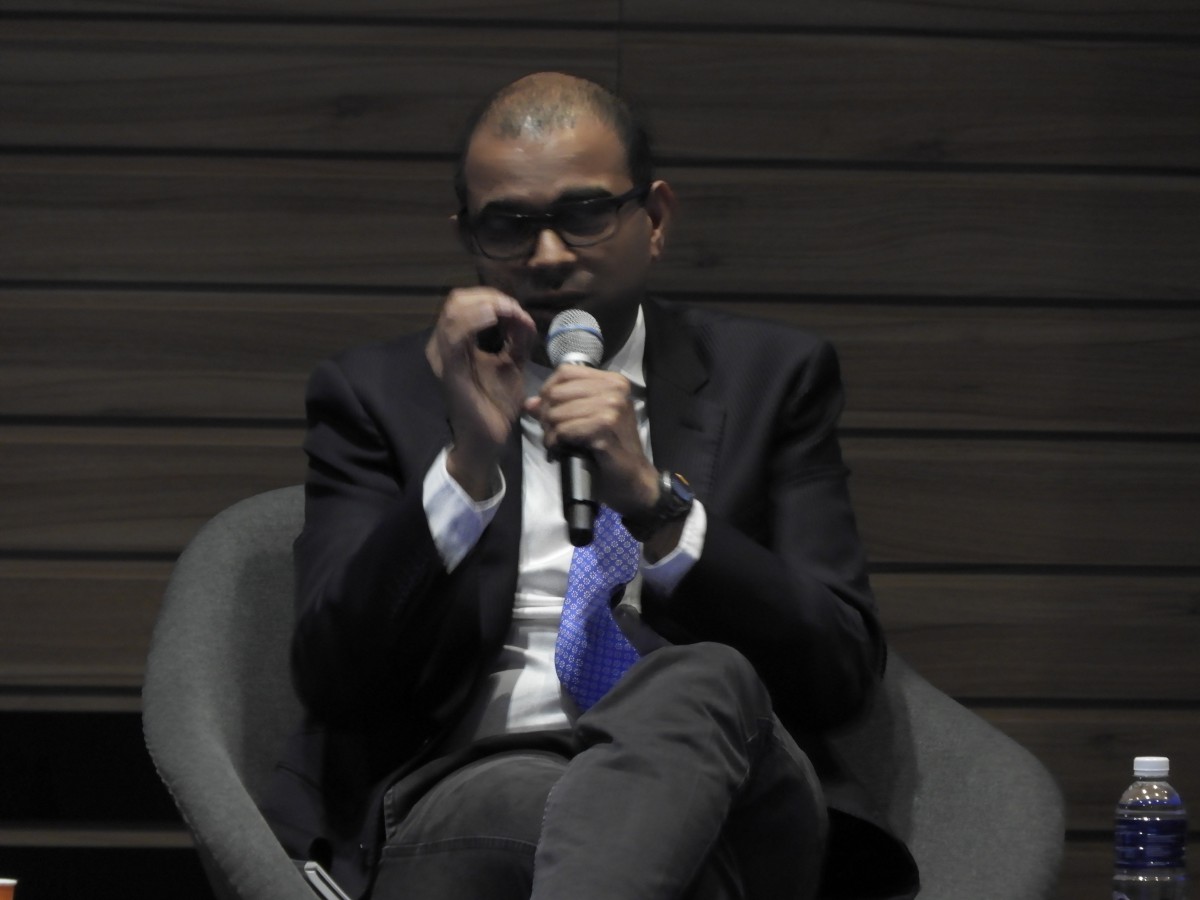
Janil said even though the government was looking to introduce the new law, tackling Fake News should take on multifaceted approach. Source: A. Azim Idris
Cherian George, a Professor at Department of Journalism at Hong Kong Baptist University, said the question of introducing legislation was central to the Asian region but it was also important for all stakeholders not to the hand government a ‘blank cheque’ to implement such laws.
“We have to make sure that the laws are narrowly tailored as such that they don’t unwittingly or deliberately catch speech that could be regarded as legitimate,” he said.
“The penalties should be proportionate to the expected harm and not to jail bloggers for 10 years (as is happening) in some parts of Asia. And finally, the law should not play favourites.”
US President Donald Trump has often used the term fake news to condemn news reports or organisations whose findings he disputes or that are critical of him. The term has also quickly become part of the standard repertoire of leaders in authoritarian countries.
Singapore’s neighbour, Malaysia, is among the first countries to introduce such a law, although the newly elected government has expressed its intent to repeal the act.
Other Southeast Asian countries, including the Philippines and Indonesia, are considering how to tackle fake news. Rights activists worry that anti-fake news laws could be used to stifle free speech.
SINGAPORE: Ground-freezing technology is being used for the first time by the Land Transport Authority (LTA) to stabilise the earth before tunnel excavation works are carried out in MRT projects, in a bid to minimise disruptions to train operations during construction.
The technique has been used to create ice walls as part of works to construct a stretch of tunnels at Thomson-East Coast Line’s (TEL) Marina Bay station, LTA announced on Monday (Jun 25).
LTA said the ice-walls were used to stabilise the ground and ensure that construction works will not impact operations on the Circle Line and North-South Line tunnels located above the TEL tunnels.
“Over the years, LTA has tunnelled through many different kinds of ground conditions, but this is the first time that ground-freezing technology is used in an LTA construction project. The ground here consists of old alluvium clay which is hard to stabilise with cement grouting,” said Mr Ng Kee Nam, group director for TEL and Cross Island Line (Civil).
“Before the start of tunnelling works, we carried out multiple site checks and soil investigation works to decide on the best system to stabilise the ground. Ground-freezing method was found to be most suitable,” he added.
According to LTA, the technology was adopted for Marina Bay Station by installing a series of freeze pipes into the ground.
“Chilled brine at a temperature of -30 degrees Celsius is circulated within the freeze pipes, to allow the surrounding soil to freeze and form individual ice columns,” LTA said.
“The columns will then grow in size and join together with neighbouring columns to form one continuous, impermeable ice wall,” it added.
Excavation works for the TEL around 40 metres under sea level. (Photo: Amir Yusof)
LTA said the ground-freezing process at the TEL Marina Bay Station started in March this year. After about two months, two ice walls about 1.8 metres in diameter were formed about 40 metres below ground.
The ice walls will be in place for about three months until the construction of the TEL’s Woodlands-bound tunnel is completed, LTA said.
The freeze pipes will then be deactivated, allowing the ground to thaw before construction works for the Upper Changi-bound TEL tunnels above it commence.
Minister for Transport Khaw Boon Wan visited the Marina Bay construction site on Monday (Jun 25). (Photo: Amir Yusof)
The construction for the TEL Marina Bay Station and its tunnels are expected to be completed in 2021.
The 43-km long TEL will add 31 new stations to the existing rail network, with seven interchange stations linking it to all five existing MRT lines.
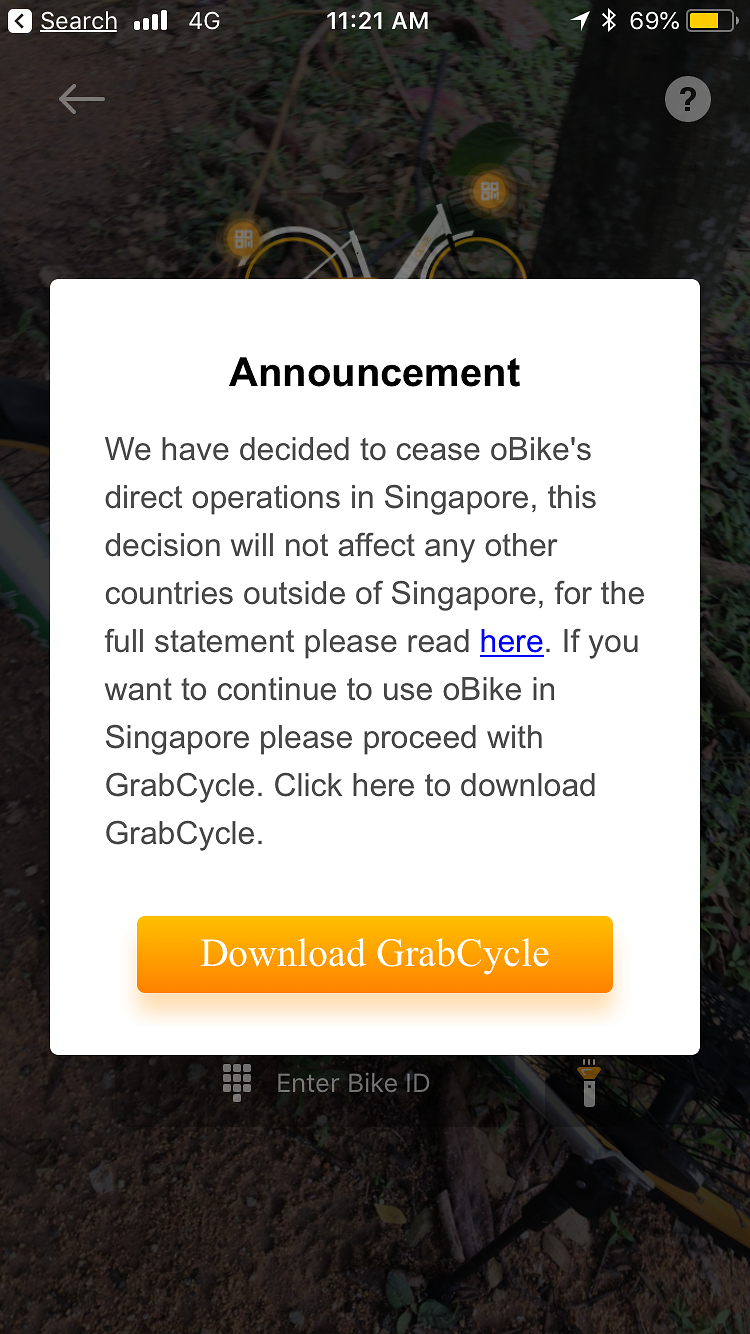
“oBike is announcing its decision to cease operation in Singapore as a result of difficulties foreseen to be experienced to fulfil the new requirements and guidelines released by LTA towards dock-less bicycle sharing in Singapore,” the company said.
oBike added that it strongly believes and is committed to provide dock-less bicycle sharing service that would benefit users’ commuting and Singapore’s transportation system, but regrets that “the new regulation measures do not favour this belief of ours”.
The ceasing of oBike’s operation is limited only to Singapore, and does not apply to its services in other countries.
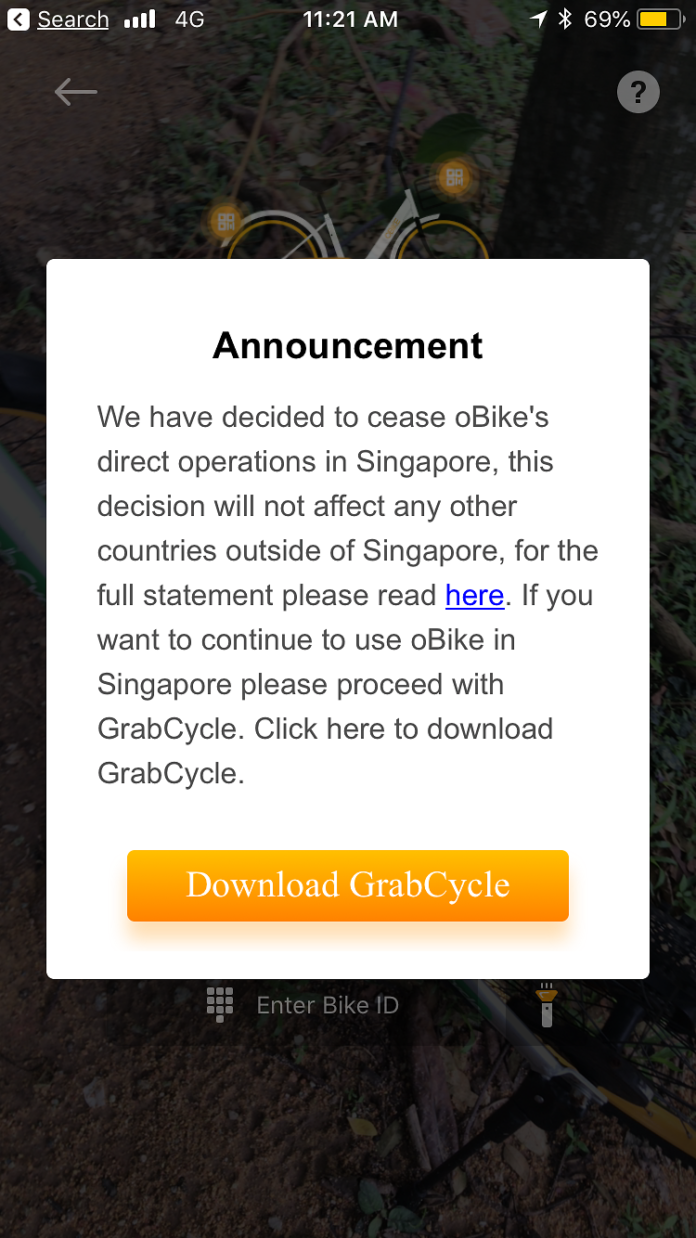
A screengrab taken on Monday (Jun 25) of the oBike announcement on the app. (Photo: Aqil Haziq Mahmud)
Users who still wish to use oBike services in Singapore can continue to do so with GrabCycle, said oBike. Users are advised to contact GrabCycle directly for further enquiries regarding the respective oBike services, it added.
All oBike users who currently possess an oBike Super VIP membership will still be able to use oBike services in all other operating countries except for Singapore, said oBike.
The company also expressed its “sincerest appreciation to more than 1 million users” in Singapore that have supported its services since it was launched in January last year.
The LTA has set a Jul 7 deadline for bike-sharing firms to submit applications for a licence to operate in public places or cease operations.
Those who submit them will have their applications evaluated and licence awarded by September.
The licensing framework requires operators to ensure that shared bike users scan the unique QR code at the parking location as proof of proper parking before they can end their trip. Users who park indiscriminately will continue to be charged, until they return the bicycles to a designated parking space.
oBike’s announcement comes just days after it confirmed to Channel NewsAsia that it would submit an application for a licence before the LTA deadline despite an expected “financial strain” on its current business model.
Four other bike-sharing firms – Mobike, ofo, SG Bike and Anywheel – also plan to meet the deadline.
SINGAPORE: Undergraduate Justin Phua feels a slight twinge of guilt whenever he parks his ofo bicycle near some benches at a park connector in front of Kembangan MRT station.
The small space right across the road from the train station is packed with about 50 bicycles daily because commuters like him park there before rushing to catch the next train.
“That space is not a proper parking spot but we do it anyway for convenience. It is meant for residents who exercise or walk their dogs. But parking here saves me time,” said the 23-year-old, wiping beads of perspiration off his forehead.
Bicycles parked near a park connector in front of Kembangan MRT. (Photo: Amir Yusof)
However, Mr Phua is aware that his days of parking these bicycles at non-designated areas are numbered because of a new licensing framework which will soon kick in.
The Land Transport Authority (LTA) has set a Jul 7 deadline for bike-sharing firms to submit applications for a licence to operate in public places or cease operations.
Those who submit them will have their applications evaluated and licence awarded by September.
The move followed the passage in May of the Parking Places (Amendment) Bill, a piece of legislation that was aimed at tackling the indiscriminate parking of shared bicycles.
The licensing framework requires operators to ensure that shared bike users scan the unique QR code at the parking location as proof of proper parking before they can end their trip. Users who park indiscriminately will continue to be charged, until they return the bicycles to a designated parking space.
PENALISING USERS WHO PARK INDISCRIMINATELY
Five bike-sharing firms – Mobike, ofo, oBike, SG Bike and Anywheel – have confirmed to Channel NewsAsia that they will be submitting their applications before the LTA deadline.
Two of these operators – ofo and SG Bike – confirmed that users of their shared bikes will incur extra costs if they park indiscriminately.
ofo said users who “end their trips in areas deemed to be indiscriminate” will incur “financial penalties”.
“We are working with LTA to ensure this government mandated fine is implemented in a sensible fashion that takes into account the needs of bike share users and does not deter users from using this efficient environmentally friendly affordable transport option,” said the company, which has a current fleet size of 70,000.
SG Bike, told Channel NewsAsia that “it needs” to charge users an additional rental fee for each instance of indiscriminate parking.
However, the firm added that users who commit the offence will be given a “grace period” to unlock their bicycles and park it within the designated areas.
Mr Phua, who uses the ofo service 4 times daily, admitted that he will probably have to change his parking habits once the fines kick in.
An ofo bike parked along a Robinson Road pedestrian walkway – right under a sign that says that no parking for bicycles is allowed. (Photo: Leon Chen)
“We are not sure how much the fines will be, but I don’t think I’m prepared to risk finding out. It’s tempting to park at places conveniently but it’s something I’ll have to take note of in the near future,” he said.
SCANNING QR CODES TO END TRIP
Besides imposing fines, bike-sharing firms also plan to fulfil LTA’s requirements on QR code-based geo-fencing, where users will have to scan a QR code at designated parking spaces as proof of proper parking before they can end their trip.
ofo said it has “already begun work to implement an additional step to allow users to scan a QR code at the end of the trip”.
A heap of shared bicycles dumped on a grass area in Kampong Bahru. (Photo: Raj Mohamed)
“Used as a tool to influence user behaviour, and the use of public spaces, QR codes can be a part of the solution,” said ofo.
Lydia Sim, who uses Mobike and ofo bicycles, told Channel NewsAsia that scanning the QR code adds “a bit” of inconvenience to her trip.
“Sometimes the apps don’t pick up the QR code, and I could be spending a lot of time trying to key in the bike serial number and so on. I hope they’ll implement a system that will function well, I don’t want to be fined even though I parked at the right place,” said the 32-year-old teacher.
NEW FRAMEWORK POSES “FINANCIAL STRAIN”: oBike
As firms gear themselves up to comply with LTA’s operating licence requirements, local bike-sharing company oBike told Channel NewsAsia that the framework will place a “financial strain” on its current business model.
Although the firm confirmed that it is in the process of applying for the licence, and is “firming up some details”, said it has to review and take into serious consideration all operational and financial decisions to ensure a sustainable and successful business model.
“Our goal is to assess and evaluate the financial and operational construct of the business and make an optimal decision to provide an efficient and effective bike sharing service after the implementation of the licensing scheme,” the firm said.
Bike-sharing firms – which include Mobike, ofo, oBike, SG Bike, Anywheel and ShareBikeSG – made their debut in Singapore from early 2016, putting a combined estimate of 100,000 bicycles on Singapore’s streets.