BEIJING: Deputy Prime Minister Teo Chee Hean said Singapore and China have enjoyed good cooperation over the years and worked to ensure the harmony and security of both countries.
Mr Teo, who is also the Coordinating Minister for National Security, made these comments on Monday (Jul 2) as he met Guo Shengkun, head of the Commission for Political and Legal Affairs of the Communist Party of China’s Central Committee.
Mr Teo added he brought some of his younger colleagues on this visit to China so they can better understand the cooperation between both sides.
Singapore Deputy Prime Minister Teo Chee Hean and Guo Shengkun, head of the Commission for Political and Legal Affairs of the Communist Party of China’s Central Committee. (Photo: Olivia Siong)
The meeting with Mr Guo was also attended by Singapore’s senior parliamentary secretaries Baey Yam Keng, Sun Xueling and Tan Wu Meng.
In his comments, Mr Guo, who is also a member of the Communist Party’s politburo, called Mr Teo an honoured guest and a good friend.
He noted that enormous efforts have been devoted to Singapore-China relations and practical cooperation, which is highly appreciated by China.
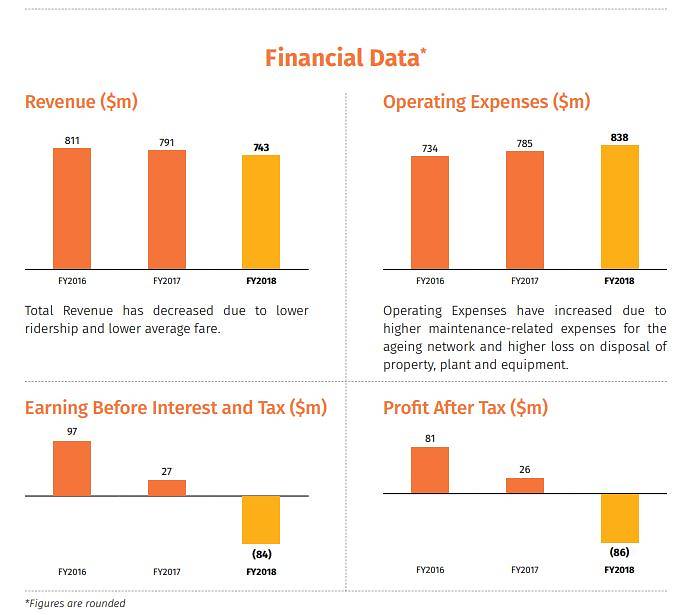
SINGAPORE: Amid a fall in ridership and higher maintenance expenses, SMRT Trains posted an S$86 million after-tax loss for the 2018 financial year ending Mar 31.
The loss follows an after-tax profit of S$26 million for the previous financial year, according to an annual operations review report posted on its website on Sunday (Jul 1).
Revenue declined from S$791 million to S$743 million due to a fall in ridership and lower average fares, the company said. Ridership fell from 768 million to 753 million, with average weekday ridership at 2,258, down from 2,353 the previous year.
Operating expenses jumped from S$785 million to S$838 million. SMRT Trains said this was due to higher maintenance costs for the ageing rail network and higher loss on disposal of property, plant and equipment.
SMRT Trains’ financial figures for FY2018. (Source: SMRT Trains)
IMPROVED RELIABILITY ON 2 OF 3 RAIL LINES
SMRT Trains’ CEO Lee Ling Wee said in the report that the company “recognises that commuter satisfaction has declined in the last year”.
This is especially after the launch of the new signalling system in mid-2017 and two major disruptions late last year, such as the Bishan-Braddell tunnel flooding incident.
“Learning from the 7 October tunnel flooding episode, we have tightened work processes and supervisory checks across all levels in the organisation, and will use resources more effectively as we get our renewal and maintenance efforts firmly back on track in building infrastructure and facilities management,” Mr Lee said.
He also noted that reliability has improved on two out of three of SMRT’s rail lines.
Between April 2017 and March 2018, the Circle Line and East-West Line saw an improvement in their mean kilometres between failure (MKBF), which measures the number of kilometres clocked before a delay of more than five minutes.
The Circle Line’s average MBKF for the 12 months up to March was 665,000km, compared to 281,800km in the preceding 12 months, while the East-West Line’s MKBF rose from 151,400km to 171,000km.
However, the North-South Line’s MKBF fell from 180,400km to 97,000km. This was due to teething issues on the new signalling system, Mr Lee said.
SMRT Trains’ employee accident frequency rate for FY2018 was 1.44, compared to 1.14 in the previous financial year. However, SMRT Trains said that this was still lower than the logistics and transport industry average of 3.0.
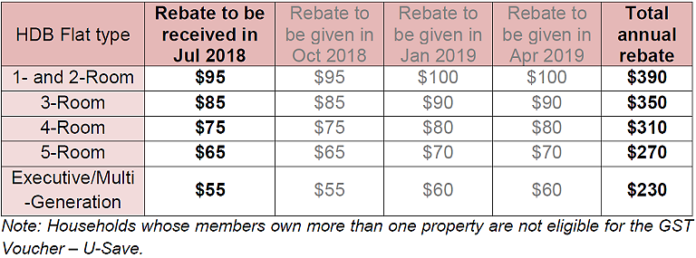
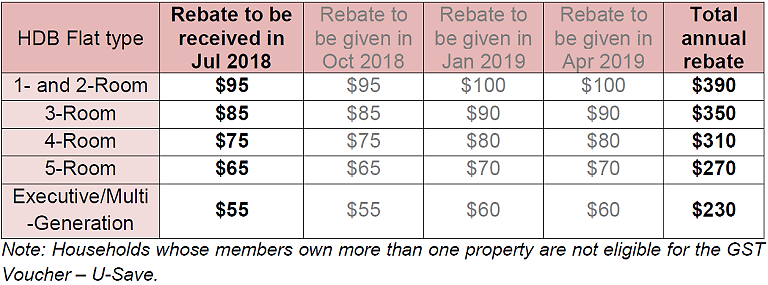
SINGAPORE: About 900,000 Singaporean HDB households will receive the next instalment of the GST Voucher – Utilities-Save (U-Save) rebate in July, the Ministry of Finance (MOF) announced on Monday (Jul 2).
The rebate, which is part of the permanent GST Voucher scheme, is distributed every three months. It helps HDB households offset part of their utilities bills and serves to lower overall household expenses. The U-Save rebate is expected to amount to S$280 million over four quarters, starting from July 2018.
In July, eligible households will each receive a GST Voucher – U-Save of up to S$95 depending on their HDB flat type.
As announced in Budget 2018, eligible households will receive an additional S$20 per year (S$5 per quarter) for 3 years, from 2019 to 2021.
“This will help households adjust to the carbon tax when it is implemented from 2019. The increase in U-Save will cover the expected average increase in electricity and gas expenses for HDB households arising from the introduction of the carbon tax,” MOF said in its press release.
KUALA LUMPUR: Prime Minister Mahathir Mohamad sent shock waves when he announced in May that Malaysia will scrap the Kuala Lumpur-Singapore high-speed rail (HSR) project on account of its high cost.
Its purported price tag is simply too expensive for Malaysia, he said.
While official figures of the project’s expected costs from MyHSR Corp, the Malaysia Government’s project delivery vehicle for the HSR have not been revealed, a price tag of RM70 billion to RM110 billion (S$24 billion to S$37 billion) has been widely cited.
SHOCK WAVES
Few expected that the project would unravel and in such a rapid manner.
Just two days before Malaysia’s historic general election – a stunning loss for Najib Razak and the 60-year-old Barisan Nasional regime – Singapore’s Land Transport Authority (LTA) had issued tenders for the design and construction of its HSR terminus.
On Apr 5, two days before the dissolution of the Malaysina Parliament, MyHSR Corp awarded its northern alignment (from Kuala Lumpur to Johor) to Malaysian consortium Gamuda-Malaysian Resources Corporation consortium while its southern portion to another Malaysian consortium Syarikat Pembenaan Yeoh Tiong Lay-TH Properties, with package terms to be finalised.
Shelving the HSR project is consistent with the Malaysian government’s approach to review all mega infrastructure projects. Dr Mahathir also announced in May that the Greater Klang Valley rail transit line MRT3 will be cancelled and that the Malaysian government was putting on hold the China backed East Coast Rail Link (ECRL).
Malaysia’s Prime Minister Mahathir Mohamad. (File photo: Reuters/Lai Seng Sin)
The market was equally caught by surprise by this slew of announcements. Malaysia public-listed construction and related companies saw their share prices fall.
In a recent interview with the Nikkei Asian Review on Jun 11, Dr Mahathir said a HSR between Singapore and Malaysia will be needed in the future but it is a project that Malaysia could ill afford presently.
“We cannot say we will never have high-speed rail in Malaysia. What we can do is we can postpone the project because it is far too costly at this moment,” he added.
Is the HSR project really too costly?
HOW COSTLY IS THE HSR?
The KL–Singapore HSR alignment will be approximately 350km, with 335km running through Bandar Malaysia, Sepang-Putrajaya, Seremban, Melaka, Batu Pahat, Muar and Iskandar Puteri in Malaysia. The final 15km in Singapore ends in Jurong East.
The HSR is expected to offer three types of services: A non-stop 90-minute express service, an inter-city service, and a shuttle service between Iskandar Puteri and Jurong East.
It projects 22 million passengers per year by year 10 of operations.
Many of these passengers may be current travellers who transverse Kuala Lumpur and Singapore by air – about four million annually with return economy-class ticket prices ranging from US$50 to US$65 (or S$68 to S$89).
A ball park cost of the HSR’s construction would be about RM60 billion, without including land acquisition and loan interest, according to UOB Kay Hian Malaysia Research. Industry experts estimate land acquisition might rack up RM5 billion to RM10 billion more, and financing costs are expected to push the all-in costs to around RM110 billion.
CHEAPER IN CHINA?
Experts have compared costs of the HSR to Chinese equivalents.
China currently has more than 25,000 km of HSR rail network with construction costs one-third lower than in most countries, according to the World Bank. With maximum speeds of 350kmh, its HSR costs averages about US$17 million to US$21 million per km even with a high ratio of viaducts and tunnels, and boasts lower ticket prices.
A China Railway High-speed bullet train runs towards Beijing South Railway Station July 25, 2011. (File Photo: REUTERS/Jason Lee)
Compared to their Chinese counterparts, the KL-Singapore HSR appears to have a higher proportion of costs devoted to systems engineering and land acquisition – making up 29 per cent and 12 per cent of total costs respectively compared to 18 per cent and 4 to 9 per cent respectively for Chinese HSR projects.
The fact is these Chinese projects enjoy massive economies of scale. Lower manpower costs, and an energised domestic construction and equipment supply community that can build and adopt innovative techniques have driven cost down.
Large volumes and the ability to amortise capital investment in high-cost construction equipment over a number of projects coupled with local equipment, building materials, systems and rolling stocks, also brought down costs for China.
Data from the World Bank’s 2014 report also points out that Europe HSR projects (with speed of 300kmh or above) cost between US$25 million to US$39 million per km, while in the US, the recent California HSR was estimated at US$52 million per km but it has risen more since.
HOW CAN COSTS BE BROUGHT DOWN?
Strong concerns in Malaysia about the HSR’s absolute cost, which is almost double that of a typical China HSR project, have led to a scramble among Malaysia-based railway experts to review the KL-Singapore HSR with some proposing as much as a 30 per cent cost-cutting.
Severe cost-saving alternatives and a rethinking of the HSR project, such as upgrading the existing KTM rail network for a less-than high-speed rail, to cut existing HSR project costs by two thirds have also been raised.
This track upgrade proposal, pegged by experts at US$15 million per km, echoes Indonesia’s ongoing examination of its Jakarta-Surabaya project, estimated at US$10 million per km for the 780km track across Java.
TAIWAN – A CAUTIONARY TALE
A cautionary model to look to is the privately financed Taipei-Kaohsiung HSR – which has a comparable length, number of stations, travel time (for both express and intercity) and costs.
Taiwan’s US$15 billion HSR began operation in 2007 cutting through the hilly coastal terrain of western Taiwan.
Taiwan’s tab of US$43 million per km is similar to the per km cost for the KL-Singapore.
Taiwan also spent on some eye-catching train stations, in the same vein that Malaysia had plans for a few iconic HSR stations.
Three Taiwanese high-speed rail trains rest at the platform at the Zouying station, south of Kaohsiung. (File Photo: AFP/SAM YEH)
Both are also similar in that they have costly elevated superstructures (for about half or more of the track) and some tunnelling.
But Taiwan’s HSR had to overcome significant engineering challenges because it passes through highly uneven terrain in an earthquake prone region.
What Taiwan had going for it was its high population density. Within months of operations, its HSR was able to capture travellers between the two cities of Taipei and Kaohsiung with its low standard fare of US$48 (the average one-way flight was US$67) and its reliable schedule.
But this has resulted in the huge cannibalisation of air travel – as airlines have also reduced flights between Taipei and Kaohsiung. While it has achieved a ridership of 48 million in 2017, the privately funded project has also run into financial difficulties.
WIDER DISCUSSION IN MALAYSIA
There will no doubt be a wider discussion on the socio-economic implications of a HSR or medium-speed rail – including a review of its cost-benefit analysis, the ticket price and its financing structure as well as the purported benefits in job creation, industry growth and economic collaboration.
The Mahathir administration is in a good position to review the project, so as to improve the livelihoods of the average Malaysian and look into surrounding issues that include sustainability and affordability.
Khor Yu Leng is an independent economist at Segi Enam Advisors.
SINGAPORE: More than 30m under the waters around Singapore, where light hardly penetrates the murky depths, noise is perhaps the last thing you would expect.
But the Republic of Singapore Navy’s (RSN) latest submarine, the Type 218SG, hears and senses a cacophony of chatter. Not of people, but of the 2,000 ships that sail through the Singapore Strait every day.
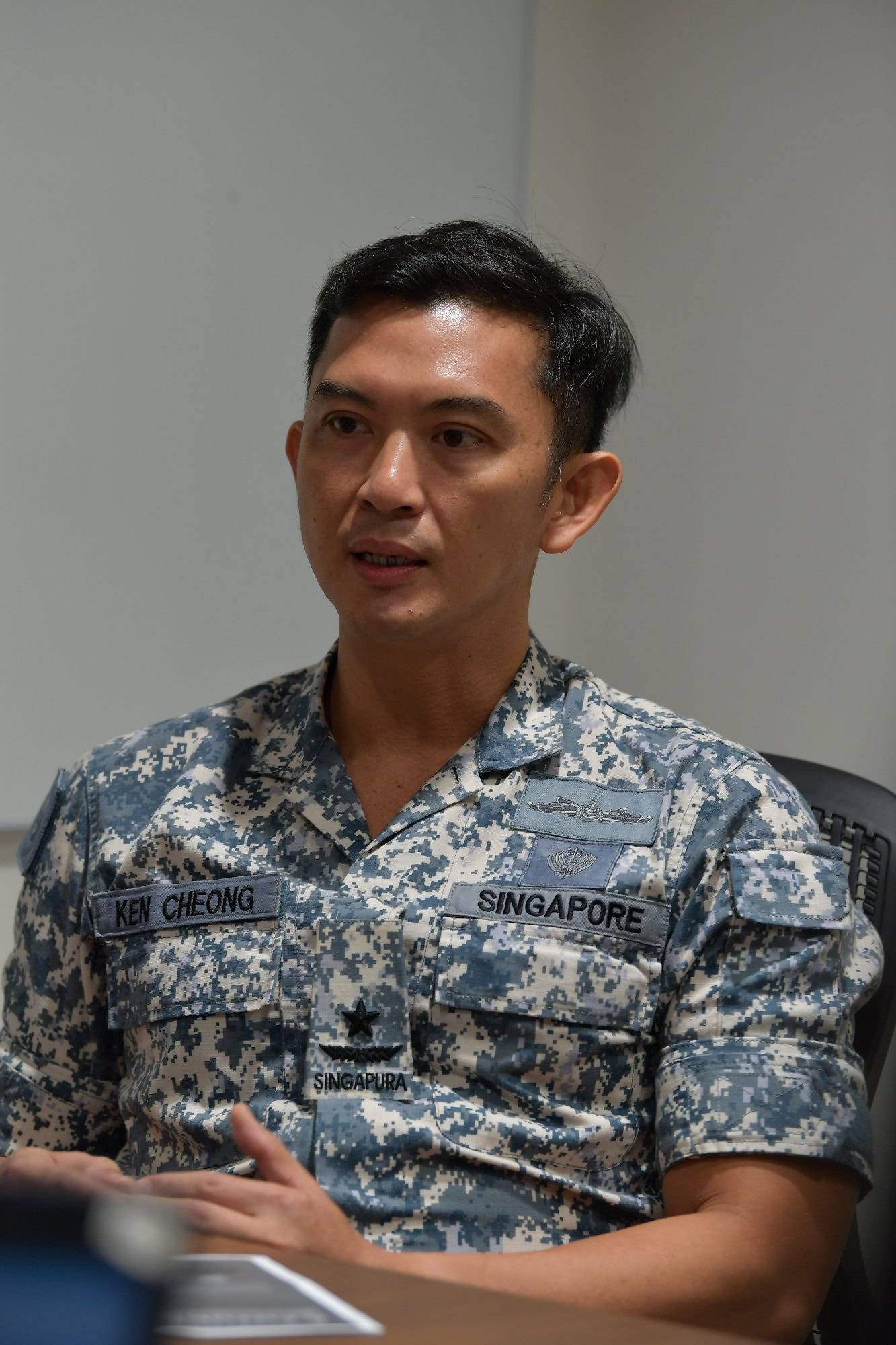
“Many of the boats in the world are not designed for such environments: Warm, shallow, noisy, crowded,” RSN’s head of naval operations Cheong Kwok Chien told Channel NewsAsia in an exclusive interview on Saturday (Jun 30).
“The operating environment makes a lot of difference to a submariner, and if you design a boat meant for this type of environment, you can make a lot of difference to whoever you’re up against.”
And so the RSN searched all over the world for a submarine that could replace its ageing Archer-class and Challenger-class predecessors. A submarine that could truly be made for Singapore from scratch.
“We’ve operated second-hands for 20 years,” Rear-Admiral (RADM) Cheong said of the retrofitted Swedish submarines. “Over 20 years, we’ve built up knowledge of what a submarine would be that’s designed for local waters.”
RSS Swordsman, the Navy’s second Archer-class submarine. (Photo: Facebook/Danny Clh)
In the end the Germans, masters of the submarine craft, “offered the best deal” in terms of technology, logistics, training and knowledge exchange. It has been reported that the contract for the first two Type 218SGs is worth more than 1 billion euros (S$1.6 billion).
The deal clincher? “The Germans were also very willing to listen to our requirements and change a lot of the original design to suit what we need in our waters,” RADM Cheong said.
The manufacturer, ThyssenKrupp Marine Systems (TKMS), also prepared high-resolution, virtual reality goggles for Singapore officials to put on and “walk” through the submarine, allowing them to tweak even the smallest details.
“We can actually know the ergonomics,” RADM Cheong said. “For a Singaporean’s height, can I reach the top? We could also make the pathways smaller and put more equipment because we are smaller in size.”
The Defence Ministry said Singapore will get four Type 218SGs, with delivery from 2021. The programme is “progressing well”, with the first two and remaining two submarines having commenced construction and steel-cutting, respectively.
LIGHTING UP THE UNDERWATER WORLD
But perhaps the most crucial customisations are in the Type 218SG’s combat system. Its improved sonar, which listens to sounds like propeller noises and water flow, locates enemies faster and identifies them more accurately.
“That’s when digital audio recognition comes in. We will hear frequency, sound wave profiles, and compare to known sounds that we have,” RADM Cheong said. “That basically helps us light up the underwater world.”
With the waters around Singapore so shallow and congested, the Type 218SG can tell whether it’s facing a merchant ship, cruise liner or warship better than RSN’s current submarines.
“It’s like going into a disco and picking up the sweetest voice,” RADM Cheong added. “You need to be quite capable. If not you will be blasted, and in our environment everybody gets blasted.”
Head naval operations Rear-Admiral Cheong Kwok Chien speaking to Channel NewsAsia.
Once the target is locked on, then comes the torpedoes. A Type 218SG model that TKMS had displayed at an exhibition last year indicated that the submarine will be fitted with eight forward-firing torpedo tubes for heavyweight torpedoes.
The “big improvement”, however, lies in the submarine’s electronics and computers that enable fewer crew to do more with the weapons.
“If you watch the old war movies, it’s a whole bunch of people trying to hear (the enemy) then get the torpedo ready; there’s a whole lot of activity on the boat,” RADM Cheong said. “No, what we are going for now is one guy pressing a button to release the torpedo.”
Another improvement is the the Type 218SG’s air-independent propulsion (AIP) system, which RADM Cheong said is more efficient than the one in the Archer-class submarine.
The AIP allows submarines to stay underwater longer before surfacing to recharge the battery that powers its systems. The battery is charged by a diesel engine that needs air to operate.
As such, the Type 218SG can last underwater two times longer than RSN’s current submarines. “That makes the submarine even more stealthy and mysterious because it can be all over the place without coming up,” RADM Cheong said.
SHIP KILLERS
This stealth is what makes the Type 218SG so lethal, as RADM Cheong spoke in broad terms about how the submarines fit into RSN’s overall strategy.
“All over the world, submarines are what we call strategic capabilities,” he said. “Because they are stealthy, can go to a lot of places and deliver a very impactful strike. So, most navies will use the submarine to deliver these effects.”
Besides hunting ships, submarines can do surveillance, deliver special forces, unmanned underwater vehicles and high-end weapons like nuclear missiles.
“Sometimes, you have to strike at the Achilles heel of the adversary, somewhere he thinks he’s quite safe and doesn’t expect anybody to come,” RADM Cheong said, highlighting the “psychological threat” a submarine poses.
When RSN’s submariners go for exercises, they typically train some of these skills.
“It makes all the seagoers, especially people on ships, quite fearful because you don’t know where it is,” RADM Cheong added. “Surface ships dislike submarines a lot, because most egos are broken by submariners.”
In a one-on-one situation with conventional warships, RADM Cheong stated that submarines “always win”. “When the submarine hears you, with the range that it shoots, there’s not much you can do about it.”
INVISIBLE, NOT INVINCIBLE
However, submarines are not invincible. RADM Cheong pointed out that they lack speed and are prone to being spotted when they surface.
“So, these are inherent vulnerabilities,” he added. “Fast things and aircraft hunt submarines. To hunt a submarine, you must operate out of its element. If you operate in water, you must be something that it cannot or doesn’t want to kill,” for example, an unmanned underwater vessel.
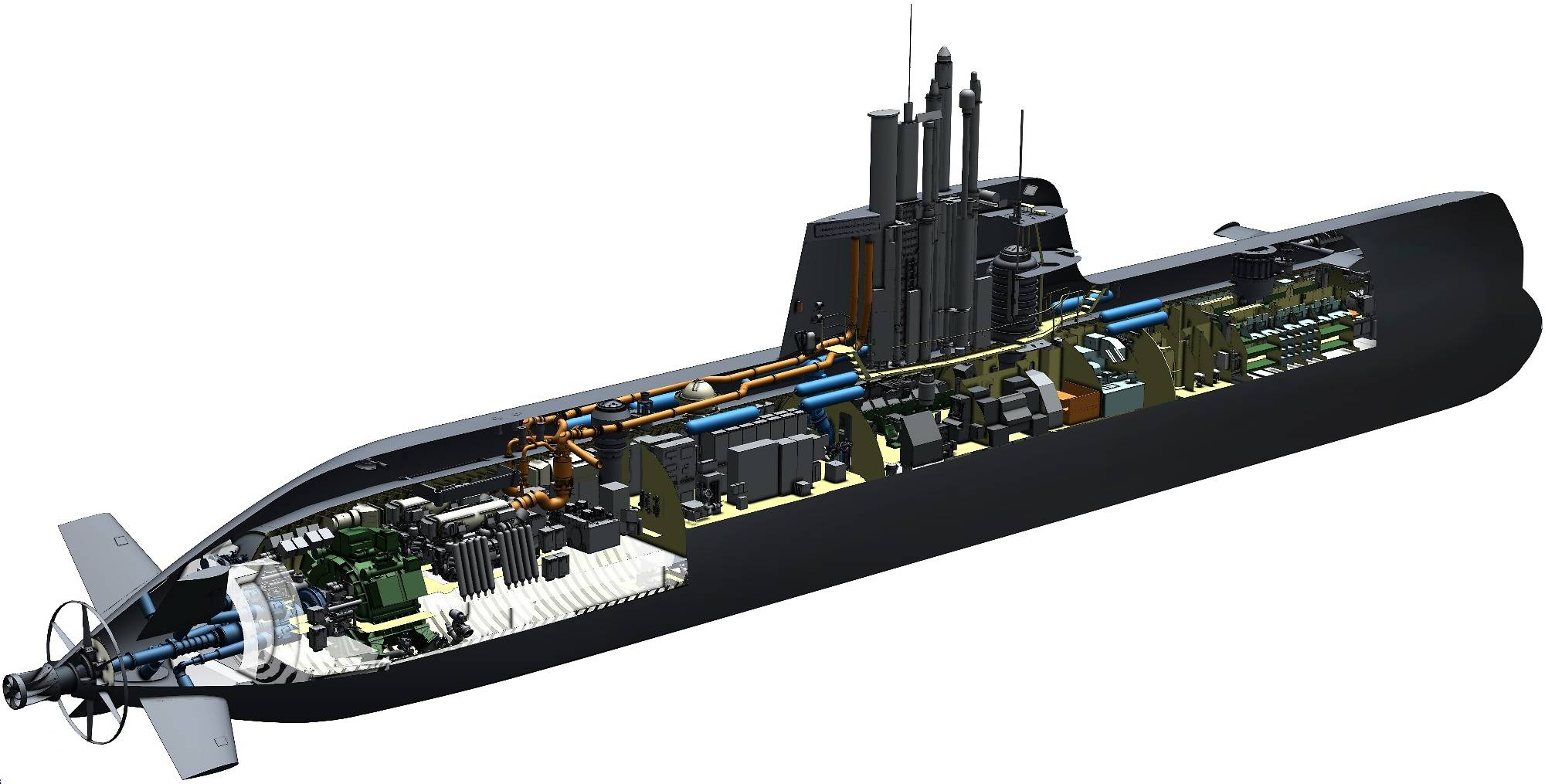
A cross-section illustration of the Type 218SG. (Graphic: Mindef)
Nevertheless, RADM Cheong said a good submariner can remain undetected if he knows where to position the vessel in relation to how sound waves travel underwater.
“If he exploits all these black holes underwater, nobody can hear him and he can hear everybody else,” he added. “He can be quite silent and maybe even invisible.”
For the Type 218SG, RSN’s submariners will train in simulators and abroad with their German counterparts, who RADM Cheong described as some of the best in the world. “They like to have a worthy partner to spar with,” he said. “We also take this opportunity to learn from them.”
BMW FOR SINGAPORE ROADS
RADM Cheong said the Germans were also grateful that the RSN wanted to fully customise its submarine, pointing out that they gained “a lot of interesting insights”. “They said not many customers are so forthcoming in saying that this doesn’t work.”
To that end, RADM Cheong said the Type 218SG answers a lot of challenges.
“German submarines are like BMWs, they are that class so we are very glad we decided on this class of submarine,” he added. “This new build is designed for Singapore roads, tailored to our ergonomics, size and driving range. Even the horn sounds better.”
A model of a Type-218SG submarine at IMDEX 2017. (Photo: Loke Kok Fai)
The RSN also ensured that the internal systems, like the engine and electronics, were cost-efficient and maximised the crew’s capabilities.
“On board, every submariner you bring is a huge investment,” RADM Cheong said. “So in terms of combat fighting, you want the submarine to be able to do a lot but not by putting in a lot of people.”
In the bigger picture, RADM Cheong said this is crucial to tackle the “ever-present” threat of terrorism at sea with an increasingly constrained manpower base. The saying is that one US aircraft carrier carries more people than the number of active personnel the RSN has.
“Almost everything that we wear, eat and the energy that we consume every day comes through the sea,” he added. “So, what the Navy has done is to look at this environment and recognise that we need to defend our lifelines.”
SINGAPORE: The sound of gunshots broke the tranquility of Pulau Ubin on Sunday (Jul 1) morning.
The island was the latest scene of a counter-terror exercise, involving police and Singapore Civil Defence Force officers and civilian volunteers.
They simulated a terror attack to see how people responded. It was all part of the Home team’s efforts to enhance the safety and security of residents as well as visitors to Pulau Ubin.
Officers from the Police Coast Guard were responding to a simulated gunmen attack on Pulau Ubin.
“We hope to be able to build a community of prepared citizens who can react quickly and instinctively when the need arises,” said Senior Minister of State for Defence and Foreign Affairs Maliki Osman, who was the guest-of-honour at the event.
“This terror threat is growing … over the past year. The Home team is doing its utmost to protect Singapore from the terrorist threat, but government’s efforts alone is not enough. We need all of us … to come together to play this very important role to keep Singapore secure.”
Dr Maliki also officially opened the revamped Pulau Ubin Neighbourhood Police Post (NPP) on Sunday.
First set up in the 1950s to maintain law and order on the island, it was refurbished in the 1990s.
The NPP has since been renovated to enhance operational efficiency in serving the Pulau Ubin community, said the police.
SINGAPORE: The upcoming Sembawang sport and community hub set to open progressively from 2020 will be called Bukit Canberra, announced Sport Singapore on Sunday (July 1) at the groundbreaking ceremony.
The 12 hectare space – first announced in 2016 – will provide amenities such as a hawker centre, indoor and outdoor sport facilities, a polyclinic, a senior care centre, green spaces for community farming and lifestyle related amenities for the community. It is located about five minutes from Sembawang MRT station.
Bukit Canberra will also see the largest ActiveSG gym with indoor and outdoor pools. There will also be 3km of running trails as well as a fruit orchard and healthcare options such as a polyclinic and senior care centre.
And to help visitors learn more about the area’s past, heritage story boards will be set up around Bukit Canberra detailing the area as a former naval base, and its historic structures including the Former Admiralty House that used to accommodate key military commanders based in Singapore.
Artist impression of the Bukit Canberra integrated hub in Sembawang. (Photo: Sport Singapore)
Speaking at a family carnival to mark the start of construction works, Minister for Education and Adviser to Sembawang GRC Grassroots Organisations Ong Ye Kung said the project is one that residents have been waiting for, for a long time.
“Bukit Canberra is both a historical treasure and the brainchild of our residents. We have been engaging Sembawang residents since 2016 to co-create a vibrant gathering place for our residents and families.
“The general consensus was to conserve the greenery as much as possible, and at the same time put in place useful facilities that the community finds most useful,” he said.
Mr Ong was joined by fellow advisers Coordinating Minister for Infrastructure and Minister of Transport Khaw Boon Wan, Senior Parliamentary Secretary Amrin Amin, Dr Lim Wee Kiak and Mr Vikram Nair as well as some 800 residents.
Artist impression of the Bukit Canberra integrated hub in Sembawang. (Photo: Sport Singapore)
At the event, the Grassroots Advisers also planted a Sembawang Tree, which will be part of the 1,600 additional trees that will be planted at Bukit Canberra.
Bukit Canberra will have facilities by Sport Singapore, Ministry of Health, National Healthcare Group Polyclinics, National Environment Agency, National Parks Board and have inputs from the National Heritage Board.
Certain parts of the hub such as the hawker centre and swimming pool were originally set to open later this year but had to be pushed back to develop the project fully, advisors noted.
The development is expected to be fully operational by September 2021.
TIANJIN: With iconic office towers, shopping streets and even plans for driverless cars on the roads – the Tianjin Eco-City project is entering its next phase, as the focus shifts to developing its central district.
This comes after the completion of its 8 sq km start-up area – which includes industry parks, residential developments and social amenities like community centers, schools and a 350-bed hospital.
Tianjin Eco-City is the second joint project between Singapore and China and marks its 10th anniversary this year.
Bound by the Ji Canal and Central Boulevard, a 1 sq km city centre will take up about a quarter of the 4.5 sq km central district.
Expected to take shape in about five years, it will be the heart of commercial, leisure and recreational activities – with authorities hoping this can attract more businesses and talent to support future growth.
The gateway to the city centre will be located next to the Nankai Station of the upcoming Z4 rail line, which connects the eco-city to Beijing, Tianjin City and the rest of the Tianjin Binhai New Area.
Completion of the rail line is expected in 2020 and the city centre will also feature a bus interchange.
Artist impression of the new Tianjin central district. (Photo: Sino-Singapore Tianjin Eco-City Investment and Development Co. Ltd)
A plaza at the gateway will be framed by two iconic office towers, which standing at more than 150m, will be the tallest buildings in the eco-city.
There will also be business hotels and residential buildings, as well as convention and exhibition facilities located nearby.
In line with its vision of being a “Green Smart Hub”, the city centre will be a smart low carbon footprint central business district.
Besides sky gardens and terraces, there are plans to introduce smart bus stops, as well as driverless cars and bicycles to promote the use of green transport.
A 1.2km pedestrian street will take residents and visitors from the gateway plaza through shopping streets, which will be designed with Tianjin cultural elements.
This will also lead them to the two major attractions of the city centre – the Sino-Singapore Friendship Garden, which will have a tropical greenhouse that showcases Singapore’s “City in a Garden” concept and the Sino-Singapore Friendship Library, which will be the largest library in the eco-city.
Along the way, the building heights will dip, with the design not only forming an iconic skyline but also allowing for unblocked views to the waterfront.
Artist impression of the new Tianjin central district. (Photo: Sino-Singapore Tianjin Eco-City Investment and Development Co. Ltd)
Marking the next phase of development, Singapore National Development Minister Lawrence Wong and Tianjin Binhai New Area Party Secretary Zhang Yuzhuo officiated the launch of the city centre in Tianjin Eco City itself on Sunday.
This was also witnessed by Singapore Deputy Prime Minister Teo Chee Hean who is on a nine-day visit to China.
“Our urban planners from the Urban Redevelopment Authority have contributed valuable ideas to the design team in the conceptualisation of the city centre, bringing to the table their rich experience in urban planning and place making,” said Mr Wong.
“Close collaboration has always been key to the Eco-city project, and thus, the ‘Singapore DNA’ will also come through strongly in the city centre.”
The entire Eco-city project spans 30 sq km and aims to be a role model for sustainable development.
The number of people living or working in the Eco-city has gone up by about four times – from 20,000 in 2014, to over 80,000.
There are also about 6,500 registered companies in the Eco-city with a total registered capital of about US$33 billion.
SINGAPORE: An accident at Woodlands Checkpoint early on Sunday (Jul 1) morning involving four cars caused the departure viaduct at the facility to be temporarily closed.
Police were alerted at 3.20am to the accident in which 2 male car drivers aged 32 and 51 were taken to Khoo Teck Puat Hospital conscious.
The Singapore Civil Defence Force (SCDF) said it received a call for assistance at about 3.30am at 21 Woodlands Crossing and added that the two incurred minor injuries.
Photos and videos circulating on social media and WhatsApp showed the damaged vehicles sprawled across the two lanes heading.
One of the cars – a black Subaru – had its front crushed, while another had a badly mangled rear. Smoke could be seen emanating from the vehicles.
A photo circulating on social media of the scene after an accident along the Causeway that took place on Sunday morning (Jun 1).
In a Facebook post at 4.05am, Singapore’s Immigration and Checkpoints Authority (ICA) advised travellers to drive carefully and listen to instructions from officers.
In an update at 5.01am, ICA said motorists can expect delays and should use Woodlands Crossing to depart Singapore.
At 5.30am, ICA said the departure viaduct was reopened.
This is the second accident near the Causeway this weekend.