SINGAPORE: Weekday mornings have been a battleground in the Lim household, where nine people have been sharing three bedrooms. And mother of five Ethel Lim is the field marshal, waking up and directing her troop of teens and pre-teens.
She has 40 minutes to get her children, aged between 10 and 16, in and out of the toilet they share and out of their maisonette in time for school. This means she would need everything to run like clockwork.
What the 37-year-old would usually get is chaos, with lots of knocking on the toilet door.
Her second daughter Bernice attested that the mornings could be “very crazy”. “Each one of us only has five minutes in the bathroom, so we can only brush our teeth, wash our face and change our clothes,” said the 15-year-old.
“Sometimes one of us gets to school late because somebody woke up late, then (got ready) very slowly.”
Mrs Lim would receive complaints from school, usually about 14-year-old Ambrosia, her middle child and “the late one”. Her reply? “I have five kids to ferry.”
The Lims getting ready in the morning.
Despite the trend here towards having fewer children, a few families like the Lims have gone against the grain. The programme On The Red Dot spent months filming three large families (by today’s standards), to see what it takes to raise a big brood in Singapore today. (Watch the series here.)
MARRIED AT 19
In the case of the Lims, they did not plan specifically for five children; rather, husband Nick wanted a big family, “so we just went ahead”, said Mrs Lim, who was similarly inclined because “maybe the noisier the better”.
She got her wish, with five different personalities – “monsters”, she calls them – fighting for space in the rented condominium unit shared with her husband’s sister, a domestic helper and two dogs.
Mrs Lim was 19 years old when she got married after dating for six months, while her husband was 25.
She still gets asked about tying the knot at that age, and her reply is no different from what she said back then to her friends, who had wondered if it was a shotgun marriage. (It was not.)
“I found the right guy; the chemistry’s there, the sparks were there, he’s good. Okay, let’s go for it,” she said, adding that her parents were supportive because he treated her well.
Two years later, she had her first child, Crystal, followed by the next two girls – each of them a year apart. Her son Bryan is now 12, and she had her youngest daughter, Melody, by the time she was 27.
She was a part-time real estate agent previously, and has been a stay-at-home mum since her second pregnancy – a role that has kept her contented as she watched her children grow up.
“My family are my top priority, so they’re my happiness. I don’t think anything is a sacrifice for my family,” she said.
SPACE CRUNCH
She found her children easier to handle, however, when they were younger. Now they are more vocal and have growing needs. It has proven to be a challenge satisfying one demand in particular.
Said Mrs Lim: “All of them request, “I want my own personal space.’”
In their maisonette of about five years, Bernice, Bryan and Melody have been sleeping in the master bedroom with their parents, while Crystal and Ambrosia have been sharing a room, with the helper and their aunt in the third bedroom.
One of the bedrooms.
But it is not only the sleeping arrangements that are a squeeze. Finding space to study at home in peace is also not easy when their other siblings are playing noisily, as they often do.
This year, it has been particularly difficult for Crystal, who is taking the N-level examinations and is working hard to qualify for the direct polytechnic admission programme.
“I wish that they give me more privacy and a proper space to study,” said the 16-year-old.
Just last year, there was a comfortable study room in the apartment. But it was filled with boxes packed in November in anticipation of a move to a new, bigger home.
Those plans were then derailed by Mr Lim’s work schedule, to Crystal’s chagrin. “I argued with (my parents) a lot about this,” she said.
I don’t want anything to affect my N-level results, which are very important to me.
That focus on hers has meant that she has been spending more time with her friends instead. “When I go out with them, I get to study, so in a sense, I get to do stuff that’s more productive,” she explained.
‘I WISH HE’D BE THERE’
Mr Lim felt bad about the delay in moving house caused by his work. He is in township development and makes business visits in the region almost every week.
He is gone for about three to five days each time and two weeks at the longest, although he tries to be back for the weekends, and he calls his family every night.
Owing to his increasing workload, “it was harder to find the right house for my family”, he said. But that is not the only reason his children are growing impatient with his absence. He also missed Ambrosia’s and Bernice’s birthdays.
The family celebrating Crystal’s 16th birthday.
“They were very upset,” said Crystal. “Working is important, but then I know that time is also very valuable, and what you miss you can’t get back. Sometimes I wish that he’d be more fatherly, that he’d actually be there.”
But this “can’t be helped”, said Mr Lim, whose pay depends on his commission and who earns S$10,000 to S$20,000 a month to support his family and give them a “better future”.
“As long as a parent isn’t around, like me, there’d definitely be this (feeling of neglecting them),” he admitted. “But as of now, my family environment still allows me to go out (of Singapore) to work.
“The market is larger outside … Wherever gives me better development, I’d go. I was never worried about going to places others don’t want to go to – I’m only worried about having no work.”
Mr Lim on a business call.
To make up for lost time, whenever he is in Singapore, he drives his children to school. It is the best way for him to spend time with them.
‘MY GREATEST WORRY’
Mrs Lim knows that her husband is “a caring dad”, but he is inexpressive and quiet. “So most of the time, I’m the one doing all the talking with the kids,” she said.
Her husband’s absence or his relationship with their children, however, is not her biggest concern. “My greatest worry is Bryan. His PSLE,” she declared.
Her Primary 6 son seems to be more interested in playing – or fighting – with his siblings than in his coming examinations.
Said his mother: “He doesn’t really bother about his studies, but I can’t push him … because the more you push him, the more he doesn’t want (to listen).”
Growing up dyslexic and recently diagnosed with hearing difficulties, Bryan has been struggling in school. And in a family of seven, it has been hard to devote attention and resources to just one child.
“We did try giving them tuition. It did help, but it’s quite costly, so we cut down,” Mrs Lim said. “Nick and I are still … working out with teachers – taking (their) advice – how to handle him.
“But he’s a very stubborn boy, and he keeps everything to himself, so it’s kind of hard to get him to open up.”
His parents only want him to pass his subjects, but in his recent report card, he passed only his English out of three subjects.
“I did try, but … I always end up with only a few more marks (needed) to pass,” said the 12-year-old, who had to then promise his parents that he would do better or else they would take away his phone.
PARENTING ISSUES
While Mrs Lim hopes that her son will now strive to do better this term, that ultimatum to him is the nearest approach to being a discipline mistress that her children would see from her.
Having had her children at a young age, she prefers to be more of a friend than a mother. And she doubts that caning them really works, since she herself became “more rebellious” when she was caned in the past.
“If you’re doing the ‘mother’ role, (children) won’t tell you a lot of things. Rather, when you’re friends with them, they can tell you a lot of things,” she reasoned.
But her lenient parenting approach does not always work, thinks Crystal. “(My siblings) talk back to her without any consideration of the situation,” said the girl.
“They should show her more respect and care instead of just arguing all the way without a valid point.”
Indeed, there are some things about having a family of seven that do drive Mrs Lim crazy. “Sometimes they’d argue non-stop for a few days or throw tantrums,” she said. “Mostly it’s the children fighting.”
That is when she needs a break from them – and a chance to catch up with her best friend Khristine, whom she has known for about five to six years.
“Talking to Khristine makes me more relaxed because she’s a mum herself, and our kids of the same age. So we understand each other more,” said Mrs Lim.
MOVING HOUSE
One of her biggest reliefs, however, came recently when her husband found a new home for them after months of house-hunting: A three-storey terrace house with five rooms.
And it has been an exciting time for the family as they went about cleaning their rooms before the big move. “My husband did a very good job finding this place,” said a happy Mrs Lim.
Their children must still share a room, but there is now an adjoining toilet for each. “I don’t have to queue up! I don’t need to wait for all them!” exclaimed Crystal.
On the other hand, one of the reasons her mother is thankful they have their own space is that, for the first time since the birth of her first child, she and husband may just be “totally very peaceful” a
“It’s no more noise at night, no more calling them to sleep,” she said with a laugh – even if waking them up in the morning may remain no less easier.
SINGAPORE: “I don’t make any apologies for that. I would do it again.”
That’s what lawyer and newly appointed Senior Minister of State for Law and Health Edwin Tong says when asked about defending the founder of City Harvest Church (CHC) Kong Hee in a legal case that captured the public’s attention.
The marathon case, one of the longest-running tials in Singapore’s legal history, involved the misuse of S$50 million in church funds and lasted from May 2010 till early this year.
Mr Tong, 48 and MP for the Marine Parade Group Representation Constituency (GRC), was appointed Senior Minister of State for Law and Health in the Cabinet reshuffle earlier this year.
About a week before taking on the role, he sat down with me to look back on his legal and political career.
While he made headlines for his new political appointment, he was mentioned in the media more often while he was handling the CHC case.
As with many high-profile legal cases, the lawyers representing the defendants came under fire and Mr Tong, being an integral part of the CHC defence team, was no exception.
“People make rude comments about me being the ‘City Harvest lawyer’. It’s regarded as not something that a PAP Member of Parliament (MP) or senior lawyer should be doing. But it’s my job. The case came to the firm and I was asked to take it on.
“Even (Law) Minister K Shanmugam says that everyone deserves a chance to have a legal representation of his choice and that’s something in our constitution. So, if we back down because people criticise the lawyers who are taking on these jobs, then I think our society and our rule of law will be all the poorer,” he says steadfastly.
In February this year, the Government said it believed the sentences meted out to those convicted in the case were too low.
Law Minister K Shanmugam said the issue would be looked into to ensure that legislation provides for higher penalties for senior officers who commit criminal breaches of trust (CBT).
He was reflecting the Government’s position on the apex court’s decision to uphold shorter jail terms for CHC founder Kong Hee and five other former church leaders.
This resulted from a new interpretation of the Penal Code section governing CBT offences, which led to the Court of Appeal ruling that company directors, governing board members or key officers of charities and officers of societies who commit CBT could be jailed up to seven years – compared to employees being liable for a maximum 15 years imprisonment.
Some members of the public then wondered why Mr Tong, who was then the deputy chair of the Government Parliamentary Committee (GPC) for Home Affairs and Law, hadn’t brought up the gap in the law to the Government earlier.
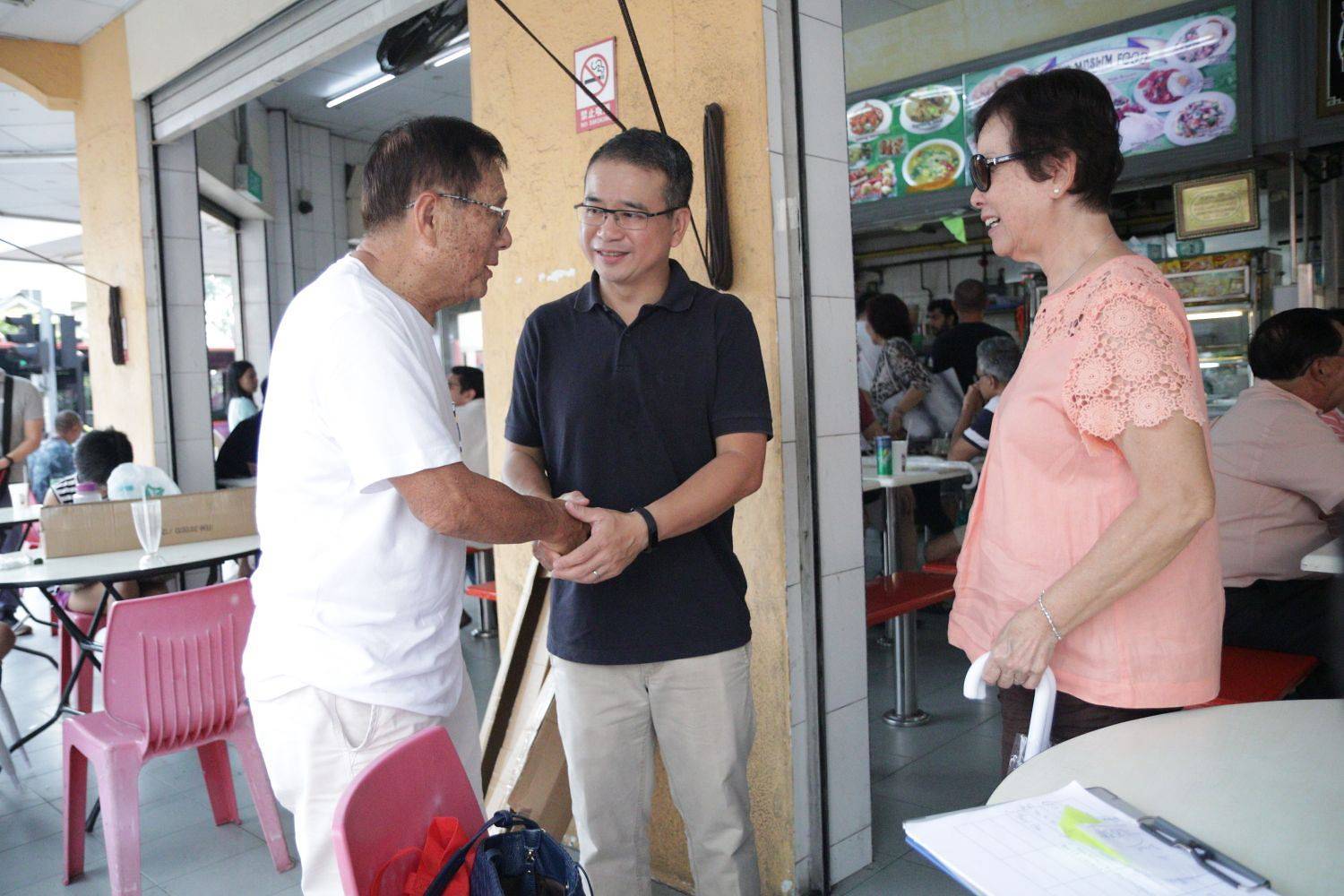
City Harvest Church founder Kong Hee leaving court on Apr 7, 2017. Next to him is Marine Parade GRC MP and lawyer Edwin Tong. (Photo: Howard Law)
Was his position as defence lawyer conflicting with his position as member of the GPC and MP?
“Firstly, there’s a flaw in the law because the law was not changed from many years ago,” he says.
“I was focused on what the legal provisions were. The legal provisions would require that the level of sentencing could not exceed a certain level. The charges had already been made by then. You can’t change legislation and apply it ex post facto. Whatever one might point out or not point out, the law as it stood at the time of the offenses were crystallised, would apply. So it would not have made a difference to my case.”
But would he have been more likely to point out the gap in the law himself if he hadn’t been a defence lawyer handling the CHC case?
“I and all my colleagues saw the gap and we argued it early on. We pointed out that the provision the prosecution sought to use was inappropriate, that in fact, the right provision should have been the one several notches lower and that would necessarily mean that even if there was a conviction, the penalty could not exceed a certain level.
“That argument was premised on showing that there was a gap. It was an argument that was dismissed, partly because there was a High Court judgment that the Subordinate Court felt that they were bound by and so we accepted it.”
He believes such details did not make the headlines as much because the public’s attention was focused on the “more sensational aspects” of the case.
I wonder if he ever faces a moral dilemma when defending those accused of harsh crimes.
“I am fortunate in being able to separate moral dilemma from professional responsibility quite well. The fact that I seldom taken on criminal cases probably makes that easier.
“As a lawyer, I present the facts as they are instructed to me. I make the best of those facts using legal authority and arguments, and it is for the court to assess if there has been wrongdoing. I don’t start off knowing or presuming there is wrongdoing, but if I am being asked by the client to take a false position or suppress material, then I will not carry on.”
I ask if he is at all concerned that his role as a defence lawyer – especially as Kong Hee’s lawyer – has affected his political standing among the electorate.
“I can’t discount it. I hope it will not but if it has, I just have to live with it, get on with it.
“Beyond doing what I do as a lawyer with all the right safeguards, checks and balances in place and as long as you don’t compromise on your ethics as a lawyer, what are those higher standards? Are you suggesting that a PAP MP who is also a lawyer should not act for criminals? Or are you suggesting a PAP MP who is also a doctor should not be treating a criminal? What are those standards? Why do we draw that line artificially?”
Mr Tong has been a lawyer since 1995 and his areas of practice include corporate and commercial disputes, and international arbitration. It’s something he will miss as he steps down from his position as Senior Counsel at law firm Allen & Gledhill to take on the role of Senior Minister of State.
“I’ve been used to being on my feet in court. I enjoy the cut and thrust of being in court and dealing with my clients. But at some stage there will always be some transition to be made and I’m looking forward to the challenge.”
“To be honest, I had perhaps a rose-tinted view of what a PAP candidate would be facing. I went in it thinking this is the PAP team. We had done well in the past and it would be all things as per normal,” says Edwin Tong. (Photo: Facebook / Edwin Tong)
THE 2011 ELECTION: “THERE WAS QUITE A BIT OF COMPLACENCY”
He was MP for Moulmein-Kallang GRC till 2015, before he was elected MP for Marine Parade GRC.
His first election was in 2011. Many analysts described this as a watershed election.
The PAP garnered 81 of the 87 seats. However, its share of the valid votes cast dropped from the 66.6 per cent in the 2006 election to 60.1 per cent.
The opposition Workers’ Party retained its Hougang seat and captured the five-seat Aljunied GRC, the first time that an opposition party managed to win a GRC since the system was introduced in 1988.
I ask Mr Tong what it was like to be fielded for the first time in such an election.
“I was a complete newbie at that point. I worked the ground through grassroots work for a while but never in the hustle and bustle of the hustings. To be honest, in 2011, I had perhaps a rose-tinted view of what a PAP candidate would be facing. I went in it thinking this is the PAP team. We had done well over the years and it would be all things as per normal.
“It really took me a couple of days on the ground in the campaign to realise that it’s really not what I thought it was going to be and it was a lot harder. The pushback I got from a lot of the residents I went to see was a lot tougher than I expected. The tone of voice, general sentiment and body-language became noticeably hostile. That’s when I realised that actually the sentiment, the sense that Singaporeans were being marginalised in our own country, squeezed out of the MRT, literally and figuratively, were real.”
But why had he not sensed it while carrying out his grassroots work before the election? Had he not himself felt the growing unhappiness in a changing Singapore?
“I think perhaps my radar was not as attuned. I did realise that there were grouses, and there was unhappiness over certain policies but I didn’t put it all together in the same way I did shortly into the hustings.”
Eventually, his team in Moulmein-Kallang garnered 58.56 per cent of the total votes cast.
“I would say there was quite a bit of complacency. The realisation didn’t come home until 2011. We described it as watershed, but I think it’s a bit more than that.
“It’s also about the voting population growing up and realising that they do have a voice and they should exercise that voice. I think that’s how a properly functioning democracy should work. If something is not working out for the country and for the population, they have to speak up and the Government has to react. It needs to find the right responses.”
SOCIAL TRANSFERS – A POPULIST MOVE?
However, he cautions the Government against being populist in its efforts to win the hearts and minds of voters.
“When then-Finance Minister Tharman Shanmugaratnam announced social transfers – GST Vouchers, U-Save rebates, the Silver Support Scheme and other policies – I did feel that it was unprecedented and a slippery slope and it was too much of a reaction to what the ground sentiments were.
“I’ve seen the experiences of the Western countries where the more you give, the more one asks and I think that’s really the start of the erosion of the work ethic that Singaporeans have. Once we start giving, we can’t scale back. You look at our country. We have nothing but our people. If we erode the competency of the workforce and we introduce a policy that undermines the work ethic, I think that’s going to be a big problem for us as a country.”
“I’m not sure about the assumption that giving people social transfers and handouts is the way to level up and decrease inequality and increase mobility,” says Edwin Tong. (Photo: Facebook / Edwin Tong)
But really, is Singapore even close to being in that situation?
Some analysts and members of the public feel the Government can afford to do even more.
“When I look back now, I realise why those transfers were needed, but I still think it must be done judiciously. If you want some social support, I think you’ve got to show that you’re getting yourself to where you should be and not just sitting on the street and expecting the handouts to come. I think that’s something that’s fundamental in our society.
“I’m not sure about the assumption that giving people social transfers and handouts is the way to level up and decrease inequality and increase mobility. It’s one way, but I would say it’s only a small part of the equation. One has to really look at society and how you lift society up through education, for example. I do believe in that.
“The education system has its flaws now where you have students from richer families thriving over the less well-to-do. I accept all that and I think that should be managed better. But at the end of the day, education and the way we look at our jobs are all sharper tools than just giving a handout.”
However, he feels how the Government determines the amount of social transfers accorded to households can be improved to ensure that resources are directed more accurately.
It is an issue he has raised in Parliament before.
“Means-testing should be a lot more detailed than it is today. Today, they look at your address for example and if you live in a private estate, you’re out. One may have a home that is bought in the 60s. It might be worth more now, but you can’t expect an old couple to sell their home and live on that in a different estate where they’re dislocated from their own friends and society.”
I put it to him that even though dislocation can be hard to deal with, surely the Government can’t be giving finite resources to those who own million-dollar or multi-million dollar homes at the expense of those who might not be able to afford a modest home or even a meal.
He concedes this argument is “fair enough”.
“But what about those who live in private estates, but are squatting with their siblings or with a friend. They may not be paying rent but they are there on goodwill and the goodwill could end at any point. So I think we should be more granular on it, go beyond just the address, go beyond just what the income is. What about those with dependants who have health problems? Their financial burden will be heavier.”
I remark that will mean more will need to be pumped in terms of administrative resources.
“It will but I think if the result is that we can get fairer, better applications of our resources which are finite, I think it’s well worth the effort.”
“Just going by what I see on the ground, I think people appreciate that the Government spends time addressing the unhappiness, whether it is in terms of social transfers or immigration policies,” says Edwin Tong. (Photo: Facebook / Edwin Tong)
REGAINING THE PUBLIC’S TRUST
I ask him what he’s been doing since 2011 to regain the public’s trust.
“A lot more effort has gone into revamping our feedback mechanism. Every single one of the MPs must know the ground well enough so that we don’t only end up knowing around elections that there’s unhappiness about this policy or that policy.”
Most notably, he makes an effort to recruit and hear from grassroots leaders of diverse backgrounds who are willing to give MPs an honest picture of ground sentiment.
I ask him if he thinks the PAP has successfully regained the public’s trust.
“I wouldn’t judge it based on the 2015 results alone but just going by what I see on the ground, I think people appreciate that the Government spends time addressing the unhappiness, whether it is in terms of social transfers or immigration policies. I think that has made a difference over the years.”
He admits the transport system has been “a constant bane”.
“But with time, it’ll be sorted out. As with all functioning and mature democracies, the trust level ebbs and flows on different issues. But I think the overall trust in the Government has remained healthy. It’s a gut feel I have while internalising everything that I see, everything that I hear, talking to people within or outside of my constituency.”
He concedes that on specific issues “more could be done” in terms of communication.
“CareShield Life for example is meant as a good policy but people are asking if we’re making money out of it. The Government could afford to explain why we’re doing it and to allay such concerns. We’ll see all that come to light when we debate the issue in Parliament but I do think more could be done to bring home the key messages in a way that the average Singaporean can better appreciate.”
THE OPPOSITION
As we move on to talking about his assessment of the opposition Workers’ Party’s performance in Parliament, he becomes momentarily circumspect.
“If you have constructive debates with opposition MPs who are well-meaning, well-intentioned, I think that would make for a better Singapore and that makes for refinements in our policies. So I welcome that. I think good quality opposition with constructive debates in Parliament can only be good for us.”
When asked to be specific, he says he feels the Workers’ Party has not been quite as constructive as he would like.
“Once we get into a situation where the opposition only takes potshots at policies without being constructive and offering something back in return, then I think if the ministers and the front benchers have to spend their time defending their positions without getting something positive in return, I’m not sure that’s constructive.”
But just because the opposition doesn’t offer up suggestions while criticising policy, should their criticisms be dismissed?
“Ideally, if I tell you something is wrong about what you are saying, I must be able to tell you not just what’s wrong but what I can change about it. I think that makes for a good democracy. But their criticism should not be dismissed. But also, I think after a while when you repeatedly get the same arguments in very broad terms, it’s not constructive.”
He cites the last Budget debate as an example.
“The Government said the Goods and Services Tax (GST) needs to be raised. It gives indication that it won’t happen in this decade, but soon. The opposition then votes against the Budget on that basis. I listened to their speeches. I didn’t discern any other major objections.
“So on the basis that GST is going to be raised in the future, they voted against the Budget. I felt that was not constructive. If they felt that there was something wrong with it, why it should not be raised, they should have made the point.”
I remark that many members of the public who expressed themselves online seemed to think the opposition had adequately explained their objection to the GST hike. Among the citizenry, many raised the same questions the opposition had about the GST issue.
“But look at the information. Look at what Finance Minister Heng Swee Keat has been saying about the Budget. Look at what had been said even prior to that. Make an assessment as to where we are, looking at healthcare costs, looking at the population profile, looking at demographics.”
He admits however that when it comes to such issues, the Government could afford to improve its communication to the public.
“In the years leading up to this year’s Budget, I think you’ll see that the information is out there – what the expenditure needs to be focused on, what is the state of the reserves. But I also agree that there’s always room for improvement in the way we transmit the information to the ground, the way the Government communicates. I think constant engagement with the public will only improve that.”
“Ideally, if I tell you something is wrong about what you are saying, I must be able to tell you not just what’s wrong but what I can change about it. I think that makes for a good democracy,” says Edwin Tong. (Photo: Facebook / Edwin Tong)
Recently, Mr Tong was also part of the the Select Committee set up to look into combating the problem of deliberate online falsehoods.
During the hearings to consider oral evidence presented by experts, industry stakeholders and members of the public, the committee drew public criticism from some quarters for its harsh questioning of certain individuals such as academic PJ Thum, who gave oral evidence.
“I wouldn’t agree with the broad generalisation that those who disagree with the Government were treated poorer than others. PJ had a certain view that ultimately meant that the Government was the primary purveyors of false information and obviously if you make that kind of submission, it has to be challenged.
“The amount of time it took is not necessarily a representation of what you might term as prejudicially treating someone who’s not in favour of the Government’s views but really just the amount of time needed to go through the material and to understand the material that he was relying on.”
As for the issue of deliberate online falsehoods in general, he feels there needs to be a balance in how they are dealt with.
“I think we don’t want to use a sledgehammer to deal with something that is not significant. But at the same time, we also don’t want to be toothless because fake news, by definition, moves very quickly. We want to make sure that we are able to deal with that kind of situation but at the same time, not stifle free speech. There’s a lot of room for debate on what can be done but there must be something in place to deal with it.”
MAKING THE TRANSITION
As he is about to assume the role of Senior Minister of State for Law and Health, we discuss what he feels are issues that need to be looked into in each sphere.
“In law, I think making access to justice, lowering the threshold is key. For the man in the street, sometimes the costs become prohibitive. The process becomes prohibitive. Getting probate done when a family member passes on is also not straightforward. I think those kinds of refinements can still be done.”
“The tradeoff for giving first-rate healthcare support and options to Singaporeans must be also that Singaporeans must be responsible for their own health,” says Edwin Tong. (Photo: Facebook / Edwin Tong)
When it comes to healthcare, he is concerned about caregivers.
“We need to look at what more we can do for caregivers of people who are not well. You can’t rely on the primary care in the hospitals all the time. Many of those who are not well, can be treated or looked after at home but they may not have the same level of support, both infrastructurally and financially. We have to try and find a way to level that playing field.”
However, healthcare costs in general are still a concern too.
“Costs are not coming down. I think if you look around the world, Singaporeans demand the best healthcare options and I think rightly so and we have to deliver that. The tradeoff for giving first-rate healthcare support and options to Singaporeans must be also that Singaporeans must be responsible for their own health.
“You see how now some countries have sugar taxes. So you actually do try to find a way to control lifestyle because I think people realise that with social spending and the social costs of looking after people and healthcare, there must be a sense of responsibility.”
As we end our conversation, he admits that embarking on this new phase of his career is “disarming”.
“Policy-making and being in the public sector is new to me, so it’s really moving from an environment that is known and comfortable to one that is not. I’d like to say that in my legal career, I had nurtured a good team that I’m very comfortable with, very strong lawyers.
“One of my regrets would be not being able to see some of them through their development, but I think that’s how it is. I feel that at my age, it’s a good time for a new challenge and I’m happy to be asked to play a part in this.”
SINGAPORE: Each time he sets off on his regular Sunday morning walk with friends, Mr Ellil Mathiyan makes sure to bring along a small backpack filled with several necessities, including a bottle of water and a face towel.
But instead of packing an energy bar for that added boost, he stashes something more essential – an extra stoma bag.
“I can always steal some food from the others!” he told Channel NewsAsia with a laugh.
A rectal cancer survivor, Mr Mathiyan has had to rely on the stoma bag to collect his stools through an artificially created hole in his abdomen since an operation seven years ago. He has to wear a bag for the rest of his life, and carries an extra piece with him daily in case of emergencies.
But that doesn’t get in the way of the sprightly 59-year-old, who walks an average of 10km a day, swims regularly, goes dragon-boating and counts line-dancing as well as zumba among his other regular activities.
“When I tell people I have a stoma bag, they say ‘are you sure? You must be kidding’,” said Mr Mathiyan.
Mr Mathiyan, along with 16 others, will next month trek a combined 1,700km in the Gobi Desert to raise funds for the Singapore Cancer Society.
“It is about challenging myself. I will be 60 next year, so if not now then when? I still have all my faculties about me and I’m fit. And of course, it’s for a good cause – raising money for cancer – which is a big part of what I do,” added Mr Mathiyan.
Mr Ellil Mathiyan exercises on a regular basis. (Photo: Ellil Mathiyan)
Mr Mathiyan has dedicated much of his time to helping those struggling with cancer. He is a volunteer leader in the Colorectal Cancer Support Group at Singapore General Hospital (SGH), chairman of the Semi-Colons Support Group at the Singapore Cancer Society, as well as one of the founding members of the Ostomy Association of Singapore, a non-profit organisation that also provides support for people with similar conditions.
“Whatever I’m doing now, it gives me sense of fulfillment,” he added. “It is as important to me as it is going to be for whoever I’m helping. There’s also some ‘selfish aspect’ to what I’m doing. I feel good doing these things – it’s a big part of my life that I do this.”
So committed to the cause is Mr Mathiyan, a manager at a metal recycling company, that he turned down a full-time position at the firm he currently works at, in order to spend more time volunteering.
“I said I really wanted to do this so I couldn’t do a full-time job,” he said. “My employer, who is also one of my friends, noticed this change in me. He said that I’m looking a lot happier and that I’m enjoying my life. And so he understood, and agreed readily to it.”
BOUNCING BACK FROM A ‘TRIPLE WHAMMY’
Mr Mathiyan, who was diagnosed with rectal and testicular cancer in 2011, has vivid memories of his cancer journey.
Mr Ellil Mathiyan handing out supplies to members of the Gobi trek team. (Photo: Matthew Mohan)
“There was initial shock, numbness and devastation, after the doctor told me the news,” he said. “But what else was there to do? I chose to stay positive and I knew that would help my recovery.
“Most people ask ‘Why me?’ I couldn’t – because I checked all the boxes. I smoked, I drank, I had an unhealthy lifestyle, I was overweight. There was nobody to blame. I had friends who led absolutely healthy lifestyles and had cancer. Then they could ask ‘Why me?'”
Mr Mathiyan had to undergo surgery to remove the cancerous tumor along with his rectum. It was during a pre-surgery scan that doctors noticed a lump on the right side of his groin.
“The che urologist came in and said ‘There’s a lump there, it looks pretty suspicious, do you want us to remove it?’ At that point they didn’t know that it was malignant or cancerous – it was just a lump,” Mr Mathiyan noted.
“I said why not? You buy one, you get one free.”
Days after the successful surgery came the bad news. The lump was malignant.
“My immediate reaction wasn’t as bad as the first time but I felt like a triple whammy had hit me – having the rectal cancer, a stoma, and now I have testicular cancer.”
Twenty-eight sessions of radiation treatment and eight cycles of chemotherapy later, Mr Mathiyan said the doctors declared him cancer-free in late December 2011.
Mr Ellil Mathiyan demonstrates how to attach part of the stoma bag. (Photo: Matthew Mohan)
“The treatment messes up your system. There’s lethargy, irritability, diarrhoea and so on,” Mr Mathiyan recalled. “The only thing good about the colorectal cancer drug is that it doesn’t make you lose your hair. But of course, I didn’t have an issue before that,” he said with a wry grin.
He added: “Relief was the overriding emotion when I was told I was cancer-free. Relief also because I didn’t have to undergo the treatment anymore and (feel) the side effects.”
Mr Mathiyan attributes a large part of his recovery to support from the people around him – his wife and a best friend – as well as his employer.
The “turning point” during the journey though, Mr Mathiyan said, was his discovering of the support groups, first from the UK and then in SGH.
“Number one, I was not alone. Number two, I also realised that there are a lot of people out there who need help,” he said.
The Gobi trek marks yet another chance for Mr Mathiyan to give back.
Part of the Beyond Limits: Braving 1000km of Brutal Gobi Climate for Cancer team. (Photo: Scott Tay)
Organised by expedition leader Scott Tay, the founder of boutique travel agency Beyond Expeditions SG, the group will spend six days trekking a section of Asia’s second-largest desert.
The group is made up of cancer survivors, caregivers, SCS charity athletes and other individuals from all walks of life. They aim to raise S$100,000 for the SCS.
While it has been almost seven and a half years since he was diagnosed, there still remains a possibility of a relapse, said Mr Mathiyan. “I don’t know if it is going to come back – it might. I am mentally prepared. If it comes, we will deal with it.
“Right now, there is an element of uncertainty as to how long I’m going to live,” he added. “So every new day becomes very important – every day that I wake up is a bonus. So what am I going to do with the rest of the time that I have? I can just live, do whatever I want to do and have fun. Or I can reach out to people and do something very useful.”
And that is what Mr Mathiyan aims to do in the Gobi Desert with the rest of the team – one step at a time.
SINGAPORE: With significant CPF funds being funnelled to housing, and a substantial reason why Singaporeans’ retirement savings may be inadequate, Singapore needs to consider that housing and retirement security are two sides of the same coin.
We need to look at other ways to unlock housing equity in a way that resolves the conundrum of the ageing flat and gives home owners adequate retirement funding without disrupting the property market which so many Singaporeans rely on as a source of wealth.
LEASEHOLD PROPERTY NOT REALLY THE PROBLEM
The finite land tenure system in Singapore is hardly unique. In Hong Kong, virtually all land is under leasehold, most with terms of 75 or 99 years.
In Japan, residential land leases of 50 years can be found in urban centres. House prices adjust accordingly. Citizens there generally do not expect the government to swoop in and rescue them when their leases expire.
When new HDB flats are sold with 99-year leases, nearly all Singaporeans benefit up front. At the end of the minimum occupation period, resale prices are almost invariably much higher than the purchase price.
The home owner has also paid for their housing up front, in effect inflation proofing their housing needs – important when house prices are rising.
The Government also gives an assortment of housing grants to encourage various social goals in housing. The subsidised upgrading programme, present since the 1990s, is also another source of redistribution.
File photo of HDB Flat in Singapore.
HDB flats may be harder to sell when their leases get shorter, due mainly to restrictions on CPF withdrawals, and the reluctance of banks to lend for houses of short leases.
There is nothing inherently bad about a limited land tenure system. However, given that homeowners expect their leasehold properties to retain their value or appreciate, it is worth reviewing the challenges on the horizon.
HUGE SUPPLY OF FLATS WITH SHORT-TERM LEASES
There are two looming supply issues – an ageing population and the limited leasehold of HDB flats.
You create supply if you sell your flat and move in with your children. When you downgrade from a 90 sq m flat to a 35 sq m flat, you are “creating” a net 55 sq m of housing. When you sign onto a lease buyback with the HDB, you are creating extra future supply. If you pass away, and leave your flat as a bequest, you also create supply.
So we can expect a huge supply of flats with shorter leases in the future but it is unclear if they will have demand.
DEMAND FOR SUCH FLATS LIKELY TO REMAIN MUTED
Why? For one, banks are reluctant to lend money to individuals to buy properties with short leases. There are restrictions on CPF withdrawal to purchase short-leasehold housing.
Second, prospective home owners may also be reluctant to own short-leasehold housing even if the price is right and funding is available.
Third, Singapore’s resident population may shrink over the long term. Singapore’s fertility has been below replacement rate since the 1970s and is currently hovering slightly over 1 child per woman’s lifetime.
Singapore’s population is ageing so rapidly that in less than ten years, it would become a “super-aged” nation, where one in five is 65 years of age or older. (File Photo: Xabryna Kek)
A mitigating factor is that the economy of the future might have more workers with intermittent income, or who need to conserve their capital for risk taking. In such a case, renting might make more sense.
DEVELOP A RESIDENTIAL REIT MARKET
A 4-room flat in Toa Payoh with 54 years left can rent out for S$2,000 a month, a potential S$1.3 million in cashflow through the remaining life of the flat, if you ignore both inflation (which increases it) and discounting (which decreases it). This suggests that an ability to unlock the full economic value of a flat through rental is possible, even with older flats.
While flats with short leases may be hard to monetise through selling at present, a residential REIT (Real Estate Investment Trust) can mitigate this by providing a market for such flats.
A REIT addresses concerns with funding flat purchases because it will have access to international and domestic investors, the bond market and bank lending that individuals do not. These stakeholders do not care so much about individual leasehold tenures, but the average characteristics of the housing portfolio.
A REIT run by professional managers will also adhere to regulations, including any conditions placed by the HDB on public housing.
Ownership of REIT shares represent a participation in the residential housing market that is liquid and in any fractional amount desired. They may be a better route to housing as an investment than buying a house.
A householder can choose to downgrade but still participate in any upside in housing by accepting part of the proceeds in REIT shares.
It is possible that one of the reasons for the unpopularity of the Silver Housing Bonus and Lease BuyBack schemes is that home owners expect they will lose out of any future housing market appreciation.
Giving them shares in a residential REIT, instead of depositing proceeds in the CPF retirement account could be an attractive option for some. Restrictions can be placed on the sale of shares, to prevent owners from selling and cashing them out early.
File photo of the CPF building. (Photo: TODAY)
The residential REIT should be allowed to own older HDB flats, purpose-built rental apartments, and private property. New rental apartments will increase the average tenure of the portfolio and its attractiveness. This will encourage both domestic and international investors looking for an alternative way to participate in housing investment.
ENCOURAGING RENTAL DEMAND
The extra rental supply will need extra rental demand.
The Government should seed the rental market by building well-designed, decent housing in good locations and with good amenities specifically for rental purposes. The mix of flat sizes should be chosen to maximise mixing of all socio-economic types.
Existing rental flats for the low income should be gradually retired in favour of giving cash vouchers for low-income families to rent. This will encourage social inclusion and allow families to choose the best possible location for their budget, and family or work circumstance.
The Government could allow CPF to be withdrawn for housing only after a certain balance is achieved in the special account. Cash Vouchers could be provided for young families, with insufficient special account balances, to rent transitional housing.
This has a secondary purpose of ensuring a good CPF balance for young families before they start to own property, as well as to improve their retirement security.
A good CPF balance at the beginning of one’s working life is more beneficial given the benefits of compounding interest. For example, S$25,000 in one’s special account compounding over 30 years with current CPF interest rates becomes can reach S$101,000. This accumulation would be even more significant for lower middle-income families.
S$25,000 is not hard to accumulate if you top up your special account from your ordinary account balances. With a S$1,500 monthly salary, one only requires five years to accumulate that balance.
Addressing the challenge of how ageing HDB flats can retain their value so that homeowners can monetise their homes for retirement income in a way that doesn’t disrupt the property market is an imperative for Singapore.
More ideas will be needed so that Singaporeans can have a constructive discussion about the future of public housing.
Tan Jin Meng is a postgraduate from the Lee Kuan Yew School of Public Policy with an interest in social policy and economics.
TIANJIN: The Sino-Singapore Tianjin Eco-City is a prime example of green development, said Tianjin Party Secretary Li Hongzhong on Saturday (Jun 30) as he met visiting Singapore Deputy Prime Minister Teo Chee Hean.
This year marks the 10th anniversary of Tianjin Eco-City – the second joint project between Singapore and China.
And as Chinese authorities try to integrate the neighbouring Beijing, Tianjin and Hebei economies to ease congestion and pollution in the capital, Mr Li said that lessons learnt from the Tianjin Eco-City project would be a great help.
“This year marks the 40th anniversary of China’s reform and opening up to the outside world,” Mr Li added.
“For the past four decades, China has also benefited a lot from learning from the successful experience of Singapore.”
Singapore Deputy Prime Minister Teo Chee Hean meets Tianjin Party Secretary Li Hongzhong. (Photo: Ministry of Communications and Information)
In his opening remarks, Mr Li noted that the Tianjin Eco-City project site used to be barren land, but the place now enjoys a good reputation in the Beijing-Tianjin-Hebei region for its liveable environment.
The eco-friendly industries and green businesses are also important yardsticks, which set the example for China’s future growth and sustainable development.
“We have made great achievements and (Tianjin Eco-City) is now a successful example of a green development,” said Mr Li.
“For the past 10 years, this project has been progressing smoothly and we all know that houses there are sold very well and at a relatively high price.”
He added there is great impetus to speed up the development of the eco-city and this would provide opportunities for companies and businessmen who come to the area.
Mr Teo, who is on a nine-day visit to China, met Chinese Vice Premier Han Zheng on Friday, with both men reaffirming the “longstanding, strong and substantive relations” between the two countries.
SINGAPORE: Tired of turning up for in-camp training (ICT) without knowing what’s in store and then waiting for hours to get your bed sheet from the store?
The Army is trying to change that by using technology to improve experience and productivity, as Defence Minister Ng Eng Hen called for a future Singapore Armed Forces (SAF) that suits Singapore’s next generation of soldiers – digital natives who welcome innovation.
“Because the SAF was made mainly for NSmen (operationally-ready national servicemen), you got to get their buy-in,” he said in an interview on Friday (Jun 29) ahead of SAF Day on Jul 1. “We can’t operate systems which are 2G and expect 3G or 4G soldiers to use that.”
One innovation is a smart ICT app that allows Army NSmen to check packing lists and training programmes six months before reporting to camp, as well as complete surveys and send messages to each other.
The app will be rolled out from 2019.
“What used to be a task that is performed on pen and paper is now digital and allows the NSman to be mobile,” said Lieutenant Colonel (LTC) Lennon Tan, head general staff HQ Signals and Command Systems.
“Our NSmen find that the app has greatly shortened some of the time that is needed to perform the administrative task. So, they now can pay more focus to what matters most, and that is the training.”
For NSmen who need to defer their ICT due to external commitments, checking the training programme well in advance allows them to plan appointments around the schedule, or take a day off rather than defer the whole week.
Previously, NSmen could only check the programme on the day they report for ICT, which can typically last for up to two weeks.
CPT (NS) Neo Say Wei speaking to reporters.
“Without the app, we had to physically turn to the programme and take time off during non-critical training elements,” said Captain (CPT) (NS) Neo Say Wei, 43, who has served 17 years of ICTs.
During ICT, NSmen can use the app to complete their post ICT-survey on the go, as opposed to gathering in big groups and completing hard copy questionnaires in the past.
“In the past, results were compiled only a few days after ICT,” LTC Tan said. “Now, the commanding officer can get it in near real time, and immediately note some of the key issues the NSmen faced during their ICT and address them in a timelier fashion, which is important for strengthening engagement.”
BENEFITS FOR COMMANDERS
The benefits extend to ICT commanders, who are also NSmen. They are given extra access rights to edit the training schedule on the go, when previously they had to meet with ICT trainers before making the changes.
When the app was trialed during CPT (NS) Neo’s ICT in June, he observed on one occasion that his troops, who were returning from a field exercise, would not make it in time for the next training session.
So CPT (NS) Neo, who is also head of operations and training at the 779th Battalion, Singapore Infantry Regiment, decided to make adjustments.
While still out in the field, he called the trainers and referred them to the app to consult on the changes. Once agreed, he used the app to update the schedule, and the change was reflected almost immediately.
CPT (NS) Neo then sent a one-line WhatsApp group message asking fellow commanders to check the updated schedule on the app. Previously, the message had to explain the exact change, and as a result was long and clunky.
“In the past, you’d get lost in the whole translation of messages because every day there’s a lot of updates going on in WhatsApp,” he added. “If you didn’t scroll up, you’d miss it.”
CPT (NS) Neo said the quick and seamless change allowed soldiers coming back from the field to ease into a less strenuous session, giving them more time to rest.
“Whenever we receive the training schedule, we can pre-empt where it always spills over and we can adjust,” he said. “So, that basically eliminates (the times) in the past where you have rush to wait, wait to rush.”
The app consolidates the unit’s parade state.
Besides updating training schedules, commanders can indicate on the app whether their men have reported to camp, and mark absentees together with the reason and duration. This was done on paper, previously.
The information is also updated in near real time, allowing higher commanders to account for manpower across various sub-units using a single interface. “This is a big improvement to the efficiency of how we compile the daily parade state,” LTC Tan said.
POSITIVE RESPONSE
This improved efficiency seems to be the consensus on the ground, with LTC Tan saying he received “very encouraging” feedback from three NS units, comprising more than 1,000 soldiers, that tried the app during their ICTs. The first trial took place in January.
LTC Tan said the app will be rolled out “progressively across the Army starting from 2019”, adding that there are plans to include the Navy and Air Force as well. But he declined to offer a timeline as it depended on when ICTs take place and the number of units coming on board.
“There are certain infrastructural enhancements that we need to build in place. That is more on the back end,” he added.
NSmen can check their ICT training programme on the app well in advance.
NSmen will eventually log into the app using their SingPass, LTC Tan said, as he allayed concerns about the app’s security.
“First of all, there is no sensitive information to be put on the app,” he said. “Data is stored on internal server, not on the Internet. Within internal servers, we have adequate security measures to protect the data.”
Most of its features are text-based and not heavy on graphics, LTC Tan said, so the app will not take up a big chunk of anyone’s data plan.
As for NSmen without smartphones, LTC Tan said commanders and buddies can still update them through traditional means like text messages.
When asked about sensitive areas where smartphones are prohibited, LTC Tan stressed that the app is designed to support, not replace, traditional command processes. “Whatever training they are going through, the commanders must update the soldiers on what’s happening,” he added.
SMART CAMP
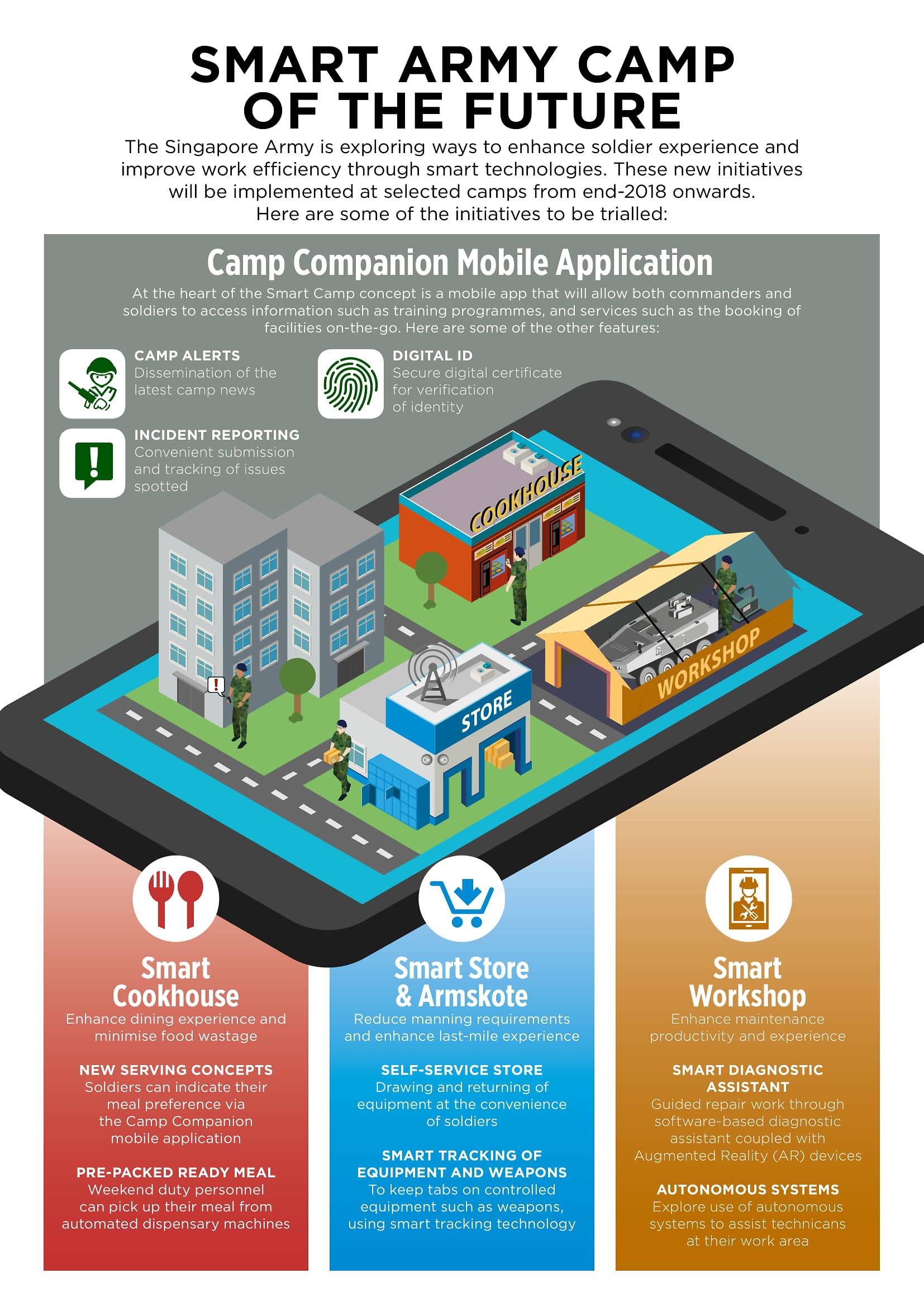
Another app that will make things more efficient is the camp companion app, which gives access to camp, unit and training information on the go. These include alerts, unit routine orders, training programmes and medical status.
The app will also come with a digital identification feature that allows servicemen to indent meals, reserve camp facilities and report incidents.
The camp companion is just one of several initiatives that make up a smart camp concept. These initiatives, which cover cookhouses, stores and armskotes, will be trialled at selected camps from the end of this year.
Features of a smart Army camp. (Graphic: MINDEF)
At smart cookhouses, servicemen can indicate their meal preference via the camp companion, while weekend duty personnel can pick up their food from automated dispensers.
Smart stores and armskotes will reduce manpower requirements. At self-service stores, servicemen can draw and return equipment at their convenience, while tracking technology keeps tabs on controlled equipment like weapons.
“I should be able to know who returned arms or whether the arms are clean or not by electronic means,” Dr Ng said, highlighting other examples like facial recognition technology that screens people for malicious intent as they walk through a camp.
Dr Ng said the possibilities are endless.
“The idea is that you really can cut down a lot of daily rituals and waiting time if you use smart technology,” he added. “We are currently working on it, and the next-generation SAF must keep pace with the expectations of the next generation of Singaporeans.”
SINGAPORE: The Singapore Armed Forces (SAF) is overhauling its arsenal, adding new warplanes, submarines and warships as it gears up for a future with fewer soldiers.
High on the agenda is the replacement for the ageing F-16 fighter jets, with Defence Minister Ng Eng Hen saying on Friday (Jun 29) that a decision will be made in the coming months.
“F-16s would face obsolescence beyond 2030,” Dr Ng said of the 30-year-old jets. “To plan for a replacement is not as if you are going to buy a new car, you actually need a lead time of eight to 10 years.”
For the past few years, speculation has swirled around potential replacements, with Lockheed Martin’s fifth-generation F-35 fighter emerging as top contender. As early as 2013, Dr Ng had told Parliament that the F-35 was one option.
But Singapore has consistently maintained that it would not be rushed into a decision.
“You need to know first of all what platform, what your needs are, how you are going to maintain. You also need to know how you are going to train your pilots, where you are going to train pilots, especially on such a small island,” Dr Ng said.
“We thought long and hard about it, taken our time to choose a replacement, and we would be making a definitive decision likely in the next few months.”
The F-35 made an appearance at the 2018 Singapore Airshow. (Photo: Aqil Haziq Mahmud)
However, Dr Ng would not be drawn into details, saying only that the new jet should be cost-effective, easy to maintain and capable of working with other platforms across the SAF.
“In the market you can only choose what is out there,” he added. “When air forces are choosing replacements, the usual suspects come up: Whether it’s the (European) Typhoons, F-35s, (Russian) Sukhois or Chinese-made stealth fighters.”
In addition to the fighter jets, Dr Ng announced various hardware replacements across the services, as the SAF prepares for a one-third manpower reduction by 2030. “For the SAF to be able to protect another generation, you have to do more with less,” he said, calling the manpower challenges a “significant disruptor”.
AIR FORCE
The Republic of Singapore Air Force (RSAF) will replace its heavy and medium lift helicopters with similar models that can carry more, fly farther and require less manpower. Starting 2020, the Chinook and Super Puma helicopters will be replaced by the CH-47F heavy lift and H225M medium lift helicopters, respectively.
The Airbus H225M helicopter. (Photo: Airbus)
The RSAF has also started replacing its KC-135R tanker aircraft with the A330 multi-role tanker transport, which carries 20 per cent more refuelling capacity. “It’s a petrol kiosk in the sky,” Dr Ng said of the plane, which will make its first public appearance at the RSAF50 parade on Sep 1.
On the ground, the RSAF has begun switching out its I-HAWK surface-to-air missile system with the ASTER-30, which has both anti-aircraft and anti-missile capabilities. (The I-HAWK could only deal with aircraft.) The ASTER-30 also has a longer range of up to 70km.
“The fact that you have bigger planes, planes with longer endurance and ground defence systems with longer range also means that when you exercise, you actually need a bigger training area,” Dr Ng said. “That’s not possible for Singapore.”
To that end, Dr Ng revealed that the RSAF will launch next month a new facility to experiment, test, validate and operationalise new warfare concepts in a single set-up. The Air Warfare Centre will allow the RSAF to do all these “without the physical need for that space”, Dr Ng said. “That is a more important addition.”
ARMY
Moving on to the Army, Dr Ng said the proportion of manoeuvre units operating on track and on wheels will double by 2030. “The next-generation Army would be faster, heavier, more deadly,” he added.
The next-gen armoured fighting vehicle, to replace the ageing M113 vehicles starting next year, will certainly be deadlier. It requires 20 per cent less manpower and can fire on the move. “I think this would be the centrepiece of the next-generation Army,” Dr Ng said.
The next-generation armoured fighting vehicle. (Photo: MINDEF)
The next-gen Howitzer 155mm gun, to replace the current FH-2000 variant beyond 2020, will also cut manpower requirements by a third. The gun is fully automated, mounted on a vehicle and has a higher rate of fire. “Shoot and scoot, so you don’t face counter battery fire,” Dr Ng mused.
And then comes the soldiers themselves. While Dr Ng said he was not quite ready to announce how a next-gen infantry battalion would be like, he offered a description that would not look out of place in a science-fiction movie.
Beyond 2020, troops will fight in tandem with robots, using weaponised unmanned ground vehicles and palm-sized unmanned aerial vehicles that detect threats, clear rooms and follow like slaves.
“You can give voice activations: Move right, move left, tell me my danger; being able to communicate and see what other soldiers see,” Dr Ng said. “I think this is the next germination of the SAF. I don’t want to spell out programmes that are too experimental, but I would tell you that they are going on.”
NAVY
At sea, the SAF is ringing the changes too. From 2021, the Republic of Singapore Navy (RSN) will get four German-made Type 218SG submarines to replace its Archer-class and Challenger-class submarines, which have been in operation for two decades.
It is the first time the RSN is acquiring new-build submarines, which means they would not have entered the water prior to launch. “Our new submarines would represent a quantum jump in subsurface capabilities,” Dr Ng said, pointing out that they have an increased endurance of 50 per cent.
Besides that, the submarines come with improved capabilities like modern combat systems and air independent propulsion systems. They can also carry a wider range of mission-specific equipment.
Type 218SG submarines. (Photo: MINDEF/Facebook)
In addition to crew training in Germany, the RSN will develop a submarine trainer suite to train and qualify submariners in realistic and simulated operations at sea.
Beyond 2030, the RSN is also replacing its Victory-class missile corvettes and Endurance-class tank landing ships with multi-role combat vessels and joint multi mission ships, respectively.
The multi-role combat vessel will act as a mothership for smaller, unmanned ships that can be equipped with weapons or modular payloads for different missions. “You can send out unmanned slaves on air, on surface or even sub-surface, to deal with mines for instance,” Dr Ng said. “It’s not a theoretical concept. We tested various modules.”
The joint multi mission ship will be even bigger than the current Landing Ship Tank, which is already the RSN’s largest ship. It also has two times more lift capacity and better command platform capabilities.
In addition, the joint multi mission ship will allow the RSN to conduct more types of operations, including humanitarian assistance and disaster relief efforts and counter-piracy operations.
PLANNING, SPENDING AND MAKING FRIENDS
Before deciding on these purchases, Dr Ng reiterated that the SAF had considered whether they would contribute to a leaner fighting force post-2030. “Because we are able to plan long term, we start with the planning perimeter that you have to either maintain the same capability or do more but with less,” he said.
As for the costs, Dr Ng said even with these new acquisitions, defence spending will be kept steady for the next decade, in line with the budget assessment he made earlier this year. “If we have to provide security coverage – as we did for the Trump-Kim meeting – every week, all bets are off,” he joked.
SAF troops training in Queensland, Australia. (Photo: Aqil Haziq Mahmud)
And Dr Ng was asked if these new platforms would require the SAF to look for more overseas training opportunities given the constraints of space in Singapore.
“We have good friends who allow us to train in their countries,” Dr Ng said, pointing out that the expansion of training areas in Queensland, Australia, where Singapore troops frequently train in a space at least four times the size of Singapore, is “progressing well”.
Even then, Dr Ng added that Singapore is always on the lookout for more partnerships and training opportunities. “We are very thankful because we keep receiving offers. That spells a lot for the friendships we cultivated.”
SINGAPORE: The recent Trump-Kim summit was a real test that validated Singapore Armed Forces (SAF) capabilities, Defence Minister Ng Eng Hen said, as he praised the military for passing with flying colours.
“Short of a real war or terror attack, this is a real threat that the SAF can respond to,” Dr Ng told reporters on Friday (Jun 29) ahead of SAF Day. “I guess in exam terms, this is the prelim test which I think we scored an ‘A’.”
About 2,000 personnel and a wide array of assets, including fighter jets, surface-to-air missiles and a landing ship tank, were deployed for the Jun 12 summit.
Dr Ng said the mission was clear: Provide “absolute security” for the two high-profile leaders. “Pictures showed manicured gardens but around them there was a hive of activity,” he added. “There was no margin for error, the consequences are unthinkable.”
With only two weeks to prepare, the SAF spared no detail.
Even before US President Donald Trump landed at Paya Lebar on Jun 10, it deployed hundreds of soldiers around the air base, ensuring no-one could target Air Force One. North Korean leader Kim Jong Un’s arrival before him was no different.
And throughout the summit period, security operations continued.
In the air, fighter jets carrying live missiles – rare for local operations – were scrambled. At sea, security teams checking for malicious intent boarded every ship passing through the Singapore Strait. On land, special forces took up discreet positions on Sentosa.
Sentosa’s proximity to busy shipping links proved challenging, Dr Ng said, as vessels passing by its exposed shorefront could make a sudden turn and break land in a matter of minutes.
Singapore also coordinated maritime security with Indonesia, which only last year jailed militants who planned to fire a rocket at Marina Bay from nearby Batam.
The ever-present terrorist threat in the region meant intelligence agencies were on high alert, Dr Ng said, as they screened chatter to sniff out potential plots.
“You’re publicising to the world where you’re going to be and what time,” he added. “The situation lends itself to mischief makers who want to draw world attention.”
The assets deployed for the Trump-Kim summit. (Source: MINDEF)
While Dr Ng said there eventually was no direct proof of malicious intent, it did not mean there was no danger.
“Let me just say that sophisticated networks or terror elements can hide threats quite well,” he said. “We had to deal with scenarios like 9/11 where some determined terrorist cell would want to attack by air, or munitions from offshore islands south of Sentosa.”
The SAF only stood down after Mr Trump left Singapore on the evening of Jun 12. It was a “sigh of relief”, then mission accomplished.
“It was a very clear sign that the SAF means business,” Dr Ng said, calling it a strong show of deterrence. “It’s a reassurance that all these years of stable investments into defence, building up unit by unit, tells us that when the test comes we can perform.”
Chief of Defence Force Major General Melvyn Ong thanking servicemen deployed during the Trump-Kim summit. (Photo: Gaya Chandramohan)
In addition, Dr Ng said it was a “measure of strength” that authorities managed to keep Singapore running throughout the summit.
“The more you secure your systems, and yes there were inconveniences, but by no means that Singapore has to shut down airports or highways for the whole duration of the summit,” he added. “All that we have invested, these are our payoffs, that we can function even if there is no margin for error.”
But the minister was not entirely pleased with the performance.
“I will give it an ‘A’ grade, not ‘A+’, because we identified some gaps which we are closing,” he said. “Sometimes an even greater success is learning gaps in your system, and that’s very valuable.
“Obviously, I’m not going to share with you because I’m going to plug those gaps.”
Nevertheless, Dr Ng said SAF’s showing was a “very strong confidence booster”. “Singaporeans can take heart that when we need to defend Singapore, the SAF can do it.”
SINGAPORE: There’s a new attraction at the Singapore Botanic Gardens, with the opening of Singapore’s first ethnobotany garden on Saturday (Jun 30).
Ethnobotany is the study of the relationship between plants and people.
The new garden, featuring about 300 plant species, showcases how early settlers and the indigenous people of Southeast Asia made use of plants in their culture and daily life.
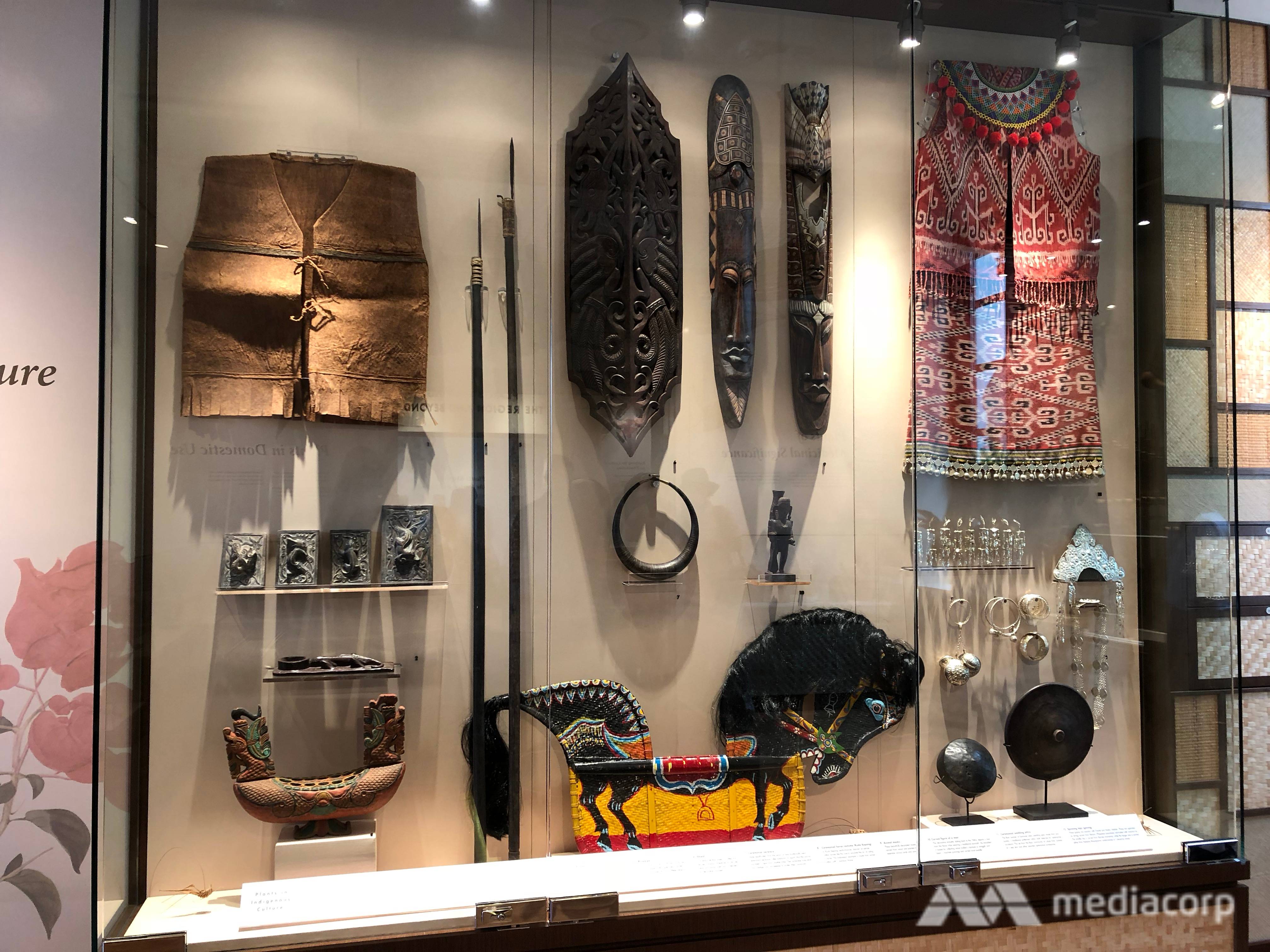
The garden includes a new Centre for Ethnobotany, housing an exhibition of more than 100 artefacts.
Located within the Bukit Timah Core of the Singapore Botanic Gardens, the new garden was built in an area historically known as the “Economic Garden”.
In the late 19th century, the area was used for experimental crops after the British recognised Singapore’s potential to trade plant commodities.
Foreign crops such as coffee, sugarcane and cacao were brought into the gardens for testing and trialling in the local climate, before being distributed to the local population.
The Centre for Ethnobotany. (Photo: Tan Si Hui)
FOUR THEMES: LIVING, SYMBOLISM, MEDICINAL AND CRAFT
The Ethnobotany Garden features plants that are native to Southeast Asia used in four areas – for living, symbolism, medicinal and craft purposes. It is the largest such collection in the region.
In the craft zone, visitors can see how plants have been used for creative and artistic expression by indigenous tribes in the region.
A craft zone mural depicting how plants were used for building houses and weaving baskets. (Photo: Tan Si Hui)
Fibres of plants in this zone are used as building materials for housing structures and weaving baskets.
Plants used in everyday life are showcased in the living zone, including those such as the Ipoh Tree and sweet potatoes.
Constructing the garden took one-and-a-half years to complete, according to Director (Development) of the Singapore Botanic Gardens Ng Yuin-Mae.
“In today’s context, when we walk into a forest, we see the plants and trees, but we don’t have any relationship with them,” said Ms Ng. “A hundred or more years ago when people walked into a forest, it’s like a supermarket, they get their everyday needs inside the forest.”
“That’s something we want to bring back – the knowledge, educational and practical value of plants.”
CENTRE FOR ETHNOBOTANY
At the Centre for Ethnobotany, three themes are in focue: How plants have economic significance, how plant materials have been used and the preservation of plants and indigenous knowledge.
Some of the artefacts on display at the Centre for Ethnobotany. (Photo: Tan Si Hui)
In collaboration with Nanyang Technological University’s Asian School of the Environment, the centre will also manage a research programme for ethnobotany.
The opening of the Ethnobotany Garden is in conjunction with the annual Singapore Botanic Gardens Heritage Festival.
Activities and programmes will be spread across the gardens and run from Jun 30 to Jul 8, 2018.
SINGAPORE: Recent discussions about helping low-income families have placed the focus on how to encourage changes in individual habits, so as to build self-reliance.
It is said that social workers play an important role in this process. However, tackling poverty requires that we go further than that.
As a social worker, I lead a team of 20 who work with around 350 families at any one time. The low-income families we work with face many difficult choices.
LIVING WITH SOMEONE YOU DON’T KNOW
Some time ago, a young colleague came into my office one morning. He wanted to discuss the situation of Mr Tan*, a man in his sixties who was going to be evicted from his current place of stay. He was unable to get along with his sister, who co-owns the flat with her husband.
Mr Tan had strained relationships with his other siblings and no means of income. He was eligible for HDB public rental housing. But as he could not list a family member as co-occupier, he had to find another single person to be co-tenant in a one-room flat under the Joint Singles Scheme. HDB provided a list of names. However Mr Tan declined and so was referred to our team to discuss other options.
When my colleague asked what advice he should give Mr Tan, he said this:
You know, I wouldn’t want to live with someone I don’t know either.
We would normally persuade clients like Mr Tan* to accept rental housing. We will also refer them to employment agencies such as the Employment and Employability Institute (known as e2i) for career guidance and job-matching.
In the interim, they will apply for short-term financial from the Social Service Office (SSO). They do not qualify for long-term assistance as they are able-bodied.
The social worker will also coach them to use the financial aid wisely: Cut down on cigarettes, prepare meals at home more often instead of eating out, walk instead of taking a bus or a taxi. The financial aid will stretch further that way.
SOCIAL PARTICIPATION
In another case, we are working with Madam Rani*, a single mother. Her youngest child, aged 6, has special needs and requires full-time care.
Her older children who are still in school, aged 15 to 18, recently found regular weekend jobs to provide for their own out-of-school expenses. They work so the additional income can allow them to participate in activities with their friends and afford the things their friends have. All these because these friendships are very important to them.
But when her children’s earnings were discovered during an income assessment, she was accused of misreporting her family income and her assistance was reduced.
When we heard, we advised Madam Rani’s children to contribute towards their family’s expenses, knowing this would be at the expense of those social opportunities which mean so much to them.
The problem is, social participation is not considered a basic need and its value is invisible to the accounting of financial assistance.
File photo of a youth in Singapore using a mobile phone. (Photo: Francine Lim)
WHEN SALARIES RISE
In a third case, Mr Ali* finds himself in a dilemma. He had done well at work and was offered a promotion. Should he accept the promotion, his salary would increase by approximately S$80.
However, the salary increase means that the rental for his HDB flat may be raised under the rules of the public rental scheme. He is unsure if the raise in rental will be greater than his salary increase. This causes much anxiety in Mr Ali.
When we heard that Mr Ali was planning to turn down his promotion, the social worker stepped in and persuaded him to change his mind. The social worker suggested that paying higher rent is fair since he is earning more. The subsidies are, after all, taxpayers’ money.
LISTENING TO CLIENTS
In my 15 years of work with low-income families, having worked with hundreds of cases each year, I wish these three were isolated examples but they are not. Their struggles with poverty, with the formal systems are common. The fact that it is so widespread should raise discomfort in all of us, whether we are social service practitioners or not.
Giving clients practical advice is part of social work practice. But it is incomplete. It also comes at a cost.
Mr Tan’s homelessness would be resolved when he conforms to the expectations of the Joint Single Rental Scheme. However, housing is not just about shelter and physical safety. It is also about privacy and a sense of security.
It is a place where we feel most at ease and we rest from the day. For many of us, it is a place for leisure and social participation, for pursuing our interests and spending time with friends and family. All of these are important.
A public rental flat provides a basic standard of physical shelter. But living with a stranger in 30 sq m of space without partitions – about one third the size of a typical four-room flat – offers little privacy, security, or opportunities for meaningful social interactions and emotional connections.
File photo of HDB flats. (Photo: Hester Tan)
When we listen to Mr Tan’s concerns, we begin to understand that conforming to what is available in order to meet immediate physical needs may require him to trade off long-term social and emotional needs.
When Madam Rani’s children cut back on social activities, the sort of activities they see their peers get involved in, it is not only frustrating for the children. It also limits their access to the social experiences and relationships that are important at their age. It affects their chances and ability to fit into their peer groups.
While Mr Ali’s colleagues celebrate when they are promoted, he may have to decide between a raise and keeping rent affordable.
We can only appreciate the dilemmas and struggles of the poor when we lean in to understand. Their experiences help us to reflect critically on our policies, identify gaps, and propose changes.
In the long run, this can help policies to be fairer and take into account social and emotional needs.
LISTENING TO SOCIETY
Recent commentaries have highlighted the importance of setting minimum standards of living so that people’s needs can be better met. Such standards go beyond food, shelter, and clothing. We must also take into account things like access to the internet, socialising and recreation, which allow people to participate in society.
Minimum standards are produced by inviting views from members of the public and different segments of society. These participants come together in focus groups to discuss and decide on what constitutes a basic living standard.
A family taking a rest in Singapore. (Photo: Ruyi Wong)
The outcome is based on consensus, rather than the opinions of helping professionals or policymakers. These standards are about listening to what society thinks about the things required for individuals to reach their full potential.
In the United Kingdom, this process also provides a reference for policymaking. We can learn from this example.
Such intentional engagement of the public not only provides an opportunity for robust discussion about basic needs, it also encourages civic participation and fosters trust.
LISTEN, UNDERSTAND, CO-CREATE
It is important to give practical advice to low-income families, and help them to understand the motivations and rationale behind the policies.
Beyond this, we need to listen to their experiences, try to understand the effects of policies, and deliberate as a society about the minimum standards of living that we find acceptable.
It is not a binary process, where we pitch what policymakers and professionals think versus what society desires. It takes all parties to listen in, understand and co-create solutions to tackle poverty.
This will be a difficult process, but is one we must not shy away from.
*The names used in this commentary are pseudonyms.
Cindy Ng is a social worker with extensive experience working with low-income families and persons experiencing violence and abuse.