Home Blog Page 1001

Commentary: How oBike, Grab-Uber merger were managed shows we haven’t gotten disruption right

SINGAPORE: The handling of the bike-sharing scheme in Singapore is a case study on the potential pitfalls of embracing disruption as a merit good.

For the Land Transport Authority (LTA) to respond to the abrupt cessation of business of one of the biggest bike-sharing companies oBike and its unwillingness to refund deposits of its customers as being “deeply disappointed” is a stance suggestive of that of a spurned suitor’s than a firm regulator’s.

Government authorities, while rightly pursuing innovation, should not do so at all costs and in all instances. Such an unchecked embrace of change can be easily manipulated by industry players eager to be first movers, and not all have the best intentions.

The LTA could have referenced the example of bike-sharing markets in China, taken a sceptical view and carried out better due diligence of industry players.

FASTER, ACCELERATING DISRUPTION

Disruption is not new. The story of economic action has been one of disruptions, small and large, from technological, organisational and product innovation.

What is novel is the frequency and speed of the disruptions the global economy is experiencing. Frequency refers to the rate of disruption, while speed refers to the rate of distribution of the disruption.

The Internet-connected global economy allows for relatively capital light innovations to muster major impact – think apps – thus lowering entry barriers which leads to the crowding in of technoprenuers.

The same Internet makes the distribution and adoption of innovations convenient, rapid and infinitely scalable.

oBike office summons notices

The 172 notice of offences issued by Bishan-Toa Payoh Town Council at oBike’s vacant office. (Photo: Amir Yusof) 

TECHNOLOGY IS AMORAL

Techno-evangelists have a tendency to treat technology as a merit good – in other words an unmitigated blessing on economy and society. Techno-sceptics on the other hand see doom and malice in technological change.

In fact, technology is amoral. Governments have a responsibility to be proactive in exercising governance to manage the impact of disruptions.

Governments have the difficult challenge of balancing the need to promote and have their economies adopt innovation on the one hand, and paying due attention to public interests and unpalatable, even if unavoidable, side impacts from disruption such as unemployment on the other.

WISHFUL THINKING, MANAGING RISKS

There are several lessons to be gleaned from recent and ongoing episodes of managing disruption.

First, the handling of the bike-sharing market in Singapore shows we should not indulge in wishful thinking about the good conduct of innovators. Governments need to anticipate the behaviour of new entrants and put in place regulatory frameworks, even if broad and preliminary, to safeguard public interest against potentially bad actors.

Second, governments must adopt a risk-management philosophy which incorporates a willingness to learn and apply new knowledge. Such an approach can be described as “forward learning”.

A good case study of forward learning is the sandbox regulatory approach adopted by the Monetary Authority of Singapore (MAS). The MAS’s approach has led to a dramatic increase in concentration of FinTech players and growth in their market size and sophistication.

READ: FinTech, banking’s great disruption. Or is it? A commentary

Ravi Menon, managing director of the Monetary Authority of Singapore (MAS), speaks at the Singapore

Ravi Menon, managing director of the Monetary Authority of Singapore (MAS), speaks at the Singapore Fintech Festival in Singapore on Nov 16, 2016. (Photo: REUTERS/Edgar Su)

However, the expansion has been contained within clear parameters which limit risks to the wider financial markets and retail consumers. The sandbox approach has also ensured that lessons are learned quickly and seeded into regulatory consciousness and ultimately formal rules. The MAS’s model has rightly gained notice as a positive case study in smart regulation.

CLEAR RULES

Third, when regulatory safeguards are present, it is important to let market forces prevail. The management of the introduction of ride-hailing services such as Uber and Grab is a case study in mixed messages.

LTA applied regulatory safeguards and clear rules. This ensured public trust in the use of the new services.

The new services and ensuring competition brought benefits to consumers who enjoyed a wider choice, better prices and greater and more dependable supply.

However, when it emerged that the two most notable players Uber and Grab had decided to merge, the matter was referred to the Competition and Consumer Commission of Singapore (CCCS). 

But with regulatory safeguards in place, market forces should have been allowed to prevail.

Excessive intervention in the market, however well-meaning can have unintended consequences including deterring future entrants. And there are future new entrants, such as Indonesia’s Go-Jek, who can be counted on to enter and inject the necessary competition to avert a monopolistic market structure.

READ: When Go-Jek enters Singapore, what consumers, drivers and delivery services can expect, a commentary.

READ: Ride-sharing operators can be profitable – if they cooperate with governments, a commentary.

FILE PHOTO: A view of Uber and Grab offices in Singapore

A view of Uber and Grab offices in Singapore on Mar 26, 2018. (File photo: REUTERS/Edgar Su)

LIFELONG LEARNING

Fourth, governments must be prepared to make structural and long-term investments to help workers adapt to and because of disruptions.

Artificial intelligence is rapidly making in-roads to a wide swathe of occupations. Disruptions has resulted in job displacement many times historically. What is a further novelty to present day disruption is that the job displacement is largely impacting white- collar occupations.

The Singapore Government’s overarching emphasis on lifelong learning, skills-based upgrading and continuing professional education requirements that have been adopted by professions such as Medicine and Law to maintain practicing licenses, collectively exemplify a proactive and well-resourced strategy to put in place the infrastructure and capacity for accessible and relevant re-training for workers impacted by disruption.

CONFLICT, CONFUSION, CHAOS

These four principles – avoiding wishful thinking, adopting a forward learning approach, letting market forces prevail if safeguards are in place and investing in helping the workforce adapt – are crucial to economies coping constructively and positively with disruptions. They are also responsibilities which governments are best placed to adopt and apply.

However, this does not mean that only governments are responsible for managing the impact of disruption.

Businesses have a corporate responsibility as employers to prepare their workforces and to invest and change to stay competitive. And workers have to take the initiative to help themselves to the opportunities for up- and re-skilling to stay relevant.

High frequency and high-speed disruption will be an enduring phenomenon of the foreseeable future.

Getting governance right will be critical in determining whether disruptions lead to superior aggregate outcomes for economies and societies or if these lead to conflict, confusion and chaos.

Devadas Krishnadas is CEO of Future-Moves Group.

Source link

These are the best airlines in the Asia Pacific


AIR travel is now undoubtedly the most popular form of long-distance travel.

Disrupted flights and bad customer service can put a passenger off an airline, resulting in the loss of loyalty. Not many people like taking those risks, so one passenger compensation service has taken the liberty to help you differentiate the good from the not-so-great.

In this year’s AirHelp Score report, the company ranked 72 international airlines for which the company had statistically significant data.

SEE ALSO: Jakarta airport is among the least punctual in the world

“At AirHelp, we want to ensure that airline carriers and airports take responsibility and join the journey toward improved customer experience. Together, we can focus on better passenger experiences and more seamless travel,” the company wrote. “This is precisely why we instituted our annual AirHelp Score.”

The overall rankings are based on three factors: quality of service (gleaned from public reviews on an array of reliable websites), claims processing (which reflects how a company handles customer complaints), on-time performance (departs or arrives no later than 15 minutes from its scheduled time), and overall social media sentiment.

This year, Qatar Airways claimed the number one spot. Unsurprisingly.

It was named 2017’s best airline by consumer aviation website Skytrax. Additionally, Qatar also took home the award for Best Business Class in the World and Best Airline in the Middle East.

2018-06-06T113135Z_1853755931_RC1E2EA95D80_RTRMADP_3_AIRLINES-IATA-CAPA-QATAR

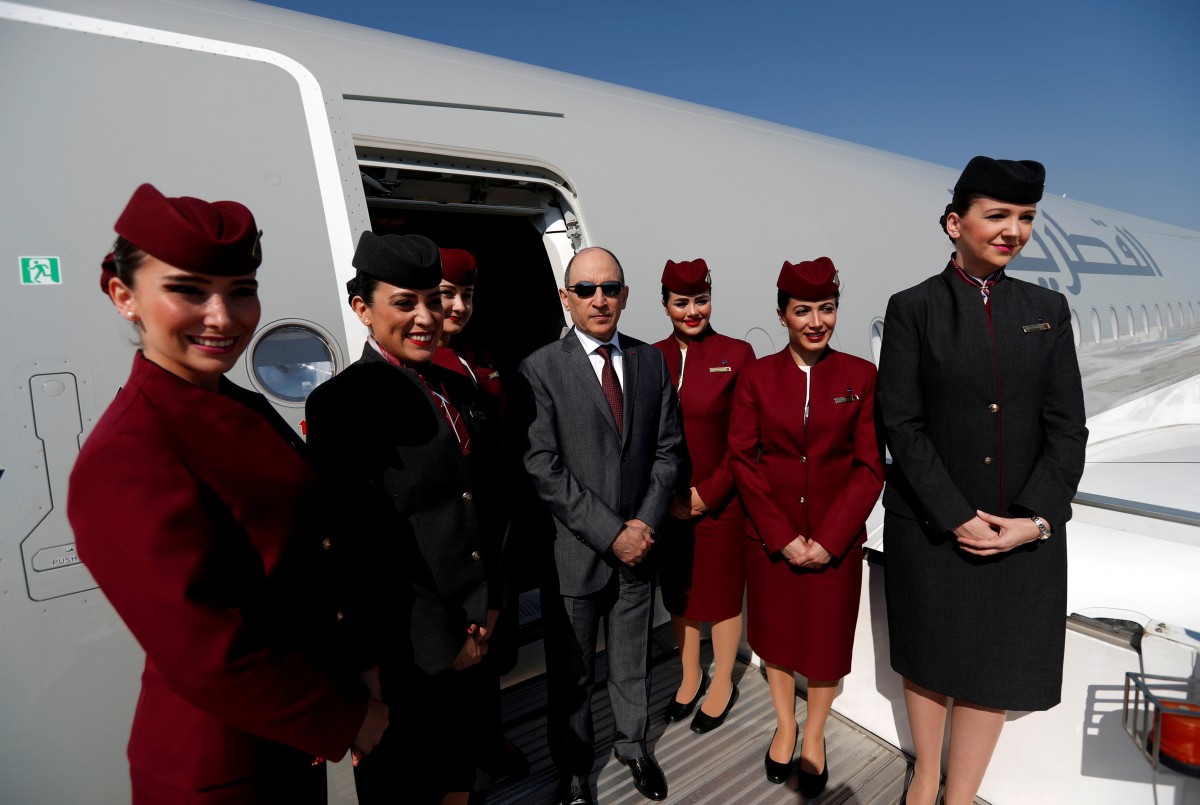
Qatar Airways Chief Executive Officer Akbar al-Baker poses with cabin crew in an Airbus A350-1000 at the Eurasia Airshow in the Mediterranean resort city of Antalya, Turkey April 25, 2018. Source: Reuters/Murad Sezer

In fact, the airline has won the top Skytrax honor four times since 2010. Last year, Qatar Airways unveiled its QSuite, a revolutionary take on its business class that allows the passenger to lower a partition to create a double bed.

Passengers can also configure the seats to create a larger private space to eat, to work, or to socialise – perfect for groups of friends or colleagues, or families.

The only other Asia Pacific airlines to make the AirHelp list is the UAE’s Etihad Airways at number three, Singapore Airlines at number four, and Australia’s Qantas Airways at number eight.

SEE ALSO: Business travel ‘not worth it’ due to toll on health, says study

Check out the best airlines of the year along with their on-time performance records:

  1. Qatar Airways (89 percent on-time performance)
  2. Lufthansa (76 percent)
  3. Etihad Airways (86 percent)
  4. Singapore Airlines (85 percent)
  5. South African Airways (85 percent)
  6. Austrian Airlines (80 percent)
  7. Aegean Airlines (90 percent)
  8. Qantas (89 percent)
  9. Air Malta (86 percent)
  10. Virgin Atlantic (82 percent )

“Irregularities in flights are going to happen,” AirHelp industry adviser Ashley Raiteri said. “What’s important is whether the airline has planned for that so they can make the experience less hellish for the consumer.”

A version of this article originally appeared on our sister site Travel Wire Asia.

Source link

Panic buying at showflats after new cooling measures

SINGAPORE: Crowds of potential buyers flooded showflats across Singapore shortly after new cooling measures were announced on Thursday (Jul 5), in the hope of avoiding bigger housing loans and a hike in stamp duty.

Several showflats extended their opening hours till 11.59pm, with some developers even bringing forward their launches by a couple of weeks.

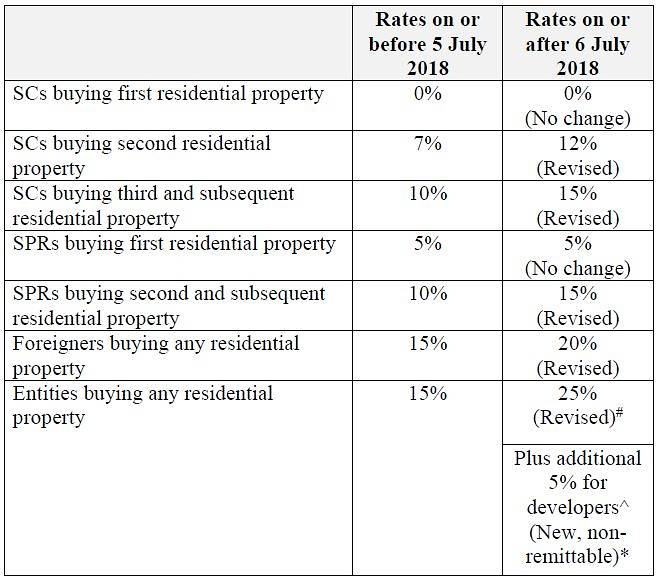
The Additional Buyer Stamp Duty (ABSD) rates will be raised by 5 percentage points for citizens and permanent residents (PRs) buying second and subsequent homes as well as foreigners buying any residential property, the government announced on Thursday.

The new rates are effective Jul 6, but there will be a transitional provision for cases where the Option to Purchase (OTP) is granted by sellers to potential buyers on or before Jul 5.

Meanwhile, LTV limits will be tightened by 5 percentage points for all housing loans granted by financial institutions.

Among the showflats that extended their opening hours are Park Colonial along Upper Serangoon Road, Stirling Residences in Queenstown, The Crest at Alexandra, Seaside Residences in Siglap and Riverfront Residences in Hougang.

“All of them (agents) have been activated to sell tonight and issue OTP by midnight,” said an ERA agent who only wanted to be identified as Ms Lee.

“It’s like panic buying. You can go to any of the new launches; they are all full,” she added.

Ms Ng, an ERA agent who was at Park Colonial, said that the situation was “extremely chaotic”, with long queues and lots of shouting.

“All buyers desperately want to buy,” she said.

Park colonial showroom

The scene at Park Colonial showroom on Thursday night (Jul 5). (Photo: Serene Ng) 

Property agent Mr Eric, who was in the queue to enter the Riverfront Residences showflat, had been in line since 6.30pm. He was there on behalf of his clients who wanted to buy a second residential property when Channel NewsAsia spoke to him at 10.30pm.

“Why do we have to pay an additional 5 per cent to the government? Fifty grand could be the one year’s salary for some people, so what is four to five hours in the queue?”

riverfront residences show flat

Staff hand out bottles of water to potential buyers at Riverfront Residences. (Photo: Matthew Mohan)

Mr Henry Koh, who was also in the queue to enter the Riverfront Residences showflat, was looking to purchase his first property.

“When I first read the news on Facebook this evening and got the call from my agent, anxiety kicked in … I think our chances are now probably slim.”

Ms Sandra Lim and her husband, who managed to snag a unit, said they felt “quite lucky”.

“We are happy with our purchase. We live around here so we came down straight away. We actually did recce the area before, we were keen and got a ballot number but decided to come down (because of the news),” Ms Lim said.

Source link

3 arrested after attempt to import airsoft guns through Woodlands Checkpoint foiled

SINGAPORE: A 29-year-old man was arrested earlier this week after he tried to import two sets of airsoft guns, a flick knife and a baton through Woodlands Checkpoint, according to a joint news release by police and the Immigration and Checkpoints Authority (ICA) on Thursday (Jul 5). 

Follow-up investigations revealed two other men were also in possession of airsoft guns, which led to their arrest a day later. 

Authorities said that the first arrest was made on Jul 2. The man’s car had been directed for checks at about 4.30pm, during which officers found the dismantled guns concealed under the driver’s and front passenger’s seats, as well as in a bag placed at the rear passenger seat. 

Baton flick knife

The 29-year-old man was also found to be in possession of a baton (left) and a flick knife. (Photos: Singapore Police Force)

The flick knife and baton were found in the man’s pocket and in the glove compartment respectively.

The man was arrested for importation of guns without a licence, carrying a truncheon in a public place and possession of a scheduled weapon. 

The case was then handed to the police, who found out that two other men, aged 27 and 45, were also believed to possess airsoft guns. 

Officers from the Jurong Police Division conducted an operation the day after and arrested the duo for gun possession, seizing several airsoft pistols, revolvers, projectiles, tactical knives and a pair of handcuffs. 

Investigations against the men are ongoing, the release stated. 

Source link

New property cooling measures announced: Higher ABSD rates, tighter loan limits

SINGAPORE: The Government announced on Thursday (Jul 5) that it is raising Additional Buyer Stamp Duty (ABSD) rates and tightening loan-to-value (LTV) limits on residential property purchases, in an effort to “cool the property market and keep price increases in line with economic fundamentals”.

The move comes several days after official data showed that private home prices had risen to its highest point in four years in the April to June quarter, with analysts predicting that prices could soon recover to 2013 peak levels.

​“The government has been monitoring the property market closely. We are very concerned that prices are running ahead of economic fundamentals,” said Mr Lawrence Wong, Minister for National Development on Thursday.

“There is a large supply of units coming on stream and interest rates are going up. We want to avoid a severe correction later, which can have more destabilising consequences.  Hence we are acting now to maintain a stable and sustainable property market,” he added.

The ABSD will be raised by 5 percentage points for citizens and permanent residents (PRs) buying second and subsequent homes, and by 10 percentage points for entities, said the the finance and national development ministries, as well as the Monetary Authority of Singapore (MAS) in a joint release.

There will be no change in the rates for citizens and PRs purchasing their first residential property.

ABSD rates

An additional ABSD of 5 per cent, which is non-remittable under the Remission Rules, will also be introduced for developers purchasing residential properties for housing development. 

Authorities said that for purchases jointly made by two or more parties of different profiles, the highest applicable ABSD rate will apply. 

However, full ABSD remission will continue to be provided for joint purchases of the first residential property by married couples with at least one spouse who is a Singapore citizen, they added.

Married couples with at least one Singapore citizen spouse who jointly purchase a second home together can continue to apply for an ABSD refund, as long as they sell their first home within six months after the date of purchase of the second property, or by the issue date of the Temporary Occupation Permit or Certificate of Statutory Completion of the second property – whichever is earlier.

The new rates are effective Jul 6, but there will be a transitional provision for cases where an Option to Purchase (OTP) has been granted by sellers to potential buyers on or before Jul 5.

LOAN LIMITS

Meanwhile, LTV limits will be tightened by 5 percentage points for all housing loans granted by financial institutions, the release stated. The revised limits will not apply to loans granted by the Housing & Development Board.

Before the change, individual borrowers were able to borrow up to 80 per cent, or 60 per cent if the loan tenure is more than 30 years or extends past age 65. With the adjustment, borrowers will now only be able to borrow 75 per cent, or 55 per cent if the loan tenure is more than 30 years or extends past age 65.

The new limits will apply to loans for properties where the Option to Purchase is granted on or after Jul 6. 

Authorities said that in line with this, LTV limits for mortgage equity withdrawal loans will also be tightened – 75 per cent for a borrower with no outstanding housing loan for the purchase of another residential property and 45 per cent for a borrower with an outstanding housing loan for the purchase of another residential property.

STICKING TO ECONOMIC FUNDAMENTALS

Authorities cited the recent sharp rise in private residential prices as the reason behind these moves. 

“After declining gradually for close to four years, private residential prices began rising in the third quarter of 2017. Prices have increased sharply by 9.1 per cent over the past year. Demand for private residential property has also seen a strong recovery, as transaction volumes continue to rise,” the release stated. 

Earlier this month, analysts observed that the market was on an “upswing trend”. One cited the large number of en bloc sales as a factor, while another expected many upcoming projects to launch at “new benchmark prices owing to the higher land costs”. 

The “euphoria” in the market calls for caution, MAS managing director Ravi Menon said on Wednesday, after the release of the central bank’s annual report. 

While the resurgence in property prices and rise in the number of transactions over the past year is welcome, it should not decouple from economic fundamentals, he also said. 

“The sharp increase in prices, if left unchecked, could run ahead of economic fundamentals and raise the risk of a destabilising correction later, especially with rising interest rates and the strong pipeline of housing supply,” authorities said in the press release.  

The Government said that to maintain a stable and sustainable property market, it would continue to monitor it and adjust its policies as necessary. 

Source link

Higher ABSD rates for second homes among new cooling measures

SINGAPORE: The Government announced on Thursday (Jul 5) that it is raising Additional Buyer Stamp Duty (ABSD) rates and tightening loan-to-value (LTV) limits on residential property purchases, in an effort to “cool the property market and keep price increases in line with economic fundamentals”.

The move comes several days after official data showed that private home prices had risen to its highest point in four years in the April to June quarter, with analysts predicting that prices could soon recover to 2013 peak levels.

​“The government has been monitoring the property market closely. We are very concerned that prices are running ahead of economic fundamentals,” said Mr Lawrence Wong, Minister for National Development on Thursday.

“There is a large supply of units coming on stream and interest rates are going up. We want to avoid a severe correction later, which can have more destabilising consequences.  Hence we are acting now to maintain a stable and sustainable property market,” he added.

The ABSD will be raised by 5 percentage points for citizens and permanent residents (PRs) buying second and subsequent homes, and by 10 percentage points for entities, said the the finance and national development ministries, as well as the Monetary Authority of Singapore (MAS) in a joint release.

There will be no change in the rates for citizens and PRs purchasing their first residential property.

ABSD rates

An additional ABSD of 5 per cent, which is non-remittable under the Remission Rules, will also be introduced for developers purchasing residential properties for housing development. 

Authorities said that for purchases jointly made by two or more parties of different profiles, the highest applicable ABSD rate will apply. 

However, full ABSD remission will continue to be provided for joint purchases of the first residential property by married couples with at least one spouse who is a Singapore citizen, they added.

Married couples with at least one Singapore citizen spouse who jointly purchase a second home together can continue to apply for an ABSD refund, as long as they sell their first home within six months after the date of purchase of the second property, or by the issue date of the Temporary Occupation Permit or Certificate of Statutory Completion of the second property – whichever is earlier.

The new rates are effective Jul 6, but there will be a transitional provision for cases where an Option to Purchase (OTP) has been granted by sellers to potential buyers on or before Jul 5.

LOAN LIMITS

Meanwhile, LTV limits will be tightened by 5 percentage points for all housing loans granted by financial institutions, the release stated. The revised limits will not apply to loans granted by the Housing & Development Board.

Before the change, individual borrowers were able to borrow up to 80 per cent, or 60 per cent if the loan tenure is more than 30 years or extends past age 65. With the adjustment, borrowers will now only be able to borrow 75 per cent, or 55 per cent if the loan tenure is more than 30 years or extends past age 65.

The new limits will apply to loans for properties where the Option to Purchase is granted on or after Jul 6. 

Authorities said that in line with this, LTV limits for mortgage equity withdrawal loans will also be tightened – 75 per cent for a borrower with no outstanding housing loan for the purchase of another residential property and 45 per cent for a borrower with an outstanding housing loan for the purchase of another residential property.

STICKING TO ECONOMIC FUNDAMENTALS

Authorities cited the recent sharp rise in private residential prices as the reason behind these moves. 

“After declining gradually for close to four years, private residential prices began rising in the third quarter of 2017. Prices have increased sharply by 9.1 per cent over the past year. Demand for private residential property has also seen a strong recovery, as transaction volumes continue to rise,” the release stated. 

Earlier this month, analysts observed that the market was on an “upswing trend”. One cited the large number of en bloc sales as a factor, while another expected many upcoming projects to launch at “new benchmark prices owing to the higher land costs”. 

The “euphoria” in the market calls for caution, MAS managing director Ravi Menon said on Wednesday, after the release of the central bank’s annual report. 

While the resurgence in property prices and rise in the number of transactions over the past year is welcome, it should not decouple from economic fundamentals, he also said. 

“The sharp increase in prices, if left unchecked, could run ahead of economic fundamentals and raise the risk of a destabilising correction later, especially with rising interest rates and the strong pipeline of housing supply,” authorities said in the press release.  

The Government said that to maintain a stable and sustainable property market, it would continue to monitor it and adjust its policies as necessary. 

Source link

Raising ABSD for second homes among new property-cooling measures announced

SINGAPORE: The Government on Thursday (Jul 5) announced it would raise Additional Buyer Stamp Duty (ABSD) rates and tighten Loan-to-Value (LTV) limits on residential property purchases in an effort to “cool the property market and keep price increases in line with economic fundamentals”. 

In a press release jointly sent by the finance and national development ministries, as well as the Monetary Authority of Singapore, the authorities said the ABSD will be raised by 5 percentage points for citizens and permanent residents buying second and subsequent homes, and by 10 percentage points for entities.

ABSD rates

An additional ABSD of 5 per cent, which is non-remittable under the Remission Rules, will also be introduced for developers purchasing residential properties for housing development. 

LTV limits will be tightened by 5 percentage points for all housing loans granted by financial institutions, the release stated. 

The authorities noted that private residential prices increased by 9.1 per cent over the past year. 

“The sharp increase in prices, if left unchecked, could run ahead of economic fundamentals and raise the risk of a destabilising correction later, especially with rising interest rates and the strong pipeline of housing supply,” they said. 

Source link

Multiple raids: More than S$197,000 worth of drugs seized, 7 arrested

SINGAPORE: A suspected drug trafficker who used hotels to mask his activities was busted along with two others by Central Narcotics Bureau (CNB) officers on Wednesday (Jul 4).

The 24-year-old Singaporean male was believed to have booked a room at a hotel at Raffles Boulevard, according to a news release from the anti-drugs agency.

With the help of the hotel’s security team, CNB officers made forced entry into the room as it was locked from within, where they found the suspected trafficker with a 30-year-old Singaporean male and a 22-year-old female foreign national.

Both male suspects put up a violent struggle in their attempt to resist arrest, CNB said, adding that necessary force was used to restrain them.

About 1,456g of heroin, 1,000g of cannabis, 10g of Ice and cash amounting to S$6,250 were recovered from within the room.

CNB operations Jul 5 2

More than 2kg of cannabis was seized by CNB officers. (Photo: Gaya Chandramohan)

A search of the 30-year-old suspect’s car found a total of about 1,005g of cannabis, 10g of Ice, and one Ecstasy tablet

car interior with drugs

Block of cannabis, under front-left seat of car, recovered in CNB operation on Jul 4. (Photo: CNB)

ANOTHER 4 ARRESTED, MORE THAN 1KG OF HEROIN SEIZED IN SECOND RAID

In a second bust on the same day, four more suspected drug offenders were arrested.

CNB officers had been observing two suspected drug traffickers at Upper Cross Street. 

At about 8.30pm, the two suspects – a 48-year-old stateless male and a 53-year-old Singaporean male – were spotted meeting up and proceeding to the second floor of a building. After they parted ways, CNB officers carried out the arrest.

CNB operations Jul 5 4

More than 2.5kg of heroin was seized by CNB officers during operations on Wednesday (Jul 4). (Photo: Gaya Chandramohan) 

Officers recovered about 1,049g of heroin from a paper bag carried by the 48-year-old suspect.

bag with drugs

The paper bag containing the heroin recovered from a suspect by CNB officers. (Photo: CNB)

Follow-up investigations led to the arrest of two more suspects – a 41-year-old stateless male and a 62-year-old Singaporean male. Both these suspects are believed to be associated with the 48-year-old suspect.

Investigations into the drug activities of all the suspects are ongoing.

CNB added that the amount of heroin seized is enough to feed the addiction of about 1,190 abusers for a week and the amount of cannabis recovered is enough to feed the addiction of about 286 abusers for the same period.

The total value of drugs seized in the two raids totalled more than S$197,000, according to CNB.

Source link

These are the 6 richest people across Southeast Asia


Southeast Asia has one of the largest and most dynamic economies in the world. If the economies of the 10-member Association of Southeast Asian Nations (Asean) were one country, it would be the seventh largest in the world.

Asean’s GDP doubled between 2001 and 2013. This has made many people rich – some more than others.

Southeast Asian moguls feature quite prominently on Forbes World’s Billionaires 2018 list, with businesspeople from the region’s six largest economies: Singapore, Malaysia, Thailand, the Philippines and Indonesia.

SEE ALSO: Eight billionaires own same as poorest half of the world, says Oxfam

Here’s the Asean rich list and how these folks made their money.

Vietnam – Pham Nhat Vuong (US$4.3 billion)

vin_ujxh

Source: Xedoisong.vn

Pham Nhat Vuong is the richest person in Vietnam and came in at 499 in the world on Forbes’ list. He owns Vingroup, one of the country of more than 90 million’s largest conglomerates with business in real estate, retail and healthcare. He was Vietnam’s first billionaire, currently aged just 49 years old. Vuong’s Kind Heart Foundation is the largest foundation in Vietnam. Vuong’s wife Pham Thu Huong and sister-in-law Pham Thuy Hang are also among Vietnam’s richest people.

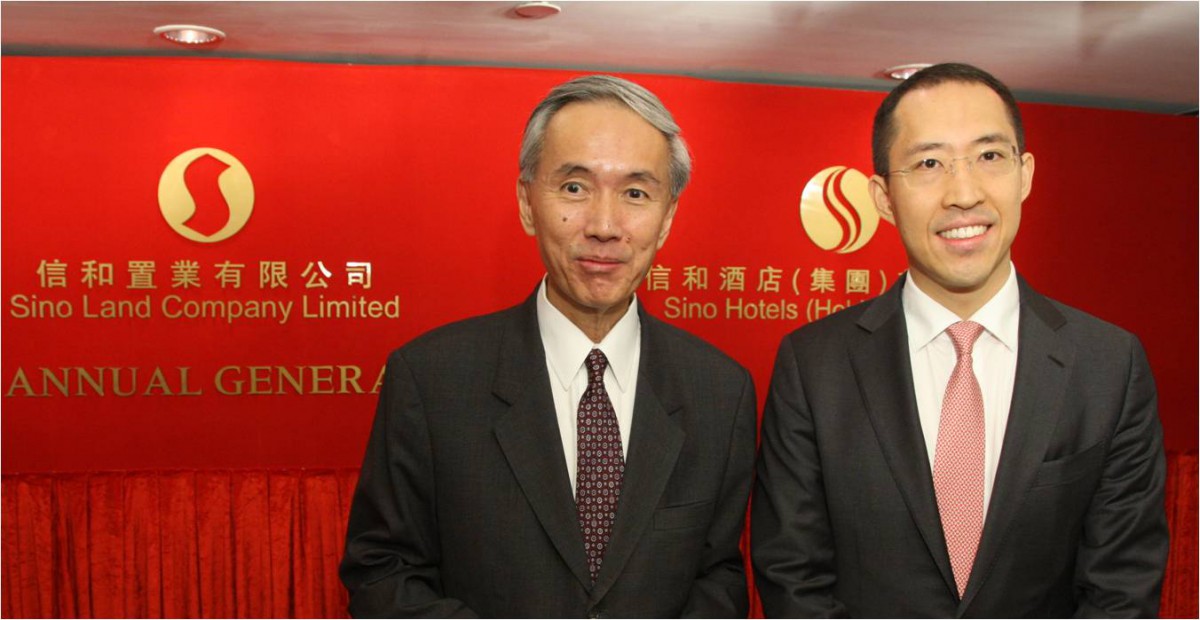
Singapore – Robert and Philip Ng (US$10.8 billion)

921837_503cd594094048e8146c1a9d605022d5

Source: EJ Insight

Robert and Philip Ng are the richest people in Southeast Asia’s financial capital Singapore and are ranked 140 in the world. Far East Organization is the name, property development is the game. The brothers inherited the firm from their billionaire father Ng Teng, a company which is the largest private landlord and property developer in the city-state. Their Hong Kong arm Sino Group is over seen by Robert, while Singapore interests are managed by Philip.


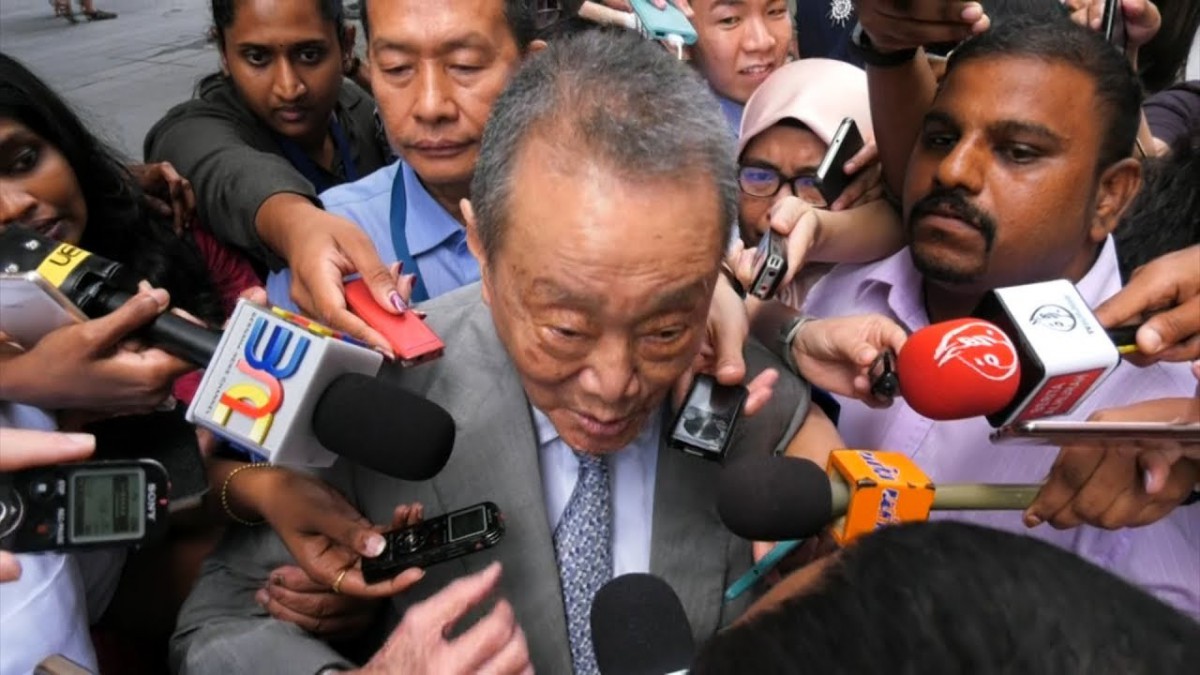
Malaysia – Robert Kuok (US$14.8 billion)

maxresdefault-14

Source: YouTube / The Star Online

Malaysia’s richest man is Robert Kuok, who is the 98th richest billionaire in the world according to Forbes. He founded Shangri-la Hotels in Singapore back in 1971 and operates Kuok group, which has interests in hotels, real estate and commodities. Kuok also owns a stake in Wilmar International – the world’s largest palm oil trader. While Kuok is based in Hong Kong, he recently visited Malaysia after the election of Prime Minister Mahathir Mohamad, praising him as having “saved the country”. “I need your help now,” replied the PM.


SEE ALSO: Malaysia is the largest beneficiary of Chinese cash diplomacy

Thailand – Charoen Sirivadhanabhakdi (US$17.9 billion)

459b0f8fca13fbbcdc996fae75d8635b

Charoen Sirivadhanabhakdi (L) with Vietnam’s Prime Minister Nguyen Xuan Phuc. Source: Nhan Dan

Thailand’s richest person is Charoen Sirivadhanabhakdi. Forbes’ 65th richest billionaire is founder and chairman of Thai Beverage, the world’s largest brewer. Sirivadhanabhakdi is also chairman of Fraser & Neave, a Singapore-based food and beverage and property industries conglomerate. He owns property firm TCC Land and at least 50 hotels across Asia, in the US, UK and Australia. His family was granted the name “Sirivadhanabhakdi” by Thailand’s late King Bhumibol in 1988.

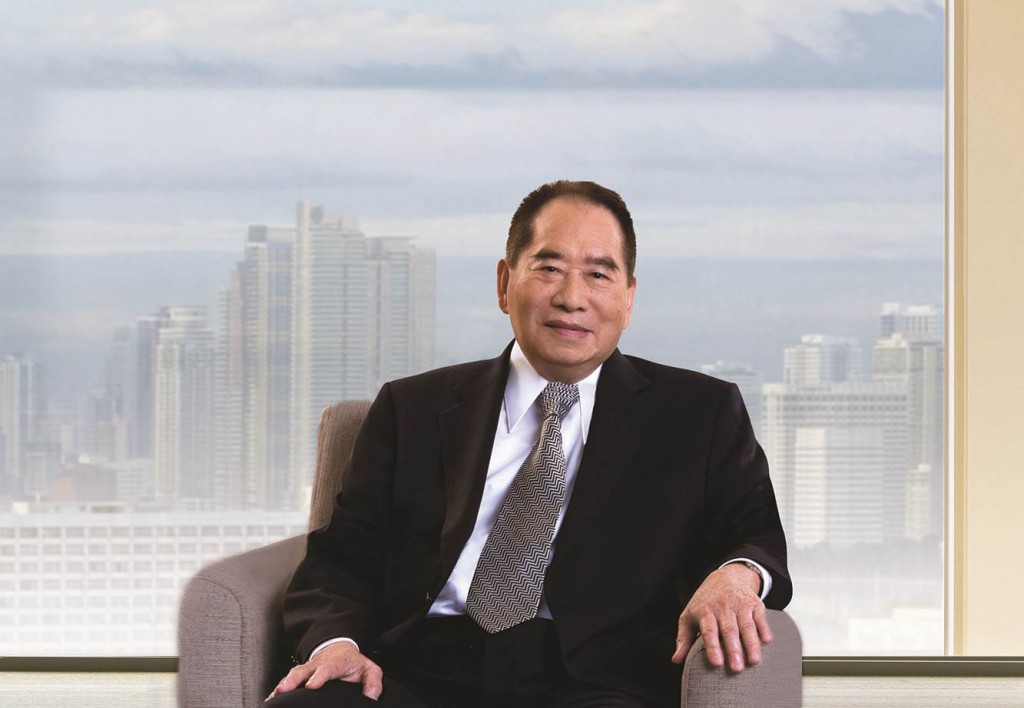
Philippines – Henry Sy (US$20 billion)

henry-sy-1024x708

Source: Philippine Primer via FinanceAsia

Having topped the Forbes Philippines Rich List for a decade running, Henry Sy is undeniably the country’s richest man. He is the founder of SM Prime Holdings which is the largest shopping mall and retail operator in the Philippines, as well as having interests in banking, mining, education and healthcare. Sy also has a stake in San Miguel, the largest publicly listed food, beverage and packaging company in Southeast Asia.

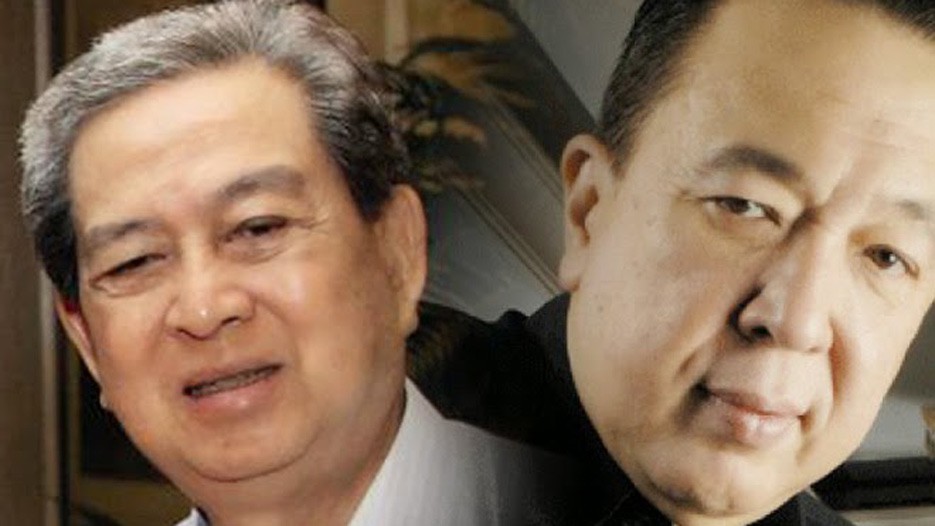
Indonesia – R. Budi Hartono (US$17.4 billion) and Michael Hartono (US$16.7 billion)

R.-Budi-Michael-Hartono

R. Budi Hartono (L) and Michael Hartono. Source: Marcopolis

These brothers are the two richest men in Indonesia, with combined wealth of more than triple their Singaporean counterparts. R. Budi and Michael’s father Oei Wie Gwan owned one of the largest tobacco companies in Indonesia – Djarum – a country of 260 million with exceptionally high rates of smoking. Their wealth now lies in their investment in Bank Central Asia, one of Indonesia’s largest financial institutions. The Hartonos also own electronics manufacturer Polytron and real estate in the capital Jakarta.

Source link

NDP show segment to feature film on everyday Singaporeans, giant balloons and nostalgic mascots

SINGAPORE: As a teenage girl in the 1950s, Madam Mary Klass had the odds stacked against her. She had no family support, nor a coach, in her quest of becoming an athlete.
 
But she did not let this get in the way of her dream to represent Singapore in athletics, training tirelessly instead. Her routine would involve waking up at 4am to do the household chores at her Rangoon Road home, then off to train at a nearby field at 5.30am. She would train again at 5pm, this time at Raffles Institution which was located in Bras Basah Road then.
 
Madam Klass first represented Singapore at the Asian Games in 1954 in Manila, as a “nobody” but surprised everyone by winning a silver medal in the 100m sprint. She clocked a time of 12.5s, the same time clocked by the winner from Japan, a games record. The record stood for more than 20 years, she recounted proudly.
 
She went on to represent Singapore in the 1956 Melbourne Olympics. Now aged 83, Madam Klass is one of five Singaporeans whose life story will be featured in a film which will be interspersed throughout this year’s National Day Parade (NDP) show segment.
 
Speaking to reporters on Wednesday (Jul 4) at an event at which details on the NDP show were unveiled, she recounted how she trained with boys which improved her stamina and strength.

Madam Mary Klass female Olympian

Madam Mary Klass is one of five Singaporeans whose story will be featured during a film played as part of the National Day Parade 2018 show. (Photo: Jalelah Abu Baker)

Madam Klass said: “I was determined, and I wanted to do my best, not so much for myself, I wanted to stand tall for my country.”
 
Her mother, who suffered from tuberculosis, was her inspiration, she added.
 
She said: “My mum was not an athlete, but she suffered 17 years with one lung. She was a very strong person, and looking at her, that she can persevere her sickness, and never let her sickness get the better of her, that gave me all the confidence.”
 
The film also features a former samsui woman, struggling student, a visually impaired busker, and a young social entrepreneur.
 
Film-maker Boo Junfeng, creative director of the show, said: “All five of them took ownership of their destinies and became the change they wanted to see in our society. The film will give us a glimpse into their lives, of the pursuit of their dreams and aspirations, the challenges they had to overcome, and the bonds they’ve made with the people around them.”
 
GIANT BALLOONS, NOSTALGIC MASCOTS AND FAMILIAR FLOATS
 
The show will feature three acts and a finale, with more than 3,000 performers and more than 100 costumes to celebrate Singapore’s 53rd birthday on Aug 9 at the Floating Platform.
 
In keeping with the theme of everyday Singaporeans, one of the acts features a performance by people dressed in workwear –  parking attendants, port staff and bus captains among them.
 
Giant helium balloon garlands, mascots to engage the audience, and floats depicting Singapore’s favourite playgrounds will also feature at this year’s NDP.

Each garland, measuring 18m long and the size of car tyres, will be handled by performers, forming a visual spectacle. Up to 2,800 balloons will be used for the show.

Six familiar mascots will also interact with the audience in the build-up to the show. Among them, Captain Green, which was introduced in 1990 to encourage a clean and green lifestyle, Nila the Lion, the official mascot for the 2015 Southeast Asian Games and Sharity Elephant, introduced in 1984 to encourage caring and sharing. Singa the Courtesy Lion, Teamy the Bee and Water Wally will also make their appearance. 
  
Replicas of the Dragon, Dove and Pelican playgrounds found in Toa Payoh Dakota Crescent and Dover Road respectively, will form part of the procession of 18 boats and floats which will be visible to all in the Marina Bay area.
 
Traditional crowd favourites, the Red Lions, the Singapore Armed Forces’ parachutists, will return to wow the crowd during the pre-parade segment, this time jumping from a height of 3,810m, the highest for NDP. They will also be doing a wingsuit jump for the first time. 

red lions national day parade 2018

10 Red Lions and eight Combat Divers will execute a combined salute to the nation. (Photo: Jalelah Abu Baker)

Also for the first time at the NDP, they will be joined by divers from the Naval Diving Unit. The Naval Combat Divers will jump from a height of 1,830m into a demarcated landing zone in the waters next to the Floating Platform. The 10 Red Lions and eight Combat Divers will execute a combined salute to the nation. 

Chairman of the Show Committee Colonel Goh Pei Ming said: “We hope that Singaporeans will feel inspired to chase their dreams, they will be fearless to overcome the difficulties that they may face, selfless in supporting the people around them, but more importantly, to be proud to call themselves Singaporeans.”

Source link