 SINGAPORE – In the current uncertain economic climate, where nary a week goes by without news of yet another company laying off staff, it can be worrying for jobseekers already finding it tough to land an offer.
According to Ministry of Manpower data for the…
Source link
Unique portals help senior citizens, mums and students snag jobs
Many other paths to success, say youths in SGFuture dialogue
 SINGAPORE – The SkillsFuture movement is a good start to helping Singaporeans empower themselves with the necessary skills, but youths at a SGFuture engagement session on Sunday (March 6) felt that society’s attitudes towards lifelong learning and failures…
Source link
Cross Island Line could save commuters 40 minutes: LTA chief

SINGAPORE – The Cross Island Line that will stretch from Jurong to Changi could save commuters up to 40 minutes of travel time, said Land Transport Authority (LTA) chief executive Chew Men Leong.
The new MRT line, which is scheduled to be ready by 2030, has…
Source link
Woman dies after being trapped in faulty lift for 30 days
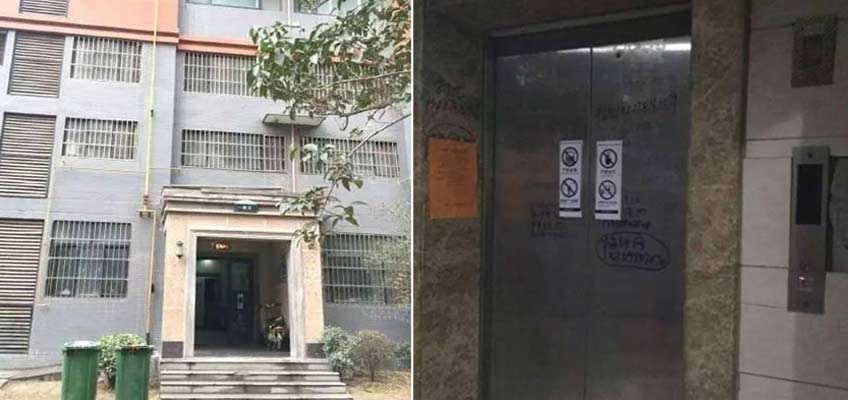
The remains of a woman were found in an elevator after a malfunction trapped her inside for over a month.
According to NetEase, the police found a female corpse in the lift of an apartment building in China’s Xian city on March 1.
A woman resident, surnamed Wang, told reporters that the building has two elevators for residents, but one of them had been out of service since late January.
When returning from work on March 1, she saw an ambulance, police officers and paramedics outside the building.
She later learned from the police that a body had been found in the elevator.
Shanghaiist website reported Ms Wang as telling the media: “The paramedics told us that when they found the body, her hand had already begun to deform.”
“There were markings all over the inside of the elevator…it’s just too horrible,” she added.

Although the elevator was cordoned off, some elderly residents tried to peep inside the carriage.
Said a tenant. “It’s a cruel incident. We think she must have starved to death in there.”
One question remains: How the deceased was able to go missing for so long without her family, friends or anyone in the apartment building raising the alarm?
chenj@sph.com.sg
Woman stuck in a lift for a month dies
Click on thumbnail to view photos. Source:
NetEase








Image:

Publication Date:
Sunday, March 6, 2016 – 19:07
Keywords:
Send to mobile app:
Source:
Rotator Image:
Story Type:
Rewritten Story
Mixed martial arts: McGregor stunned by Diaz at UFC 196
LAS VEGAS – UFC featherweight champion Conor McGregor was choked into submission by Nate Diaz in a stunning reverse at the MGM Grand in Las Vegas.
In another huge upset, Miesha Tate snatched the world bantamweight crown from Holly Holm, choking her unconscious in the final round to take the title.
Following a week of trash talk between the two, a stunned McGregor was somewhat humble in defeat.
“I thought I took him in the first round. I’m humble in victory or defeat,” he said in the octagon after the fight.
“I took a chance to move up a weight and it didn’t work.
“I thought I landed with some good punches that got him off,” a delighted Diaz said. “I started off slow but I’m faster than anyone later on. My jiu-jitsu is always there for me.”
Two unexpected wins at UFC196
Click on thumbnail to view photos. Source:
Reuters, Mark J. Rebilas-USA TODAY Sports



































McGregor, who was denied a chance to become the first fighter to hold two UFC belts at the same time when lightweight champ Rafael dos Anjos pulled out with a foot injury, struggled in the second round after Diaz landed a heavy blow.
McGregor had landed some heavy left-hand shots of his own in the first round, opening up a cut over Diaz’s right eye that streamed blood as he struggled to cope with McGregor’s quick feet and hands.
The 27-year old Irish fighter, who took just 13 seconds to knock out Jose Aldo and win the featherweight crown, couldn’t put the 30-year-old away, and when Diaz landed a punch in the second round McGregor looked stunned.
Sensing that McGregor was hurt, the Californian suddenly seemed more energetic and went after him, firing off a series of hooks and jabs that found their target.
Struggling to stay in the fight, McGregor took it to the mat, but it was a move that backfired in stunning fashion as he suffered more punishment from the heavy-hitting Diaz.
A black belt in jiu-jitsu, Diaz then slipped behind him and applied the choke hold that finished the fight, silencing the thousands of Irish fans for the first time on the night.
A win against Diaz would have left McGregor in the enviable position of being able to take on Robbie Lawler for the welterweight belt, or fighting Rafael dos Anjos for the lightweight title.
UFC boss Dana White had said in the lead-up to the fight that it was hard to deny McGregor at the moment, and a fight against Lawler would definitely draw an enormous pay-per-view audience.
But Diaz, who took on this fight at short notice, will surely believe that the defeat of McGregor means that he deserves a shot at the title.
The fight was preceded by Tate’s sensational victory over reigning bantamweight champion Holm, who waited patiently throughout the fight for her chance to take her opponent down before choking her out late in the fifth round.
“She went out like a champion. I have so much respect for this woman,” the 29-year-old Tate told the octagon announcer as she received the belt.
Image:

Publication Date:
Sunday, March 6, 2016 – 18:52
Keywords:
Send to mobile app:
Source:
Rotator Headline:
2 unexpected wins at UFC196 by Diaz and Tate
Rotator Image:

Hermes ID:
2 119 252
Hermes ID String:
SP_UFC
Story Type:
Others
Green Corridor Run attracts over 11,000 participants from 82 countries
SINGAPORE – Over 11,000 people from 82 different countries gathered at Tanjong Pagar Rail Station today to participate in the ‘Green Corridor Run’.
Today’s race is the final edition of the event as the area will gradually be closed for the construction of the Murnane Pipeline, until the project is completed in 2019.
The Green Corridor Run was also held in conjunction with Singapore’s World Water Day celebrations, in a bid to raise awareness about the 748 million people across the globe that still lack access to safe drinking water.
An event highlight was the Keppel Land Water Challenge, which allowed participants to experience what it is like for those in developing countries that have to walk large distances daily to collect water for their family use.
Over 500 participants carried jerry-cans of recycled water from the start to the finish, clocking a total distance of 10.5km.
For every litre poured into a ceremonial well at Bukit Timah Rail Station, the organisers donated $1 to “charity: water”, a non-profit organisation that that brings clean and safe drinking water to people in developing nations through sustainable water projects.
Participants in the Keppel Land Water Challenge were relieved to reach the finish line at the historic Bukit Timah Rail Station.
“Wow, hats off to the people in developing countries who have to walk that distance daily and carry much more water than the 5L I carried today”, said participant Cheryl Lee.
The Green Corridor Run was the first race to be held entirely on the ‘Rail Corridor’, the former KTM rail line that once connected Singapore to mainland Asia.
Today’s competitive race was won by James Karanja from Kenya in a time of 32:46.
This is the third instalment of the Green Corridor Run and the second year of the Keppel Land Water Challenge.
spanaech@sph.com.sg
All smiles after completing the very last #greencorridorrun with the @yellowfellowssg and some very special friends of…
Posted by Randall Tan on Saturday, 5 March 2016
The Dutch Orange Runners Singapore were on track again this morning!Today was the last ever Green Corridor Run. Held…
Posted by Embassy of the Netherlands in Singapore and Brunei on Saturday, 5 March 2016
Image:

Publication Date:
Sunday, March 6, 2016 – 18:08
Send to mobile app:
Source:
Story Type:
Rewritten Story
First case of Zika virus detected in Philippines since 2012
Manila – An American woman was infected with the Zika virus while visiting the Philippines, health department officials said Sunday, the first case detected in the country for several years.
Health Secretary Janette Garin said the US Centres for Disease Control and Prevention (US-CDC) had informed her that a US resident who stayed in the Philippines for four weeks in January had apparently developed symptoms in her last week before returning to America.
“We were informed that shortly after returning home to the US, an evidence of Zika virus infection was detected from the patient,” Garin said in a statement.
“Currently, we are coordinating with US-CDC for the profile of the patient, including information on places she visited in the Philippines,” Garin said without giving details of the patient.
Health department officials said they still had no clue how the American was infected while in the Philippines.
The only previous known case of Zika in the country was a 15-year-old boy infected in 2012. He recovered after three weeks.
The mosquito-borne disease is usually not life-threatening but has been linked to a rise in birth defects in other countries, where hundreds of babies have been born with unusually small heads in recent years.
What is the Zika virus?
Click on thumbnail to view photos. Source:
Reuters

















Image:

Category:
Publication Date:
Sunday, March 6, 2016 – 18:25
Keywords:
Send to mobile app:
Source:
Story Type:
Others
Starbucks 1-for-1 Frappuccino Beverage Coupon 7 – 11 Mar 2016 | SINGPromos.com

EXTENDED! Starbucks customize your Frappuccino & get another FREE
Valid for Grande & Venti sized Frappuccinos, 2pm to 10pm daily from 7-11 Mar. Flash the coupon in the post to enjoy
Starbucks 1-for-1 Frappuccino Beverage Coupon 7 – 11 Mar 2016 | SINGPromos.com
One drink, endless possibilities. Personalize your Frappuccino at Starbucks and have another FREE from 7 to 11 Mar 2016 (2pm – 10pm daily)
Grassroots volunteers go door-to-door in Jurong East to educate residents on dengue
March 06, 2016 4:20 PM
SINGAPORE – After eight new dengue cases were reported in her constituency last week, Ms Grace Fu, MP for Yuhua SMC, went on the offensive to fight dengue on Sunday.


This is Home, truly, for HIV kids

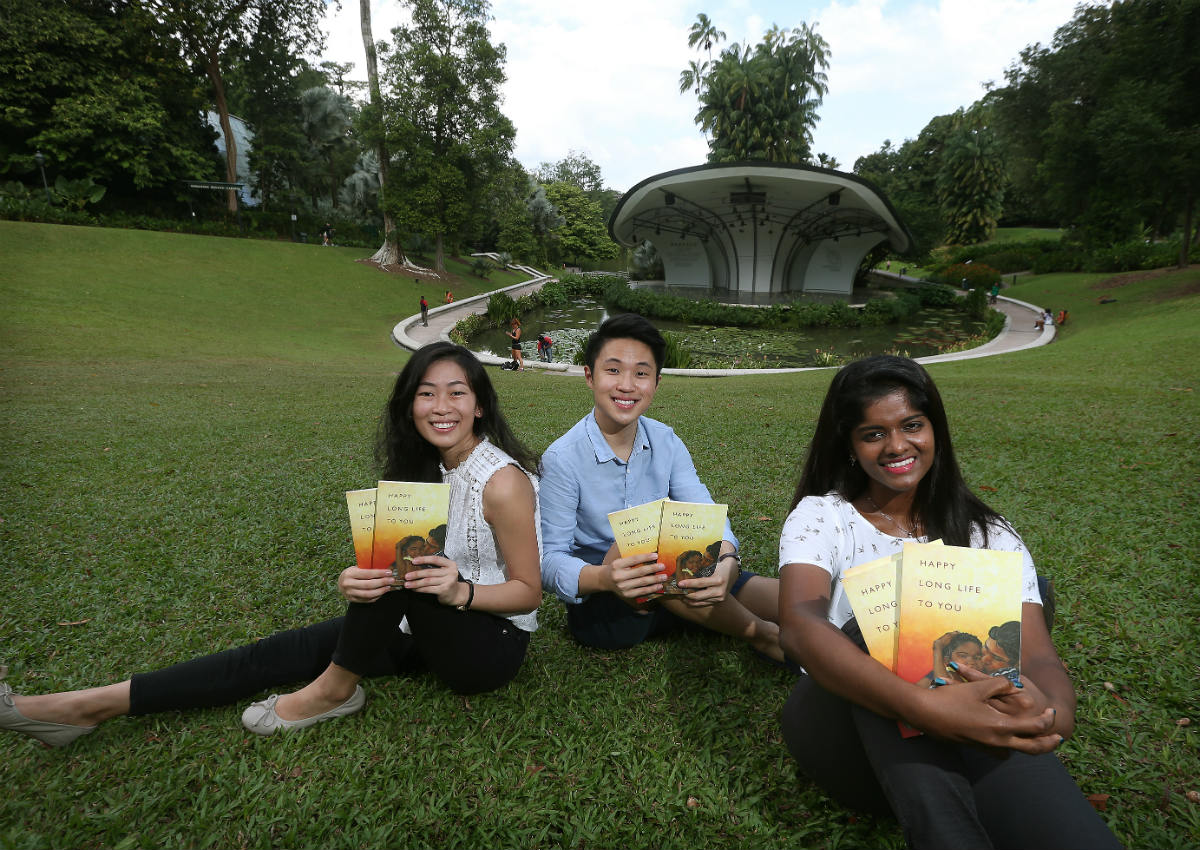
Three medical students from S’pore write book and raise funds for Chennai orphanage
They were three first-year medical students who had set their sights on Project Naadi, an overseas community project which included a stay at an orphanage for children with HIV in Chennai, India.
All three faced one stumbling block: disapproving mothers filled with misgivings because they did not want their children exposed to the virus which causes Aids.
Fuelling their parents’ paranoia was ignorance about how HIV is spread.
Miss Elampirai Elangovan sums it up for Mr Yang Kaymond and Miss Nadia Sim when she says: “My mother was not supportive of the trip at all. But she is a mother; I guess her instinct is to protect.”
It took a lot of persuasion and, in Miss Sim’s case, negotiation, before they could go.
The trip changed the trio’s lives.
What they saw and experienced at Shelter Home – set up by a man who juggles a few jobs to look after 43 abandoned children with HIV – in 2012 moved them so much they have gone back on two more occasions.
On their last trip in 2014, they spent 10 days talking to the founder, caretakers and children at the shelter.
With the help of a few friends, they wove these accounts into a book, Happy Long Life To You. A supportive mentor lent them nearly $6,000 to have the book printed and distributed.
The three medical students, now in their fourth year at the Yong Loo Lin School of Medicine at the National University of Singapore, hope to use the proceeds from the book sales for Shelter Home.
They also want to highlight the stigma and discrimination against HIV patients by celebrating the strength and selflessness of founder Solomon Raj and main caretaker Uma Kumar, a village girl who contracted HIV after she was tricked and coerced into prostitution. Her story makes up a big chunk of the book.
“What Uma went through, what she had to do to become what she is today, her strength and her beliefs sum up what Shelter Home is about. It is about the light at the end of the tunnel,” says Miss Sim, 23.
Bright, articulate and brimming with youthful zeal and conviction, the trio signed up for Project Naadi in 2012, intrigued by its slogan: To see the unseen, to touch the untouched and hear the unheard.
Entirely led by student volunteers, the project started five years ago by working with rural communities and marginalised groups – from gypsies to lepers and those with HIV – in India. Three years ago, it came into the fold of Seeds of Nation, an outfit started by doctors supporting community work in India, China, Nepal and Thailand.
The second of three children of a former IT manager and a housewife, Mr Yang says he had at least half a dozen community projects to choose from as a first-year medical student.
“I went to some of the trip briefings. They usually conducted interviews to weed out applicants. I found that rationale a bit skewed. Project Naadi didn’t require interviews. The leaders feel that if you have the heart to serve, no one has the right to tell you that you can’t do it. I agree,” says the 24-year-old, whose two siblings are also in university.
Nodding her head vigorously, Miss Sim adds: “Some of the interviews I went to were strange. They asked me questions like ‘Would you rather be a spoon or a fork?’
“I was thinking to myself, ‘What sort of OCIP does that?'” says the only child of a retired engineer and a housewife. OCIP stands for overseas community involvement programme.
Unlike the other two, Miss Elangovan, 23, was not new to OCIPs, having gone on several during her years in Raffles Girls’ School and Raffles Junior College.
“Those trips were more educational and a lot of time was devoted to exploring the environment. I wanted to see if it stayed true to its intent for participants to form a relationship with strangers,” says the eldest of three children of a news vendor and a housewife.
While she and Mr Yang were not too worried about interacting with children with HIV, Miss Sim lets on that she was fearful in the beginning.
“I heard seniors saying that if you have a wound, you have to dress it properly. I even heard stories of people using duct tape. I was like ‘Oh my god, oh my god’ because I have many cuts all over,” she says, as her two friends break into peals of laughter.
More than 40 people, including students from other faculties, went on that first trip to Tamil Nadu in 2012. Before arriving at Shelter Home where they spent three days, they worked with and taught village children and visited a shelter for those suffering from leprosy.
The denizens of Shelter Home moved them for several reasons.
All the children are HIV-positive, and are in the home because they have lost their parents to the disease or have been abandoned because of their condition.
Before arriving at the shelter, one little girl was so sick from tuberculosis that she coughed up blood all over the hospital floor when she was taken there. Her grandfather, who had been looking after her, had difficulty walking and could not get her the anti-retroviral medication that she needed.
Miss Elangovan says: “They look like normal kids and talk like normal kids. But they know they are not like normal kids. They are very aware they have HIV and will run far away from you if they get a cut. It’s sad because six-year-olds should not be like this.”
All three agree that the home is exceptionally run, with a nurturing and loving atmosphere.
It is also why they find Mr Raj, 48, hugely inspirational.
His parents, both teachers, wanted their only son to pursue medicine but he left Hyderabad for Chennai to study theology instead.
He first thought of adopting a special needs or HIV-positive child when he and his school principal wife remained childless after eight years of marriage.
But before he could act on the idea, his wife conceived. The guilt of not adopting, however, bugged him. So when a friend rang him up and told him about Arputharaj, a dying child who had seen six HIV-related deaths in his family, he could not say no.
To keep Arputharaj company, Mr Raj, who has two children of his own, adopted another HIV-positive child. News spread and soon people were knocking on his door, asking him to save other HIV-positive children.
Miss Elangovan says: “It left him thinking, ‘Why not? What makes this kid more or less deserving than the next one? I’m just going to do my best.'”
That was how Shelter Home started in 2006. It has not been an easy undertaking and Mr Raj – who teaches theology and sits on the boards of a couple of non-governmental organisations – often has to dig into his own pockets to keep his shelter going.
The three medical students feel that he could not have picked a better person to run the shelter than Ms Kumar, affectionately nicknamed Amma by the children she looks after.
Her parents died in an accident when she was very young, leaving her and two sisters in the charge of her grandparents.
Because she wanted to feed the family and craved the education she never had for her siblings, she believed two agents who went to her village promising jobs at a sewing factory in Mumbai.
She was sold to a brothel instead and contracted HIV not long after.
The brothel mistress threw her out and Ms Kumar went through hell – illness, abuse and ostracisation by her family and her village – before she ended up in a shelter in Chennai.
Her diligence and her loving nature saved her, and she wound up in Shelter Home where she is now protective mother hen to nearly 40 children. The 31-year-old is now married to a fellow caretaker at the shelter and gave birth to a healthy baby girl last year.
Mr Yang says: “Three days there was enough for me to know I wanted to come back.”
Their decision to volunteer at Shelter Home the next year did not go down well with their mothers, especially Miss Sim’s.
“She lost it. I’m an only child and she sheltered me like crazy. When she saw pictures of me with one of the kids, she asked me why I was so close to the child,” she says, adding that her father, however, was very supportive of what she did.
She was, however, insistent about returning.
“Before the first trip, I was asked to write down what I wanted to achieve from the trip. I wrote down that I wanted to learn how to love and care for a stranger. I got that.”
Miss Sim adds: “The children in the shelter really behaved like a family. It was such a beautiful thing to see, considering their backgrounds. Some had parents who didn’t want them.”
The idea of writing a book to raise funds came after their second trip in 2013. They wanted to do something more meaningful beyond washing cars and selling newspapers.
Their mentor, Dr Chua Ying Xian, a public health physician, encouraged the idea, even sponsoring their air tickets for them to go back to Shelter Home to do their interviews. He even lent them the $5,900 needed to get the book produced.
Happy Long Life To You comprises nine chapters. The trio wrote one chapter each and roped in five of their friends to write the remaining chapters.
“We worked out the structure and the chapters and came up with pointers for every writer to follow,” says Miss Elangovan.
It took nearly two years to complete the book, published by Ethos.
Miss Sim says with a grin: “My mother came around. She is very proud now that the book is out. She has been sending it to all her friends.”
The three friends hope to raise enough funds for Mr Raj to buy a plot of land not far from the shelter.
Mr Yang explains: “Right now, under Indian law, those who are 18 and above cannot live in the shelter. Uncle Solomon hopes to buy the land so that he can house the older kids and give them technical training.”
Like his two friends, he says he has learnt much from Mr Raj and Ms Kumar.
“My multiple returns to Shelter Home have become less of an OCIP for I have found a home in Shelter.
“I have personally witnessed the unfortunate stigma against individuals living with HIV. With my pen, I hope to lend a voice to the underprivileged.”
kimhoh@sph.com.sg
This article was first published on March 6, 2016.
Get a copy of The Straits Times or go to straitstimes.com for more stories.
Image:
Category:
Publication Date:
Monday, March 7, 2016 – 06:30
Keywords:
External URL:
Send to mobile app:
Source:
Story Type:
Others


