Image:
Blurb:
This came about as property prices had stabilised. -The Star
Publication Date:
Monday, March 28, 2016 – 09:44
Keywords:
External URL:
Send to mobile app:
Source:
Story Type:
Others
Lee Kuan Yew, the founding father of modern Singapore, may have been well known for his paternalistic and sometimes uncompromising leadership style, but he had a lesser known role: chief gardener.
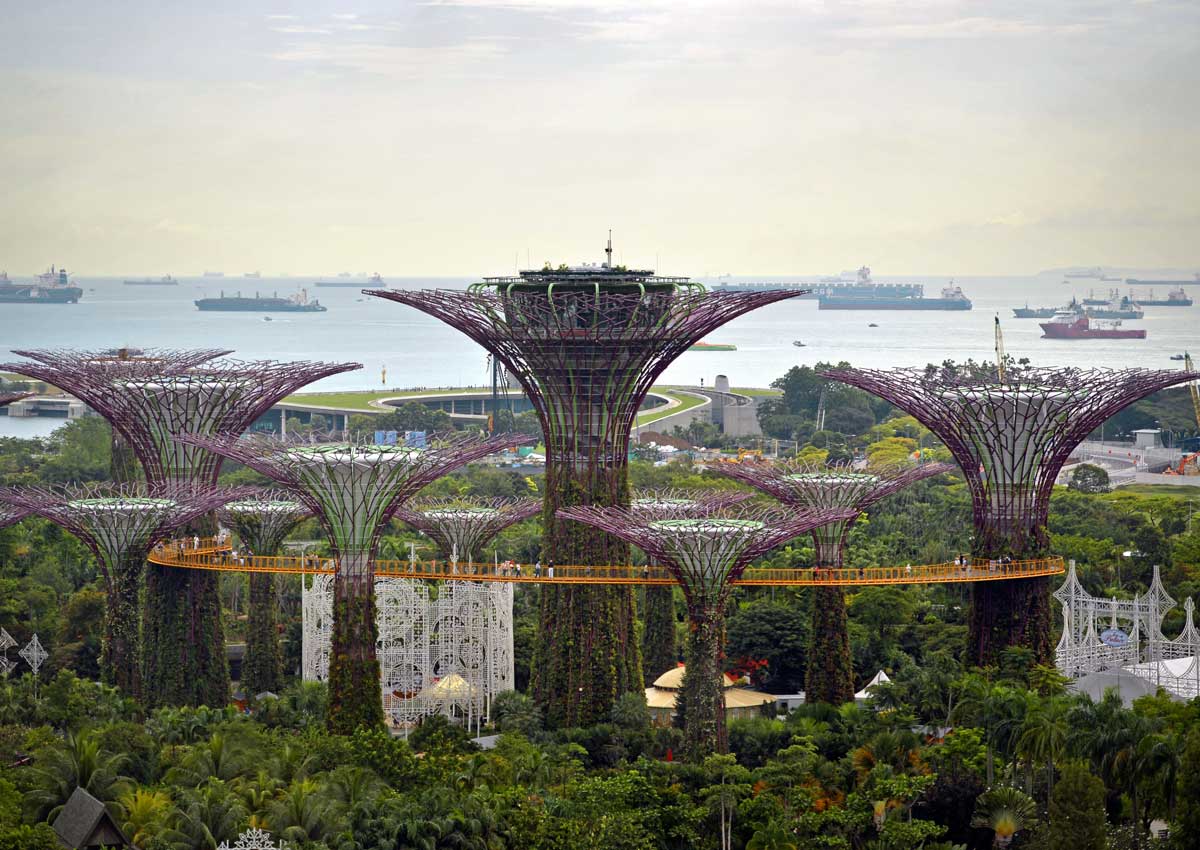
That’s because Lee, who was prime minister from 1959-1990, was the architect behind the city-state’s plan to become a garden city.
He introduced that idea in 1967 when he was prime minister. Its elements included roadside greenery, featured most prominently along the East Coast Parkway (ECP) highway, which connects the city-state’s international airport to the city centre, with colorful bursts of tropical flowering shrubs and imperiously-tall trees.
The Garden City vision included the creation of national and community parks and initiatives for tree-planting.
The effort began after Singapore separated from the Federation of Malaysia in 1965, leaving the small city-state, which lacks natural resources, searching for direction.
At “The Enduring Ideas of Lee Kuan Yew” panel discussion held last week to mark the one-year anniversary of Lee’s death, Chan Heng Chee, chairman of Lee Kuan Yew Center for Innovative Cities at the Singapore University of Technology and Design, cited that as a defining moment for the Garden City vision.
She pointed to a passage from Lee’s memoir “From Third World to First: 1965-2000:” “After independence, I searched for some dramatic way to distinguish ourselves from the other Third World countries. I settled for a clean and green Singapore.”
Chan, Singapore’s ambassador to the US from 1996 to 2012, noted that the country’s prime minister from 1990-2004, Goh Chok Tong, once joked that Singapore’s cabinet must be the only one in the world that read the meeting minutes of a Garden City Action Committee.
“But that’s how seriously the Singapore Cabinet took the concept of the garden city,” she added.

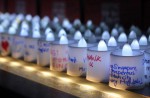
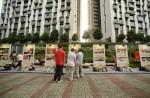

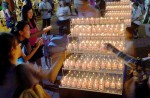
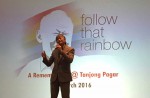
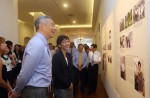

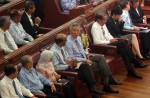

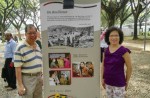


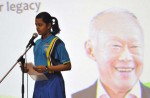


The island nation underwent rapid urbanization and industrialization from the 1960s to the 1980s, as the government built much-needed infrastructure including public housing, concrete bridges and highways.
But Lee was determined not to turn the island into a dreary concrete jungle, and so ‘greening’ went hand-in-hand with Singapore’s urbanization progress.
“Lee himself picked out the creeper that would grow and cover the overhead flyovers and bridges and I remember we called it the ‘Lee Kuan Yew creeper,'” Chan said.
The effort was also aimed at addressing inequality.
“An elected government cannot have certain sections of the city clean and green…and leave the rest to fester,” said Lee in a parliament address in 1968.
He was insistent that if Singapore’s society was not uniformly clean and luscious with green, it would only be the wealthy which could enjoy gracious surroundings.
That helped to spawn a network of over 300 parks and four nature reserves, spread over an island that’s smaller than metropolitan New York.
It’s a vision that’s made a mark around the region.
The Foreign Secretary of India Subrahmayam Jaishankar, another speaker at the panel discussion, pointed to India’s current environmental campaigns, including Swachh Bharat (Clean India) and the Ganga Rejuventation project to clean up the country’s storied riverfront and deal with pollution there.
“Reflect on where the ideas came from, and what model [India] is looking at,” said Jaishanakar, also a former India High Commissioner to Singapore.
“In a sense, Lee created a brand of nationalism, but the difference was that the progress was reflected through achievements and projects rather than appealing to emotion,” he said.


HEFEI, ANHUI – A MAN travelling in a long-distance bus in eastern China caused the death of six passengers after the vehicle veered off the highway when he tried to take over the steering wheel from the driver, the Chinese media reported.
Survivors from the crash, which happened on Friday in Anhui province’s Xiao county, told the official Xinhua news agency that the man had earlier molested a woman by cuddling her.
He was punched twice by her husband, who was also on board.
They said some passengers then tried to mediate, after which the man went to the front of the coach and took a seat behind the driver.
A few minutes later, the man stood up and struggled with the driver as he tried to grab hold of the steering wheel.
A passenger surnamed Tian told ahwang.cn, Anhui government’s official news website, that he and the relief driver tried to help remove the man’s hands from the steering wheel.
But in the scuffle, the man caused the bus to swerve to the right side of the highway.
As a result, the bus, which was carrying 37 people, ran over a railing and into a ditch, where it overturned.
Five people were critically injured.
Reporters observed that the bus was severely damaged at the front end while broken glass and luggage were scattered all over the ground.
“The man fell into the river. But when he got out, he wanted to beat up the driver,” said Mr Tian.
According to Xinhua, the 45-year-old man, surnamed Wen, was arrested when police arrived.
The 44-year-old woman said to have been molested was killed in the crash while her husband, also 44, was hospitalised, said Xinhua.
The bus left Shandong province on Thursday and was travelling to Henan.
AGENCIES
Get MyPaper for more stories.
KALLANG Wave Mall has roped in new tenants as part of efforts to refresh its offerings in a bid to stay relevant in a competitive retail scene, especially as consumers stay wary amid a sluggish economy.
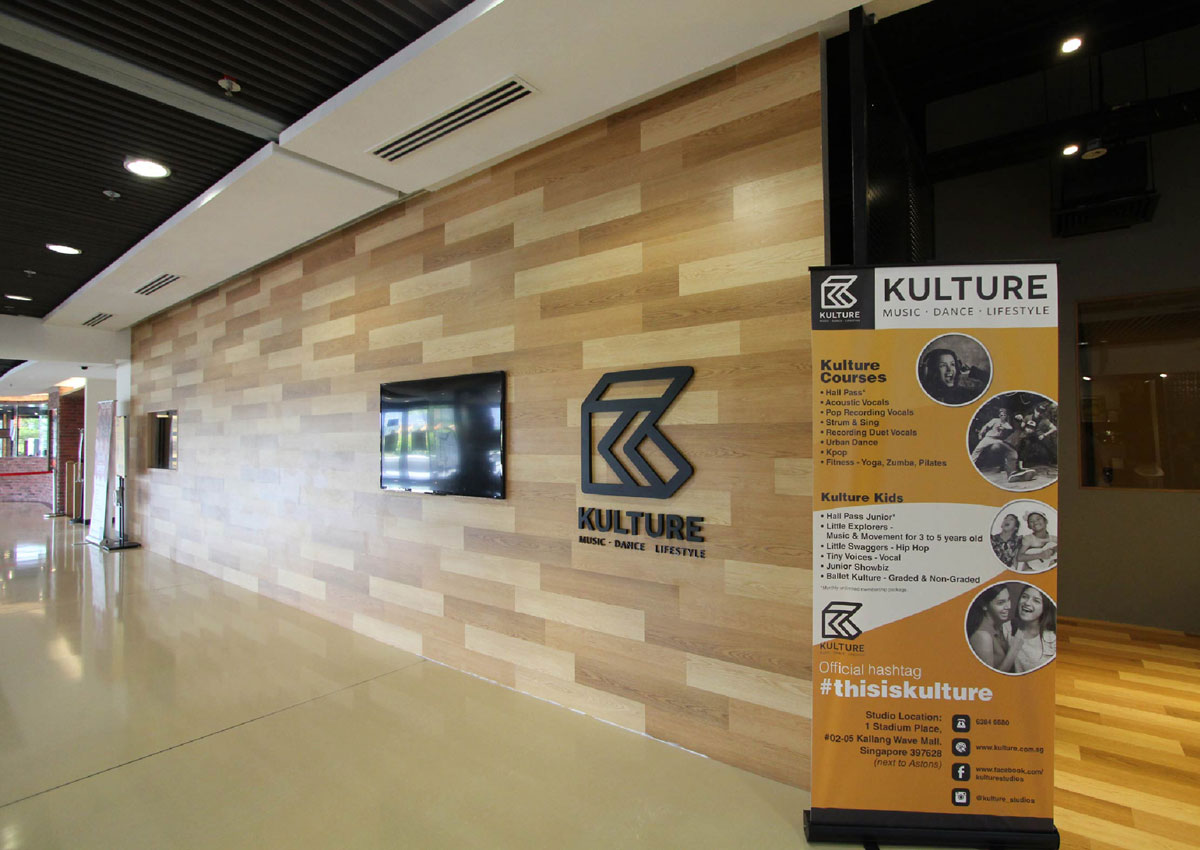
Among the latest stores at the shopping centre beside the Singapore Sports Hub are Rendezvous! CWAL, said to be Singapore’s first self-balancing electric unicycle provider, 24-hour gym Anytime Fitness and Kulture Studios, a music, dance and fitness school.
Other additions include sports certification and education school International Sports Academy and the Newport Dental clinic.
When My Paper visited the mall recently, it was relatively empty – not surprising perhaps because it lacks a dedicated catchment market as it is not located within any big housing estate.
At its NTUC Foodfare outlet, for example, an entire stretch of six stalls had no tenants. The signboards on the empty stalls ranged from Spanish food to fishball noodles and nasi padang.
Only eight other stalls were open.
Koo Tee Moi, 54, a mixed rice vendor at the foodcourt, told My Paper that the stalls had been vacant for one to two months.
“When there are no activities at the Sports Hub, there is no traffic,” said Ms Koo, who has worked there for more than a year since the mall opened.
Another vendor, who goes by the name Phing, 30, said some of the stalls had been empty for as long as six months, since he started working there.
“Stall for rent” signs were put up prominently, with mobile numbers included. But with Kallang Wave Mall signing on new tenants and the nation’s 51st birthday bash set to be held at the Sports Hub this August, things could be looking up for the mall.
A spokesman for SMRT Alpha, which manages the mall, told My Paper that it is “bringing in new tenants to enhance the shopping, dining and entertainment experience”.
“This year, we are working on giving families more reason to come to Kallang Wave Mall and will share more details later,” she said.
In recent months, the mall has held activities for children such as foosball, automated animal rides and mini-train rides.
The Sports Hub has also beefed up its range of offerings, from hosting rugby matches to holding the Madonna concert.
myp@sph.com.sg
Get MyPaper for more stories.
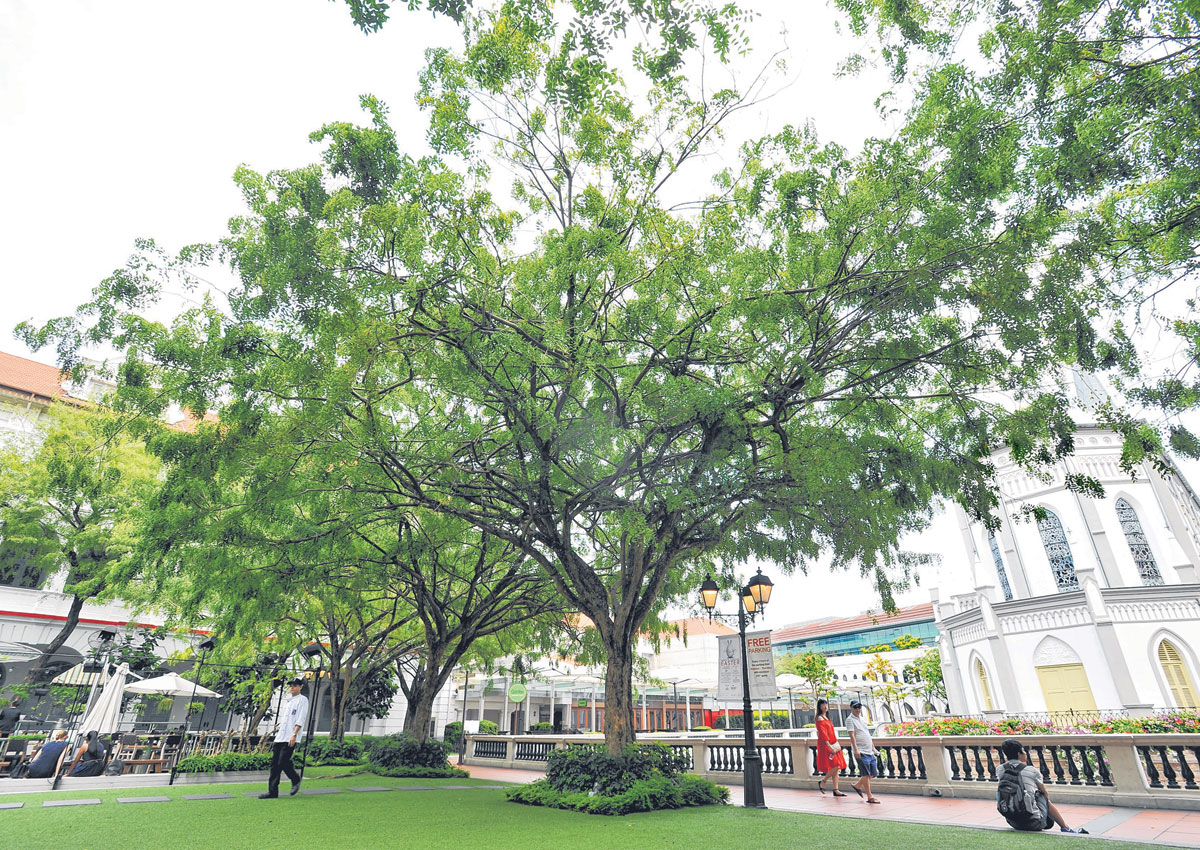
THEY watched over Singapore long before its independence from the British, and some even date from the 19th century.
Now, some of the Civic District’s trees – such as the angsana and rain tree – are to get greater recognition as part of a 3km-long Civic District Tree Trail to be launched by the National Parks Board (NParks) on May 1.
It will include monthly guided walks and markers at all 20 stops along the route, which starts at the entrance of the Istana and ends at the Raffles’ Landing Site.
Among the highlights of the trail is an avenue of 22 heritage rain trees in Connaught Drive, which was unveiled in a ceremony officiated by Senior Minister of State for Home Affairs and National Development Desmond Lee yesterday, in conjunction with Car-Free Sunday.
It is the largest number of trees in a single avenue to be endorsed under NParks’ heritage tree scheme, which identifies important green landmarks.
More than 250 trees have made the cut since the scheme was launched in 2001. They were evaluated by a panel that includes NParks staff and landscape experts, based on criteria such as their rarity, size, health and social, cultural or historical significance.
Some of the heritage rain trees in Connaught Drive date back to the mid-1880s and have witnessed key events in the district, including Singapore’s declaration of independence from the British by then Prime Minister Lee Kuan Yew in 1963, and Singapore’s first National Day celebrations in 1966.
Epiphytes, such as ferns and orchids, tend to grow on old rain trees.
Kalthom Abdul Latiff, deputy director of arts and heritage parks, said the trail will allow the public to learn about natural heritage in the heart of Singapore.
“We are all familiar with the historic buildings,” she added.
“Now, we also want to showcase our natural heritage. Members of the public walk under the trees every day… We want them to appreciate the greenery around them.”
Mr Desmond Lee added: “Even as we continue to plant new trees, we must also cherish and protect the trees that have been maturing gracefully since Singapore’s early days.” Other stops along the trail include one at the National Museum, where an old Indian rubber tree that can be traced back to 1955 still stands today.
NParks has developed other tree trails for various parks and green sites. These include heritage tree trails such as the Changi Walking Trail.
melodyz@sph.com.sg
Get MyPaper for more stories.
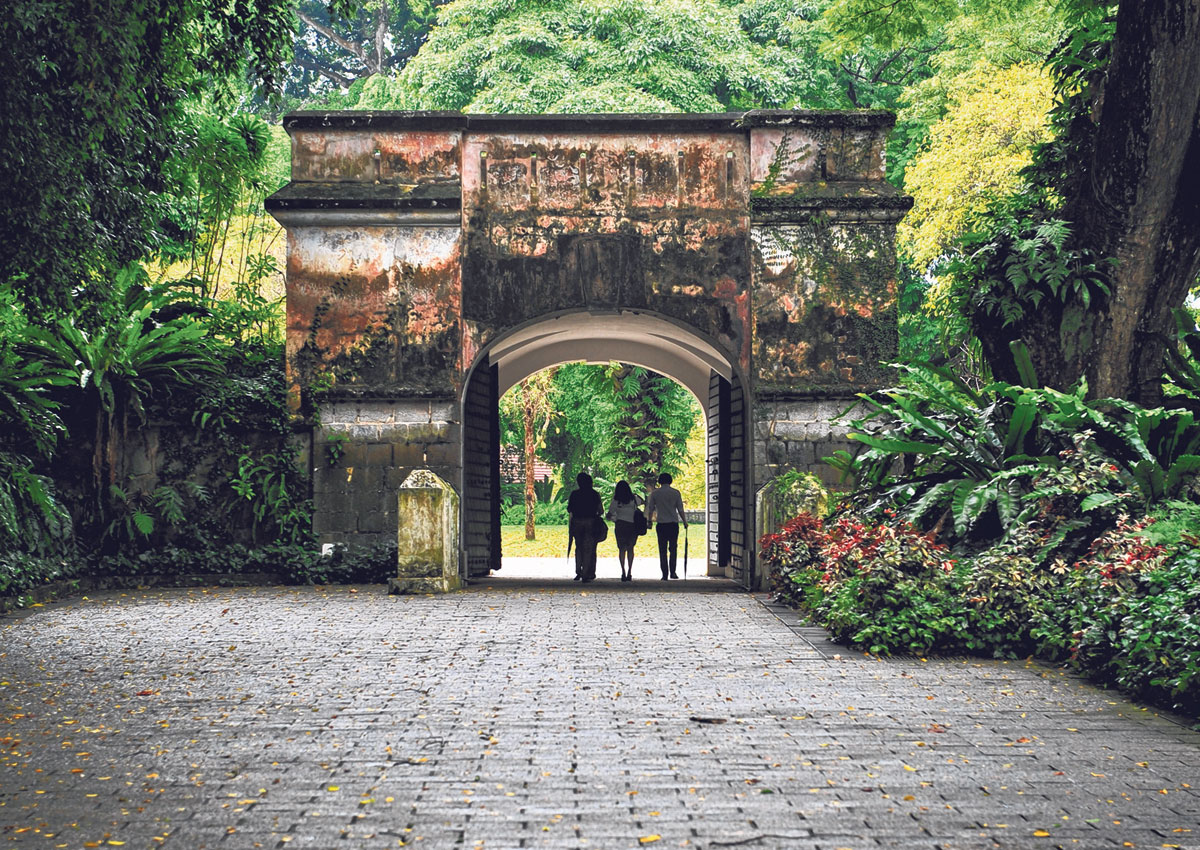
FORT Canning Park holds many historically significant memories for older generations of Singaporeans, and that is why the PAP Seniors Group feels it is suitable as the site for the Founders’ Memorial, Speaker of Parliament Halimah Yacob said yesterday.
“We want to remember what Fort Canning stands for, what it means to our country, and how it has contributed to our history,” said Madam Halimah, who chairs the advocacy group under the ruling party. “There may be some access challenges, but if it’s doable, that’s one area that the Government should seriously consider to put up the Founders’ Memorial.”
A fortnight ago, the committee charged with conceptualising a memorial to honour Singapore’s founding leaders made its recommendations to the Government, and indicated that it preferred Bay East Garden at
Gardens by the Bay over Fort Canning Park. The two sites had earlier been identified in consultation with the Urban Redevelopment Authority.
The PAP seniors’ wing had made recommendations last September for the Founders’ Memorial to be located at Fort Canning Park.
It suggested having artistic sculptures and features such as pools and landscaped gardens, where visitors can reflect on Singapore’s journey as a nation.
Fort Canning was previously a seat of political power. In the 14th century, palaces of former Majapahit kings were on the hill there, and Sir Stamford Raffles built his first residence there soon after arriving in Singapore in 1819.
Speaking to reporters following a brisk walk at Bay East Garden to mark the first anniversary of founding prime minister Lee Kuan Yew’s death last March, Madam Halimah said the Founders’ Memorial is a “very useful project” to remind Singaporeans of the values that he stood for, such as multiracialism, meritocracy, self-reliance and inclusivity.
“To me, his greatest legacy is infusing in us a sense of pride: pride in being Singaporean,” she said.
She added that while there have been numerous events marking the one-year anniversary, the point was not to glorify Mr Lee, but to remind Singaporeans, especially the young, of how far the nation has come.
“We have to continue with the good work that Mr Lee and his generation of leaders have done, for another 50 years, or another 100 years.”
Emeritus Senior Minister Goh Chok Tong, who was at a separate remembrance event in Marine Parade, said the late Mr Lee would have wanted people to remember his values and look to the future.
Speaking to reporters at the sidelines of the event, he said Mr Lee would not have wanted Singaporeans to commemorate his death anniversary “in a very big way” every year.
“He’ll prefer us to reflect on his values, what he had done for Singapore as a foundation for building Singapore in the future… Mr Lee was always focused on the future. He would want life to carry on normally, and in fact, for life to be even better after him,” he added.
This year’s Budget, with a focus on transforming the economy and society, is a good way to build on Mr Lee’s legacy for a better Singapore, said Mr Goh.
yanliang@sph.com.sg
Get MyPaper for more stories.
March 28, 2016 8:33 AM
Prime Minister Lee Hsien Loong met Singaporeans living in the US at a reception in New York on Sunday (March 27) during his week-long trip to New York and Washington.
Lahore, Pakistan – At least 65 people were killed and hundreds injured, many of them children, when a suicide bomber blew himself up at a crowded park in the Pakistani city of Lahore where Christians were celebrating Easter Sunday.
Officials said the bomber had detonated the explosives packed with ball bearings near a children’s playing area in the popular Gulshan-i-Iqbal park.
Witnesses said they could hear children screaming as people carried the injured in their arms, while frantic relatives searched for loved ones in nightmarish scenes at the park near the centre of the city of eight million.
Doctors described frenzied scenes at hospitals, with staff treating casualties on floors and in corridors, as officials tweeted calls for blood donations.
“It was a suicide attack. The bomber managed to enter the park and blew himself up near the kids’ playing area where kids were on the swings,” Lahore’s top administration official Muhammad Usman told AFP.
Javed Ali, a 35-year-old resident who lives opposite the park, said the force of the blast had shattered his home’s windows.
“After ten minutes I went outside. There was human flesh on the walls of our house. People were crying, I could hear ambulances.
“It was overcrowded because of Easter, there were a lot of Christians there. It was so crowded I told my family not to go.” Yousaf Masih, a father who was searching for his family, told AFP: “My kids came here (to the park). I was at home, I saw the news on TV, but my wife and children were here.”
Witnesses said the wounded were first rushed to hospital in rickshaws and other vehicles before dozens of ambulances arrived on the scene.
Usman said the death toll had reached 65 people, with more than 50 children among the injured. A Lahore rescue official confirmed the toll and said the number of injured stood at 340.
The attack was the year’s deadliest, with officials saying the toll was set to rise.
There was no official confirmation of who was behind the attack late Sunday.
Sunday’s blast was condemned by Prime Minister Nawaz Sharif, who “expressed grief and sorrow over the sad demise of innocent lives,” according to a statement by his office.
He was later phoned by his Indian counterpart Narendra Modi who said “the people of India stand with their Pakistani brethren in this hour of grief”, according to state media.
The Vatican condemned the attack, calling it “fanatical violence against Christian minorities.”
The United States meanwhile labelled the incident “cowardly” and “appalling”, while Pakistan’s Nobel Peace Prize winner Malala Yousafzai tweeted: “Pakistan and the world must unite. Every life is precious and must be respected and protected.”
US presidential contender Donald Trump tweeted “Another radical Islamist attack, this time in Pakistan… I alone can solve.”
A military spokesman described the blast as a “suicide attack”, adding that intelligence agencies were chasing all leads. Lahore officials said the army had been called to the scene of the attack.
On social media Pakistanis were retweeting the call for blood donations, while Facebook activated its “Safety Check” for Lahore.
The government of Punjab province declared three days mourning.
Christians are a minority in the Muslim giant of around 200 million people, making up an estimated 1.6 per cent of the population, and have long faced discrimination.
A year ago, on March 15, the Taliban killed 17 people in twin suicide attacks that targeted churches in Lahore.
The attacks sparked two days of rioting by thousands of Christians and two men were lynched by an angry mob who suspected they were militants.
Attacks targeting children carry a special resonance in Pakistan, still scarred by its deadliest ever militant assault in which Taliban gunmen killed more than 150 people at a school in Peshawar in 2014, the majority of them students.
A military operation targeting insurgents was intensified after that attack, and in 2015 the number of people killed in militant assaults dropped to its lowest since the Pakistani Taliban were formed in 2007.
Lahore, capital of Punjab province, has been relatively peaceful in recent years.
But the insurgents have demonstrated a chilling ability to continue attacks on soft targets.
In January 2016 the Pakistani Taliban launched an assault on a university in Charsadda, near Peshawar, that left 21 dead and spurred a call to arm teachers as parents spoke of fears for their children.
Sunday’s blast came as the army was also deployed on the streets of the capital Islamabad after thousands of protesters clashed with police in chaotic scenes, throwing stones and setting part of a Metro station on fire.
The demonstrators were supporters of Islamist assassin Mumtaz Qadri, who was hanged on February 29 for killing a Punjab governor over his call for blasphemy reform.
Analysts called the execution a “key moment” in Pakistan’s long battle against religious extremism.
But it has also exposed deep religious divisions in the conservative country.

 SINGAPORE – Singapore managements are increasingly being forced to pay up for taking their companies private as minority investors demand bigger premiums to the depressed market valuations of targets, underscoring a growing trend of shareholder activism in…
Source link
 You want the assurance that your little ones are well taken care of. You want to be sure that they are happy and comfortable in a nurturing environment with caring teachers. At My First Skool (MFS), you can have peace of mind.
QUALITY EDUCATION
Parents can…
Source link




