Image:

Publication Date:
Monday, March 28, 2016 – 10:57
Keywords:
Send to mobile app:
Source:
Story Type:
Others
TOKYO – Japan on Monday will switch on a radar station in the East China Sea, giving it a permanent intelligence gathering post close to Taiwan and a group of disputed islands claimed by both Tokyo and Beijing.
The new Self Defence Force base on Yonaguni is at the western extreme of a string of Japanese islands in the East China Sea, 150 km (93 miles) south of the disputed islands known as the Senkaku islands in Japan and the Diaoyu in China. “This radar station is going to irritate China,” said Nozomu Yoshitomi, a professor at Nihon University and a former major general in the Self Defence Force.
In addition to being a listening post, the facility could be used a base for military operations in the region, he added.
The deployment fits into a wider military build up along the island chain, which stretches 1,400 km (870 miles) from the Japanese mainland.
Policy makers last year told Reuters it was part of a strategy to keep China at bay in the Western Pacific as Beijing gains control of the neighbouring South China Sea.
Toshi Yoshihara, a US Naval War College professor, said Yonaguni sits next to two potential flash points in Asia – Taiwan and the Senkaku/Diaoyu Islands. “A network of overlapping radar sites along the island chain would boost Japan’s ability to monitor the East China Sea,” he added.
Yonaguni is only around 100 km (62 miles) east of Taiwan, near the edge of a controversial air defence identification zone set up by China in 2013.
Over the next five years, Japan will increase its Self-Defence Forces in the East China Sea by about a fifth to almost 10,000 personnel, including missile batteries that will help Japan draw a defensive curtain along the island chain.
Chinese ships sailing from their eastern seaboard must pass through this barrier to reach the Western Pacific, access to which Beijing needs both as a supply line to the rest of the world’s oceans and for naval power projection.
To mark the start of operations, Japan’s military will hold an opening ceremony on Monday. The 30 sq km (11 sq mile) outcrop is home to 1,500 people, who mostly raise cattle and grow sugar cane. The SDF contingent and their families will increase the population by a fifth.

LANGKAH dalam Belanjawan tahun ini bersifat realistik membantu pekerja mengharungi cabaran yang dihadapi sekarang, di samping tetap memandang ke depan mempersiap pekerja untuk hari muka.
Ia merangkumi inisiatif bagi pekerja yang terjejas dalam suasana ekonomi lembap dan disusun semula, serta sokongan merebut kemahiran serta peluang baru yang diteruskan menerusi SkillsFuture.
Demikian rumusan anggota panel sebuah perbincangan meja bundar anjuran Berita Harian (BH) Khamis lalu selepas Menteri Kewangan, Encik Heng Swee Keat, menyampaikan ucapan sulungnya dalam Belanjawan Negara.
Bincang Belanjawan BH itu disertai Anggota Jawatankuasa SME Persekutuan Perniagaan Singapura (SBF), Encik Abdul Rohim Sarip; Anggota Parlimen Dilantik (NMP), Encik Azmoon Ahmad; Pengarah Eksekutif Mendaki Sense, Encik Mohd Heikal Yusope; Penolong Setiausaha Agung Kongres Kesatuan Sekerja Kebangsaan (NTUC), Encik Zainal Sapari, yang juga Anggota Parlimen (AP) GRC Pasir Ris-Punggol; dan AP GRC Chua Chu Kang, Encik Zaqy Mohamad.
Mengulas cabaran terdekat, Encik Zainal berkata langkah dalam Belanjawan kali mengatasi cabaran hari ini seperti kian ramai pekerja yang dibuang kerja dan menghadapi kesukaran mencari pekerjaan baru.
“Inilah sebab pemerintah menyokong pekerja meraih kemahiran baru. Dan pemerintah akur ada karyawan dan eksekutif juga mungkin menghadapi kesukaran meraih kemahiran baru itu,” ujar Encik Zainal.
Antara langkah yang diumumkan Encik Heng bagi membantu pekerja ialah inisiatif Suai Maju.
Di bawah inisiatif itu, pemerintah akan memperluas skim sokongan gaji bagi menggalakkan firma menggajikan pekerja yang sukar mendapat pekerjaan.
Individu yang dalam peringkat pertengahan kerjaya termasuk yang dibuang kerja, pula akan dipadankan dengan pekerjaan dalam SME seperti sektor ICT dan rekaan.
Inisiatif seperti ini menunjukkan bahawa pemerintah bersikap realistik mengenai cabaran yang dihadapi sekarang tetapi tetap memandang ke depan bagi merebut peluang masa depan.
“Dalam belanjawan itu, pemerintah membincangkan tentang teknologi baru, robotik dan automasi agar warga Singapura faham inilah caranya bergerak untuk masa depan,” ujar Encik Heikal.
Dalam ucapannya, Encik Heng menyifatkan inisiatif SkillsFuture, yang dilancarkan pada November 2014, sebagai rancangan jangka panjang pemerintah, yang akan terus diperluas dan diperdalam.
Satu lagi inisiatif yang menarik perhatian anggota panel perbincangan itu ialah Pemacu Kemahiran Teknologi, sebuah hab yang bertujuan menggalak individu belajar kemahiran dan mendapat pekerjaan dalam sektor teknologi infokom (ICT).
Encik Zaqy berkata banyak peluang yang boleh direbut dalam industri itu dengan ada lulusan baru tamat pengajian meraih gaji $4,000 sebulan dalam bidang itu.
Encik Azmoon pula menggesa masyarakat memandang serius bidang ICT.
“ICT akan datang dan ia tidak akan berlalu pergi. Ia akan menjadi satu yang amat penting dalam masyarakat kita,” ujar Encik Azmoon.

This article was first published on March 28, 2016.
Go to beritaharian.sg for more stories.

The elderly and needy were not forgotten in this year’s Budget, which struck a good balance between boosting the economy and strengthening social safety nets, Speaker of Parliament Halimah Yacob said yesterday.
“I was a little concerned that because there is a lot of concern about the economy, the Budget will just completely focus on the economy and there will be less for the needy,” she said. “But I am glad there are also quite substantive provisions for the needy.”
She highlighted especially schemes such as the Workfare Income Supplement for lower-income workers, and Silver Support for the most vulnerable seniors.
Speaking to reporters after a dialogue with Marsiling residents about the Budget, Madam Halimah, who is an MP for Marsiling-Yew Tee GRC, held up Silver Support as “a great departure” from the past practice of always tying support schemes to work.
The scheme will make its first payout in July, with some 140,000 Singaporeans aged 65 and above receiving between $300 and $750 every three months.
“For those who are elderly, who can’t work for whatever reason, it will be really useful for them,” she said, citing as examples the seniors in wheelchairs at the session.
But she said schemes tied to work, such as the Workfare Income Supplement, are just as important “because we need to continue to reward work, otherwise people will not be incentivised to work”.
The scheme, which tops up the pay of the bottom 20 per cent of workers, will have higher payouts.
Asked if this may lead to some people choosing to work just enough so they can qualify for the scheme, Madam Halimah said she did not think so.
She said: “Work gives us the kind of satisfaction that we can never find from just getting assistance.”
She added that it is important for the younger generation to see their parents “working, striving, making an effort”.
At the same time, there were also many initiatives to help businesses in this year’s Budget, said Madam Halimah.
Describing this dual focus on the economy and the needy as unique, she said it is a recognition that economic growth is needed to fund increases in social spending.
“So this year’s Budget… does not forget that for us to be able to contribute, for the Government to be able to strengthen the social safety net, the economy must grow, there must be jobs,” she said.
Analysts such as Singapore Management University law don Eugene Tan agreed. He said: “While this year’s Budget is very economy-centric, the Government is showing that it is not going to let all the earlier investments on the social front cease.”
For housewife Mastura Rasid, 29, the greater social support from the Government is welcome news.
Now pregnant with her third child, Ms Mastura said the quarterly Silver Support payments will help with her 65-year-old mother’s expenses, while other schemes targeted at parents will help pay for the children’s care. “I feel quite fortunate, as these schemes are going to help my family a lot,” she said.
Parliament will sit for two weeks, starting next Monday, to debate the Budget as well as the plans and policies of various ministries and key government agencies for the year ahead.
yanliang@sph.com.sg

This article was first published on March 28, 2016.
Get a copy of The Straits Times or go to straitstimes.com for more stories.

BEIJING – China’s military will end so-called paid for services within the next three years, state media said on Monday, the latest move to modernise the armed forces amid a reform and anti-corruption push.
The People’s Liberation Army announced the move in November, meaning non-core activities such as military-run hospitals and hotels open to the public will be ditched.
The military was banned from overt commercial activities in 1998, but allowed some exceptions.
According to a circular issued by the Central Military Commission, headed by President Xi Jinping, the armed forces must not sign any new contracts for paid services and allow existing contracts to expire.
The notice was carried on the front page of the People’s Liberation Army Daily.
Ending all paid services is “an important political task”and all members of the military must fully implement the decision, the notice said.
Services that fulfil an important social security function will be allowed to be included under a new “civil-military integration” scheme, it added, a programme the government has given few details about.
The official Xinhua news agency said the change had been introduced “to reduce corruption in the army”.
The military is reeling from an anti-corruption campaign Xi launched three years ago, which has seen dozens of officers investigated, including two former vice chairmen of the Central Military Commission, Guo Boxiong and Xu Caihou.
Xu died of cancer last year before he went on trial. Guo has yet to face a court.
Gong Fangbin, a professor at the PLA’s National Defence University, told the state-run Global Times newspaper the end of paid-for services would help with the military’s modernisation. “Paid services can sometimes encourage corruption and the military should focus on national defence,” Gong said. “The announcement also aims to improve the military’s combat capability.” The People’s Liberation Army Daily said in editorial the military’s real focus should be on how to win wars, and seeking profits would only distract them. “The military’s basic function is to fight, and deviating from that core activity will bring endless disaster,” it said.
Xi’s push to reform the military coincides with China becoming more assertive in its territorial disputes in the East and South China Seas. Its navy is investing in submarines and aircraft carriers and its air force is developing stealth fighters.
The armed forces are also losing 300,000 members, following a surprise announcement by Xi in September.
The reforms have proven controversial, and the military’s newspaper has published commentaries warning of opposition to the changes and concern about jobs.

They watched over Singapore long before its independence from the British, and some even date from the 19th century.
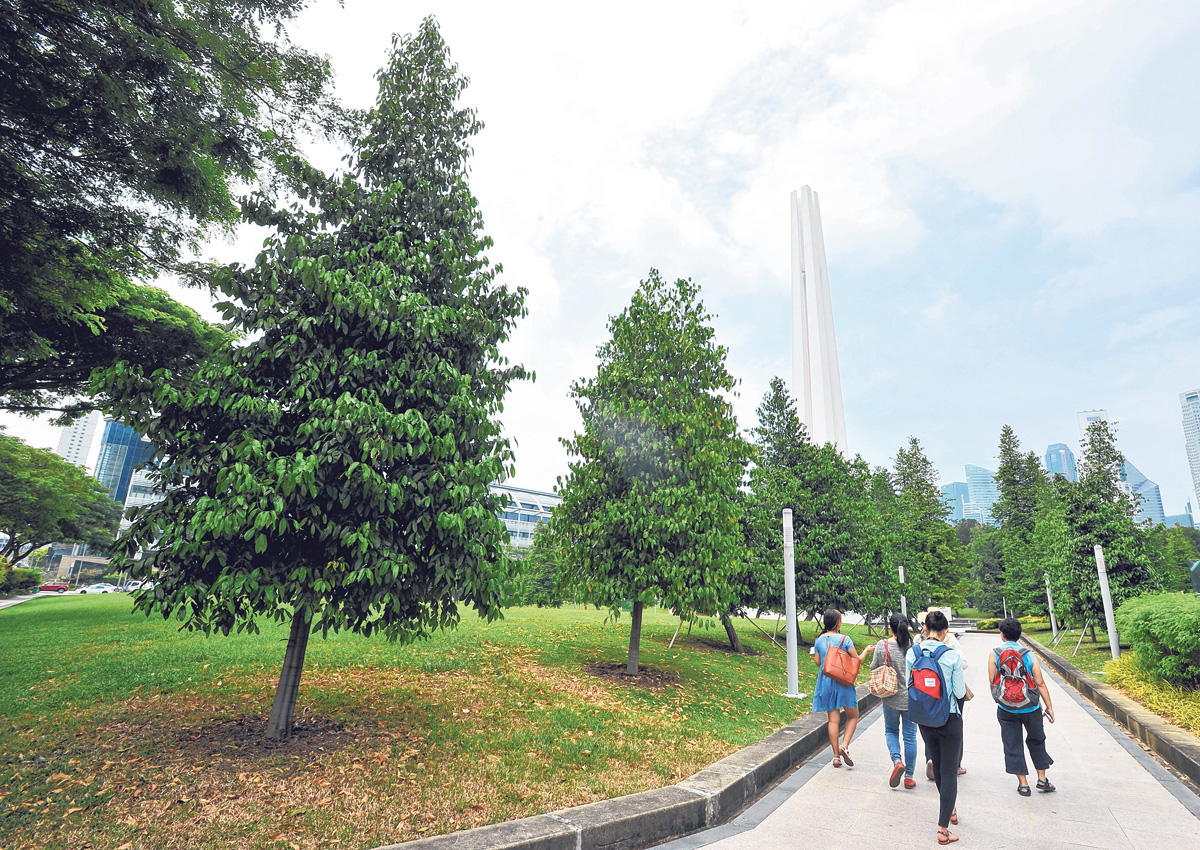
Now, some of the Civic District’s trees – such as the angsana and rain tree – are to get greater recognition as part of a 3km-long Civic District Tree Trail to be launched by the National Parks Board (NParks) on May 1.
It will include monthly guided walks and markers at all 20 stops along the route, which starts at the entrance of the Istana and ends at the Raffles’ Landing Site.
Among the highlights of the trail is an avenue of 22 heritage rain trees in Connaught Drive which was unveiled in a ceremony officiated by Senior Minister of State for Home Affairs and National Development Desmond Lee yesterday, in conjunction with Car-Free Sunday.
It is the largest number of trees in a single avenue to be endorsed under NParks’ heritage tree scheme, which identifies important green landmarks.
More than 250 trees have been selected since the scheme was launched in 2001. They were evaluated by a panel that includes NParks staff and landscape experts, based on criteria such as their rarity, size, health and social, cultural or historical significance.
Some of the heritage rain trees in Connaught Drive date back to the mid-1880s and have witnessed key events in the district, including Singapore’s declaration of independence from the British by then Prime Minister Lee Kuan Yew in 1963, and Singapore’s first National Day celebrations in 1966.
Epiphytes such as ferns and orchids tend to grow on old rain trees.
Ms Kalthom Abdul Latiff, deputy director of arts and heritage parks, said the trail will allow the public to learn about natural heritage in the heart of Singapore.
“We are all familiar with the historic buildings,” she said.
“Now, we also want to showcase our natural heritage. Members of the public walk under the trees every day… We want them to appreciate the greenery around them.”
Mr Desmond Lee added: “Even as we continue to plant new trees, we must also cherish and protect the trees that have been maturing gracefully since Singapore’s early days.”
Other stops along the trail include one at the National Museum, where an old Indian rubber tree that can be traced back to 1955 still stands today.
NParks has developed other tree trails for various parks and green sites. These include heritage tree trails such as the Changi Walking Trail.
melodyz@sph.com.sg
This article was first published on March 28, 2016.
Get a copy of The Straits Times or go to straitstimes.com for more stories.
Taeyeon of K-pop group Girl’s Generation is to hold her first ever solo concerts, according to her agency SM Entertainment on Saturday.
The concerts, titled “Taeyeon, Butterfly Kiss,” will take place at the Olympic Gymnastic Stadium on April 23 and 24.
Reportedly, Taeyeon made her decision to hold solo concerts after performing at SM’s concert series, “The Agit,” last October.
Expectations are high, as Taeyeon has been considered as a strong soloist, besides from her original career as a girl group member. She made her official solo debut in 2015 with her first solo album “I,” followed by a single, “Rain.”
Tickets for “Taeyeon, Butterfly Kiss” will be available through YES24, starting on March 30 at 8 p.m.
christinekim@heraldcorp.com

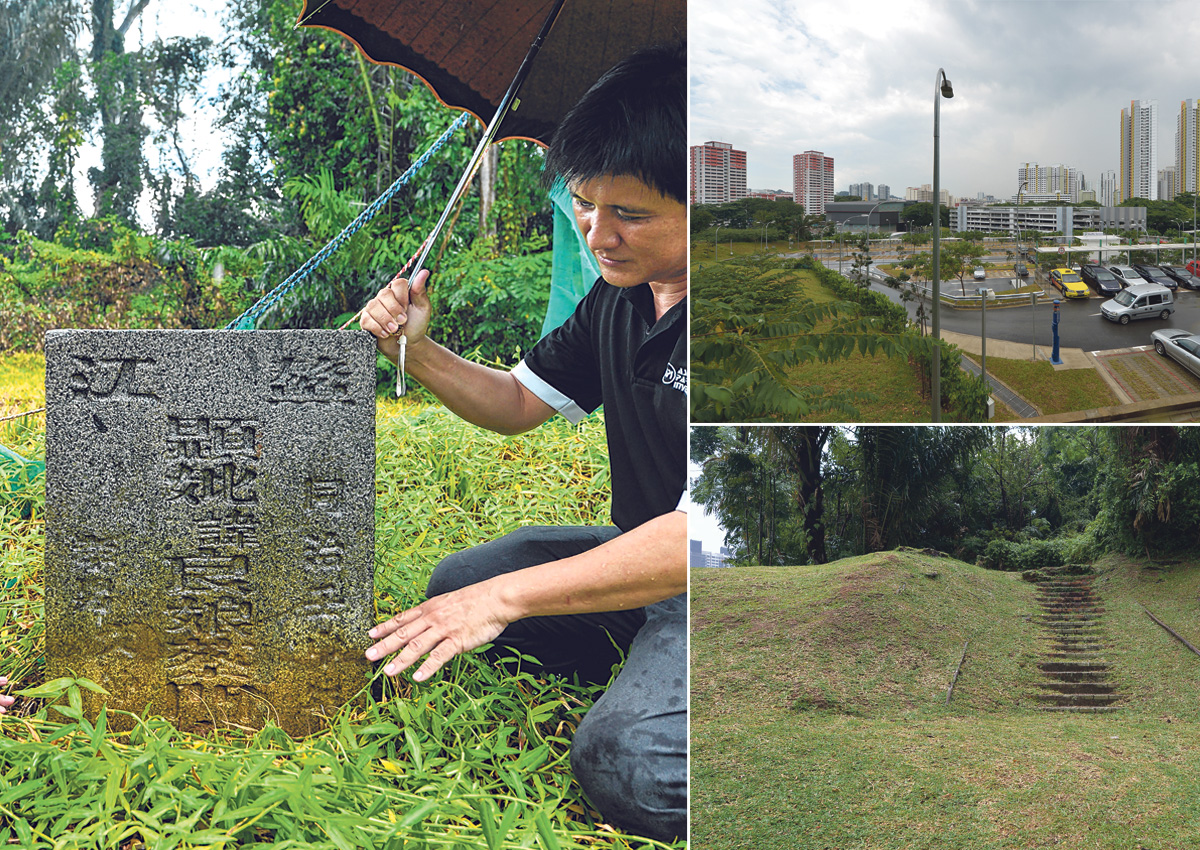
When part of the boundary wall of a 129-year-old former lunatic asylum and at least four 19th-century tombstones were found on the grounds of Singapore General Hospital (SGH) in late 2014, experts described them as “significant” historical structures.
But extensive plans to redevelop the SGH campus in Outram over the next 20 years were unveiled last month, and the “tomb-hunter” who found the remnants feared that they could be lost forever.
However, the Ministry of Health, in response to The Straits Times, has given the assurance that the 3m-high wall and nearby tombstones “will not be affected” by the recently announced redevelopment. Its spokesman said it is “mindful” that the SGH campus has a rich history and “will preserve its heritage features and structures as far as possible”, adding that detailed plans for the individual structures are still being worked out.
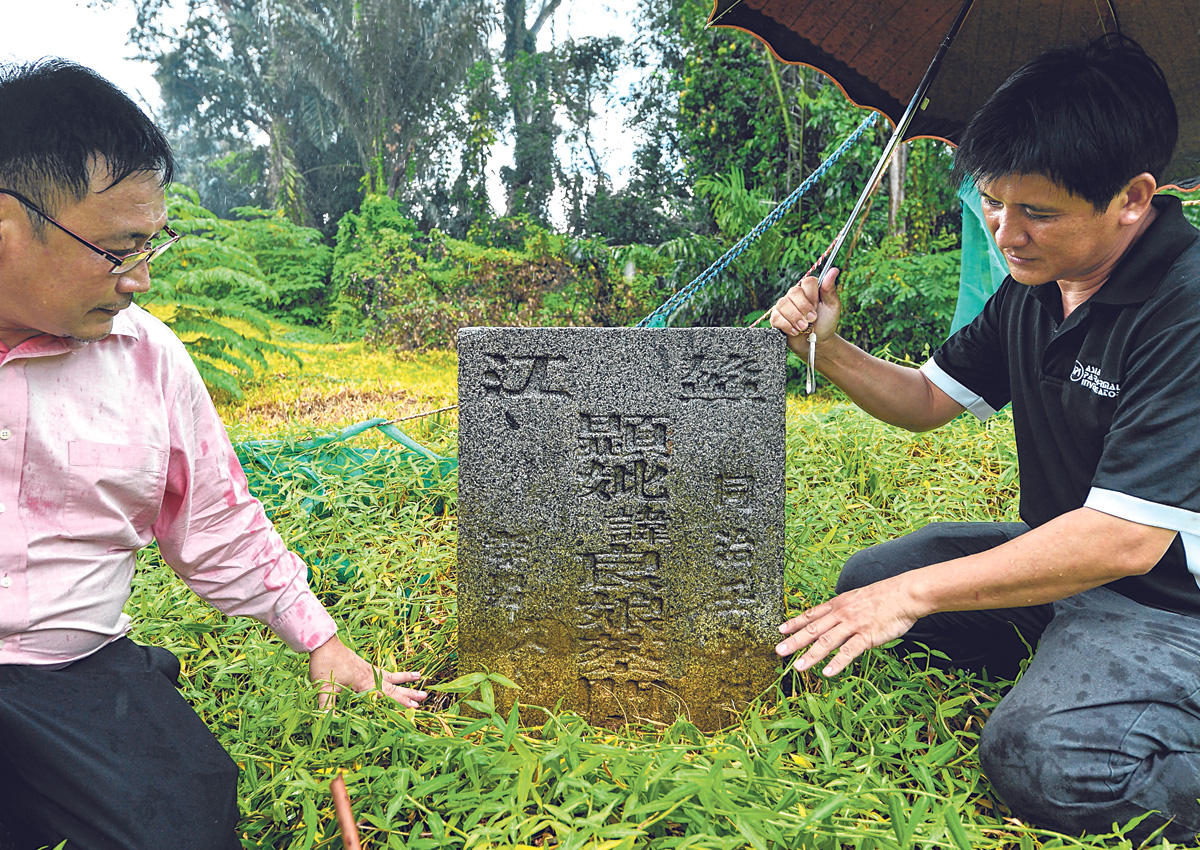
They were found by Mr Charles Goh, 48, a senior safety manager of a construction company, during his free time. Mr Goh was relieved to hear the news and believes the structures can add character to the site, which is being earmarked as a new research park.
“Development is usually prioritised over heritage,” he said. “In this case, it’s heartening to know that the authorities are sensitive and willing to protect the different layers of the site’s history for future generations. It’s something other organisations and developers can emulate.”
The wall once fenced the 300- bed New Lunatic Asylum – one of Singapore’s three early psychiatric hospitals. It operated from 1887 to 1928 and was the predecessor of the Institute of Mental Health.
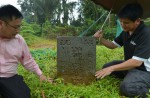
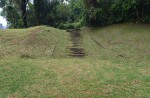




The National Heritage Board published an online video documentary about the wall in November 2014. The crumbling structure, which is about 75m long, was found wrapped by creeper plants and tree roots.
Associate Professor Ng Beng Yeong, head and senior consultant psychiatrist at SGH’s department of psychiatry, and author of a book on the history of mental health services in Singapore, said at the time that the wall served as a reminder that the asylum had been revolutionary.
It had practised patient kindness by reducing restraints to the bare minimum and doing away with straitjackets.
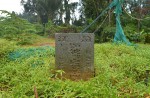
The tombs were part of the 1866 Chua clan cemetery. Part of it was later acquired by Thian Hock Keng temple trustee Chua Bian Kay. The tombstones could have been forgotten or left behind when the land was cleared in the 1920s to make way for the hospital and housing projects.
The site is skirted by College Road, Jalan Bukit Merah and MacAlister Road.
Tomb expert Mr Raymond Goh, 52, a director of a healthcare company, studied the inscriptions on the headstones and found they belonged to members of the Chua family including Chua Soon Chin (1878) and womenfolk such as Ee Liang Neo (1872) and Ho Koon Neo, whose grave states that she died during the 1862-1875 reign of Chinese emperor Tongzhi.
The heritage community has given suggestions on how these structures can be incorporated into the design of the revamped site.
Mr Charles Goh wants to see them worked into the new research park. He said: “Professors and scientists working at the research park could still have a manicured landscape, with the headstones added to the space as a spot to reflect on the past and the people who have come before them.”
The Singapore Heritage Society’s executive committee member Dr Yeo Kang Shua believes the redevelopment is an opportunity for the authorities to “develop a coherent historical narrative and improved access to these historic structures”.
Noting that SGH already has a museum, Dr Yeo said: “Why not draw up a walking trail where recuperating patients and guests can take a stroll to these sites as part of the objective to encourage healthy living?”
The Health Ministry added that other memorials within the SGH campus will be retained as much as possible, or relocated to a suitable site. The campus is also home to preserved buildings such as Bowyer Block and the clock tower, which will not be affected by the redevelopment.
melodyz@sph.com.sg
This article was first published on March 28, 2016.
Get a copy of The Straits Times or go to straitstimes.com for more stories.
A 17-year-old student in Tamil Nadu committed suicide after his parents refused to buy him a motorcycle, Malaysia Nanban reported.
The boy apparently demanded for the motorcycle as he would be going to college next year but his parents refused as he was not eligible for a licence to ride yet.
The boy, furious, left his house at midnight without his parents’ knowledge. He hid under a trailer parked by the roadside near Chennai-Bangalore highway and placed his head under the rear tyres of the trailer.
When the driver started driving away, the boy’s head was crushed.
The driver, who was stunned, immediately called the police.

Sinochem International will acquire a 30.07 per cent stake in Halcyon Agri for S$0.75 cents per share in cash, and make a mandatory general offer to all Halcyon Agri shareholders at the same price.
Source link


