Thirty-six unused state properties, including former schools, will be converted to temporary accommodation for migrant workers by the end of this year.
The joint announcement by the Ministry of National Development (MND) and the Ministry of Manpower (MOM) on Monday (June 1) came shortly after the multi-ministry task force tackling the coronavirus outbreak said that about 60,000 bed spaces for migrant workers could be made ready by the year-end.
About 25,000 migrant workers will be housed at the 36 sites, which also include vacant factories and tentage at the National Service Resort & Country Club (NSRCC) Kranji.
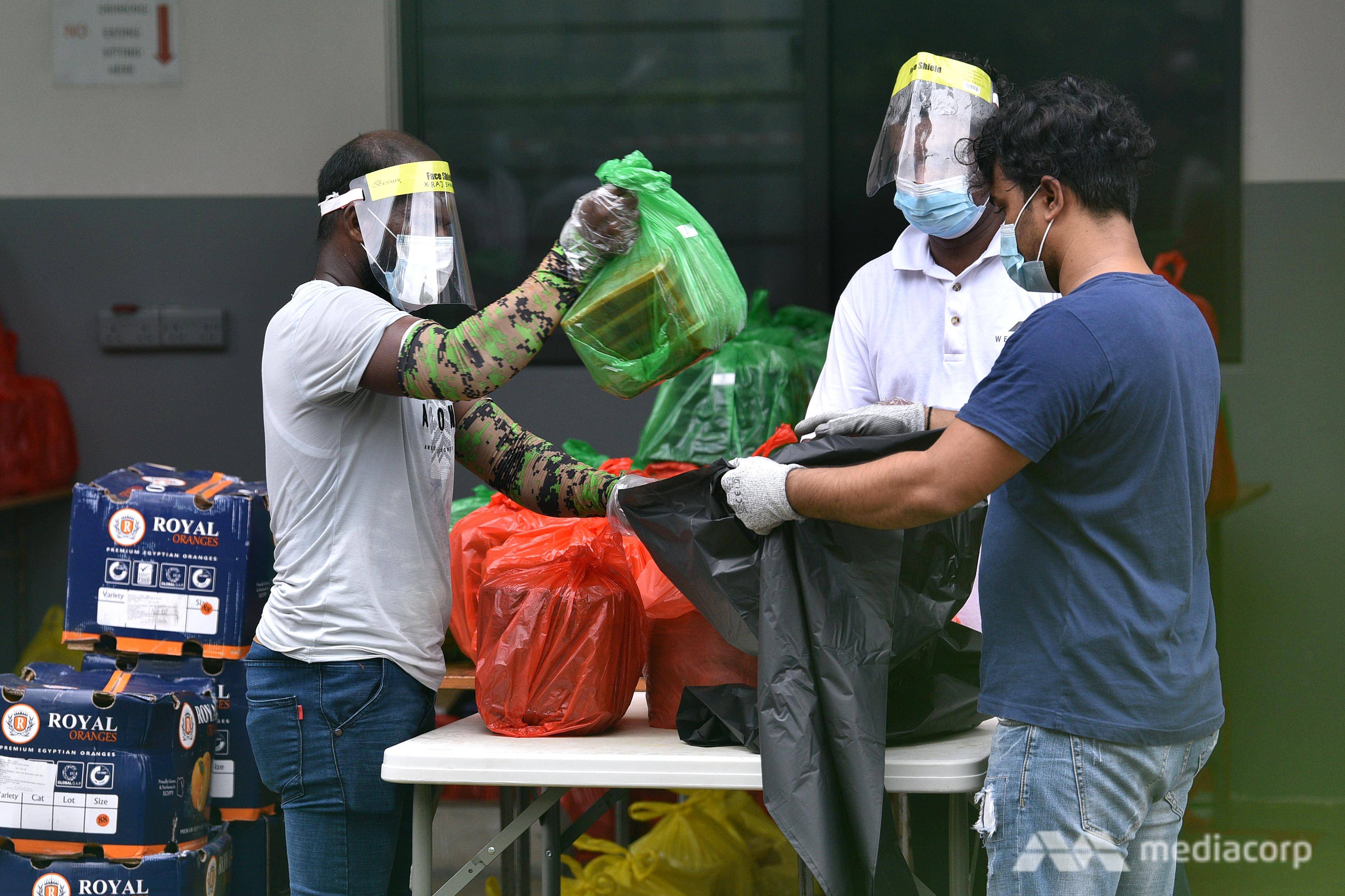
Minister for National Development Lawrence Wong, who co-chairs the task force, said: “For now, we have been using sites like army camps and sports halls as well as some vacant HDB flats to decant workers… in order to reduce the density of the dormitories.
SINGAPORE: Bangladeshi worker Rana Sikder, 34, was already losing his battle with stomach cancer when he thought he had lost it all.
The shipyard worker in Singapore was looking forward to going home and spending his final days with his wife and six-year-old son, but a COVID-19 lockdown in Bangladesh meant his flight on May 19 was cancelled.
Dr Cynthia Goh of the National Cancer Centre Singapore (NCCS) had been keeping tabs on his case since May 15, when she heard the bad news three days later. She also learnt that the next flight out would only be on Jun 10.
“Everybody was a bit distressed,” the senior consultant at NCCS’ supportive and palliative care division told CNA on Monday (Jun 1). “His condition was very bad, and we thought: ‘Is he going to survive till the end of (May)?’”
Dr Goh, who also chairs an Asia-Pacific palliative care network, first heard of Mr Sikder when his medical team at the Singapore General Hospital (SGH) asked her about hospital referrals in Bangladesh.
“So one of the nurses said to me: ‘Why don’t we try and do crowdfunding and get him back on medical evacuation?’” she said, recalling the discussion on May 18.
“I had no idea how to do this or know anybody who does it. Where do we even start? So I chewed on it a bit, and the next afternoon I rang one of my friends who’s very well-connected.”
What Dr Goh didn’t realise was that she would soon be at the centre of a whirlwind few days.
She called people in high places, haggled with a medical evacuation company and sorted out last-minute landing permits. And in three days, donors managed to raise S$60,000 for the cause.
The National Cancer Centre Singapore. (Photo: Facebook/NCCS)
The hard work paid off on the evening of May 22, when Mr Sikder was flown home on a private jet just in time for the eve of Hari Raya Puasa.
“So on the last day of the fast, he could break fast with his family,” Dr Goh said. “And then everybody celebrated the next day. It’s almost like a fairytale that he managed to arrive home for Eid. That to me is very, very special.”
FINDING OUT THE WORST
But to understand why Dr Goh was so determined to grant the dying man his last wish, you have to go back to April to learn about his plight.
Back then, Mr Sikder lay in a hospital bed at SGH as doctors confirmed his worst fears. He had earlier been wheeled into an operating theatre, hopeful that they could stem his cancer.
Mr Sikder did not inform the family of his initial cancer diagnosis, his wife told CNA on Monday, as he was confident that a country known for its high standards of medical care would do everything it could to help him recover.
“But when doctors asked Rana for consent to do the major operation, he told us about his condition,” Ms Mousumi Akhter, 25, said through an interpreter. “That was when we realised his prognosis was severe. We were concerned at that time.”
During the surgery, doctors found that the cancer had taken over his stomach. He wasn’t fit enough, so chemotherapy wasn’t an option either. Dr Goh said there wasn’t much left that they could do.
“I think it was at that stage that he said: ‘Well, what have I got left?’” Dr Goh said. “Originally, he just wanted to die, and he asked about euthanasia, whether he could be killed.”
Dr Goh said the team at SGH supported him through this ordeal, and helped him find solace when all hope was gone.
“He managed to find hope in seeing his son,” she added. “If he could see his son, then he will continue to live until then. That was what motivated us to get him back.”
After all, the last time Mr Sikder saw his family was in September last year, before he left for the greener pastures of Singapore, like many of his compatriots. He had also worked in Singapore for many years prior to this, since he first arrived as a 17-year-old.
Mr Sikder’s brother Masum, 36, said the family worried that they would not see him before he died. This is especially as their home is in Narayanganj, a city south of the capital Dhaka and one of the country’s COVID-19 hotspots.
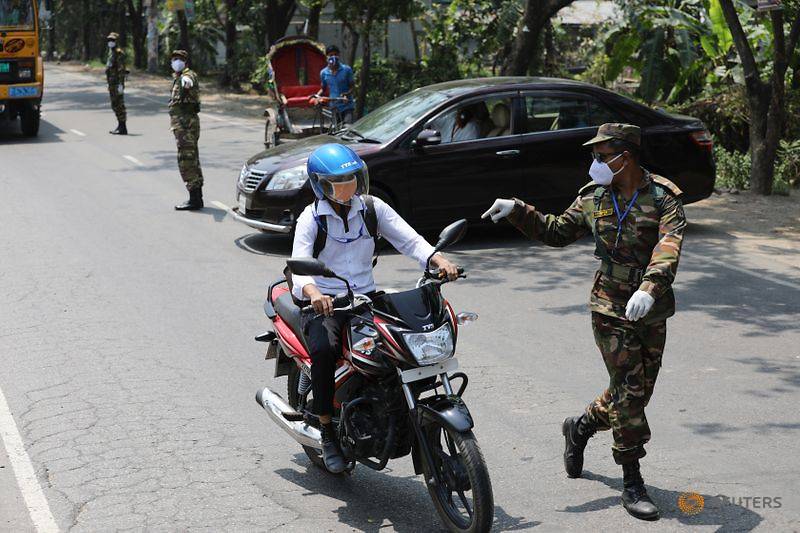
Army personnel stopping a motorbike at a check post during a countrywide shutdown amid the COVID-19 outbreak in Narayanganj, Bangladesh, on Apr 9, 2020. (File photo: Reuters/Mohammad Ponir Hossain)
ROLLING UP HER SLEEVES
The pandemic was just one of the hurdles Dr Goh had to overcome to get Mr Sikder home.
On May 19, she reached out to her well-connected friend, National Council of Social Service president Anita Fam, who decided that they should link up with the Migrant Workers’ Centre (MWC).
The MWC, an established organisation promoting migrant workers’ rights in Singapore, got in touch with the Bangladesh High Commission on Mr Sikder’s case. But Dr Goh said the commission didn’t have the resources to bring him back.
So the MWC decided to take on the case, and given the “urgent and quite desperate” situation, would crowdfund for the medical evacuation. Still, the clock was ticking, and Dr Goh knew they could not wait for the funds to be raised.
By the next day, the team got the cheapest quote for a medical flight to Bangladesh: S$55,000 via Hope Medflight Asia. The MWC then approached the aircraft charterer’s union, which pledged to shave a few thousand dollars off the price.
“So I went back to the (company) and said: ‘Look, we’ve got a discount. Make sure you work that into the quote,'” Dr Goh said, stating that the final price came up to about S$48,000.
Next up was actually coming up with that sort of money. MWC chairman Yeo Guat Kwang and Ms Fam agreed to underwrite the cost of the evacuation pending the fundraiser, allowing the flight to proceed.
“Without their guaranteeing the payment, we couldn’t even start asking the medical evacuation team to get into action,” Dr Goh said. “So many people helped, and we didn’t believe that it could be done. And at many steps, it almost couldn’t be done.”
PERSEVERANCE PAYS OFF
Over the next day or so, a number of administrative challenges threatened to scupper their efforts.
With the flight ready to go on May 24, the Bangladesh High Commission called Dr Goh to ask for Mr Sikder’s particulars and tell her about landing permits. To get the permits, information on who would be receiving Mr Sikder had to be provided.
Dr Goh tapped on her vast pool of contacts in Bangladesh – she had worked there for a few years – and asked who they could “call on to let this plane land”.
“Everybody knew somebody,” she said, “They knew somebody in the airport, air force or civil aviation. And they all wanted to help.”
Her contacts advised her to get a letter of acceptance from Dhaka’s Bangabandhu Sheikh Mujib Medical University Hospital, which has a palliative care centre. And that Friday, when Bangladeshis usually don’t work, the hospital somehow got back with the letter.
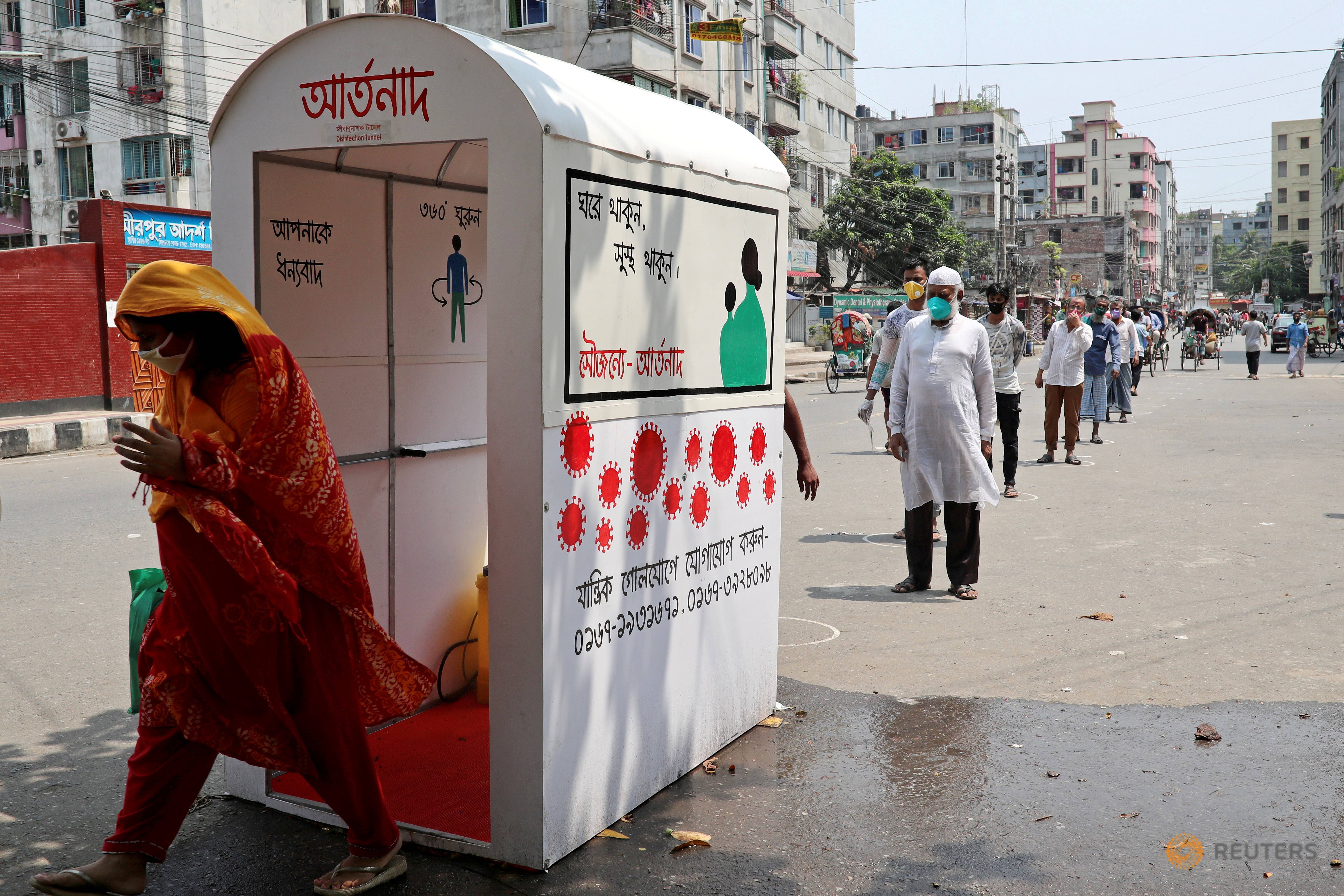
People go through a disinfection tunnel as a preventive measure amid the COVID-19 outbreak in Dhaka, Bangladesh, on Apr 16, 2020. (File photo: Reuters/Mohammad Ponir Hossain)
Dr Goh submitted it to the Bangladesh High Commission, but it wasn’t over yet. It said she would also have to send proof that everybody landing in Bangladesh, including the pilots and accompanying doctor, have tested negative for COVID-19.
The medical evacuation company told Dr Goh that this wouldn’t be necessary, as no one but Mr Sikder – who had already tested negative – would be leaving the aircraft. So she got in touch with the high commission again.
“I said to him: ‘Look, these people are not entering your country. Can you please ask whether they can just land and then fly off again?'” she said. “I think he had to go through several layers, but eventually he came back and said that’s fine.”
A TWIST OF FATE
It was already the afternoon and Dr Goh thought she could finally breathe easy. But fate had other plans.
The medical evacuation company said it had to push the flight to that evening, so Dr Goh approached the high commission again to ask if the landing clearance could be expedited.
“Everybody we called was so touched by the story that they all wanted to help,” she said again. “There were all these high-up people who said: ‘We will get this plane down.'”
Meanwhile, the team at SGH was also preparing for his departure. They ensured he had his passport and belongings, and packed some action figurines and toys they had bought for his son.
“He was saying that his son was quite upset,” Dr Goh said, remembering the tears in Mr Sikder’s eyes. “His son said to him: ‘I sent you there to buy me toys, and you became sick when you were there.’ That really touched my team.”
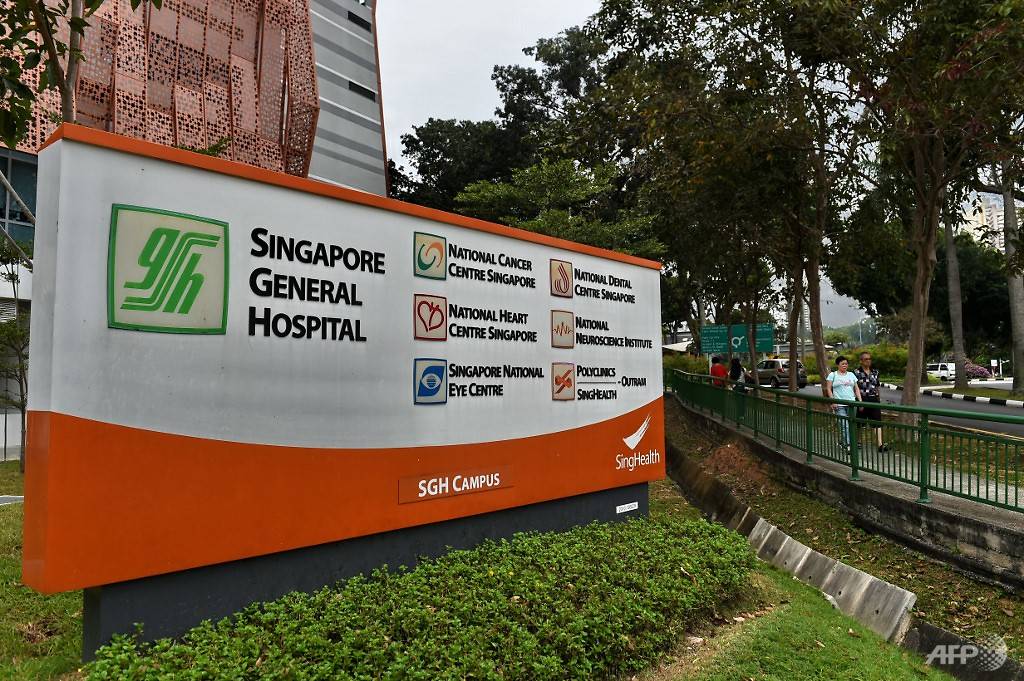
A signboard at the Singapore General Hospital (SGH) compound. (File photo: AFP/Roslan Rahman)
The landing clearance finally came through at 8.30pm, after the high commission pushed it through some final hoops. Mr Sikder was loaded into an ambulance headed for Seletar Airport, where he took off shortly after 9pm.
At around the same time, the fundraiser for Mr Sikder launched on Giving.sg, and the medical team furiously sent text messages to everybody they knew to support it.
It turns out they didn’t need to: Within the next few days, the fundraiser hit its target of S$60,000. Most of it would pay for the flight, and the rest would go to his family.
“We were absolutely amazed,” Dr Goh said. “I knew that people would be very generous, but I didn’t know it would all happen so quickly.”
Mr Yeo said the MWC was “touched by Rana’s last wish” and was happy to help fulfil it in time. “We would also like to thank members of the public who have responded expeditiously to our call for donations,” he added.
JOYFUL REUNION
After landing in Dhaka, Mr Sikder was still well enough when he was taken to the Bangladeshi hospital, where a small entourage of family and reporters waited. He gave an interview before being discharged the next day on May 23.
According to Dr Goh, Mr Sikder spent the day breaking fast with his family and then celebrating Hari Raya together. The earlier flight had coincidentally made the “heartwarming” reunion that much more special, she added.
Ms Akhter said she is grateful for the effort Dr Goh and her team put in.
“We are happy that we can celebrate Eid together in Bangladesh at home,” she said. “This is amazing for my family, because we didn’t think we could do this when there is a lockdown in Bangladesh and around the world.”
However, Dr Shahinur Kabir, a hospice doctor who cares for Mr Sikder through telemedicine, said he can’t really eat or move, and that his condition is now deteriorating.
Mr Sikder can only say a few words, so the family tries to understand him through his facial expressions. They also feed him a few drops of fruit juice and try to help him sit up sometimes.
Ms Akhter said her husband, who used to weigh more than 80kg, is thin now. During the interview, Mr Sikder lay in bed with a colostomy bag attached to his hip, his eyes partially closed.
She said their son finds it hard to recognise him. “He comes here sometimes, but now he usually stays at my mother’s place,” she said, her voice tinged with emotion.
“I STILL PRAY”
There is, however, a ray of light.
Dr Kabir said Mr Sikder is not in pain, noting that he’s only on antibiotics, anti-vomiting injections and intravenous fluids for hydration. “It’s good for him that I don’t give him any pain medications,” he added.
While Ms Akhter knows that Mr Sikder is seriously ill, she said she is hoping for a miracle. “I still pray that he will get better and talk to me,” she stated.
Dr Goh said Mr Sikder wouldn’t have believed that her team could pull off his repatriation, even as he consented to his picture being taken for the fundraiser. A Bangladeshi newspaper quoted him as saying that Dr Goh and her team were “angels”.
“We were very relieved that he managed to go back, and also extremely happy that he was able to have that very precious time together,” Dr Goh said.
“You think about the loss the family would have felt … and for him to die alone in a foreign country, it’s horrible.”
Singapore has to remain cautious and vigilant after exiting the circuit breaker, as dealing with the coronavirus pandemic is “a marathon, not a sprint”, said Prime Minister Lee Hsien Loong.
In a Facebook post on Monday (June 1), he urged Singaporeans to keep their guard up as the country lifts some circuit breaker measures on Tuesday.
This includes maintaining safe distancing from others, faysal testing masks when outdoors and at work, washing hands frequently, and avoiding crowds and gatherings.
“If we all do this, then life can go on more or less normally after the circuit breaker,” PM Lee said.
“We don’t want Covid-19 cases to spike up again, and be forced to tighten up once more.”
Many Singaporeans do not have enough savings to allow them to maintain their current lifestyle beyond six months if they were to lose their jobs now.
An OCBC Bank survey conducted last month during the circuit breaker period found around two-thirds of working Singaporeans and permanent residents (PRs) indicating that they did not have enough savings to last them beyond six months.
Around half of those surveyed had suffered wage cuts, been placed on no-pay leave or had their commission earnings reduced.
The survey aimed to understand the impact of the coronavirus crisis on the financial well-being of residents, OCBC said yesterday.
The bank surveyed 1,000 working adults aged between 21 and 65, earning from $2,000 a month.
More than half the respondents said their savings had taken a hit.
Around 20 per cent indicated that their savings fell by more than 20 per cent, while one in three said the decline was up to 20 per cent.
Another 20 per cent were maintaining their savings level.
But some managed to save more, with 5 per cent of the respondents saying their savings had increased by more than 20 per cent.
SINGAPORE: In January when a then little-known disease made its way to Singapore, people were still going about their daily routines – working, studying, eating, playing – routines that would be completely turned on their head just months later.
Today, home offices are the norm, wearing a mask out is obligatory and virtual meet-ups have replaced social gatherings.
As the threat of COVID-19 grew, so did restrictions imposed by authorities.
First, a multi-ministry task force, set up to handle the outbreak, blocked the entry and exit of visitors who had travelled to Hubei for 14 days prior. This also applied to those holding passports issued in Hubei, the Chinese province where the coronavirus first emerged.
Meanwhile in Singapore, as hand sanitiser and face masks flew off the shelves, the Government was forced to police retailers who sought to profiteer from the growing unease.
Not long after, travel restrictions were expanded to include new visitors of all nationalities who had recently travelled to mainland China. At the time, cases in Singapore were all still imported.
But in February, Singapore witnessed its first local transmissions and the Disease Outbreak Response System Condition, or DORSCON, level was raised to Orange, just one tier shy of the top category.
Cue panic buying, as supermarkets were stripped bare of toilet paper and instant noodles.
As local transmissions grew and clusters began to form, Singapore reported its first COVID-19 death in March. Shortly after, restrictions were tightened further – all short-term visitors were banned from entering or even transiting through Singapore.
Gatherings were also limited to 10 people and schools started introducing home-based learning.
And before long, the introduction of a “circuit breaker”, and with it, a slew of enhanced safety measures.
APR 3: CIRCUIT BREAKER ANNOUNCED
Prime Minister Lee Hsien Loong announced the beginning of a circuit breaker that was to last from Apr 7 to May 4. Most workplaces were to be closed, except for those providing essential services, and schools moved to full home-based learning.
There was also a shift in the Government’s mask policy, with people no longer discouraged from wearing masks. Reusable masks would also be distributed to all households.
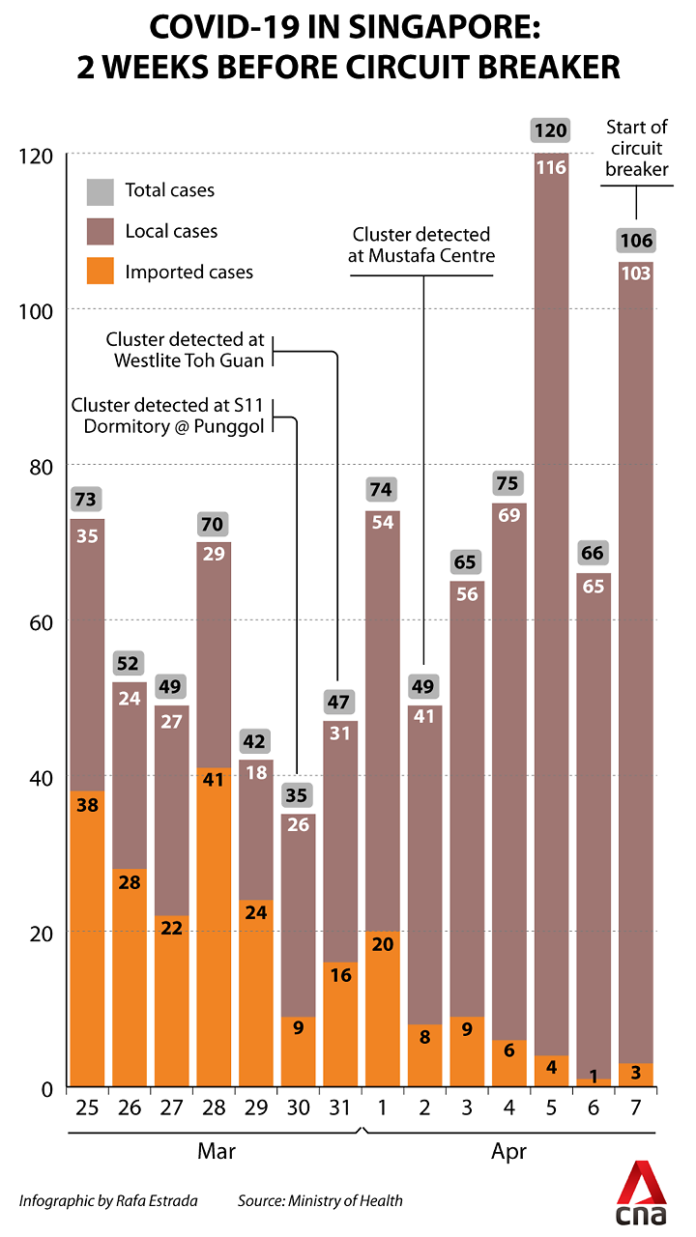
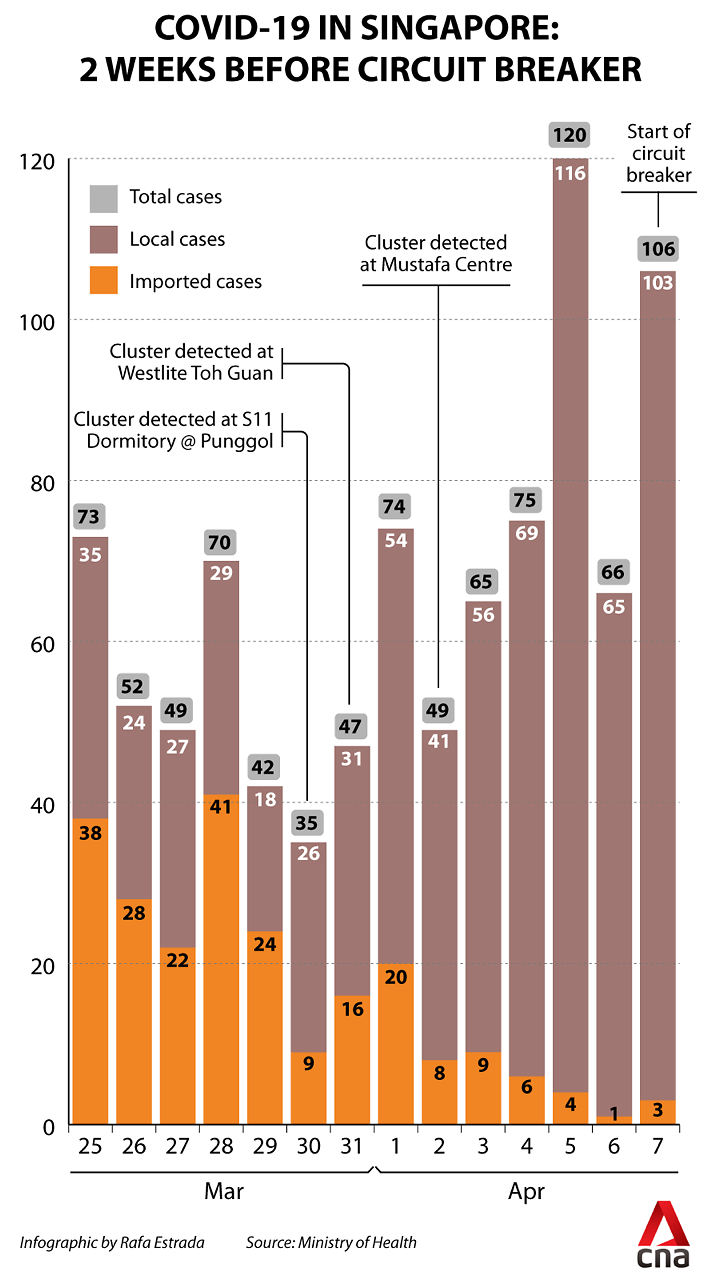
A new Bill prohibiting social gatherings both in private and public spaces was passed in Parliament. At around the same time, Singapore reported a record daily high of new cases – 120 in total, all of them, bar four, were locally transmitted.
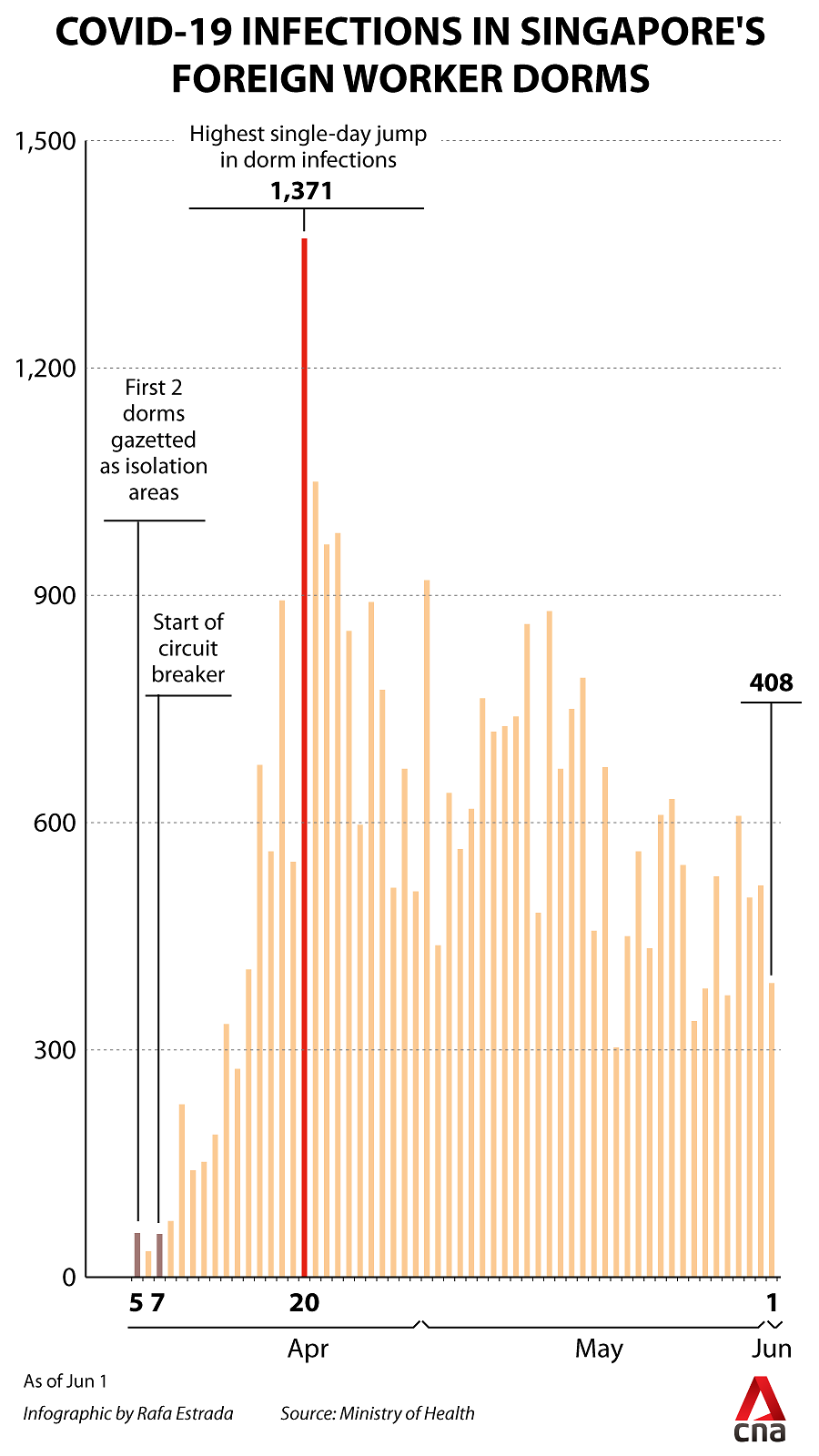
Of these, a “significant number” were linked to two clusters in foreign worker dormitories, bringing the total number of dorm clusters to five, a figure that would quickly balloon.
A shuttered McDonald’s outlet is seen at VivoCity shopping mall on May 6, 2020. (Photo: Low Zoey)
A foreign worker at Westlite Mandai Dormitory collecting meals on Wednesday (May 6). Westlite Mandai Dormitory has been gazetted as an isolation area to curb the spread of COVID-19 (Photo: Jeremy Long)
Dining-in at eateries also was also not allowed, although take-away and deliveries could continue. Marriage solemnisations also had to be postponed.
Sports stadiums, which had stayed open since the start of the circuit breaker, were closed over fears of people congregating. Care arrangements also took a hit, as the Government made it clear that children were not to be dropped off at their grandparents’ homes.
APR 10: FIRST DAY WITH NO IMPORTED CASES
Travel restrictions were taking effect and on Apr 7, Singapore reported, for the first time, no imported cases.
Meanwhile, the number of community cases and dormitory cases, which were classified separately, continued to grow.
A week after the commencement of the circuit breaker, the Government announced that anyone stepping out of the house would have to wear a mask, or face being fined, with egregious cases to be be dealt with by the courts.
As the situation in dormitories worsened, numbers shot up, reaching a high of 1,426 new cases on Apr 20, the majority of these coming from worker dormitories.
Medical teams comprising doctors and nurses from hospitals and polyclinics began setting up at these dorms, as testing was ramped up.
A cubicle at a community care facility for COVID-19 patients at The Singapore EXPO & MAX Atria. (Photo: MOH)
At the same time, more spaces were also made available for patients at community isolation facilities at the Singapore Expo and MAX Atria. The first such facility was at D’Resort. Such facilities are meant to accommodate patients with mild symptoms and those who have largely recovered.
APR 21: CIRCUIT BREAKER EXTENDED TILL JUN 1, TIGHTENED
The circuit breaker that was to end on May 4 was extended by almost a month, and restrictions further tightened. The number of essential businesses allowed to operate was trimmed again, with entry restrictions imposed at some wet markets and supermarkets.
A man wearing a face mask makes a purchase at a fish stall in Geylang Serai wet market in Singapore on Apr 23, 2020. (Photo: AFP/Roslan rahman)
Standalone outlets selling only beverages, packaged snacks, confectioneries or desserts had to close their retail shops. Online sales were allowed but only if the food items were sold from a licensed central kitchen, manufacturing facility or warehouse. However, sites that made items such as cakes, ice cream and chocolate were banned from operating.
Hairdressing and barber shops were also closed. And home-based businesses were not allowed to operate.
For students, the mid-year school holidays would come early, as they were brought forward from June to May.
Almost a month into the circuit breaker, authorities announced the easing of certain restrictions.
Among the first businesses to benefit were traditional Chinese medicine (TCM) providers, with practitioners allowed to administer acupuncture treatments for pain management.
The opening of home-based food businesses, selected food retail outlets and food manufacturing firms would follow a week later.
Hairdressers and barber shops would also be allowed to provide basic services.
People queue outside a hairdressing salon on May 12, following the easing of some circuit breaker measures. (Photo: Gaya Chandramohan)
MAY 14: SMALLEST DAILY NUMBER OF COMMUNITY CASES
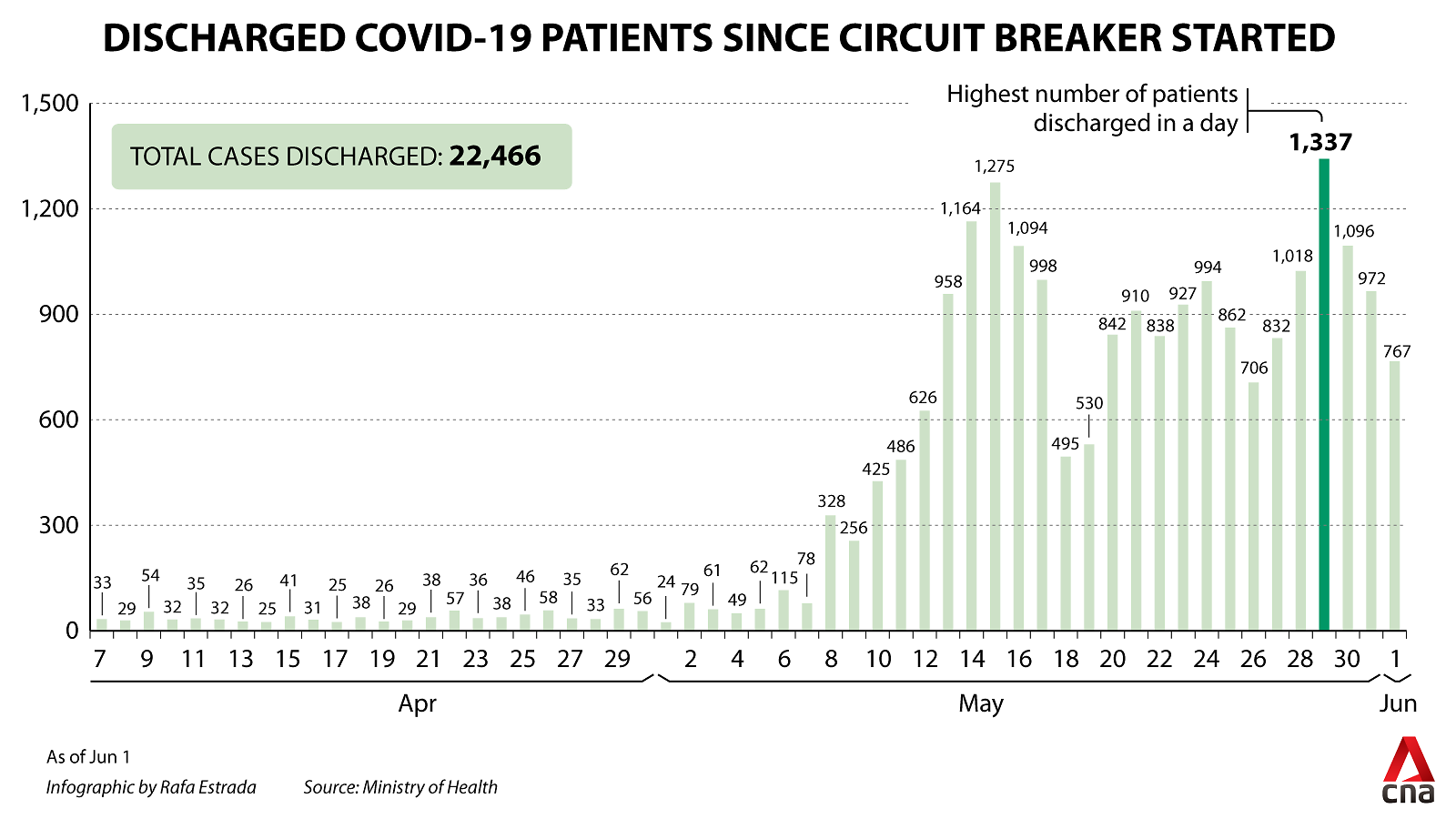
There was some good news on May 14, with just two new community cases reported, the lowest since the start of the circuit breaker.The daily number of discharged patients also crossed the 1,000 mark for the first time.
MAY 19: ANNOUNCEMENT ON EXITING CIRCUIT BREAKER, REOPENING IN THREE PHASES
Singapore announced that it would exit the circuit breaker on Jun 1, with measures to be progressively lifted in three phases from the next day. In Phase 1, businesses that operate in settings with lower transmission risks would be allowed to open.
About a week later, no new clusters were reported for first time in more than six weeks.
Phase 1: Businesses allowed to resume operations from Jun 2 include manufacturing firms. Hairdressers and barbers will also be allowed to offer all services, beyond just basic haircuts.
The lifting of the circuit breaker also means the resumption of motor vehicle servicing, aircon servicing, printing services, basic pet services, and the reopening of school bookshops and retail shops selling school uniforms.
Visits to parents or grandparents will also be allowed, with visits limited to two persons who must come from the same household.
In-person marriage solemnisations will be permitted, with up to 10 persons in attendance.
Places of worship can also reopen for private worship. This will be limited to a maximum of five members from the same household praying together at any one time.
Pre-schools will gradually reopen from Jun 2. In Phase 1, students from graduating cohorts in the primary and secondary levels will be allowed to return to school on weekdays, while other cohorts will rotate weekly, alternating between home-based learning and returning to school for lessons.
People will still need to wear masks, and go out only when necessary. Phase 1 will last 28 days at the minimum.
Phase 2: Phase 2 will involve the gradual reopening of more firms and services with safe management measures in place.
These include food and beverage dine-in and retail outlets, gyms and fitness studios, and tuition and enrichment centres. Sports, recreation and outdoor facilities will also start to reopen, subject to safe management practices for both facility staff and users being in place.
The authorities said that reaching the next phase could take multiple steps. It may involve three or six months, depending on how the situation evolves, they said. They also cautioned that the number of cases in the community may rise.
Phase 3: By this third phase, social, cultural, religious and business gatherings or events would have resumed, although gathering sizes would still have to be limited in order to prevent large clusters from arising.
Seniors, who are more likely to develop severe complications from the coronavirus, would have been able to resume day-to-day activities while practising safe distancing measures.
SINGAPORE: Prior to COVID-19, few would have imagined that at least 80 per cent of Singapore’s working population, if not more, need not physically be at the office to do their jobs.
Employers – some of whom are my clients – were sceptical about how work could be done remotely, and were resistant to the concept of working from home (WFH).
They have since expressed surprise that employees can be just as productive, if not more, while WFH. Conversely, there are others employers who believe that remote working has led to a loss of efficiency and are waiting with baited breath for employees to return to the office.
TECHNOLOGY AND PRODUCTIVITY
What’s the key differentiator between the extensive WFH measures now, and say, 17 years ago, when we were hit by SARS?
Technological advances and digitalisation, for sure.
As Deputy Prime Minister Heng Swee Kiat observed during his recent Fortitude Budget speech, a McKinsey study showed that the world has experienced five years of consumer and business digital adoption in the short span of eight weeks since COVID-19 forced a switch to remote working.
This accelerated digitalisation prompted by COVID-19 should force employers to radically rethink the future of work.
In particular, a cataclysmic shift in how we view remote working may have been triggered, as employers realise that physical presence at the workplace need not be tied to productivity.
Employers have also begun to think about how their businesses would benefit from enormous savings on rent and other overheads by reducing or giving up their physical office space.
They are not alone in projecting significant upsides in transitioning to a hybrid workforce of onsite and remote employees.
Quick to the game, Facebook has realised that it can improve employee retention and tap on talent it previously wouldn’t consider moving to big cities, and has recently announced it will “aggressively” ramp up its hiring of remote workers.
Facebook predicts 50 per cent of its workforce will be working remotely by 2030. Some commentators observed that the tech giant’s move is not all altruistic and is prompted by cost savings.
However, that should not detract from remote working’s upsides.
Twitter, which has allowed its employees to telecommute indefinitely, has likewise rationalised that job seekers won’t be restricted to work within the confines of their geographic boundaries going forward.
Shopify is shifting to a “digital by default” mind-set, coupled with a sharp reduction in its physical office space to between 20 to 25 per cent.
GLOBAL TALENT REDEFINED
It is not inconceivable that other companies, including firms in Singapore, could follow suit and may also capitalise on the availability of talent spread across the globe.
Facebook and Twitter logos are seen on a shop window in Malaga, Spain, June 4, 2018. REUTERS/Jon Nazca/Files
Silicon Valley, renowned for being a hotbed for some of the best and brightest talent, has witnessed 40,000 technology job layoffs since March 2020 on account of the pandemic.
This means that the 40,000 talents are now in the job market, alongside the many other newly unemployed across the world.
The confluence of the huge spike in global unemployment – with the rising trend of permanent remote working – could buck the anti-globalisation shift that was highlighted in the Fortitude Budget.
It encapsulates the paradox that even though there appears to be a contraction of jobs in individual countries, the talent market has shifted from being a local pond to become a global pool.
This trend, if it materialises, cuts both ways: suitably qualified Singaporeans may find themselves vying for the same jobs as talents elsewhere.
Geography and physical proximity to the workplace may no longer determine who gets the job. This has ramifications on the job landscape, the impact of which we have yet to be able to assess.
At present, we have in place the safety net of quotas for work pass holders working in Singapore, alongside other measures geared at protecting and promoting the Singaporean core.
It remains to be seen if and how our private sector labour market will accommodate individuals living overseas performing Singapore-related roles, with the appropriate contractual and tax structuring.
All this discussion begs the question: Is the Singapore workforce ready for the challenge? Being able to adapt and remain productive while working from home is one thing; being equipped and ready for a geography-agnostic talent war is another.
Singapore’s workforce ranks 19th in the world according to the World Economic Forum’s Global Competitiveness Report of 2019.
In terms of having an economy competent to develop new digital innovations and future readiness, Singapore ranked second in the International Institute of Management Development’s (IMD) World Digital Competitiveness in 2019.
We need to ensure the Singapore workforce is ready to face the geography-agnostic talent war through urgent upskilling and reskilling.
This goes hand-in-hand with the Fortitude Budget’s S$500 million commitment to helping businesses digitalise, and to boost the nation’s digital transformation efforts.
TRAINEESHIPS AND TRAINING COURSES
The Government’s introduction of 21,000 SGUnited Traineeships and 30,000 SGUnited Skills training lasting up to 12 months is both timely and relevant.
This is coupled with hiring incentives for employers to hire local employees who have completed eligible traineeship and training programmes of co-payment of 20 per cent or 40 per cent of the monthly salary of workers aged below 40 (capped at S$6,000) and above 40 (capped at S$12,000), respectively, for a period of six months.
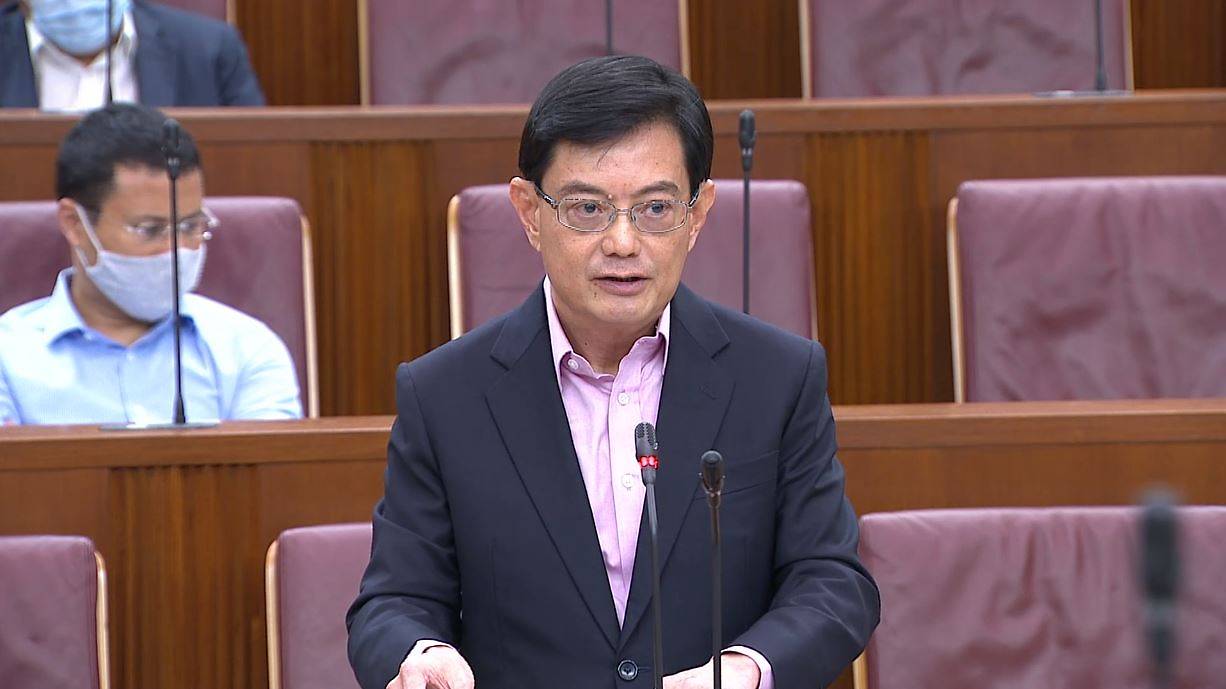
Deputy Prime Minister Heng Swee Keat speaks in Parliament as he launches the Fortitude Budget to tackle the COVID-19 crisis, May 26, 2020.
Despite the strong financial support from the Government, training programmes in the past have been met with a lacklustre reception.
For instance, when SkillsFuture was first launched in 2015, the participation rate was a mere 35 per cent. Even in 2019, the SkillsFuture participation rate was only 49 per cent.
Even before we were engulfed by the COVID-19 pandemic, the Government had, in the first Budget of 2020, urged Singaporeans to “take action early to learn new skills,” designing this year’s SkillsFuture top-up to expire in five years as compared to the previously indefinite timeframe.
It is noteworthy that the Government’s promise to workers in the Fortitude Budget is that “as long as you are willing to pick up new skills and adapt, to access available opportunities to work or learn, the Government will provide our strongest support to help you.”
As bolstering the economy can only be effective with a relevant and industry-ready workforce, Singaporeans need to be prepared to pivot, learn, reskill and be open to change to take on the myriad challenges of digital transformation.
Notwithstanding the challenges outlined above, a valuable addition to the employment landscape is the creation of the new National Jobs Council headed up by Senior Minister Tharman Shanmugaratnam, with a stated focus on creating jobs and building deep skills in conjunction with the Future Economy Council on the overall upgrading of the economy.
The National Jobs Council should be well-placed to point Singaporeans in the right direction in terms of future-proofing their learning and reskilling efforts in the face of geopolitical, economic and social trends on the horizon.
The Fortitude Budget is focused on protecting and creating local jobs, which is what the Singaporean core needs at a time when mass lay-offs seem inevitable.
However, we should be acutely aware of the paradigm shifts caused by digital transformation and the reshaping of talent pools, as sharply hastened by the COVID-19 pandemic.
Amarjit Kaur is a Partner at Withers KhattarWong in its litigation and arbitration team. She has been noted for her expertise in labour and employment law in the 2020 edition of The Legal 500: Asia Pacific.
SINGAPORE: When property agent Jane Siew started renovation work on her new home in March, she did not anticipate a two-month-long “standstill” which left plans in limbo.
Work had to be suspended due to the COVID-19 “circuit breaker”.
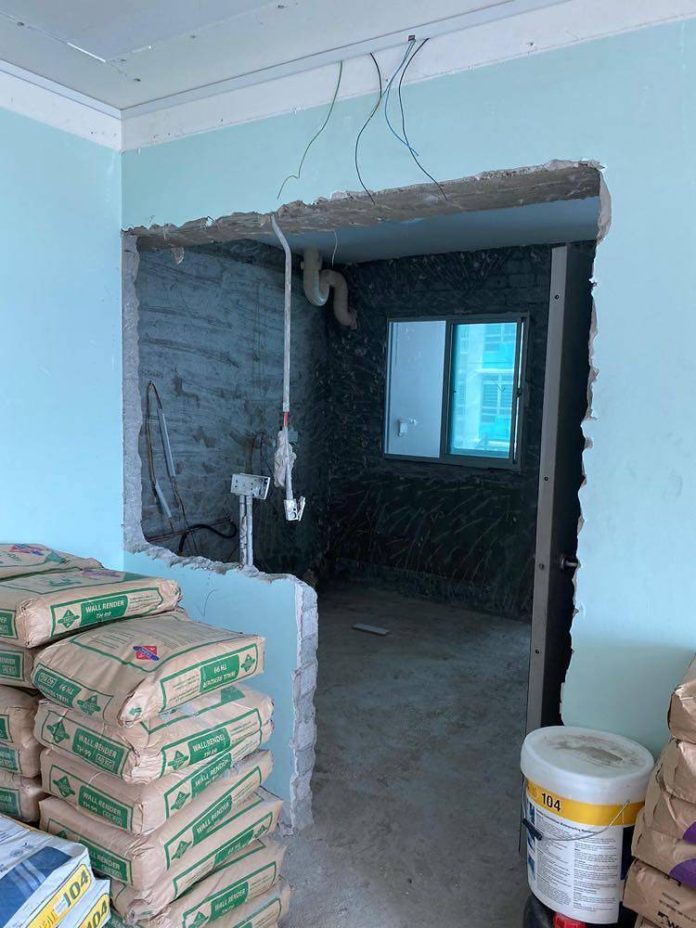
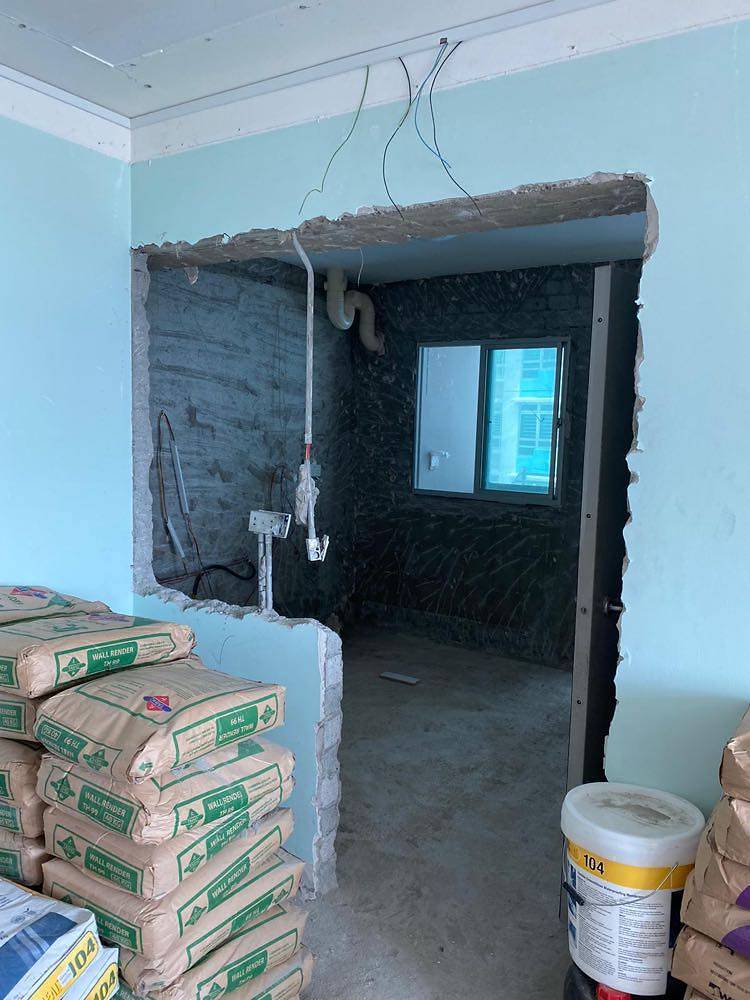
In the three weeks before restrictions kicked in on Apr 7, Ms Siew had only managed to get the walls hacked, add some tiles and finish some plumbing in the four-room HDB flat.
Keeping a close watch on the news, she said her mood would go “up and down” as new developments emerged.
“They would suddenly say this one cannot be done, that one (cannot be done),” Ms Siew said, adding that she understands this was due to the constantly changing situation in Singapore.
While renovation work can continue from Tuesday (Jun 2), provided construction firms can put in place the necessary safety measures, companies CNA spoke to said home owners should realistically expect work to resume three to four weeks later.
This is because time is needed to get projects approved by the Building and Construction Authority (BCA) and the Housing and Development Board (HDB), said several renovation companies.
Manpower and supply shortage could also add to delays, they added.
Ms Jane Siew had been in the midst of renovating when authorities announced that all renovation works would have to be suspended during the circuit breaker. (Photo: Jane Siew)
Submitting paperwork to BCA and HDB could take up to one to two weeks, said Mr Jonathan Choo, director of Hoong Fatt Heng Renovation.
He added that workers will then have to wait for BCA to contact them for swab testing before attending a COVID-Safe Training for Workers course. Separately, subcontractors have to apply for BCA approval.
Due to these various processes, Art Decor Design Studio’s project director Wilson Chan estimates that he would only be able to restart projects in July. All 10 of his existing clients have said that they want to restart renovations soon after the circuit breaker ends.
BCA had said on May 27 that employees must download contact-tracing app TraceTogether before Jun 1 or when the company applies to resume work, whichever is earlier.
Employees will have to go for regular swab tests.
“Employers must ensure that their workers do not stay at the same accommodation with other workers performing works at construction projects or supply works and provide dedicated transport for their workers between workplaces and places of accommodation,” said BCA in its advisory.
MANPOWER AND SUPPLY SHORTAGE
Contractors are also facing manpower and supply shortages.
JS Carpentry & Contracts director Jack Chan has about five Malaysian workers in Malaysia and 17 foreign workers confined to their dormitories out of a total of 30 construction workers.
This does not include their subcontractors who handle electrical, plumbing and tiling. Malaysian workers could make up as many as 90 per cent of the subcontractors’ employees, said Mr Chan.
Some of them may have been affected by Malaysia’s movement control order.
Although many of home owners are “pressuring” him to restart work, Mr Chan said he would still have difficulty coping even after all the necessary approvals are given.
“They want us to finish the job as quick as possible, but I said we cannot proceed because we don’t have manpower and we need to apply for so many things,” he said.
“Nobody do electrical work, plumbing work, tiling work, so we cannot continue. We are a carpentry factory, so we have to finish all these procedures before we can do carpentry work.”
Delays from tile, sand and cement suppliers could also extend the waiting time for home owners.
Mr Choo from Hoong Fatt Heng Renovation said that according to his suppliers, tile shops still have to remain closed during Phase 1 after the exit of the circuit breaker. Sand and cement suppliers are having problems importing their materials because of Malaysia’s movement control order, which is due to end on Jun 9.
The low stock could cause prices of materials to go up, added M2 Decor director Benjamin Toh.
Ms Siew only managed to finish hacking her walls and install some tiling and plumbing before the start of the circuit breaker. (Photo: Jane Siew)
PRIORITISING PROJECTS
With these challenges, some renovation companies would have to prioritise their ongoing projects, and this would be done according to the client’s situation.
“I think most importantly, I speak to all my customers. I tell them what are the key priorities, which customer I have to prioritise first, like customers who rented a unit, for example,” said Mr Toh, who has about seven clients with ongoing projects hoping to restart work once the circuit breaker lifts.
He added that he will not make his clients’ any promises when it comes to a proper timeline on a project’s execution due to the uncertainties.
Nevertheless, most contractors CNA spoke to said that they are prepared to start work at any time with all the necessary safety measures in place, including temperature taking, installing the TraceTogether app and marking out 1m safe distancing across sites.
This would come as a relief to home owners like Ms Siew, whose lease for her rented flat is running out. For now, she and her husband are planning to move into their relative’s place once their lease is up.
Even if the renovations take longer than expected from now, Ms Siew said she is “quite happy” because she can “at least get something going”.
“For the safety of everybody, we understand. It’s very troublesome, very painful for everybody, cost us more, longer time, but at least we got our own health. Eventually, we can still move in,” she added.
At a press conference on Monday, Minister for National Development Lawrence Wong said he understands that home owners want renovation work to resume after the circuit breaker, but cautioned that safety measures need to be in place.
“I appreciate that many contractors are very eager to resume work. I also appreciate that many individuals are eager for their contractors to resume work on renovation projects,” said Mr Wong.
“We want these works to resume as fast as possible but we need to ensure the requirements are met and done safely.”
Over the course of the past week, two Instagram accounts became a juicy source of entertainment, especially for those working in the local media industry.
The exposé accounts @influencerglassdoor and @sgmediaglassdoor offer hot gossip, angry testimonies, and familiar rumours about media publications, PR companies, and social media influencers in an industry that thrives on reputation and credibility.
Not everyone’s a fan, obviously — especially those who are being talked and complained about on the public platforms. Posts on both pages involve anecdotes submitted by anonymous individuals, and the identities of the parties being lamented about are semi-concealed. Though it is not that difficult to guess the names being mentioned.
One account has since been taken down, while the other remains live, defiant of the condemnation received by prominent voices in the industry.
SG Media Glassdoor
After a brief moment in the sun spilling tea and revealing various proclamations about people working in PR firms and publications, this account has gone dark.
SINGAPORE: A 51-year-old migrant worker who died of COVID-19 on Sunday (May 31) has become the 24th fatality in Singapore linked to the virus.
He is the youngest COVID-19 patient in the country to die of the disease.
The Chinese national, known as Case 17329, died almost a month after he was first confirmed with the infection, the Ministry of Health (MOH) said on Monday.
He was confirmed to have the virus on May 1, but had been warded in the intensive care unit (ICU) before that.
The Ministry of Manpower (MOM) confirmed the man had died at the National University Hospital (NUH).
According to the health ministry, the 51-year-old was diagnosed with lymphoma complicated by multi-organ failure while he had been warded in the ICU in end-April.
Despite being treated for lymphoma, his condition had deteriorated and the man subsequently died.
The 51-year-old started working in Singapore in 2001, said MOM.
He had been working as a foreman under his current employer for almost a year and had “no employment issues”.
The man’s family had initially been alerted of his condition by his employer when he was first admitted to the ICU. The hospital had also provided regular updates to the employer.
“The Ministry of Manpower (MOM) expresses our deepest condolences to the deceased’s family,” the authority said.
“The family members and employer of the deceased, as well as the Embassy of the People’s Republic of China in Singapore, have been informed.”
MOM is also currently working with the Migrant Workers’ Centre (MWC) to provide financial assistance to the man’s family to tide over immediate needs.
NUH has also reached out to his family and is extending assistance to them.
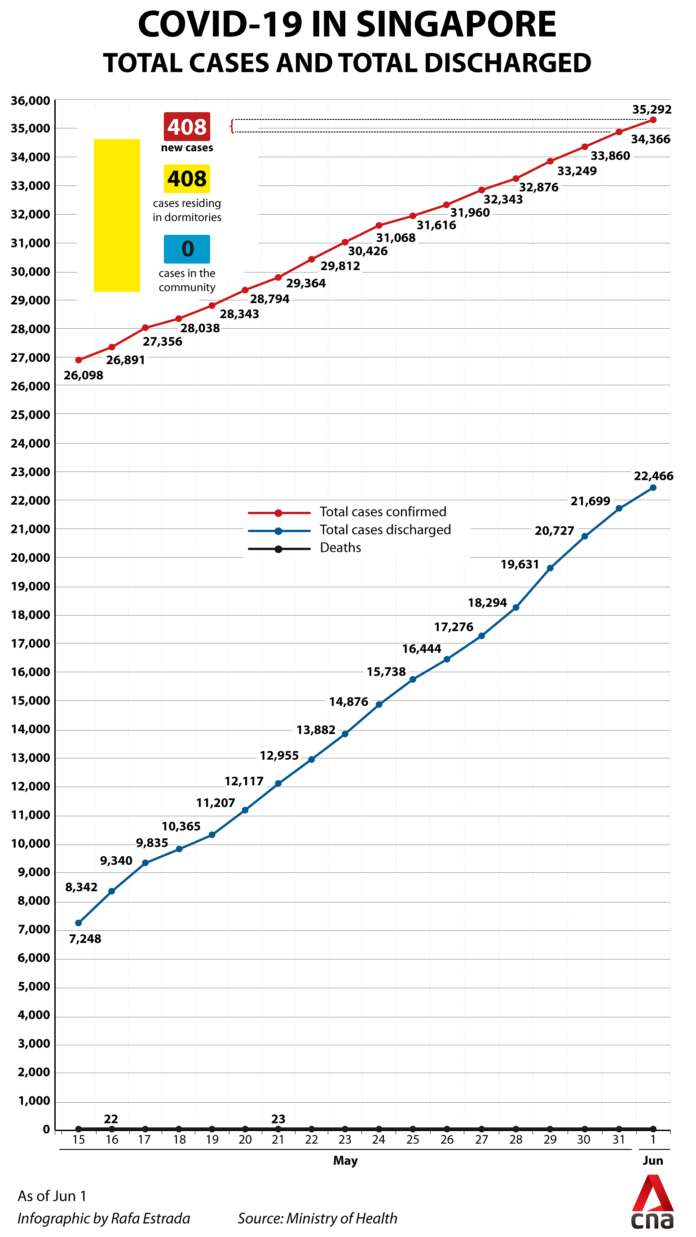
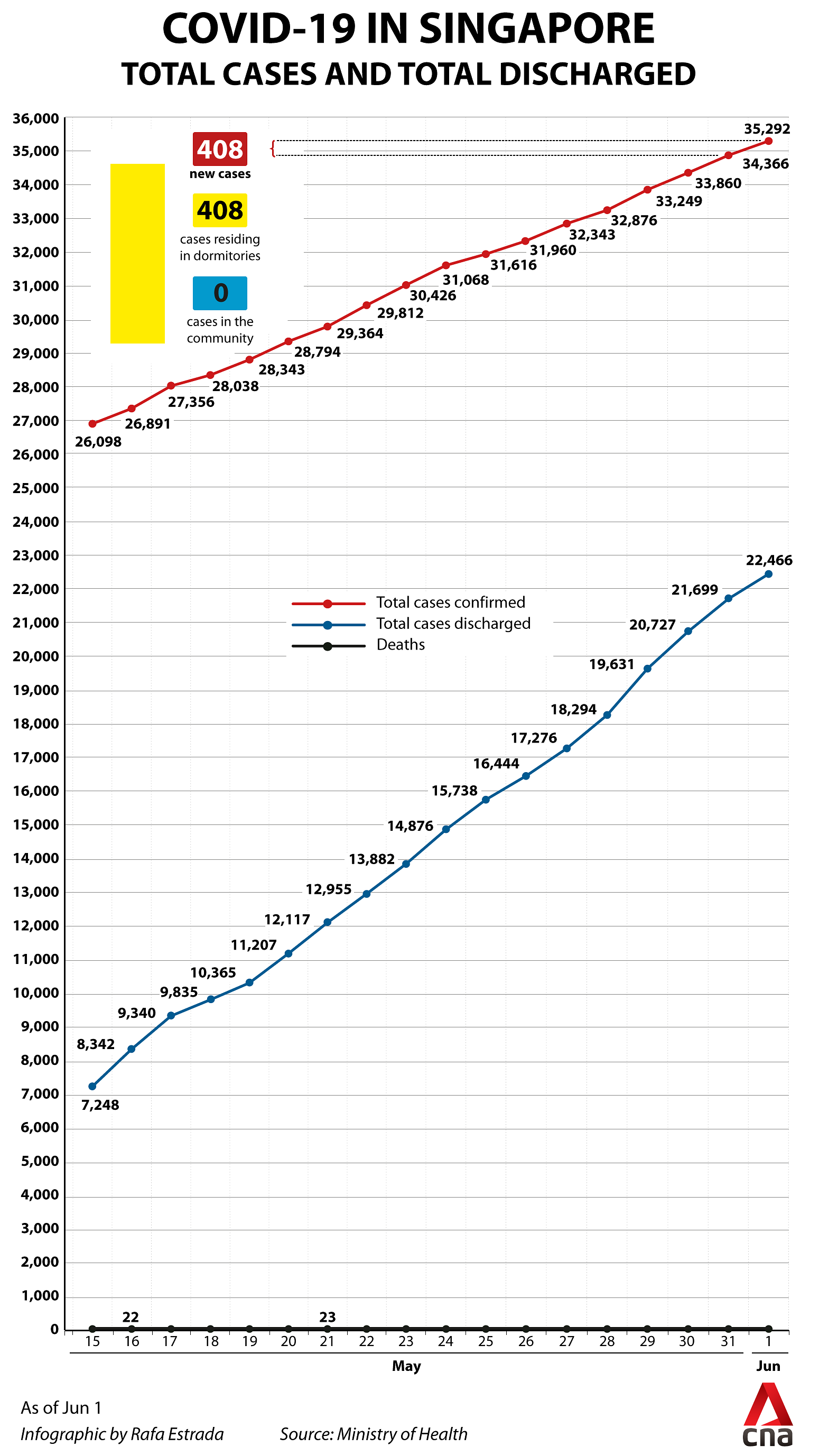
On Monday, Singapore reported 408 new COVID-19 infections as of noon with no new cases in the community.
It is the first time in more than three months that no new community case has been reported in MOH’s daily updates.
All of Monday’s cases are work pass holders residing in foreign worker dormitories, and the new cases are linked to known clusters.
Singapore’s tally of COVID-19 cases now stands at 35,292.
Following a series of social media posts showcasing how he’s now woke to injustices in society, Singapore’s biggest YouTuber is retiring one insensitive aspect of his videos: an exaggerated archetype of an ethnic minority.
In the many skits that Tan Jianhao produced under his umbrella of YouTube channels, there has been a long-running character by the name of Peter Papadum, a caricatural depiction of an Indian uncle who is supposedly a retired Regimental Sergeant Major of the Singapore Armed Forces and a roti prata seller.
Though the character is portrayed by fellow YouTuber Ridhwan Azman, Peter Papadum speaks in a thick Indian accent and has exaggerated body mannerisms. Background Indian music is used as a comedic effect when Peter Papadum appears.