A four-day work week and government-funded childcare leave to help parents cope with the Covid-19 situation were among the suggestions made by MPs in Parliament yesterday to improve the work-life balance of employees here.
Speaking during the debate on the Fortitude Budget, Nominated MP Mohamed Irshad highlighted that the pandemic has forced Singaporeans to adapt to new working arrangements within a very short period of time.
As Singapore prepares for phase two of its reopening, it should not return to its old ways of working, but instead build on the progress.
“I propose moving away from the traditional five-day work week to a four-day work week with the option of working from home on the fifth day, and even having a flexi-hours work model,” said Mr Irshad.
He said that established firms like Microsoft have shown that a four-day work week can increase productivity by up to 40 per cent.
He also noted that a four-day work week is being considered in New Zealand to promote better work-life balance and boost domestic tourism to help the economy.
SINGAPORE – The People’s Association’s (PA) chief executive director Desmond Tan Kok Ming will step down and leave the public service on June 15, fuelling speculation that he could enter politics at the upcoming general election.
The PA announced in a press release on Friday (June 5) that current deputy chief executive Lim Hock Yu, 55, will succeed Mr Tan, 49.
The PA statement gave no indication of Mr Tan’s next move after he leaves the public service. He rose to the rank of brigadier-general in the Singapore Armed Forces and was appointed to lead the PA in January 2017.
When contacted, Mr Tan told The Straits Times that his stepping down is part of the leadership renewal in PA.
“I have some plans in mind and (these) will firm up in time. I also hope to continue to serve the community in other capacities. In the meantime, I will be spending more time with my family,” he said in an e-mail.
In his reply, he did not address a question posed to him on whether he would be entering politics.
SINGAPORE: One weekend, at some point during Singapore’s almost two-month long circuit breaker, I took a “trip” to Bali.
Not to worry, I did not actually get on a flight at Changi Airport and touch down in Denpasar.
Instead, on a particularly sunny afternoon, I unfurled beach towels in my living room, slathered on coconut scented sunscreen and sipped homemade iced cocktails while lounging to tropical house DJ Kygo on Spotify.
Obviously, it was not quite the same as being at my favourite Balinese beach club but it did help to reduce the sting of having to forego a long awaited holiday scuppered by COVID-19 border closures.
Like many who live in Singapore, I am accustomed to our country’s seamless connectivity to the region and beyond. It was barely a few months ago when international travel was a breeze.
(Photo: Unsplash)
Of course, the coronavirus pandemic has changed all of this. Until a COVID-19 vaccine is successfully developed and administered on a large scale, it is clear that travel the way we were used to will not be returning for the time being.
Still, if there is one truth about the human condition, it is that curiosity about the world we live in has always inspired the adventurous to seek out the unknown.
From the first humans out of Africa to those who traversed the then-dangerous Silk Roads and maritime voyagers like Admiral Cheng Ho and Christopher Columbus, our interconnected planet has been shaped by these expeditions.
Currently, we may not be able to easily visit another country, but that has not deterred NASA astronauts from hurtling into outer space on a SpaceX rocket.
A SpaceX Falcon 9 rocket and Crew Dragon spacecraft carrying NASA astronauts Douglas Hurley and Robert Behnken lifts off during NASA’s SpaceX Demo-2 mission to the International Space Station from NASA’s Kennedy Space Center in Cape Canaveral, Florida, U.S. on May 30, 2020. (Photo: REUTERS/Thom Baur)
So even if at this point the virus-related anxiety of stepping out of one’s home just to go to the supermarket might feel crippling to some, it is not a stretch to believe that there will come a day when mankind will not be able to resist that exploratory urge once more.
As it is, many countries are starting to take tentative steps to reopen their borders. In Singapore, officials are in talks to resume essential travel among countries with low COVID-19 transmission rates.
For an idea of what these “green lanes” might encompass, check out the requirements for the Singapore-China arrangement. Safety measures include a swab test, a one- to two-day self-isolation while waiting for test results and sponsorship by a company or government agency.
The discomfort, inconvenience and additional cost of having to jump through multiple hoops in the interest of public health will probably deter all but those who absolutely need to, to book an air ticket.
In tiny Singapore, we are strongly reliant on global networks and friendly international relations, so it is reassuring that authorities are implementing measures to encourage the continued brokering of these ties safely.
On a broader scale, tensions between the United States and China are threatening global economic stability, international trade is being disrupted because of fears of viral contagion and many people cannot even cross borders – sometimes within their own countries – to visit loved ones.
More than ever, we need these brave, tenacious people conducting essential business to continue keeping the most necessary regional and international connections open on behalf of the rest of us, until the day comes when we can participate in travel again.
HOLIDAY-MAKING WILL TAKE A TEMPORARY BACKSEAT
With the economy looking set to enter into a coronavirus-induced recession and worries about job losses and lower wages taking precedence, it is not likely that many are excitedly blocking holiday breaks in their calendars.
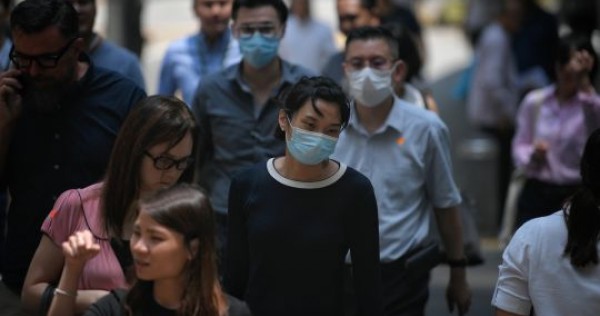
Office workers wearing face masks take their lunch break at the central business district amid the coronavirus disease (COVID-19) outbreak in Singapore June 2, 2020. REUTERS/Edgar Su
But for those who might be clamouring to book an air ticket for a vacation, it is unequivocally clear that now is not the time. Even though Singapore Airlines and SilkAir will be reinstating flights to more destinations in June and July, it remains uncertain if these flights will be open to non-essential and leisure travellers.
Plus, wanderlusting holidaymakers should know that Singapore has not yet lifted its travel advisory to defer all travel abroad. Those who disregard this will have to pay out-of-pocket for quarantine in isolation facilities and COVID-19 medical treatment, should they need it.
To play my part in curbing the spread of the virus, I’ve willingly curtailed my nomadic instincts over the past months and will do so for as long as it takes. This has been tough, both financially and emotionally.
As a freelance travel writer, not only do I live for the inspiration of visiting a new destination and meeting people from all walks of life, a significant portion of my income also depends on my ability to travel.
There have been times during the circuit breaker when I do little more than stare at the world map on my wall morosely, glumly thinking about all the places I’ve yet to check off my bucket list and the fun yet hopefully insightful stories I could have written.
No doubt about it, I intend to be among the first in the (digital) queue to book my air ticket on Singapore Airlines – but only when it is deemed safe to do so.
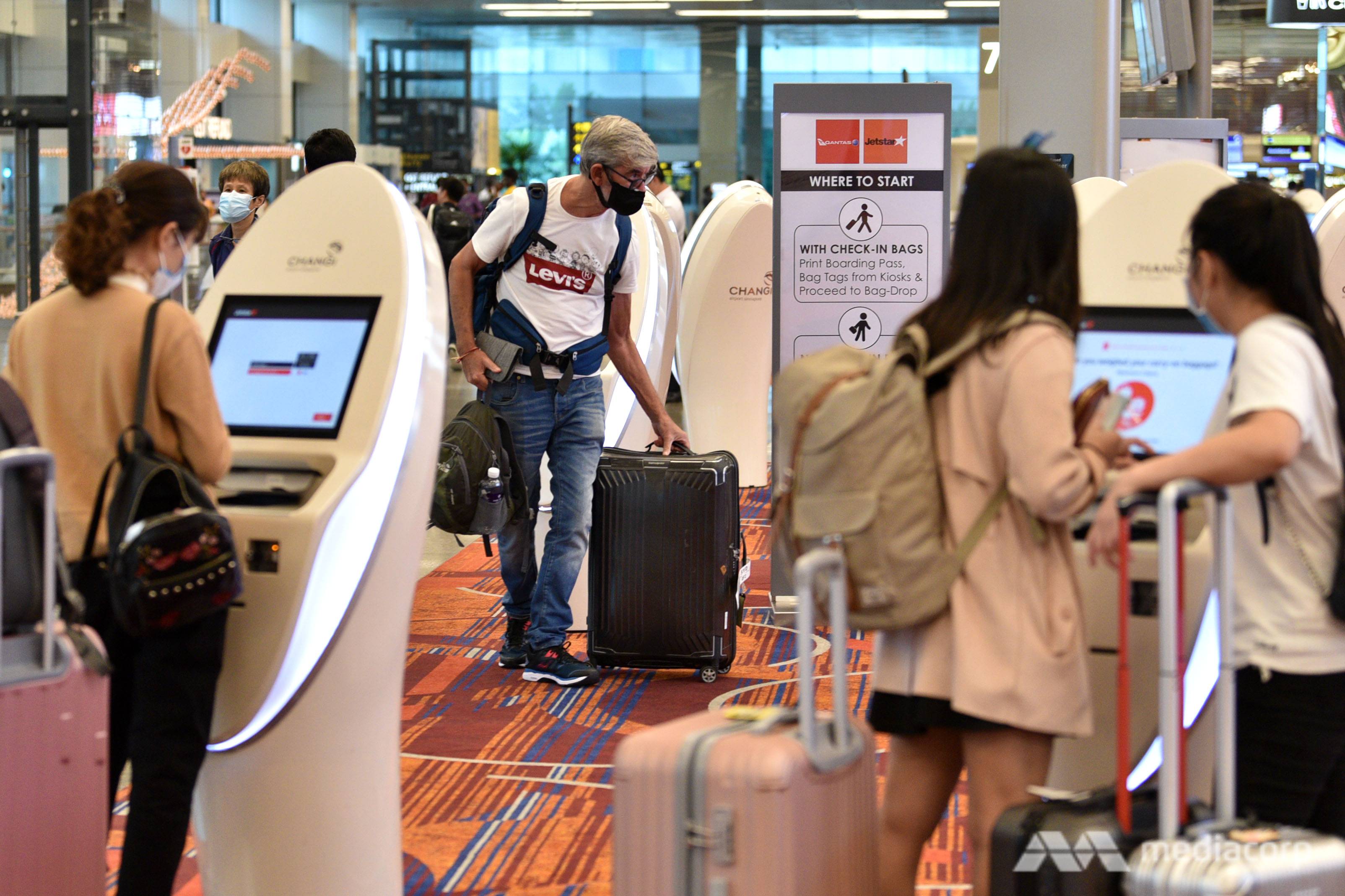
Travellers at the self service kiosk in Changi Airport Terminal 1 (Photo: Jeremy Long)
FINDING WAYS TO TRAVEL IN SINGAPORE
On the other hand, staying home has given me the much needed headspace to relive once-forgotten memories of past travels.
I remember that unexpected night out in Tbilisi, Georgia, when my introverted self uncharacteristically began singing Abba’s Mamma Mia together with a group of wine-buzzed strangers in a restaurant. Apparently, I can be outgoing too.
Or, when I stop to gaze at the little sliver of the orange-pink sunset from my window, I am mentally transported to the breathtaking beauty of the endless sunset on an African savannah, where it is both comforting and humbling to feel that small and insignificant. (Now that’s a reality check.)
I now realise that my expedition to the Amazon rainforest in Peru, where I learnt about painstaking conservation efforts there, has driven home the importance of preserving what’s left of our own natural flora and fauna before they are all gone forever.
It may not be necessary to travel to gain these realisations but often, these personal experiences spark profound realisations that make an indelible imprint on one’s life.
Most of all, travel has taught me to recognise the privileges I am lucky to be born with.
Getting out of the sheltered, comfortable bubble of Singapore has offered me the chance to observe and listen to others with greater empathy. This in turn is something I strive to apply at home too, through my actions and as much as possible, the work I do.
File photo of a plane in flight. (Photo: Unsplash/Nafis Al Sadnan)
This is why I am doing the best I can to continue expanding my horizons in this hopefully temporary situation, within the comfort of my four walls.
I will keep going on virtual trips via livefeeds or augmented reality experiences, stream interesting international shows and documentaries and read inspiring tales.
If I must, I will even turn my living room into a beach club once more.
All this so that when I finally get to dust off my neglected passport, I will still feel closely connected to the pulse of the world.
SINGAPORE: Panic buying. Safe distancing. Working from home. Closure of schools and non-essential businesses. Singapore’s worst-ever recession since independence.
For years, we have talked about the VUCA (Volatile, Uncertain, Complex and Ambiguous) world – a combination of qualities that characterise the chaotic world we live in. If ever the phrase felt appropriate, it’s now in this time of COVID-19.
The volatility, uncertainty, complexity and ambiguity of the pandemic has not only upended lives, but revealed ugly behaviour.
Consider the panic buying and hoarding when Singapore raised its Disease Outbreak Response System Condition (DORSCON) level to Orange in March. And since the circuit breaker started, we’ve seen disputes arising from individuals flouting the rules or being overwhelmed by stress.
COVID-19 has also shone a light on racist and xenophobic sentiments against foreign workers when clusters of cases broke out in dormitories across the island.
KINDNESS EMERGES IN UNEXPECTED WAYS
Yet at the same time, kindness has emerged within the chaos of COVID-19.
The support from Singaporeans for front-line workers was spontaneous, enthusiastic and sincere.
Equally inspiring is how friends, neighbours and families have grown closer by showing care and concern for one another.
We have seen residents placing hand sanitisers in lifts to share with neighbours, individuals donating their S$600 Solidarity Payments to those who need it more, and groups coming together to appreciate front-line workers and helping the vulnerable in society.
At the Singapore Kindness Movement (SKM), we have seen ground-up movements (GUMs) actively promoting kindness in the grassroots.
For instance, Contribute.sg redistributes donated masks and sanitisers to healthcare and service staff, transport workers, home-bound patients and lower-income families.
Kampung Kakis was founded by a young COVID-19 survivor who had a first-hand view of how elderly patients suffered in isolation. She was inspired to start a neighbourhood buddy system that matches needy residents with neighbours to provide assistance and a support network.
EverydayheroesSG was set up to appreciate medical personnel and other frontline staff. One initiative involves recruiting volunteer drivers – known as Hero Drivers – to ferry healthcare professionals to and from work.
This rise in ground-up volunteer movements is consistent with SKM’s Graciousness Survey findings last year that more people, especially the young, are increasingly cognisant of their roles and responsibilities in building a gracious society.
We have come a long way in changing perceptions and behaviours about graciousness. But can we do more, especially in seeing this heightened graciousness become a permanent feature of our society long after COVID-19?
REDEFINING VUCA
For one, as we learn to live in a world still reeling from COVID-19, we need to redefine VUCA.
Nichol Ng, co-founder of The Food Bank Singapore, has seen groups of volunteers cancel. The charity relies on volunteers to sort through donations by the public, before these can be distributed to beneficiaries.
A reimagining of the popular abbreviation of the risks in the world can be used to be a guiding reminder of how we should be as individuals and as a society in the “new normal”.
The current crisis is not just a health or economic crisis. It is also a psychological crisis. There is an assault on our mental, emotional and social well-being.
Institutions, both public and private, can help us with physical and economic needs. But to overcome the psychological challenges, we need to help ourselves. This is where the redefined VUCA would help.
Instead of being vulnerable we need to be vigilant – mindful of what is happening around us and responding correctly. Vigilance is practicing social responsibility and being careful – maintaining personal hygiene and keeping public spaces clean, wearing masks, and staying home – so that the virus can be contained.
Whereas uncertainty may become more of a norm and less exceptional, we need instead to be united – as a nation to overcome challenges thrown our way.
At the launch of the Overcome As One initiative, Deputy Prime Minister Heng Swee Keat said: “The COVID-19 outbreak is not just a test of our medical response system but is also a test of the character and values of our people. I am confident that we can emerge from this outbreak stronger, united and more resilient as one people.”
COVID-19 has shown us that the world is indeed complex and the challenges facing us are more intertwined than we like, where trade-offs, like restarting economies and containing the virus, are often a delicate balancing act.
In such a complex world, being compassionate – showing care and concern for each other at all times – comes in handy.
Minister for Communications and Information S Iswaran has said that kindness and compassion are key to supporting the country’s fight against the COVID-19 pandemic.
When we internalise such values of other-centeredness and empathy, we become a kinder and stronger nation, willing to give our money and time to help others, including migrant workers and lower-income households.
Lastly, in an ambiguous world, being adaptable – in approaching work, studies and parenting – will be an important life skill.
We need to learn from past lessons to deal with future challenges. This allows us to thrive in the “new normal” where working and studying from home, and the new ways in which we learn, seek medical treatment and consume entertainment, become a permanent feature of our lives.
A redefined VUCA – being vigilant, united, compassionate and adaptable – is an acronym that can guide us if we internalise it in our values, thoughts, processes and education.
ARE PUBLIC CAMPAIGNS STILL NECESSARY?
Besides ground-up initiatives and a new acronym to help guide us, what more can be done on a macro-level? After all, as a society, we have been used to heeding top-down signals on desirable societal outcomes.
In the past, before the Internet, public campaigns, largely conducted via radio and television, were used to encourage positive social behaviour.
Many older Singaporeans would remember the Keep Singapore Clean and Tree Planting campaigns in the 1960s and 70s, the National Courtesy Campaign with Singa the Courtesy Lion as well as the National Productivity Movement with Teamy the Productivity Bee in the 80s.
More recently, we had the Great Singapore Workout and the Speak Good English Movement in the 1990s.
Now with the Internet, where almost anything can go viral depending on the zeitgeist of the moment, such campaigns continue – like the Public Utilities Board’s (PUB) Make Every Drop Count water conservation campaign or the National Environment Agency’s (NEA) Keep Singapore Clean Movement – albeit with greater subtlety.
For 23 years, SKM has been advocating graciousness as well as a spirit of togetherness and neighbourliness among Singaporeans.
Our latest campaign, Be Greater, emphasises kindness – and not the usual measures of wealth, status, and power – as the yardstick of success.
It also challenges us to go beyond random acts of kindness, and instead consider our values as individuals and as a collective. Kindness should be second nature. It should be purposeful, and thus sustainable and infectious.
SKM adopted Singa as its official mascot in 2009.
This year, due to COVID-19, we celebrated our first-ever virtual Kindness Day SG. While maintaining a safe distance from one another, technology has made it possible for us to show kindness anywhere and at any time.
We launched “Virtually Everywhere” – where augmented reality filters can be activated by signing “Thank you”, “Hello” and “You’re Welcome” – to encourage Singaporeans to spread kindness on social media.
We also inducted 15 new GUMs into SKM’s Kindred Spirit Circle.
National campaigns of the past had used mascots as rallying points. But while Merli, Teamy, Sharity and other icons have lived on only in our memories, Singa has gone on working quietly behind the scenes.
The courtesy lion of the 1970s and 80s has grown into the kindness lion of today. That said, Singa has spent most of its time in schools, where it shares graciousness and compassion with our primary school children and pre-schoolers.
Singa the Lion posing during NDP celebrations.
It also appears in the public as and when it is called upon to do so.
With Singapore transforming into a digital nation, campaigns need to adapt to the increasingly fragmented audience through different media. The “new normal” calls for a new way of campaigning.
Campaigns can no longer be just a television ad, a poster or a jingle. They have to be multifaceted to target different groups, such as gamification for students, social media engagement for working adults or animation for pre-schoolers, like SKM’s Singa and the Kindness Cubbies series.
Singa, of course, can be relied upon, yet again, to help bring us to another public goal – a gracious Singapore through another public campaign. But we must also look at such public campaigns to effect more permanent positive change as campaigns come and go.
In the new VUCA world, we should all also channel our inner Singa, through being vigilant, united, compassionate and adaptable, to spread kindness in a more intentional way.
This is the most effective way to entrench this surge of graciousness we have seen during COVID-19 as a permanent feature of our collective consciousness.
Dr William Wan is the General Secretary of the Singapore Kindness Movement.
The Republic is building up its vaccine-manufacturing capacity even as researchers around the world race to develop one for Covid-19.
Prime Minister Lee Hsien Loong said on Friday (June 5) that Singapore intends to offer fill-and-finish contract manufacturing services to vaccine developers.
In the pharmaceutical industry, contract development and manufacturing organisations work on a contractual basis to fulfil services such as the manufacture of drugs or vaccines.
“This should help them ramp up production faster, and assure them high standards of safety and quality in the manufacturing process,” PM Lee told the Global Vaccine Summit, co-hosted by the British government and Gavi, the vaccine alliance, over a video call.
The discovery, production and distribution of a safe and effective vaccine is vital to getting life back to normal despite Covid-19, he said.
He added: “I hope that this summit will help focus our minds and resources, and forge partnerships to promote ‘vaccine multilateralism’.”
The National Day Parade (NDP) executive committee will produce packs for about 80 per cent of all Singaporean and permanent resident households, after taking into account those who said they do not need one.
From prior experience, this should be adequate, and people who want the packs can collect them from community centres for National Day, Defence Minister Ng Eng Hen told Parliament on Friday (June 5).
The plan to distribute funpacks to every Singaporean and permanent resident household for National Day sparked a debate and an online petition that has garnered some 110,000 signatures so far.
Some argued that resources could be better diverted to other causes – especially in the light of the coronavirus pandemic.
Dr Ng noted that the NDP executive committee aims to be inclusive for every NDP, and will take in views and accommodate different interests where possible.
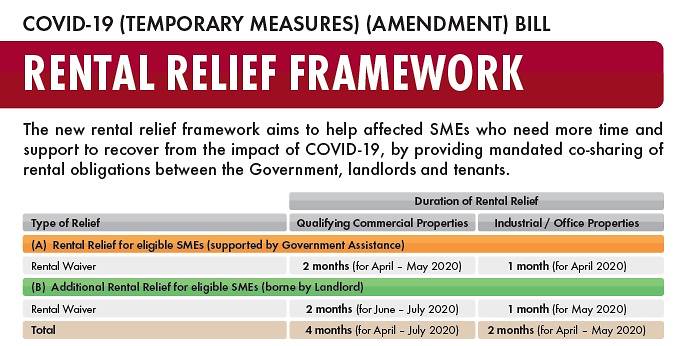
SINGAPORE: Landlords will now be required to step up and provide their struggling small and medium-sized enterprise (SME) tenants with rental waivers of up to two months after Parliament passed amendments to the COVID-19 regulations on Friday (Jun 5).
As part of the changes that will be implemented at the end of next month, commercial property owners must give eligible tenants a waiver of base rent for June and July. Those that own industrial and office properties will have to waive the base rent for the month of May.
These rental waivers to be borne by landlords will come on top of already-announced rent support from the Government, which landlords are required to pass on as rent waivers for the months that the “circuit breaker” was in place.
Taken together, tenants at commercial properties are set to get four months’ worth of rental relief from April to July, while those renting spaces at industrial or office properties will get two months of help for April and May.
To be eligible, SMEs need to have no more than S$100 million turnover in 2019 and suffered at least 35 per cent drop in average monthly revenue from April to May compared to the same period last year. They also must have tenancies entered into before Mar 25 this year.
Sub-tenants or licensees that meet these requirements will also be eligible for the rental reliefs.
(Infographic: Ministry of Law)
“FAIR SHARING OF OBLIGATIONS”
The wide-ranging COVID-19 (Temporary Measures) Act, which was passed in Parliament on Apr 7 and took effect on Apr 20, grants those who cannot fulfil contractual obligations amid the virus outbreak with temporary relief for six months.
That was a “major intervention”, said Law and Home Affairs Minister K Shanmugam as he tabled the amendment Bill on Friday.
But since then, the economy has taken another turn for the worse and uncertainties remain as Singapore takes a phased re-opening of its economy. For some businesses, this means they would not be able to reopen until the second phase and even then only partially.
There has also been feedback on “uneven” concessions from landlords and how accumulated arrears need to be “handled fairly”, said Mr Shanmugam.
With that, the Government has decided to intervene in “a more substantive way”, said the minister, noting similar interventions in countries like Australia and Germany.
The amendment Bill, added Mr Shanmugam, is premised on a “fair sharing of obligations” between the Government, landlords and tenants.
The Government has since rolled out relief measures across four Budgets, while the various criteria for SME tenants mean that only those who have taken a “substantial hit … will get more help”.
The minister also noted it is “not realistic” to expect market forces to arrive at a “fair” burden sharing between landlords and tenants, and the risk of non-intervention could mean impact for everyone.
Last year, SMEs contributed to 45 per cent of economic growth and 72 per cent of employment in Singapore, the minister explained. The failure of SMEs will have a domino effect on the rest of the economy and for landlords, an economic downturn would weigh on the value of their assets.
“Everyone has a stake in the success of the SMEs,” he said.
HELP SMALLER LANDLORDS: MPs
The Bill received support from the three Members of Parliament (MPs) who spoke during the debate.
East Coast GRC MP Jessica Tan said the amendments take a “targeted approach” and are “reasonable” as they do not apply across the board to all SMEs and businesses.
While small businesses are the immediate beneficiaries of the Bill, Bukit Batok MP Murali Pillai said landlords are protected in the long run as it ensures that the tenant’s market will not collapse.
He added: “This should not be seen as an anti-landlord Bill.”
However, the MPs highlighted some concerns, particularly how the rental waivers required of landlords could put some of them into financial hardship.
This includes smaller landlords that are dependent on the rental income to meet their financial obligations, said Ms Tan.
Holland-Bukit Timah GRC MP Christopher de Souza said a “flexible system” is needed to differentiate between landlords that are large corporates and those who have invested in small commercial shophouses as a form of retirement income.
He cited the predicament of one of his residents who relies on rental income to service bank loans and the rest for living expenses. In a letter to Mr de Souza, the resident had said that having to “further absorb an additional two months of rent would be too much for many to bear” amid problems with rent collection, as well as demands for waivers and haircuts from tenants.
Mr Shanmugam said this has been considered carefully and under the amendments, landlords that are unable to provide tenants with the additional rental waivers may seek an assessment on “grounds of financial hardship”. If the appeal is granted, they will only have to give half of the waivers.
The factors considered during the assessment include the annual value of the property and whether rental forms a substantial proportion of the landlord’s total income.
“This will help us distinguish between larger landlords and those that depend on rental for their livelihoods,” the minister said.
Authorities also announced more support for cash-strapped landlords earlier this week, such as allowing landlords who are individuals and are current in their loan repayments as at February this year to defer principal and interest repayments up to Dec 31.
Larger corporate landlords, including real estate investment trusts (REITs) listed on the Singapore Exchange, are encouraged to explore funding solutions with their banks, authorities have said. S-REITs are also given more time to distribute their taxable income derived in FY2020 and FY2021 to qualify for tax transparency treatment.
S-REITs have raised various concerns such as potential constraints on their operating income and cash flow, said Mr Shanmugam. These measures will give them more flexibility in managing cash flows and prevent them from incurring additional tax expenses, he added.
HELP WITH ARREARS AND MORE
Other amendments to the COVID-19 regulations include allowing eligible SMEs to repay part of the rental arrears that they may have accumulated from Feb 1 up till Oct 19 this year via instalments, with the first being no later than Nov 1.
For commercial tenants, the maximum amount of arrears that can be paid in instalments will be five months of base rent. For those at industrial and office properties, it will be four months of base rent.
The interest payable on such arrears will be capped at 3 per cent per annum. If a tenant fails to make payment or terminates the lease, the repayment scheme will be cancelled and it may be liable to repay all arrears immediately.
In response to Mr Murali’s question on how the 3 per cent interest rate is derived, Mr Shanmugam said it is “comparable” to the median rate of secured bank loans in April, while considering the landlords’ cost of capital with property as security.
“We are aware that some landlords’ cost of capital could be higher than 3 per cent but this rate is intended to strike a balance between the needs of landlords who have their own financial obligations and their tenants who do face significant challenges repaying their rental obligations under these fairly extraordinary circumstances,” the minister said.
Apart from that, the Bill also introduced a cap on late payment interest for arrears that arise due to COVID-19 under specific contracts, as well as provide relief for tenants who are unable to vacate their non-residential premises at the end of their leases due to COVID-19.
On the latter, Mr Shanmugam said the ministry has received feedback from some tenants whose tenancies expired during the circuit breaker period and were not able to find movers or enter the premises.
“In such cases, it would be unfair for the tenant to have to pay double rent or similar charges under the contract of the law,” he said, although he said there could be situations where it “might be fair for the tenant to pay some amount”.
“(This) especially if the tenant continued to derive benefit from the premises. We will prescribe the circumstances and how that amount can be assessed,” said the minister.
While Mr Murali supported this amendment, he asked if there is a corollary provision to protect landlords who may have a back-to-back arrangement with new tenants.
Mr Shanmugam said such knock-on impact will be taken into account, noting that a landlord can serve a notification for relief on the new tenant in such instances.
“This will give the landlord and new tenant time to work out a compromise. If they cannot agree, they can apply to an assessor who will make a determination to reach a just and equitable outcome.”
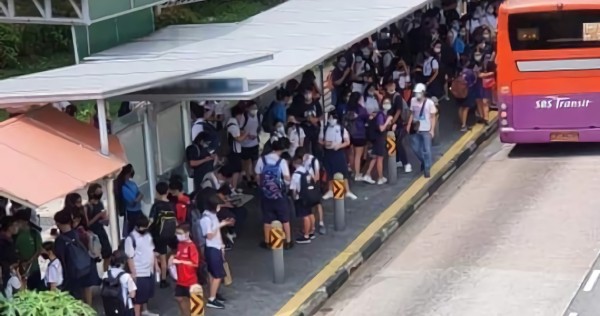
It has only been four days since we’ve exited the circuit breaker, but it appears that the reminders for social distancing have not been heeded.
A photo shared on Reddit on Thursday (June 4) showed a bus stop packed to the brim with students, with a Redditor saying: “Social distancing is dead.”
According to commenters, despite efforts to stagger the arrival and dismissal timings for students, such gatherings were considered bo bian (inevitable) due to bus and train arrival timings.
As Singapore entered Phase 1 of a gradual reopening, the safe distancing stickers have been removed from public transport vehicles as “physical distancing will be difficult once the crowds return”, Transport Minister Khaw Boon Wan mentioned in a Facebook post earlier this week.
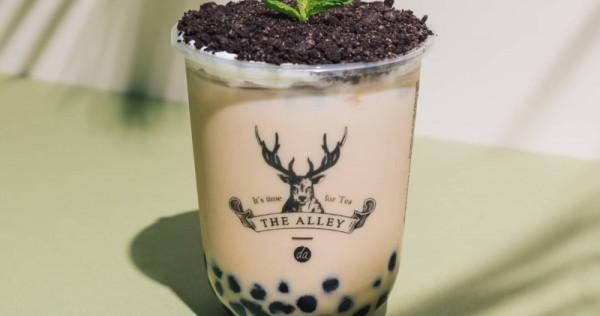
When it was made known that bubble tea stores were to close when the extended circuit breaker was announced, Singaporeans were devastated and many hurried to queue for their last cup of bubble tea.
To quench our undying thirst for BBT, collaborations between BBT brands and F&B outlets which served food soon popped up as a way to get around the restriction, though it was mainly delivery-only options.
Or in the case of Xing Fu Tang, they opened an outlet in a Hougang coffee shop.