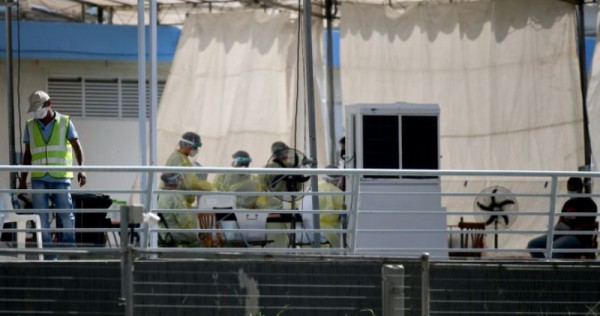
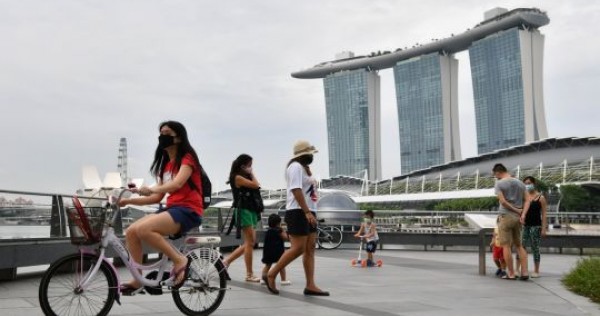
There are 386 new coronavirus cases confirmed as of Monday noon (June 8), taking Singapore’s total to 38,296.
These include two community cases, comprising a Singaporean and a work pass holder, said the Ministry of Health (MOH).
Migrant workers living in dormitories comprise the other cases.
More details will be announced later on Monday by the MOH.
On Sunday, there were 383 new Covid-19 cases, among whom were 14 community cases, comprising nine Singaporeans, one permanent resident, three work pass holders and one student pass holder.
Eleven cases in the community were picked up by proactive screening.
Of these, six were a result of proactive testing of school staff and students above the age of 12, who were diagnosed with acute respiratory infection when they first saw a doctor.
Five are from the following schools: Anglican High School, CHIJ Katong Convent, CHIJ St Theresa’s Convent, Geylang Methodist Secondary School and Hwa Chong Institution.
The Education Ministry said on Sunday that the five comprised four students and one non-teaching staff.
SINGAPORE – Political parties should prepare for a very different general election campaign, one that relies less on physical interactions with large groups of voters, the Elections Department (ELD) said on Monday (June 8).
The ELD said parties need to look at other means of getting their campaign messages out to voters – including through the Internet – as the Covid-19 situation is likely to place limits on whether rallies, walkabouts and house visits can take place.
At a media briefing on Monday, the ELD said campaigning rules outlining whether these physical activities will be allowed are not yet ready. They will be released closer to the election date, it added.
This is because the Covid-19 situation remains fluid, and campaigning guidelines will need to take into account the existing rules on safe distancing and management closer to the actual date of the polls, it said.
In its statement, the ELD said: “In consideration of the health and safety of all individuals during the Covid-19 situation, we would like to strongly encourage candidates and political parties to plan for modes of campaigning that can minimise large group gatherings.”
Running a stall nowadays is tough, especially if you’re a stallholder at Tekka Market — one of the worst-affected wet markets since the Covid-19 outbreak.
Tensions ran high on Saturday (June 6) it seems. Footage from a CCTV camera depicted a worker at the Haji M N Shahul Hameed Marketing butchery getting subjected to physical intimidation by a woman who’s allegedly a fellow vendor at the largest wet market in the country.
A silent clip shared by the All Singapore Stuff Facebook page showed how the woman approached the worker in a threatening manner, getting right in front of his face (with her mask removed) to yell at him.
The caption that accompanied the video claimed that the lady is a fishmonger at Tekka Market.
Apparently, she had been shouting at a customer in the market as the queues had been “terribly bad”. The man at the butchery was said to have told her off for being rude, and that’s when the confrontation took place in view of the camera.
A couple’s plans to wed at the end of this year were tragically cut short when the groom-to-be was killed in a car accident on Saturday morning (June 6).
The 32-year-old man died after he was flung out of a BMW convertible on Central Expressway (CTE), Shin Min Daily News reported.
The victim, identified as Aloysius Chin, was behind the wheel of the car when it reportedly skidded and went over a fence after the Jalan Bahagia exit on the CTE towards Seletar Expressway.
According to the Chinese daily, the roof of the convertible was open and the man was likely not wearing a seatbelt. He was flung about five metres away after the vehicle collided with a lamp post and into a drain that was three metres deep.
The Singapore Civil Defence Force (SCDF) responded to a call for assistance at about 9.20am that morning and pronounced Chin dead at the scene.
The police are investigating the accident.
Chin, who was a property agent and had 30 companies registered under his name, reportedly had plans to marry his girlfriend at the end of this year.
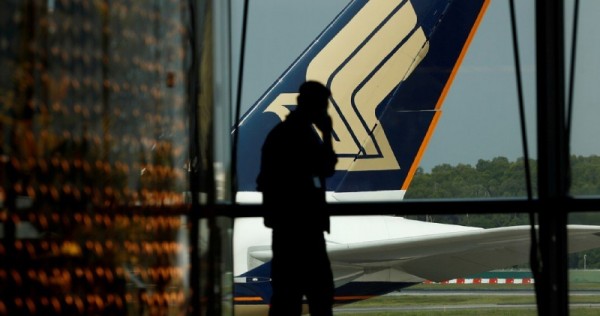
Singapore Airlines Ltd said on Monday that it had secured about US$1 billion (S$1.4 billion) in credit facilities, in addition to the US$6.32 billion it recently raised from a rights issue, to help it weather the Covid-19 pandemic.
Global airlines have taken a huge blow as curbs imposed to stop the spread of the coronavirus led to a plunge in travel demand, leading to a liquidity crisis at firms.
Singapore Airlines’ total financing is among the biggest raised by any carrier amid the global health crisis.
Singapore Airlines said it had raised $900 million through loans on some of its aircraft.
It had also arranged new lines of credit and a short-term loan with several banks for further liquidity of more than $500 million.
“During this period of high uncertainty, SIA will continue to explore additional means to shore up liquidity as necessary,” the company said in a statement.
On June 5, the company raised about $8.8 billion through a rights issue, which was backed by existing shareholder Temasek Holdings [TEM.UL].
Two lookalike Lamborghinis were involved in a collision in Sembawang on Sunday (June 7).
Stomp contributor Theventhran, who witnessed the accident, said it occurred at the junction of Sembawang Road and Canberra Street at around 6pm.
Stomp understands that the first Lamborghini had stopped at the traffic junction, but was rear-ended by its ‘twin’ which could not stop in time.
No injuries were reported.
Theventhran, a resident in the vicinity, told Stomp that he was sitting in his balcony when he saw the crash.
He recounted: “The two Lambos were waiting to turn. Suddenly, the Lambo at the back went swerving forward and crashed into the Lambo in front.
“Within seconds, there was smoke coming from the engine bay, followed by a fire.
“I started to panic, thinking that it was gonna catch fire or cause an explosion. Fortunately, the fire died after awhile. However, there was a leak of engine oil.”
Images showing the editorial team of Vogue Singapore gathering closely together in their office premises and posing for group pictures emerged online last Wednesday.
They were posted by Facebook user Kien Lee, who wrote: “Vogue Singapore did not follow social distancing guidelines when they were so happy receiving gifts of MacBooks, iPhones and iWatches.”
The global fashion publication by Conde Nast is slated to launch in the second half of the year, through a licence agreement with local publisher Indochine Media Ventures (IMV).
Mr Norman Tan, 37, editor-in-chief of Vogue Singapore, apologised for the “lapse in judgment” on Instagram the next day.
SINGAPORE – Two shopping centres were added to the Ministry of Health’s (MOH) list of places visited by Covid-19 cases on Sunday (June 7).
A confirmed case visited Tampines Mall on Tuesday (June 2) between 2.45pm and 3.25pm, while another visited Mustafa Centre on Thursday between 3pm and 4pm.
The ministry also said that a confirmed case had visited Geylang Serai Market and Food Centre on May 26 from 9am to 10.30am.
MOH also confirmed another 383 Covid-19 cases on Sunday, taking Singapore’s total to 37,910.
Of the new cases, 10 are Singaporeans and permanent residents, four are work or student pass holders, and 369 are migrant workers in dormitories.
There were no imported cases, and 96 per cent of the new cases are linked to known clusters.
Eleven cases in the community were picked up by proactive screening. Of these, six were a result of proactive testing of school staff and students above the age of 12, who were diagnosed with acute respiratory infection when they first saw a doctor.
The girl had not finished revising her schoolwork, so her mother cancelled their planned movie outing.
This prompted the 14-year-old, who was already struggling with self-esteem issues, to go online in March and express suicidal thoughts.
A friend saw the post and alerted her school. The student, who declined to be named, then began receiving counselling from both her school counsellor and a private practitioner.
She had exhibited self-harming behaviour before, scratching and cutting herself with her fingernails.
But when the circuit breaker period started in early April, the situation suddenly improved.
“We were all at home so I could talk to her at night from 10pm all the way to 1am or 2am to try to understand her better. She now calls me her BFF,” said her mother, who wanted to be known only as Madam Chan. BFF is teenage slang for “best friends forever”.
“Being away from school also meant that she was less exposed to certain friends who were confiding in her their self-harm or suicidal thoughts,” said Madam Chan, 40, a businesswoman.
SINGAPORE: As F&B outlets suspend dine-in and rely on deliveries and takeaways, food delivery platforms and the commissions they earn have come under the spotlight.
Some eateries say they are steep, even excessive or predatory. Commentators have questioned the sustainability of the food delivery model.
But the reality that underpins this complex machinery is more nuanced and challenging.
WHAT COVID-19 DID TO FOOD DELIVERY
We are far from the narrative that food delivery has skyrocketed and platforms are making huge profits. The impact of the pandemic on Singapore’s F&B business has multiple facets.
While delivery as a percentage of business has gone up significantly, most eateries have seen business plummet as dining-in ceased. Restaurants have become sensitive to delivery commissions.
Office lunches, which previously formed the bulk of orders, have been replaced with customers spread out in homes across the island, making smaller orders each time, requiring delivery operations to have more redundancies to achieve the same service levels.
Food delivery apps face operational complexities that translate into costs.
Compared to ride-hailing, which connects drivers with passengers, food delivery is a three-sided platform, with restaurants, customers and deliverers.
Platforms dispatch orders to both riders and restaurants. Riders travel to restaurants to pick up food and deliver to customers.
A Foodpanda rider on an e-scooter. (File photo: TODAY)
The platform has to balance the needs of all three sides. Cutting commissions from eateries will mean either raising delivery fees to customers or lowering payments to riders.
Getting your order to you at breakneck speed also requires restaurants to start preparing once an order comes in, so a rider does not waste their time waiting at the restaurant.
Riders often use motorbikes, bicycles or personal mobility devices – and may meet with bigger safety concerns than cars used in ride hailing.
If the restaurant is in a mall and the customer is in a high-rise, huge private condominium development that have security and parking regulations, additional time must be factored in.
Yet most customers do not plan their food delivery in advance, but order when they are hungry and impatient.
Product-wise, the system counts on many potential points of failure that cannot slip up: From payments to restaurant acquisition, updating of detailed information regarding menus and item availability, not to mention marketing costs.
These are the fixed costs borne by the platform merchants and consumers often do not think about. At the moment, commission from eateries is the main revenue source for most delivery apps.
The work to enable your order to reach you in a matter of minutes is a ticking clock of myriad moving parts. This is why many platforms fail. Beyond cost structures, a successful food delivery app must mobilise and orchestrate a smooth execution for every order, lest frustration leads consumers to switch loyalties.
BUT FOOD DELIVERY CAN MAKE MONEY
But the good news is food delivery models can work.
File photo of a GrabFood delivery. (Photo: Grab)
Hong Kong-listed and China-focused Meituan Dianping, which achieved profitability in 2019, has delivered billions of orders since it began.
Meituan achieved profitability at very low commission levels, averaging 12.6 per cent throughout 2018 and 2019, lower than what platforms in Singapore charge.
Meanwhile, Meituan’s gross margins in the food delivery have increased drastically from -7.7 per cent in 2016 to 13.8 per cent in 2018 and 18.7 per cent in 2019, as the tech giant succeeds in achieving cost efficiency in operations after aggressive customer and merchant acquisition and the use of tech to drive costs down.
The firm has also diversified revenue streams, in business-to-business logistics in the F&B sector and financing. Meituan has announced an intention to increased advertising by merchants.
Starting as a Groupon-like service, Meituan achieved hardwon success only after pivoting many times. It faced direct competition from well-funded giants Baidu and Alibaba. People doubted its viability until recently.
WHAT IS MEITUAN DOING RIGHT?
The question is whether Meituan’s success can be replicated in the small city-state of Singapore and Southeast Asia in general.
While labour costs are higher and availability limited in Singapore, the average order size is much higher than Meituan’s 52 yuan (about S$10).
Southeast Asia in general resembles China in earlier stages of tech development, with abundance of labour at low cost, fast rising consumer spending, and rapidly improving mobile, payment and logistics infrastructure.
A, Meituan-Dianping deliverer in Beijing. (Photo: AFP/GREG BAKER)
Southeast Asia is extremely diverse in terms of legislation, consumer habits, labour conditions, market dynamics, payment infrastructure and even tax schemes. These make the region more complex than US and China where a single market, the use of a single language and similar local regulations provide fewer hurdles for food delivery firms to clear.
At the same time, however, Southeast Asia has strong fundamentals that attract investments – in terms of growth prospects, a young, rising middle class and growing consumption – that give investors confidence a regional play can succeed.
Food delivery firms know these challenges surrounding diverse markets can be overcome. Grab, Sea Group and Ninja Van are all taking a ground-up approach to localise the front-end of the product, ensure regulatory compliance and iron out payments and partnerships.
At their platform back-end, they use the same tech system, dispatching algorithm, operations framework and branding, creating economies of scale.
Food delivery platforms in the region are nowhere near Meituan, which not only has market dominance and scale, but also product diversification. Meituan has optimised its dispatching system so much that on average, an order, together with the route information, reaches the rider in under a second after the consumer places it.
Meituan’s other key strategy driver is its portfolio of ancillary services, which offer customers more value and spread out the customer acquisition and service costs.
Meituan’s investment in shared bikes, power banks, as well as Grab’s super app strategy with ride-hailing and other services are both right moves that keep them more efficient than pure food delivery companies.
WHAT ABOUT RESTAURANTS?
Eateries have choice during this coronavirus outbreak. From Oddle to Chope, restaurants have alternatives to the big players GrabFood and foodpanda, which offer lower commission fees.
The challenge is finding the right balance between cost, convenience and customer acquisition. Restaurant owners need to determine what trade-off makes sense for them and how much can they shift operations to be geared towards delivery, since there will be safe-distancing restrictions even after dining-in is allowed in Singapore’s transition to Phase 2 of this new normal.
A friend who runs a Sichuan restaurant in Singapore has seen business thriving under the circuit breaker. Even with zero dine-in and additional helping hands hired, he’s seen demand surge to a point where the wait takes two hours.
People wearing face masks walk past a closed retail mall along the Orchard Road shopping belt in Singapore on May 6, 2020. (Photo: AFP/Roslan Rahman)
The secret? When he first launched the restaurant 10 years ago, he quickly realised the location was a mistake – it had very low foot traffic. To keep the business afloat, he was forced to develop a comprehensive set of channels including branding, social media, delivery and loyalty programmes.
Now most of his orders come from recurring customers, who also refer new clients to him.
That’s a lesson for F&B owners who have grown dependent on one type of customer acquisition: Think about the long term and adapt.
Sooner or later, people will step out and enjoy dine-in services again.
We do not know yet how consumer behaviour will change, but initial numbers from China suggest both dine-in and food delivery will grow. It turns out busy Asian urbanites are still too busy to cook.
Download our app or subscribe to our Telegram channel for the latest updates on the coronavirus outbreak: https://cna.asia/telegram
Li Jianggan is founder and CEO of Momentum Works, a Singapore-based venture outfit. He was also previously MD Singapore of Foodpanda, co-founder and Regional MD of Easy Taxi.