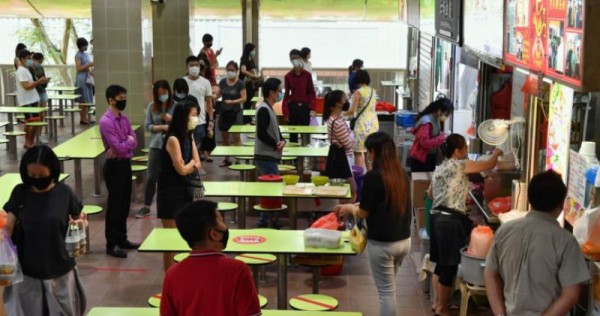
Efforts to raise hygiene and cleanliness standards at hawker centres, coffee shops and public toilets will be ramped up from Friday (June 19), when restrictions to curb the spread of Covid-19 are eased and people can eat out.
The National Environment Agency (NEA) said on Wednesday (June 17) that diners at hawker centres or coffee shops will be reminded by safe distancing ambassadors to properly dispose of their used tissues and wet wipes, and return their trays and crockery to centralised stations.
Public toilet owners and operators will also have to ensure the facilities have such basic amenities as liquid hand soap, toilet paper and litter bins, the NEA added.
Minister for the Environment and Water Resources Masagos Zulkifli, who oversees the NEA, said: “Cleanliness and good standards of hygiene are our first line of defence against evolving public health threats.”
He added: “We need to make simple habits, such as returning our trays and disposing used tissues or wipes properly, social norms at hawker centres and coffee shops.
“This will complement NEA’s renewed efforts to uplift public toilet cleanliness in Singapore.”
SINGAPORE: The global market for luxury goods has flourished for decades, thanks to a handful of brands that have carefully constructed an environment that projects the dominance of wants over needs.
The 2019 global value of the sector, estimated to be around US$1.47 trillion, suggests that this strategy has worked flawlessly.
So robust has been the demand for personal luxury goods, that even the global financial crisis of 2008 to 2009 managed to shave off only 9 per cent of its value, before deep-pocketed Chinese consumers swiftly restored the market segment to its former glory.
BUSINESS WON’T BE RETURNING TO NORMAL
The return to business as usual, however, appears to be an increasingly unlikely scenario even after the COVID-19 crisis is over.
In fact, a recent study conducted by management consultancy firm Bain predicts the global sales of luxury handbags, clothing and cosmetics will decline by 20 to 35 per cent in 2020.
These statistics compound the trouble for Singapore’s luxury market, which had already witnessed a slowdown since late last year.
The findings of a 2019 study by market research company Ipsos suggest the island’s affluent population started spending less on luxury months before the pandemic struck, owing to the ripple effects of the drawn-out US-China trade war on the domestic economy.
As part of their initiatives to mitigate the situation and the accompanying uncertainties, luxury brands operating in the country have taken tepid steps to lure customers.
Bulgari has revamped its online stores and is designing personalised gifts. Louis Vuitton now offers complimentary delivery for its goods via men in suits. These measure, while creative, yield limited results. Hence, both brands have quickly resorted to their most potent course of action – price rise.
A man wearing a protective face mask walks past a Louis Vuitton shop on the Croisette in Cannes where the Cannes Film Festival and the Cannes Lions take place, as a lockdown is imposed to slow the rate of the coronavirus disease (COVID-19), in France, March 18, 2020. (Photo: REUTERS/Eric Gaillard)
In May, news stories reported that a host of high-end brands, including Bulgari, Chanel, Dior, Louis Vuitton and Tiffany & Co, had hiked the prices of some of their goods to varying degrees.
When pressed to explain the move, their representatives attributed the rise to price harmonisation across various markets, exchange rate fluctuations and the escalating cost of raw materials.
While these reasons may appear reasonable, some might argue even favourable, under ordinary circumstances, updated sales records clearly indicate the recent decision to increase retail prices by relatively larger margins is primarily aimed at combating the unprecedented detrimental effects of the ongoing pandemic.
LVMH, the parent company of approximately 60 prestigious companies, registered a 17 per cent year-on-year drop in revenue this first quarter.
Rival conglomerate Kering SA, whose portfolio includes Balenciaga, Bottega Veneta and Gucci, also saw its first-quarter sales plummet by around 15 per cent. Likewise, Burberry recently announced that its annual pre-tax profit fell by 62 per cent year-on-year.
LUXURY GOODS ARE IN A TOUGH SPOT
A lot has already been said about the hit that the global economy has taken – and is continuing to take – on account of COVID-19. According to the International Monetary Fund, world GDP will fall by 3 per cent in 2020.
At zero per cent, Asia’s growth is expected to completely stall. Singapore, owing to its open economy model, is bound to shrink by 5.8 per cent.
Unemployment figures are rising steeply, too, with young adults bearing the brunt of the economic setback.
More than one in six young people have stopped working since the pandemic began, whereas those who retain jobs have seen their working hours cut by 23 per cent, according to the International Labour Organisation.
While the adverse effects of the crisis are felt far and wide, the luxury goods segment is in a particularly tough spot.
Last year, another Bain study found that Asia delivered the vast majority of the global luxury market growth, with young, middle class shoppers forming the steady consumer base. Now the industry’s dual engines of growth – geographic as well as demographic – have come to a halt.
A man passes by the closed Tiffany & Co store on Wall St. in the financial district of New York City, U.S., March 17, 2020. (Photo: REUTERS/Lucas Jackson)
In economics textbooks, luxury goods are often classified as products with high income elasticity of demand. As individuals earn more, they purchase proportionately more luxury goods. Conversely, when income falls, the demand drops more than proportionately.
Yet, most items of personal luxury can also be said to be examples of Veblen goods, which have shown to defy the basic law of demand. When their price increases, so does their demand, as consumers see the surcharge as a signal of added prestige.
In a non-crisis, stable economy, this creates a perverse incentive. However, the model breaks down in the event of a pandemic, where skyrocketing prices of luxury goods are matched by nosediving incomes.
Established brands do not lose their special status overnight, but they do risk distancing a loyal customer base in the medium to long run if they keep this up.
KEEPING THE MARKET GOING
So what should these premier fashion houses do?
First, diversification. If there was ever a time for luxury powerhouses to expand their product- and price-range, it is now.
Giving consumers a larger selection of products with incremental differentiating features at corresponding price points can be a lifesaver. Apart from charming new consumers, such a strategy could also satiate the appetite of variety-seeking buyers.
In this, the example of Louis Vuitton stands out. At the time of its inception in 1854, the company focussed solely on manufacturing lightweight luggage trunks.
But, more than a century and a half later, the French fashion giant’s Singapore website now sells luxury versions of just about everything, from handbags and time pieces, to dumbbells and earphones.
A man wearing a protective face mask walks past a closed Louis Vuitton shop on the Croisette in Cannes during a lockdown. (Photo: REUTERS/Eric Gaillard)
Although studies have pointed out that most other luxury companies shy away from broadening their offerings and working on brand extensions through collaborations due to the ingrained fear of dilution, the pandemic is an inflection point for brands to rethink the notions of exclusivity and market dominance.
Second, discounts. Among other things, the health crisis has managed to push a few luxury brands to take the ordinarily unthinkable plunge into the almost sinful world of slashed prices.
In April, Bloomberg reported that Neiman Marcus was offering a 50 per cent discount on Tom Ford glasses, while Saks Fifth Avenue was selling a Derek Lam striped shirtdress at 40 per cent off the regular price.
In Singapore, luxury cosmetics company Clarins has been offering discounts and welcome gifts for first-time buyers.
Although the concept of accessible luxury has been picking up some pace in recent years, many big brands have typically refrained from significant price cuts, worrying that the move could lead to some form of status erosion.
This new approach stands in sharp contrast to brands’ recently defunct practice of setting their unsold stock of goods on fire to preserve product scarcity, and, indirectly, maintain a distinct reputation.
Another often-cited reason behind the reluctance to put luxury goods on sale is to avoid upsetting consumers who already paid the full price.
For the industry to salvage at least some production cost in the immediate future, and create a legion of new consumers in the distant future, destigmatising sensible discounts is recommended.
Third, digital engagement. Much has been said about making judicious use of the Internet during the pandemic in making the customer’s online purchase experience hassle-free.
However, given that the star treatment experience physical outlets offer plays a central role for luxury brands, these digital initiatives should broaden beyond creating an aesthetically pleasing website and using social media platforms to promote the latest collections, to foster engagement with interested buyers.
As social distancing measures (including a cap on the size of gatherings) are here to stay, firms must leverage on rapidly developing artificial intelligence solutions to pique their buyers’ interests.
Dior’s initiative to create a virtual version of its Champs-Élysées store in Paris is a case in point. Launched earlier this year, this website allows users around the world to explore the company’s signature boutique and directly place an order for the products on display.
A Dior store in Paris, France, January 27, 2020. (Photo: REUTERS/Gonzalo Fuentes)
Virtual consultations, live chats and livestreamed product launch events are other means for brands to partially replicate the in-store experience for shoppers. The expression may come across as hackneyed, but there really is no substitute for prompt and continuous innovation.
There is no denying that neither individually nor collectively will these actions be sufficient to perfectly insulate Singapore’s luxury goods industry from the hardships brought upon by COVID-19.
While the purchase decisions of local residents will be severely affected by the recession and gradual recovery, travel restrictions will keep the number of cash-rich tourists to a bare minimum.
Even though this does not bode well for the market, the strategies mentioned above could be thought of as additional measures to cushion some of the blows high-end retailers will suffer until the health crisis is brought to heel.
SINGAPORE: All sports and physical activities may resume when Phase 2 of Singapore’s reopening begins, under several conditions, said Sport Singapore (SportSG) on Wednesday (Jun 17).
In its advisory, the national sport agency said that most sport and recreational facilities, whether managed by public, private or commercial entities, may reopen on Friday. These include swimming pools, stadiums, fitness studios, gyms, indoor sport halls, outdoor courts, bowling centres and golf courses, including those in condominiums.
Most ActiveSG facilities will reopen, but dual-use facilities in schools and some facilities listed below will remain closed.
The Rink@Jcube will open later, on Jul 3.
Additionally, lawns and open spaces in parks and state lands under NParks and the Singapore Land Authority (SLA) will reopen, the authority said in a separate press release. Playfields and beaches under SLA will also reopen to the public.
The beaches at St John’s, Lazarus and Kusu Islands will also resume operation, said SLA. St John’s Island Lodge will remain closed as activities held there tend to involve large numbers of people who are likely to come into close contact for prolonged periods of time, it added.
Even though senior-centric activities that can be done individually can resume from Friday, seniors should stay at home as much as possible as they are more vulnerable to COVID-19, SportSG said.
For premises larger than 50 sq m, “the maximum number of persons allowed … shall be limited according to its gross floor area based on 10 sq m per person or 50 persons, whichever is lower”, SportSG said.
This limit is imposed “to minimise the risk of large clusters forming”, it said.
The SafeEntry digital check-in system will be deployed for all visitors of the reopened facilities. Temperature checks will also be conducted and those who appear unwell will be turned away.
Common spaces and interactive components will be frequently disinfected, with shared common equipment like gym weights and basketballs wiped down and sanitised frequently.
Crowd management systems will be put in place by operators to minimise the mixing of groups. They will also have to keep their indoor premises well-ventilated.
Operators will designate a member of their senior staff as a safe management officer, who will ensure compliance with the new measures.
They will also ensure that all visitors wear masks when they enter the facility. Hand sanitisers will be placed in close proximity of the facility entrance and high-touch surfaces like door handles.
SportSG also offered broad guidelines for the different types of sporting activities.
Racquet sports: Singles and doubles training sessions are permitted for both indoor and outdoor racquet sports such as badminton, table tennis, squash and tennis.
Team sports (indoor and outdoor): Group training in sports such as baseball, basketball, floorball, futsal, handball, hockey, sepak takraw and volleyball is permitted, but each group remains limited to five people with no inter-mixing between groups. Multiple groups have to maintain 3m of safe distance from each other when sharing a venue. There should also be no “deliberate body contact drills and activities”, said SportSG.
Combat sports: For combat sports such as boxing, judo, muay thai, silat, taekwondo and wrestling, training and sparring need to be “modified such that there is no prolonged body contact such as grappling or restraining”, said SportSG. “Transient contact such as kicking and punching are acceptable,” it added. Only non-contact shadow sparring and non-contact technical work with the coach are allowed.
Watersports: Those participating in activities such as canoeing, dragonboating, rowing, sailing and wakeboarding must modify training to observe safe distancing. Active disinfection of all possible contact surfaces must be done before, after and at pre-decided intervals during each session.
Mindsports or e-sports: Those participating in activities such as chess, contract bridge and e-sports must avoid unnecessary crowding. Masks should also be worn.
Aquatics: Each pool lane is limited to five swimmers. Classes are limited to five people and groups have to be separated by 3m. The instructor should preferably wear a mask or face shield if they are in close contact with participants. For activities such as water polo, diving, lifesaving and underwater sports, training is permitted as long as the group size limitation is observed. There should also be no full contact or defending drills.
SINGAPORE: The National Environment Agency (NEA) is encouraging coffee shops to remove smoking corners as part of measures to “safeguard public health” as dining-in resumes on Friday (Jun 19) in Phase 2 of Singapore’s reopening.
“To holistically safeguard public health, coffee shops will also be encouraged to rescind their smoking corners and implement cleanliness measures such as a tray return system, to keep tables clean and allow cleaners to focus on other cleaning tasks,” said NEA in a media release on Wednesday.
The agency added that it will introduce a programme that provides co-funding for toilet upgrading work, to improve the cleanliness of such facilities in coffee shops and hawker centres with ageing infrastructure.
“The Toilet Improvement Programme for hawker centres will have upgrading works that focus on improving the design of the toilets and choice of sanitary fittings to make them easier to clean, as well as encouraging users to maintain toilet cleanliness,” said NEA.
It will announce more details on the co-funding at a later date.
A study released in May by the Singapore Management University (SMU) showed that public toilet hygiene standards have fallen at Singapore’s hawker centres and coffee shops.
Hawker centre toilets are “significantly dirtier” while coffee shop toilets have stayed “dirty and largely unchanged” compared to findings from a similar study conducted four years ago, said SMU in the study.
NEA said the Toilet Improvement Programme will also factor in maintenance issues.
For instance, a licensed cleaning business may be engaged to perform periodic cleaning of coffee shop toilets, said NEA, and a controlled-access system may also be put in place for only coffee shop customers to use.
“Clean and well-maintained public toilets are a key aspect of public health which NEA has been promoting, and this has gained an increased level of importance amid the COVID-19 situation,” said the agency.
NEA added that public toilet owners and operators play an important role in maintaining high standards of cleanliness and ensuring that there are basic amenities such as liquid hand soap, toilet paper and litter bins.
Stricter penalties have been put in place by NEA and the Singapore Food Agency since Apr 1 for any lapses in cleanliness.
Operators of public toilets who do not keep them clean or fail to provide basic amenities such as soap or toilet paper face a fine of up to S$400 for the first offence.
Repeat offenders face a S$500 fine for subsequent lapses.
“Under the Environmental Public Health Act, for lapses such as insufficient basic amenities and unclean toilets in food and non-food establishments, the maximum fine on first conviction is between S$2,000 and S$5,000, depending on the nature of the lapse,” NEA added.
Apart from efforts to improve cleanliness, NEA also reminded diners at coffee shops and hawker centres to be “socially responsible” and practise basic hygiene.
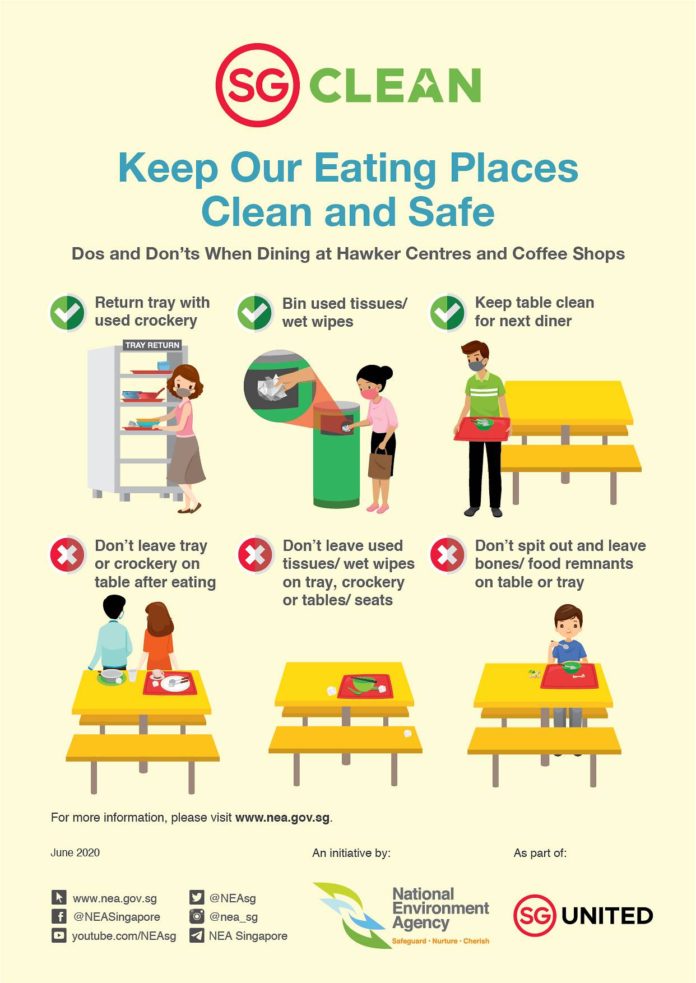
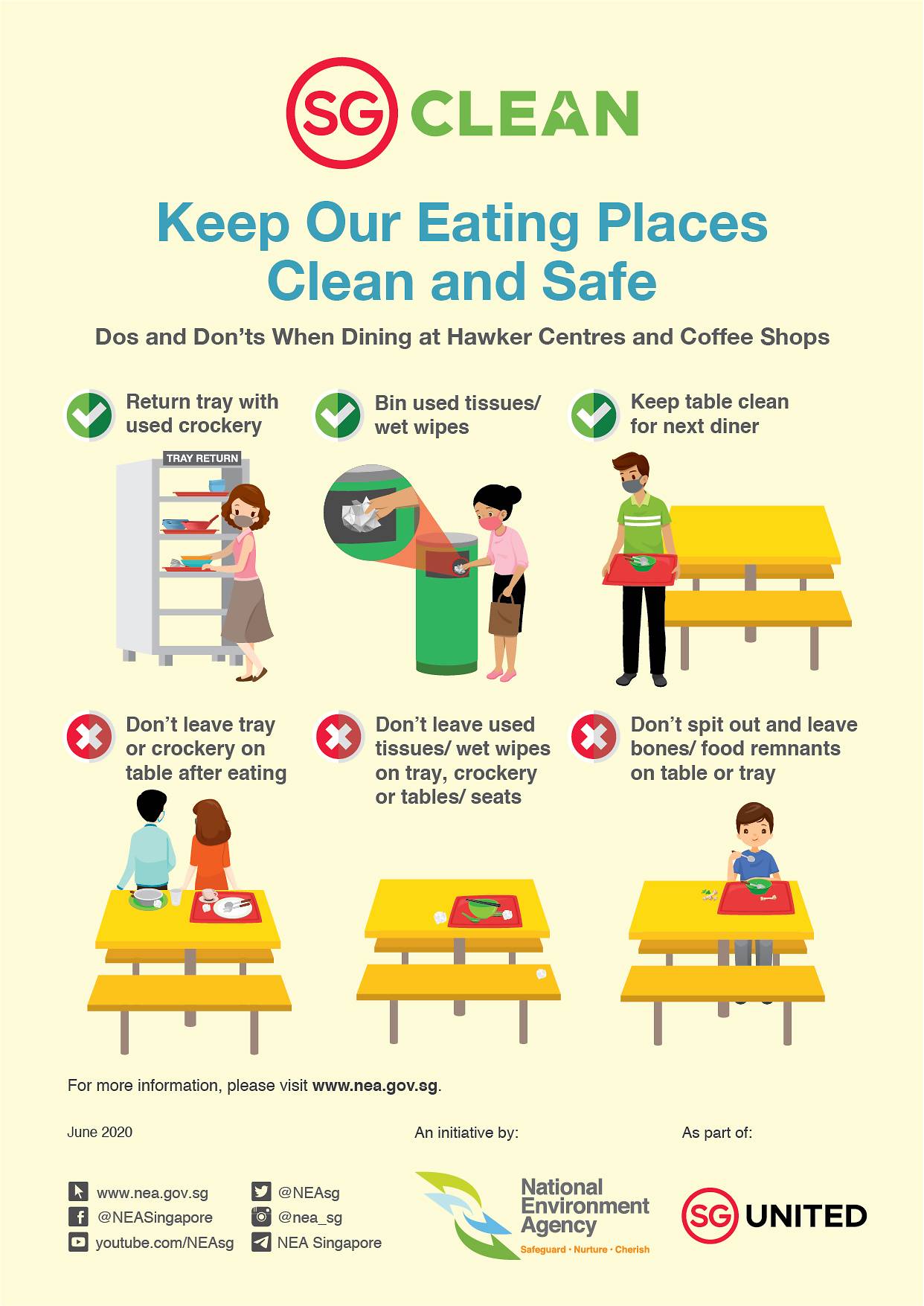
These include returning trays and used crockery, as well as disposing of used tissues or wipes in rubbish bins. Diners should not leave used tissue paper on trays or on tables or seats, said NEA.
“This will help keep dining tables clean for the next user, and minimise the risk of disease transmission to cleaners and other diners. These habits must be sustained as a way of life beyond COVID-19 to help reduce risks to public health,” said the agency.
Guidelines on dining etiquette at hawker centres and coffeeshops. (Image: National Environment Agency)
A 2017 analysis by The New York Times showed that sons, on average, are 2.7 times more likely than the rest of the population to have the same job as their fathers.
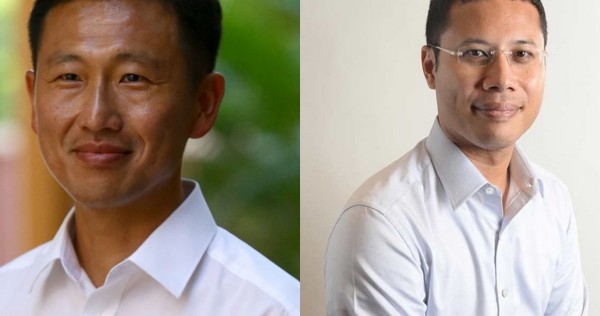
The statistics seem to apply to some of our politicians too, whose career choices are likely inspired by their dads, who previously took on significant roles in shaping Singapore.
As the general election (GE) to elect members for the 14th Parliament of Singapore looms, what many may not know is that among the familiar faces, some have carved out a career in the realm of politics following in their father’s (or even spouse’s) footsteps.
It was a gruesome sight to behold along Jurong West Street 24 last night (June 16), when a motorcyclist was pinned under a TransCab taxi following a traffic accident.
With blood pooling on the asphalt and the frantic commotion of passersby trying to render assistance, one man did something rather peculiar: whip out his phone to film the incident and ask the trapped victim if he was Chinese.
The video he captured was shared online by Roads SG and SG Road Vigilante, and that’s exactly how it began.
Crying out in a mix of Malay and religious vociferation, the audibly upset man makes repeated comments about the amount of blood on the road and tries to calm the victim.
Insurer AIA Singapore on Wednesday said all employees will get S$1,000 as part of the company’s work from home assistance. The move is set to benefit more than 1,000 permanent and contract staff.
The lump sum will also help ensure employees get the equipment they need to further enhance their home office setup, as well as cushion any financial impact the worker’s family could be facing.
Moreover, AIA will grant an additional day-off for employees to encourage them to use the time to focus on their personal well-being.
AIA Singapore chief executive Patrick Teow added there is currently no plan for any salary cuts.
“Being a leading life insurer, there is no better time for us to demonstrate leadership by providing peace of mind during times when people need us most,” he said.
To support jobseekers, the insurer will offer more than 200 job opportunities through various recruitment campaigns for wealth management and insurance associate roles.
AIA will also join the SGUnited Traineeships Programme to support recent graduates, offering traineeship positions for digital roles such as data analytics, UX design and more.
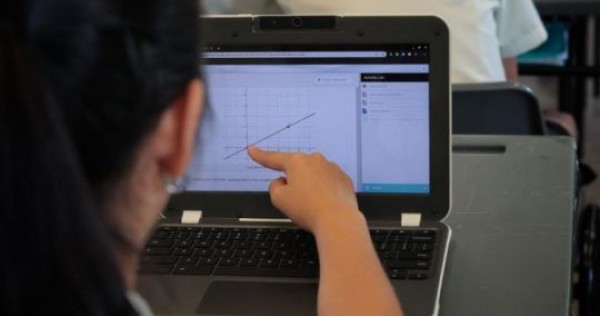
SINGAPORE – All secondary school students will receive a personal laptop or tablet for learning by next year – seven years ahead of the original target.
The recent move by Education Minister Ong Ye Kung to bring forward the plan is one of the ways the Government, schools and the community are working together to keep social mobility alive, and ensure every individual is afforded the opportunity to do well regardless of their starting point, said Senior Minister Tharman Shanmugaratnam on Wednesday (June 17).
In a national televised broadcast, Mr Tharman, who is also the Coordinating Minister for Social Policies, said social mobility is an integral part of Singapore’s identity, and is the reason Singapore has been able to transform its society since the 1960s.
“Generations of children from humble backgrounds have moved up in life, through education, and by working hard in their jobs and businesses.
SINGAPORE: The economic challenges Singapore faces underscore the need for the country to strengthen its social compact and make sure no-one is left behind, said Senior Minister Tharman Shanmugaratnam on Wednesday (Jun 17).
While the COVID-19 pandemic has hit economies hard around the world, it also has “the makings of a profound social crisis”, Mr Tharman said in a televised speech.
“The economic dangers we now face compel us to fortify our society, and reinforce the strengths that we have developed over many years,” he said.
“Singapore cannot defy the global economic downturn. But we must absolutely defy the loss of social cohesion, the polarisation and the despair that is taking hold in many other countries. Never think these trends cannot take hold in Singapore.”
In a speech focused on creating a stronger and more cohesive society, Mr Tharman noted that social divisions were already growing in some countries, but are now getting even wider.
“All this is sharpening feelings of helplessness and the sense that the system is stacked against those who are already disadvantaged. And it is bringing long-standing perceptions of racial injustice to a boiling point,” he said.
“No society remains cohesive simply because it used to be.”
In Singapore, the Government will “redouble efforts” to strengthen the country’s social compact, Mr Tharman said, outlining three ways in which it will do so.
ENSURING OPPORTUNITIES FOR EVERYONE, TACKLING INEQUALITIES
First, the Government will do more to ensure that everyone has opportunities to do well for themselves, through education, skills and good jobs, said Mr Tharman.
It will also boost support for those who start life at a disadvantage, to keep social mobility alive and lessen inequalities over time.
“And third, we must all play a role to strengthen our culture of solidarity, so we know we have each other to depend on, in good times and bad,” Mr Tharman added.
“Every individual must put in the effort to achieve their fullest potential. But we must also take responsibility collectively, to help people bounce back from life’s inevitable setbacks, and make sure no Singaporean is left behind.
“We are doing this through Government policies to help those with less, at every stage of life, as well as through citizen-led initiatives and communities of care that are growing in every neighbourhood.”
The Government’s first priority is to save jobs, and to help Singaporeans who have lost their jobs to find new work, said Mr Tharman, who chairs the new National Jobs Council.
“This is not just an economic issue, but a social priority,” he added.
“We will do all we can to prevent people from being out of work for long, so they can stand on their own feet and retain their sense of dignity. Good jobs are also at the heart of our whole approach to building a cohesive society and tempering inequalities.”
He cautioned, however, that the “reality of the matter” is that as long as there are uncertainties in the global economy, affecting trade and travel, new job openings in Singapore will very likely be fewer than job losses.
If left to market forces, unemployment will rise significantly over the next year or beyond if COVID-19 remains a threat, he added.
“We are therefore working with companies, sector by sector, to take on Singaporeans through temporary assignments, attachments and traineeships during this down period, so they get real work opportunities and get paid, and pick up skills while waiting for permanent jobs to open up,” Mr Tharman said.
“The Government is heavily subsidising these opportunities. It gives people far greater benefit when Government provides support this way. No amount of unemployment allowances can compensate for the demoralisation of being out of work for long.”
The Government is also making a “concerted effort” to help middle-aged and mature Singaporean workers, said Mr Tharman, adding that employers will get extra support when they hire these workers.
“This is and must be a national effort. And it needs new thinking among employers, to give middle-aged and mature Singaporean workers a fair chance to prove themselves. Employers need to reorient their management philosophies, and their HR and talent management practices,” he said.
“No Singaporean who is willing to learn should be ‘too old’ to hire. No one who is willing to adapt should be viewed as ‘overqualified’. We will work closely with the business associations to bring all employers into this national effort.”
While the Government has been investing heavily in reskilling workers and preparing people for the digital revolution for several years now, COVID-19 is “fast-forwarding the changes”, said Mr Tharman.
“Everyone must have the courage to re-gear to stay on track, and make the effort to acquire new skills at regular points in your careers, possibly even learning whole new disciplines,” he said.
SCHOOLS “CRITICAL” TO SOCIAL MOBILITY
Apart from jobs, good schools are critical to social mobility as well, said Mr Tharman.
“We must never become a society where social pedigree and connections count for more than ability and effort,” he said, noting that countries have found it more difficult to sustain social mobility with time.
“It therefore requires relentless government effort, quality interventions in schools and dedicated networks of community support to keep social mobility alive,” he said.
Senior Minister Tharman Shanmugaratnam delivering a national broadcast on “A Stronger and More Cohesive Society” on Jun 17, 2020. (Photo: Ministry of Communications and Information)
The Government is investing “a lot more” into equalising opportunities when children are young, said Mr Tharman, pointing to programmes such as KidStart, which is designed to help lower-income families and their children.
“During the recent circuit-breaker, our teachers made great effort to help students from poorer homes and those at risk, to ensure they did not fall behind,” he added.
The Ministry of Education will give schools more support in the coming years to help students from disadvantaged backgrounds.
Mr Tharman also noted that all secondary school students will be equipped with a personal laptop or tablet for learning by next year, seven years ahead of the original target.
“When you add up all we are doing, starting from the earliest years of childhood, we are making a determined effort to keep Singapore a place where every individual can do well, regardless of their starting points,” he said.
STRENGTHEN CULTURE OF SOLIDARITY
Singapore must strengthen its culture of solidarity, and Singaporeans must be assured that they can get help with they meet with difficulties in life, Mr Tharman said.
“We also need, more than we did in the earlier years, a strong spirit of selflessness and solidarity, looking out for the vulnerable, and supporting each other. Not because we are obliged to do so, but because it makes us a better society together,” he added.
Many people have come forward to help those in need during the COVID-19 crisis, Mr Tharman noted.
“These community efforts have complemented the Government’s social support schemes to help Singaporeans through the crisis. They are schemes responding to today’s crisis, but they are also part of a broader reorientation in our social policies that began well before COVID-19, and will outlast it,” he said.
The Government is “working systematically” to provide greater support for lower- and middle-income Singaporeans and to build a fair and just society, Mr Tharman added.
“We will strengthen these policies in the coming years. No one can tell what world will emerge when COVID-19 is over, or whether it has entered a long period of economic stagnation as many fear,” he said in his speech.
“But we will do all we can to make ours a more cohesive society, and do it in ways that can be sustained into the next generation. And we must all do our utmost to avoid the rifts and fractures that we see developing in many other societies.”
He noted that the Government has increased subsidies for lower- and middle-income families in education, housing and healthcare, and is also boosting the Silver Support scheme to help poorer retirees.
“Very importantly, we continue to strengthen support for our lower-income Singaporeans at work,” he said, adding that through Workfare and the Special Employment Credit, the Government pays as much as 40 per cent on top of the wages that employers pay older lower-income workers.
Mr Tharman added that Singapore is also making progress in helping its lowest paid workers through schemes like the Progressive Wage Model.
“In time, we want every sector to have progressive wages, with this clear ladder of skills, better jobs, and better wages for those with lower pay,” he said.
Such measures will bring “meaningful and continuing improvements in pay and conditions” for lower-income workers, he added.
“It may lead to a small rise in the cost of services that we all pay for. But it is a small price for us to pay for better jobs and income security for those who need it most, and a fair society.”
While the Government has made efforts to help workers and boost social support, Mr Tharman said Singapore future lies in how its people overcome challenges together.
“Ultimately, the greatest confidence we get in our future as Singaporeans comes from our social compact,” he said.
“The compact is about all of us, and goes much deeper than government policies. It is about the compact of self-effort and selflessness that we must strengthen in our culture. It is about the networks and initiatives that we saw spring up in this COVID-19 crisis.”
He added: “It is about how we draw closer to each other, regardless of race, religion or social background. It is how we journey together. A forward-looking, spirited and more cohesive society.”
Being a public figure in Singapore is not an easy job.
As a Member of Parliament (MP), besides Meet-the-People sessions (pre-circuit breaker) and ensuring that their constituents’ concerns are heard, the job also comes with inherent risks. It’s not just a war of words and sometimes, the dangers are real.
In the past few years, there have been physical attacks on Singapore MPs, and here is what we know about them.
Punches thrown Tan Wu Meng. PHOTO: Shin Min Daily NewsIn 2006, then-Yio Chu Kang MP Seng Han Thong was assaulted at a Meet-the-People Session (MPS). A 74-year-old former taxi driver had punched Seng in anger after perceiving that Seng had not helped to regain his revoked taxi licence.