There are 322 new coronavirus cases confirmed as of Monday noon (July 13), taking Singapore’s total to 46,283.
They include 11 community cases, comprising two Singaporeans or permanent residents and nine work pass holders, said the Ministry of Health (MOH) on Monday.
The ministry said that the higher number of cases on Monday is mainly due to fewer tests being conducted by the Covid-19 testing laboratories over the public holiday and weekend on July 10 and 11, with the backlog of samples being cleared from Sunday.
“The number of cases reported for July 9 and before were not affected,” MOH said.
There are also five imported cases who had been placed on stay-home notice (SHN) upon arrival in Singapore.
Migrant workers living in dormitories make up the vast majority of the other cases.
More details will be announced on Monday night.
On Sunday, a 67-year-old Singaporean man, who is a non-teaching staff member at hospitality school Shatec, was confirmed to have the coronavirus infection and was the only new case in the community as of Sunday noon.
Twelve foreigners were deported and barred from re-entering Singapore because they did not comply with safe distancing measures during the Covid-19 circuit breaker.
In three separate cases, a Malaysian, a Chinese national and 10 Indian nationals were found guilty of non-compliance, said the police and the Immigration and Checkpoints Authority (ICA) in a joint statement issued on Monday (July 13).
The 12 foreigners are nine men and three women aged between 20 and 37.
All of them had violated the Covid-19 (Temporary Measures) (Control Order) Regulations.
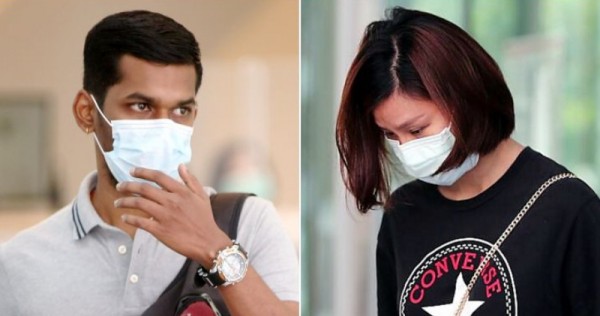
The first case involved Malaysian Arvinish N. Ramakrishnan, 23, who was a work permit holder.
He had invited his friend to his place of residence for drinks and later sent his friend home on a motorcycle. They were subsequently stopped at a roadblock in Yishun Avenue 6.
Arvinish was charged with drink-driving and violating restrictions on leaving his place of residence and the prohibition on social gatherings.
SINGAPORE: Researchers from the National University of Singapore (NUS) have developed three COVID-19 swabs to meet a surge in demand, both globally and in Singapore.
These nasopharyngeal swabs are a key element in testing for SARS-CoV-2 – the virus that causes COVID-19 – but are often out of stock due to supply chain disruptions, NUS said in a news release on Monday (Jul 13).
“As countries progressively emerge from lockdowns and reopen their economies, mass, repeated, testing is being widely adopted as a key public health strategy to prevent a resurgence of COVID-19 infections,” NUS President Professor Tan Eng Chye said.
To address the shortage and ensure Singapore has a sustainable supply of these swabs, two multidisciplinary research teams from NUS developed three swab designs that are “comparable to the current ‘gold standard’ swabs”.
The three are a 3D-printed swab named Python and two other designs, IM2 and IM3, that can be manufactured using a process called injection moulding that can produce several hundred swabs in “a few minutes”, NUS said.
A SWAB WITH MINIMAL DISCOMFORT FOR PATIENT
Nasopharyngeal swabs are flexible sticks inserted through the nose to the back of the nasal cavity to collect fluid samples from an individual.
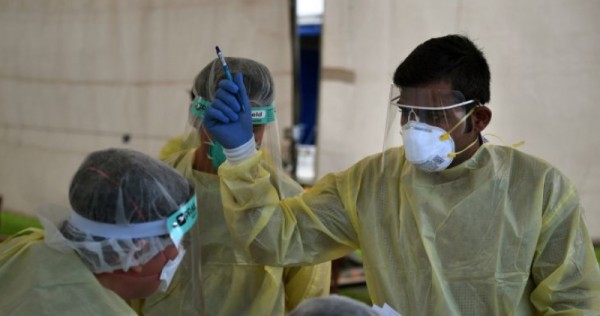
A health worker takes a COVID-19 nasal swab test sample from an essential worker in Singapore, Jun 10, 2020. (Photo: AFP/Roslan Rahman)
These swabs have a carefully designed tip section that collects and retains sufficient nasopharyngeal fluids which are channelled into a holder for further testing, NUS explained.
“These are critical design factors as they could affect the accuracy of the test result when screening for SARS-CoV-2.”
The Python swab features a double helix structure as a swab tip, which NUS said has “excellent fluid adsorption and (causes) minimal discomfort to the patient”.
In terms of clinical efficacy, it was compared to an industry standard swab in National University Hospital (NUH), NUS said.
This was carried out in a case-controlled study of 40 patients diagnosed with COVID-19, and 10 control patients with acute respiratory illness who had tested negative for SARS-CoV-2.
“The Python swab, which was developed in less than two months, demonstrated comparable accuracy and performance, with no significant difference against the standard swab,” NUS said.
“As such, the Python swab was deemed safe and acceptable for patient use, and could help mitigate strained resources in the escalating COVID-19 pandemic.”
A patent for the swab has been filed, with two local companies – Structo and Eye-2-Eye Communications – mass-producing the swabs.
“As part of NUS’ contribution towards the nation’s fight against COVID-19, the design of the Python swab is free for use in Singapore,” said one of leaders of the team that developed the Python, Associate Professor Yen Ching-Chiuan, co-director of the Keio-NUS CUTE Center.
The team was also led by Professor John Eu-Li Wong, NUS senior vice president of health innovation and translation, and Professor Jerry Fuh, director of the NUS Centre for Additive Manufacturing.
The team worked with Associate Professor David Allen and Professor Wang De Yun from NUS Yong Loo Lin School of Medicine, researchers from the NUS School of Design and Environment and NUS Faculty of Engineering, as well as clinicians from NUH, on the design, pre-clinical testing and clinical validation.
Professor Freddy Boey (centre, showing the swabs), and (from left) Dr Alfred Chia, Associate Professor David Allen, and Associate Professor Yen Ching-Chiuan are part of two NUS teams that developed three nasopharyngeal swab designs for COVID-19 testing. (Photo: NUS)
CHEAPER, LOCALLY-PRODUCED SWABS
Another NUS team developed an injection moulding process and also redesigned the Python swab to make it compatible with this form of manufacturing.
The two resulting swabs are the IM2 and IM3.
“Injection moulding as a manufacturing process is inherently faster than 3D printing as multiple units of the swabs can be produced in a given cycle. Several hundred swabs can be produced in a few minutes using the moulding process,” explained Professor Freddy Boey, NUS deputy president of innovation and enterprise, and leader of the second NUS team.
“This is crucial in our continued fight against the pandemic,” added Professor Boey, who noted that, like the Python swab, designs of the IM2 and IM3 will also be free for use in Singapore.
Within three months, the NUS team designed and tested these injection moulded swabs, and is carrying out clinical trials in NUH and the Singapore General Hospital, the university said. Patents have also been filed for the two designs.
The team is currently working with four companies, TNC Optics & Technologies, Meiban Group, Inzign and Forefront Medical, to mass manufacture and sterilise the injection moulded swabs.
“About 40 million pieces of the IM2 and IM3 swabs are expected to be produced over the next few months, and these locally produced swabs will be priced lower than the current commercially available imported swabs,” NUS said.
The custom-designed nasopharyngeal swab designs are part of the various innovations and solutions developed by NUS researchers to tackle the COVID-19 pandemic, it added.
The three new swabs are among several developments in Singapore related to tackling the COVID-19 pandemic.
A study published by the National Centre for Infectious Diseases (NCID) in collaboration with Duke-NUS Medical School and DSO National Laboratories revealed COVID-19 patients can shed high loads of the novel coronavirus into the air and onto surfaces in their first week of illness, irrespective of their symptoms.
A team of Singapore scientists also previously discovered five antibodies that can block COVID-19 infection and protect against key mutations.
SINGAPORE: Vaccinations against chickenpox and pneumococcal disease will be free for eligible Singaporean children from November, as part of enhanced subsidies for nationally recommended vaccinations announced by the Ministry of Health (MOH) on Monday (Jul 13).
Subsidies will be enhanced for vaccinations recommended under the National Childhood Immunisation Schedule (NCIS) and National Adult Immunisation Schedule (NAIS) at all Community Health Assist Scheme (CHAS) general practitioner clinics and polyclinics from Nov 1, said MOH in a press release.
This is part of efforts to “better protect Singaporeans from vaccine-preventable diseases and to reduce the risk of outbreaks in the community”, it said.
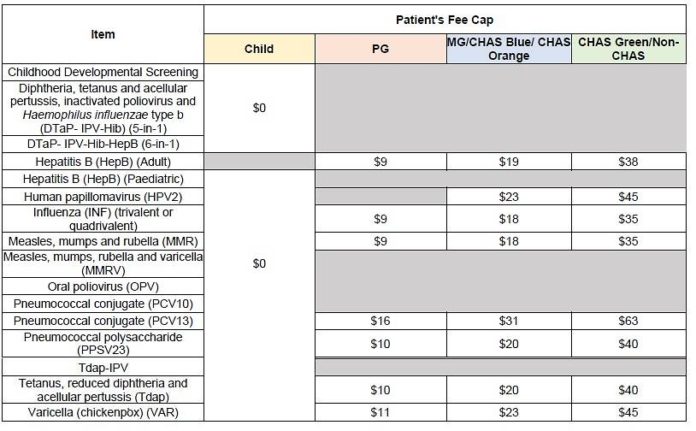
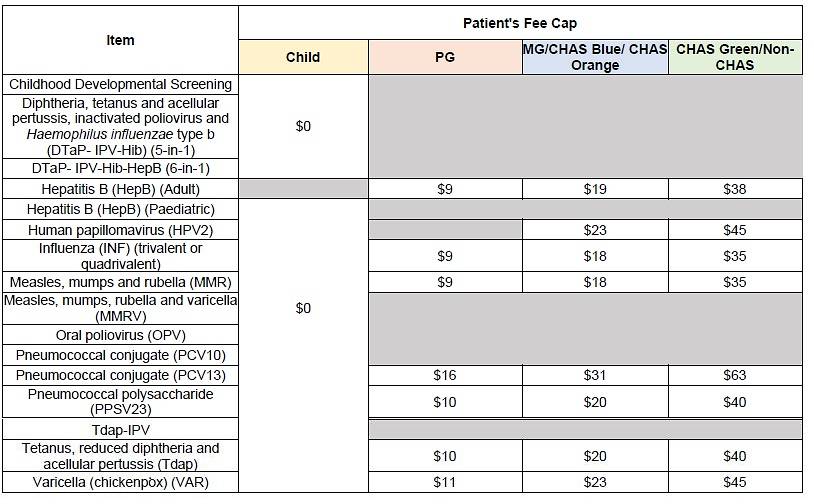
“From Nov 1, 2020, Singaporeans will benefit from higher subsidies of between S$35 to S$125 for nationally recommended vaccinations listed on the subsidised vaccine list administered at CHAS GP clinics,” said the ministry.
For example, eligible Pioneer Generation cardholders will have payments capped at between S$9 and S$16 per vaccination dose.
Eligible Merdeka Generation, CHAS Blue and Orange cardholders will have payments capped at between S$18 and S$31 per vaccination dose.
The ministry said other eligible adult Singaporeans will have payments capped at between S$35 and S$63 per vaccination dose.
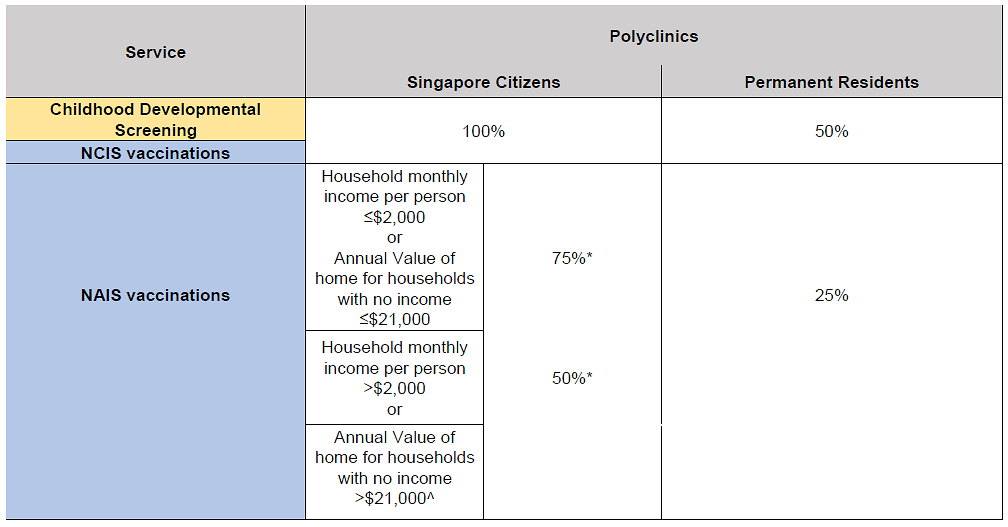
At polyclinics, adult Singaporeans will receive up to 75 per cent subsidy for NAIS vaccinations, while Pioneer Generation and Merdeka Generation seniors will also get an additional 50 per cent and 25 per cent subsidy respectively on top of that.
Meanwhile, eligible Singaporean children will see a range of nationally recommended vaccinations fully subsidised at these clinics.
This will include vaccinations against pneumococcal disease, which are currently chargeable, and vaccinations against chicken pox, which are not currently on the NCIS.
They will also receive a full subsidy for the seven childhood development screening milestones at both CHAS GP clinics and polyclinics, said MOH.
The fee caps at CHAS GP clinics will be as follows:
(Image: Ministry of Health)
Subsidies at polyclinics:
(Image: Ministry of Health)
VACCINES FOR CHILDREN
Under the enhanced subsidies, eligible Singaporean children will not have to pay for vaccinations listed under the NCIS.
The following vaccines will also be added to the NCIS:
Two types of varicella-containing vaccines for the prevention of chickenpox: i) combined measles, mumps, rubella and varicella (MMRV) vaccine; and ii) monovalent varicella vaccine.
Influenza vaccines for target groups of children who are at higher risk of developing influenza-related complications.
The pneumococcal 23-valent polysaccharide vaccine to protect children with chronic or rare medical conditions who are at high risk of developing severe pneumococcal disease caused by the bacterium Streptococcus pneumoniae. This is in addition to the existing pneumococcal conjugate vaccines currently recommended for all young children.
VACCINATION SUBSIDY LIST
Only selected vaccine brands listed on the subsidised vaccine list will be eligible for vaccination subsidies, and the listing may be reviewed from time to time, MOH said.
“The ministry may review the listings periodically, in response to new price proposals from manufacturers, regulatory approval of new vaccines and other changes in global market conditions.”
As clinics may require time to procure vaccines that are required, MOH also encouraged people to make appointments with their preferred clinics for their vaccinations before visiting them.
Posters were torn and posters were taken down, but there was another batch of posters in Pasir Ris-Punggol GRC that got people talking this general election.
Like their neon-yellow party vests, the Singapore Democratic Alliance’s (SDA) election posters affixed on lamp posts in the constituency earlier this month were just as eye-catching.
The striking visuals made residents stop and stare, as well as take photos to share with others online.
Instead of close-up shots of the SDA candidates running in the constituency, the posters featured cartoons depicting several issues that the party wanted to highlight.
Enjoy 1-for-1 selected dishes with a min. spend of $30 (Jadeite members) or $50 (public) at Crystal Jade Hong Kong Kitchen and La Mian Xiao Long Bao, and $8 at Crystal Jade GO.
Optional for Hong Kong Kitchen & La Mian Xiao Long Bao: top up $3.80 for 2 drinks (U.P. $6.40 for both drinks)
Hong Kong Kitchen
Baked Crispy Honey BBQ Pork Bolo Bun
XO Carrot Cake
Braised Shredded Seafood with Superior Thick Soup
Double-boiled Cordyceps Flower & Peach Resin in Chicken Soup
Crisp-fried Homemade Organic Tofu with Preserved Vegetable and Prawn
General Tso’s Chicken
Sautéed Beef with Black Pepper Sauce
Sautéed Chinese Spinach with Prawn Paste and Fish Roe
Poached White Cabbage with Fish Tofu in Superior Broth
Pork Lardon Rice
Scallion Ginger Rice
Classic Hong Kong Egg Noodle with Shredded Char Siew & Superior Soya Sauce
La Mian Xiao Long Bao
Steamed Shanghai Xiao Long Bao (6pcs / 10pcs)
Steamed Chilli Crab Xiao Long Bao (6pcs / 10pcs)
Pan-fried Pork Dumpling
Steamed Vegetable Dumpling
Classic Pan-fried Scallion Pancake
Ma Po Beancurd
Deep-fried Szechuan Chicken with Dried Chilli & Peppercorn
Enjoy 50% discount off your Popcorn Combo treats when you book your movie tickets online
This promotion is valid from 13 – 22 Jul 2020.
Terms and conditions
Promotion is valid with online booking of movie tickets for sessions between 13 to 22 Jul 2020.
Not valid for tickets booked for Shaw Theatres premiere and KinoLounge by Shaw Theatres.
Not valid with tickets purchased at box office or self-service kiosks.
50% discount is applicable for regular, large and family popcorn combo sets.
Limited to 1 discounted popcorn combo set per movie ticket booked online.
Not valid with other promotions, offers or discounts.
Convenience fee of $1.50 per transaction is applicable.
Shaw Theatres Pte Ltd reserves the right to vary the terms and conditions of this promotion without prior notice.
Social distancing rules and safety measures apply.
*Consumption of food and beverages is allowed in cinema halls. Patrons must put on their masks at all times, including inside the cinema halls, except when consuming food and drinks
The election results are finally out after what seems like an action-packed 2020 general election.
And though there were no physical rallies, online rallies and livestreams were aplenty, and a live GE political debate was televised for the first time in more than three decades.
The result? A lot of election content to consume and digest, as well as the birth of many iconic phrases (East Coast plan, anyone?).
If you are still high on election fever or want something to remember this year’s election by, the merchandise by local retailer Singaplex will certainly be up your alley and are guaranteed to “warm the cockles of your heart”.
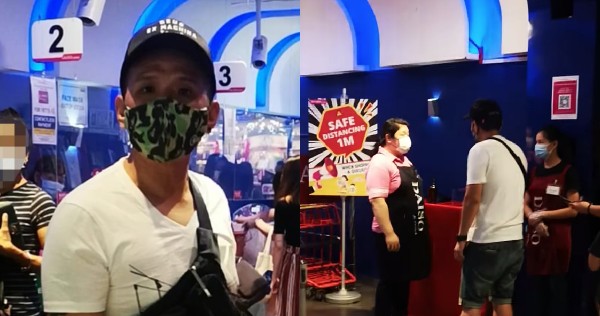
With four official languages in Singapore, it’s inevitable that some things can get lost in translation. One man, though, has got Singaporeans all riled up after he was caught berating a Daiso employee for speaking to him in Mandarin.
The run-in took place at the Japanese chain store’s outlet at City Square Mall, according to a Facebook post on July 12 by a man who said he witnessed the incident.
It had all started when the employee, who was verifying that each customer had logged their entry to the store via SafeEntry, asked the man for his NRIC number in Mandarin, the eyewitness said.
This upset the man, prompting him to ask to speak to the manager.
A video of the incident showed the unhappy customer, accompanied by a woman and a child, raising his voice at two employees.
“I’m Chinese. But what is mean [sic] ‘ni de hao’ (your number)? You understand?”
“Speak English, okay?” he continued, gesturing at the employee who stood off to the side as another employee apologised to him.




 Enjoy 50% discount off your Popcorn Combo treats when you book your movie tickets online