Home Blog Page 178

Traveller who tested positive for COVID-19 in South Korea may have been infected in Singapore transit: New Zealand

0

SINGAPORE: A traveller who tested positive for COVID-19 in South Korea may have been infected during transit at Singapore’s airport, New Zealand’s Ministry of Health said on Monday (Jul 27).

The traveller left New Zealand on Jul 21 and arrived in South Korea the next day after transiting through Singapore. The person showed no symptoms but tested positive for the coronavirus upon arrival in South Korea.

“South Korean authorities have informed us that based on their initial investigations they suspect the traveller was infected during the transit in Singapore airport,” the New Zealand health ministry said on Monday.

“However other causes, including infection in New Zealand, can’t be ruled out at this stage so the ministry is in close contact with South Korea and is expecting further information from the authorities later today New Zealand time.”

In May, the Civil Aviation Authority of Singapore (CAAS) said Singapore will gradually allow travellers to transit through Changi Airport from Jun 2.

Passengers flying through Changi Airport will be directed to new transit holding areas in Terminals 1 and 3 to provide a “safe environment for all passengers and airport workers”, said Changi Airport Group (CAG) on Jun 11.

READ: Safety measures in new transit holding areas in Changi Airport

Singapore Airlines (SIA) also announced on that day that SIA and SilkAir passengers flying from Auckland and Christchurch in New Zealand will be allowed to transit through Changi Airport.

CAG said the holding areas will be disinfected regularly and temperature taking will be conducted at the entrances. Transit passengers with a high temperature or who appear or feel unwell will be given medical attention.

T1 THA (Changi Airport Group)

The new Terminal 1 transit holding area. (Photo: Changi Airport Group)

All passengers must wear a face mask and adhere to the safe distancing markers.

Airport staff members in transit holding areas are required to wear face masks, face shields and gloves, and will also have their temperatures taken before entering the area.

Contactless hand sanitisers, automatic water taps and doors equipped with sensors in restrooms are available in the transit holding areas, CAG had said.

All restrooms, seats and chairs are regularly cleaned and disinfected. 

“Frequently touched surfaces such as charging stations, tables and playgrounds have been sprayed with a long-lasting anti-microbial disinfectant coating that reduces the risk of virus transmission,” said CAG.

CNA has contacted CAG, CAAS and the Ministry of Health for more information.

Cleaning (Changi Airport Group)

Seats in the transit holding area are vacuumed and wiped regularly with disinfectant. (Photo: Changi Airport Group)

There have been 1,206 COVID-19 cases in New Zealand, the health ministry said.

“It has now been 87 days since the last case of COVID-19 was acquired locally from an unknown source,” the media release said.

“There are no new recovered cases today, which means the total number of active cases in New Zealand’s managed isolation and quarantine facilities remains at 21. There is no one in New Zealand receiving hospital-level care for COVID-19.”

BOOKMARK THIS: Our comprehensive coverage of the coronavirus outbreak and its developments

Download our app or subscribe to our Telegram channel for the latest updates on the coronavirus outbreak: https://cna.asia/telegram
Source link

Covid-19 or dengue? NTU researchers develop method that gives results in just 36 minutes

0

[ad_1]

SINGAPORE – Researchers at the Nanyang Technological University (NTU)’s Lee Kong Chian School of Medicine have come up with a way to tell if a person has Covid-19 or dengue in just 36 minutes.

This is just one quarter of the time taken by current testing methods for the same diseases, NTU said on Monday (July 27).

At the moment, the most sensitive way to detect Covid-19 is through a polymerase chain reaction (PCR) technique in a laboratory, which uses a machine to “amplify” viral genetic material by copying it over and over again so any trace of the Sars-CoV-2 virus, which causes Covid-19, can be detected.

But while such a method is accurate, it can take a few hours to complete, partially due to a step known as RNA purification.

When a patient is swab tested, their RNA needs to be extracted from the swab sample to remove any substances in the sample that inhibit the PCR test from working, such as mucin – a main component of mucus.

It also requires chemicals that are now in short supply worldwide, and needs to be carried out by highly trained staff using expensive equipment.

[ad_2]

Source link

Singapore scientists develop COVID-19 test method that delivers results in 36 minutes

0

SINGAPORE: Scientists at the Nanyang Technological University (NTU) have discovered a way to improve the speed of obtaining COVID-19 test results by up to four times.

The improved testing method for COVID-19 yields results in 36 minutes – about a quarter of the time required by existing gold-standard tests. The current testing method requires highly trained technical staff and can take a few hours before results are finalised.

NTU said on Monday (Jul 27) the test can be done with portable equipment and could be deployed in the community as a screening tool.

Testing is a key part of the Singapore Government’s strategy to isolate and ring-fence COVID-19 cases to prevent large clusters from forming. Since Jul 1, individuals aged 13 and older who present with symptoms of acute respiratory infection will be tested for COVID-19 at first presentation to a doctor.

READ: COVID-19: From Jul 1, patients aged 13 and above with acute respiratory infection to undergo testing once they visit a doctor

The new method, developed by scientists at NTU’s Lee Kong Chian School of Medicine, has demonstrated a way to improve “the speed, handling time and cost of COVID-19 laboratory tests”, the university said.

Currently, the most sensitive method of testing for the coronavirus is through a laboratory technique called polymerase chain reaction (PCR), where a machine amplifies genetic material by copying it over and over again so any trace of the coronavirus can be detected.

A big problem is purifying the ribonucleic acid (RNA) from other components in the patient sample – a process that requires chemicals that are now “in short supply worldwide”, NTU said.

NTU Singapore researchers develop method to speed up COVID-19 test to 36 minutes (4)

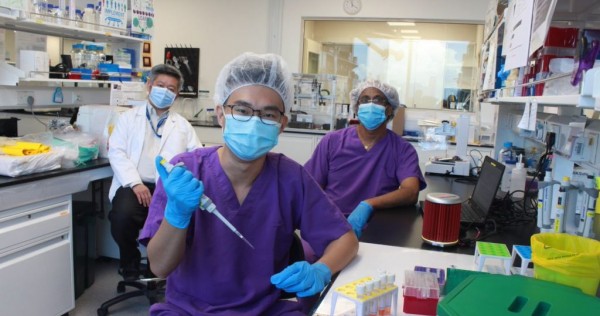
The COVID-19 test, which can be done with portable equipment, could also be deployed in the community as a screening tool. (Photo: NTU Singapore)

READ: COVID-19: MOH conducting ‘swab operations’ as part of stepped up efforts

“The method developed by NTU LKCMedicine combines many of these steps and allows direct testing on the crude patient sample, cutting down the turnaround time from sample-to-result, and removing the need for RNA purification chemicals,” the university added.

PCR tests have proven to be “a workhorse” for biological research but it has some drawbacks, said Mr Wee Soon Keong, who is the first author of the research paper that has been published in the scientific journal Genes.

“The process is fiddly and time-consuming. Our rapid COVID-19 test involves a single-tube reaction that reduces hands-on time and biosafety risk for lab personnel, as well as the likelihood for carryover contamination during the processing of samples,” he added.

The same method can also be used to detect other viruses and bacteria, including dengue. The number of dengue cases this year is set to surpass the 22,170 cases in 2013 – Singapore’s worst outbreak.

THE NEW METHOD

In PCR tests, the genetic material on the swab sample has to be extracted to remove substances in the sample that prevent the test from working. One example of an inhibitor is mucin, a main component of mucus.

The test designed by the NTU team uses the “direct PCR method”, but removes the need for RNA purification – a time-consuming and costly step.

“Instead, they added inhibitor-resistant enzymes and reagents targeting compounds that obstruct RNA amplification, such as mucin … these enzymes and reagents, which are commercially available, have high resistance to such compounds that otherwise inhibit PCR, rendering the test inaccurate,” said NTU.

READ: All foreign workers to be tested by mid-August, says COVID-19 task force

The biochemical mix of crude sample and inhibitor-resistant enzymes and reagents is placed into a single tube, which is inserted into a laboratory thermocycler, a machine used to amplify genetic material in PCR. After 36 minutes, results reveal whether there is any trace of COVID-19 “with confidence”.

The team also tested this method on a portable thermocycler, which can be deployed in low-resource settings and endemic areas, pointing to the possibility of having this test done in community healthcare settings by frontline healthcare workers.

Senior research fellow Dr Sivalingam Paramalingam Suppiah said: “By skipping the RNA extraction step with our direct-PCR method, we see cost savings on nucleic acid extraction kits, and avoid the problem of reagents in short supply when lab testing is ramped up and the demand increases globally.”

Nasal swab worker dormitory Singapore

A healthcare worker dressed in personal protective equipment collects a nasal swab sample from a migrant worker for COVID-19 testing at a foreign workers’ domitory in Singapore on Apr 27, 2020. (Photo: AFP/Roslan Rahman)

Associate Professor Eric Yap, leader of the research team, said the team is now trying to deploy such methods for routine diagnostics.

“We need to determine the actual utility and benefits in a real-world setting, and to understand if there are any trade-offs. When one bottleneck is removed, other challenges may emerge – like ensuring quality control, or reducing manual errors.

“Our goal is to develop ultrafast and automated tests that yield results in minutes, and that can be performed by healthcare workers in the clinic with similar accuracy and sensitivity as in specialised laboratories,” he added.

“This will allow us to take PCR testing out of conventional laboratories nearer to the point-of-care, and into the low-resource settings that need them the most.”

BOOKMARK THIS: Our comprehensive coverage of the coronavirus outbreak and its developments

Download our app or subscribe to our Telegram channel for the latest updates on the coronavirus outbreak: https://cna.asia/telegram
Source link

Young Singaporeans are ready to talk about race. Are their parents?

0

[ad_1]

When Singapore’s police said this month they were investigating opposition politician Raeesah Khan, 26, for allegedly racist social media posts, public reaction was split.

Some citizens agreed with police that she had promoted “enmity” between racial and religious groups by asking whether Singapore authorities discriminated against citizens and if wealthy Chinese and white people were treated differently by the law.

But another group took issue with this view, pointing out that her comments – one made two years ago and another made in May on Facebook – served to highlight incidents of racism that minority groups had experienced in their everyday lives.

While a visibly shaken Khan, in the midst of campaigning with the Workers’ Party for the July 10 general election, publicly apologised for her comments and said she would cooperate with police investigations, #IstandwithRaeesah trended on Twitter.

[ad_2]

Source link

Woman, 24, charged with murder of daughter, 4, insisted on raising her on her own: Brother-in-law

0

[ad_1]

SINGAPORE – The 24-year-old woman who was charged with the murder of her four-year-old daughter insisted on raising the child on her own after her divorce and then broke off contact with both her family and that of her ex-husband, said her brother-in-law.

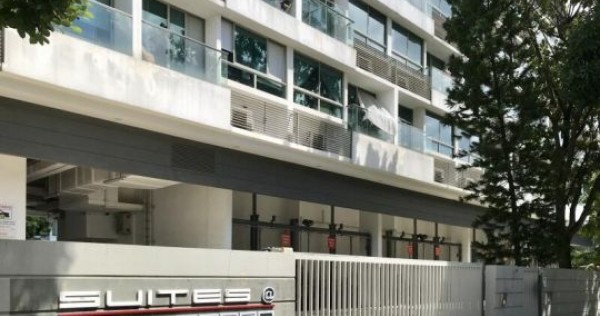
Foo Li Ping, 24, and Wong Shi Xiang, 33, are accused of killing Foo’s daughter, Megan Khung Yu Wai, at a unit at Suites @ Guillemard, a condominium in Paya Lebar, some time in February.

Speaking to Shin Min Daily News on Sunday (July 26), the victim’s uncle – her father’s elder brother – said Foo and his brother agreed to divorce after being married for more than a year owing to arguments over their daughter.

He added that Foo was adamant on raising the child by herself and her in-laws saw no reason to stop her.

The child was around 18 to 19 months old at that time.

“But after she took her child away, she then moved in with her family and refused to let us see Megan,” said the man, who did not give his name.

[ad_2]

Source link

Tekka Centre, City Square Mall, Funan Mall among new locations visited by COVID-19 cases while infectious

0

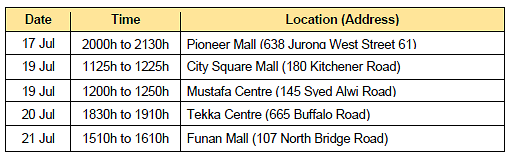
SINGAPORE: Tekka Centre at Little India, City Square Mall and Funan Mall were among the new locations added on Sunday (Jul 26) to the list of places visited by COVID-19 cases in the community during their infectious period.

Pioneer Mall at Jurong West and Mustafa Centre were also among the new locations added, according to the Ministry of Health in a media release.

The new locations are as follows:

New MOH locations Jul 26

​​​​​​​

Those identified as close contacts of confirmed COVID-19 cases would have been notified by MOH, said the ministry.

It added that people who were at these locations during the specified timings should monitor their health closely for 14 days from their date of visit.

“They should see a doctor promptly if they develop symptoms of acute respiratory infection (such as cough, sore throat and runny nose), as well as fever and loss of taste or smell, and inform the doctor of their exposure history,” said MOH.

“There is no need to avoid places where confirmed cases of COVID-19 have been.”

The National Environment Agency will also engage the management of affected premises to provide guidance on cleaning and disinfection.

Singapore reported 481 new COVID-19 cases as of noon on Sunday, including five infections in the community.

This brings the total number of cases in the country to 50,369.

There are also four imported cases, all of whom were placed on stay-home notice upon arrival in Singapore and were tested while serving their notice.

The remaining 472 cases reported on Sunday are work permit holders residing in foreign worker dormitories.

BOOKMARK THIS: Our comprehensive coverage of the coronavirus outbreak and its developments

Download our app or subscribe to our Telegram channel for the latest updates on the coronavirus outbreak: https://cna.asia/telegram
Source link

Dickson Yeo espionage case: No direct threat to to Singapore's security, says MHA

0

[ad_1]

Investigations into the case of Dickson Yeo, a Singaporean who pleaded guilty on Friday (July 24) to acting under the direction of Chinese intelligence officials to obtain sensitive information from Americans, have not revealed any direct threat to Singapore’s security, said the Ministry of Home Affairs (MHA) on Sunday (July 26).

In response to media queries, a spokesman from the MHA added that the ministry was informed by the US authorities of the arrest of Yeo in November 2019.

“Singaporeans are expected to abide by the laws of the country which they visit or reside in,” added MHA.

Yeo had enrolled as a PhD student in the Lee Kuan Yew School of Public Policy (LKYSPP)’s Public Policy programme in 2015, an LKYSPP spokesman confirmed on Sunday. In 2019, he had applied for and was granted a leave of absence.

“In light of the information released by the US Department of Justice, Mr Yeo’s PhD candidature has been terminated with immediate effect and he is no longer a student at the school,” said the LKYSPP in response to queries.

[ad_2]

Source link

Coronavirus: SMRT drivers found infected drove bus services 976, 184 and 176

0

[ad_1]

Four coronavirus patients linked to a cluster at Bukit Panjang Integrated Transport Hub are all bus drivers, said transport operator SMRT on Sunday (July 26).

The cluster was first announced by the Ministry of Health (MOH) on Friday night.

According to SMRT, three of the drivers contracted Covid-19 in their households.

The last driver, a 28-year-old Malaysian work permit holder, was confirmed positive on Thursday.

MOH said on Friday that his infection was detected as part of the ministry’s proactive case finding of individuals working at a newly emergent workplace cluster, adding that his results indicated that he was likely to have a past infection and was no longer infectious.

However, the worker showed symptoms on July 1 and subsequently went to work at Ulu Pandan Bus Depot and Bukit Panjang Integrated Transport Hub.

All four drivers tested positive between July 7 and July 24, said SMRT.

They drove bus services 976, 184 and 176.

SMRT’s chief communications officer Margaret Teo said the company is closely monitoring the drivers’ conditions and offering help to their families.

[ad_2]

Source link

Lee Kuan Yew School of Public Policy cancels Dickson Yeo’s PhD candidature

0

SINGAPORE: The National University of Singapore’s Lee Kuan Yew School of Public Policy (LKYSPP) has terminated the PhD candidature of Dickson Yeo Jun Wei with immediate effect, a spokesperson for the school said on Sunday (Jul 26).

Responding to CNA’s queries, the spokesperson said in a statement that this move comes after information released by the US Department of Justice. The statement noted that Yeo has pleaded guilty in the US to one count of acting within the US as an illegal agent of a foreign power.

Yeo enrolled as a PhD student in LKYSPP’s Public Policy programme in 2015. In 2019, he applied for, and was granted, a leave of absence, the spokesperson said.

Dickson Yeo screengrab

Screengrab of Dickson Yeo’s profile, which was up on LKYSPP’s website until Jul 25, 2020.

Checks by CNA showed that while he was a student at LKYSPP, Yeo researched and wrote papers on China’s treatment of small states. He proposed a thesis titled “How does China treat small states of Strategic Value?” According to Yeo’s profile on the Academia website, his thesis proposal was approved in principle by LKYSPP in August 2017. 

READ: Singaporean pleads guilty in US to working for Chinese intelligence

READ: Arrest of Dickson Yeo – Investigations have not revealed any direct threat to Singapore’s security, says MHA

The 29 papers and presentations uploaded online revealed that he was also a visiting researcher at Peking University for International Relations and Public Policy. 

On his profile, Yeo also published a “brief note” on US President Barack Obama’s foreign policy. In the paper, he said Mr Obama’s “main goal” was to “re-establish American economic leadership” while “persecuting the war on terror by not alienating America’s friends”. 

In another paper studying US intervention in Afghanistan, Yeo had concluded that the intervention was “primarily dependent” on “obtaining international support for domestic legitimisation of action” following the 9/11 attacks. 

“This arbitrary definition of legitimacy, once obtained, ignored the principles of self determination and non-intervention,” he wrote. 

FORMER TOP DIPLOMAT LINKS YEO WITH EXPELLED PROFESSOR

In a Facebook post on Saturday, former top Singapore diplomat Bilahari Kausikan said that Yeo’s PhD supervisor at LKYSPP was former LKYSPP Professor Huang Jing. Mr Kausikan did not indicate the source of the information.

Prof Huang was identified in 2017 as an “agent of influence for a foreign country” by the Ministry of Home Affairs (MHA). Without naming the country, MHA said that Prof Huang “knowingly interacted with intelligence organisations and agents of the foreign country, and cooperated with them to influence the Singapore Government’s foreign policy and public opinion in Singapore”. 

Prof Huang gave what he claimed was “privileged information” about the foreign country to prominent and influential Singaporeans, including to a senior member of LKYSPP, with the aim of influencing their opinions in favour of that country, MHA said.

RECRUITED BY CHINESE AGENTS

Yeo pleaded guilty on Friday (Jul 24) to using a fake consultancy business in the United States as a front to collect sensitive US information for Chinese intelligence. He entered his plea in federal court in Washington to one charge of operating illegally as a foreign agent.

READ: How a Singaporean man went from NUS PhD student to working for Chinese intelligence in the US

In his plea, Yeo admitted to working between 2015 and 2019 for Chinese intelligence, spotting and assessing Americans with access to “valuable non-public information”. 

He was recruited by Chinese intelligence operatives and went on to work for them after he went to Beijing to give a presentation on politics. 

Yeo was arrested after he returned to the US in November 2019; upon his return, he had planned to ask an informant for classified information and also reveal whom he was working for, according to court documents. However, he was stopped by US law enforcement agents and arrested after he landed at the airport. 

LAST FACEBOOK POST IN NOVEMBER 2019

According to information from his Facebook page, Yeo was born on Feb 22, 1981. 

On Nov 6, 2019, Yeo posted on Facebook that he was “flying yet again”, and later posted a photo of a boarding counter at a Japanese airport that showed details for an 11.05am flight to John F Kennedy International Airport in New York. 

This was followed by Yeo’s last posts on Facebook on Nov 7, 2019. There were two – first, a post that said “Stressful Day”, and then he shared an inspirational quote from another page. 

Four weeks after his last posts, a friend commented on his “Stressful Day” post: “Dickson, where are you?” 

Dickson Yeo's Facebook posts

Screengrabs of Yeo’s last Facebook posts in early November 2019. He was arrested that month in the US by law enforcement agents.

FAKE CONSULTANCY BUSINESS

In court documents, it is said that Yeo was directed by Chinese intelligence to open up a fake consultancy and offer jobs in the US. 

The fake business bore the same name as a prominent US consulting firm that conducts public and government relations. 

The website of one such company – which has since been taken down – bears Yeo’s name, and what appears to be his email address and Singapore phone number. It was further claimed that the company was “formed as a result of a brain-storm between multiple parties in Singapore and Shanghai”. 

The company also claimed to serve as a “consulting bridge” between “multiple parties” and to offer “in-depth analysis on the risk and market entry issues centered on the Eurasian Region”. 

According to court documents, Yeo received more than 400 resumes, 90 per cent of which were from US military or government personnel with security clearances, and gave his Chinese handlers the resumes that he thought they would find interesting. 

Before becoming a PhD candidate at LKYSPP, Yeo was also an energy analyst at the NUS Energy Studies Institute in 2011.

Source link

481 new Covid-19 cases in Singapore, taking total to over 50k

0

[ad_1]

There were 481 new coronavirus cases confirmed as of Sunday noon (July 26), taking Singapore’s total to 50,369.

They included five community cases, all of whom are work pass holders, said the Ministry of Health (MOH) on Sunday.

There were also four imported cases who had been placed on stay-home notices upon arrival in Singapore.

Migrant workers living in dormitories made up the vast majority of the other cases.

More details will be announced on Sunday night.

On Saturday, MOH said 11 more dormitories had been cleared of the coronavirus.

The ministry added that it is on track to clear all the dormitories by the beginning of next month, with the exception of 17 standalone blocks in eight purpose-built dormitories, which serve as quarantine facilities for 28,000 workers who are in isolation.

The 11 newly cleared dormitories are in 20 Kranji Road, Potong Pasir Avenue 1, 63 Senoko Drive, 5 Sungei Kadut Avenue, 59 Sungei Kadut Loop, 10 Tagore Drive, 212 Tagore Lane; 16 Tech Park Crescent, 23 Tech Park Crescent, 50 Tech Park Crescent and 29 Tuas View Walk.

[ad_2]

Source link