SINGAPORE: Seventeen town councils, including the new Sengkang Town Council, have been formed following the General Election, and the town councils have until Oct 28 for their handovers, said the Ministry of National Development (MND) on Thursday (Jul 30).
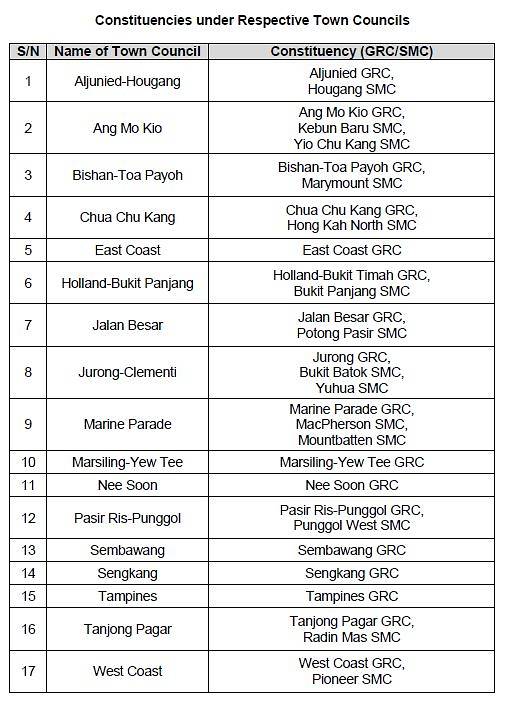
The 17 town councils, one more than before, comprise the newly-established Sengkang Town Council, 11 reconstituted town councils and five town councils with unchanged town areas.
Sengkang Town Council was formed to manage Sengkang GRC, which was created from parts of the pre-GE2020 Pasir Ris-Punggol GRC, Punggol East SMC and Sengkang West SMC, said MND.
Sengkang and Aljunied-Hougang town councils will be managed by the Workers’ Party (WP) and the other 15 will be under the People’s Action Party (PAP).
Discussions on the handover to Sengkang Town Council from Pasir Ris-Punggol and Ang Mo Kio town councils, for Sengkang West SMC, are ongoing between WP and PAP MP-elects.
A WP team led by Ms He Tingru had won the newly formed Sengkang GRC with 52.12 per cent of the votes, ousting former minister Ng Chee Meng in GE2020. In all, WP won two Group Representation Constituencies and one Single Member Constituency, while the PAP won 28 constituencies.
Under the Town Councils Act, town councils have up to 90 days from their formation to take over the management of areas to be transferred. This means Sengkang Town Council and the 11 reconstituted town councils will take over the management of the transferred areas from Oct 28, said MND.
“Town Councils involved in the handing and taking over can also mutually agree to an earlier take-over date as permitted by the Town Councils Act,” it said.
The ministry added: “MND encourages all Town Councils to work together to ensure a smooth transition, so that the needs of residents can continue to be served.”
Eleven town councils have been reconstituted as some areas under their purview became part of other towns due to changes in electoral boundaries or changes in the grouping of constituencies for a town, said MND.
Four new SMCs carved out before GE2020 will be managed under adjacent GRCs.
Ang Mo Kio Town Council will manage the areas in Kebun Baru SMC and Yio Chu Kang SMC, while Marymount SMC’s management will come under Bishan-Toa Payoh Town Council. Punggol-West SMC will come under Pasir Ris-Punggol Town Council.
The other reconstituted town councils are Chua Chu Kang, Jalan Besar, Marine Parade, Marsiling-Yew Tee, Nee Soon, Sembawang, Tampines and West Coast.
The five town councils that remain unchanged are Aljunied-Hougang, East Coast-Fengshan, Holland-Bukit Panjang, Jurong-Clementi and Tanjong Pagar.
However, East Coast-Fengshan will be renamed East Coast Town Council, after Fengshan SMC was absorbed into East Coast GRC.
Ever since she criticised Sengkang MP Raeesah Khan during the recent general election, netizens mobilised to take Xiaxue to task for her long career filled with provocative commentaries and contentious takes on social affairs.
After the internet hit the influencer where it hurt most — her brand sponsorships — the 36-year-old responded by lowering the shades on her influence by locking access to her blog and Twitter account. She has also filed for a protection order and harassment suit against the parties who sought out to “cancel” her, reported Mothership.
Be that as it may, but she’s still open to jobs on Authentic Celebrity Experiences (ACE), a new Cameo-like service for the Asian market. If brands are starting to ditch her, she can still earn some money directly from her loyal fanbase.
Drivers, you’d better think twice before stepping on the accelerator pedal while travelling on the expressway.
Two black cars speeding on the Central Expressway (CTE) on Wednesday night (July 29) allegedly caused a silver van to veer off the road and flip onto its side.
In dashboard footage circulating on social media, the cars were seen zooming past vehicles travelling towards Seletar Expressway. Moments later, they got into an accident.
Another video clip showed a motorist stopping to check on the injured as he yelled Hokkien expletives at the speedsters.
“The driver is stuck inside the van, one of them ‘flew’ out [from the impact],” the man said as he recorded the scene.
A young woman with injuries on her forehead and feet was seen sitting on the road shoulder while waiting for help to arrive.
Two men also got into a heated argument as they discussed the accident.
The police told AsiaOne that a 38-year-old van driver and his passenger, a 25-year-old woman, were conscious when they were taken to Khoo Teck Puat Hospital.
Malaysian Prime Minister Muhyiddin Yassin and Singapore Prime Minister Lee Hsien Loong met at the midway point of the Causeway on Jul 30, 2020 to witness the ceremony marking the official resumption of the Rapid Transit System (RTS) Link project. (Photo: Gaya Chandramohan)
(Updated: )
Bookmark
SINGAPORE: Singapore and Malaysia held a ceremony at the Causeway on Thursday (Jul 30) to mark the official resumption of the Rapid Transit System (RTS) Link project.
The ceremony was witnessed by Prime Minister Lee Hsien Loong and his counterpart Mr Muhyiddin Yassin, said a joint statement issued by Singapore and Malaysia. This was the first time the two leaders met in person since Mr Muhyiddin was appointed in March.
At the ceremony, Minister for Transport Ong Ye Kung and his Malaysian counterpart Wee Ka Siong marked the resumption of the project.
Three key agreements necessary to resume the RTS Link project have been successfully concluded, said the joint statement. This includes an agreement to amend the RTS Link Bilateral Agreement between the governments of Singapore and Malaysia.
Additionally, a joint venture agreement between Singapore’s SMRT RTS Pte Ltd and Malaysia’s Prasarana RTS Operations Sdn Bhd to constitute RTS Operations Pte Ltd as well as a concession agreement for the Government of Malaysia and the Land Transport Authority of Singapore to appoint RTS Operations Pte Ltd as the operating company (OpCo) for the first 30-year concession period, were also concluded.
“The RTS Link will continue to feature co-location of customs, immigration and quarantine (CIQ) facilities so that passengers undergo CIQ clearance only once at their point of departure,” the joint statement added.
“Both sides reaffirmed their commitment to ensuring that the RTS Link stations will be well integrated with the local transport networks in each country. The fare levels will continue to be set by the operating company (OpCo), and will be determined closer to the date of passenger service commencement.”
Transport ministers from Malaysia and Singapore Wee Ka Siong and Ong Ye Kung holding the agreements to resume the Rapid Transit System (RTS) Link project after a ceremony on the Causeway on Jul 30, 2020. Behind them are Malaysia and Singapore Prime Ministers Muhyiddin Yassin and Lee Hsien Loong. (Photo: Gaya Chandramohan)
The statement also said that both sides have discussed and agreed on key changes to the project.
The targeted passenger service commencement will be deferred from end-2024 as originally targeted to end-2026.
Furthermore, the RTS Link will now be a standalone Light Rail Transit (LRT) system, instead of the leveraging the Thomson-East Coast Line MRT system, the statement said. The project’s capacity remains unchanged at up to 10,000 passengers per hour per direction.
Additionally, the depot for the project will be switched from the existing Thomson-East Coast Line Mandai depot to a new depot in Wadi Hana, Johor Bahru.
Earlier this month, Dr Wee said construction for the Johor Bahru-Singapore RTS Link is expected to begin immediately after the necessary approvals are acquired in January 2021.
He added that the construction will happen in two phases. The development and civil phase will take place from 2021 to end of 2024, while the commissioning and testing phase will take place from 2025 until the end of 2026.
Artist’s impression of the RTS Link Woodlands North Station. (Image: LTA)
The RTS Link aims to connect Bukit Chagar in Johor Bahru to Woodlands in Singapore, serving about 10,000 passengers per hour each way to help ease traffic congestion on the Causeway.
It was meant to be completed in 2024, but work on the project has been suspended.
The suspension has been extended three times at Malaysia’s request, with the latest extension until Jul 31 due to Singapore’s COVID-19 “circuit breaker” measures and Malaysia’s movement control order.
However, both sides have been in intensive discussions on the project over the last six months to conclude negotiations by the Jul 31 deadline.
Malaysia and Singapore officials led by Prime Ministers Muhyiddin Yassin and Lee Hsien Loong and Transport Ministers Wee Ka Siong and Ong Ye Kung held a ceremony at the Causeway on Jul 30, 2020, to mark the official resumption of the Rapid Transit System (RTS) Link project. Also present was former Singapore Transport Minister Khaw Boon Wan. (Photo: Gaya Chandramohan)
Singapore is now seeing a third wave of imported Covid-19 cases, with more than 100 such cases confirmed in the past month.
These make up about 15.5 per cent of the total number of imported cases here since the start of the outbreak in January.
As of Tuesday, a total of 688 imported cases of Covid-19 had been confirmed in Singapore.
The number of daily imported cases had earlier dropped to zero as travel restrictions tightened here and around the world.
But on June 15, the multi-ministry task force tackling Covid-19 here announced that more long-term pass holders would be able to return to Singapore during phase two of the country’s reopening, which began on June 19.
On June 30, the Republic saw its first imported case in more than two weeks.
Another 106 cases followed up until Tuesday, and they were imported from nine different countries, with more than half – 62 cases – coming from India.
India has seen a rapid rise in Covid-19 infections, with more than 1.5 million confirmed cases, and nearly 35,000 fatalities.
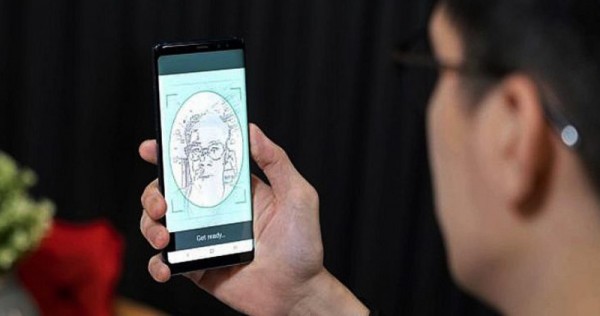
Bank account holders can now scan their faces on their phones to apply for an online banking account with the launch yesterday of a national facial identification service.
Called SingPass Face Verification, the service matches captured facial images against the Government’s biometric database.
This national database contains the facial images and identities of four million local residents aged 15 years and above, captured through applications for passports and NRICs.
Its use has so far been limited to official purposes, including verification at border checkpoints and in some government buildings to limit access rights.
With SingPass Face Verification, private-sector organisations can now tap the nation’s digital identity infrastructure to securely verify online transactions without needing to build their own systems.
DBS Bank is the first private-sector entity to pilot the service, which is integrated into its digibank app.
For a start, its customers can choose to scan their faces – instead of entering their ATM, credit or debit card number and a corresponding PIN – to sign up for an online banking account.
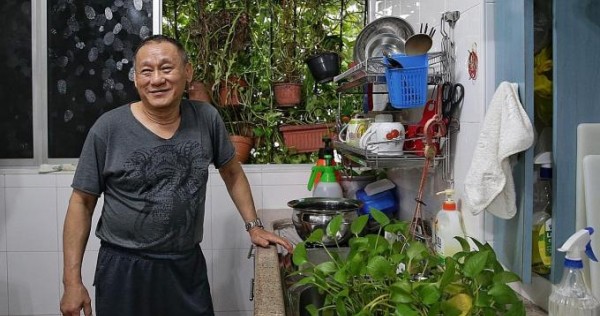
It looks like a jungle bursting from within the second storey HDB flat at Block 158 Tampines Street 12.
And it has made some members of the public jittery during Singapore’s worst dengue outbreak.
But Mr Victor Lee’s four-room home is neat, clean and well lit.
And because he makes sure water does not pool in his flower pots, preventing mosquitoes from breeding, his neighbours are fine with him keeping his tropical “rainforest” indoors.
Mr Lee, 71, who lives with his wife and child, spends up to four hours daily tending to his plants at the windows and along the common corridor.
Recently, a picture of the unit was featured on citizen journalism website Stomp. It showed a curtain of money plants covering the windows. PHOTO: The New PaperThe Tampines Town Council visited his flat on Tuesday morning asking him to trim some of his plants.
A neighbour, who did not want to be identified, said he was not bothered by the foliage.
SINGAPORE: Grab plans to introduce a 30 cents “platform fee” on every ride in Singapore. For a company that is so embedded with people’s daily lives and transactions, such a move would obviously raise eyebrows, and even concerns whether Grab will abuse its power.
Grab says that it is a common practice, because GoJek did something similar when it introduced a S$0.70 platform fee earlier this year. Uber has such an arrangement too.
While consumers might not even notice the difference, it is worth understanding the dynamics that impact such pricing, and how Grab has changed over the years.
WHICH WAY DO YOU WANT TO GO?
We all remember a time where booking a taxi would incur a fee, of S$2.30 with ComfortDelgro, which takes the vast majority of taxi bookings.
The taxi industry saw this as being fair to compensate for the time drivers take to drive to the pick-up location, as well as the cost to maintain a call centre and relevant technological infrastructure.
Singapore’s taxi pricing was more complicated than that, with multiple surcharges on time and pick-up locations added to the metered fare. Payment through electronic means, such as Nets and credit card, will incur charges ranging from S$0.30 fixed to 10 per cent of the fare.
This is to compensate for the costs of infrastructure and settlement.
They all make sense economically, and logically. However, it often did not go well with consumers. It became difficult to estimate how much it will cost from point A to point B – the source of many disputes.
I had a glimpse of the customer complaints when I was running Easy Taxi a few years ago – and a significant percentage were due to disagreements about taxi fare.
And some customers who take taxis regularly become quite sensitive about how much they should pay for a particular itinerary. That’s the reason why drivers used to ask “which way do you want to go by” to minimise such misunderstandings.
UPFRONT PRICING
Ride hailing seems to have turned it upside down. They had not only – for a considerable period of time – made rides cheaper, but also eliminated the need for drivers to ask about the preferred way.
Key to this was fixed, upfront pricing. You get to know how much you need to pay for the journey before you decide to take it. If it is too expensive, you can choose either to wait, or take other means.
When Grab first introduced fixed, upfront pricing, a voice in the industry was saying that it does not make sense. Because on the road multiple factors could impact the time and distance. Uber stuck with an in-app meter, with multiples to show the surge pricing.
However, consumers seem to love the certainty. Knowing the ride will cost S$30 rather than “2X normal fare” would make them feel more comfortable. Uber eventually caved in; even ComfortDelGro introduced a fixed pricing option in their revamped app.
It might not be the most efficient method, but it is probably the best to build trust between commuters, drivers and the platform.
Remember, a key purpose of the meter was to introduce some trust and predictability in pricing.
IS IT FAIR PRACTICE?
There is also the question of whether the introduction of such platform fee is a fair price. Or whether the timing is right.
Ultimately, public transport pricing is always a sensitive topic because it impacts millions of ordinary people. Each fare review always invites a lot of discussions in the public. This is the case even when it is debatable whether private rides constitute public transport.
Among the reasons why consumers take up ride hailing apps, price and convenience are probably the most important. While in most cases price and convenience are a comprise, in this case consumers have been enjoying both for a while.
Among the reasons why consumers take up ride hailing apps, price and convenience are probably the most important. (Photo: Aaron Chong)
Everyone knows that eventually platforms need to be profitable, in a sustainable way. The matching efficiency compared to old taxi booking systems can only squeeze the cost to a certain extent.
The S$0.30 institutionalises the costs platforms can charge as part of their revenue, but because the pricing framework reflects supply and demand, it is quite likely that consumers will not even notice the price difference.
While Grab is definitely much ahead of GoJek in terms of ride hailing market share, it does not have the monopoly over the rides market. ComfortDelGro still runs more than 10,000 taxis, with its own booking system.
This is even before considering the alternative of buses and trains.
With so much transactional data and so many in-house data scientists, it is reasonable to believe that Grab has done the full impact analysis before submitting the proposal to the competition commission.
As for the timing, it is in a period where commuting demand has somewhat recovered from the collapse during the circuit breaker. With demand stabilising and slowly rising, it is probably much easier to monitor the impact of such a move, without causing too much disruption.
GRAB CAN’T LOSE RIDE HAILING
Ultimately, while Grab is pursuing an ambition that is much broader, and potentially more profitable, vision of delivery, payment and financial services, it needs ride hailing as a key use case to acquire and retain customers, and boost transactions.
Grab did not follow GoJek in the pricing war last year in Singapore, and it did not engage in a promotion war against Foodpanda during the circuit breaker.
It has grown from a super-charged, disruptive company to a measured, disciplined one with strong focus on its path to profitability, despite the effects of the current hardship.
As a consumer, expect less promotions, but increased demand for service levels, as one would with any mature consumer company, whether in public transport or not.
Li Jianggan is founder and CEO of Momentum Works, a Singapore-based venture outfit. He was also previously MD Singapore of Foodpanda, co-founder and Regional MD of Easy Taxi.
HONG KONG: It is known as one of Asia’s most vibrant financial centres — a base for more than 70 of the world’s 100 largest banks and the regional headquarters of over 30 multinational banks.
Hong Kong’s freewheeling economy and open capital flows, backed by an independent judiciary and rule of law, have been its strengths.
It also serves as a gateway to mainland China for international companies reaching out to a consumer market of more than 1.4 billion people.
But Hong Kong’s position as a leading financial hub is said to be under threat following the introduction of China’s new national security law, which took effect on June 30.
Beijing imposed the national security law on Hong Kong after months of pro-democracy protests last year. (Photo: AFP/Anthony Wallace)
Already, United States President Donald Trump has signed an executive order revoking the city’s trade privileges with the US, which have generated an estimated US$38 billion in annual trade between the two sides.
He also signed a law authorising sanctions on Chinese officials and organisations — including banks — that are found to have undermined Hong Kong’s autonomous status.
Businessmen like Mr Conrad Ho believe that such actions, if the US pursues its latest course of action aggressively, will have more ramifications for Hong Kong.
“Even if nothing comes of it, foreign capital could become much warier about investing in Hong Kong,” says the founder and executive director of Coho Group, which manages a portfolio of finance, technology and retail assets.
Watch: The impact of Hong Kong’s new security law (49:52)
He knows there is a risk that Hong Kong will lose its competitive edge over other Asian cities like Singapore.
“One financial firm that my company works with is being forced to move to Singapore because their investors find Hong Kong to be too risky and unsafe,” he cites. “Previously, global investors perceived Hong Kong as being independent.”
But he supports the new national security law because “it’ll create more stability” in a city rocked by months of protests. A politically stable Hong Kong, he believes, will be good for business and the economy.
“That’s something Hong Kong needs right now,” he says.
It is a new reality for Hongkongers, now that Beijing has given itself powers to override the semi-autonomous region’s local laws and crack down on various political crimes, including acts of secession, subversion, terrorism and collusion with foreign forces.
But will it be a return to stability and continued faith in Hong Kong, or will the threat to its autonomous status contribute to its decline? The programme Insight examines what the future holds for the city. (Watch the episode here.)
WHITHER JUDICIAL INDEPENDENCE?
A key point of contention is the impact the security law might have on judicial independence and rule of law, as the Chinese parliament’s top decision-making body has the final say in interpreting the law.
The National People’s Congress Standing Committee is not familiar with Hong Kong common law and is likely to “import some of the mainland concepts”, believes University of Hong Kong chair of public law Johannes Chan.
“What they don’t realise is that the economic success of Hong Kong depends on a whole range of things, and among them, no less important is the judicial (and) legal system,” says the professor.
“Once you … undermine the legal system, you’ll inevitably affect the economic system and Hong Kong. By then, if the legal system is … no longer effective, there’d be very little difference between Hong Kong and Shenzhen or Hong Kong and Shanghai.”
Despite these concerns over judicial impartiality, some observers believe the level of trust within the business community remains high. It will not “instantly evaporate”, says Lee Kuan Yew School of Public Policy visiting senior research fellow Drew Thompson.
“Plenty of international businesses have trust in China. And they have major investments in relationships with the government and business entities on the mainland, as well as in Hong Kong,” he adds.
“That said, all international businesses potentially fall under the national security law simply because they’re foreign. So the risks of doing business in Hong Kong have definitely increased. International businesses … can’t count on Hong Kong’s legal system to be independent.
“The potential for returns is still there, so I don’t think Hong Kong is going to become a pariah in that sense. But it’s definitely going to give international companies pause.”
Companies and financial institutions have voiced support for the security law, notably British banking giants HSBC and Standard Chartered, two of the biggest banks in Hong Kong,
HSBC, however, did so only after Hong Kong’s former leader, Leung Chun-ying, blasted the lender — which generates most of its profit in Hong Kong and Asia — for not taking a “stance” after the United Kingdom criticised the law.
Most businesses need not worry unless they are providing funding for subversives, believes Hong Kong Federation of Trade Unions president Stanley Ng.
“Those acting in the name of ‘business’ whilst advocating Hong Kong’s independence or unrest or terrorism … will definitely be sanctioned. So they must immediately move their assets and register (their business) elsewhere,” he says.
“That’s totally understandable, though other businesses … shouldn’t be affected.”
HOW MUCH LEVERAGE DOES THE U.S. HAVE?
Hong Kong’s current chief executive, Mrs Carrie Lam, has also given assurances that judicial independence will not be compromised. But the implementation of the new law continues to draw international criticism, including from the Trump administration.
Disastrous as the US’ tough line on China may seem for Hong Kong’s economy, however, some observers believe it lacks substance and teeth.
“You’re going to see a lot of this rhetoric going back and forth, and because of the coming election … China-bashing, perhaps, will win some of the votes,” says Mr Bernard Charnwut Chan, the Non-official Convenor of the Executive Council.
“But do they really want to go against China? I don’t think so because Trump cares about the economy. Without China as a potential buyer (for) agricultural products and other things … would that help the US?
“I just can’t imagine that the US will want to go and censure Hong Kong, because it’ll not only hurt us, but equally it’ll hurt them.”
The timing is key, agrees Assistant Professor Eric Lau from The Open University of Hong Kong’s Lee Shau Kee School of Business and Administration. “Trump wants to be re-elected, so he wants to make more news to benefit his election.”
Hong Kong imports more goods from the US than vice versa. The US’ trade surplus last year was US$26 billion (S$36 billion), so “if a trade war starts, the loser would be the US”, he points out.
Professor Jean-Pierre Cabestan from Hong Kong Baptist University’s Department of Government and International Studies has a “hunch” that any US sanctions would be “symbolic”.
“I don’t think it’s in the US’ interest to destabilise Hong Kong as a financial hub (and) penalise American companies or fund companies present in Hong Kong,” he says.
Still, sanctions could have an impact, warns Mr Thompson, such as on “the ability to do financial transactions with named individuals” or on their ability to obtain visas and travel to the US. “It might make them pariahs,” he says.
“When an individual, entity or company has been named to the Entity List, very frequently other countries’ banks won’t want to do business with that person because of the risk they potentially face.
“But at this point, it’s too soon to tell how aggressively (sanctions) will be enforced.”
CONCERN OVER AN EXODUS
Even as China’s new law may potentially have a chilling effect on business, it has cast a pall over the city’s residents. Anxiety and defiance, with protesters taking to the streets, have become the norm.
Beijing has established an office in Hong Kong to enforce the law, but its terms are “vague”, says Prof Chan.
“We don’t know … what its powers will be, but it’s a fairly scary idea to have a national security unit that’s almost a parallel police force.”
Uncertainty about the city’s future has sparked concern about a new wave of emigration — more than 20 years after the exodus that took place during the 1997 handover of the city from British to Chinese rule.
So far, the UK has offered a path to citizenship for nearly three million Hong Kong residents. Australia and Taiwan have also opened the door to residency in the event of an exodus.
Already, some 50,000 people emigrated from the city of 7.5 million people in the second half of last year. “Many people who can afford to leave are thinking now of leaving, making plans,” says Democratic Party founder Martin Lee.
“Some of the people living here (have) already got passports from Canada, Australia, and they could just pull out quickly, easily. And I’m afraid a lot of tycoons will go.”
An exodus could erode a skilled core of professionals and managers in the society. “In terms of the talent pool, historically, Hong Kong has enjoyed having skilled talent from both the West and from mainland China,” notes Mr Ho.
“Due to all the recent troubles, I’m quite worried that the talent pool we’ve accumulated … may be lost.”
The local government, however, is not worried about the problem of emigration. “This is nothing new for Hong Kong,” says Mr Chan, who was Mrs Lam’s campaign manager when she ran for office.
“We’ve gone through crises in the 60s, in the 80s … even in the 90s. So we’ve had that so-called brain drain many times … If you look back, after each crisis, you see a new rise for Hong Kong.
“We saw people leaving, but we also saw people coming in … So I’m quite confident that Hong Kong will survive. People will always find opportunities to come back.”
ABSENT A COMPROMISE, A LOT TO LOSE
With Hong Kong being brought closer into China’s fold, however, many Hongkongers worry that their city will eventually lose the characteristics — like free speech, judicial independence and rule of law — that have made it what it is today.
Its uniqueness and economic importance have also begun to wane following the rise of Chinese megacities like Beijing, Chongqing, Guangzhou, Shanghai and Shenzhen. Other than Chongqing, they each boast an economy bigger than Hong Kong’s now.
So is Hong Kong at risk of losing its identity and becoming just another Chinese city?
“As Hong Kong’s autonomy erodes, so does its uniqueness as well as its values in the eyes of many people, particularly in international businesses. That autonomy, though, was seen as a threat by Beijing,” said Mr Thompson.
“I don’t think that Hong Kong will ever be just another city, but certainly its uniqueness, its vibrancy and its overall importance vis-a-vis the rest of China has diminished considerably.”
Despite this gradual convergence of Hong Kong and the mainland, Mr Chan does not doubt that Beijing “continues to believe in Hong Kong … (and) ‘one country, two systems’”.
“That’s the key, because they’ll do everything to make sure it works. So I can’t imagine why China would want to hurt Hong Kong, provided that you don’t try to hurt them,” he says.
That sentiment is shared by Jessica, who supports the security law. Using a pseudonym for fear of suffering retaliation, she says the violent protests are affecting livelihoods and must stop. Stability, she feels, is key to Hong Kong’s economic future.
“How can we strip away the rights of business owners who want to still operate their businesses?” the 29-year-old questions. “They’re unable to bring home resources to provide for their family.”
Mr Chan thinks Hong Kong was “too free in the past” and had “gone too far” with allowing people to talk about gaining independence from China in future.
“We do have a young generation — you may call them naive or what — but then, some actually think that Hong Kong can survive on its own, which I think is still ridiculous,” he says.
With the new law, Mr Ho believes the authorities can “more effectively and, possibly, more surgically” stop people “inciting hatred across Hong Kong’s different groups”. He adds: “For that, Hong Kong will be a better place in the long run.”
For now, it remains unclear how the crisis will end. But it looks set to be a battle with little hope for a compromise.
“It’s true that we shouldn’t condone those violent acts, but you have to ask the question — what forced those young people to resort to what they’ve done? There are far more serious and deep-rooted causes,” says Prof Chan.
“If we don’t address those issues, a high-handed, draconian law would never resolve the issues.”
Watch this episode here. The programme Insight airs on Thursdays at 9pm.
SINGAPORE: As the pandemic drags on, and lives are impacted, our society has shared many negative emotions including fear and sadness. Recently, anger appears to be on the rise.
One particular group – unmasked joggers – seem to be bearing the brunt of others’ anger. A rife of public shaming and aggression directed towards joggers have become prevalent in news reports, social media and the streets.
This finger wagging is happening worldwide and has also been extended to those who do not wear their masks correctly.
Psychology has shown there may be deeper reasons behind people’s anger, of which a better appreciation can help unify us in our battle against COVID-19.
In every society, there are social norms – rules or expectations about how people should behave. These expectations stem from cultural practices and the law.
Although we rarely think about them, our everyday behaviours are constantly influenced by social norms. You would not think to walk barefoot in a mall but the same behaviour is fairly common in New Zealand.
However, not all cultures enforce social norms equally. In psychology, a concept called cultural tightness reflects how strictly groups abide by social norms.
Tight cultures expect their members to follow norms closely and often punish violators. Loose cultures permit and tolerate deviant behaviours.
In fact, Singapore is the classic example of a tight culture that metes out fines for chewing gum and not flushing public toilets. Norm-violating behaviours are also regularly shamed on various online forums and Facebook groups.
There are important trade-offs for leaning towards tight or loose orientations.
Famed University of Maryland psychologist Michele Gelfand first validated the concept with a 33-country study and found that tighter cultures enjoy law and order with low crime rates. People also show more uniformity in their dressing, keep to schedules, and exercise more self-control in eating, drinking alcohol, and managing debt.
In contrast, while loose cultures are less orderly, they shine in openness. In loose cultures, like in New Zealand and the Netherlands, people are more helpful towards those from stigmatised groups. They also excel in creativity, innovation, and advocating social change.
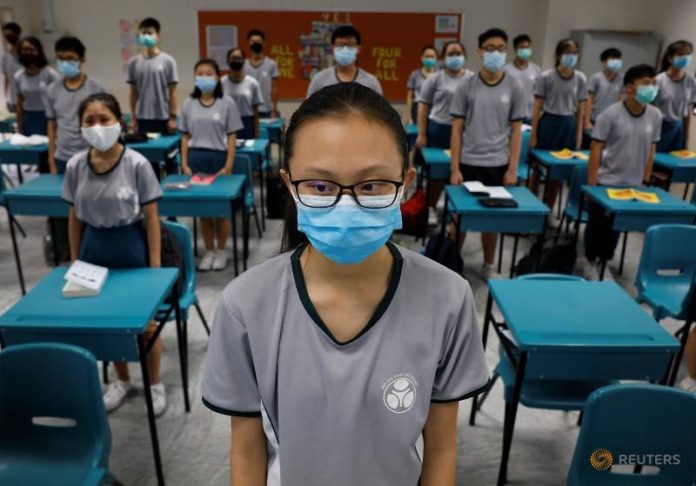
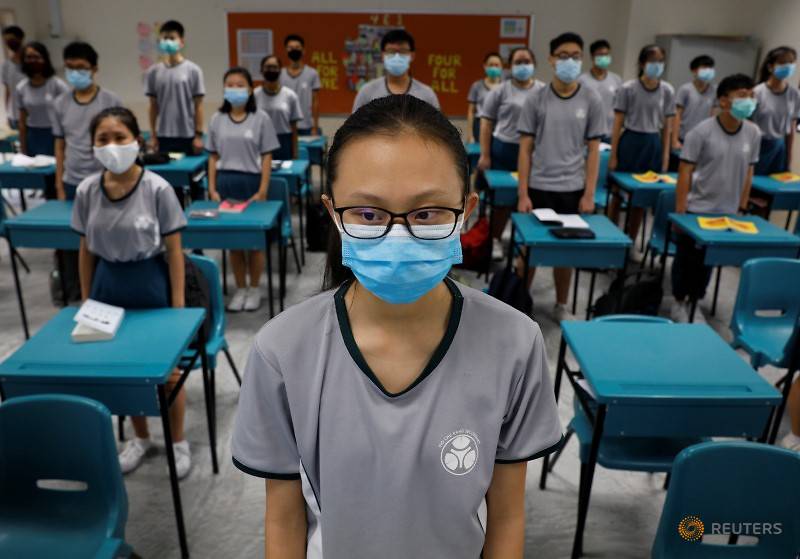
Students wearing face masks stand for the national anthem in class at Yio Chu Kang Secondary School, as schools reopen amid the coronavirus disease (COVID-19) outbreak in Singapore June 2, 2020. (Photo: REUTERS/Edgar Su)
But what makes a culture tighter? Are we not one human race bound by a common psychology?
Professor Gelfand’s analysis found that tight cultures historically face more threats. These threats can be natural or human-caused, including diseases, famine, disasters, war and riots.
Tight cultures also have higher population density. As such, cultural tightness may have evolved to facilitate the coordination required for these societies to thrive.
Unsurprisingly, where COVID-19 is a threat amplified by population density, it’s no wonder Singapore’s culturally tight stance has intensified.
THE INSTRUMENTAL ROLE OF ANGER
Why are people in tight cultures prone to getting angry about whether and how others wear their masks?
Members of tight cultures expect one another to follow social norms and may see themselves as informal agents who must reinforce these norms. Already, the application of anger and shame to maintain norms is prevalent across many longstanding, undesired acts like crime and racism.
That said, might it be that people’s anger could be blown out of proportion when they treat issues of mask-wearing like an immoral act?
Let’s face it. COVID-19 has caused people their freedom, jobs, or even their loved ones. Although wearing masks is just one small hassle in the big picture, it is an immediate reminder of the negative impacts of this pandemic.
People in a tight culture may also come to view whether someone wears their masks properly as a reflection of whether they take their social responsibilities seriously.
There is an upside to this problem. People are more likely to wear masks properly to avoid the anger of others rather than for its physical functions.
On the downside, disharmony is the last thing society needs right now. Perhaps it is worth recognising that mask-related anger towards joggers and others may be well-intended.
People wearing face masks at East Coast Park on Jul 19, 2020. (Photo: Try Sutrisno Foo)
As we battle COVID-19 together, we naturally expect others to at least publicly comply with the regulations, even if they may privately dislike it.
Here, it is important to acknowledge the resistance against wearing masks properly. Some find it difficult to breathe, while others question its effectiveness.
Funny enough, some netizens have even suggested leaving home in sportswear and pretending to jog if one is caught. It is clear the discomfort of masks and the strain of having to obey social norms are taking a toll.
WEAR MASKS FOR THE COMMON GOOD
If this all sounds rather discouraging to you, bear in mind wearing our masks properly remain a vital important part of the COVID-19 fight in three ways.
First, we must recognise that being careless about mask-wearing can influence others around us to do the same.
People may recall the wave of irrational hoarding of toilet paper and instant noodles that accompanied the COVID-19 outbreak. To psychologists, these behaviours were unsurprising. They resemble a phenomenon called group polarisation, where decisions made by groups often sway towards extremes.
In classic experiments, people were first asked about their opinions on an issue. After a group discussion, their opinions often sway towards the extreme.
This sway can be towards cautious or risky extremes. At the beginning, people feared the coronavirus. Once groups of people share this sentiment, they responded with extreme caution, hoarding food and supplies.
Now that community cases have declined substantially, some groups may sway towards risky extreme, thinking it is safer and they can relax on obeying the rules, which has also involved private gathering limits.
Importantly, our actions shape the behaviours of those around us, and sometimes, to the wrong extreme. We should avoid evaluating the risks ourselves and follow the national regulations that have been carefully and methodically decided upon.
Second, we can appreciate the psychological value of wearing masks.
People with masks on walking along the Singapore River on July 17, 2020. (Photo: Try Sutrisno Foo)
More than just containing our droplets, and protecting our noses and mouths, masks serve as reminders not to touch our faces. The discomfort masks cause also deters us from leaving our homes unnecessarily.
These psychological forces behind mask-wearing are important and effective ways of reducing infections that people often overlook.
Finally, wearing masks may also symbolise our collective fight against COVID-19.
In research together with Singapore Management University’s Associate Professor Angela Leung, we found that providing hard facts rarely motivate social behaviours.
People do not change their behaviours to become more environmentally friendly merely because of logical arguments. Rather, people were more willing to go green when it symbolised a benevolent act of caring for the human race.
The recent global social media campaigns with nurses pleading “We’ll stay here for you, please stay home for us” struck a chord even here in Singapore when a Facebook post of Tan Tock Seng Hospital frontline healthcare workers holding up signs saying so went viral. It makes clear that people are doing their part by staying home, not just against COVID-19, but also for each other.
As we wear our masks, we not only protect ourselves but also gesture our commitment to care about one another as a society.