Home Blog Page 165

As the buying and selling of solar energy becomes reality, Singapore could gain further ground on solar target

0

SINGAPORE: Imagine generating renewable energy via solar panels on your rooftop and being able to sell this energy to others.

All this could soon be a reality and a step forward for Singapore as it pushes for its 2030 solar target, should a pilot project by power generation firm Senoko Energy and Singapore energy innovation start-up Electrify prove successful.

The pilot, also conducted in partnership with Engie Factory – the venture arm of French multinational electric utility firm Engie – will allow individuals and companies to buy or sell solar energy on SolarShare, a peer-to-peer (P2P) solar energy trading platform.

SolarShare allows the matching of near real-time energy generation and energy usage, which is monitored using smart meters. The owners of solar panels list their energy offerings at their preferred rates on SolarShare, which automatically matches them to prospective customers.

Launched last month, experts said the pilot project is a positive step as Singapore eyes an ambitious target of installing at least 2 megawatt-peak (MWP) of solar photovoltaic (PV) power in 10 years’ time. 

This target for solar energy aims to produce enough power by 2030 to meet the annual needs of about 350,000 households. It was set in October last year. 

READ: Singapore sets solar energy target for 2030 that would provide enough power for 350,000 homes

Mr Tan Congyi, who is head of the Urban Solar Group at the National University of Singapore’s (NUS) Solar Energy Research Institute of Singapore, said that along with other energy trading platforms which facilitate the transactions of renewable energy certificates (RECs), the SolarShare initiative will help bring providers and consumers closer together. 

“With an increasing number of companies in Singapore looking for ways to power their operations completely using renewable energy, these platforms serve a useful function in connecting providers and consumers of clean solar electricity,” he said. 

“This, in turn, can help to encourage the development of new solar PV capacity.”

Ms Melissa Low, who is a research fellow at NUS’ Energy Studies Institute, called the project a “good indicator” that the renewable energy market is growing.

“I think it’s a good indicator that the market is maturing, there are innovative solutions coming to market like these,” she said. “It will be able to show us data, whether or not the households in Singapore are ready for renewable energy, and not just to utilise in their homes, but to trade renewable energy as well.”

Senoko Energy

Operating since 1977, Senoko Energy has three subsidiaries and supplies about 20 per cent of Singapore’s electricity needs. (Photo: Senoko Energy’s corporate website)

SolarShare allows for “grassroots generation” of renewable energy, Electrify Chief Executive Officer Martin Lim told CNA.

 “A business model such as this, which allows for grassroots generation to sell power to everyone else – that’s significant. A business model like this will allow for the greater proliferation of solar power,” he said.

READ: Commentary: Singapore’s dreams of becoming a solar-powered nation have almost arrived

“If you live on the sixth floor of an apartment HDB, you can’t get solar power. That sucks, then you forget about it, you move on. But now you don’t have to forget about it because now it enters into the vernacular, enters into the conversation,” he said. 

“People can say: ‘Hey, I have a solar panel and you can buy my power’.”

Such P2P trading is “like eBay or Carousell” in the energy space, said Professor Subodh Mhaisalkar, who is the executive director of Nanyang Technological University’s Energy Research Institute.

“Digitalisation has advanced rapidly in areas such as telephony, multimedia, retail services, and the last two frontiers some argue are healthcare and energy.”

This means that households can potentially be producers and consumers of energy, he said.

“P2P enables the ‘prosumer’ culture where each household could potentially be a producer and a consumer (of energy),” he said. “Producer if you have your own installation of solar cells – or in other countries wind turbines or other forms of energy generation – and have excess electricity that you do not consume yourself.”

“Instead of ‘selling’ it back to the grid at predetermined prices, you can now sell energy in the open market.”

A TARGET DOWN THE ROAD

Earlier this year, it was announced that Singapore had met its previous solar target of 350 MWp by 2020. This would mean that Singapore would need at least 1,650 MWp more of installed solar capacity to meet the 2030 target.

This will be led by the private sector and the P2P scheme would further incentivise those with large rooftop spaces to install more solar panels, said Prof Mhaisalkar.

“Singapore has also embarked on a programme to test and deploy energy storage (batteries) that help to address the concern of intermittency of renewables and also the potential concern about grid stability and reliability,” he added. 

In conjunction with the falling prices of solar cells and availability of higher efficiency solar cells, this will accelerate solar panel deployments, he said.

Mr Tan noted how the Government has “made it clear” it appreciates the significance of climate change. 

Over the years, this has translated into numerous initiatives aimed at accelerating and expanding solar power deployment, before culminating in solar being designated as one of the “4 Switches” that will guide and transform Singapore’s energy supply, he pointed out.

“This is significant, as it underscores the important role that solar energy will play in Singapore’s long-term energy plans.”

But en route to 2030, Singapore will continue to face a number of challenges such as the variable nature of solar power generation as well as spatial constraints, Mr Tan added.

“One obvious challenge is the lack of big open spaces to install large ground-mounted solar farms like in other countries. Hence, we need to be creative and prudent in using the spaces available to us when maximising the deployment of solar power,” he said.
 
Another challenge is the variable nature of solar power generation in Singapore due to frequent changes in cloud cover, he added. 

“Measures need to be in place to ensure that this will not cause an issue for our power grid in the longer term beyond 2030, as solar PV deployment continues to grow.”

READ: Commentary: That low-carbon future for Singapore isn’t so far-fetched

Ms Low also pointed out how capacity targets do not necessarily equate to uptake among Singaporeans.

“Uptake is an entirely different ball-game where you have to ensure that consumers want to use solar (energy) – but that’s more challenging,” she said. 

This could be influenced by the cost of solar energy, as well as its perceived reliability, Ms Low pointed out.

“I think the uptake is going to be the issue for us, because I don’t see yet that there is a very strong interest,” she said. “Maybe among certain groups –  but these are not homeowners. There are a lot of youths who are interested and they’re not homeowners and they are not decision-makers in the household yet.”

However she also cited the HDB’s emphasis on increasing solar capacity as a positive example of pushing for adoption.

“I think Singapore is doing everything it can to enhance solar adoption in the market. There are constraints in terms of solar adoption,” Ms Low said. 

“(But) I think HDB is doing a lot … I think that push from a government agency like HDB is great because that obviously signals that the Government is not only looking at private adoption, private sector adoption of solar panels, but also the public sector. And they are taking the lead, so to speak, on solar PV installation.” 

READ: HDB touts 10-year plan to green public estates

To date, 5,550 HDB blocks have been fitted with or identified for solar panel installations, or more than 50 per cent of blocks islandwide. 

By 2030, this figure will increase to 70 per cent, then-Minister for National Development Lawrence Wong said in Parliament earlier this year.

HDB aims to more than double the total solar power capacity on HDB rooftops from 220 MWp to 540 MWp by 2030, said Mr Wong.

It was also announced last year that a 60 MWp floating PV system is expected to be installed at Tengeh Reservoir by 2021. 

This will generate sufficient green energy to meet the needs of daily operations of the five water treatment plants in Singapore as well as the Marina Barrage. 

And as Singapore moves towards 2030, Mr James Chong, who is head of Senoko Energy’s commercial division, noted there is now increased interest in the use of solar energy.

READ: Singapore to have 100% green waterworks by 2021, as PUB aims to reduce carbon footprint

“If we have this conversation say three years back, I will tell you that pretty much nobody would be looking for solar energy. But the space is very different three years on,” he said. 

“This currently at this stage is pretty much headed by all the corporations … (But) I think among the young younger consumers, I think we do see trends surfacing as well,” said Mr Chong.

And if the 100 user pilot project proves successful, there are plans to scale up, he added.

“If everything is successful and there’s really a commercial interest to it – definitely. I think it’s (in) our best interest to roll these services to the whole of Singapore, including households and businesses alike,” he said.

“We see P2P as a very key platform to bridge the gap right between the funding and the availability of rooftop space, so that every single inch of the available rooftops is actually made use of in Singapore … thus maximising our renewables production in the future.”
Source link

Foreign worker dormitory linked to more than 1,500 COVID-19 cases among 9 more clusters closed: MOH

0

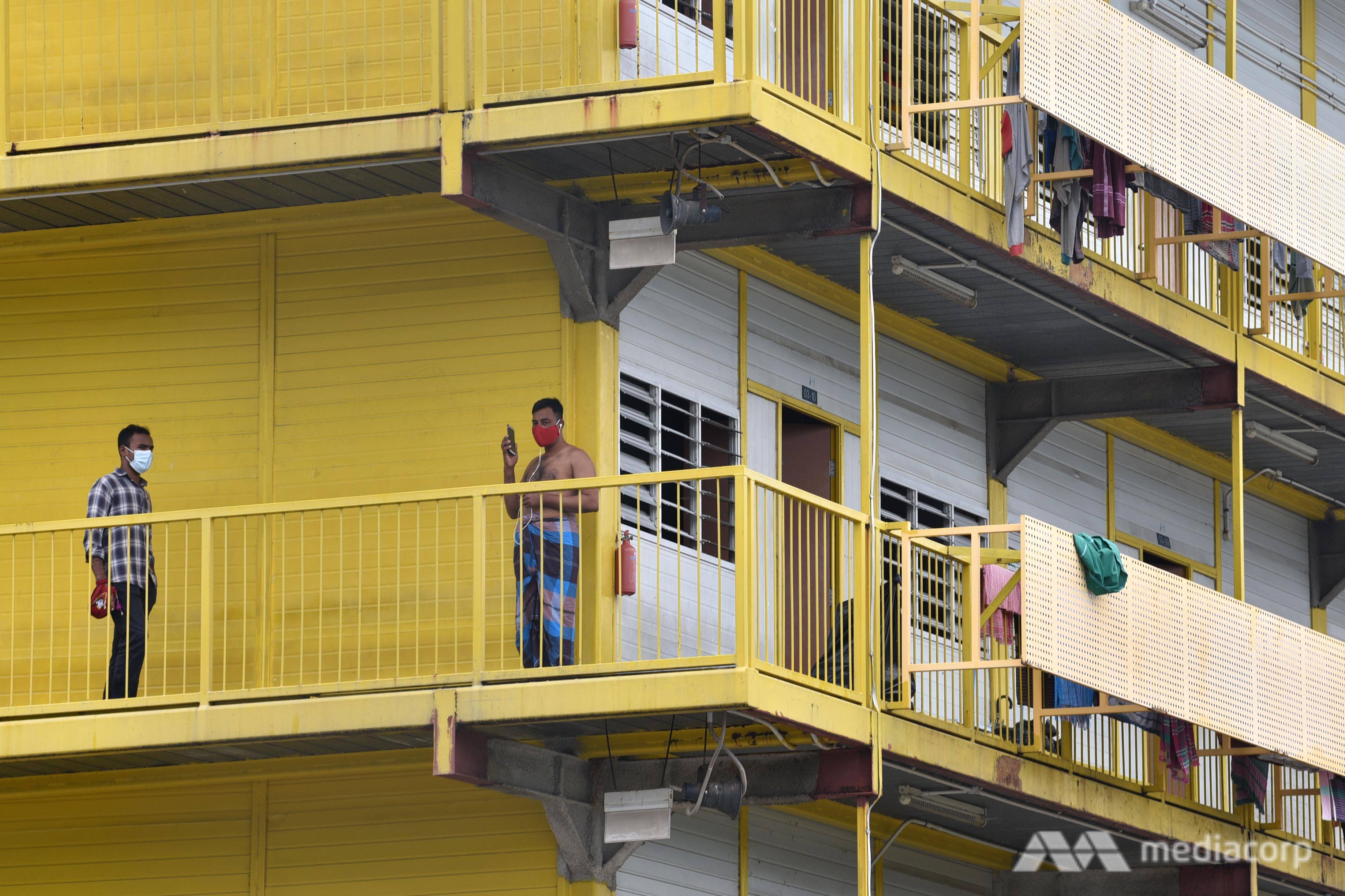
SINGAPORE: Nine COVID-19 clusters at foreign worker dormitories were declared closed on Tuesday (Aug 4), including the cluster at Tuas View Dormitory, which was linked to more than 1,500 cases.

According to the Ministry of Health (MOH), the newly closed COVID-19 clusters are: SCM Tuas Lodge at 80 Tuas South Boulevard, Tuas View Dormitory at 70 Tuas South Avenue 1, 17 Jalan Besut, 5 Kian Teck Crescent, 8 Sungei Kadut Avenue, 3 Sungei Kadut Avenue, 115 Tuas View Walk 1, 117 Tuas View Walk 1 and 38 Woodlands Industrial Park E1 #04-18/19.

MOH said the inter-agency task force has been “systematically and progressively clearing dormitories through aggressive testing of migrant workers residing in dormitories”.

“The (nine) dormitories have been cleared, and now house only recovered individuals and those who have recently tested negative for COVID-19 infection. As such, the clusters have now been closed,” added the health ministry.

Tuas View Dormitory 14

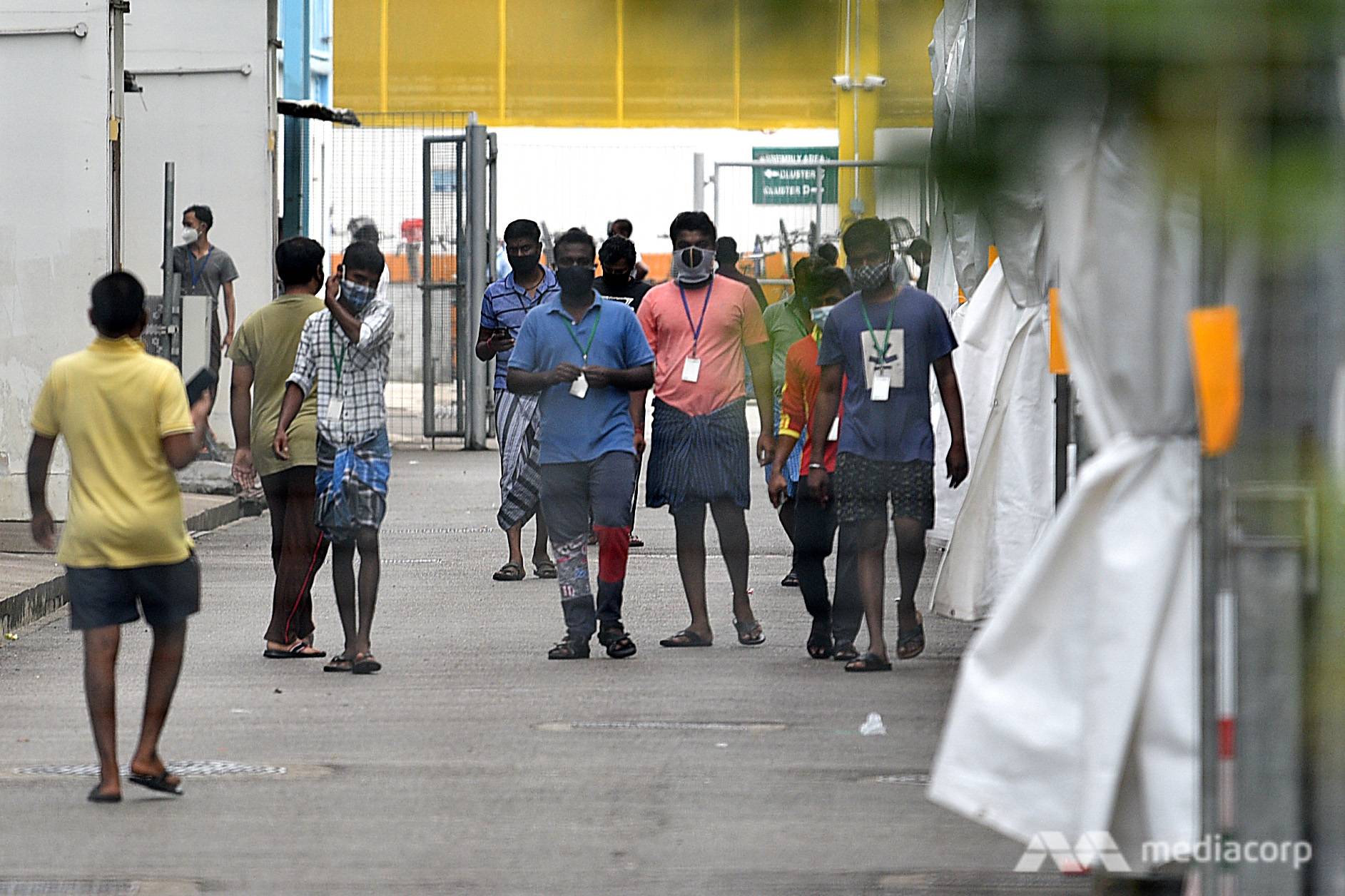
Foreign workers at the common corridor in Tuas View Dormitory on May 6, 2020. Tuas View Dormitory was gazetted as an isolation area to curb the spread of COVID-19. (Photo: Jeremy Long)

As of Tuesday, there were 1,503 cases linked to Tuas View Dormitory, which was among the first dormitories where a COVID-19 cluster was identified.

It was declared an isolation area on Apr 17 under the Infectious Diseases Act. That order was revoked on Tuesday.

READ: 295 new COVID-19 cases in Singapore, including 7 imported infections

Tuas View Dormitory 06

Foreign workers are seen with masks at Tuas View Dormitory on May 6, 2020. Tuas View Dormitory was gazetted as an isolation area to curb the spread of COVID-19. (Photo: Jeremy Long)

“All stakeholders – dormitory operators, employers and migrant workers – must make preparations before we can grant approval for workers in the cleared blocks/dormitories to resume work,” the Ministry of Manpower said on its website.

“Most dormitories/blocks complete these preparations within a week of their clearance.”

Most foreign worker dormitories should be cleared of COVID-19 by the start of August, said former Minister for National Development Lawrence Wong last month.

Mr Wong, who is now Education Minister and remains co-chair of the multi-ministry task force, said all dormitories should be cleared of COVID-19 by the end of the first week of August, with the exception of 17 standalone blocks in eight purpose-built dormitories that serve as quarantine facilities. 

These blocks house 28,000 workers who will still be serving out their isolation period. This is the last batch of workers to complete their isolation period, and they will be tested by the end of the first week of August, Mr Wong said last month. 

Singapore reported 295 new COVID-19 infections on Tuesday, including two in the community and seven imported cases. This brings the total number of cases in the country to 53,346.

BOOKMARK THIS: Our comprehensive coverage of the coronavirus outbreak and its developments

Download our app or subscribe to our Telegram channel for the latest updates on the coronavirus outbreak: https://cna.asia/telegram

Source link

One people, one nation, one gaming laptop to rule them all: Razer Blade 15

0

[ad_1]

National Day is arriving in a matter of days and as we commemorate our independence amid a global pandemic, it’s important to remember that many of our entrepreneurial compatriots could be struggling to stand tall during a period of intense instability. 

Probably not Tan Min-Liang though. The Singaporean co-founder of cult gaming hardware company Razer has been thriving during coronavirus containment measures, having built a pandemic-proof business reliant on customers staying indoors and finding ways to stay entertained. 

Razer has been a point of pride for most local gaming enthusiasts (not Charles Yeo, though) who are happy that someone from their tribe made a massive impact on the global stage. Say what you will about Razer products, but there’s a reason why Razer and its social media-friendly CEO has a legion of loyal fans across the world. 

[ad_2]

Source link

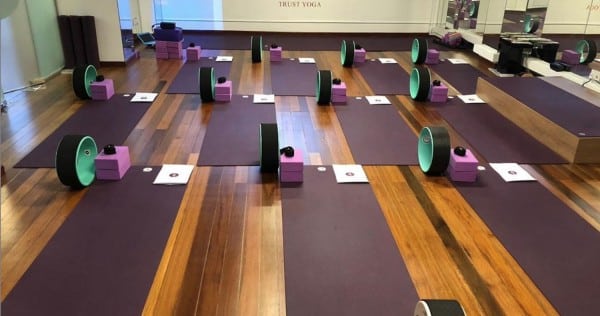
'I cannot stay silent': Student alleges Trust Yoga instructor molested her during session

0

[ad_1]

An instructor accused of sexual assault by a student has been placed on leave pending internal investigations, Trust Yoga said in a statement on Monday (Aug 3).

This came after the alleged victim took to Instagram and Twitter to recount her ordeal on Friday (July 31), setting off a wave of online backlash against the studio, which has outlets in Telok Ayer and Tampines. 

The alleged victim, who said she is certified to teach Hatha and Vinyasa yoga, explained: “I am speaking up because I cannot stay silent as a teacher and practitioner.”

She was molested by a teacher at the studio on July 11 while she was taking a class, she said.

According to her, the instructor had smacked her left butt cheek while she was in a forward fold pose and stroked her left butt cheek, her crotch and her right butt cheek while she was in an inversion pose.

She was “very stunned at the gross violation” and was not able to participate in the rest of the class despite the instructor’s insistence, she added.

She reported the issue to a staff member after the class and returned to the studio the next day to speak to other teachers.

[ad_2]

Source link

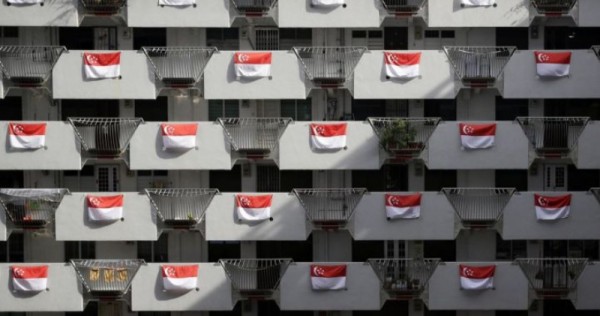
National Day 2020: Singapore's flag used to look really different – and other random facts about the flag

0

[ad_1]

Received your National Day funpack (also known as the NDP Singapore Together Pack)? Then you’ve probably received a full-sized national flag, perfect for displaying your national pride.

But before you rush ahead with turning it into your newest accessory, there are a few things you should know about our iconic red-white flag.

It didn’t always look this way

It didn’t even have the iconic crescent-and-star look to it in the first place.
PHOTO: Mediacorp

[ad_2]

Source link

MPs hit back at LTA over 'drastic changes' to Bukit Panjang bus services along Downtown Line

0

[ad_1]

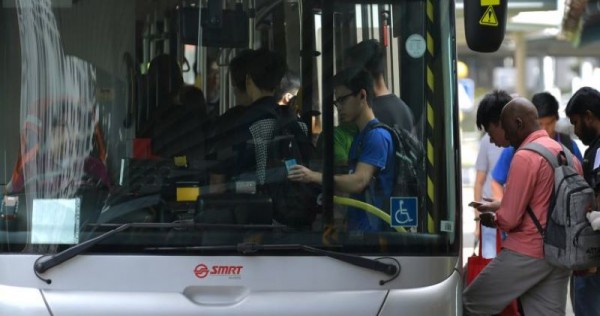
SINGAPORE – The planned removal of key bus services in Bukit Panjang – including the only two linking the area to the city – has touched a raw nerve among residents.

From Aug 16, bus services 700 and 700A – which link Bukit Panjang to areas such as Orchard, Bras Basah and Shenton Way – will stop plying, while service 171 – which links Yishun to Marina Centre and passes Bukit Panjang – will be shortened.

Service 972 – which links Bukit Panjang to Orchard Road – will be re-routed to Newton MRT station.

The changes to these services, which ply along the MRT Downtown Line – which runs from Bukit Panjang to Expo in the east – were announced by operator SMRT on Monday afternoon (Aug 3). 

Since Monday, three petitions have been put up to halt the planned changes. As of Tuesday afternoon, they have garnered more than 1,000 names.

Members of Parliament have weighed in on the issue, which has drawn more than 400 comments and been shared more than 900 times on Facebook as of Tuesday afternoon.

[ad_2]

Source link

Bukit Panjang bus services changed after sharp drop in ridership, need for ‘prudence’ in using public funds: LTA

0

SINGAPORE: Sharp declines in ridership and a need to “exercise prudence” in the use of public funds were the reasons for changes to several bus services in the Bukit Panjang area, the Land Transport Authority said on Tuesday (Aug 4).

SMRT announced on Monday that services 700 and 700A would cease operations on Aug 16, while service 171 would be amended to operate from Yishun bus interchange and loop around Bukit Panjang MRT station instead of continuing towards Marina Centre bus terminal.

Service 972 would be amended to serve Bukit Timah/Dunearn Road, Newton MRT and Scotts Road.

Bukit Panjang Member of Parliament elect (MP-elect) Liang Eng Hwa said on Monday night that that he was disappointed with the “drastic changes” made to the bus services, saying they would inconvenience residents in the area. 

Responding to CNA’s queries, the LTA said on Tuesday that since the second phase of the Downtown Line (DTL) was opened in December 2015, the ridership for bus services running parallel to the MRT line has dropped sharply. 

Ridership fell by more than 30 per cent for service 171 and by more than 50 per cent for service 700 in the first year after the opening of phase two of the Downtown Line, the authority said. 

The two services have been subsidised through public funds to keep them running, with up to S$5 million of subsidy a year used on service 700 alone.

“If this is the only transport option in the area, we can justify the public spending. But given that (the) DTL is available as an alternative, we need to exercise prudence in the use of public funds, and hence have to make some adjustments to the services in the area,” an LTA spokesperson said.

READ: Liang Eng Hwa urges LTA to seek better solution after ‘drastic changes’ to some Bukit Panjang-city bus services

LTA “NOT OPEN TO ALTERNATIVE SOLUTIONS”

In his Facebook post, Mr Liang said the LTA’s bus planners were not open to “alternative solutions that will balance accessibility concerns for residents and optimal routes for bus service providers”.

“I am saddened that they have no regard on how these changes will impact our residents’ lives,” he said, urging the LTA to delay the changes and work towards a “better solution”. 

PAP, Bukit Panjang SMC, walkabout Jul 8, 2020 (8)

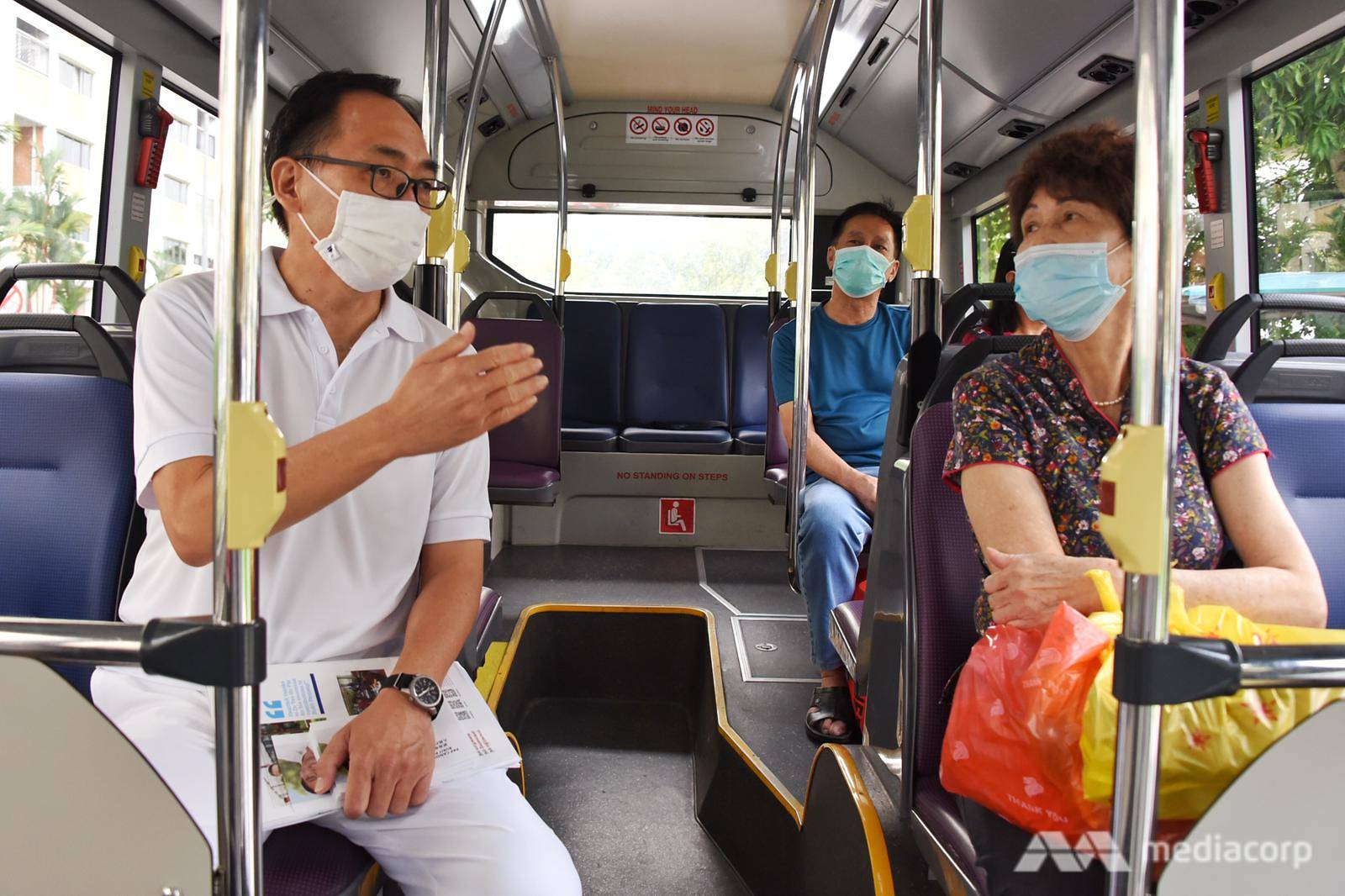
The People’s Action Party’s (PAP) candidate for Bukit Panjang SMC, Liang Eng Hwa talking to residents on a bus ride from Bangkit Road to Fajar Road during a walkabout on Jul 8, 2020. (Photo: Ruth Smalley)

In its statement, the LTA said it has been consulting grassroots advisers regularly since 2016 to “explore ways to make better use of bus resources while addressing residents’ needs”.

“It is arising from these consultations that Service 973 was introduced in February 2017,” the spokesperson added.

“We understand that the changes have led to longer travel times for some residents. But LTA needs to balance the needs of different groups of commuters, while taking into account the availability of alternative travel options, and the burden on taxpayers.” 

The authority’s spokesperson said it will continue to hold discussions with grassroots advisers and listen to residents to “explore mitigating measures”, adding that it will not “always be possible” to provide direct bus connections.

Service 171 – a long trunk service from Yishun to Marina Centre – duplicates about 36 per cent of the Downtown Line route between Bukit Panjang and Newton, LTA noted.

“By shortening the service to loop around Bukit Panjang town centre before returning to Yishun, commuters will benefit from the enhanced connectivity from Bukit Panjang MRT Station to Petir Road,” the spokesperson added.

The shorter service would allow for “more efficient deployment of resources to focus on the sector between Yishun and Bukit Panjang”, which the LTA spokesperson described as a “high-demand sector” for the service 171.

As for service 700, which is a long trunk service between Bukit Panjang and Shenton Way, it will be discontinued as it duplicates the Downtown Line between Bukit Panjang and the city area. 

Service 972 would be amended to ply Bukit Timah Road, Dunearn Road and Scotts Road so as to “maintain connectivity” after service 700 is removed.

“This has been a difficult decision for LTA, but we are facing a difficult dilemma,” the spokesperson said.

Source link

Keep to the left: First-ever code of conduct for pedestrians unveiled

0

[ad_1]

SINGAPORE – Pedestrians should stay off shared paths, stick to footpaths if possible and keep to the left unless they are overtaking another pedestrian.

They should also refrain from using their mobile phones while walking on such paths for their own safety.

These points were stated in the first-ever code of conduct here involving pedestrians, which is part of measures first proposed late last year by the Active Mobility Advisory Panel.

The code of conduct for users of public paths had previously focused on device users, such as cyclists and e-scooter riders.

The updated code of conduct kicked in this month, together with a new rule banning those under 16 from riding electric scooters unsupervised by adults. Another new rule bans device users from using their mobile phones while riding.

The Land Transport Authority (LTA) said on Tuesday (Aug 4) that the recommended habits for pedestrians will complement existing active mobility regulations and guidelines for other path users.

[ad_2]

Source link

AHTC abusing court process, say lawyers for Workers' Party town councillors

0

[ad_1]

SINGAPORE – A move by the Aljunied-Hougang Town Council (AHTC) to amend its claims in a long-running court case is “prejudicial” and an abuse of the court process, said lawyers representing town councillors from the Worker’ Party.

WP chief Pritam Singh, party chairman Sylvia Lim and former party chief Low Thia Khiang, along with the two other town councillors who were taken to court by the town council, have opposed the amendment, in submissions released online on Monday (Aug 3).

The five defendants noted that the trial is already over, and judgment has already been delivered.

They also said the amendments AHTC wants to make are intended to take advantage of the orders made in the High Court judgment released last October, which also covered a parallel lawsuit brought by the Pasir Ris-Punggol Town Council (PRPTC) against the five defendants and others.

This is the latest development in the court case, which is now before the Court of Appeal.

[ad_2]

Source link

Hard to avoid job cuts at Singapore Airlines amid pandemic: Experts

0

[ad_1]

Job cuts could be in the pipeline for Singapore Airlines (SIA), which is now overstaffed for current demand, experts said yesterday.

SIA could also try to cut costs in other areas, or possibly receive additional government support to tide it over the crisis, they added.

The airline had last week announced a net loss of $1.12 billion in the quarter ending June 30 – its worst quarterly showing. It also said it is reviewing the shape and size of its network over the longer term, given the impact of Covid-19 on air travel.

The International Air Transport Association has said it will take until 2024 for global passenger traffic to return to the level last year.

Mr Nicholas Wyatt, head of research and analysis in travel and tourism at analytics firm GlobalData, said the recovery of international flights depends on how quickly the pandemic can be brought under control, but “there are few signs that this is happening”.

But if airlines cut jobs excessively, they will be shorthanded should the market rebound quicker than expected, he added.

[ad_2]

Source link