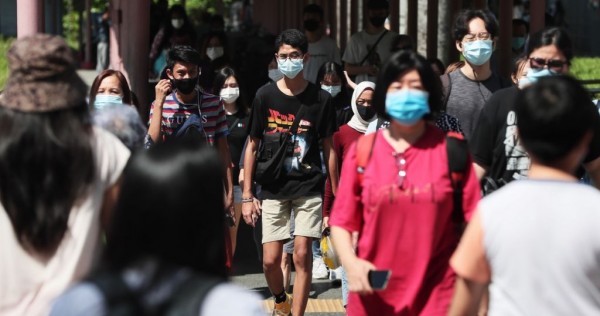
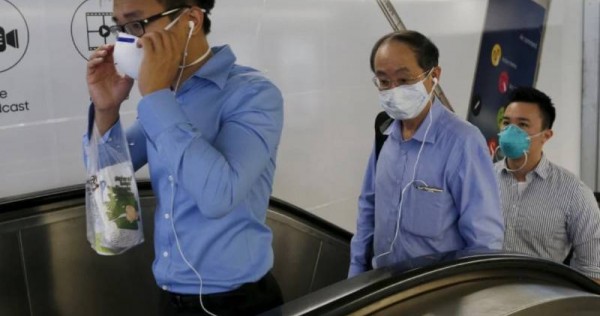
There were 188 new coronavirus cases confirmed as of Monday noon (Aug 10), taking Singapore’s total to 55,292.
They included one community case, a Singaporean, said the Ministry of Health (MOH) on Monday.
There were also 12 imported cases who had been placed on stay-home notices upon arrival in Singapore.
Migrant workers living in dormitories made up the vast majority of the other cases.
More details will be announced on Monday night.
On Sunday, 175 new coronavirus cases were announced by MOH.
The ministry also said the inter-agency task force had completed the testing of all workers in dormitories last Friday, with some test results still being processed.
Among the new cases announced on Sunday was an unlinked community case, a 57-year-old Singaporean woman.
She was tested for Covid-19 after she sought medical treatment for prolonged acute respiratory infection symptoms, and tested positive last Saturday, said the ministry.
It said epidemiological investigations of the case are in progress, and all identified close contacts have been isolated and placed on quarantine.
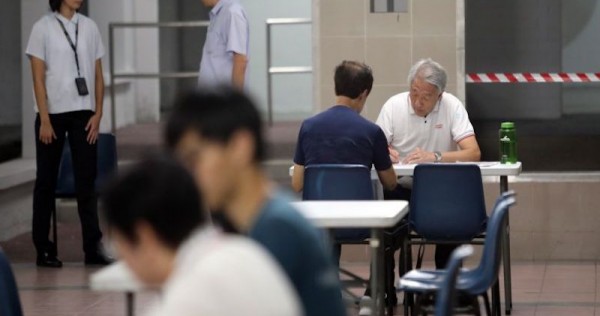
Meet-the-People sessions (MPS) will be allowed to resume from Monday (Aug 10) with precautionary measures such as capping overall crowd size to 50 or less, the National Environment Agency (NEA) has said.
The move is aimed at facilitating interaction between MPs and their constituents now that the country is in phase two of its reopening, NEA said.
The allowed crowd size will depend on the size of each MPS venue, it added. Crowd size comprises all persons in the MPS venue, including MPs, activists and residents, as well as those in the waiting area and queue.
People’s Action Party (PAP) MPs told The Straits Times they have been informed of this change, and that they will be implementing additional safety measures for their MPS from this week.
Ms Foo Mee Har (West Coast GRC) said these measures include using nearby void deck areas for queue management, and to limit the number of people inside her branch to 30, including the MP and volunteers.
“For MPS location at Block 32 Teban Gardens, where the space is available, we will be conducting ‘outdoor’ MPS, a practice we started pre-circuit breaker in March this year,” she said.
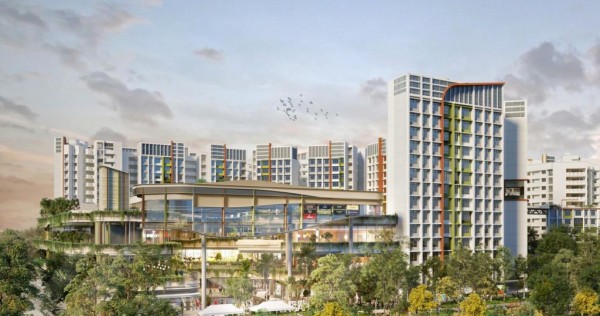
More than 1,040 Build-To-Order (BTO) flats in Tengah will be on sale this month as Singapore’s newest town, billed as a “forest town”, continues to take shape.
The Parc Residences @ Tengah project is the first BTO housing parcel to be launched for sale in the new Park district, the Housing Board announced on Monday (Aug 10).
Park is the third of five districts in the town to see a BTO launch. It will hold an estimated 7,200 new flats when fully completed.
Located next to Tengah’s green lung called Central Park, the district will occupy 104ha and feature a number of greenways such as a 1.5km-long rainforest walk that weaves through various housing projects.
Tengah covers about 700ha in the west. About the size of Bishan, it is the first HDB town to be developed since Punggol more than two decades ago.
Public housing in two of the districts – Plantation and Garden – were launched earlier. The other two districts in Tengah are Brickland and Forest Hill.
The Tengah masterplan was first revealed in 2016. Since 2018, the HDB has launched more than 7,000 new flats across six BTO projects in the town.
SINGAPORE: The first batch of flats in Tengah’s Park District will be up for sale in the August Build-to-Order (BTO) exercise, said the Housing and Development Board (HDB) on Monday (Aug 10).
This is the third district to be launched in Tengah, and it is where Singapore’s first “car-free” town centre will be located.
“Roads are planned to run beneath the town centre, freeing up space at the ground level for retail and recreational use,” HDB said.
“Separated from roads and traffic, the heart of the town centre will be safe and friendly for residents to walk and cycle.”
A key feature of Park District will be Tengah’s “car-free” town centre which will be integrated with the nearby Central Park. (Photo: HDB)
There will be a sports centre, retail spaces and eateries at the town centre, as well as an MRT station on the Jurong Region Line.
The first BTO housing estate to be launched for sale in Park District is Parc Residences @ Tengah, comprising 12 residential blocks with 1,044 units of two-room flexi, three-room, four-room and five-room flats.
Artist impression of Parc Residences @ Tengah, an integrated development with public housing and a neighbourhood centre. (Photo: HDB)
Residents here will have access to a polyclinic, a supermarket, a food court, tuition centres and a childcare centre when the neighbourhood centre is completed in 2025.
“To encourage residents to adopt a healthier lifestyle, the neighbourhood centre will feature prominent stairways which open up directly into a variety of green community spaces on each floor,” said HDB.
Artist impression of homes at Park District offering views of greenery and the waterfront. (Photo: HDB)
A COMMUNITY FARM AMONG THE GREEN SPACES
Like Tengah’s two districts launched earlier, Park District features many green spaces.
“Park District will be encircled by greenery and green spaces, with Central Park nearby and green ways such as the Forest Corridor and Forest Fringe,” said HDB.
Artist impression of Central Park, offering scenic and tranquil spots for residents to relax and enjoy various recreational activities. (Photo: HDB)
At Central Park, an existing canal will be “naturalised and landscaped”.
There will also be a 5km-long stretch of greenery that will served as a habitat for native fauna, as well as form part of the larger ecological corridor between the Western Water Catchment Area and the Central Catchment Nature Reserve.
Residents will also have access to spaces for community gardening and farming.
“Within Park District, the farmways are about 600 metres long and 40 metres wide on average. HDB will partner (the National Parks Board) to provide some 3,000 square metres of space, equivalent to the size of 33 four-room flats, for community gardening and farming within the farmways,” it said.
“This is in addition to the community gardens within individual public housing projects.”
Artist impression of the Rainforest Walk weaving through Parc Residences @ Tengah Build-to-Order (BTO) Project. (Photo: HDB)
Another feature is the 1.5km-long Rainforest Walk which will weave through the housing projects.
“Social-communal facilities such as nature-themed playgrounds, fitness stations, open green spaces and seating areas will feature along the Rainforest Walk, particularly at portions where it runs through the housing projects or intersects the farmways.”
The multi-storey car park at Parc Residences @ Tengah has green features as well. Its rooftop garden will house playgrounds, fitness corners and a jogging track.
Artist impression of of the rooftop garden with lush greenery. (Photo: HDB)
Artist Impression of the community event plaza filled with lush greenery that extends out into the Plantation Farmway. (Photo: HDB)
Philip Leong gets out of bed at 3am every morning to open his food stall in Singapore’s Jurong district. He stands for hours over a sizzling wok, whipping up more than 100 plates of fried vegetarian bee hoon, or vermicelli.
The 68-year-old has been doing this back-breaking work for nearly two decades, yet his life as a hawker was not borne of a particular passion for cooking but rather sheer necessity.
In 2002, Leong lost his job as a senior engineering assistant at Singapore Technologies Engineering when the company restructured.
The 1997 Asian financial crisis had taken a devastating toll on the labour market, along with the dot-com crash and the 9/11 attacks in the United States. The effects lasted well beyond the initial drop in economic growth.
Singapore lost 23,400 jobs in 1998 in its first employment contraction since the mid-80s recession. Between 1998 and 2002, only 102,000 jobs were created – just one-fifth of the 474,800 jobs created during the boom years 1993-97.
Covid-19 made the world realise what many had long suspected. That countries around the globe had become dangerously overreliant on China as a manufacturing base.
When China went into lockdown and its factories shut, supply chains and logistics were deeply disrupted and many countries suffered as their access to goods dropped drastically.
In response, many nations have decided to bring manufacturing back to their shores.
Herein lies an opportunity for Singapore. Boosting manufacturing’s contribution to the economy would enable the city state to remain in control of major parts of the supply chains it relies on, helping it to react in times of emergency and remain self-sufficient in critical goods.
Doing so would be a return to the glory days for Singapore manufacturing, which has declined as a percentage of GDP over the past three decades. As recently as the 1990s, Singapore’s manufacturing industry paralleled those of its fellow tiger economies of Taiwan and South Korea.
SINGAPORE: Massive efforts are underway to develop a vaccine strong enough to fight and eliminate the novel coronavirus.
Latest reports indicate that at least 165 vaccine candidates are being developed across the world, including in the United States, the United Kingdom, India, China and Singapore.
Nearly 30 projects are already in various phases of human trials, including one jointly developed by Duke-NUS Medical School and US pharmaceutical company Arcturus Therapeutics.
But developing a vaccine is no easy task. What usually takes 10 to 15 years, researchers are now accelerating so that a vaccine could be ready for emergency use by next year.
With the process on the fast track, the hope of a vaccine comes with vital questions. And here are some answers from the experts.
Research assistant Marion Hong, of RNA medicines company Arcturus Therapeutics, conducts research on a vaccine for COVID-19 at a laboratory in San Diego. (File photo: Reuters/Bing Guan)
1. IS A VACCINE BY 2021 REALLY POSSIBLE?
Six of the vaccine candidates are now in the third stage of testing, and they “look potentially interesting”, Dr Jerome Kim, the director general of the International Vaccine Institute, said on the programme In Conversation. (Watch the episode here.)
“They make the right protective responses. They all protect monkeys against infection … So there’s a lot of suggestive evidence that they might protect for at least a short period of time. We don’t really know, though,” he said.
“We have to be very careful when we use animal studies … So now it’s (about) making sure that we can show that it actually prevents infection in humans.”
He cited the potential of the vaccine candidate from the University of Oxford and drug giant AstraZeneca as an example. Recent results of a study, involving more than 1,000 human volunteers, showed that the vaccine generated a strong immune response.
The reason this could be done at “remarkable” speed, said Professor Ooi Eng Eong, deputy director of Duke-NUS Medical School’s Emerging Infectious Diseases Programme, is that the research groups concerned have worked on other viruses before.
The Oxford group has done “a lot of work” on the Middle East Respiratory Syndrome, on Ebola and on Chikungunya, he noted on the programme Insight. (Watch the episode here.)
“So how they got this (vaccine) very rapidly into humans is they went to the regulator and said, ‘Look at our past record.’”
Mr Sudarshan Jain, the secretary general of the Indian Pharmaceutical Alliance, acknowledged that the virus behind COVID-19 is “very cunning” and “unpredictable”, which drug makers “don’t understand fully” yet.
But as the “entire pharmaceutical industry has taken up the challenge”, he said on In Conversation, “there’s a possibility” of four or five vaccines. “I’m hopeful that we should be able to reach that position towards next year.” (Watch the episode here.)
Dr Kim thinks it is possible: “If everything works as it should, by the end of the year, we may have a readout on at least one of the vaccines currently in the pipeline — that it may protect or may not protect populations.”
The bigger question, Dr Kim noted, is whether there will be “enough safety data”, as the final phase of human testing in the “normal development cycle” of a vaccine is five to 10 years, instead of six months.
The “thousands” of safety evaluations to be done this year will be a “good amount”, although he acknowledged: “We aren’t really going to be able to tell.
“In the short term, to the point where the vaccine will either be given in emergency-use authorisation or an approval for market, we’d have less long-term safety information than we normally have.”
So vaccine developers should “follow the people who receive the vaccine and placebo for a much longer time than we normally do”, he said, suggesting “two or three years or longer”.
This is to ensure that there are no side effects “at a very low level that we should be aware of, but that we can’t because we’re pushing hard to show that the vaccine works”.
Prof Ooi stressed: “Between being the first (to develop a vaccine) and getting it right, it’s more important to get it right.”
But he does not see speed and safety as “mutually exclusive”, and thinks “we can shrink the timeline” for vaccine and drug development in general, which has been lengthened as more studies were added over the decades.
“The important thing is the body of evidence that guides the development,” he said.
“If the evidence is strong … then you can move very, very fast because you know what to look for … and (have) the confidence that what we’re doing is going to be safe.”
3. WILL COUNTRIES HAVE EQUAL ACCESS TO THE VACCINE?
Much is at stake in the COVID-19 vaccine race, although it has to do not only with science, but also politics.
The current US administration has already been accused of trying to monopolise first rights to vaccines being developed by a company in Germany and one in France — alleged attempts that the two European governments made sure to block.
The reason for self-interest is evident, noted Prof Ooi. Countries that vaccinate first will “get out of all the lockdowns” and restrictions, return to normal economic activity and recover “much faster” than those without access to the vaccine.
There are “bound to be” politics involved, said Mr Jain. “Perhaps … in the country where the vaccine development has taken place, the citizens of that country will demand that, first, the vaccine should be available in (their) country.”
But with the vaccine development taking place across the world, he reiterated his belief that a handful of vaccines will emerge, which will “ensure” supply. There is also “a lot of discussion” about avoiding vaccine hoarding, he cited.
“The dialogue will help us to ensure equitable distribution. It may not be 100 per cent perfect, but there’s a lot of consciousness,” he added. “At the end of the day, we’d like to find a level playing field.”
In May, Chinese President Xi Jinping committed to making a Chinese vaccine available to all.
But the question here, said Prof Joseph Liow, the dean of Nanyang Technological University’s College of Humanities, Arts and Social Sciences, is whether Beijing can win other countries’ trust and show that it is extending this help “in good faith” and with “no strings attached”.
Even if governments map out a plan to “guarantee” vaccines for “a certain percentage of their need first”, said Dr Kim, “it may not be that much”.
“I mean, who are the people in greatest need? It may be the elderly, healthcare workers or people with underlying conditions that make them more vulnerable to severe disease or death.
“Maybe that’s 20 per cent of the population. So you don’t need all of the vaccine all at once. You may want to just vaccinate the most vulnerable people first.”
As someone with no comorbidities, or underlying diseases, Mr Jain does not expect to be a candidate for immunisation before the end of next year. That means vaccination for everyone only by 2022.
“Even if we do the best (to ramp up production), I don’t think we can see anything earlier,” he said. “The capacity at the moment is limited … It’ll take time for production and distribution (to be ramped up).”
Dr Kim noted that the US government is asking companies to start the manufacturing, seemingly “placing very educated bets on certain vaccines” and de-risking the projects by giving the companies funding — which he hopes will also “enable the companies to offer the vaccine at a lower cost”.
Organisations like the Coalition for Epidemic Preparedness Innovations are doing the same, including trying to secure manufacturing facilities down to the glass vials for the vaccines. The coalition has identified the need to have vaccine capacity for 10 billion doses.
“There is a manufacturing capacity out there. And the real question will be how quickly can we mobilise it,” said Dr Kim.
“Countries and companies are already making contracts with different organisations (and) manufacturers to be able to ensure that the vaccine is made … (but) we’ve never undertaken something like this before.”
If 60 to 70 per cent of people need to be vaccinated to achieve “herd immunity”, that may mean “vaccinating in the order of four billion to six billion people”.
“If there are two doses (per vaccination), that’s eight billion to 12 billion doses of vaccine. That’s a huge number,” he said, adding that getting up to those numbers over the next 12 months “would be a stretch”.
5. WILL A VACCINE MEAN A RETURN TO NORMAL?
All things considered, Mr Jain doubts that life will return to normal in the first year of discovering a vaccine.
“Hence it’s very important that all of us have to be cautious. All of us have to wear masks … behave with social distancing, and then the whole process will evolve over a period of time,” he said.
Most experts agree that a vaccine will not get rid of the coronavirus. “Too many people are now infected with Sars-CoV-2 that it won’t disappear,” said Prof Ooi.
Citing another reason the coronavirus is here to stay, he added: “It came from an animal, and we can’t vaccinate all the animals, especially the wild animals.
“So we’ll have this virus, and occasionally it’ll spill over and cause outbreaks, especially when vaccination rates are low. And that would be the challenge.”
People may have to also accept that the first vaccine put into use “might not even be able to prevent infection”, said Prof Jin Dong-Yan from the University of Hong Kong’s School of Biomedical Sciences.
“But if it could prevent severe disease and … not have a major adverse effect, that’s already good enough,” he told Insight.
Virology professor Ian Jones from the University of Reading in the UK noted that the data released so far indicates that the experimental vaccines protect against COVID-19 but may not give the “sterilising immunity” to stop an infection altogether.
“The problem with that would be that someone who’s vaccinated could still be infected and could then spread the virus, so it’s not the perfect solution,” he told Insight.
Even then, he views the development of a vaccine as “the most useful way forward”.
“What we’re aiming for is a vaccine that takes away the fear of the disease,” he said. “If you get vaccinated, and you’re pretty confident that you’re not going to die, then I don’t think people will worry too much.”
And of all the solutions to the pandemic, a vaccine is “probably the most cost-effective”, believes Dr Kim. “A vaccine is the one potential intervention that’ll get us back to something similar to what we had before,” he said.
How similar will depend “a little bit on the qualities of the vaccine” and also on “several of the unknown things about the virus and viral infection in the population”.
“We’ve learned a tremendous amount in six and a half months, but it’s not enough,” he noted.
Assuming vaccination rates are at 60 to 70 per cent five years from now, however, then he would say “we’ve protected the population from the consequences of an outbreak”.
“You’ll see an occasional COVID-19 infection that’ll look like someone has a fever and maybe some cough or shortness of breath. You’ll test them, and you’ll find COVID. But it won’t spread in the population because enough people are immune.”
For now, the “bread and butter” is safe distancing, a high level of hygiene “and all that”, said Prof Ooi. “Then you overlay that (with) vaccines and drugs. Then we have a chance of really overcoming this virus.”
The programme Insight airs on Thursdays at 9pm, and In Conversation airs every Wednesday at 9pm.
More than 6,000 of the 27,000 staff from the Singapore Airlines (SIA) Group have taken no-pay leave of varying lengths to help the company cope with the collapse in air travel due to Covid-19.
In addition, more than 1,700 employees, including ground staff, pilots and cabin crew, have signed up for volunteer positions and jobs in external organisations.
The SIA Group – which comprises SIA, regional arm SilkAir and budget carrier Scoot – disclosed the figures to The Straits Times last Friday.
Its spokesman said it has been arranging temporary and secondary job placements for its staff.
“These include ambassador roles and opportunities at public transport stations, social service offices and hospitals, for example,” said the spokesman. “Many of our crew have also volunteered with various roles within the company.”
Staff can apply for the external roles through SIA’s employee support portal.
They can also tap online financial, mental and physical wellness programmes if needed.
SINGAPORE – Meet-the-People sessions (MPS) will be allowed to resume from Monday (Aug 10) with precautionary measures such as capping overall crowd size to 50 or less, the National Environment Agency (NEA) has said.
The move is aimed at facilitating interaction between MPs and their constituents now that the country is in phase two of its reopening, NEA said.
The allowed crowd size will depend on the size of each MPS venue, it added. Crowd size comprises all persons in the MPS venue, including MPs, activists and residents, as well as those in the waiting area and queue.
People’s Action Party (PAP) MPs told The Straits Times they have been informed of this change, and that they will be implementing additional safety measures for their MPS from this week.
Ms Foo Mee Har (West Coast GRC) said these measures include using nearby void deck areas for queue management, and to limit the number of people inside her branch to 30, including the MP and volunteers.
“For MPS location at Block 32 Teban Gardens, where the space is available, we will be conducting ‘outdoor’ MPS, a practice we started pre-circuit breaker in March this year,” she said.
SINGAPORE: Kevin* has known his mind “works differently” ever since he was in Secondary 3. Things like grocery shopping may be therapeutic for some, but it is an incredibly stressful task for him.
“It’s always the difficulty of choice in making the simplest decisions, like what kind of pasta should I buy? I can take 15 minutes just standing there before deciding which to buy,” he said.
Kevin did not know then that he had anxiety, which can interfere with decision-making. What he was familiar with, though, was the common refrain that he would hear from people around him urging him to stop worrying and thinking too much.
He went on with life struggling with not feeling “fully normal”. It was another 13 years before he stepped into his first therapy session.
“It took me quite a while to say that I wanted to seek help,” said Kevin, who is now 29 years old.
“People always think that it’s (mental illness) just a phase, until it becomes too serious…I don’t want to eventually (commit suicide).”
Statistics from the Samaritans of Singapore (SOS) last week showed that the number of suicides in Singapore for those aged in their 20s remained the highest last year compared to those in other age groups.
A total of 71 people aged between 20 and 29 killed themselves in 2019. Suicide continued to be the leading cause of death for those aged 10 to 29 last year.
While Kevin took the first step to seek help after a long struggle, not everyone does so.
According to a Singapore Mental Health Study conducted in 2016, while one in seven in Singapore has experienced a mental disorder in their lifetime, more than three-quarters did not seek any professional help.
Respondents cited a “treatment gap” of 11 years as the median time between when they first experienced symptoms and when they sought help for obsessive compulsive disorder.
It was four years for bipolar disorder and alcohol abuse, two years for generalised anxiety disorder and one year for major depressive disorder.
In the same study, youths between 18 to 34 years were presented as the most vulnerable group – one in five would have experienced a mental disorder in their lifetime.
In Singapore, there is a comprehensive network of mental health services – from helplines and Voluntary Welfare Organisations (VWOs) offering youth-centric counselling services, to clinics at government hospitals and in private practice.
However, some young people experience challenges in seeking professional help.
NAVIGATING MENTAL HEALTH SERVICES
Mental health awareness among young people appears to be growing.
According to the Ministry of Health (MOH), from 2017 to 2019, an average of 12,600 patients aged 15 to 34 years sought treatment for mental health conditions at public hospitals each year.
The Community Health Assessment Team (CHAT) – a community-based youth mental health outreach and assessment initiative – received around 1,800 referrals and conducted assessments for about 770 youths last year.
That is 36 times more referrals and 15 times more assessments than 2009, when the initiative was first launched.
“The increasing number of referrals that CHAT received reflects a growing awareness of the importance to seek help early for mental health concerns and recognition of CHAT as a potential avenue available to seek help from,” said a spokesperson in an email interview.
The CHAT Hub, located along Orchard Road, is a one-stop resource hub set up to help youths in distress. (Photo: Institute of Mental Health)
In March, then Senior Minister of State for Health Dr Lam Pin Min said during the Committee of Supply debate in Parliament that recent engagements with young people showed “mental well-being continues to be a top concern”.
In response, a new initiative offering mental health support and awareness to at-risk youths is expected to launch in the second half of 2020.
The Integrated Youth Service, jointly developed by the MOH, Institute of Mental Health, Agency for Integrated Care and Care Corner, was described in an MOH press release as a “one-stop service where at-risk youths can access coordinated mental health and support services such as individualised basic emotional support, needs identification and befriending services”.
Responding to queries from CNA, MOH said that the Integrated Youth Service began community outreach in the “Northern region in April 2020”.
“In the midst of COVID-19, Care Corner’s mental health department, INSIGHT, has had to adapt its outreach to youths through alternative online platforms such as Instagram, a Telegram bot and webinars,” it added.
To date, these platforms have reached out to over 500 users.
This resource may be a welcome addition to helping young people navigate their way through the range of options so they can find a solution that works.
Broadly, there are two approaches for treating mental health conditions: Medication and psychotherapy – both of which can be used on its own without another, with different effects on an individual.
“Medication reacts differently for different individuals even if it’s the same condition – a certain medication may work perfectly well for one, but for another it can have more complicated side effects,” said Mr Jackie Tay, the executive director of PSALT Care, a registered charity and mental health recovery centre.
On the other hand, psychotherapy and counseling involve the “human factor” or the social connection between the clinician and the patient.
“It’s the chemistry and connection – some patients would connect better with certain styles of therapists. You also need to navigate around that,” said Mr Tay.
As such, the continuum of care for mental health conditions can also be long, intensive and complicated. For example, one young adult whom CNA spoke to likened the process of finding suitable treatment to finding a soulmate on matchmaking sites like Tinder. Kevin agreed.
“It’s not like maths, where you have a correct answer. You have to slowly find what works for you,” he said.
Finding the appropriate mental health service can seem like an overwhelming experience. (Graphic: Rafa Estrada)
Finding suitable treatment requires time and effort from an individual. However, experts CNA spoke to suggested that improving the quantity and quality of information about mental health resources may encourage a young person to take the first step to seek help.
“This group of vulnerable people (with mental health issues) would already be cognitively overloaded,” said Ms Anthea Ong, a former Nominated Member of Parliament who advocated for the prioritisation of mental health in the budget 2020 debate.
She added that while the National Council of Social Service provides a list of available mental health resources online, there should be a “community navigator” that goes beyond “just information”.
“There’s no guidance on where to go, the cost fees – at least list down some of the possible journeys or experiences and then map that.
“It’s not a site that helps you to navigate the services available,” she explained.
For those like Aisha*, who engages in self-harm and suspects she has depression, the plethora of options that a Google search presents her has posed a hindrance.
“I remember Googling ‘Singapore counselling session’ and ‘affordable counselling’… but there isn’t a site that narrows down your options for you or tells you what kind of treatment is appropriate,” the 23-year-old patient service associate at a local hospital said. She has yet to see a professional.
“I do want to spend some time looking at the services … but that’s just something I’m not ready for at this point of time – not when your mind is already in a mess.”
Finding suitable mental health treatment requires time and effort from an individual. (Graphic: Rafa Estrada)
As much as there are many avenues of care out there, there may not be enough education on selecting an appropriate one, said Dr Tracie Lazaroo, a clinical psychologist from Inner Light Psychological Services and LP Clinic.
“Finding the appropriate mental health service can seem like an overwhelming experience.”
Kevin for example, did not know the difference between a psychiatrist, a medical doctor who can diagnose mental disorders and prescribe medication, and a psychologist – someone who specialises in modes of therapy.
While he was hoping to speak to a therapist about his problems, he unknowingly set an appointment with a psychiatrist at a private hospital instead, who prescribed him medication like Lexapro and Xanax.
“I didn’t know where to start and where to search … (the private hospital) came out with the first few searches of Google,” he said.
“I was quite taken aback because it was more of a clinical setting (with the psychiatrist) and it was not very nice. I didn’t feel very comfortable.”
Mr Tay added that the awareness of the availability of health and resources has not increased significantly over the last five years, neither has the “ease of search”.
“For example, we know that when there’s a fire, we call 995. When you need the police, you call 999. But when you’ve got a mental health problem, who do you call?”
THE PRICE OF MENTAL HEALTH TREATMENT
Given the long-term nature of mental health treatment and recovery, financial concerns can be a factor in deciding whether to seek help, experts said. Most youths who spoke to CNA also said that the cost of treatment has been a concern.
Under the Chronic Disease Management Programme (CDMP), patients with schizophrenia, major depression, bipolar disorder and anxiety can withdraw up to S$500 from MediSave per year to defray the cost of outpatient treatments such as therapy and counselling treatment.
Each claim is subjected to a 15 per cent co-payment in cash.
To receive further subsidies at the Institute of Mental Health (IMH) – Singapore’s only tertiary psychiatric care institution – one can get a referral from a doctor at the polyclinic. The first consultation costs S$40 and S$37 for the subsequent ones.
This is much cheaper compared to private clinics that charge anything between S$100 to S$250 for one session – depending on the training, specialisation and experience of the clinician.
For example, Raffles Medical Group states on its website that a session with a counsellor or psychiatrist will cost at least S$160.50 and S$214 respectively.
While there are government subsidies available at public healthcare institutions, Dr Lazaroo said that some patients need prolonged care.
“These disorders require consistent long-term care on a weekly basis especially within the first year of symptom onset, commonly spanning over the course of a few years,” she added.
“Unfortunately, some of these patients may struggle maintaining employment while receiving therapy or psychiatric treatment, which will inevitably cause them to have insufficient MediSave or MediShield Life funds.”
The cost of weekly treatment will also “stack up very quickly”.
To further encourage help-seeking behaviour, Ms Ong said that there is a need to “do even more” to keep mental healthcare affordable in Singapore because mental illness “does not necessarily have any obvious physical symptoms” and treatment will not take “just one session”.
She noted the difference in inpatient MediSave claims – while the daily limit is S$450 for physical illnesses, it is S$150 for psychiatric treatment.
“The claims limit is already lower compared to physical health conditions and you might need to go for more treatment. It’s a double whammy,” Ms Ong added.
During the Ministry of Health’s 2020 Budget debate in Parliament, then-Minister of State for Health Dr Amy Khor said that MOH reviews the amount of financial support regularly to ensure that it is adequate.
Based on the latest data, fewer than three in 10 persons’ subsidised bills exceed MediSave’s daily withdrawal limit, she said.
However, financing for treatment may be a challenge for those with conditions not covered by CDMP such as post-traumatic stress disorder and eating disorders, according to the experts CNA spoke to.
In an email response to CNA’s queries, MOH said that from Jan 2021, patients with “complex chronic conditions” will be eligible for a higher annual MediSave withdrawal limit of S$700.
“No one will be denied appropriate healthcare because they cannot afford to pay. Those who cannot afford their treatment at the public healthcare institutions even after subsidies, MediShield Life and MediSave, can approach the medical social workers for MediFund and other financial assistance.”
IMH added that patients who require financial assistance for costlier drugs that are not on the standard drug list can approach also approach its medical social workers.
The cost of mental health treatment can delay or prevent someone from seeking treatment. (Graphic: Rafa Estrada)
Even so, experts highlighted that treatment at a private clinic or voluntary welfare organisation (VWO) may be more suitable for some but that means they would have no access to MediSave withdrawals.
“If you are seeing a psychologist every week and you can’t afford it because the fees are not claimable, you will have to stretch your therapy. Consequently, it takes that much longer to get well,” said Mr Tay.
That is something that Ms Aleesha Khan can relate to. The 23-year-old was diagnosed with generalised anxiety disorder, depression and PTSD nine years ago and sought treatment at IMH’s Child Guidance Clinic for about five years.
“I had more than five different therapists under the clinic and nothing worked for me. I wouldn’t say it was the fault of where I was going and who I was seeing. (The therapists) only offered cognitive behaviour therapy – which is a good type of treatment – but it wasn’t what I needed at that time.”
Ms Aleesha Khan spends at least S$2.8k a year on therapy, which helps with her anxiety and depression. (Photo: Aleesha Khan)
Ms Khan went on to seek treatment for PTSD at a private clinic, where she received Eye Movement Desensitisation and Reprocessing (EMDR) – a four to six-week psychotherapy treatment that helps to alleviate distress associated with trauma.
As useful as that may be, she is paying about S$235 for every session.
“It’s worth it because it’s helping me, but it’s so much money. Not everyone can afford that and there’s no way to get subsidies because they just don’t cover it,” she added.
On top of that, she is also seeing a therapist to help with her anxiety and depression. To save money, she makes the “conscious choice” of going for one monthly session, if not it would “really be too much”.
“If I had a choice, I should actually be going to therapy more often…(but) I’m already spending S$235 a month, at least S$2.8k a year just on therapy,” Ms Khan said.
“I’m middle-class but I know so many people who need it but they can’t afford it.”
SELF AND SOCIAL STIGMA STILL EXIST
“It’s like waves and waves of sadness…you feel like the world is not a place for you.” This is how being depressed feels like to Aisha, who said she maintains a “strong look” daily even though she can break down several times in private.
“It’s especially hard to be working in healthcare because you can’t show that to your colleagues or patients. But at the end of the day, when you go home and you are left alone to your thoughts – that’s when it really kills me,” the patient service associate said.
While Aisha has been considering seeking help ever since she was in secondary school, the idea of receiving a diagnosis and “being sick” scares her.
“It’s like, ‘I’m working in the medical line and I’m like that?’ I think that will be the perception of people … so I just suck it up,” she said.
When it comes to the topic of suicide and mental health in Singapore, there is “still considerable stigma”, said SOS.
The fear of being judged or being associated with negative stereotypes may result in youths hiding their struggles. (Graphic: Rafa Estrada)
The perpetuation of stigma can come from various sources, such as the public, family or even within oneself. Young people are also more prone to its effects as they are in a “developmental phase” where they are trying to “form their identity”.
“They might be self-conscious and are typically more concerned about how others may see and perceive them, especially so by like-minded peers,” SOS added.
“To avoid being judged or associated with the perceived negative stereotypes, youths may choose to hide their struggles in order to avoid being seen as ‘weak’ …even if they harbour thoughts of suicide.”
“There’s probably a very big mindset difference,” said Ms Charlotte Chen, a therapist from Counselling & Care Centre.
“I noticed that (youths) seem to be more open to sharing with their peers than adults, especially their parents. They have the impression that their parents won’t believe that mental illness is real.”
Most youths that CNA spoke to have not told their families about seeking treatment or their struggle with mental health.
*Kiara, a 27-year-old early intervention teacher said it took her a few years before she went to a professional for her depression and borderline personality disorder as she came from a “very religious, conservative family”.
“Anytime they see me feeling sad, or angry, their first advice to me is to seek God. They mean well but these words are not really effective… (they don’t understand that) it’s the brain chemicals in your brain that’s going off,” she said.
“So I just kept telling myself, it’s okay I can handle this. What’s the point of seeking help when I’m gonna end up dead anyway?”
Similarly, 27-year-old Yi Wei* said that it is “very disheartening” whenever she brings up the topic of mental health with her parents.
“They don’t understand what it is … they just see it as something difficult that you have to overcome like everything else in life.”
The account executive added that while “working very hard” is one of her outlets for coping with depression, doing well in school or at work has not helped in convincing her parents that mental health treatment is necessary.
“That translated to my parents thinking, ‘She’s doing very well in school, so it’s not as bad as what she makes it out to be? How can it be so hard when you are actually excelling?’”
“Living with that sort of mentality within your family is hard. That’s why it took me so long to get diagnosed and seek help,” she added.
Not only is “destigmatising” mental illness important, there is also a need to undo the “narrative” that it only happens to certain individuals, said Ms Anthea Ong.
“Kids might think, ‘My parents send me to a good school, I’m from a well-to-do family and all that – how can I have this issue? I have everything I want.’ That’s when they start to beat themselves up, thinking they are self-indulgent.”
She added: “But that is not true … there are so many ways to be challenged mentally in the society that we’re living in.”
THE ONES WHO FILL THE GAP
While affordability and uncertainty about who to turn to are key barriers for some young people who need mental health treatment, there are charities and VWOs aiming to address some of those concerns.
Shan You Counselling Centre, for example, charges S$80 for every hour of counselling and offers a 50 per cent subsidy for students.
“In some instances, some of the young people may still not be able to afford (it), then we will offer further subsidy,” said its director Dr Kum Yew Siew.
“We usually don’t turn away a young person if they have genuine financial difficulties.”
Shan You Counselling Centre offers a 50 per cent subsidy for students who need counselling. (Photo: Shan You Counselling Centre)
Dr Kum added that seeking help at VWOs or private clinics does not require a referral unlike in public hospitals where a psychiatrist will have to make a diagnosis before someone can be directed to a psychologist.
“Not only is there a delay but also on a psychological level, having to go through multiple professionals and having to decide whether you even want to go through multiple people before you can talk to someone can pose as a barrier.”
“In my opinion, you do not need a diagnosis to provide help and intervention,” he said.
Ms Chen from Counselling & Care Centre added: “When youths come to a counselling centre, we are not trained to diagnose a mental health condition so we work with wherever they are, whatever struggles they’re dealing with and we support them from there through talk therapy.”
Additionally, going to private clinics or charities beyond IMH or other public hospitals gives young adults a sense of security about their information.
Confidentiality is one of the concerns of young people when deciding to seek help. (Graphic: Rafa Estrada)
“Given that we are a VWO, I imagine they feel a little bit safer in terms of their records being kept confidential. That sense of safety and anonymity is really important (to youths),” said Ms Chen.
“Sometimes in seeking employment they might ask if you have any psychiatry issues. If they have received an official diagnosis (at the hospital), I imagine they would face a dilemma of whether they should or should not disclose.”
However, VWOs that CNA spoke to reflected challenges in sustaining affordable services. Ms Chen said that while there was a pro-bono scheme in the past, the centre has not been able to continue that service due to the lack of funding.
“That is a real challenge and struggle. I do have one or two clients who can’t quite continue counseling because of the fees,” she added.
The difficulty of fundraising can also be tied to the stigma of mental illness, said Mr Tay from Psalt Care, and this prevents patients from sharing their stories and experiences with the public.
“Most of us in the charity sector … try to do our best with the limited resources. We would certainly hope we can have more so that we can do more.”
According to MOH’s latest data, NCSS provided S$8.7 million and S$5.7 million in funding to Social Service Agencies (SSAs) for mental health support services and counselling programmes, respectively, in 2018.
While there are counsellors in school and upstream efforts from the Ministry of Education – such as plans to give more focus to mental wellness in the Character and Citizenship Education (CCE) curriculum – Ms Ong suggested that more funding needs to go to “community support” and VWOs.
“It is important to let young people know that there is trusted, third-party support available out of campus that is affordable. We know the ratio of counsellors in school to the number of students,” she added, noting that waitlists exist for university counselling services as well.
“Community mental health agencies can also be a great resource to young people.”
NEED TO “SOLVE STRUCTURAL ISSUES”
As awareness of mental health issues among young people has grown, even more efforts are being put into providing help and support. This includes the 24-hour National Care Hotline launched in April this year, which is manned by more than 300 psychologists, counsellors, social workers, psychiatrists and public officers.
According to MOH, there are consolidated sites that list mental health resources and “function as navigators”, such as the My Mental Health microsite that was launched this year by Temasek Foundation, in collaboration with the AIC.
“It is a resource hub that provides online mental health resources such as mental health-related articles, online forums and information on support groups to support one’s mental health during the COVID-19 period,” it added.
Another website with various resources on mental health was also launched to help users assess their wellbeing and match them with forms of assistance if needed.
The website, called mindline.sg, consolidates access to many resources and tools to help people “access and navigate care, with an emphasis on stress and coping”.
A screenshot of the mindline.sg website.
While there has been a “groundswell” of community efforts in recent years – such as the Beyond the Label campaign by NCSS to address mental health stigma – Ms Ong said that the prevalence of mental health concerns among youths is indicative of the work that still needs to be done.
“That already empirically tells you that as much as we rally on the ground, we are not solving the structural issues of our mental healthcare such as affordability, accessibility and quality.”
In the meantime, young people like Ms Khan are playing their part. The psychological science student shares her personal experience in help-seeking and resources on her Instagram page, including a compilation of affordable mental healthcare in Singapore.
“Back then, there weren’t a lot of resources … a lot of support and answers I needed were not available to me. So my objective (now) is to provide information that I needed as a teenager who was in distress,” she said.
Ms Khan added that she receives many messages from youths who follow her page – some of them needing a listening ear, others looking for information on where to seek help.
“Some get overwhelmed looking at hospital websites…I have my own list that is categorised – if someone comes to me, I make it a point to refer them to the appropriate information,” she added.
“What I really try to do is to make sure that they are as informed as they can be so that they can advocate for themselves.”
*Name has been changed to protect identity
Where to get help: Samaritans of Singapore operates a 24-hour hotline at 1800 221 4444, or you can email pat@sos.org.sg. If someone you know is at immediate risk, call 24-hour emergency medical services.