Home Blog Page 149

Commentary: Primary School registration has gone online and is more straightforward. So why is it still stressful?

0

SINGAPORE: The advent of the Internet has been something generally celebrated where the electronic means to apply for a flat, a job and more promised greater convenience and accessibility.

In theory, the Ministry of Education’s move towards online registration for Primary School should also be a laudable step that takes the chore of having to take leave from work, head down to a school and wait around for your kid’s ballot to be called – assuming you’re applying in the later phases of a popular school.

Although that high-stakes bingo game was a rite of passage for parents eager to get their child into a desired school, it was admittedly troublesome.

So how’s that new arrangement working in practice?

MOVE TO ONLINE REGISTRATION

Since 2018, this physical Primary School application process and balloting exercise has shifted online.

Yet, this doesn’t mean that the process has become less frenzied or fraught with anxiety. If anything, the process has become more clinical and feels less stingy if only because you cannot gauge the other players involved in this race.

Instead of the drama unfolding in one packed day, the application period has been dragged out to between one to three days. Schools have more time to verify submitted information or obtain further supporting documents from parents.

READ: Commentary: From COVID-19 to parenthood, judging each other is back with a vengeance

Yet, this also allows anxious parents to call the Ministry of Education (MOE) or the schools to badger the harried school or MOE staff for updates on application numbers and other details. 

Though moving this process online should have made this Primary School exercise feel more like an administrative exercise, it seems you can take the parents out of competitive physical school registration exercises but you can’t take the competition out of some.

Other than relying on the schools for information, some resourceful parents even band together in chat groups and forums to exchange information on admission numbers or commiserate with other parents stuck in the same boat.

Singapore primary school students make their way to school (2)

Primary school students crossing the bridge along Kallang river in Potong Pasir, as schools reopen on Tuesday (Jun 2), the first day of Phase 1 of reopening after Singapore’s circuit breaker period. (Photo: Jeremy Long)

Once the appropriate school is decided upon after some nail-biting deliberation and a hard look at the probability of getting in, the application is submitted online and deposited into the abyss of MOE’s database with only an automated email message to confirm a successful submission of the application.

BALLOT BINGO REPLACED

The cutthroat race doesn’t end there. After submission, parents wait to hear if a ballot needs to be conducted.

If a ballot is required, the visceral joy or anguish of physically witnessing your child’s fate being sealed on the spot within the school ballot hall being replaced by an excruciating wait lasting several days while the school staff and MOE tally the information and numbers.

READ: Commentary: The sandwiched generation, with kids and seniors, is staying home most days too in Phase 2

Ballot bingo is replaced with a faceless computerised ballot and a disembodied SMS text from an MOE number which arrives several days after the close of applications.

On the one hand, moving the application process online means that parents no longer witness the back and forth verification and exchange of information between school and parent and among parents on the school premises.

Still, that means parents have to take the initiative and play a more active role in seeking answers to their admission queries from MOE, the school or other parents.

And it would seem parents haven’t quite found their equilibrium. As the online application system is relatively new in the scheme of school admissions, many are still in the process of adjusting and navigating their way around the application maze. 

You can be sure future cohorts of tiger parents will do all they can to get first-hand information on how to navigate the system.

REAL-TIME UPDATES WILL BE HELPFUL

Moving the application process online, however, looks prescient because applications can be processed smoothly even during a COVID-19 pandemic.

xingnan 3

Xingnan Primary School students observing safe distancing measures during recess. (Photo: Tan Si Hui) 

​​​​​​​

There is little disruption to the application process due to COVID-19 as eligibility for priority admissions is dependent on factors which have to be planned in advance, many parents would already have ensured that they met the criteria for priority admissions a year or more prior to admissions applications, before the COVID-19 pandemic impacted our shores.

But improvements to the system for parents who are digital natives that appreciate and are used to real-time data is something MOE might want to look into. 

While MOE provides a daily update on the number of spaces vs applicants on its website, the lack of real-time updates on the rapidly changing number of parents submitting and withdrawing their applications seems like an archaic remnant of Singapore’s pre-Smart Nation days. 

READ: Commentary: Does your kid take hours to sleep? Here’s how you can help

Parents applying in two of the most hotly contested phases – Phase 2B, which prioritises those with religious or community links to the school or who have volunteered at the school, and Phase 2C for those with no links to the school – would not only need to know the number of vacancies vs applicants in that phase but also the number of applicants who live less than 1km or between 1km to 2km or beyond 2km of their school of choice in order to calculate their odds of getting into that school.

Maybe the better analogy is that the bingo parlour has been swapped out for the blackjack table as parents must make a judgement call without knowing what cards the dealer and other players hold.

Since applications are now submitted digitally, collating and processing the data required to assess the veracity of the applicant’s information to provide near real-time updates on the numbers.

MOE may even consider displaying the odds of getting in, and save the hard-pressed school or MOE staff from manually answering calls to field the same queries from parents throughout the application period. 

This might have unintended consequences as parents might shift away from some popular schools thinking their chances are low, but that shouldn’t be an overriding factor.

Enhancing admissions application data processing and making the application numbers accessible to the public simultaneously however, are only cosmetic changes to the online admissions system.

student wearing mask

A primary school student crosses the road to school in Tampines on Jun 2, 2020 the first day of Phase 1 post circuit-breaker. (Photo: Gaya Chandramohan)

Ultimately the gripe many parents have concerns the criterion for priority admission to schools, where many do not have alumni links nor live in close proximity to some of the most popular, prestigious schools in high-income neighbourhoods.

MOE’s move in 2014 to reserve 20 per cent of places for families with no affiliation – 40 places for Phase 2B and Phase 2C applicants – is a step in the right direction that has aided and helped many Phase 2B and 2C applicants get into popular primary schools.

READ: Commentary: Napping helps your pre-schooler learn better

Compulsory primary education in Singapore has become a great social leveller and indeed, we should fight to ensure that priority admissions does not exclude certain pockets of children from being left behind in the educations arms race.

And maybe that’s why parents may fret about primary school admissions. It is after all one of most important foundations of their children’s educational journey, which could have a deep impact on the rest of their lives – regardless of whether the admissions process takes place physically or online.

Beyond admission, it is up to the child to prove their mettle.

Celine Koh is a professional in the finance industry and a mother of three children.
Source link

How the COVID-19 circuit breaker and safe distancing stopped other infectious diseases in their tracks

0

SINGAPORE: The “circuit breaker” and safe distancing measures implemented to curb the spread of COVID-19 in Singapore may have led to a decline in other infectious diseases, including whooping cough, measles and acute conjunctivitis.

Singapore implemented a circuit breaker between Apr 7 and Jun 1 this year to help prevent the spread of the coronavirus, with schools moving to full home-based learning and hundreds of thousands of people working from home.

On Jun 2, the country resumed some activities as part of its Phase 1 of reopening, before moving into Phase 2 on Jun 19. 

Latest data from the Ministry of Health (MOH), published on Thursday (Aug 13), showed a fall in nearly all airborne and droplet-borne diseases in Singapore since the start of the year.

As of Aug 8, the number of measles cases fell from 131 at this time last year to just 10 this year. Cases of mumps have also fallen, from 258 to 179.

The figures also showed a decline in the number of recorded cases for whooping cough – from 49 this time last year to just 11 this year.

The number of invasive pneumococcal disease has also dropped from 91 at this time last year to 36 this year.

READ: Transition to a ‘new normal’ after circuit breaker: How will measures be lifted beyond Phase 1?

READ: Singapore to gradually reopen borders, plans to resume essential travel among countries with low COVID-19 transmission rate

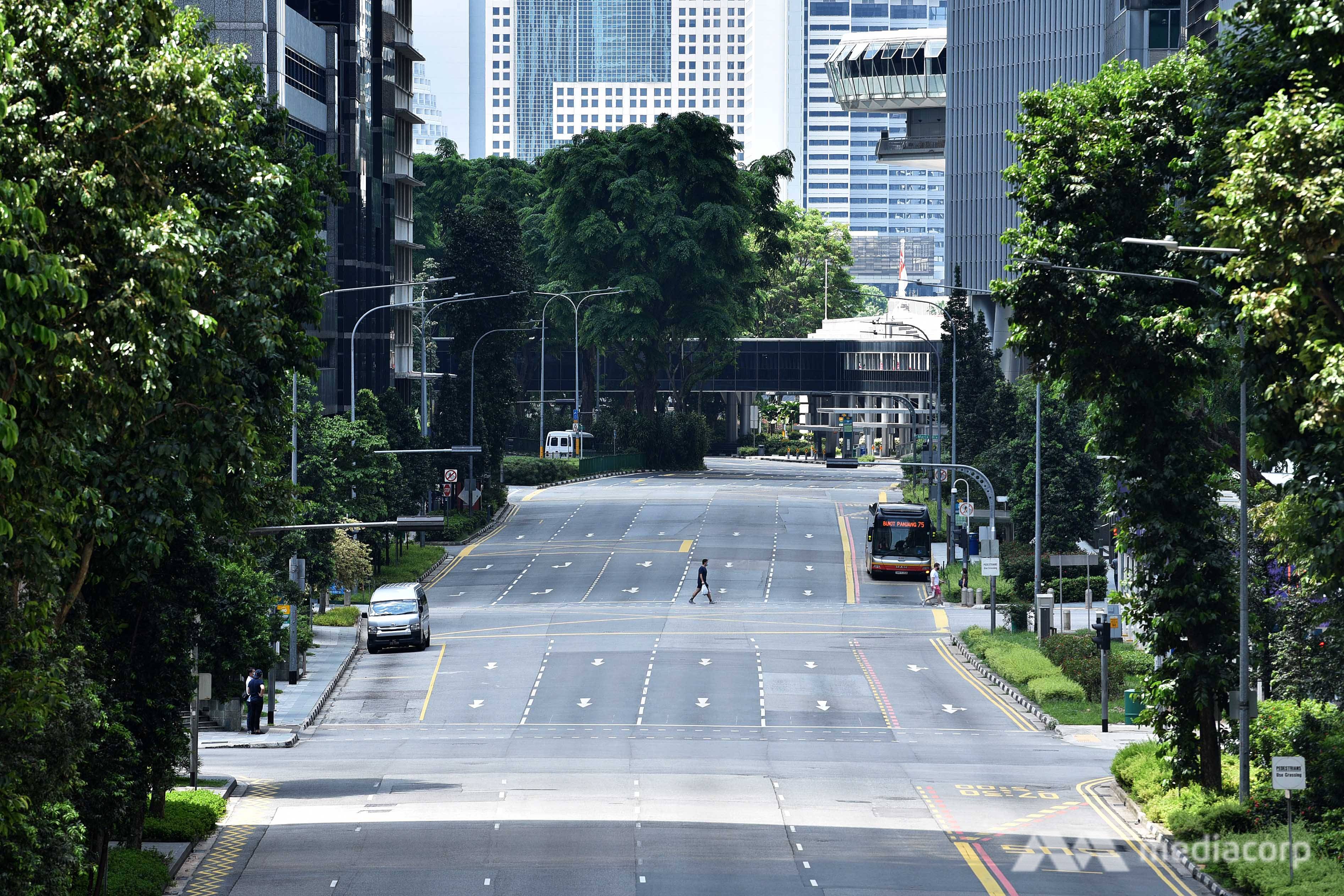
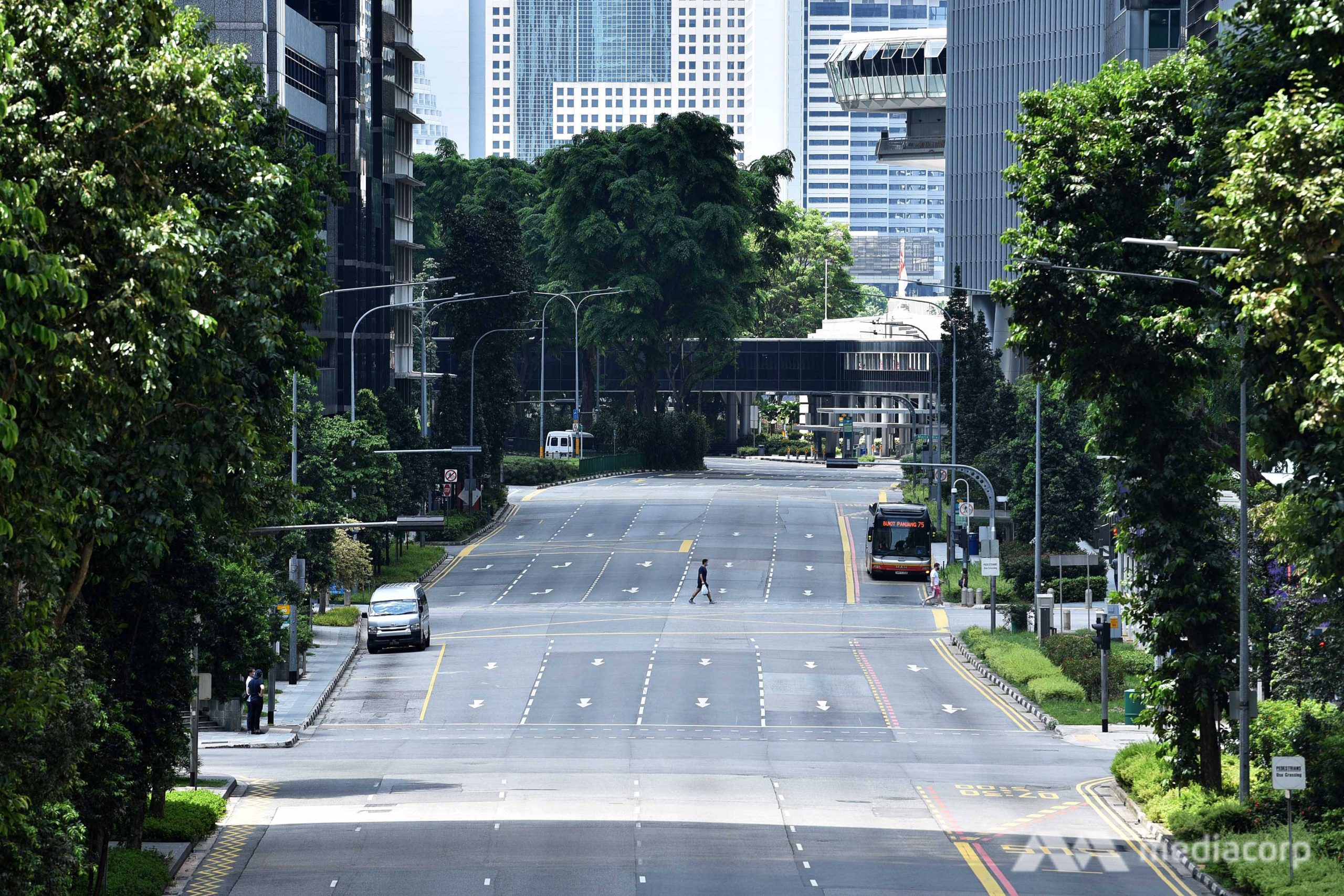
Shenton way empty

An almost deserted Shenton Way, which is situated in the Central Business District, usually sees heavy traffic during the day. (Photo: Jeremy Long)

There was a similar decline in cases of melioidosis (34 to 21), which can be contracted when someone comes in contact with contaminated water and soil. According to SingHealth, melioidosis can be associated with severe infections, with mortality rates as high as 40 per cent in some cases. 

There have also been drastic decreases in the weekly number of people seeking treatment at polyclinics for more common infectious diseases, such as acute diarrhoea, acute conjunctivitis and chickenpox.

In the week ending May 30 – a day before the end of the circuit breaker – the number of people treated at polyclinics for acute diarrhoea fell from 637 last year to just 141.

The trend has continued into Phase 2: In the week ending Aug 8, only 336 people this year sought treatment for acute diarrhoea compared to the 696 in the same week last year.

There were similar trends for instances of acute conjunctivitis, chickenpox and hand, foot and mouth disease. 

READ: From dawn to dusk, Singapore as it exits its COVID-19 circuit breaker: In pictures

INCREASED AWARENESS ABOUT HYGIENE

Associate Professor Richard Sugrue, from the Nanyang Technological University (NTU)’s School of Biological Sciences, told CNA he was not surprised at the fall in the number of airborne infectious diseases. 

“Airborne agents can be very infectious and easily spread between people that come in close contact,” he said. 

“The isolation of individuals at home during the circuit breaker had largely restricted the movement of people. 

“This in effect impedes the transmission process of these biological agents by reducing number of occasions when an individual can potentially come into contact with an infected person.

“You only have to think of a school where children intermingle and transmission of respiratory-borne agents can occur.”

An “additional effect” of the circuit breaker is the increased awareness about the spread of infectious diseases in the community. 

People may now be “more aware” of the importance of maintaining good personal hygiene, leading to reduced instances of virus transmission, Assoc Prof Sugrue said.

READ: Commentary: The circuit breaker was a time many of us want to forget. Let’s make it count

File photo hand sanitising

A person using hand sanitiser. (Photo: Marcus Mark Ramos)

Dr Leong Hoe Nam, an infectious diseases physician at Mount Elizabeth Hospital, said people masking up also helped prevent the transmission of droplet-borne diseases.

“No meeting, no transmission,” he added.

National University of Singapore’s (NUS) Professor Paul Tambyah said it was “hard” to attribute changes in the numbers to the circuit breaker.

“There are many facets of the lockdown including cutbacks in some screening services, which might have had an impact on HIV detection rates, for example,” he told CNA.

READ: The Big Read: Life after circuit breaker – retail, entertainment and leisure won’t be the same again

But he said there may be “direct impact”, such as fewer cases of respiratory infections and diarrhoea due to social isolation. 

“There also may be other indirect effects such as reduced testing for some viruses due to the need to conserve swabs and reagents for (COVID-19),” he said.

This means there may not have been “an actual drop” in the number of cases, but rather, a reduction in case detection.

Singapore Phase 2 Takashimaya customers 3

Members of the public queue to enter Ngee Ann City in Orchard on Jun 19, the first day the shopping centre was allowed to reopen after Singapore’s circuit breaker. (Photo: Jeremy Long)

INCREASE IN PHASE 2?

With the country now in Phase 2, the experts believe the easing of measures and the increased contact and interaction between people might lead to more infections.

“This is not something to be alarmed about since this is actually the normal situation in the community,” explained Assoc Prof Sugrue.

“It can actually lead to increased herd immunity in a population. It just means that people that are at risk of developing severe symptoms from, example, COVID-19 or influenza virus infection, should be monitored.”

Dr Leong said the “creep up will be slow” because people are still wearing masks when they are out and about.

READ: ‘We are not returning to a pre-COVID-19 world’: Chan Chun Sing maps out ‘new path’ for Singapore

RISE IN DENGUE CASES

Not all infectious diseases have been slowed by the coronavirus measures. There has been a surge in dengue cases, with Singapore in the midst of its worst dengue outbreak, with 23,500 cases as of Aug 8.

In all, 20 people have died from dengue this year as of Aug 2, said the MOH. The youngest victim was 25 years old, while the oldest was 92 years old. 

Eighteen of the victims had worked or lived in active dengue clusters. 

Dengue Fogging Geylang 2

File photo of a fogging operation in Geylang. (Photo: Try Sutrisno Foo)

During the circuit breaker period, non-essential workplaces and schools were shuttered and people were told to stay home. 

This could have led to more residential mosquito breeding and more opportunities for “blood meals”, said Associate Professor Luo Dahai from NTU’s Lee Kong Chian School of Medicine to CNA previously.

The Aedes aegypti mosquito, which spreads the dengue virus, dwells mainly in indoor spaces and bites primarily during the day.

Assoc Prof Sugrue said there might now be a reduction in the weekly number of dengue cases, with things “starting to return to normal”.

But this decline will depend on other environmental factors. If there is increased rainfall, it could lead to an increase in the number of stagnant pools of water that collect after rain, he added.

Mount Elizabeth Hospital’s Dr Leong said the number of dengue cases “will still be massive”, because a lot of people are still working from home, and that the number of people returning to work places is “not enough to make a difference”.

Prof Tambyah said the number of people going to work is not going to reduce dengue incidence.

“The Aedes mosquito bites at dusk and anecdotally many of us are bitten in the evenings on the way back from work or the supermarket,” he added. 

BOOKMARK THIS: Our comprehensive coverage of the coronavirus outbreak and its developments

Download our app or subscribe to our Telegram channel for the latest updates on the coronavirus outbreak: https://cna.asia/telegram

Source link

Man accuses MOE ad of copying Pink Floyd album cover, retracts after netizens explain prisms

0

[ad_1]

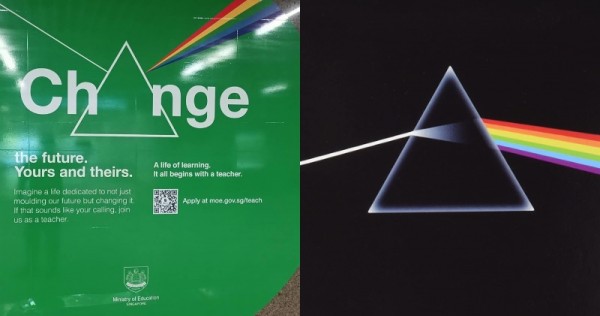
Upset with a Ministry of Education (MOE) outdoor advertisement, a man took to Facebook to complain about how it supposedly infringed the copyright of an iconic album cover by legendary psych-pop group Pink Floyd. 

But he quickly took down the accusation after netizens pointed out that you can’t plagiarise a common scientific diagram of light diffracting through a prism. 

The man had posted earlier today (Aug 13) that the poster he saw was a “lazy attempt at an engaging advertisement” due to similarities with Pink Floyd’s Dark Side of the Moon album cover. 

The ad itself promoted the career prospects of being a teacher, a role that could “change the future”. The word ‘change’ is stylised with a graphic of a triangular prism where diffraction occurs, a familiar illustration of white light breaking up into its spectral colours. 

[ad_2]

Source link

Yusof Ishak turned into God of Fortune? Prayer offerings store says they meant no disrespect

0

[ad_1]

It looks like the seventh lunar month is off to a less than auspicious start for one prayer offerings company.

Following backlash from netizens, Goldpaper.sg, an online store selling prayer offerings and supplies, told Lianhe Wanbao it has ceased the distribution of its controversial vouchers appearing to portray former Singapore president Yusof Ishak as the Chinese God of Wealth since yesterday (Aug 12).

The store’s employees had reportedly been spotted handing out the vouchers at Waterway Point on Monday (Aug 10), dressed up as mythical figures including Chinese vampires and guards of the underworld Heibai Wuchang.
PHOTO: Lianhe WanbaoThe voucher, which contained a promotional code for use with the store’s seventh lunar month packages, resembled a $10 bill, save for several key differences.

Instead of “Singapore”, the store’s vouchers featured the non-existent country “Xingapore”.

[ad_2]

Source link

'Killer litter' at Punggol block: 2 men investigated for making false report

0

[ad_1]

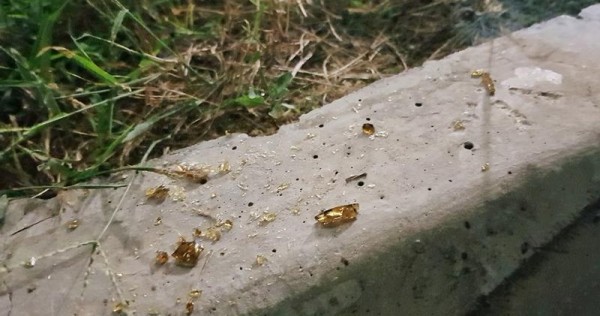
What many had thought to be a case of killer litter at a Punggol block on Tuesday (Aug 11) evening turned out to be untrue.

The police told AsiaOne that they are investigating two men who are believed to have lodged a false report.

The 25-year-old man had claimed that his friend, a 35-year-old man, was a victim of high-rise littering. He alleged that his friend was injured by a glass bottle thrown from Blk 227A Sumang Lane.

[ad_2]

Source link

Singapore and Japan agree to resume essential business travel; officials tasked to finalise agreement by September: MFA

0

SINGAPORE: Singapore and Japan have agreed to resume essential business travel, with an agreement expected to be finalised by early September, the two countries said on Thursday (Aug 13).

In a joint statement issued by the Ministry of Foreign Affairs (MFA), Minister for Foreign Affairs Vivian Balakrishnan and his Japanese counterpart Motegi Toshimitsu said they welcomed “ongoing negotiations” on the setting up of a special “Residence Track” as early as September this year.

This will provide for a “special quota of cross-border travel by business executives and business professionals (work pass holders)” with the necessary public health safeguards in place, including a 14-day stay home notice upon arrival in the respective countries, said the statement.

READ: Japan’s foreign minister to make official visit to Singapore from Aug 12

The ministers also agreed on the “major points” of the Business Track (Reciprocal Green Lane), in which short-term business travellers would be subject to a controlled itinerary for the first 14 days of their trip with necessary safeguards in place, added the statement.

“They tasked officials to finalise the agreement by early September 2020, with Singapore being amongst one of the first countries with which Japan will begin this exchange of business travellers,” it said.

Singapore's Foreign Affairs Minister Vivian Balakrishnan meets Japan's Motegi Toshimitsu

Singapore’s Foreign Affairs Minister Vivian Balakrishnan meets his Japanese counterpart Motegi Toshimitsu on Aug 13, 2020. (Photo: Ministry of Communications and Information of Singapore)

Singapore had announced last month that it would “work closely” with Japan to make progress on resuming essential travel between the two countries, after Japan said it would proceed with discussions on the resumption of essential travel with 12 places, including Singapore.

READ: Singapore will ‘work closely’ with Japan to make progress on resuming essential travel: MFA

Mr Motegi is in Singapore for an official visit from Aug 12 to Aug 14, his first official visit to Singapore as foreign minister. 

He called on and was hosted to lunch by Dr Balakrishnan on Thursday. He also paid a courtesy call to Prime Minister Lee Hsien Loong at the Istana.

Mr Motegi and Dr Balakrishnan also discussed regional and international developments, said MFA in a separate statement. 

They agreed on the importance of ensuring supply chain connectivity, modernising international trade rules for the digital economy, and forging partnerships to promote “vaccine multilateralism” amid the COVID-19 pandemic.

Singapore PM Lee Hsien Loong meets Japan Foreign Minister Motegi Toshimitsu

Singapore Prime Minister Lee Hsien Loong meeting Japan Foreign Minister Motegi Toshimitsu on Aug 13, 2020. (Photo: Facebook/Lee Hsien Loong)

Meanwhile Mr Lee and Mr Motegi reaffirmed the “close and longstanding relations between Singapore and Japan”, and exchanged views on a range of regional and international issues, said MFA.

In a Facebook post on Thursday evening, Mr Lee said that Singapore and Japan were proceeding cautiously with the resumption of essential travel between the two countries.

“Japan is one of the countries with whom we are discussing setting up reciprocal ‘green lanes’ to resume essential travel with the necessary safety precautions,” said the Prime Minister. “We are proceeding cautiously, as COVID-19 is still very much a threat.”

“But this will be an important step forward in restoring connectivity between countries, and adjusting to life with COVID-19.”

Separately, Dr Balakrishnan said in a Facebook post that resuming essential business travel between the two countries was a “critical aspect” to restarting both countries’ economies in a “timely and safe manner”.

Mr Lee and Mr Motegi also discussed how Singapore and Japan can work together to promote greater economic integration in the region through the Comprehensive and Progressive Agreement for Trans-Pacific Partnership.

Mr Lee welcomed Japan’s continued engagement with ASEAN, and agreed that both countries could further strengthen cooperation amid the COVID-19 pandemic, such as the facilitation of safe cross-border essential business travel for both sides, said MFA.

BOOKMARK THIS: Our comprehensive coverage of the coronavirus outbreak and its developments

Download our app or subscribe to our Telegram channel for the latest updates on the COVID-19 outbreak: https://cna.asia/telegram

Source link

2 COVID-19 cases visited HomeTeamNS Khatib on 5 occasions during their infectious period

0

SINGAPORE: Cleaning and disinfection at HomeTeamNS Khatib has been stepped up after two individuals who tested positive for COVID-19 visited the newly opened clubhouse, HomeTeamNS told CNA on Thursday (Aug 13).

On Wednesday, HomeTeamNS Khatib was among the new locations added to the Health Ministry’s (MOH) list of public places visited by COVID-19 community cases during their infectious period.

The two COVID-19 cases who visited HomeTeamNS Khatib, located at 2 Yishun Walk, did so on five occasions over four days between Jul 31 and Aug 3.

READ: HomeTeamNS Khatib, Warren Golf and Country Club among new locations visited by COVID-19 cases while infectious

Two of those occasions, in the afternoon and evening of Aug 1, involved visits to Suki-Suki Thai Hot Pot and Orchid Live Seafood restaurants in the clubhouse.

The visitors, who are currently in hospital, were asymptomatic at the time of their visit, HomeTeamNS said.

MAP: All the places that COVID-19 community cases visited while they were infectious

HomeTeamNS was contacted by MOH on Tuesday and is currently working with the ministry on contact tracing, it said.

“None of our staff has been affected, but we are closely monitoring their health for 14 days from the date of contact. Staff members with fever or symptoms are advised to see a doctor immediately,” HomeTeamNS added.

HomeTeamNS Khatib 2

Affected areas in HomeTeam NS Khatib were disinfected after COVID-19 cases visited the clubhouse during their infectious period in August 2020. (Photo: Facebook/HomeTeamNS)

Affected outlets and all common areas at the HomeTeamNS Khatib clubhouse were thoroughly disinfected on Wednesday by a National Environment Agency-appointed cleaning agency, said HomeTeamNS.

“The clubhouse has also stepped up its cleaning and disinfection at all common and high touch areas.”

HomeTeamNS Khatib opened to the public on Aug 1, and is the newest of six HomeTeamNS clubhouses catering to operationally ready national servicemen (NSmen) from the Singapore Police Force and the Singapore Civil Defence Force.

It spans 1.5 hectares and is designed to serve 85,000 members.

BOOKMARK THIS: Our comprehensive coverage of the coronavirus outbreak and its developments

Download our app or subscribe to our Telegram channel for the latest updates on the coronavirus outbreak: https://cna.asia/telegram

Source link

Judgment reserved on Law Society's application to disbar Lee Suet Fern over role in Lee Kuan Yew's will

0

[ad_1]

SINGAPORE – Was Mrs Lee Suet Fern playing the role of lawyer or daughter-in-law in handling her father-in-law Lee Kuan Yew’s will in 2013?

This was the question at the centre of arguments made by lawyers representing the Law Society and Mrs Lee on Thursday (Aug 13) in the disciplinary hearing before the Court of Three Judges.

The Law Society argued that Mrs Lee had acted as Mr Lee’s lawyer, having received instructions from him and acted on them, and also cutting out his usual lawyer, Ms Kwa Kim Li, in the preparation and execution of the will.

In doing so, she had taken on the responsibilities of his lawyer, and so an implied retainer arose, said the society’s lawyer, Ms Koh Swee Yen from WongPartnership.

Also, there was clear conflict of interest, as her husband, Mr Lee Hsien Yang, the younger son of Mr Lee and brother of Prime Minister Lee Hsien Loong, was a beneficiary of the will, she added.

[ad_2]

Source link

Letter from the Editor: You can now read more news and faster on AsiaOne

0

[ad_1]

Are you a fast and voracious reader?

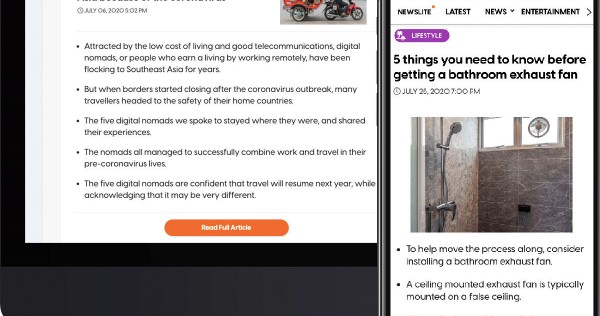
AsiaOne’s newsroom and engineers have together created a new feature that offers you all our stories at a glance, in an easy-to-digest format.

Newslite is a one-stop feed that serves you not only the headlines but the key points from every article.

In today’s connected world, there is an information overload that traditional consumption habits cannot maximise.

Newslite attempts to bridge what you need to know with your limited amount of time.

No more spending precious minutes on a long story.

No more opening multiple pages.

No more clickbaits.

You don’t have to know speed reading or other fanciful techniques to browse Newslite – it makes you a speed reader by default.

If you wish, you can filter the newsfeed by categories.

If you want to know more, the full article is just a click away.

Furthermore, what makes Newslite more revolutionary is the artificial intelligence behind it.

[ad_2]

Source link

Foodpanda collaborates with ST Engineering on drone food delivery trials

0

SINGAPORE: Can chickens fly? On Thursday, five packets of ayam penyet did, when food delivery service Foodpanda used a drone to deliver the popular fried chicken dish from the Marina South Pier to a ship located 3km offshore. 

It was a welcome treat for seafarers aboard the POSH Bawean, a PACC Offshore Services Holding (POSH) vessel designated to support crew changes for cargo ships calling in Singapore during the COVID-19 pandemic. 

This comes after Foodpanda signed an agreement with Singapore Technologies (ST) Engineering in March to use DroNet – ST Engineering’s drone network system –  to test the delivery of “light food items” over distances of up to 3km. 

The collaboration, dubbed PandaFly, aims to eventually see drones picking up and delivering orders to and from designated collection points islandwide, with one of Foodpanda’s 12,000 delivery riders completing the last mile of the delivery. 

This is not the first time Foodpanda has experimented with the use of drones for deliveries – the Berlin-based food delivery giant first did so in Singapore in 2015. 

READ: Uber eyes drones for food delivery, unveils new autonomous car

Food delivery via drone is taking flight, with companies such as Uber and KFC experimenting with the use of the devices over the past year. 

“The fundamental desire in doing delivery by drone for us is to increase the choice for customers,” said Foodpanda Singapore managing director Luc Andreani. 

He noted that while delivering food from the city – where many eateries are located – to residents in the heartlands by motorcycle is possible, it would take too long, which would in turn affect the quality of the food. 

PandaFly would allow Foodpanda to do islandwide deliveries without sacrificing that, he added. 

While the initial technological investment would be pricey, Mr Andreani said customers will not have to contend with “crazy high delivery fees”. 

“The idea would be to keep delivery fees stable so customers don’t feel any difference,” he said, adding that economies of scale meant that the greater use of drones would eventually translate to lower prices. 

He did not specify when drone food deliveries would be made more widely available.

“As with any big disruptive innovation, in the very early days it’s more like an investment for us, with the objective of also making it economically viable in the future,” said Mr Andreani. 

Foodpanda ST engineering drone food deliveries

ST Engineering’s DrN-15L drone was used to deliver five packets of ayam penyet from the Marina South Pier to a vessel located 3km offshore. (Photo: Hanidah Amin) 

READ: Police to use autonomous drones to patrol industrial estates

In February, ST Engineering announced it was collaborating with maritime group Wilhelmsen Ships Service on the development and testing of shore-to-ship drone deliveries in Singapore, which would allow the devices to be operated beyond the pilot’s visual line of sight.

The company’s DrN-15L  drone, which was used on Thursday, is able to lift up to 2kg, and fly at speeds of up to 15 metres per second, with a delivery radius of up to 5km. 

Mr Teong Soo Soon, ST Engineering’s UAV (unmanned aerial vehicle) business vice president said he expects to eventually see a network of pre-approved flight routes, where drones can be safely used for deliveries. 

The use of drones would allow for deliveries to fly directly from one point to another in a straight line, bypassing traffic and other obstacles, allowing for speedier deliveries, he said. 

While it is unlikely that drones will do deliveries directly to homes, Mr Teong expects that there will soon be a network of collection points where these drone can take off and land from. 

READ: Singapore to launch maritime drone zone, mulls mandatory registration of drones

“I think it’s a realistic expectation of what might come in the next few years,” he said. 

Mr Danny Chong, general manager for POSH’s Centres of Excellence (Innovation), said the usage of drones is an area that the company is “actively studying” as part of its innovation roadmap. 

“There is still much work to be done to fully enable shore-to-ship delivery over longer haul distances,” he said.

“POSH will continue to work with suitable partners so as to bring a taste of home to our seafarers onboard in time to come.” 

Source link