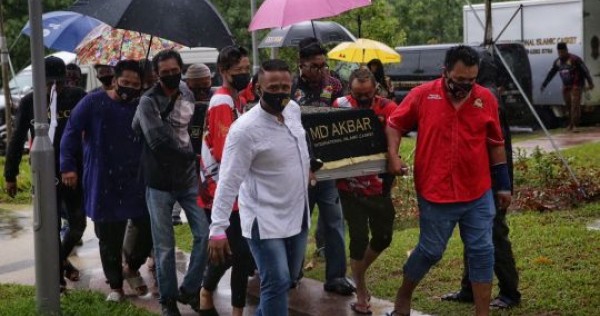
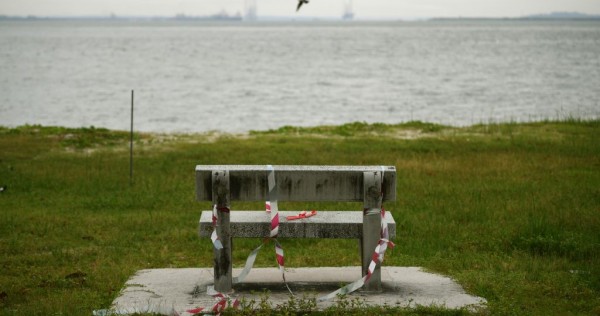
SINGAPORE – The family of the boy who drowned at the Changi Beach Park on Saturday (Aug 22) did not know he had gone to the beach, a relative told The Sunday Times on Sunday (Aug 23) morning.
They had thought that 14-year-old Putera Muhammad Indra Shazrine Suzaini had gone to study with a group of friends and were shocked when they got the call informing them that the Secondary 2 boy had drowned, said the boy’s stepgranduncle.
“He was a very quiet boy, didn’t like to talk. But he was very good to his mother and father,” transport company owner Mr Noor Azman Marwi, 56, told ST at the Singapore General Hospital morgue.
“I saw him during gatherings or whenever I visited their home,” he said, adding that Putera would sometimes tag along with his stepfather for events organised by a motorbike charity club, in which both men are members.
According to eyewitnesses who posted online about the incident, Putera was part of a group of about six boys who had gone fishing and swimming at Changi Beach Park.
Condolences poured in online for Putera’s mother who goes by the Facebook moniker Lynn Boyan Putra.
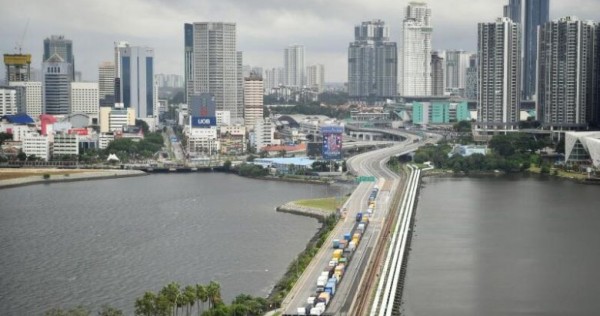
Singapore on Friday moved to further relax coronavirus travel restrictions for incoming travellers from “low-risk” territories such as mainland China , Taiwan and Malaysia , with senior officials adding that the city state was moving towards allowing full fledged travel to Brunei and New Zealand .
The move came as the government said it would look for ways to revive the tourism industry, one of the hardest-hit sectors, as the trade reliant economy heads for a record full-year contraction.
Education minister Lawrence Wong, who co-chairs a multi-ministerial task force that deals with the coronavirus, said travellers from “low-risk” regions – which also include Vietnam , Macau and Australia (excluding the state of Victoria) – would now serve a seven-day stay-home notice, rather than the 14-days required for all other travellers. They would still be required to take a coronavirus test before the end of their isolation period, he said.
Travel restrictions for Brunei and New Zealand would be relaxed even further.
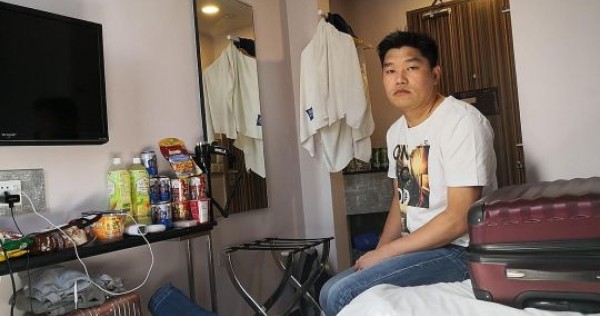
Salesman Eddie Chow had faced an agonising choice back in March when borders were closing – stay in Singapore and protect his much-needed job or return to Malaysia to see his dying dad.
When it came to the crunch, he found he really had only one option: “Many of my friends chose to stay in Singapore so they could continue with their work. But I decided to return home to my dying father. I wanted to walk his last journey with him.”
Two weeks after Malaysia shut its border on March 18, Mr Chow’s 78-year-old father died.
It was the low point in what had been a distressing period after the doctor had told Mr Chow, 39, that his father’s cancer was at the end stage and he was nearing death.
While it was hard enough coping with the loss of his father during the pandemic, Mr Chow was also overcome by fear of losing his job in Singapore. There was a car loan and a mortgage to service and two young children to provide for.
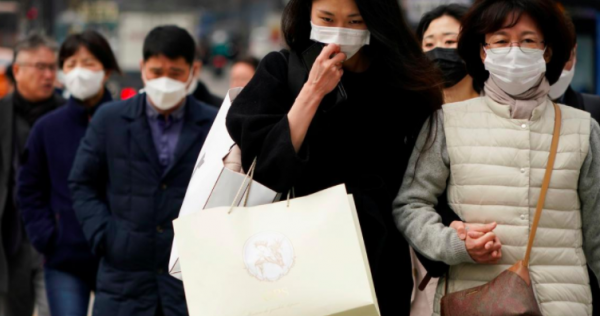
SEOUL (REUTERS) – South Korea reported its highest daily rise in novel coronavirus cases since early March on Sunday (Aug 23), as outbreaks continued to spread from a Seoul church and from political demonstrations its members had attended.
The Korea Centers for Disease Control and Prevention (KCDC) reported 397 new infections as of midnight Saturday, up from the previous day’s 332 and marking more than a week of daily three-digit rises.
That brings South Korea’s total to 17,399 infections of the new coronavirus with 309 Covid-19 deaths, it said.
From Sunday, the government imposed second-tier social-distancing rules in areas outside Seoul, banning in-person church meetings and closing nightclubs, buffets and cyber cafes.
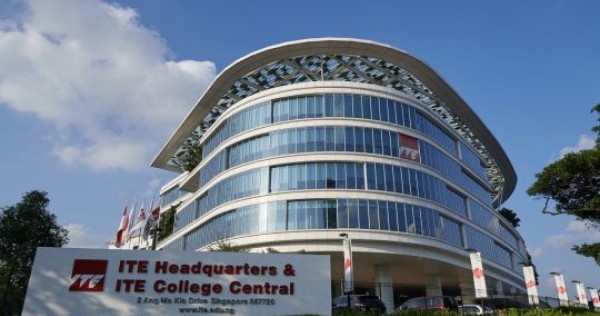
SINGAPORE – A 56-year-old Singaporean woman who works at the Institute of Technical Education (ITE) College Central was one of two community Covid-19 cases confirmed by the Ministry of Health (MOH) on Saturday (Aug 22).
Two other cases were linked to Sungei Tengah Lodge to form a new cluster. One of Singapore’s largest dormitory, it had been closed as a cluster a month ago.
The 56-year-old woman tested positive on Friday and had gone to work after the onset of symptoms on Wednesday.
She was detected under MOH’s enhanced community testing to test all individuals aged 13 and above who are diagnosed with acute respiratory infection (ARI) at first presentation to a doctor.
The other community case, also unlinked, was a 63-year-old Singaporean woman, who had been tested after being admitted to a hospital for another medical condition. She exhibited symptoms on Thursday and tested positive on Friday.
Epidemiological investigations of the cases are in progress, MOH said, adding that all the identified close contacts of the cases have been isolated and placed on quarantine.
SINGAPORE: If your home catches fire, do you have a collapsible ladder to help your family climb into your neighbour’s home?
As a prepper, 50-year-old Samuel is ready for anything, including the possibility that his family would be unable to escape through their main door.
In this case, his wife, two sons and mother-in-law would have to don safety harnesses, hook their ladder onto the window ledge and clamber to the unit below their fifth-storey flat.
Known as “doomsday preppers” in popular culture, this group of survivalists are infamous for some of their extreme tendencies, such as building underground bunkers to prepare for a zombie apocalypse. There is even a National Geographic reality series on them.
In Singapore, however, preppers like Samuel pride themselves on being ready for other sorts of crises, such as accidents, haze, fires, blackouts and pandemics. To caricature preppers is to misconceive his methodical mindset.
Samuel teaching his son how to wear a harness, in case they have to scale their collapsible ladder.
For example, when he learned in February that COVID-19 was a respiratory disease, he bought two oxygen tanks to prevent a situation where his family test positive and need oxygen while waiting for a doctor.
Many preppers are also trained in first aid. And those whom CNA Insider spoke to are involved in some degree of humanitarian work, not least because a prepper’s skills and inventory come in handy during disasters.
It is a community that generally keeps their prepping secret, however.
This desire to keep a low profile or remain anonymous, as Samuel requested, is the preppers’ “grey man” concept — a form of self-preservation so other people do not flock to them when, in prepping terms, Shit Hits The Fan (SHTF).
METHOD IN THE MADNESS
Samuel turned to prepping during the Severe Acute Respiratory Syndrome (Sars) outbreak in 2003, which he felt unprepared for as he became a father.
“I felt helpless. I started to order stuff online, stocking up on personal protective equipment (PPE). It made me realise I needed to be prepared next time, not only for this but for anything that comes along,” he says.
“Because of my two sons, now I have to be serious about (prepping). It’s not only about me.”
The financial analyst cites “the 10th man” rule from the film World War Z as his North Star. Preppers are the 10th person who would prepare for the worst-case scenario that nine other people do not believe could happen.
This readiness is reflected throughout his three-bedroom condominium. You just need to know where to look.
Samuel’s pantry at home.
His pantry is stocked with canned food and other non-perishables that can last up to two months, as well as about S$600 worth of PPE such as gloves, goggles, masks and at least 500 face shields.
One bottom shelf is lined with empty petrol cans, which he plans to fill with about 10 litres of petrol in case there is restricted access to petrol stations during an emergency.
Behind every door in the house hangs a mini fire extinguisher.
Along the corridor leading to the bedrooms, a smoke detector is stuck to the ceiling with duct tape. This tape also secures the wires of a panel that controls the solar-powered lights in his bathroom, in case of a blackout.
In preparation for the annual haze, every room in the house has a device measuring the level of particulate matter. Anytime the number rises, Samuel closes the windows and room doors, and switches on the air purifier.
As he resides in a red zone for dengue, he has portable mosquito repellent lights throughout the house.
Nestled in his son’s cupboard is one bug-out bag per family member, regularly restocked by Dad.
In an emergency, preppers would grab only their bug-out bag, which contains items to help one survive for about 72 hours: Medication and bandages, ready-to-eat food, collapsible water bottles, a raincoat, personal identification documents and a solar-powered radio-cum-torch-cum-reading light.
Samuel’s bag includes a GPS phone, which his son brought once on an overseas school trip. The phone relies on satellite location to activate the tracking device.
Samuel’s bug-out bag.
In a crisis where his family need to be separated, he and his wife would split up, each taking a son and their respective bug-out bags.
One might think that constantly guarding against emergencies makes Samuel highly strung, but prepping allays his anxiety by allowing him to take care of risks.
“When I travel, I bring along a particular mask that’s like a hood, which allows you to breathe through smoke … It gives me a high level of comfort,” he says. And it costs “little money, like S$50”.
The ability to afford these items, however, is not crucial. Basic prepping, he says, can start with buying an “additional one to two weeks’ worth of food” or immediately replacing a used item on the next grocery run.
Going by his logic, many people are preppers to an extent.
SKILLS AS IMPORTANT AS TOOLS
For others, prepping is more than having a strict inventory or fancy tools.
Ashton Law sees survivalist skills as part of being a prepper. He reckons many Singaporeans become complacent about safety in Singapore and therefore may get into trouble when they go overseas.
Formerly in private security operations, the 34-year-old bushcraft instructor now teaches varied groups — from adults to children as young as five years old — how to use a knife and fire steel to start a fire and how to build a shelter from branches and leaves, among other jungle survival skills.
The freelancer also teaches self-defence skills and parkour, even to his seven-year-old son.
For instance, Law has taught his son an “anti-kidnapping” skill, which his son has thankfully never had to use: The child would wrap his legs around one of the kidnapper’s legs to prevent the person from running.
The child can then scream for help. Not wanting to draw the attention of others, the kidnapper would be likely to release the child.
Self-reliance underscores the skills Law teaches, but he acknowledges that this trait can fall within a “grey area”.
“Being a prepper is almost like being a borderline vigilante. Authorities still believe that if something were to happen, then you should seek help or call a number,” he says.
“As a prepper, we’re supposed to be self-reliant. We’re supposed to have the skills, tools and knowledge to do certain things, so we may not see eye to eye with authorities. We have the mindset: I don’t need your help.”
This psychological aspect of prepping or survivalism is something Forest School advocates through its “alternative education” methods such as unstructured learning, although the school does not consider itself as prepper-centric in nature.
Independence, self-initiated learning and curiosity are what is more important, which overlap with a prepper’s mentality.
“We don’t consider ourselves preppers because preppers prepare for (an event that) may or may not come. For us, it’s about the way of life,” says Forest School volunteer instructor Ben Yang, 32.
“Say a tsunami covers Singapore and you have no access to food. Would you be able to … live off the land? If you (did) your own personal learning journey facilitated by Forest School, I can confidently tell you that … you’d live.”
READY TO LEND A HAND
The roughly 150 members of the preppers’ Meetup community often have complementary ‘specialisations’, like knife skills, bushcraft expertise, and even financial planning skills.
Like many preppers, Michael Lim and his wife, Debbie Lim, are trained in first aid. The couple are volunteers of the Singapore Red Cross, where Michael works as a programme development manager.
The bulk of his work lies in disaster risk reduction, but he is well-prepared for everyday crises with his Every Day Carry (EDC) – a daily version of the bug-out bag.
“My mentor taught us to expect the unexpected (with this analogy): An emergency can happen when it’s 3am and it’s raining,” shares Michael.
He explains that a prepper would pack accordingly for everyday life by remembering that emergencies can happen in the dark, in the rain and when everyone is asleep.
Being ready to respond at a moment’s notice has allowed Michael to render first-aid to a cyclist who got into an accident. He also carries around an emergency blanket for those with hypothermia from being in a state of shock during crises.
As frequent users of the myResponder app, Michael and Debbie attended an incident involving someone with cardiac arrest a few years ago.
“I accepted the call then informed Debbie, who was with our friends at home. When we arrived at the scene, just a block away, we knew that we needed to do CPR. There were seven of us, excluding the medical professionals,” shares Michael.
Being preppers meant the volunteers were able to remain hyper focused – some provided psychological first aid to the family, while others reminded the family about important documents to take to the hospital.
Help doesn’t stop at home for Samuel, who regularly participates in overseas humanitarian aid trips.
He keeps the items for these trips in a storage unit away from home. Among his stash, there are portable water filtration systems, tents, solar-powered torchlights of various sizes and several packets of MREs (Meal, Ready-to-Eat) stored in tubs.
Then there is a box of about 10 body bags, which he purchased online after returning from rendering aid to victims of the 2018 earthquake in Palu, Indonesia. The scene of dead bodies prompted him to consider a possible disaster where he’d need to bury his family members.
As an independent prepper ready with items for disaster relief, Samuel bypasses the bureaucracy that bigger organisations face. He doesn’t have to wait, say, a week for approval; he can hop on a flight to the disaster zone within the next day.
“I’d establish a line of communication and find out what they need first. Normally with an extensive network of friends, you link up with someone, whether it’s an individual or an NGO. Then I start to coordinate things from Singapore,” he shares.
“Once I started humanitarian work, I told myself I want to be the guy who fills the gap. So I cannot wait for a crisis to happen, then start getting what I need. By the time I gather enough funds to buy everything, it would probably be three to four weeks late.”
Doing humanitarian work is Samuel’s constant reminder that disaster can hit anytime – and that his hyper preparedness will come in handy.
“When I see the earthquakes that happened in Lombok and in Palu, many times psychologically having experienced this thing, people don’t go back to their homes that quickly. I think bug-out bags would help in that situation,” he says.
“None of the people (in disaster zones) thought they’d be in that situation. That made me realise the importance of preparing and not taking things for granted. It’s naive to think we’d never be in their situation.
PREPARING FOR NOTHING
Even so, is there really a need to go to such lengths to prepare for the worst?
A brief scan around Samuel’s home and storage unit would make the average Singaporean question why preppers buy items they’d likely never use and whether this extreme preparedness is simply a waste of money.
But his 16-year-old son, Hanson, who also wants to remain anonymous, doesn’t think his father’s actions are illogical.
“He’s doing this for our own good. He just buys a lot of stuff in the storeroom and sometimes he may go overboard, but I usually let it slide because he’s actually expecting the unexpected. It’s a very good mindset to have,” he says.
Importantly, no matter how many hundreds of dollars Samuel has spent on prepping for various disasters and crises, the goal is not to have to use these items at all.
“People say it’s wasted money and stuff like that, but again, that’s the work of a prepper,” he says.
SINGAPORE: Tucked away in a corner of a Housing Board estate in Yishun, bordering a traditional Chinese medicine store, Mr John Ye’s shop seems fairly nondescript from afar.
But take a closer look and you’ll see a large tank of ants outside. Mr Ye stands ready to share his wealth of knowledge about the insects with any curious passers-by.
Just Ants is the first physical ant shop in Singapore as far as he knows, said the 41-year-old, adding that the number of ant enthusiasts here is growing.
“We have about 30 to 35 species of ants,” said Mr Ye, ashe showed CNA around.
At least 10 tanks of varying sizes line the outside of his shop, each filled with a different colony of ants. They range from the most common Carpenter Ants to the invasive Anoplolepis gracilipes – colloquially known as Yellow Crazy Ants.
Mr Ye started his ant shop as a way to share his passion for ants with other people. (Photo: Gaya Chandramohan)
A range of formicariums – small vivariums used to raise ants – stock the shelves at the back of his store.
They include small test-tubes holding the smallest colonies. The larger set-ups provide creature comforts like tunnels and an “outworld” where ants go to forage and hunt for food.
A starter kit for the beginner ant hobbyist involves only a test tube set-up, with a handful of ants. (Photo: Gaya Chandramohan)
A starter test-tube kit for a beginner ant hobbyist could go for about S$12, while an established colony of 20 to 30 ants would sell for S$20. Rare ants, on the other hand, can go for up to S$50 to S$60, Mr Ye said.
While some might bug out at the idea of keeping ants, Mr Ye’s love for the insects prompted him to leave his previous job of distributing wholesale electronics to set up shop early last year.
“It started from a hobby, a small hobby,” he told CNA. “And then when I actually learned more about ants, I was mind-blown. I ventured deeper and deeper. So I thought to myself, why not start an ant shop in Singapore?”
Mr Ye’s passion for ant-keeping is palpable.
Framed up in his shop is a poem he wrote about ants. “Why keep ants they say. They are not entirely pests I say,” it read. “Ant keeping can be a joy. A lot more fun than that boring toy.”
Ant-related religious verses decorate the walls, while a giant ant plush toy sits on top of a glass cabinet.
Mr Ye wrote a poem about ants, which he keeps framed up in his shop. (Photo: Gaya Chandramohan)
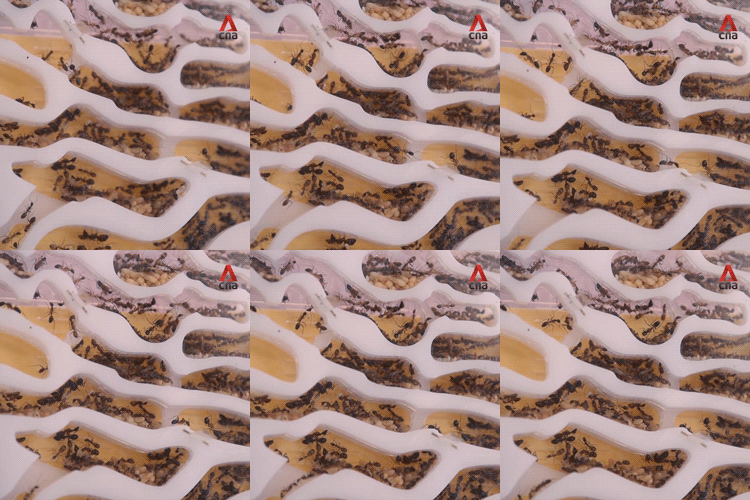
Then there is the display tank holding a one-and-a-half-year-old mature colony which Mr Ye uses for show-and-tell. Inside, tens of thousands of ants crawl over the soil base, like scattered lines of marching troops.
“They are a very ferocious species,” he said. “Although they are very small, there are up to seven sizes. The queen is about 2cm. This is what a nest would look like in the wild, very simple in soil.”
The ants in this tank can grow to a population of about 10,000 to 20,000 in about a year, he added.
“Whatever’s in their path they will take down. It doesn’t matter how big you are – even if it’s a big lizard, they got a strategy to take down the enemy,” he said.
HOW IT ALL STARTED
Mr Ye said his interest in ants started “randomly” in 2017.
“I was watching some videos online. In Singapore it’s fairly new, but in Canada, the United States, it’s quite a hobby. So there’s a very popular ant channel in Canada – he’s also a comedian – Mikey Bustos.
“He started the trend back then, and he did a storyline for each ant colony. So every time you will (be like) – wah, what’s the second episode like?”
A few months later, Mr Ye found himself hunting for ants to start his own colony. But it was only early last year when he decided to up the ante to open his shop.
Just Ants was previously at Woodlands before moving to Jurong East. Mr Ye thinks the current shop at Yishun Central could be their “forever home”.
The reception among customers is “getting better”, he said. “We have more curious people – not ant-keepers – but (they’re) curious as to what we are doing.”
While some have the misconception that he is selling ants as feed or that he is selling ant eggs, Mr Ye is unfazed.
“I will tune my frequency to them (to explain),” he said, speaking in English, Mandarin or dialect depending on the customer.
Before COVID-19, they were “very well-received”, he said, with schools as well as the Singapore Science Centre approaching him to talk about ants.
There are repeat customers who will come back to look for new formicarium or stock up on feed, said Mr Ye. He also runs an “ant hotel” where he will care for the colonies when their owners are away.
“We even have an uncle (who started with us). He’s 79-years-old. He bought a few colonies and he said he will spend hours observing them, taking pictures … He’s very cute because he will keep asking me, ‘you have any new ants?’ I say, ‘no more, all you have already’,” he said.
Mr Ye holds a formicarium, which is used to house ants. (Photo: Gaya Chandramohan)
But things have not always been smooth-sailing. Friends and relatives doubted him at first, many of them wondering if he was “nuts”. When he first started his hobby, he said his wife threatened to spray his ants with “Baygon” if they escape their enclosures.
Mr Ye was also initially worried about turning a profit.
“I know it will not be very profitable like a full-time job as in the workforce, but as time goes by, we thought of, well, passion would be ultimately over profit,” he said. “Of course we are not earning as much (as) back then in the workforce, but slowly we found really little happiness in what we’re doing.”
‘IT’S LIKE LOOKING AFTER A PET FISH OR HAMSTER’
A lot goes into running an ant shop. Not only does Mr Ye open every day from 12pm to 8pm, except for public holidays, he also has to ensure a steady supply of ants for potential customers.
He sometimes finds his ants from the wild, where hundreds of them will be flying around lamp-posts after the rain. He will then harvest as many ants as he can to ensure that he captures queens which have mated successfully.
Other times, he will exchange ants with fellow hobbyists.
The Polyrhachis Beccam, or Golden Ants, is a rare species. (Photo: Gaya Chandramohan)
One queen ant is enough to start a colony as they only need to mate once to produce eggs for the rest of its lifespan, Mr Ye explained.
If you are putting out feelers about starting a new hobby, Mr Ye said it is relatively “low-maintenance” for those starting out with one colony, although it comes with responsibilities. These include feeding them and maintaining the humidity of the formicarium.
“It’s like looking after a pet fish or hamster. They have requirements,” he said.
Each ant has its own characteristic – some are friendly, some are aggressive – and so he provides a care sheet for each species of ants that he sells.
Mr Ye hopes to own more 100 species one day, including the Dinomyrmex gigas, the biggest ant in Southeast Asia which is native to Singapore.
Some species of ants Mr Ye has for sale include the Carpenter Ants, Yellow Crazy Ants, Golden Ants and the Asian Bullet Ant. (Photo: Gaya Chandramohan)
“It’s very therapeutic. My favourite part about keeping ants will be just looking at them, gazing at them … It calms my mind after a hard day at work. They really soothe my stress,” said Mr Ye.
“They are so adorable crawling around, grooming themselves, it just tickles me. Doing their daily stuff, their strategies, the characteristics, how they organise themselves so uniquely,” he added.
“It’s different every time I look at them. Every scene, every chapter of their daily routine is totally different.”
SINGAPORE: Singapore’s two main ports, PSA Container and Jurong Port, are living labs for green technologies.
Jurong Port boasts of a 9.65 megawatt-peak solar photovoltaic system. Mounted on warehouse rooftops, it is the world’s largest solar installation in a port. Part of the electricity generated is used for port operations, while the rest is supplied to the national power grid.
The port is also testing an artificial intelligence (AI)-driven Smart Multi-Energy System, including a direct-current warehouse microgrid system, which will further reduce its carbon footprint.
Jurong Port is also home to the world’s first green berths – made of recycled concrete from existing berths and yards.
Furthermore, PSA has started to electrify and automate its cranes and ground vehicles. Once complete, the port operator will have the world’s largest fleet of automated guided vehicles powered by batteries instead of diesel.
The COVID-19 crisis has led to a lull in shipping activity presenting an opportunity for the maritime sector to accelerate decarbonisation efforts and build a greener supply chain.
Globally, the maritime sector accounts for 2 to 3 per cent of greenhouse gas emissions. Recognising its significant environmental impact, the International Maritime Organization (IMO) has ratified greenhouse gas reduction targets: 30 per cent by 2030 and 50 per cent by 2050 from 2008 levels.
CLEANER HARBOUR CRAFTS
Over the past decade, the global maritime sector has been making efforts to reduce the carbon footprint of vessels. New ships must comply with the IMO’s Energy Efficiency Design Index – a set of regulations for the vessel to be designed and built for maximum energy efficiency since 2011.
The IMO also implemented the Ship Energy Efficiency Management Programme that same year, which provides a framework for operating ships and fleets to improve energy efficiency. These programmes develop guidelines to drive down energy consumption to a minimum for each vessel type.
These energy efficiency principles can be also applied to Singapore’s 2,300 licensed harbour crafts that provide goods and services to ships calling at ports.
File photo of Keppel Harbour.
Seven in 10 harbour crafts are motorised, ranging from ferries, tugs, bunkers, and launches. Most, if not all, are burning marine diesel, contributing to our national carbon footprint.
The opportunity to decarbonise these vessels through electrification or the use of sustainable biofuels is significant. The local marine environment will also benefit from reduced air and noise pollution.
The Maritime and Port Authority of Singapore (MPA) has also worked towards the development of liquefied natural gas (LNG)-fuelled tugs, which are now operational and contributing to the sector’s decarbonisation efforts.
LNG is generally accepted as having a lower carbon footprint than marine diesel. There are less than three vessels currently in operation but with better hybrid designs for cost and performance optimisation, more can be expected.
Biofuels as a drop-in fuel (mixed with normal fuel), can further reduce the carbon footprint. However, working with original equipment manufacturers and vessel operators is key to honouring warranties and preserving operational reliability.
There are many research and development (R&D) opportunities related to harbour crafts: Power system optimisation, new battery or fuel cell technology, 3D printing of lighter and sturdier propellers and so on.
Domestic yards are headed in this direction. Earlier this year, BH Global, a power system designer and integrator, and Penguin, a ship builder, announced a consortium of partners to build Singapore’s first hybrid-electric fast launch.
In 2018, Norwegian shipping company Norled ordered three hybrid plug-in ropax ferries (which can tap shore-based charging) from Singapore’s shipbuilder Sembcorp Marine.
CLEANER BUNKER FUEL
Singapore, one of the world’s busiest port with 1,000 ships visiting each day, is a key bunkering hub. It delivered about 48 million tonnes of mostly low-grade fuel in 2019 – almost half of global demand.
A dry-bulk ship is seen taking on bunker fuel in the Singapore Straits on December 17, 2017. REUTERS/Roslan Khasawneh/Files
Looking into the future, Singapore needs to move away from carbon-intensive fuels to further the decarbonisation efforts across the sector. Other than LNG, new fuels on the horizon include biofuels, methanol, liquid ammonia and liquid hydrogen.
There are a number of ongoing alternative fuel pilots and demonstration projects worldwide. These verify the performance of the fuels for the role of the vessels, engine performance and carbon mitigation impact among other criteria.
Dealing with this new portfolio of fuels will require fresh consideration of new factors.
Product sourcing, verification of “green” status, safety standards for storage and handling and so on are not trivial considerations if Singapore is striving to be the global bunkering hub for green fuels, and to avoid the bunkering infrastructure we invest in ending up as stranded assets.
There are many talented researchers in Singapore located in different universities, polytechnics and research institutes. However, the competitive nature of grant awards does not always encourage collaboration across teams towards serving the national interest.
We need better key performance indicators to encourage co-creation and research collaboration across our research institutes to avoid under-optimising limited funds.
We also need entrepreneurial researchers to translate new technologies from other sectors into the maritime sector.
For instance, incorporating carbon capture and utilisation onboard vessels is an interesting proposition as it allows us to continue using the current slate of marine fuels, albeit with major but not insurmountable R&D challenges.
Foreign vessels berth alongside the wharf for repairs at the Singapore Keppel Shipyard. (Photo: AFP/Roslan Rahman)
Mechanical failures at sea can be catastrophic, hence the potential of onboard additive manufacturing of parts for replacement could be crucial in preserving life, property and the environment.
All these innovations come together not only to reduce the greenhouse gas footprint but also cost of operations, while increasing productivity and safety.
Decarbonising the maritime industry will require bold leadership and mindset changes.
Singapore is also investing and innovating for a more sustainable future. MPA and its partners have set aside S$40 million under the Maritime GreenFuture Fund for research, test-bedding and adoption of low-carbon technologies.
This will contribute towards creating and enabling the adoption of green alternative fuels, electrification, and circular economy solutions.
Furthermore, the growing investment interest from venture capitalists, such as Rainmaking and NTU’s EcoLabs Program augurs well for maritime innovators and start-ups to deliver our decarbonisation goals.
As Prime Minister Lee Hsien Loong said in his 2019 National Day rally, climate change is an existential issue for us all. Decarbonising the shipping sector is key or Singapore to maintain its global maritime leadership and keep Singapore’s economy humming for the prosperity of all.
Dr Sanjay C Kuttan is Executive Director of Singapore Maritime Institute.
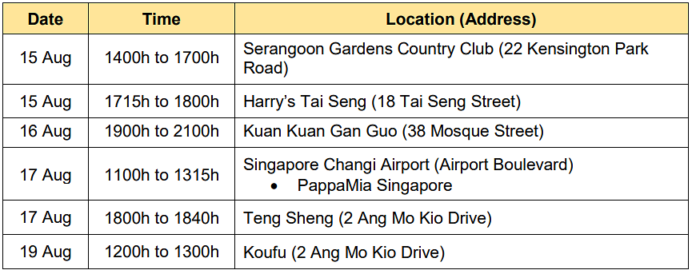
SINGAPORE: Serangoon Gardens Country Club and an F&B outlet at Changi Airport were among several locations added to a list of public places visited by COVID-19 community cases during their infectious period, said the Ministry of Health (MOH) on Saturday (Aug 22).
Serangoon Gardens Country Club was visited between 2pm to 5pm on Aug 15. The PappaMia restaurant at Terminal 1 of Changi Airport was visited between 11am and 1.15pm on Aug 17.
Two F&B outlets within ITE College Central at 2 Ang Mo Kio Drive – Teng Sheng and Koufu – were added to the list, as was Harry’s bar at Tai Seng Street. Eatery Kuan Kuan Gan Guo at 38 Mosque Street was also on the list.
Those who have been identified as close contacts of confirmed cases would already have been notified by MOH, said the health ministry.
As a precautionary measure, people who were at those locations during the specified timings should monitor their health closely for 14 days from their date of visit, MOH added.
“They should see a doctor promptly if they develop symptoms of acute respiratory infection (such as cough, sore throat and runny nose), as well as fever and loss of taste or smell, and inform the doctor of their exposure history,” the press release said.
The ministry said there is no need for people to avoid places where COVID-19 cases have been, and that the National Environment Agency will engage the management of the affected premises to provide guidance on cleaning and disinfection.
This brings the total number of cases in the country to 56,266, with fatalities remaining at 27.
Both of the community cases are Singaporeans and are currently unlinked to previous cases, the health ministry said.
One of the cases, a 63-year-old woman, was tested after being admitted to a hospital for another medical condition. The other community case, a 56-year-old woman, had gone to work at the Institute of Technical Education (ITE) College Central. She was detected to have the coronavirus after she was diagnosed with acute respiratory infection.
The five imported cases include a Singaporean man who returned from Iran on Aug 10, two dependant’s pass holders, a student’s pass holder and a work permit holder currently employed in Singapore.
The five imported cases were placed on stay-home notices upon arrival in Singapore, and were tested while serving their stay-home notices at dedicated facilities.
Divers from the Singapore Civil Defence Force (SCDF) found a 14-year-old male teenager’s body in the waters off Changi Beach Park on Saturday (Aug 22).
SCDF said it received a call at about 3.30pm for a “water rescue assistance” at the park.
When SCDF officers arrived at the scene, they found one person on the shore. There was no sign of the second person.
The first person was assessed by an SCDF paramedic and taken to Changi General Hospital.
It is not known whether the person was conscious when taken to hospital.
Divers from the Disaster Assistance and Rescue Team were deployed to perform an underwater search for the other person.
They subsequently retrieved the teenager’s body about 15m from the shore.
The person was pronounced dead at the scene by an SCDF paramedic.
Police are investigating the unnatural death.
This article was first published in The Straits Times.