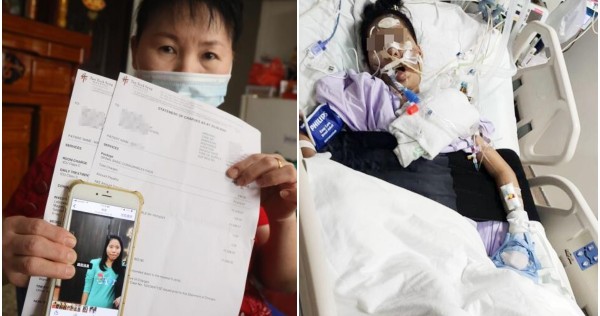
The maid who jumped off the fourth floor last week (Aug 16) escaped with her life, after three rounds of surgery. However, while the 26-year-old is currently recuperating in the intensive care unit (ICU), her employer now faces a hospital bill of $72,000 and growing.
Speaking with Shin Min Daily News, the employer, a 51-year-old hawker, shared that due to the multiple fractures sustained by her domestic helper, doctors had informed her that further operations would be required.
“She’s been in the ICU for a week now, and the bill per day is over a thousand dollars. Including her operation fee, her hospital bill is around $72,000,” the employer lamented.
Despite repeated urging from religious leaders for Chinese devotees to burn offerings responsibly, some still persist in playing with fire — literally.
The burning of paper offerings may be a common sight during the seventh lunar month but footage of two men making their offerings with an open fire at a void deck of a Compassvale block sparked concern after it was shared on Facebook page Singapore Road Accident on Saturday (Aug 22).
The 16-second clip, which has been viewed over 170,000 times at the time of writing, showed two unidentified men standing over the bonfire at 206B Compassvale Lane.
One of them appeared to be prodding at the fire with a stick while the other looked on.
The flames, which came up to about chest height, sent embers and chunks of ashes billowing upwards.
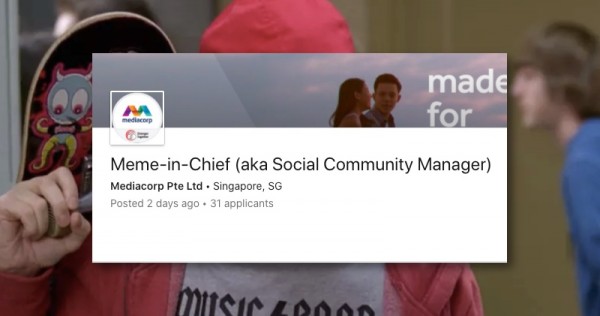
It’s been a tough market for jobs considering everything that’s going on in the world right now, but if you’re well-versed with internet funnies and social media, you could actually be a professional memelord for Mediacorp.
The national public broadcaster is looking to employ a full-time Meme-in-Chief — or rather, a Social Community Manager. The job will mainly involve managing Mediacorp’s social media channels and engaging with audiences, but there would be a need to proactively craft and post funny memes.
Interested candidates will have to create Mediacorp’s social persona and advocate the brand, of course, so it won’t just involve random internet humour and corporate s***posting. It’s an entry-level position too, though the candidate will be required to have at least two years of experience in managing social media.
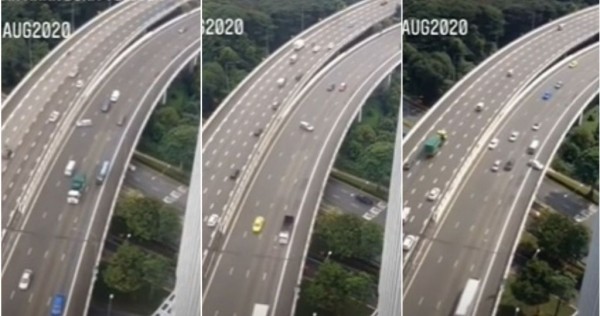
SINGAPORE – A segment of the Pan-Island Expressway (PIE) at Jalan Anak Bukit will undergo improvements after several vehicles were seen to have skidded out of control along that part of the highway.
The segment, which is near Upper Bukit Timah Road, will see the road and road shoulder re-surfaced, lane markings broadened, the parapet wall re-painted with directional arrows, and new signs installed.
In a Facebook post on Saturday night (Aug 22), the Land Transport Authority (LTA) said that these works will begin this week as an added safety measure after it surveyed the area.
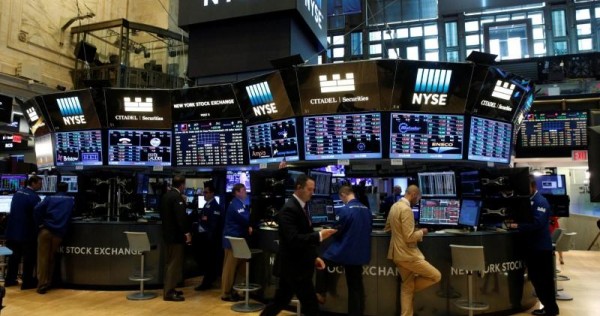
Chicago-based hedge fund Citadel and Citadel Securities, which provides trading services to asset managers, banks, broker-dealers and hedge funds, will open a new office in Singapore, Citadel said on Monday.
The two businesses, which have 17 offices across North America, Europe and Asia-Pacific, are also continuing to grow their presence in Hong Kong, according to an emailed statement.
Citadel Securities is expanding its existing footprint in Shanghai and Sydney, the statement added, without mentioning how many new jobs will be created as a result of these steps.
The expansions in Hong Kong and Shanghai comes in the midst of escalating U.S.-China tensions over issues like trade tariffs, sanctions, and a barrage of Washington’s actions against China.
Citadel, which managed $34 billion (S$47 billion) of assets globally as of early July, has operated in the Asia-Pacific region since 2005, while Citadel Securities has operated in the region since 2009.
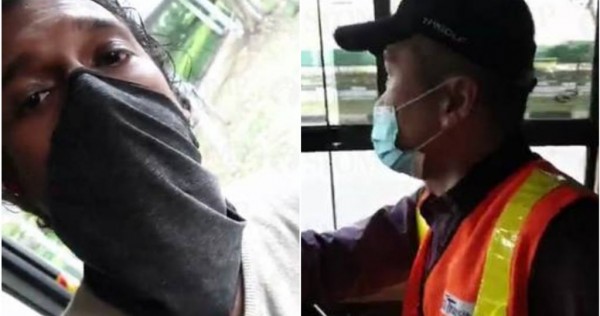
SINGAPORE – Transport Minister Ong Ye Kung took to his social media accounts to express his gratitude for bus drivers and denounce passengers who abuse them.
On Sunday (Aug 23), he wrote on his Facebook and Instagram pages: “We may live in uncertain times due to Covid-19 but that is no excuse for anyone to physically or verbally abuse fellow human beings who are performing their duties. The last thing we need on a bus is an uncooperative and abusive passenger.
“Graciousness is the cornerstone of a caring society. Let’s be there for our bus uncles and aunties.”
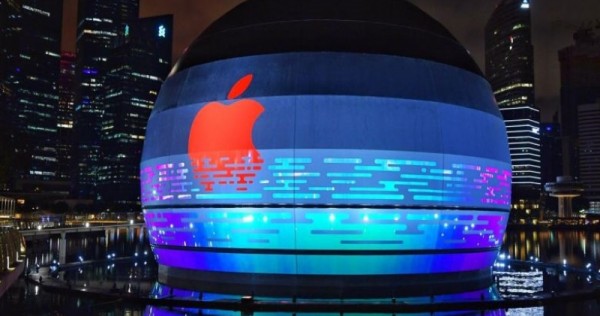
SINGAPORE – Apple is set to open its third store in Singapore, even as the retail and tourism sectors continue to be buffeted by the Covid-19 pandemic.
In a statement on Monday (Aug 24), the tech giant confirmed that its third store will open at Marina Bay Sands (MBS) “soon”, although it did not specify an opening date.
The new store will be situated in the dome-like structure sitting on the water off MBS that was occupied by mega nightclub Avalon from 2011 to 2016.
“Apple Marina Bay Sands is coming soon to Singapore, celebrating the first Apple store in the world that sits on the water,” an Apple spokesman said.
“As with every Apple store around the world, Apple Marina Bay Sands will bring the best of Apple to our customers, at an iconic location in Singapore. We can’t wait to see you soon.”
The announcement comes after The Straits Times reported last March that Apple would be opening two more stores here at Jewel Changi Airport and MBS.
Apple’s Jewel store officially opened last July. The store at Knightsbridge mall in Orchard Road, the first Apple store in South-east Asia, was opened in 2017.
SINGAPORE: A younger and more gender-diverse Parliament, which opens on Monday (Aug 24), will have its hands full with one important job in the near future: creating and matching employment opportunities for Singaporeans.
The 14th Parliament will convene in the midst of an economic downturn spurred by the COVID-19 pandemic, which has triggered Singapore’s worst recession since independence and the country’s highest unemployment rate in more than a decade.
Several first-time parliamentarians in the new House, which comprises 83 elected Members of Parliament (MPs) from the ruling People’s Action Party (PAP), 10 from the opposition Workers’ Party, as well as two Non-Constituency MPs (NCMPs), cited the jobs challenge among the key issues they plan to speak about.
Mr Alvin Tan, 40, a first-time MP-elect for the PAP, said he will focus his maiden speech particularly on helping professionals, managers, executives and technicians (PMETs) find more opportunities and match them with potential employers.
“What interests me specifically is how we can ensure our workforce is nimble to meet the demands of a COVID-19 world that has accelerated digitalisation and that has come much sooner than any of us expected,” said Mr Tan, who will join the Cabinet as Minister of State from Sep 1.
In his previous role as head of public policy and economics at professional networking portal LinkedIn, Mr Tan said he has seen a growing gap between new jobs that have emerged and the skill sets of jobseekers.
Existing schemes like SkillsFuture may also not be enough to bridge the gap between what employers need and what jobseekers can offer, added the Tanjong Pagar Group Representation Constituency (GRC) MP.
“We have schemes like SkillsFuture and Singaporeans are also learning new skills. But how then do you ensure that they are relevant to the job?” said Mr Tan, pointing out that an additional challenge is in ensuring employers are aware of potential employees with the right skill sets.
Another rookie MP who also plans to put the limelight on job concerns – especially the plight of older workers – is former health and social services sector veteran Ng Ling Ling from Ang Mo Kio GRC.
Ms Ng, 48, said the Government’s plans to raise the retirement age from 62 to 65, as well as the re-employment age from 67 to 70, would enable seniors to stay gainfully employed.
But she added that there is a need to improve social attitudes and workplace culture towards older workers.
Citing a survey that Randstad, a Singapore recruitment agency, released in February which showed only 63 per cent of employees polled felt their workplace “values all employees regardless of age”, Ms Ng said such attitudes were telling of unconscious bias against older workers.
“I think support for job redesign must also look into the softer aspect of work inclusivity of more senior workers. In this area, I think social service agencies and professionals are adept,” Ms Ng told CNA.
“They are good at designing systemic environments and practices that can build the psychosocial wellness of people, bringing in the elements of respect, dignity and empowerment.”
Mr Leong Mun Wai from the Progress Singapore Party, who will be one of its two NCMPs, said his concerns about jobs are focused on “reworking the balance” between foreigners and Singaporeans in the job market.
He said recent data on the job situation here – particularly news that 43 per cent of senior management roles in the financial sector are held by Singaporeans – is something that “we really have to look into and see how to rectify in the shortest possible time”.
National University of Singapore (NUS) sociologist Tan Ern Ser agreed that while jobs will be the most critical topic in Parliament, issues that have emerged during the COVID-19 pandemic, such as the economy’s reliance on foreign labour, might come up.
“How do we make sure that we have a strong Singapore core and not be so dependent on foreign labour?
“We must make sure that Singaporeans must be given the opportunity to be able to be at the forefront of the different sectors in industry, whether that be finance, manufacturing or SMEs (small- and medium-size enterprises),” Dr Tan told CNA.
Topics of debate within Parliament might also traverse other social issues that have come under the spotlight as a result of the COVID-19 crisis.
“There is a lot of talk in the press about how COVID-19 has exposed the underbelly of society … inequality, poverty, social mobility. These are issues that are perennial issues and that have to be addressed,” said Dr Tan.
Singapore Management University (SMU) sociology professor Paulin Tay Straughan thinks one such inequality that may preoccupy this Parliament is the issue of migrant workers, particularly with regards to their living conditions.
“How do we make it better? We are land-scarce, we are also very price-conscious, because the cost component is a very important factor for us, and it’s too arrogant to say, ‘It’s okay, this is a collective decision that things will have to cost more’, because who am I to say that? There are many Singaporeans who are living day to day,” said Prof Straughan.
PREVIOUS “CRISIS” PARLIAMENTS
While the 14th Parliament will sit for the first time in the middle of what Singapore’s leaders have dubbed a “serious crisis” and the country’s worst economic contraction since independence in 1965, it is not the first time that a Singapore Parliament has opened in the midst of a global crisis.
On Monday night, President Halimah Yacob will officiate at the swearing-in ceremony of the MPs and give an address on the Government’s priorities and policies in the new term following the Jul 10 General Election. The House will reconvene later to debate over the address.
CNA analysed the Presidents’ Addresses and subsequent MPs’ debates for all previous Parliaments and found two particular instances where the first sittings of previous Parliaments bore a resemblance to the “crisis” nature of the current time.
In 1977, the first sitting of the 4th Parliament took place on Feb 7, at a time when the world was then stricken by an oil crisis precipitated by a 1973 oil embargo by members of the Organization of the Petroleum Exporting Countries (OPEC).
It was enacted against the US and other countries perceived to be supporting Israel in the Arab-Israeli War and caused a quadrupling of global oil prices by the time the embargo ended in 1974. The economic fallout was felt on a global scale as a recession.
Amid the economic turmoil and also the ongoing Cold War between the US and the then-Soviet Union, the focus of late president Benjamin Sheares’ address was on the existential threat of communism, even while he spoke out against being “overwhelmed by the standards and norms of the contemporary West”.
Keywords used in late president Benjamin Sheares’ 1977 President’s Address at the first sitting of the 4th Parliament. The size of words correspond to how often they are mentioned in the address.
“We have to formulate our way of life, taking what is best from the West and fitting it into the Singapore context. We must not allow our values and our philosophy of what is good government to be overwhelmed by the standards and norms of the contemporary West, regardless of their relevance to our social, economic and political conditions, simply because, for the time being the West have the material abundance and technological superiority,” Dr Sheares was quoted as saying to the 4th Parliament.
In the MPs’ debate that followed, the 69 members of the House spoke about fundamental building blocks of society, particularly education.
In fact, education was the most mentioned word in the debate on the President’s Address that year, followed closely by “policy” and then only “nation” and “economy”.
Keywords of the MPs’ debate on the 1977 President’s Address, arranged by frequency.
In March 2002, the 10th Parliament opened in the wake of the 9/11 attacks that happened just months before. The global economy – and Asian economies in particular – were also recovering from economic shocks such as the collapse of the global IT industry in 2001 and the 1997 Asian Financial Crisis.
Then-president S R Nathan’s address to Parliament placed heavy emphasis on the economy, highlighting increasing global competitiveness that Singapore would have to contend with in sectors like electronics and finance, as well as the need to restructure the economy to sustain growth.
Keywords of late president S R Nathan’s 2002 President’s Address at the first sitting of the 10th Parliament, arranged by frequency.
Mentions of the word “economy” far outstripped any other keyword in his President’s Address that year, with “Asia” and “society” coming in second and third, and only being mentioned less than half the number of times.
“We cannot afford to shelter inefficient, protected sectors in our economy. All parts of our economy must become competitive and efficient, for that is the only way to create productive, well-paying jobs for our people,” Mr Nathan had said in his address.
In the ensuing MPs’ debate, the 10th Parliament had much the same focus, with the top keywords of the debate being “economy”, “jobs” and “workers”.
Keywords of the MPs’ debate on the 2002 President’s Address, arranged by frequency.
The analysis of past Parliament sittings was featured in a news report on Sunday night (Aug 23) as the last of a three-part series on the 14th Parliament, with the first two focused on the age and gender profile of the parliamentarians.
THE YOUNGEST AND MOST GENDER-EQUAL PARLIAMENT
While circumstances in which the 14th Parliament of Singapore opens will bear some resemblance to previous Parliaments, it will differ in two aspects: age and gender.
The newest House is by some accounts the youngest to be sworn in, with the youngest, Ms Raeesah Khan representing Sengkang GRC, only 27 years old.
With the retirement of older members such as 79-year-old former prime minister Goh Chok Tong, the average age of Parliament has fallen from 49.6 to 48.3.
And while that is still above the median age of 42.2 in Singapore, it is the closest that Parliament has got in terms of representing the age demographic of Singaporeans in the past 20 years.
For the WP’s Sengkang GRC MP Jamus Lim, 44, the age of the team might be a benefit in terms of understanding constituents’ concerns. Sengkang has a younger demographic than the national average.
“It helps that we have a young team of our own, facing the sort of challenges young parents face: waking up in the middle of the night to comfort a crying child, looking for school placements, concerns about the highly competitive educational system that our children will face,” said the economics lecturer in a written response to CNA.
Still, Dr Lim added that elderly concerns will not be forgotten, and that the most important contribution that MPs can make is to listen.
“Being a good parliamentary representative is about reflecting these competing concerns and interests adequately,” said Dr Lim.
PAP’s Ang Mo Kio GRC MP Nadia Ahmad Samdin, who at 30 years old is one of the youngest members of the 14th Parliament, said that even when talking about “youth”, there needs to be an awareness of the demographic’s diversity.
“We need to be cognisant that when we talk about youth, the spectrum of youth is broad. There are youth who are still in secondary school and beyond that institutes of higher learning: polytechnics, ITE, universities.
“And then moving beyond that you have fresh graduates and then young parents. So the spectrum is wide, and the needs and concerns of youth are diverse,” she added.
MORE WOMEN IN PARLIAMENT A GOOD SIGN
With gender, the 14th Parliament sets another record: It has the most number of female members since 1965 – 28, including non-constituency MPs.
Members say that the record number of female lawmakers will help contribute to deeper thinking when it comes to policies that disproportionately affect women.
“It will definitely broaden and also deepen the thinking behind policies that impact women proportionally more.
“And these are issues such as caregiving, elder care, which affects women’s lives in a very significant manner. And the fact that we have to face work-care conflict, which is something that bears more attention on the policy making front,” said the PAP’s Ms Carrie Tan, 38, a first-time MP from Nee Soon GRC.
Ms Corrina Lim, Executive Director of gender equality advocacy group AWARE, agreed that the increasing number of female parliamentarians is a positive sign.
And while she hopes that issues such as gender violence or the gender pay gap will see more airtime in Parliament, she also hopes that these issues would not just be confined to the domain of female parliamentarians.
“What we hope not to see is that it then deters male parliamentarians from taking up the same issues because they say, ‘Oh now, you know, this is a female parliamentarian’s area so let them speak on it.’
“We actually hope that that will not be the case,” she said.
Number of female parliamentarians since 1985 to 2020.
Even with the uptick in the number of female lawmakers, Ms Lim cautioned that there still remain significant structural barriers that prevent women from entering the domain of politics.
She pointed out that women are still seen to be the primary caregivers in society, and that an MP’s workload and responsibilities to their constituency would be a further add-on to perhaps already heavy responsibilities to women’s families and careers.
“So unless you have a really good partner or very strong family networks or maybe no caregiving or limited caregiving duties, it is very difficult to be able to do (MP duties).
“So I think it will not be the next election that we will have 50 per cent (female representation) … I think that there are many other structural barriers that still exist and those could be much more difficult to change,” she said.
Nevertheless, at around 29 per cent of the Parliament, female MPs will take up a larger proportion of the house than they have before, making for a 14th Parliament that is more diverse when it comes to age and gender.
Political analysts like Professor Eugene Tan said such representation is important.
“You add to the legitimacy of Parliament if MPs are seen to be representative of Singapore society as a whole. Because that adds to the ability of Parliament to remain relevant in dealing with the key issues of the day,” said the Singapore Management University law lecturer.
“It is no point Parliament debating and passing laws and policies which are not seen to be representative enough in terms of their benefits and in terms of the impact.
“And so it becomes crucial for Parliament to be representative and that adds to our system of representative democracy in Singapore.”
OXFORD: A tweet had gone viral recently for suggesting that, up until this pandemic, many people had never seen the scientific method “unfold in real-time”, with new evidence emerging, changing methodologies – and, yes, even errors.
To the man on the street, what should be robust science in the middle of this coronavirus crisis can look like cluelessness.
That would certainly explain why some do not take well to governments constantly updating their advice on COVID-19 in response to the evolving science.
In Singapore, misperceptions about how science works might account for some of the public unhappiness at the Government’s changing policy on face masks, when it U-turned from an earlier stance that masks should only be worn by healthcare workers and those feeling ill, to making mask-wearing in public spaces compulsory for everyone in April.
Yet it is worth recognising that at the same time, the pandemic has tested governments, not just in their flexibility in policy making, but also in their communication skills. The public may accept that science changes, but they still need clarity on the rationale behind each new set of rules.
Given that this global health crisis still has some way to go, three key lessons can be learnt from these experiences that should inform public policy when it comes to COVID-19.
NO EXACT SCIENCE ON CORONAVIRUS
The first lesson is for the public to be aware that there is no single thing called “the science”.
Particularly given that countries are dealing with a new virus, and data from studies and lab tests is streaming in from different places, we should be wary of calling the latest evidence “facts” that will not change with the passage of time.
For example, at the moment one very clearly changing aspect of coronavirus science concerns the debate over aerosols.
While the prevailing assumption among scientists and health officials has been that the virus is not transmitted through the air, some notable examples of indoor transmission taking place despite social distancing are leading some to suggest otherwise.
Men wearing face masks walk past an art installation in the financial business district in Singapore on Aug 11, 2020. (Photo: AFP/Roslan Rahman)
This does not mean we disregard whatever new research makes us uncomfortable, but it requires us to develop a healthy sense of inquiry about scientific studies.
It is easy to forget that there was a time when asymptomatic spread of the virus was not well-established, and the World Health Organization (WHO) did not think that there was sufficient evidence to support wearing masks as a general practice.
Only on Apr 2 did the WHO finally report evidence of pre-symptomatic and asymptomatic transmission. Just a day later, the Singapore Government announced it would not discourage the use of face masks among those who were not unwell. Other countries have since also implemented different, and at times changing, policies on mask-wearing.
The problem is not that science changes, but that we sometimes fall prey to a certain idealised perception of science.
In the popular imagination, science is almost synonymous with a fixed set of facts and objectivity. Ordinary citizens are generally less concerned about its actual methods and the hugely varying quality of its studies.
In the early days of the UK’s response to coronavirus, British Prime Minister Boris Johnson continually insisted that his government was “following the science”. He would appear daily before the media, flanked by his top scientific advisers who, to their credit, were often first-rate communicators of scientific evidence.
Back then, the British government was still talking about the need for herd immunity, before new modelling from Imperial College London suggested a terrifying scenario of 250,000 deaths under the government’s strategy. Johnson then changed tack and imposed a nationwide lockdown.
Since then, however, many have questioned the modelling, or the exact efficacy of lockdowns. And ultimately, we may never know with exact certainty which side is right, and which studies have been the most reflective of reality.
After all, modelling disease outbreaks or studying the effectiveness of social distancing rules is not straightforward. It depends on what assumptions you have, what factors you decide to control for, and so on.
With over 41,000 deaths due to COVID-19 disease, Britain is the worst-hit country in Europe and Prime Minister Boris Johnson has been criticised over his handling of the crisis. (Photo: AFP/Brian Lawless)
For example, during earlier periods of the pandemic, when it was uncertain exactly what the incubation period of the virus will be, or how the capacity of testing and contact tracing was evolving in a particular country, modellers had to make assumptions about these variables. Future models may change depending on the results of studies of airborne transmission.
Likewise, counting COVID-19 deaths is not straightforward. Different countries have made different decisions, such as whether to count all suspected cases or only confirmed cases. Even calculating fatality rates of total cases depends on whether you count only deaths and recoveries, or deaths and total cases – some of whom may eventually die.
As James Forsyth, a British journalist, once put it, epidemiology is “more like economics than physics”. There is more than one answer, and evidence is often only as good as the study.
A second vital lesson of this pandemic is that science alone does not make decisions for us.
Public health policy cannot be based purely on medical advice, as there may be concerns about fairness and resource allocation, or other concurrent policy goals to consider. Every policy comes with trade-offs, and how much risk or cost is acceptable while pursuing a certain public health benefit is a question of ethics, not science.
Consider, for instance, the different factors involved in the decision regarding face shields.
Singapore’s Ministry of Health (MOH) had previously said all types of masks, including face shields, disposable masks and home-made masks, would offer adequate basic protection.
A retail assistant arranges bags in protective face shield as she prepares to open a shop in Singapore as the city state reopens the economy amid the coronavirus disease (COVID-19) outbreak, June 19, 2020. (Photo: REUTERS/Edgar Su)
However, MOH changed this advice in June. Health Minister Gan Kim Yong acknowledged that although face shields offered less robust protection than masks, these risks were “less of a concern” during the circuit breaker period when fewer people were out and about. But once the circuit breaker lifted, masks had to become compulsory again.
One might have concerns about how well these points were communicated when the relevant policies were first announced, but the point here is that governments are never just “following the science”.
While science gives crucial information for decisions, governments still must weigh up and prioritise different policy goals, while taking into account changing circumstances.
Perhaps, then, we should not be quick to judge policy “U-turns” as a sign of dishonesty or a question of competence. When there is new scientific evidence, or when new policy concerns alter the risk-benefit analysis, a change in policy may well be a mark of responsible governance.
None of these thoughts, however, should eclipse our third lesson, which relates to clear communication. Governments should always be open to the public about the full set of considerations, so that citizens can make better sense of policy shifts and new rules, and to prevent distrust from setting in.
In the short term, this may concern explaining trade-offs.
Just because some level of risk is deemed acceptable does not mean that governments are recklessly endangering public health, but citizens have a right to understand what goals are being aimed at, such as economic recovery or allowing for social goods such as seeing family and friends again.
In the longer term, clear communication is also about managing public expectations, even if it means tempering optimism.
Ministry of Health’s director of medical services Kenneth Mak, Health Minister Gan Kim Yong, Minister for National Development and co-chair of multi-ministry task force Lawrence Wong, and Ministry of Education’s director of schools, Liew Wei Li. (Photo: Marcus Mark Ramos)
The temptation, perhaps, is for everyone to think that the solution to a public health crisis will essentially be a medical one. Accordingly, many have pinned their hopes on a vaccine.
But it is worth saying that there has never been a successful vaccine developed for any coronavirus, including those strains that cause the common cold. Even a successful COVID-19 vaccine may, like yearly flu jabs, not be a permanent, one-off solution.
Should a vaccine come to fruition, other policy questions will remain, such as who should be prioritised for vaccination, and how it should be funded.
The road ahead is likely to be long. And in all of this, preserving trust between governments and citizens is a two-way street.
Those in authority will need to continually account for the rationale behind their decisions, and not be afraid to discuss both scientific and more qualitative policy considerations that have influenced them. But as ordinary citizens we can also do our bit by developing both our scientific literacy and by appreciating the different facets of the crisis.
Download our app or subscribe to our Telegram channel for the latest updates on the coronavirus outbreak: https://cna.asia/telegram
Michael Wee is Education and Research Officer at the Anscombe Bioethics Centre, an Oxford-based research institute. In 2020 he became the first Singaporean appointed to the Holy See’s bioethics advisory body, the Pontifical Academy for Life.
SINGAPORE: As the head of a global manufacturing firm headquartered in the Republic, Mr Alessandro Perrotta has sent his Singaporean staff to be based in various countries — including Vietnam, Malaysia and Indonesia — where his company has operations.
Contrary to popular perceptions, he has never faced resistance from Singaporeans when they have to go to these countries stereotypically viewed as less liveable than the rich city-state, said the chief executive officer of Interplex Holdings.
“Singaporeans are some of the most flexible people I know … My team is willing to go anywhere, anytime.”
As companies here and elsewhere adjust to a new business normal brought upon by the Covid-19 pandemic, Mr Perrotta will continue to focus on the region due to its attractive opportunities.
It is an endeavour that Singapore itself has been actively pursuing over the last few decades: Greater regional integration with its neighbours in the Association of Southeast Asian Nations (ASEAN).
While negotiations for a more integrated ASEAN have been taking place in fits and starts over the years, experts and business leaders say the pandemic has presented governments and companies in the region with a great opportunity to intensify the push for further integration.
This is because COVID-19 has brought about permanent changes to the global economy as borders are shut, traditional supply chains disrupted and long-established working patterns upended.
World leaders and corporate honchos are now calling for companies to diversify their markets, supply chains and products, in the face of the endless difficulties wrought by the coronavirus outbreak, which has infected over 14 million people globally and killed nearly 785,000 thus far.
In a global environment where countries are increasingly pressured to take sides amid heightened rivalry between the United States and China, the ASEAN region offers a suitable location for companies looking to diversify given the grouping’s more neutral political position, said DBS Bank senior economist Irvin Seah.
Experts and business leaders stressed that with open borders and markets remaining crucial as ever to Singapore’s development, its trade-reliant economy needs to continue building external linkages within ASEAN — amid the growing backlash against globalisation around the world that could threaten Singapore’s long-term survivability.
And the region still holds much promise, with a recent report from property consultancy Cushman and Wakefield noting that ASEAN manufacturing markets have a high ability to bounce back from the current economic slump due to the region’s demographics and economic capabilities.
Mr Douglas Foo, president of the Singapore Manufacturing Federation (SMF), said manufacturing companies are finding the option of using Asean as a manufacturing hub with Singapore as its base an even more attractive proposition amid the pandemic, as businesses are forced to be more resilient and agile.
The fact that “business as usual” is not possible even after the Covid-19 beast has been tamed – making it necessary for Singapore to build a new economy — was highlighted by Trade and Industry Minister Chan Chun Sing last week.
He said that the pandemic has caused irrevocable changes in four areas: The geopolitical environment which has seen rising tensions among major powers; the way global companies are reorganising their production and supply chains; the changing nature of jobs due to remote working; and the social tensions that could arise from the slowdown in global growth.
“The painful truth is this: We are not returning to a pre-COVID-19 world,” Mr Chan said on Aug 11, the day when his ministry announced Singapore’s worst economic performance on record.
It entered its deepest recession in 55 years as gross domestic product (GDP) for the second quarter of 2020 fell 13.2 per cent compared to the same period a year ago.
“This is not the Asian financial crisis or global financial crisis where if we hunker down, things will improve in a few months. If we wait it out, we will likely be in worse shape than we are now. Therefore we must chart a new direction now for a very different and uncertain future,” said Mr Chan.
The Central Business District seen from the Esplanade Bridge. (Photo: TODAY/ Raj Nadarajan)
US-CHINA TENSIONS
Global commerce, which has long been the lifeblood for Singapore, has stagnated.
Between 1985 and 2008, international trade had grown at nearly twice the rate of the world’s GDP, data from the World Bank showed. Since the turn of the last decade, the rate of growth has barely kept up.
The onset of the US-China trade war in 2018, along with rising protectionism in several countries, has dealt a heavy blow to an already slowing international trade.
Then came the unprecedented coronavirus pandemic early this year, which saw international trade almost grinding to a halt for weeks in the wake of lockdowns and port quarantines as governments scrambled to stop its rapid spread.
“It’s like putting oil onto an existing fire,” said prominent businessman Ho Kwon Ping, who founded international resorts company Banyan Tree Holdings.
With shipments delayed because of COVID-19, the world realised how densely concentrated supply chains are in China, especially for the automotives, consumer electronics and pharmaceuticals sectors, said Mr Alex Capri, visiting senior fellow at the National University of Singapore Business School.
“We will see not only companies looking to diversify their supply chains, but also governments, either pressuring or actually passing legislation that will require companies to relocate some of those strategic supply chains”, such as those dealing with technology, he added.
COVID-19 could also be the impetus for multinational corporations (MNCs) to implement the “China plus one” strategy which business leaders have advocated for years as a way of diversifying the risk that comes with placing all their investments in China, Mr Capri said.
Mr Ho believes ASEAN is well-positioned to be that “plus one”.
“Where (MNCs) might have huge multibillion-dollar facilities all in China — with a head office in Shanghai — they may (now) want to put (the) head office in Singapore and factories in Thailand and Malaysia,” he said.
Mr Capri suggested that Singapore could also serve as an alternative location for the large semiconductor industry in Taiwan, with the island long been seen as a potential flashpoint between the US and China.
Singapore and other ASEAN member countries have for decades maintained a balancing act between the two major powers, consciously seeking to avoid being viewed as picking sides.
As geopolitical tensions intensify, Mr Capri noted: “Singapore’s challenge is going to be tiptoeing between both superpowers.”
The need for diversification is also on the cards for some trading companies. Several have shared how they have experienced shipment delays for both imports and exports because of the supply chain disruptions caused by the pandemic.
Mr Jeremy Fong, chief executive director of medical equipment manufacturer Fong’s Engineering, said that his clients mainly come from the US, which is experiencing one of the worst coronavirus outbreaks in the world.
Apart from changing the production schedule to allow for more lead time and increasing the inventory, he is now in negotiations with Japanese companies in a bid to diversify his customer base.
“They (the Japanese) have moved out their operations from China and are looking to set up in Southeast Asia. We see it as an opportunity,” said Mr Fong.
Mr Perrotta, whose company already has operations in 14 countries including Singapore, said he is getting new customers who are looking for suppliers closer to their consumption markets.
“Customers are coming to us and giving us opportunities, saying that their original supplier can’t serve them in the new location where they need to go.
“There is a change from where focus was on supply chain efficiency, (optimising) lead time from point A to point B at lowest possible cost, to now focusing on more supply chain resiliency … Everybody is now looking at other areas to get closer to production points. So ASEAN is definitely benefiting,” Mr Perrotta added.
Office workers at the Central Business District. (Photo: TODAY/Raj Nadarajan)
SINGAPORE’S MNC STRATEGY: THREATS AND OPPORTUNITIES
While Singapore can benefit from the global corporations’ need to diversify, it will also have to grapple with another possibility: MNCs may not see the need to physically locate themselves in the ASEAN region anymore with remote working becoming more prevalent, and amid rising protectionism.
With governments providing incentives for their own corporations to move back amid growing protectionist sentiments, Mr Inderjit Singh, the founder of consumer electronics firm Solstar International, believes that MNCs will pull out of Singapore “in a very big way”.
For example, the Japanese government has earmarked 220 billion yen (S$2.84 billion) to help its companies shift their production out of China and back to Japan.
Associate Professor Walter Theseira from the Singapore University of Social Sciences said that cities such as Singapore have been well-positioned to take advantage of globalisation but these benefits are now cut because of the border closures.
With Singapore having established itself as the New York City or London of ASEAN, it used to be common to have professionals working in Bangkok or Jakarta during the week and returning to Singapore for the weekend.
“All of that has been put to an end by COVID-19 at least in the short-term … Does it mean that firms would say ‘I am going to just have minimal staff in countries I am doing business in and run more operations out of my regional headquarters or main markets I’m in’? There is no need for an in-between,” said Assoc Prof Theseira.
“It’s a very small step to go from a regional HQ in Singapore to just having work done back in the main HQ,” he added.
However, observers pointed out the movement of companies and jobs out of Singapore is not a new development but very much part of the globalisation process.
For example, Singapore lost its competitive advantage in manufacturing low-cost consumer goods such as textiles decades ago when labour costs went up, leading to many of these companies relocating their production to other parts of the region.
The subcontracting of certain business functions in a company to third-party vendors in other countries is also a manifestation of globalisation.
“It’s been happening for decades. It’s called business process outsourcing. Now, COVID-19 accelerated the idea or notion of working remotely. In the past, it was something deemed to be a strategy to bring down operating costs. But now, to some extent because of the pandemic, it becomes essential,” said Mr Seah.
The difference this time is that jobs taken up by professionals, managers, executives and technicians (PMETs) are being impacted.
Some observers said it is still too early to tell whether global corporations would change their behaviour and make the exit from Singapore.
While there may be a fraction of companies which choose to permanently work from their home countries, Maybank Kim Eng economist Chua Hak Bin said a countering force to that would be the need for diversification.
Mr Ho reiterated that “everybody is basically reexamining their approach, their strategies”. “And it’s certainly not clear that Singapore is going to lose out completely, nor will Singapore be the total beneficiary,” he said.
Mr Seah, however, thinks the Republic’s importance — as a stable and reliable destination for critical business functions and processes — has actually been elevated because of the pandemic.
“Especially now travel becomes more difficult, you want to be close to where production bases are … At least overcome time zone difference (by locating) in a similar time zone,” he said.
Referring to the need for diversification, Mr Seah said it also makes sense for companies to have a regional headquarters that can take over the functions of the main office in the event another crisis severely impacts the latter’s operations.
To minimise the possibility of global corporations leaving the island, Singapore could adopt several measures, such as gradually reinstating international travel, maintaining a competitive tax regime and remaining open to global talent, experts said.
RISE OF REMOTE WORKING: DO SINGAPOREANS STILL HAVE AN EDGE OVER ASEAN COUNTERPARTS?
As part of its profound irrevocable impact, COVID-19 has pushed remote working, which has been around for some time, to the fore of a radically changed economic landscape.
Despite its many positives, cost savings for businesses being one, such a work arrangement can be a double-edged sword, which may affect Singapore’s ability to attract new investments within ASEAN.
On the one hand, it provides opportunities for Singaporeans to work for companies which do not have operations here, without having to physically move to the firms’ locations.
On the other hand, with companies now able to cast the net much further beyond the confines of national borders in their search for talent, employers will have a much wider pool to choose from.
As Mr Chan noted at his Aug 11 press conference, “some jobs in the regional headquarters here are being advertised as ‘can work in Singapore’ or ‘can work remotely’”.
“This will affect many PMET jobs, which can be done virtually or through automation and AI,” he said.
Assoc Prof Theseira suggested that remote working could lead to a divergence among PMET jobs where companies are looking for either “cheap and good” workers or “high-value and bespoke” professionals.
For example, many software engineers from Vietnam could fall into the category of “cheap and good” as they meet the minimal requirements of what a company needs and come at a low cost. On the other hand, product designers for a tech company such as Apple could qualify as “high-value and bespoke” work.
Given that Singapore can never compete with “cheap and good” talent, the question is then whether there are enough Singaporeans who could offer “bespoke” quality, said Assoc Prof Theseira.
In the ASEAN context, while Singaporean workers are generally more well-educated and skilled, there is however no lack of talent in other member countries due to their much larger labour pool, especially in the area of technology, he noted.
“We should be quite careful about our assumptions about the region. We cannot just assume that everybody is uneducated or 30 years behind us. That’s completely not true,” said Assoc Prof Theseira.
There is thus a need for Singaporeans to find a comparative advantage, which could be skills such as proficiency in the English language or familiarity with Western markets, he noted.
Mr Seah, however, cautioned against over-estimating the prevalence of remote working as there are obvious limitations to the arrangement.
Cultural differences, language barriers, different employment regulations between ASEAN countries as well as different management styles of companies could hinder the extent companies can rely on remote work.
Remote working may be feasible for short-term projects, but it would not be possible for a management executive who has to deal with the daily operations, noted Mr Seah.
While Singaporeans should have an international dimension when making career decisions given that remote working may be the norm in the future, Mr Seah cautioned that there is still a long adjustment process to reach that stage.
If policymakers start urging Singaporeans to look for remote working opportunities all over the globe, they “run the risk of neglecting some Singaporeans who cannot cope with the change,” he said.
WHAT SINGAPORE, ASEAN NEED TO DO
The push for greater integration of ASEAN is not new for Singapore, a city-state without a hinterland.
SMF’s Mr Foo said a lot of groundwork had been laid over the past few years through the inking of various agreements with similar trade groups in Malaysia, Thailand, Vietnam and Myanmar.
Concerns on whether companies are able to find the right partners or understand the markets have been progressively addressed through these efforts, he said.
COVID-19, however, has renewed interest in the grouping as an economic community among ASEAN-watchers. They say that its 10 members should capitalise on the “new normal” to win foreign investments and accelerate the long-term goal of creating a single ASEAN market, akin to the European Union’s.
Singapore has always positioned itself as a regional hub, but Mr Seah felt that it has not participated in the economic development and helped to drive growth in the region as much as it has invested in China.
But with ASEAN potentially a hotbed for foreign direct investments in a post-Covid-19 world, he said that Singapore has to double its efforts in investing more actively in the region.
“If the region benefits from global foreign direct investment, we will benefit from growth in the region,” he added.
In ASEAN, there are incentives in place to attract businesses to the region, such as the free trade agreements among the member countries and with other Asian nations such as China.
But Mr Ho believes there are other areas where more can be done to smoothen business operations in the region if ASEAN really wants to seize the opportunities created by the pandemic.
He said ASEAN can take the cue from the Asia-Pacific Economic Cooperation, which issues a business travel card that allows business travellers from member economies access to other APEC regions without a visa.
“Imagine … if you don’t even need a passport, you just have a card that you can scan to go to any ASEAN country, this will be meeting the nitty-gritty issues of integration, as far as business people are concerned,” Mr Ho said. “It’s a pain if you’re a frequent traveller to your different factories.”
Ease of travel between member countries could also offset some of the pain from border closures and boost regional tourism, Assoc Prof Theseira noted.
While ASEAN is poised to offer Singapore new opportunities as it seeks to adapt its economy to a post-pandemic world, experts and business leaders stressed that the Republic must continue to remain an open trading hub even as other countries are turning inwards.
“There are certain things that we have been doing that we know we have to continue doing,” said Mr Ho. “The fact that we have no natural resources and only management skills to sell, that won’t change.”
He believes the key for Singapore to remain relevant is to be more agile in identifying nascent opportunities, not in entire sectors, but in certain niches of each industry.
Solstar International’s Mr Singh sees that niche in Singapore becoming the prototyping factory of the world, bringing research from lab to factory.
“Singapore research institutes and universities do excellent research and have great technologies, and what we lack is commercialising these,” said the former Member of Parliament.
“I have seen a few good technologies that could have started initial prototyping and initial production in Singapore, had they found the money to do so,” he added. “Instead, they went straight to other countries.”
In order to build up Singapore’s capabilities in advanced manufacturing and prototyping new technologies, Mr Singh suggested that the Government support local enterprises and tap sovereign wealth funds to buy over distressed global companies and bring them to Singapore.
He added that the old assumptions about Singapore’s expensive land and labour costs should not stop the country from rebooting its manufacturing sector. Industrial land costs can be brought down by the Government while the highly trained workforce can be tapped to automate factories to lower the reliance on labour.
PMETs who have been displaced can also take up key positions or be trained and redeployed to work in these manufacturing and technology firms.
Mr Kurt Wee, the president of the Association of Small and Medium Enterprises, said that businesses looking to expand into ASEAN should not just identify which market they want to serve, but also identify the marketplace platform dominant in a particular country.
For example, while e-commerce firm Lazada is commonly used by consumers in Singapore, Tokopedia is the go-to for Indonesians.
Mr Foo said that Singaporeans need to have an open mind about the potential of ASEAN and ditch the negative stereotypes long held about their neighbours.
He pointed out that having grown up in the multicultural city-state, Singaporeans should have no problems embracing diversity, and they should see other ASEAN countries, their people and cultures as something worth discovering.
“Take it as a new journey of discovery of our neighbourhood,” he said.
Still, it remains to be seen whether COVID-19 will give Singapore’s neighbours the impetus to move faster towards even greater economic integration.
While the virus has necessitated closer cooperation among ASEAN countries in terms of the supply of medical equipment and the exchange of critical information to fight the pandemic, it has also created much pain in the respective countries’ domestic sectors, noted Mr Seah.
“There could be more impediment and resistance to opening up their domestic economy,” he said.
Dr Chua said that signs are emerging that ASEAN governments are turning more nationalistic, due to the host of domestic issues which they need to address because of COVID-19.
“Every country is in a job crisis. They have to take care of their own people first. In some cases, they may erect higher protective barriers to protect their own people,” he said.
.jpg "offeringsfire-1.jpg")