SINGAPORE – Local law giant Harry Elias, who was the founding chairman of the Law Society’s Criminal Legal Aid Scheme (CLAS) some 35 years ago, died on Wednesday (Aug 26).
He was 83. His wife Thelma, 73, said he had a long illness, and died in hospital.
Senior Counsel (SC) Elias was among Singapore’s best-known trial lawyers and the founder of one of Singapore’s leading law firms, Harry Elias Partnership.
The firm released a statement on Thursday expressing sadness at the passing of its founder.
Managing Partner Philip Fong said: “For our firm, Harry was our founder, leader and mentor. For our profession, Harry was the epitome of a fearless and first-class advocate. For our society, Harry was a trailblazer with lasting legacy.
“For us personally, Harry was a true friend, a teacher and a kind and generous soul. We are honoured to have walked with him for a part of his impactful life.”
Law Society president SC Gregory Vijayendran said the greatest legacy Mr Elias left is that he gave justice to the weakest in society, adding that the CLAS is the Law Society’s crown jewel.
SINGAPORE: Veteran lawyer Harry Elias, known for his role as founding chairman of the Criminal Legal Aid Scheme for those who could not afford lawyers, has died aged 83.
His firm, Harry Elias Partnership, said in a statement on Thursday (Aug 27) that Mr Elias, who died on Wednesday, “was known for his compassion and contribution to society”.
Managing partner Philip Fong of Harry Elias Partnership said Mr Elias was “the epitome of a fearless and first-class advocate” and “a trailblazer with lasting legacy”.
“For us personally, Harry was a true friend, a teacher and a kind and generous soul. We are honoured to have walked with him for a part of his impactful life.”
Among Singapore’s best-known trial lawyers, the former Senior Counsel’s death has left a “void in the Law Society”, LawSoc president Gregory Vijayendran told CNA.
Mr Elias was his predecessor, and was appointed president of LawSoc in 1984.
He co-founded the Criminal Legal Aid scheme (CLAS) a year later, providing legal aid to those facing criminal charges but who could not afford lawyers. Pro bono work did not exist in Singapore in that form before this.
Senior Counsel Vijayendran said Mr Elias was “a Silk with exceptional persuasion, peroration and panache”.
He recalled watching Mr Elias persuade a judge in chambers almost 30 years ago when SC Vijayendran was a pupil.
“That left a deep impression on me as the watching apprentice. It was pure poetry in motion,” he said.
“There is now a void in the Law Society with this sad loss of one of its finest gems. But his fingerprints will be everywhere notably in the civil litigation and criminal litigation Bars,” said SC Vijayendran.
Mr Elias’ greatest legacy for LawSoc was that he “gave justice to the weakest in society”, and his name will always be linked with CLAS, he added.
“35 years on and going strong, CLAS, like its visionary architect, is pure class and now Singapore’s Office of Private Defender,” said SC Vijayendran.
“This Society and society (are) the richer for it. CLAS is the crown jewel of the Law Society only because SC Harry Elias had the acuity to see the value, and invest the hard work, in creating this gem of priceless value.”
Established in 1985, the Criminal Legal Aid Scheme would go on to be the spark that would set off a comprehensive pro bono movement in Singapore. Seen here is Law Society’s first CLAS committee, headed by Harry Elias (seated second from right). (Photo: Law Society of Singapore)
Fellow veteran lawyer Peter Low told CNA that Mr Elias was his boss many years ago when he was a young lawyer in Drew & Napier.
“He inspired me and another colleague … to later be presidents of LawSoc,” said Mr Low, adding that Mr Elias was “highly ethical and very personable”.
He said Mr Elias was “a brave lawyer”, standing up to Lee Kuan Yew at a select committee to defend the former senior district judge Michael Khoo, stating that Mr Khoo had a good track record as a judge.
Lawyer Doris Chia, who worked as a young lawyer in Mr Elias’ firm, said he taught her, among other things, “integrity, professionalism, respect for the judiciary” and “to always put the client’s interest before profit”.
“His loud laughter and colourful stories about his cases will forever be missed,” she added.
Calling Mr Elias a “legal giant”, lawyer Josephus Tan quoted Mr Nelson Mandela in describing the late lawyer, saying: “A good head and a good heart are always a formidable combination.”
CLAS would be “his most enduring legacy for our legal fraternity and the underprivileged among us”, said Mr Tan.
He said the firm Mr Elias founded has produced “many great legal personalities” and is a leading firm that aspiring lawyers want to start their journeys with.
“Back in 2006, I did my first and only internship at his firm under Mr Subhas Anandan, who went on to become my pupil master,” he said.
“In my early years of practice as a budding criminal lawyer handling many CLAS cases, I bumped into Mr Elias at a lunch and I remembered how he told me to keep doing what I do only to find out later that I just spoke to the legend who co-founded CLAS himself. It was a star-struck moment for me.”
Mr Elias, who was still doing pro bono work when he was 80, previously told CNA that his feelings about ensuring everyone gets their day in court had not changed, no matter how heinous the crime.
“It’s not for us to try them. The whole system is that there is a judge,” Mr Elias had said. “If he thinks you have done wrong, listen (to my defence) and punish (accordingly).”
“So why don’t we take (the case), give them the opportunity for the best possible representation. Sometimes you take it on the basis of acquittal. I don’t get an acquittal, I don’t care, but if I get the judge listening to the mitigating factors, then I have done my job.”
The Singapore Food Agency (SFA) has ordered a recall of peaches imported from the United States.
According to a media release on Tuesday (Aug 25), the peaches of concern are said to be packed or supplied by Prima Wawona or Wawona Packing Company in the US.
“These peaches are potentially linked to an ongoing multi-state outbreak of Salmonella Enteritidis in the USA,” it said.
According to investigations by the US Food and Drug Administration and the US Centres for Disease Control and Prevention, the bagged peaches are suspected to have made more than 60 people in nine states unwell.
Those who have bought the peaches from the affected company should look out for the following stickers with these Price Look-Up (PLU) numbers on them:
SINGAPORE: Two teenagers involved in a juice-drinking stunt at a supermarket, with one of them drinking from bottles and returning it to the shelf while the other filmed it, were sentenced to probation on Thursday (Aug 27).
Nigel Pang Yew Ming, 18, was given nine months’ probation and will have to perform 60 hours of community service. His co-accused, a 17-year-old who cannot be named due to recent changes to the Children and Young Persons Act protecting those under 18, received the same sentence.
The parents of both teens furnished a bond of S$5,000 each to ensure their sons’ good behaviour during the period of probation, during which the teens have to remain indoors from 10pm to 6am.
They pleaded guilty last month to a charge each of public nuisance by common intention.
The incident occurred on the evening of Feb 6 at the NTUC FairPrice supermarket at 2 Bukit Batok West Avenue 7.
Pang took two bottles of fruit juice from a refrigerated shelf and drank from them before placing them back on the shelf.
The younger boy filmed the acts and posted it on Instagram with the caption “how to spread Wuhan virus”. It was later circulated publicly and went viral.
The sentencing comes after several adjournments as Pang’s guilty plea was initially rejected when he maintained he had not known about the caption nor consented to it.
He eventually decided to plead guilty, but on Thursday the court heard that he again “pulled back” on his position that he knew the 17-year-old would caption the video “how to spread Wuhan” and post it.
His lawyer said they discussed the matter and his client withdrew his assertion.
Probation was recommended for both teens, and the judge read from Pang’s report, saying that it found he had “poor consequential thinking skills” and cited “peer discernment” as a risk factor.
He urged Pang to work on these and said he would give Pang “a chance at probation” due to the factors in his favour in the probation report.
However, he warned both Pang and his co-accused that the probation orders can be revoked if they reoffend, and they can be sentenced afresh.
For public nuisance, they could have been jailed up to three months, fined up to S$2,000, or both.
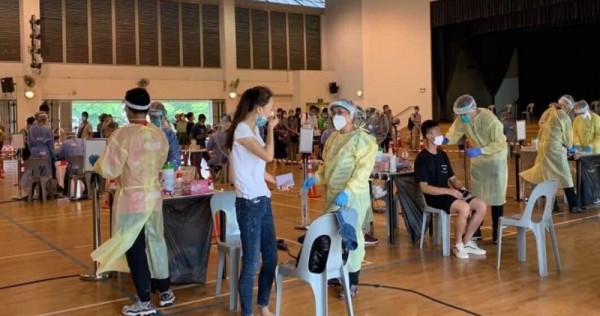
When he finally got a day off on Wednesday and had time to visit the Chinese embassy in central Singapore from his home in Kovan, on the northeastern side of the island, Chinese national Chen Ming only wanted to know one thing: how could he get tested for the coronavirus?
He told This Week in Asia that he had tickets to fly to Guangzhou on September 6 with low-cost carrier Scoot, but had yet to receive any information about where he could get tested for Covid-19 – a new requirement for travellers bound for China from the city state that is set to go into effect from Friday.
After two years in Singapore’s food and beverage industry, Chen – not his real name – said he was ready to return to his home country, but the new negative test result prerequisite for travelling was making him anxious, as Singapore only offers testing for patients with respiratory symptoms.
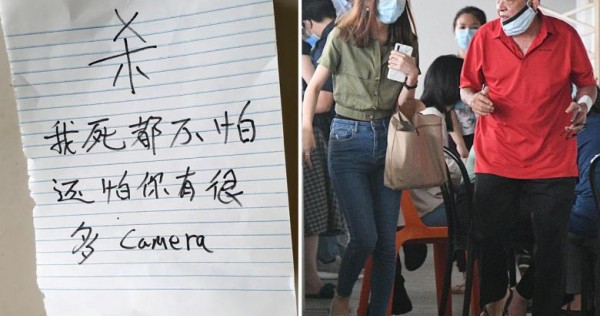
Ten days ago, a coffee shop owner found a mysterious note with an ominous message on the staircase outside his office.
The note, written in Chinese, began with one word: “Kill!” followed by “I’m not afraid of dying, let alone scared by your many CCTV cameras.”
Two afternoons ago, the owner was in his office, which is a level above the coffee shop, when a man kicked open the door and charged towards him.
He was wielding a knife with a 15cm blade and shouting: “I want to kill you!”
The victim, who wanted to be known only as Mr Wu, 69, told Chinese-language newspaper Lianhe Wanbao that before he could react, the man started slashing at him.
Mr Wu’s son, 31, who was next door, heard the commotion and tried to stop the assailant.
“My son rushed over to save me and ended up getting hurt too. His wounds are quite deep, but thankfully he is in stable condition,” Mr Wu told Shin Min Daily News.
He added that he injured his wrist while tussling with his attacker.
He said: “The knife was all bloody, and I struggled with him for about five minutes before I managed to wrestle the knife out of his hands.”
To be sure, Singapore is not the first city where Apple has rolled out new stores aggressively.
The tech behemoth seems to have adopted a similar market development strategy in another familiar Asian metropolitan – Hong Kong. In fact, Apple opened three stores in Hong Kong within the first 12 months of hitting the Causeway Bay shores in 2011.
Despite its smartphone market share plunging from 60 per cent in 2011 to about 40 per cent in 2016 in the city, owing to Samsung launching two of its best-selling phones, the Galaxy S III and the Galaxy S4, two more new Apple stores were established in that same year, leading to a total of six physical outlets in a city of 7 million.
In this context, having three Apple stores in Singapore doesn’t seem out of the norm. In fact, the question might be why not more?
SINGAPORE’S MARKET POTENTIAL
Apple “could use a third store” in Singapore given the Orchard Road one seemed “pretty full”, CEO Tim Cook had expressed in a visit to the city last December.
This is very true. With only one downtown, customers often have to suffer long waits and snaking queues, particularly given COVID-19 restrictions on crowd sizes.
Seeing also that the new outlet in Jewel helps little given its distance from the city centre, a third store does look like a practical solution to sustain service quality and customer satisfaction.
Hundreds formed a single line outside the Apple store along Orchard Road, a day before iPhone X launches in Singapore. (Photo: Milton Sau)
Yet it isn’t quite like Apple for resolving capacity issues to be the main driver of such strategic moves.
Apple clearly sees more in Singapore. In assessing its market potential, Apple may be looking at catering to regional demand.
As a transit hub for tourists, Singapore has good potential to reach a much larger market. In fact, Singapore is one of two cities in Southeast Asia in which Apple has a physical presence, with Bangkok being the other.
Known to be big fans of iPhones and big overseas shoppers, Chinese tourists may be another major source of revenue Apple has its eye on in deciding where to locate its next store.
Among the top 10 destinations of this group, Apple stores can only be found in three other places – Hong Kong, Japan and Thailand.
Singapore too received 46 per cent more Chinese tourists in July last year, according to the Singapore Tourism Board.
THE US-CHINA TRADE WAR
Geopolitics too may have played a role in this story.
Plans for the third Apple Store were rumoured to have been conceived early last year, following the arrest of Huawei Chief Financial Officer Meng Wanzhou in Canada in end-2018.
We wouldn’t rule out Apple preparing for the risks brought about by the US-China trade war.
Since mid-2019, Apple has begun exploring a relocation of production facilities out of China to Southeast Asia or even back to the United States.
Apple’s CEO Tim Cook speaks with Singapore Paralympian Theresa Goh (unseen) at the OCBC Aquatic Centre, Singapore Sports Hub December 12, 2019. (Photo: REUTERS/Edgar Su)
The tech giant was said to have requested for AirPods suppliers to consider moving up to 30 per cent of hardware production away from China. Partner manufacturers that make iPhone parts have also explored new factory options in Vietnam, India and Taiwan.
And it’s not only supply chains and production centres potentially shifting out in a China+1 strategy.
We wouldn’t rule out changes to front-facing stores, as the 10-year lease of Hong Kong’s flagship store expires next year, which could provide renewed impetus for Apple to re-evaluate its business strategy in Asia after the city has seen a year of tumultuous protests.
Hong Kong is losing its friendly and vibrant retail environment. Frequent hostile street protests and stronger government intervention have aggravated this.
The number of mainland Chinese visitors in Hong Kong dropped by over 58 per cent in the last quarter of 2019 prior to the pandemic outbreak. There will be a glut for Apple products in Hong Kong if China fans avoid the city.
Apple knows it must develop other geopolitically friendly and neutral market destinations, with this Marina Bay Sands store in Singapore possibly the first of many such steps.
A SHRINE TO THE BRAND
From a branding perspective, adding another iconic flagship store makes good business, where having a strategic, highly visible presence helps sustains Apple’s iconic status.
Apple is a brilliant marketer. Stores are more than just a location for customers to purchase iPhones, Apple watches, Macs, and other Apple accessories. Apple’s Fifth Avenue store in New York City is, after all, one of the most photographed places in the city.
Customers distance before entering an Apple Store during phase one of reopening after the COVID-19 lockdown in New York City, New York on Jun 17, 2020. (Photo: REUTERS/Brendan McDermid)
Such a seminal flagship store acts almost like a shrine which fans make pilgrimages to as they practise rituals of queueing for new Apple product launches.
These are places where likeminded fan boys and fan girls can gather, often under Apple’s new signature in-store foliage, check out new products and revel in the brand they love.
These gathering points feed a cult-like culture behind the brand, with the new floating Apple store looking incredibly impressive part of that strategy to reinvent brick-and-mortar shops for a superb consumer experience in a digital age.
Apple stores leverage one-of-a-kind, outstanding architectural design to reinforce the otherworldly environment they want to create for their fans, yet the attention to detail of every cutting-edge store ensures each projects the same, sleek image of the company.
This clever marketing tactic that instills their brand image and values also gives Apple an edge over its competitors – primarily Samsung and Huawei.
Although these two brands are widely acknowledged to be technologically comparable to Apple, they don’t possess the kind of brand affiliation Apple commands of fans.
An effective strategy to establish long-term relationship with customers is dependent on the ability to provide them with a brand experience that fulfils their emotional and functional needs.
An Apple Store is an effective vehicle to achieve this – as a one-stop location where a customer can fully gear up with a spread of Apple products and accessories, with store assistants au fait with the products who also give consumers sufficient space to explore.
THE BET APPLE IS TAKING ON SINGAPORE
Despite the slowdown in retail and tourism, Apple seems to trust that Singapore will bring back tourists faster than other countries.
A general view shows the new Apple store, located in the water in front of the Marina Bay Sands, in Singapore on Aug 24, 2020. (Photo: AFP/Roslan Rahman)
Singapore has demonstrated potential for a strong COVID-19 recovery, including the determination of the Government to revive its aviation hub, which plays to Apple’s interest.
The company is betting the Marina Bay store will pique the curiosity of and draw new regional customers, while the Jewel Changi Airport outlet will cater to transit travellers as international travel picks up.
We know Apple plans for the long haul. With Apple’s strong balance sheet and positive revenue outlook, it is an opportune time to open their next iconic flagship store right in Singapore, the beating heart of Asia.
Dr Vanessa Liu and Dr Lau Kong Cheen are senior lecturers, Marketing Programme at the School of Business in the Singapore University of Social Sciences.
Despite various electricity providers’ warnings of a possible post-circuit breaker spike in electricity bills, one Sembcorp Power customer was shocked when he was hit with a staggering $1,016.39 bill for the month of July.
Sharing photos of his bill on Facebook group Complaint Singapore on Tuesday (Aug 25), Chai See Yin disputed the amount, pointing out that his bill for July alone was higher than his combined electricity bill for the entire year.
Part of a three-person household living in a two-room flat, his previous monthly bills ranged from $27.89 in November 2019 to $74.68 in July 2019.
Other netizens using various electricity providers also chimed in, sharing that they too had experienced increases in their electricity bills recently.
SINGAPORE – The former US ambassador to Singapore said he had resigned from the board of a firm in the city-state linked to a group bidding for English soccer club Newcastle United citing “recent revelations” about the group.
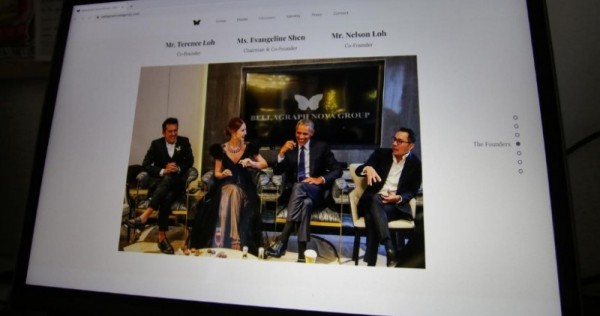
Kirk Wagar said he had quit the board of Axington AXIN.SI, a firm listed on the Singapore stock exchange’s junior bourse. Singaporean businessmen and cousins Terence Loh and Nelson Loh are controlling shareholders in the firm and the chairman is Chinese jewellery merchant Evangeline Shen.
The Lohs and Shen are the sole shareholders and directors of newly founded Bellagraph Nova Group (BN Group), which has described itself as a “conglomerate” with turnover last year of $12 billion (S$16 billion) that is in advanced talks to buy Newcastle.
Reuters reported on Saturday that the Singapore-registered BN Group had admitted to doctoring photos of former US President Barack Obama in marketing materials.
BN Group also said some of the information in those materials was released prematurely or contained errors after Reuters found inconsistencies when speaking to firms and persons BN Group says it is involved with.
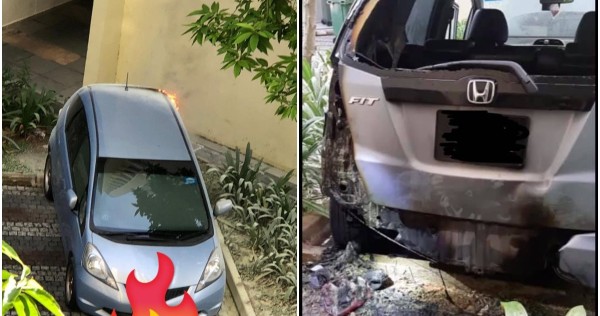
There was a loud bang, and the next thing Fazli knew, his rented car had caught fire from joss sticks.
As a result of the damage, the car rental company asked Fazli to foot a $4,000 bill, his sister shared in a Facebook post on Aug 19.
The 35-year-old had been in his Punggol home with his father, Muslim Yusop, when the incident happened that day.
Yusop told AsiaOne he heard a loud bang while in the kitchen, only to realise the sound came from his son’s car.
When the two of them rushed down to take a look, the back of the car was already ablaze as a result of five lit joss sticks, Yusop recounted.
As it also happened to be the first day of the seventh lunar month, the joss sticks were believed to have been placed there as part of the offerings to spirits.
The Singapore Civil Defence Force (SCDF) confirmed they extinguished the fire.


.jpg "electricitybill-1.jpg")