SINGAPORE – Workers’ Party (WP) MP Dennis Tan on Monday (Aug 31) charged that the People’s Action Party (PAP) had engaged in “petty and bad politics” during the general election, citing complaints made over the placement of election posters in his Hougang ward.
Referring to President Halimah Yacob’s address on evolving politics, he said good politics has to entail mutual respect between members of the ruling party and other parties, whether in Parliament or in the constituencies.
He recounted how two complaints were made to the Elections Department (ELD) during the recent general election campaign over posters his party put up that were said to be below the minimum required height.
A resident subsequently informed him that she had seen PAP representatives pulling his posters lower than they had originally been.
On a separate occasion, the PAP team also planted party flags in front of his banners, blocking their contents, Mr Tan added.
These made him wonder if the PAP had “gone backwards in time” in the way it conducted its campaign in Hougang, he said.
SINGAPORE: The recent case of the Grab driver who drove young women, including one 17-year-old, to secluded areas and harassed them is not an isolated case of harassment via ride-hailing service.
Multiple local reports have surfaced since 2016 of drivers committing acts of sexual violence – molesting passengers, masturbating in front of passengers or, in one case, assaulting a passenger who fell asleep in the backseat during the ride.
Nor is this issue exclusive to Singapore.
In December 2019, Uber released its first-ever safety report, revealing that 3,045 sexual assaults had been reported in rides in the United States in 2018.
Closer to home, in Asia, an attack on a female rider by a Grab driver in Indonesia triggered a national conversation on sexual harassment in 2019.
File photo of a Grab vehicle on show at a press event. (Photo: Kevin Kwang)
A 2014 rape case caused widespread outrage against Uber in India, leading to the service being temporarily banned.
China’s largest ride-hailing giant, Didi Chuxing, came under fire after two explosive murder-and-rape cases made headlines in 2018.
We have to ask: Does the ride-hailing industry have a sexual harassment problem?
GIG ECONOMY AND SEXUAL HARASSMENT
Sexual harassment cases have been reported in the context of other services that are mainstays of the gig economy, such as Airbnb and food-delivery apps.
For example, a foodpanda deliveryman in Singapore was blacklisted recently in August after he reportedly entered a customer’s flat without permission and sexually harassed her.
All these incidents should be viewed within the larger issue of violence against women, which must be met with zero tolerance. Yet there seem to be conditions inherent to gig economy companies, and ride-hailing services in particular, that create the potential for abuse – whether of customers or workers.
The typical customer tends to have some faith in the recruitment processes of these companies, believing that ride-hailing drivers are thoroughly vetted for prior history of harassment and assault.
However, that is far from standard in the gig economy. In 2017, Airbnb was sued for negligence by a woman who claimed that the company had allowed her to rent a room from a man previously accused of domestic violence.
In Singapore, a GrabHitch driver previously convicted of outrage of modesty was found guilty in 2019 of molesting two passengers within an hour of each other.
When complaints of sexual harassment at the hands of a worker are indeed filed, the companies’ responses frequently disappoint.
(Photo: Unsplash/Takahiro Taguchi)
In Indonesia last year, Grab came under fire for allegedly trying to convince a victim to meet privately with a driver, after she reported him for kissing her forcefully on the lips, so he could “give an explanation directly”.
When the traumatised woman declined, the company publicly faulted her on Twitter for refusing the meeting “despite already receiving an explanation from [Grab’s] side”.
When such cases of sexual harassment occur and crimes have been alleged, should ride-hailing giants bring in law enforcement or dismiss these cases as misunderstandings that can be privately resolved?
One further concern: People may go away with the impression that women’s safety is less important until it gets public attention. Uber was compelled to drop its forced arbitration requirements for sexual harassment reporting after a CNN investigation in 2018.
Workers too in the gig economy could do with stronger protections. After all, the 2019 Uber safety report actually found that female drivers experienced sexual harassment and abuse at similar rates as passengers.
Companies have notoriously avoided responsibility for sexual harassment against their drivers by claiming that they are just platforms enabling peer-to-peer service.
In 2019, a Guardian investigation found that female drivers of Uber and Lyft in the United States who experienced a range of harassment received little or no support from the companies.
In Singapore, a passenger was sent to jail in 2018 for repeatedly molesting his Uber driver while she was driving. She waited until the trip was over to report the case.
SOME ATTEMPTS TO SHIFT GEARS
Over the last couple of years, ride-hailing companies have put out a mixed bag of preventative policies to address sexual harassment.
In Singapore, Grab bans drivers who commit sexual assault, and provides digital training on what constitutes harassment to all its employees. It also outlines in its code of conduct for drivers what inappropriate actions to abstain from to avoid being inadvertently accused of sexual harassment.
The logo of Chinese ride-hailing firm Didi Chuxing is seen at their new drivers center in Toluca, Mexico, April 23, 2018. REUTERS/Carlos Jasso/Files
While those measures appear to have been well thought through, others – such as Chinese company Didi’s trial move in 2018 to limit drivers who can accept late-night passengers (to those who have driven for at least six months, with more than 1,000 safe trips logged) – seem to be based on erroneous beliefs that sexual violence only happens at night. We weren’t able to find any publicly available data on the programme’s impact on increasing the safety of female passengers.
Companies have also turned to technology for solutions. For example, since 2017, Grab has introduced a new feature in Southeast Asia that allows passengers to notify security and share their ride trajectory with emergency contacts.
This action triggers a call from an external security company that assesses the passenger’s situation and escalates matters to the police if required.
Meanwhile, in the hopes of deterring harassment and improving dispute resolution, Gojek has since 2019 allowed drivers in Singapore to opt for the installation of inward-facing recording devices in their vehicles. Recordings are stored for seven days and can be accessed by authorised data controllers in cases of dispute.
In Indonesia, a team of women have launched a ride-hailing service, Ojesy, populated with only female drivers. PickMe, a ride-hailing service in Sri Lanka, allows rider opt-in, allowing female drivers to only drive female passengers.
These moves are reminiscent of the practice in India, Japan and elsewhere to introduce dedicated women-only cars on trains.
A university student in Singapore started a similar women-only carpooling group on Telegram last year, after experiencing harassment by a male driver.
While such ground-up actions are to be lauded for finding new ways to create safe spaces for women, such ideas can be inadvertently problematic: They place the burden of preventing sexual harassment on women, sending the message that women should curtail their freedoms to avoid violence.
HOLDING COMPANIES ACCOUNTABLE
Companies in Singapore should use the national attention generated by the recent Grab case to put serious measures in place against sexual harassment of both workers and customers.
While ride-hailing giants have for years condemned such crimes and vowed to put up stronger precautions, these cases seem to recur at alarming rates.
An Uber logo is shown on a rideshare vehicle. (File photo: REUTERS/Mike Blake)
The fluid, private nature of the gig economy, where service exchanges between worker and customer take place inside cars and other private settings, makes data on sexual harassment even harder to obtain than regular workplaces.
Where the same concerns plague the ride-hailing sector as a whole, it would be a missed opportunity to strengthen public safety if only implicated companies take corrective steps to close loopholes.
Following Uber’s lead, all ride-hailing companies should release statistics regarding sexual harassment and assault, and information about remedial action taken to investigate each case and prevent recurrence.
If they don’t already have formal systems in place for sharing records, they should share pertinent information with each other about drivers banned for misconduct, so perpetrators don’t get passed from one company to another.
They should also improve support for female drivers. During orientation, drivers could be educated about the risks of sexual assault or harassment by passengers, actions that companies will take and guarantees that remuneration will not be affected. Companies can provide real-time recourse to help if such incidents arise.
One of the reasons why Grab was established was precisely to address taxi safety concerns, according to interviews with cofounder Tan Hooi Ling.
One hopes that companies would be motivated by the moral impulse to do what’s right, but there is also a strong business case to put in place stronger safeguards.
Firms looking for a more utilitarian reason to take sexual harassment seriously need only to look at a 2018 report released by the International Finance Corporation and Accenture, which analysed attitudes towards ride-hailing in countries such as Indonesia and the United Kingdom.
It found that many women cite sexual harassment as a chief reason to avoid ride-hailing services entirely.
Shailey Hingorani is Head of Research and Advocacy at AWARE.
SINGAPORE: Three F&B businesses at Science Park Drive and Havelock Road were issued an order to close their premises and fined after failing to comply with measures aimed at curbing the spread of COVID-19, said the Singapore Food Agency (SFA) on Monday (Aug 31).
The F&B outlets are: Whimsical Bar at 2 Science Park Drive, an adjacent restaurant called Create Kitchen, and S-Tripes Hotpot located at 731 Havelock Road.
Both Whimsical Bar and Create Kitchen were fined S$1,000, and S-Tripes Hotpot was fined S$2,000.
F&B establishments were allowed to resume dine-in services from Jun 19 under Phase 2 of Singapore’s reopening, but sale and consumption of alcohol at these establishments are prohibited after 10.30pm.
Each group of customers must also be limited to five or fewer people, with at least 1m spacing and no intermingling between groups.
SFA officers found that Whimsical Bar did not implement safe distancing measures between tables and alcohol was served after 10.30pm.
“Tables were spaced less than 1m apart and groups of more than five people were allowed to sit together and mingle,” SFA said.
The agency added that Whimsical Bar was operating a food establishment “without a valid food shop licence” and was ordered to close immediately until it obtains a licence.
The unit adjacent to the bar, Create Kitchen, “violated similar safe management measures”, SFA said, noting that this establishment has a licence to operate as a restaurant. Create Kitchen was ordered to close from Sep 2 to Sep 11.
SFA officers also found that S-Tripes Hotpot restaurant had flouted safe management measures on multiple occasions and it served alcoholic drinks after 10.30pm.
“Staff were not wearing masks or not wearing them properly in spite of reminders.
“Sale and consumption of alcoholic beverages was observed after 10.30pm, with the beverages transferred into teapots and empty green tea bottles before being served to avoid detection,” SFA said.
Sale and consumption of alcoholic beverages was observed after 10.30pm at S-Tripes Hotpot restaurant, with the beverages transferred into teapots and empty green tea bottles before being served to avoid detection. (Photo: SFA)
S-Tripes Hotpot restaurant was ordered to close from Sep 2 to Sep 11.
Under the COVID-19 regulations, first-time offenders will face a fine of up to S$10,000, up to six months jail, or both, SFA said.
Subsequent offenders may face a fine of up to S$20,000, a jail term of up to twelve months, or both.
SFA added that under the Environmental Public Health Act, no person shall operate a food establishment without a valid licence.
“Offenders shall be liable on conviction to a fine not exceeding S$2,000 and, in the case of a continuing offence, to a further fine not exceeding S$100 for every day or part thereof during which the offence continues after conviction,” the agency said.
Last week, 10 F&B outlets were fined for breaching safe distancing requirements.
These breaches include accepting reservations for more than five people, inter-mingling of large groups across tables, failure to observe the minimum 1m distance between tables and allowing alcohol consumption on premises after 10.30pm.
SINGAPORE – Embattled oil tycoon Lim Oon Kuin, better known as O.K. Lim, and his two children have been sued by Hin Leong Trading judicial manager PricewaterhouseCoopers Advisory Services in its bid to recover US$3.5 billion (S$4.75 billion) plus another US$90 million in dividends the Lims allegedly paid themselves even though the company was insolvent.
In court documents seen by The Straits Times, judicial managers Goh Thien Phong and Mr Chan Kheng Tek accused O.K. Lim, his son Evan Lim Chee Meng and daughter Lim Huey Ching of breach of fiduciary duties as directors and fraudulent trading.
They were accused of “deliberately concealing (Hin Leong’s) losses and portraying it as a profitable company when in fact it was massively insolvent”.
The alleged fraudulent activity included “the creation of fictitious gains to conceal accumulated trading and other losses, the forgery of documents, the manipulation of Hin Leong’s accounts through irregular accounting entries, the overstatement of Hin Leong’s inventory and the obtaining of financing through improper means”.
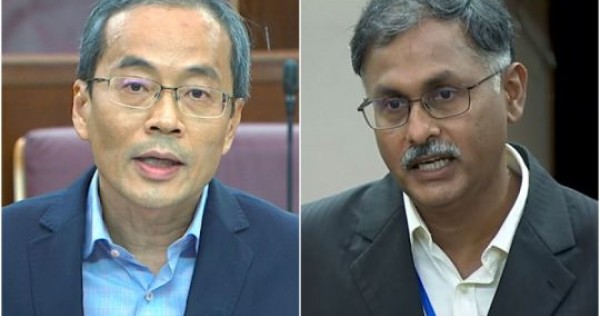
SINGAPORE: The Government should do more to address job competition from foreigners amid mounting concerns among Singaporeans on the issue, Members of Parliament (MP) said on Monday (Aug 31) during the debate on the President’s Address.
This was a key theme on day one of the debate, with MPs touching on strengthening the “Singaporean core”.
Suggestions raised in the House include having companies prioritise Singaporeans for jobs beyond considering them fairly, ensuring that firms grow their local workforce, as well as mandating that companies are transparent about their selection criteria and foreign workforce.
President Halimah Yacob had said in speech at the opening of the 14th Parliament last Monday that the Government will address the issue of work pass holders competing with Singaporeans for jobs.
Two days later, Manpower Minister Josephine Teo announced that the salary criteria for Employment Passes (EP) and S Passes will be raised, as part of a “regular calibration” to enable firms to hire the manpower they need while ensuring a strong Singaporean core.
But MP for West Coast GRC Foo Mee Har said on Monday that she does not think the new measures “go far enough”.
“Many Singaporeans believe that they are being passed over for jobs that they can do because foreigners come cheaper, without the employer having to pay for CPF contributions and deal with National Service obligations, or simply because employers prefer to bring their own friends and families from overseas to fill,” she said.
Bishan-Toa Payoh GRC MP Saktiandi Supaat said some employers offer higher pay to foreigners to qualify them for work passes, before reducing the salaries once they are in Singapore.
“I am told the employers would make this claw back clause as part of the terms of employment, and often they are verbally negotiated,” he said. “Food and beverage businesses run by foreigners are one of the culprits.”
Ang Mo Kio GRC MP Gan Thiam Poh said he has heard of employers who collect monthly fees from their employees to circumvent the system. “The bosses receive additional incomes and the employees qualify for the jobs,” he said.
Under the Fair Consideration Framework introduced in August 2014, employers are required to advertise openings on a government job portal before submitting their EP applications. This does not apply to job positions with salaries of S$20,000 and above.
Firms found to favour hiring foreigners over Singaporeans will be barred from applying for new work passes for a period of between 12 and 24 months, and will not be allowed to renew their existing work passes.
However, Ms Foo said the focus so far has been on giving Singaporeans “fair consideration”. She called for citizens to be given priority.
“In other words, between two equally qualified candidates, employers should be obliged to pick the Singaporean over the foreigner,” she said.
“Such a ‘Singaporean first’ employment policy is consistent with other government policies where we accord significant benefits and priorities to citizens, whether it be housing, primary school balloting, school fees or healthcare subsidies.”
MORE TRANSPARENCY ON FOREIGN WORKFORCE, SELECTION CRITERIA
Ms Foo said the Government should enforce transparency of selection requirements, adding that job vacancies advertised on the portal should contain “completely transparent” selection criteria.
“The employer’s final hiring decision must stand up to the scrutiny of others, including the firms’ own employees as well as the authorities, for having best satisfied these clear selection criteria, in order to foster a sense of fair play,” she said.
The Government should implement a dependency ratio or quota for EPs, with differentiated ceilings and salary levels for different sectors, Ms Foo said. “This will galvanise the necessary action on the part of employers, to reduce reliance on foreigners,” she added.
Senior management should also sign off on employment offers to EP holders and declare that the firm has complied with these requirements, she said. This will hold senior executives accountable, and penalise them if they make false declarations, she explained.
West Coast GRC Member of Parliament Ms Foo Mee Har in Parliament on Aug 31, 2020.
Lastly, Ms Foo said firms should ensure capabilities and skills transfer to local employees, with systematically developed succession plans linked to EP approvals for some sectors.
“Sectors with high concentrations of foreigners should then have their renewals of work passes be contingent on the firms meeting local succession and capability transfer key performance indicators,” she stated.
East Coast GRC MP Jessica Tan said she previously worked in two multinational corporations with foreigners in key positions, but with clear development plans and a succession pipeline of local talent to fill these roles over time.
Ms Tan believes that many companies have such practices and plans, but have sidelined them to meet the demands of business, considering the speed and scale of growth in the last few years coupled with economic disruptions.
“I believe that while we do need policies in place to ensure fair employment practices, more importantly employers must have people plans to grow and strengthen the Singapore core,” she added.
“This requires commitment of companies in Singapore and investment to develop skills of Singaporeans with a balance of government policies and enforcement.”
MP for Kebun Baru SMC Henry Kwek said many international companies have yet to build a strong Singaporean core in the middle and senior management ranks, expressing concern that this process will regress as they downsize amid the COVID-19 pandemic.
Mr Kwek said the Government should explore more ways of identifying tell-tale signs of systemic discriminatory hiring practices by ensuring that firms are transparent about the diversity of their workforce.
One way, he said, is to make it compulsory for companies with more than 200 employees and with EP holders making up more than one-quarter of their workforce to declare where these EP holders come from. This will apply to those earning S$60,000 and above annually, he suggested.
“Afterall, if the EP holders are dominated by one particular country, despite Singapore’s very diverse expatriate workforce, then how can Singaporeans be persuaded that there is diversity in these companies hiring and remuneration policy?” he questioned.
Hougang MP Dennis Tan in Parliament on Aug 31, 2020.
Workers’ Party MP Dennis Tan said that in the face of retrenchments and unemployment, the Government should take greater steps to ensure Singaporeans are given a “fair share” at the workplace.
Mr Tan, MP for Hougang SMC, questioned if the new salary requirements for EP and S Pass holders sufficiently addresses Singaporeans’ concerns, noting anecdotal discussions regarding the “notoriety” of the finance or IT industry having relatively higher numbers of foreigners.
“As the competition for scarce jobs heats up, relooking our employment pass policy is necessary,” he said.
“Should we not … re-examine our assumptions behind employment and economic policies more holistically so as to better encourage or incentivise, or if necessary, ensure that companies make greater effort to engage the Singaporean core at different levels of their company?”
NATIONAL HR COMMITTEE
West Coast GRC MP Ang Wei Neng suggested setting up a National Human Resources (HR) Committee that will work with firms and industry transformation maps to develop a Singaporean core.
The committee can have regular meetings with HR heads at major companies to understand their main manpower issues and commitment to building a Singaporean core in their management team, he said.
“By observing whether the head of HR of the major companies is helmed by a Singaporean is also a reflection of their dedication to build a Singaporean core,” he added.
“Second, the gathering and sharing of data gives us an effective platform to discuss meaningful strategies moving forward.”
Mr Ang said the committee could work with these companies to share best practices on hiring more Singaporeans, and develop guidelines based on these practices across industries.
“For instance, if a company has a regional headquarters in Singapore, it should have a plan to give their Singaporean executives regional exposure, which might open up opportunities for promotion later on,” he added.
“The same committee can also receive feedback from these companies and work with institutions of higher learning or training providers, to train Singaporeans who can take on higher-level jobs in the near future.”
RETAIN SINGAPOREANS OVER FOREIGNERS
In her speech, Minister of State for Manpower Gan Siow Huang said Singapore’s foreign workforce policy has largely been driven by the need to support economic growth, which would in turn create good jobs for Singaporeans.
Nevertheless Ms Gan, a first-time MP, said the Government needs to work with employers to ensure Singaporeans are viewed more favourably when applying for jobs, pointing to incentives like the Jobs Support Scheme and the Jobs Growth Incentive.
“In circumstances where retrenchment is unavoidable, and an employer has to choose between a foreigner and Singaporean, I urge the employer to lean towards keeping the Singaporean,” she added. “In short, if employers must retrench, retain the Singaporean over foreigner.”
Minister of State for Manpower and Education Gan Siow Huang speaking in Parliament on Aug 31, 2020.
Ms Gan said businesses that have a strong local headcount would attract more support, and are resilient during a time when border controls could impact the supply of foreign workers.
“And most importantly, by showing due consideration to the Singaporean core in this difficult time, the trust that is forged between your Singaporean employees and you will be further strengthened,” she said.
“This will augur well for you when your business picks up in the future and you need the support of your local workforce.”
Beyond that, Ms Gan urged global and regional companies to groom Singaporeans so they have a fair chance at senior and top management positions.
“Our goal is to get Singaporeans to be part of these global teams comprising diverse foreign and local talent,” she said.
Nevertheless, Ms Gan said Singapore must continue to stay open and provide businesses with access to global expertise and talent, although she said the Government will do its best to ensure fair job opportunities for Singaporeans and support them in gaining new skills.
“Ultimately, for every additional Employment Pass and S Pass that is issued to a foreigner today, we need to be clear that it is so that even more job opportunities will be available to Singaporeans in the future,” she stated.
“We will spare no effort to strengthen the Singaporean core, and walk the journey with every Singaporean. Because our people are our only asset, and every Singaporean counts.”
Following a Facebook post alleging that he told a pair of elderly residents to move out, Chua Chu Kang Member of Parliament (MP) Zhulkarnain Abdul Rahim has stepped out to say that wasn’t the case at all.
In a Facebook post on Saturday (Aug 29), he addressed a “malicious post aimed to discredit the work done by his grassroots leaders and [him]”, saying that the accusations were untrue.
[Important announcement]
It has come to my attention that there is a malicious post aimed to discredit the work done by…
SINGAPORE – Prime Minister Lee Hsien Loong will take the stand when his defamation trial against financial advisor Leong Sze Hian opens in the High Court in October.
The hearing, which will take place from Oct 6 to 9, was confirmed at a pre-trial conference with Justice Aedit Abdullah on Monday (Aug 31).
Responding to queries from the Straits Times, a spokesman for Mr Lee said the Prime Minister will enter the witness box to give evidence and be cross-examined.
In a Facebook post following the conference, Mr Leong’s lawyer Mr Lim Tean wrote: “The expert witness who is to be called by PM Lee, Dr Tuan Quang Phan, will give evidence via video link from Hong Kong.”
Dr Phan is an associate professor of marketing as well as innovation and information management at Hong Kong University Business School.
Mr Lee will be represented by Senior Counsel Davinder Singh from Davinder Singh Chambers.
PM Lee had filed the suit over a post shared by Mr Leong on his Facebook page on Nov 7, 2018, which contained a link to an article by Malaysian news site The Coverage.
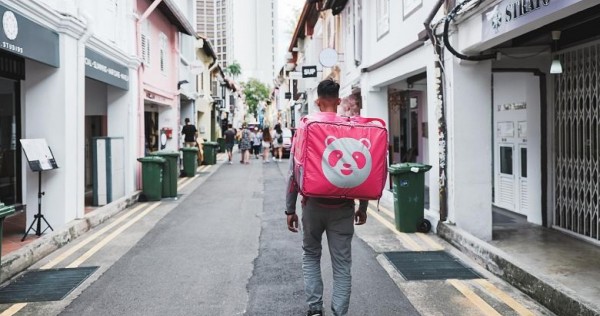
Some businesses may live by the old adage that the customer is always right, but not Foodpanda — at least based on a recent exchange with a spurned customer.
The food delivery company had denied the customer’s request for a refund on an incomplete order and even tasked them with improving their orders’ success rate, according to a screenshot shared online on Sunday (Aug 30).
In the screenshot, the Foodpanda customer care team acknowledged the customer’s complaint of a missing item in their order from Our Tampines Hub.
However, the customer was “not eligible” for a refund due to their order history, the customer care team wrote in an email.
“I would ask you to improve the success rate of your orders,” they went on to say. PHOTO: Screengrab/RedditIdentifying themself as a friend of the customer, a Reddit user called Foodpanda’s response “rude and ridiculous”.
SINGAPORE: There is a need to pay more attention to Singapore workers even as foreigners remain important in helping to “power” Singapore’s economy, said Leader of the Opposition Pritam Singh in Parliament on Monday (Aug 31).
Delivering his speech during the debate on the President’s Address, Mr Singh said one of the things that needs to change in Singapore is how it manages and accommodates foreigners in the economy.
“Their presence gives Singapore a vitality that keeps us economically relevant and also provides jobs and opportunities to our fellow Singaporeans. Many of us count the foreigners in our midst, regardless of race, language or religion as our friends,” he said.
“That openness and friendly attitude must continue as a manifestation of the Singapore spirit and the Singapore we leave behind for future generations of Singaporeans,” he added.
But it is precisely because we need foreigners to help power our economy that we need to pay more attention to the Singapore worker … some of whom feel excluded from opportunities created in their homeland.”
Mr Singh, speaking for the first time in a parliamentary debate as Leader of the Opposition, called for the Ministry of Manpower (MOM) to publish the names of “recalcitrant” employers who do not give locals a fair chance in hiring and promotion.
MOM had recently placed 47 companies on the Fair Consideration Framework (FCF) watchlist for discriminatory hiring practices. A wealth management firm on the watchlist was found to have almost three-quarters of its professionals, managers, executives and technicians (PMETs) of the same nationality, he noted.
In another example of a bank, almost two-thirds of the PMETs are of the same nationality.
“The obvious question is, how did those two companies get to those stages without MOM taking action before this?” asked Mr Singh.
“MOM website states at one point and I quote: ‘MOM does not tolerate unfair hiring practices and employers who do not give locals a fair chance in hiring and promotion will face scrutiny and stiff penalties if found to have unfair hiring practices,” he added.
“However, for three-quarters and two-thirds of PMETs of two companies to be non-Singaporeans of the same nationality, Singaporeans may be justified in asking if MOM has tolerated their unfair hiring practices for some time.”
This is a “complex issue”, Mr Singh acknowledged, noting that a company may turn to hiring foreigners if, for instance, its customers are not in Singapore, are from the same country as the PMETs it hired or if customers do not speak any of the languages widely used in Singapore.
“The problem is that we simply do not know enough,” he said.
“And the vacuum has given space for more toxic conversation to ferment. We should nip this forthwith and some details earlier this week from MTI (Ministry of Trade and Industry) about intra-corporate transferees and the minister for MTI have been important. To this end, more information and not less, is certainly more helpful.”
To address the issue, Mr Singh listed several suggestions, including having MOM publish the name of “recalcitrant employers”. “We can then understand the operating paradigm of such businesses and how they intend to make the transition to fair hiring practices,” he added.
In addition, Mr Singh suggested that a Parliamentary Select Committee can investigate the limitations of the workforce and the needs of the economy, as well as the issues faced by Singapore workers amid competition and constraints faced by employers.
“Beyond this, a far more purposeful way to prevent companies from hiring unfairly would be for Parliament to pass anti-discrimination legislation and impose penalties for discriminatory practices by egregious offenders,” he added.
PLUG POSSIBLE GAPS IN EDUCATION
Tied closely to the issue of hiring foreigners is whether the education system here is adequately preparing citizens for jobs available, said Mr Singh.
“Two main justifications given for the hiring of foreigners are first, that they are unable to find Singaporeans with the expertise and second, that foreigners do jobs that are undesired by Singaporeans.
“As it is unlikely that well-paying banking jobs are undesired by Singaporeans, the justification of these banks in hiring foreigners must be that they are unable to find enough Singaporeans with the needed expertise,” said Mr Singh.
“If that is true, then we need to ask where the gaps are in our education and lifelong learning training systems. These gaps must be found and plugged as soon as possible.”
Leader of the Opposition Pritam Singh speaking in Parliament on Aug 31, 2020.
Mr Singh also touched on local tradesmen, calling on authorities to regulate who can practice each trade.
“In places like Australia, New Zealand and Germany, tradesmen make good wages that match or even outstrip those of university graduates,” he said.
“Uplifting our tradesmen will require a paradigm shift in how workers are viewed and trained. If it succeeds, it will raise the self-esteem and incomes of Singaporeans who may not be academically inclined but who have acquired valuable skills that many of us in this House would not be able to fully master,” Mr Singh added.
“It is my view that such a decisive shift will fundamentally alter our understanding of meritocracy.”
FORMATION OF MORE SELECT COMMITTEES
Mr Singh proposed the formation of more Select Committees, as some conversations in Singapore can “continue to be divisive” and require a “framework for reasoned conversation”.
“Parliament, using the platform of Select Committees, can operate as an important safety valve and agent of positive conversations that ought to have a direct impact on policies and laws,” he said.
This is especially important with misinformation and disinformation campaigns online which “manipulate content and hijack narratives”, he added.
File photo of Parliament House. (Photo: Jeremy Long)
The Government could create more Standing Select Committees to scrutinise spending, policies and the administration of each ministry, with the members in the committee drawn from a mix of members in the House.
He noted that such committees are “part of the normal political fabric of other democracies”, adding that they are separate from Government Parliament Committees (GPCs) which are partisan and involve only People’s Action Party (PAP) MPs.
If not Standing Select Committees, the Government could form more ad hoc committees to investigate specific issues and report back to Parliament, said Mr Singh, adding that eventually, they could become permanent Standing Select Committees.
“These Select Committees must function as investigators, with no pre-determined agenda, hidden or otherwise. They must go where the evidence, obtained through submissions and witnesses, leads them,” he said.
While they are already part of Singapore’s parliamentary processes, there should be more of them, he added.
Mr Singh cited his experience with the Select Committee on Deliberate Online Falsehoods, which was a “good start”.
But he suggested improvements in the process, including a longer lead time for submission to be made, publishing written submissions at least two weeks before the hearings, scheduling hearings over more days, as well as releasing an interim report for public scrutiny that can prompt more written submissions and additional hearings.
WP WILL “CHART AN INDEPENDENT COURSE”
On the role of the opposition in Parliament, Mr Singh said the Workers’ Party (WP) will set its “own standards” and “chart an independent course”.
“My assessment is that the public expects the WP and the opposition in general to play a constructive role in Singapore politics. It should advance the interests of all Singaporeans, whether they may be in the majority or minority on any particular issue, without fear or favour.
“The office of the LO (Leader of the Opposition) goes a long way to institutionalising an opposition in Parliament and in our political system,” he said.
As the “voice of the people”, Mr Singh said the WP intends to raise matters important to people in Singapore that the Government and PAP backbenchers may not.
While the WP may not have enough MPs to organise themselves into a shadow Cabinet in the tradition of Westminster parliaments, it will look into five areas “critical” and of “huge importance” to Singaporeans, said Mr Singh.
They are: Health, ageing and retirement adequacy; jobs, business and the economy; education, inequality and the cost of living; housing, transport and infrastructure; and National Sustainability to ensure a long-lasting and thriving Singapore.
However, he said the ability of WP MPs to carry out heir duties as the opposition depends on the quantity and quality of information shared by the Government in Parliament and released to the public, the resources given by the Government to analyse and use the information for the public’s benefit and the willingness of the Government to listen to and implement alternative ideas proposed.
Mr Singh called on the Government to “put out more information without being asked to”, especially with information and indicators benchmarked against other countries.
WHAT MUST NOT CHANGE
Even as he called for improvements in Singapore, several things must not change, said Mr Singh.
Singapore has always been a “trading nation”, and foreign investors should know that Singapore “will never close for business, no matter how many WP MPs are in Parliament”, he said.
“Opposition politics and advocacy for Singaporeans cannot ignore Singapore’s place in the world and what we offer to the world.
“We must still look outward even as we continually search for a lasting modus vivendi which accommodates the domestic pressures of being economically open and the reality of the Singapore identity that evolves and crystallises as our nation matures.”
Mr Singh added that the WP will continue to support the Government’s defence and foreign policies, including Singaporeans’ involvement in international organisations like the United Nations, World Health Organization and the World Bank.
“These policies are well-considered and they place primacy on Singapore’s interests while seeking long-term mutual cooperation with other countries and international organisations,” he said.
The party also supports cooperation with ASEAN and other countries, particularly in finalising the South China Sea code of conduct.
Singapore’s position on stamping out corruption and its emphasis on racial and religious harmony should not change, said Mr Singh.
“If anything, Singapore’s position on stamping out corruption should be strengthened so that extra-territorial corruption by Singaporeans is discouraged with as much diligence as domestic corruption,” he said.
He added that Singapore should be “grateful” for the country’s emphasis on racial and religious harmony, as it is a “source of intractable problems” in other countries.
“My WP colleagues and I look at Singapore as a glass half-full, or one that can be topped up. There is must that is right and which should remain the same. But there is also much that can, and should, change.”