Home Blog Page 988

Apple iTunes fraudulent charges: Banks continue to assist victims as more cases come to light

0

SINGAPORE: Banks in Singapore said they have responded with measures to assist victims after a series of fraudulent Apple iTunes transactions affected dozens of account holders.

The victims reported that hundreds to thousands of dollars were wiped from their debit accounts and charged to their credit cards from banks including Oversea-Chinese Banking Corporation (OCBC), DBS and HSBC.

Apple Singapore, on Friday (Jul 20), told Channel NewsAsia that it was looking into the matter. The company also highlighted its support page for customers to report any problems with purchases made on iTunes.

United Overseas Bank (UOB) told Channel NewsAsia on Sunday that it increased its monitoring of iTunes transactions in the previous week. 

“Where our system detected a potentially fraudulent transaction, we immediately called our customer to check with them on the transaction,” said UOB, adding that it would help a customer claim a refund once the fraudulent transaction is confirmed. A new card would also be issued as an additional security measure, UOB said. 

At OCBC alone, there were 58 cases of fraudulent transactions in July.

“In early July, we detected and investigated unusual transactions on 58 cardholders’ accounts. Upon confirmation that these were fraudulent transactions, we deployed the necessary counter-measures and are currently assisting the affected cardholders via the chargeback process,” said Mr Vincent Tan, head of credit cards at OCBC Bank. 

DBS customers who report unauthorised iTunes transactions would receive a temporary credit while the bank investigates the charge dispute, the bank told Channel NewsAsia.  

“Banking security is of foremost concern to us and we use industry-leading security technology and protocols to ensure that our customers’ information and money are safe,” said a DBS spokesperson. “We also constantly monitor credit/debit card transactions in real time for any suspicious activities.”

Channel NewsAsia has reached out to HSBC and Standard Chartered for comment.

FRAUDULENT iTUNES CHARGES WORTH MORE THAN S$1,000

Since Channel NewsAsia’s first report on the fraudulent iTunes charges on Sunday, more have taken to social media to share their plight, with some even hit by transactions amounting to around S$7,000.

One of the victims, who preferred to remain anonymous, told Channel NewsAsia that more than S$7,000 worth of iTunes transactions were charged to her HSBC credit card. 

She discovered the transactions on the previous day after receiving an SMS notification from the bank informing her that her credit card limit was left with “less than 30 per cent”.

“I don’t have any records of those unauthorised transactions as they (had) told me over the phone. I will see it when my statement comes next month,” she said. 

She added that she was referred to a senior adviser when she contacted Apple, who “repeatedly” told her that the company was unable to refund the disputed amount. 

“This is a case of credit card fraud, which is not due to Apple and/or iTunes at all,” she said, citing the Apple staff. 

She was also told that her credit card may have been used for online purchases other than Apple, resulting in the fraudulent transactions, said the victim. She uses her card for purchases on Apple’s App Store, she said.

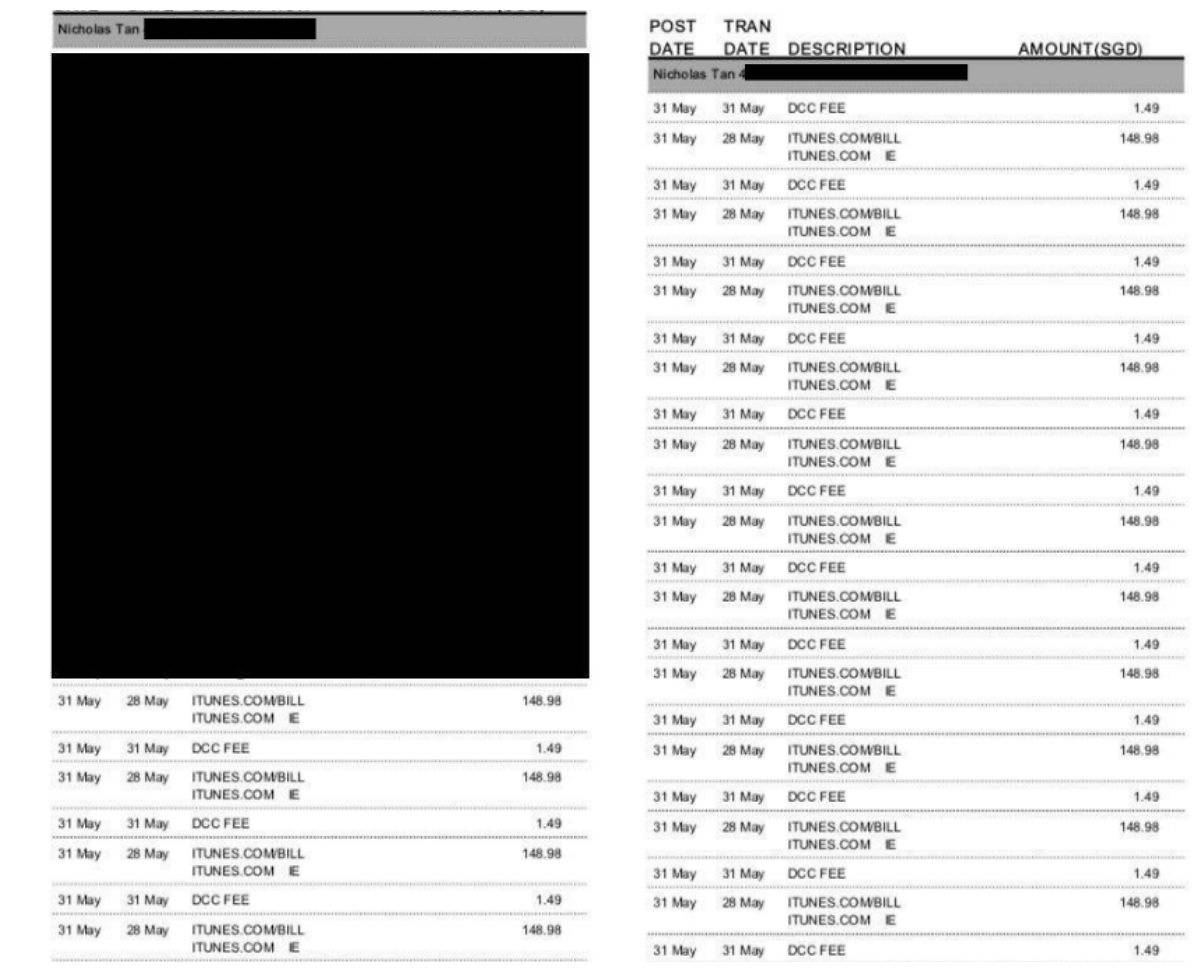
Sales manager Nicholas Tan, 31, was charged more than S$2,000 to his HSBC credit card in May. Each of the fraudulent iTunes transactions costs S$148.98, he said. 

“The bank called me to verify if I had made those transactions. I was not even in Singapore,” Mr Tan said. “HSBC was fast. They noticed those transactions and called me immediately. I missed their first call but they called me the next day to follow up,” said Mr Tan.
Nicholas Tan HSBC transactions

A screenshot of iTunes charges in Mr Nicholas Tan’s HSBC credit card statement. (Image: Nicholas Tan)

Another victim, Mr Wilson Wong, 26, is currently waiting for refunds worth nearly S$2,000 after a total of 12 fraudulent iTunes transactions were charged to his OCBC debit card on Jul 13. 

“Just disappointed with OCBC. They only called me when the transaction was at S$1,900,” said the singer-songwriter, who wished the bank had alerted him earlier instead of four days later, on Jul 17. 

Architectural designer Hariz Lim recently received refunds worth more than S$1,700 after 11 iTunes transactions were made through his OCBC debit account on Jul 16. Each of the transactions costs S$158.98.

“The shocking thing is, I don’t even have any credit or debit card details saved on my own iTunes account,” said Mr Lim. “Apple/iTunes was not even aware of the fraudulent transactions (in my account) until I informed them.”


Source link

Football: Arsenal arrive in Singapore for International Champions Cup

0

SINGAPORE: English Premier League side Arsenal arrived in Singapore on Monday (Jul 23) for the 2018 International Champions Cup as part of their pre-season preparations.

Mesut Ozil, Alexandre Lacazette and Pierre-Emerick Aubameyang were among the stars travelling with the Arsenal team, who were welcomed by their eager fans outside Changi Airport.

Arsenal Singapore ICC Fans wlecome team

Arsenal fans outside Changi Airport welcome the London side to Singapore for the International Champions Cup. (Photo: ICC)

Ozil, 29, arrived in Singapore just hours after announcing that he was quitting Germany’s national team, citing concerns over racism after he was criticised by the country’s football federation president.

The attacking midfielder said he was unfairly singled out for Germany’s shock first-round defeat at the World Cup.

The Gunners, led by their new head coach Unai Emery who was appointed after the long-serving Arsene Wenger stepped down at the end of last season, will play Spain’s Atletico Madrid on Jul 26 at the National Stadium.

They will then take on French league champions Paris Saint-Germain on Jul 28. Atletico will face PSG in the final game of the tournament on Jul 30.

Arsenal Singapore ICC Unai Emery arrives

Arsenal manager Unai Emery signs autographs for fans at the Shangri-La Hotel, where the team is staying in Singapore for the International Champions Cup. (Photo: ICC)

Tickets to the 2018 International Champions Cup in Singapore can be purchased at the Sports Hub website.

Source link

Singapore’s Pink Dot marks 10 years of calling for LGBT rights

0


LARGE crowds of Singaporeans have again gathered calling for the advancement of rights for lesbian, gay, bisexual, transgender and queer (LGBTQ) people in the wealthy city-state.

Pink Dot SG – an LGBTQ event first held in the Southeast Asian nation in 2009 and which has sparked similar events around the region – celebrated its tenth year on Saturday at so-called Speaker’s Corner at Hong Lim Park, the only place it is legal to hold a public demonstration in Singapore.

The theme of Pink Dot 10 was “We Are Ready”, with activists and community members issuing 10 declarations about the need to provide equal rights for LGBTQ people in the nation’s schools, workplaces and in the healthcare system.

SEE ALSO: Pink Dot celebrates LGBT equality in Hong Kong

Singaporean actors Adrian Pang and Lim Yu Beng called for the repeal of section 377A of the Singapore critical code, which while rarely enforced makes it illegal for two men to have sex. “We are all Singaporeans, regardless of race, language, religion, gender identity or sexual orientation,” they said.

“377A must not stand in the way of justice, equality and progress – three of the five stars in our national flag that are so lacking for our LGBTQ citizens.”

37565479_10156682058038304_9185890845105061888_n

People attend Pink Dot 10 at Hong Lim Park in Singapore on 21 July 2018. Source: Instagram @Geekywhale via Pink Dot

TV presenter Anita Kapoor declared “we are ready to start difficult conversations with people who don’t agree with the values that we stand for.”

“We are ready to see more positive portrayals of LGBTQ people in our mainstream media without censorship – because we are sick and tired of being seen as tragic characters or vilified as perverts,” said theatre director Ivan Heng, who married his long-term partner in London in 2014.

“We mark our tenth edition with hope and optimism for the future, but are also mindful that plenty more still remains to be done for Singapore to fully embrace the tenets of inclusion, diversity and equality,” said Pink Dot SG spokesperson Paerin Choa in a statement.

“As we celebrate this milestone, witnessing Speaker’s Corner awash in pink, let us remember that, just as we’ve been forced to erect barriers that separate us from friends and family members here, the LGBTQ community are likewise still restricted by discriminating laws and social prejudice,” added Choa.

With authorities barring foreign donors from supporting the event, some 113 local Singaporean companies sponsored Pink Dot 10. Overseas citizens who are not permanent residents are also barred from attending the gathering.

“I am a pioneer so I am supporting a lot of my young friends for equal rights … It’s only good that everybody can live in harmony regardless of whatever gender they are or whatever they choose to be,” 70-year-old Frankie Kwok told Channel News Asia.

SEE ALSO: Political space shrinking in Singapore through ‘creative repression’ of activists

“It’s a free world now. No more of traditional or conservative kind of world where I lived in. That’s the direction the future should go.”

“Pink Dot means a lot to me because it is a platform for people to come together to support the community,” 24-year-old Zi Qin Ging, who was among some 200 volunteers who helped run the 2018 event, told the Straits Times.

“To Singapore, as we march onward to the future, and as we celebrate National Day in a few weeks, we ask that you join hands with us, in love and compassion, to build a Singapore we can all truly call home,” said Choa. “We Are Ready for this.”

Source link

Commentary: Stuck in a pointless job, many employees are tuning out

0

SINGAPORE: It’s 9am and you’ve just entered the office. You hear a sigh behind you, alerting you to the arrival of your colleague, Raymond. 

“Why so sad in the morning”, you ask.

Raymond gives another sigh before replying:

There’s nothing to look forward to except drafting reports and editing slides. There’s no point in drafting these things anyway – it doesn’t help anyone and no one needs them. 

Over lunch, Raymond tells you how he’s tired of his job and of spending time doing mundane tasks that have little impact and recognition.

He cites recent developments in artificial intelligence and suggests how many parts of his job can actually be automated. He dreams of leaving his job to pursue a career in the creative industry.

Sounds familiar? Raymond’s not alone. There are a growing number of employees complaining about being stuck in pointless jobs. 

The phenomenon is so popular in fact that anthropologist David Graeber’s article about it in 2013 became a viral hit.

This begs the question – is there really such a thing as a pointless job?

WHY WE FEEL LIKE WE HAVE A POINTLESS JOB

According to anthropologist David Graeber, a pointless job (or b***sh** job) is one that can be erased from the Earth without affecting anyone adversely. To him, these are jobs that do not have any intrinsic value, such as jobs in sectors such as telemarketing, corporate law and human resources.

These jobs are pointless because there is no reason to justify the existence of the job but people have to pretend that there is a reason for it to exist. It is this dichotomy that leads to the feeling of a pointless job.

angry woman frustrated tired

Tired of mundane tasks at work? (Photo: Pixabay)

However, unlike what Graeber suggests, it is unlikely that most jobs are pointless in themselves. While there could be some truth to the fact that there may be pointless jobs out there, such as jobs that exist to fill redundancies or perform repetitive tasks, there is an intrinsic value to most jobs and sectors.

For instance, human resources serves an intrinsic value by uplifting the employee experience and helping an organisation bring out the best in its people. One can always choose to see the purpose and value in their jobs, especially in contributing to the larger vision of the organisation.

READ: Zombie employees and the cost of poor engagement at work, a commentary

READ: Exhaustion, withdrawal and low performance, why diagnosing burnout is an urgent task

TEDIOUS TASKS MAKE US DISENGAGE

Instead, it is more likely that people do not find their jobs meaningless, but rather find some parts and tasks within their jobs pointless. For instance, an executive may see the purpose in his job but find it tedious and seemingly pointless to do tasks such as arranging logistics for a meeting or performing data entry.

Such tasks could however be done away with a job review or eventually automated with the advent of technology. If unaddressed and exacerbated, however, this could contribute to the feeling of being in a pointless job.

This phenomenon of pointless jobs could be a reason behind the high number of disengaged employees in Singapore. Aon Hewitt’s 2017 Trends in Global Employee Engagement Study found that Singapore, alongside Malaysia, had the lowest employee engagement rate compared to other major Asian markets.

Gallup also found that up to 75 per cent of workers in Singapore indicated they were “not engaged” at work. Employees could perceive their jobs are pointless and stop seeing the value of their work, and this could in turn lead them to stop participating actively in their roles.

Singapore CBD crowd

Office workers in the central business district of Singapore. (Photo: Sutrisno Foo)

REMOVE REDUNDANT JOBS

What then can leaders do about this? Leaders could first tackle the issue by reviewing and removing redundant jobs, and second by engaging employees to help them see the value in their work.

It would be prudent to review the organisation’s needs and jobs regularly to ensure minimal redundancies and meaningful employment of staff. Leaders could also consider automating certain mundane tasks to free up employees’ time for more meaningful work.

For instance, McKinsey has found that over 78 per cent of predictable, physical tasks at work can be automated. Several organisations are also embarking on digital solutions to automate manual work such as data processing and attending to customer service calls.

Training employees to develop new, necessary skills and moving them to higher-value work is a key part of any strategy to remove redundant roles. The World Economic Forum’s 2016 Future of Jobs report has found that soft skills such as creativity and critical thinking will be in demand by 2025, as more manual tasks become automated.

However, managerial skills will not be so easily automated, and training in such roles this could be another starting strategy. Such programmes may also signal to employees that their welfare matters and that steps are being taken to not only improve their work experience, but develop them as well.

READ: Attracting millennial talent, the edge start-ups have, a commentary 

LEADERS CAN HELP STAFF GROW MOTIVATION AT WORK

Leaders should also engage employees actively and help them see how their daily work contributes to the organisation’s larger vision. Often, the perception of a pointless job arises because of a lack of recognition and appreciation for an employee’s work, especially where pointless tasks cannot be done away with.

Research by the Boston Research Group has found that 45 per cent of employee engagement comes intrinsically from having our needs met, identifying our role’s purpose and making full use of our individual talents.

So leaders can make the sum difference in engaging their employees to help them see how their work contributes to the organisation’s goals and how their talents are utilised.

Leaders could try to identify each employee’s individual motivations and their strengths. Opportunities could be created to allow employees to try areas of work that play to their strengths.

These tactics may make pointless tasks more palatable. Getting employees to do work that gives them greater motivation may lead them to become more vested in their work, and translate into greater productivity and new areas of inspiration for the company.

Ultimately, the issue of pointless jobs could really be an issue of perception and staff engagement.

While there may be truth to the fact that there are pointless jobs that could be automated or eliminated, we find in the course of our experience that most jobs are intrinsically meaningful and the perception of “pointlessness” may really be due to certain pointless tasks within the job.

These are issues leaders should tackle to ensure their employees remain committed and engaged.

Dr Peter Cheng and Dr Lily Cheng are the co-founders of PACE OD Consulting, an OD consulting firm. They are also the co-authors of Real Leaders, a transformative programme designed to develop authentic leaders.

Source link

My baby monitor started a cyberattack? IoT industry suffering from security growth pains

0

SINGAPORE: Remember the time when StarHub’s broadband services suffered two outages, and the telco attributed them to cyberattacks on customers’ compromised Web devices such as webcams and routers?

Or reports that hackers are spying on us through our baby monitors and home cameras?

Just this February, an Austrian cybersecurity company SEC Consult warned that the baby monitor Mi-Cam by Hong Kong-based company miSafes has vulnerabilities that would allow hackers to spy on the device including video footage. The device has more than 50,000 users. 

These Internet security concerns are increasingly pushing themselves to the surface as more and more devices get connected to the Internet. And many of them are home appliances like fridges, washing machines and, yes, baby monitors that were not traditionally associated with being on the World Wide Web.

For manufacturers, security is a cost, said Mr Frederick Donck, regional bureau director for Europe at Internet Society.

If they do not have a compelling reason to factor it in their process – say, from regulation – then they would not, he added, shedding more light on the state of affairs.

“These are guys who don’t know about security issues,” Mr Donck said in an interview. “If I’m a small company making children’s toys in China, why would I care about securing how these are connected to the Internet?”

It is not just the makers of these Internet-enabled devices. More thought should also be paid to when consumers discard these appliances, Mr Donk pointed out.

“What happens to that toy or device that is discarded but continues to send data?” the Internet Society executive said. “The ability to switch off (a device’s Internet connectivity) should be enabled.”

Internet of Things (IoT) network operator, Unabiz, concurred, saying that security has to be addressed across the entire production cycle.

“As a matter of fact, security is most times an afterthought (when) it should be by design,” it said.

HACK ONE, EXPOSE ALL

If we see the issue of IoT security in the context of the wider cybersecurity ecosystem, then the problem becomes more acute.

Mr Francis Prince Thangasamy, vice president of IT Services and Managed Hosting for Asia Pacific at CenturyLink, said with Singapore being an important business and technology hub in the region, its systems are “ripe targets”.

Mr Thangasamy said: “Enterprises, services and networks are interconnected with thousands of companies and billions of devices worldwide.

A single successful cyberattack on any parts of the ecosystem will open up access to the entire network and sensitive data within and beyond the organisation or country, making it complex to manage and secure.”

Additionally, the country sits in a region that botnets – networks of compromised computer systems that can be remotely controlled by hackers to conduct cyberattacks – are rife.

The CenturyLink 2018 Threat Report showed that the top 5 Asia Pacific countries with bots are China, India, Japan, Taiwan and South Korea – with China coming in second and India tenth in the global rankings.

SMART CITIES? SECURE THEM TOO

This issue of securing Internet-connected devices take on an added layer of importance and urgency when you consider how governments around the world are moving towards using these to enhance urban planning and management of their cities and countries.

Singapore, for example, has stated its intention to fit its streetlights with sensors that could potentially help with everything from monitoring the climate to implementing facial recognition tools to track errant motorists or flag when an accident has taken place.

Lamppost privacy fears

Some aspects of the “smart lampposts” have sparked concerns about privacy, especially the platform’s prospective ability to recognise faces. 

This project is part of its Smart Nation Sensor Platform – one of five strategic national projects underpinning its Smart Nation ambitions.

Asked how the Government intends to secure these systems as they get rolled out, the Cyber Security Agency of Singapore (CSA) told Channel NewsAsia that agencies work closely to make sure that a device or project’s security design and architecture is resilient.

Elaborating, CSA said it actively advocates a “security-by-design” motto in project implementation and this involves a three-step process. The first is to conduct threat risk assessments to identify the device or network to protect and what are the potential consequences if security is compromised.

The second step is to review the system design and incorporating security considerations and requirements, while the last step is to carry out acceptance tests to make sure security measures are in place to address potential security risks.

“Subscribing to security-by-design reduces piecemeal implementation and the need for costly and often ineffective retrofitting,” the agency explained.

That said, CSA pointed out that there are currently no established IoT security standards.

This lack of standardisation is highlighted through the responses of two well-established consumer electronics giants and their stance in securing appliances.

Korean manufacturer LG, for instance, said that there are no specific guidelines, here or other markets, to securing its devices like smart TVs. It noted its smart TVs are certified by Underwriters Laboratories’ Cybersecurity Assurance Program as well as Common Criteria, an international standard for computer security.

Another major player, Samsung, pointed us to its blog that stated it has incorporated its mobile security technology Knox to its other connected devices like smart TVs and signages. “Knox technology includes a hardware security system and firmware updates to ensure devices are protected,” it wrote.

CERTIFICATION SCHEME FOR IOT DEVICES BEING EXPLORED

CSA, for its part, said Singapore “recognises that steps need to be taken” to ensure IoT products and services meet minimum standards of protection.

Already, at the national level, several technical references relating to this have been published. For instance, TR64 was recently developed and published by the IT Standards Committee, under the ambit of the Singapore Standards Council, and it provides guidelines to safeguard the confidentiality, integrity and availability of large-scale IoT systems.

It will also be exploring an evaluation and certification scheme to provide a security hygiene benchmark for IoT devices, the agency revealed.

This was a suggestion made by Internet Society’s Mr Donck too, who said IoT manufacturers need to be more accountable and invest in security.

The organisation, in its IoT security for policymakers paper published this April, recommended credible security certification schemes as a means to increase the incentives to invest in security.

“Certification, by which an organisation signals that a product, service or system has passed a set of quality or performance tests, can be a powerful and visible signal of compliance to know whether an IoT device uses best practices or standards,” it said.

Mr Donck suggested a certification scheme similar to what consumers see with washing machines, TVs and air-conditioners today: A visible indicator to show how water or power efficient the devices are, so consumers can make a more informed choice.

Mandatory Water Efficiency Labelling scheme

Water efficiency labels for consumer products like washing machines. (Image: PUB/Facebook) 

At the end of the day, having a secure IoT ecosystem benefits everyone – from the parent using a baby monitor to the government looking to tap on sensor data to better manage the country.

“Security is one of the key factors driving IoT adoption,” CSA said.

“Without the assurance of security, Singapore will not be able to ride on the IoT wave and benefit from its far-reaching possibilities.”

Source link

SCDF, police searching for man last seen walking into sea off Changi Beach

0

SINGAPORE: The Singapore Civil Defence Force (SCDF) and the police are searching for a man who was last seen walking into the sea off Changi Beach. 

The SCDF said it was alerted to the incident at Changi Beach near Car Park 2 at about 5.45pm. 

“Based on information from eye witnesses, a man was last seen walking into the waters and did not resurface. SCDF is currently conducting underwater search in the area,” said the SCDF. 

When Channel NewsAsia reached Changi Beach, authorities can be seen conducting the search in the waters. 

Police Coast Guard boats can be seen as well. 

Changi Beach 2

Police Coast Guard boats spotted in the waters off Changi Beach. (Photo: Nevin Jacob Thomas)

Changi Beach 3

Authorities seen conducting an underwater search for a man whom eyewitnesses said walked into the waters and did not resurface. (Photo: Nevin Jacob Thomas)

A large section of the beach had been cordoned off too, while several emergency vehicles were seen at the car park. 

Source link

Commentary: Many may be forgotten if data drives public policy

0

SINGAPORE: Singapore, like many other cities around the globe, has bet heavily on “big data” as a way to drive economic development and solve urban problems.

Data is widely seen as a kind of resource – the oil of the 21st century – that can be mined to “unlock value and innovation” as Prime Minister Lee Hsien Loong has put it. Data is now touted as a powerful resource that will solve problems in healthcare, transport, crime, education, and bring new economic opportunities.

But such metaphors can be misleading. Data, unlike oil, is not something that is just sitting in the ground waiting to be collected. 

It is mostly generated by people – when we use our smartphones, ride the MRT, visit the doctor, surf the Internet or drive our cars.

Some of this data is captured by authorities including the Land Transport Authority, the Ministry of Health or other government bodies; others are sucked up by Singtel, Facebook, Google, or other private companies.

But in almost all cases, data refers back to people, to us. And this means we need to be very careful how we use and interpret it. Data may not lie, but – like the people it comes from – it can be messy, incomplete and misleading.

READ: People who share misinformation online rarely fact-check, a commentary

MISINTERPRETED, MISUSED DATA

In the United States, for example, crime data is increasingly used to direct police to particular neighbourhoods. Famed American mathematician Cathy O’Neil has recently written about how sophisticated software such as Predpol and Hunchlab analyse crime statistics.

In Santa Cruz, California, for example, Predpol examined eleven years of data of past crimes to generate predictions about where future crimes may occur. These “hotspots” appear as red squares on a map on a computer screen. More police can now be sent to these areas.

US Police cordon

(File photo: AFP/Mat Hayward)

So far, so good. But having a greater police presence in an area also means more crimes may be detected, especially petty crimes. These are then fed back into the software, making an area look even more dangerous and attracting an even greater police presence.

The result is that some neighborhoods end up with many more arrests and many more people being sent to jail. This is exactly what has happened in cities across the US including Philadelphia, Chicago and New York.

That’s not fair, and it’s also not a smart use of data – it amplifies inequalities between groups. This could happen in Singapore too. One of the uses of big data here has been the use of locational information from our phones, collected by telcos in Singapore.

Patterns of foot traffic can be mined to find the most heavily walked areas within malls and shopping streets. This is used by retail brands to find the ideal location for their next outlet or by malls to set rental prices.

But this kind of reasoning may contribute to a vicious cycle in which depressed areas remain depressed, while rich areas get richer.

DATA CAN EXACERBATE INEQUALITY

Directing business to high-traffic neighbourhoods means that those areas will retain good jobs; this means less money and less spending in low-traffic neighbourhoods, potentially leading to even less economic activity. 

The use of data may exacerbate the differences between the best-served and worst-served areas.

For now this remains a hypothetical in Singapore, but elsewhere in the world the results of big data approaches are already becoming clear.

For example, US activist Virginia Eubanks has recently exposed how data-driven systems – such as the Homeless Management Information System in Los Angeles and the predictive risk modelling Allegheny Family Screening Tool in Pennsylvania – are trapping vulnerable individuals in cycles of poverty and homelessness.

A homeless woman sits bundled against the cold as she begs for handouts on East 42nd Street in the

A homeless woman sits bundled against the cold as she begs for handouts on East 42nd Street in the Manhattan borough of New York City, US on January 4, 2016. (Photo: REUTERS/Mike Segar)

If we begin to allocate public services – such as healthcare, education, public transportation – according to data, we need to make sure we’re interpreting it correctly.

Recent news has highlighted the growing significance of big data in the healthcare sector.

One report described how Fullerton Healthcare had examined data from medical transactions at public hospitals in Singapore, searching for spikes in reported cases of chronic conditions such as diabetes in particular areas.

When they found an uptick, the company tried to help areas in need by delivering health education and awareness campaigns about diet and healthy eating. In some areas, the number of medical claims dropped substantially.

But this data only captures those individuals who attended hospitals or clinics; it does not measure the actual occurrences of chronic disease.

Those who are the most vulnerable may be left out of these statistics  – maybe because they find it difficult to travel to a doctor, or are worried about the costs of medical care.

Certainly the reduced number of claims is saving Fullerton money, but is it really serving the public interest?

jurong community hospital (2)

 Jurong Community Hospital. (Photo: Olivia Siong)

READ: We don’t care about our data because we can’t see or touch it, a commentary

MAKING DATA ACCESSIBLE

One solution is to make data as open as possible – to let everyone see and use them. The Government’s data.gov.sg website aims to give Singaporeans access to large quantities of public data they can examine for themselves.

A quick glance at the portal reveals information about crime, housing, education, the economy, transport, health and many other areas. This is surely a good thing because we need as many people as possible to be aware of what data exists and participate in analysis.

But opening up data does not solve every problem. We also need to know and take into account where and how data is collected and who it is collected from.

If data is collected from web and smartphone users, for example, we can’t expect it to fairly represent the elderly population who are likely to use such technologies less. If data is collected from public transport, we can’t expect it to evenly reflect the whole socio-economic spectrum of Singapore, since wealthier individuals are more likely to drive, nor can we necessarily expect data to equally represent races, religions, or language groups.

file photo phone woman 5

If data is collected from web and smartphone users, for example, we can’t expect it to fairly represent the elderly population who are likely to use such technologies less. (Photo: Xabryna Kek)

Of course, all this doesn’t mean we should abandon big data. But data requires great care in its interpretation.

Data is not inherently smart and won’t automatically lead to the best solutions to social or economic problems.

We need to temper the enthusiasm for data with continued awareness of its limitations. This means keeping an eye on who data represents, who it includes, and who it leaves out. That’s the really smart thing to do.  

Hallam Stevens is a historian whose work focuses on understanding the social, political and economic impact of new and emerging technologies. He is an Associate Professor of History at Nanyang Technological University and Associate Director (Academic) of the NTU Institute of Science and Technology for Humanity.

Source link

Apple Singapore looking into fraudulent iTunes charges, dozens of cases reported

0

SINGAPORE: Dozens of Apple customers have had hundreds of dollars each drained from their bank accounts, after being billed for purchases they did not make on their iTunes accounts.

The victims that Channel NewsAsia spoke to said the charges were deducted from their accounts at DBS and Oversea-Chinese Banking Corporation (OCBC).

At OCBC alone, there were 58 cases of fraudulent transactions in July, the bank told Channel NewsAsia.

“In early July, we detected and investigated unusual transactions on 58 cardholders’ accounts. Upon confirmation that these were fraudulent transactions, we deployed the necessary counter-measures and are currently assisting the affected cardholders via the chargeback process,” said Mr Vincent Tan, head of credit cards at OCBC Bank.

Channel NewsAsia has also approached DBS and UOB to enquire about the number of cases they received.

AMOUNT OF EACH UNAUTHORISED TRANSACTION WAS S$112.03

One of the victims is 28-year-old Deepan Chakkaravarthi, who discovered last week that nearly S$700 had been drained from his account at DBS.

Shocked that his “account balance had been completely wiped out”, Mr Deepan called DBS and was told that six iTunes transactions had been made.

He did not authorise any of those six iTunes transactions, Mr Deepan told Channel NewsAsia.

The purchases – each for S$112.03 – were made by another iCloud account holder, who had used his account, Mr Deepan added.

“A senior advisor I spoke with (at Apple Singapore) told me that information. But they (have since) suspended that account,” Mr Deepan said.

Apple Singapore has since nullified the purchases and DBS has given him a temporary credit for the disputed transactions, said Mr Deepan.

In response to queries, Apple Singapore told Channel NewsAsia that they are looking into the matter.

The company also highlighted their support page, which provides an avenue for customers to report any problems with purchases made on iTunes. 

“They will need to sign in using their Apple ID, and will then be able to view purchases and assess veracity before reporting the issue,” Apple Singapore said.  

Engineer Myo Aung Tun, 44, too had multiple S$112.03 unauthorised iTunes transactions deducted from his POSB savings account on Jul 14.

The total charges that were racked up came up to nearly S$450. He told Channel NewsAsia that the money was returned to him on Jul 19. 

“I called the bank and they instructed (me) to change to a new card,” he said.

CHARGES ON PHONE BILLS TOO

Gabriel Lim, who was billed S$200 earlier this year for iTunes purchases he did not make, received the charges on his mobile phone bill.

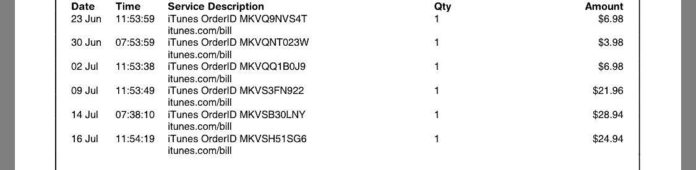
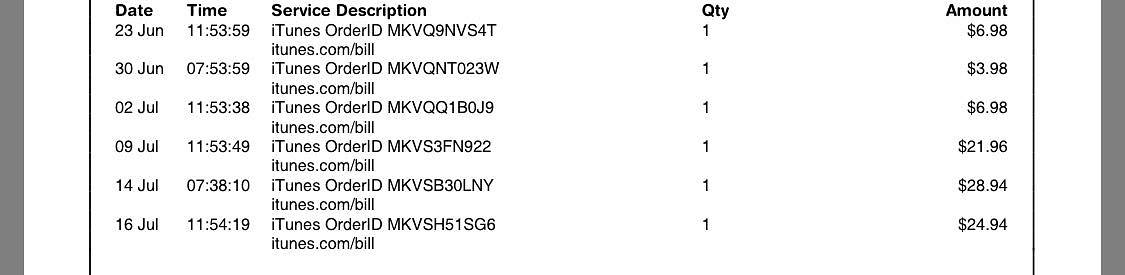
Multiple “iTunes Orders” were charged to his M1 phone bill between April and May, Lim said. He then contacted Apple Singapore to cancel the transactions. Another batch of “iTunes Orders” were charged again in June and July. 

Gabriel Lim iTunes M1 bill

A screenshot of new iTunes transactions in Gabriel Lim’s phone bill for June to July. (Image: Gabriel Lim)

Source link

‘The start of hard work to come’: What signing a professional contract could mean for Ben Davis

0

SINGAPORE: Penning a professional contract with a Premier League club is a massive achievement, English footballers past and present told Channel NewsAsia, but making the step up to the first team presents a big challenge for youngsters like Benjamin Davis.

Having joined Fulham on a scholarship in July last year, it was announced last Friday (Jul 13) that the 17-year-old midfielder had signed a two-year professional contract with the Cottagers. Davis is the first Singaporean to ink a professional contract with a club in the top flight of English football.

For a young player to do so represents a milestone, said former Premier League midfielder Gary Taylor-Fletcher.

“You’ve worked so hard to get to the point of having a chance and the actual number of footballers (in all of England) who get that first professional contract is minute,” the former Blackpool and Leicester City man explained.

“It’s a massive achievement, but it’s only the start of the hard work to come.”

“It’s fantastic, when you’ve signed a professional contract – it’s the best feeling in your life,” agreed former goalkeeper John Burridge, who clocked almost 800 appearances for over 25 clubs in the United Kingdom. “But you still haven’t made it yet.”

Players at top tier English academies have a better chance of being offered a professional contract than those at the lower rungs, according to a 2017 Guardian article citing statistics from the Premier League. Fulham are one of 15 Premier League and nine Championship clubs in that top tier, where 65 per cent of their 18-year-olds got offered such contracts last year.

But signing a professional contract is just the beginning. From then on, they will get to train either with the first team, U-23s or U-18s, depending on how good they are.

Gary Taylor-Fletcher

Gary Taylor-Fletcher celebrates a goal for Blackpool scored against Manchester United in the English Premier League. (Photo: AFP/Paul Ellis)

“It all depends on the coaches and how they see the player developing,” said Taylor-Fletcher, who signed his first professional contract with Leyton Orient. 

“If he’s someone who is a big lad and who has developed well, then he might be put straight in with the U-23s. But usually at that age, they’ll have a year or two with the U-18s before they make the step up.”

“To get into the first team, that’s an even bigger step up again,” added Taylor-Fletcher. “At 18 you sign a contract, you might not play in the first team till you’re 21 or 22.”

Such was the case for Crewe Alexandra defender Perry Ng, a 22-year-old Englishman who qualifies to play for Singapore as his paternal grandfather is Singaporean.

After signing his first professional contract at 18, Ng took close to two years to make his first start for Crewe.

“It was very difficult at first because I was a young pro and wasn’t getting selected so I had to work hard and try to impress in training,” he said. 

“Most got released at the end of their contract and now play for semi-pro teams, or some went to university.”

As for Ng, he had to drop to the lower divisions to get more game time, towards the end of his first season as a professional. 

“This was good for me as I got to play men’s football for the first time and show Crewe that they could trust me playing against men,” he added.

Ng is currently a mainstay with the League Two side, but he stressed that it is tough for young players to make the leap to the first team.

“Most other clubs don’t really give young lads a chance unless they are an exceptional talent,” he said. “So I owe a lot to Crewe for giving me the chance at such a young age as many other young lads don’t even get a chance.”

Ryan Sessegnon

Fulham’s Ryan Sessegnon celebrates promotion to the Premier League with the trophy (Photo: Action Images via Reuters/Carl Recine)

One such talent that Davis could seek inspiration from is Fulham teenager Ryan Sessegnon, who joined the Cottagers’ academy at the age of eight, making his first start for the club in 2016 at the age of 16.

Similar to Davis, Sessegnon was also on a scholarship contract before turning professional. But while the Singaporean has mostly been featuring for the U-18s, Sessegnon played for the first team while he was on scholarship, scoring seven goals in 30 appearances in the 2016-2017 season.

After signing a professional contract, the 18-year-old last season became the first player from outside the top flight to be shortlisted for the Professional Footballers’ Association Young Player of the Year award.

But the speedy Sessegnon, who plays as a left back or left winger, is the exception rather than the norm.

The latest CIES Football Observatory report found that in the English top flight, of the players who spent at least three years between the ages of 15 and 21 at their clubs, only one in 10 graduated from their academies. 

“At some of the top Premier League clubs now, it is very difficult to get the youngsters through,” said Taylor-Fletcher, who has moved into management after a long playing career. “With the amount of money in the game and the pressure on managers to succeed, they will often go out and buy somebody ready made, rather than developing someone.”

However, the door remains open for Davis to make his first start in one of the world’s top leagues.

Premier League rules state that each club can use an unlimited number of U-21 players throughout the season, on top of their 25-man squad.

At the start of the 2017/18 Premier League season, there were an average of 49 players in each club registered as U-21 players, including those signed on contracts and scholars. A number of these players went on to feature in their respective clubs’ campaigns, such as Arsenal’s Alex Iwobi, Chelsea’s Andreas Christensen and Liverpool’s Trent Alexander-Arnold.

Davis could be registered as a U-21 player for Fulham in the upcoming season, but whether he will make his Premier League bow remains to be seen.

“He needs to stay focused, train hard and dedicate himself (to football), said Burridge, a former goalkeeping coach with Singapore. 

“Everybody’s got a different mentality, some people will strive and progress with a winning mentality,” added Taylor-Fletcher. “It all depends on the personality of the individual, and on the coaches at the U-18 and U-23 squads.”

Source link

Commentary: Did the Government intervene too early in Singapore’s private housing market?

0

SINGAPORE: Days after the release of Urban Redevelopment Authority’s flash estimates, the Government announced a new round of cooling measures, which caught many in the housing market by surprise.

Authorities might have been right in principle to impose these harsh cooling measures, amidst a private property market heating up. The private housing market experienced an inflexion in prices last year after 15 consecutive quarters of decline since fourth quarter of 2013.

In contrast to the gradual recovery in 2017, 2018 has seen a strong price growth momentum. Private property prices increased by 9.1 per cent in the second quarter of 2018.

Compared to the cumulative run-up of 62.2 per cent in private property prices from the second quarter of 2009 to the peak in 2013, this increase does not seem alarming. However, it should be noted that prices in 2017 rebounded from a relatively high base.

Housing price levels are also just 3 per cent short of the 2013 peak. Transaction volume also picked up as developers ramped up en bloc sales to quell pent-up demand.

sing tien foo private property prices 2007 to 2018 cooling measure

There were two earlier periods of high growth in private property prices over the last 10 years. (Source: REALIS, Urban Redevelopment Authority. Graph: Authors)

But the timing and intensity of the latest interventions have been met with raised eyebrows. One analyst likens it to using “a sledgehammer to kill a fly”. The Real Estate Developers’ Association of Singapore describes the Government’s move as “tough” and “harsh”.

Real estate developers also assess that since the market has only started to show signs of improvement, there is no basis for the Government to intervene at such an early stage.

To be fair, the Government’s interventions do not come without warning. A large volume of en bloc sales has been completed at record-breaking prices in 2016 and 2017, with S$8.8 billion worth of transactions reported in the first half of this year.

These en bloc sites could be redeveloped into approximately 20,000 new private homes, doubling the number of new units in the next two years, according to the Monetary Authority of Singapore.

READ: What happens when the en bloc musical chairs stop? A commentary

READ: Is the private property market experiencing a bubble? A commentary

This has led to the Government’s increasing concerns about rising vacancy rates. If demand is not robust enough to match a bumper supply, there may be massive downward pressure on housing prices and rental.

INVESTORS WILL FEEL THE HEAT, ESPECIALLY FOREIGNERS

How will the recent round of cooling measures, coupled with the earlier revision to the Buyer’s Stamp Duty (BSD), add to the costs of private housing purchases in Singapore?

First-time Singaporean buyers are only affected by the additional 1 per cent BSD, if they buy a private house of above S$1 million.

Assuming a second private condominium of S$1.5 million purchased for investment purposes after the July 2018 round of changes to the Additional Buyer’s Stamp Duty (ABSD), Singapore citizens would have to pay S$180,000 in ABSD. This figure is S$225,000 and S$300,000 for Permanent Residents (PRs) and foreigners respectively.

Coupled with valuation, legal fees and minimum downpayments, a Singaporean buyer is expected to fork out about S$600,000 at the outset. The figure is approximately S$650,000 for PRs and S$720,000 for foreigners – a huge proportion of the purchase price.

For a smaller second condominium of S$1 million, Singaporean citizens will have to fork out an upfront payment amounting to S$397,600. For a S$2 million house, this figure amounts to slightly more than S$800,000.

READ: A commentary on revised buyer’s stamp duty and its impact on the property market

Singapore condo

File photo of a private condominium under construction in Singapore. (Photo: AFP/Roslan Rahman)

WILL THEY DETER WEALTHY PROPERTY OWNERS?

If it sounds like a lot, we should keep in mind that many existing measures have not deterred a huge number of wealthy property owners. 

The Ministry of National Development (MND) revealed in February that a total of 20,000 homeowners in Singapore own between three to 10 private residential properties in Singapore, with 15 per cent of them also owning a HDB flat. 

These new ABSD measures will force these property buyers to re-evaluate whether buying second or more properties is still a feasible investment option in land-scarce Singapore. 

Singapore citizens would need their second investment property price to appreciate by approximately 15 per cent, just to recover the ABSD and BSD. This figure is 23 per cent for foreigners.

There are other Asian cities which have already surpassed our current stamp duty rates. Foreigners looking to buy their second property in Hong Kong, for example, face a whopping 30 per cent in upfront stamp duties.

On top of this, Hong Kong is proposing a vacancy tax at 200 per cent of a newly built unit’s estimated annual rental value to discourage market speculators from buying and holding onto properties while waiting for their values to rise.

The immediate effects have been adverse. The sudden announcement of the new ABSD and loan-to-value ratio rules have triggered knee-jerk reactions from buyers, who flocked to showflats to place their option to purchase. More than 1,000 units of private condominiums were snatched up by panic buyers before the midnight deadline.

Shares of property developers and real estate agencies reacted most instantaneously in the first days of the new rules. Share prices dropped with some hitting record lows.

TWO SCENARIOS

The Government’s actions come at a time when it is necessary to keep housing affordability in check. The new cooling measures are expected to adversely affect purchasing activities by investors and speculators in the private housing markets.

If those who are not willing to pay the additional ABSD choose to stay on the sidelines, the market could enter into a cooling period with little sale activities.

In a pessimistic scenario where the demand is dampened, developers may have to revise their prices to move sales.

condo showroom

Prospective buyers at a condominium showroom. (File Photo: TODAY)

Developers who plan to acquire new en bloc sites, and have properties in their portfolio – yet to be launched for sale – will suffer a double whammy. On top of the extra 5 per cent they will have to pay for acquiring the private residential projects, they may also face a dwindling pool of potential buyers in upcoming launches.

Developers may be hoping for an optimistic scenario in which unconstrained, undeterred buyers, including foreign investors, continue to bet on the long-term prospects of private residential properties in Singapore.

KEEPING HOUSING MARKET STABLE

At first glance, the Government’s measures today may have muted the steady progress of the real estate market in the short-run.

Upon closer scrutiny, it may be more prudent to see them as preventive measures imposed ahead of time to prevent the property market from overheating, with adverse consequences for the economy.

With the rapid buying and selling of private properties, the en bloc frenzy and residential land sales, the last to suffer in the speculative foray will be individuals who over-commit and stretch beyond their means.

The Government is obligated to act quickly to protect these individuals from being overly exposed to the risks in an overzealous market.

Such measures may ensure that in the long-run, Singapore continues to enjoy a stable and sustainable property market.

Sing Tien Foo is the Director and Tang Li Xuan Amanda is a Research Assistant at the Institute of Real Estate Studies, National University of Singapore.

Source link