Home Blog Page 987

Wholegrain options? Plenty of work ahead for HPB to get hawkers on board

0

SINGAPORE: It’s a late Friday morning and there is a lull in business at the Tiong Bahru Food Centre. The breakfast crowd is thinning, and the hordes of office workers that usually throng the hawker centre for lunch have yet to stream in.

It is the best time for Health Promotion Board (HPB) staff Tan Meiying to make her approach. As she wends her way through the food centre, she waves at the hawkers. Some return the greeting with a friendly smile and wave.

“Some of them are like my friends now,” she says. “They even know my child.”

She is a familiar face to the hawkers, having walked the ground there in the past few months, speaking to them to encourage them to use wholegrain staples in their dishes.

WHY DO THIS?

Meiying is part of a team sent out by the HPB in their ongoing efforts to make it easier for Singaporeans to choose healthier food options when they eat out.

The Healthier Dining Programme, which was introduced in 2014, started off by getting restaurants and food courts to offer healthier options such as 500-calorie meals. In July 2017, the programme was extended to hawker centres and coffee shops, where they worked with the stallholders to offer lower-calorie options, such as reduced sugar and oil in their dishes. To encourage take-up by consumers, the HPB runs periodic promotions such as distributing discount vouchers.

HPB 2

A Health Promotion Board pillar wrap at Tiong Bahru Food Centre encouraging customers to ask for lower-calorie options. (Photo: Lianne Chia) 

The programme is now being extended further, with the HPB working to encourage hawkers to offer healthier ingredients, such as wholegrains. To sweeten the deal for customers, promotions are lined up, such as a S$2 discount on wholegrain meals bought from participating hawkers.

By April next year, HPB aims to have 4 in 10 hawker stalls in Singapore offering low-calorie or healthier options.

HPB’s deputy director of the obesity prevention management division Ann Low said that their end-goal can be summed up in two words: accessibility and availability. “It’s not just the restaurants and food courts, but also the everyday eating places like the hawker centres and coffee shops,” she said. “So there is always a healthier option, whatever your budget is.”

But it is by no means an easy task, Ms Low explained.

“When we’re getting the hawkers to offer lower-calorie options, there’s actually a minimal change in terms of their offerings,” she said. “The hawkers get to keep their usual menu, but just use less oil or sugar.”

“But when it comes to changing of ingredients like whole grains, it will affect their operations and suppliers.”

“Some of them are really quite reluctant,” she said.

And as Meiying goes around encouraging hawkers to participate in the promotion, she is well aware of this reluctance.

She makes a beeline for a stall whose owner has so far refused to take part. Seeing her approach, the elderly lady grunts and waves her away.

“I’m not taking part,” the hawker said in Mandarin. “Don’t bother talking to me about it.”

DEMAND FROM CUSTOMERS IS CRUCIAL

But why are the hawkers so reluctant? A lack of customer demand appears to be the answer.

“I ordered a bit of brown rice about three months ago just to try it out,” said nasi lemak seller Tan Wah Ann. “But the customers really didn’t want it, because they think brown rice doesn’t taste as nice.”

“I cooked it already, and I couldn’t finish selling it, so I had to throw it away,” he added.

“Even if you give it to me for free, I don’t want it,” he said. “I don’t want to throw it away anymore.”

Prawn noodle seller Tan Kim Leng estimates that only about three to five per cent of customers ask for wholegrain noodles.

While most customers who try the wholegrain noodles enjoy it, he said there are many more who still believe that it will never taste as good as the regular option.

“Some of them just don’t want to accept it,” he said. “And when we’re busy, we really don’t have the time to explain to them, or promote it to them.”

Mr Tan said he is happy to offer his customers the option but admits that he orders “only a little bit” of the wholegrain noodles from his supplier.

While HPB’s promotions boosted sales of his wholegrain noodles, Mr Tan admits that it will not be easy to change mindsets.

“The discounts will definitely be a boost, but I don’t think it’s long-term,” he said. “I sold up to 80 bowls a day during the promotion period. But with no promotion, I could only sell about seven to 10 bowls a day.”

BACK TO THE DRAWING BOARD

It has been a tiring few months for Meiying and her team. And there are times when the work can be demoralising.

HPB 4

Meiying on her rounds at Tiong Bahru Food Centre. (Photo: Lianne Chia) 

“A lot of the hawkers didn’t want to talk to me at first,” she said. “They were like, who are you to come and ask me all these questions?”

“It was quite disheartening, because people looked at me like I was some weirdo.”

But Meiying’s work is important: As she understands the various concerns they have, her team has been able to go back to the drawing board and tweak their various campaigns and programmes accordingly.

Through feedback from the hawkers she speaks to, she is also able to make adjustments in their approach to help persuade them to come on board. For example, after hearing from hawkers about the difficulties they faced cooking the wholegrain ingredients, she now comes armed with a brochure with detailed cooking instructions.

Wholegrain rice and noodle suppliers also sometimes join her on her walkabouts, and some of them are even prepared to offer discounts or promotions to participating hawkers who buy the ingredients.

HPB 3

Meiying (centre) with a hawker and rice supplier. (Photo: Lianne Chia)

Her efforts are starting to pay off: Currently, 13 of the 59 cooked food stalls at Tiong Bahru Food Centre offer wholegrain options regardless of whether there is a promotion or not. In the last round of promotions HPB ran in April, 30 stalls at the centre offered wholegrain options. 

There are also enthusiastic hawkers who are more than willing to give it a shot, such as one kueh seller who greeted Meiying warmly, insisting that she sample some of the wholegrain flour kuehs he has made.

“It’s hard work, but it’s fulfilling,” she said. “It’s about job satisfaction. When you see them selling the wholegrain options, you know that your hard work has paid off.”

But she admits that consumer reluctance remains the biggest challenge they face.

“We still have a lot of work to do, to increase their awareness, and break some of the myths some of them might have towards wholegrain options,” she said, explaining that the HPB is also utilising other means and channels, such as food trucks at workplaces, to get consumers to overcome their reluctance.

“They just need to try it once,” she said. “Then they’ll be more willing to have it again.”
Source link

Commentary: We now live in a ‘science fiction world’. We need to boost STEM education

0

SINGAPORE: We are in midst of exponential change that seems to spring right out of a science fiction movie.

Humanised robots. Self-driving cars, supercomputing and singularity.

The fourth industrial revolution characterised by technology, and the fusing of physical, digital and biological worlds, is truly upon us. The question is how prepared are we to live in a world that is constantly reinventing itself?

To survive, adapt and be relevant in this brave new world, skills in science, technology, engineering, and mathematics (STEM) will be imperative. 

STEPS LONG TAKEN

Long before Prime Minister Lee Hsien Loong identified STEM capabilities as critical to ensuring Singapore’s growth for the next 50 years in 2015, Singapore took a step in this direction, through the establishment of Agency for Science, Technology and Research (A*STAR) in 1991.

The objective behind A*STAR’s establishment was not just to advance Singapore’s economy but to also grow the biomedical sciences, energy and chemicals, and engineering industries.

Two hubs, Biopolis and Fusionopolis, opened in 2003 and 2008 respectively, giving Singapore a competitive edge in research and development (R&D).

Then Deputy Prime Minister Dr Tony Tan had said at the opening of Biopolis in 2003 that the Biopolis hub was conceived as the cornerstone of a vision to build up the biomedical sciences industry in Singapore, and by doing so, be able to generate economic growth, create jobs and improve the quality of life for Singaporeans.

Fusionopolis

Fusionopolis. (Photo: JTC’s website)

There was also a realisation that the right talent is necessary to capture a share of this knowledge-intensive growth industry for Singapore as the kinds of jobs created and skills in demand evolve.

Education plays a crucial role in Singapore’s ability to produce graduates who are not only academically competent, but also equipped with the relevant and practical skills to thrive in this economy of the future. But are we going far enough?

READ: What a tech education today for a digital workforce tomorrow looks like, a commentary 

GREATER DEMAND FOR STEM EDUCATION

According to a survey commissioned by Amgen Asia and the Global STEM Alliance in 2017 among 1,580 secondary school students and 560 teachers, approximately 90 per cent of students in Singapore enjoy one or more STEM subjects and are most likely going to major in one of them post-secondary school.

However, the survey also found that there remains a gap in engaging student and equipping teachers.

70 per cent of teachers feel students should be taught how STEM is used in the real world; 84 per cent of students would prefer more hands-on activities, while 78 per cent of them would like access to quality experiments.

This notion is echoed by Dr Kwok Sen Wai, a researcher at A*STAR, who said that schools should show students that the skills they learn in science and math classes can help to solve real-life problems. Students need to be inspired to take up STEM courses and ultimately be motivated to create something others can use.

In addition to the nuts and bolts – the specific skillsets and hands-on applications – education providers need to instil upon students a desire to upgrade, discover new things and continuously learn.

It is through this sort of mindset and our next generation’s appetite for learning that we can grow these capabilities collectively as a country.

This is a skillset that even those switching careers midway find valuable. To cite an example from PSB’s School of Life and Physical Sciences, Katherine Liew-Tan runs her own digital branding firm, after completing her communications studies at Nanyang Technological University.

But her keen interest in exploring potential business opportunities as she works closely with her clients from major skincare companies drove her to pursue a Bachelor of Science (Pharmaceutical Science) with La Trobe University, so she can cater to her clients’ needs better.

READ: Humanities at the heart of a holistic education in a tech-driven world. A commentary

Astar researchers

Researchers with the Agency for Science, Technology and Research (A*STAR). (File photo: Ngau Kai Yan)

STEM EDUCATION FOR ASEAN

Singapore’s role as ASEAN’s chair this year weighs in heavily in this conversation, with the theme being “Resilient and Innovation”. Countries are looking to partner Singapore as the region looks to move up the innovation ladder.

Nations like Indonesia are already seeing benefits from harnessing technological disruption, from retail to telecommunications, as they reap fruits of new business models and job opportunities.

This is where they can partner with countries like Singapore which has natural strengths in STEM education.

Singapore also tops Asia for developing human capital while countries such as Laos, Myanmar and Cambodia trail behind despite improvements from previous years, based on a World Economic Forum 2017 Human Capital Index.

A global talent shortage is making investments in education, including a focus on lifelong learning and high-skilled opportunities pressing, says WEF founder and executive Chairman Klaus Schwab.

On Singapore’s part, it is not enough for the country to be pioneering national initiatives such as Smart Nation and SkillsFuture. It requires close collaboration with its neighbouring countries to strengthen ASEAN’s ability to capitalise on these technological trends to move forward collectively.

A shining example of effective regional collaboration in STEM education is the Young Southeast Asian Leaders Initiative which completed its latest STEM Education Regional Workshop in Phnom Penh, Cambodia.

The Workshop saw over 50 youths aged 18 to 25 from Brunei, Cambodia, Indonesia, Malaysia, Myanmar, Philippines, Laos, Singapore, Thailand, and Vietnam discuss STEM education in the region.

BUILDING STEM CAPABILITIES

Similar initiatives are required with commitment and consistency. Singapore should work with other ASEAN countries and industry experts, and governments to deepen the region’s STEM capabilities.

There is also a role for tripartite partners including companies to play in STEM education. Employers need to embrace and advocate lifelong learning and society needs to celebrate and recognise a broad range of achievements.

ASEAN generic hi-res

File photo of ASEAN flag and flags of ASEAN member countries. (AFP/Romeo Gacad)

Industry champions in STEM sectors can play a more active and direct role through offering expertise as adjunct lecturers, curating meaningful attachments and internship opportunities, and embracing lifelong learning by providing training for employees.

With strong support from partners, education providers can build a link for students to network and learn from industry practitioners. In turn, these partners can tap on students’ talents and qualifications, in matching talent with roles in STEM.

The end goal is for the region to build STEM capabilities, to contribute to ASEAN’s vision of becoming a dynamic, connected and growing region. Our future depends on it.

Derrick Chang is Chief Executive Officer at PSB Academy.

Source link

Singapore and Malaysia’s troubled waters

0


SINGAPORE Foreign Minister, Vivian Balakrishnan, responded to the recent election of Malaysian Prime Minister Mahathir Mohamad by addressing Mahathir’s intention to change the terms of their existing Water Agreement (WA). Balakrishnan’s response to the WA dispute is a sign of a strategic conflict between the two countries.

For over half a century, Singapore has been getting half its fresh water from its northern neighbour Malaysia. In 1990 the two countries signed their fourth Water Agreement, supplementary to 1962 negotiations.

The current WA does not expire until 2061, but Mahathir has made it clear that he considers the terms unsatisfactory, going so far as to call the deal “manifestly ridiculous” in an interview with Channel News Asia. Tensions between Singapore and Malaysia were high during Mahathir’s previous tenure and he seems determined to pick up where he left off.

SEE ALSO: Is the KL-Singapore High Speed Rail dream truly slipping away?

Balakrishnan’s speech emphasised Singapore’s three foreign policy principles regarding bilateral ties with Malaysia. These principles aim to uphold international agreements and law, resolve disputes through international law, and preserve Singapore’s reputation as a law-abiding nation.

But explicit foreign policy goals are just the tip of the iceberg – Balakrishnan’s comments suggest that tension is brewing beneath the surface.

The Foreign Minister said that the WA is “not an ordinary agreement”. It was formalised in the 1965 Separation Agreement, and “any breach of the WA would call into question the Separation Agreement” and Singapore’s “very existence as a sovereign independent state”.

The remark was a suggestive, yet tepid, reminder of Singapore’s path to independence. Indeed, in the early years of independence Singapore’s founding father, Lee Kuan Yew, promised conflict if Malaysia did not guarantee a reliable water supply.

2018-05-19T064232Z_64991102_RC1927971C00_RTRMADP_3_MALAYSIA-SINGAPORE

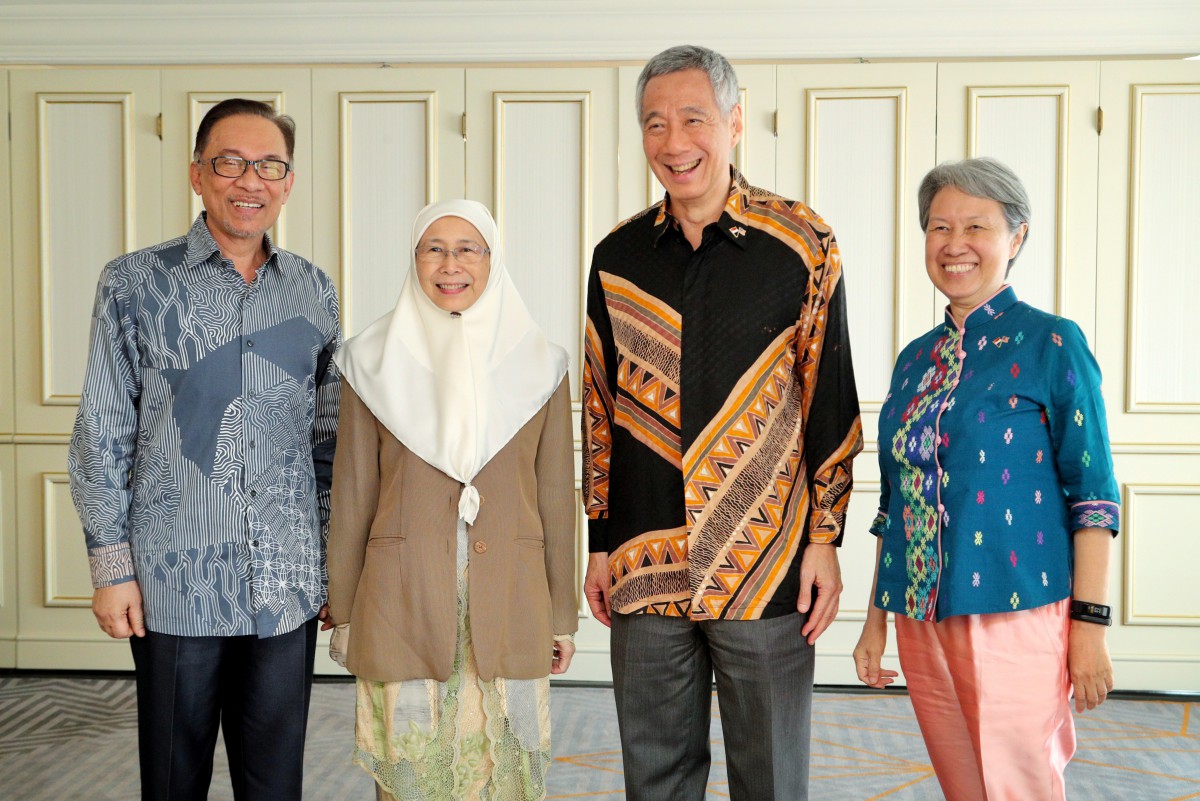
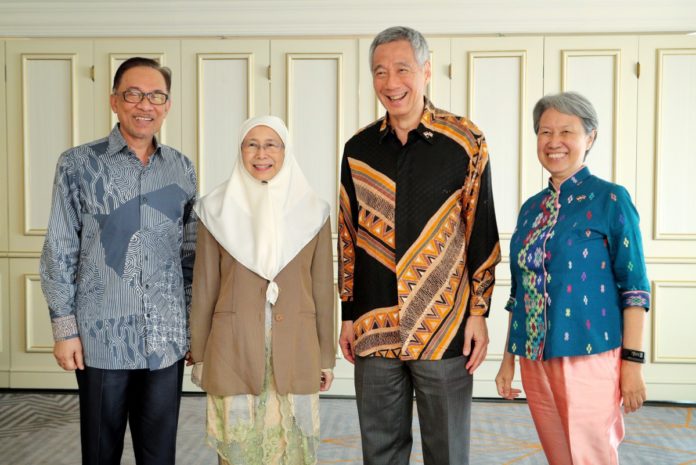
Singapore’s Prime Minister Lee Hsien Loong and his wife Ho Ching pose for a photo with Malaysian politician Anwar Ibrahim and his wife Malaysia’s Deputy Prime Minister Wan Azizah Wan Ismail, during a meeting in Kuala Lumpur, Malaysia on May 19, 2018 in this handout photo. Source: Singapore’s Ministry of Communications and Information/Handout via Reuters

The remark also closely resembled the words of Singapore’s former Prime Minister, Goh Chok Tong, during the 1998-2002 WA crisis.

Balakrishnan was thus reiterating Singapore’s long-standing position that the WA is and will remain an existential issue, and Singapore will follow through with all means at its disposal if Malaysia turns the tide on the WA in ways that undermine the sovereign independence of Singapore.

Balakrishnan further highlighted Singapore’s supply of treated water to Malaysia, reminding Mahathir that his country buys treated water from Singapore at preferential rates under the WA, and that Singapore, too, can raise prices. This is perhaps the most explicit statement of how Singapore will retaliate against Mahathir’s attempt to raise the price of water sold to Singapore.

Singapore’s foreign policy approach to the WA crisis can be summed up in terms of a progressive tit-for-tat retaliation response that maintains Singapore’s principles and reputation as an agent of the rules-based international order.

SEE ALSO: Singapore’s government drives country’s tech success

Singapore will ensure that it is not the initiator of any conflict so as to maintain its moral supremacy in the WA dispute, and will assume the role of ‘responder’ to any Malaysian aggression and defection of international principles.

Beyond bilateral negotiations, Singapore will likely make use of international legal dispute mechanisms to settle the WA conflict.

However, should diplomacy fail, and if Mahathir attempts to unilaterally alter the WA regardless of international law, Singapore is ready to give as good as it gets. If Mahathir raises water prices, Singapore will likely mirror the move and increase the price of treated water sold to Malaysia.

If Mahathir threatens to cut off water supply in return, Singapore’s sensitivity for sovereignty will be provoked. Singapore will likely retaliate with sabre-rattling, and continue to frame itself as the victim and Malaysia as the aggressor.

2018-07-20T082807Z_408197694_RC16FD88AEF0_RTRMADP_3_SINGAPORE-WATER

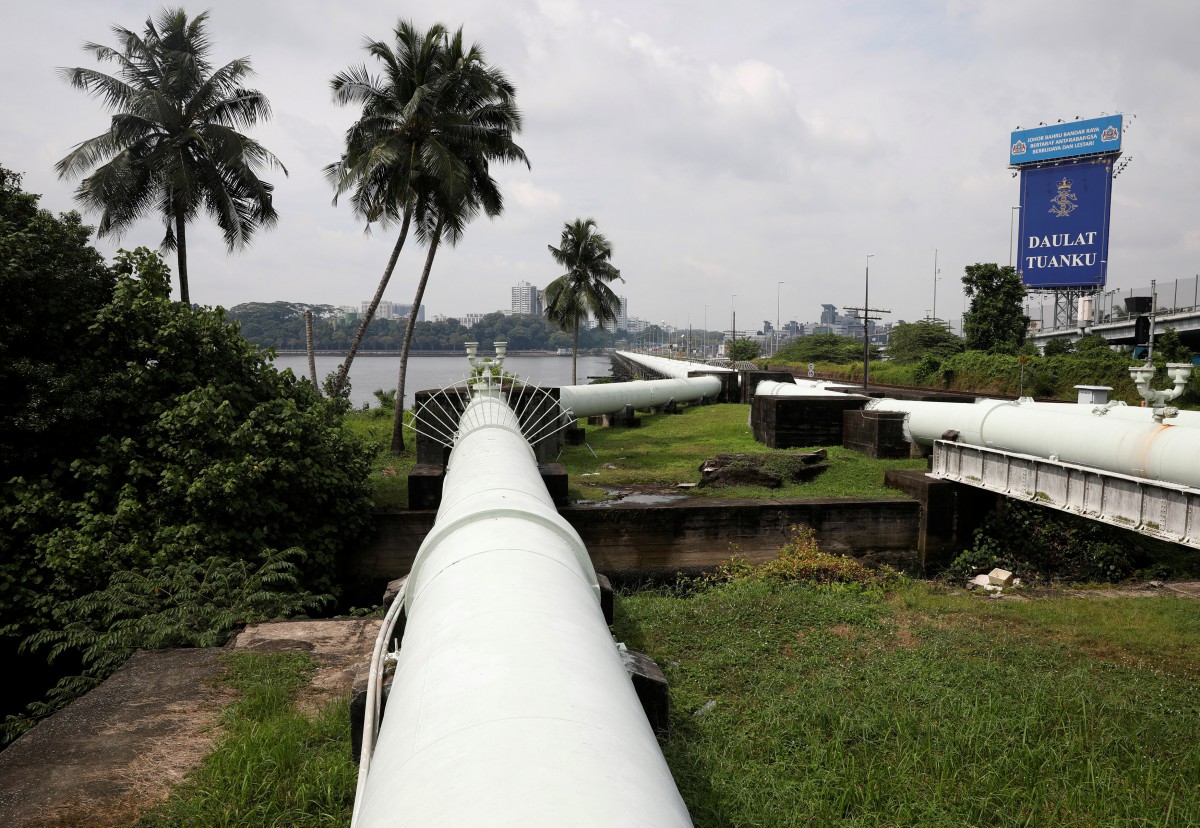
Pipes carrying water from Malaysia to Singapore run alongside the causeway from Johor Baru, Malaysia July 20, 2018. Source: Reuters/Edgar Su

While the diplomatic waters are looking choppy, Mahathir is unlikely to turn off water supply and allow a drastic escalation of tension. Singapore and Malaysia have an extensive level of complex economic interdependence.

Tens of thousands of people cross the Johor–Singapore Causeway and the Tuas Link daily for cross-border economic and family commitments.

Both countries are also tied to their security commitments to the Five Power Defence Arrangement (FPDA). By involving larger external powers and providing a ‘loose consultative framework’, the FPDA acted as a psychological deterrence for Malaysia and Singapore during the formative years of Separation, and throughout the Indonesia-Malaysia Confrontation.

Today, the FPDA has evolved into a wider and more robust security arrangement that complements other regional architectures, providing both non-traditional security and traditional maritime security cooperation.

SEE ALSO: Malaysia vs Singapore: Who has better food?

It is more likely that Mahathir is baiting Singapore, but will not allow conflict to escalate beyond barbed words. The Malaysian Prime Minister is “a very canny statesman” according to Nicholas Fang at the Singapore Institute of International Affairs.

Indeed, in a declassified document published by Singapore’s Ministry of Foreign Affairs, Mahathir was observed to be incrementally changing Malaysia’s “negotiating positions on the package of items” surrounding the WA between 1998 and 2002, before “unilaterally” calling them off when the desired proposals were not achieved.

The terms of the WA may seem to be going under, but it is more likely that Mahathir is creating tension over the deal in order to reframe the tone of Malaysia’s relationship with Singapore. Mahathir is testing the waters, but will not allow tensions to rise too high.

This article originally appeared on PolicyForum.net.

Source link

Materials Science Conference

0

Materials Science Conference
from Monday, March 18, 2019 at 9:00 AM to Tuesday, March 19, 2019 at 6:00 AM

Regency Consultancy

20 Collyer Quay, Singapore, Singapore

Source link

28 women arrested in operation against vice activities

0

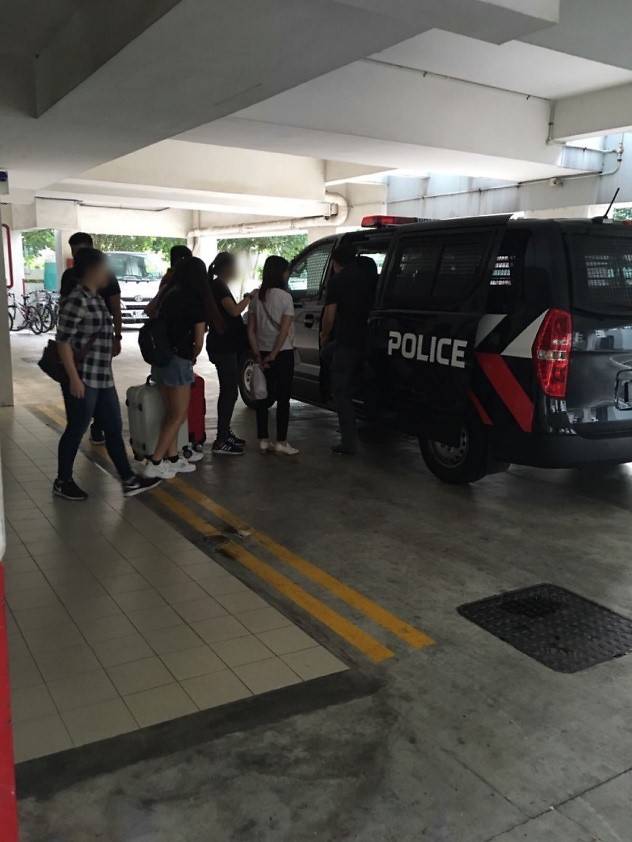
SINGAPORE: Twenty-eight women were arrested during a series of enforcement operations against vice activities in private housing units, massage establishments and public entertainment outlets, the police said in a news release on Monday (Jul 23).

The raids took place between Jul 17 and Jul 20.

Seven women, aged between 26 and 47, were arrested for offences under the Women’s Charter in private apartments along Balestier Road, Cavenagh Road and Boon Teck Road.

One of the seven women, along with another 40-year-old woman, were also arrested for immigration offences.

In a separate raid on massage parlours along Upper Thomson Road, Macpherson Road, Outram Road, Balestier Road, Orchard Road and Scotts Road, six premises were found to be operating as unlicensed massage establishments.

One massage establishment was also found to have contravened licensing conditions and a 43-year-old woman was arrested for suspected drug-related offences.

Police raid Jun 23 - 2

Enforcement checks on public entertainment outlets along Tanglin Road found that one outlet had contravened licensing conditions. (Photo: Singapore Police Force)

Meanwhile, enforcement checks on public entertainment outlets along Tanglin Road found that one outlet had contravened licensing conditions.

Thirteen women, aged between 19 and 30, were arrested for working without valid work permits. Two of the 13 women, along with three other women, were also arrested for appearing nude in public. 

Another three women were also arrested for immigration offences.

The police said that action will be taken against apartment owners who allow their premises to be used for vice activities and operators who flout the rules and regulations under the Public Entertainment Act and Massage Establishment Act.

If convicted of running an unlicensed massage establishment, first-time offenders may be fine up to S$10,000, of jailed a maximum of two years, or both.

Repeat offenders face a maximum fine of S$20,000, up to five years’ jail or both.

Police raid Jun 23 - 3

The police said actions will be taken against apartment owners and operators who allow their premises to be used for vice activities. (Photo: Singapore Police Force)

These penalties come under the new Massage Establishments Act which was passed last November, increasing the fines by tenfold and introducing jail terms for the offence to serve as a stronger deterrent.

The police said they will also take action against landlords who knowingly lease their property to unlicensed massage establishment operators.

Source link

Grab users rail against revised reward system; lament lack of competition

0

SINGAPORE: Many users of ride-hailing app Grab have voiced disappointment over the recent changes to its reward system, citing how it has become more difficult to accumulate points and redeem cash rebates.

Grab began notifying its users last Friday (Jul 20) via their mobile phone apps that it had revised its GrabRewards loyalty programme, by modifying the policy for earning and redeeming points. At the same time, however, Grab has lowered the threshold for members to qualify for its Silver, Gold, and Platinum membership tiers.  

Most regular Grab users Channel NewsAsia spoke to criticised the changes, and many acknowledged that there were limited viable alternatives for them to turn to. 

Brandon Wee, a 34-year-old Grab Gold member, told Channel NewsAsia that he used to earn 240 points for each ride from his home to the office. However, last Friday, he noticed that the same ride, which usually costs S$15, earned him only around 60 points.

Revised Grab rides

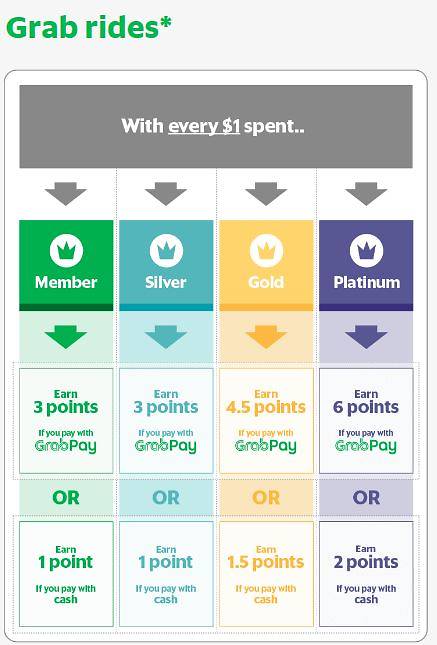
The revised points exchange rate for Grab rides. (Photo: Grab) 

Following the revision, Gold members who used to earn 16 points for every S$1 spent will earn just 4.5 points now. The point exchange rate before Friday’s revision was 16 times across all membership tiers for GrabPay, and eight times across all tiers with cash payment.

“It’s an outrage. I use the points to redeem cash rebates that I’ll activate for my subsequent rides, but it’s so difficult now to collect enough points,” said Mr Wee. 

“It just gets harder to benefit from the system. The sad thing is, it’s not like I can stop this and turn to Uber,” he added. 

Grab revised its rewards system almost four months since it acquired rival Uber’s Southeast Asia operations in March. The deal between Grab and Uber recently came into the spotlight after Singapore’s competition watchdog said earlier this month it has resulted in “substantial lessening of competition” in ride-hailing platforms, making it harder for new players to enter the market, and resulted in higher prices. 

Commenting on this, engineer Abdul Razak, who uses Grab to commute daily, told Channel NewsAsia that he believes the company is able to revise its points system with “little impact on its market share” because it is the only “large scale ride-hailing firm” left in Singapore. 

Mr Abdul Razak highlighted that following the recent revision, points needed to redeem a S$5 cash rebate for the subsequent Grab ride has increased for Silver, Gold and Platinum members. 

Previously, Silver, Gold and Platinum members needed 2,100, 2,000 and 1,900 points respectively to redeem the rebate. Regular members needed 2,200 points. 

Following the revision, members across all tiers need 2,220 points to redeem the same rebate. 

Mr Abdul Razak, who is a Platinum member, said: “It defeats the purpose of us paying so much to earn that high tier membership. It’s like they no longer care about loyalty, (they) should just do away with the tier system then.” 

BETTER EXCHANGE RATE FOR GRABFOOD, GRABPAY PURCHASES 

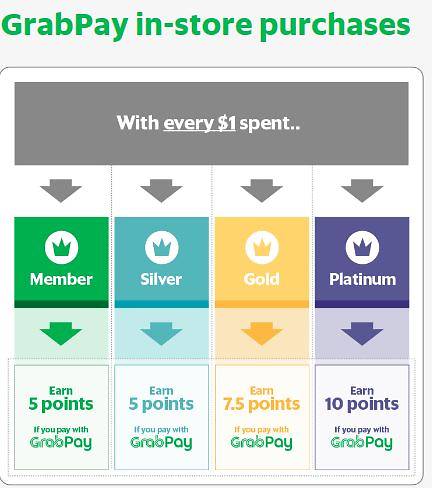
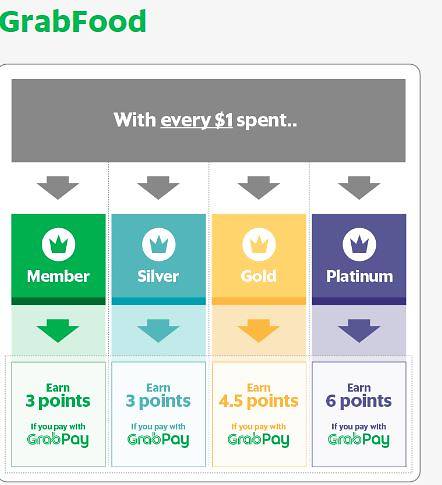
Despite the cons, some users said that the revisions have been positive in certain aspects, especially in terms of GrabFood and GrabPay in-store purchases.

Revised Grab Pay

The revised points exchange rate for GrabPay merchant purchases. (Photo: Grab) 

Bank officer Celena Tan, who works at Marina One, told Channel NewsAsia that when she uses GrabPay to purchase a bun from a bakery near her office for S$1.50, she now receives eight points for GrabRewards, when she would have received an “insignificant” number of points prior to the revision.  

Revised Grab Food

The revised points exchange rate for GrabFood. (Photo: Grab) 

“(The changes) are useful for people who utilise GrabFood and GrabPay for merchant payments,” said the 30-year-old, who also uses Grab rides three to four times weekly. 

She felt that the revised policies have made it easier for users to ascend membership tiers, giving users a low threshold to qualify for Gold or Platinum memberships. 

“Now, becoming a Platinum member is quite an achievable target … there is a low threshold and it’s good,” she added. 

Ms Tan, however, acknowledged that the way Grab communicated the revisions in its reward system could have been better, as she only realised the changes after noticing a large decrease in points received after a ride. 

“I think there wasn’t too much publicity, it wasn’t something that people were looking forward to … more can be done to raise awareness about this,” she said. “If it’s (Grab’s) intention to move towards GrabFood and merchant payments, it’s good to let customers know.” 

Despite the changes, Ms Tan said that she will continue using Grab. 

“We don’t have much of a choice … the (GrabReward) scheme makes them more attractive. Uber used to have a rewards system, now it’s just Grab. And ComfortDelGro has just the app. The rewards scheme is good for people chasing redemption points,” she added. 

Source link

SingHealth cyberattack: Internet surfing delinked at all public healthcare clusters

0

SINGAPORE: Temporary Internet Surfing Separation (ISS) – one of the measures used to step up security following the cyberattack on SingHealth’s IT system – has been implemented at the National Healthcare Group (NHG) and National University Health System (NUHS), the health ministry said in a press release on Monday (Jul 23).

This follows the implementation of ISS at SingHealth on Friday, which was in response to the major unprecedented cyberattack on its IT system, in which Prime Minister Lee Hsien Loong was a target.

With NHG and NUHS both adopting the safeguard measure, all public healthcare clusters are now delinked from Internet surfing.

“The decision to impose ISS is part of the effort of the public healthcare family to strengthen its IT systems against evolving cyber security threats, and more importantly, to safeguard the confidentiality of our patients’ data,” said the Ministry of Health (MOH).

“We would like to assure all patients that their safety and care are our priority, and we will work to ensure that these are not compromised as a result of the implementation of ISS and various security measures,” it added.

In addition to ISS, other measures that have been put in place to improve IT security include additional controls on workstations and servers, reset of user and systems accounts, and the installation of additional system monitoring controls on IT systems, according to MOH’s release.

The move comes after an unprecedented cyberattack at SingHealth, which saw 1.5 million patients’ records accessed and copied. Of those patients, 160,000 had their outpatient dispensed medicines’ records taken. 

The news of the cyberattack was announced on Jul 20.

NHG said in response to queries from Channel NewsAsia that Internet surfing has been delinked for all corporate-issued devices.

Staff, however, are still able to use the Internet in the office via NHG Internet-enabled, standalone laptops. These laptops, which are not linked to the corporate network system, are distributed to departments that need to access information for work via the Internet, it said.

“There will be initial inconvenience to patients, staff and the public during this period. We seek everyone’s patience and kind understanding should they experience some delays or inconvenience,” said Mr Ho Khai Leng, Group Chief Information Officer, NHG.

MOH also cautioned that during this period, patients may experience longer waiting times for consultations, test results and delays in checking their MediSave accounts or making claims, MOH said.

This is because public healthcare institutions rely on accessing other systems through the Internet to deliver multiple services, including reading of diagnostic reports from laboratories, submission and retrieval of results from screening databases, and birth and death registrations.

As such, some public healthcare institutions, including the polyclinics and community hospitals, will be affected.

As an interim alternative, departments that require Internet access will have to share separate workstations for connection to the Internet.

READ: SingHealth cyberattack: What you need to know

“There will be some inconvenience for patients and healthcare staff, as a result of the unavailability of some IT system connections that require the Internet,” MOH said.

“We seek the understanding of patients and the public as our teams work through the issues that arise on the ground,” MOH added. 

Senior Minister of State for the Ministry of Health Lam Pin Min visited Tan Tock Seng Hospital on Monday to observe the operational impact of ISS on the ground and said that he was happy to note that patient care was not affected.

In a Facebook post, he said: “TTSH staff are taking the various inconveniences and administrative challenges in their stride while interim alternatives are being deployed.”

READ: SingHealth will notify patients affected by cyberattack; Government to order Committee of Inquiry

SingHealth has also contacted patients who visited SingHealth’s specialist outpatient clinics and polyclinics between May 1, 2015 and Jul 4 this year to inform them if their data was affected.

More than 700,000 patients had received SMS notifications from the healthcare group as of Saturday.

SingHealth cyberattack: Who's affected 2

Source link

Pressure selling rampant in slimming, beauty industry: CASE

0

SINGAPORE: Complaints against the pressure sales tactics adopted by the slimming, beauty and hair industries are “significantly higher” compared to other industries, said the Consumers Association of Singapore (CASE) on Monday (Jul 23), as it warned customers to be wary of them.

Last year, they accounted for 44 per cent of complaints received on the slimming industry. Such complaints made up for 16 per cent and 21 per cent of complaints against the hair and beauty industries respectively, said CASE in an advisory. 

Complaints about sales tactics generally account for less than 5 per cent for other industries, it added.

“The use of high pressure sales tactics has been a recurring problem in the slimming, beauty and hair industries for many years,” said CASE. 

“Consumers should be aware that they always have the right to say ‘no’ to such tactics and can simply walk away if they feel uncomfortable,” it added. 

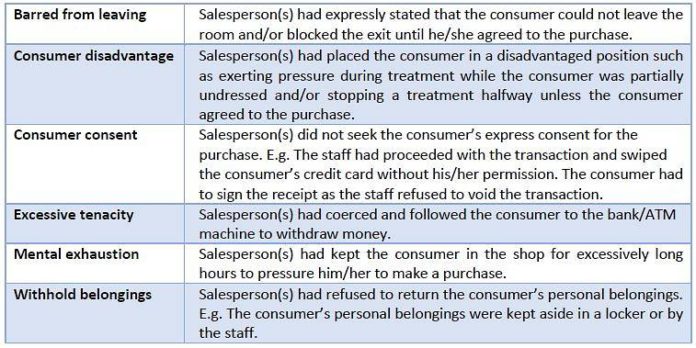
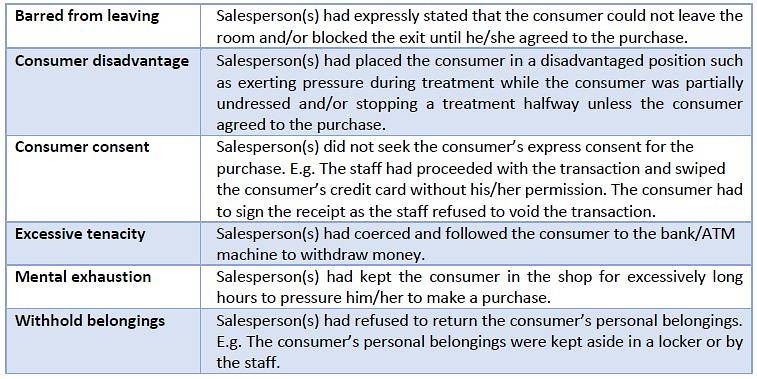
Some of the unacceptable sales tactics commonly encountered include consumers being barred from leaving by the salesperson until they agree to buy a product or stopping treatment midway unless the consumer agrees to the purchase.

CASE sales tactics beauty industry

A list of the unacceptable sales tactic commonly encountered by consumers. (Table: CASE) 

“The exertion of undue pressure on a consumer to enter into a transaction involving goods or services is prohibited under the Consumer Protection (Fair Trading) Act (CPFTA) and consumers can seek recourse under it,” said CASE.  

The consumer watchdog added that it has been actively encouraging businesses in these industries to voluntarily commit themselves to ethical business practices by signing up for CaseTrust accreditation.

“Accredited businesses are subjected to a rigorous audit to assess their conformance to the accreditation criteria, which includes price transparency, well-trained sales staff with ethical sales tactics and prepayment protection amongst others.”

CASE said that consumers who plan to purchase slimming, beauty and/or hair products or services should be cautious about entering a transaction with businesses that do not provide important documents like invoices or sales agreements. 

Consumers should also make informed decisions and not be fooled by “special discount” or “one-time only” offers.

It also added that consumers can exercise their right to walk away from a dubious deal with unclear terms or “aggressive” sales tactics. 

Source link

Automated quay crane system on trial at Pasir Panjang Terminal

0

SINGAPORE: Automated quay cranes are currently on trial at the Pasir Panjang Terminal to enhance efficiency of operations and improve working conditions for workers, Singapore port operator PSA said on Monday (Jul 23).

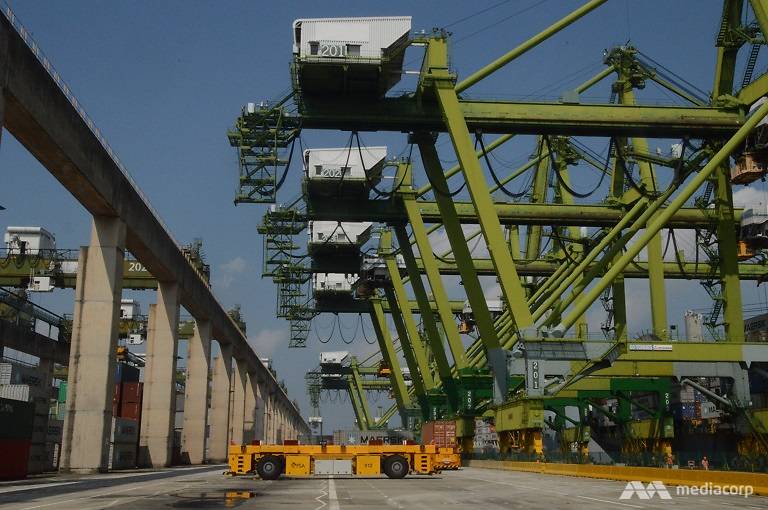
The automated quay crane (AQC) system moves containers from vessels that are berthed at Pasir Panjang Terminal onto prime movers. These cranes are unmanned at the site and are monitored remotely from a control centre.

Transport Minister Khaw Boon Wan was given a tour around the terminal on Monday morning, where he was briefed by PSA staff on how the AQC has helped operations. 

Quar crane

Minister Khaw Boon Wan being breifed on how the automated quay crane (AQC) system works. (Photo: AMir Yusof) 

PSA said there are currently three AQCs on trial. The cranes were purchased from Chinese equipment manufacturing company ZPMC.

PSA said it is aiming for the AQCs to be fully operational when the Tuas mega port is completed in 2040. 

At Tuas, the AQCs will be complemented by automated guided vehicles (AGVs), self-driving machines that facilitate movement of shipments at the port. The AQCs will transfer containers to the AGVs

The containers picked up by the AQC from vessels will be transferred to the self-driving AGVs, to allow for efficient transportation of goods without the need for any operator or engineer to be physically present.

PSA automated vehicle system

The AGVs load up cargo picked up by cranes and transport it around the port. (Photo: Amir Yusof) 

Pasir Panjang Terminal has 30 AGVs being trialled – eight of which are hybrid while 22 are fully battery operated. The vehicles are being used to transport containers from overhead bridge cranes, which are semi-automated. 

Mr Eddy Ng, managing director of PSA Singapore, said that one key challenge faced by the company is in preparing its staff to operate the AQC. PSA currently has around 200 operators who can handle AQCs and the company plans to eventually train all of its 500-600 operators to be able to use it.

The mechanical cranes currently being used require operators to be stationed on the crane itself, working in a booth which is 17 storeys high, while operators for the AQCs are stationed in a remote air-conditioned office.

Mr Lee Poh Ann, a container equipment specialist who has worked at PSA for 25 years, told media that he was initially not confident of operating the AQC, but became proficient after guidance from his instructor. 

“Working in the office is better because we can enjoy the air-conditioning and comfort,” he said with a chuckle. 

Automated vehicle system Pasir panjang terminal

30 AGVs at Pasir Panjang Terminal are being used to transport containers from over head bridge cranes. (Photo: Amir Yusof) 

Additionally, Mr Ng also highlighted that some ships still do not have the tools that are compatible with automation.

“One example of a challenge we face is the (securing) of containers onboard ships. This represents a key challenge because the tools are mechanised tools and yet to be subjected to automation and technology,” Mr Ng said.  

Source link

Singtel and Ericsson to trial drones, self-driving vehicle on 5G pilot network this year

0

These trials will tap on the pilot 5G network to be launched at one-north by the fourth quarter of 2018, the companies say.

A new report found that many consumer drones lack adequate security making it easy for an outside

File photo of a drone. AFP/Josh Edelson

SINGAPORE: There will be drone and autonomous vehicle trials conducted over a pilot 5G network by the end of the year, according to local telco Singtel and its networking partner Ericsson.

According to a joint press release on Monday (Jul 23), both parties will launch what they tout as Singapore’s first 5G pilot network at one-north by the fourth quarter of the year. The trials will be carried out at one-north and other designated areas, it added.

The 5G pilot network is using airwaves allocated by the Info-Communications Media Development Authority (IMDA), which both parties said will enable the transfer of terabytes of data in minutes and 4K video downloads in seconds. 

These capabilities will transform sectors such as transportation, healthcare and manufacturing, they said.

The announcement came during an event to demonstrate the possibilities of the network on Monday, with Singtel and Ericsson showcasing things like viewing the human anatomy in augmented reality (AR) and streamed in real-time to a remote audience using the 5G network. This, they said, shows the possibilities of using three-dimension (3D) AR in various industries like medical and education.

“This is an encouraging step towards commercialisation with live 5G trial networks made possible with the regulatory sandbox IMDA has in place,” said Ms Aileen Chia, deputy chief executive and director-general (Telecoms & Post) at IMDA.

“IMDA will continue to work closely with mobile service providers such as Singtel in their journey to build communication capabilities of the future and complement Singapore’s efforts towards a vibrant digital economy.”

Singtel is not the only one looking to stay ahead of the competition with the next-generation mobile network, which has been heavily touted to revolutionise our daily lives.

Rival telco M1 announced with partner Nokia last month it will conduct the latter’s first 5G small cell trial in Southeast Asia in selected industries that require dedicated small cell capacity and very low latency connectivity for Internet of Things (IoT) devices.

Source link