VIENTIANE, Laos: Two Singapore contingents have arrived in Laos to deliver humanitarian supplies for flood relief efforts in Attapeu province.
A Singapore contingent of officers from the Singapore Armed Forces (SAF) arrived in Laos on Thursday night (Jul 26), carrying with them S$280,000 worth of relief packages.
The 19-strong contingent, including several members of the media, landed in Vientiane Airport on a Republic of Singapore Air Force (RSAF) C-130 transport aircraft at about 8.30pm local time.
Dozens have died and thousands are still missing three days after the hydropower dam collapsed on Monday, releasing 5 billion cubic metres of water – enough to fill more than two million Olympic swimming pools – into the surrounding villages.
Laos Vice Minister of Labour and Social Welfare Baykham Khattiya and Singapore Ambassador in Vientiane Dominic Goh. (Photo: Amir Yusof)
The aid supplies were handed over to Laos Vice Minister of Labour and Social Welfare Baykham Khattiya by Singapore Ambassador in Vientiane Dominic Goh and the SAF’s mission commander, Colonel Mohd Fahmi Aliman, Director (Designate) of the Changi Regional Humanitarian Assistance and Disaster Relief Coordination Centre (RHCC).
Laos Vice Minister of Labour and Social Welfare Baykham Khattiya with the SAF’s mission commander, Colonel Mohd Fahmi Aliman. (Photo: Amir Yusof)
The relief packages include tents, meal rations, bottled water and medical supplies from the SAF.
The SAF also donated five rubber dinghies with outboard motors to assist with water rescue.
The SAF also donated five rubber dinghies with outboard motors to assist with water rescue. (Photo: Amir Yusof)
A second RSAF C-130 arrived in Laos on Friday morning, also with a 19-strong contingent.
“At 11.10am today, a 19-strong Singapore contingent of SAF and SCDF personnel arrived in Laos on the second of two C-130 transport aircraft from The Republic of Singapore Air Force, to deliver humanitarian supplies for flood relief efforts in Attapeu province,” said the Ministry of Defence in a Facebook post.
Among the supplies on the second aircraft were tents and rubber dinghies with outboard motors donated by the SAF and large modular tents from SCDF.
The SAF team included personnel from the army’s Singapore Combat Engineers and Army Deployment Force. They helped to instruct Lao People’s Army personnel in the use of the dinghies for water rescue operations as well as in the set-up of five-man tents for temporary shelter.
SINGAPORE: Five men arrested over the slashing incident on Wednesday in Little India that left one man injured were charged in court on Friday (Jul 27).
Singaporeans Victor Alexander Arumugam, Arjun Retnavelu, Haresh Shanmuganathan, Dinesh Kumar Ruvy and Sharvin Raj Suraj, who are aged between 17 and 28, were charged with rioting armed with deadly weapons.
If found guilty, they can be jailed for up to 10 years and caned.
Two other men, also Singaporean, have yet to be charged as investigations against them are ongoing.
The men were accused of being members of an unlawful assembly to cause hurt to Mr Dhines Selvarajah, 26.
Arjun, 23, was allegedly armed with a chopper and a baton, while Dinesh, 28, had a parang.
Haresh, 22, is said to have punched the victim, while Sharvin, the youngest at 17, allegedly attacked him with a baton.
Victor, 24, has another pending case – he faces a charge of affray for fighting with another man near Lucky Plaza in April.
All men will be back in court next month.
The accused suspects in the Serangoon slashing case arriving at the State Courts on Friday (Jul 27) in a police van. They are to be charged with the offence of rioting armed with deadly weapons. (Photo: TODAY)
All seven suspects were arrested by the police in the vicinity of Corporation Road and Sin Ming Industrial Estate on Thursday, within 18 hours of the report being lodged.
The incident, which took place at 202 Serangoon Road at about 2.20pm, is believed to have occurred over a personal feud.
The victim was taken conscious to Tan Tock Seng Hospital with multiple slash wounds on the back of his head, body, hands and legs.
The suspects allegedly attacked him with a kitchen knife and a samurai sword before fleeing in a car.
On Thursday, one of the suspects was taken to Lower Peirce Reservoir by the police to indicate where he had allegedly thrown the samurai sword in the water. The search by commercial divers was called off after four hours as the light was fading.
Minister for Home Affairs K Shanmugam on Friday called the attack “horrific”, and praised the police for their speed in finding the suspects.
“Police arrested suspects within 18 hours,” said the minister in a Facebook post. “Really good work by the police to have found the suspects so quickly.
“The lesson is: In Singapore, the police will find the suspects, and find them quickly.”
SINGAPORE: About 4,300 new flats in Punggol and Yishun will be offered for sale next month, the Housing and Development Board (HDB) said in its release of public housing data for the second quarter.
In addition to the Build-to-Order (BTO) launch, a Re-Offer of Balance Flats sales exercise will also be held at the same time, HDB said on Friday (Jul 27).
Resale prices for flats inched up 0.1 per cent in the second quarter, but the number of transactions rose by 33 per cent, the housing board said.
A total of 5,941 resale flats were sold in the quarter, up from 4,458 in the first quarter.
Graph: HDB
A total of 11,373 new flats were offered for sale in the first half of this year, comprising 7,634 BTO flats and 3,739 balance flats.
HDB said earlier this month that it will launch 16,000 new flats for sale this year, down from its previous estimate of 17,000 flats.
RENTALS UP
The number of HDB flats rented out rose by 2.6 per cent from 11,721 in the first quarter to 12,024 in the second quarter. When compared to the same period a year ago, the number of flats rented out was up 10 per cent.
As of Jun 30, there were 54,896 HDB flats rented out, up 1 per cent from Mar 31.
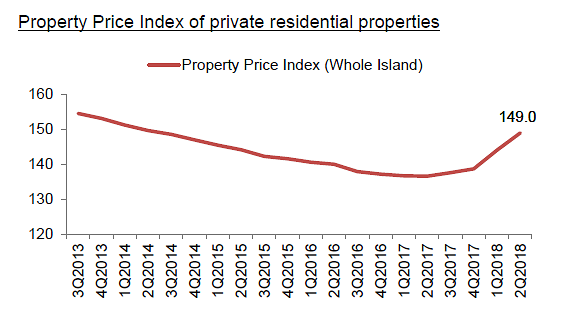
SINGAPORE: Private home prices rose 3.4 per cent in the second quarter of this year, according to the latest figures from the Urban Redevelopment Authority (URA) on Friday (Jul 27).
This continues a rising trend in the last three consecutive quarters, with prices rising 3.9 per cent in the first quarter this year, 0.8 per cent in the previous quarter and 0.7 per cent in the third quarter of last year.
Prices of landed properties rose by 4.1 per cent in the second quarter of 2018, compared with the 1.9 per cent increase in the previous quarter.
Prices of non-landed properties rose by 3.2 per cent, compared with the 4.4 per cent increase in the previous quarter.
Of these, prices of non-landed properties in the Rest of Central Region (RCR) rose the most, with a 5.6 per cent increase in the second quarter. Prices in the Outside Central Region (OCR) rose 3 per cent during the same period, while prices for those in the Core Central Region (CCR) rose 0.9 per cent on-quarter, figures showed.
Rentals of private residential properties increased by 1 per cent in the second quarter of the year, compared with the 0.3 per cent increase in the previous quarter.
WE live in a world today that has made steady progress towards achieving ambitious public health goals, allowing people to live healthier and longer lives.
The evidence? We witnessed the lowest polio case count in history in 2017. Between 2000 and 2015, global malaria deaths fell by 60 percent and mortality caused by HIV and tuberculosis is progressively declining.
However, despite these incredible milestones against several devastating diseases, we are seeing an alarming increase in deaths due to viral hepatitis.
As we approach World Hepatitis Day on July 28, we must shine attention on the urgent need to scale up testing and treatment to better identify and protect those impacted by the disease.
Hepatitis B and C caused 1.34 million deaths globally in 2015, 21 percent more than the number of deaths due to HIV in the same year. In developing countries, an alarming 90 percent of children below the age of 10 years have been infected with hepatitis A, due to poor sanitary conditions and hygienic practices.
Southeast Asia alone reports 49 million cases annually of hepatitis, demonstrating that this is not a disease solely impacting people on the other side of the world, but within our own borders.
There is some good news. The World Health Organization has a goal of eliminating hepatitis B and C by 2030 and despite the very recent establishment of the first global health strategy in 2016, coverage of the recommended three doses of vaccine has already reached 85 percent globally.
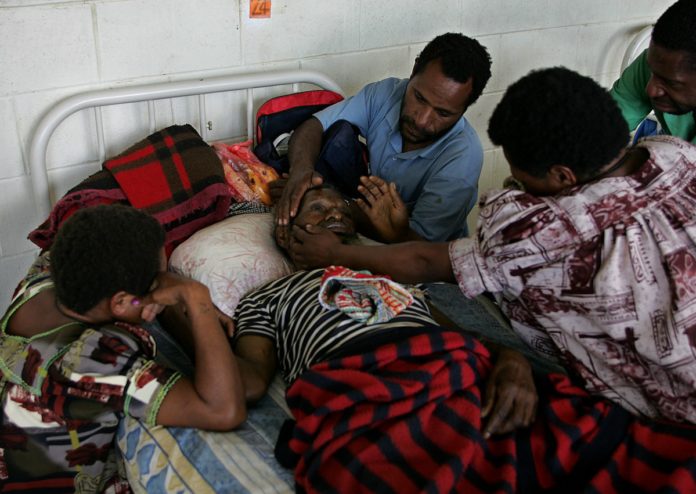
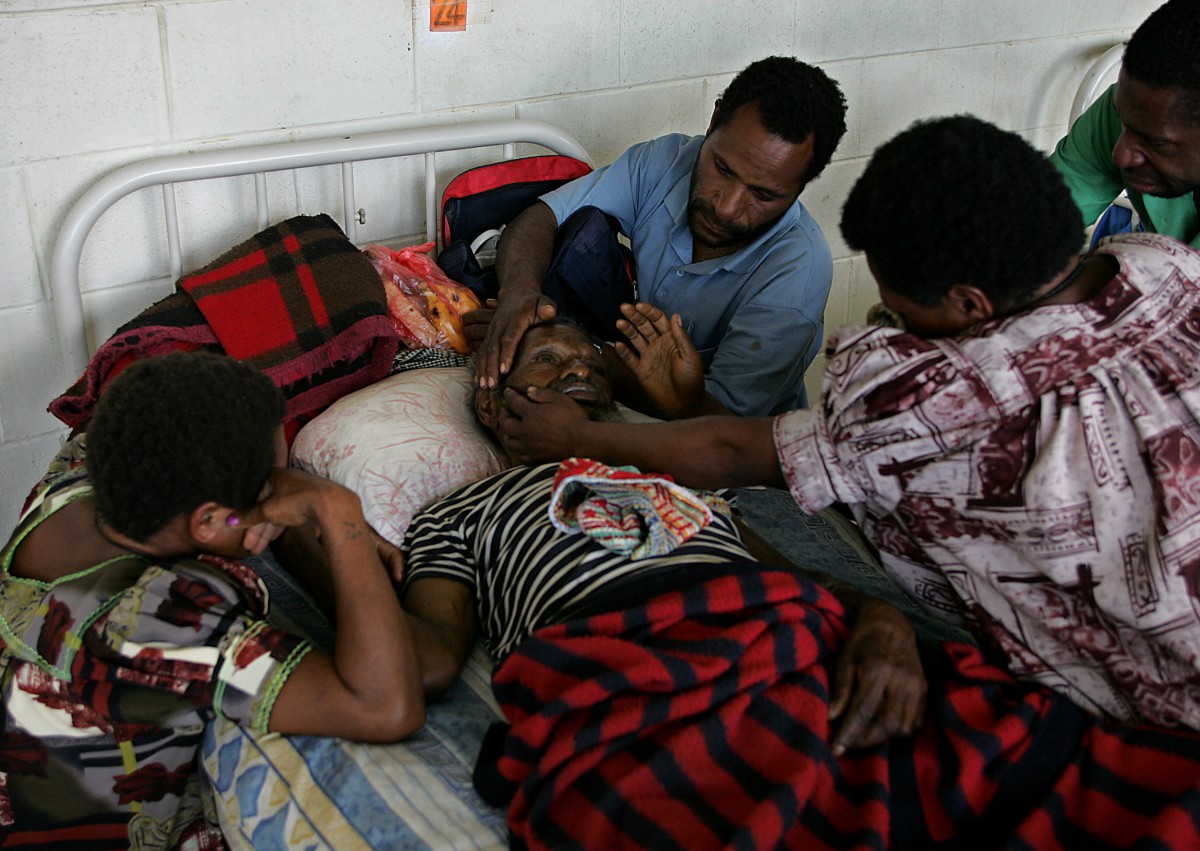
Relatives caress a man’s face as he dies of hepatitis cross infection in the decrepid Tininga AIDS ward of Mount Hagen General Hospital in Papua New Guinea, 16 August 2004. Source: Torsten Blackwood/ AFP
Many pathways exist to further improve and increase hepatitis coverage. We must expand access to top-of-the-line diagnostics and treatments to ensure those who are infected know their health status, and moreover, demonstrate health-seeking behavior towards treatment.
A: Access to Testing
In line with the World Hepatitis Alliance’s campaign – Finding the Missing Millions – we must strive to increase access to hepatitis testing.
Globally, out of the 325 million people who live with hepatitis, as only 9 percent and 20 percent of those infected with hepatitis B and C respectively have been diagnosed.
It is equally alarming that less than 5 percent of diagnosed patients who meet treatment criteria for hepatitis B are receiving antiviral treatment. Successful seroconversion – the time where antibodies develop – for hepatitis B also remains particularly low in children.
B: Be Aware of Who is at Risk
We must recognise that specific populations, such as healthcare workers, migrants, indigenous populations and people who administer vaccinations, are at greater risk of contracting hepatitis.
These populations require tailored plans of action, including proper infection control practices like the use of personal protective equipment, proper cleansing of infected tools, use of blunt needles for certain surgical procedures, in healthcare settings.
C: Caring for our Children
Vaccination, one of most effective prevention methods, is a keystone approach to control the spread of hepatitis. It is crucial we continue our efforts to protect children by ramping up the initial birth dose vaccination, which remains low at 39 percent.
Whilst Hepatitis A isn’t a standardised immunisation in countries such as Singapore, parents are encouraged to speak with their child’s doctor if their child should be vaccinated.
While eliminating a disease will never be as easy as learning your ABCs, a continued focus on vaccination, as well as improved diagnostics and treatment from both the public and private sector, are imperative to tackle this urgent public health initiative.
A holistic approach will allow us to reverse the current trend in hepatitis deaths and bring us one step closer to eliminating hepatitis.
This article is by Associate Professor Marion Aw, Senior Consultant at the Division of Paediatric Gastroenterology, Nutrition, Hepatology and Liver Transplantation at the National University Hospital, Singapore.
SINGAPORE: Last Friday (Jul 20), the public learnt about SingHealth’s cyber breach that affected 1.5 million patients. The alleged intention of the breach was to get the Prime Minister’s medication information.
According to Cyber Security Agency of Singapore chief executive David Koh, this was a “deliberate, targeted, and well-planned” attack, suggesting that Singapore’s infrastructure was being targeted by malevolent actors.
Prime Minister Lee Hsien Loong has shown astute leadership, urging the country to press on with its plans of going digital, to build a secure and smart nation.
The challenge, however, is that personally identifiable information does not change over time; once compromised, it cannot be reclaimed from bad actors.
Hacks on the US government today, for example, can be traced back to information lost during the massive hacks on the Office of Personnel Management discovered in 2015.
This cyberattack, and others that may follow, might make citizens more vulnerable. If the instances of data loss increase and adverse impact on citizens rises significantly, Singaporeans would need much more than a statement of assurance to continue believing in Singapore’s Smart Nation plans.
Health Minister Gan Kim Yong has announced, for now, that the solution to making the hospital more secure is through implementing Internet separation.
As a tool to limit the inflow and outflow of data, Internet separation will certainly reduce the number of potential entry points into a system, giving information assets slightly better protection than before.
It may help to improve data security within the hospital, as Deputy Prime Minister Teo Chee Hean has pointed out.
Deputy Prime Minister Teo Chee Hean at the Public Service Engineering Conference on Jul 24. (Photo: DPM Teo Chee Hean/Facebook)
INTERNET SEPARATION IS NOT A CURE-ALL
However, Internet separation is not a “one size fits all” solution for all internet breaches.
Firstly, Internet separation creates usability challenges that may be sub-optimal. Asking a doctor to toggle between computers or systems would hinder the doctor’s ability to process consultations faster and potentially hurt doctor-patient interactions.
Furthermore, Internet separation may not be applicable to many situations. Just consider the cyberattacks on four local universities uncovered earlier this year where unsuspecting users directed to a phishing website were found to be the cause.
It would be untenable and unproductive to get students to use separate devices for school work.
Similarly, in our desire to implement driverless cars, it would be prohibitively expensive to institute a separate network for them and still expect them to function effectively.
LOOK TO INDUSTRY STANDARD PROTECTION MEASURES
Perhaps we should consider other industry standard techniques already in the market that can improve security without compromising usability.
Most advanced digitalised companies, for example, employ secure IT architecture design in their systems.
A secure IT architecture system defines a rigorous set of protocols, process and technical controls that define how information flows across systems within a company.
File photo of a person working on a laptop. (Photo: AFP/File/Thomas Samson)
For example, the architecture would specify encryption standards and firewalls that guard against unauthorised access to private networks connected to the Internet. This allows frontline users to still use the Internet, without being afraid that their actions online might compromise the entire company.
Furthermore, secure IT architecture systems adhere to a list of guiding security principles that have been endorsed by leading industry players.
These principles include using secure default passwords, securing the weakest link, and avoiding “security by obscurity” — the process of trying to be secure by unplugging one’s systems from the Internet.
LOOK TO INDUSTRY STANDARDS
There are internationally recognised standards that companies can adhere to in order to build a robust system — ISO 27001, for example, helps companies identify, analyse and address its information risks.
IEC 27033 gives companies a manual to create a secure network architecture in day-to-day business dealings, such as securing communications between networks through gateways and firewalls.
Finally, the US National Institute of Standards and Technology cloud computing security standards help companies design a secure reference architecture even if their operations requires processing information in the open cloud.
These standards try to assist companies to build secure systems without necessarily clamping down on Internet access or compromising the usability of the systems.
Going forward, we might consider encouraging companies to adhere to such standards in order to promote an open digital space that is built on secure foundations.
Nevertheless, even though an IT security architecture can create security without significantly sacrificing usability, defining the network dependencies and vulnerabilities takes time, making it a great “peacetime” solution before a hack happens.
(Photo: AFP/Kirill Kudryavtsev)
Internet separation, on the other hand, potentially presents a rapid fix post-hack that can quickly stop the bleeding and get business back to normal as soon as possible.
LOOK AT THE ECOSYSTEM, NOT JUST THE CYBERATTACKS
Perhaps the issue here is that cyber incidents are all too often seen as a problem of dealing with cyberattacks. If we similarly framed health issues as viral infections, we could miss out more fundamental solutions which address the root cause, such as boosting patients’ immune systems or adjustments to their lifestyles.
But if we reframe the issue of cyber-attacks by looking at our current security and protection systems, we can have targeted initiatives to improve cybersecurity “lifestyles” rather than be fixated with specific viral events.
Such measures might require deeper and heavier fundamental investments, but let us not be penny-wise and ultimately pound foolish.
Benjamin Goh is a passionate technologist and co-author of IEEE’s paper A Principles-Based Approach to Govern the Internet of Things (IOT) Ecosystem.
SINGAPORE: More than S$2.1 million will be given to 12 national monuments this year to co-fund restoration and maintenance works, said the National Heritage Board (NHB) on Thursday (Jul 26).
This sum will be disbursed through the National Monuments Fund, which was set up in 2008.
Of the total sum, S$2 million will be used to co-fund restoration works at six monuments while S$113,000 will subsidise the maintenance of all 12 monuments.
One monument which has received subsidies for both restoration and maintenance works is the 164-year-old Sri Srinivasa Perumal Temple along Serangoon Road.
“This funding … is a good example of the partnership between the Preservation of Sites and Monuments division of NHB and the Hindu Endowments Board, in ensuring that the heritage we have inherited will be passed on to our future generations in a pristine condition,” said Mr Rajan Krishnan, chairman of the temple’s redevelopment committee.
The temple received about S$88,000 to offset the cost of its restoration efforts, which included sculptural restoration on its five-tiered entrance tower.
The painstaking process was carried out by eight skilled sculptors from India and took four months to complete.
The temple’s inner sanctums were also re-tiled while the chipped granite floor at the main temple was replaced.
The total cost of its restoration efforts, including other works not eligible for co-funding, was about S$700,000. The rest of the cost was covered through donations to the temple.
Sri Srinivasa Perumal Temple. (Photo: National Heritage Board)
SCOPE OF MAINTENANCE FUND EXPANDED
Another first-time recipient of the restoration fund is the Church of St Teresa at Kampong Bahru Road.
It will receive about S$1.3 million to offset its total restoration costs of about S$4.3 million.
This comes after an investigation of structural defects – funded by the board’s maintenance fund – revealed several issues.
For example, cracking on roof tiles has led to leakages, causing mould and obvious staining.
There are also cracks on the building’s walls – meaning that layers of decades-old paint will have to be stripped to examine if the faults are structural.
Mr Joseph Silverayan, a parishioner at the church, said the funds are “a boon” as it has been 13 years since the last renovation.
He said the restoration, slated for 2019, would create a “revival” by attracting more people to visit.
The four other recipients of the restoration fund this year are the Al-Abrar Mosque, Chesed-El Synagogue, Maghain Aboth Synagogue and Thian Hock Keng temple.
Maintenance funds will also be disbursed to the Armenian Church of St Gregory, Church of Saints Peter and Paul, Hajjah Fatimah Mosque, Lian Shan Shuang Lin Monastery, St George’s Church and St Joseph’s Church.
The scope of the maintenance fund was also expanded this year to include the “maintenance of vegetation” on or nearby monuments. Previously, only the removal of vegetation was qualified for co-funding.
“With their (the stakeholders’) feedback, we have constantly expanded the scope of work that may be considered to be covered by the grant, so as to ensure it is user-friendly,” said Ms Jean Wee, director of the Preservation of Sites and Monuments at the NHB.
Since its establishment in 2008, the fund has disbursed S$6.6 million for restoration and maintenance efforts.
To qualify for funding, monuments must be owned and managed by a non-profit or religious organisation, accessible to the public, and able to finance the works before applying for subsidies.
Of the 72 structures that have been gazetted as national monuments, 31 are eligible for the fund. Out of that, 27 have benefitted from it.
“I see the outcomes of the fund as a win-win situation: the community gets to worship at a restored or refreshed monument, and my team and I get a better understanding of the built material and the solutions that are tested, to ensure they will be well preserved for future generations,” added Ms Wee.
SINGAPORE: With two weeks to go before the National Day Parade, its organisers cannot wait to unveil the stage which, with its total floor area of 8,500 sq m, is the largest for the annual celebration.
This year’s parade will be held at the Floating Platform, but audiences will feel connected to the surrounding Marina Bay areas, thanks to its stage design.
Swivel panels can be rotated to form a projection screen. (Photo: Tan Si Hui)
The backdrop of the stage is made up of swivel panels which, when opened, allows the audience to enjoy a clear view of the Marina Bay area. When they are closed, the audience will see a mural of Singapore’s iconic waterfront skyline.
“This stage was designed with urban design principles in mind – the visual connection for the audience and the backdrop, as well as coherence of material and colours by putting the colours of the surrounding buildings on the stage,” said stage designer Quck Zhong Yi.
Behind the spectator stands, there are 30 projectors that will beam films onto the panels.
“It’s akin to back in the good old days when you go to an outdoor or drive-through cinema where you watch the film,” said chairman of the multimedia and communications committee for NDP 2018, Lieutenant-Colonel Chew Heng Hwa. “So we’re trying to create this nostalgic feeling among the crowd through a projection system on the swivel panels.”
Three-tiered layout will allow spectators to view performers more clearly. (Photo: Tan Si Hui)
This year’s stage is also one of the highest in the history of the NDP and designed to ensure that spectators can watch performers on stage clearly.
According to Deputy Chairman of the Infrastructure and Decoration Committee Major Chris How, the stage is maintained on a daily basis.
“We do alignment tests and also try to make sure the lighting and electrical cables are well-maintained,” said Maj How.
“On the stage, we check through all the motor components and make sure the swivel panels are able to turn to the correct specifications that we have tendered for.”
Construction of the stage began in April this year and took a total of 22,500 man hours to complete.
VIENTIANE, Laos: A Singapore contingent of officers from the Singapore Armed Forces (SAF) arrived in Laos on Thursday night (Jul 26) to deliver humanitarian supplies worth S$280,000 for flood relief efforts in Attapeu province.
The 19-strong contingent, including several members of the media, landed in Vientiane Airport on a Republic of Singapore Air Force (RSAF) C-130 transport aircraft at about 8.30pm local time.
Dozens have died and thousands are still missing three days after the hydropower dam collapsed on Monday, releasing 5 billion cubic metres of water – enough to fill more than two million Olympic swimming pools – into the surrounding villages.
Laos Vice Minister of Labour and Social Welfare Baykham Khattiya and Singapore Ambassador in Vientiane Dominic Goh. (Photo: Amir Yusof)
The aid supplies were handed over to Laos Vice Minister of Labour and Social Welfare Baykham Khattiya by Singapore Ambassador in Vientiane Dominic Goh and the SAF’s mission commander, Colonel Mohd Fahmi Aliman, Director (Designate) of the Changi Regional Humanitarian Assistance and Disaster Relief Coordination Centre (RHCC).
Laos Vice Minister of Labour and Social Welfare Baykham Khattiya with the SAF’s mission commander, Colonel Mohd Fahmi Aliman. (Photo: Amir Yusof)
The relief packages include tents, meal rations, bottled water and medical supplies from the SAF.
The SAF also donated five rubber dinghies with outboard motors to assist with water rescue.
The SAF also donated five rubber dinghies with outboard motors to assist with water rescue. (Photo: Amir Yusof)
A second RSAF C-130 will depart on Friday. The flight will include officers from the Singapore Civil Defence Force, who will also deliver 11 large modular field tents to aid relief efforts.
SINGAPORE: Users of ride-hailing app Grab are lamenting recent changes to its reward system.
Accumulating points and redeeming cash rebates was a breeze, but since the Grab-Uber merger, it has clearly become more difficult to do so.
Earlier this month, the Competition and Consumer Commission of Singapore (CCCS) too said the merger deal has led to a “substantial lessening of competition”, made it harder for new competitors to enter the market, and resulted in higher prices.
Indeed, the current situation has given pause to players such as Go-Jek who are reportedly reassessing the risks associated with entering this market.
Thankfully the situation hasn’t deterred other players from breaking onto the scene.
MVL has just entered the market with its app, TADA. Among its selling points is that it will not collect commission fees from drivers using its platform, keep fares competitive, and not levy cancellation penalties on riders.
This might give Grab a run for its money.
However, some experts have pointed out that whether or not the Grab-Uber merger had taken place, prices would have increased. The low prices we had been seeing were merely unsustainable discounts the companies were offering in an effort to maximise their market share.
It remains to be seen whether new players’ models are sustainable enough to ensure the longevity of their initial competitive rates.
CONSUMERS HAVE CHOICES
Soon after the Grab-Uber merger was announced, Nitin Pangarkar, Associate Professor in the Department of Strategy and Policy at the National University of Singapore Business School said that “we should not be unduly alarmed about the loss of consumer welfare because of high prices for the simple reason that there is a cap on how much the ‘new Grab’ can raise prices, especially in Singapore”.
He pointed out that “Singapore has a good public transport system and a taxi system that doesn’t charge high fares”.
Grab announced on March 26, 2018 that it has acquired Uber’s Southeast Asia operations. (File photos: Reuters, Grab)
Indeed, even though Grab is the largest player in the ride-hailing market today, consumers must remember they still have choices.
Companies that operate in this sector also need to bear this in mind when increasing prices.
Complacency clearly will not serve them in this market for long.
TEMPERING UNSUSTAINABLE BUSINESS PRACTICES
Some observers have remarked that tech start-ups in the landscape could do more to temper their aggressive drive to attain market share through low prices.
What we have seen transpire in Singapore and in China in the case of Didi Chuxing, clearly shows that when the focus turns to profitability, mergers may even become the norm.
But whatever happened to building a sustainable business model from the get-go?
However as things stand today, with any new player, consumers would do well to know that low prices and generous rewards are likely to be transitory.
The vibrancy of free market economics would constitute quick entries, even exits and price adjustments. as all these occur.
With higher prices, artificially-induced demand fuelled by low prices would fall and market shakeouts might then lead to an equilibrium.
Derelict oBikes abandoned near Raffles Place a day after the company announced that it will cease operations in Singapore. (Photo: Michelle Teo)
RESTORING CONTESTABILITY, BUT TO WHAT END?
The CCCS has proposed remedies to restore market contestability in the ride-hailing landscape.
Among them, the removal of exclusivity obligations, lock-in periods and/or termination fees on all drivers who drive on Grab’s ride-hailing platform and the removal of Grab’s exclusivity arrangements with any taxi or private-hire car fleet so as to increase choices for drivers and riders.
Indeed, measures need to be in place to prevent existing players from making it arduous to sign up with new market entrants.
New entrants would do better to step in with more creative business models that also take into account long-term sustainability.
But while intense competition in the market might be good for consumers in the short-term, in the long-term, it leads to a less healthy transport ecosystem in that it is likely to thwart Singapore’s car-lite aims.
A study by Boston’s Northeastern University shows that since private-hire services were introduced in Boston, commuters who used to walk, cycle or use public transport are opting for cheap private-hire car rides instead.
In Singapore, as the bus and MRT systems continue to be improved, is encouraging the use of ride-hailing services really the answer?
The Land Transport Authority (LTA) announced on Wednesday (Jul 25) that new MRT trains are expected to arrive from 2021 and will replace its oldest fleet on the North-South and East-West lines. (Photo: LTA)
As regulators step in to ensure market contestability, the promotion of intense competition perhaps needs to be moderated, as do the expectations of commuters.
In the meantime, we may have to adopt an attitude of “enjoy it while it lasts” when new entrants unleash generous discounts and “suck it up” when prices increase as players transition to more sustainable models or exit.
Bharati Jagdish is the host of Channel NewsAsia Digital News’ hard-hitting On The Record, a weekly interview with thought leaders across Singapore, and The Pulse, Channel NewsAsia’s weekly podcast that discusses the hottest issues of the week.