SINGAPORE: Imagine going to a restaurant for a meal, but instead of a waiter, a robot takes your order, gives you recommendations, serves your food, and collects your payment.
This may well become a reality in the future of Singapore’s food services industry.
Senior Minister of State for Education and Trade and Industry Chee Hong Tat said on Friday (Aug 31) there is “no other alternative” for the food services industry except to embrace technology to survive, and added they also have to be smart about doing so.
He was speaking at the Food Services Transformation Conference, held at the Asian Culinary Institute.
The event is aimed at encouraging food businesses to adopt technology and digitalisation as a key means to meet the challenges of manpower constraints and rising costs within the sector.
Mr Chee said the appropriate use of technology can help improve various processes in food services, ranging from customer relations to inventory and procurement processes.
However, he also warned of the pitfalls of chasing technology blindly, citing a personal experience he had at a bak kut teh restaurant that used e-menus via tablets.
“When a tablet was not working, either because the system hanged or someone accidentally spilt soup on it, customers could not sit at that table because there was no alternative channel to order their food,” Mr Chee said.
“Like all tools, we need to apply technology smartly to support new business models and process re-engineering. The objective is not to chase technology as an end in itself.”
He also gave a positive example of Creative Eateries, a company which has implemented a digital internal system to facilitate the ordering of ingredients such as sauces, soups and par-cooked meat from the central kitchen.
This allows the company to better predict production levels and tap on live information on inventory levels, which has led to better management of product shelf-life and lower storage costs.
Facial recognition service robot that can make food recommendations to customers. (Photo: Cheryl Goh)
The push for greater technology adoption comes as food services remain a key part of Singapore’s economy.
In 2016, the sector contributed almost S$9 billion in operating receipts and contributed over 180,000 jobs.
A number of upcoming technology trends relevant to the F&B industry were also showcased as part of the conference. This includes the Kawada robot, which can take customers’ food orders.
The robot’s programme software was developed by a team from Nanyang Polytechnic’s (NYP) School of Engineering, with the long-term goal for it to be used in real-world restaurants.
NYP is also working with China tech firm IIM on a facial recognition service robot that is able to give customer food recommendations based on certain aspects of a person’s profile such as age and gender.
Other restaurant-related technology include a cashless self-service payment kiosk, as well as Dining Butler, which is a mobile ordering solution for customers to place their food orders directly on their own devices.
SINGAPORE: Gardens by the Bay’s Flower Dome is bringing in some sunshine with its latest display of more than 10,000 sunflowers.
The floral display, ‘Sunflower Surprise’, will run from Friday (Aug 31) until Oct 21.
The display will feature more than 50 varieties of sunflowers. (Photo: Gardens by the Bay)
The display will have more than 50 varieties – the largest variety of its kind in Singapore – and features the fluffy ‘Teddy Bear’ to the enormous ‘Russian Mammoth’, which is as large as a human face.
More than 16,000 sunflowers of various shapes, shades and sizes are being grown for the display, half of which includes unusual varieties grown from seeds sourced from the United States.
Familiar characters which can be spotted among the blooms include Dorothy. (Photo: Gardens by the Bay)
The sunflowers will be set up against a backdrop inspired by characters and scenes from the classic The Wonderful Wizard of Oz story.
Familiar characters which can be spotted among the blooms include Dorothy, as well her friends Scarecrow, Tin Man and Cowardly Lion.
SINGAPORE: Organisations in Singapore will have to stop the practice of indiscriminate collection of people’s NRIC details from Sep 1 next year.
The Personal Data Protection Commission (PDPC) on Friday (Aug 31) issued its enhanced advisory guidelines following the close of the public consultation last December.
It said that under the updated guidelines, organisations can collect, use or disclose NRIC numbers or copies of the NRIC only under certain specific circumstances.
First, if they are required by the law or deemed necessary to accurately verify one’s identity to a “high degree of fidelity”, the PDPC said in its press release.
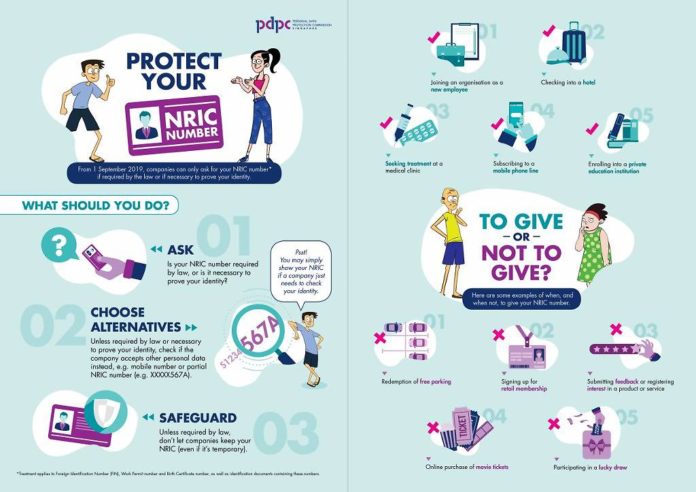
(Infographic: PDPC)
For example, a telco will continue to be allowed to keep a record or scanned copy of subscribers’ NRICs, as it is legally required to maintain a register of customers, the agency explained.
The second exception is when failing to provide NRIC details could pose a significant safety or security risk, or may pose a risk of significant impact or harm to an individual and the organisation, it added.
These could be transactions relating to healthcare or real estate matters like insurance applications and claims.
Another example of this exception would be when stores that sell cigarettes have to ask consumers for their NRIC to verify that they meet the minimum legal age for buying the product, PDPC said.
It did add that organisations should be able to justify why they are collecting NRIC numbers when asked by individuals or the PDPC.
“The NRIC number is a permanent and irreplaceable identifier which can be used to unlock large amounts of information relating to an individual,” the data privacy watchdog said.
“In today’s digital economy, indiscriminate collection or negligent handling of NRIC numbers can increase the risk of unintended disclosure and may result in NRIC numbers being used for illegal activities such as identity theft or fraud.”
This same treatment applies to birth certificate numbers, foreign identification numbers and work permit numbers. As for passport numbers, even though they are periodically changed, organisations should avoid collecting the full numbers unless justified, it said.
The updated guidelines do not apply to a public agency or an organisation acting on its behalf though.
A Smart Nation and Digital Government Office (SNDGO) spokesperson told Channel NewsAsia that the Government, as the issuing authority for the NRIC, “rightfully uses the NRIC to discharge its functions and services with citizens in a secure manner”.
It will review its processes to ensure public agencies limit the use of NRIC numbers, and the retention of physical NRICs, to transactions where such use is required by law or is necessary to accurately establish people’s identities, the spokesperson said.
“As we improve the use of data to serve citizens and businesses, the Government will ensure that our data protection measures continue to be on par, if not better, than best practices in the private sector,” added the spokesperson.
MAKING THE CHANGE
To help ease the transition for organisations here, especially for smaller businesses, PDPC said it will work with the Info-communications Media Development Authority (IMDA) to do the following:
Publish a technical guide that would provide organisations with information on how they can replace NRIC numbers with alternative identifiers for websites and public-facing computer systems
Identify pre-approved technology solutions for them to adopt
Develop template notices that organisations can use to manage customer expectations during the transition period
As alternatives to NRIC numbers organisations could allow users to create their own user ID, email addresses or tracking numbers in verifying their identities, PDPC said.
Other examples could be the use of mobile phone numbers or the use of parts of the NRIC, like the last three digits and the last letter.
There are 22 pre-approved technology solutions identified for organisations to turn to as they embark on the necessary changes.
For companies worried about the financial outlay of adopting these solutions, IMDA said they can apply for the Productivity Solutions Grant to help defray the costs.
And there are business benefits to be reaped for companies who view this requirement as a competitive advantage, rather than a compliance cost.
Mr Yeong Zee Kin, deputy commissioner at PDPC, said: “If there’s no need to hang on to NRIC data, then keeping it actually introduces additional risk” as he warned that the data could potentially be hacked and the organisations liable for any leaked information.
Beyond the updated guidelines, PDPC said a mindset change is needed to better safeguard personal data.
“Old practices introduced back in the pen-and-paper days needs to be revised … to be more sophisticated and digitally secure,” Mr Yeong explained.
He also said it’s not just organisations that need to change, but consumers too.
Responding to an example brought up by Channel NewsAsia about contests found on AXS machines requiring people to sign up using their NRIC numbers to stand a chance to win a car, Mr Yeong said: “Consumers also need to ask if they want to give such data for a chance to win a car.”
SINGAPORE: Organisations in Singapore will have to stop the practice of indiscriminate harvesting of people’s NRIC details from Sep 1 next year.
The Personal Data Protection Commission (PDPC) on Friday (Aug 31) issued its enhanced advisory guidelines following the close of the public consultation last December.
It said that under the updated guidelines, organisations can collect, use or disclose NRIC numbers or copies of the NRIC only under certain specific circumstances.
First, if they are required by the law or deemed necessary to accurately verify one’s identity to a “high degree of fidelity”, the PDPC said in its press release.
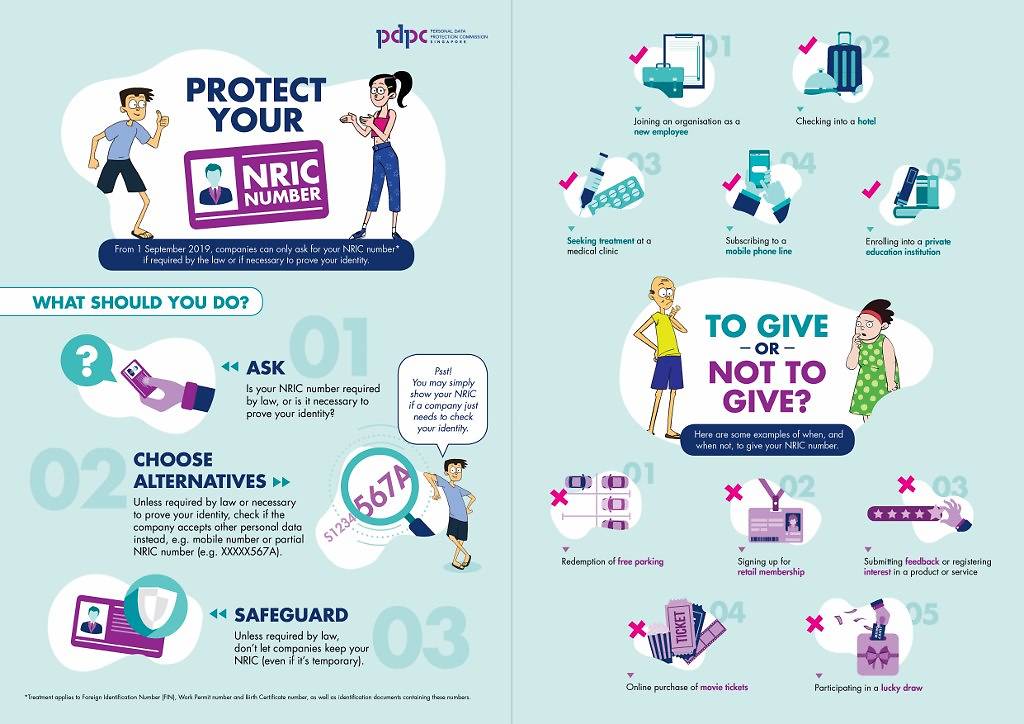
(Infographic: PDPC)
For example, a telco will continue to be allowed to keep a record or scanned copy of subscribers’ NRICs, as it is legally required to maintain a register of customers, the agency explained.
The second exception is when failing to provide NRIC details could pose a significant safety or security risk, or may pose a risk of significant impact or harm to an individual and the organisation, it added.
These could be transactions relating to healthcare or real estate matters like insurance applications and claims.
Another example of this exception would be when stores that sell cigarettes have to ask consumers for their NRIC to verify that they meet the minimum legal age for buying the product, PDPC said.
It did add that organisations should be able to justify why they are collecting NRIC numbers when asked by individuals or the PDPC.
“The NRIC number is a permanent and irreplaceable identifier which can be used to unlock large amounts of information relating to an individual,” the data privacy watchdog said.
“In today’s digital economy, indiscriminate collection or negligent handling of NRIC numbers can increase the risk of unintended disclosure and may result in NRIC numbers being used for illegal activities such as identity theft or fraud.”
This same treatment applies to birth certificate numbers, foreign identification numbers and work permit numbers. As for passport numbers, even though they are periodically changed, organisations should avoid collecting the full numbers unless justified, it said.
The updated guidelines do not apply to a public agency or an organisation acting on its behalf though.
A Smart Nation and Digital Government Office (SNDGO) spokesperson told Channel NewsAsia that the Government, as the issuing authority for the NRIC, “rightfully uses the NRIC to discharge its functions and services with citizens in a secure manner”.
It will review its processes to ensure public agencies limit the use of NRIC numbers, and the retention of physical NRICs, to transactions where such use is required by law or is necessary to accurately establish people’s identities, the spokesperson said.
“As we improve the use of data to serve citizens and businesses, the Government will ensure that our data protection measures continue to be on par, if not better, than best practices in the private sector,” added the spokesperson.
MAKING THE CHANGE
To help ease the transition for organisations here, especially for smaller businesses, PDPC said it will work with the Info-communications Media Development Authority (IMDA) to do the following:
Publish a technical guide that would provide organisations with information on how they can replace NRIC numbers with alternative identifiers for websites and public-facing computer systems
Identify pre-approved technology solutions for them to adopt
Develop template notices that organisations can use to manage customer expectations during the transition period
As alternatives to NRIC numbers organisations could allow users to create their own user ID, email addresses or tracking numbers in verifying their identities, PDPC said.
Other examples could be the use of mobile phone numbers or the use of parts of the NRIC, like the last three digits and the last alphabet.
There are 22 pre-approved technology solutions identified for organisations to turn to as they embark on the necessary changes.
For companies worried about the financial outlay of adopting these solutions, IMDA said they can apply for the Productivity Solutions Grant to help defray the costs.
And there are business benefits to be reaped for companies who view this requirement as a competitive advantage, rather than a compliance cost.
Mr Yeong Zee Kin, deputy commissioner at PDPC, said: “If there’s no need to hang on to NRIC data, then keeping it actually introduces additional risk” as he warned that the data could potentially be hacked and the organisations liable for any leaked information.
Beyond the updated guidelines, PDPC said a mindset change is needed to better safeguard personal data.
“Old practices introduced back in the pen-and-paper days needs to be revised … to be more sophisticated and digitally secure,” Mr Yeong explained.
He also said it’s not just organisations that need to change, but consumers too.
Responding to an example brought up by Channel NewsAsia about contests found on AXS machines requiring people to sign up using their NRIC numbers to stand a chance to win a car, Mr Yeong said: “Consumers also need to ask if they want to give such data for a chance to win a car.”
JAKARTA: Singapore table tennis players Feng Tianwei, Yu Mengyu and Gao Ning have qualified on Thursday (Aug 30) for the last 16 in the singles event at the 2018 Asian Games.
The trio won their respective matches easily and now stand a chance to win Singapore’s first table tennis medal at this edition of the Games.
Gao, 35, defeated 19-year-old Qatar national Mohammed Abdulhussein 4-0. He won in straight sets 11-7, 11-4, 11-9 and 11-6 in around 30 minutes.
He will play against China’s Lin Gaoyua in the round of 16 on Friday at 1pm local time (2pm Singapore time).
Meanwhile, Singapore’s Yu beat Malaysia’s Alice Chang 4-1 at the Jakarta International Expo. Yu won 11-4, 11-2, 11-4, 7-11. 11-2.
Singapore’s Yu Meng Yu speaks to her coach at the 2018 Asian Games. (Photo: Amir Yusof)
Yu will meet Hong Kong’s Doo Hoi Kem in the last 16 at noon local time (1pm Singapore time).
Feng, who is ranked 11 in the world, beat Pakistan’s Aisha Iqbal Ansari in straight sets 11-5,11-2,11-2,11-5.
Speaking to media after her win, Feng said: “Today, the opponent was not very strong. So my performance was not bad. The match ended pretty quickly.
Feng Tianwei easily beat her opponent from Pakistan in the last 32. (Photo: Amir Yusof)
“I feel that it’s more important that I recover today to prepare for the match tomorrow. Tomorrow I play against someone I lost to in a team match, so me and her, the odds are half-half (50-50). I will give my best,” Feng added.
Feng will face South Korea’s Jeon Jihee on Friday morning at 10am local time. (11am Singapore time). Feng lost to Jeon in the women’s team quarterfinals last Monday (Aug 27), when Singapore was eliminated by South Korea 3-1.
Commenting on her preparations, Feng said: “I feel, maybe, I will prepare more fully. Time was tight for the team matches, so our preparation was not so thorough … This was my first time losing to her, I won all my matches against her before this. So I can’t view her in the same light anymore … now our gap is narrowed.”
SINGAPORE: Stories of corporate culture gone off the rails have become a regular feature in the headlines.
From rampant sexism and bullying, falsifying of critical safety records, to underhand tactics against competitors and outright fraud, breakdowns in standards of governance inevitably lead to demands for strong action to be taken.
But while companies, governments and regulators may feel tempted to take decisive action to appease public anger, what are the most effective ways to bring corporate culture back on track?
Here are three insights to consider:
1. A NEW BROOM IS NOT ALWAYS THE ANSWER
When the rot sets in, it is tempting to demand change at the top.
In Singapore last year, a series of incidents at metro rail operator SMRT led to growing criticism in the press, an outpouring of anger on social media and hearings in the national parliament. Responding to the criticism, SMRT’s then CEO said the firm was “awash in collective shame” as calls mounted for senior heads to roll.
Yet in many instances, a witch hunt may actually prove counterproductive – a symbolic sacrifice rather than a substantive step to address the critical problems that the company faces. Put another way – is it wise to eject the pilot when we need to fix a plane in mid-flight?
Former SMRT CEO Desmond Kuek. (File Photo)
Instead of demanding a “fall guy” to take the blame, it may be wiser for the leader to “fall in” – after all, they know best how the company works and how to address its challenges.
Of course in some cases change at the top is the only option.
Last year the CEO and founder of Uber, Travis Kalanick, was forced to stand down after a series of scandals hit the company. His replacement, Dara Khosrowshahi, has vowed to reboot the firm by introducing a new set of cultural values to the global ride-sharing firm.
Writing in a blog post on LinkedIn he said that “the culture and approach that got Uber where it is today is not what will get us to the next level”.
Yet Uber is likely an exception. Rocked by a series of scandals, the firm had reached a tipping point.
A closer look at recent corporate history – companies such as Apple, HP, Yahoo and Starbucks – reveals many incidences where a new CEO does not automatically sweep the company clean. In some cases – Apple, for example – the original CEO had to be called back to tackle problems the successor could not fix.
A portrait of Apple co-founder and former CEO Steve Jobs is placed on the Federation Tower skyscraper in Moscow’s new business district on Oct 19, 2011. (File photo: REUTERS/Denis Sinyakov)
2. BE TRANSPARENT ABOUT THE PROBLEM
After major corporate calamities, it is often the demonstration of commitment that matters more than what the company does with the CEO. Focusing on transparency will be the real determinant of success.
The German multinational company Siemens has seen a series of corruption cases dating back more than a century. In 1914, for example, it was involved in a spectacular case of bribery in a deal with the Imperial Japanese Navy.
More recently, in 2005, Siemens officials were exposed surreptitiously paying off Greek government officials during the 2004 Summer Olympics.
The final straw came in 2008 when investigations by the German and US governments, among others, led to fines totalling some 2.5 billion euros (US$2.9 billion).
Jolted into action, Siemens culture recovery was impressive. Strict anti-corruption rules and processes were rapidly rolled out and the number of compliance staff was ramped up from just 86 to 500.
In addition, Siemens took on a former Interpol official to head its investigation unit and a co-founder of watchdog Transparency International to serve as an advisor.
Contrast that with the response of German car giant Volkswagen in the diesel emission scandal of 2015. When it was first revealed that emission tests might have been tampered with, Volkswagen first went into denial, insisting discrepancies were mere technical glitches.
It was only in the face of indisputable data that executives acknowledged there had been deliberate deception.
Reacquired Volkswagen and Audi diesel cars sit in a desert graveyard near Victorville, California, US, March 28, 2018. (Photo: REUTERS/Lucy Nicholson)
In the following months, more revelations surfaced, panic recalls were instituted worldwide and the company’s value and reputation plunged. Volkswagen did not try to arrest the problem by being more candid in its disclosures.
The common thing that happened at Siemens and Volkswagen was a CEO change after the debacles. But the results were vastly different. It probably goes beyond just the CEO factor but points more to the systemic adoption of transparency across all levels and functions of the organisation.
3. STAY FOCUSED ON GOOD GOVERNANCE
The bottom line in any effort to change corporate culture after a crisis is to be resolute in implementing solid governance practices.
Japanese optics and instrument manufacturer Olympus became the poster boy of bad governance in 2011 when a US$1.7 billion fraud was discovered by its newly appointed CEO, Michael Woodford.
The revelations took Olympus to the brink of collapse, wiping 82 per cent off its share value within a month and leading some observers to dub the firm “the Enron of Japan”.
Yet Olympus managed a miraculous turnaround, implementing strong governance measures that reshaped a highly conservative Japanese corporate culture. These include having outside members who form the majority of the board as well as genuinely independent external auditors.
As a result Olympus today is thriving once again.
Medical equipment became one of Olympus’ core divisions.
Olympus’ business strategy had been totally overwhelmed by its bad culture. As management guru Peter Drucker famously quipped: “Culture eats strategy for breakfast.”
Good governance however can often come to the rescue and put a derailed organisation back on track. If anything, I should add:
Governance eats culture for lunch.
Lawrence Loh is director of Centre for Governance, Institutions and Organisations at NUS Business School, National University of Singapore. He is also deputy head and associate professor of Strategy and Policy at the school.
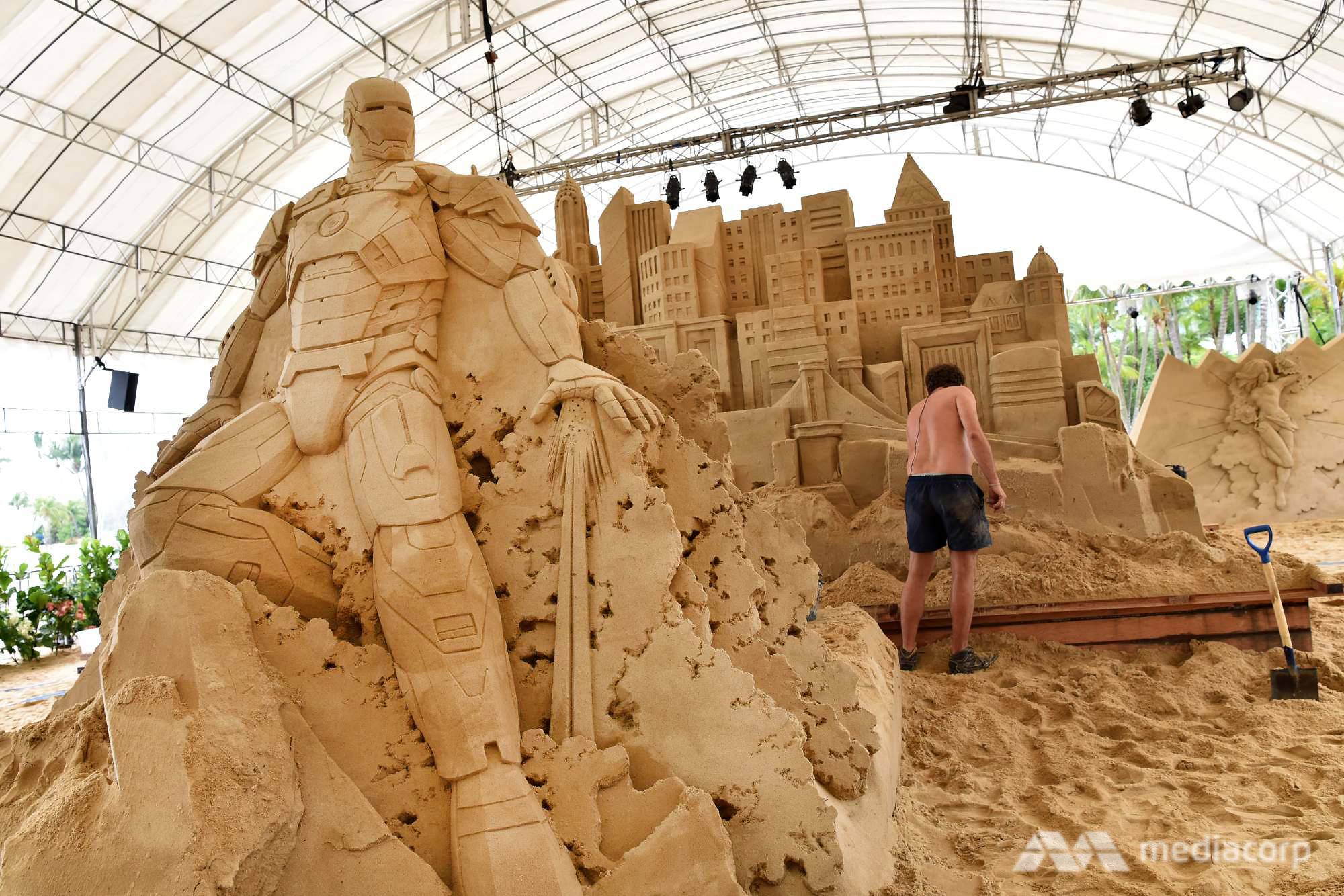
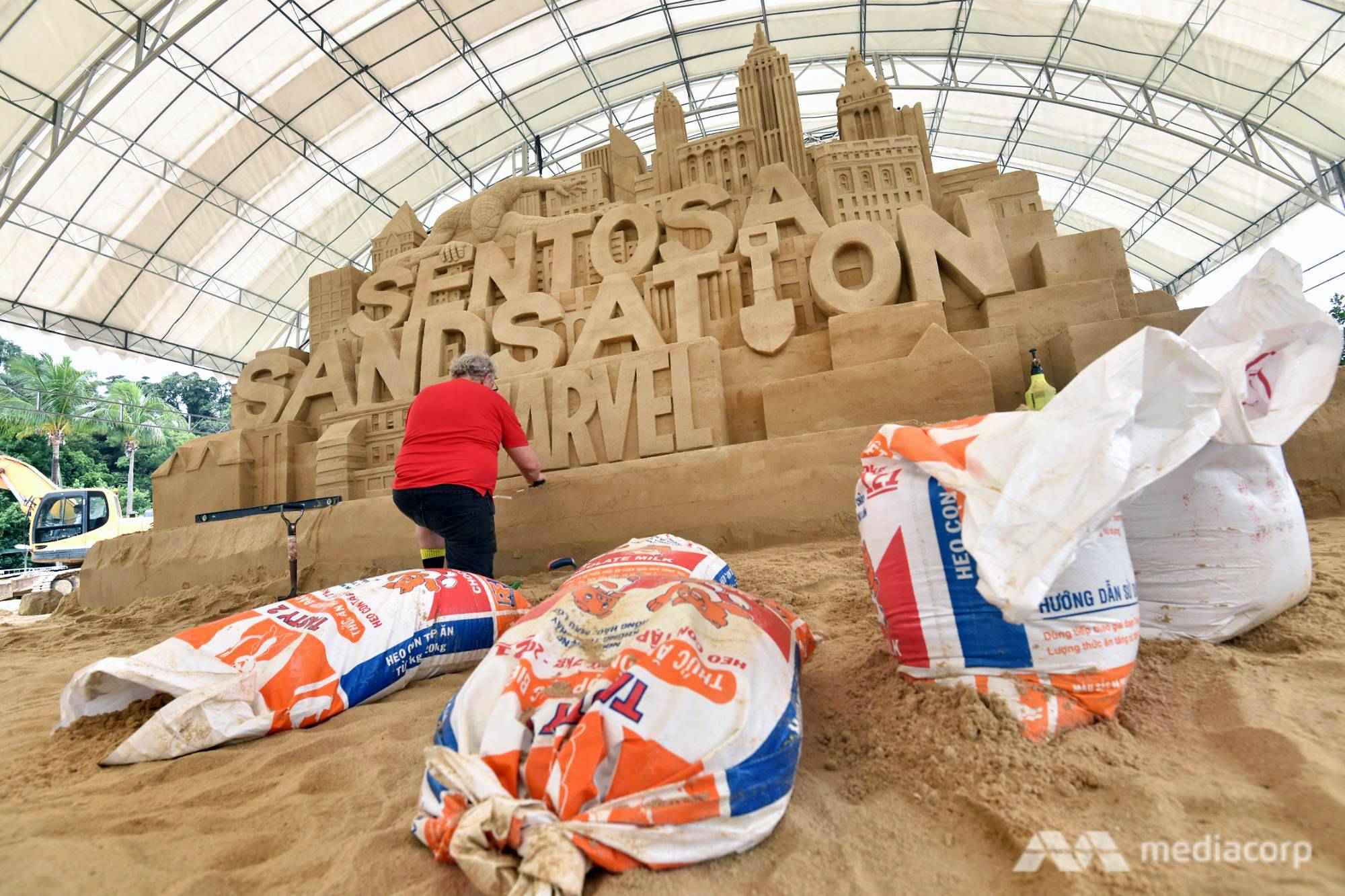
SINGAPORE: Over 10 days, Captain America took shape on Sentosa’s Siloso Beach – along with the likes of Iron Man, Hulk and Thor – as sand sculptors from around the world brought a whole stable of Marvel superheroes to life.
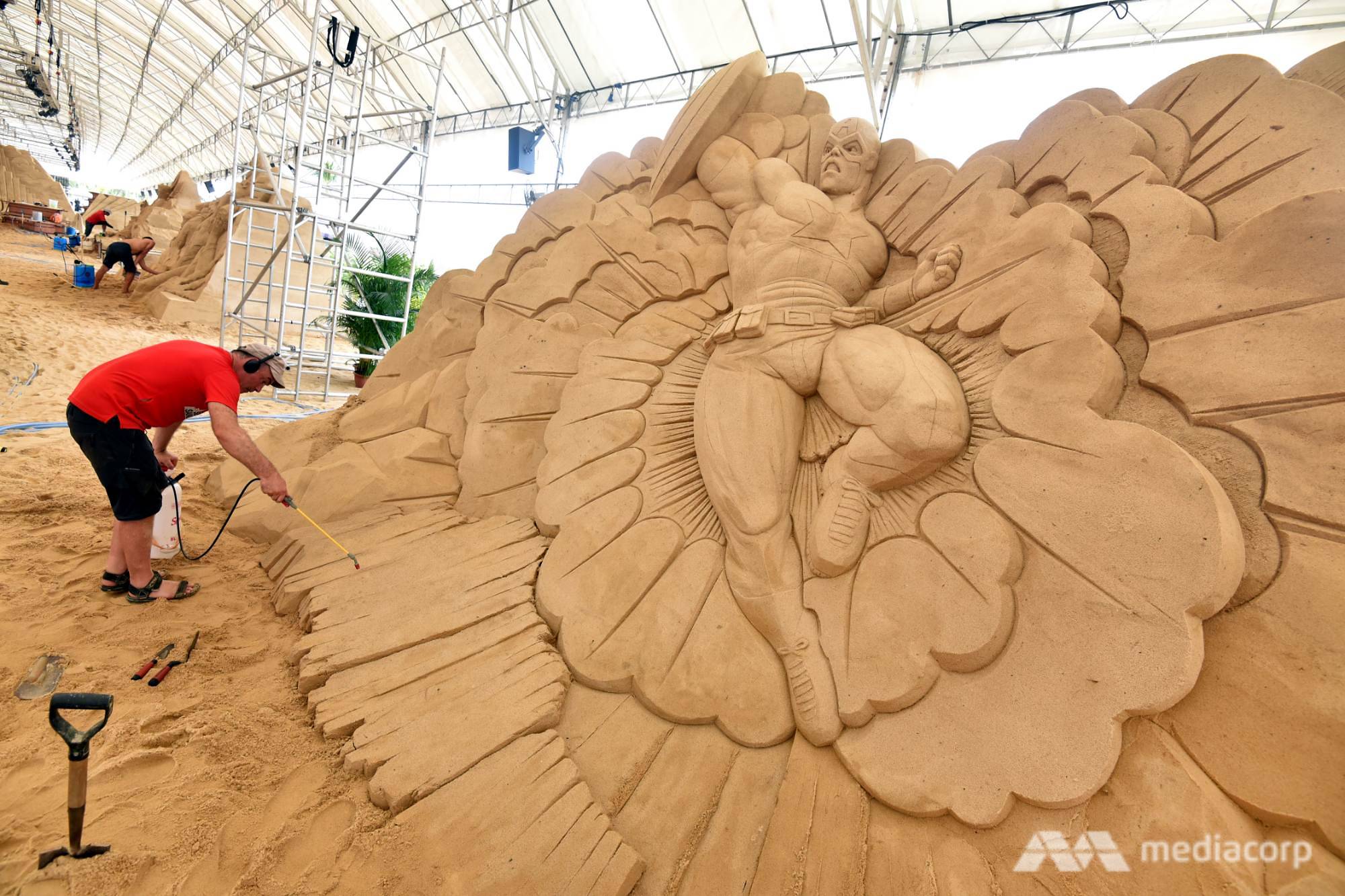
Marvel superhero Captain America. (Photo: Jeremy Long)
Marvel superhero Ironman by Jooheng Tan. (Photo: Jeremy Long)
The larger-than-life sculptures are the centrepiece of Sentosa Sandsation, a two-week sand festival that will open in time for the September school holidays.
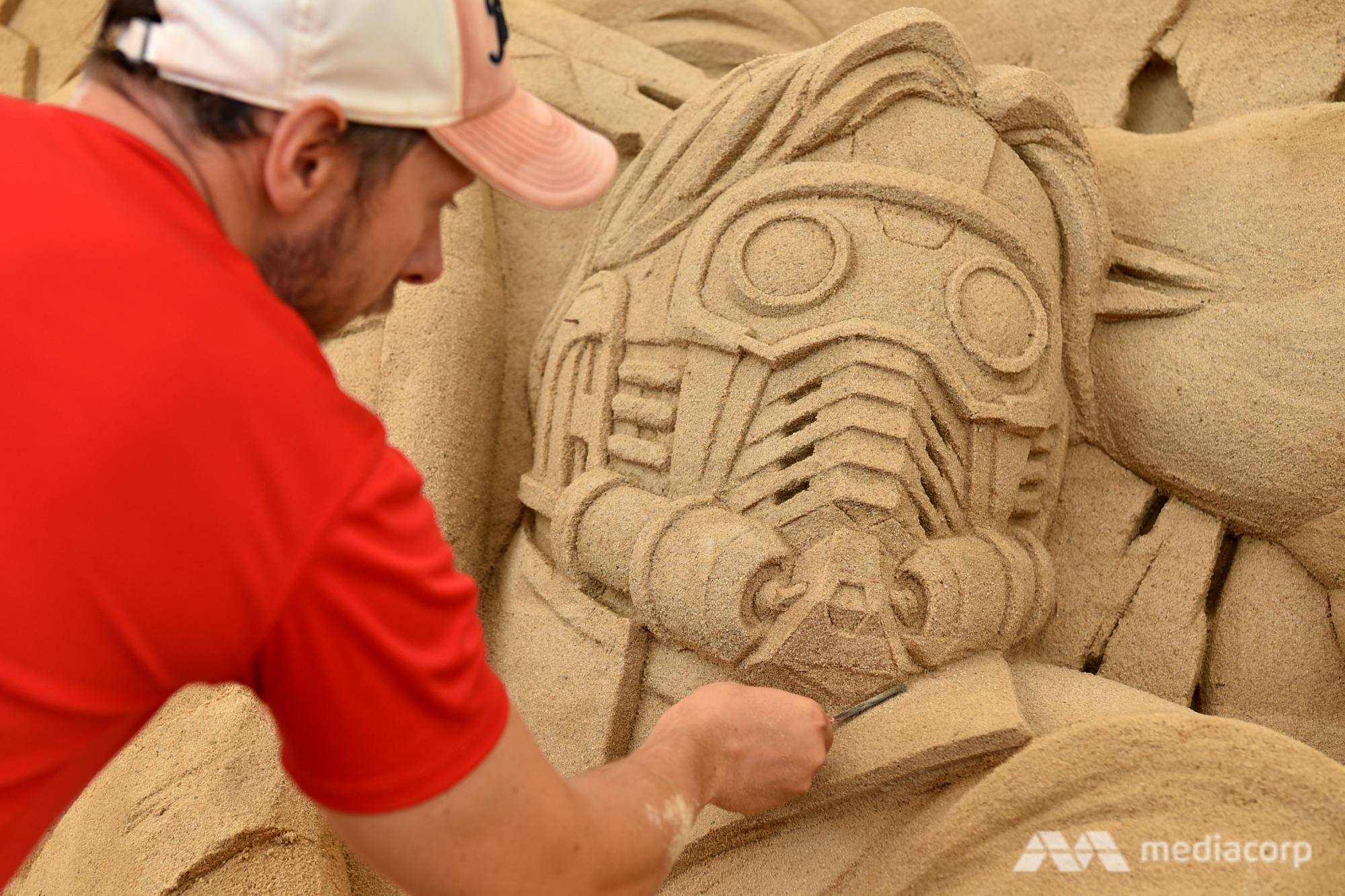
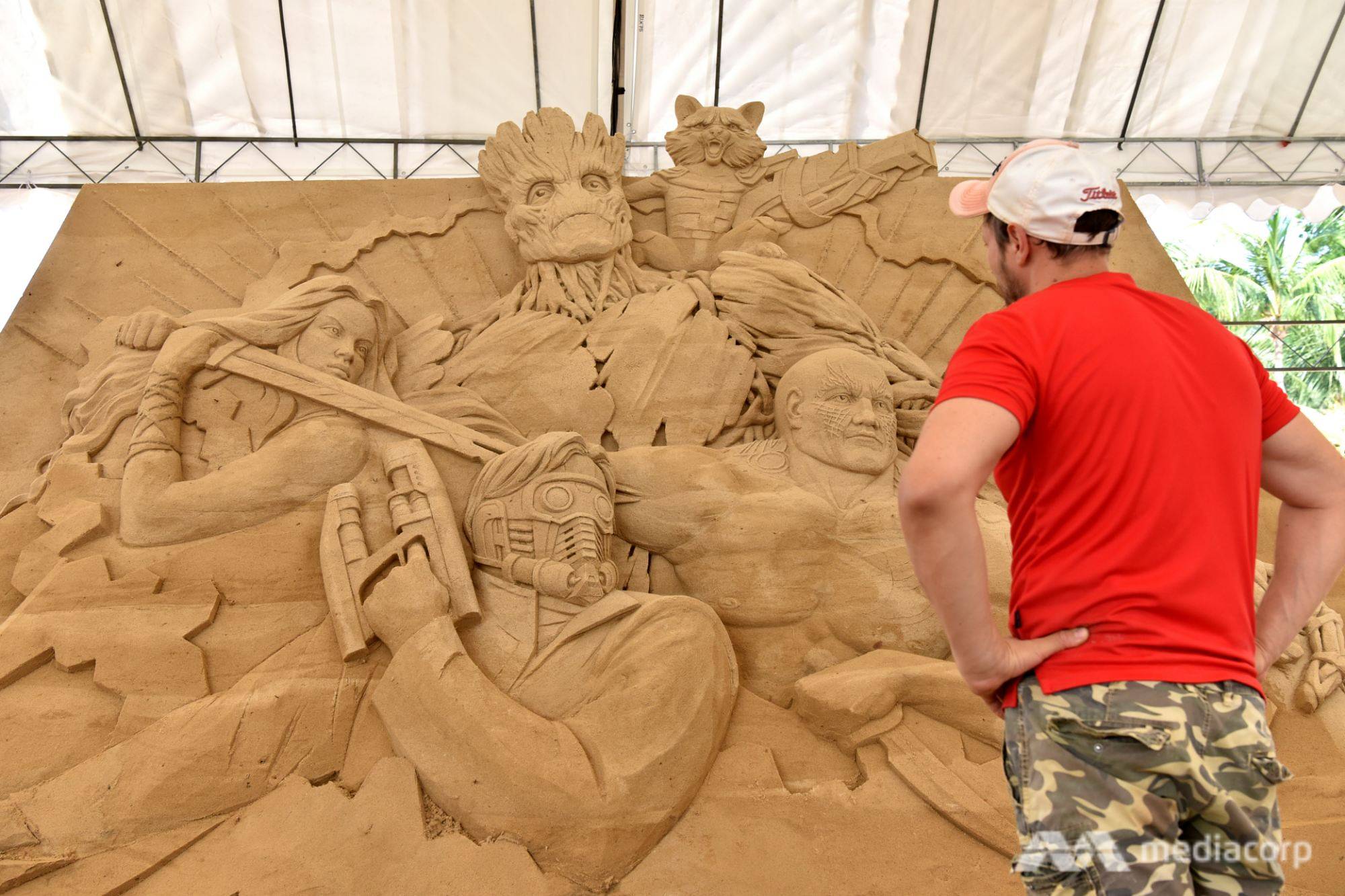
Ilya Filimonstev working on his sculpture, Guardians of the Galaxy. (Photo: Jeremy Long)
The sculptors are hand-picked by local sand artist Jooheng Tan, who is lead sand sculptor for the Marvel edition of Sentosa Sandsation.
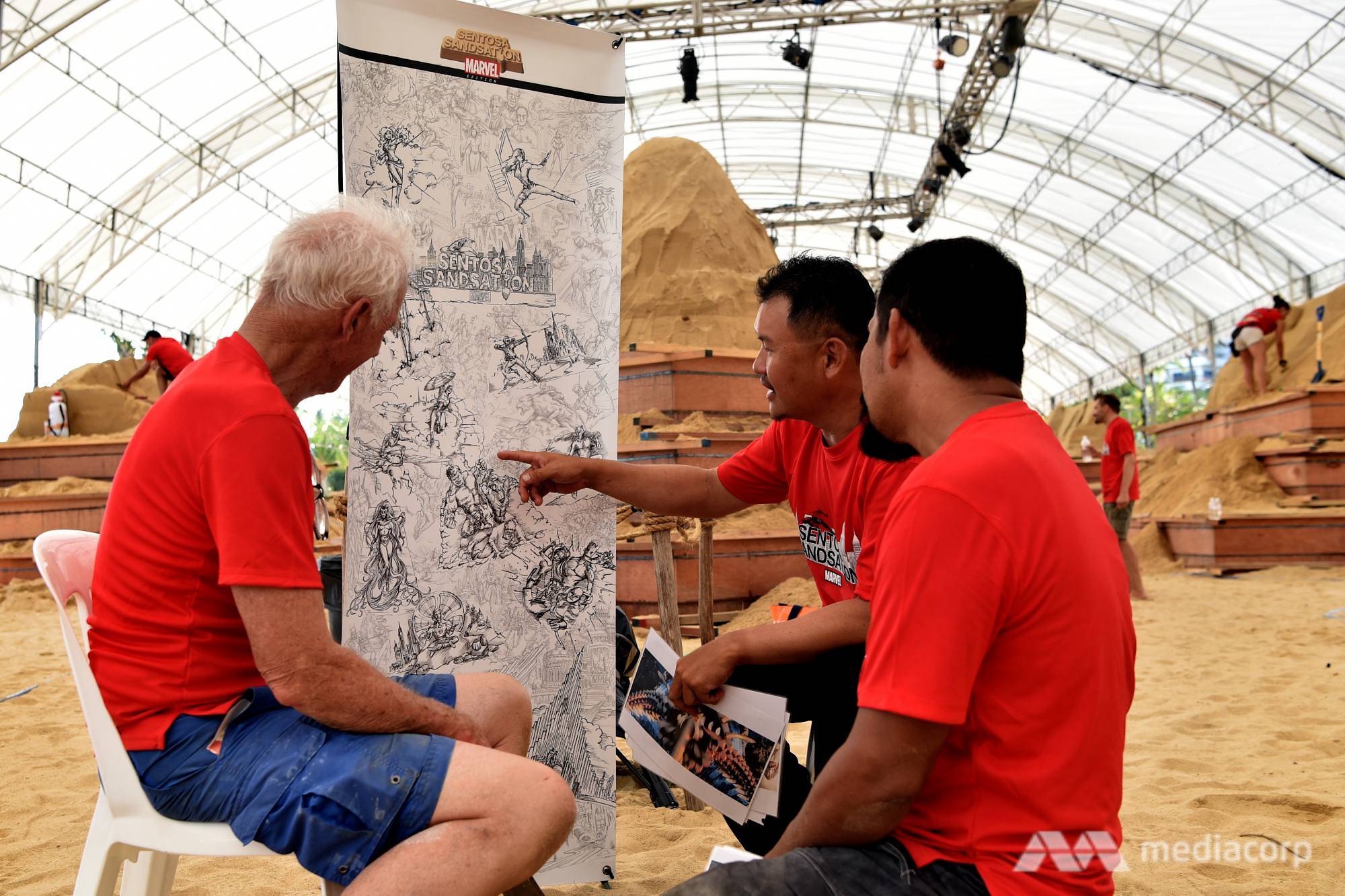
Jooheng Tan (centre) discussing sculpting plans with Kirk Rademaker (left) and Calixton Molina (right). (Photo: Jeremy Long)
For instance, American sand sculptor Kirk Rademaker was one of the two artists chosen to build Asgard, because of his background in construction and his interest in architecture and modern buildings, Tan told Channel NewsAsia.
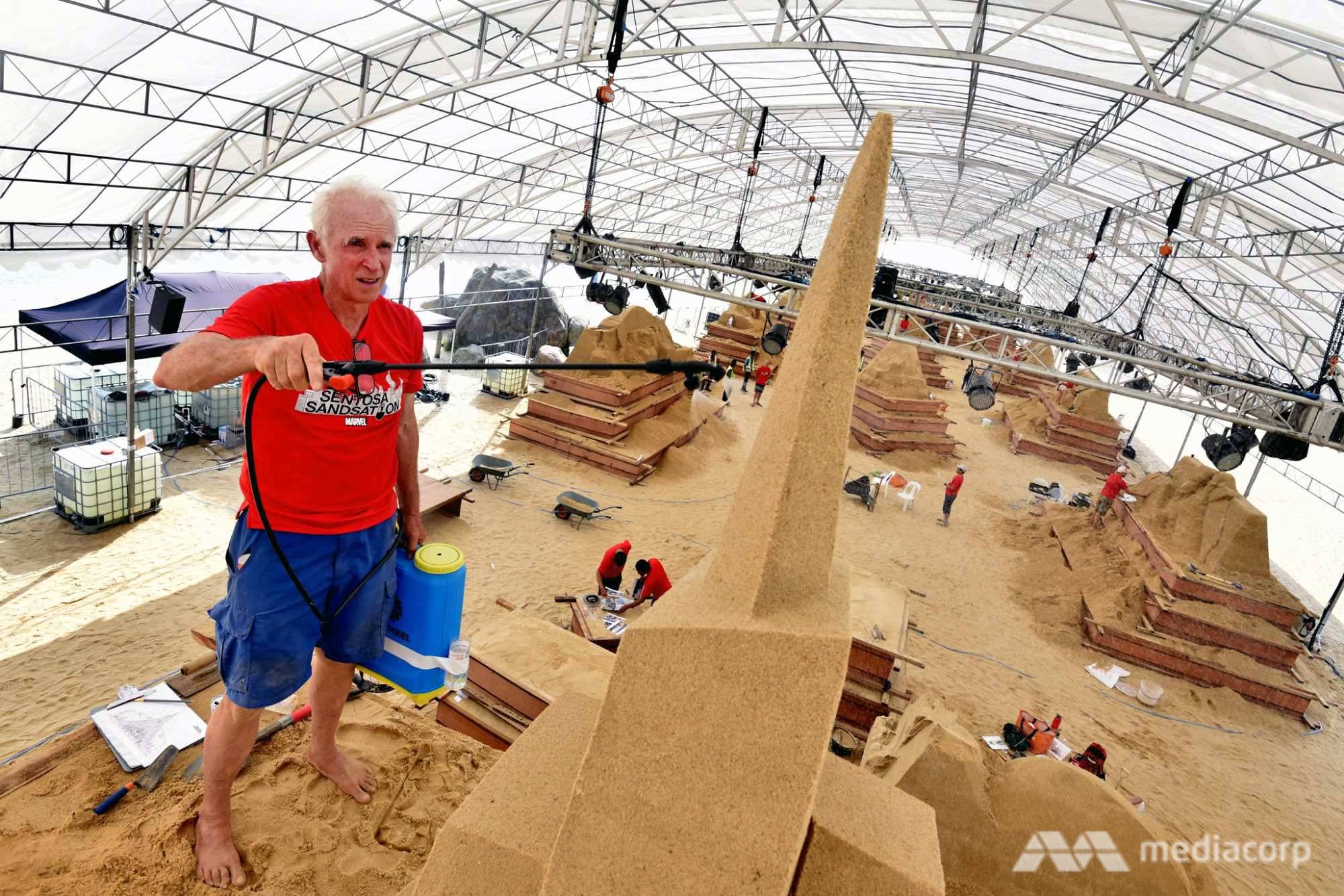
Kirk Rademaker atop Asgard on the first day of sculpting. (Photo: Jeremy Long)
At about 5.5 metres, Asgard is the tallest sculpture at the sand festival. Working alongside Mexican sand sculptor Calixto Molina, the California-based Rademaker quipped that they had a running joke between them. “We’re building a wall,” he said laughing.
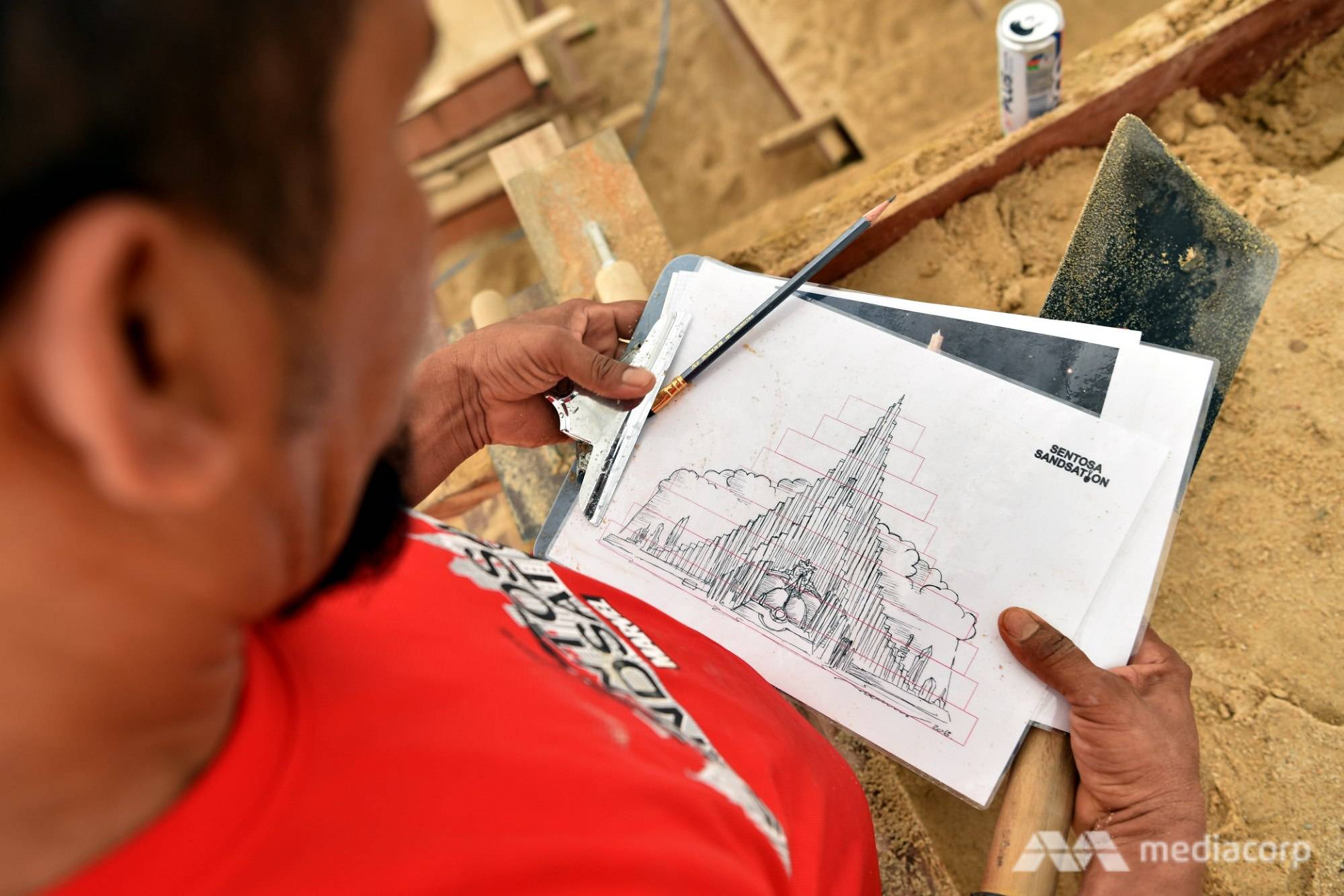
Calixto Molina looking at the sand-sculpting blueprints for Asgard. (Photo: Jeremy Long)
All the other sculptures are at least three metres tall – and meticulous planning goes into creating them from scratch.
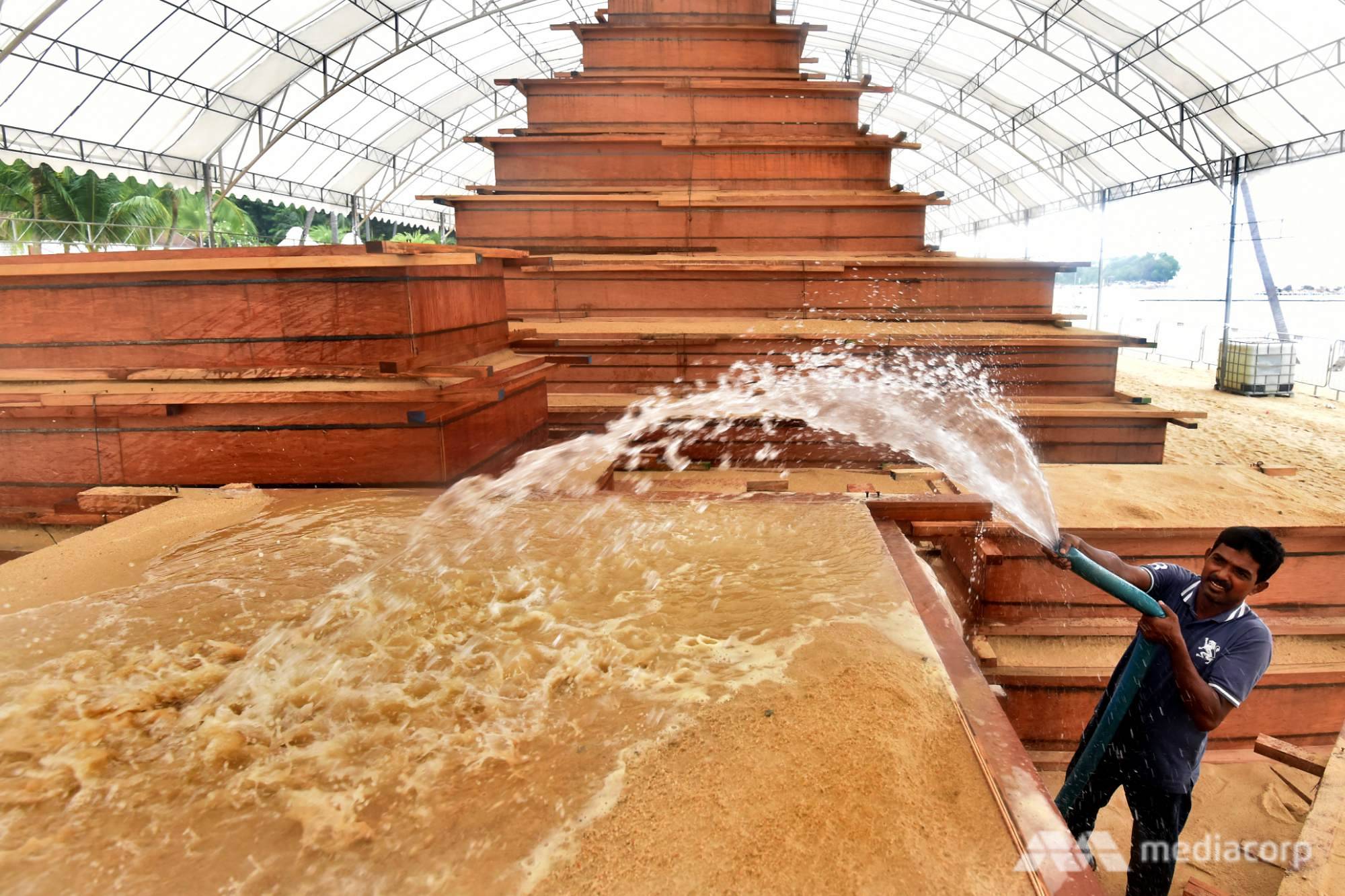
Sand is compacted by machines into massive wooden sand boxes, and hosed down with water to pack the sand down even further. This makes the sand compact and ready for sculpting, Tan told Channel NewsAsia.
Sea water is used because it is readily available at Sentosa, he added.
A worker hosing water to help compact sand before it’s ready for sculpting. (Photo: Jeremy Long)
Sculptors have to begin from the very top of the structure, and the wooden boards are removed layer by layer as they progress.
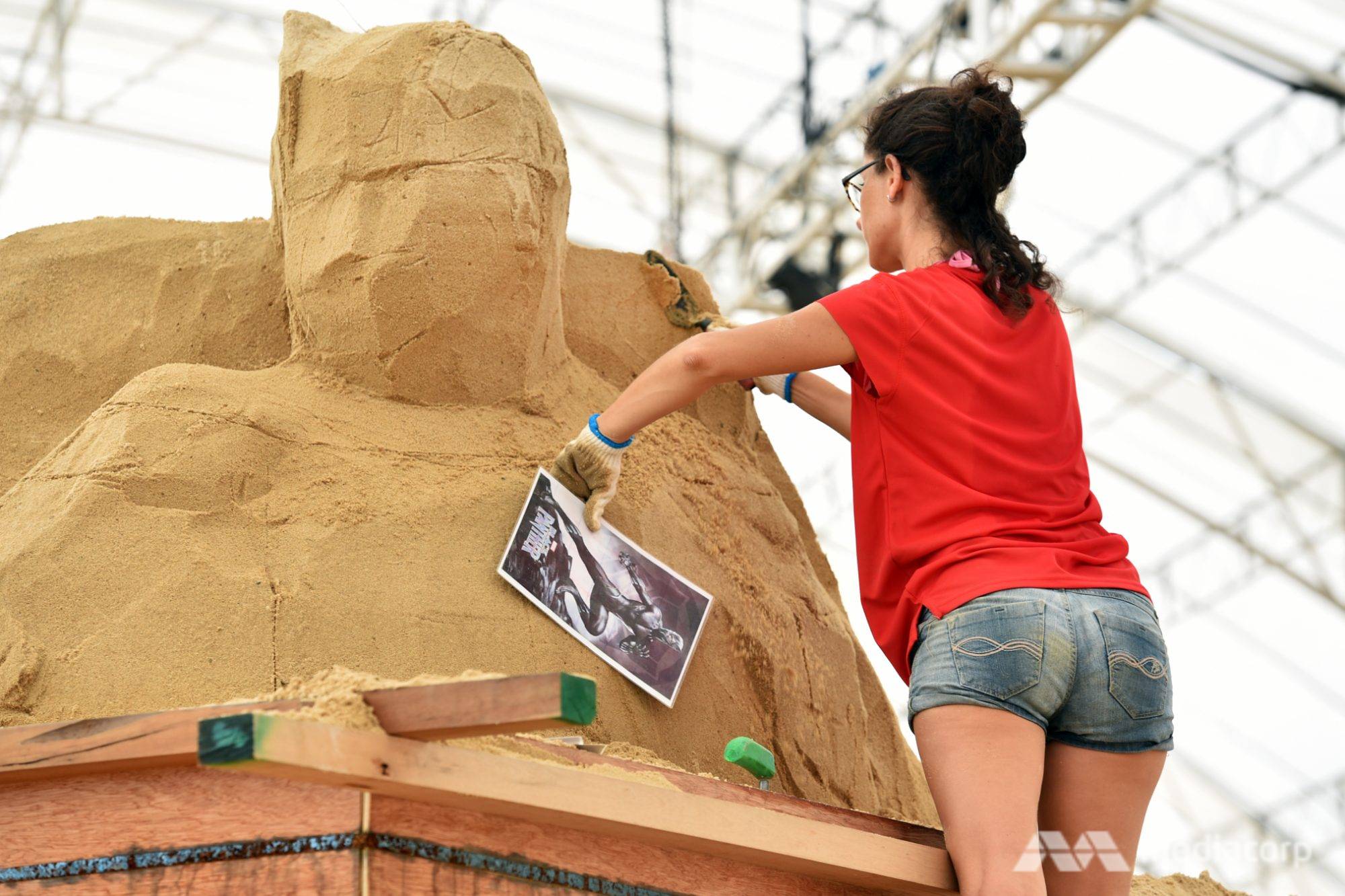
Michela Ciappini getting started on Marvel superhero Black Panther on the first day of work. (Photo: Jeremy Long)
About 2,000 tonnes of sand is used – all of it taken from a sand bank on Sentosa.
Compared to the other beaches in Singapore, the sand in Sentosa is the most appropriate for sculpting because of its finer grain, Tan said.
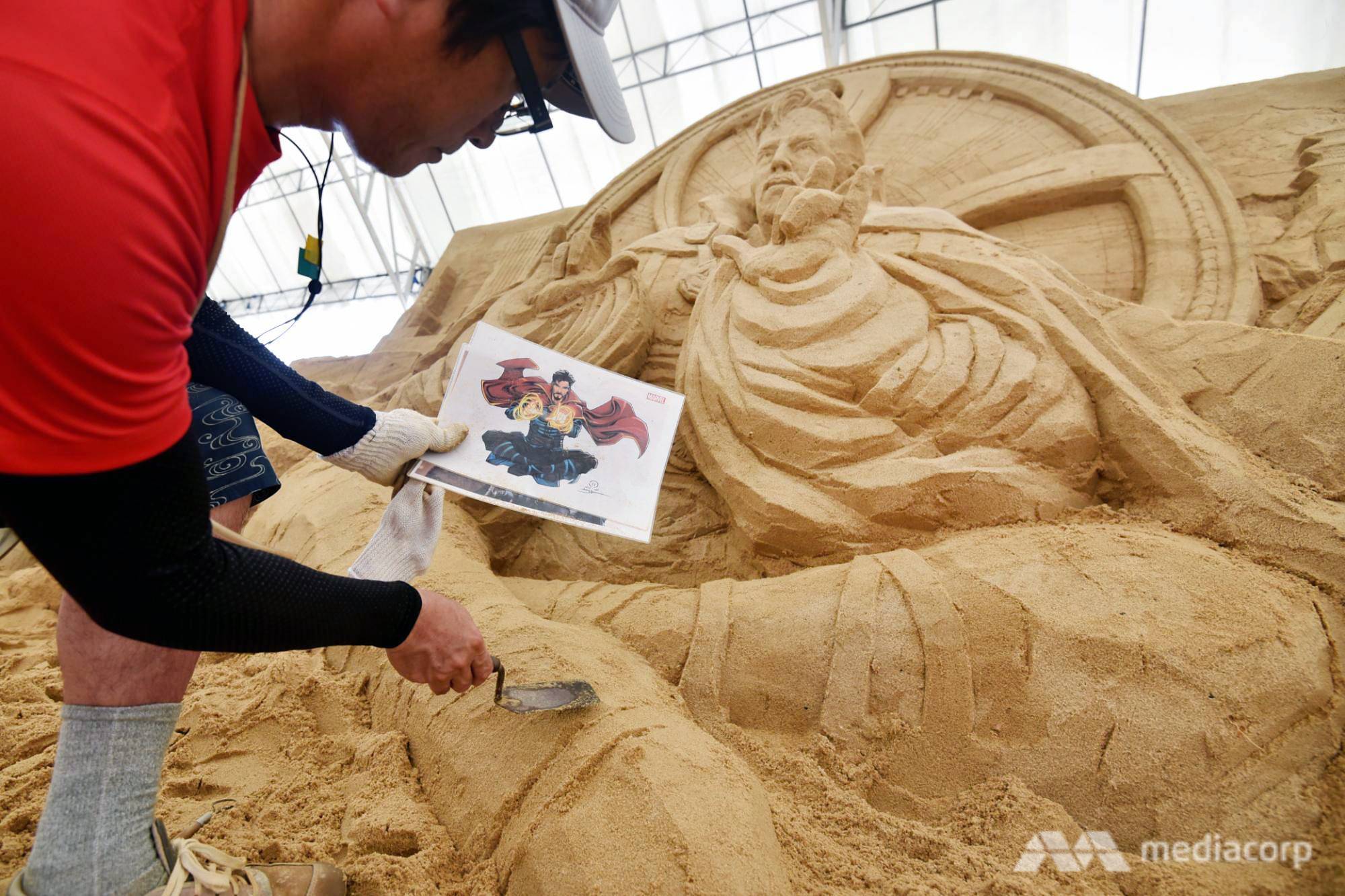
Katsuhiko Chaen working on Marvel superhero Doctor Strange. (Photo: Jeremy Long)
Tan explained that coarser sand is less appropriate for sculpting as it cannot withstand sticking together for an extended period of time compared to finer sand.
“Generally, the finer the sand, the more suitable it is for sand sculpting,” Tan said. “That said, it really is not about the type of sand, but more of how the sand sculptor understands the temperament of the sand and what makes it work for them.”
A palette knife is used for fine detail in a sand sculpture at Sentosa Sandsation. (Photo: Jeremy Long)
The sand sculptors worked barefoot throughout the 10 days. (Photo: Jeremy Long)
For Italy’s Michela Ciappini, who is in Singapore for the first time, the challenge lay more in fighting the humidity.
“It gets really hot in Italy during summer and the temperatures can go up to 40 degrees but I can withstand it – just not the humidity,” she said.
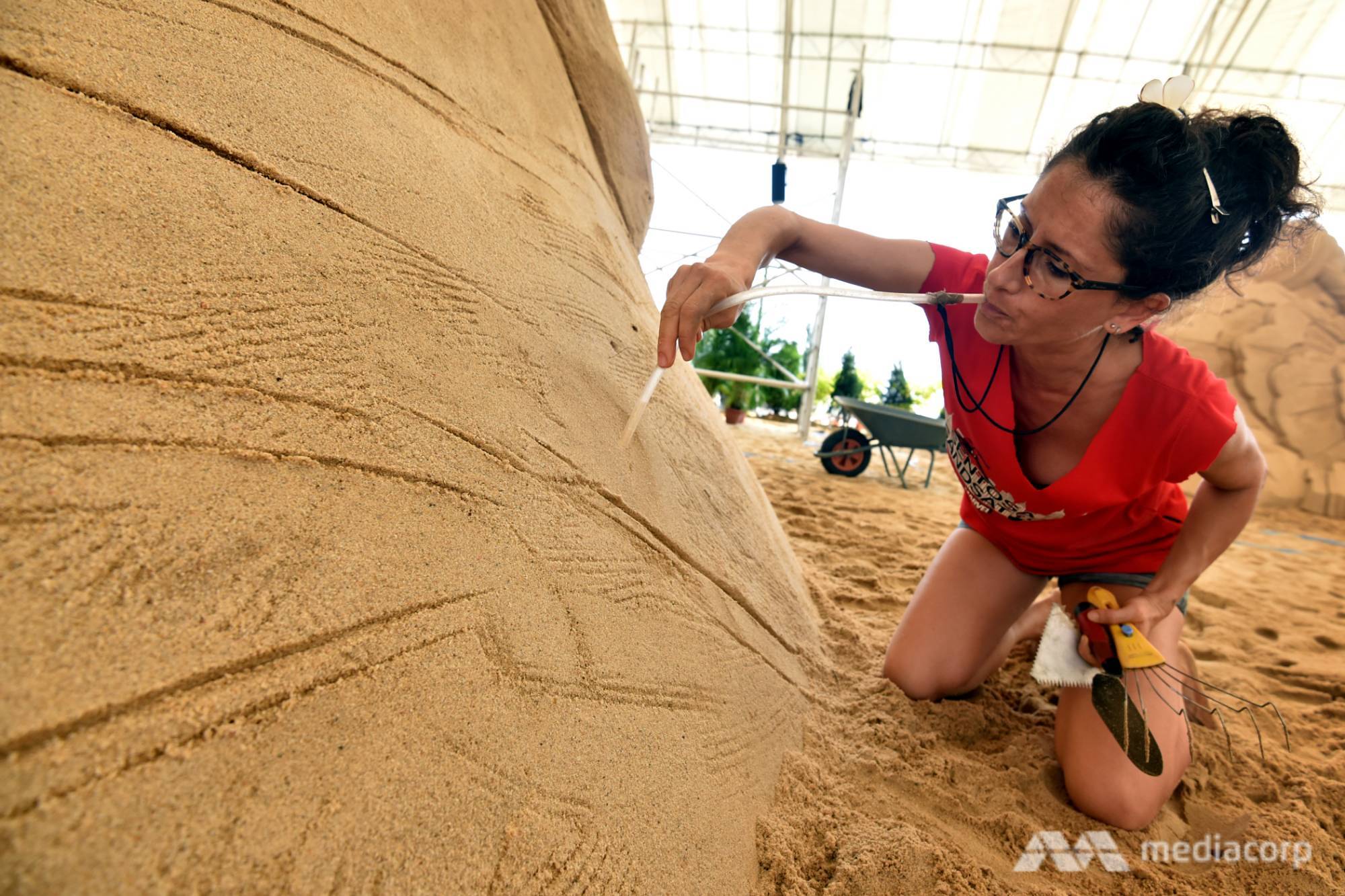
Michela Ciappini blowing air from a tube to create lines mimicking claw marks for her sculpture, Black Panther. (Photo: Jeremy Long)
Ciappini added that the sand was not as strong as she had hoped. “When I arrived, I realised that the sand wasn’t the best. But the show must go on and you have to find a way,” she stated.
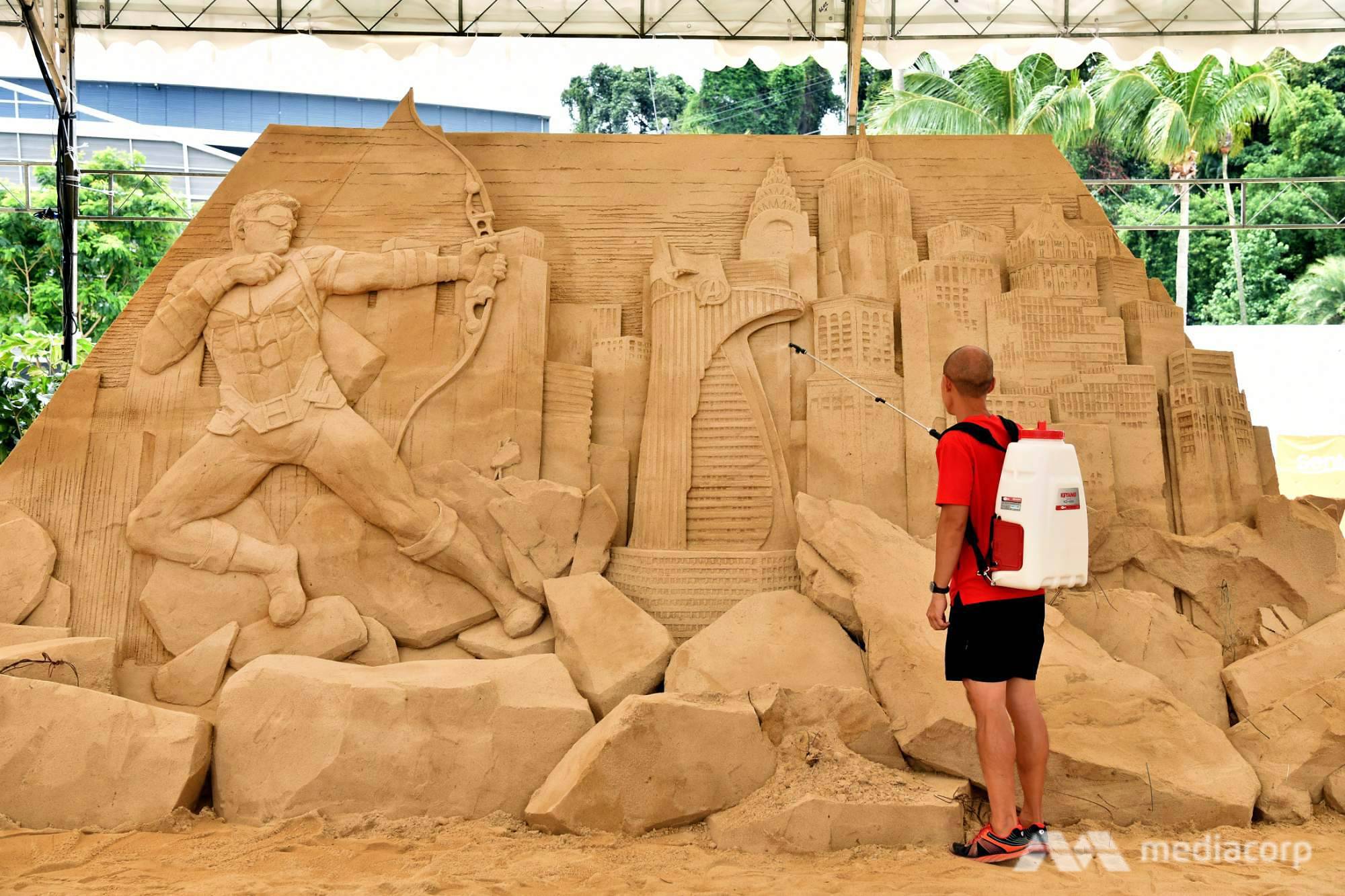
Tan said that Singapore’s weather causes the sand sculptures to dry faster, so they have to be sprayed with a water-soluble mixture from time to time to create a protective layer over them.
A protective layer being sprayed on Hawkeye on the final day of sculpting. (Photo: Jeremy Long)
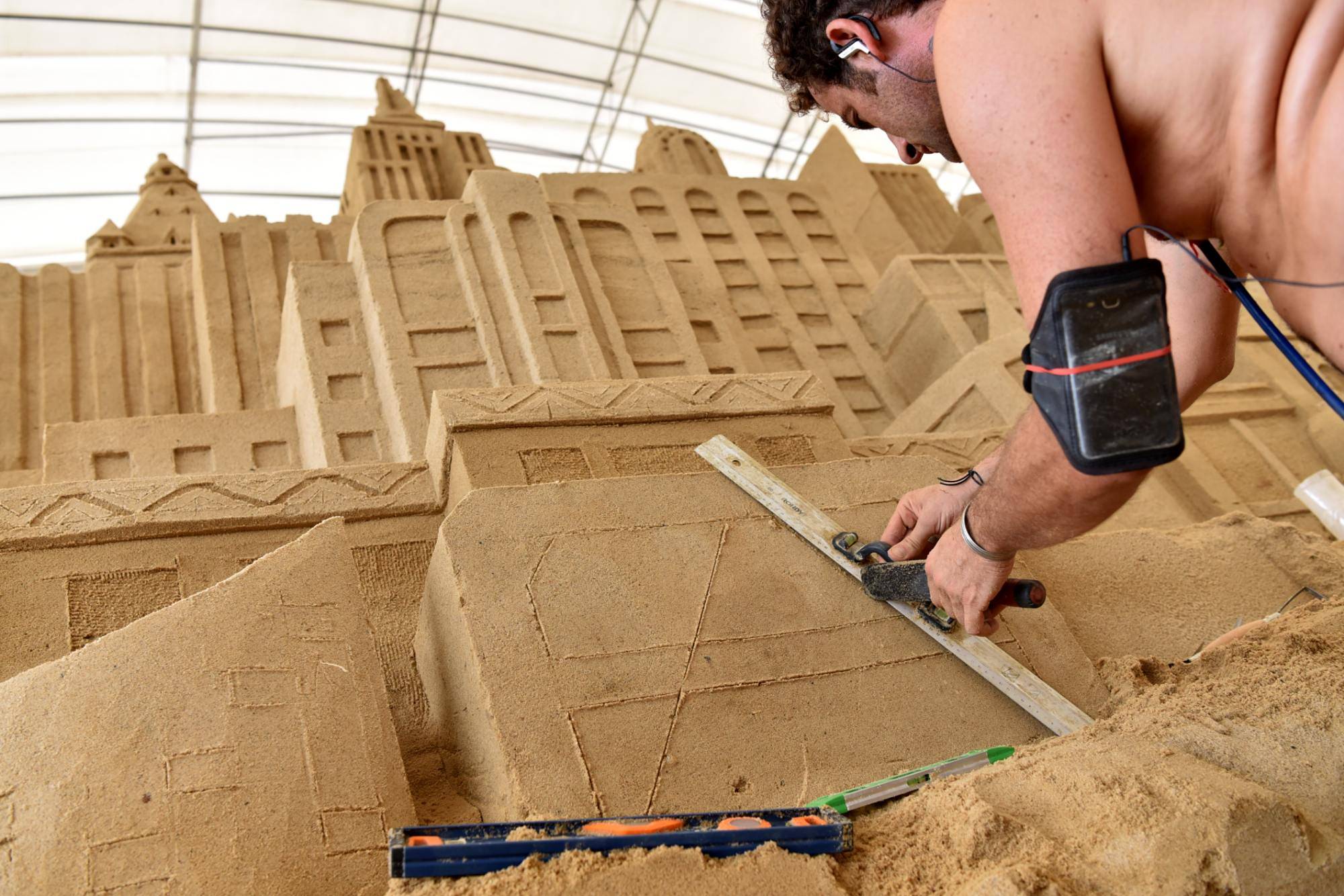
Tan reckoned that the New York City skyline was the most complicated design to create, because of the sheer amount of detail involved. “Every 10cm or so, some form of carving is involved,” he said.
Detail of the New York City skyline at Sentosa Sandsation. (Photo: Jeremy Long)
Kirk Rademaker and Calixto Molina putting the finishing touches to Asgard. (Photo: Jeremy Long)
Guardians of the Galaxy, by Ilya Filimonstev. (Photo: Jeremy Long)
Sentosa Sandsation: MARVEL Edition runs from Sep 1 to 16 at Siloso Beach. Entry to Sentosa is free for all Singaporean residents during this period.
Five Singaporeans met Dr Mahathir Mohamad, including former student union leader Tan Wah Piow and historian Thum Ping Tjin.
Political dissident Tan Wah Piow (left) met Malaysia Prime Minister Mahathir Mohamad with four other Singaporeans and Malaysian political activist Hishammuddin Rais (right) on Thursday (Aug 30). (Photo: Facebook/Tan Wah Piow)
(Updated: )
Bookmark
PUTRAJAYA: Malaysia Prime Minister Mahathir Mohamad has accepted an invitation “in principle” to speak at a conference on building democracy in Southeast Asia next year, organised by a former Singaporean citizen – activist Tan Wah Piow.
A representative from Malaysia’s Prime Minister’s Office confirmed this after a meeting on Thursday (Aug 30) between Dr Mahathir, Tan and four Singaporean “non-governmental individuals”, including historian Thum Ping Tjin. The other individuals did not wish to be named.
The meeting was organised with the help of Malaysian political activist, Hishammuddin Rais, who was present and is also part of Tan’s organisation – Forces for the Renewal of Southeast Asia.
Dr Mahathir led the Pakatan Harapan coalition to victory for the first time in Malaysia’s history in May, defeating his former alliance, Barisan Nasional.
He was asked to give the keynote address at the yet-to-be-named conference but the 93-year-old returning PM’s attendance depends on his availability, his office said.
“As far as I’m concerned, the most important things that Tun Mahathir brought about through his victory is this positiveness and aspiration for a freer society,” Tan told media outside Dr Mahathir’s office at the Perdana Leadership Foundation in Putrajaya.
“Personally, I am very grateful for this open, democratic space that Tun Mahathir’s government has opened and it’s a beacon for many who are struggling for democracy. Not just in Singapore but in other parts of Southeast Asia.”
Thum added that he had “urged (Dr Mahathir) to take the lead in lobbying for the promotion of democracy and freedom of expression and inquiry in Southeast Asia” during the meeting.
“I felt Malaysia is in a unique opportunity to really be a beacon of democracy in the region,” he said.
When asked what he thought the Singapore government’s reaction to the meeting would be, Tan replied: “I think they will be very concerned, not because I met with Dr Mahathir, but the fact that the prime minister is prepared to share his views about democracy and to enhance the development of democracy in the region.
“And that Malaysia is now shining this beacon which is probably stealing the limelight from Singapore. I think that’s what worries them. Singapore is becoming (an) outdated, archaic society with its dominant party controls.”
Tan, a former student union leader, fled Singapore in 1976 after being convicted in a rioting case.
The Singapore Government named Tan as the mastermind of the 1987 Marxist Conspiracy, which led to 22 people being detained for allegedly being part of a plot to overthrow the Government, in a crackdown known as Operation Spectrum. Tan’s Singapore citizenship was revoked that same year.
Thum made the news in April when he crossed swords with Law and Home Affairs Minister K Shanmugam for six hours over the academic’s alternative interpretation of historical events such as Operation Coldstore at public hearings by the Select Committee on Deliberate Online Falsehoods.
JAKARTA: The Singapore men’s water polo team has missed out on a medal chance after a 6-28 loss to perennial powerhouses Japan during the Asian Games quarter-finals on Thursday evening (Aug 30).
This extends Singapore’s water polo medal drought at the Games. The last time the team won a medal at the Asian Games was in 1986 when Singapore clinched bronze.
Singapore were largely outplayed for large periods of the encounter against Japan in Jakarta, succumbing to quick counter attacks by their more clinical opponents.
Japan’s Yusuku Inaba was in hot form, scoring five times, while Seiya Adachi netted four goals.
Singapore’s captain Loh Zhi Zhi acknowledged that counter attacks are Japan’s “signature move”. “They’re a really fit and and really fast team,” he said.
Singapore’s men water polo team suffered a 6-28 loss against Japan at the 2018 Asian Games. (Photo: Sport Singapore)
“I think we didn’t do too badly trying to defend, despite what the scoreline showed. They were just very clinical in taking their chances, and that’s something we can definitely learn from them,” Loh added.
Singapore have now lost all four matches they played at the 2018 Asian Games. During the round robin stage, the team lost to Iran 5-11, Kazakhstan 4-15 and South Korea 7-10.
Speaking to Channel NewsAsia after the loss to Japan, Singapore’s head coach Dejan Milakovic, who had targeted a minimum of fourth place at the Asian Games, said: “Unfortunately, in the group stage, we didn’t manage to do what we planned to do.
“But then all three opponents were very tough in the group … in all three (games) we have played as much as we could. So we need to forget it and now turn our attention to our next match.”
Singapore will face Saudi Arabia on Friday morning as they battle for the fifth to eighth positions in the tournament.
The experience so far in Jakarta has brought up “a lot of learning points”, said the Singapore captain.
“We still have a lot to show. Our standards, are higher than this, we want to demonstrate what we can do in the last two games. We have a lot more to do.”
SINGAPORE: Several people have been cheated into providing their personal information and credit card details on phishing websites or over the phone, after responding to online advertisements or SMSes purportedly sent out by DBS Bank and Oversea-Chinese Banking Corporation (OCBC).
The victims later realised that unauthorised transactions in various foreign currencies were made to their credit cards, said the police on Thursday (Aug 30).
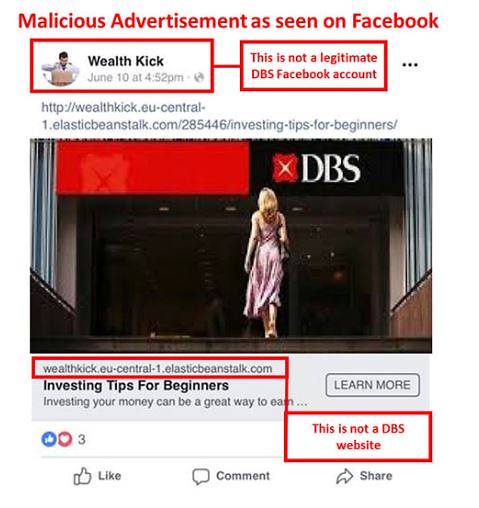
Malicious DBS advertisement as seen on Facebook. (Image: DBS)
In these cases, victims would either come across a Facebook advertisement or receive an SMS purportedly from one of the banks regarding an investment opportunity, the police said in advisory posted on Facebook.
Upon clicking the link provided, victims were then directed to a website that either promoted a new investment product or software.
To sign up, victims were asked to provide their personal information, credit card details and one-time password (OTP) via an online form.
Some victims were also tricked into providing the information over the phone to people impersonating employees from the bank.
The police’s advisory follows warnings by DBS and OCBC earlier this month of fraudulent SMSes appearing to originate from them.
“These fraudulent SMSes often lead to sites which are fronts for investment scams or phishing attacks, where they will try to obtain your financial information or convince you to transfer funds to them under false pretences,” DBS said in a scam alert on Aug 3.
OCBC on Aug 24 posted a similar alert, saying that “fraudsters” had been sending out SMSes appearing to originate from the bank.
“Some of them claim that OCBC has announced new software that will make you a millionaire, while others tell you some miraculous software will let you ‘quit your job in 30 days’. These are NOT sent by OCBC Bank,” OCBC said.
“While we work hard to help our customers succeed, we certainly don’t believe in ‘Get rich quick’ approaches,” it added.
In May, the Monetary Authority of Singapore (MAS) advised consumers to “exercise utmost caution” when dealing with emails requesting for sensitive information associated with their bank accounts, following a rise in number of “phishing attempts”.