Home Blog Page 957

Merged JCs carry out finishing touches to new college identity and campus

0

SINGAPORE: Serangoon Junior College’s (JC) principal Manogaran Suppiah spent the June holidays mulling over the college song for the school he will be heading next year – Anderson Serangoon JC.

Mr Suppiah said the lyrics for the song, For the Service of Others, were inspired by the mottos of both the merging schools.

READ: MOE announces names of merged junior colleges 

“Serangoon’s motto is ‘Discere Servire’ (To learn, to serve) and Anderson’s motto is ‘Non Mihi Solum’ (Not for myself alone). Both have a key idea of serving others,” he said.

“My staff here felt that being the first principal for the new college, it will be important to pen the lines, and I see it as an opportunity to provide direction for the college.”

Schools that are involved in the first-ever JC mergers next year are putting the final touches on their new college identity.

The mergers – involving four pairs of JCs – were first announced in April last year.

STUDENTS GET TO DECIDE NEW UNIFORM

To come up with a new uniform, Anderson and Serangoon JCs held a uniform design competition that was open to both students and staff.

Ten designs were submitted, and three were eventually put to a vote.

“I think they see themselves creating history too. Creativity was seen and, most importantly, there was a sense of ownership. It was not just the principal deciding on things – that gave them a lot of stake in the future too,” said Mr Suppiah.

TMJC Uniforms

Sneak peek at the four new uniform designs for Tampines Meridian JC. (Photo: Tan Si Hui) 

Over at Tampines and Meridian JCs, both schools formed a committee to come up with four designs – three sets of two-tone and one set of single-tone uniforms.

Dean of JC 2 at Tampines JC, Wendy Goh, who is part of the committee, said different factors were taken into consideration for each design.

“For one of the designs, we tried to play with the idea of the combination of blue and light green – Meridian being blue and Tampines being light green. So we put together a combination of a hybrid of the two colours,” Mrs Goh said.

READ: Best of both worlds: Merged junior colleges design new uniforms, ensure smooth transition

Another design opted to use neither school’s colours in the uniform, to evoke the idea of neutrality. Instead, it paired a white top with a khaki-coloured bottom.

TMJC Crest

Draft designs of Tampines Meridian JC logo. (Photo: Tan Si Hui) 

Both students and staff had the opportunity to vote for the design they liked best, and Mrs Goh revealed that one of the two-tone uniforms is currently the most popular among students.

MOST PROGRAMMES TO BE RETAINED

Meanwhile, the four schools Channel NewsAsia spoke to said that almost all of their programmes will be retained.

All programmes and subjects at Tampines JC such as its Malay Language and Drama electives, as well as Art and China Studies, will be brought over to the merged school at Meridian.

Tampines JC principal Pamela Yoong, who will head the merged school, said: “One of our promises is to ensure that students will not feel that any subject is sacrificed or rather, we want them to have options.”

MJC blackbox

Meridian JC converted one of its five lecture theatres to turn it into a black box to accommodate new subjects like Theatre Studies. (Photo: Tan Si Hui) 

To accommodate the new subjects, Meridian JC spent S$300,000 to convert its facilities, such as turning one lecture theatre into a black box and a reading room into an art room.

And while Anderson JC has shut down one of its co-curricular activities, wushu, which had a low take-up, it will preserve all of Serangoon JC’s CCAs, such as taekwondo and touch football.

MLEP room

Computer room in Meridian JC becomes a special room for Malay Elective Programmes. (Photo: Tan Si Hui) 

With four of the merging schools not taking in new students this year, the other JCs expanded their Year 1 intake.

Meridian JC took in 893 students this year, up from 680 in the previous year, while Anderson JC’s Year 1 cohort increased from 660 last year to 852 this year. 

This is about a 30 per cent boost for both schools – which also saw a rise in cut-off points as a result.

“We were 11 points for the JC2 cohort when they were JC1. The current JC1 cohort is 14 points,” said Meridian JC’s principal Lim Yan Hock.

In response to Channel NewsAsia’s queries, the Ministry of Education said the increased intake this year is not permanent and is expected to fall as cohort sizes shrink in the next few years.

TEACHERS FEEL THE STRETCH

But the changes have already brought about challenges.

At Anderson JC, teachers have felt the stretch due to the increase in workload as they coordinate and plan a new identity and culture for the school. 

AJC teachers

Anderson JC teachers feel the stretch from extra workload coming up with new identity for school. (Photo: Tan Si Hui) 

Its principal, Tay Lai Ling, said staff were also adjusting to having new colleagues. 

Thirty-four Serangoon JC teachers have already moved to Anderson, with more slated to join them next year.

“While they get along well, we must always keep an eye on them and get all the teachers to work well in support of the students,” said Ms Tay.

She added that communication with external vendors, such as uniform suppliers, also take extra effort, especially when it comes to delivering the uniforms on time.

HERITAGE GALLERIES OPENED

Ahead of the mergers, the schools have set up a heritage gallery to commemorate their leaders and milestones.

The heritage gallery at Meridian JC opened in July, equipped with a digital platform for visitors to scroll through the history of both colleges.

It also has a terrarium containing soil dug from both sites, as well as time capsules containing 32 artefacts from Tampines JC and 15 from Meridian JC.

The numbers signify the number of years the schools have been in operation.

ASRJC heritage wall

Six-panel heritage wall at Anderson JC opened in April. (Photo: Tan Si Hui) 

In April, a six-panel heritage wall at Anderson JC was unveiled – with one panel left empty. It will be filled with the next chapter of the schools’ history, following the merger.

Some Year 1 students at Anderson JC say it was an honour to be part of the pioneer batch of the merged school next year and were looking forward to it.

“Anderson has a more studious culture, and Serangoon has a more relaxed culture. But with both cultures coming together, it will form better programmes for us to enjoy in the future,” said arts student Valerie Tan. 

Echoing the same sentiment, science student Zeph Tan said: “We can expect to see a change in culture. I would say it will be more balanced.”
Source link

Asian Games: Singapore performed below expectations, but debutants bring hope

0

JAKARTA: Singapore’s performance at the 2018 Asian Games was lower than expected, but the contingent’s overall medal haul has been buoyed by emerging debutants, said the Singapore Sports Institute’s Richard Gordon on Saturday (Sep 1). head of High Performance for Sport and Athlete Life at the Singapore Sport Institute, 

Speaking to media at a press conference wrapping the Games for Team Singapore in Indonesia on Saturday (Sep 1), the head of High Performance for Sport and Athlete Life said: “Overall I think we were lower than our initial expectations. Our expectations were to try and beat the (medal count from the) 2014 Games. We’ve fallen short of that.”

As of Saturday afternoon, Singapore’s medal count from Indonesia stood at four golds, four silvers and 14 bronzes. At the last edition of the Asian Games in Incheon, South Korea, Singapore brought home five gold medals, six silvers and 13 bronzes. 

“However, it’s not a simple yes or no. We’ve got to look at the stories behind the medals. We’ve got look at the stories behind the sports and competition. There were some places where we were up, other places where we were not,” said Gordon. 

Team Singapore chef de mission Lee Wung Yew, however, maintained that the team “delivered an excellent showing” at the Games. 

Swimming - 2018 Asian Games

File photo: Singapore’s Joseph Schooling competes in the men’s 50m butterfly heats at the 2018 Asian Games. REUTERS/Jeremy Lee

“Our athletes showed no fear coming up against some of the world’s best athletes to fight for every point and victory. With a contingent formed largely of debutants, the results are very encouraging and hopefully, this indicates greater successes for them in the future,” said the former Olympic shooter. 

Lee also announced that Team Singapore were given a “B” grade for this edition of the Asian Games. 

In spite of the rating, Gordon stressed that the team was going through a transition, particularly with younger athletes emerging to replace established stars. 

“There’ve been very encouraging performances in that regard … the number of personal bests and national records we have broken by the emerging contingent coming through gives us good grounds for hope,” said Gordon.  

He highlighted that debutants made up 75 per cent of Singapore’s contingent and that of the athletes that received a medal, 75 per cent were debutants. 

Constance Lien

Constance Lien in action at the 2018 Asian Games. (Photo: Sport Singapore) 

As an example, Lee cited the achievements of the men’s contract bridge team that clinched gold, and jujitsu exponent Constance Lien, who clinched silver. He also lauded the silat team, which clinched two silvers and three bronzes at the Games. 

When asked about why sports that Singapore were traditionally strong in won fewer medals, Gordon reasoned that the programme in Indonesia for sports like sailing and bowling was different from that at Incheon. 

Sailing won a gold and a bronze in Jakarta, a medal haul that paled in comparison with 2014 when the team brought home three golds, two silvers and two bronzes. 

“There have been been significant changes to the (sailing) programme. For example, many of the sailing classes in which we were very successful in 2014 are not in these Games,” said Gordon. “For bowling, we’ve seen the reduction in the number of games and that has impacted our team.” 

Asian Games Joey Yeo

Singapore national bowler Joey Yeo at the 2018 Asian Games. (Photo: Amir Yusof) 

“Overall we feel that we have made some progress over 2014, though the headline figures showed we have one gold fewer and … fewer medals, but its only by a small number,” he added. 

Gordon maintained that the athletes have held up their positive performances from the 2015 SEA Games, and that the team is “going in the right direction”. 

“This is a long-term project. We know it takes eight to 12 years to develop high-performance athletes. Its not something that’s going to change overnight,” he said. 

Source link

Asian Games: Yu Mengyu settles for joint-bronze after table tennis semi-final defeat

0

JAKARTA: Singapore table tennis player Yu Mengyu settled for a joint-bronze on Saturday (Sep 1) after losing 4-1 to China’s Wang Manyu in the 2018 Asian Games women’s singles semi-final. 

Yu, who struggled to cope with Wang’s aggressive tactics and quick backhand smashes throughout the encounter, lost the tie 7-11, 6-11, 5-11, 11-9, 7-11.

Wang, who is fifth in the world table tennis rankings, darted around the table quicker as Yu’s blocks proved fruitless in the rallies.

Yu Mengyu semi final

Singapore Yu Mengyu serves during her semi-final tie against China’s Wang Manyu. (Photo: Amir Yusof) 

Yu pegged back in the fourth set, capitalising on uncharacteristic errors by Wang to give her a fighting chance. But it was just delaying the inevitable as Wang powered home in the fifth set to clinch the tie. 

A dejected Yu told reporters after her loss that she “stumbled in the face of” Wang’s tactics and was unable to play to her strengths. 

“Apart from this match with China, I’m quite satisfied with my performance in the other matches. I will properly conclude my time here and reflect on the good points,” she added. 

Yu had exceeded expectations to qualify for the semi-finals, beating Chinese Taipei’s Cheng Iching in the quarter-finals on Friday. Cheng is ranked eight in the world rankings while Yu is ranked 47th. 

Get the widest coverage of the 18th Asian Games (Aug 18 – Sep 2) from Jakarta and Palembang, Indonesia on Mediacorp. Go to toggle.sg/AsianGames2018 for details.

Source link

At Trump-Kim summit, RSAF showed the world it was operationally ready: PM Lee

0

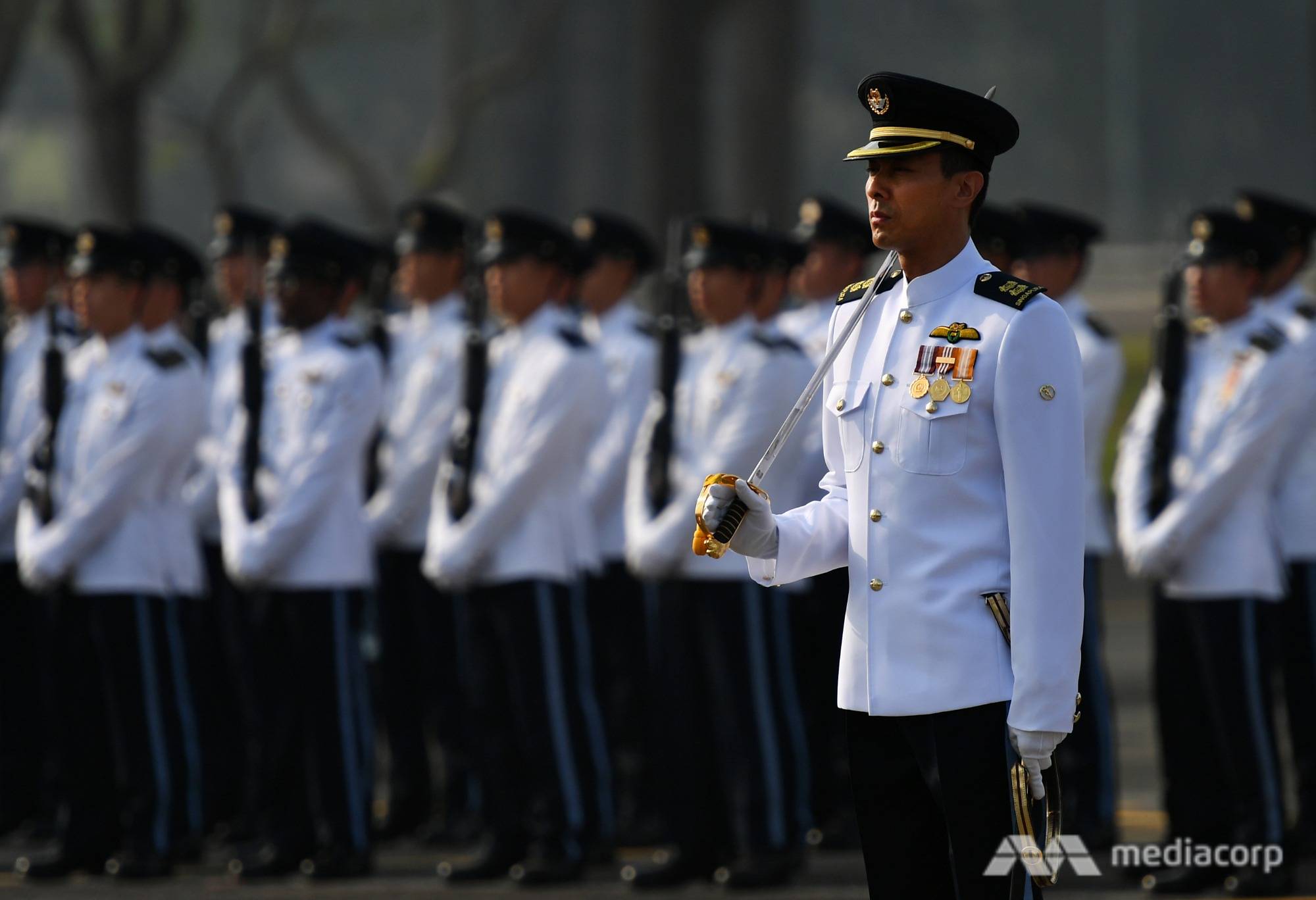
SINGAPORE: The Republic of Singapore Air Force (RSAF) stepped up to the challenge of US President Donald Trump’s summit with North Korean leader Kim Jong Un and showed the world it was operationally ready, said Prime Minister Lee Hsien Loong at the RSAF50 Parade on Saturday (Sep 1).

Speaking at Tengah Air Base, PM Lee, who was the guest of honour at the parade, cited the summit as one of the “extraordinary circumstances” that required RSAF officers to answer to the call of duty at short notice.

READ: Hosting Trump-Kim summit cost S$16.3 million; security the biggest component

“The RSAF showed the world during the Summit that you are operationally ready,” said Mr Lee. “You were tasked to defend our skies by forming a protective ‘dome’ over Singapore. 

“You had more than 20 aircraft in the air or ready to take off, at any moment; more than 10 ground-based air defence systems stood guard, and unmanned aerial vehicles were on standby. This was a live operation, not a dry exercise.” 

RSAF50 (11)

Members of the parade contingent at the RSAF50 media preview at Tengah Air Base on Tuesday (Aug 28). (Photo: Jeremy Long)

RSAF50 (12)

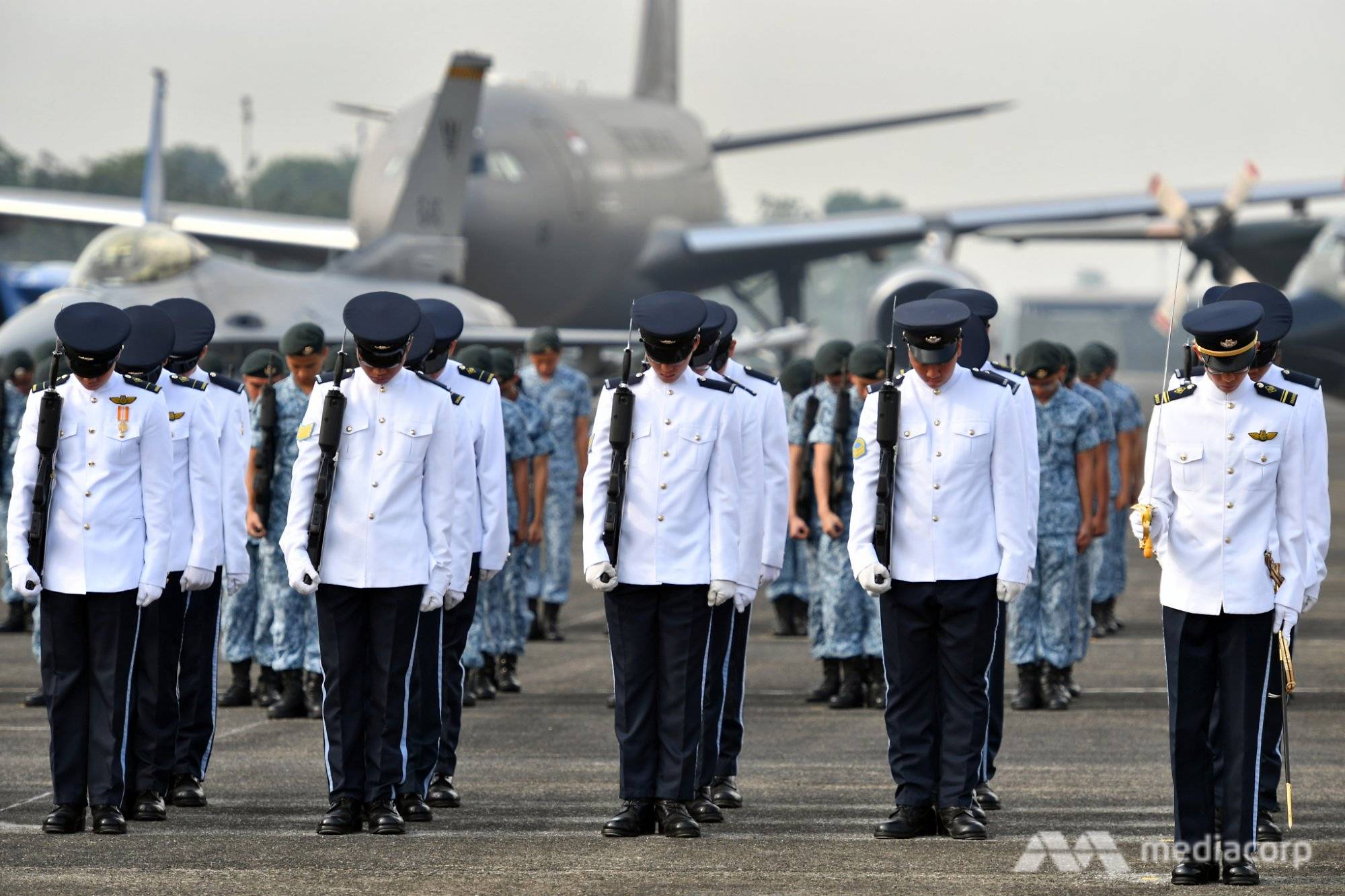
A moment of silence observed during the RSAF50 media preview at Tengah Air Base on Tuesday (Aug 28). (Photo: Jeremy Long)

Mr Lee noted that the officers had only two weeks to prepare for the historic event and that many had to cancel leave plans and forfeit vacation bookings.

“But you stepped up to the challenge, and showed Singapore and the world your capabilities and dedication,” he said. 

In his speech, the prime minister also raised the “continuing and unending task” of making sure Singapore’s equipment, technology and systems are up to date. 

He said that as the Air Force grew, it improvised with what it had, and progressively built up and renewed its equipment. 

RSAF50 (6)

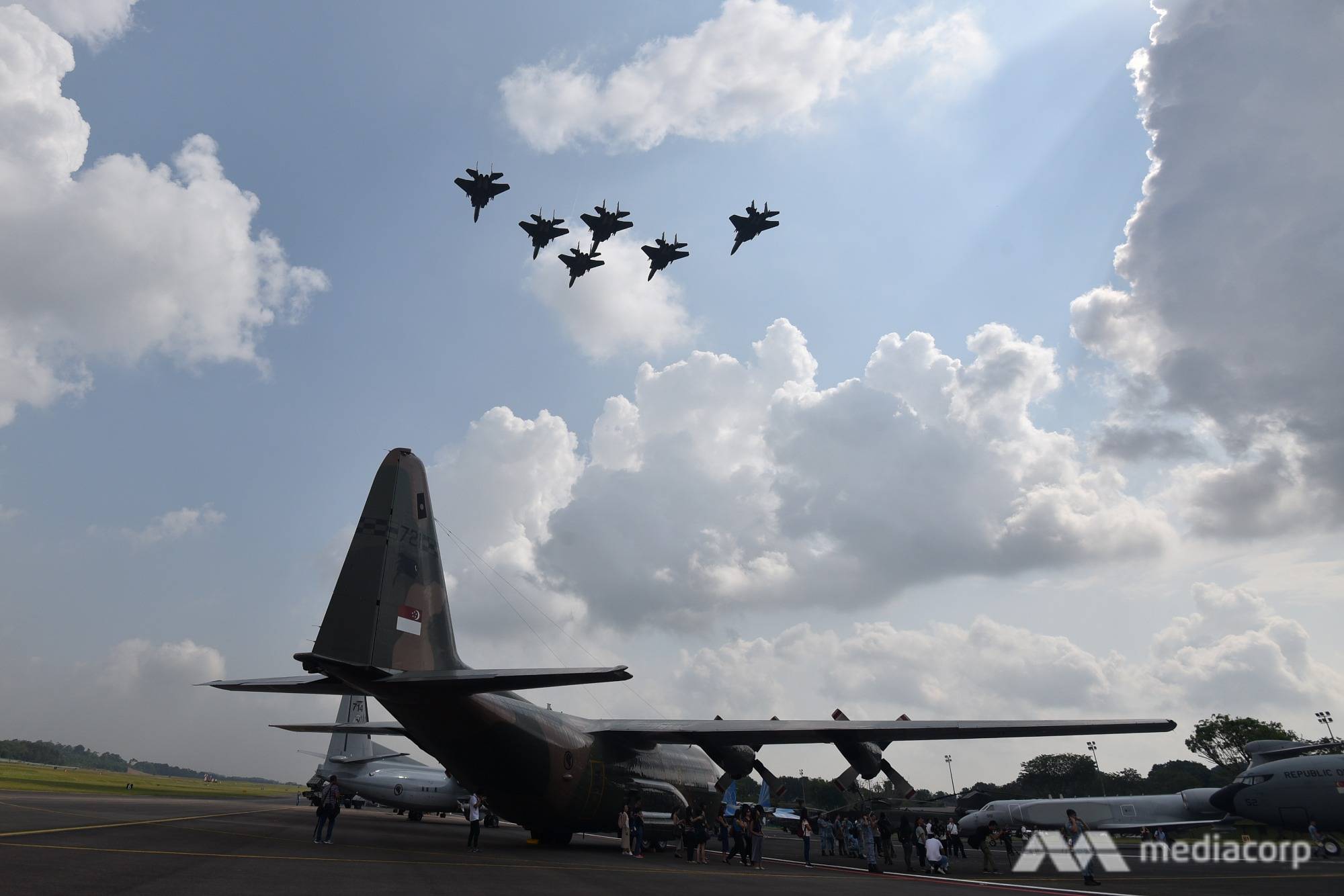
A flypast of six F-15SGs at the RSAF50 media preview at Tengah Air Base on Tuesday, 28 August 2018 (Photo: Jeremy Long)

“It must be pursued consistently and resolutely, with adequate resources, conscious of our defence needs and the international context,” said Mr Lee. 

“We do not simply go for the most expensive and newest. But we always acquire what makes the most operational sense for us. Sometimes, we even buy second-hand equipment, such as the KC-135 air-to-air refuelling tanker aircraft,” he added. 

RSAF50 parade infographic

The parade, which consisted of a marching contingent of almost 500 personnel and flypasts involving 20 aircraft, was held in conjunction with the RSAF’s 50th anniversary. 

It also capped off the RSAF’s Golden Jubilee celebrations this year, which began in February with the Singapore Airshow.

Other events held earlier this year in the lead up to the parade included live demonstrations, static displays and interactive exhibits at five different locations islandwide as well as the biggest aerial showcase of the year at the RSAF50@Marina Barrage.

RSAF50 (2)

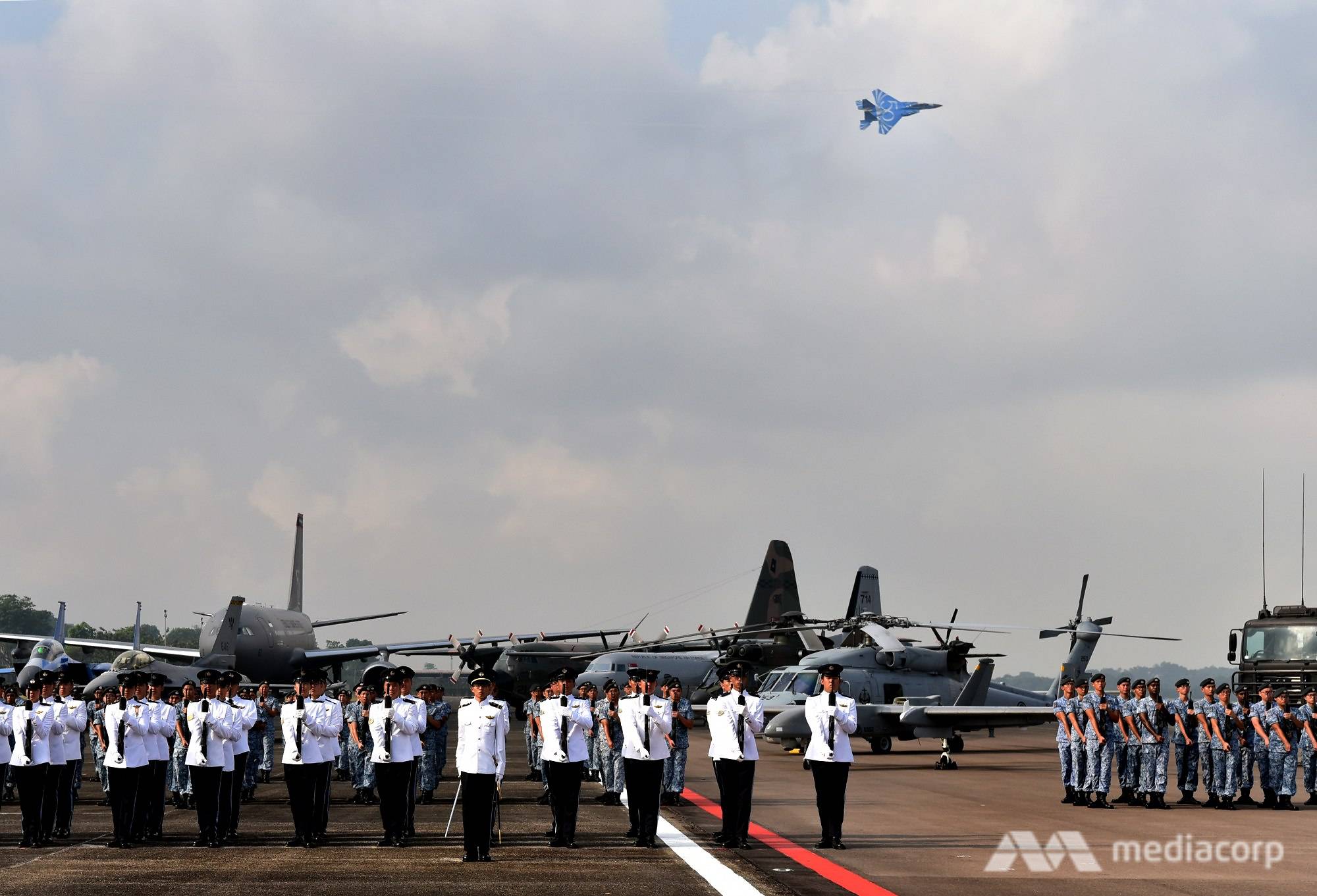
A blue RSAF50-themed F-15SG performs a flypast above various contingents at the RSAF50 media preview at Tengah Air Base on Tuesday (Aug 28). (Photo: Jeremy Long)

RSAF50 (20)

A flypast at the RSAF50 media preview at Tengah Air Base on Tuesday (Aug 28). (Photo: Jeremy Long)

RSAF50 (16)

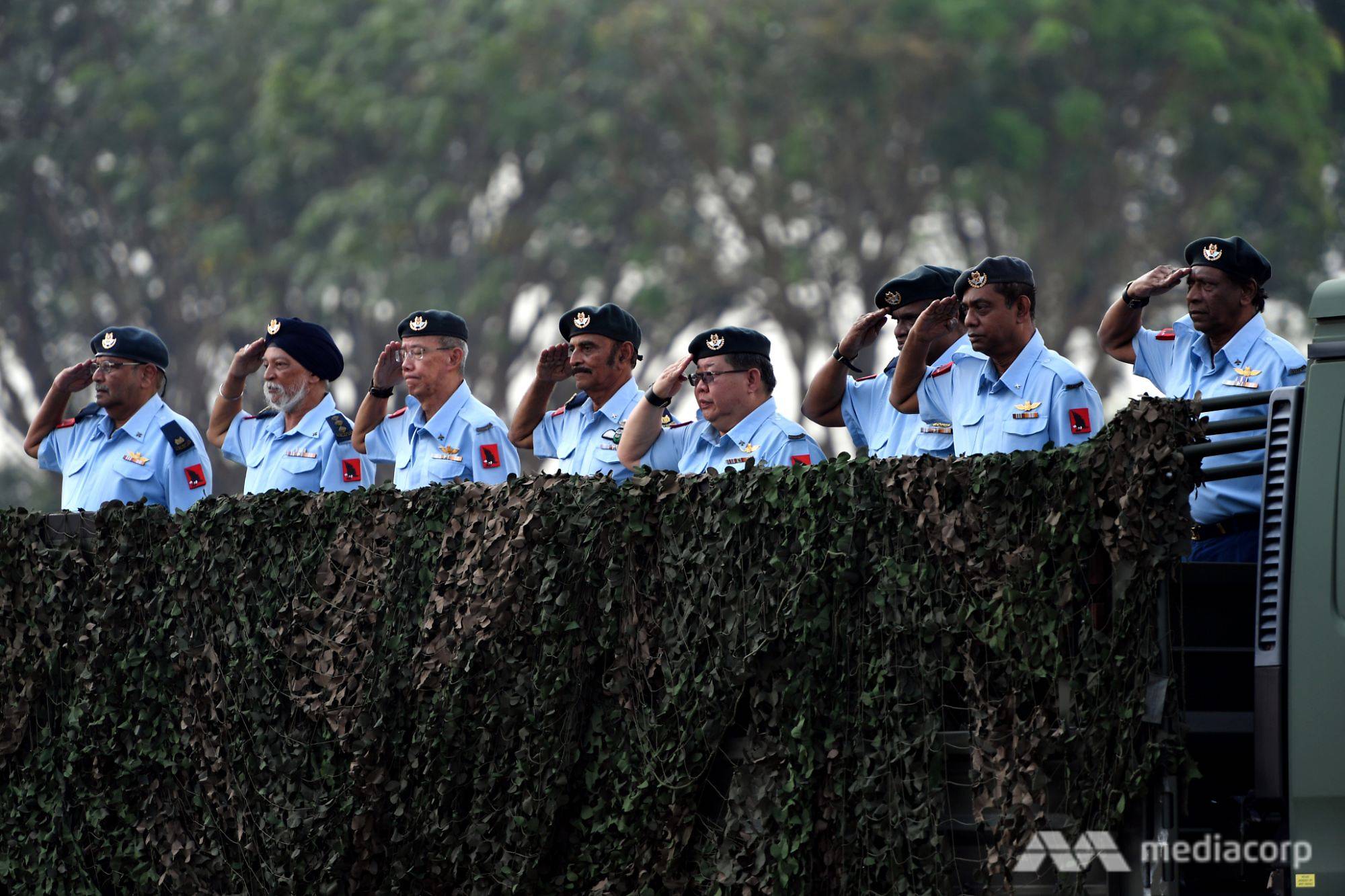
The RSAF pioneers salute during the RSAF50 media preview at Tengah Air Base on Tuesday (Aug 28). (Photo: Jeremy Long)

A display from a blue RSAF50-themed F-15SG kickstarted the parade, wowing a crowd of close to 1,400 guests, including Minister for Defence Ng Eng Hen and Chief of Air Force Major General (MG) Mervyn Tan.

Bringing together elements of the past, present and future, the parade paid tribute to the forefathers of the RSAF, with a mobile column drive-past featuring pioneer personnel saluting the crowd.

Capping off the show was a flypast which involved a sequence of aircraft such as the CH-47 Chinook Helicopter, F-16D+ fighter jets and six F-15SGs.

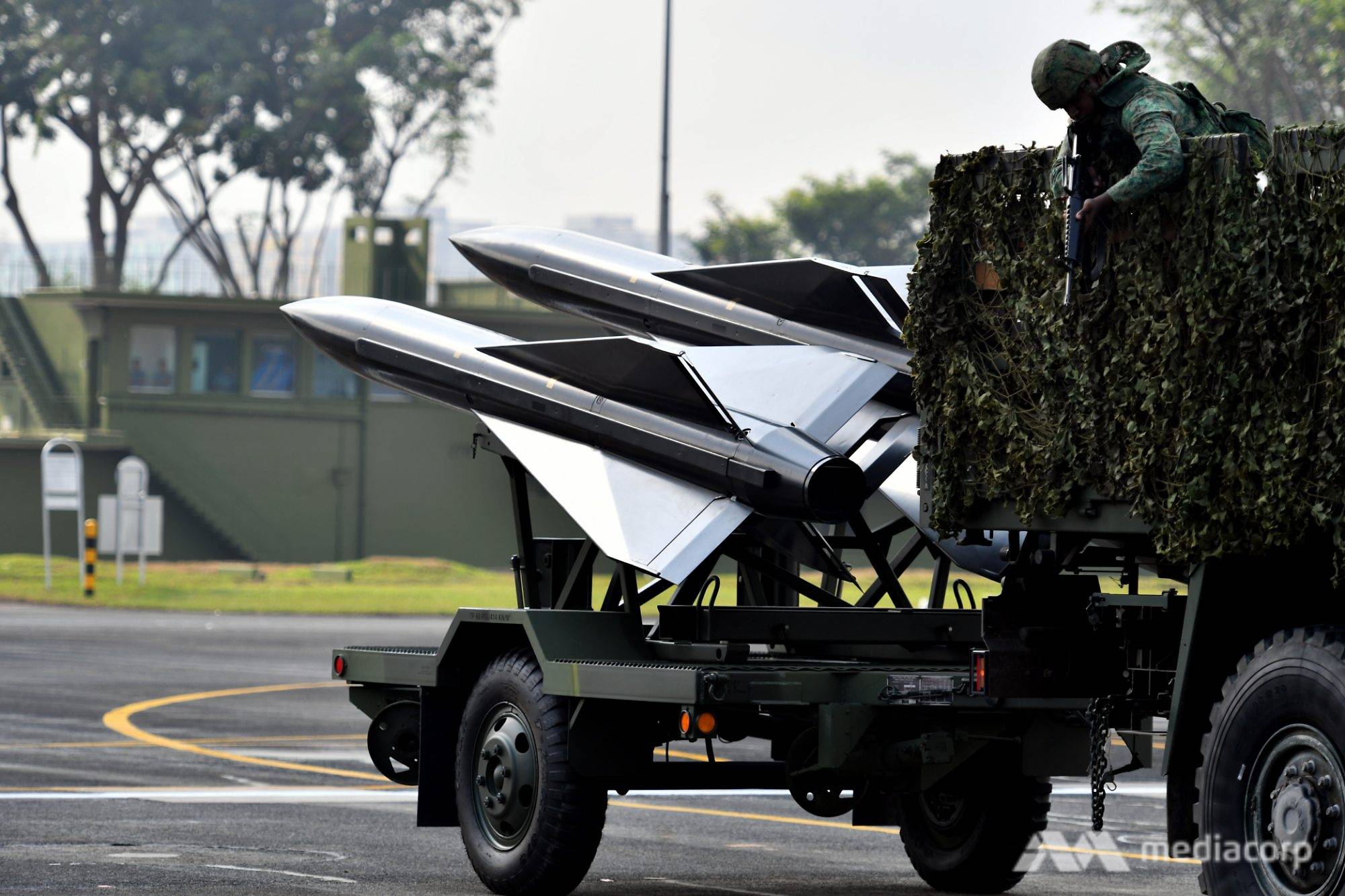
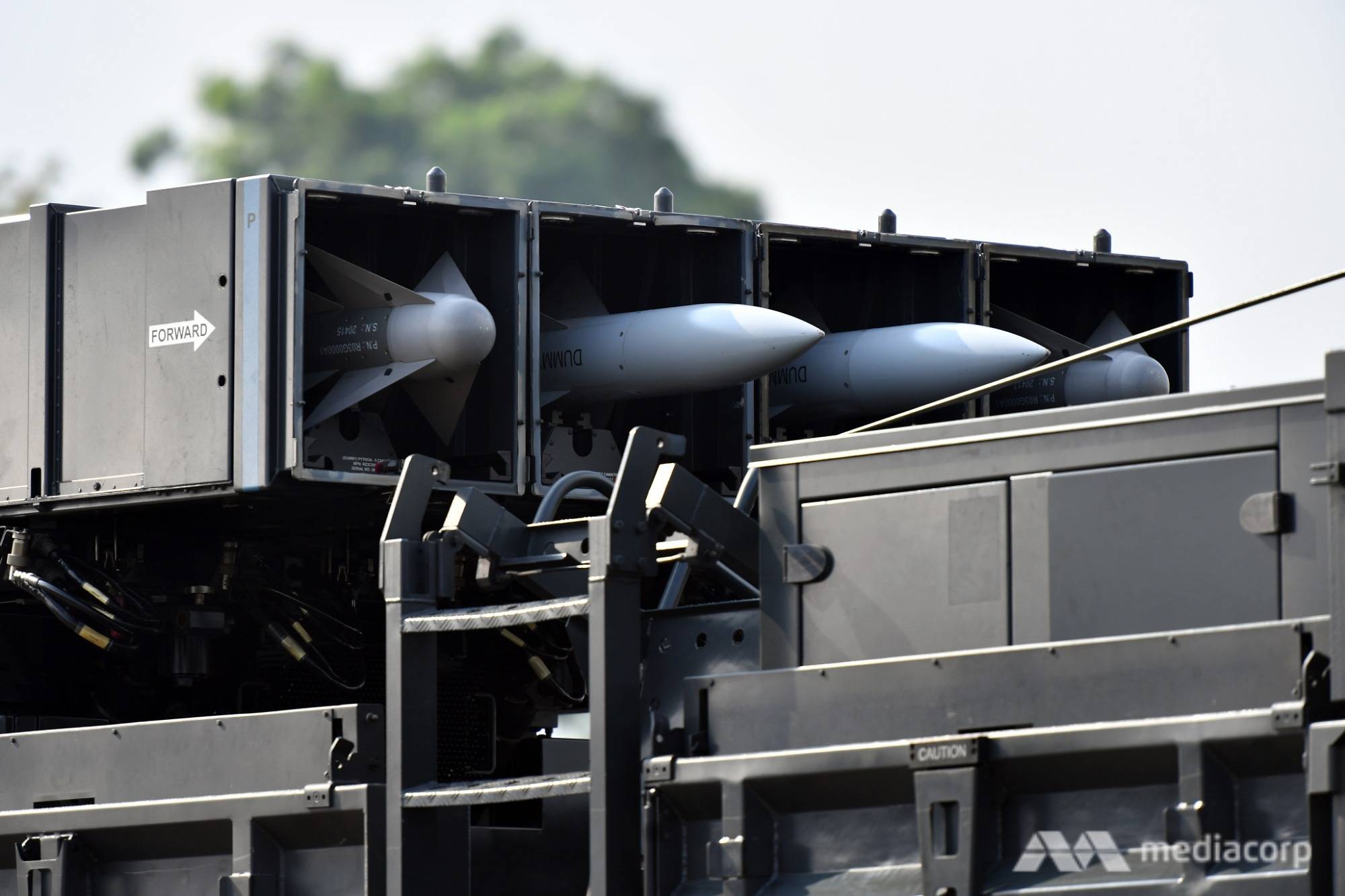
RSAF50 (17)

A vehicle in the mobile column at the RSAF50 media preview at Tengah Air Base on Tuesday, 28 August 2018 (Photo: Jeremy Long)

RSAF50 (18)

A vehicle in the mobile column at the RSAF50 media preview at Tengah Air Base on Tuesday (Aug 28). (Photo: Jeremy Long)

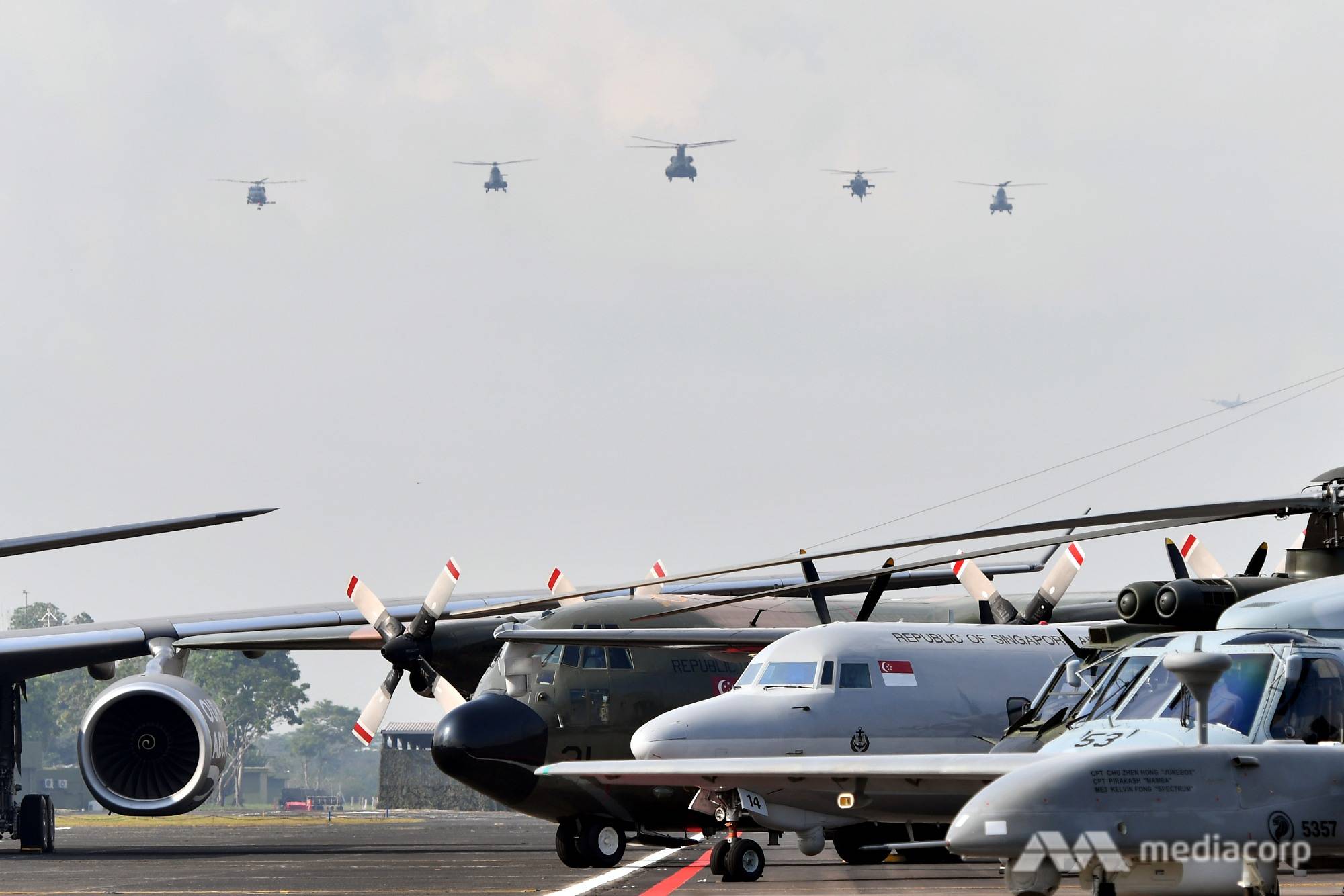
Another highlight for guests was a static display, which included current and retired aircraft.

PM Lee was also on hand to view the newest addition to the RSAF’s fleet – the A330 Multi-Role Tanker Transport (MRTT). The aerial refuelling aircraft arrived in Singapore last month and was making its first public appearance.

As part of the celebrations, PM Lee also unveiled the RSAF 50 commemorative mural at a post-parade gallery. 

RSAF50 (24)

An RSAF personnel walks past the A330 Multi-Role Tanker Transport after the RSAF50 media preview at Tengah Air Base on Tuesday (Aug 28). (Photo: Jeremy Long)

RSAF50 (25)

An RSAF personnel walks past the A330 Multi-Role Tanker Transport after the RSAF50 media preview. (Photo: Jeremy Long)

The 10m by 4m canvas mural is a collage of 50,000 photographs collected from members of the public as well as contributors such as President Halimah Yacob and the PM himself. It aims to showcase the achievements of the RSAF over the last 50 years and will be permanently displayed in the Air Force Museum.

“It was important for us to have something to hold on to (and) remember what we have done so far,” explained ME 5 Edward Kang, RSAF50 commemorative mural sub-committee chairman. “I hope when Singaporeans see it, they will have the quiet confidence that the RSAF is there for them to defend their skies.”

RSAF50 (5)

A display at the post-parade gallery, set up in conjunction with the RSAF50 Parade at Tengah Air Base. (Photo: Jeremy Long)

RSAF50 (4)

A display at the post-parade gallery, set up in conjunction with the RSAF50 Parade at Tengah Air Base. (Photo: Jeremy Long)

“The (parade’s) theme of honouring the past, celebrating the present and inspiring the future is designed to round off the year,” said parade chairman Col Lau Boon Ping. “It is really to describe the journey that we have taken over the past 50 years.” 

Source link

Commentary: A tale of one HDB flat across two generations

0

SINGAPORE: The redevelopment of ageing properties is an important stage in the lifecycle of urbanised cities with limited land supply.

For a small country like Singapore, when houses built in the country’s early year age, redevelopment becomes increasingly pertinent both from an economic and urban renewal perspective.

Ageing houses, if not redeveloped, have significant implications for the community and individuals due to changing demographic, lifestyle and housing needs.

WHEN THE STARS ALIGN FOR A FAMILY OF FOUR

For a typical family of two parents with two children living in a typical 4-room flat, after both kids get married, set up their families and move out of the flat, their parents end up with two excess rooms in their flat.

Daily chores of upkeeping their flats may unnecessarily strain the old couple who would be in their fifties or sixties by then. So right-sizing to a smaller flat is an attractive option to monetise their large flat and supplement their financial needs, especially after retirement.

The option works perfectly well, if the balance lease of their flat is still relatively long and can fetch a good price from a buyer with the requisite financing. This scenario holds in the case where they bought the flat directly from HDB at the age of 25 and retire at the age of say 65.

By then, their house will be around 45 years old, taking into account the construction and waiting time of approximately five years, with a balance lease of around 54 years.

Family Singapore

A family walking in Singapore. (Photo: Gaya Chandramohan)

However, if the parents choose to continue to live in their flat until their last days, they may sell it to the Government through the Lease Buyback Scheme and have some money for their golden years.

If they don’t, their children may inherit the old flat after their parents pass on with a balance lease of around 30 or less years, but choose to sell it off

Afterall, the flat value is likely to depreciate as it reaches the tail-end of the lease term, and will ultimately be returned together with the land to the state, when the lease expires.

WHAT HAPPENS NEXT?

But should their children wait until the lease runs out?

Some say why not, for they may be picked for the selective en bloc redevelopment scheme (SERS). But supposing they don’t, most older flats with a short balance lease are unlikely to command premiums in the resale market.

Any potential buyers will probably only pay for the use value of the flat taking into account the remaining lease term.

The family should also bear in mind that SERS has only applied to only approximately 4 per cent of the HDB flats with significant redevelopment potential, conditioned on there being sufficient space for replacement flats to be built nearby.

SERS MacPherson Lane

Three blocks of flats at MacPherson Lane have been selected for the Selective En bloc Redevelopment Scheme. (Screengrab: Google Maps)

Many say despite the small chance for SERS, a large number of buyers will still flock to the resale market to pay high prices for old flats in good locations – but this is a scenario that will be less likely in the future.

Why? Ever since Minister of National Development Mr Lawrence Wong tackled this issue of irrational housing choices made by some buyers in a Facebook post last year and explicitly mentioned that land on which leases have expired will be returned to the Government, the ground has shifted.

The issue of decaying HDB leases has remained in the spotlight since, and public housing’s relationship to Singapore’s social compact further complicates the issue.

Heated debates among parties have ensued, between cynics who place little hope on possible government intervention and others who hold onto unrealistic expectations hoping that the Government would at least dole out some “candies” when HDB flat leases expire.

READ: Windfalls and bailouts should not be an expected part of the public housing equation, a commentary

CLEARING THE AIR ON LEASE EXTENSION

Prime Minister Lee Hsien Loong has cleared the air at National Day Rally with the announcement of the expanded Home Improvement Programme (HIP II) and Voluntary Early Redevelopment Scheme (VERS) in dealing with this hot-button issue.

PM Lee explained in great length why lease extension is not an economically sustainable solution, consistent with the notion of “sustainable development” defined in the United Nation’s Report of the World Commission on Environmental and Development (1987) – that is: 

Development that meets the needs of the present without compromising the ability of future generations to meet their own needs.

Lease extension is not a desirable answer to the paradox of ageing flats and a longstanding social compact of housing as a form of social security from the perspective of urban land use and preserving economic value.

Land reclamation is not a panacea to land scarcity problems in many countries, including Singapore. Long-term land-use planning is necessary to ensure that there is sufficient land for future land use and housing needs.

Lease extension without intensification of use impedes the long-term growth of a city. It foils land optimisation, prevents new, innovative land uses and leaves open questions about the quality of land use.

Distinctive HDBs (8)

HDB flats at Tampines Avenue 9. (File photo: Gaya Chandramohan)

If old, low-density housing blocks are preserved through lease extension, more land must be sourced for new public housing flats to meet the growing demand by residents including supporting infrastructure for any new towns like roads, sewerage system, and amenities such as schools, markets and neighbourhood shops.

There are also limits to the heritage argument of conserving huge swaths of homogenous HDB flats which might have little unique architectural features. 

While some might argue for the need to keep some older HDB flats to preserve the unique charm and character of HDB neighbourhoods, maintaining these HDB blocks, which were in all likelihood built to last for as long as their leases, will come at a higher cost with time, and strain residents and public coffers.

The last anyone wants is for beloved HDB flats to become liabilities. Old and dilapidated buildings could choke off urban revitalisation, which runs counter to sustaining a modern city.

Functional and economic obsolescence may also set in earlier, due to changing lifestyle and demographics. While smart home features may appeal to younger, more tech savvy families, it’s fixtures like non-slip floor tiles, grab bars, ramp that are more useful when people age.

BACK TO THE FUTURE

Back to our family of two parents whose kids have moved out. If the parents want to age in their homes, but don’t want to subscribe to the Lease Buyback Scheme, there are now safeguards in place to help cushion that scenario.

Though details are pending, the newly proposed VERS may allay their concerns of lease decaying, giving an option for HDB residents to vote to return their balance leases to the government. But it depends on whether their neighbours say yes too.

hdb 99 year lease file photo

HDB flats occupying the Singapore skyline (Photo: Jeremy Long) 

HIP II, on the other hand, will help improve and rectify common wears-and-tears, and provide them with a living space that is safe, secure and pleasant, even after 60 years. 

Most importantly, the Government’s stand on not pursuing lease extension is firm and clear, and serves as a forewarning to those buying older flats that the Government has no intention of granting an extension of lease. So that should moderate the property market.

READ: Strong political commitment to housing is precisely what younger Singaporeans need, a commentary

MINDSET CHANGE NEEDED

Perhaps the issue is a need for a change in people’s notions of public housing. One should be mindful of the goals of public housing – that is to promote homeownership while ensuring their affordability and sustainability.

Public housing, in the form of BTO flats, have aimed to provide a lifetime’s home to one household at a time – and the moves at the National Day Rally have served to reinforce this objective in the face of expiring leases.

If public housing is exploited for private benefit, and home buyers continue to speculate in old flats, future generations may have to bear the effects of higher housing prices, as land resources are gradually depleted over time.

Sing Tien Foo is Director of the Institute of Real Estate Studies (IRES), National University of Singapore. Chia Liu Ee is a Research Analyst at the same institute.

Source link

Commentary: Head out and enjoy Singapore’s nature spots

0

SINGAPORE: I have a new, favourite nature spot in Singapore: Berlayer Creek

Until last weekend, I’d never heard of it, let alone visited it. But on Sunday during a trip to Labrador Park, I was intrigued by a signpost pointing towards the creek and decided to investigate. 

If you’ve never been there, you’re missing out on an opportunity to enjoy a peaceful oasis smack in the middle of the urban sprawl around that stretch of West Coast Highway. A few steps from Labrador Park MRT station is the start of a boardwalk that runs alongside the creek for a kilometre, with a couple of viewing platforms along the way. 

Thick foliage provides some shade, but there are still plenty of gaps through which to gaze at the slow-moving, clear water, which is home to fish and other aquatic creatures. The final treat is reaching the end of the boardwalk, where the wooded area suddenly opens out to a vast expanse of sea and sky, with a clear view to Sentosa and beyond. 

Berlayer Creek 3

A few steps from Labrador Park MRT station is the start of a boardwalk that runs alongside the creek for a kilometre, with a couple of viewing platforms along the way. (Photo: My Community)

Buffeted by a cooling sea breeze, standing there enjoying the sights, sounds and smells of this location was a reminder that, despite its size, Singapore is blessed with pockets of natural loveliness that are all too readily dismissed by some and ignored by many. 

Indeed, the delights of this little walk should make it very popular, but I was almost alone for the 45 minutes I spent there before heading into Labrador. All I had for company was a couple of joggers, a family with a toddler in a stroller and a spritely old uncle, who greeted me with an enthusiastic wave and a cheery “hello” as he enjoyed his afternoon constitutional. 

Berlayer Creek 2

View of Berlayer Creek. (Photo: Lee Kong Chian Natural History Museum/Fung Tze Kwan)

The lack of big crowds at some nature spots has been a constant theme in recent weeks when I have visited parts of Singapore that I am less familiar with. 

Bored of always running at MacRitchie or Bedok reservoirs and tired of walking at Bukit Timah Hill (all of which seem busy during the weekend), over the past couple of months I have set out to explore some other natural charms with a fresh pair of eyes, adopting the mindset of a new visitor rather than someone who’s been here almost 20 years. 

And what a revelation it has been. 

From Coney Island to Sungei Buloh and all points between, Singapore is teeming with beautiful parks, vistas and green spots that never fail to delight. 

READ: A countryside holiday is therapy for a city-bred Singaporean family, a commentary

Coney Island 2

Entrance to a Coney Island trail. (Photo: NParks)

Coney Island 1

Family of otters at Coney Island Park. (Photo: NParks)

Among the highlights for me was walking at Kranji Reservoir at dusk and seeing a big bird of prey (I’m not sure which type) swoop down on the still waters to scoop out a large fish for its dinner. 

Then there was the long walk around Coney Island and Punggol, ending at the Lorong Halus Wetland

The attractions of Punggol have hit the headlines recently after being mentioned by Prime Minister Lee Hsien Loong at the National Day Rally. If you haven’t been there, I recommend that you go. Only by visiting can one appreciate how pleasant it is, with its extensive network of waterways, bridges and paths. 

Punggol Waterway

A variety of plants line Punggol Waterway. (Photo: NParks)

Punggol Waterway 2

Punggol Waterway Park. (Photo: NParks)

Visits to both locations were significant for their lack of visitors. On a Sunday afternoon – peak time to explore – crowds were thin on the ground. At Lorong Halus Wetland – another location whose existence had passed me by – I was almost alone. 

On the upside, this meant I could enjoy a peaceful stroll among the ponds and plants. On the downside, it seemed a shame that more people weren’t there to share its green gorgeousness. 

So, if it’s been a while since you set out to explore Singapore’s natural attractions, especially some of the more recent additions, then maybe head out this weekend. Pick somewhere you’ve never been to before or haven’t visited for a long time and go and take a look. 

Tampines Heritage Trail (Lorong Halus)

What was once a landfill dumping ground and night soil disposal centre has been transformed into the Lorong Halus Wetland. (Photo: National Heritage Board)

While the place you visit might not have the “wow” factor of some of the world’s greatest natural wonders, I guarantee it will please the eye and soothe the soul, offering some much-needed respite from the daily pressures of city life. 

As Ferris Bueller says: 

Life moves pretty fast. If you don’t stop and look around once in a while, you could miss it.

And sometimes getting stuck in a routine means we don’t venture forth to explore what is on our doorstep. If that applies to you, get out and about. 

Sniff the fresh air. Have a nose around a nature reserve. Take a peek at some unfamiliar parks. 

You won’t regret it.

Source link

The helpers’ helper: From suicidal maid in Singapore to devoted social worker in Batam

0

BATAM: Her journey began in a dark place of suicidal thoughts and led to death witnessed first-hand, but these days Rahayu Gabrelle’s exploits involve bringing light into the lives of those who tread the path she once did.

The 42-year-old Indonesian runs Yayasan Dunia Viva Wanita, a Batam island-based non-profit foundation and shelter for women, children and migrant workers hailing from nearby regions in Indonesia as well as Singapore and Malaysia.

Yet at the turn of the noughties Rahayu, who is married with a child, was the one seeking shelter instead as a domestic helper in Singapore.

She declined to go into detail but was visibly distressed when harking back to the nine-month stint with her first employer there.

“I had some problems, some abuse,” the reticent woman told Channel NewsAsia in hesitant English. “I felt very depressed … They didn’t let me go out at all, and sometimes I would think, maybe it would be better to kill myself.”

Fortunately, Rahayu asked for a transfer instead and over the next four years found better luck working for a “very nice” employer. She was unaware, though, that it was illegal for her to help out at their dry-cleaning shop – so when Manpower Ministry (MOM) personnel came along “pretending to be customers”, the gig was up.   

Rahayu was placed at a shelter run by HOME (Humanitarian Organisation for Migration Economics), where she met the non-governmental body’s founder Bridget Tan for the first time.

“At the shelter I had nothing to do, and I saw Sister Bridget being very busy buying food, running around every day – so I volunteered to help,” said Rahayu.

“Then after my case was concluded, she asked me if she were to open a shelter in Batam, could I take care of it for her? But I’m from Central Java, so I said ‘no’ because I had also heard that Batam is known for having many sex workers.

So Rahayu went home first – but while visiting Tan in Singapore a year later in 2007, a fateful incident changed her mind for good.

“We were just walking to the HOME shelter when a domestic worker – Indonesian – fell from 14 storeys up,” Rahayu recalled, adding she had no idea if it was an accident or otherwise. “I saw all the blood, the police carrying the body away … Then I turned to Sister Bridget and said OK, I will do the job.”

Maid agency in Singapore file

A maid agency in Singapore (File photo: Ngau Kai Yan)

MISSING PAY, UNWANTED BABIES AND MORE

Viva Wanita was up and running by 2009 and since then, Tan has remained in a consulting role, with her own house in Batam serving as the shelter itself.

Their doors are often open to women from other parts of Indonesia, sent to Batam with the promise of a well-paid factory job but ultimately exploited and forced into the sex trade, said Rahayu.

But she noted that the major group continues to be that of Indonesian, Filipino and Burmese domestic helpers repatriated from Singapore and Malaysia – women “worse” off than she once was.

Asked about some of the common plights faced by the domestic helpers sent to her shelter from Singapore, Rahayu said many were owed their salaries, in particular those with multiple transfers to different employers.

“We also have many cases of unplanned pregnancies by Bangladeshi workers,” she added. “The woman comes to us, the baby is born here and we try to get them to her family. But some are not ready to do that – for many traditional families, to be pregnant before marriage is a sin.

“So we help them explain to their families, or let them wait here until the families understand.”

Then there are the Indonesian domestic helpers – who make up over half of Singapore’s population of maids – sent to Batam at the end of their employment, despite not originally hailing from there to begin with.

viva wanita 2

Students from Singapore’s Republic Polytechnic listen to Bridget Tan (in blue) speak at her house in Batam, which doubles up as the Viva Wanita shelter (Photo: Yayasan Dunia Viva Wanita’s Facebook)

“KEEP GOING”

Under Singaporean regulations, employers must pay for their return trip home but as previously reported by the international Human Rights Watch group, some opt to purchase cheap ferry tickets to Batam instead of flights to an airport nearest to their hometown.

MOM guidelines stipulate that alternative repatriation arrangements can only be made if both employer and domestic worker agree to it. The ministry also has a compulsory orientation programme for first-time maids, and sends out newsletters to reach out to them.

Citing the need for confidentiality, Rahayu did not share personal information of the domestic helpers in the above cases, but confirmed that some of them had lodged reports with MOM.

In total, 323 cases were handled by Viva Wanita from 2011 to 2017 – a number which Rahayu said she would be glad to see fall further.

“Have we helped people? I think so. When I started, we would get about 80 domestic helpers coming from Singapore,” she said. “It’s better now. In one year we get maybe 20.”

The foundation has only two other staffers – with one part-time – but on the squatter outskirts of Batam city, nearly 20 teachers employed to provide free education to 250 kindergarten and primary school kids spread throughout five schools.

Rahayu called this a necessary initiative – but one that comes at no small expense, along with the frequent purchases of flight tickets to send domestic helpers back to their rightful homes.

“I try to do proposals every year, for both the Indonesia government and private companies to fund us,” said Rahayu. She receives no salary for her efforts – not that it’s an issue for her.

“Of course everyone needs money. But with non-profit work, we don’t think of money,” she laughed. “Most important is to run the organisation from year to year; to keep going and going – for all the women and kids that need help.”

Source link

Asian Games: Yu Mengyu secures medal in singles, Feng and Gao knocked out

0

JAKARTA: Yu Mengyu ensured the Singapore table tennis squad will not return home from the 2018 Asian Games empty handed after qualifying for the women’s singles semi-finals on Friday (Aug 31).

Yu beat Chinese Taipei’s Cheng Iching 4-1 (11-7, 11-6, 9-11, 11-4, 11-3) in her quarter-final tie. She faces China’s Wang Manyu in the semi-finals at noon on Saturday. 

If Yu wins, she will contest the gold medal match on Saturday evening. She will be awarded a joint-bronze medal if she loses the semi-final tie as there will not be a third-place playoff. 

Speaking to the media after her win over Cheng, Yu said: “Yes, I can’t believe it myself that I’m able to win a medal … I’ve won, so definitely it’s a breakthrough.” 

Yu Mengyu

Yu Mengyu in action at the 2018 Asian Games. (Photo: Amir Yusof) 

“I haven’t played against this opponent (Cheng) for four-five years, so I wasn’t sure how she has changed. She is ranked quite high in the world, so before the match I focused on staying relaxed and going all out during the match.” 

Cheng is currently ranked eight in the world while Yu is 47th. 

Yu’s medal is the bright spot in an otherwise disappointing campaign for Singapore’s table tennis squad. 

The women were eliminated by South Korea in the quarter-finals of the team event. Yu and her teammate Gao Ning also failed to get past the quarter-finals in the mixed doubles when they lost to China 3-0. 

Feng Tianwei and Gao Ning both crashed out in the women’s and men’s singles respectively on Friday. 

Feng Tianwei Asian Games

Feng Tianwei looking dejected in her round of 16 singles tie at the 2018 Asian Games. (Photo: Amir Yusof) 

Feng, who is ranked 11th in the world, lost 4-0 to South Korea’s world No 21 Jeon Ji-hee in the round of 16. 

Speaking to the media after her loss, Feng said: “Today I feel my performance was average. That’s because the opponent was more aggressive and faster, and I couldn’t keep up with her speed. I think improvements are needed in all areas, especially with using my left hand.

Feng Tianwei Asian Games (1)

Feng Tianwei struggled to cope with Jeon’s aggressive tactics. (Photo: Amir Yusof) 

“From this competition, it’s clear to see that some areas of my play are still lacking. I’ll need to continue to work on those areas … perhaps becoming more aggressive.” 

She also lamented about a lack of sparring partners, stating this as another possible reason for her defeat. 

“That’s why when it comes down to the wire, the opponent has more ways to achieve points. I’m poorer than my opponent in that aspect. I didn’t take my chances, especially when I was leading by one or two points. A lot of those small opportunities, I didn’t take them,” Feng said. 

Gao Ning was also eliminated in the round of 16. Gao, who would be retiring after the tournament, lost to China’s Lin Gaoyuan 1-4. 

Get the widest coverage of the 18th Asian Games (Aug 18 – Sep 2) from Jakarta and Palembang, Indonesia on Mediacorp. Go to toggle.sg/AsianGames2018 for details.

Source link

FAQ: When should you show your NRIC – and when not?

0

From Sep 1 next year, companies can only ask for your NRIC number if required by the law or if necessary to prove your identity.

NRIC 01_mod

Photo illustration of photocopying an NRIC (Photo: Jeremy Long)

SINGAPORE: From Sep 1 next year, organisations in Singapore will have to stop the practice of indiscriminate collection of people’s NRIC details as stipulated by the Personal Data Protection Commission (PDPC) on Friday (Aug 31).

Still not sure when to present your NRIC? Here are some guidelines to protect yourself, according to the PDPC:

1. When should you reveal your NRIC number?

  • To determine when to give out your NRIC details, ask yourself if your NRIC number is required by law, or if it is necessary to prove your identity.

2. What else can you do?

  • In the event that it is not required by law to present your NRIC or prove your identity, check if the company accepts other personal data like a mobile number of a partial NRIC number (e.g. XXXXX567A).

3. Should you allow companies to hold on to your NRIC?

  • Unless it is required by law, do not let companies hold on to your NRIC.

4. When is it necessary to present your NRIC?

  • Some common scenarios include: Joining an organisation as a new employee, checking into a hotel, seeking treatment at a medical clinic, subscribing to a mobile phone line and enrolling into a private educational institute.

5. When is it not necessary to present your NRIC?

  • ​​​​​​​Some common scenarios include: Redeeming free parking, signing up for a retail membership, submitting feedback or registering interest in a product or service, purchasing movie tickets online and participating in a lucky draw.

The above applies to Foreign Identification Numbers (FIN), work permit numbers and birth certificate numbers, as well as identification documents containing these numbers.

Source link

‘A little bit weird’: Home United’s head coach, captain recount experience in North Korea

0

SINGAPORE: Surviving on canned food, being served pork biscuits, and being watched constantly.

These were some of the experiences the Home United team had in North Korea during their trip to play the second leg of the AFC Cup Inter Zone play-off semi-final against April 25 Sports Club.

The Protectors lost the game, which was played on Tuesday (Aug 28), by a 9-1 scoreline to lose the tie 11-1 on aggregate. 

Calling the experience “weird” several times, Home’s head coach Aidil Sharin told Channel NewsAsia on Friday that it was one that the entire team could learn from. 

The team, of which 15 out of 18 players are Muslims, did not have proper meals throughout the trip, as they were not served the halal meals which they had requested from the club. 

“They didn’t have a chef who knew how to cook halal meals. They just catered whatever food they had for us,” said Aidil about arrangements at the Sosan Hotel, where the team was staying. 

“It was difficult for the players to have meat, because it needed to be halal. The players ended up eating just rice and vegetables during mealtimes and that wasn’t ideal. 

“Some of the players weren’t eating at meal times too.”

In the end, the players relied on canned food and cup noodles that they brought with them on the trip instead.

“It’s not wise for your players to eat it daily … but you can’t really stop them. Otherwise, how are they going to have the energy to play?” Aidil said. 

Home United in North Korea 1

The Home United team posing for a photo in Pyongyang, North Korea. (Photo: Home United Football Club)

Home United’s captain Izzdin Shafiq added that the whole team did not eat much on the trip.

“They even served pork for our meals. We definitely can’t eat that,” he said. 

The team was also served pork biscuits as part of their pre-match high tea meal. 

“In other countries, there’s always snacks and hot coffee. We asked for sandwiches, fruits and hot coffee, but they provided canned milk coffee that was cold.

“When we reached the dressing room, they provided pork biscuits. Some of them took it and vomited,” said Aidil, noting that the team only realised it contained pork after its South Korean player, Song Ui-young, read the list of ingredients. 

STRINGENT CHECKS

Aidil also said that he had his laptop seized at Pyongyang International Airport, following the 18-hour journey from Singapore, which included a transit stop in Beijing. 

In the laptop was footage of the first-leg match Home United played against April 25 at the Jalan Besar Stadium. He had several videos cut so that he could prepare his players for the match in Pyongyang. 

However, Aidil said he was singled out at the airport and had a “100 per cent search” done on him. 

The laptop and a USB thumb drive, which contained a Malay movie, were found on him and subsequently seized. The items were only returned when the team flew out of Pyongyang. 

“Without the laptop, it was like we were totally handicapped. The videos were to show the players the areas they could improve upon and what to expect from their opponents in the next game,” said Aidil. 

Izzdin meanwhile, added that South Korean Song also had his book confiscated at Customs, where the team took about one hour to clear. 

“It is something new to us, something totally different which we never expected,” the Singapore international said. 

“We had to surrender our phones; they checked our luggage, but I have no idea what they were finding for.”

Home United in North Korea 3

Song Ui-young, Home United’s South Korean forward (number 8), walks off the pitch with his teammates dejected after a heavy defeat at the hands of April 25th Sports Club. (Photo: HUFC)

Their mobile phones and tablets were also subjected to checks during their stay; one of the checks on a club official’s laptop and hard disk took as long as 20 minutes. 

The team also thought they had lost their yoga mats in transit, until midfielder M Anumanthan, who arrived in Pyongyang four days later, saw them at the baggage area together with his luggage. 

Communication also became an issue for the team in North Korea, as the players had no access to wifi or the Internet – which meant that they could not communicate as they normally would. 

“We are used to having wifi and this trip we didn’t have it,” said Aidil.

“The TV had only four to five channels, and none of them was in English. We couldn’t do anything in the hotel … it was just eating, resting and sleeping.” 

The team was also afraid of heading out of the hotel, as they “feared for their safety”. 

Song was also followed everywhere – even to the souvenir shop at the hotel – by men who appeared to be from the police.

The Sosan Hotel apparently only had one functioning lift during the team’s stay. 

Home United were given rooms at the 26th and 27th floor, and when club officials asked why they could not stay at a lower level, hotel employees said it was because they were “full house”. 

“But it was really weird, because when we were there, we saw it was just us and a few other Koreans,” said Aidil. 

Source link