SINGAPORE is in the bottom 10 worst countries in the world at tackling inequality and fairly taxing corporations. According to a new study, the developed city-state was beaten in the rankings by third-world countries like Bangladesh, Afghanistan, and Burundi – one of the world’s poorest nations
The report from Oxfam and Development Finance International details how Singapore’s ability to care for it’s most vulnerable has deteriorated over the last year due to a focus on harmful tax practices which Singapore espouses.
In fact, Singapore is the worst in the world when it comes to tax, due in part to its failure to appropriately tax the richest in the country. While the government has increased the personal income tax by two percent, the maximum bracket for the highest earners is still only 22 percent.
It is also the country’s failure to tax major corporations that drastically limits funds available to close the inequality gap. At just 17 percent, Singapore fails to collect huge sums from many global companies that use the financial hub their Asian headquarters.
Tax loopholes and policies that explicitly benefit big corporations enable them to avoid paying billions of dollars of tax both at home and abroad, depriving not only Singaporeans but international governments of much-needed funds.
The study also examined social spending which contributed to Singapore’s low overall ranking.
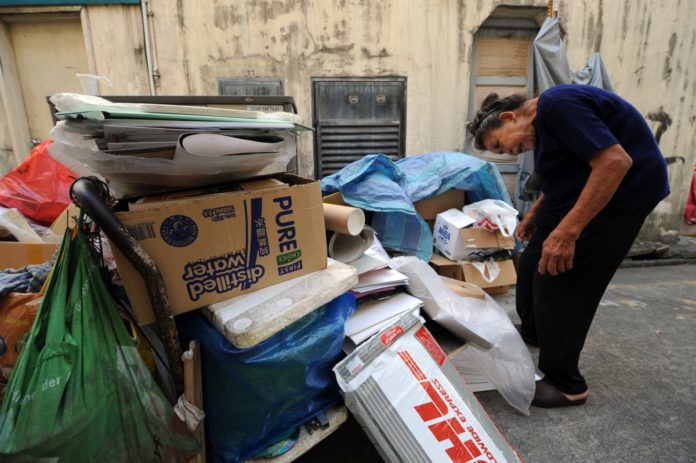
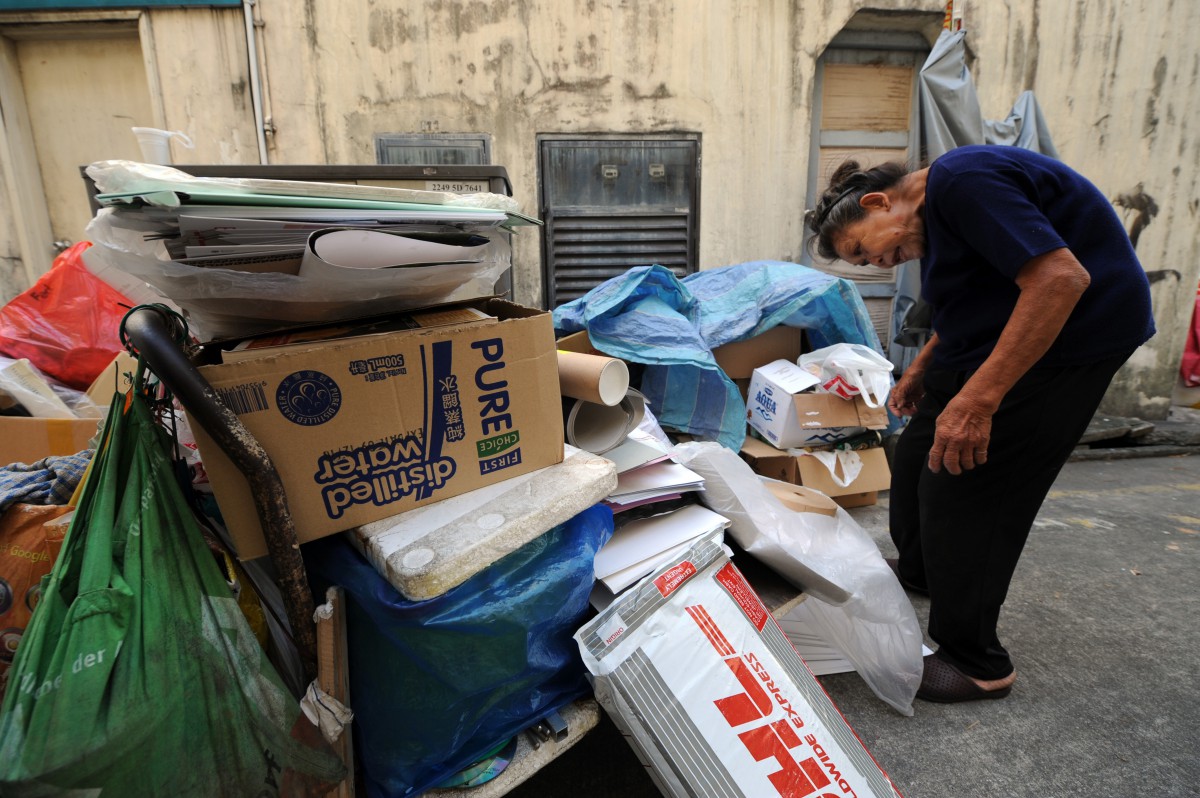
Zheng Jie Wo, 76, cuts a diminutive figure hunched over bags of waste paper, used plastic bags and discarded boxes on the back lane of the financial district in Singapore on January 5, 2009. She collects recyclables to sell in order to make ends meet. Source: Roslan Rahman/AFP
Only 39 percent of the country’s budget goes towards education, health and social protection combined. This lags far behind Southeast Asian neighbour Thailand that spends half of their budget on these.
This looks set to get even less as Singapore implemented one of the biggest percentage cuts in education spending in the world from 2017 to 2018, at five percent.
Singapore’s poor performance is in direct contrast to Indonesia, which has improved significantly as it strives to tackle inequality. While still only in 90th place out of 157, the country of 260 million people is pouring money into healthcare with the aim of providing universal health coverage.
Increasing the minimum wage and improving tax collection has also helped its standing.
Except for Laos – who was one spot behind – Singapore ranks the lowest of all Southeast Asian nations, in 150th place.
Best performing was Thailand at 74th, followed by Malaysia (75), Indonesia (90), Philippines (94), Vietnam (99), Cambodia (121), and Burma (138).
SINGAPORE: A 56-year-old Malaysian work permit holder was fined S$1,800 for trying to smuggle six packets of cigarettes through the Woodlands Checkpoint on Sunday (Oct 7).
The cigarettes were discovered after an officer at the checkpoint “detected anomalies” during a baggage scan, the Immigration and Checkpoints Authority (ICA) said in a Facebook post on Tuesday.
“True to his suspicion, a total of six packets of duty-unpaid cigarettes were found hidden in a blanket, shirts and a bag compartment,” said ICA.
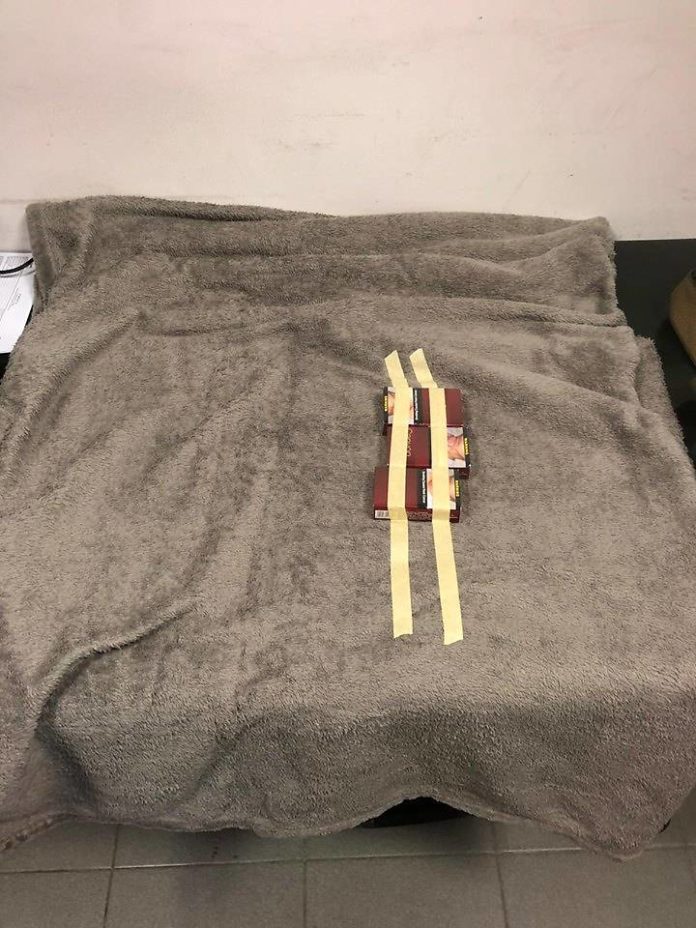
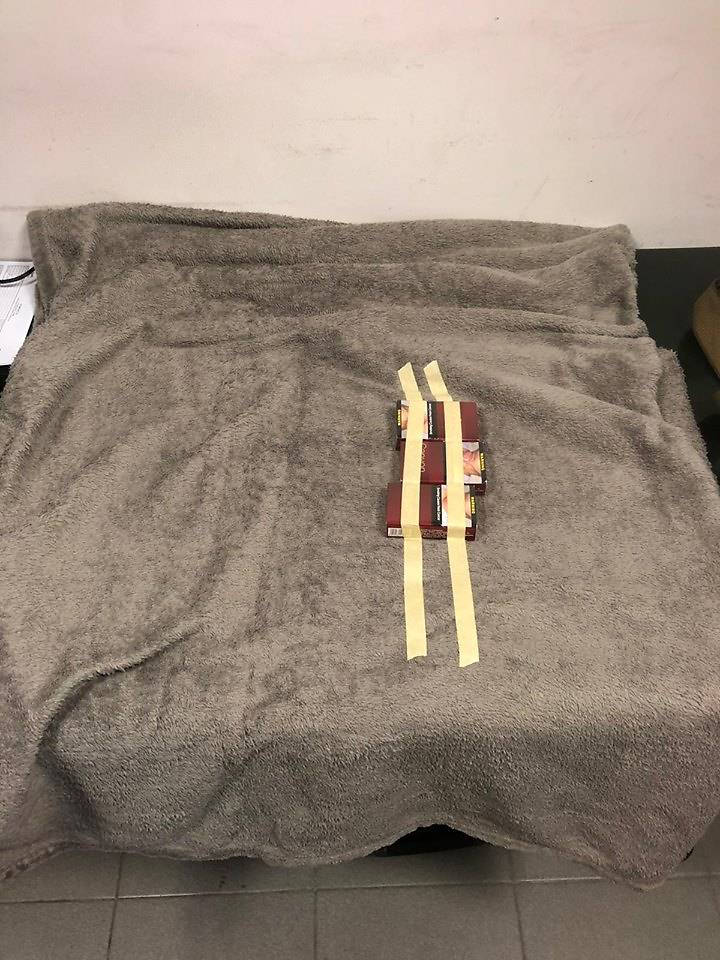
Photos posted by the ICA showed several packets of cigarettes taped to a blanket and the underside of a polo shirt.
Photos posted by the ICA showed several packets of cigarettes taped to a blanket and the underside of a polo shirt. (Photo: Facebook / Immigration & Checkpoints Authority)
“This method of concealment is a cause for concern as similar methods may be used by people with malicious intent to smuggle security items into Singapore,” said ICA.
SINGAPORE: A total of 31 people, aged between 45 and 78, were arrested on Sunday (Oct 7) for their suspected involvement in illegal horse betting activities.
In a news release, the police said officers from the Criminal Investigation Department (CID) and the six police land divisions conducted raids at multiple locations including King George’s Avenue, Teban Gardens Road, Whampoa Drive, Ang Mo Kio, Eunos and Boon Lay.
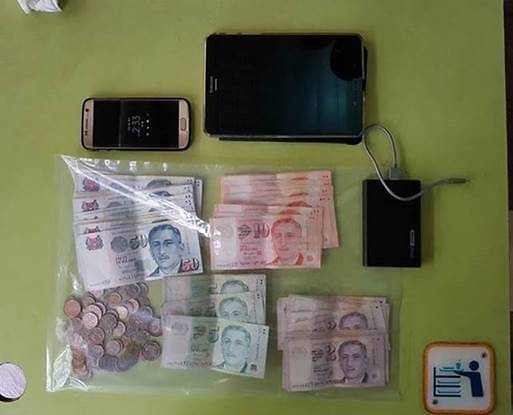
The police arrested 27 men and four women, as well as seized cash amounting to about S$15,000, mobile phones, pens, pagers and documents such as betting records.
A total of 31 people were arrested for their suspected involvement in illegal horse betting activities. (Photo: Singapore Police Force)
Preliminary investigations revealed that the 31 suspects are believed to have been involved in various roles such as illegal bookmakers, runners as well as gamblers.
Investigation against the suspects are ongoing.
Under the Betting Act, any person convicted of betting with a bookmaker faces a maximum fine of S$5,000 and/or up to six months’ jail.
Any person found guilty of being involved in bookmaking faces a maximum fine of S$20,000 and up to five years’ jail.
“The Police take a serious view against all forms of illegal betting activities and will continue to take tough enforcement action against those involved, regardless of their roles. Members of the public are advised to steer clear of all forms of illegal gambling activities,” the news release added.
Preliminary investigations revealed that the suspects are believed to have been involved in various roles, including illegal bookmakers, runners as well as gamblers. (Photo: Singapore Police Force)
SINGAPORE: In recent months, COE prices have crashed to its lowest levels in eight years, which might entice you to book a test drive.
But before you take the leap, you probably have a few considerations: What kind of car do I need – a sporty convertible or a functional family-friendly MPV (or multi-purpose vehicle)?
Should I go for a Japanese car or a European one? How reliable is it, and – probably the most important question – will it fit into my budget?
Interestingly, the thought process and factors to consider when choosing a car is surprisingly similar to that of choosing a mutual fund. It’s the return of investment between the two that may differ.
KNOW YOUR WEALTH NEEDS AND RISK TOLERANCE
Much like buying a car, the first step when investing is understanding your needs and objectives. If you’re an investor looking for a smooth investment journey over the long term, then a fixed income fund may be a more suitable option, instead of a relatively higher risk equity fund that may deliver a higher return but a more volatile journey.
However, if you prefer to balance growth and stability, multi-asset funds might be the way to go.
Depending on your risk tolerance and investment needs, they have a combination of equities and fixed income that could give you a more balanced and diversified experience.
Understanding what you need is the first step to making the right choice. But if you need investment advice, it’s best you speak to your relationship manager as financial markets can sometimes be complex and dynamic in nature.
IMPORTANCE OF GEOGRAPHIC ALLOCATION OVER BRAND
For some buyers, branding is important as you might associate certain brands with particular characteristics. Case in point, German-brand cars are known for their engine performance while Italian-brand cars are loved for their flashy exteriors.
However, if you look past the brand, you might find gems that could offer you attractive performance at a better value.
It’s the performance, not brands that matter. (Photo: Unsplash/chuttersnap)
For example, funds that invest in Asian equities and bonds might not be as “branded” as others. However they are becoming more popular as the valuations of some of these assets are looking more attractive now and their correlation with the rest of the world is historically lower, which can provide your portfolio with better diversification.
UNDERSTAND PERFORMANCE EXPECTATIONS AND VOLATILITY
Performance is another major criteria for a car buyer or a fund investor. Just like how you would want to know how fast a car can go, you’ll also want to know what the fund’s peak performance is. However, if you’re blinded by just one metric, like a fund’s performance or yield, then you may be in for a dangerous ride.
I prefer a more balanced approach. Instead of looking solely at speed (or the performance of the fund), I like to also look at braking distance (or the volatility of the fund) as the shorter the braking distance the better the car will be able to avert a road accident when the junction or round-about comes up.
Similarly, if you take into account both fund performance and fund volatility, you can end up with a more meaningful measurement of your risk-adjusted return.
Reliability is also an important factor. After all, no one wants to be stranded with a bad investment.
A fund’s reliability can be measured by looking at the historical drawdowns of the fund during down times and the number of credit events suffered in the past. A fund with a lower number of drawdowns might be a better option for an investor to build a multi-terrain portfolio that can navigate the bumps and potholes of market cycles.
Apart from historical reliability, a wise investor also needs to look under the bonnet. How does the engine look? Are all the pieces properly assembled?
A wise investor would look under the bonnet (Photo: Unsplash/Hosea Georgeson)
In asset management terms, we refer to this as the investment process.
Cars and funds can have very different engines or investment processes, so before you choose a fund make sure you know how the fund is managed, what the investment style is and how the fund manager allocates between assets. The investment process will help you to better understand the future reliability of the fund.
ESTABLISH A WEALTH INVESTMENT PLAN
Finally, and probably the most important factor when it comes to buying a car or investing in a fund, is determining your budget and understanding the full costs that you may incur. Funds have different minimum investment amounts and upfront sales charges to cater to various types of investors.
An investor should be aware of the fund’s operating costs, such as management fees and administrative expenses. Just like a supercar will incur higher taxes and insurance fees, a high octane active equity fund will likely charge higher management fees.
Costs are key but remember that a wise investor tends to look for value for money rather than simply low costs.
Once you make a decision, I suggest that you try to stick to it. There will be a flashier car or investment fund launched to the market every day but in my experience having a long-term horizon tends to pay off.
The similarities in the thought process behind buying a car and investing in a fund is definitely more similar than you would think. However, there is one stark contrast.
A fund is an asset that can drive up returns for your investment portfolio, while a car tends to depreciate over time. So if a car is not an absolute necessity for you now, why not fuel your portfolio with funds instead? After all, they may just give you a better ride.
Puneet Chaddha is head of Southeast Asia at HSBC Global Asset Management.
SINGAPORE: It is an all-white affair that takes place once every two years: Over a thousand men and women congregate for the ruling People’s Action Party (PAP) conference, where they will elect the party’s top decision-making body, take stock of its performance thus far and chart the party’s path forward.
However, unlike previous conferences, the one to be held later this year is set to hold added significance: For the first time, the identity of the man who will eventually become the next chief of the PAP — and in all likelihood, the Republic’s next Prime Minister — is expected to become clearer to Singaporeans through the party’s Central Executive Committee (CEC) election.
In the last two leadership transitions — first to Mr Goh Chok Tong, and then to Mr Lee Hsien Loong — both men had already been identified as the next Prime Minister before they assumed the first assistant secretary-general position in the PAP CEC during the party conference, and later the post of secretary-general. So, the party’s internal elections then were seen by many as a mere formality in that regard.
Mr Goh assumed the post of first assistant secretary-general in the PAP CEC in November 1984, before he was appointed Deputy Prime Minister a month later following the December 1984 General Election (GE).
File photo of Emeritus Senior Minister Goh Chok Tong. (Photo: AFP/Kazuhiro Nogi)
Nevertheless, prior to his party appointment, Mr Goh had emerged as the clear leader among his peers in the Cabinet. He became Prime Minister in November 1990, and secretary-general about two years later.
PM Lee was appointed Deputy Prime Minister in November 1990, and became the PAP’s first assistant secretary-general in December 1992. He became secretary-general in December 2003, and Prime Minister in August 2004.
Dr Gillian Koh, from the Institute of Policy Studies (IPS), noted that there is no rigid template for the successor to the Prime Minister to follow, by attaining certain posts within the party vis-à-vis the process of promotion in government positions, and the public announcement of the successor’s identity.
Reading the tea leaves on who will be Singapore’s next Prime Minister has been an ongoing exercise in the past one-and-a-half years, with political buffs engaging in a fresh round of speculation following Law and Home Affairs Minister K Shanmugam’s comments last month.
He had said that political succession is gathering steam, and hinted that the transition will become clearer after the upcoming PAP’s CEC election.
“Look out for the slate of candidates elected. Look at the positions they hold and that should give you an indication of where the transition process is,” Mr Shanmugam had said.
Political analysts previously said that they expect at least one, if not two, new assistant secretary-generals — the second-in-command positions — to be appointed by the PAP after its CEC election.
Referring to Mr Shanmugam’s remarks, Dr Koh felt the key point was that the potential successor must receive strong support from the PAP cadres.
“If the senior members of the ruling party have said that the upcoming CEC election is a critical one and will provide indication of who that successor may be, then we will read it as significant and that the party system is relevant to the process,” added Dr Koh, who is the deputy research director at IPS.
A CADRE SYSTEM SHROUDED IN SECRECY
Within the PAP, there is an inner circle known as cadres. These are party stalwarts who have the privilege which no other ordinary member has: The right to decide which individuals make it into the party’s top decision-making body.
For years, not much is known about the cadre system. Even within the party, members do not know who is a cadre among them, and there is no known published data on their numbers.
The PAP Central Executive Committee members at its party conference in December 2016. (Photo: PAP website)
But in a media interview in 1998, former Deputy Prime Minister Wong Kan Seng offered a glimpse into a system that had been shrouded in secrecy. He revealed then that the PAP had more than 1,000 cadres. They received no perks, other than the right to vote in the CEC election. The PAP did not respond to queries on latest figures.
Mr Wong had said there was no instruction for cadres to keep their identities a secret, adding that they did not disclose it due to an unwillingness to “boast about it”.
According to nine PAP cadres including two former Members of Parliament (MPs), who spoke on the condition of anonymity, cadres tend to be individuals who hold key leadership positions within a branch. These include secretary and chairman of the youth wing in each branch.
This is how the process goes: An MP in each branch nominates at least two individuals to be cadres each year. Since there are currently 83 PAP branches, it could mean that over 150 individuals are nominated to be cadres each year.
They are nominated based on their years of experience as a party member and possess outstanding qualities such as loyalty to the party and being people-oriented. Individuals then go through single or multiple rounds of interviews with a panel comprising ministers and MPs.
Then comes the confirmation. Individuals are notified that they have become cadres through a letter sent by mail. “I think I teared when I got the letter,” said a cadre member from Bishan-Toa Payoh Group Representation Constituency (GRC).
It is such a privilege that I will value (it) for the rest of my life.
Asked why there is secrecy about the cadre system, one former MP said: “So that members do not game the system. We only want people who are absolutely loyal to the party. No other intentions, full stop.”
Another former MP added: “I think proclaiming that you are a cadre might create some sort of a hierarchy, and we don’t want that. We value all the members, except that some have been in the party far longer and we need to recognise their loyalty.”
Not much is known about the CEC election process as well. According to the two former PAP MPs, various groups such as the outgoing CEC, branch chairmen and secretaries, will nominate up to 20 individuals in total.
PAP60 Conference in 2014. (Photo: PAP’s Facebook page)
The nomination process takes place about two to three months before the party conference, where the internal election will be held.
Cadres said that in the lead up to the CEC election and on the day itself, nominees do not canvass for votes such as by giving speeches.
Results will be released on the same day as the voting, though the number of votes that individuals receive will not be disclosed. The 12 individuals with the highest votes will automatically be elected into the committee, which also decides who they want to co-opt.
Cadre members said the system was implemented to prevent a hostile takeover of the party from within. It was a lesson which the PAP learnt after left-wing members attempted such a move back in 1957, before they were expelled and later formed their own party called Barisan Sosialis.
“We don’t want history to repeat itself,” said a cadre member from Tanjong Pagar GRC.
THE THREE FRONT RUNNERS
So far, three names have surfaced when it comes to the question of who will succeed PM Lee: Trade and Industry Minister Chan Chun Sing, 48; Finance Minister Heng Swee Keat, 57; and Education Minister Ong Ye Kung, 48.
Both Mr Chan, a Tanjong Pagar GRC MP, and Mr Heng, an MP from Tampines GRC, entered politics after the 2011 GE.
Mr Chan, a former army general, started out as Minister of State for the then Ministry of Information, Communication and the Arts.
He has since gone on to assume several other posts, including Second Minister for Defence, Minister for Social and Family Development, Minister in the Prime Minister’s Office, as well as being the secretary-general of the National Trades Union Congress.
Currently, he is also the Minister-in-charge of the Public Service, and Deputy Chairman of the People’s Association.
Chan Chun Sing, Heng Swee Keat and Ong Ye Kung. (Photo: MCI)
After the 2011 GE, Mr Heng — who was formerly the managing director of the Monetary Authority of Singapore — was immediately elevated to a full minister, helming the Ministry of Education.
Mr Heng, who was out of action for several months after suffering a stroke in May 2016, had co-chaired the Committee on the Future Economy — which charted the strategies for Singapore’s next phase of growth — and also led the Our Singapore Conversation project.
Since 2015, he has helmed the Finance Ministry.
Having lost in the 2011 GE as part of the PAP’s Aljunied GRC team, Mr Ong joined the Cabinet only after the subsequent polls in 2015, where he was fielded in Sembawang GRC.
He was first appointed Senior Minister of State for Defence, and subsequently Second Minister for Defence before helming the Education Ministry on his own since April this year.
Within the party, both Mr Chan and Mr Heng were first elected into the CEC in 2012, and subsequently in the 2014 and 2016 party elections.
After the 2012 CEC election, Mr Chan was appointed organising secretary — a post he holds till today — and also became chairman of the party’s youth wing.
Last year, Dr Janil Puthucheary, who is currently the Senior Minister of State for Transport as well as Communications and Information, took over as chairman of the PAP’s youth wing.
Meanwhile, Mr Heng has remained a non-office bearer in the CEC.
For Mr Ong, he was co-opted into the 18-member CEC formed about two years ago — just 15 months after he was elected to Parliament — and was given the post of organising secretary. Apart from Mr Chan and Mr Ong, Health Minister Gan Kim Yong also holds this post.
While Mr Chan may have held more party posts than the other two frontrunners, PAP cadres said the leadership race is still tight, and are uncertain who among the three is in the lead.
A cadre from Jurong GRC felt that the three men “are the best among the pool” because they hold “important portfolios, handle the key issues like finance and education”.
Though “it is still hard to say who is leading”, the cadre member added:
“What is certain is that one of them will become the new assistant secretary-general.”
LOBBYING ‘NOT THE PAP WAY’
Unlike in other countries, where factions exist and those vying for leadership posts are forced to canvass or lobby for support, no such lobbying happens within the PAP, said the party cadres.
People’s Action Party leaders including Secretary-General Lee Hsien Loong at the 10th anniversary dinner of the PAP Policy Forum (Photo: People’s Action Party)
Prior to the CEC election, for instance, leaders “do not go around calling on cadres to vote for them”, said the cadre from Bishan-Toa Payoh GRC. “They know that we have the right to vote for whoever we want and trust our assessment,” he said.
A Tanjong Pagar GRC cadre added: “Previous leaders have never (lobbied for votes). It is not the PAP way.”
Another cadre from Sembawang GRC reiterated that the practice is to “just walk the ground to interact with both residents and members to understand ground concerns”.
Still, the uncertainty over the identity of PM Lee’s successor is worrying for some cadres, while others are unfazed and called for patience.
The cadre, who is the chairman of the youth wing in his branch in the east, said that “some party members are watching the succession process with some anxiety”.
He added:
PAP is known for its clarity. There cannot be space for a sense of uneasiness to creep in among party members.
Another cadre from Sembawang GRC pointed out that though the transition process is shorter this time round, members need not worry as there is a mixture of experienced and new leaders.
“The members are guided by the leaders. If they say (the younger leaders) not ready, we will accept and have to be patient because they know best,” he noted. “The last thing we want is for them to rush through it.”
WHAT PAP CADRES LOOK FOR IN THEIR LEADERS
As much as it is a privilege to be cadres, they also have a heavy responsibility come the PAP election, when they have to decide who they want in the CEC.
Candidates for the CEC must have a combination of attributes: Leadership traits, being people-oriented, and most importantly empathy, said several PAP cadres.
The cadre, who leads the youth wing in his branch in the east, said equally important is how the individuals perform in their respective constituencies.
“If the individual cannot connect with his or her constituents, then there is no point to even be in the CEC,” he added.
Those interviewed also noted that competency and popularity are not mutually exclusive, though the former should take precedence.
A Tanjong Pagar GRC cadre noted that the late founding Prime Minister Lee Kuan Yew did not believe that politics was a popularity contest, but rather to change people’s lives.
He was strict and people might not initially like him, but eventually, his competency earned the people’s respect. Soon enough, he became popular and well-loved.
Former PAP MP Irene Ng, who is now a writer-in-residence at think-tank Iseas-Yusof Ishak Institute, said when cadres vote for the CEC, key factors that they based their votes on is whether the candidate can “address the complex challenges facing the country and its people, attend to the bread-and-butter concerns of the average man-in-the-street, take care of the most vulnerable in society, and carry the ground with him. And of course, to win the elections.”
Former Singapore Prime Minister Lee Kuan Yew (LKY) smiles as he attends the LKY School of Public Policy 7th anniversary dialogue session in Singapore September 14, 2011. (Photo: REUTERS/Tim Chong/File Photo)
Former PAP MP Inderjit Singh said that support from cadres is significant. “Cadre members typically have a very good feel of the ground as reflected by sentiments of general party members.”
Mr R Ravindran, a former MP who is now a lawyer, echoed a similar sentiment, saying that cadres are “very careful” in selecting the CEC members.
“They look at the whole picture – international standing, national performance and grassroots performance. These are factors cadre members are conscious of. They have interacted with these leaders, they know the leaders very well,” he added.
From time to time, MPs are also co-opted into the CEC. Currently, there are two of them in the committee — MP for Potong Pasir Sitoh Yih Pin and MP for Bukit Batok Murali Pillai.
In 2011, two MPs – Ms Denise Phua of Jalan Besar GRC and Mr Seah Kian Peng from Marine Parade GRC – also made it into the CEC. But their circumstances were different.
They were not elected into the committee when the CEC election was held in 2010, but were among six fresh faces brought in later to replace veteran politicians who had stepped down from the party’s top-decision making body.
The new faces were chosen through a poll of branch chairmen and cadres representing the PAP branches, as well as groups such as the party’s youth and women’s wings.
It is rare for party stalwarts who are not political officeholders in the government to be elected into the party CEC. Former PAP MP Tan Cheng Bock, who sat on the CEC from 1987 to 1996, was one such example.
A cadre from Tampines GRC said some members might feel that certain MPs also possess leadership qualities, passion and drive for public service. As such, they also deserve a place in the CEC.
The cadre from the PAP branch in the east, said: “As an experienced cadre member, I can tell you that even some MPs can receive more votes than a minister. Why? Sometimes it is because they are seen to have more empathy.”
He reiterated that the CEC election reflects “democracy in action”, a view shared by other cadres.
One cadre from Sembawang GRC said that they are “not cornered to vote for a particular person”. He added:
We are free to make our choices and our leaders respect that because they know it is important to get a mandate from party members first.
Current PAP members, former PAP MPs, and political analysts interviewed for this article all agreed that it was important that the next party leader and potential future Prime Minister be elected into the CEC — being co-opted is not an option.
Mr Singh said that if the future leader fails to be elected, “I doubt he will have the moral authority to lead the party”.
Lessons from other countries also illustrate the need for leaders to have strong party support.
Last month, Australia welcomed a new prime minister for the sixth time in 10 years. Following the infighting within the ruling Liberal party, former Prime Minister Malcolm Turnbull was ousted by his own party members. The United Kingdom’s former premier Gordon Brown, too, had faced multiple leadership challenges from members of his own Labour Party, though he managed to ride out the storm.
Former Australian Prime Minister Malcolm Turnbull holds a news conference after a party meeting in Canberra, Australia August 24, 2018. (Photo: REUTERS/David Gray/File Photo)
Political analyst Eugene Tan said that Singapore’s next leader is likely to be “politically insecure” if he does not have a resounding mandate from his own party. This will also affect the stability of his government, he added.
“A Prime Minister who has very strong support within his own political party will be less likely to fall victim to internal party struggle. He will also be able to lead and govern without having to fear that his own position is under grave threat,” said Assoc Prof Tan, a law professor at Singapore Management University (SMU).
Without confidence from his own party and Cabinet ministers, “factions can quickly develop and power struggles can ensue”, he noted.
SNAP GE ON THE CARDS?
PM Lee, 66, who has said he would not wish to be Prime Minister beyond 70 years old, has also indicated that he would hand over the reins after the next GE, which is due by April 2021.
With that being the case, some observers believe an early election could be called as soon as late next year — in order to give more breathing space for the leadership transition after the polls. This would also allow the next Prime Minister to have a longer runway before leading the ruling party in the subsequent GE.
In contrast, if the coming GE is held in 2020 or 2021, PM Lee will be pushing 70 and the spotlight — as well as pressure — could be greater on his successor.
National University of Singapore political scientist Bilveer Singh said the possibility of the GE being held next year cannot be discounted.
There is already indication that the Government has started to sweeten the ground by giving utilities rebates, among other things, he noted.
Furthermore, ground sentiments might change as the implementation date of the Goods and Services Tax (GST) hike draws near, he added.
The Government has said the increase will take effect between 2021 and 2025.
Singapore will also commemorate its bicentennial next year, with PM Lee previously describing it as an important milestone and an occasion to reflect how the nation came into being.
SIM Global Education associate lecturer Felix Tan said that it would be to the PAP’s advantage to tap the feel-good factor by calling the elections.
“It would reflect well upon the PAP to predicate all their achievements and also appeal to the emotions of Singaporeans. I wouldn’t be at all surprised if they are able to use this event to great effect,” he added.
Still, some analysts noted that a snap GE would mean a “short runway” for PM Lee’s successor to prove his mettle, as Assoc Prof Singh puts it.
SMU’s Assoc Prof Eugene Tan reiterated that the time frame might not allow Singaporeans to get to know the successor better and “for him to leave a strong impression”.
Prime Minister Lee Hsien Loong speaking at the 2018 National Day Rally. (Photo: TODAY/Jason Quah)
“This could affect party dynamics in that he may not command the same authority that his predecessors did when they had the luxury of time and opportunity to deal with issues, enabling them to stamp their mark even before they became prime minister,” Assoc Prof Eugene Tan said.
However, Dr Felix Tan argued that the 4G leaders should, and will, have the confidence and backing of party members, regardless of when the GE is called.
“If elections are held earlier, then all the more the PAP should have a successor who they are very certain has the tenacity and the capability to lead the team forward, especially in winning the confidence of Singaporeans,” he said.
While PM Lee is expected to lead the PAP in the next GE, the analysts noted that his successor will need to play a prominent role as well.
He will have to receive a strong mandate based on his merits “and not be shielded by PM Lee”, Dr Felix Tan pointed out.
SMU’s Assoc Prof Tan stressed the need for the 4G leadership to be the “face and engine” of the party leading up to the next GE, from strategising to running campaigns.
With so much at stake in the coming polls, will the outcome be seen as a gauge of public endorsement of PM Lee’s successor?
Such a viewpoint “would be too myopic”, said Assoc Prof Eugene Tan.
How the PAP performs depends on a variety of factors including how it has governed in the last few years and how it campaigns, he added.
“It would also be imprudent for the PAP to campaign and make the next GE as a referendum of sorts on PM Lee’s successor and his team,” he added.
Others, such as Ms Ng, said it depends whether the party will make political succession the key issue at the campaign.
“But going by precedent, the future Prime Minister will have to win his own mandate by leading the elections not long after taking over,” added the former Tampines GRC MP.
Mr Inderjit Singh said that the PAP could test the level of support for the future Prime Minister by making it a key issue in its campaigns.
A delicate balance will have to be struck — for PM Lee to play a leading role while giving room for his successor to shine as the PAP gears up for the electoral battle.
Using a football analogy, NUS’ Assoc Prof Singh said there will be times when PM Lee might “probably pass the ball more often” to his successor. But the current premier will continue to be the “centre forward and captain of the team”.
Switching to another analogy, Assoc Prof Singh added: “The Prime Minister-in-waiting will be an ‘L’ plate driver, with PM Lee as the instructor.”
SINGAPORE: Singapore clinched its first medal at the Asian Para Games on Sunday (Oct 7) after swimmer Toh Wei Soong came in first during the men’s 50m freestyle S7 finals, said the Singapore National Paralympic Council (SNPC) in a news release.
Toh clinched the gold medal after finishing the race with a time of 29.01 seconds at the Gelora Bung Karno Aquatic Centre in Indonesia.
Gawilan Ernie from the Philippines was second with a time of 31.93 sec.
Toh Wei Soong won Singapore’s first medal at the 3rd Asian Para Games. (Photo: Singapore National Paralympic Council)
Coming in third was home crowd favourite Jadhav Suyash Nara from Indonesia who narrowly lost out on the silver with a time of 32.16 seconds.
Toh later added that he was satisfied with the outcome of the race.
“While preparing for this race, I visualised what I would do several times and I suppose imagining this picture in my head, the measure of how perfect it is, how close it gets to the image and try to get there as close as possible.
“I am very satisfied by this race and it reaffirms one of the reasons why I continue,” he said.
For the women’s team, Danielle Moi qualified for the women’s 200m freestyle S14 finals and finished eighth out of eight in the final, read the news release.
The third edition of the Asian Para Games will continue until Oct 13.
SINGAPORE: Climate change does not discriminate, but some regions of the world are going to suffer more than others. And Southeast Asia is in the direct firing line.
As climate change increases the strength and frequency of storms and pushes temperatures to new heights we will see it play an ever more central role in economic crises, mass migration, political instability, civil unrest, ecosystem breakdown, and food and water insecurity.
Research is revealing a growing number of reasons – some obvious, some much less so – as to how changes in a country’s weather can impact the local population and the wider economy.
Unchecked, climate change could wipe billions off the global economy, with most estimates putting the figure at 1 to 2 per cent of global GDP by 2050. For Southeast Asia the projected impacts equate to 3 per cent of regional GDP.
Unless mitigation strategies and investment are put in place, longer term shocks await governments, companies and communities.
Rising temperatures are likely to seriously dent exports in the region and put unprecedented pressure on already weak electricity supplies, as nations try to stay cool in the heat.
WARMING PLANET COOLS EXPORT MARKETS
Verisk Maplecroft’s data identifies Southeast Asian and African economies are set to face the greatest impact of rising temperature over the next 30 years, and one of the effects will include a reduction in export revenues.
By mid-century, Southeast Asia could experience a 16 per cent drop in labour capacity due to rising rates of heat stress, and Singapore and Malaysia are projected to be the hardest hit.
Heat stress can reduce worker productivity by causing dehydration and fatigue, with workers in the agricultural, oil and gas, and manufacturing sectors among the most susceptible due to the intensity of the work.
Farm workers tend to rice in a plantation in Myanmar, one of the countries that consumes the most rice and could be at risk for devastating effects from global warming (Photo: AFP/Thet AUNG)
Using current export values, which do not consider future growth or diversification of export sectors, future decreases in labour capacity could translate into an estimated loss of US$78 billion per year in Southeast Asia’s export revenue.
The manufacturing sectors in Vietnam and Thailand – key exporters of machinery and electrical components – together account for almost a third of that figure.
POWER SYSTEMS FEEL THE HEAT
Mitigating the risks posed by rising temperatures is an expensive business. Take the installation of cooling systems, for example.
Companies will need to factor in not only the extra production costs of paying for cooling, but the added burden that this places on local electricity infrastructure and the increased risk of power outages.
Amid more severe and prolonged heatwaves and rampant urbanisation, the global energy use for cooling is predicted to triple by 2050. By that point, an additional 2.7 billion people will be living in cities, placing a further strain on electricity infrastructure.
Just look at the blackout in Singapore on Sep 18 – and imagine what more frequent power outages will do. Urbanisation rates are particularly high in emerging economies, many of which are in regions set to undergo the greatest warming.
Electricity infrastructure in Southeast Asia is already among the weakest globally. On average, countries in the region lose 18 per cent of supply during distribution and transmission, and businesses suffer an average of eight power outages per month.
Lengkong Tiga in Kembangan, one of the estates across Singapore that was hit by a blackout on September 18, 2018. (Photo: Kenneth Choy)
With a projected 1.5 degree Celsius warming across Southeast Asia by 2050, we expect cooling demand to increase by 22 per cent in Malaysia, Indonesia and Thailand, and by 20 per cent in the Philippines and 17 per cent in Singapore.
Without upgrades to electricity infrastructure, the added load on regional networks will likely result in more frequent power outages.
THE COST OF MITIGATION
The Paris Climate Change Agreement, which came into effect in 2016, seeks to cap global temperature increase to “well below” two degree Celsius.
Given how slowly we are reducing carbon emissions globally, the planet is locked into at least one degree Celsius of warming by mid-century; and every year we fail to make significant and sustained reductions in carbon emissions the challenge becomes harder.
So, as temperatures rise, engineers, health professionals and economists will continue the intractable battle to both understand the associated risks and find solutions to offset the worst effects of rising temperatures.
Some administrations and businesses have begun investing in climate change adaptation measures, such as the hard walls and stone embankments that comprise 70 per cent of Singapore’s coastline. However, the UN estimates the full global costs could reach US$500 billion per year by 2050.
Recent estimates put current annual financing at just over US$20 billion. With Southeast Asian countries among those set to lose the most due to climate change, a gap this wide is likely to make the region’s governments sweat.
Richard Hewston is principal environmental analyst at global risk analysis company Verisk Maplecroft.
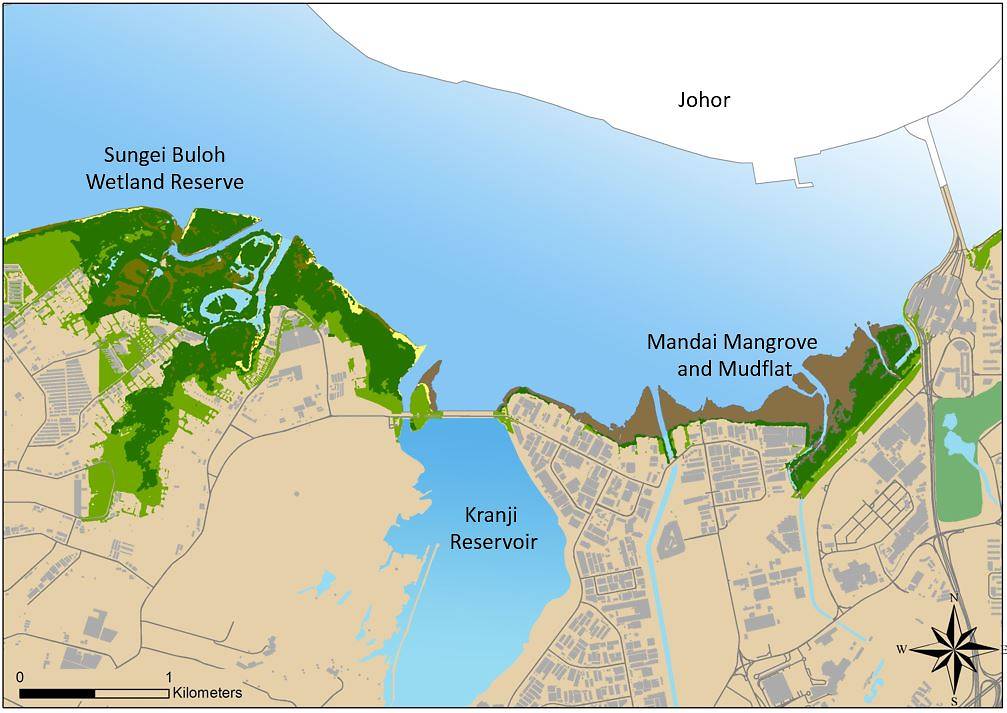
SINGAPORE: A new nature park that is 3km to the east of Sungei Buloh Wetland Reserve is slated to open in mid-2022.
The National Parks Board (NParks) made this announcement on Sunday (Oct 7) as Sungei Buloh Wetland Reserve celebrated its 25th anniversary.
The Mandai Mangrove and Mudflat will be conserved as a 72.8 hectare nature park that will act as an outdoor education, learning and research centre, with visitor amenities such as bicycle racks, a nature trail and bird hides.
The 72.8-hectare Nature Park will be complementary to Sungei Buloh Wetland Reserve. (Photo: Tan Si Hui)
Ecologically linked to the Sungei Buloh Wetland Reserve, the new nature park will be situated along two future major recreational routes – the Round-Island Route and the Rail Corridor.
Visitors can visit the nature park while exploring both recreational routes.
The new nature park will be situated about 3km to the east of Sungei Buloh Wetland Reserve. (Graphic: National Parks Board)
Second Minister for National Development Desmond Lee emphasised the need to “bring people in” to biodiversity areas.
“The management of the Mandai Mangrove and Mudflat reflects the continued approach of conservation, not one where we put in laws and fences and warning signs, and keep everyone out,” he said.
“This is really in line with our role as a City in a Garden – a small city with precious biodiversity surrounded by people and our developments, which requires our conservation efforts to be different from bigger countries.”
Bird watchers at Sungei Buloh Wetland Reserve. (Photo: Tan Si Hui)
Dr Adrian Loo, group director of the conservation department of NParks, said the mangrove and mudflat at Mandai will be complementary to Sungei Buloh Wetland Reserve.
“The birds will roost at Sungei Buloh and when the tides go down, the birds will come over to Mandai mudflat and they will feed there. When the tides start to come up, the birds will then fly back to Sungei Buloh,” he said.
To minimise impact on the mudflat, NParks said it will provide a minimum level of visitor amenities and Dr Loo said an impact assessment will be made.
“Migratory seasons only happen at the end of the year, around September until the end of the year. So most of the development of the nature park will be done outside the season.”
Emeritus Senior Minister Goh Chok Tong had opened Sungei Buloh Wetland Reserve in 1993. (Photo: Tan Si Hui)
Member of Nature Society (Singapore) N Sivasothi welcomed the announcement of the new park and said researchers from the Asia-Pacific region excited upon hearing the news.
“We’ll roll up our sleeves and synch in to any kind of management group that will be set up to best understand how to work in Mandai. Many researchers, nature groups and volunteers will be involved to help in the surveys as well as the cleanups.”
Emeritus Senior Minister Goh Chok Tong, who opened Sungei Buloh as a nature park in 1993, was also there at the event, celebrating Sungei Buloh Wetland Reserve’s 25th anniversary.
SINGAPORE: Punggol residents will have more to look forward to come 2021 with the opening of Punggol Town Hub (PTH) that will feature a new hawker centre and library among other amenities.
This was announced on Sunday (Oct 7) at Punggol Town Square, where some 1,000 residents got a glimpse of the new town hub during the groundbreaking ceremony which was held together with the Children’s Day carnival.
The integrated hub, managed by the People’s Association (PA), will bring together programmes and services from multiple agencies.
Residents can also look forward to a new hawker centre, public library, revamped Punggol Vista CC which will be about seven times the size of the current void deck CC, a childcare centre and multiple health service centres at PTH.
The 42,300 sq m hub will be located opposite Waterway Point, and next to the upcoming Punggol Regional Sports Centre. It will also be connected to Punggol MRT, Punggol Town Square and Sam Kee LRT Station.
And to help residents lead active and healthy lifestyles, the cycling path around Punggol Town Hub will be integrated with the larger cycling network of Punggol.
Adviser to Pasir Ris-Punggol GRC Grassroots Organisation Dr Janil Puthucheary said the new development is a source of strength and cohesion for the neighbourhood.
“The grassroots volunteers worked with the multiple government agencies for this town hub, which will also be an opportunity for the co-locating partners to have access to different types of facilities and work together on integrated programmes to better engage residents. Together, we can make Punggol a better home,” said Dr Puthucheary.
(From left to right) Senior Parliamentary Secretary Ms Sun Xueling, Deputy Prime Minister Teo Chee Hean, Minister for Trade and Industry Chan Chun Sing, Senior Minister of State Janil Puthucheary, Minister Ng Chee Meng and Mr Teo Ser Luck.
He was joined by PA deputy chairman and Minister for Trade and Industry Chan Chun Sing and fellow Pasir Ris-Punggol GRC advisers Deputy Prime Minister Teo Chee Hean, Minister Ng Chee Meng, Senior Parliamentary Secretary Ms Sun Xueling and Mr Teo Ser Luck.
In the coming months, grassroots advisers will be consulting residents to find out what they would like to see in the new hub, and will work with stakeholders to try and meet these needs.
SINGAPORE: “Are you Chinese or Malay?” people often ask me.
For many years, as a Peranakan growing up in Kampong Potong Pasir, I was caught in an identity crisis. I was taunted with the acronym, OCBC, Orang China Bukan China translated as Chinese person not Chinese.
My skin was more brown than other Chinese folks. I didn’t speak Chinese; only Malay. I didn’t even have a Chinese name. The only Chinese thing about me was my surname.
Peranakans fall in between the cracks of our traditional notions of race. Many of us in Singapore dress and talk like the Malays, and we struggle to identify with the Chinese. But we eat pork and celebrate the Lunar New Year so we don’t belong to the Malay or Muslim camp either.
Unfortunately, for me, my Identity Card (IC) says I am Chinese. But I personally would rejoice if my IC says Peranakan, not Chinese.
STRAITS-BORN NOT CHINESE
It is true; except for our long-ago heritage of ancestors who hail from provinces in China, no Singaporean Chinese in the Pioneer and Merdeka Generations see China as home. Most of us in Singapore see ourselves as Singaporeans first and foremost, and Peranakans are no different.
But wrapped up in the heritage of the Peranakans is a legacy that expands beyond Singapore; us Peranakans are proud to be Straits-born.
Peranakans share a link with the Chinese culture, but the imported customs, cuisine and even the decoration of our beautiful crockery have been customised and adapted to suit our life in Southeast Asia.
The Straits Settlements were British East India Company-controlled territories that comprised Penang, Malacca and Singapore, the three main areas where Peranakans resided.
In a broad way, any Chinese born in this region was called a Straits-born. However, on a stricter usage, Straits-born referred specifically to those who adopted the regional mores and customs of the local Malays and Indonesians, like the Peranakans did.
From this, the term, Straits Chinese was coined to differentiate those born in these parts to the Chinese who migrated here but retained their Chinese-ness through their language, religion, mode of dressing and food. They and their offsprings remained true to the concept of being Chinese.
IDENTITIES CHELOP
To chelop, is the Peranakan patois for being dunked. For example, a piece of roti prata can be chelop-ed into a bowl of curry sauce. Thus, the piece of bread will take on the constituents of the curry.
So, in terms of being chelop-ed in a racial context, has a Peranakan taken on other racial and cultural characteristics than that of just being Chinese? I would most certainly say yes.
A Peranakan is not the same as someone who hails from a Singaporean Chinese family, since many of the older Peranakan generation can’t really speak Chinese nor do many follow strict Chinese customs.
The rich Peranakan heritage has elements of Chinese-ness but has traces of other cultural influences too. Therefore, one can say, quite unequivocally, I am Peranakan not Chinese.
Suasti Lye’s photo series The Modern Nyonya at Changi Airport Terminal 4’s Peranakan Gallery. (Photo: Peranakan Museum, Changi Airport Group)
ACCULTURATION OR HYBRIDS?
In recent years, there is a growing number of Peranakans in Singapore who adamantly say they are Chinese. They claim that the Peranakan culture is an acculturation – that there has been no proof of actual Malay/Chinese or Indonesian/Chinese inter-marriages.
They say that overseas Chinese in Southeast Asia adopted the Malay and Indonesian cultures and heritage to make living in their adopted country more viable.
Loosely, one can say that a hybrid race is one where interracial genes have been mixed via an inter-marriage of two different races. So, is a Peranakan a hybrid or simply a result of acculturation? I shall leave it to scholars to debate.
But there are many Peranakans, such my own family, who do not look Chinese in their features and complexion, and have ancestors who are not Chinese.
If you look closely, you can tell a Peranakan from a Singaporean Chinese. My own maternal grandmother was part Portuguese. This is partially a product of the colonial history of Malacca, where the majority of Peranakans can trace their lineage to.
ADMIRAL CHENG HO
Admiral Zheng He, formerly known as Cheng Ho, who lived from 1371 to 1433, was a Muslim Chinese explorer and Royal Eunuch in the Ming Dynasty in China.
He was responsible for depositing thousands of Chinese men outside of China. In Southeast Asia alone, his armada of over 370 ships brought 28,000 soldiers and merchants to the region.
Wherever his ships stopped, some men were left ashore. At a time when hardly any Chinese woman was allowed to travel outside China, you can imagine how lonely these 28,000 men were. Would you be surprised that they married local women?
The new Peranakan Gallery features, among others, this blackwood furniture as well as old Peranakan photographs. (Photo: Peranakan Museum, Changi Airport Group)
Composed between the 15th or 16th century, the literary work, Sulalatus Salatin (Genealogy of Kings), more commonly known as Sejarah Melayu or Malay Annals, is a fine record of the origin of Malays, though some scholars now claim that this work is more fables than history.
Whether mere myth or history, the origins of Peranakans was supposed to have come from one of the stories in the Malay Annals.
The Ming Emperor Zhu Di sent Zheng He, who made six trips to Malacca. On one of these trips, he took princess Hang Li Po, supposedly the daughter of Zhu Di, to marry Sultan Mansur Shah who ruled Malacca from 1459 to 1477.
On this journey, Zheng He sailed into the port of Malacca with 500 people, many of whom were merchants. Except for the princess and her handmaidens, the others were all men.
It was these men who married local women, some Malay and some Indonesian. Thus, the legend of how Peranakans came about was born. The place where the princess and her people settled was called Bukit China, which exists today.
POTTED HISTORY OF MALACCA’S COLONIALISATION
Without going into detailed history, the Malacca Sultanate ended around 1511 when it was colonised by the Portuguese who ruled for 130 years, from 1511 to 1641. The Dutch conquered it and ruled for 183 years, from 1641 to 1825.
In the Anglo-Dutch Treaty of 1824, the Dutch traded Malacca for Batavia and the British took over Malacca from 1825.
The Portuguese, Dutch, Malay, Indonesian and Chinese have influenced Peranakan culture and heritage in several ways, even if some Peranakans have no such ancestry. Our Peranakan heritage is rich because of this.
The Portuguese words for a lady – senhora and dona mutated to become nyonya, the word for a Peranakan woman.
One of our most celebrated cakes is Love Letters but is traditionally called kueh belanda, Dutch Cake, a crispy crepe now rolled into a cigar shape. Our well-known Peranakan lady’s embroidered kebaya, is a product of Portuguese and Dutch lace-making techniques.
Traditional sarong kebayas are displayed alongside Singapore Airlines’ iconic kebaya uniforms. (Photo: Mayo Martin)
The assimilation of traditions is a story that is truly Peranakan. There are also the Indian Peranakans or Chetti Melaka, derived from Indian men who married local women and, like the Chinese Peranakans, have assimilated local culture.
VISIBLE DIFFERENCES
Many Singaporean Chinese people see visible differences in a Peranakan Chinese, whether physical, cultural or social. They would say affectionately to us, “You are nyonya people! You wear sarong. Cook very delicious food!”
And for more than thirty years when I lived in the UK, I would correct the British if they called me Chinese, and insist that I was Peranakan.
My mother was a staunch Peranakan and kept up her Peranakan customs, and the long lineage of chelop-ed Peranakan traditions is a culture I am proud of.
And we Peranakan are indeed part of a diverse Singapore identity and rich legacy.
Josephine Chia is author of many books, most famously Kampong Spirit: Gotong Royong, Goodbye My Kampong and the children’s edition, Growing Up in Kampong Potong Pasir, and most recently, Big Tree in a Small Pot.