SINGAPORE: Beleaguered water treatment firm Hyflux on Friday (Nov 2) said it has made a court application to seek “super priority” status for rescue financing from its Indonesian investors.
The application to the Singapore High Court was done on Thursday, it announced in a filing to the Singapore Exchange on Friday night.
Hyflux, which is undergoing a court-supervised debt restructuring, said on Oct 18 that it has secured a proposed investment of S$530 million from a consortium made up by Indonesia’s Salim Group and Medco Group – a potential lifeline for the embattled firm if it obtains the approval of creditors and local authorities.
On top of that, the consortium will provide a S$30 million debtor-in-possession (DIP) loan ahead of the proposed equity investment to help Hyflux meet its working capital requirements.
Pursuant to the terms of the DIP loan agreement, Hyflux said in the latest SGX filing that it has made an application to the court under Section 211E(1) of the Companies Act for this loan to be secured by “way of first priority fixed charges” over certain properties of the company.
These include all of the company’s ordinary shares in HyfluxShop Holdings, all of its 6 per cent cumulative non-convertible non-voting perpetual preference shares in the capital of HyfluxShop Holdings, alongside all of its shares in two wholly-owned subsidiaries Spring China Utility and NewSpring Utility.
Under Section 211E, the court can grant rescue-capital providers “super priority”, or seniority claims, on a company’s assets over existing creditors.
Further details on this application will be provided when the court has given its directions, Hyflux said.
After obtaining a six-month moratorium from the High Court in June, it actively sought new financing with strategic investors.
The Tuaspring Integrated Water and Power Plant. (Photo: Hyflux)
The company was also on the lookout for buyers for its Tuaspring Integrated Water and Power Plant, which analysts said was key to trimming Hyflux’s “humongous” debt load.
Of its S$2.95 billion of liabilities, S$265 million is owed to medium-term note holders and another S$900 million to investors of perpetual securities and preference shares. The latter is a big group of 34,000 people, with many of them being retail investors.
With the moratorium set to expire on Dec 18, the company’s legal advisors from WongPartnership told the Singapore court on Wednesday that Hyflux intends to seek an extension of the debt reprieve until April.
In a separate SGX filing late that day, Hyflux elaborated that it may do so “at the appropriate juncture” before the proposal of a scheme of arrangement to its creditors.
As for its Tuaspring plant, WongPartnership lawyers said the company will continue negotiations with its largest secured lender, Maybank.
SINGAPORE: The newly refurbished Downtown East will remain an “affordable” option for patrons, despite S$200 million having been spent on major upgrades to the facilities at the Pasir Ris resort, NTUC Club chief executive officer Lim Eng Lee said on Friday (Nov 2).
NTUC Club, the entertainment and leisure arm of the National Trades Union Congress, operates Downtown East, which will celebrate the completion of a five-year facelift this month.
Work to revamp the resort began in 2012 and was carried out in two phases. The Wild Wild Wet theme park is now double its original size, a new resort has been built, and new food and beverage outlets have sprung up.
Facilities at Downtown East stayed open throughout its refurbishment.
“Downtown East remains committed to our mission to ensure that leisure choices remain affordable for our members,” said Mr Lim. “We want to stretch our members’ dollars as much as they can.”
Pointing to the example of Downtown East’s food and beverage outlets, Mr Lim said that a “decent family meal” would cost approximately S$20 per person.
“We don’t try to bring in very expensive things here but having said that we also want quality,” he said. “Occasionally, we want to pamper ourselves and spend a little bit more. But we will not be bringing the kind of restaurants that cost S$200 per person.”
One of the main attractions of Downtown East is the nature-inspired D’Resort. The resort, which opened its doors in 2015, consists of 387 rooms, with an upgraded chalet block and a resort block.
“The rooms are upgraded to a level comparable with some hotels in town, but if you compare those hotels’ rates with ours – our customers get so much more,” said Mr Lim, pointing to how union members, for the duration of their stay at D’Resort, are entitled to unlimited admission to the Wild Wild Wet water park.
Room rates start from S$98, if booked six months in advance.
The expanded Wild Wild Wet theme park. (Photo: Gaya Chandramohan)
Wild Wild Wet’s expansion – from two to four hectares – saw the addition of seven new attractions.
A Day Pass for an adult (13 years old and above) at the water park costs S$24 during off-peak periods and S$32 during peak periods, with NTUC members also receiving a S$4 Wild Wild Wet voucher.
In comparison, an adult all-day pass before the refurbishment would have cost S$19.
Downtown East celebrates its 30th anniversary this year, and Mr Lim described visiting the Pasir Ris resort as a “rite of passage for every Singaporean”.
“I dare say that practically every Singaporean has passed through this place at least once in their lifetime – regardless of their income level,” he added.
But as tastes and society’s expectations change, the refurbishment was necessary for Downtown East to remain relevant, said Mr Lim.
Explaining the rationale behind the expansion of Wild Wild Wet and the closing down of Escape Theme Park, he said: “The difference between a water park and ride park is that because Singapore’s weather is hot, people do come again and again.
“As for an amusement park, we are not Disney; Disney is different because they attract tourists. This is for a local market, and people would just come once and would have seen it all.
“We felt (Wild Wild Wet) was more sustainable and so we expanded it.”
Response to the new offerings has been good, added Mr Lim, with Downtown East seeing a 20 per cent increase in visitorship since its soft launch earlier this year.
SINGAPORE: Key management figures in Integrated Health Information Services (IHiS) also served important roles in the Ministry of Health (MOH), prompting questions about whether this potentially resulted in conflicts of interest where checks are not done to ensure that directives are complied with.
Those with dual roles include IHiS CEO Bruce Liang, who is also the chief information officer at MOH, the Committee of Inquiry (COI) looking into the SingHealth cyberattack heard on Friday (Nov 2).
IHiS director of cyber security governance Chua Kim Chuan is also MOH’s chief information security officer.
Taking the stand before the four-member COI on Friday, managing director of MOH Holdings Goh Aik Guan acknowledged that there could be a “real possibility” of conflict of interest, because “the one who implements (the policies) is also the one who promulgates it”.
He was responding to questions from Solicitor-General Kwek Mean Luck about whether there were potential conflicts of interest in the “double-hatting” of roles.
The organisations, however, understood that such a risk was present, said Mr Goh, and had therefore put in place mitigation measures.
For example, Mr Liang and Mr Chua had to report back to other MOH officers, there were various measures to ensure that instructions are executed and key directives by the ministry will also be tracked. “It’s not a matter of (IHiS CEO Bruce Liang) not implementing (the directives) … because deadlines are there,” said Mr Goh.
Mr Goh Aik Guan, managing director of MOH Holdings, walking out of the Supreme Court building on Nov 2, 2018.
MOH Holdings is the Government’s holding company for Singapore’s three public healthcare clusters – National University Health System, National Healthcare Group and Singapore Health Services. IHiS runs the IT systems of the three healthcare clusters.
During the hearing, Mr Goh also pointed out the benefits of “double-hatting”.
Key executives would be able ensure that IHiS’ planning and implementation are aligned with MOH’s IT and cyber security strategy, as well as its policy and programmes, he said. It also allows MOH to have a channel of feedback for how programmes are running on the ground.
Referring specifically to Mr Chua – whose role in IHiS was to help roll out cyber security policies to the various healthcare clusters – Mr Goh said he also needed to be an MOH representative to be able to have sector-wide perspective of cyber security issues.
CONSTRAINTS AND CHALLENGES IN PATCHING IT SYSTEMS
Mr Goh also shared his view that measures taken by owners of IT systems to mitigate risk is “never 100 per cent.” Owners will have to consider for themselves what an acceptable level of risk for the organisation is, taking into account “competing resource demands, infrastructure constraints, and operational imperatives”, he said.
“(You can reach) 99.6 per cent … And we know when you hit a certain number, the remaining 0.4 per cent to cover that gap will (be) disproportionately costly,” said Mr Goh.
Citing software patching as an example, Mr Goh said it may not be technically feasible to patch one system without affecting other layers of application and hardware as most IT infrastructure systems are complex.
“The IT systems in the public healthcare institutions also need to be operated efficiently and 24/7, and there is little room to schedule downtime for IT measures to be implemented,” said Mr Goh.
The COI hearings are expected to continue on Monday. Some hearings will be held behind closed doors iin the interests of national security as the evidence given may be sensitive in nature.
SINGAPORE: Ben, aged 12, has been missing school for weeks. It is an important year and his teacher is concerned.
So Ben’s teacher decides to make a home visit.
Ben was shocked to see his teacher at his doorstep. He explained that he has to help his mum at the hawker centre till late at night and experiences difficulty waking up on time in the morning.
This is a common scenario facing children from disadvantaged backgrounds. When basic needs such as food, money, or a proper night’s sleep go unmet over a prolonged period, education falls off the priority ladder. Survival takes its place.
The Ministry of Education (MOE) recently announced the setting up of an inter-agency task force to tackle this problem. It is heartening to hear about the efforts involved to scrutinise the issues, but it also makes me wonder: With such systemic obstacles stacked against these kids, where do we even begin intervention?
The issues of absenteeism and poor academic performance or attitude are understandably complex.
The obstacles that these children face include lack of food, having to work to help out with expenses, lack of money for transport or school supplies, and lack of peer support in school.
The issues they face in school may not go to the extent of bullying, but rather are those of disconnection. As they are unlikely to be able to afford a smartphone, or meet at Pasta Mania to discuss a project, they face a certain kind of exclusion that is both pervasive as it is profound.
When they struggle to fit in and feel poorly about themselves, they start to withdraw. After being absent for a period of time, they lose touch with their friends, and schoolwork takes on insurmountable proportions.
The downward spiral can be sure and forceful as gravity takes its toil.
Once we look beyond the surface, it becomes apparent that identifying and fixing such a child’s financial and physical needs while important are insufficient in themselves.
The child at risk often suffers not merely from the obvious physical deprivation, but also an emotional one.
How do you handle a child who lacks the love, presence, and support of parents who may have to work many jobs to make ends meet or are incarcerated?
Without parental support in the home, it may take “surrogate parents” in the form of a student welfare officer, teacher, or even a neighbour who is willing to go the extra mile.
A friend who’s a teacher sacrificially shouldered that parenting role for a few students over different periods of time. He ferried them to school by public transport, bought food supplies when needed, offered teaching and discipline, and even worked with them to replace unproductive habits with healthier ones.
He has seen a couple of success stories. One student came in second in his cohort during Secondary 3 and finally completed his N-levels and moved on to the Institute of Technical Education.
The key, this model teacher says, is to understand their needs, earn their trust, and then walk with them towards better turn-up rates and performance in school.
Granted, not every teacher is willing to go to such lengths. But even small tweaks in our attitudes can reap benefits.
One teacher who has been examining issues surrounding poverty as part of his Teaching Certificate in International Baccalaureate shared some of his reflections.
Students collecting their N-Level results at Jurong West Secondary School on Dec 18, 2017.
He believes that he may have dealt with some youths from disadvantaged backgrounds in the past, and thinks there is room for teachers to show them kindness and empathy.
He explained: “Once we understand that these students lead very different lives and face multiple challenges, we have to communicate differently in order to establish trust and rapport.”
If they fall asleep in class, or didn’t do their homework, we need to understand the reasons why and then take the appropriate steps to help them overcome the obstacles.
It is important to speak to them in private and to use an approach that is both firm and caring, he said, and to help them set small, manageable tasks, such as staying back for 15 minutes after school to tackle a portion of their homework.
He also suggested offering alternative methods to help students to keep up with lessons. For example, if the child has access to a computer at home, lesson notes or homework can be emailed to them.
Finally, if the child’s behaviour needs to be addressed, teachers should suggest ways to improve and give reasons for it without using sarcasm.
“This puts the responsibility of change on the child without demeaning them,” he said.
Parents are yet another unpredictable factor in the complex equation of help for disadvantaged youths.
They may be weighed down with work, finances or relationship issues of their own, making it hard for them to bear the responsibility of supporting their child’s education.
File picture of secondary school students in Singapore. (Photo: TODAY)
Take for instance the single parent’s situation. Work usually takes up a big chunk of the parent’s time and energy, not to mention mental space.
Parenting may then fall on the grandparent’s shoulders or digital nannies.
While either option may not always work out perfectly, it is clear that such families need more practical help and less judgement or shame.
What may be more constructive is to brainstorm ways that the community – relatives, neighbours, or even the child’s peers – can chip in to help the child stay in school (during school hours), off the streets (during after-school hours), get some pocket money, and have access to textbooks and quality reading material.
Granted, most schools have some form of SOP for roping in social aid agencies to provide financial help to needy families. But there may be a gap before the funding gets approved and received by the families themselves.
This is where the community can play a role in plugging the gap.
PROCEED WITH CARE
Complex issues such as poverty and absenteeism involve many stakeholders, from teachers and student welfare officers, to counsellors, social work agencies, and the community.
It’s also an entire life cycle involving many intricate steps – from identification of an at-risk child, to understanding what their specific needs are, addressing those needs in a sustainable way, and providing a nurturing environment that is conducive for learning. One misstep and the child may drop out of school.
Student studying for an exam. (Photo: Unsplash/Hannah Busing)
Any intervention strategy would do well to avoid the scenario of passing the child (or “case”) from one party to another, like hot potatoes.
Tempering the academic expectations for these students and helping them to set more realistic goals may enable them to experience a sense of control and confidence.
The turnaround story cited earlier may not be achievable for every at-risk student, but keeping them in school and off the streets is a good starting point for them to receive the help they need.
By the age of early adolescence (or 11 to 14 years), issues of identity, self-esteem and peer acceptance take centre stage, and we should also ensure that the child’s social-emotional needs are cared for.
Harsh methods such as punishment, guilt, or force will have to be thrown out the window. It will be next to impossible to arm-twist these youths to make good choices in life.
But by taking the time and patience to establish trust, respect, and rapport with the student, it may be possible to chip away at this seemingly insurmountable mountain, and conquer it – one careful step at a time.
June Yong is a mother of three, an educational therapist and owner of Mama Wear Papa Shirt, a blog that discusses parenting and education in Singapore.
SINGAPORE: A new public library will open at VivoCity shopping mall next year, announced the National Library Board (NLB) on Thursday (Nov 1).
The library, which was relocated from Bukit Merah Central, will open on Jan 12, said NLB in a media release. The Bukit Merah library will close on Dec 1.
Library@harbourfront will have an e-newspaper reading area with 16 stations. (Image: National Library Board)
Located on the third floor of the mall, the new library@harbourfront will have an e-newspaper reading area with 16 stations, a children’s area with seating spaces for families to read together and a reading lounge with 120 seats.
The intention is to “offer conducive reading spaces for patrons of all ages”, said NLB.
The move from Bukit Merah Central, which was announced last year, is part of efforts to make public libraries more accessible, according to NLB.
“We want our libraries to be as accessible as possible, so that more patrons of all ages can make use of the library to read and learn,” said CEO Elaine Ng.
A multi-purpose Programme Zone will host storytelling sessions, talks and workshops. (Image: National Library Board)
After the closure of the Bukit Merah library, the site will be used by grassroots leaders and social service organisations to provide a variety of services and programmes, NLB said. This includes a mini-library and a reading corner.
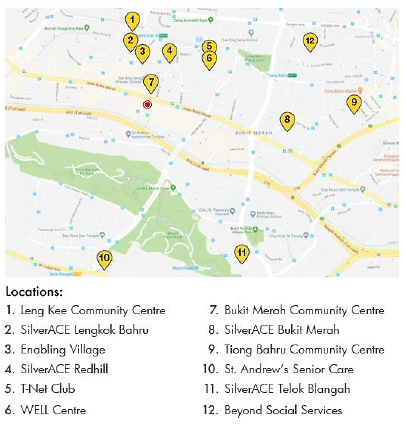
Twelve reading corners with 5,000 books and 250 seats have also been set up for residents at areas such as community centres at Leng Kee, Bukit Merah and Tiong Bahru.
Reading corners in the Bukit Merah area. The red dot indicates the location of the present library. (Image: NLB)
“The corners offer residents in the Bukit Merah area convenient access to reading resources at familiar locations,” said Mrs Ng.
“We worked with grassroots and community leaders of Bukit Merah to find suitable spots to host our books, so that residents can easily access a wide range of reading materials,” she added.
NLB said it is also considering bringing one of its mobile libraries to the area fortnightly to provide residents with additional books and programmes.
The Children’s Area will be specially designed with young readers in mind, with an extensive Early Literacy collection for children aged six and below. (Photo: National Library Board)
Preview tours of the new library@harbourfront will be held a week before its official opening, added NLB.
SINGAPORE: Hawker centres are an iconic part of everyday Singapore life.
There is huge national consensus that hawker culture must be preserved and hawkers allowed to thrive, yet also huge disagreement on the approach to take.
This is the context behind the recent controversy where the look to social enterprise to transform and run hawker centres have met with some backlash, amid rising costs and new, uncomfortable rules for hawkers – some of whom now have to apply for leave and adhere to pricing guidelines, for instance.
WHO SHOULD SOCIAL ENTERPRISE HAWKER CENTRES SERVE?
Some have asked if the social enterprise model is just wholly unsuited to running hawker centres. To answer that requires figuring out three questions.
A first question we ought to ask is who is the social enterprise hawker centre supposed to benefit? It is not diners.
Pioneering US trade association Social Enterprise Alliance, which has championed and catalysed the development of the social enterprise sector in the US defines a social enterprise as “an organisation or initiative that marries the social mission of a nonprofit or government programme with the market-driven approach of a business.”
The global standard that certifies social enterprises, Benefit Corporation, imposes even higher demands, requiring that these social enterprises are for-profit organisations and meet high standards for social and environmental performance, accountability, and transparency.
Ci Yuan Community Centre Hawker Centre in Hougang is one of the first in Singapore to be run by a social enterprise. (Photo: Fann Sim)
But key to a social enterprise is its specific social mission.
Bettr Barista, the 2017 recipient of President’s Challenge Social Enterprise Award, is among a handful of Singaporean companies that are certified B-Corp and is a great example of a successful social enterprise.
Founded by Pamela Chng, the company employs, empowers and certifies disadvantage youth and women, providing them with a second chance in life. The social impact it generates goes beyond providing a stable income to employees – because the company was set up to aid disadvantaged youths primarily in mind.
A second question we ought to ask is are the decisions of these social enterprises guided by their mission? Just because an entrepreneur calls his or her company a social enterprise, it doesn’t make it so.
Say, a company employs vulnerable groups and provides higher than average wages. Does this make the firm a social enterprise? How about if the company provides free education to the children of the employees?
Does your answer change if I say the company uses sustainable and organic farming methodologies, and provides clean water to communities?
What if this hypothetical company sells tobacco marketed heavily at youths?
The point I am trying to make is that we ought to be more critical over the many elements that make up a social enterprise to judge if its primary social mission has been met, through means that do not harm others, and if it overall benefits society.
Children from low-income families receive subsidies at this social enterprise. (Photo: School of Concepts/Instagram)
Similarly, when social enterprise hawker centres begin levelling additional costs at the hawkers they were supposed to aid, what do we make out of how oriented they were in helping their hawkers in the first place?
No doubt, these hawker centre operators must stay afloat and therefore manage their operating costs but these are some costs that shouldn’t be a hawker’s burden, eating into their already slim profit margins.
Take for instance, the tray deposit system. Some places like Timbre+ charge consumers the tray deposit, encouraging customers to return trays after, without levying the costs on hawkers.
Timbre+ also provides marketing and communication support for their hawkers, instead of treating them as mere tenants who pay a rent.
A third point of contention is whether social enterprises should be for-profit or non-profit. Much of the debate seem to arise out of the perception that these social enterprise hawker centres are using their position to profiteer.
Let’s be clear – profits are not the point. Though it is not their primary motive, it is completely acceptable for social enterprises to be profit-driven, because they must have a sustainable business model that continues providing benefits to the people they hope to help.
Take one example shared by the Stanford Social Innovation Review on a company called Cause, a restaurant and bar in Washington, whose social mission was to dedicate all of its profits to nonprofit organisations.
The restaurant didn’t turn profitable. It did attract some customers because of its social mission, but “it wasn’t enough to compensate for the company’s confused marketing efforts, founders who were never fully committed to the enterprise, and the host of usual problems that most new restaurants and bars confront”.
The business closed after just 14 months in operation.
Jurong West Hawker Centre is run by social enterprise Hawker Management.
But that is not to say that social enterprises should be making profits at the expense of their beneficiaries. Rather, their goal is to ensure the sustainability of hawker centres.
Yes, there is still room for improvement when it comes to how our social enterprise hawker centres operate. Social entrepreneurship is a relatively nascent form of business that is still evolving but future hawker centres that commit not just to financial returns but social impact for our hawkers is surely an intent we can all agree on.
The issue can’t be fixed overnight, but progress can be made by learning from these early mistakes.
Jonathan Chang is executive director of the Singapore Management University’s Lien Centre for Social Innovation.
SINGAPORE: Some 350,000 consumers are now able to switch their electricity providers for the first time, as an initiative to liberalise the local retail power market kicked off a phased launch across Singapore on Thursday (Nov 1).
These refer to households and business accounts with postal codes that begin from 58 to 78.
Other parts of the island will get their turn over the next six months as the Open Electricity Market is progressively rolled out – an initiative that authorities and industry experts hope to spark competitive pricing and innovative offers.
If you’re still in the dark about this, read on:
WHAT IT IS ABOUT
Simply put, under the Open Electricity Market, buying electricity will be similar to choosing mobile phone plans.
Instead of getting power solely from SP Group at the quarterly-reviewed regulated tariff, you will be able to pick and choose from a buffet of price plans offered by a dozen or more approved retailers.
Electricity retailers and consumers at a Open Electricity Market roadshow held at Westgate mall on Apr 21, 2018. (Photo: Energy Market Authority)
This follows a gradual process to open up the local retail electricity market since 2001. Before this, only businesses with monthly electricity consumption averaging at least 2,000 kilowatt hours (kWh), equivalent to a bill of about S$400, have the option of shopping for electricity.
Homeowners were given that option for the first time when the pilot test of the Open Electricity Market began in Jurong on Apr 1. The Energy Market Authority (EMA) said in end-September that more than 30 per cent of consumers there have chosen to buy electricity from a different provider, with savings of about 20 per cent.
But if you prefer to stick with status quo, that’s fine. This initiative is not compulsory and there is no deadline for switching.
The roll-out covering 1.4 million consumers across Singapore will be done in four batches according to postal codes.
The next batch to get the green light will include households and business accounts with postal codes that begin 53 to 57, 79 to 80 and 82 to 83 on Jan 1.
The third zone, marked by postal codes from 34 to 52, and 81, will be included in the initiative from Mar 1 2019, while the final area, that comprises codes from 01 to 33, will get their turn on May 1.
The Open Electricity Market will be rolled out across Singapore in batches. (Graphic: Energy Market Authority)
As for retailers, there are now 13 of them vying for a slice of the market, according to updates from the EMA.
That’s more than the initially announced 12 as Sunseap and Diamond Electric re-entered the market. Both were involved in the pilot programme but decided to opt out previously citing re-assessment of business plans or updating of products.
Meanwhile, SingNet, which was in the approved list announced in September, has decided to pull out.
“We will take a partnership approach to offer electricity to our customers and are in discussions with potential partners,” said a Singtel spokesperson in response to queries from Channel NewsAsia.
“We believe the combination of our large customer base and a power generation company’s competitive pricing will allow us to deliver a better value service option to Singapore households.”
Given how other retailers – such as Red Dot Power, Sun Electric and Hyflux Energy – have also indicated their interest to re-join the initiative, the list of retailers looks set to change over time.
With so many retailers, sieving through the plans on offer can be overwhelming.
With lessons learnt from the pilot programme in Jurong, the EMA decided to streamline the standard price plans to just two: fixed price plans and a plan with a discount off the regulated tariff.
For the former, you pay a fixed rate for electricity throughout your contract duration. This ranges from around 16.80 cents to 16.88 cents per kWh for a 24-month plan, or about 18 cents per kWh for a 12-month plan.
The quarterly-reviewed tariff is 24.13 cents per kWh, excluding GST for the three months to Dec 31.
The other involves a fixed discount off the existing regulated tariff throughout your contract duration, which seems to be about 21 per cent for now.
The peak and off-peak plan where consumers pay less for electricity during the off-peak period and vice versa is not a standard price plan, but continues to be offered by a handful of retailers such as Geneco.
Eco-conscious consumers can also pay attention to clean energy players, such as Sunseap and ES Power.
Apart from that, do take note of sign-up promotions or additional rebates from retailers’ partnerships with various banks.
DBS, for instance, launched its own marketplace in March to offer convenience to consumers who want to make the switch. Its marketplace will have seven retailers available by the end of this month.
Besides convenience, customers can look forward to savings on their bills. For example, POSB Everyday cardholders can enjoy credit card promotions with several of the energy retailers.
As a start, watch out for the notification package and information booklet that will come your way when the roll-out begins in your district. You can also compare prices at the website compare.openelectricitymarket.sg.
I’M KEEN – WHAT DO I DO NOW?
Start by contacting your preferred retailer for details on the price plan you are interested in and remember to ask for a fact sheet on the plan and a consumer advisory that will outline the key things that you should be aware of.
Before signing the contract, watch out for contractual terms such as contract duration, payment terms, security deposit, early termination charges and auto-renewal clauses, and ask if there are any terms and conditions associated with bundled products or services.
Read through the contract and ask the retailer to explain the terms and conditions if you do not understand them. Take note of any fine print and keep a copy of the contract for your reference.
After which, sign up with your preferred retailer which will work with SP Group to make the switch for you. Your contract will start as early as five business days after your retailer tells SP Group to make the switch.
Households can retain their existing meters.
The EMA has put in place safeguards for consumers so do remember that you should not be receiving any unsolicited calls, messages or visits by any retailer. If you do, inform the authorities at ema_enquiry@ema.gov.sg or call 6835-8000.
Alternatively, you can approach the Consumers Association of Singapore for assistance to resolve any dispute with your retailer.
SINGAPORE: Proposed changes to tobacco product packaging announced by the Government are a good start towards reducing smoking in Singapore, but should be seen as part of a broader effort to tackle the issue, health professionals said on Wednesday (Oct 31).
This comes after the Ministry of Health (MOH) announced that it would introduce standardised packaging for tobacco products sold in Singapore, as part of ongoing efforts for a tobacco-free society.
Under the proposed measures, products will have to be sold in plain packaging with graphic health warnings covering at least 75 per cent of the packet.
A proposed layout of a standardised cigarette box. (Photo: Ministry of Health)
Health professionals in Singapore welcomed the proposed changes, but pointed out that these should operate in tandem with other initiatives to reduce smoking.
“Standardised packaging is definitely a good start (to) our journey to reducing smoking. But this alone cannot be the only driver,” said Dr Lambert Low, consultant with the National Addictions Management Service at the Institute of Mental Health.
“Rather, it should be part of a broader effort that also includes other initiatives such as public education to raise awareness of the need for smoking cessation.”
Dr Low pointed out that in Singapore, “packaging is the only form of advertising for tobacco products”, and that packaging could lead some consumers to form the impression that cigarettes from certain brands are less harmful.
“With standardised packaging, we can dispel the notion that brands make a difference,” he said. “Also, with a bigger space for health warnings, the health message becomes even more apparent to consumers.”
Given that the changes – if enacted – may take effect from 2020, they will overlap with the gradual increase in the minimum legal age for tobacco use from 18 to 21 by 2021, pointed out Dr Clive Tan, treasurer at the College of Public Health and Occupational Physicians, Academy of Medicine Singapore.
As such, it will be hard to attribute any decrease in smoking rates to a single measure, he said, but added that there should be a reduction in the number of young adult smokers.
“It will be difficult to attribute the effect of the decrease in smoking rates to just one of these,” he said. “The population group that will be most impacted by this recent slew of measures are the youth, so there should be a marked reduction in number of young adult smokers.”
“WE SHOULD NOT STOP HERE”
The increase in the minimum legal age for smoking should not stop at 21, but continue “year-on-year”, suggested Professor Teo Yik Ying, Dean of the Saw Swee Hock School of Public Health at the National University of Singapore.
“This way, we will have a concrete vision and plan to make Singapore smoke-free,” he said.
Prof Teo said it was important to remember that the proposed packaging measures are intended to work together with existing initiatives.
“I think it’s important to highlight that this new regulation is not intended to be a magic bullet, but to complement existing tobacco control measures.”
Similarly, Dr Tan said that “plain packaging by itself would be of limited effectiveness”, adding that it was important to consider the initiative “as part of a package set of policies and initiatives”.
He also called on more to be done in the region.
“Singapore is a highly porous country with many of our citizens and residents travelling to the region on a frequent basis, so it would be more effective if ASEAN could move forward collectively to put in place similar tobacco control measures.”
Meanwhile, tobacco company Philip Morris Singapore said it remained “hopeful” that adult smokers would be allowed to switch to “less harmful alternatives”.
“We were given the opportunity to provide our comments to the Government during the public consultation process,” said Ms Winnie Tan, Head of External Affairs of Philip Morris Singapore. “Ultimately, we support evidence-based policies that protect public health to prevent people from starting to smoke cigarettes and encourage cessation.
“We also remain hopeful that as scientific evidence on smoke-free products develops, policies will be adopted to accelerate the Government’s smoking control efforts by allowing adult smokers the opportunity to switch to less harmful alternatives.”
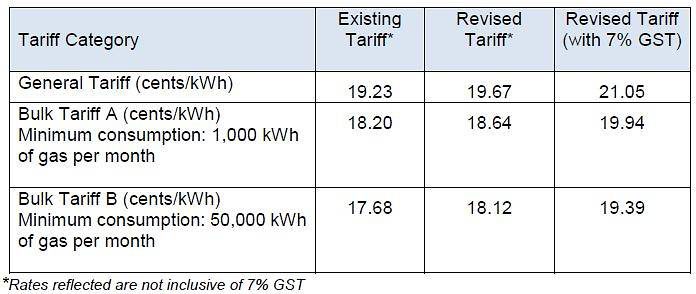
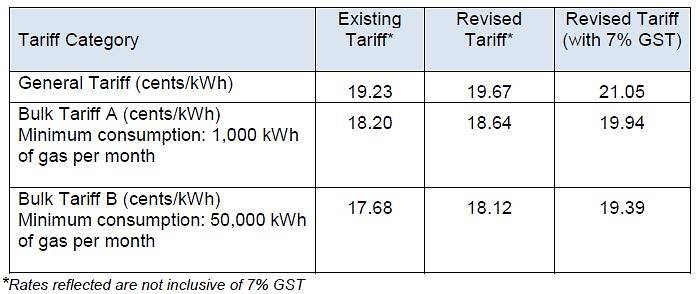
SINGAPORE: Gas tariffs for households will increase by 2.29 per cent or 0.44 cent per kilowatt hour (kWh) from Nov 1 to Dec 31, City Gas announced on Wednesday (Oct 31).
This means that households will need to pay 19.67 cents per kWh, excluding Goods and Services Tax, as compared to 19.23 cents previously.
The increase is due to higher fuel costs compared with the previous quarter, City Gas said in a media release.
City Gas reviews the gas tariffs based on guidelines set by the Energy Market Authority, which has approved the gas tariffs for the two-month period.
A table showing revised gas tariffs for a two-month period from Nov 1 to Dec 31. (Image: City Gas)
SINGAPORE: Four men have been arrested for buying and selling duty-unpaid liquor via the WeChat mobile app, Singapore Customs reported on Wednesday (Oct 31).
The four men were arrested in a series of raids in various parts of Singapore from Oct 16 to Oct 23 this year.
The first man, 39-year-old Guo Xu, was arrested in Woodlands Avenue 4 on Oct 16 by Singapore Customs officers while he was delivering seven bottles of duty-unpaid liquor to a customer.
Seven bottles of duty-unpaid liquor were found on the passenger seat of the cement truck that Guo was driving. (Photo: Singapore Customs)
The officers found the bottles of liquor on the passenger seat of the cement truck Guo was driving, with the duty and Goods and Services Tax (GST) evaded amounting to about S$695 and S$68 respectively. Guo was later sentenced to a S$7,500 fine by the State Courts.
The second man was arrested at the void deck of an HDB block in Woodlands Avenue 6 on Oct 19. The man, whose court proceedings are still ongoing, had arranged to meet with a buyer when officers found six bottles of duty-unpaid liquor in his haversack and plastic bag.
He was later found to have stored another 45 bottles in a cupboard at a hair salon in Geylang Road.
Singapore Customs officers found six bottles of duty-unpaid liquor in the haversack and plastic bag of a man during an operation on Oct 19, 2018. (Photo: Singapore Customs)
A follow-up search at a hair salon in Geylang Road uncovered another 45 bottles. (Photo: Singapore Customs)
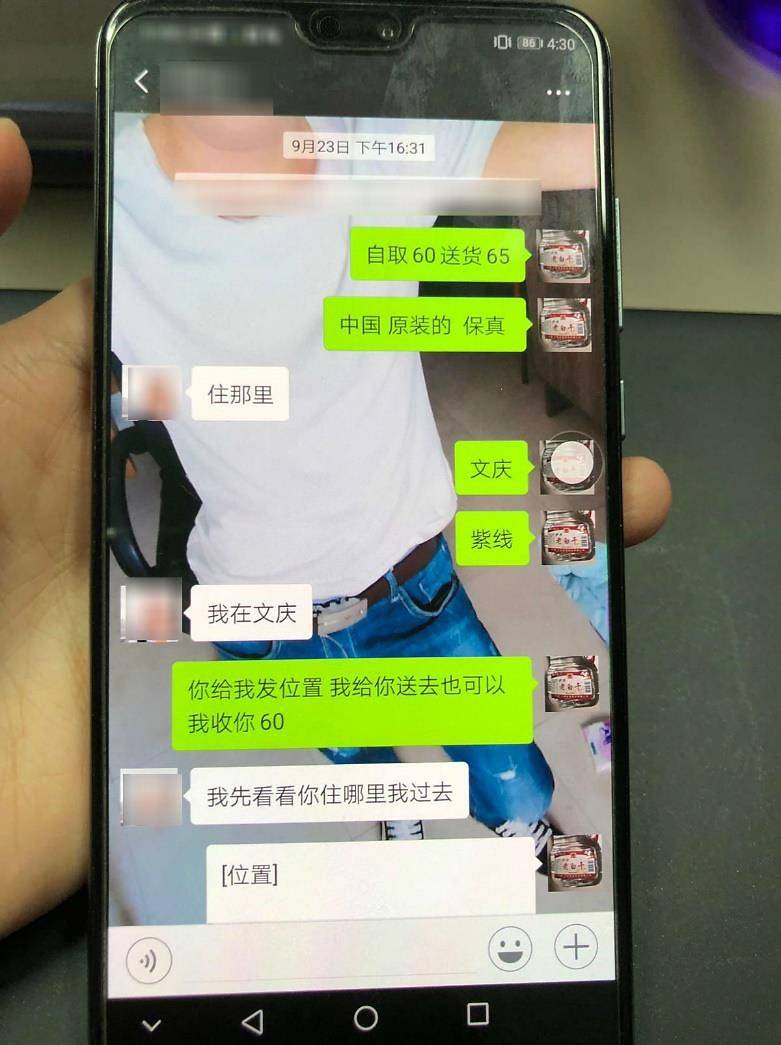
Zhu Fuzeng, 28, was arrested in an HDB flat in St George’s Road on the morning of Oct 23 when officers found 30 bottles of duty-unpaid liquor in his room, with duty and GST evaded amounting to S$3,744 and S$350.
Zhu, who had intended to sell the liquor to buyers via WeChat, was sentenced to a S$40,000 fine, or in default 100 days’ imprisonment.
A WeChat conversation between Zhu and a buyer. (Photo: Singapore Customs)
The fourth man was arrested on the night of Oct 23 after officers found him carrying a box containing 12 bottles of liquor at the void deck of a HDB block at Hougang Avenue 3.
Another 54 bottles were found in a nearby HDB rental flat, as well as another bottle in the man’s dormitory in Hougang Avenue 7. Court proceedings are under way for the man.
A total of 67 bottles of duty-unpaid liquor were seized in the operation at Hougang Avenue 3 on Oct 23, 2018. (Photo: Singapore Customs)
Under the Customs Act, any person who is guilty of storing, keeping, in possession and dealing with dutiable goods with the intention to defraud the Government of any duty and GST will be liable on conviction to a fine of up to 20 times the amount of duty and GST evaded.